Showing posts with label Tanzania. Show all posts
Showing posts with label Tanzania. Show all posts
S S Rajamouli has a plan B ready after SSMB29 Kenya shooting called off due to unrest
9:15 AM
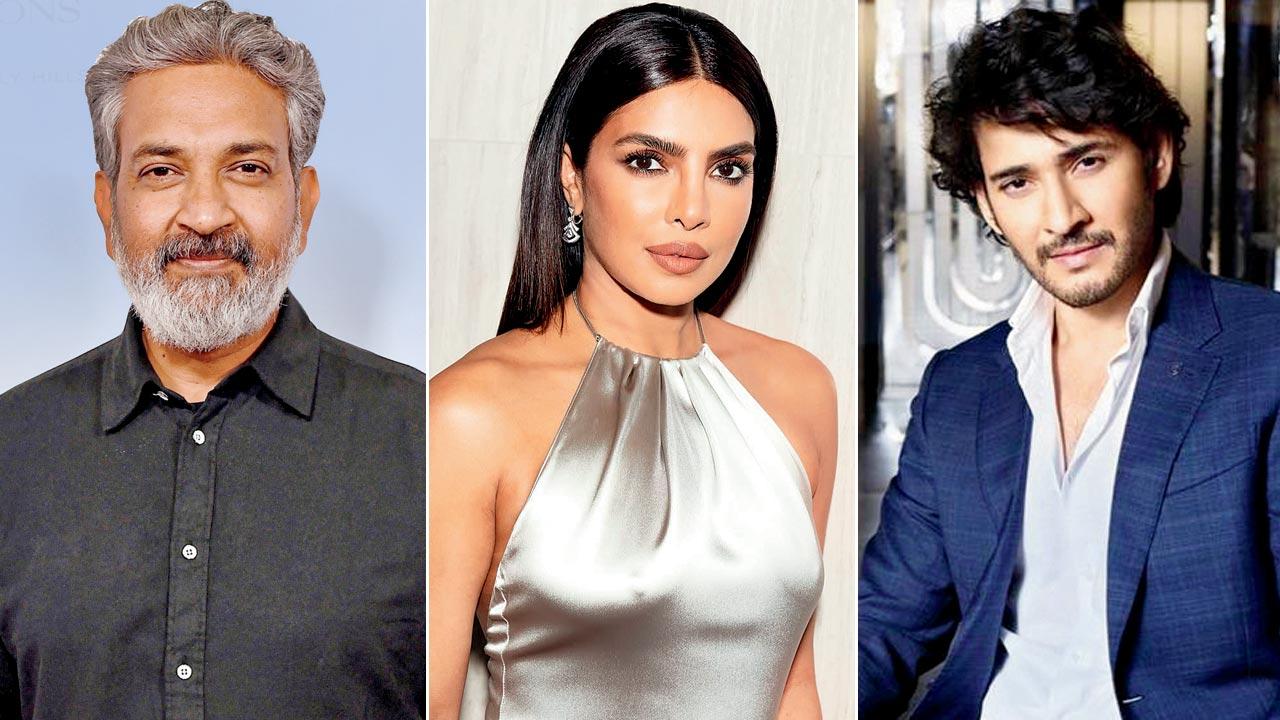
After SSMB29’s Kenya shoot was recently called off due to unrest in the country, sources suggest that S S Rajamouli to film in South Africa and Tanzania
Mohar Basu (MID-DAY; July 14, 2025)
In June, mid-day reported that filmmaker S S Rajamouli would take his Mahesh Babu-led action adventure, the working title of which is SSMB29, to Kenya for a month-long schedule (Kenya calling, June 24). But in the latest development, the plan has hit a roadblock amid the ongoing protests in Kenya.
“Our team had done the recce, locations were finalized, but just weeks before the mid-July shoot, unrest began brewing in the region. We couldn’t risk the crew’s safety,” reveals a source associated with the film that also stars Priyanka Chopra and Prithviraj Sukumaran.
So, where will Babu’s character — a globe-trotting explorer on a quest for some rare artefacts, à la Indiana Jones — head to, with Kenya off the table? We’ve heard that Rajamouli and his team, keen to not waste time, are now planning to head to South Africa and Tanzania, locations that promise similar visual appeal.
A unit member says, “Rajamouli sir was clear that he wanted terrains that have rarely been seen on Indian screens. Tanzania’s highlands and parts of South Africa ticked those boxes.”
The production team is currently in the process of securing permits. If things work out, the cast and crew will head to South Africa by the third week of July. “We’re hoping to lock everything in the next 10 days,” adds the insider.
Talat Mahmood's 100th birth anniversary: When Trinidad, Tanzania were gripped by Talat mania
8:28 AM

Sahar Zaman (THE TIMES OF INDIA; February 24, 2024)
The train came to a screeching halt at the Mwanza station, a beautiful port city at Lake Victoria. It was around 12 noon and 30 to 40 people entered Talat Mahmood’s compartment. He was surprised and a bit worried too. Why was he being stopped from reaching Dar es Salaam for his next show?
“All that they wanted was a show to happen in their town as well. They were such huge fans of Talat but were very upset as to why our itinerary didn’t include Mwanza,” explains an excited 92-year old Nandi Duggal. He was Talat’s first concert manager for his debut world tour in 1956.
The charming star obliged and gave an impromptu performance for Mwanza at their local cinema, which was packed beyond 400 seats, and people had carried their own chairs from home to accommodate the entire crowd. Talat was the first playback singer from India to start world concerts and his three-nation tour to East Africa in 1956 was a resounding success that inspired his colleagues to start touring as well. It was alleged that he started touring only because of a reduction in film offers. On the contrary, he was the biggest singing star when he kick-started world concerts.
In 1968, when the world was engulfed by Beatlemania, the West Indies experienced Talat-mania. He was given a thunderous reception in Trinidad. As the door of his aircraft opened, there was an open limousine waiting for him at the red-carpeted tarmac. People lined up from the airport to his hotel, waving flags, throwing flowers and wearing badges of his name.
What happened on the day of his concert at Skinner Park in San Fernando was unprecedented. It was an open-air location with a capacity of about 7,000. Talat found it difficult to enter backstage. Police on foot just couldn’t manage the rush. Mounted police had to be called in. Helicopters above had to guide the police below. The immediate impact of his West Indies tour was that it boosted record sales at music stores across the region and kick-started a new reality TV show in Trinidad. This was called ‘Talat Mahmood Singing Competition’ in which young singers would compete in singing Hindi film songs. The same year, Talat received a letter from the heart of Times Square at 1481 Broadway Studio. He had been invited to the popular talk show called the ‘Joe Franklin Show’. He was introduced as the ‘Frank Sinatra of India’.
This comparison was re visited when both crooning legends passed away barely five days apart in 1998. It was an amazing moment at the TV studio when an all-American audience watched Joe speak to a suave singer from India, while his songs in Urdu played in between their conversation.
When the state of Minnesota invited him in 1973, they officially founded the India Club in his honour. It was the same year that India was facing an acute drought. So, Talat performed and raised funds in Minnesota to help people back in India. His tours to the United Kingdom were a landmark. The highlight was performing at the esteemed Royal Albert Hall (RAH) in London in 1979. As Talat stepped on stage, being one of the first three Indians to perform at RAH, he reminisced about the audience he had met in East Africa in 1956 and how the next generation of those same families were now part of this audience in the UK.
He started the show with one of his favourites, ‘Hain sabse madhur woh geet jinhe’ from the film Patita (1953). For the next song, Talat said, “This Ghazal was released in 1944 but it still sells like hot cake.” The ghazal was ‘Tasveer teri dil mera behla na sakegi’. The audience at the RAH wanted an encore but Talat apologised. The persuasive audience eventually got their way. Amidst the whistles and claps, Talat repeated the last stanza from his song , ‘Zindagi dene wale sun’ from the film Dil-e-Nadan (1953).
Looking at the huge footfall of his shows in the 1980s, he was given special state honours. The mayors of two cities in the US – Cleveland and Euclid – conferred on him a special citation for bringing their Asian American communities together. By this time, Talat also added the Middle East countries to his tours. The absolute humility of this living legend at the age of 60 was on display when he apologized to his audience in Dubai for his concert starting late. “It’s late but I promise you that I will make sure you hear the best from me and you will feel no loss of time.” This show was at the newly launched Al-Nasr Leisureland in 1984 which was sold to capacity with about 12,000 people.
Award-winning singer fondly recalls her experience of working with him in his troupe. “I used to wonder what made him so great. Even if he missed a note, every word had so much emotion and truth.” Despite slowing down with age, he gave in to the undying demands of his global audiences and performed till at least 1994.
The writer is Talat Mahmood’s grand-niece
------------------------------------------------------------------------
IN 1962 WAR, HE PERFORMED FOR JAWANS IN LADAKH
In 1962, when the war with China broke out, there was little or no comfort for Army jawans, with thin air and cold wind cutting through the bones.
The feeling of warmth and love was far away. But for a while, they had the comfort of a caressing voice. Talat Mahmood sang for the soldiers, in person, in Ladakh. The soldiers were touched. Their hearts were filled with emotions as Talat sang one soul-stirring hit after another. “Singing was an ordeal there. The air was too thin for breathing but in a gasping manner, I managed. I had to perform with such thick gloves that playing the harmonium was a new experience”, recalled Talat.
His voice was an immediate balm for the troops. “They loved us for we sang of their sorrows, hopes and fear. But they also wondered as to how these ‘softies’ of the film world could climb up the Himalayas simply to entertain them. But they didn’t know that we also loved them for their bravery and marvelled at their courage. They had left their home, friends and family to go up the treacherous terrains of our frontiers simply so that we could live in peace,” expressed a grateful Talat.
We were exhausted due to Vicky Kaushal-Katrina Kaif's wedding but still went for the safari-Malavika Mohanan
8:28 AM

Ashish Joseph (BOMBAY TIMES; July 30, 2022)
Actress Malavika Mohanan has several memorable wildlife experiences from her safaris in places like Tadoba and Ranthambore, and even from Serengeti in Tanzania. She talks about what it is like to sight tigers in India, safari destinations on her bucket list, and more. Excerpts:
How did you get drawn to wildlife?
Growing up, I read a lot of books and watched several documentaries on wildlife. So, I have always been a nature lover. But living in big cities, you are not exposed to that part of the world. About five-six years ago, I went to Wayanad with one of my friends. From there, we went to Mudumalai, Masinagudi and Kabini that whole belt. That was how I reconnected with that childhood love of wildlife. As I started doing more safaris, I felt the need to start documenting them. That’s how I started taking photographs and all that. And it’s a nice change from what I do career-wise; it feels good to do something completely different and then come back to work.
You went on a safari in Tadoba Tiger Reserve a couple of months ago. Tell us about your experience…
It’s said that lions are the most majestic animals in a jungle. Yes, they are. But I find tigers equally majestic. What makes them even more enduring is that they are hard to spot; they are very shy cats. If you go to Gir National Park or certain parts of Africa, you can see lions sitting in the open. But tigers… if they sense human movement, they crouch and slink away. Tadoba National Park, which is in central India, is one of my favourite places. Thanks to the landscape, it’s easier to spot tigers there than in other places, like Bandipur. Even Wayanad has tigers, but the place has a rich rainforest. So, they stay hidden in the lushness and you may not find them easily. Central India has a more barren and bushier landscape. So, it’s a great place to spot tigers. Especially during summer, when the water bodies start drying up, if you go to these watering holes, you may spot tigers there. I went on five safaris last month and I ended up seeing eight tigers and three leopards!
What has been your most memorable tiger-sighting experience so far?
We were near Ranthambore for Vicky Kaushal and Katrina Kaif’s wedding. It was a big fat Punjabi wedding — three days of partying and dancing. We were also exhausted by the end of it. Even then, I really wanted to go on a safari and told my parents to accompany me. It was a two-and-ahalf-hour safari in the evening and we had a very good naturalist with us. When you’re in the wild, it’s very important to have a good naturalist. They know how to track the movements of big cats and are also familiar with individual tiger behaviour. Two hours went by and we didn’t spot even one tiger. Ranthambore is strict with the entry and exit timings of the safari jeeps. When we had barely five minutes before the safari came to an end, we heard a roar in the distance, and it kept getting louder. And suddenly, we saw a tiger coming out of the bushes. The experience was all the more special because it was just us, as all the others had left. The tiger came close to our jeep and we took some pictures against the setting sun. It was a magical experience.
This must be the best wildlife experience you’ve had, right?
Well, I have had another one in Africa (in Tanzania), one of my favourite places in the world. Africa is where you can feel closest to nature. Though the safaris are curated, once you enter, you don’t know what’s going to happen or what you are going to see. You usually get to do a full-day safari there. So, if it’s a six-day safari, on the first day, you go from point A to B and on the next day, you go from B to C. So, we were just finishing the day safari and heading back to the camp for the night. We had gone to see hippos and suddenly, our driver stopped the vehicle and showed a leopard climbing a tree with its prey — a deer — and there were hyenas below, waiting to feed on the remnants. These are things that you see in pictures and videos, but when you see it in real life, it’s very humbling.
Do you have a bucket list of places where you want to go tiger-spotting?
We’re lucky that India is one of the best places to spot tigers. There are some continents that don’t even have tigers. I want to go to Kanha and Bandhavgarh in Madhya Pradesh to see tigers. I want to explore more of central India. Photography-wise, I want to click more pictures of them in their element and capture their emotions. I have taken enough pics of them simply sitting. That’s one thing on my list.
There is debate over how safaris are detrimental to the conservation of wildlife. Would you agree?
In many ways, we have intruded into their habitats. The forest covers have shrunk. But a place, like Ranthambore maybe — the whole national park is not open to tourism. It’s only a part of it that is open for safaris, and everything else is protected. The idea is to get more money that can then be pumped into wildlife protection and conservation projects. But that said, we have to follow certain rules and maintain decorum while going on safaris. Imagine that you are sitting in a park and suddenly, 10 jeeps with people halt in front of you. But we’ve very stringent wildlife conservation laws.
FOLLOW BASIC ETIQUETTE WHILE GOING ON A SAFARI: MALAVIKA
1. Don’t make noise and maintain the sanctity of their space
2. Avoid using anything that has a strong scent. Their senses are strong and so, I don’t wear perfume on safaris.
3. Wear neutral colours. The idea is to try and camouflage as much as you can.
4. Don’t litter. Unfortunately, that is something most people do.
When it comes to wildlife photography, you need to have luck and patience-Waheeda Rehman
7:21 AM

Veteran actor Waheeda on pursuing her hobby as she hosts wildlife photography exhibition
Sonil Dedhia (MID-DAY; December 16, 2019)
It’s never too late to discover a new passion. Waheeda Rehman will vouch for it — after decades of romancing the camera, she is equally happy behind it. The yesteryear actor has turned a wildlife photographer as she recently held an exhibition of her pictures from her safaris to Kenya, Tanzania, and wildlife reserves across India.
“I always loved taking pictures. When I was young, I would carry a small camera with me on the sets. I recently met Himanshu Seth [curator of the show] who asked me to pursue my hobby and came up with the idea of having an exhibition. I wasn’t too keen to display my pictures as I didn’t think they were great, but my friends and family persuaded me,” she smiles, adding that what started out as a mere hobby has now become “an addiction”. “When it comes to wildlife photography, you need to have luck and patience.”
She may be 81, but it is evident that Rehman is unstoppable as she discusses her bucket list. “I want to learn scuba diving,” she shares, before revealing that she is working towards it. “Prahlad Kakkar’s son runs a professional training company. I will discuss my health condition, and will try my hand at it.”
Image: Check out Hrithik-Hrehaan-Hridhaan Roshan's African adventure
7:51 AM

The actor and his sons, Hrehaan and Hridhaan, took off to the continent for a quick family holiday after their Spanish getaway
Avinash Lohana (MUMBAI MIRROR; June 29, 2016)
Hrithik Roshan took a break
from the shooting of Sanjay Gupta's Kaabil in Mumbai to fly off to Spain
with his sons, Hrehaan and Hridhaan. The trio then headed to to Africa
for some fun and adventure. “Hrithik loves to go on vacations with
his boys. They are on a summer break
around this time and the African trip was planned much in advance. The
adventure junkies explored Mount Kilimanjaro in Tanzania and clicked the
wildlife on show,“ informs a source close to the actor.
The 42-year-old actor shared a picture of him and his kids being photo-bombed by three bears. “The equal numbers are just a coincidence,“ he noted. Another picture read, “For the last time, I did NOT get us lost,“ with the actor trying to figure out the way with the help of a map. The father and sons are set to return to the Bay around mid-July. Last year, after a short trip to Maldives, Hrithik took his brood to South Africa where they visited The Cape Of Good Hope and met the Kalahari Bushmen.
Upon his return the Jodhaa Akbar actor will embark on a promotional tour for the Ashutosh Gowariker-directed period drama Mohenjo Daro and will resume shooting for Kaabil, which features Yami Gautam as his love interest.
I think I scare people off-Sneha Rajani
9:14 AM

Sneha Rajani on her Bollywood beginnings, Piku’s success, why she won’t make sex comedies and her Rajesh Khanna connection!
Sarita A Tanwar (DNA; June 7, 2015)
The film industry has been predominantly
male-dominated from as long as I can remember. And that’s why, each time
a woman makes her mark, there’s a feeling of euphoria. The sense of
achievement feels almost personal. In front of the camera and at the
ticket counters, talents like Deepika Padukone and Kangana Ranaut are
creating a storm. And behind it, people like Sneha Rajani (Deputy
President and Head, MSM Motion Pictures) are making their presence felt
with their creative and business acumen. Rajani made her ‘debut’ as
producer this year (after a long stint in the television industry) with a
certified hit like Piku. Even though it was an unconventional film to
start her journey into showbiz, her belief paid off big time. The woman
behind Piku tells how it all happened…
Let’s talk about your journey into films. Was it planned or intentional?
I moved to India wanting to make movies. That was always a childhood dream. Since the time I was a little kid, I always wanted to make movies. I am originally from Tanzania. I was born there and the education system over there is quite poor. So my father always wanted to send me to a boarding school in Bombay, also since my two older siblings were studying here. But I was very adamant about staying back there. At that time (in 1975), Haathi Mere Saathi was a very popular film in Tanzania and I must have seen it about 15 times as a kid. My dad wanted me to go to India but I was adamant about not moving. One day he said that if I went to Bombay, Rajesh Khanna would come on an elephant to pick me up at the airport. So I agreed. When the plane landed in Bombay, I got off the aircraft and kept looking for Rajesh Khanna on an elephant and when I didn’t see that, I sat on the tarmac and started crying. The security guards had to actually lift me and take me inside the building. I did not eat for the next three days.
So how did you finally recover from that?
I just kind of got over it after three days of crying non-stop. I think the germ of getting into movies came into me around that time. Haathi Mere Saathi and all of Mr (Amitabh) Bachchan’s films was my staple diet in movies. I must have seen Sholay more than 25 times. Haathi Mere Saathi was my favourite film as a kid but throughout my growing-up years, I’ve always been a crazy Amitabh Bachchan fan.
Being a woman is always tough in the film industry. Have you faced that yet?
That’s never happened. Maybe it’s a reflection of who I am. I think I scare people off.
You started your film journey with an unconventional film like Piku, which was not exactly a commercial bet. Did you face any resistance?
Piku was first mentioned to me by Wing Commander Ramesh. He is the CEO of Mr Bachchan’s company. He narrated a one-liner to me. When I read the script, I immediately knew that we had a winner and this film had to be made. Fortunately, it didn’t require much convincing with everybody else within the system. At that stage, Piku was about the wonderful writing. The way the scenes had been conceived, I could just see them all playing out in my head while I was reading it. It was that powerful visually. I am very clear that I will never back a ‘project’. I will always back a script and that is what we intend doing going forward.
The success of Piku has stunned the industry. Did you expect it?
I didn’t think it would be such a huge blockbuster but I had always said it would do 100 crores worldwide. The fact that it’s actually done that, is a nice feeling.
You’re a big Bachchan fan. Is that why you had him in your first film?
I actually mentioned this to Mr Bachchan when I was moving out of television and stepping into this role. I went to meet him to say I wouldn’t be a part of Kaun Banega Crorepati anymore and I left that meeting saying, “I hope that my first film is with you.” I think God really likes me because he made it happen.
You’ve known AB closely from the KBC days. Any memorable anecdotes?
There are far too many of them. But I mean, we have heard this so many times. He is a thorough professional, he is thorough gentleman and he is extremely punctual. Even after all these years and having done over 500 episodes of KBC, he meticulously follows a rigid pattern for every episode. And he will not compromise on that for anybody’s sake.
And what is that?
He will arrive on the sets, he will get a briefing from the team, he will get the script, he will go through the script, and he will go to the script room then where it is being fed into the teleprompter. He will go and read it through the teleprompter over and over again. Then he will go and read about a 100-odd questions that could come up. He will go and rehearse those. Then he will go back to his van and he will read the script yet again. It’s a pattern he follows. At times, we say, “Sir, you have already done this, so let’s start rolling.” And he’ll say no until he is completely satisfied. It obviously works for him and I don’t think he should move away from it.
The success of films like Piku is changing the definition of commercial cinema. Agree?
I don’t think it’s just about Piku. This trend frankly started off more or less with Kahaani, followed by Queen. I think those films actually started this whole trend of offbeat films doing commercially well. Yes, Piku has done exceptionally well and I’d like to believe that somewhere along the line, this will help make more of such films. I’d like to make a variety of films, which is why our second announcement has been Azhar with Balaji and that’s dramatically different.
You also released Piku yourself through Yash Raj Films. You didn’t sell the film in parts like most producers do.
It was my belief in the film and I think YRF is certainly the best in the business as far as distribution is concerned worldwide. Because I’d always said that Piku would do 100 crores and I wanted that to come true, I thought YRF could make that happen. I’m glad that worked.
As a producer, what drives you?
Making good cinema. Cinema that I believe will work at the box-office and also be loved by people. But for me, it has to make commercial sense.
Do you believe Bollywood is set for a massive change in terms of the kind of films being made?
2014 has been the watershed year of the film industry. I think last year was going to be a defining year with so many films not doing well. I think the whole focus on content has come back, which is great news for the industry.
Is there any kind of film you wouldn’t ever make?
I wouldn’t want to do a sex comedy. I’d like to make family-friendly films as much as possible. I may make a horror film — not necessarily a family film — but I won’t make a sex comedy.
Subscribe to:
Posts (Atom)