Showing posts with label Tanhaji: The Unsung Warrior. Show all posts
Showing posts with label Tanhaji: The Unsung Warrior. Show all posts
I don’t know how Om Raut decided to cast me as Chhatrapati Shivaji Maharaj in Tanhaji: The Unsung Warrior-Sharad Kelkar
10:54 AM
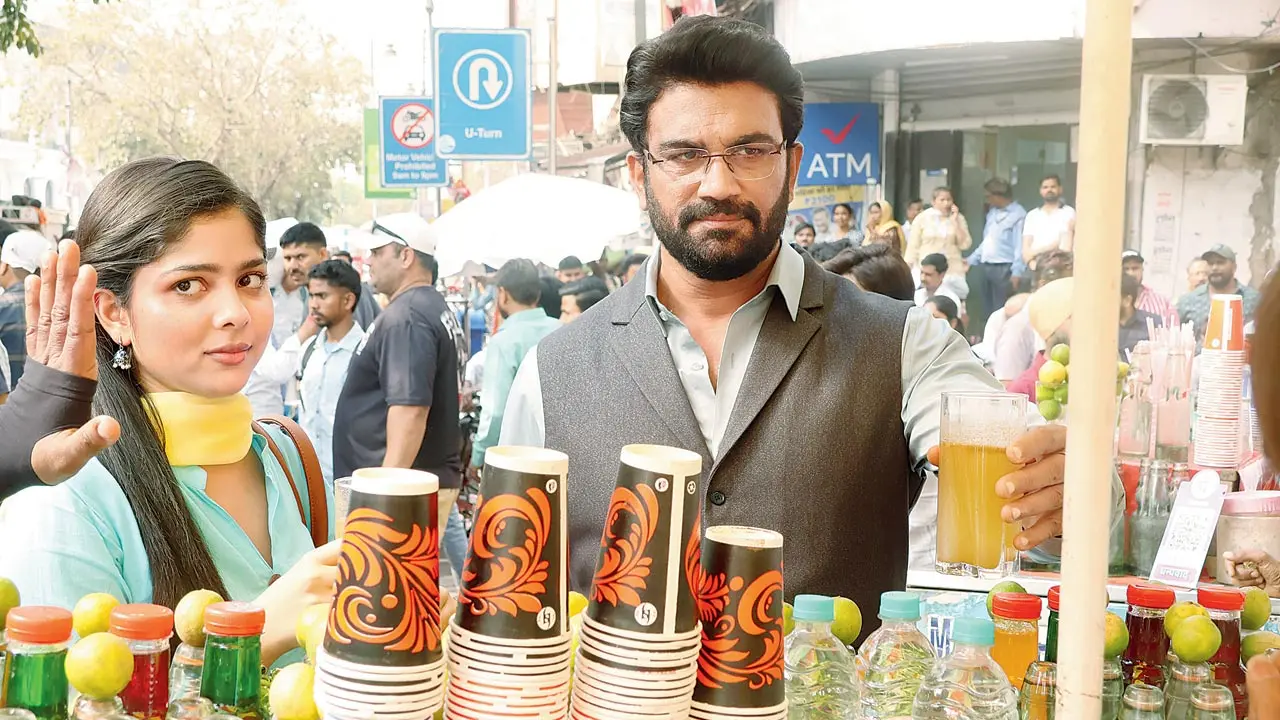
(L-R) Niharika Chouksey and Sharad Kelkar in ‘Tumm Se Tumm Tak’
Actor Sharad Kelkar argues against expecting television and film to carry social responsibility beyond their entertainment value
Letty Mariam Abraham (MID-DAY; July 29, 2025)
Acting is his forte, regardless of the character he plays. Sharad Kelkar, who returns to television after eight years, is excited to explore his romantic side — one he rarely gets to showcase onscreen. In Tumm Se Tumm Tak, the actor plays a 46-year-old business magnate who falls for a spirited 19-year-old. Ask him why, and Kelkar says it was the perfect choice for his comeback to TV. While many are surprised by the age gap between the lead characters, he maintains, “It proves that when two hearts truly connect, age is just a number.” In conversation with mid-day, he discusses his evolution as an actor, why television should be viewed purely as a source of entertainment, and why no amount of money is worth losing his peace of mind. Excerpts from the interview.
Do you ever have self-doubts about a character you are playing?
I have always strived to do things I have never done before. Of course, there are times when you end up doing similar things because the scale of the project is huge, especially in films. Sometimes, it is the story that intrigues you — even if you are repeating a character — but I try to do it as differently as possible. I’m ideally a director’s actor; I never go to the monitor to watch my shots. The director knows what he is shooting and what I’ve done, and he will tell me if it needs to be reshot. Who am I to judge? In fact, I welcome such criticism because it’s good for the project and for me.
Over the years, have you come across a director who has contributed to your growth as an actor?
It has been amazing throughout my career. Most of my roles have been unexpected — roles I never thought I would get to portray. Director Nishikant Kamat was the first to see me in a negative role when I was doing positive characters in TV shows. He offered me Lai Bhaari [2014]. If you go into the interiors, they still call me Sangram [his character in the film]. I don’t know how Om Raut decided to cast me as Chhatrapati Shivaji Maharaj in [Tanhaji: The Unsung Warrior, 2020]. Then there’s Raghava Lawrence, who chose me for Laxmii [2020]. I think I’ve been blessed to receive such different and unexpected roles.
There’s a rumour that you are the highest-paid actor on television. Is that true?
Actually, someone said that I’m the highest-paid on TV after Salman Khan and Amitabh Bachchan. Maybe in fiction shows, yes, but I still feel Smriti [Irani] would be the highest-paid actor. Rupali [Ganguly], who is doing Anupamaa, must be on the list. And Shabir [Ahluwalia] would be on the list too. However, I cannot be sure.
Is money a deciding factor for you?
It is one of the important aspects, I won’t deny it. If I am getting it, why not? When I do films, if you start doing them only for money, you may get two or three projects — then nobody will call you. Your work has to be substantial, earn that place in the industry, and be dependable. Money is still secondary. Sometimes you compromise; at times, you [demand] more if you’re in a better position. I have done a lot for friends. Money is important, but my peace of mind takes priority.
Tumm Se Tumm Tak is an adaptation of the Kannada show Jothe Jothiyali, which ran for three years. Have you committed for three years?
I haven’t seen the show. We spoke about it; the pace of our show is faster than that of the other. If people start liking it, then I may consider it. How can I decide in advance? I don’t sell my life that easily [laughs]. My contract, for now, is only for a year, which is standard policy. The show is divided into two tracks. As per the tagline, it is the meeting of two worlds. The advantage I have is that I don’t have to shoot for 20 to 25 days at a stretch. I get time to do my films, go on holiday, and spend time with my family.
There’s been a lot of talk about the age gap between your and Niharika Chouksey’s characters. Do you think such a storyline will find acceptance?
This is a fictional story. Everything should be seen from the right perspective. You cannot expect comedy from a film like Aligarh [2016]. I feel films are not meant to improve society. They are stories. They can’t be real. We are selling dreams, not [shaping] moral codes.
Any visual medium acts as an influencer, so don’t you also have the responsibility to give the right messaging along with entertainment?
Parents are spending money to send their children to school and colleges, but instead of getting influenced there, why is the onus on films, shows, and actors to guide or influence people the right way? These are just for entertainment. Inspiration should be only about the craft; the rest is fictional. I feel their perspective is wrong. How many of us would say, after watching Mirzapur, that we want to be like Kaleen Bhaiyaa? But someone who already has that instinct will obviously get influenced. We are not putting the idea there. It’s not like people started honour killings after watching movies and shows.
After Tanhaji, Ajay Devgn keen to cast Hrithik Roshan as the antagonist in new film on unsung warriors
8:44 AM

Sources say after Tanhaji, Ajay Devgn, and director Om Raut planning the second edition of the unsung warrior's franchise; the actor is keen to cast Hrithik Roshan as the antagonist
Upala KBR (MID-DAY; November 30, 2024)
Imagine a film franchise on the unsung heroes of India— that was actor-producer Ajay Devgn’s plan after his Tanhaji: The Unsung Warrior (2020) became a runaway hit. However, he couldn’t put the plan to action at the time as director Om Raut and he got busy with their respective projects. Over four years on, it looks like the actor-director duo may reunite for the second instalment of the franchise. Not just that, sources say Devgn is keen to rope in Hrithik Roshan for a pivotal role in the historical drama.
In the past few months, Devgn and Raut apparently met a couple of times at the actor’s office to discuss taking the ‘Unsung Warriors’ franchise ahead. A source tells us that the duo was initially keen to bring the story of Baji Prabhu Deshpande, a 17th century general of the Maratha army, to the big screen.
The source elaborates, “The brave-heart is known for his role in the Battle of Pavan Khind, which took place in 1660 and saw him sacrificing his life to defend Shivaji Maharaj. But Ajay and Om hit the brakes on their plan when the Marathi film, Pawankhind [2022], which explored the same subject, was made. Now, they are toying with two options—either tell the same story on a grander scale, or choose another hero from the Maratha kingdom. The talks are still at the nascent stage. They haven’t entirely scrapped the idea of making the Baji Prabhu biopic, as a lot of research and planning had been done on that front.”
In Tanhaji, Devgn played the eponymous hero, even winning the National Award for Best Actor for the performance. Saif Ali Khan stepped into the shoes of Udaybhan Singh Rathod, Tanhaji’s adversary in the story. While Devgn will play the lead in the second instalment, he is eager to cast Roshan as the antagonist.
The insider shares, “Ajay feels Hrithik has tremendous screen presence and charisma. Couple that with his acting prowess, and the superstar will be a towering rival to Ajay’s character.” If things work out, this will be the two superstars’ first on-screen union. As far as the casting of Chhatrapati Shivaji Maharaj is concerned, we have heard Sharad Kelkar will reprise the role after Tanhaji.
Baahubali 2 is the top grosser in Mumbai circuit by a margin
10:10 AM
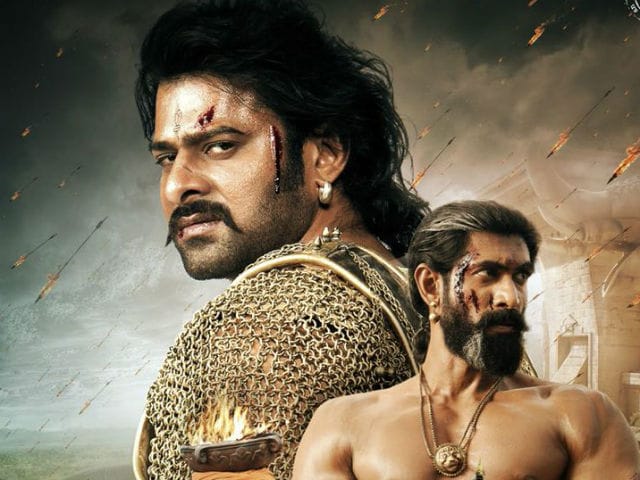
Box Office India Trade Network
BAAHUBALI 2: THE CONLCUSION still remains the top grossing film in Mumbai circuit and that too by a distance. In fact the top two films in the circuits are from South with KGF - CHAPTER 2 holding second spot. GADAR 2 would have been ahead of KGF - CHAPTER 2 if it had a solo release and pricing of the other blockbusters of 2023 but even with that it would not have reached the BAAHUBALI numbers.
If we take original Hindi content then its TANHAJI: THE UNSUNG WARRIOR leading in Maharashtra and GADAR 2 in Gujarat. Despite these huge grossers in 2023, the circuit generally was an underperformer but things look better now. There are chances that 200 crore nett can be hit in the circuit and the best shot at that will be PUSHPA 2 - THE RULE if the film has the merits of PUSHPA: THE RISE - PART 01.
Actually the films that can set huge numbers in this circuit in 2024 are both scheduled for a clash in August. Both PUSHPA 2 - THE RULE and SINGHAM AGAIN are at the moment set for an August 15th release date and both teams are adamant at the moment. So much work is left on both films that its a race against time and normally time wins in these scenarios. Both these films, if they work, will outperform in Mumbai and at the end of 2024, both will be among the top three.
The release date is outstanding with Independence Day on Thursday, Rakhsha Bandhan on Monday and then Janmashtami on second Monday. Gowever unlikely it looks at the moment, it would be great for the box office if one of the films could come as otherwise the period will not get the huge numbers it should.
The top ten grossers in Mumbai circuit at present are as follows. The only other film outside the list below to cross 100 crore nett is SANJU.
1. Baahubali 2: The Conclusion - 1,82,56,00,000
2. KGF - Chapter 2 - 1,45,45,00,000
3. Gadar 2 - 1,43,98,00,000
4. Tanhaji: The Unsung Warrior - 1,43,85,00,000
5. Jawan - 1,40,05,50,000
6. Animal - 1,36,84,00,000
7. Pathaan - 1,35,82,00,000
8. Dangal - 1,04,26,00,000
9. PK - 1,04,21,50,000
10. Tiger Zinda Hai - 1,03,40,50,000
When I came to the office in Chhatrapati Shivaji Maharaj's attire, everybody went quiet-Sharad Kelkar
9:06 AM

On the birth anniversary of Chhatrapati Shivaji Maharaj, Sharad Kelkar opens up on playing him on screen; calls it a once in a lifetime role
Rishabh Suri (HINDUSTAN TIMES; February 19, 2024)
Having essayed a variety of roles in films and serials, nothing has given Sharad Kelkar as much of a sense of pride as playing Chhatrapati Shivaji Maharaj. He stepped in the shoes of the celebrated Maratha ruler for Tanhaji: The Unsung Warrior (2020), one of the biggest hits of his career. As the actor shoots for us exclusively on Chhatrapati Shivaji Maharaj Jayanti aka Shiv Jayanti, today, the first thing he does is remove his footwear as a mark of respect.
He says, “This is a day of celebration for all Indians, not just Maharashtrians. It’s a matter of pride to celebrate the day of his birth.”
The 47-year-old was “surprised” when he was offered the role. “I had never met or spoken to (director) Om Raut before. He called and said he wanted me to play Shivaji. It took me two minutes before asking, ‘Why me?’. We did a look test, and when I came to the office in the attire, everybody went quiet, and I realized they were looking at me. That gave me a lot of confidence,” he shares, adding, “For a Maharashtrian and a Marathi actor this role is once in a lifetime. It’s the biggest achievement [of my career] and a matter of great pride to have played Shivaji.”
Having spent his childhood years in Madhya Pradesh, the actor didn’t have much exposure to learn about Shivaji in school and the film’s set was his learning ground.
After the film’s release, capitalizing on the adulation he received for the role, he says, “I requested the Chief Minister of Madhya Pradesh to add a chapter or prescribe a separate book in schools [in MP], so people would get to know about him more. I used to see a very small story on Shivaji Maharaj in our textbooks [when I was in school].”
Is a tax-free film ticket cheaper? Experts share their views
8:18 AM

Every year, several films are declared tax-free by some state(s). In the past, some films have had eight to nine states declaring them tax-free. But what does that really mean – for the cinemas and for moviegoers?
Niharika Lal (BOMBAY TIMES; May 16, 2023)
HOW MUCH CHEAPER IS YOUR TAX-FREE TICKET?
In December 2018, two GST slabs were announced for films – 18% for tickets above Rs. 100, and 12% for tickets below Rs. 100. This tax is divided between the state and central government (State GST and Central GST). When a state declares a film ‘tax-free’, it exempts half of the entertainment tax, which would be either 9% or 6%, as per the ticket price. For the multiplex audience, since there are hardly any tickets available below Rs. 100, the default exemption would be 9%.
TAX-FREE STATUS HAD A BIGGER IMPACT IN THE PRE-GST ERA
Cinema hall owners say that declaring a film tax-free had a bigger impact in the pre-GST years, when every state had different entertainment tax and the state governments could exempt the whole amount. Now, with GST in play, a moviegoer still needs to pay Central GST even for tax-exempted films.

‘TAX-FREE EXEMPTION DECLARATIONS CREATE AWARENESS ABOUT A FILM’
Rajender Singh Jyala, Chief Programming Officer PVR INOX Limited, says, “Whether a film will perform better after tax exemption largely depends upon its content. For a moviegoer, tax-exempted tickets used to be cheaper in the pre-GST era. Now, when a film is declared tax-free (it is more about that) it creates awareness about the film among the audience. Hence, even if the film is declared tax-free in only one or two states, the film performs well in other states too.”
‘IT WORKS AS A PUBLICITY TOOL AND INCREASES LONGEVITY IN THEATRES’
Producer Girish Johar, several of whose films were declared tax-free in pre-GST years, says, “There are three reasons why producers want their films to be declared tax-free. First, it lures moviegoers to watch a film, second, it works as a publicity and marketing tool because a state government is endorsing your film; and third, the film gets longevity and instead of four weeks, it may end up getting eight weeks in the cinema hall.”
WHAT MAKES A FILM ELIGIBLE TO BE TAX-FREE?
There’s no fixed criteria for a film to claim exemption. Usually, socially relevant films or inspiring stories are made tax-free. From films on issues, such as Toilet: Ek Prem Katha, Chhapaak and Hindi Medium, to biopics like Mary Kom and historical films like Tanhaji: The Unsung Warrior have been declared tax-free over the years.
Sometimes states also declare films tax-free to show solidarity with its theme and in some cases producers apply for a tax-free status. In their film policy, some states have the provision of declaring a film tax-free when a certain portion of a film is shot in the state. Overall the decision resides with the state government.

It took months of storyboarding and designing the action sequences in Bholaa-Ajay Devgn
8:44 AM

Admitting that the bike sequences were the most challenging part of Bholaa, actor-director Devgn on how they were storyboarded for months before being filmed
Hiren Kotwani (MID-DAY; March 8, 2023)
Last year, Ajay Devgn was among the handful of Bollywood stars who cracked the box office, delivering a smashing hit in Drishyam 2. Now, all eyes are on his next, Bholaa, with Tabu. Emotions may be at the core of the film, which tells the story of one night as an ex-convict helps the cops catch gangsters in exchange for meeting his daughter. But as actor-director Devgn gives his own interpretation to Lokesh Kanagaraj’s Tamil hit Kaithi (2019), action takes centre-stage.
Scenes from the recently released trailer establish this — in one instance, the leading man’s bike skids to a dramatic effect while speeding towards the baddies; in another, he swings from a moving truck to a bike. “The motorcycle sequences were the most challenging,” admits Devgn, before adding, “It took months of storyboarding and designing the action sequences, before we got down to shooting them.”
Probed on how many days it took to shoot them, the actor-filmmaker says, “When your planning and prep is done to the last detail, it doesn’t take long to shoot. We wrapped up the [entire film] in 73 to 75 days.”
The actor’s association with motorcycle stunts goes back over 30 years, to his debut film, Phool Aur Kaante (1991), where he performed a split on two bikes. That set the tone for his career as an action hero, though he proved his versatility as an artist over the decades.
As he returns to home turf with Bholaa, Devgn says it was necessary for action directors Ramazan Bulut and RP Yadav to think out of the box, especially in today’s times where social media users are quick to point out if an action set-piece is inspired by an international movie. “When you don’t have reference material, you push the envelope to design new stunts that go with the narrative,” he states.
Devgn says being tech-savvy aided him to work towards making Bholaa a visual experience in 3D and IMAX. “Every film gives [me] an opportunity to explore and experience something new. What you see in Bholaa is something we haven’t tried before, say in Tanhaji [The Unsung Warrior] or Runway 34.”
People have been behind me to play Chhatrapati Shivaji Maharaj again-Sharad Kelkar
8:29 AM

Vinay MR Mishra (HINDUSTAN TIMES; February 19, 2023)
In the past, several actors have brought to life the journey and legacy of Chhatrapati Shivaji Maharaj, one of the recently-known ones being Sharad Kelkar. The actor’s portrayal of the Maratha emperor in the Om Raut directorial, Tanhaji: The Unsung Warrior (2020), not only won him accolades, but also brought about changes in him.
“As a human being, I’m a little calmer now. Om presented Maharaj in a different way. Usually, people portray him in an aggressive way, he (Raut) made him human. The poise made me calmer in life. Also, the role brought patience to my life. Maharaj is someone who always waited for the right time,” Kelkar shares, on account of Shivaji Jayanti, today.
He goes on to reveal that the character has been offered to him several times since his 2020 film. “People have been behind me to play Maharaj again; almost every month I get a call from someone. My only condition is, the story should be about Maharaj and not about someone else. I want to do it (a project) when Maharaj is the prime character,” he reasons.
Not only has playing Chhatrapati Shivaji Maharaj brought about changes in his personality, it has also changed makers’ perception of him, feels Kelkar. “Before Tanhaji happened, most of the work I was getting was due to the personality I carry. They didn’t notice the actor in me. I was mostly offered negative roles. After playing Chhatrapati Shivaji Maharaj, the perception has changed. They (makers) treat me as an actor,” the 46-year-old asserts.
He also credits his director, Raut, for the way things panned out: “When I used to walk on to the sets, there was an interesting silence. It was the respect towards Maharaj. Om has done in-depth research about the character. He used to sit down with me and take me to that era before every scene. We haven’t done any retakes, performance wise. Om has a big hand in the creation of the role.”
We hunted down an old jeweller in Kolhapur whose ancestors made jewellery for Shivaji Maharaj’s family-Nachiket Barve
8:32 AM
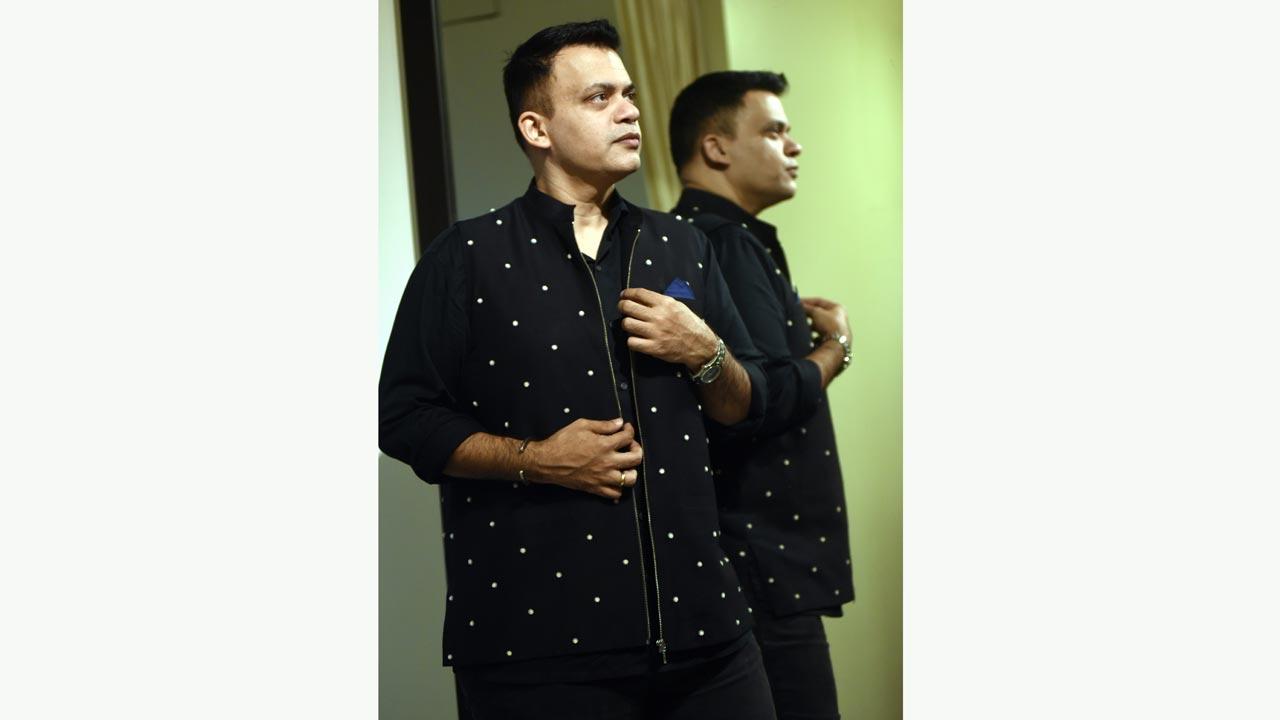
Fashion designer Nachiket Barve sought authenticity while designing costumes for Tanhaji, but says there is no right or wrong in period films
Heena Khandelwal (MID-DAY; July 31, 2022)
It is imperative to get the world of the film or the universe of the director right,” says fashion designer Nachiket Barve, recipient of this year’s 68th National Film Award for his costumes in the period drama Tanhaji: The Unsung Warrior.
Calling the honour “surreal”, he says that while several factors play an important role in period films, restraint is the key to getting it right. “The film Gandhi [1982] won an Oscar for costume design,” he reminds us. “It largely showed people wearing khadi, but Bhanu Athaiya’s genius and restraint stood out for the jury.”
For Tanhaji, Barve spent close to two years on research, visiting several museums such as the Kelkar Museum in Pune, Salar Jung Museum in Hyderabad and The Victoria and Albert Museum in London. “It was important to understand what would or wouldn’t be acceptable as authentic to that period, while ensuring it works for the cinematic view and aligns with the filmmaker’s vision.”
“It was also important to practise restraint. My eponymous label is quite luxurious; it specialises in surface embellishment. However, I stayed away from doing so for the film as it would have been historically inaccurate. For Kajol’s character, Savitribai Malusare, Shivaji Maharaj’s subedar Tanhaji’s wife, the focus had to be on her social status and the kind of textiles she would have worn, and then bring them to life. Ajay Devgn and Kajol may be ‘hero’ and ‘heroine’, but they were playing a warrior and his wife [in the film]. The real royalty was Shivaji Maharaj, played by Sharad Kelkar,” says 41-year-old Barve.
He also delved into geography and weaves of that period while selecting fabrics. “At the time, the Maratha empire stretched all the way from Karnataka to Madhya Pradesh and beyond. So I sourced textiles from across these states, and put them together for Sharad in a manner that looked authentic and dignified. He recently told me that a compliment he gets often is that his was the rendition closest to what Shivaji Maharaj must have looked like which is so flattering.”
For Devgn, they used hand-spun khadi, which would have been the textile of choice at the time, and relied on natural dyes. “We had weavers from Dharwad to weave nauvari sarees in pure cotton for Kajol. Instead of roses in her hair, which would have been beautiful but not authentic, we used yellow chrysanthemum flowers because they are indigenous and used kumkum instead of stick-on bindis, which would been the practice at the time.”
While it was tempting to get a jewellery brand on board, Barve says that the director of the film wanted to create an authentic world. “We hunted down an old jeweller in Kolhapur whose ancestors made jewellery for Shivaji Maharaj’s family. They had old moulds which we used to make pure gold jewellery for the film to stay authentic to that period. We also kept in mind that ornaments would have been worn according to the occasion, and we stuck to that instead of covering our heroines in gold from head to toe,” he shares, adding that he was also mindful of functionality. “There were many fight sequences, so we constructed garments keeping [freedom of] movement in mind. We ensured shoes were comfortable enough to run in.”
When asked what costume designers are likely to get wrong when designing for period dramas, Barve observes, “There is nothing someone can prove or disprove; it’s all about creating a cinematic universe. The same subject can be treated differently by different directors. Ultimately, it is his vision and there needs to be a creative synergy between the director, costume designer, DOP [director of photography] and actors for this world to come alive.”
Would he agree to cheat to help the director achieve his cinematic dream? “I would have to marry knowledge with the style of the director to ensure that the costumes sit seamlessly in the universe of his vision.”
Barve’s next two films as a costume designer are also period dramas—the multilingual Har Har Mahadev and Adipurush. The latter, made by Om Raut, casts Prabhas as Ram, Kriti Sanon as Sita, and Saif Ali Khan as Ravan. “It is a take on Ramayan, a tale we all know. The brief came from the director and once I understood his world, we started researching material, colour palette, and [thinking about] what we wanted the characters to embody,” he says.
Quite unlike designing for Ani… Dr Kashinath Ghanekar, a 2018 Marathi movie, which had pictorial references and thus, very little scope of going wrong, Adipurush, says the fashion designer, is set further back in history and offers no reference points. But Barve is more than ready for the challenge.
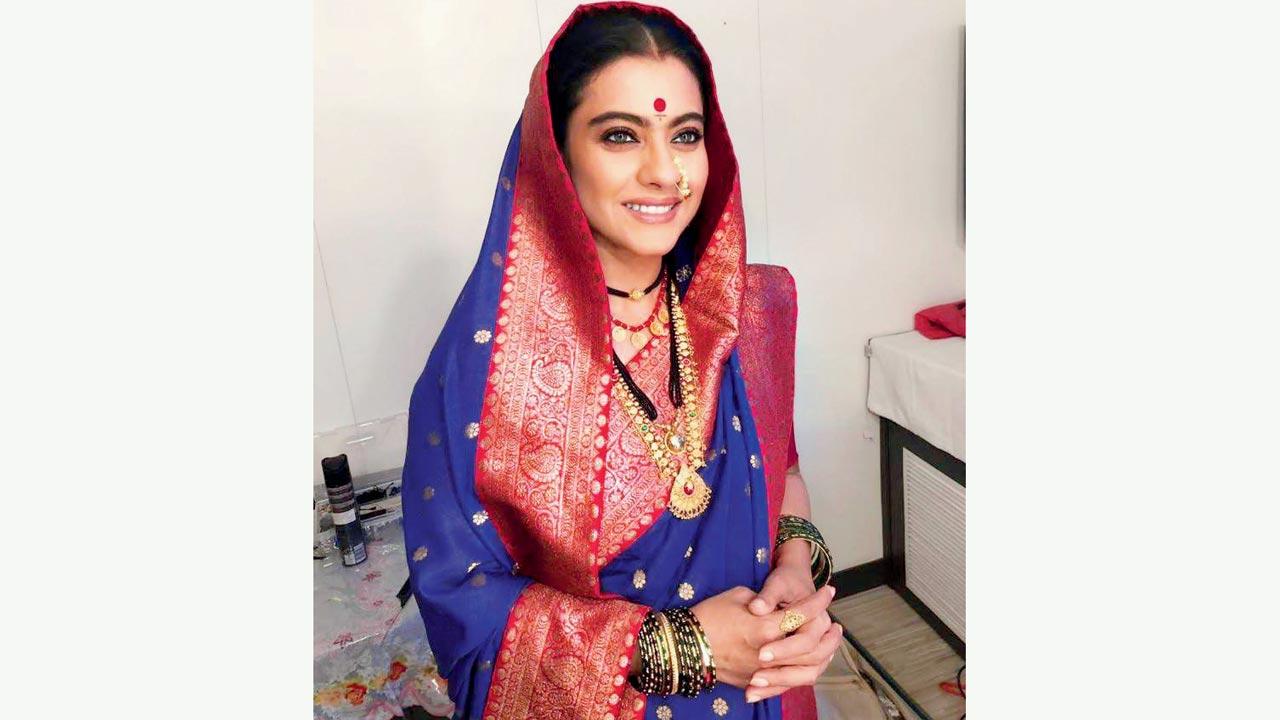
Barve found weavers from Dharwad to weave nauvari sarees in cotton for Kajol’s character
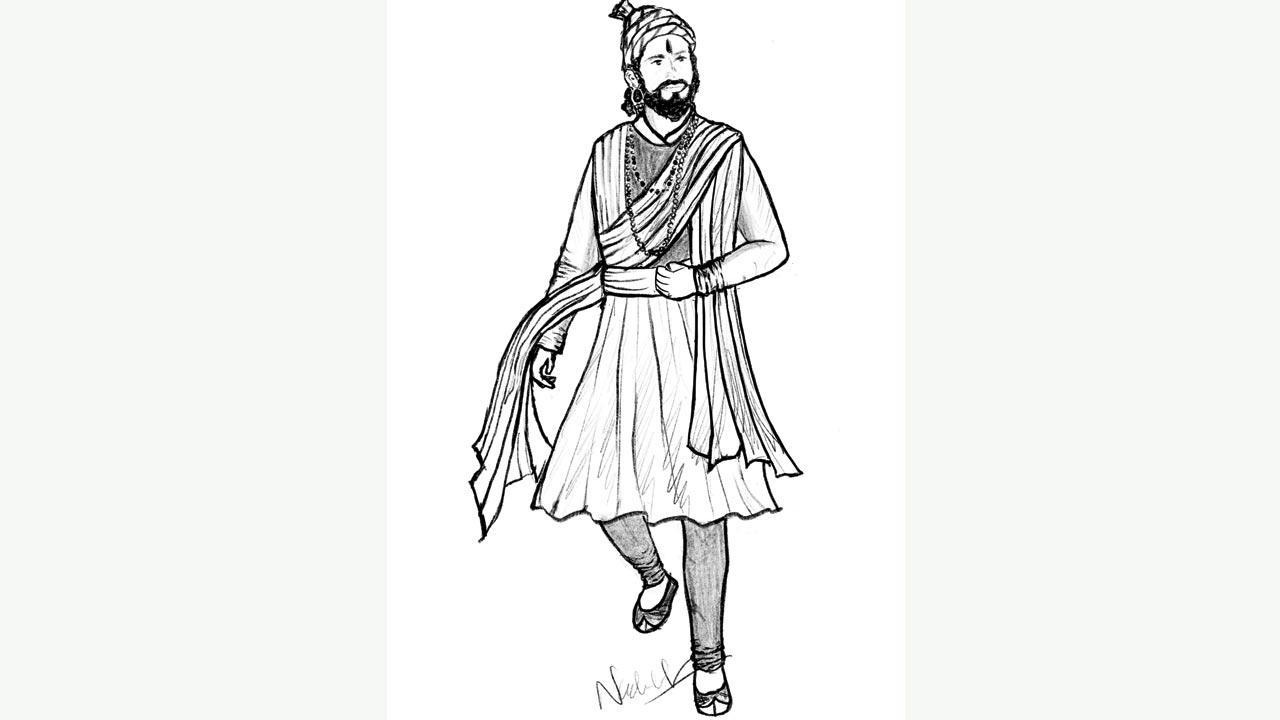
A sketch by Barve detailing the costume for Chhatrapati Shivaji Maharaj, played by Sharad Kelkar in Tanhaji
Why period drama costumes are frontrunners for awards
8:12 AM

Nachiket Barve & Mahesh Sherla’s National Film Award for Best Costume Designer for Tanhaji: The Unsung Warrior is the latest example of period drama costumes trumping contemporary contenders. Here’s why the genre is a favourite with juries
Divya Kaushik (BOMBAY TIMES; July 27, 2022)
Last week, when it was announced that Nachiket Barve and Mahesh Sherla won the National Film Award in the Best Costume Designer category for Tanhaji: The Unsung Warrior, though designer Nachiket was surprised, the win was not totally unexpected. He shared with us that creating costumes for a period drama is a laborious and time-consuming process that involves excessive research and he’s happy that the honour recognized the hard work that went into it.
A look at the past awards in the Best Costume Designer category reveals that period dramas often manage to impress the jury. And the reason isn’t just that the genre lends itself to grandeur, but also that period dramas help create awareness about history and culture, and in the revival of crafts and textiles. Three costume designers who have been recipients of the top honour – Neeta Lulla, Anna Singh and Nachiket Barve – share their experiences of creating costumes for period dramas.
‘PERIOD DRAMAS & COSTUMES CREATE A STRONG CULTURAL CONNECT WITH THE AUDIENCE’
Costume designers say that over the years everyone – be it cinegoers, critics or juries – has noticed how period dramas help in creating awareness about history and the art and craft traditions of a particular era or a place. And costumes play an important role in this.
Neeta Lulla, who has won four National Film Awards for Devdas, Lamhe, Jodhaa Akbar and Balgandharva, says, “In my journey, I am grateful that I am the only designer who has got four national awards. Two of these – Jodhaa Akbar and Marathi film Balgandharva – have been period dramas. There is no denying the fact that a period drama and the research that goes into recreating a particular era on screen create a strong cultural connect with the audience. The story becomes a medium to tell the audience about the culture of the place and a particular time period. And costumes are an important part of that story.”
Adds costume designer Anna Singh, who won the National Film Award for Taj Mahal: An Eternal Love Story (2005), “I feel that period dramas winning the National Film Award in different categories is also the recognition of the fact that they help in spreading awareness on history and our culture, while introducing youngsters to our heritage, the lifestyle of people in the past, etc. Therefore, it is important that research be done carefully for such projects. Even for minor details, factual accuracy should be maintained.”
‘THE RECOGNITION AND AWARDS SHED LIGHT ON THE RESEARCH AND HARD WORK THAT GOES INTO CREATING COSTUMES FOR PERIOD DRAMAS’
While designing for any other movie requires sourcing fabrics and jewellery to suit its story, costume designing for a period film has no scope of factual inaccuracy and it often also involves recreation of fabrics and textiles that may not even be available anymore. “When I was doing Taj Mahal, the director had original paintings and actual portraits that were a very valuable input and served as a reference point, but the challenge was to recreate that look with what was available. Certain fabrics like kinkhwab, very common in the Mughal era, were not available. Our shoot location was in Jodhpur and we ended up finding carpet weavers in the area and set up a workshop to weave the fabric which was used to create costumes for the movie. So there is a lot of micro work that goes into creation of costumes for period dramas and a lot of research. It is thanks to these awards and recognitions for costume designing in films that we get to talk about this elaborate process,” says Anna.
Nachiket says that he used 400-year-old jewellery moulds and got in touch with the royal family that still had them to create designs for Tanhaji. “When you are designing for any other film, you have the option of sourcing the material and creating the look, which is more like styling. But a period film only requires designing, because everything has to be created from scratch – be it the pagdi or the armour. So, you have to recreate those keeping in mind your research about what kind of material was available then. In Tanhaji, I have worked with natural dyes from plants and minerals, as those were used at that time.”
--------------------------------------------------------------------------------
WHEN BHANU ATHAIYA WON THE OSCAR FOR BEST COSTUME DESIGN FOR GANDHI…
Bhanu Athaiya won an Oscar for Best Costume Design for Gandhi in 1983 On April 11, 1983, Bhanu Athaiya took home the Oscar for Best Costume Design in Richard Attenborough’s Gandhi at the 55th annual Academy Awards.
In her acceptance speech, Athaiya said, “It’s too good to believe. Thank you Academy and thank you, Sir Richard Attenborough, for focusing the world’s attention on India.”
Bhanu had worked as a costume designer for over 100 films including Sahib Bibi Aur Ghulam, Guide, Ganga Jumna, Amrapali, Waqt, Teesri Manzil, Mera Naam Joker, Chandni, and the Oscar-nominated film Lagaan.
“Costume designing is about taking the audience on a journey to the era being recreated,” Athaiya was quoted as saying in 2001. “It is about hard research, imagination and having a vision.”
--------------------------------------------------------------------------------
AWARDS RECOGNISE HOW MOVIE COSTUMES HELP REVIVE TEXTILE AND CRAFT: NACHIKET BARVE
Sharing an example of how some period films have resulted in revival of textiles and also employment for craftsmen, Nachiket says, “Films become a huge influence in popular culture and our understanding of crafts. After Tanhaji, many women came to me and said can you do these sarees for us, or can you do this jewellery for us. So it revives people’s interest, educates them and creates a context of cultural revival. There are hundreds of people involved in the creation of these costumes, ranging from sari drapers to weavers, dyers, leather craft workers, and metal workers. A period film generates so much work for craftspeople.”

Tanhaji: The Unsung Warrior is special because it came together so beautifully; awards don’t add pressure-Ajay Devgn
8:45 AM

Harshada Rege (BOMBAY TIMES; July 24, 2022)
Tanhaji: The Unsung Warrior, which Ajay co-produced, also won the Best Popular Film – Providing Wholesome Entertainment Award.
Reflecting on it, Ajay says, “As the producer of the film, it gives me immense joy to receive the award for the Best film that has provided wholesome entertainment. Tanhaji was exactly that. It is a good story of friendship, loyalty, family values and sacrifice. It has strong national sentiments, super VFX and a holistic approach in entertainment. I must share the honour with my director Om Raut, my co-producers and co-actors. Most of all, I thank my creative team, who has contributed handsomely to making this a blockbuster and now a National Award-winner.”
The film was Ajay’s 100th film as an actor. Does that make this victory more special? “Honestly, all films are special,” he says, adding, “I’m so passionate about my cinema, it’s hard to choose the 100th film above the 99th one. Yes, I agree that Tanhaji: The Unsung Warrior is special because it came together so beautifully.”
The actor had announced that the film marked the beginning of the Unsung Warriors franchise. Ask him if this win gives his plans a boost further, and he says, “The Unsung Warriors franchise is definitely on. We are working on it and already have one in the pipeline. However, a franchise like this needs a lot of patience and research. So, the progress will be slower than in the case of regular cinema.”
------------------------------------------------------
Honoured with the National Award for 'Tanhaji: The Unsung Warrior', Ajay on not pandering to characters with the scope to garner wins
Hiren Kotwani (MID-DAY; July 24, 2022)
His absence at most award galas is proof enough that Ajay Devgn is not one to fawn over titles. However, there’s a special place in his heart for the National Award trophies he has garnered over the years. While shooting in Hyderabad for his next directorial venture, 'Bholaa', he learnt about being honoured with the Best Actor gong for 'Tanhaji: The Unsung Warrior' (2020) at the 68th National Film Awards. This would be Devgn’s third National Award after 'Zakhm' (1998) and 'The Legend Of Bhagat Singh' (2002).
The Saif Ali Khan and Kajol-starrer also won awards in the Best Popular Film Providing Wholesome Entertainment and Best Costume Design categories. Expressing that he doesn’t orchestrate films with the aim to win an award, Devgn says, “Awards are a reiteration of a job well done. So, whenever it comes, it motivates you to better yourself with every film. [However], they don’t dictate my choice of roles or movies. Films are a lifetime passion.” Drawn to essay characters that exhibit valour, strength, and sacrifice, the actor believes that choosing such roles gives him a “different high”.
While he essays most roles with ease, the period action drama was no cakewalk for Devgn, who also presided as the producer of the film. “I had to just feel the fire in my belly to [play Tanhaji], but the role of a producer was more challenging. It took months for pre-production and post-production work. Any project that involves VFX means mega-budgets, patience, and perseverance,” says the actor.
Ask him why the film deserved a national award, and the actor-filmmaker is quick to point out that it provides wholesome entertainment. “It has strong national sentiments, superb VFX, sincere performances, and honesty in every department. From grand sets, and well-researched costumes, to music that played on loop, 'Tanhaji' had everything. And it appealed to everyone from six to 60.”
Giving credit where it is due, Devgn applauds director Om Raut and costume designers Nachiket Barve and Mahesh Sherla for their contribution to the project. “When any aspect of cinema gets appreciation—it’s terrific. Nachiket and Mahesh worked closely with Om and me and [they deserve] the credit.”
------------------------------------------------------
Rishabh Suri (HINDUSTAN TIMES; July 24, 2022)
After Zakhm (1998) and The Legend Of Bhagat Singh (2002), this is Ajay Devgn’s third National Award for Best Actor. This time, he has won the prestigious award for his 2020 historical drama Tanhaji: The Unsung Warrior, in which he featured with his wife, actor Kajol, as well as actors Saif Ali Khan and Sharad Kelkar.
In an exclusive interview after winning, Devgn tells us: “I have the highest regard for the National Awards. And, I’m humbled and happy to receive my third mention as Best Actor. My congratulations to Suriya (who shared the Best Actor award with Devgn for his movie, Soorarai Pottru) and all the other winners of the various categories.”
His first reaction upon hearing the news was: “I smiled, said a thank you to someone up there, and folded my hands in a namaste. Then, I silently thanked my parents.”
Ask him if such a high honour makes him feel more responsible as an actor as well as a filmmaker, as he is also a co-producer of Tanhaji.., and he says, “Awards and box-office success don’t necessarily add pressure or a greater sense of responsibility at this stage of my career. I’ve completed 30 years in Indian cinema. Surely that must stand for something. After a point, responsibility is there through and through. Cinema is my lifeline.”
The movie was one of the rare examples that ran in theatres for weeks, got terrific word-of-mouth, and translated into box-office collections. He says, “The movie upheld the balance of good writing, clear storytelling, sincere performances, grand VFX, good costumes, great music and vision.”

It’s my first National Award, but not the first for my family-Om Raut
8:41 AM

Sugandha Rawal (HINDUSTAN TIMES; July 24, 2022)
Filmmaker Om Raut was busy working on his next project when he got a call congratulating him on winning a National Film Award for Tanhaji: The Unsung Warrior, and he has not stopped smiling since then. “It’s my first award, but I am not the first one in my family to get it. My grandfather (late J S Bandekar) and mother (Neena Raut) are National Award winners,” he tells us, adding, “The first one is always special.”
The 2020 film has bagged three awards — Best Actor, Best Popular Film Providing Wholesome Entertainment and Best Costume Design.
Raut says getting the national honour not only validates the entire team’s efforts in making the ambitious project on the life of Maratha warrior Tanaji Malusare, but also infuses energy to outdo the expectations: “It was a big film. We got good box-office success, but when we started with it, it was madness. Ajay Devgn (actor-co-producer) has been so supportive in every aspect of the film. When I narrated the film to him, he said he would not only act in it but also back it.”
This year, the National Film Awards were dominated by the myriad hues of regional cinema. “They are called National Awards for a reason,” Raut stresses, adding, “I don’t think cinema can be divided by any boundaries or language. You can’t break it down in any way or language. My first film was in Marathi, my second was in Hindi, and my third is in Hindi and Telugu. Tomorrow, I might make a film in some other language. What is important is the story you want to tell. Language doesn’t matter.”
68th National Awards: Ajay Devgn, Suriya win big
8:30 AM

Winners of the 68th National Film Awards were announced in New Delhi on Friday
HINDUSTAN TIMES (July 23, 2022)
Honouring the best of 2020’s cinematic excellence, the 68th National Film Awards were announced on Friday in the Capital. The report related to the awards was submitted to the Information and Broadcasting Minister, Anurag Thakur, and 10 jury members, headed by filmmaker Vipul Shah, took the final call.
Ajay Devgn and Suriya shared the Best Actor award. Devgn won it for the period drama Tanhaji: The Unsung Warrior and Suriya for Soorarai Pottru. His co-star in the movie, Aparna Balamurali, won the Best Actress award.
Devgn on receiving his third National Award said, “I’m elated to win the Best Actor Award along with Suriya. I thank everyone, most of all my creative team, the audience and my fans. I also express my gratitude to my parents and the Almighty for their blessings.”
Soorarai Pottru won the Best Feature Film, while Tanhaji... was declared the Best Popular Film Providing Wholesome Entertainment. Nachiket Barve and Mahesh Sherla won the Best Costume Designer award for the same movie.
Child actor Varun Buddhadev got a special jury mention for the Sanjay Dutt and Rajiv Kapoor-starrer Toolsidas Junior, which also won the Best Feature Film, Hindi. It was also Kapoor’s last film before he died in Feb 2021.
Lyricist Manoj Muntashir won the National Award for Best Lyrics for Saina. Filmmaker Vishal Bhardwaj bagged the award for Best Music Direction (non-feature films section) for 1232 Kms: Marenge Toh Wahin Jaakar. HTC
Anurag Thakur, Union Minister for I&B, told ANI, “I want to congratulate all the jury members and all those people whose work was reviewed and would like to congratulate the recipients. A word of appreciation for everyone who has done an outstanding job.”
Winners
Best Feature Film: Soorarai Pottru; Tamil
Best Actress: Aparna Balamurali (Soorarai Pottru)
Best Actor: Suriya (Soorarai Pottru) & Ajay Devgn (Tanhaji: The Unsung Warrior; Hindi)
Best Lyrics: Manoj Muntashir (Saina; Hindi)
Best Costume Designer: Nachiket Barve & Mahesh Sherla (Tanhaji: The Unsung Warrior)
Best Music Direction in Non-Feature Films: Vishal Bhardwaj (1232 Kms: Marenge Toh Wahin Jaakar; Hindi)

Sooryavanshi is the 12th highest grosser in Mumbai circuit
8:35 AM

Box Office India Trade Network
SOORYAVANSHI emerged the 12th highest grosser ever in Mumbai circuit with business close to 86 crore nett. Pre pandemic, the film would probably have been a 100 crore nett film in the circuit and possibly even the third best of all time after BAAHUBALI 2: THE CONCLUSION and TANHAJI: THE UNSUNG WARRIOR.
The appreciation for the film in this circuit was very good which is not the case in some other circuits for whom it was a very average film. But Mumbai is a big circuit and so, it takes the film a long way to give a good overall picture. In fact both SOORYAVANSHI and PUSHPA: THE RISE - PART 01 (Hindi) have done well in practically the same markets though obviously SOORYAVANSHI has higher numbers.
Both films have found the most appreciation in Mumbai/Gujarat while there were few takers for both in East Punjab. The gap is bigger between the two films where they have found little appreciation as PUSHPA: THE RISE - PART 01 (Hindi) will do around 55% of SOORYAVANSHI in Mumbai but only 30% in East Punjab.
In Delhi NCR it is even lower (Delhi shut in second week otherwise similar gap as East Punjab). So where the films have found less appreciation the Akshay Kumar factor comes into play for more footfalls and though Rohit Shetty films have a slight south feel they will still be closer to home than an outright South film be it in East Punjab, Delhi/UP, Rajasthan, West Bengal or CI.
1. Baahubali 2: The Conclusion - 1,85,76,00,000
2. Tanhaji: The Unsung Warrior - 1,43,85,00,000
3. Dangal - 1,04,26,00,000
4. PK - 1,04,21,50,000
5. Tiger Zinda Hai - 1,03,40,50,000
6. Sanju - 1,01,86,00,000
7. Bajrangi Bhaijaan - 90,77,00,000
8. Simmba - 89,33,00,000
9. Kabir Singh - 87,21,50,000
10. Golmaal Again - 87,08,50,000
11. Sultan - 86,30,50,000
12. Sooryavanshi - 85,87,00,000
13. Uri - The Surgical Strike - 84,11,00,000
14. 3 Idiots - 79,19,00,000
15. Housefull 4 - 79,03,50,000
Pushpa: The Rise - Part 01 beats Sooryavanshi; is the top 2021 grosser in CP Berar
8:32 AM

Box Office India Trade Network
PUSHPA: THE RISE - PART 01 (Hindi) has become the highest grossing film in CP Berar as it beats the numbers of SOORYAVANSHI. The film has not beaten SOORYAVANSHI in places like Raipur and Bilaspur which are in Chhattisgarh but on the Maharashtra side of the circuit, it is higher in every single screen which played both films.
It looks like a 12.75-13 crore nett finish for PUSHPA: THE RISE - PART 01 in CP Berar which will be more than GOLMAAL AGAIN and near the numbers of PREM RATAN DHAN PAYO and HOUSEFULL 4 which is a phenomenal result. It is also the second best result for a dubbed South film and the third best ever for a dubbed film behind BAAHUBALI 2: THE CONCLUSION and AVENGERS: ENDGAME. PUSHPA: THE RISE - PART 01 (Hindi) has comfortably scored over 2.0 (Hindi) and SAAHO (Hindi).
The top grosser in CP Berar is BAAHUBALI 2: THE CONCLUSION with over 33 crore nett followed by TANHAJI: THE UNSUNG WARRIOR. PUSHPA: THE RISE - PART 01 (Hindi) is basically a mini TANHAJI: THE UNSUNG WARRIOR in this part of country with a huge performance across Maharashtra.
The top ten Hindi grossers of CP Berar in 2021 are as follows and barring PUSHPA: THE RISE - PART 01 and SOORYAVANSHI, all the others were duds. SPIDER-MAN: NO WAY HOME was the other film to score in CP Berar with collections of nearly 8 crore nett.
1. Pushpa: The Rise - Part 01 (Hindi) - 11,90,00,000 apprx (Still Running)
2. Sooryavanshi - 11,79,00,000
3. 83 (Hindi) - 3,80,00,000 (Still Running)
4. Antim - The Final Truth - 2,29,00,000
5. Tadap - 1,35,50,000
6. Bellbottom - 1,33,50,000
7. Satyameva Jayate 2 - 96,50,000
8. Roohi - 93,50,000
9. Chandigarh Kare Aashiqui - 76,50,000
10. Mumbai Saga - 60,00,000
I just hope and pray things don’t take a turn for the worse. People’s health and pockets must not suffer-Ajay Devgn
8:28 AM

Worried about the Coronavirus pandemic situation, Ajay Devgn hopes the industry doesn’t suffer again
Rishabh Suri (HINDUSTAN TIMES; January 1, 2022)
The New Year has begun on a shaky note for the film industry and actor Ajay Devgn is hoping that things get better. “As of just a few days ago, Delhi was put on yellow alert. Other Indian states have indicated new lockdown restrictions. Sources say the Omicron variant may dampen the beginning of 2022 plans for most people around the globe. This puts all of us, including the entertainment industry, on a back foot. I just hope and pray things don’t take a turn for the worse. People’s health and pockets must not suffer,” says the 52-year-old.
The year looks busy for him, with his directorial project Runway 34 scheduled for release in April, and his much-anticipated web debut, Rudra: The Edge of Darkness, likely to release in March. He will also start shooting for a couple of projects, including Singham 3.
His film, Tanhaji: The Unsung Warrior remains the highest grosser for Bollywood in over two years. It released in January 2020, just when the Covid-19 scare was spreading across the world. Does he see such times coming back?
“Tanhaji: The Unsung Warrior dominated the box office for two years. There are films that made massive money in the middle of the pandemic, too, so I am hopeful. I’d say another film will come and break records. S S Rajamouli’s (filmmaker) RRR shows great potential. Rohit Shetty’s (filmmaker) Sooryavanshi raked in Rs. 196 crore in the middle of a pandemic,” says the actor.
Devgn has spent over three decades in the film industry. Sharing what has kept him going all these years, the actor quips, “Exercise, cinema, family time are all inspiring. Discipline and dedication become a way of life after a point. There are things that are out of our control, like the pandemic. But, we can’t afford to be shirkers.”
Coolie No 1 is a big hit on satellite
8:38 AM

Box Office India Trade Network
COOLIE NO 1 has emerged a big HIT on the satellite circuit as it sustains very well since release. It has seen the best results for Zee post the lockdown till date. RADHE had its premiere on Zee cinema just this week so results are not known yet. It premiered on Zee TV on Independence Day but the comparable ratings come on the cinema channel.
COOLIE NO 1 started with a 1 crore impressions premiere while the second screening was a solid 55 lakh. Since then it has averaged around 30 lakh impressions for its next five screenings. This makes its results post premiere on the lines of TANHAJI: THE UNSUNG WARRIOR and WAR (counting post pandemic releases). The only two films to perform better are LAXMII and BAAGHI 3.
The main competition for COOLIE NO 1 on Zee mainly comes from South films as the other Hindi releases like GUNJAN SAXENA, KHAALI PEELI and SAINA are far far behind finding a limited audience.
The best South film is VIJAY THE MASTER which is a dubbed version of the Tamil film MASTER. This opened at 70 lakh impressions and is averaging around 25 lakh post premiere. These are pretty good results but no comparison to another dubbed Tamil film DARBAR which debuted at 1.25 crore impressions and has seen repeats at over 50 lakhs. DARBAR has just edged out SAAHO as the top film released on satellite post the pandemic from the South. But at the box office DARBAR and VIJAY THE MASTER were nothing compared to SAAHO in Hindi circuits.
Coolie No 1 scores very well on satellite
8:21 AM
Box Office India Trade Network
COOLIE NO 1 has scored very well on satellite as it clocked up 1 crore plus impressions on its premiere. If it holds in subsequent screenings, it will emerge a HIT film on satellite. The film also scored on OTT as it recorded the best numbers outside LAXMII for OTT premieres. The satellite numbers have followed a similar pattern showing its a similar audience as far as home viewing goes.
Like LAXMII, this film also saw huge negativity on social media and the media in general when it was released but even after all this, the audience still turned up to its first screening on satellite. The satellite results of LAXMII and COOLIE NO 1 again reiterates the importance of the box office as that is the actual results and not what is said.
The satellite numbers of COOLIE NO 1 are around 60% better than the last release of Varun Dhawan STREET DANCER which had a fair performance on satellite. COOLIE NO 1 also become one of the 25 odd films in the last five years to top the 1 crore impressions mark on its premiere.
The top premieres on television since the pandemic started in March 2020 are as follows. The numbers are impressions which are the number of television sets viewing the film.
1. Laxmii - 2,51,44,000
2. War - 2,12,25,000
3. Tanhaji: The unsung Warrior - 1,38,40,000
4. Baaghi 3 - 1,29,06,000
5. Coolie No 1 - 1,00,91,000
WAR was a 2019 release and the other four films - TANHAJI: THE UNSUNG WARRIOR, BAAGHI 3, LAXMII and COOLIE NO 1 - are the only four successes in over one year when the pandemic hit. Another film that can be noted as a minor success is KHUDA HAAFIZ while DIL BECHARA did well on OTT but tanked horribly on satellite.
Laxmii confirms it's huge satellite success
8:29 AM

Box Office India Trade Network
LAXMII has confirmed its huge satellite success as it registered over 70 lakh impressions on its second screening. After the insane numbers of the first viewing, it has done better than BAAGHI 3, TANHAJI: THE UNSUNG WARRIOR and WAR on its second screening. Its first two viewing numbers are 3.23 crore which are also better than these films.
The film is not as big as HOUSEFULL 4 but that had crazy numbers and is still getting them and is the third biggest satellite blockbuster in recent times after the two BAAHUBALI films. LAXMII is a SUPER HIT film on satellite and if 40 lakh plus numbers hold for next few screenings, it would be a BLOCKBUSTER. But more than that its pretty clear the film has actually found appreciation somewhere with the audience despite what was said and is maybe is said now also.
Laxmii
1st 2,51,44,000
2nd - 71,80,000
TOTAL - 3,23,24,000
Baaghi 3
1st - 1,20,90,000
2nd - 70,91,000
TOTAL - 1,91,81,000
Tanhaji: The Unsung Warrior
1st - 1,38,48,000
2nd - 61,19,000
TOTAL - 1,99,67,000
War
1st - 2,12,25,000
2nd - 45,82,000
TOTAL - 2,58,07,000
Housefull 4
1st - 2,15,42,000
2nd - 1,32,26,000
TOTAL - 3,47,68,000
66th Filmfare Awards 2021: Thappad strikes right notes, Irrfan gets emotional salute
11:26 PM

Irrfan's son Babil accepted the posthumous Lifetime Achievement Award for his father as actor Jaideep Ahlawat and director Anurag Basu shared the stage with him at the 66th Vimal Elaichi Filmfare Awards 2021
THE TIMES OF INDIA (March 28, 2021)
Surely, the famous pair of chalice-like eyes—that shut permanently last year —must have crinkled with quiet pride from the beyond. Twice. At the 66th Vimal Elaichi Filmfare Awards 2021 on Saturday, the late Irrfan not only won the best actor (male) for portraying a befuddled small-town father in his swansong ‘Angrezi Medium’ but also the lifetime achievement award for emphasising the many ways of conveying emotions without the crutch of verbosity.
“Artists live and die a thousand deaths on celluloid but the power of those performances is what makes us immortal. Not every actor leaves as much of an indelible mark though. Because not every actor is Irrfan,” said actor Ayushmann Khurrana while presenting the posthumous lifetime achievement award to Irrfan’s son Babil. “You know how people say you can’t fit into your father’s shoes. I fit into his clothes somehow,” said Babil, his voice choked with emotion while reminiscing the fact that his father was supposed to teach him acting after he returned from film school — a promise that would be thwarted by the hospital visit from which the actor would never come back.
Resplendent in a shimmering white-and-blue gown and a beauty-queen-like tiara, actor Taapsee Pannu took home the iconic Black Lady trophy for best actor (female) for her self-assured portrayal of a housewife who refuses to turn the other cheek after being slapped by her husband in the film ‘Thappad’.
If the svelte award could serve as Pannu’s weapon against type-casting directors, the trophy was a rare validation for actor Tillotama Shome, who won the critics award for best actor (female) for delicately conveying a domestic worker’s complicated feelings for her employer in the film ‘Sir’. “Thank you Filmfare for making space for actors of all kinds,” said Shome.
Even as filmmaker Om Raut was adjudged best director for ‘Tanhaji: The Unsung Warrior’, a historical film acclaimed for its rousing climax, the evening got its own high-octane climax when Anubhav Sinha’s slow-slap in the face of patriarchal conditioning ‘Thappad’ prevailed over the other biggest contender of the evening: Anurag Basu’s black comedy ‘Ludo’. ‘Thappad’ won not only best film but also best story, among other awards.
Locked into the glossy bubble of Goregaon Film City’s Studio 16, the mask-and-negative-Coronavirus-report-toting invitees of the ceremony attained temporary herd immunity from worries. “Aapka time aayega,” reassured hosts Rajkummar Rao and Riteish Deshmukh while urging the room to take the Covid-19 jab. With the entry of host Maniesh Paul, the stage became its own Over-The-Top platform. “Pehle Valentine manate the, ab quarantine mana rahe hain,” said Paul, dusting off his best Amitabh Bachchan impression. The whistles and cheers that ensued in the wake of each of the evening’s powerhouse performers — Hrithik Roshan, Sunny Leone, Sara Ali Khan, Nora Fatehi and Ayushmann Khurrana made cinema-hall romantics homesick for the giddy community experience of the big screen.
The 66th Vimal Elaichi Filmfare Awards 2021 title sponsor is Vimal Elaichi; powered by Cadbury Dairy Milk; in association with Migsun Group; cooling partner Symphony Air Coolers; exclusive telecast partners Colors & Colors Cineplex; global digital partners Facebook and Instagram; music partner T-Series; radio partner 98.3 Mirchi; outdoor partner Bright Outdoor; trophy partner The Award Gallery; ambient media partner Khushi Advertising; technical direction and stage management On Cue Productions; acts remixed, choreographed and designed by Shiamak Davar; dancers by Shiamak Davar Institute Of Performing Arts; designed, scripted, directed and managed by Hyperlink; show director Margaret Alexander.


There’s a reason why theatres have existed for more than 100 years in our country-Om Raut
8:19 AM

Rachana Dubey (BOMBAY TIMES; February 24, 2021)

A year ago, Tanhaji: The Unsung Warrior was running to packed houses in theatres. How did that change your life?
It was my first Hindi film, and to be a part of a successful film is something that every artiste and every director wants. Thanks to Ajay Devgn sir and (producer) Bhushan Kumar’s vision, I got an opportunity to narrate a story the way I saw fit, and the public showed acceptance for it. It opened more doors for me. A successful film opens a pandora’s box of satisfaction, opportunities and recognition. You find yourself seated amidst people you’ve idolised in your life. Today, I want to make every film like it’s my last. Who knows? It might just be! I want to approach my films as if I might not get another chance. That just means that I pull all plugs. When I made Tanhaji, I didn’t have another Tanhaji on my CV. The work we put in was tremendous. That’s how I will approach Adipurush also. Success should at best boost confidence, and failure must not pull you down.
Adipurush is your re-telling of the Ramayana, a story that people have been widely exposed to over the ages, it makes the process doubly challenging, right?
It’s a tough film to make and it’s an important subject for me and a half billion people in the world. I am looking forward to this journey where I get to narrate a story that I hold close to my heart, and as a tech-geek, I get to use technology to aid the storytelling. It’s the calm before the storm. We’re into extensive and detailed prep for every shot. The idea is to assume that people who are coming into the hall have at least seen this story eight or nine times in the past. How do I then get them to enter the theatre for the 10th time, and come back the 11th time? I have to narrate this story in such a way that people come back for more; layer it in such a way that each time you see it, you get to see a different hue of the characters, and there is something more to take home. We’ve all known the Ramayana, but reading it clarified so many things for me, it changed my perspective about life. People won’t stop retelling this story. If I can translate that through a film like Adipurush, produced by T-Series, for the youngsters, I’m home.
How are you preparing Saif Ali Khan and Prabhas to play Raavan and Shri Ram — characters that are so deeply etched in public memory?
It’s a process that we slide into. Prabhas is based out of Hyderabad. I’ve travelled there once, and he’s been here once. The rest has happened over phone calls and readings over video chats. The thing is, all three of my films are based on a whole lot of written material available to us. I read, write and deep dive into the material. I talk a lot to all my actors. They pick up what they have to from it for their characters. I don’t know how else to do it. As a director, I can tell them what I seek. As artistes, they find their own way to get there. I tell my actors everything that they need to know — the direction from which their characters are coming and where they are headed. The actors, for the last three-four months, have been undergoing language training, because the film has a certain tonality. We do readings and workshops using video calls. Fortunately, both the actors are into fitness. Prabhas has been training to play an archer. He’s also been working out twice a day.
Saif won immense praise for his deadly portrayal of Udaybhan in Tanhaji: The Unsung Warrior.Was that one of the factors that drew you to bring him on board as Raavan for this magnum opus?
When you write, you also imagine someone playing the part. Though Udaybhan’s character from Tanhaji is in the past now, I know how to work with Saif sir. While writing Adipurush, I was certain that I needed a committed and passionate actor who can deliver every shot perfectly. I’ve seen how hard Saif sir worked to paint Udaybhan the way he came across in the film. He toiled with me. We had a wonderful working experience. It’s satisfying to work with an actor who goes the extra mile to perfect every shot. When it comes to Lankesh or Raavan, you need a solid actor to pull off the part. Saif sir is a phenomenal artiste who has the potential to play strong characters and the knack to slip into them with ease. For both my films, he was the first choice.
With the way cinema exhibition is changing, do you feel apprehensive about where Adipurush might be released?
No, I don’t because you can watch content on large screens at home, but that is not the India I make my films for. That is not where my brothers and sisters consume cinema. They enjoy it in a cinema hall. We believe in community entertainment and experiencing emotions collectively. There’s a reason why forms of theatre have existed for hundreds of years in our country. As a collective, we want to watch a spectacle together. So, yes, people will come back to cinemas, but there could be a clear division between what they want to watch on the big screen and what they prefer watching at home.
---------------------
Saif’s comment about displaying the humane side of Raavan landed Adipurush into a controversy, following which he had to apologise. Do you feel the need to now work with a lot more caution?
Saif sir issued a statement and he has apologised. So, we should leave it at that. As for acting with caution, I feel that if something is said about someone who I feel very strongly about, I will get offended. I understand where things stand today. But if you maintain the sanctity of the subject in your mind and work in keeping with that, you won’t go wrong. Cinema is a medium of perception that can’t have a yardstick. It’s a filmmaker’s choice how he or she narrates a story. We, as the audience, have the right to reflect on it. Having said that, the term ‘cinematic liberty’, is often misunderstood. It does not mean that you twist historical facts or timelines that have been passed down for generations to us through written material, verbal stories and more. That is simply twisting history. If factually a dagger had pierced the warrior’s body, cinematic liberty is only the manner in which you depict how it hits him and how he reacts to it.

Subscribe to:
Posts (Atom)