Showing posts with label Tanaav. Show all posts
Showing posts with label Tanaav. Show all posts
Pahalgam, Gulmarg, Sonamarg, Srinagar: The Kashmir you’ve mostly seen on screen
8:05 AM

Niharika Lal (BOMBAY TIMES; April 28, 2025)
For Bollywood, Kashmir has often meant snowy peaks, chinars, and shikaras. The scenic sites of Pahalgam, Sonamarg and Gulmarg are among the most frequently filmed locations in Indian cinema. Be it the likes of Roja to the recently released Ground Zero, the valley has been woven into our filmi narratives – often becoming a character in itself. Even this year, multiple productions were lined up for shoots in Pahalgam. However, in the wake of the recent terror attack in Baisaran, film shoots might be affected. We revisit the films that were shot in these scenic locales.
Talking about shooting in Kashmir, Sudhir Mishra, who shot his series Tanaav there, told us recently that people were really welcoming, “I just love Kashmiris. They are really compassionate people. The people in Kashmir are really warm, but they are also very sad, so you have to work with that rhythm. I tried to bring out the human aspect. After making Tanaav, I understand Kashmir better. I emotionally connected with Kashmir through the characters. When I direct, I have to feel the pain of the mother, the brother, the son. Conflict zones are complex.”
Speaking about films on Kashmir and how he managed to avoid controversies while making a series about the region, he says, “Most films about Kashmir are made by outsiders, and I don’t think many of them have a deep enough connection to the place in real ways. If your purpose is not to offend, and you approach things without bias – seeing things as they are – I don’t think anyone gets offended.”
‘Laila Majnu was filmed in Khilanmarg, Pahalgam, Srinagar’
The beauty of Kashmir was the backdrop for not only classics such as Kashmir Ki Kali (1964) and Kabhi Kabhie (1976), but the 2018 release Laila Majnu.
A staff member at a cinema in Srinagar says, “When we re-released Laila Majnu last year, it was houseful for months. The film has shown the culture and tradition of Kashmir. Kashmiri youngsters could relate to it, and they see the film as their own. It was shot in Nishat Bagh, Zero Bridge, Nigeen Lake, Khilanmarg and Pahalgam, and people from across Kashmir came to watch the film.”
‘More than 80% of Ground Zero was shot in Kashmir’
Arhan Bagati, co-producer of Ground Zero, shares, “Initially, many locations were being discussed for Ground Zero. My reaction was, ‘Why not Kashmir?’ Because it is a film set in Kashmir. I thought the authentic way to do the film was by shooting in Kashmir and going to actual locations. We went to the locations where the encounter happened. That authenticity can’t be created with CGI. More than 80% of Ground Zero was shot in Kashmir. The administration was extremely helpful, the LG supported it, and the J&K Police was indispensable through the entire process – not just showing us where the actual encounter happened, but also in giving us access to the locations.”
The valley through Indian cinema in the recent years
- In 2014, Fitoor was shot at Srinagar’s Dal Lake and Pahalgam
- In 2014, Alia Bhatt’s Highway was also shot in Pahalgam’s Aru Valley
- The qawwali scene of Bajrangi Bhaijaan was shot at Aishmuqam Shrine. The film’s end was shot in the Baisaran Valley
- Ground Zero was filmed across Kashmir
- Shah Rukh Khan’s Jab Tak Hai Jaan was shot in Betaab Valley, around the Lidder River, Aru Valley, and Baisaran. The Jiya Re sequence was filmed in and around Betaab Valley
- Ranbir Kapoor and Deepika Padukone shot segments of Yeh Jawaani Hai Deewani (2013) in Pahalgam
Gurez, Machil also open up for filming: J&K Film Policy 2024
In recent years, Ground Zero, Sam Bahadur, and Laila Majnu were all filmed in Pahalgam. The Jammu and Kashmir Film Policy 2024 aimed to give filmmakers easier access to the region. It opened up scenic areas closer to the Line of Control (LoC) including Gurez, Machil, and Tangdhar for the first time in several decades. “A well-nurtured film industry can be a major source of wealth creation, employment generation, and an effective tool and platform for the preservation of culture and the expression of the people of Jammu & Kashmir,” it states.
I am not that white campus American liberal who thinks no one else can talk-Sudhir Mishra
3:36 PM
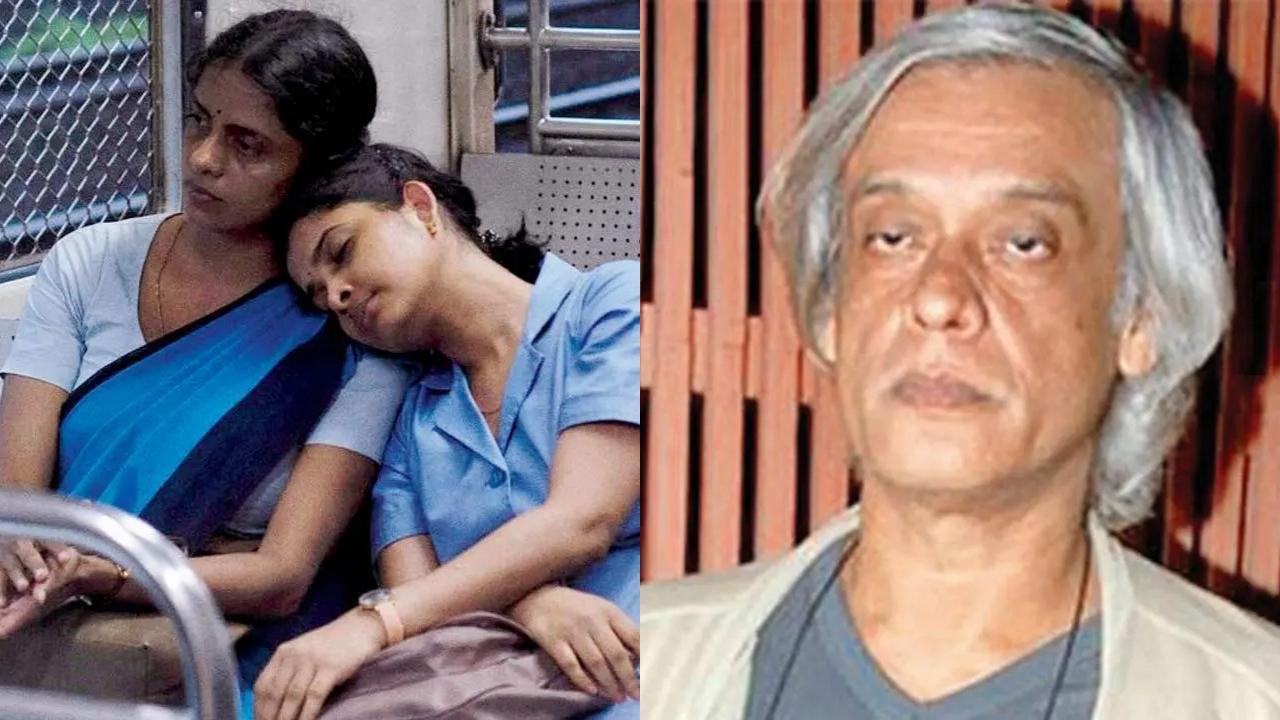
Tanaav 2 director Sudhir Mishra talks all things industry, from the surge in propaganda films to the big directors sidelining and patronising female storytellers
Priyanka Sharma (MID-DAY; December 6, 2024)
There are no pre-release jitters for Sudhir Mishra as the second season of Tanaav drops today. The director is confident of the thriller—an adaptation of the popular Israeli show, Fauda—that is set in Kashmir. To tell a story involving Kashmir politics, he has a fundamental approach.
“Luckily, I know my country. I am inquisitive, I travel and meet people not just for the sake of making something, but for its own sake. Also, I follow the craft of filmmaking, which means every character should be nuanced. I listen to the characters, and people of Kashmir. I don’t sensationalize. I am not coming into it with any agenda. Neither is there a need to create a jingoistic piece in order for it to become a hit,” he says.
Over the past few years, there has been a surge in political films. Does it pain him to see thinly-veiled propaganda films or political stories that sensationalize?
Absolutely, says Mishra. “It is sad. Why do young, talented people submit to other forces? They should stay true to their calling. Some people aren’t faithful to their own talent. I’m not here to ban anyone. I am not that white campus American liberal who thinks no one else can talk. I’m not woke; I’m a leftist. I am not here to fulfill any agenda.”
In the post-pandemic years, mid-budget films have struggled to find their deserving place on the big screen—be it Mishra’s last theatrical release Afwaah (2023), or Kiran Rao’s gem Laapataa Ladies that was rediscovered on OTT. In the current climate of horror comedies and franchises, where does it leave smaller films?
“The problem is theatrical releases are expensive. I’ve always said that films are a public service. Film theatres should be tax-free. There has to be space for all kinds of films. If somebody likes RRR [2022] or Pushpa, so be it. But there should be space for other films too, like All We Imagine As Light and Kennedy. There should be space for smaller voices. Why do the big boys want everything? Let Payal Kapadia’s film be shown,” he urges.
The director wants more female filmmakers to come to the fore. Critiquing the industry for not encouraging diverse voices, he says, “Women have told stories with great difficulty. Does the industry applaud them? No. They will say put women’s films in a festival. We need to pat them, not patronize them. Women filmmakers are much better than most of the men. All We Imagine As Light should have one good show in every town. We don’t encourage talent; we get scared of it.”
Imagine Chameli without Kareena Kapoor's face; A R Rahman was a co writer in Lagaan-Sudhir Mishra
7:49 AM
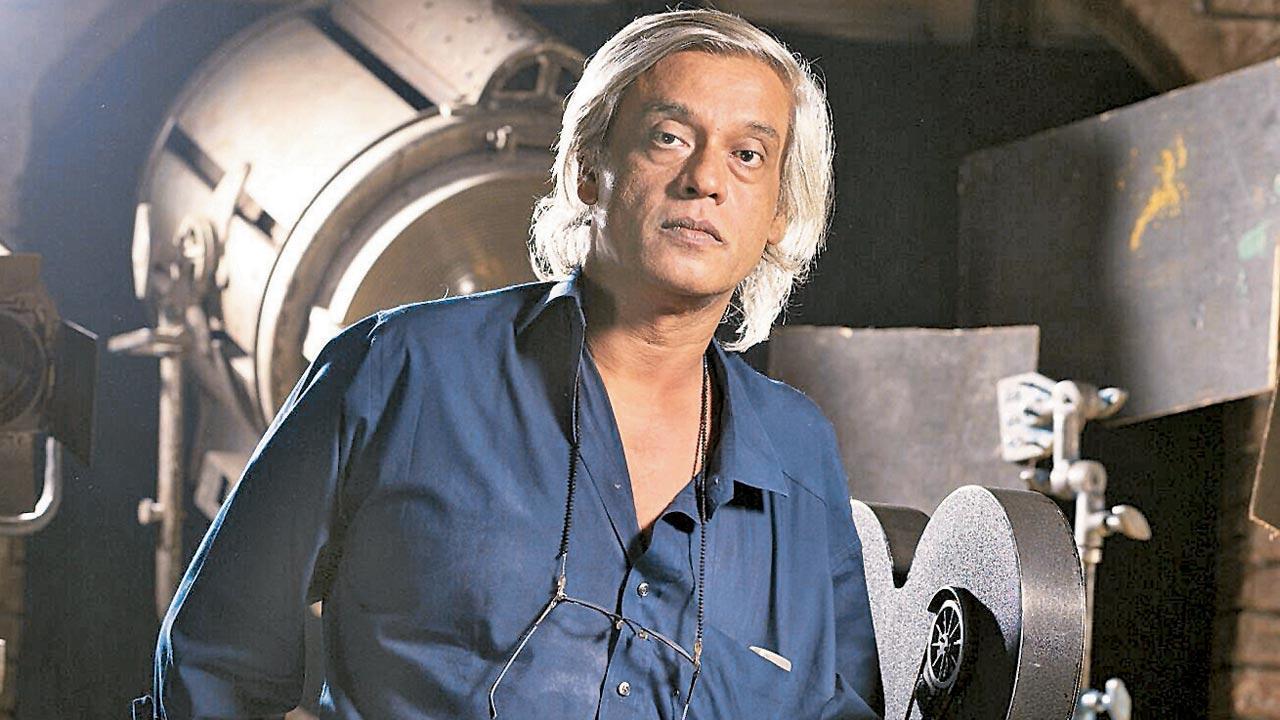
Niharika Lal (BANGALORE TIMES; November 8, 2024)
Sudhir Mishra sees filmmaking as a constant process of rewriting. But, he insists that filmmaking is not only a director’s medium. “Actors are co-writers of the film. Every actor has a different process, and the director’s job is to follow their process,” he says. In a recent interview, the filmmaker opened up about the making of Tanaav Season 2, his love for long-form storytelling, how he connected with Kashmir, and what it’s been like working with actors throughout his career.
‘WHAT’S THE POINT OF ACTORS IF EVERYTHING IS PRE-WRITTEN’
Sudhir Mishra tells us, “I consider cinema a constant process of rewriting. You rewrite with locations and with the actors, otherwise, what’s the point of actors when everything is pre-written? Imagine Hazaaron Khwaishein Aisi without Chitrangda Singh’s face, or Chameli without Kareena Kapoor, or Serious Men without Nawazuddin Siddiqui, Yeh Saali Zindagi without Irrfan Jhan, or Dharavi without Om Puri and Shabana Azmi. You can’t – they’re co-writers.”
He adds, “Then, the camera takes its position, the location speaks, and you gather all that material and sit with the editor. The film you imagined may not be there, so you try to find it. You add music – take A R Rahman’s score in Lagaan. Put another piece and the film changes. So, for me, Rahman is a co-writer of Lagaan.”
‘THE FILM I MAKE SHOULD IMPACT ME’
For Mishra, discovering the film is the aim of making a film. He says, “When I make a film, I should learn something I didn’t know before. The film should impact me – that’s the fun, the excitement, the therapy.”
Sudhir Mishra says all his films have surprised him – sometimes for the better, sometimes for the worse. “You can’t say it’s not the cinematographer’s medium – then why do you hire him? The director is a bit like an architect or a designer of the overall film. A director is like a conductor of an orchestra. Sometimes he writes the score and also conducts it,” he adds.
‘After making Tanaav, I understand Kashmir better’
About making Tanaav and shooting in Kashmir, he says, “I just love Kashmiris. They are really compassionate, warm, but also very sad. So, you have to work with that rhythm. I tried to bring out the human aspect (in the show). After making Tanaav, I understand Kashmir better.”
Talking about films on Kashmir and how he managed to avoid any controversies, Mishra says, “Most films about Kashmir are made by outsiders, and many of them don’t have a deep enough connection to the place. If your purpose is not to offend, and you approach things without bias – seeing them as they are – no one gets offended. If you’re not a sensationalist, not pretending to be the final word on anything, not strutting around like someone who thinks they know everything, there’s no issue.”
--------------------------------------------
About working with Rajat Kapoor, the filmmaker says, “You just have to indicate the character to Rajat and he will bring himself to it”
--------------------------------------------
Talking about Irrfan, Sudhir Mishra says, “He knew the character and was more interested in ensuring the entire scene works, because if the scene worked, he worked”
My relatives can finally stop hounding me about what’s happening in Made In Heaven 2-Shashank Arora
8:13 AM

With Made In Heaven 2 set to drop online four years after its opening season, Shashank on reprising his role of a wedding videographer
Mohar Basu (MID-DAY; July 28, 2023)
With the second season of Made In Heaven being officially announced this week, Shashank Arora is feeling a sense of relief. “My nephew, nieces and aunts can finally stop hounding me about what’s happening in the new season,” he laughs.
The Sobhita Dhulipala and Arjun Mathur-led series, which dropped online in 2019, won wide praise for its ability to examine society’s ills through the story of two wedding planners. Creators Zoya Akhtar and Reema Kagti had initially planned to take the second edition on floors soon after, but the pandemic caused a long delay.
A four-year wait between two seasons can be difficult for artistes. Was it difficult for Arora to reprise the role of Kabir, a street-smart wedding videographer?
“Kabir wasn’t a product of random luck. The creators and writers put in meticulous work to build every aspect of his personality. Four years later, I know this character [intimately]. I remembered the elements I had worked on. But this time around, Kabir has evolved because I have evolved too,” he says.
The actor admits that the opulent show was a departure from his gritty offerings. “I had been drawn to niche subjects until then. But with Made In Heaven, I experienced love from the masses for the first time.”
While the drama will drop on Amazon Prime Video next month, Arora will move on to the next season of Tanaav, an official adaptation of the hit Israeli series, Fauda. The actor says the powerful script and director Sudhir Mishra were reason enough to join the thriller.
“I saw Junaid [his character] as a boy who [was looking for] home. This time when I received the script, I was unsure how to approach it because my character dies in this season. I am going in, looking for closure.”
We are getting a response from people all over the world, but the most delicate, nicest messages are from Indians-Avi Issacharoff
8:37 AM
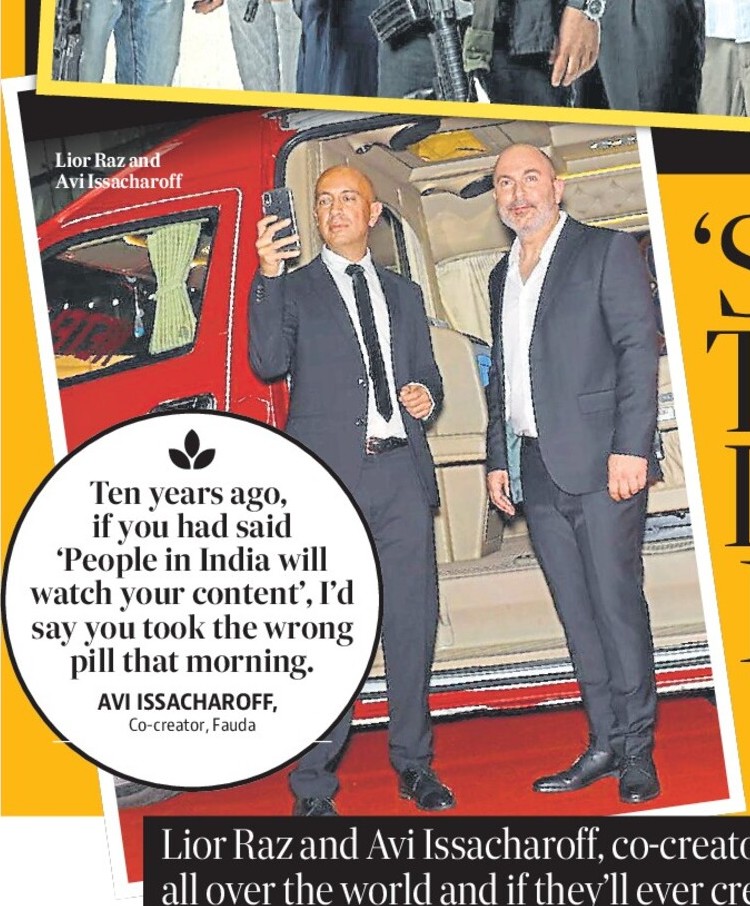
Lior Raz and Avi Issacharoff, co-creators of the hit show, dive into its massive connect all over the world and if they’ll ever create something for audiences in India
Rishabh Suri (HINDUSTAN TIMES; December 3, 2022)
As fans wait for the fourth season of Fauda to drop on Netflix, the first episode of the hit series was premiered at the 53rd International Film Festival of India, held in Goa, recently, with the creators of the show, Lior Raz and Avi Issacharoff, in attendance.
“When we heard about [the festival], we said, ‘Erase everything from our schedule – we want to be there in India.’ It’s the natural [choice] to premiere the show because of the love people watching our show here give us,” shares Raz.
Somehow, the duo find the show’s massive popularity in India rather “strange”. “It is not common that you have people from this country follow you and try to interact. We are getting a response from people all over the world, but the most delicate, nicest messages are from Indians. Here when someone wants a selfie, they ask first, and don’t just go for it,” exclaims Issacharoff.
The show is based on the duo’s time in the Israeli Defense Forces, and this personal touch is what clicked with the audiences. “Everybody can connect with stories of people and their journeys. The atmosphere in Israel is very chaotic, and when you see the journeys of the characters, you understand,” says Raz, who also stars in the show, before adding, “We don’t really know what the secret to Fauda being such a big hit is, and we don’t want to know. We just want to continue what we are doing.”
STORIES OF THE WORLD, TO THE WORLD
The OTT boom enabled a rapid exchange of entertainment all over the world, and the duo agree that Israeli content benefited in the process. “Ten years ago, if you had said ‘People in India will watch your content’, I’d say you took the wrong pill that morning. It’s a new era — I can sit in my house and watch Indian content. People in India and Sri Lanka watch Israeli content,” says Issacharoff.
The explosion of OTT content has also brought about a change in viewers’ preferences, and star casts are no more a sure-shot hit formula. “All of us have the same emotions, we laugh, hate, [feel] connected. We want to be moved by somebody’s story, it doesn’t matter what the language. OTT brought it to the table,” Raz adds.
The series saw its official Hindi adaptation Tanaav, drop recently. Do they ever plan to create something for Indian audiences? “We haven’t seen enough Indian content, but we want to. Being in the country and understanding how big the market and potential is, is making us hungry,” Raz says, recalling how as a kid, he would watch Indian films at home. “I remember the dances and the colours, which were so strong. Some of them really inspired us to tell a story. A part of that is from the films we have seen from India,” he adds.
COMPARISONS GALORE
Whatever other work they do, comparisons with their first show always arise. Do they feel the pressure? “This is our first baby... Of course, when we had Hit & Run, there were comparisons. I know it’s the natural tendency of people. We, as creators, are also looking for something new. We don’t want another Fauda, it’s unique and specific,” Raz signs off.
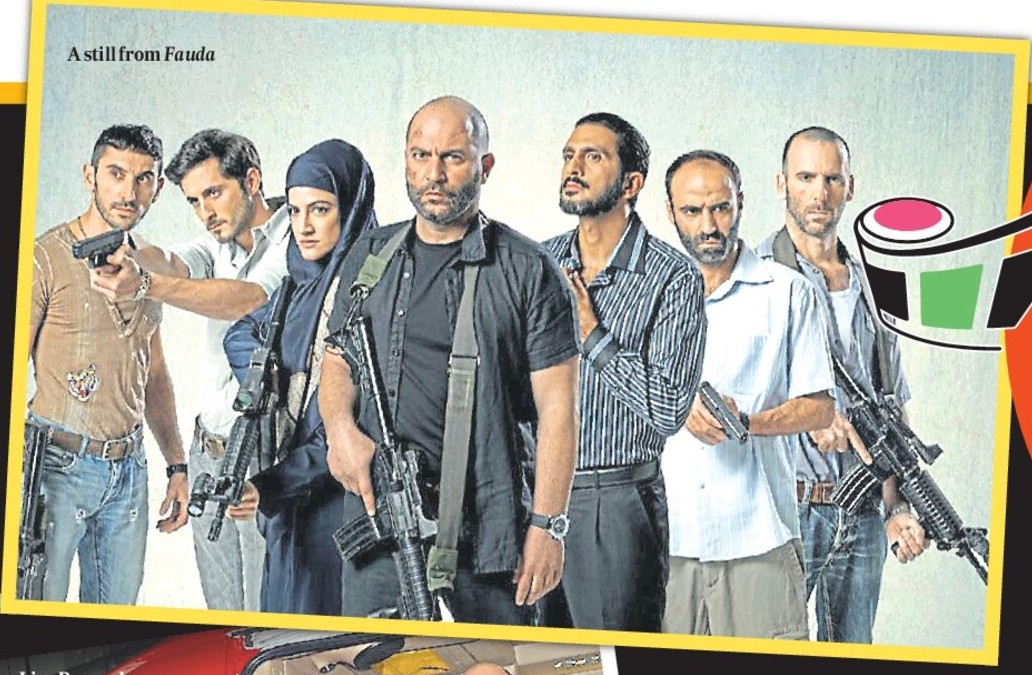
With Tanaav, We aren’t trying to copy, or be better than Fauda-Sameer Nair
8:07 AM

Stating that idea behind Tanaav was to reach wider audience, maker says show stands tall despite source material Fauda’s popularity
Priyanka Sharma (MID-DAY; November 22, 2022)
In the past few months, producer Sameer Nair has often been asked why he chose to make Tanaav when its source material, the popular Israeli series Fauda, is available to stream in India. His reason is simple — he wanted to take an important story to a wider audience.
“Often, people ask us, ‘What about those who have seen Fauda?’ I tell them, ‘If you don’t want to, don’t watch Tanaav.’ You don’t have to see it, and then make comparisons. That’s not the reason why we made it. In India, only the upper-class audience has watched international shows. Reimagination [allows us] to take it to a wider audience. We aren’t trying to copy, or be better,” begins Nair, whose Applause Entertainment has backed the political thriller starring Manav Vij, Arbaaz Khan, Rajat Kapoor and Ekta Kaul.
The journey of Tanaav began three years ago when Nair’s production house initiated a conversation with Yes Studios that backed Fauda. It was decided that Nair and his team would prepare a presentation about their vision to adapt Lior Riaz and Avi Issacharoff’s story in the Indian setting. While the original explored the Israel-Palestine dispute, the Sony LIV offering focuses on the conflict between state-run Special Task Group (STG) and militants in Kashmir.
“The beauty of formats is that a story can get a new life and identity,” says Sharon Levi, managing director, Yes Studios. She adds that Fauda on Netflix India only serves as a promotional tool for Tanaav rather than competition.
The makers of Tanaav had to not only tell a distinct story, but also address the volatile geo-politics of Kashmir accurately. Nair assures that they have been mindful. “Sudhir [Mishra, director] and I had numerous discussions about this. There’s nothing to be offended about. We have made the show thoughtfully and sensitively,” he states.

Everything in Kashmir is political; we dealt Tanaav's story in a compassionate way-Sudhir Mishra
7:49 AM

As he reimagines Fauda against Kashmir’s backdrop for Tanaav, director Sudhir Mishra says adopting humane approach was crucial
Uma Ramasubramanian (MID-DAY; November 17, 2022)
Bringing Kashmir’s complex history of turmoil to the screen is not easy. Neither is adapting the popular Israeli show, Fauda (2015). Sudhir Mishra took on the dual challenge as he helmed Tanaav.
“I had seen Fauda long [ago]. I didn’t watch it again [before adapting it]. After a while, you have to forget the original, and reimagine it,” says Mishra, who has shared the directorial responsibility with Sachin Krishn.
In the Sony LIV series starring Manav Vij, Sumit Kaul, Rajat Kapoor and Arbaaz Khan, a Special Task Group agent comes out of his retirement to chase a much-dreaded terrorist, who was believed to be dead. Given the sensitive subject, adopting a humane approach was key.
“As storytellers, you try and understand it in a human way. Of course, everything [in Kashmir] is political, and affects the lives of people in the state. It’s up to people how they understand [the situation]. If you are not sensationalist, which I am not, and if you are not itching for a controversy, then you deal with the story in a compassionate way,” states Mishra.
In Fauda, the terrain is dry and brown. Kashmir is jannat, so the look was changed in Tanaav-Sameer Nair
8:20 AM

Reimagining Fauda for desi audience, Tanaav creator Nair on how the Israel-Palestine conflict has been adapted in the Indian milieu
Mohar Basu (MID-DAY; August 22, 2022)
Israeli journalist Avi Issacharoff and actor Lior Raz created the popular series, Fauda, based on their experiences in the Israel Defence Forces. Director Sudhir Mishra has adapted the political thriller for the Indian audience with Tanaav, featuring Manav Vij, Rajat Kapoor, Arbaaz Khan, Zarina Wahab, Ekta Kaul and others.
When Sameer Nair’s Applause Entertainment bought the adaptation rights of the series, the primary need was to reimagine the milieu. The team decided to set the political thriller in Kashmir. “The original is a tale about Israel and Palestine, distinctly a story of Jewish-Muslim conflict. When you set it in Kashmir, the tendency is to make it an Indo-Pak story. We decided that we’ll depict a political scenario happening in Kashmir,” says the producer.
Nair asserts that the team steered clear of religious broad-stroking. “Our hero is a Muslim, working for the Indian intelligence agency taking on another Muslim, who works for an independent organisation. Around them are a whole set of people who may be Hindu or Muslim.”
At its heart, the upcoming Sony LIV series is a story about identity. Nair cites an interesting example to establish this. “We have two characters called Malik in the show — one is a Punjabi Malik, the head of an intelligence bureau in India. The other is a man in Pakistan. These nuances were important to establish the idea of how identities are derived from the same nation. Bringing the local Kashmiri culture was pivotal. In Fauda, the terrain is dry and brown. Kashmir is jannat, so the look was [changed].”
He is not worried about comparisons with the original that has become immensely popular around the globe. “The idea is to take the germ of the same story and tell it to a wider and new audience. If someone has watched Fauda, they aren’t my audience. The idea is to bring in our actors and our cinematic syntax.”

Tanaav promises to be a thrilling watch; check out the exciting star cast
8:07 AM

Applause Entertainment reimagines Fauda as Tanaav for a larger Indian and global audience; series to stream on Sony LIV
BOMBAY TIMES (June 14, 2022)
Applause Entertainment, the content studio of the Aditya Birla Group, is all set to reimagine and retell a story of conflict and struggle, with the Indian adaptation of the globally acclaimed Israeli drama series Fauda. Hailed as one of the best Israeli shows, the Indian version of the show, produced by the content studio in association with Applause Productions, is titled Tanaav (which means tension, chaos or stress). The series will be helmed by National Award-winning director Sudhir Mishra and co-directed by Sachin Mamta Krishn.
Set against the idyllic backdrop of Kashmir in the year 2017, the series tells the story of a Special Covert Ops Unit, their bravery and courage. Delving into the human drama behind the ideologies, dealing with complex emotions and flawed characters, all of whom share the same feelings of love, loss, betrayal and revenge, the series is a socio-political action drama with family at its core.
Shot extensively in real locations in Kashmir over 100 days, this fast-paced drama is told over 12 episodes. The cast is an eclectic ensemble of talented actors and performers cast by Mukesh Chhabra. The show features Manav Vij, Sumit Kaul, Rajat Kapoor, Shashank Arora, Arbaaz Khan, Zarina Wahab, Ekta Kaul, Waluscha Dsouza, Danish Hussain, Satyadeep Mishra, Sukhmani Sadana, Sahiba Bali, Amit Gaur, Arslan Goni, Rockey Raina, M K Raina, Sheen Dass and Aryaman Seth, amongst others, in prominent roles.
Created by Avi Issacharoff and Lior Raz and distributed by yes Studios, Fauda has received praise internationally. While staying true to the original format, its Indian adaptation has been reimagined for a larger Indian and global audience.
Sameer Nair, CEO, Applause Entertainment, said, “A global sensation, Fauda was always a story waiting to cross borders and be adapted in a new setting. We find it immensely gratifying to bring an edge-of-the-seat drama of this calibre to Indian audiences, offering a new perspective to the human stories depicting all sides of the conflict. With filmmakers like Sudhir Mishra and Sachin Krishn at the helm, backed by a stellar cast and talented writing, creative and production teams, we are excited to partner with Sony LIV to bring this show to the world. This partnership only strengthens our already strong relationship after successful collaborations on Scam 1992, Avrodh, Undekhi and Your Honor.”
Sudhir Mishra said, “Applause Entertainment discovers some of the best international stories to be reimagined and adapted for the Indian audience. As a filmmaker, Tanaav allowed me to explore a variety of characters and delve deep into their psyche. It is a true Indian story weaved into a tightly-knit action drama that highlights human emotions and the dilemmas they face. I cannot wait for the audience to binge-watch Tanaav, soon to launch on Sony LIV. ”
Subscribe to:
Posts (Atom)