Showing posts with label Tamas. Show all posts
Showing posts with label Tamas. Show all posts
Remembering Tamas: A lesson in history for the ‘reasonable and strong-minded’
10:16 AM

Arushi Jain (BOMBAY TIMES; August 14, 2026)
As India observes Partition Horrors Remembrance Day, Govind Nihalani’s Tamas remains a searing depiction of Partition. First telecast on Doordarshan in 1988, the six-part adaptation of Bhisham Sahni’s novel tells the story of the violence and upheaval that accompanied the splitting of a nation into two. Nearly four decades later, its questions around history, memory and intolerance remain relevant. While Nihalani has maintained that a work like Tamas is not easy to make today, late actor Om Puri believed it would remain relevant for generations.
‘Those who forget their history are condemned to repeat it’
Adapted from Bhisham Sahni’s 1973 novel of the same name, which won the Sahitya Akademi Award in 1975, Tamas brought together a formidable cast of Om Puri, Amrish Puri, A K Hangal, Pankaj Kapur, Dina Pathak and Surekha Sikri. Sahni himself was closely involved with the series, though certain details were altered to create a more compelling screenplay.
Every episode started with a reminder: “Those who forget their history are condemned to repeat it.” The series unfolded in a fictional Punjab town, beginning with a pig carcass left on the doorsteps of a mosque, an act that sparks riots. From there, it traced how rumours snowballed into violence, how neighbours turned into enemies, and how women took their own lives to escape dishonour.
Years later, at a 2011 event, Om Puri explained why Tamas remained relevant: “A film like this should be shown to every community. This is a work of art which should be shown to every child, and it will be relevant for generations to come.”
Govind Nihalani had a story, but no money to make it
Making Tamas was not easy. Born in Karachi, Nihalani had long been intrigued by the Partition, but the courage to take it on as the subject of a film came only after he stumbled upon Bhisham Sahni’s novel. “I first saw the book at a store in Mandi House. I didn’t know the writer or what it was about, I just read the title and liked it. I still remember the first sentence – it read – ‘Aale mein rakhe diye ne ek jhapki lee’. And as I finished the first paragraph, I said to myself, ‘This is it. I am going to work on it.’ But I had no money to make the film,” he recalled in a 2017 interview with Delhi Times.
The same year, he met then Prime Minister Indira Gandhi during the International Film Festival of India (IFFI) in Delhi. During their two-minute conversation, Nihalani asked if the government would support a film on Partition. She told him, “It will all depend on the political condition of the country when you make the film.”
Nihalani soon realized that turning Tamas into a film would be a herculean task, particularly when it came to finding the money. He eventually found Lalit Bijlani of Blaze Films, who had produced Shyam Benegal’s Ankur (1974), willing to back the project. Nihalani had warned Bijlani that the film could be controversial, but he went ahead nevertheless.
His apprehensions proved right when Tamas ran into controversy after its 1988 Doordarshan telecast, with Nihalani facing threats and court cases. Yet, the film has endured as one of the finest works on Partition.
‘Making Tamas was an act of faith’
“When Partition happened, I was a little kid, but my first memory of fear, panic and blood comes from that period. My family migrated from Karachi and we settled down in Rajasthan. I was very emotional while making this film,” Nihalani had said in a 2013 interview.
That personal connection also shaped the making of Tamas. “Making Tamas was an act of faith,” Nihalani had remarked. He said he was fortunate to find some of the finest artistes for the project, “I was just lucky.”
'Some roles change your life’
For the actors, too, the series was transformative. Ila Arun, speaking at a 2011 event marking its DVD release, had said, “I didn’t know the pain of Partition until I played Lalaji’s wife. I understood what the Partition took away from people. After working on Tamas, I learnt a lot about humanity and Hindu-Muslim friendship.”
Deepa Sahi had also echoed the sentiment: “Some roles change your life and Tamas is one of those. I can write a book on my experiences from the Tamas shoot.”
Amrish Puri, though wary of overexposure on television, agreed to play an elderly Sikh community leader at Nihalani’s insistence. “It really was an agonizing role in Tamas. I was very selective about television appearances and accepted this for the sake of personal associations. When Govind wished to cast me, I didn’t allow stardom to affect my decision,” he recalled in his autobiography.
Tamas takes us to a historical past – unpleasant at times, but revealing and instructive
The Supreme Court in its 1988 judgment
Om Puri, who played the tanner Nathu, believed the show carried a larger lesson. “It is a reminder of the price we pay if we divide on the basis of communities,” he had said at the 2011 event. To look the part, he shed further kilos despite already being lean.
Tamas went on to win three National Awards – for Nihalani (Nargis Dutt Award for Best Feature Film on National Integration), Surekha Sikri (Best Supporting Actress), and music director Vanraj Bhatia (Best Music Direction). The series is currently streaming on YouTube.
‘Tamas is not entertainment. It is history’
The telecast was followed by legal battles. On January 21, 1988, a writ petition led to a Bombay High Court stay on further telecast of the serial. But two days later, on January 23, a division bench of the Bombay High Court, comprising Justices Bakhtawar Lentin and Sujata Manohar, overturned it after watching all six episodes in one day. The court famously declared: “Tamas is not entertainment. It is history. And you cannot wish away history simply by brushing it under the carpet.”
The controversy didn’t end there. There were protests, demonstrations, and Nihalani received threatening calls and needed police protection. The case reached the Supreme Court, where Soli Sorabjee, India’s former Attorney General, argued on Nihalani’s behalf that free speech could not be judged by the standards of a fanatic. On February 1, 1988, the Supreme Court upheld the High Court’s decision, ruling that Tamas must be seen through the eyes of “reasonable, strong-minded” citizens.
The court added that the HC judges who had seen the film had come to the conclusion that “the average person will learn from the mistakes of the past and realise the machinations of the fundamentalists and will not perhaps commit those mistakes again.”
An India Today report from the time had quoted Nihalani as saying, “We are becoming polarized as a society and strong consciousness is needed among people so that the saner elements in each community see this pattern.”
Ironically, the controversy also boosted sales of Bhisham Sahni’s novel. By the time the final episode aired on February 13, 1988, Tamas became both a cultural flashpoint and an important case on free speech.

Amrish Puri featured as elderly Sikh community leader Teja Singh
Nitin Desai’s sets were a visual custard of colours and opulence
8:50 AM
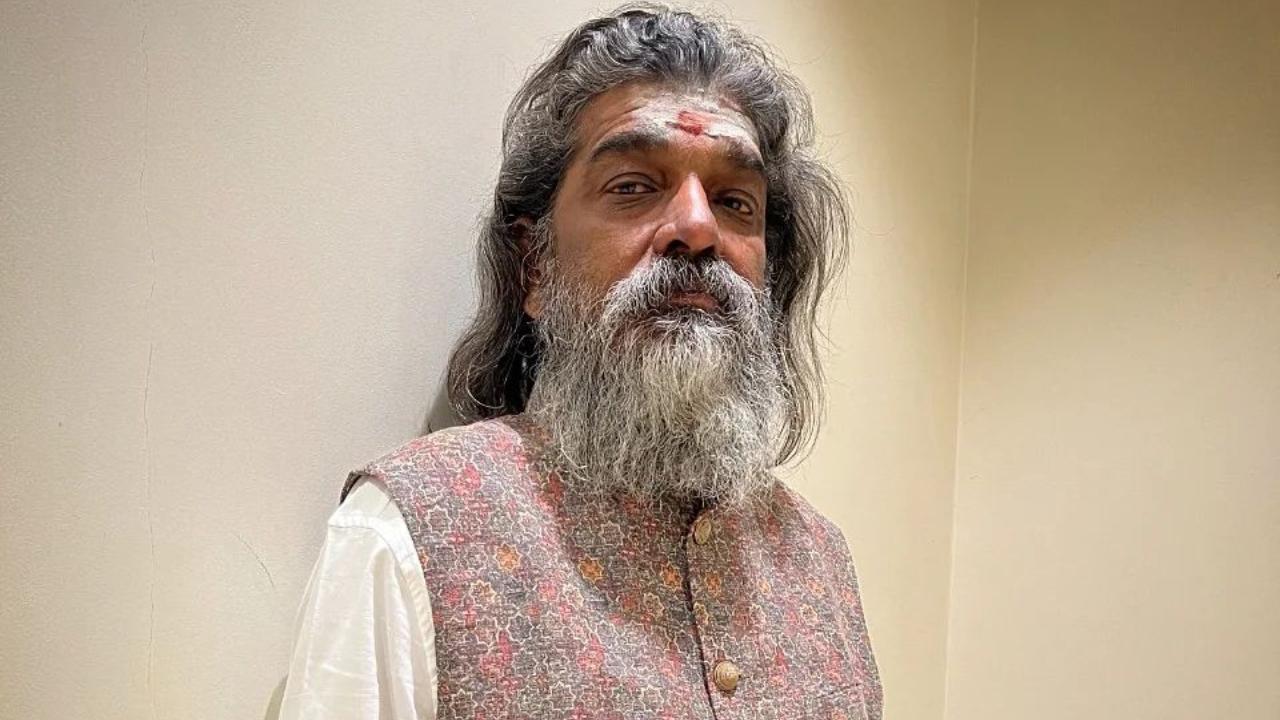
Avijit Ghosh & George Mendonca | TNN (THE TIMES OF INDIA; August 3, 2023)
As word of veteran Bollywood art director Nitin Desai’s death got around, several personalities paid homage to his creative spirit. Television producer Siddhartha Basu, who collaborated with him on several shows, including the iconic Kaun Banega Crorepati (2000), tweeted that Desai conjured “world class installations on an industrial scale.”
Apart from films and TV shows, Desai was much sought after for organising state fun ctions for Maharashtra such as the Republic Day tableaus. He was to set up Mumbai’s popular Lalbaugcha Raja Ganpati installation this year.
Actor and BJP MP Hema Malini remembered the art director as “a warm human being.” Actor Riteish Deshmukh described him as “soft spoken, humble, ambitious & a visionary” who had contributed “immensely to the growth of Indian cinema.”
As an art director first—and later in the more expansive capacity of a production designer—Desai elevated the projects he was associated with, especially those of film directors Vidhu Vinod Chopra, Sanjay Leela Bhansali and Gowariker.
There’s a harmony and continuity of palette in the way most scenes are crafted in Bhansali’s Hum Dil Chuke Sanam (1999). “A French production company called me up to find out where the location in the film was. I had to tell them the whole thing was a set built at Film City,” Desai said in a 2003 interview.
Bhansali’s Devdas was a visual custard of colours and opulence, and offered a contrast to the earlier film versions of Saratchandra’s novel portrayal of 19 century Bengal. Desai’s artwork turned colours into a language and helped Bhansali communicate his alternative vision. Just a year earlier, the art director had displayed his versatility in Gowariker’s anti-colonial cricket drama, Lagaan.
The terrain was totally different: the desert of Kutch where a famine looms. Desai’s production design of the village and surroundings is delightfully restrained, much in tune with the movie’s needs and mood. Just as he is pompish in the medieval tales of romance and valour, Gowariker’s Jodhaa Akbar and Panipat (2019). In his own way, Desai revolutionized art direction in Hindi cinema.
A student of photography at JJ School of Arts in Mumbai, he shifted to the world of moving images in the 1980s. Desai started out as a fourth assistant to the renowned art director Nitish Roy in Govind Nihalani’s telefilm, Tamas (1988), a searing tale on the horrors of Partition. He also assisted Roy in Shyam Benegal’s Bharat Ek Khoj and worked independently in the DD serial, Chanakya.
But he caught attention and found appreciation with Vidhu Vinod Chopra’s 1942: A Love Story (1994), which underlined his eye for details and flair for the eye-catching. The film earned him the first of his three Filmfare Awards: Khamoshi: The Musical (1997), Devdas being the other two. He also bagged four national awards for production design: Dr Baba Saheb Ambedkar’ (1998), Hum Dil De Chuke Sanam, Lagaan and Devdas.
In 2005, Desai set up N D Studios, a sprawling facility for filmmaking and television work, spread over 52 acres. It was his dream venture where many big projects such as mega reality tv show, Bigg Boss, were lensed. Sadly, this is also where the dream died.
(With inputs from Mohammed Wajihuddin in Mumbai)
-----------------------------------------
Final act: Help for tribals, NDRF amid landslide
Navi Mumbai: Nitin Desai provided 10 tents to house victims and rescue workers at the landslide-hit Irshalwadi hamlet in Khalapur taluka. The tents were kept at two different locations to help victims and government staff involved in rescue and relief. Desai also provided a night's accommodation and dinner to 56 personnel of the National Disaster Response Force 5th battalion-Pune which carried out the rescue work. Desai’s aid came when the administration was struggling with the logistics at a remote location in the immediate aftermath of the incident.
Surekha Sikri didn’t bring any kind of artificial technique to creating a character-Govind Nihalani
8:20 AM
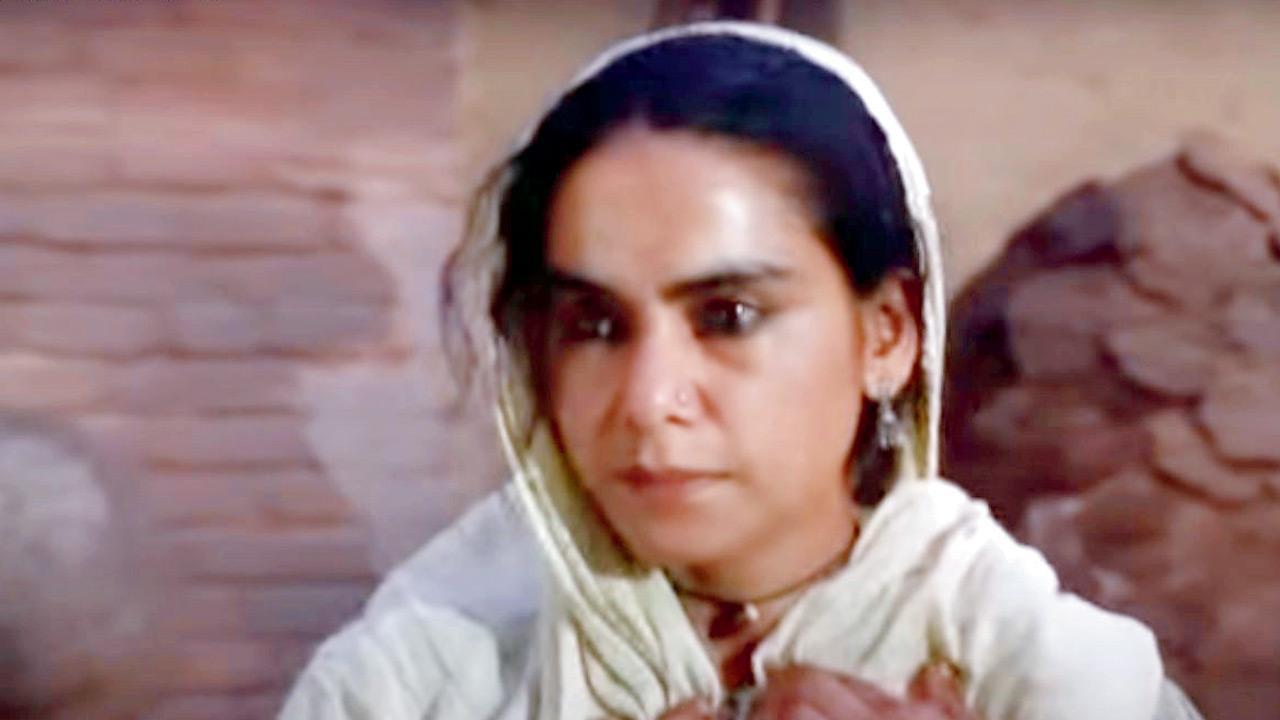
Surekha Sikri played Rajo in this Govind Nihalani creation
Filmmaker Govind Nihalani on roping in the senior actor for 'Tamas', which garnered her a National Award
Govind Nihalani (MID-DAY; July 17, 2021)
Surekha [Sikri] was a student of the National School of Drama. I knew of her when she was doing theatre in Delhi. I liked her stage performances immensely. When I was working on [my television-film] Tamas [based on the Hindi novel of the same name by Bhisham Sahni in 1988], she had just come to Mumbai. Surekha Sikri was my first choice to play the character of Rajo and I am glad she accepted it. It rightly garnered her the National Award for Best Supporting Actress.
Rajo [her character in Tamas] was a Muslim woman hailing from a simple background, stuck between her hot-headed son and God-fearing and honest husband. Once explained, Surekha would grasp the graph of the character [with ease]. She was a natural actor, who put in a lot of hard work into her performances, but you would never know that watching her act so effortlessly on screen. What touched me the most about her portrayal is the simplicity with which she played the role.
There are some things about every actor that a director identifies with, which help create a good working relationship. One of the things about Surekha was that she was a warm-hearted human being and that translated on-screen. It became part of her personality and all the characters she ever played on stage and in cinema; there was little artifice about that. Surekha didn’t bring any kind of artificial technique to creating a character. You just felt the empathy in her approach.
We also worked together in another film called Deham [2001] — a modern Indian sci-fi film written by Manjula Padmanabhan, based on her play Harvest. It was starkly different from her character in Tamas. Surekha played a difficult and controlling mother-in-law to her family. I trust my actors and their approach to acting. [Even in Deham], she approached her character with utmost honesty.
As told to Upala KBR
Noted works
Kissa Kursi Ka (1979): She made her debut with this political satire based on Indira Gandhi and Sanjay Gandhi, where she played a negative character, Meera.
Tamas (1986): Based on the Hindi novel by actor-writer Bhisham Sahni, the film garnered her, her first National Award for Best Supporting Actress.
Mammo (1994): She played grandmother Fayyazi to a young Amit Phalke in this Shyam Benegal creation. The film was the first part in the trilogy, which was later followed by Sardari Begum (1996) and Zubeidaa (2001). Surekha received her second National Award with this outing.
Zubeidaa (2001): Sikri reprised her role of Fayyazi in Shyam Benegal’s third instalment, which also featured Karisma Kapoor.
Balika Vadhu (2008-2016): The actor played the character of Dadisa for eight years and won the Best Negative Lead gong at the Indian Telly Awards.
Badhaai Ho (2018): She received her last National Award for this Ayushmann Khurrana-starrer.
Vanraj Bhatia, composer par excellence, dies at 94
8:07 AM

Ambarish Mishra (THE TIMES OF INDIA; May 8, 2021)
Mumbai: Vanraj Bhatia, whose music deepened the content of art house cinema in the 1970s and who cheerfully cocked a snook at the omnibus, 150-piece orchestra of mainstream Hindi cinema, passed away on Friday following a prolonged illness. He was 94. Bhatia had for long been combating age-related health problems.
Although steeped in Western classical music, Bhatia was only too willing to dip into Indian folk and traditional melodies to underscore a film’s narrative. The lingering, feather-soft flute which laces key scenes in the movie Manthan or the melancholy notes of Tamas, the much-acclaimed television show based on Partition, are a testimony to Bhatia’s range and style, say connoisseurs.
In a career spanning nearly four decades, the immensely talented composer teamed up with ace filmmakers such as Shyam Benegal, Kumar Shahani, Aparna Sen and Govind Nihalani. Lata Mangeshkar, Asha Bhosle, Kishore Kumar, Yesudas, Arati Ankalikar-Tikekar and Preeti Sagar have sung under Bhatia’s baton.
His oeuvre included cinema, television, theatre and ad campaigns. He scored more than 6,500 jingles, including the iconic Liril ditty. After he bagged Ankur, Shyam Benegal’s first film in1974, Bhatia sealed a formidable partnership with the renowned filmmaker, rustling up, it is said, a tally of 16 films, including Nishant, Bhumika, Sardari Begum, Suraj ka Satvan Ghoda and Mandi.
‘Tumhare bina jee naa lage ghar mein’, the lilting, laidback number from Bhumika, rendered by Preeti Sagar, poignantly evokes the sepia-tinged black-and-white era in which the film is set. ‘Mero gaam katha paarey’, from Manthan, had won the heart of Prince Charles during his visit to India, it is said. The song has since been adopted by the Amul milk cooperative as its anthem.
Bhatia’s music offered a fresh interpretation of characters caught in the flux of life in contemporary India, said experts. He also scored for 36 Chowringhee Lane, Jaane Bhi Do Yaaro, Junoon, Kalyug, Saza-e-Maut, Pestonji, Hip Hip Hurray, Mohan Joshi Haazir Ho, Tarang, Droh-Kaal, Massey Sahab, Susman, Antarnaad, Mammo and Naseem, among many others.
Bhatia’s background score for Hindi films include Ajooba, Bekhudi, Beta, Chamatkar, Ghatak, Pardesi, Chameli and Damini. He also wrote the score for The Householder, a Merchant-Ivory film. He wrote the opening lines of TV series such as Khandan, Wagle Ki Duniya, Naqab, Lifeline and Bharat Ek Khoj, based on late Prime Minister Jawaharlal Nehru’s ‘Discovery of India’.
Born in Mumbai in 1927, Bhatia, an Elphinstonian, joined the Royal Academy of Music in London and the Paris Conservatory to study Western music. On his return to India, he had a brief stint at the Delhi University as Western musicologist. He joined Benegal in the1970s.
Bhatia won the national award for best music direction for Tamas (1988). The Sangeet Natak Akademi award came in 1989. For his contribution to cinema, he was awarded Padma Shri in 2012.
Ananth Mahadevan's soon-to-be published book to narrate stories behind milestone TV shows
8:36 AM

Filmmaker Ananth Mahadevan’s soon-to-be-published book, Once Upon A Prime, takes us through milestone shows of Indian TV
MUMBAI MIRROR (April 29, 2020)

How Kishore came to sing for Yeh Jo Hai Zindagi
 The title refrain of Yeh Jo Hai Zindagi is still high on the television memory charts. When pop star Ajit Singh composed it, S S Oberoi blew a bugle, “lets get Kishore Kumar to sing it!” Kumar, the maverick actor-singer-composer, had not stepped out of the movie circuit before. In his legendary style, without batting an eyelid, he rattled off a figure of 18,000 rupees, the fees he charged for a film song. Oberoi didn’t blink either. He could see the song playing on television every week. Over 52 episodes it would amortize to less than 4,000 rupees a week. And so, Kishore Kumar sang for television.

When Colonel Kapoor ran behind ‘Fauji’ Shah Rukh Khan with a stone
He (Director Colonel Raj Kumar Kapoor) first ran into the 23-year-old lad named Shah Rukh Khan at Gulmohar Park in New Delhi. Kapoor’s brother-in-law auditioned him along with a bunch of others, and let them loose on the training ground. The Colonel put them through a grind unfamiliar to them. Not surprisingly three of them dropped out with a curt “we haven’t come here to join the army”. Only Khan kept up with Kapoor.
It ended in a sparring match with both donning boxing gloves. “I goaded him to hit me and he finally did. I could sense his aggressive nature. It was a presence that the camera loved. My Abhimanyu Rai was born, though honestly, I hadn’t penciled him in for the part. He was a bit of a bum though, turning up late for shoots. Once I ran behind him with a stone and that put an end to his punctuality ills.”
The other ‘bums’ weren’t a piece of cake either. The Colonel had recruited a barber on the set to clip their Samson locks. Yet the cadets continued to sport long hair. “I later discovered that they were bribing the barber,” he says. Corruption had seeped into the ‘army’, courtesy the civilians.

Govind Nihalani asked Indira Gandhi for government support for Tamas
Tamas lay untouched in Nihalani’s (director Govind Nihalani) room for more than a week. He preferred to read it when he had sufficient time out from filming. When he did get down to reading it, every sentence struck him not as words, but images. Something told him ‘this is it’. He decided that he wanted to do it, but didn’t have a clue how to go about it.
It was around that time that Nihalani’s searing human drama, his first film, Aakrosh (The Cry of the Wounded) was selected in the Indian Panorama section of the International Film Festival of India, held that year in Delhi. The directors of the films screened were invited for a tête-à-tête with then Prime Minister Indira Gandhi. An evening with Gandhi, however, turned into a rationed two minutes with each person.
Nihalani who was deeply under the influence of the book came straight to the point. “Madam, if a serious film were to be made on the Partition, would the government extend support?” “What do you mean by government support?” she enquired.” “The National Film Development Corporation, for instance. Regular producers do not fund this kind of film.” Gandhi instantly asked him when he wanted to make it. “It is a sensitive film. It will all depend on the political situation at that time.”
Nihalani realised that her sharp mind had taken cognizance of the Hindu-Muslim elements in the story. The communalism in the film and the country would not be without repercussions. “I realised I was sitting on a potent subject. I was certain as hell that I wanted to make the film.”
Why the Big B was apprehensive about KBC
Amitabh Bachchan’s participation in (Kaun Banega Crorepati) evoked the expected skepticism. I was privy to groups turning into all-knowing prophets of doom: “What works in formula films will not work on TV”, “Imagine diminishing his status to that of a television host”, “Did he need this at this stage of his career?”… Strangely, Bachchan himself echoed some of the sentiments “Yes, I was most apprehensive about the idea of going on to the ‘small screen’, as were most of my family members. I felt that the uncertainty of my ability to pull off something like this, was weighing more than the actual danger of reducing my size from 70mm to 21 inches. But as is with most pioneering efforts, since there were no yardsticks or examples to use for reference, I merely took the decision, and the plunge. I have never thought of myself as being in possession of any stature or for that matter being some kind of a star. I looked upon this as another job to be done and that is how I approached Kaun Banega Crorepati.”

Subscribe to:
Posts (Atom)