Showing posts with label Tabrez Noorani. Show all posts
Showing posts with label Tabrez Noorani. Show all posts
Sita Ramam and Hi Nanna have set high expectations and benchmarks for me-Mrunal Thakur
8:14 AM

Onkar Kulkarni (BOMBAY TIMES; November 13, 2024)
Mrunal Thakur has featured in prominent Bollywood films like Super 30, Batla House, Gumraah, Pippa, but her recent experience with Telugu films Sita Ramam and Hi Nanna changed the lens through which she views her career ahead.
The actress says, “There are a lot of scripts that I have been hearing lately, but Sita Ramam and Hi Nanna have set some really high expectations and benchmarks for me. It has added on to my responsibility. I am not going to disappoint my Telugu audience. They are literally the ones who have accepted me as a Telugu ammayi and I can’t wait to do a crazy, mind-blowing entertainer, and at the same time, a cult film that will strike a chord with the audience.”
‘I keep climbing one step at a time’
Ask Mrunal if she feels that makers from the Telugu film industry have been able to tap into her talent more than Hindi filmmakers, and she explains, “I think my journey has been like climbing a ladder. I keep climbing one step at a time. I am thankful to director Tabrez Noorani, who saw me, identified me in the crowd of girls and gave me an opportunity to be Sonia, in Love Sonia. Also, to director Vikas Bahl who gave me an opportunity to play Supriya in Super 30. I think if you get success in a blink of an eye, you don’t appreciate it as much.”
‘I hope my career goes beyond Hindi, Tamil and Telugu films’
The actress has stepped up slowly, but she believes that she’s now at a point where she’s being offered strong parts. “I feel happy when filmmakers meet me and say, ‘We want to make a movie with you, but Sita Ramam and Hi Nanna set the benchmark so high that we are going to wait and make sure we write a character for you and then reach out’. It gives me some kind of satisfaction knowing that finally there are roles which are written for me. So, one step at a time, one film at a time. Khaane ke thaali mein ek ek niwala aaram aaram se, zindagi lambi hai. I have a long way to go, and I hope my career is not restricted to just Hindi, Tamil and Telugu but also different languages including Malayalam, Punjabi or even French and Spanish for that matter.”
Being on your own is daunting yet empowering-Mrunal Thakur
8:09 AM

Set to kick off the final schedule of Jersey, Mrunal Thakur on cracking showbiz without godfather and inching closer to success with five biggies in kitty
Mohar Basu (MID-DAY; November 11, 2020)
Despite breaking out with a powerful performance in Love Sonia (2018), it has been an uphill journey for Mrunal Thakur in Bollywood. Not that she is complaining — she has been patient and prudent, choosing the best of the offers coming her way. Two years into the industry, the actor is now sitting pretty with five projects in her kitty, including the Shahid Kapoor-starrer Jersey. "We have a 25-day schedule lined up. I will travel to Chandigarh and Dehradun soon," she says.
If Mrunal Thakur — who had become a household name with Kumkum Bhagya — made a successful switch from television to movies, she also skilfully shifted gears from indie cinema to mainstream offerings. The coming months will see her headline Toofaan opposite Farhan Akhtar, the Thadam remake with Sidharth Malhotra, Aankh Micholi with Abhimanyu Dassani, and Pippa with Ishaan Khatter and Priyanshu Painyuli.
Ask her what posed the biggest challenge to cracking Bollywood, and she says, "It was to get a debut film, which would showcase my acting skills. It wasn't easy to convince director Tabrez Noorani [that I would be able to pull the role off]. Once Love Sonia started doing the festival rounds, it helped me bag film auditions. When you don't have a godfather, you are on your own. That is the most daunting, and yet, the most empowering feeling. I was scared, but it also made me go by my gut feeling more often. I focussed on good stories rather than screen space. To me, it matters who I am collaborating with. So when a Nikkhil Advani or a Rakeysh Omprakash Mehra offers something, I take the plunge."
Point out that her last release, Batla House, was over a year ago and she reasons that the pandemic has brought the industry to a slowdown. "After Batla House, I wanted the world to see more of my work. We were shooting Jersey when the Coronavirus lockdown was announced. During the stay-at-home period, I read many scripts and spoke to potential collaborators. With lesser noise around, I was deciding better, and signed some brilliant projects. I also lost films, but eventually, good work brings in better work."
Hrithik Roshan, John Abraham are the hottest men in Bollywood today-Mrunal Thakur
8:07 AM

Actress on why she chose to start her Hindi film innings with 40-plus actors
Hiren Kotwani (MUMBAI MIRROR; August 6, 2019)
 Mrunal Thakur, best known as Bulbul from Kumkum Bhagya, made a successful transition to the big screen with an international production, Love Sonia, before signing up with Hrithik Roshan for math whiz Anand Kumar’s biopic, Super 30. This Independence Day, she teams up with John Abraham for Batla House. Excerpts from an interview:
Isn’t it a coincidence that your first Bollywood outing—Super 30 and Batla House — are drawn from real stories?
Well, I wasn’t working to a plan, I was filming Super 30 when I met Nikkhil Advani for another film. While that didn’t work out, he offered me Batla House. I had seen D-Day and I grabbed the opportunity. He’s the best director for such a subject. I’m happy he chose me.
Were you familiar with the 2008 encounter?
I knew it as one of the most controversial encounters but didn’t know the exact details. Before the narration, Nikkhil explained that it came in a way of a series of bomb blasts around Delhi. Two, including a cop, were killed and two arrested. One escaped and a constable was injured in the gunfight. Besides being the story of a cop (inspired by Sanjeev Kumar Yadav), it’s also the story of a journalist as his wife Shobhna was one. I followed her work while promoting Love Sonia and having studied mass media, I know how journos source a story, develop it into news and fight to get it out before a rival channel. I met her recently and she said she saw herself in me on screen.
I didn’t want to play just a wife who is singing, cooking and waiting for her husband to return home. Nandita is a working journalist and that made the part challenging. Nikkhil started with the fun-filled flashback scenes first because he thought it was important for John and me to connect and that helped ease us into the later scenes.
Both Hrithik and John are 40-plus actors...
Do they look 40? Both Hrithik and John are the hottest men in Bollywood today and I’m privileged to have begun my innings with them. They were like strong pillars, supporting me during my initial phase. I would love to pair up with different actors, but their age doesn’t really matter.
Why aren’t you signing more films?
I’m committed to a big show. I want people to watch Batla House and offer me roles.
And can we now hope to see you in a more glamorous avatar, doing a song-and-dance routine?
Yes, of course, I want that too. Romance is my genre but I also want to do comedy, drama and action. Let’s see what comes my way.
Love Sonia got you praise even from the UN. Are more such projects in the pipeline?
I’d love to do films like Love Sonia, which continues to be screened in various countries. Recently, it was shown in the Parliament at Uzbekistan where issues about gender equality and violation against women were raised. If an Indian film can make such an impact on an international platform, I’m happy and proud to be a part of such storytelling. Article 15 is another example. It’s great that Ayushmann Khurrana did it. Such films make people think, they see their matinee idol taking a stand and want to support the cause. I want to be a part of films that make a difference and start healthy conversations about import ant issues.
Love Sonia’s director Tabrez Noorani is influential in Hollywood. Any more collaborations with him?
Tabrez is my mentor and the only director who hasn’t signed me for a three-film deal. I really want to work with him again. We have spoken, there’s something in the pipeline. But such things take time, and I’m hoping and praying they work out.

After 24 years, I know I'm not a fluke-Manoj Bajpayee
7:57 AM
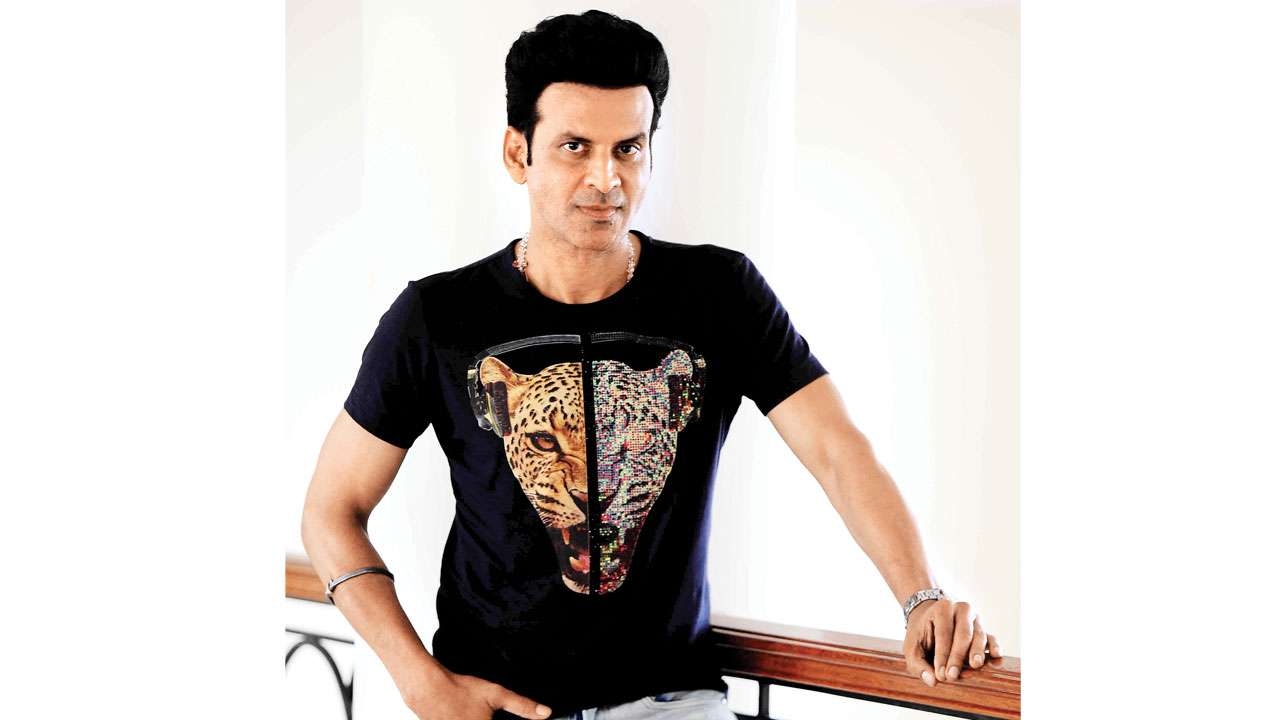
Meena Iyer (DNA; September 22, 2018)
It’s raining films for Manoj Bajpayee. The actor, who will complete 25 years in showbiz next year, is enjoying this phase where he is feted, felicitated and rewarded with mainstream fare like Satyameva Jayate to the hatke stuff like Love Sonia and Gali Guleiyan. Right now, Mumbai is more like a stopover port for the 49-year-old, who has been travelling the world with his work. And though home is where the heart resides, Manoj admits that he also has to adjust being a suitcase daddy sometimes.
Excerpts of our chat with the multi-talented artiste, who never fails to surprise.
It’s been a Manoj Bajpayee season; it began with Aligarh and continues to gather momentum, right?
The typical response would be that God has been kind. But then, that’s also the truth. You have been a part of this business for a long time, in fact, you were around, much before I arrived on the scene. You know the nature of this business. One never knows when one movie starts and how the ball keeps rolling. You need to find a reason for it, so you can repeat the same thing in the coming season. But it never happens. Over the 24 years that I have been here, I have come to only one conclusion; when it’s happening, be happy and celebrate. In this field, the lows are too many and the highs are too few. So if you don’t celebrate, you will miss the train (laughs). No matter how big a star you are, you will feel lonely, left out and miserable. But the best part is that when the high comes, it can either spoil you, ruin you or make you think that you’re the best.
You’ve been able to mix and match very nicely. After a Satyameva Jayate, you also had a Gali Guleiyan.
This year has been great for middle-of-the-road films. Missing is doing well on the digital platform, but sadly, it wasn’t distributed too well during its theatrical release. Gali Guleiyan, too, has managed to generate curiosity and become a talking point, by the grace of God. It’s an independent parallel film, there is no denying it. But once you sit through it, it will not leave you easily. I’m proud of it.
Considering the whirlwind it has been, how are you holding on to sanity? Obviously, you have your wife Shabana and daughter Ava Nayla at home...
The sanity of the experience lies in keeping yourself intact. I’ve been doing a lot of things.
You’re doing a digital series, too, with Raj Nidimoru and Krishna DK.
Yes, we will be finishing it this month. It’s an amazing series about a middle-class guy, who tries to balance the demands of his job and family. He’s an intelligence officer and there’s this myth that they are like Superman. Through it, you understand what a government official working in the intel does, goes through and what happens to his family. There’s also a cultural difference as he’s from Benares while his wife is from South India and their children are studying in an English Medium school in Mumbai. So, you have three different cultures under one roof, failing and succeeding to strike a balance between both worlds. It’s a great subject and we’ve shot some amazing sequences.
Tell us about your experience with Love Sonia, though it’s a special appearance.
When it was first offered to me, I said no. It’s a pathetic character, I didn’t want to do it. I turned the complete black into some grey; that was my contribution. It’s a small role, but it stays with you. Director Tabrez Noorani, producer David Womark and I have put our minds to this character and have tried to make him look like a businessman who thinks he is a saviour of the girls. Pimp is too small a term for him, he is actually managing the racket or the mafia of human trafficking. He believes that he is a businessman and anyone who tries to ruin his job is in danger. We’ve given him a complete human look, and when he changes his colours, it baffles you as to how anyone can be such a chameleon. When you see his dark side, he is fearful and dangerous. On the other side, he is a father, mentor, guide and saviour of the girls. You see everything in him, but you can’t mess with his business as he calls it. I’m supporting the film because the issue is close to my heart. I fail to understand why in the world, none of the governments of any country could bring this into the forum of the United Nations and make it a global rule that people involved in human trafficking are given such a strict punishment that the message goes out to everybody.
Globally, films like Aligarh, Gali Guleiyan and now, Love Sonia have been earning you a lot of notices. How does that feel?
Demi Moore didn’t speak to me after Love Sonia. She was very chatty with me before it started. When Simi Garewal saw it in Melbourne, she said please don’t talk to me (laughs). So, I know for a few days, I’m going to lose some of my female fans because of the feelings my character evokes.
With your performances garnering international acclaim, are you looking at more opportunities in the West?
Yes, at the insistence of a few of my friends, I’m looking westwards. I’ve spoken to some and they have been selflessly working on finding a way to promote me. David is one of them. Tabrez is doing it in his way. Deepesh Jain, who is based in Los Angeles, is doing it for Gali Guleiyan. There are other friends in LA, and they have been at it, too. Also, because they love me as a performer, they feel I should find some work there.
How does being a suitcase daddy work for you? How does your daughter Ava Nayla react?
Since the last few months, I have been at home. My wife Shabana says this is what she likes. She knows that I will be coming home for a few months. It doesn’t matter if I’ll be leaving early morning and returning in the evening. So, it’s a good feeling. I’m loving it too. But now, they’re bored of me (smiles). That’s the life of an actor.
You’re looking leaner. Have you been hitting the gym and eating healthy?
Yes, I’ve been eating well, leading a very healthy life. I quit smoking 13 years ago and hard liquor as well. I used to have white wine earlier, but now I’ve quit that, too. For the last few months, I’ve been a teetotaller.
Has that been easy?
It’s very easy. In the 24 years that I have been an actor, you know how to switch off. I started believing that it was not all fluke, it was a lot of hard work. That’s the good feeling I have.
How good a driver are you considering you started late?
I’ve become a good and safe driver. I’ve been learning cooking also. I’m learning to become a good husband and a good father. When I’m at home, I try to be with my daughter. She shouts at me when I’m on my phone. She immediately says, ‘Papa, shut your phone.’ She demands my attention, which is good.
If others can want your attention, your daughter can also want it.
My daughter doesn’t want it, she grabs it (laughs).
Love Sonia has been a tough journey but definitely worth it-Tabrez Noorani
8:06 AM
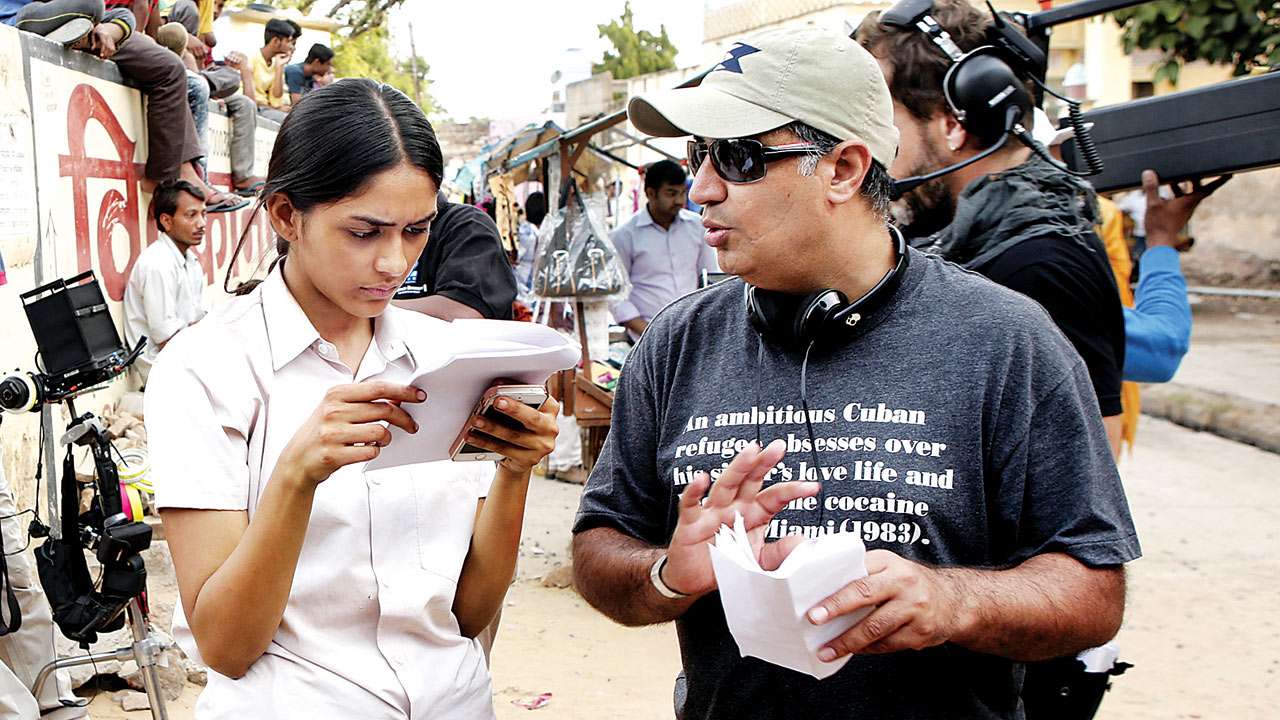
Dhaval Roy (DNA; September 15, 2018)
Love Sonia has just released in India and its director Tabrez Noorani is excited to bring the tale of human trafficking to a wider audience. “It’s like the line from Life of Pi (2012) — ‘The story’s yours now’. This one belongs to the viewers and I am making them a part of the journey that may not be an easy one,” he says. However, the Hollywood producer (Slumdog Millionaire, 2008; Eat Pray Love, 2010 and more) and now debutant director hopes that cinegoers will leave the cinema hall with hope and a ray of light after seeing the courage of the characters and real-life survivors. The filmmaker talks to us about the challenges of making the movie and more.
The idea of Love Sonia believably germinated in 2003 when you worked towards rehabilitating human trafficking victims. What took the film so long to make?
It’s taken a lot of time for various reasons — the tough topic, money, casting and not having stars attached to the project. We ran into a wall because there was no one to fund a movie about human trafficking at that point of time. We wanted to be in the business with the right people and not someone who would exploit the film. So, I refused to compromise and let someone milk the situation. We also had to be extremely careful that we were respectful to the victims and honest to the subject. After all, these were girls I have known and helped rehabilitate. So, it’s been a tough journey but definitely worth it.
Tell us about casting for the film...
I had to chase Richa Chadha and Manoj Bajpayee both. Richa didn’t know me from Adam and I refused to do a script narration because I don’t know what that means. I sent her a draft and she wanted to make sure that the one she read was the same that I would make. But once we started talking, she became more confident about me as a filmmaker and then she took the script to another level. I just got extremely lucky that everyone came on board.
Didn’t you feel the film was getting too delayed?
I’m glad I didn’t make this earlier because the research continued and I kept developing the characters. After the first season of Sense8, I decided to stop producing and focus on this project.
In spite of having produced a number of big Hollywood flicks, why didn’t you venture into direction earlier?
I wanted to debut with this film. I believe for your first outing you need to make something that you feel passionately about. I had other offers, but I felt anyone else could have directed those films but no one could have done this one.
With realistic cinema, filmmakers can often get self-indulgent. How did you ensure that didn’t happen with your movie?
Yeah, self-indulgence was one of the biggest concerns for me. And that’s why I had members of the NGOs as well as trafficked girls on the sets in Los Angeles, Hong Kong, and India. Survivors were also involved in the scripting and editing processes and we made a conscious effort to not exploit the exploited. Once both parties saw the film, it was a validation that we navigated the land very well.
With many so-called parallel films doing well in India these days, do you think it’s a good time for stories like Love Sonia?
Absolutely! I think the audience here has been more open to different kinds of films of late — more than they were, say, three to five years ago. India is making such fantastic cinema, whether it’s a large film like Padmaavat (2018) or a low-budget one like Titli (2014). People here want to go see Stree and a Gali Guleiyan releases at the same time, too.
Which films have impressed you of late?
I thought Titli was an outstanding movie. Udaan (2010), Masaan (2015), Anurag Kashyap’s works, and the Marathi film Fandry (2013) were quite impressive.
What’s next? Would one have to wait too long for another film from you?
Hopefully not. I’m working on two films and they will be very different from this one.
Apart from human trafficking, is there another cause you’d like to make a film on?
That’s an interesting question, but I haven’t thought about it. Anyway, this work won’t end after the release of the project. Trafficking is a massive problem all over the world and I can do anything to help tackle it — even if I have to disguise it in the form of a movie, I would do it because down the line, it will create awareness.
My male friends were jealous because I was working with Demi Moore-Mrunal Thakur
8:04 AM

Chaya Unnikrishnan (DNA; September 13, 2018)
Mrunal Thakur, who played the bubbly and vivacious Bulbul in Kumkum Bhagya, makes her film debut with Love Sonia in a de-glam role. The movie, which has already won acclaim at international film festivals, is now releasing in India. The actress talks about playing the title role of a girl trapped in the global sex trade, how she prepped for it and why she chose an unconventional project for her debut.
Love Sonia is finally releasing in India. What are the thoughts going through your mind?
I am quite excited and nervous because this will be the first time that people will be buying tickets for my film and sharing their views. I am also eager to know how they absorb the movie and what message they take away from it.
This film tackles the serious issue of sex trafficking. Didn’t you want your debut film to be a love story or a romcom?
I always wanted to do a film, but wasn’t sure what kind of movie I would do. This one is about two sisters and what happens to them. When I auditioned for it, I connected with the character because I love my sister a lot. Also, on TV, I had done light roles, characters that were close to what I am in real life. Here, I was out of my comfort zone, I wanted to try and push myself. Also, despite being a newcomer, I got an opportunity to play the titular role, for which I salute director Tabrez Noorani. I worked with the most dedicated and passionate people in the film. Most of my male friends were jealous of me because I was working with Demi Moore!
What kind of prep did you have to do?
I had to lose some weight, but since I was already working out, it wasn’t difficult. We also did a couple of workshops. I went to Sonagachi (Kolkata) to meet the girls (who are into flesh trade) to figure out what their real life story is. It took them a little while to open up and express themselves. Hearing their stories gave me the chills. These girls look so full of life but their stories are so hard-hitting. They are the real winners for me. They have a right to live a happy life.
How difficult was it for you to shoot the scenes?
The director, Tabrez Noorani, made sure that he did not shoot anything that I wasn’t comfortable with. There he used sound and camera angles. Yet, I broke down during several scenes. There is this one scene where I, as a 17-year-old girl, is being sold off to a 60-year-old man. I told my director that I cannot do it. All he said was, ‘Mrunal, I will not force you to do it, but remember if you do the scene and the world sees it and even if one girl is saved, that’s your achievement’. That egged me on. We finished the scene in one take. I can’t tell you the satisfaction I got. I felt I was not just performing, but doing something for a cause.
After Love Sonia, you have Super 30 with Hrithik Roshan.
Yes, my first film is about two sisters and my second one is about education. As an actor, I have the benefit of being a privileged voice for an issue, twice! Working with Hrithik was amazing. My first reaction when I met him was thinking that his eyes are so pretty! I was star-stuck. I had to tell myself to focus on my scene (laughs).

I have gone where the wind has taken me and I have made the most of it-Freida Pinto
8:03 AM

Renuka Vyavahare (BOMBAY TIMES; September 13, 2018)
Danny Boyle’s Oscar-winning Slumdog Millionaire (2008) catapulted Mumbai girl Freida Pinto to global fame. Back in Mumbai to promote her upcoming film Love Sonia, directed by Tabrez Noorani, the actress talks about the challenges she faced post her overnight success and the journey that followed. Her friend and mentor, Tabrez, too, shares his thoughts on the film and the message he hopes to send across through it. Excerpts...
Freida, yours is considered to be an overnight success story, post Slumdog Millionaire, but I am sure you had your share of challenges, too, while trying to make a foray in the West...
The biggest challenge I faced was the massive responsibility. After Slumdog happened, there was no formula to follow. I wasn’t sure what it would take for my next film to succeed, so everything I did was a risk. The process of signing on an agent, and the whole PR and marketing machinery was new to me. The challenges were more so in understanding the way the system works and to find my voice within that. I was sure about the kind of films I wanted to do. But there was no guarantee that what I wanted to do was going to be offered to me. Today, with the kind of entertainment platforms available to the audience, opportunities for actors have become less stereotypical. You don’t have to say yes to everything, as opposed to when I was starting off. However, I am proud of how I navigated the whole thing. Right after Slumdog, I had these big budget movie offers, but I went after indie films (Miral, 2010). I am proud of that. I wouldn’t have the respect I get in the industry today had I followed the usual route — do commercial cinema and play the exotic princess in foreign films. I don’t have to do 10,000 big budget movies in a year because the thing I really value is the respect I get when I walk into a room.
Unlike Priyanka Chopra, who was an established actress in India before she left for Hollywood, you were just a film old. Was it easy or difficult for you then to cut into a foreign film industry?
I didn’t have the experience of being a brand before I moved to the West. I can only speak about the experience that I had. The way I did it was more organic. I did not have to rely on a certain image that I had to push forward. I was free to do whatever I wanted and that also gave me the opportunity to do indie films and establish my credibility as an actor. Also, I had people like Tabrez, who were my mentors, supporters and guides. I remember Tabrez telling me when we hadn’t even finished filming Slumdog Millionaire, ‘Your life is about to change’. I had no idea what he was talking about because I thought I was playing a little part in the film. Who knew that little part was going to be widely accepted and loved! Till date, I get called Latika, which is crazy.
Was it scary or unnerving to be thrown into the limelight, overnight?
Freida: No. I was like, fine, I’ll take it! I don’t think I am ever scared of a new experience. I think I am always excited. Even in Love Sonia, Rashmi is the kind of a character that I have never played before, but the nervousness helps me stay motivated and play a character better. My first film did so well and it has given me an opportunity to get different roles and I am having fun.
You have known Tabrez for over 10 years. A film like Love Sonia could go wrong if not executed right. Was he the reason you gave your nod to this film?
Freida: I have been a part of Love Sonia for 10 years. Tabrez was a line producer on Slumdog, and that’s when he started work on this film. So, it was easy for me to be a part of Love Sonia, unlike the rest of the cast. I know the kind of work that Tabrez has been doing. He has been a producer on movies like Life Of Pi, Zero Dark Thirty and Mission Impossible. He is a quality director. He trusts his actors and believes they can bring his characters alive on screen.
Tabrez: The day after we finished Slumdog, we did a test for Love Sonia. When we read the character of Rashmi, we knew Freida would fit in. That character developed because of her. We worked with the NGOs, who rehabilitate trafficked girls and from the beginning, the goal was not to exploit the exploited. We have been able to navigate that line very well.
As a director, how difficult was it to make a feature film on a social issue and not make it look like a documentary?
Tabrez: It’s a story about two sisters that gives a new take on the conventional idea of heroism. A hero can be an ordinary girl, boy or man trapped in extraordinary circumstances. It so happens that the backdrop is of global sex trafficking, but 20 minutes into the movie, and the audience will be more concerned about the journey of a girl for her sister and the love they have for each other. It’s a tough journey, but it’s about hope and courage in the end.
While the West is speaking of #MeToo, equal pay and gender equality, the developing nations have their own set of issues. Was Love Sonia a reminder of that?
Freida: That’s complicated. Each of these worlds have their set of issues and I won’t pick one to be a bigger problem than the other. It’s like saying your sorrows are not as important as mine. I don’t know if there is a methodical way of tackling one problem before the other. The only thing common in all these issues is the mindset. Unless attitudes and behaviours change, these problems won’t go away. How do you solve the problem of a desperate poor farmer, who has to make ends meet? There is a burden on men to provide for their family and that’s when they are forced to do questionable things.
The film revolves around the physical and psychological trauma that women go through. Do you think it’s time, the attitude towards women needs to change?
Freida: Since Love Sonia is also a global film, I would like to shed some light on the inequality that women face around the world. For instance, let’s talk about Serena Williams at the French Open. There was a debate around what she was wearing. A comment was made that was very unsavoury. Why is her outfit a problem, as long as she plays her sport really well? Or even in the US Open, a female tennis player (Alize Cornet) was fined for changing her T-shirt on court, while it was okay for Novak Djokovic to take his shirt off and lay down in the sun because it was hot! These are double standards and they exist across the world. Until our thinking doesn’t change, we are going to have trouble solving these various problems that women face across the world.
Tabrez: There are various problems and if we feel strongly even about one cause, we can bring about a small change.
We haven’t seen you in a commercial Hindi film till date. Of course, things are changing, but was representation of women in most Bollywood films an issue for you?
Freida: Yes, I have been offered Bollywood films before, but some were not worth taking and for the rest, the timing didn’t work. I also feel I haven’t actively put myself out there. Even with Slumdog, who knew it would turn out to be a hit? I have gone where the wind has taken me and I have made the most of it. When Love Sonia came about, I was passionate about the subject from day one. When you watch the film, another myth is going to get busted. I do speak Hindi. Also, as far Hindi films are concerned, I love Gauri Shinde. If she wrote a script that I feel I can do justice to, and it’s made in India, I would love to be a part of it.
How difficult was it to make a film with an ensemble cast and stick to your vision because a difference of opinion is bound to arise?
Tabrez: The bottom line was always the script. The biggest challenge was to get the cast we did in that span of time. I chased Richa Chadha and Manoj Bajpayee. I gave them the script, there was no narration. They added their bit to the characters and we were open to changes. You have to be flexible as a filmmaker, as long as the overall vision stays the same. A movie like this would ideally be released in five to 10 screens five years ago, but things are changing.
Freida: Also, a lot goes into hiring the next big name. Mrunal is amazing in Love Sonia. You have to have the foresight to do that. Imagine if Danny Boyle didn’t have it.
What is it that you want people to take home from your film, Love Sonia?
Tabrez: I want them to be moved, be involved, open their eyes wider and question things. They will walk out seeing the journey of a very powerful woman (Sonia played by Mrunal) especially in this day and age. I want them to know how massive the problem of global human trafficking is. Awareness is important.

Love Sonia has stayed with me for 10 years-Freida Pinto
8:08 AM
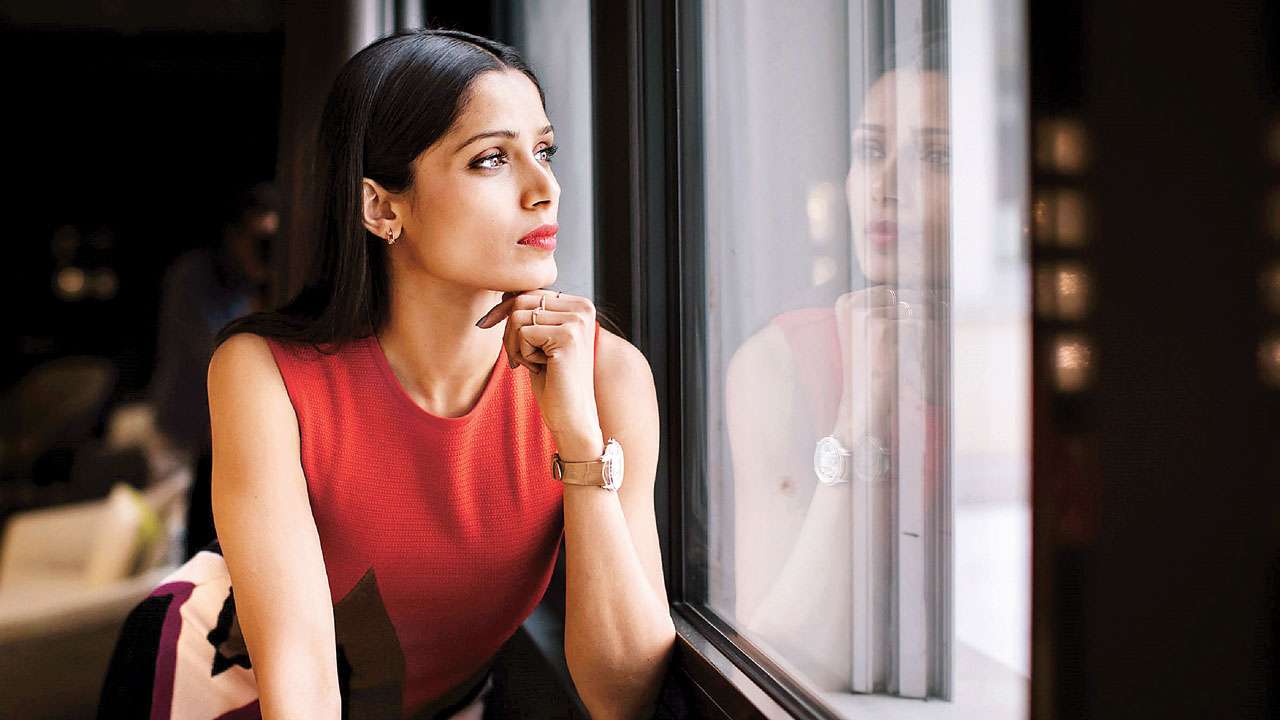
Meena Iyer (DNA; September 12, 2018)
One of India’s most famous exports, Freida Pinto walks in 40 minutes late for this interview. She apologises profusely because she has just landed at an unearthly hour from a foreign destination and is obviously sleep-deprived. Without wasting any further time, she delves straight into shop talk about Tabrez Noorani’s Love Sonia (an upcoming drama on human trafficking) and her other projects in the West.
Tell us about your involvement with Love Sonia.
Love Sonia has stayed with me for 10 years. Tabrez was a producer on Slumdog Millionaire (2008). While working on that film, he was writing this movie and told me that he was keen to direct it. Later, he asked me to read the script. Once I did, I was extremely disturbed by the subject. It was an important story and I wanted to be a part of it. I assured him that whether it was helping him cast actors or anything else, I would be actively involved. It took us a decade to get the right people as it’s difficult to find financiers for such films. When the project came together, he recalled how from 2008 onwards, I had read other actress’ parts and particularly enjoyed reading Rashmi’s lines. I loved the character’s complexity and craziness as well as the fact that she was unpredictable. He asked me if I’d like to portray her on screen. I told him my name was written all over it (laughs).
How did you manage to keep the interest alive in the subject for such a long time?
A lot of people think that when you make such a movie, it must be depressing. I can’t speak for Mrunal (Thakur), her role is a lot more intense. But Richa (Chadha), Manoj (Bajpayee), Raj (Rajkummar Rao) and I had a blast while shooting. Yes, there are scenes that are dark and disturbing, but as soon as we finished filming it, we knew why we were making Love Sonia. We wanted people with determined minds to be part of the movement that puts an end to this brutality. As for keeping my interest alive in this film for 10 years, Tabrez is a dear friend of mine. We live about 15 minutes apart from each other in Los Angeles. He and I would talk about this film and many other projects, we’re working on a bunch of things about which I can’t reveal anything more yet. But Tabrez and I are partners. He’s been my mentor, a lot of people don’t know that I learnt everything from him as a producer. If I ever direct a film, I would prod him on the set to mentor me there as well. The interest is alive because the subject matter of Love Sonia is relevant, probably more now than it was 10 years ago. The fact is that people are going to listen to a story like this.
What are the other projects that you are working on right now?
I’ve shot two movies earlier this year. One of them is with American actor Leslie Odom Jr (of Hamilton, a musical on Broadway, fame). Four-five months later, we ended up doing another film with John Ridley (who won an Academy Award for Best Adapted Screenplay for 12 Years A Slave). Later this year, I also have Mowgli. It’s fantastic that I have these two indie films coming up, both of which are love stories. I’d like to do something like Love Sonia once in a while. I want to indulge in more of human stories. There are also a couple of passion projects that I’m producing.
Your trips and films in India have been few and far in between. Filmmakers haven’t been able to tempt you with better scripts?
They are not few. You know that I come home for more than just Christmas. Whenever I come to India, my goal is not just to reconnect with Mumbai or the industry but with my country and different parts of it. The way you grow as an actor, you keep yourself connected to human stories across the nation and the world as opposed to just keeping it secluded to one part or industry. So, for me, it’s never been just about work. I see my growth as an actor by having new experiences. It’s not about tempting me with the right script, it’s wherever and however they find me. If I feel passionate about it, I will do it. I’m not waiting for something to happen. I have this belief that the right thing gets attracted to you.
As a viewer, are you in touch with Hindi cinema?
I enjoyed watching Hichki at the Melbourne International Film festival. Rani Mukerji and I were on the same platform to talk about our respective projects. It’s so moving that such subjects find a way to reach the audience and enlighten them. Not many people knew about Tourette Syndrome before Rani did that film. Likewise, when she did Black (2005), many of us learnt for the first time what visually and hearing impaired people go through. So, I keep in touch with Hindi cinema as and when I can.
I’m asking you this because you’ve relocated to LA and left Mumbai behind.
I don’t think I have left Mumbai behind. My debut film gave me such a fantastic opportunity; name one person who wouldn’t take it on. I’ve made myself a career that no one has been able to do before. Now, it gives me an even bigger opportunity to straddle both worlds as and when I want to. Also, if there is something that I don’t want to do, I’m finally in a position to say no. Also due to digital platforms, in the near future, we won’t be talking about borders and boundaries any more, but letting content and storytelling take the lead.
Take, for instance, Sacred Games. Not just Indians, but people from across the world are watching it. Stories from the West, England and France are inspiring. There is such beautiful storytelling in America. My favourite example is The Untouchables, the foreign language film that people want to remake even in India.
Would you do a Hindi love story?
Love Sonia is in Hindi. Previously, I did Trishna which was not just in Hindi but also in Marwari. I had to learn a language that I didn’t even speak. So, I have done Hindi films (smiles).
Love Sonia to release in China in October
7:54 AM

MUMBAI MIRROR (September 12, 2018)
After receiving standing ovations and awards at the London and Melbourne film festivals, debutant director and Mumbai boy Tabrez Noorani’s film Love Sonia is set to make India proud on the international stage one more time.
Love Sonia will open in China in October after its India release on September 14. The film has already won many awards, including Best Indie Film, and Best Supporting Actor at the Indian Film Festival of Melbourne as well as Best Outstanding Achievement award at the London Indian Film Festival to Richa Chadha. It also features the song “I Am More” on which Oscar winning composer AR Rahman has collaborated with break-out artiste Bishop Briggs.
Hindi films’ opening in China is preceded by their Indian release, which is followed by a long process of approvals. It can take 12-18 months, but Love Sonia was exempt from these formalities. In fact, after watching the audience reaction at the London screenings, and the strong media buzz, Chinese distributors bought the film’s rights even before its India release. Films from India, like Dangal, with strong female characters fighting odds, have done well in China and the distributors feel that Love Sonia’s inspiring story of a 17-year-old who takes on trafficking to save her sister will resonate with the audience.
It’s an extremely proud moment for Tabrez who said, “I am thrilled that the film is opening in China and I am happy to have a different part of the world see this brave story.” The film has a strong ensemble cast of Manoj Bajpayee, Richa Chadha, Rajkummar Rao, Sai Tamhankar, Adil Hussain, Anupam Kher, Demi Moore, Mark Duplass, Freida Pinto and introducing Mrunal Thakur and Riya Sisodia.
Love Sonia is the story of a young Indian village girl (Mrunal) whose life is irrevocably changed when she gets entrapped in the global sex trade while trying to save the one person she is closest to, her sister.
Tamasha Talkies and Samraaj Talkies in association with India Take One Productions, Cinemantra Entertainment and Media & Dynasty Consulting Group present Love Sonia. It is produced by the Academy Award-nominated producer of Life of Pi, David Womark, and Tabrez Noorani, co-produced by Amar Butala. Executive Producers include Shalini Thackeray, Deepak Nayar and Pravesh Sahni. The Dynasty Consulting Group was instrumental in setting up the project. Zee Studios will release the film in India. Love Sonia releases on September 14.
I had to seek psychiatric help after completing Love Sonia, because it deeply affected me-Richa Chadha
7:54 AM

Renuka Vyavahare (BOMBAY TIMES; September 11, 2018)
Richa Chadha, who plays a sex worker in Tabrez Noorani’s Love Sonia, makes scathing statements about the state of girls who fall victim to child trafficking and prostitution in our country. The actress also reveals why she had to seek psychiatric help after working on the film, as it dealt with an issue that was deeply disturbing. Excerpts...
Love Sonia took 10 years in the making. That’s a long time for a film to take shape...
It took ten years to put the story and script together but the film wasn’t in the making for those many years. The whole process of research, working with the NGOs and scripting took 10 years. Also, Tabrez wasn’t actively working only on this film. In the meanwhile, he was a producer on various other projects as well.
The film addresses human trafficking and prostitution. A subject like this, if not handled sensitively, can go awfully wrong. Did you have any such apprehensions and, if yes, did you discuss them with Tabrez before giving your nod to the film?
I refused to do the film initially, but later on, when I met Tabrez, I realised that he is genuine and that he won’t make a cheap, titillating film. Honestly, I was offered a few other films on prostitution and human trafficking before, by independent and arty filmmakers, but none of the scripts were empathetic towards women. How can you judge the girls who get kidnapped at the age of six and are then forced into prostitution? You need to have some empathy. That’s why I was apprehensive to give a go ahead to a film being made on this issue. However, with Tabrez, it was different. He told me, ‘Don’t do it if you aren’t sure about it’. I wondered how he was okay about letting me go. He was genuine and that’s when I realised ki ye film karni chahiye. Also, by then, the other actors had come on board.
The film boasts of a stellar ensemble cast. Did that make your choice easier?
Yes, because a film like this needs the right cast. It can go horribly wrong if that’s not the case. If it’s not genuine, and the people involved in the project are not feeling enough for the cause, it could be a flop show. I had to seek psychiatric help after completing the film, because it deeply affected me. The extent of what a human being can do to another person left me shocked and appalled. During the research, I met some girls and their stories were absolutely shocking. There were seven kids in one house, so the parents sold the oldest girl for Rs 40,000. The parents are clueless and they believe that the girls are being taken for some job in the city. Some were abducted by relatives. One of the girls’ story was very disturbing. She was playing in the temple and the priest raped her. When she got pregnant, the entire village abandoned her, including her own parents, as they refused to believe that a priest can do such a thing. She was then repeatedly raped for about six-seven months in an outhouse in Mumbai, before being dragged into prostitution. So, it was an extremely disturbing experience for me to know what they went through. That’s why I had to seek help later on.
As people, we are all aware of the issue of child trafficking, but witnessing the enormity of it from close quarters must have been shocking...
I am a citizen who is aware of what is happening around me, but I didn’t know the extent of the (flesh) trade. I don’t think that in our lifetime, we will be able to get rid of it. The money that’s involved is massive. If I am not wrong, the annual turnover of Bollywood must be less than the annual turnover of child trafficking in India. This is a scary reality. In the film, we had to soften the blow, and Mrunal Thakur (who plays the protagonist, Sonia) is a 26-year-old-girl. But in reality, this happens to girls who are 10 or 11. Girls that age don’t have any life skills. Sometimes, they don’t even know how to buy a bus ticket and lack proper communication skills. A six-year-old Assamese girl was brought to Mumbai. She couldn’t speak the local language (Marathi), so how can she escape from Grant Road? She still tried and after spending two days on the road, she came back to the brothel, because she at least got food there. She doesn’t know any better. The kind of things that happen in this profession are shocking and disgusting.
Isn’t it ironic that these very women, who are victimized, are ostracized by the society?
The worst insult for a woman is when someone calls her a prostitute, but during my research, I didn’t find a single woman who was into it by choice! They were either sold by their families or abducted.
Tell us a bit about your character in the film. Is it a cameo?
It’s not a cameo. I play a girl called Madhuri, who is Sonia’s senior. She, too, went through a similar journey. She tries to protect herself by becoming a part of the system. It’s a significant role and I think I have done justice to it. It will be remembered as one of my good performances. It’s a film where the story flows organically and it’s a true ensemble film. A movie like this cannot happen without exposing the reality of what goes on. It’s the story about the triumph of human spirit. Our perseverance. It’s optimistic, if not uplifting.
What was the biggest eye-opener for you while working on Love Sonia?
While working on the film, I was shocked to learn about men’s obsession with virgins. This is the reason why child trafficking (of boys and girls) is on the rise. People have no qualms about it. There are a lot of people out there giving lectures on women empowerment, but you never know what they are doing on the side. Mera dimaag kharab ho gaya yeh sunke. The child-trafficking nexus is so strong.
Did this film make you rethink your opinion on women empowerment?
Empowerment for me is survival despite the odds, because sometimes you don’t have the power to make your choices. If I am an illiterate girl, who is abducted at the age of four and sold off, what choices do I have? Also, more than apathy, I am more concerned about people’s fear. Sometimes, we forget humanity and prefer to stay away from such situations. But, we need to be more compassionate towards others and there has to be more awareness.

I don’t know if India is ready for a #MeToo kind of a shake up yet-Freida Pinto
8:24 AM

Freida Pinto on misogyny, Mowgli, mindsets and being in love with love
Roshmila Bhattacharya (MUMBAI MIRROR; September 10, 2018)
How is it like being back in India to promote a Hindi film, Love Sonia?
I promoted Trishna too which was in Hindi and English, the difference here is that I’ve been involved with and passionate about this project for the last 10 years so to finally talk about Love Sonia is very fulfilling. It feels like bringing a baby into the world.

(Laughs) I didn’t work with Riya, when you watch the film you will know why, but Mrunal reminded me of me back in the day and I told Tabrez (Noorani, director) that. Last month, at a festival, I was asked, “What are you betting your future on?” and I responded, “Mrunal Thakur is the future.” I’m excited to see what she will do next. She’s an incredible talent!
Tabrez was the line producer on Slumdog Millionaire. How much has he changed in 10 years?
Tabrez is passionate about cinema, he breathes that world, always has. He was my mentor and I remember once, when we were filming Slumdog Millionaire in Chembur, he took me aside and said, “You know your life is going to change after this, right?” At the time I didn’t know what he was talking about, none of us knew then that this film would become so big, but he had the foresight. He’s like a magician and having him direct me in Love Sonia was moving after talking about the film with him all these years. His growth as a filmmaker has been tremendous and even as friends, we now have a better understanding of what we want to do.
Has he spoken to you about his next?
We have a few things up our sleeve. It’s too early to reveal anything, I can only say we’re putting together something for the world as partners.
You must have heard many stories like that of Preeti and Sonia while doing social work. Tell us one that has stayed with you all these years?
It was important for Tabrez that we did our research really well as he wanted the film to be as authentic as possible, so he had some of these survivors on the set as mentors. Before one shot, I was speaking to two of them and asked one that if she had a shot at a different life, like maybe if she fell in love with someone, would she take the opportunity and leave this world. I still remember her answer. “Madam. Love only happens in your world, not in mine.” Those words reflected the stark truth, the many betrayals that brought her into this world. She then went on to explain that she was fine… Surviving… Making money to send her daughter to school. “I don’t see myself getting out, but it’s important to ensure that my child has a different life, a better life.” Those words encapsulate what our film is about. It’s not just a depiction of their lives but it also celebrates the strength of some of these women. They don’t want sympathy from us, only empathy.
From this dark world to a child’s world with the adventure-fantasy Mowgli. That must have been…
(Laughs) That was fantastic! As a child I remember the jingle, “Jungle Jungle Baat Chali Hai” and when I heard that Andy Serkis, with whom I’d done Rise Of The Planet Of The Apes, was directing Mowgli, I told my agent that I didn’t care if I was there for a second, I wanted to be a part of this film as Jungle Book is a story I’ve grown up on. Andy was very welcoming, saying he had just the role for me, that of Mowgli’s adopted mother, Messua. And the best part is that I get to play my part in Hindi in a big Hollywood film.
Has Los Angeles become home, or do you plan to return and settle down in India one day, maybe do a commercial Hindi film?
I come back to India quite often though not many know about these trips. India for me is not just Mumbai or Bollywood. I go up North and to the North-East where I get to see a better representation of our country, where I can be one with nature and blend with the local culture. I can never leave India, not call it my home, but at the same time, after nine years, LA is home too, and I feel as much a part of the American culture. I’m enjoying the best of both worlds.
You’re gearing up to travel back in time with your next, John Ridley’s sci-fi adventure, Needle in A Timestack, which features Orlando Bloom, and Leslie Odom Junior?
I’m super excited about this film as I get to work with both Leslie and John for the second time. John is a genius who won an Oscar for Best Adapted Screenplay for 12 Years A Slave. We worked together on the six-part British mini-series Guerrilla, set in 1970s London against the backdrop of the Immigration Act. Sadly, it wasn’t screened in India. Needle In The Timestack goes back in time but the subject is very today. It’s a heartfelt story of love. (Smiles) And I love talking about love.
If you could go back or forward in time, is there something you’d want to do?
It’s tempting to time-travel, you can do so many things differently. But personally I have no regrets and even if I could go back, I wouldn’t want to change anything because in retrospect, even my mistakes have helped me grow. But I’d love to go forward into the future and tweak a few things. Today, I’m celebrating the fact that India has finally decriminalised homosexuality and it would bring me much satisfaction if women are now treated better. I want to change mindsets.
Talking of mindsets, the #MeToo campaign in the US had many skeletons tumbling out, exposed many big names. Unfortunately, in India, we’re still wary of opening up on the subject…
The reason the movement worked in the US is because of the collective voice. There are many women coming out and they are getting a lot of support even from journalists who have been brave to write their stories. I don’t know if India is ready for a #MeToo kind of a shake-up yet. It’s not easy, even some of these women had wanted to protect their identities and spoke up only when they knew they’d be represented accurately in the media. Here there’s still the fear of being labelled, women don’t feel safe speaking up because of the general lack of support. Hopefully that will change soon. But I must point out here that misogyny exists even in the most developed cultures, though it’s better hidden while here it’s blatant.
Could you explain that?
Remember Serena Williams being called out for wearing a black bodysuit at the French Open nine months after giving birth? It was designed to prevent blood clots, but she was told it violated rules. What rules? Why should someone dictate what a woman should wear if it’s not indecent? She was playing her game, just wanted to be comfortable.
You mentioned that you love the word ‘love’. And we’ve been hearing that you have found love again…
I was never out of love. Love has always been a part of my life. So, going out and finding love seems kinda strange to me.
Going by some of the beautiful pictures we are seeing, love seems to be blossoming…
(Laughs) Awww… I don’t know what pictures you are seeing but if they are the same pictures I’m seeing, then maybe...

Freida Pinto with rumoured boyfriend photographer Cory Tran at the US Open
I want to have a relevance beyond my youth and I’m working towards that-Richa Chadha
8:03 AM

Rinky Kumar (DNA; September 8, 2018)
Richa Chadha has steadily managed to make a mark for herself with her unconventional repertoire. Whether it was as the bold Dolly in her debut film Oye Lucky! Lucky Oye!, the feisty Nagma Khatoon in Gangs Of Wasseypur, the tackily-dressed yet menacing gangster Bholi Punjaban in the Fukrey franchise or the ambitious Devi, who wants to break free from the shackles of patriarchy in Masaan, she has managed to impress critics and audiences alike with her performances. Now, the actress is gearing up for her forthcoming release, Love Sonia, which highlights the murky world of sex trafficking. She has already won two honours — the Best Supporting Performance award at the Indian Film Festival of Melbourne and Outstanding Achievement Award at the London Indian Film Festival — for her adept portrayal of the madam of a brothel. We catch up with Richa for a chat. She talks to us about her ‘sometimes tumultuous, sometimes rewarding but interesting filmography’ and playing ’90s South adult film star Shakeela in her biopic. Excerpts…
The trailer of Love Sonia looks stark. Why were you apprehensive to do this film and what finally prompted you to give your nod?
Director Tabrez Noorani will tell you that I was the only actor whom he had to chase with the script. Everybody else came on board willingly. When he told me, ‘If you trust me then do this film. Otherwise I will just have to move on and you can leave it,’ that’s when I finally agreed to do it because I realised he was honest with me. I was apprehensive that the film shouldn’t be titillating. The subject is so harsh yet sensitive that I wanted to make sure it had the right intention. When I met the team, I realised the kind of work they had put in. Tabrez had been working closely for 12 years with NGOs to rescue survivors of sex trafficking, so he’s clearly someone who walks the talk. Once I came on board, I gave it my all.
How did you prepare for your role?
I met commercial sex workers and a lot of girls who are abducted and pushed into the flesh trade; sometimes they are sold by members of their own families. That really opened my eyes to the sickness in our country. There is so much demand, that’s why there is a supply. It made me realise that we are still a poor country where people are willing to sell their children in order to survive. These are the two disturbing insights that I got.
Do you stand vindicated that the movie has got a good response at international film festivals? And you have won awards for your performance?
Yes, this is the first time I have won two international awards for a film that has not even been released. It’s quite flattering. But I can’t say that I feel vindicated. I would feel that way if someone was putting up a resistance. Once you see the film, you will realise it’s coming from such a noble space that there is no cause for resistance. Love Sonia is an important film. I did it for passion just like I did Masaan. Movies like these, which are so truthful, are rarely made. Market ki sensibility bahut logon ko dara deti hai, but I believe that reality depicted and told correctly can be profitable, too.
You have finished the first schedule of Shakeela, the biopic on the ’90s South adult film star. How was the experience?
It’s going well. I am here in Bengaluru shooting for the second schedule. We are making a pretty interesting film about a slightly controversial figure. My interest in this subject is primarily because she had such a volatile life and I wanted to understand her phenomena of success and stardom.
You have also started shooting for Inside Edge 2?
Yes. I’m reprising my character of Zarina Malik. This time, the series is bigger, better and badder. We have gone global and will be shooting in international locations. The research and scripting was good to begin with, but now it’s so much better.
These are exciting times for you as an actor because you are exploring diverse mediums and different roles?
Yes, they are. People are enjoying themselves exploring new mediums. Short films and streaming platforms have come up in a big way. Inside Edge is the first original series to come out of India. I feel proud to be at the forefront of this kind of change. And it’s exciting because this means more work for talented actors. So many new artistes have been discovered in Sacred Games and Inside Edge.
You have completed a decade in the industry. How do you look back at your journey?
I don’t really think of it as a decade because I didn’t work after Oye Lucky! Lucky Oye! After that, I went back to doing ad films and plays. I will complete a decade in 2022 when Gangs Of Wasseypur (GOW) completes 10 years because it released in 2012. The past six years have been interesting, sometimes tumultuous, sometimes rewarding. But I’m proud of my filmography.
Do you feel that you haven’t got your due as an actress despite your roles in GOW and Masaan being hugely appreciated?
No, I don’t feel like that but when journalists ask me this question, I feel flattered because this means they think that I deserve more (smiles). I have not done even one typical film. I have neither run around trees nor been a prop in any film. Despite playing a person double my age on screen (referring to GOW), the parts that I have been getting are only getting better. I am getting films centered around me, people value me and my name brings credibility. I want to have a relevance beyond my youth and I’m working towards that. People make choices, some do item songs, some take the pageant route and they pay for those choices. I’m happy with the choices that I have made, good and bad. And I don’t think of anything that is due to me. Who will give it after all? Kaun dega humein?
How difficult is it to continue doing diverse roles consistently?
It’s fun. I love having a great hobby, which is now my profession. My work is pleasure, it doesn’t seem like work at all. Of course, it’s hectic and stressful. You have to live away from your family, your boyfriend and your cats for months, but it’s a rewarding line of work.
Do you fear being stereotyped?
Abhi tak toh koi kar nahin paaya, ab kya karenge.
Will we ever see you in an out-and-out commercial film?
Shakeela is a commercial film, even though it’s a biopic. Having said that the actors in it aren’t commercial. It features me, Pankaj Tripathi and other theatre actors from the South Indian film industry. So, it’s a good blend of actors from the North and South. I’m enjoying working in it.
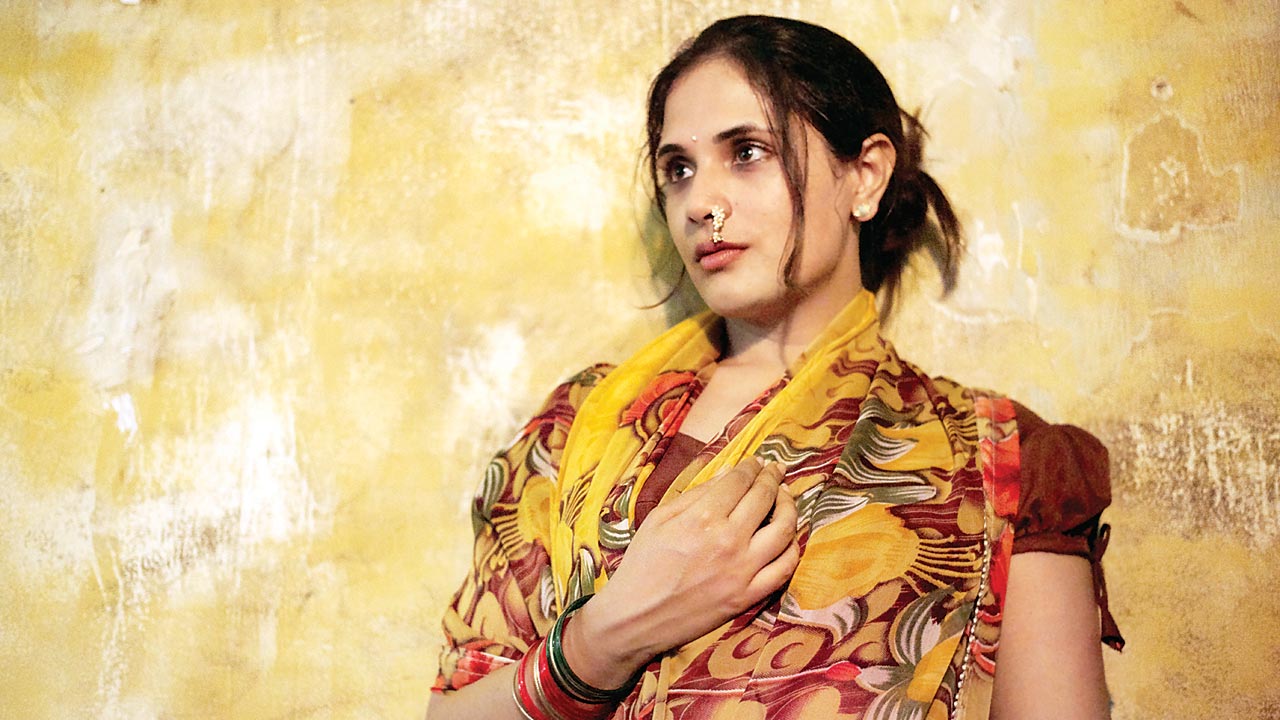
Richa Chadha in Love Sonia
I took therapy sessions to recover from role in Love Sonia-Richa Chadha
8:43 AM

Richa Chadha on how playing a brothel madam in Love Sonia affected her mental well-being
Sonil Dedhia (MID-DAY; September 5, 2018)
Her act as a brothel madam in Love Sonia may have won her accolades from audiences at film festivals, but Richa Chadha confesses that the nature of the role left a lasting impact on her. So disturbed was she after the film that she had to visit a therapist to undo the damage it had caused.
"I took a few sessions with a therapist to recover from the role. The is the worst [aspect] of human nature that one can encounter. It was traumatic," says the actor, adding that apart from the turmoil of playing the part on screen, she was also disturbed by the stories she heard of victims of prostitution when meeting NGO workers.
Well aware of the sensitive nature of the film's subject, the actor says she wasn't too keen to be part of a venture on human trafficking. Yet, it was director Tabrez Noorani's vision that made her change her mind.
"I was wary about the treatment of the subject. I didn't want anyone to exploit the subject. Once Tabrez and I discussed the script, I knew he would handle the subject aptly."
Having being emotionally moved by the story, Chadha was also willing to forgo a major chunk of her remuneration. "Certain projects bring about a change in society," she says.
My role in Love Sonia gripped me to the extent that I started despising the male touch-Mrunal Thakur
8:03 AM

Rachana Dubey (BOMBAY TIMES; September 1, 2018)
The experience of working on a hard-hitting film like Love Sonia has changed actress Mrunal Thakur’s perspective completely. She had honed her skills on Indian television and commercials, but when she opted for this unconventional debut in Bollywood, little did she know that the global setting, the phenomenal cast and director Tabrez Noorani’s film will bring her face to face with such dramatic highs and lows. In a chat with BT, the actress talks about her journey so far, about playing a character that has drained her emotionally and why she thinks prostitutes deserve respect. Excerpts…
After travelling to film festivals, Love Sonia is finally gearing up to release in India. How do you look back at the experience of working on your debut film?
We have been hearing great things about our project and I think it’s my good karma that I got a chance to work with director Tabrez Noorani in a film that has such a phenomenal cast. Not just that, the story was extensively researched, too. It was a tough part to pull off because Sonia is the voice of thousands of girls, who are being trafficked globally every minute.
Your film has been garnering praise in international markets. How do you think the audience here will react to this hard-hitting story?
One of Tabrez’s friends started an NGO after watching the film and she has rescued 15-17 girls already. I want people to know what teenage girls go through when they get trafficked. Girls need to be aware that a faceless friend on social media could actually lead them into a trap. This story of two sisters will fill you with emotions and make you more empathetic towards trafficked women.
While TV and ad films don’t give an artiste much room for research and detailing, films and theatre do. Now that you have dabbled in all three, which would you say is the most demanding medium?
Nothing is easy. TV requires you to multitask — you are given your lines at the last minute, plus there are other chores like costume, hair, make-up and microphones. You have to take care of everything without getting distracted, because if you’re not focused, the camera catches it. My co-actresses on TV have helped me clear my Hindi diction because I had a thick Marathi accent. Commercials teach you the art of speaking subtly to the audience. Theatre polishes the artistry. But with films, you get sucked into a different world — there is so much research for everything. My co-star Riya Sisodiya and I had been to Sonagachi in West Bengal to study the prostitutes there, and pick up the subtleties of their body language. It’s a sad reality that these girls are addicted to bidis and drugs. They are forced to consume drugs, so that they can go through the grind every day.
Did the experience of working on a film about prostitution and human trafficking get overwhelming?
The experience taught me to respect these women. Their stories are heartbreaking. They sleep with 40-50 men in a day and barely get 100 or 50 rupees per person. Is that life? I met a lady from Kolkata, who looks after the children of these prostitutes and ensures that they lead a life different from their mothers. It felt great to meet someone like her. I feel I can be their voice, too. This film has given me a chance to put their perspective across to the world. No one hesitates to call them whores, but no one cares about what they go through. There were scenes in the film, which I told Tabrez I can’t do. He addressed my discomfort and shot them according to my preference. When I was in Hong Kong and LA, there were two scenes that shook me completely. I was told that a girl was sold twice as a virgin with the help of surgery so that the pimp could make twice the money. Every day, 270 girls go missing. Where do they go? Sex trafficking is like a fire that could engulf any woman who is not vigilant.
How important is to detach from a character with such a stark reality, after the shoot is over ?
Portraying Sonia wasn’t easy. I had to remind myself every day that I am only playing the character, and I am not Sonia. My dad was always there to support me. He often said, ‘Beta, Smita Patil should be your inspiration. Do it the way she would have done it.’ Virginia Holmes, who did my make-up, was an emotional support for me. Even the crew made it a point to behave sensitively on the set. They’d purposely laugh and joke after an intense scene to help me shake it off. Richa Chadha and Freida Pinto helped me a lot. My role in Love Sonia gripped me to the extent that I started despising the male touch. I would stand under the shower for long spells. It just didn’t feel nice.
Often, it’s the girls from the lowest strata of society who become easy targets. While Hindi films have spoken about women’s safety and liberation of late, most of the conversations have centred on middle-class or affluent women. Your film seems to represent voices of the lower sections, too...
Women in any strata of society have to first stop conditioning their girls differently from boys. Never tell a girl to be quiet or to tolerate abuse. I am sure many girls drop hints or sometimes even tell their parents about a male relative who has been touching them wrongly, but no action is taken. Whichever section or strata of the society they belong to, girls have to call out their perpetrators and report them to the cops. We want our film to reach every nook and corner of the country, so that people understand how girls get trafficked and what can be done to help them.

We’re lucky to be free, to be able to do what we want. Millions don’t have that luxury-Tabrez Noorani
7:55 AM

Tabrez Noorani, who has to his credit films like Slumdog Millionaire and Life of Pi, on turning director with a film on human trafficking
Roshmila Bhattacharya (MUMBAI MIRROR; September 1, 2018)
Why did it take you so long to turn director?
I was going to make this film in 2007. The script wasn’t where it is now though but I had raised some money. That’s when I got the call for Slumdog Millionaire. After that it was one film after the other… Eat Pray Love, Life Of Pi, Zero Dark Thirty… Then, no one wanted to fund a Hindi movie about human trafficking. I didn’t have David Womark on board as producer then and getting financing was difficult. Secondly, the company Pravesh Sahni, Deepak Nayar and I own, India Take One Productions, was getting busy and I love the challenges of producing, be it on Slumdog Millionaire, Life Of Pi or the car chase in Mission Impossible. In between, I continued to direct commercials and the second unit while I continued to do my research and got more real life stories. Then, after season 1 of Sense 8 I consciously decided to stop producing and concentrate on directing Love Sonia.
How much of the film is drawn from real life and just how traumatic was the shoot?
Everything you see on screen is authentic. It has happened and continues to happen daily, all over the world. All the characters are based on real people or those I encountered though we hanged a few things for security and legal reasons. Parts of the shoot were traumatic for Mrunal (Thakur) and Richa (Chadha) owing to the realistic approach, which was part of the plan. Mrunal had a few difficult scenes and on two occasions we had to stop shooting and give her some time. Richa and Freida too completely immersed themselves in this world and were consumed by their characters. Ditto Manoj (Bajpayee). Great actors become the characters and we never know just how much of what they’ve done actually stays with them.
How has being on this journey changed your life?
In many ways. We’re lucky to be free, to be able to do what we want, when we want. Millions don’t have that luxury. Forced labour, modern-day slavery, exists and is rampant. At the same time to have met and worked with girls, boys and women who’ve been through the worst atrocities and come out the way that they have, is beautiful. It humbles you, this triumph of the human spirit. Love Sonia is about these unlikely heroes.
How many Sonias are lost to their families forever?
There are probably 20-25 million slaves in the world. This is modern-day slavery I am talking about. Under that is domestic servitude and tracking of not just girls and women but boys and men as well.
Tell us about your shoot with Freida Pinto and Demi Moore?
Demi was a co-founder of Thorn which fights child trafficking and her sincerity comes off even more due to this in the film. I’m so glad she decided to do it. We’ve known for 10 years that Freida would be playing Rashmi. We’re good friends and worked on how she’d be approaching this. Ditto Richa, Sai (Tamhankar), Adil (Hussain), Anupam (Kher). We changed lines and backstories, it was a collaborative process.
How much has Freida changed since Slumdog Millionaire?
Freida has blossomed into this amazing confident, articulate woman and has delivered her best ever performance in Love Sonia, in Hindi. She’s grown so much as a person and artiste but is the same Freida at heart.
Did Mrunal Thakur and Riya Sisodiya remind you of her?
Absolutely, especially Mrunal. You could see her grow as the movie progressed and at the London premiere, this star emerged. Both Riya and she were amazing finds.
You were directing a film with Raveena Tandon, Tara Sharma and Gulshan Grover called Dream Catchers in 2001. What happened to it and will it be resurrected?
Wow! That was ages ago. Amar Butala, my co-producer on Love Sonia, was the producer on that one. It was supposed to be my first film but our funding fell through at the last minute. Then, we got a producer out of LA who wanted us to change the film drastically so we walked away from that. The script was also written by one of the writers of Love Sonia, Alkesh Vaja. A resurrection, hmmmm intriguing!
Years ago, you’d assisted Mazhar Khan on Gang. How much has the Indian film industry changed since?
That was my Bollywood 101. One of my best summers ever, being on set. Both Imtiaz (Khan) and I were helping out Mazhar bhai, and I learnt so much from him. We had a passion for cinema in common and after shooting, we’d watch movies all night. The industry has changed enormously since. Our production values are world class and we have amazing films coming out of India regardless of whether they are box-office smashes or not.
What next? You must have a script ready...
Yes, we have a few. One is a large, fun action-adventure film and the other is set in 1920s and ’30s Hollywood.

Internationally acclaimed film Love Sonia to release on September 14 in India
7:59 AM

BOMBAY TIMES (August 17, 2018)
After creating a buzz in Los Angeles and garnering appreciation in London and Melbourne, Love Sonia is now set to release in India on September 14. The film is a hard-hitting story of a 17-year-old girl, who risks her life to rescue her sister from a vicious human trafficking network across India, Hong Kong and Los Angeles. It has an ensemble cast comprising Manoj Bajpayee, Richa Chadha, Rajkummar Rao, Sai Tamhankar, Adil Hussain, Demi Moore, Mark Duplass, Freida Pinto and newcomer Mrunal Thakur.
The film, which is being lauded globally for its explosive story around human trafficking, also won the Best Indie Film Award at the Indian Film Festival of Melbourne 2018.
 Tabrez Noorani, who makes his directorial debut with this project, shares, “After the incredible audience reactions in London and Melbourne, I am thrilled that the movie is now releasing in India. I am blessed with a powerful ensemble cast and all of them have contributed in making this film special.” Producer David Womark adds, “I am thankful for the accolades Love Sonia has got so far in London and Melbourne. Tabrez has made a powerful film and I am glad we are now releasing in India.”
Speaking about the film, executive producer Shalini Thackeray shares, “Love Sonia is a brave and moving story. I am proud to be a part of a movie that talks about human trafficking in such a poignant manner. Samraaj Talkies is proud to present a movie featuring a strong ensemble cast.” Co-producer Amar Butala says, “This is India’s most sincere and disturbing film on human trafficking. It’s a potent story that spans from India to Hong Kong all the way to Los Angeles.’’ Love Sonia is presented by Tamasha Talkies and Samraaj Talkies in association with India Take One Productions, Cinemantra & Dynasty Consulting Group. It is produced by Life Of Pi producer David Womark and Tabrez Noorani, co-produced by Amar Butala, with executive producers Shalini Thackeray, Deepak Nayar and Pravesh Sahni.
Sex trafficking industry is the most profitable black market business in the world-Tabrez Noorani
8:37 AM

Tabrez Noorani's debut directorial Love Sonia is an unflinching tale of the sex trafficking industry
Kusmita Das (MID-DAY; July 15, 2018)
It took Los Angeles-based filmmaker Tabrez Noorani 14 years to translate the idea of Love Sonia, from his head to paper and finally, on reel. After all, it's not easy to find funding for a Hindi film on sex trafficking that was going to be an unflinching narrative, with two leads, largely unknown.
In 2007, when Noorani along with writers Alkesh Vaja and Ted Caplan were done with the script, they did not dream of getting the cast and backing that the project eventually received. After years of getting shut down by producers across the globe, Noorani's debut film is now being produced by David Womark of Life Of Pi fame, and will see stalwarts from both Hollywood and Bollywood. Besides the lead actors Mrunal Thakur and Riya Sisodiya, the film also stars Demi Moore, Freida Pinto, Mark Duplass, Manoj Bajpayee, Rajkummar Rao and Richa Chaddha. Come August 10, Love Sonia will open the Indian Film Festival of Melbourne.
Noorani has had first-hand experience of rescuing trafficked girls. While it all started as research, before he knew it, he was sucked right into the murky labyrinth. He tells us an anecdote of his first visit to what's called a "trafficking brothel". These brothels, Noorani says, host girls briefly, to break them down mentally, and then ship out. "This is where I met Faizal, played by Manoj [Bajpayee] in the film. I saw him reprimanding a customer for having been too rough with one of the girls. He said, 'what man beats a woman?'. A few weeks later, I learnt that the same man had caught a girl who had run away, beheaded her and paraded it for all to see in the brothel. This will sound like a film scene, but unfortunately, it's not. This is the type of people you find in this world. It's the most profitable black market business in the world that generates illegal profits amounting to $150 billion."
At that point, however, Noorani was so new to this world, that he did not fully gauge the magnitude of what he was learning. "If I did, I'd have been extremely scared." There were a couple of close calls too. In the span of 14 years, Noorani has worked with several NGOs around the world. "The two that I work with the most are CAST (Coalition To Abolish Slavery and Trafficking), in Los Angeles, and Apne Aap Women Worldwide, that has centres all over India." He has worked extensively in Mumbai too. "Mumbai is no stranger to trafficking. Everyone always assumes it is only women, but there are boys and men too," he adds.
Moore who has worked in CAST was happy to come on board, says Noorani. "She works with NGO Thorn that protects children from sexual abuse via technology. Mark too responded positively to the script. And the Indian actors are of course all stellar ones." It took over 2,500 auditions of girls to find the two sisters. "Both Mrunal and Riya were quite a find. I had to ensure they spent enough time with sex workers and trafficked girls to get the pulse of their characters."
Noorani hopes that Love Sonia will prod the audience to question the deplorable conditions that exist in the world, and "walk out a little bit wiser". "David and I have been careful to not cross that line — you can't exploit the exploited and have gratuitous scenes. At the same time, we wanted to create a realistic portrayal of global human trafficking," he says.

Censor Board orders around 50 cuts for Love Sonia, a film on human trafficking?
7:54 AM

Subhash K Jha (DNA; September 19, 2017)
Love Sonia, the hard-hitting film on child trafficking starring Mrunal Thakur, Manoj Bajpayee, Richa Chadha, Rajkummar Rao and Freida Pinto has been asked to remove all the English and Hindi cuss words and abuses. Scenes of sexual abuse have also been reduced drastically.
More than 45 cuts were ordered, only then the film was granted an ‘A’ certificate. Whatever happened to the Central Board Of Film Certification’s claims that films with an ‘A’ certificate won’t require any cuts, especially when the movie deals with a socially-relevant subject?
Director Tabrez Noorani waited 12 years to make Love Sonia. “I’ve researched, visited brothels, even rescued sex workers from the flesh trade with the help of NGOs. This is the film I’ve always wanted to direct,” he reveals.
Tabrez feels not much justice has been done to the theme of human trafficking in cinema. “The only significant film I’ve seen on human trafficking is Lukas Moodysson’s Lilya 4-ever. Otherwise, Indian films on the theme like Nagesh Kukunoor’s Lakshmi and Pradeep Sarkar’s Mardaani do not have the bandwidth to make a broad impact.”
The reason I lost weight was because I was training for Sultan-Mrunal Thakur
7:53 AM

Chaya Unnikrishnan (DNA; September 13, 2017)
Mrunal Thakur, best known for her role as the chirpy and vivacious Bulbul in Kumkum Bhagya, will be seen in the Indo-American film Love Sonia made by Life Of Pi producer David Womark. While actresses crave to be seen in glamourous roles, Mrunal has chosen to take the unconventional path and will be seen in a completely deglam avatar in her debut international project. The actress plays the title role in the film that brings to light the issue of global human trafficking. She plays a village girl, who is trapped in global sex trade in the film that also stars the likes of Freida Pinto and Demi Moore. Here, the actress talks about how she bagged the role, her experience of shooting for the film and future plans...
Most actresses would want to make their debut with glam roles in commercial entertainers. What prompted you to do Love Sonia?
Yes, every actress would love to do a glamorous role with nice make-up, and designer clothes, stand in the snow, wave her sari and romance around the trees, but I wanted something that will give me a chance to perform. I wanted to show my skills as an actor and I have been waiting for my debut film for long. I don’t want people to just go and watch the film, but remember it for a few generations. And the subject of this film is such that it gives me a scope to perform.
How did you bag the role?
This journey has not been easy. The first time I gave an audition, I had no idea who the director was, the makers or the cast. I just read the script and gave a normal audition with 15-20 girls. All I knew was, it is about sex trafficking, my character loves her sister, the two share an amazing bond, and I would kill anybody for her. I felt connected and wanted to do it. In the second round (of auditions), I gave a look test with another actress who would play my sister. That’s when I learnt Tabrez Noorani, who was associated with Slumdog Millionaire and Life Of Pi, was directing it. And that’s when I met him. But still it was not easy because they had several options for Sonia’s role. It was only after six rounds of auditions and after many months that I was told I will be playing Sonia. The day I got to know, I was on cloud nine. I was even ready to be a spot girl on this film, as I would get so much to learn.
Did you know you will be sharing screen with Freida Pinto and Demi Moore?
When we started, I figured out there is Freida Pinto, Richa Chadha, Rajkummar Rao and Manoj Bajpayee. I was very excited because some of these actors I have grown up watching. Demi Moore came into the picture much later. With all these actors, there was a different pressure on me. I never expected them to be so humble, kind and always ready to help me. The best thing about my film was the combination of working with raw talent like Riya Sisodiya, who plays my sister Preeti and experienced actors. It is Tabrez’s first directorial, but he had been working on the project for 10-11 years, and he has a completely different vision.
How was it working with Freida and Demi Moore?
Freida is one of the kindest women I have worked with. We used to do our make up in one trailer, where we would chat about the film and other things. I never felt that I was with a big name like Freida. Love Sonia is one of the best performance-oriented roles of Freida. I became her fan after watching her in this movie. She is terrific as Rashmi who is also one of the victims. Demi is not only a great performer and a beautiful actress, but a wonderful person.
Did you take any tips from Freida on how to pursue a career in Hollywood?
The entire team is like family to me. I am sure they will guide me and support me when I ask them for suggestions whether it is Bollywood or Hollywood or TV.
What was your prep for this role?
Both Riya and I stayed near a brothel in Kolkata to study the body language of the prostitutes. We heard their stories and the problems they face. It was so depressing. I am a strong woman, but my BP literally dropped when I was with them.
It must not have been an easy shoot...
It was extremely difficult. I broke down while shooting several scenes. There is this one scene when producer David Womark was sitting next to me and I broke down. My make-up was such that I was made three shades darker, I hadn’t groomed myself — my eyebrows were grown, upper lip wasn’t done. The scene was of me as a 17-year-old girl being sold to a 60-year-old guy. I told my director that I cannot do it. All he said was ‘Mrunal, I will not force you to do it but remember if you do the scene and the world sees it and five girls are saved, that’s your achievement’. That egged me on. We finished the scene in one take. I can’t tell you the satisfaction I got. I felt I was not just performing, but doing something for a cause.
Did you get affected by your character?
There are a lot of method actors I have met, who love to be in character. If they have to fight with their co-actor in the film, they won’t talk for five days. I tried to do that with Sonia, but it was depressing. I realised that if I live the character I will go into depression and die. I decided to feel her and get into the skin of the character on the sets, but not live it.
When is the film releasing?
It will be out in March 2018, there are possibilities of it going to some film festivals — we missed the Toronto one — but they will be looking at others. I am keeping my fingers crossed as more than anything, the film is aimed at saving girls from trafficking.
You were approached for Sultan, but it didn’t happen. What went wrong?
I audition for a lot of films and I had done for Sultan, too. The reason I lost weight was because I was training for the film. I had the privilege of meeting Aditya Chopra and the amazing casting director Shanoo Sharma. At that time, I was chubby and out of shape. But they put a lot of effort in me and said, ‘Mrunal you can lose the weight’. I actually lost 10-11 kilos in three months, which was a great achievement for me. But I guess I ended up losing too much weight and did not look like a wrestler. Things might happen or not happen, what matters is the journey. Of course, I felt bad that it did not work out, but I am glad I at least got a chance to interact with them. I have grown up watching Yash Raj Films like Saathiya and Dilwale Dulhaniya Le Jayenge and trust whatever decision they make.
You are not doing any TV shows now...
TV requires a lot of commitment. When I have to travel to promote my film, the producer of the show will get hassled if I don’t give the dates. So, TV is not in the near future. But I am open to doing films, language no bar. I have done three Marathi films, too. So, whatever I find exciting and challenging enough I will take it up, whether it is Bollywood, Hollywood or Marathi. Currently, I am concentrating more on commercials. I get to work with different filmmakers and actors. And in 30 seconds you have to give your best. You grow as a performer and it is exciting. I got to do one commercial with Ranveer Singh. Not only is he a wonderful actor, but he is also a wonderful human being, energetic, yet down-to-earth. I would love to work with him again.
Subscribe to:
Posts (Atom)