Showing posts with label Tabassum. Show all posts
Showing posts with label Tabassum. Show all posts
Admirers, co-stars and directors remember the ‘pioneer of hosting’ Tabassum
8:02 AM

BOMBAY TIMES (November 21, 2022)
Veteran Bollywood actress Tabassum Govil, who hosted the iconic television series Phool Khile Hain Gulshan Gulshan for two decades, passed away on Friday following a massive cardiac arrest. She was 78. Born in 1944 in Mumbai as Kiranbala to Ayodhyanath Sachdev and author-journalist Asghari Begum, she made her debut as a child actor at the age of three with the film Nargis (1947), which was followed by Mera Suhaar and Majdhaar.
Over the years, Tabassum became one of the biggest child stars. Post her teens, she starred in films like Badi Behen (1949), Jogan (1950), Baiju Bawra (1952), Mughal-e-Azam (1960), Johny Mera Naam (1970), Gambler (1971), Chameli Ki Shaadi (1986) and Swarg (1990), among others. Her show Phool Khile Hain Gulshan Gulshan, which aired from 1972 to 1993, became immensely popular.
The ever-smiling actress interviewed various Bollywood actors on the show and won a lot of appreciation for her hosting skills. On the personal front, she was married to Vijay Govil, elder brother of actor Arun Govil. Tributes and nostalgia-filled posts poured in from members of the film fraternity expressing grief on her sudden demise.
I WITNESSED HER WORK VERY HARD FOR MANY YEARS : ARUN GOVIL
Remembering his sister-in-law, Arun Govil said, “She was my dearest family member and an extremely loving, compassionate and gracious woman. When I relocated from Meerut to Mumbai, I lived with my brother and Tabassum for many years. I used to accompany her to the sets of Phool Khile Hain Gulshan Gulshan and watch her interview actors. I witnessed her work very hard for many years. She was a foodie, who also loved cooking. She also used to write well. I will always remember her as a warm-hearted person.”
I USED TO LOVE HER SHOW: DAVID DHAWAN
David Dhawan, who directed Swarg, Tabassum’s last film as an actor, said, “She was a pleasant person to work with. She began as a child artiste and later hosted the chat show Phool Khile Hain Gulshan Gulshan, which became very popular. I used to love her show. I will always remember her as a fabulous actress, who was good with her diction and dialogues, and used to be so natural in front of the camera.”
SHE WAS AWARE OF THE UPS AND DOWNS IN THE LIVES OF MOST ACTORS: DEEPTI NAVAL
Deepti Naval, who was among those interviewed by the actress-host, shared, “My first interview on television was with Tabassum ji. She knew the industry well because she was also an actress. She was also aware of the struggles and ups and downs in the lives of most actors. That was one of the reasons her talk show on Doordarshan was such a big hit. When she had interviewed me, she had touched upon the right topics and asked great questions. I remember that I had enjoyed the interview thoroughly.”
SHE WAS A MOTHERLY FIGURE ON THE SET: INDRANEIL SENGUPTA
Indraneil Sengupta, who played Tabassum’s grandson in the TV show Pyaar Ke Do Naam Ek Raadha Ek Shyaam in 2006, said, “She was wonderful to work with. All of us know that she was a brilliant actor, but most importantly, she was this motherly, rather grandmotherly figure on the set. She was always smiling, very sweet, and caring. She was very fond of Barkha (Bisht) and me. I remember she had invited us over for lunch or dinner after the show ended and we were fed some scrumptious food. We were in touch for quite a long time after the show got over, but eventually lost touch. I feel sad that we hadn’t spoken for a long time and today she is no more.”
SHE WAS TRULY A LEGEND: TWINKLE KHANNA
Remembering the late actress, Twinkle said, “She was truly a legend. As a child, I used to watch Phool Khile Hain Gulshan Gulshan with Tabassum ji as its spectacular host. I remember her nasal twang and the rose tucked behind her ear. All these blurry recollections wrapped around me like cashmere layers on a winter morning. May she rest in peace (sic).”
— With inputs from Tanvi Trivedi, Onkar Kulkarni and Neha Maheshwri
-------------------------------------
Rishabh Suri (HINDUSTAN TIMES; November 21, 2022)
The death of actor Tabassum on Friday has brought an era to an end. Born in 1944 in then Bombay, her acting career started at the age of three, with the film Nargis, followed by noteworthy roles such as that of a young Meena Kumari in Baiju Bawra (1952), a courtesan in Mughal-e-Azam (1960) and many more. She went on to do projects such as Gambler (1971) and Chameli Ki Shaadi (1986).
But, what immortalized her on the small screen, for which an entire generation still recalls her fondly, was India’s first television talk show, Phool Khile Hain Gulshan Gulshan. It premiered on Doordarshan in 1972, within a week of the channel going live, and continued to be aired for the next 21 years.
Celebs from all walks of life wanted to be on the show, which was unique, also because it was interspersed with film scenes of the interviewee. Her jolly nature, combined with her fluency in English, Hindi and Urdu won hearts. In 2016, she had said in an interview to HT, “Initially, some artistes would act snobbish about coming on the show. But, once it became popular, the biggest names would queue up for a slot.”
PIONEER OF HOSTING
Actor Anil Kapoor, who worked with the late actor in Chameli Ki Shaadi and also appeared on her show, remembers her positive aura. “Tabassum ji was a lovely lady, always smiling and full of energy. She was one of the pioneers of hosting shows. And not a small one at that; it remains one of the most successful shows in India,” says the 65-year-old, adding that the show’s popularity is what made his late father, producer Surinder Kapoor, title their film after it.
He added, "We titled our film, starring Rishi Kapoor and Moushumi Chatterjee, Phool Khile Hain Gulshan Gulshan. Her show was iconic, and she was a terrific host. She was one of the most celebrated anchors. Everyone wanted to be a part of her show, it was a big thing if you got the chance."
‘TABASSUM JI BAHUT ZINDA DIL AURAT THI’
Filmmaker Anees Bazmee, who wrote the script of her last film, Swarg (1990), recalls: “When you met her, if you were tensed, your worries would disappear! You tend to not form a judgement about someone on the first meeting, but with her, you could deduce easily that she was a very good human being. Unki awaaz itni achhi thi, whatever work she did was always first-class. She lived a whole life, and people will remember her for a long time to come. Whatever she did, only she could do. I am very sad.”
‘Phool Khile Hain Gulshan Gulshan’ host Tabassum passes away
8:21 AM

Bella Jaisinghani (THE TIMES OF INDIA; November 20, 2022)
Mumbai: Veteran film actress and one of India’s earliest and best loved talk show hosts, Tabassum, died after suffering two successive cardiac arrests on Friday. The artiste, whose career spanned almost 75 of her 78-year lifespan, anchored Bombay Doordarshan’s most popular talk show ‘Phool Khile Hain Gulshan Gulshan’ from 1972 to 1993.
Born Kiran Bala Sachdev in Bombay in 1944, she made her debut as Baby Tabassum in 1947. She was married to Vijay Govil, brother of actor Arun Govil. Her son Hoshang reportedly said she passed away at 8:40 pm in hospital where she was admitted for a gastrointestinal ailment. Tabassum had tested positive for Covid earlier in April.
Audiences caught an early glimpse of the voluble child artiste in two Dilip Kumar-Nargis classics. The first was ‘Jogan’, followed by ‘Deedar’ featuring the evergreen horseback song ‘Bachpan ke din bhula na dena’ with another child artiste Parikshit Sahni. In both films, her large emotive eyes and clear speech marked her as an actor of promise.
Sahni said, “Her death is such sad news. I was a novice during ‘Deedar’, she was a child star by then though she was younger than me. But what a nice person! She had a strong command over Hindi and Urdu even at that early age.”
Her other films are ‘Mera Suhaag’ (1947), ‘Manjhdhar’ (1947) and ‘Badi Behen’ (1949). Her last film appearance was ‘Swarg’ (1990). Her noteworthy songs ‘Rekha O Rekha’ (‘Adhikar’) as well as ‘Dekho bijli dole bin baadal ke’ from ‘Phir Wohi Dil Laya Hoon’, where she played Asha Parekh’s impish friend, are still popular. ‘Pyar Ka Mausam’ and ‘Heer Ranjha’ are also memorable.
Tabassum passed away even as Bombay Doordarshan is celebrating its golden jubilee. Former DD colleagues mourned the end of an era. Manmohan Singh Rawat, who was assistant director in ‘Phool Khile. . . ’ from 1984 recalled Tabassum as a “fine human being, cheerful with an impeccable command over Hindi and Urdu”.
He said, “She had her own performance troupe ‘Tabassum Hit Parade’ which launched the careers of Johny Lever and Sunidhi Chauhan. She even wrote a joke book.”
Former programme executive Anita Rai of ‘Chhayageet’ fame said, “We had a long beautiful relationship. We used to produce ‘Phool Khile...’ where she interviewed famous film personalities with ease and confidence. She was a kind-hearted and jovial person. Tabassum ji respected every person and had an amazing memory. She used to call everyone in the unit by name even if she met them after a gap. Kids used to enjoy her company in a programme titled ‘Story Time’.”
--------------------------------
Co-stars Anil Kapoor, Sudha Chandran and Indraneil Sengupta remember the veteran actor-host’s zest for life and child-like laughter
Upala KBR , Priyanka Sharma, Letty Mariam Abraham (MID-DAY; November 20, 2022)
Hindi cinema has lost its smile. Veteran actor-television host Tabassum, whose association with the screen was as long as India’s Independence, has passed away. Tabassum died on Friday following a cardiac arrest. She was 78.
“She was admitted to a hospital due to gastro problems. She suffered from two cardiac arrests in an interval of two minutes and passed away around 8.40 pm,” her son Hoshang Govil said, adding that the funeral took place on Saturday. Her family has organized a prayer service scheduled for Monday to “celebrate her legacy and beautiful smile”.
At a young age, Tabassum entered the industry with the screen name ‘Baby Tabassum’ in the film Nargis (1947). Her screen presence ensured that she soon became the first choice for younger versions of then prominent actors like Nargis (Deedar, 1951) and Meena Kumari (Baiju Bawra, 1952). Tabassum took a gap from the screen and then returned in the ’60s as an adult actor.
But her relationship with the big screen wasn’t the same anymore. That’s when Tabassum took to television, which was at its nascent stage in the country. She loved movies, not the medium. So, in 1972, Tabassum began hosting Indian TV’s first talk show, Phool Khile Hain Gulshan Gulshan, which featured her interviewing film stars.
Anil Kapoor, who featured alongside Tabassum in the 1986 comedy Chameli Ki Shaadi, which was also among her last film appearances, shares he and his family were big fans of her talk show that they named their 1978 production starring Rishi Kapoor and Moushumi Chatterjee after the show. “That was the impact of her show. She was a lovely lady, always cheerful and positive, smiling and laughing, vibrant, and full of energy. She was one of the pioneers of hosting shows,” Kapoor says.
It was a moment of honour for dancer-actor Sudha Chandran to feature alongside the yesteryear actor in her film, Nache Mayuri (1986). Chandran claims she grew up watching Tabassum’s Phool Khile Hain Gulshan Gulshan. The actor shot for Tabassum Talkies (her YouTube channel) a few days before the veteran actor’s sudden death. “Age was just a number for her. She had so many anecdotes to share and was always full of life and cheer. For me, it was like a dream come true to sit and talk to someone with [such an illustrious] career. Although it was 35 years ago that we worked on Nache Mayuri, but I remember being so young and star struck at that time. I couldn’t take my eyes off her. You could listen to her endlessly because she had a great command over language and an unexpected innocence.”
Popular television actor Indraneil Sengupta, who played her grandson in the show Pyaar Ke Do Naam: Ek Raadha Ek Shyaam (2006), remembers her as his grandmother even after the director said cut. While it is common for senior actors to wear a sense of seriousness in their demeanour, Tabassum always carried a child-like glee, says Sengupta. “She was fond of me and Barkha [Sengupta, his wife and co-star]. She never had the aura of a senior [actor] and was always like a grandmother showering you with love. There are many good people, but rarely do you find someone, who exudes positivity 24/7. Tabassum ji was that person,” he says.
Unlike most actors of yore, Tabassum always moved with the times and sought relevance. She was also a connoisseur of cinema, which made her seek a new audience in both old and young. In 2015, she launched her YouTube channel Tabassum Talkies, where she shared untold stories of iconic film artistes.
Journey in showbiz
- Nargis (1947)
- Deedar (1951)
- Baiju Bawra (1952)
- Phool Khile Hain Gulshan Gulshan (1972)
- Mughal-e-Azam (1960)
- Tum Par Hum Qurban (1985)
- Naache Mayuri (1986)
- Pyaar Ke Do Naam: Ek Raadha, Ek Shyaam (2006)
- Ladies Special (2009)
- Tabassum Talkies
Why Doordarshan didn't have a recording of its launch broadcast
8:35 AM
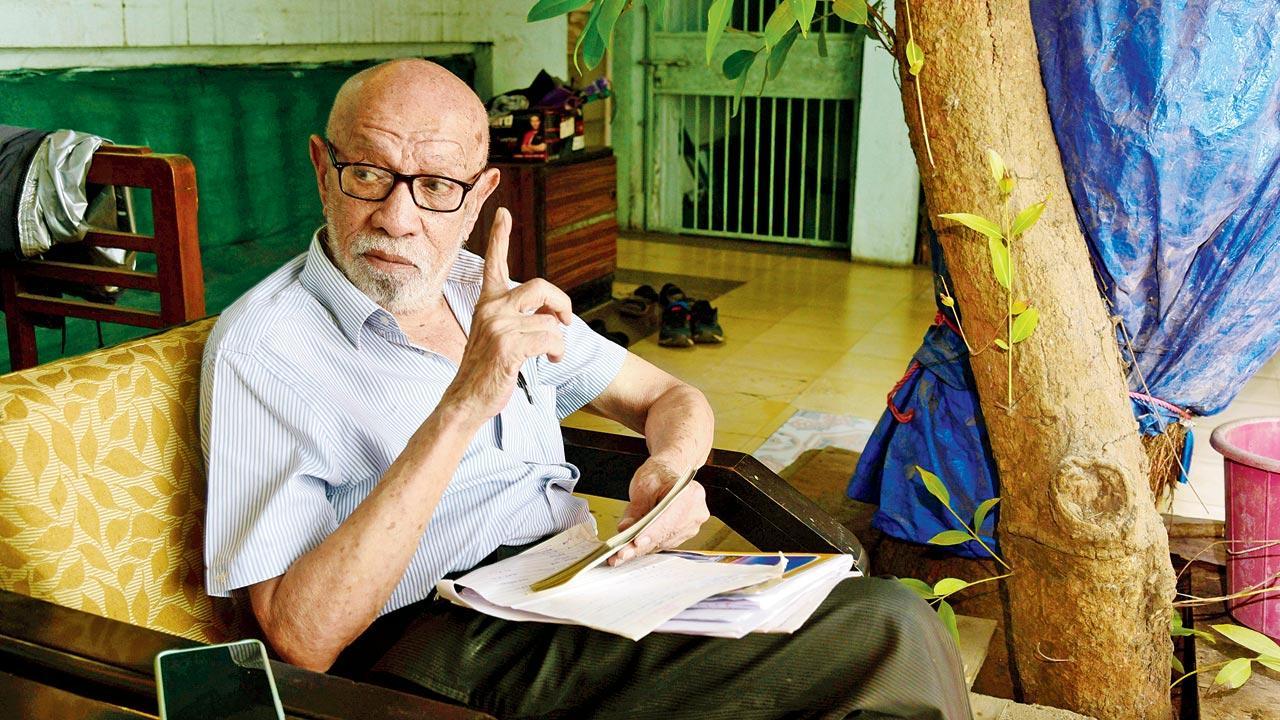
Now 88, Mumbai Doordarshan’s first staffer regales mid-day with the many successes and little bloopers that made up the initial years of the public service broadcaster
Heena Khandelwal (MID-DAY; October 9, 2022)
It was the year 1980. Yakub Sayed, then assistant director at Mumbai Doordarshan, now called DD Sahyadri, received a phone call. It was to inform him that actress Nargis Dutt, who was in New York for medical treatment after being diagnosed with pancreatic cancer, had passed away. He informed his director, and a call was made to the I&B Ministry, which then connected with the Prime Minister’s office.
“We were informed that PM Indira Gandhi is on her way to Bombay and somebody should go to the airport to let her know the news. I was given this task. I went along with my cameraman. Just as she [PM Gandhi] began descending the airstair, I asked the cameraman to start shooting. When I informed Mrs Gandhi, she said that she was deeply saddened at the news. But it was a small reaction. To get more, I decided to pay a visit to Dev Anand’s office, which was in the vicinity. After I had broken the news to him, he offered us a long byte. To make it a whole package, I decided to pay a visit to Sunil Dutt’s home, hoping to get a reaction from the househelps and drivers. But once I reached there, I saw Sanjay Dutt having tea with his friends, laughing. I asked the cameraman to stay put and decided to ask him about his mother and he said, she is doing better,” Sayed tells mid-day between laughs.
By the time he had reached DD’s Worli office, everyone had heard what had happened. “I behaved like I didn’t know. They told me I must pay Mrs Gandhi a visit and confess the blunder because she had already offered her condolences at a meeting that day. I refused, saying, I would rather resign than tell her that… she was known to have a temper. Someone else was given the task and I am sure a few people lost their jobs that day.”
A year later, when a call came saying Nargis Dutt had passed away, Sayed took a taxi and went to Breach Candy Hospital where she was admitted. It was only after he saw a crowd of mourners that he was convinced that the news was in fact, true. “But, it was a Sunday. So, everyone was on chhutti. I went to her brother Anwar Hussain asking if he had the reel of her last film, Raat Aur Din. He had the negatives. I got them developed, and that’s what we aired that evening,” recalls Sayed, now 88. “The viewers, I heard, loved that telecast.”
Mumbai Doordarshan completed 50 years last Sunday. Sayed, who was present at the ceremony held at its Worli studio, served the public service broadcaster from 1972 to his retirement in 1992, when he left as director of Doordarshan Kolkata, or DD Bangla.
We met him on a weekday afternoon in Bhiwandi where he put up for the day in an ancestral home that belongs to his daughter and son-in-law. “I moved here from Kurla because my daughter thinks I am too old to live by myself,” he says.
Over the next hour, Sayed takes us on a journey through the initial years of Mumbai Doordarshan, sharing anecdotes that shaped his life. This, however, wasn’t his first job. After a Master’s in Arts degree from Pune University, Sayed bagged a job at All India Radio. “It was after working there for a decade that I was told I have been selected for television and would have to undergo a six-month training at FTII [Film and Television Institute of India],” he says, of the broadcaster when it had just about 100 employees.
“Since Bombay was catering to the Marathi-speaking population, about 80 per cent of our content was in Marathi. The most popular among this were the Marathi plays. On Saturday, we would show a 2.5 hour-long play which enjoyed better viewership than films; Maharashtrians love their theatre.”
Sayed directed and produced 180 plays himself, including the popular Dinucha Sasubai and Radhabai, Shyamchi Aai, Sharda, Naukri and Piano. “In fact, during the broadcast of Piano—a love story where a female piano player plans to elope with her lover after a performance but cannot—I got a call from Raj Kapoor asking about the actress. He asked me to send her to his office and she was offered the role of heroine in his film; she however, refused saying she was to get married. The film was Prem Rog; the role eventually went to Padmini Kolhapure.”
Another play that Sayed worked on, Beimaan, the story of two friends, was also turned into a film. “Hrishikesh Mukherjee made it into Namak Haraam in 1973 starring Rajesh Khanna and Amitabh Bachchan.”
Besides theatre, Sayed says shows that enjoyed large audience include a children’s shows called Khilbil; a light entertainment programme Garba that focussed on small skits; Aamchi Maati Aamchi Manasa which tackled challenges faced by farmers; a show revolving around home called Sundar Maze Ghar; a comedy called Has Parihas and a chat show featuring the legendary Tabassum, Phool Khile Hain Gulshan Gulshan.
“Tabassum’s Phool Khile Gulshan Gulshan [which aired until 1993] was then what Koffee With Karan is today. She interviewed top actors and musicians show from Prem Nath to Amitabh Bachchan, RD Burman, Shatrughan Sinha and Ashok Kumar, some even multiple times… only Raj Kapoor and Dilip Kumar refused saying they aren’t comfortable being interviewed by someone who was younger to them,” Sayed recalls.
For one of the shows, he turned actor, bringing him public fame. “In one of the meetings, we discussed the need for a comedy programme. The arrow pointed at me. I thought everybody who picks up newspapers does read a joke, why not enact them on television? The show was called Has Parihas. It began in 1973 and became very famous… Mahmood, Jeetendra, Daboo [Randhir Kapoor], everybody came on the show. Lata [Mangeshkar] would also request for jokes… It gave me a lot of fame,” he says, adding, “You know who was my biggest fan? Morarji Desai. He once asked me to meet him, saying he always calls for my tapes and watches them. He even asked why the show was shut down.” After airing for three years, the show stopped after his co-actor on the show Baban Prabhu passed away.
Interestingly, television was still in a nascent stage and those who had TV set at home struggled with its operation. “Once I got a call from a minister, asking me to come over to his residence. Because he was an important man, I dropped everything and went across. He told me his TV was not working. I was no engineer. I asked his staffer to go to the roof and continue to gently move the antenna till I asked him to stop. When it was adjusted enough to sit parallel to the TV, the set came on.” In return as a goodwill gesture, the politico agreed to come on Kilbil as guest.
But Sayed’s favourite story is from the inaugural day of Mumbai Doordarshan—October 2, 1972. “At around 6 pm, we realised that the hustle-bustle that should have marked the arrival of the chief minister was missing. On calling his secretary, we were told that his diary had a wrong date entry. The event that should have started at 6.30 pm was delayed; this irked Bismillah Khan [shehnai maestro], who had to miss his evening namaz. Then a cup broke in the green room and hurt Asha Parekh’s foot and she started to bleed. I went downstairs to find a doctor. To top it all, we ran the programme live but forgot to record it. DD Mumbai does not have a recording of its debut broadcast.”
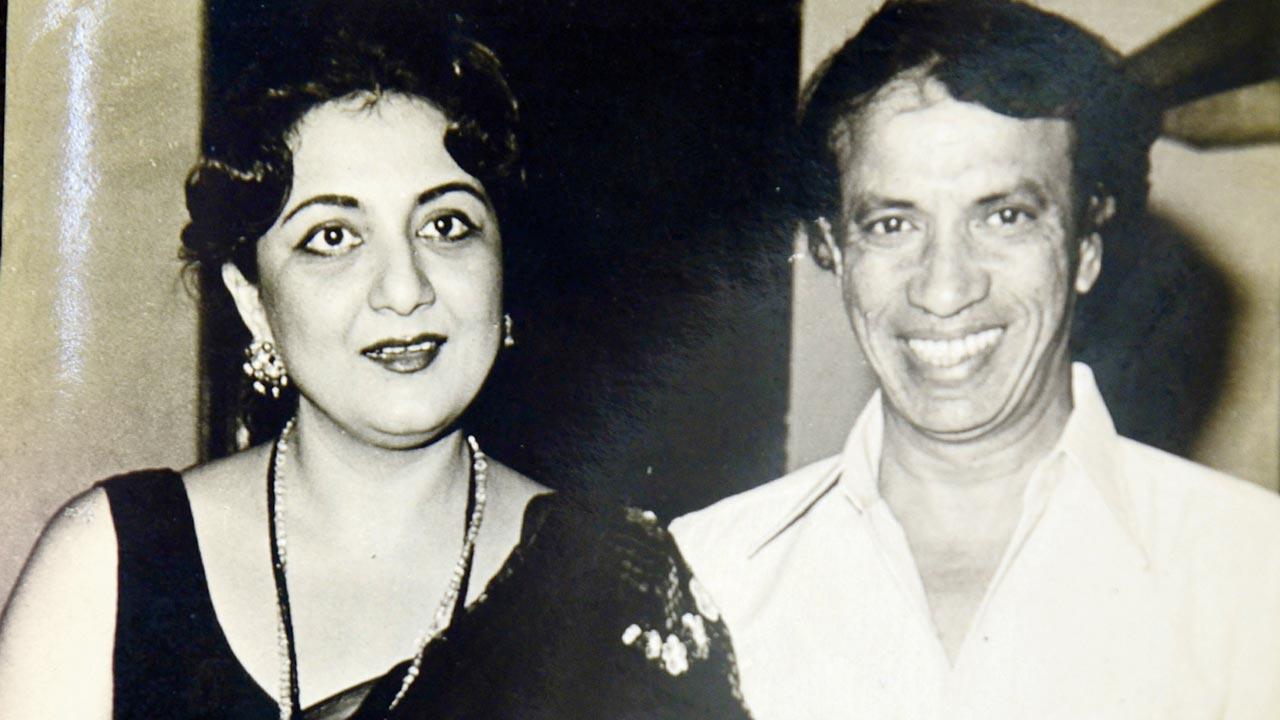
Yakub Sayed with actress and television host Tabassum whose chat show Phool Khile Gulshan Gulshan was very popular and saw the presence of every prominent actor and musician
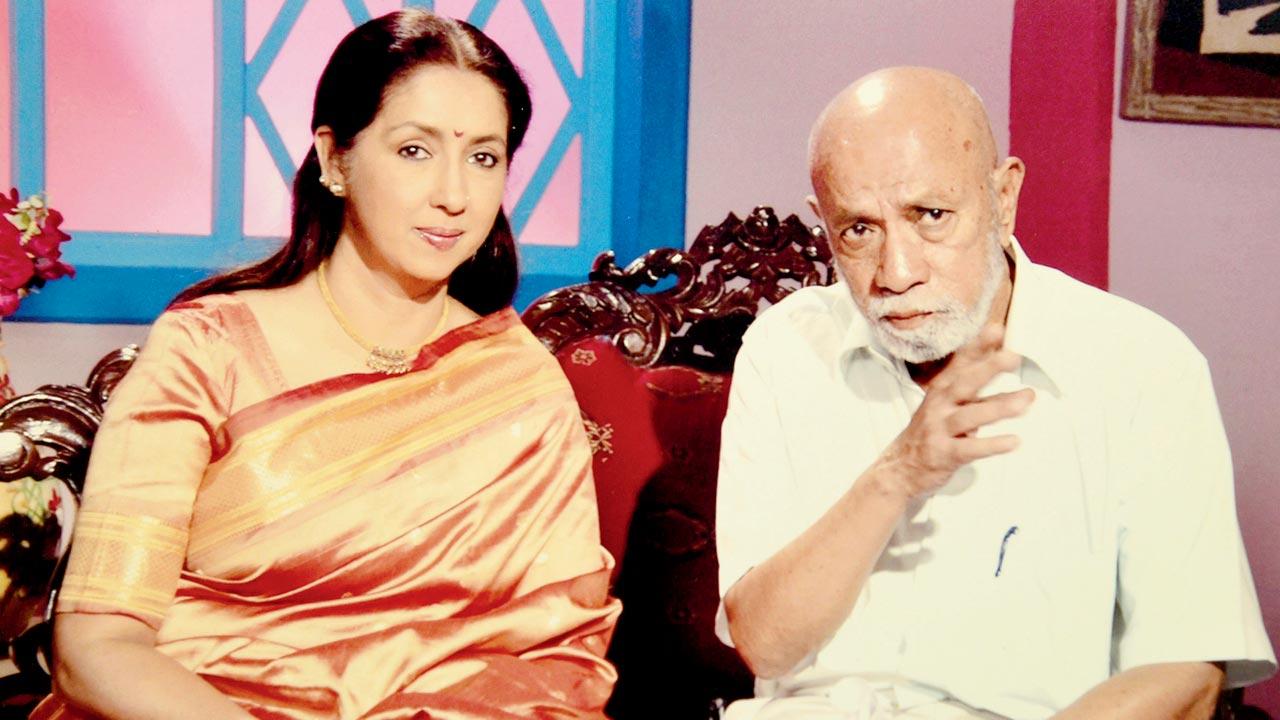
Yakub Sayed with popular Marathi actress Neena Kulkarni, who began her career in the 1970s with theatre
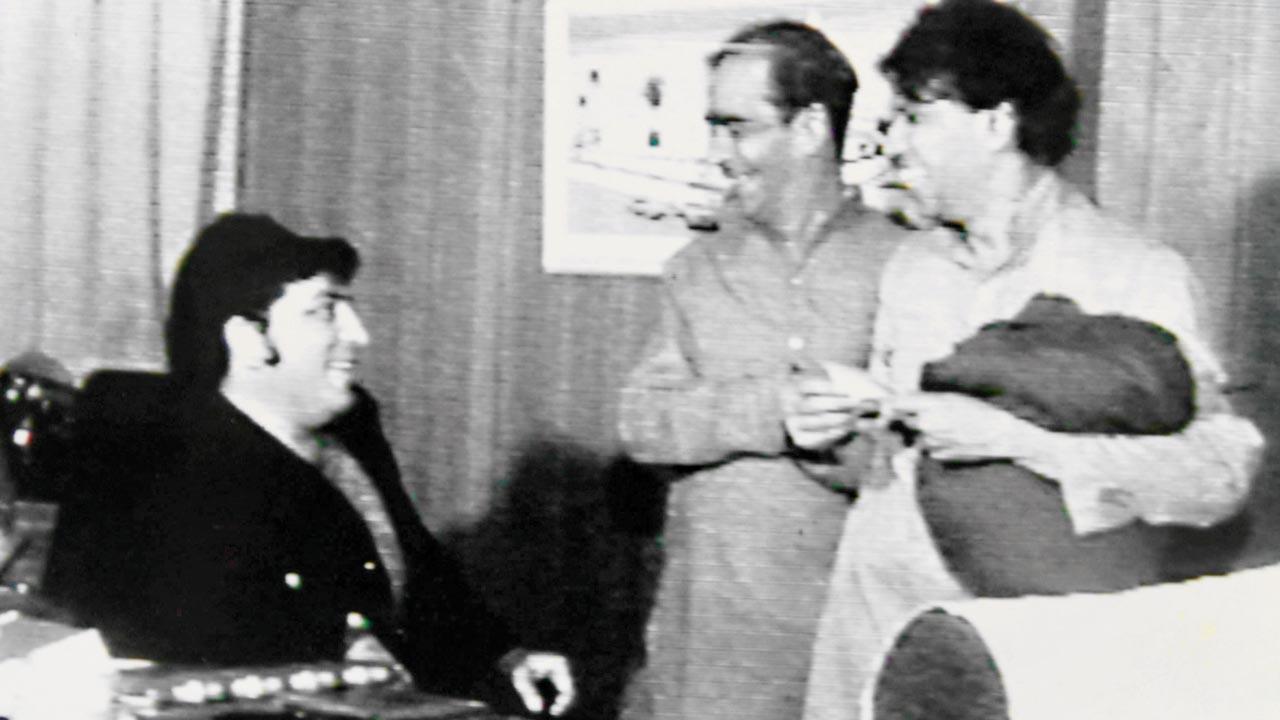 l
Yakub Sayed and his co-actor on the show Has Parihas, Baban Prabhu with Amjad Khan
Raaj Kumar, Shammi Kapoor, Saira Banu’s personal letters to fan go viral; NFAI shows interest to acquire them
8:24 AM

Rishabh Deb (CHENNAI TIMES; March 3, 2021)
A Twitter thread by user SamSays on February 25 got everyone nostalgic about older days of Bollywood.
The precious thread gave a glimpse of how Sam’s aunt, an avid film buff — Mehrunnisa Najma, who passed away in 2006, received responses to her letters from some of the popular Bollywood stars including Shammi Kapoor, Dharmendra, Sunil Dutt, Saira Banu, Tabassum and many more.
These letters that were locked in the basement for more than 15 years, wearing dust, will now breathe a new lease of life as the National Film Archive of India (NFAI) will acquire and preserve this collection for Bollywood buffs.

PRESERVATION OF A PERSONAL HISTORY
Soon after the tweets went viral, NFAI reached out to Sam seeking approval to acquire and preserve this unique collection.
Prakash Magdum, director, National Film Archive of India, told us, “We are always looking for filmy materials that are of archival value. What we saw on Twitter is a fantastic collection because this also constitutes part of cinema history. It is so interesting that a lady was writing to these stars and they were replying to her. It that the stars in those years, had a personal connect with their fans. And these were times when there was no social media. Our aim is to acquire rights, preserving them and making them accessible to cinema lovers and history buffs.”

‘I THINK WE NEED TO PAY MORE ATTENTION TO MEMORABILIA LEFT BEHIND’
Speaking with us, Sam Javed, who shared her aunt’s tweets says, “Everyone knew of my aunt’s collection, but somehow no one ever gave it much attention or importance. She used to show it to us when we were kids, and over the years, it was forgotten. It was rediscovered recently during a clean-up and I decided to share it on Twitter. I had absolutely no idea that it will get such an overwhelming response. I think we need to pay more attention to memorabilia left behind to us and do our best to treasure it in the same way, that the person who left it behind did in his/her lifetime.”

‘HAPPY TO SEE THE LETTERS BEING RESTORED AND PRESERVED’
Happy to have received such an overwhelming response to the tweets, Sam is now looking forward to have these letters restored and preserved by NFAI.
“NFAI was one of the first to do so, and it gives me immense happiness to see the collection get such recognition. My priority is to restore and preserve the images so that they can be enjoyed by generations to come. My Twitter thread has got me responses from cinema lovers around the world. I feel blessed that I’m able to share my aunt’s legacy with the world. These pictures and letters take us back to a completely different era. They give us a glimpse of a gentler world. The kindness of superstars for sparing the time to write a handwritten note to a young woman is something very hard to imagine today. The message to today’s generation is to slow down, value the simple pleasures in life and spread love and happiness.”
WHO WAS MEHRUNNISA NAJMA?
Najma was born in the 1930s. Her father was from Punjab and her mother was from Burma (Myanmar). She had two sisters and a brother. The father died in infancy. She and her entire family lived with their uncle. Her aunt was the wife of the then Nawab of Tonk Saadat Ali Khan. Najma was brought up by her Burmese mother in the palace of the Nawab of Tonk.
My aunt passed away many years ago. Among her belongings was an old album that she was very fond of. The album remained lost for many years, buried somewhere in a storeroom in the basement. It was found again recently during a clean-up. 1/n
— SamSays (@samjawed65) February 24, 2021
Subscribe to:
Posts (Atom)