Showing posts with label Swades. Show all posts
Showing posts with label Swades. Show all posts
Americans say I’m Indian, but Indians think I’m not Indian enough-Raja Kumari
10:11 AM

Sanchita Kalra (HINDUSTAN TIMES; August 10, 2026)
For Grammy-nominated artiste Raja Kumari, India has always held a special place in her heart. In the Capital on Friday for Dhaagon Ki Sargam, a National Handloom Day event by the Ministry of Textiles and the FDCI, the rapper-singer opened up about her roots, craft and her love for local street food.
Dressed in an embroidered silk ensemble with schoolgirl braids and metallic charms, she shared, “You can put a modernist twist on an Indian aesthetic, and it still feels rooted.” For Kumari, handloom isn’t just for sarees. “Seeing it styled with jeans today shows how versatile it is. It cements how incredible our textile history has always been, and I’m so happy to see this renaissance,” she said.
Born in California to a Telugu family, Kumari’s decision to build her career in India was set in motion early on. “My father left India in the ’70s for the US. I’m a result of the American dream, but my dream was always to come back,” she reflected, citing the film Swades (2004) as a turning point. “Living in America, I was upcycling my mother’s old sarees to recreate India,” she said.
The 40-year-old also shared that navigating the two worlds shaped both her perspective and music. “In America, they’d say, ‘You’re not American, you’re Indian’, while in India they say I’m not Indian enough. But the rest of the world only sees an Indian girl. It’s about standing in that power.”
With a decade in the industry behind her, her advice to rising musicians is simple, stop copying the West: “We tend to ‘copy-paste’ whatever works once, but young artists need to tell genuine stories. The West is actually looking to the East to find purpose.”
Don’t take parenting too seriously. Treat your kids like the cousins from Jalandhar-Mini Mathur
8:54 AM

Her impersonation of Simi Garewal interviewing Mamta Kulkarni had the judges in splits and won her MTV’s VJ Hunt in 1997. Mini Mathur went on to enjoy a successful run as VJ and later hosted popular reality shows such as ‘Indian Idol’. She took on a new role recently, that of a women’s health coach, and has launched a platform to raise awareness about menopause. Mathur spoke to Neha Bhayana about her journey as a woman and mother to Vivaan (22) and Sairah (16)
Neha Bhayan (THE TIMES OF INDIA; July 13, 2025)
After being a television host for three decades, you have launched ‘Pauseitive’, a platform to raise awareness about menopause. Tell us about your journey.
It wasn’t a conscious decision to become a health coach. When I turned 45, I stopped feeling like myself. I’ve always been into fitness — I worked out, ate healthy, and never had any health scares. So when I started experiencing brain fog, low mood, and sudden bursts of anger, I was not happy. I’m a very people-oriented person, but I began feeling social anxiety because I couldn’t remember the names of the people I was talking to. This was quite debilitating, especially for a TV host. I went to many doctors, and they all gave me symptomatic treatments — statins for cholesterol, sleeping pills for insomnia, and what not. But I decided to find a better answer. I started reading and connecting the dots. I realised it was basically a state of perimenopause.
I wanted to understand my condition better. I had gotten into medical college when I was younger but didn’t take it up. I couldn’t go back to that, so I enrolled in a hybrid course with an institution in the US. The 18-month-long certificate course led to Pauseitive, a platform for women over 40, and I hope we can completely change the way women look at their health.
In a way, this mission lifted me out of a strange place, where I felt saturated with everything I’d done in life. Even my kids were ready to go to college. I feel everyone should learn something new at 45.
Women’s perimenopause and menopause years often clash with their kids’ puberty. How can one tackle the raging hormones in the house without wounding the relationship with one’s children?
Let me add one more layer to this — aging parents and cognitive decline. It is a very trying time, dealing with all kinds of hormonal changes in the house. But if you've been the kind of parent who's been continuously in touch with your children's emotions and they come and talk to you generally, then the likelihood is that they're not going to shut you out when they are 16 or 17. I don’t want to sound like ‘Oh, I got mine correct’. Not at all. There's no correct way to do this. But I have parented in a way that my kids feel confident enough to tell me everything that they are going through. I have not tried to set an example. I have shared my mistakes and flaws openly and honestly. If I drink (I'm not much of a drinker) and I feel sick, my kids are privy to that. There was a phase where I used to smoke. I wasn’t one of those parents who went behind some tree to smoke and came back and gave gyaan. I used to tell them that this is a failing I need to get rid of. They were also privy to me giving it up. They've learned from my mistakes. They know every action has a consequence. So, I've worked deep in the trenches to ensure they don't shut me out of their life.
The past four years as I faced changes due to perimenopause, I made sure they are aware of what I am going through. In fact, my son is helping me set up Pauseitive. If I am feeling out of my depth and unregulated, I tell my kids about it and they are like it is okay, mamma’s not feeling like herself right now. Let's just agree with her for now. And I'm sure we'll all work this out a little later. So, they are seeing the seesaw of emotions. They are seeing me be mature about it. I think when you present a picture of being in control all the time, you also become inaccessible to a certain level. But if you are showing your sides to them, which are less than perfect, then I think they'll feel less hesitant about it.
So far, I have managed. I keep telling my parents that I'm blessed that my kids still want to holiday with Kabir and me. Most kids don’t even want to attend parties with their parents. But when my friends come home, these two are out of their rooms and chatting away. My son is currently in New York, having a drink with my friend who just turned 40. They have not even bothered to tell me. I saw their post on Instagram. So, our friends are their friends, and their friends are our friends. I really love it this way. I am also aware that my kids are watching me dealing with my ageing parents and my mother-in-law who is 92 with patience. This is very important because the way I treat my parents and in-laws is the way I'm going to get treated by them.
Both you and Kabir (a film director) have been in the entertainment industry. Are your kids going to follow in your footsteps?
Well, Vivaan had gone to University of South California to major in political science. One year down the line, he discovered they had the best film school in the world and after attending lectures by film grads, he ended up doing a double major to include film. He is definitely going to be directing and producing soon. He's working with studios in Los Angeles right now. Sairah is in Class 12 and hasn’t decided yet. One day she wants to be a sports journalist and the next, a Formula One racer. She will decide when she wants to. One rule is clear. Nobody will do anything till they have finished college. You can’t compromise on college because that’s where you grow up and understand what you are about.
In an old interview, you had mentioned that you went to Malaysia for two months to shoot ‘Iss Jungle Se Mujhe Bachao’ a couple of months after giving birth to Sairah. Was it a conscious decision to not let motherhood come in the way of your career?
The magic word is balance. You have to adjust your purpose and your passion with time. I am not chasing my career. My career has to work for me. It is very important for me to be there for the kids and it is equally important for me not to let go of my last vestiges of self-reliance. I want to earn my own bread, irrespective of what my husband’s position is. He was a documentary filmmaker earlier and he is a big filmmaker now. I don’t need to do this. I can travel to Paris and eat croissants. But do I do that? No.
Luckily, my work as a TV host allowed me to pick projects. And, that is the reason I've lasted 30 years in the business. I did not burn myself out doing back-to-back to back shows when I was flavour of the season. I did enough work to get my visibility on television, my money as well as time with my children. I started hosting ‘Indian Idol’ when Vivaan was just six months old. Kabir was very encouraging. During Season 4, I found out I was pregnant again. I was asked to discontinue because there’s never been a pregnant host on TV. I was heartbroken. Heidi Klum, and Claudia Schiffer were on the runway with pregnant bellies, but I was told Indian audiences won't be ready. But I think Sony felt really bad. The moment I popped the baby out, they gave me a show. I left for Malaysia when Sairah was six months old. Kabir had just finished his film ‘New York’. I had given birth all by myself while he was away shooting so he owed me. The time away from home was so good. I got my body back, because it was a very physically tough show and she didn’t even realise I was gone.
Basically, when I needed to have kids, I did not let work come in the way and when work came to me, I didn't reject it. I have always tried to align my shoot to finish in time for them to come back home. I used to offer to reach the sets by 7 am so I could come back home by 4 pm to be with the kids. Of course, it would not always work out.
Since we are on the subject of work timing, what’s your take on the controversy that erupted after Deepika Padukone demanded an eight-hour work day?
I think it's a very legit demand for any mom and I think the response has been very ungrateful. The boys’ club just went toxic on her. In a country where families are so tight knit and we all have mothers who have nurtured us, here is an actress who is A-plus-plus, who has given us such loved films. She has just had a baby. You should be happy for her. You should give her that grace. If she wants to look after her baby after eight hours of shooting, how does that become a problem? This is why our industry will never progress the way the West operates where you can be openly pregnant, delivering and getting breaks to pump during shoots. Deepika, you don’t need this shit. Go spend time with your baby and work with somebody who thinks you're worth that time. I think she has earned that demand. There are heroes who come on set for two hours when they promised you a 12-hour shift. Here's a woman who's saying for eight hours she will come committed and the powers decided that it was too much of an ask. I think Deepika should just not work with such people.
Was Kabir a hands-on dad?
Well, I think one does not really need to change diapers to be involved. Of course, he did a little bit of diaper duty because that made him feel important. But then he got very busy. He loves babies but he wasn't there to actively look after feeding, burping or homework and school meetings (he has not come for even one). What he did right at that point was that he let me take the lead and he put his entire support behind me. He has never contradicted my decisions whether I have decided that they need to move from ICSE to IB, or that they need to study and can’t go on a holiday or that there will be no sleepovers. He has never come in and said, “You know what, I am the cool daddy, and I will allow you.” He has backed me fully and I am eternally thankful for that. I know enough people who were just not on the same page as parents. He let me play the bad cop which was not nice. But he also came in with the good-cop energy. And yes, I felt bad that I'm the one laying down all the rules but I also knew the kids were blowing off steam with him.
He’s been a much more hands-on dad after they grew up. They bond well and he looks after them emotionally. Now, he sometimes contradicts me and asks me to go easy when I don’t allow them to spend too much on clothes. I believe they should wear brands only when they can afford it. But he is like “thoda zyada ho gaya” (that is a bit too much).
Did you experience the empty nest syndrome when your son left for the US?
I had timed my kids beautifully, so I still had my little one left. She will leave for college next year and Vivaan will be back by then. But I will tell you one thing. I don't believe in the empty nest syndrome. I've spent my life trying to make my kids independent. I made them travel at 12 and 8. Let them live their life. I am very happy. I have my work and my friends. I want to go and spend two months in Goa. I haven’t been able to do that because they had school and exams. I never holidayed while they were at school because I felt it was important that my face was the last one they saw in the morning and the first one they saw when they returned. I've had to literally carve out time for myself. So, I'm looking forward to being free. I don’t want to look at the school calendar anymore. Of course, I’ll miss them, but I’ll travel to where they are.
My husband was very badly hit when my son left. I've seen him cry only twice in our years together, one was when he watched ‘Swades’ and the second was when my son left. He literally stood in the room with tears rolling down his face. So, he was affected by the syndrome much more than me.
What advice would you give to new parents?
Don’t overthink it. I know it is a cliché, but I mean it. I am a parent who has read every book out there, but one thing I got right is that I never took it too seriously. Don’t take parenting so seriously. No child has peed in their pants when they are 30. Some kids take longer, but they all eventually learn to do things. Also, don’t overschedule things for them. I met someone today whose daughter is two and was going to school, play gym, piano lessons and what not. I too have done classes for my kids, but I know they don’t have to be geniuses. Sometimes, parents who push their kids the hardest to be so perfect are the most disappointed at the end. Imagine waking up at 3.30 am and taking the child for swimming lessons and contests. Your kid reaches state-level competitions and then one day, declares he does not want to swim at all. And, all your effort, your entire life seems like a waste. So, don’t change your life. Just treat your kids like you would treat your cousins from Jalandhar who have come to stay with you. That’s what I do. Thoda mazza kar lo, thoda padhne ko bol do and theek thaak nikal jaate hai. (Have some fun, tell them to study a bit. They will turn out fine). They should look at you as people who they can rely on, who they can have fun with and who they want to holiday with. They will learn the drums when they really want to play the drums. We don’t have to make our kids baby Einsteins. We are just going to create nerds. Rather focus on giving them social skills. These days, kids are not talking, they are unable to converse and connect with people around them.
Ashutosh Gowariker on collaboration rumours with Rishab Shetty: "It would fit if we work together"
8:24 AM
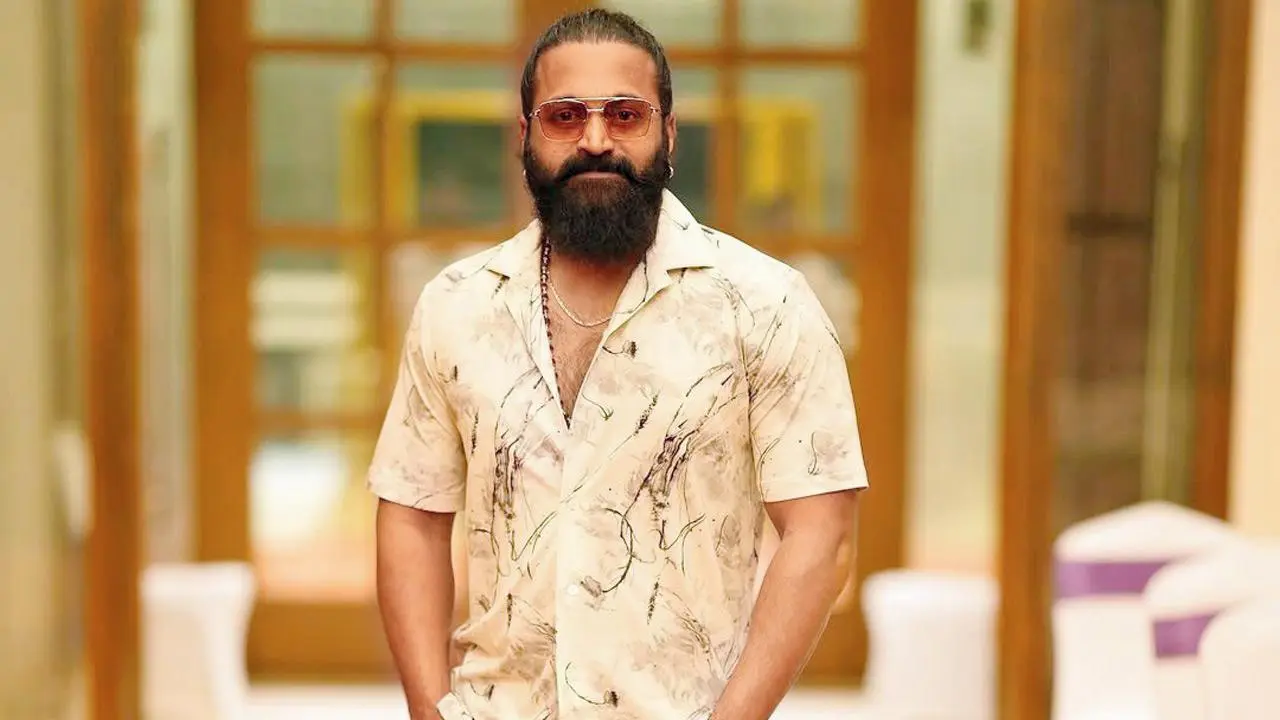
Revealing that he met Kantara star Rishab Shetty as they admire each other’s work, filmmaker Ashutosh Gowariker says a collaboration though desirable isn’t imminent
Priyanka Sharma (MID-DAY; December 25, 2024)
In January this year, rumours were rife that Kantara (2022) star Rishab Shetty was teaming up with filmmaker Ashutosh Gowariker on a period drama centred on a ruler of south India. The buzz gained further credence when the Kannada star was spotted leaving the filmmaker’s office. As we catch up with Gowariker, who completes 20 years as a producer this month, we ask him the obvious question: Is a collaboration on the cards?
“Not yet. It was a meet-and-greet because we like each other’s movies. It would fit if we work together. Let’s see,” he smiles, his reply leaving ample room for interpretation.
For now, Gowariker is prepping for his next, which will mark his return to direction six years after his last offering, Panipat (2019). Though he doesn’t divulge whether it will be a big-scale period drama, a genre that he has made a mark in, the filmmaker is aware that spectacles are the flavour of the season.
“We always made big films. Making a successful film is on everyone’s mind. When a trend comes in, it makes it easier. I have nothing against trends and people making several movies of the same genre. [But] my thought was never to create a trend. It was more about the theme I wanted to tackle. In Swades [2004], I tackled nationalism; in Jodhaa Akbar, it was religious tolerance. I’m not necessarily thinking big when I’m thinking of world-building. I don’t make an effort to make it larger than life, but perhaps that’s in my filmmaking process.”
The stardom of his leading actors—from Shah Rukh Khan to Hrithik Roshan—was a prominent aspect of Gowariker’s films. But he believes the younger actors today have a disadvantage. “The second [rung of] actors today aren’t able to choose the right films because they don’t know which one will open in cinemas and which will go to OTT. Hence, the chaos,” he reasons.

If Lagaan was a drum, Swades was a flute-Ashutosh Gowariker
8:11 AM
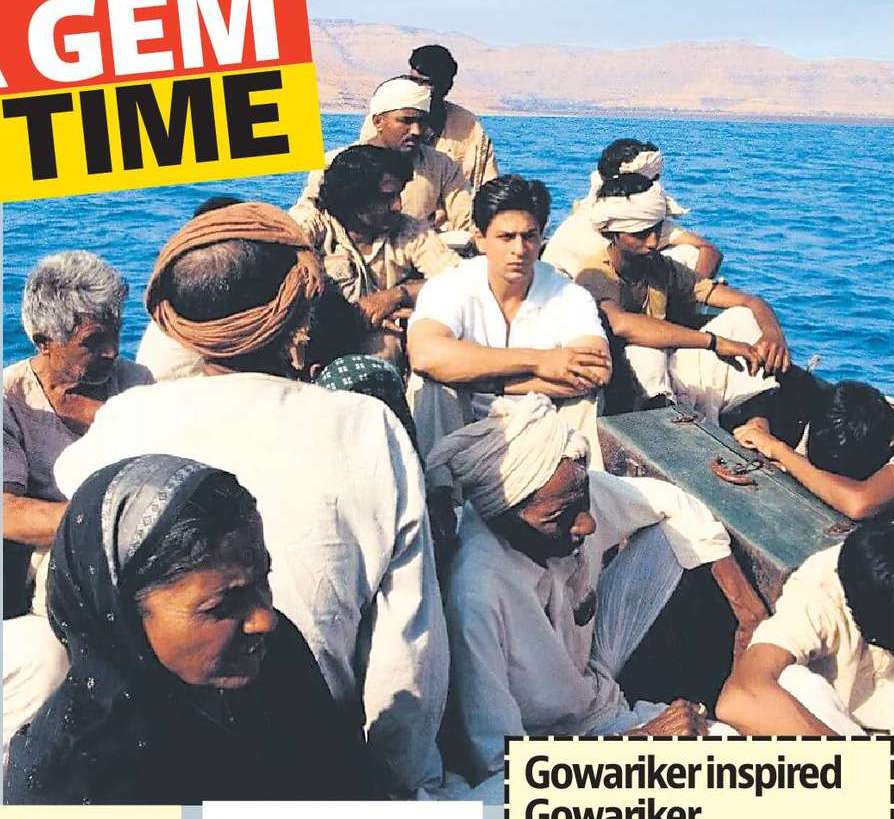
‘Ahead of its time’ and ‘cult classic’ — these are some of the terms that define the 2004 Shah Rukh Khan-starrer, Swades. Though the Ashutosh Gowariker directorial underperformed commercially at the time of its release, it is now counted among the best works of Khan and Gowariker. As the film clocks in 20 years, here are some interesting facts about it. Read on...
Akash Bhatnagar (HINDUSTAN TIMES; December 17, 2024)
SRK never watched the full film
Khan has time and again said that Swades is his favourite film in his filmography, but interestingly, he never saw the final product. In a tweet, the actor had said, “Making Swades was such an emotionally overwhelming experience that I never saw the finished product. Didn’t want the feeling to end.”
Though the film didn’t work commercially, Khan had a gut feeling about it. “I told Ashutosh Gowariker that it won’t work commercially. The film was nobly intended,” he had told Zoom in an interview, adding, “I always say it’s not the manzil but the journey that matters... Swades will always be one of my most special films.”
Gowariker inspired Gowariker
Swades was inspired by a 90s’ TV show, Love Stories, which had Gowariker act in it. The anthology included an episode titled Vapasi, in which Gowariker played Mohan, an NRI who returns to India for his Kaveri amma, and falls in love with a woman named Geeta. Kaveri amma’s role was played by late actor Kishori Ballal in both the iterations.
The one-hit wonder
Debuting opposite Khan is a dream come true for any actor, and Gayatri Joshi, who played Geeta in Swades, got to experience it. But strangely, it remained the only film in her filmography. A beauty pageant winner who represented India at Miss International in 2000, Joshi tied the knot with businessman Vikas Oberoi and bid adieu to her acting career, barely weeks after the film’s release.
The ‘Bijli’ dadi
Whoever has seen Swades will never forget the iconic ‘Bijli’ dialogue and the woman who said it. On the film’s 17th anniversary, Gowariker took to social media to reveal how she was chosen from 30 women who auditioned for the character of Dadi Setu. “All had to look up at the camera and say one word – BIJLI! The woman who said it with the most emotion got the part. She was 102.”
Unexpected after Lagaan
Gowariker’s last release before Swades was the 2001 film Lagaan, which was a huge success and even got nominated at the Oscars. So, the expectations were high post that, but Gowariker revealed to The Hollywood Reporter recently that he deliberately went against the expectations: “Swades was not the film people thought I was going to make after Lagaan. People thought my next film would be about football or some such sport. If Lagaan was a drum, Swades was a flute. It was a completely inward journey. If Lagaan was about patriotism, this was about nationalism, which is something that is not external. It’s not drum beating, it’s not jingoism. It’s all internal. You have to feel it.”
Did you know?
- Actor Hrithik Roshan was first offered the role of Mohan Bhargava, and while it finally went to Khan, Roshan and Gowariker went on to work together in Jodhaa Akbar (2008) and Mohenjo Daro (2016).
- Swades was the first Indian film to be shot inside the NASA headquarters and the NASA Research Center in Florida (US).
- Khan reprised Mohan’s role in filmmaker Ayan Mukerji’s Brahmastra: Part One Shiva (2022). Interestingly, Mukerji had worked as an assistant director on Swades. In yet another reference to the 2004 film, Jawan (2023) saw Khan’s character Azad being raised by Kaveri Amma, played by actor Ridhi Dogra.
- Made on a budget of just Rs. 20 crore, Swades failed to recover it and earned just ₹Rs. 16 crore nett in India.
- The film went on to win two National Film Awards — Mahesh Aney won Best Cinematography, while Udit Narayan bagged Best Male Playback Singer award for Yeh Taara Woh Taara.
Shah Rukh Khan, Aamir, Hrithik Roshan experiment within boundaries of mainstream entertainment-Ashutosh Gowariker
8:09 AM
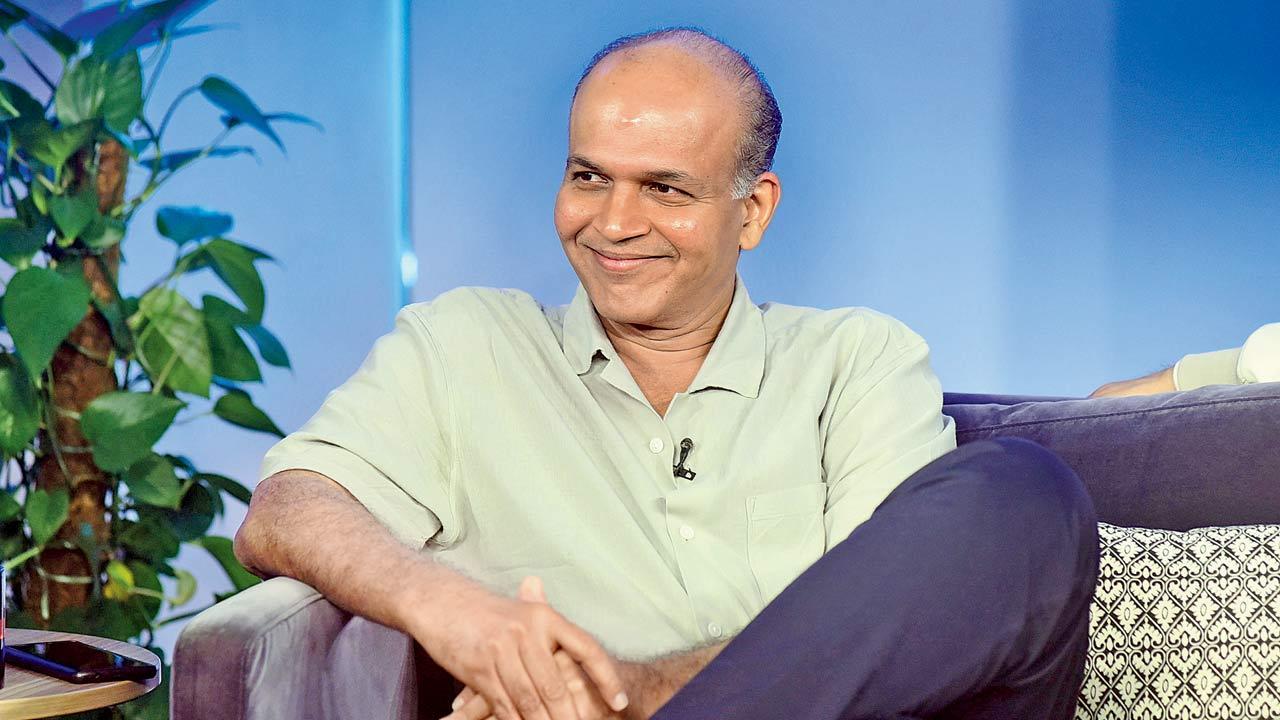
With this year marking 20 years since he launched his film production stable with Swades, filmmaker Ashutosh Gowariker discusses exploring other avenues, including the web space, television shows, and documentaries
Priyanka Sharma (MID-DAY; December 17, 2024)
It may have been 20 years since the release of the cult classic, Swades, but, filmmaker Ashutosh Gowariker feels it was only yesterday that he launched his production house with the Shah Rukh Khan-starrer. Arguably, Gowariker’s perception may not be completely flawed, given that the patriotic offering that holds a mirror to society, has been kept alive in the minds of people several years after it left cinema halls.
The filmmaker understands why Swades—a film that deals with the themes of class and caste divide—has lived far beyond its years. “It gives us the status quo; the point zero. It [shows us] where we need to hit reset. When people tell me that Swades continues to be appreciated, it makes me happy and sad. I am happy that the work is being appreciated, but sad because it implies that nothing has changed. I don’t know if matters have become worse. The divide between urban and rural [India] has increased. We look at the technological [advancement] in cities and think we are progressing. But, it is a mirage. Of course, the heartland also has all the amenities. But have we progressed in our way of thinking? I don’t think so. The change is still happening. And more work needs to be done on that front,” he explains.
Meanwhile, Gowariker has a lot of work on his plate too. As his production house crosses the milestone mark, he is eager to turn his attention to new ventures. Sure, venturing into web shows may seem to be the most natural progression in this day and age, but the filmmaker is also keen to explore other avenues.
“We want to also make television shows, documentaries and audiobooks. We want to cover the entire entertainment gamut. We are developing stories in the OTT space, which is a great addition to our business, because my films are long, and if I have a long story to tell, I can do so in the form of a web series.”
However, fans of the filmmaker who have been eager to watch his opulent productions play out on the big screen need not be disappointed. “I have finished my [movie] script. We are currently casting for it,” says the director, who last helmed the 2019 historical, Panipat.
Ask him if he intends to reunite with his friends and collaborators, including Shah Rukh, Aamir Khan and Hrithik Roshan, all of whom Gowariker has delivered memorable films with, and he says, “[Only] if I have the right script.”
He adds, “The theme has to come to me first. [I will approach them] if they suit the part. All three of them have one common trait—the willingness to experiment within the set boundaries of mainstream entertainment. That is why Dangal, Dear Zindagi and Super 30 [were successful]. They are willing to put themselves out of their comfort zone for a film, but, it needs to have the structure of a mainstream movie.”
Atlee would suddenly have an idea and would shoot it the next day, says Jawan actor Kenny Deori Basumatary
7:54 AM
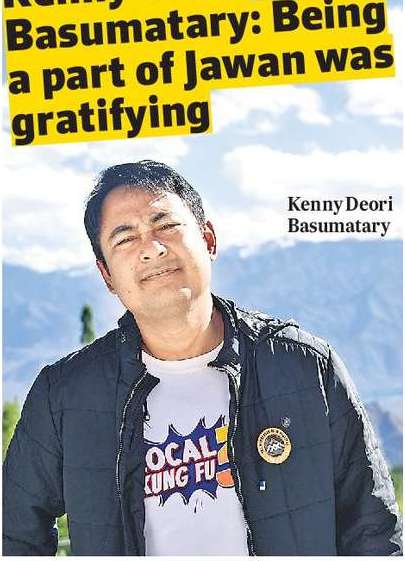
Navya Kharbanda (HINDUSTAN TIMES; November 6, 2023)
Kenny Deori Basumatary, who was seen in Shah Rukh Khan-starrer Jawan, says working in the Atlee directorial was “super chaotic” since the filmmaker “keeps coming up with new ideas all the time”. “He would suddenly have an idea and would shoot it the next day. During production, he’d say, ‘Abey yeh nahin, yeh chahiye’. It was amazing,” says the Assamese actor-director, whose film Local Utpaat was recently screened at The Himalayan Film Festival (THFF).
He adds despite the chaos and constant changes, the output was worth it. “When you see the end result, it is just amazing. As soon as the first teaser came up, one knew that people were going to like it,” he beams, adding, “A happy coincidence was that when I went to SRK’s office for the first time, that was the day when the first teaser had come out. I saw it and I was like, ‘Oh my God, I have got to act in this!’”
The film’s success and recognition, Basumatary says, was “definitely gratifying”. “Numbers, I feel, are a function of the hype behind a movie. Moreover, if the film’s content is significant, it will stick much longer. It’s like Swades (2004) and Chak De! India (2007) that is people still remember,” he shares.
Basumatary is glad that Jawan had a historic box-office success worldwide and also made strong statement. “Jawan had substance. SRK made a huge mark for himself and the entire industry,” he wraps up.
Kailash Kher recalls being replaced for a Chalte Chalte song
8:58 AM
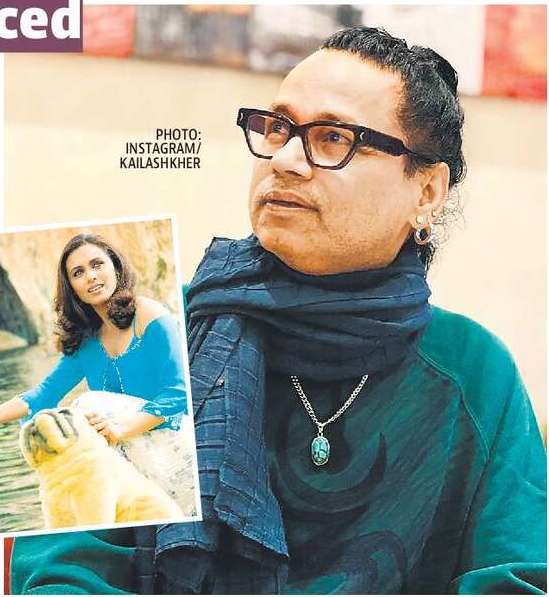
HINDUSTAN TIMES (September 3, 2023)
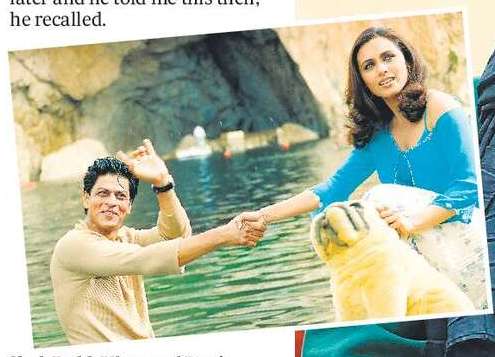
Singer Kailesh Kher recently called out the “big people” of the industry for replacing him in a song without any prior information. While talking to Bollywood Thikana, he opened up about not getting his due credit for a track he recorded for Aziz Mirza’s 2003 film, Chalte Chalte, which stars Shah Rukh Khan and Rani Mukerji in the lead roles.
“I was called to sing a song that was written by Javed Akhtar in the film. I thought if such a big director is calling me, it must not be for nothing. These are big names. So, I went there and sang a song,” recalled the singer, adding, “Gaana bhi ek dum aise pehelwani type ka. It took a lot of effort to sing it.”
But, the Yun Hi Chala Chal (Swades; 2004) singer shared that he received his “first setback” upon finding that he had been replaced. “When the first audio CD of the film came, it didn’t have the name Kailash Kher. It had someone else’s name. I thought, ‘bade aadmi bhi choti harkat kar sakte hain’,” he said, adding that the incident taught him to never get too attached to or affected by the film industry.
Kher also recalled how Akhtar once said that it was their (makers’) loss if they did not keep his voice in the film. “Javed saab said, ‘Iski alag khusboo aur chamak hai, yeh apni pehchan bahut tagde mein banane wala hai.’ We worked together in Swades later and he told me this then,” he recalled.
A lot of people didn’t know a film like Chup even existed-R Balki
8:34 AM
Niharika Lal (BOMBAY TIMES; November 25, 2022)
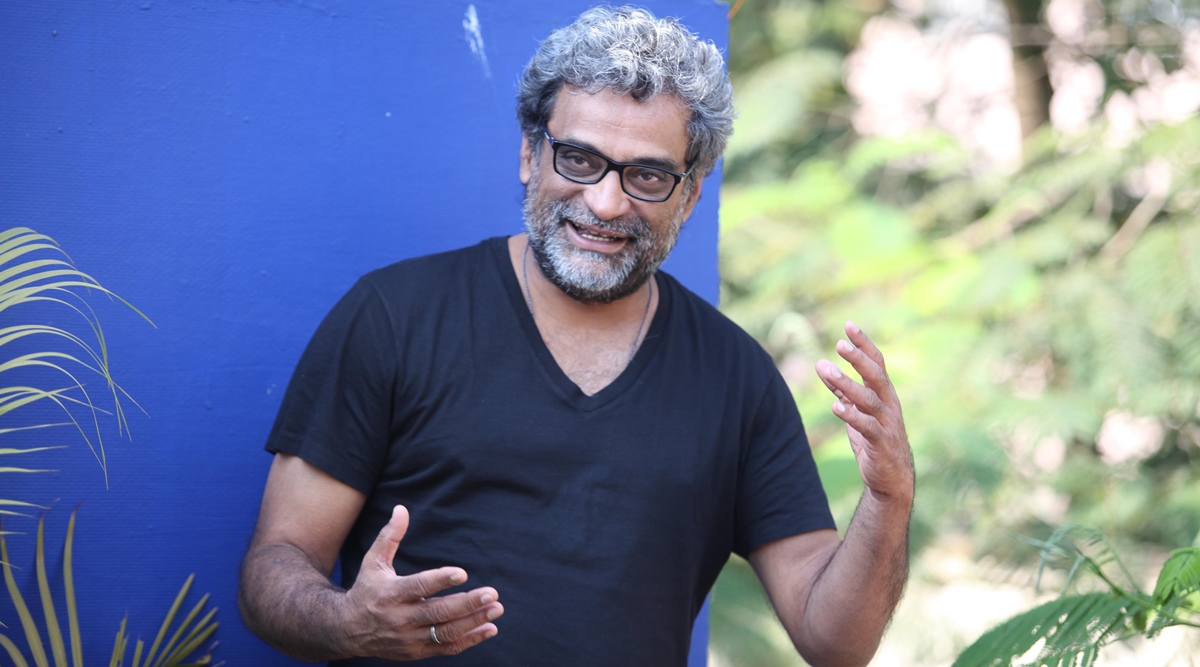
Known for films such as Cheeni Kum, Ki And Ka and Pad Man, R Balki gave a masterclass on the topic ‘Negotiating Aesthetics and Economics’ at IFFI (International Film Festival of India) 2022.
‘A LOT OF PEOPLE DIDN’T KNOW MY FILM CHUP EXISTED’
Balki said that a lot of films that fail at the box office or do not do well is because people don’t know about those films. He said, “We, in the creative world, tend to live in a bubble. A lot of people didn’t know a film like Chup even existed, and I thought it had free shows and it was great. A lot of my friends whom I met after years asked me, ‘So, what are you doing next?’, and I said I just did Chup, and they asked, ‘What is that?’ I was shocked and stunned. It didn’t reach people. Whether you like or not is different, you don’t even know about it then it is a problem.”
While word of mouth publicity gets a lot of credit for several films, Balki said he hates this cliche. “Word of mouth is mythical. I wonder how it happens? People watch the film and go and tell everyone to watch it? No. It has to be worked out in a manner so that there is already excitement around the project and all they need is a little nudge to go and watch the film. I feel a lot of creativity suffers because of a lack of science. I feel there has to be a scientific process behind word of mouth to be generated,” he added.
‘I DON’T THINK WE HAVE FOUND THE SCIENCE TO MARKET OUR FILMS’
Balki said that Bollywood doesn’t have a marketing mechanism. Not minicing his words, he expressed, “The marketing strategy is somebody is creating controversy, somebody is sleeping with someone, create some boycott, some ban. I don’t think we have found the science to market our films and a lot of creative people suffer because of it. Enough investment has not gone into developing how to market films and it is really very sad. So many people are pumping in huge bucks and yet the returns are so less.”
“If you are making 100 films and 90 of them do not make money, then there is definitely something wrong with the industry. There are pundits in this industry – producer pundit, director pundit, writer pundit, trade pundit and media pundits, and they all fall flat. They fall flat and they move on with the next theory without learning a thing. There are fantastic marketing people in cinema, but somehow when they get into this zone then their entire reading of data starts sounding outdated,” he added.
Balki further said that there is no formula for how films work. “It depends upon who does what. You can’t say the audience wants it. No, the audience wants damn good work. Who doesn’t want to see a good film, song or stars saying their best lines? But we all fall flat in understanding the theory without understanding the execution,” he added.
‘SHAH RUKH IS ONE OF THE MOST CLEVER PEOPLE IN INDIAN CINEMA’
Balki said that the stars are making one fundamental mistake that they are getting caught up in the producers’ money making machine. He said, “(They think) If I want to charge this amount then I have to do this kind of work and only then will I be able to recover the money. A lot of smaller ideas could have become bigger if bigger stars would have invested in them. Some stars have experimented and have fallen flat and have chosen to not experiment again while some stars have gone for tried and tested formulas.”
He said that Kamal Haasan experimented in the 80s with films like Sadma. Talking about Shah Rukh Khan, he said, “Shah Rukh has done Dear Zindagi. He also experimented with Swades and Paheli. If those films had worked, it would have taken a different turn. He is one of the most intelligent people in Indian cinema.”
I don’t see theatres opening till October-Ronnie Screwvala
8:48 AM

Ronnie Screwvala, who has 12 films in pipeline, predicts cinema halls won’t run to full capacity till there’s a vaccine; says industry looking at tough 18 months ahead
Himesh Mankad (MUMBAI MIRROR; June 19, 2020)
 Do you think the appetite for films will change in the post-Coronavirus era, with a clear demarcation between the big screen and small screen cinema?
I think it’s all about the storytelling and not screen size. At the moment, we’re battling the virus and 18 months away from the post-Covid era. For the next year or year-and-a-half, people will be wary of risking their health for a cinematic experience. But films will not go away and neither will theatres. It’s a strong window, but things will change and we will have to work 10 times harder on the creative content, storytelling and scale to bring the audience into the cinema halls again.
Does that mean smaller films will find it difficult to get screens?
No, if you have a gem of a story, it’s a big film already. People go to theatres because they don’t want to wait eight weeks. It has never been cinema v/s OTT as each one augments a market and grows.
When do you expect cinema halls to open and a constant flow of big releases?
Mumbai and Delhi, which account for 65 per cent of the box-office, are the worst-hit cities right now. Until they open up, nobody will want a release in only Pune, Nagpur and Kanpur. Makers of big films will wait to see if people are coming back to the cinemas. I don’t see some of them arriving this year. I don’t see theatres opening till October and even when they do, they won’t run to full capacity until the vaccine arrives. Entertainment will be the last priority for people. Next year, one will feel the pinch because there will be a drought of releases as few new films will roll for the next six-seven months, so there won’t be any more fights for the weekends. There aren’t too many films in the waiting, and you will see the gap over the next 18 months.
Do you think this is the right time to renegotiate on ticket rates, VPF (Virtual Print Fee) and other issues with theatre owners?
I have strong views on this, that’s why I got into the Competition Commission. Unfortunately, there is no unanimity.
 You have backed films like Rang De Basanti, Khosla Ka Ghosla, A Wednesday and Aamir which were way ahead of their time. What gave you the courage and conviction?
Rang De Basanti was one of the first films we made, it could have been before its time, but it was not. Jodhaa Akbar was an expensive film, but again it broke the mould. People thought Aamir, A Wednesday and Khosla Ka Ghosla were small, but they worked big time. Anurag Basu narrated just 40 lines of the Barfi! script to me, look how the film turned out to be. Of all our films, only Swades was before its time, but it was a gem of a film.
Next up: The Immortal Ashwatthama with Vicky Kaushal, a fantasy trilogy based on the Mahabharata. Tell us about that…
The way forward for the millennial audience is not in retelling history, but in the way it is told. You need to romanticise history, let imagination take flight and put it in the context of the future. Our problem is that we don’t think big. I am sick and tired of everyone saying this film earned Rs 100-Rs 200 crore over the last 10 years. They should now cross Rs 500 crore, otherwise there’s no reason to make films. Baahubali showed us the potential of our market. It was a scaled-up film, but at heart, it had a strong story.
 The Immortal Ashwatthama will reunite you with Uri: The Surgical Strike director Aditya Dhar and lead Vicky Kaushal. Any pressure?
We will have a blast. Aditya has such clarity of vision and Vicky is a stupendous, versatile actor. And I have the ability to look at things three years from now. The film is in prep now and will roll next year.
You also team up with Kangana Ranaut on Tejas, set against the backdrop of the Indian Air Force.
We wanted to make a film on the army so Uri happened. Tejas is not a sequel to Uri, because that was a true story and this isn’t. But it is on the same lines and on the same scale.
Will Taapsee Pannu’s sports drama, Rashmi Rocket, lose money due to the delay in production?
Prep cost is never a waste, we will be more ready when we start. Safety is the priority now.
Abhishek Chaubey is writing the biopic on hockey legend Dhyan Chand…
(Cuts in) We have 12 films in planning right now, we’ll discuss them at the right time.
Any change in your outlook as a producer in the post-Covid era?
I will be more aggressive now.
How Bollywood has infused the spirit of Durga Puja in films
8:16 AM

Rachana Dubey (BOMBY TIMES; October 8, 2019)
Call it Vijaya Dashami, Bijoya, or Dussehra — the festival is celebrated with fervour in most parts of India. The day underlines the victory of good over evil — a theme that has been translated on celluloid often by Bollywood filmmakers.
For decades, filmmakers have used Durga Pujo, Navratri and Dussehra celebrations as motifs or as backdrops for key events in their narratives. Visuals from the festive season have often lent themselves for the creation of dance numbers, memorable scenes and sequences, replete with symbolism.
Sujoy Ghosh’s Kahaani (2012) features one of the most well-recalled, and what is considered to be one of the best amalgamations of Durga Puja into a story. The film unfolds in Kolkata, which is gearing up for the pujo, and culminates on dashami (last day of Durga puja), drawing parallels between the festival’s message — the victory of good over evil — and the story, as Bidya Bagchi (Vidya Balan) defeats her husband’s murderer.
 Bring this up and Sujoy says, “The thought behind the sequence was to highlight the strength and will of a mother. I’m a huge fan of Maa Durga, because in this form of hers, she’s always with her children. For Bengalis around the world, she’s a mother — we equate her to a human being. In Kahaani, I wanted to depict that Maa arrives once a year, she listens to you and solves your problems. We threaded in a lot of stuff. The build up-to the story is pretty much like the build-up to Bijoya. The climax blended beautifully with the culmination of the pujos.”
Pradeep Sarkar’s Parineeta (2005), adapted from the eponymous Bengali novel by Sarat Chandra Chattopadhyay, uses Durga Puja as a backdrop on two crucial occasions — once to show the love and care Lolita (Vidya Balan) has for Shekhar (Saif Ali Khan) and then to show Shekhar’s jealousy towards Lolita’s friendship with Girish (Sanjay Dutt). The film also uses the traditional dhunuchi dance as a tool for the narrative.
 The filmmaker shares, “Durga Puja has often been used as a backdrop in films or as a part of the story. It only makes sense to include the festivities when there is some meaning to it. During pujo, you meet people and interact with them, and relationships also blossom. That is how we also used it in the film.”
Shoojit Sircar’s Vicky Donor (2012) briefly takes the audience pandal-hopping during Durga Puja in Delhi, to show the growing proximity between Vicky (Ayushmann Khurrana) and Ashima (Yami Gautam). The Ranveer Singh and Arjun Kapoor-starrer, Gunday (2014), also saw the two actors sway to beats of dhols against the backdrop of Durga puja in the song Jashn-e-Ishqa.

FILMMAKERS SPIN THE NARRATIVE AROUND THE FESTIVAL
Sanjay Leela Bhansali’s screen adaptation of Sarat Chandra Chattopadhyay’s Devdas (2002) shows Paro (Aishwarya Rai Bachchan) and Chandramukhi (Madhuri Dixit-Nene) meeting and even dancing together. Paro is seen at Chandramukhi’s kotha, asking for mitti of her aangan to make an idol of Maa Durga for her baadi. This marks the beginning of a crucial turn in the story when Paro is forbidden from stepping out of her house.
The story of Akshay Kumar’s Bhool Bhulaiyaa (2007) peaks in the thick of Navratri in a village in North India. The film’s climax, which sets off on ashtami, underlining the theme of good winning over evil, shows Vidya Balan as the revengeful dancer Monjulika, who is seeking protishodh (revenge) for her lover’s death. Raveena Tandon played a victim of marital violence in Kalpana Lajmi’s Daman (2001). Her character Durga vanquishes her patriarchal tormentor on dashami, freeing herself from bondage.
 Vikramaditya Motwane’s Lootera (2013) opens in a traditional zamindar’s baadi celebrating Durga Puja. Sonakshi Sinha, as Paakhi, is seen enjoying a jatra with her friend in the house. Here, the celebration is more of a backdrop to show how festivals were seen as symbols of power and prestige in society those days. Elaborating on it, writer Bhavani Iyer, who wrote the screenplay, shares, “I don’t think one really sets out to put a festival into the story. A lot depends on the milieu or the household you set the story in. Maa embodies vengeance and righteous anger, and if that fits into a story, then, Durga Puja could become an ideal motif. We used pujo to define the Bengal of the 1960s when zamindari was breathing its last. The jatra that Sonakshi is watching in the film, depicts her family’s power and stronghold in a fast-changing society. It was metaphoric.”
In Kurukshetra (2000), Sanjay Dutt, who plays an honest cop, is seen wiping out evil politicians, while Dussehra firecrackers drown out the sound of gun-shots, symbolising the defeat of modern-day Raavans. Ram Leela, which is an integral part of Navratri celebrations, was also used effectively in Rakeysh Omprakash Mehra’s Delhi 6 (2009). While depicting the glorious celebrations at Delhi’s Ramleela Maidan, the narrative also delves into frictions within men from the neighbourhood.
 Ashutosh Gowariker’s Swades (2004) also featured a Ramleela performance by debutant Gayatri Joshi. Here, it was a philosophical discourse — a conversation between Raavan and Sita that tries to highlight the difference between the evil and good. In a face-off sequence in Rajkumar Santoshi’s Lajja (2001), Madhuri Dixit-Nene, while playing Sita, refuses to go through an agnipariksha to prove her chastity.
More recently, Akshay Kumar, revealing his upcoming Laxmmi Bomb avatar, put out a picture with the backdrop of Maa Durga, embodying power and anger. Talking about the reducing number of instances of films using the festival as a motif, writer Bhavani Iyer says, “Kahaani was one of those films that integrated the festival so beautifully into the story. Even Sanjay Leela Bhansali’s ritualistic semblance of the celebrations in Devdas was a sight. Storytelling, in the last few years, has changed. The pujas are extravagant celebrations as opposed to the lives that we lead today, which are so clinical. We’ve also begun to write our stories in a more realistic manner. That doesn’t always allow us to merge festivals and rituals with the stories.”
IN THE BYGONE ERA...
Amitabh Bachchan and Rakhee’s 1981 Bengali-Hindi bilingual Anushandhan, made in Hindi as Barsaat Ki Ek Raat, used Durga as the metaphor of triumph. As a police officer, Amitabh is seen investigating an evil father-son duo. He is even seen playing drums during Durga pujo and beating Amjad Khan at a competition.
On the other hand, is Shakti Samanta’s Amar Prem (1972), featuring Rajesh Khanna, Vinod Mehra and Sharmila Tagore. The film had a brief, but an extremely powerful depiction of Durga pujo, which appears at the end of the film. While Nandu (Vinod) takes Pushpa (Sharmila), his foster mother, home, we see protimas of Maa Durga being taken to pandals, hinting at mahalaya. The symbolic reference to Maa’s homecoming was hard for anyone to miss.
 Apart from Hindi films, Bengali movies have evidently underlined the spirit of Durga Pujas through their stories. Pather Panchali (1955), Devi (1960), Titas Ekti Nadir Naam (1973), Joi Baba Felunath (1979), Utsab (2000; right), Debipaksha (2004), Antarmahal (2005; below), Durga Sohay (2017), Bishorjan (2017) and Uma (2018) are some films where important parts of the narrative have been woven around the festival. Writer-director of the Bengali film, Mahalaya, Soumik Sen says, “The pujos have been used as motifs in Bengali cinema very often. Utsab, Joi Baba Felunath, Bishorjon (2017), Nayak (1966) and Bela Seshe (2015) are some examples of how differently and beautifully the festival has been merged into the story. In Hindi films, Kahaani and Devdas come to the mind when one thinks of weaving in the celebrations of Durga Pujo into the story. The difference lies in the way the festival has found its place across popular cultures from the West to the East.”
Filmmaker Ramkamal Mukherjee’s Season’s Greetings (2018), a homage to filmmaker Rituparno Ghosh, uses a motif of children visiting parents for the Durga Puja in his film — something Ghosh’s Utsab also employed. Ramkamal says, “The festival has different meanings and style of celebrations across the country. For Bengalis, it’s about Maa’s homecoming, symbolically depicted as a mother, daughter, wife or a sister in films. I’ve shown this in my film, too, to doff my hat to someone who crafted bold stories and broke all taboos — something that Maa also embodies.”

If Aditya Chopra offers me a film that he thinks I will do a good job in, I will do it-Sushant Singh Rajput
8:53 AM

Sarita A Tanwar (DNA; May 29, 2017)
Sushant Singh Rajput has delivered a massive hit with M S Dhoni - The Untold Story, but for some reason he is not spoken about in the same breath as Varun Dhawan, Arjun Kapoor and Sidharth Malhotra. He did not have a dream launch. He made his debut with Kai Po Che, with an ensemble cast. He won Best Debut that year. He did two films after that all with YRF (Shuddh Desi Romance and Byomkesh Bakshy). Then, he had a fallout with Aditya Chopra and walked out of Paani after waiting for almost a year. He was told his career would be over. He delivered his first Rs 100 crore film with his next release. However, the industry is not acknowledging and celebrating his success like it should. And he understands this. He accepts it and perhaps, secretly enjoys it. Because that allows him to be the dark horse. Here he talks about the i chapter, the nepotism in the industry and “being Shah Rukh Khan” in his head. Read on for excerpts...
Working on your sixth film. Are you still trying to come to terms with the film industry?
I think it’s easy to understand. People talk about nepotism but I think we are just touching the subject superficially. We are just saying that outsiders find it hard to break into the industry and insiders get it easy, that’s the first thing. No one talks about how your successes and your failures are perceived and that is nepotism, too. If I do something and that’s going and you say...
Please explain..
It is not that insiders are not good, they are. But I also did something which is good but you would just punctuate that hundreds of times and you justify it. And the insiders would do anything and so nobody would question them because he or she was good. But that doesn’t take away from somebody else who was good, too. But that is there and just the room of that faith, hear what I am saying. Some failures are easily forgotten, some aren’t.
You mean that your failures are highlighted more, and your success is not celebrated as much?
I think all this is also nepotism. Anybody who says it isn’t, is either very ignorant or very powerful. That is it. I have no complaints because I have done five films that I wanted to do, I have signed some as well. Not that I didn’t have options... so, I can’t complain. But at the same time, I know that no matter how good friends I am with somebody, if my films don’t work...
...you won’t get offered their films, but you will get invited to their parties, correct?
(Smiles) Yes, that is something that has started happened lately. I am invited to parties. So I finally feel that I’ve arrived. I wouldn’t name him, but this maker just offered me a film after we had a tiff last year and just because my last film did well. It is such simple mathematics and there is nothing wrong to it. It is a money-making thing and if you are saleable — I don’t mean to emphasise that we need to network to get work — but it is expected and sometimes necessary.
SRK and you both hail from Delhi, both made it big after working on TV. Have you subconciously imbibed his style? You are accused of having a Shah Rukh Khan hangover.
Really? If it is working, I won’t complain. (Pauses) If that is true, then it is probably because we had the same acting teacher — Barry John. In fact, I got a chance to finally do a dance song in Raabta and I did his signature — arms spread — move. I’ve always wanted to do it. Because I am a big Shah Rukh fan. He’s the only reason I started.
You have often said that.
I remember coming to Swades ka set, to get his autograph, and I couldn’t meet him unfortunately. I had come from Delhi, he was shooting in Mumbai And a few years later I was dancing behind him when I was with Shiamak and I said, ‘Hi’ and he said ‘Hi’ back. And then, a few years later, when I made my debut, we were at the IIFA, he called me to his room, we sat there for 45 minutes and chatted. I was like, ‘This is it. I can’t get beyond this.’
You and SRK also have the Aditya Chopra connection. Though your experience hasn’t been as nice as his. Do you regret waiting for so many years for Paani to take off?
Yes. It was very unfortunate because I remember saying no to many films I really wanted to do at that point of time, just because I trusted somebody who was telling me, ‘No matter what, the film will be made.’ I can also understand that I am a newcomer and a filmmaker is putting in so much money, so he will have doubts, but it doesn’t take away the fact that if you decide not to do that film, you cannot not give me another film just because you know I have said no to so many films. That didn’t happen.
Did you really struggle with the decision to walk out of the film?
No, that was a very easy decision. I see few changes in myself that have happened in last four years. I am completely fearless about the consequences. I just don’t care. You will have a great time working with me because there are things I am sure of — I am professional and if you ask me to do nine things, I will do 10. You will be happy, but if it’s anything else that doesn’t contribute to what we are trying to do, then I will not take that sh*t, no matter how big or small you are. As simple as that. I think everybody who works with me, knows this and appreciates this.
How long did you wait for Paani to take off?
That was 11 months of the second year since making a debut. I did three films before that in one year and then I just had one year of doing nothing. But I shouldn’t say I wasn’t doing anything, because I was spending time with Shekhar and that did a lot for me. After waiting for nine months, in the tenth month, I got to know that it won’t happen. I waited for another month, so I would get another film but it didn’t happen. I said, ‘Fine! Let’s find out for myself.’
Did you feel you’ve burnt your bridges with him?
That’s for him to decide.
Shraddha Kapoor also had a problem with Aditya Chopra, but he recently offered her Thugs Of Hindostan. So maybe he doesn’t have that ego, and he will approach you if he has a film for you.
If he offers me a film that he thinks I will do a good job in, I will do it.
I live in my own created reality-Shah Rukh Khan
8:15 AM

Shah Rukh Khan on being Shah Rukh Khan and the perks and pains that come with it
Nayandeep Rakshit (DNA; November 2, 2016)
By every measure, Shah Rukh Khan’s success story is a victory for the common man who dreams and aspires to be greater than his stead. Starting in Bollywood as an outsider and retaining his superstar status for over two decades, the stories of his life has filled several books. The last time we met, he had said, “I think common people have bigger dreams and they work harder to achieve them. I am the common man’s dream.” When I last met SRK, he spoke about everything from his stardom, his priorities and what it means to be a superstar. Now, as he turns 51 today, his words are a mirror to the man and indeed, the superstar himself. Read on...
Have your priorities changed?
No, not really. I think I am working as hard as I used to in the first seven-eight months or years of my career. I am a mannered man, a stylised actor who genuinely plays to the gallery. I am all that. There’s nothing wrong in that. If you become Shah Rukh by being all that, you should never have any complaints.
Has stardom ever hit you?
Negatively? No! It has hit me in the most positive way. Stardom has caressed me. I say it to everyone who tells me, ‘Aapki privacy nahi hai. Aapko acha nahi lagta kabhi ki beach mein jaake pav bhaji khao ya kahi ghumne nikal jao?’ Nahi! I don’t want to be normal at all. I want a crowd outside my house waving out to me with sheer love. I love it more than having pav bhaji in public. I have no qualms being a superstar. I have been fortunate enough to live like a star for the last 25 years. I would like to die as a star, too. Main bahut clear hoon is maamle mein. Mujhe aur kuch nahi banna.
But as a star, is there anything you really miss doing?
I can do everything. There’s nothing I cannot do. As a matter of fact, Allah’s been kind. I get to do more things than other people can do. So I have missed nothing being a superstar. Also, there’s a sense of being alone — which everyone has — from a director to an actor. I like being reclusive at times. But I was made to be a star. There’s no other way I could have lived my life.
But have your desires changed over the years?
When you start off, you desire to have good money, you want fame, you wish to keep your family well-off. You want awards, rewards... tammanayein khatam hi nahi hoti hai. But having been here for 25 years now, you realise that the only thing you want to do is to make people smile.
Somewhere down the line, it’s not guilt, but I have a feeling that I’ve been given a lot more than I deserve. I need to return it before it ends. It’s something I keep telling everyone that the best way to go would be ‘Roll camera, action.. Oh shit! He’s gone’. So, I want to keep on working till the last day because when I don’t work, I feel tired (Smiles).
We don’t have superstars anymore. Do you think that the audience has closed doors to the idea of having one?
Superstardom is more like a fourth wall and is an extremely different concept. You cannot work towards getting the stardom. Yes, there a lot of managers and management companies which help you make the right moves and say the right things, but you need to get a different kind of love to be a superstar. The kind of love that is not tangible and explainable. If that was explainable, we could create so many superstars in the industry. I do think that media tends to figure that out by labelling an actor as the next superstar. I think it takes many years of work for one to attain superstardom. It takes months for one film to reach somewhere. I don’t know if Salman, Aamir and I are the last superstars and I don’t think any actor can explain the phenomena of being a superstar. There is no explanation for that.
Do you ever fear losing out on your stardom?
I have an inane sense of strange confidence in my stardom. But I know what you are saying. It’s reality... it can and it will happen eventually. But I have protected myself from that reality. I live in a zone which is my own created reality. Yeah, I live in a false world, but I just believe that no one can take away my stardom. (Smiles) I don’t think I am worthy of all the love I get from the people. Neither do I deserve all the criticism that comes my way. They are two extremes.
When you try doing something new, at times it doesn’t work. Does that bother you?
I have no understanding of what people think of my work. All that I understand is I am an extremely selfless creative person. I want people to be happy with what I do. So if I go wrong, I go wrong. And it’s never the numbers. I remember when Chak De! India released, I was in London. Everyone told me that Chak De! was going to be the biggest flop. Ditto for My Name Is Khan. They felt it wouldn’t work because we didn’t have a catchy song in it. That’s absolutely all right. I don’t work for posterity or prosperity. I work only on things I like doing and if I don’t like doing something, I can’t move or shift that feeling to you. If an artist is feeling it’s not good enough, he will never be able to convince the audience of the same. The beauty of art is you have to go wrong more often than right to get it right eventually. When Chak De! released, I remember driving down Andheri and there was nobody there to watch the film. When I did Swades, someone in America told me, ‘How can you do a film like this? It’s making no noise’. Those things will keep happening. Again seven or eight years down the line, people will say why aren’t you doing a Chak De! or a Swades and who knows, they might be the same people who rejected the film at first. People forget that when I started off, I did Baazigar, I did Darr. In Deewana, I was launched as ‘the thing’. I see some of the other films on television and I wonder how I made it so big. (Laughs) I have the ability to make memorable choices.
Subscribe to:
Posts (Atom)