Showing posts with label Supratik Sen. Show all posts
Showing posts with label Supratik Sen. Show all posts
Is Bollywood ‘trans’itioning? Filmmakers and writers weigh in on who should have the right of way to tell marginalized stories
8:21 AM
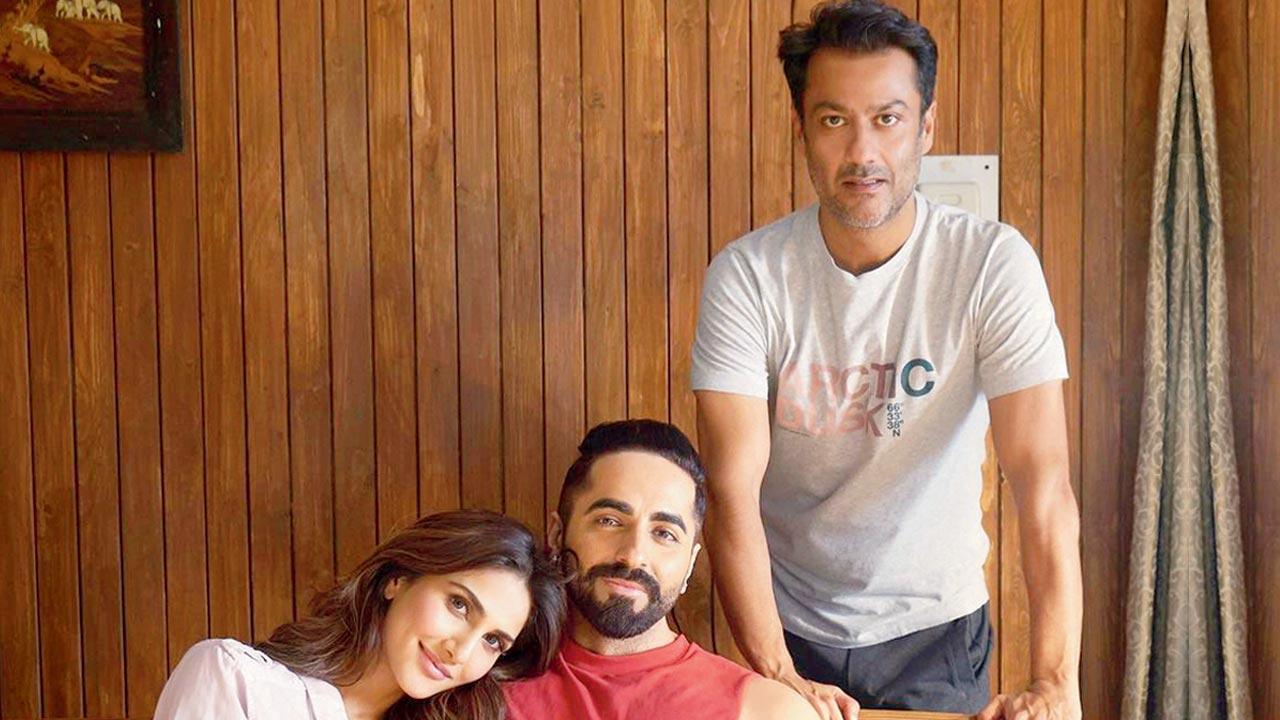
Even as films are making room for the LGBTQiA+ experience, filmmakers and writers weigh in on who should have the right of way to tell marginalized stories
Nidhi Lodaya (MID-DAY; February 13, 2022)
When the Ayushmann Khurrana and Vaani Kapoor-starrer Chandigarh Kare Aashiqui released in December last year, it garnered a lot of interest for its sensitive portrayal of a difficult subject. The film revolves around Manu (Khurrana), a cisgender male bodybuilder in Chandigarh, who falls in love with Maanvi (Kapoor), a Zumba instructor, only to later find out that she is transfeminine, a person who was assigned male at birth, identifies with a female gender identity and chooses to transition to womanhood.
Supratik Sen, who co-wrote the film with Tushar Paranjape, says, “Since we don’t belong to the [LGBTQiA+] community, it was very important for us to really know that world, so that we don’t say anything, which is emotionally unauthentic.”
But filmmaker and editor Apurva Asrani, who co-wrote and edited Shahid (2013), identifies as a homosexual, feels that “representation is key” to create an authentic experience.
Mrittika ‘Mou’ Sarin, a queer screenwriter, storyteller and producer, shares the sentiment. “When a queer person writes these scripts, it allows room for a more nuanced portrayal of experiences that only queer people go through.”
For instance, the feeling of hurt from micro-aggression or when someone doesn’t take your identity into consideration, or the fear of coming out, and shame that one experiences, when not being able to live their identity. “These are situations that straight people haven’t been in and can’t always fully comprehend,” she explains.
Despite their apprehensions, both Sarin and Asrani believe that straight people can write scripts, but “research and collaboration” is a must. “You need to speak with queer or transgendered people about their experiences. It’s also important to never assume that you know everything about the character. Take their feedback at every stage,” Sarin adds.
Paranjape and Sen tried to be as thorough as possible. They initially got the idea from Simran Sahni, a friend of the film’s director, Abhishek Kapoor. Sahni has two trans daughters who were born male and transitioned to female. “Getting the facts right and not undermining the struggle of Maanvi was an important part of the process,” says Paranjape.
Sen explains that the idea of writing is to inhabit different worlds and characters—what’s important, though, is to get the nuances right. To make sure that the experience didn’t feel detached or superficial, Sen and his co-writer consulted a few people from the community, one of whom was Sahni’s daughter Seher.
“We heard their stories, what they had been through and got a glimpse into their lifestyle,” says Sen. Other experts included psychiatrists and doctors. Asrani suggests a writing programme, Likho! by The Humsafar Trust, an NGO for the community.
Asrani says what’s often lacking is “deep empathy for the community”. In Bollywood, the trans experience has never really been done justice to. They are usually portrayed as sex workers, evil people, or made fun of. “The mainstream, for decades, has ridiculed and vilified the LGBTQiA+ community. Our movies ‘othered’ them,” points out Asrani.
Chandigarh Kare Aashiqui was a step forward as it had a trans woman character in the lead. If the makers faced flak, it was for having a cisgender actor play a trans role. Only recently, Vijay Raaz’s portrayal of a trans woman in Gangubai Kathiawadi sparked a debate online. Akshay Kumar too, was seen in a trans role in Laxmii (2020).
Paranjape and Sen agree that casting a trans person would have lent their character Maanvi more heft, but they also say that trans actors should not be the only ones playing such roles. “But, the film industry has still not reached a point, where they’ll cast trans actors in trans roles, let alone cis roles. [Unfortunately] at this point, the pendulum is swinging all the way in favour of cis people. This doesn’t mean we need to do this forever,’’ adds Sarin.
Such criticism was missing in the 1990s, when renowned actors like Sadashiv Amrapurkar and Paresh Rawal were seen in trans roles. Asrani says, “At that time, there was a lot of ignorance about the community. But, the world has shrunk with the Internet. Now, nobody will be able to get away with the nonsense they pedaled back in the day.” But instead of insisting that a trans person play a trans role, Asrani says he’d rather have a trans person on the writing team.
According to Sen, what is noteworthy is that Bollywood is no longer shying away from telling stories that are more inclusive. Also, having a popular face playing these roles helps bring more visibility to the issue. “It can get your message across to a larger audience; Bollywood has that kind of impact and reach,” he says. “It [the film] shouldn’t be in your face, otherwise you can lose some of your audience. The aim is to gently educate people, while entertaining them.”
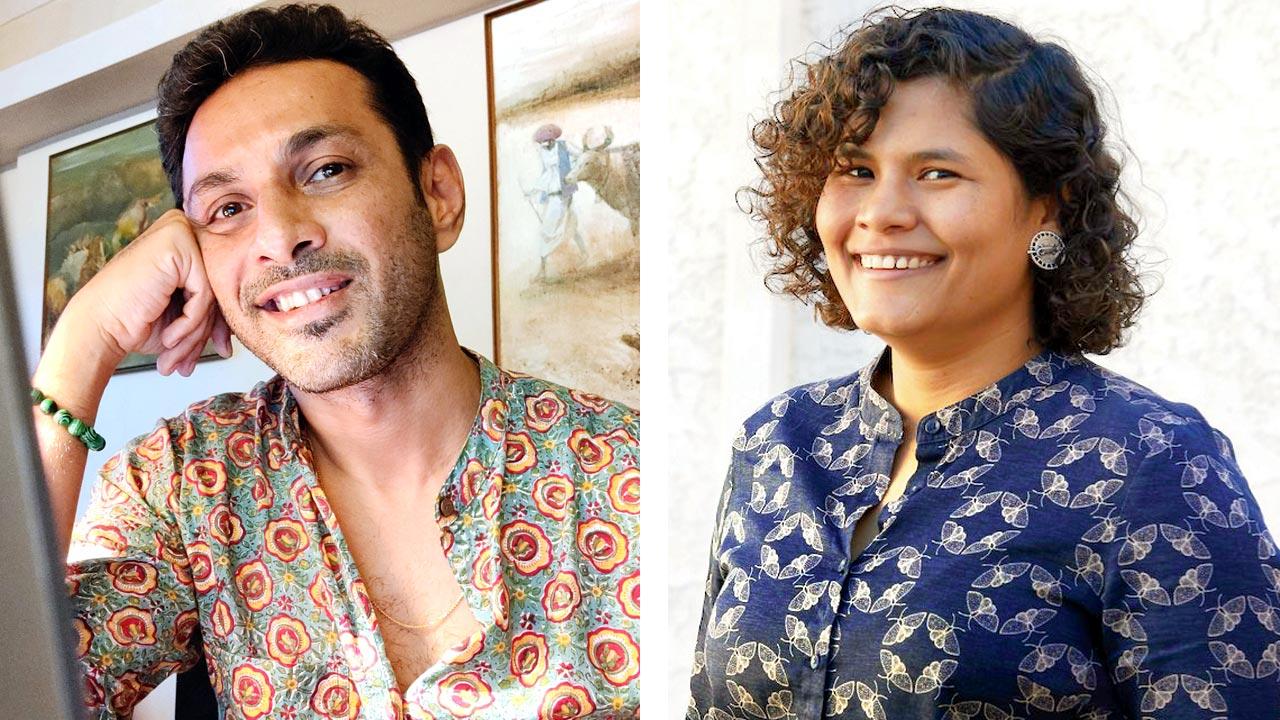
Apurva Asrani and Mrittika ‘Mou’ Sarin
Ishaan was the most innocent and lovable; I realized viewers would feel his loss acutely-Abhishek Kapoor
8:04 AM

As told to Roshmila Bhattacharya (MUMBAI MIRROR; September 27, 2019)
 One would think that adapting a book was easy because it’s all there already. But Kai Po Che! was the most difficult to crack in terms of script. We went through many drafts as we tried to figure the culmination. While I liked the three characters, Ishaan Bhatt, Omkar Shastri and Govind Patel, and was excited about bringing this story of three friends to the screen, it played out very differently in Chetan Bhagat’s novel, The 3 Mistakes Of My Life. And from the onset I wanted certain changes, including a different climax.
For me, the film, at the end of the day, was not just a story about the trio but about what happened in Gujarat in the aftermath of the Godhra massacre. I believed that for the audience to feel the pain and the sense of loss this state was experiencing, they needed to go through similar pain and loss for which one of the three principal characters had to go. And since Ishaan was the most innocent and lovable of them, a guy with unfulfilled cricketing dreams which he was trying to live out by mentoring a local talent, Ali Hashmi, they would feel his loss acutely. And I thought what would make his death even more gut-wrenching and horrific was that it came at the hand of Omi who had loved Ishaan blindly, but since he did not have a mind of his own, he had allowed his fundamentalist politician uncle to radicalise him.
I discussed the changes I had in mind, which I was convinced would make the characters more interesting, including this twist in the tale, with my writers, Pubali Chaudhuri and Supratik Sen, and also got Chetan on board. Once we all agreed, we decided to shoot the climax around a winding staircase which we had already established in a few scenes earlier. We shot in a remote village in Rajasthan. The staircase was created by the production design team on location. The reason we chose it, was because when the shot rings out, you are not sure who is hit. Omi was chasing Ishaan and Ali while Govind was chasing Omi when this happens. It’s only when a pool of red blood spreads on Ishaan’s white Tee that you realise he’s the one who’s hit, an instant before his body goes hurtling down to land spread-eagled and a shocked Omi drops the gun.
However, I was equally sure that the story couldn’t end there. The boys had survived an earthquake, failed business, shattered dreams and even if the riots took away one of them, I wanted to end the film on a positive note. So, we had Omi coming out of jail after a decade, by which time Govind and Vidya are married and have a son whom they have named Ishaan. And Ali, now a grown-up, is for the first time playing for India. And as Omi, who’s gone straight to the stadium, watches from the stands, Ali starts his innings with a flourish, dispatching a ball from the Aussie bowler to the boundary with a Ishaan-like cover drive. And in this rising star you see hope for the future which came out of death and destruction. That for me was what made the culmination of Kai Po Che! fulfilling. There was a lot of material in the book, but as a story-teller I was convinced that I was not going to go crazy on the riots and what was right and who was wrong. I’m not qualified to judge, so what I did was present a human story that touched a chord and is still remembered.
I made the film coming out of Rock On!! which bagged the National Award for Best Feature Film in Hindi while Arjun Rampal was adjudged Best Supporting Actor by the jury. I approached a lot of big names but none of the established actors wanted to be a part of an ensemble cast. So, then, I opted for Sushant Singh Rajput, a fine actor who had done a lot of TV, Amit Sadh who is equally talented, and Raju (Rajkummar Rao) who is today’s answer to Sanjeev Kumar. He’s the kind of phenomenal actor who, till you say “Cut”, will keep performing, pure magic on camera.
I’ve never thought of taking this story forward. There are some stories that lend themselves to a sequel and some that leave you satiated. Kai Po Che! is the latter. Some films you look back on and wish you had done certain things differently. This one evokes no regrets or “what ifs”.
Subscribe to:
Posts (Atom)