Showing posts with label Sunil Gavaskar. Show all posts
Showing posts with label Sunil Gavaskar. Show all posts
We had to be mindful that we were dealing with two sporting legends-Tahir Raj Bhasin
7:46 AM
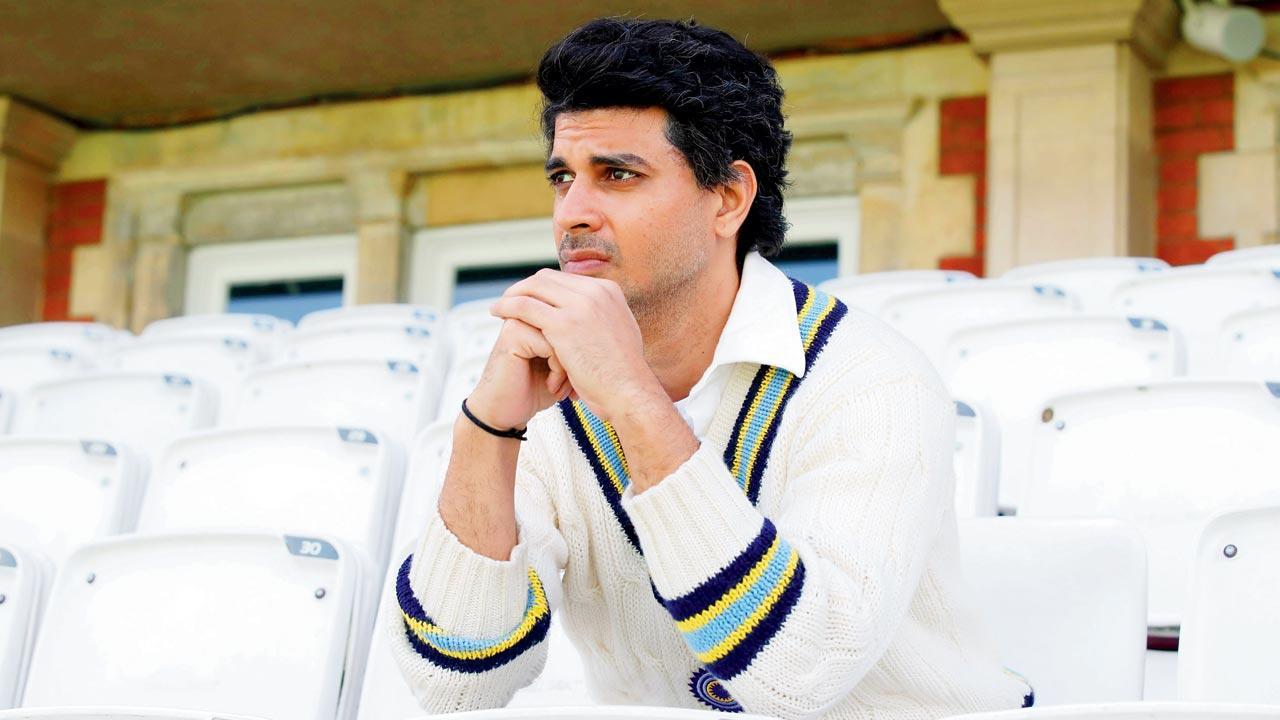
Tahir Raj Bhasin, who plays Sunil Gavaskar in 83, on following director Kabir Khan’s lead to authentically represent Little Master’s dynamics with Kapil Dev
Mohar Basu (MID-DAY; December 28, 2021)
After '83, Tahir Raj Bhasin awaits a string of interesting releases — from Netflix’s Yeh Kaali Kaali Ankhein to Mahesh Bhatt’s creation Ranjish Hi Sahi. But at the moment, the actor is only too happy to soak in the love coming his way for the portrayal of Sunil Gavaskar in the sports drama. He starts off with, “It’s an honour that Kabir Khan chose to cast me as the legendary Sunil Gavaskar. I’m overwhelmed with the love, and to see how people have taken a keen interest in my on-screen dynamics with Ranveer [Singh] who plays Kapil Dev.”
When the director finished the narration of the Singh-fronted drama, it was an instant yes from Bhasin. “Being part of 83 was an emotional decision,” he says.
Telling the story of India’s victory at the 1983 World Cup would be incomplete without showing the players’ struggles and their interpersonal dynamics. The actor says he remained honest to Khan’s brief. “Kabir wanted to make 83 an authentic retelling. So, he had to show the vibe in the dressing room too. The scenes between Gavaskar and Dev were intricate. We had to be mindful that we were dealing with two sporting legends. There was a certain aura and reserved composure that Gavaskar brought to the locker room. Every dynamic had to be seen through this lens. He often made game-altering recommendations [that were born from] his experience. No matter what went on behind the scenes, on the field, they were all a team.”
I am shocked. I wanted Yashpal Sharma to see me play him on screen-Jatin Sarna
8:05 AM

Abhimanyu Mathur (BOMBAY TIMES; July 15, 2021)
Actor Jatin Sarna first met cricketer Yashpal Sharma in Dharamshala in 2019, where he was with the cast and crew of Kabir Khan’s '83, learning cricket. Jatin had been cast as Yashpal in the film and both men were curious to meet each other. “I was so nervous because I was worried what if I don’t meet his expectations or I’m doing something wrong,” recalls Jatin. However, the meeting went well and Sharma was even impressed by the young actor. Over the next seven days, Jatin picked the veteran cricketer’s brain and when they parted, it was with a promise to see the film together.
Alas, that won’t happen now. Yashpal Sharma passed away due to a heart attack on Tuesday morning. “I am shocked. This is so sad and unexpected,” says a visibly shaken Jatin, adding, “He was such a zinda-dil person and an unsung hero. He scored 89 against world champions West Indies in India’s first match of the 83 World Cup and was adjudged the man of the match. Nobody expected this young batsman to beat the giants. I always told him that this film would bring him and his contribution back into the limelight. It’s so sad he won’t be able to see it.”
Reminiscing about the tips he received from the cricketer, Jatin tells us, “I asked him everything, even the tiniest details about his game, such as which foot he used first in his stride to enter the ground. He told me that he would never ground his bat while batting. He always kept it in the air. I did not want to just copy his shots and mannerisms, but imbibe his passion for the game and dedication towards the country. That is who he was. I wanted to imbibe those qualities so that whenever someone, who knew him, saw me on screen, they’d say: Haan, yehi Yashpal Sharma hai!”
The actor is gutted that he wouldn’t be able to watch the movie with the man he portrays on screen. He tells us, “I wanted to whistle and scream when I would appear on screen as him, while sitting next to him. I will still do that, but he won’t be there. I won’t be able to see his reaction to all that. That is my misfortune.”
The release of 83, directed by Kabir Khan and starring Ranveer Singh as Kapil Dev, has been delayed due to the COVID-19 pandemic multiple times and is expected to release later this year.
----------------
YASHPAL SIR’S STORY WAS OF SHEER GRIT: TAHIR RAJ BHASIN
— Renuka Vyavahare (BOMBAY TIMES; July 15, 2021)
Tahir Raj Bhasin, who will be seen essaying the role of Sunil Gavaskar in the upcoming film on the 83 World Cup, remembered the cricketer. He said, “Saddened by the demise of Yashpal Sharma. A story of sheer grit and incredible sporting spirit in the history books of Indian cricket. Yashpal sir was a rock on the pitch and a major reason for India’s 1983 World Cup win. Today, I remember his accomplishments and immense contributions that made the country proud. Condolences to his friends, family and fans. May his soul rest in peace.”

Sunil Gavaskar told me that how you walk into a room is how people perceive you-Tahir Raj Bhasin
8:03 AM

The actor talks about the interesting chats he had with legendary cricketer Sunil Gavaskar to essay his part on the big screen for Kabir Khan’s film '83
Renuka Vyavahare (BOMBAY TIMES; March 26, 2021)

Not just his impeccable batting, Gavaskar is also known for his sharp sense of humour, ability to mimic people and accents and his winning mindset. During the course of the film, he sat with Tahir to share some valuable details of his life and career.
Tahir says, “Playing a living legend is a massive challenge. There’s a lot of pressure. I met Sunil Gavaskar a couple of times before we started the shoot, and I read his biography, too. I watched all his interviews, but when you see that man walk into a room and the aura he carries, there’s a lot of pressure. On-field he was a tiger, but off the field, he is extremely charming and funny. To be able to portray that combination was a challenge.”
Tahir adds, “He also had a certain swag when he walked onto the field. I asked him if that is how he naturally walked or did he adapt a style while walking to the pitch. He told me, ‘When one is opening the innings for India against a side like West Indies, where every player is as tall as 6’3 or 6’4, and you are 5’4, you need to bring in a certain power, strength and confidence in your walk.’ That, for me, was a beautiful life lesson, not just as a screen cricketer but an actor as well. ‘How you walk into a room is how people perceive you.’ Nuggets like these, which emerged from our face-to-face conversation and weren’t in his biography, helped me mould into the character. I want to tell everyone who has been waiting for 83, that as actors, we can only portray the essence of a character. I haven’t mimicked Sunil Gavaskar. It’s an artiste’s impression of who he was as a player.”
Ranveer Singh is like a live wire, who compels you to up your game-Tahir Raj Bhasin
8:28 AM

The actor talks about playing legendary cricketer Sunil Gavaskar and his rapport with Ranveer Singh in the sports drama
Renuka Vyavahare (BOMBAY TIMES; March 1, 2021)

In a conversation with Bombay Times, Tahir spoke about the film, playing Gavaskar and what it’s like to work with Ranveer.
Tahir said, “Playing a living legend is a massive challenge. There’s a lot of pressure. I did my research well. As far as Ranveer is concerned, when he is in the same room as you, he’s like a thunderbolt... a live wire, who compels you to up your game. There’s this energy he exudes the moment he walks into a room.”
He further explained, “Before '83, I had only seen Ranveer’s interviews and seen him at a few places. I got to know him better during this film. A lot of people ask me whether he is really like that. All that energy, is that real? I feel it’s genuine. He commits to a part 110 per cent. When you have a guy like him playing the captain, it compels you to do better as well, and it shows. It helps the entire unit.”
Sharing the screen with Ranveer was important for Tahir for a special reason — the Sunil Gavaskar-Kapil Dev dynamic. He shared, “It was particularly thrilling for me because there was that Sunil Gavaskar-Kapil Dev dynamic. Gavaskar was the skipper before Kapil Dev. We had to feed off each other’s energy to get that dynamic right.”
Talking about the team functioning as one unit, he said, “The credit goes to Kabir Khan because he was clear that the team had to function as a unit. All of us started our cricket training six months before the commencement of the shoot. Even in the United Kingdom, we would travel in a team bus. We would eat, travel and stay together. By the end of it, we felt like a unit. It was a life-changing experience, and I am glad we finished the shoot then. Had it been delayed, it would have been extremely difficult to shoot during the pandemic.”

In Srikkanth’s words, ‘We will play the World Cup on the way to a holiday in the US’-Kabir Khan
8:41 AM

Kabir Khan, whose sports-drama chronicles India’s 1983 World Cup win, says players hadn’t expected to go very far in the tournament
Himesh Mankad (MUMBAI MIRROR; May 9, 2020)
 The Kabir Khan-directed ’83, featuring Ranveer Singh as former Indian cricket captain Kapil Dev, was all set for an April 10 unveiling. However, theatres across the country had to down shutters due to the lockdown brought on by Coronavirus. The sport-drama chronicles Indian cricket team’s historic World Cup win. “It’s the greatest underdog story ever because before 1983, India had won just one match in World Cup history, and that too against East Africa. So, to go on and defeat West Indies, a team which had never lost a World Cup match till then was a great achievement,” points out the filmmaker, quick to add that it is also an amazing story of the human will’s triumph. “You can replace cricket with kabaddi and it would still hold weight.”
Kabir reveals that Krishnamachari Srikkanth had tied the knot in March 1983, about three months before the World Cup. As soon as he learnt that the team had been selected for the tournament, he planned a trip to the US. “Srikkanth, along with six other players, was all set to fly out as soon as the group stage ended, confident that India would be knocked out of the contention soon. All seven had booked their tickets from Mumbai to New York via London. In Srikkanth’s words, ‘We will play the World Cup on the way to a holiday in the US.’ Nobody, including the team, believed that we had a chance of making it to the semis, let alone the finals and lift the trophy,” Kabir recounts. However, once their winning streak started, the players began to cancel their tickets, one by one. Kapil Dev gave them hope with his conviction that they could be world champions, with tables turning after each win.
In the finals at Lord’s, after Sunil Gavaskar was out for two, Srikkanth, who had opened with him, stitched a good partnership with Mohinder Amarnath, taking India past the 50-run mark before losing his wicket to Malcolm Marshall for an aggressive 38 (off 57 balls, an impressive feat at the time), that included seven boundaries and one memorable on-the-knees square drive off Andy Roberts. As India was approaching the 100-run mark, Amarnath lost his wicket to a beauty from Holding for 26 runs, but went on to orchestrate India’s win with an incredible spell of three wickets for 12 runs in seven overs. After being bowled out for a paltry 183 in 54.4 overs, India skittled out Clive Lloyd’s team for 140 in 52 overs in their first World Cup final.
For Kabir, it was difficult to incorporate all these behind-the-scenes stories into the screenplay. “I had 100 fantastic stories and I could pick only 25 from the mountain of material I had with me. That’s the reason it took me close to a year-and-a-half to finalise the script,” he explains, saying the most difficult process was to limit the number of stories he could tell. “The film is not just from the players’ point of view, but also that of the commentators and the spectators. There are several layers.”
With the lockdown continuing even after 45 days and the number of cases mounting, there is still a lot of uncertainty around the film’s theatrical release. While there is talk of a direct-to-digital release with a global streaming major reportedly offering the makers an unheard-of sum, Shibasish Sarkar, who is producing ’83 with Sajid Nadiadwala, Vishnu Induri, Madhu Mantena and Deepika Padukone, had confirmed to Mirror (April 14) that ’83 will be among the first films to arrive once normalcy returns and cinema halls open.

Kapil Dev was the captain of the sadhus and, unfortunately, I was the captain for the shaitans-Sandeep Patil
8:08 AM

Rishabh Deb (BOMBAY TIMES; February 4, 2020)
 They shocked and awed the world with their uncharted, unprecedented World Cup win in 1983. However, according to former cricketer Sandeep Patil, even today, when the hard-hitting middle order batsman and his team sit down to discuss the history they created, that year, they wonder how they managed to pull off the win.
And now, 37 years later, Sandeep’s son Chirag is gearing up to recreate that same magic on the silver screen. In a candid chat, the son talks about stepping into his father’s shoes – quite literally – in ‘83, while the father spills the beans on one of India’s greatest cricket teams.
In 1983, team India was considered to be the underdog in the World Cup. Do you think the lack of expectations played a role in the team’s victory?
Sandeep: We took the world by storm in 1983. We were just there to play the tournament and enjoy good cricket. That was the mood of the team — we wanted to get the feel of the World Cup and playing in London. In the 1970s, India didn’t perform well at the World Cup, so nobody expected anything from us. I think that turned out to be an advantage for all of us because we were not carrying any extra baggage. We had no confidence that we would win any match. However, both the start and the end were great. I remember that in the west there was a shock wave, and everybody was like, ‘how did this happen?’. We beat West Indies in the first match, and then again in the finals. That was something phenomenal. Even today, whenever we discuss it with friends and the team members who played the 1983 matches, we still wonder how we did it. And it was not just one match — every match saw amazing performances by different players. It was a real team.
Chirag: I think we are under more pressure now, than they were then. All the actors are playing characters that have achieved so much in their lives and we have a lot of responsibility to do justice to them. All of us are going through a roller-coaster ride of emotions right now, as we think about whether we will live up to people’s expectations or not.
Sandeep, on a scale of 1-10, how accurate do you think Chirag’s look is in the first poster?
Sandeep: Well, there’s asli and there’s nakli. I thought, yeh nakli kya karega, but I have to accept that after seeing the first look, the nakli is looking asli. I am his biggest critic, but I have 100 per cent confidence that he has done great work as me in the film.
Chirag: I do have the advantage of a champion’s DNA (laughs!).
Chirag, how much preparation did it take for you to nail the look as well as to perfect your batting skills to match your dad’s?
Chirag: It took four hours and more of practice each day, along with a strict diet for me to nearly perfect my dad’s looks and skills.
Sandeep: Interestingly, while the cast practiced very hard and followed a strict diet, we never did any such thing to win the World Cup. In fact, everybody in the team suffered from some injury those days and there was no physiotherapy or fancy facility that today’s players get. If you were injured, the attitude was to look after yourself.
Sandeep: No cry babies allowed! I have seen Kapil Dev taking injections in the knees and toes, while Mohinder Amarnath had stitches. Even Ravi Shastri got stitches without anaesthesia. Before the World Cup, I had a rib fracture and I could not tell the cricket board that I couldn’t go. After all, I was representing my country. Rib injuries take four to five weeks to heal and I played the World Cup with one.
Sandeep, you have seen the cast’s first look, as well as met them offscreen. Does seeing their portrayal of Team India bring back memories of those days?
Sandeep: After meeting the cast, I feel their camaraderie is very similar. There is a lot of masti and positive vibes from the cast. A lot of credit goes to Kabir (Khan) and Ranveer (Singh) for that. They are the true manager and captain of the ship. The cast is so natural; it feels like I am with my team from 1983. These are all good actors and I realised that after seeing how well everybody transformed into their respective characters. Especially Ranveer, who looks so accurate as Kapil in the film. I know the mannerisms of Kapil; we’ve known each other for a long time, and played together. The way he sits, walks, speaks and laughs — Ranveer has picked up everything so well. Hats off to him!
Chirag: All the cast members are very fond of my father and they were mesmerised to hear stories from the 1983 team — especially the funny ones.
But the team appeared so serious back then...
Sandeep: The 1983 team was divided into two groups — six of us were the sadhus (saints) and the other six, shaitans (devils). Kapil Dev was the captain of the sadhus and, unfortunately, I was the captain for the shaitans. My job was to entertain the entire team because you cannot talk cricket 24x7. You have to take the pressure away. Kapil’s advice was in English and we didn’t follow anything. Whatever he spoke, we did exactly the opposite. The seniors, Mohinder Amarnath, Madan Lal and Sunil Gavaskar, were too serious, focused and disciplined. I feel the worst thing is to have Sunil Gavaskar as your room partner, and I got just that! He is so well-behaved. I literally had to walk on my toes when I entered the room so that I didn’t disturb him. I used to come back to the room late at night, and he would be reading a novel and would give me looks. Thank God, Sunil’s wife Pammi arrived and they moved in together later, while I moved in with my favourite roommate, Ravi Shastri. Phir dhamaal shuru ho gayi! You need to strike a balance. If you have 11 batsmen in the team, you won’t win the game. You need a mixed bag of people. Now that we all are senior citizens, whenever we meet, we carry that same spirit of sadhus and shaitans.

Most tennis ball cricketers play like Srikkanth-Jiiva
8:00 AM

Lakshmi V (BOMBAY TIMES; January 16, 2020)
 Krishnamacharii Srikkanth was known for his swashbuckling stroke play. And looks like Tamil actor Jiiva, who plays the former Indian opening batsman in the upcoming sports drama ’83, has hit the ball out of the park with his transformation as Srikkanth (Chika). His look was unveiled on Sunday, and the actor has been receiving rave reviews since then.
The fanboy in Jiiva comes to the fore when he talks about playing his childhood idol, who he’d first met as a starstruck Class VIII student. “It was for a school project, and we were asked to interview one person who inspired us. I interviewed Chika. It was in the year 1996, I think,” recollects Jiiva with a smile. Talking about his look, he adds, “We didn’t use any prosthetics. We only worked on the hairstyle and I grew a moustache.”
So, how easy or difficult was it to become Srikkanth on screen? “I’m a street player. If you’ve noticed boys who play gully cricket, you would have figured out how they always boast about how they are going to bowl like Javagal Srinath or Waqar Younis or Wasim Akram,” he shares. “Many of my friends are batsmen and they used to bat like Brian Lara or hold a stance like Sachin Tendulkar. In fact, most tennis ball cricketers play like Srikkanth. Gully cricketers can adapt to any style of batting or bowling,” explains Jiiva.
The actor had expert guidance from former cricketer Balwinder Singh Sandhu to get nuances of Srikanth’s batting right. “My bat lift was different from Chika’s, and to help me understand how he would hold and bat, Balwinder Singh Sandhu sir came down from Mumbai. Since I couldn’t attend the training camp for the first three months, I used to practice in Chennai. My friend Vineet Padmanabhan is also a cricketer, and he used to help me with the game here. Balwinder sir used to send us videos and we’d also send him videos of what we did here. He’d tell me what corrections I had to make, and Kabir Khan (director) would also tell me if what I was doing was fine,” says Jiiva, adding, “It’s not like I transformed into Chika in just one day. I breathed this character and lived the role, and playing him perfectly was a big deal for me. But I was confident I could pull it off because I have had the opportunity to interact with him and I’ve followed his game.”
The actor admits his confidence increased when Sunil Gavaskar came to the set once. “We were doing a take one day, just to see how everybody was in the frame. Gavaskar was silently observing the shot. He then called out on the mic and told me that I looked exactly like Chika,” he says, adding, “Gundappa Viswanath sir, Gordon Greenidge and Clive Lloyd also said I resembled Chika.”
Overwhelmed, Ranveer Singh broke down when I shouted “Cut”-Kabir Khan
8:43 AM

Kabir Khan on the moment his leading man held the real 1983 trophy, recreating history with the sports-drama, and why the game superseded everything else for him
Roshmila Bhattacharya (MUMBAI MIRROR; October 12, 2019)
 Every sportsman preps up for months for a major sporting event. How long was yours?
Our prep took two years, my longest and most exhaustive, given that everything about the story had to be authentic. Even though 36 years have passed since India lifted the cricket World Cup for the first time, everyone over 40 recalls it. There’s footage available online.
Director Nitesh Tiwari says he’s looking forward to Kapil Dev’s 175 against Zimbabwe because while he’s seen the final many times on TV, he’s yet to see this historic innings.
No one except those present at the Nevill Ground at Tunbridge Wells have seen it. BBC was on strike on June 18, so the match was never recorded. There’s not a single second of footage available. It was a challenge to recreate it.
How did you do it?
From the few photographs and references, and by tapping into the memory bank of Kapil Dev, the players and old-timers, along with spectators who’d watched the match from different stands. If this was fiction, it’d be too far-fetched to be true because when Kapil Dev walked in, India’s top order – Sunil Gavaskar, (K) Srikkanth, Mohinder Amarnath, Sandeep Patil and Yashpal Sharma – was back in the pavilion with the scorecard reading 17 for 5. Thanks to his superhuman effort, we ended up with 266, and then, bowled out the opponents for 235. No one had seen a cricketer bat like that, before or after, not even Kapil sir. I’m glad I got to reconstruct his career highlight for the world to see.
Sunil Gavaskar says it was the greatest ODI knock he’s seen…
He called it a “game-changing innings” and when the interviewer alluded to the scorecard, he clarified that he didn’t mean just that game, it changed the game of cricket forever.
Your memories of the final?
We’d landed in Hyderabad that morning and I watched it with the family at my native home. I was still in school and didn’t understand why people came out on the streets to burst fireworks. Later I realised June 25, 1983 marked the coming-of-age not just of Indian cricket but of the country as well.
I approached ’83 as a documentary, going back to my journalism days to speak with anybody who had a story to tell. A senior barrister of Indian origin settled in the UK admitted that till June 25 he’d been just one of the boys at his tony public school. The day after our boys defeated favourites West Indies in their third consecutive World Cup final at Lords, he was being asked, “Hey, aren’t you an Indian?” Suddenly, it was cool to be one because we were the world champions. This win was a turnaround for the Indian diaspora.
How was it recreating that grand win on camera?
We shot for five days at the Lord’s stadium in London, entering the members-only Long Room where no camera had ventured before, the dressing rooms and locker rooms, then, stepped out on the balcony where the World Cup was presented to Kapil sir. And guess what? They brought out the real World Cup for Ranveer (Singh, who is playing Kapil Dev in the film) too. Overwhelmed, he broke down when I shouted “Cut”.
Among those on the balcony was also Clive Lloyd’s son who, like Gordan Greenidge and Malcolm Marshall’s sons, is playing his father in the film. We had legends like Kapil Dev, Gavaskar to Vivian Richards dropping by. That day, Clive Lloyd, captain of the ’83 West Indian team which had crashed to 140 all out to give Kapil us an unlikely win, was there to support his son. When we urged him to come closer, he quipped that he didn’t want to see the Cup being given away for the second time in his life.
Virat Kohli and his boys were the favourites to lift the World Cup this year, but they lost in the semis. Now, everyone’s looking to you to bring the World Cup home.
(Laughing) You are alluding to the memes that popped up the morning after India’s shocking defeat to New Zealand and put the smile back on our faces. We’d planned to take the day off to watch the final at Lord’s and were equally disappointed. On paper, we had the best squad ever, but World Cup is cricket at its best. And that makes our ’83 achievement even bigger because we were the lowest-ranked team and many believing India should be kept out of the competition as it’d bring down the standard of the game. Twenty-four-year-old Kapil Dev and his boys, many in their early 20s, were the underdogs who’d not won a single match in the history of the World Cup and fought against all odds to beat the reigning champs. That’s something not many know. They believe we were the superstars even then. I’m proud to chronicle this incredible journey of not just our icons, Sunil Gavaskar and Kapil Dev, but also players like Madan Lal, Roger Binny and Yashpal Sharma, whose achievements have since been forgotten.
The weather played spoilsport for many teams, including India, during the recent World Cup. But it was a smooth run for you.
Yes, the weather Gods were kind; we had a 20-day schedule in Scotland and it rained for six days. On three of those six days, we were shooting indoors, the other three were off days. We did not lose a single day, everything from the cast to the locations to the action just fell into place seamlessly.
Everyone’s raving about Ranveer’s uncanny similarity with Kapil Dev in the film.
Look, for me, it was never a lookalike contest. For every character, I cast a person who matched the persona of the original. In the last few films, Ranveer’s lived his roles. It’s a rare gift he has, along with the effort he puts in. Even in our film, after 10 minutes you’ll forget it’s Ranveer on screen. With visual effects and prosthetics, I could have made him a replica of Kapil sir. But at the end of the day, it wasn’t about the look but whether he was convincing playing a cricketer through 45 days. At times, even Kapil sir’s daughter Amiya who is an AD on the film, would find it eerie. Even the rest of the boys trained in the sport for a year and for the squads of other countries, we roped in real cricketers because the game was top priority.
Deepika Padukone was cast as Romi Dev because she and Ranveer are a couple now...
No, she is a brilliant performer whom I have always adored and wanted to work with. We are lucky she came on board not just as an actor but as a producer too. Romi ma’am is a significant part of Kapil sir’s support system; Deepika embodies her energy effortlessly.
Two years of research and just two hours of screen time. You have enough left for a book...
Yes, a book is on the cards. So much happened during the tournament and we have so much research and visual material. I’ve made films before ’83 and I’ll make more after this, but this journey was unbelievable. I want to chronicle it for future generations.
We’ve heard that next up is a big action film with Sajid Nadiadwala.
I myself don’t know what I am doing next. Tubelight, ’83 and The Forgotten Army, all happened in close succession and after three hectic years, I want to take off for a while before I figure out which of the two-three ideas I’ll flag off.

Things will look exactly like the 1983 World Cup and that’s the USP of '83-Rajiv Mehra
7:52 AM

How Ranveer Singh and his team transformed into sportsmen within a year
Himesh Mankad (MUMBAI MIRROR; October 9, 2019)
 After getting Ranveer Singh to play Kapil Dev in his next directorial, ’83, in September 2017, Kabir Khan got cracking on the script and pre-production. Simultaneously, the film’s ensemble cast was sweating it out on the field to hone their cricketing skills and to grasp the nuances of their respective characters.
Rajiv Mehra, fitness consultant and assistant to Balwinder Sandhu, former cricketer who was a part of the 1983 World Cup winning team and coached the film’s cast, reveals that the training sessions kicked off in August last year. “Everyone was aware about their characters but getting the technique right was our responsibility. We had to train them to become their characters physically,” Rajiv informs.
Individual training plans were prepared for the reel squad of Ranveer, Harrdy Sandhu, Tahir Raj Bhasin, Saqib Saleem, Ammy Virk, Jiiva, Sahil Khattar, Chirag Patil, Adinath Kothare, Dhairya Karwa, Dinker Sharma, Jatin Sarna, Nishant Dahiya, and R Badree based on their grasping power and skills. “The biggest challenge was to get them to think like cricketers. After that, we had to tone their bodies to look like that of sportsmen, for which we taught them sprinting techniques and gave body language training. After that came basic batting and bowling lessons,” Rajiv explains, adding, “It was like teaching kids, as we had to start from the basics.”
He goes on to reveal that the makers didn’t want anything to look mediocre on screen. “The actors represent legends of cricket. For example, Tahir can’t have sloppy batting skills because he is playing Sunil Gavaskar. We had to look for perfection in technique and physical appearance,” Rajiv explains, adding that Ranveer joined training in October last year with average batting skills. “But his bowling left us scratching our heads.”
However, it was the 34-yearold actor’s dedication that made him overcome shortcomings. “Ranveer, with the boys, would be at the ground from 8 am till noon, continuing to practice even after others had left,” he informs. The actor, who had started work on the film soon after his last release, Simmba, was “a little heavy at 86 kg”. “’83 demanded him to be around 75 kg. So, in the second half of the day, he’d train with me at the gym, ending with swimming, for four months.” Then, there was a niggle in Ranveer’s knee, making it difficult to run fast. To combat it, the fitness team prepared a rehab plan.
In April, Rajiv accompanied the squad of the Sajid Nadiadwala, Madhu Mantena, Shibasish Sarkar and Vishu Induri production for a bonding exercise in Dharamshala. The objective was to get a hang of playing in a real cricket stadium. “Kabir sir wanted to check camera angles and different kinds of shots, so there were mock shoots as well. We practiced twice a day, with mornings reserved for skill development and evenings for strength-training,” he reveals.
In June, the film went on the floors in London with a threemonth schedule and was wrapped up on Monday in Mumbai. At the end of the almost year-long journey, Rajiv believes the actors have become professionals in the game. “If you do screen mirroring, things will look exactly like the 1983 World Cup and that’s the USP of this film,” Rajiv signs off.

I am in celebration mode-Tahir Raj Bhasin
8:11 AM

Dhaval Mehta (DNA; September 23, 2019)
Tahir Raj Bhasin made a powerful debut as the villain in Mardaani and followed it up with Force 2 and Manto. Now, his latest release, Chhichhore, toplined by Sushant Singh Rajput and Shraddha Kapoor has crossed Rs 100 crore at the box office and the actor is on cloud nine. Here, he talks about the success of Chhichhore, working with Ranveer Singh in ’83 and more.
What kind of reactions have you been getting for Chhichhore?
I am just overwhelmed at the moment. My phone has not stopped ringing, I have been receiving messages from the people I have worked with and from fans on Instagram. It feels incredible when you work hard on a project for a year and it pays off. Chhichhore has purely accelerated on word-of-mouth and when we went to watch the film at the theatre, people of all age groups were coming for their second show on the same weekend. I am in celebration mode.
The camaraderie on the screen seems effortless. Did it come naturally?
It didn’t come naturally because when you meet for the first time, you are total strangers. There were reading sessions, to begin with, and Nitesh Tiwari (director) ran us through photographs from his college days, so, we were visually in sync with what we wanted to create. During the workshops, we would meet and have discussions about how he (Nitesh) saw the character and what was his college life like. When we were shooting for two-three months at IIT Bombay, it took us to our past and we started thinking about our college days. And every time there was a break in the schedule, we would meet up and have lunch or dinner at Sushant’s (Singh Rajput) place, which played a huge role in bonding and understanding each other.
Weren’t you apprehensive about taking up the film considering you weren’t the lead actor?
Not at all. How can you be afraid of getting lost when you have a slow walking entry scene, smoking a cigarette? Although my character does enter until after 40 minutes of the film, the moment he does, he takes control and command of all the Chhichhoraas. When I read the script, I knew Derek had a presence.
How much importance do you give to the script as well as screen presence?
What matters to me is how my character is changing the story and where the story goes when he enters, and also who is the director. Every character that I have done acts as a catalyst to the plot. I have had the good fortune of working with Pradeep Sarkar (Mardaani), Abhinay Deo (Force 2), Nandita Das (Manto), Nitesh and Kabir Khan with '83. And I also think content is becoming the star.
In '83, you are playing the role of Sunil Gavaskar. How has the experience been?
We have just finished the London schedule of '83. It is a historical drama/biopic, you have to recreate a particular reference and there is no room for making it creatively more exciting. The challenge for me was, how do I stand like Gavaskar? How do I walk on to the field like him? Does my backfoot drive, defence look like his? It is about portraying the physicality of Sunil Gavaskar, which is a big challenge. He was the first Indian superstar cricketer and after him, we had Kapil Dev, Sachin Tendulkar, Mahendra Singh Dhoni and now Virat Kohli carrying forward that legacy.
How was it collaborating with Ranveer Singh?
Ranveer (Singh) motivates me. During the shoot, he is the first one to arrive and last one to leave. It is incredible to see that he is so dedicated to his craft. He is a great co-actor to have. And Kabir’s (Khan, director) attention to detail, his background in making documentaries and his authenticity helps.
What kind of growth have you seen in yourself as an actor?
Growth is the ability to not judge your character. As an actor, you always have to love who you are playing. Acting is about being in the moment and audiences are smart to know what is authentic and what is not. If you are just reacting to what the other person is saying and not acting, it works very well on the camera and it comes with experience. One of the things I love about acting is that there is always scope for growth. When an actor thinks he has arrived and become the best one, that’s when your downfall starts. I will always strive to do better than in my last film.
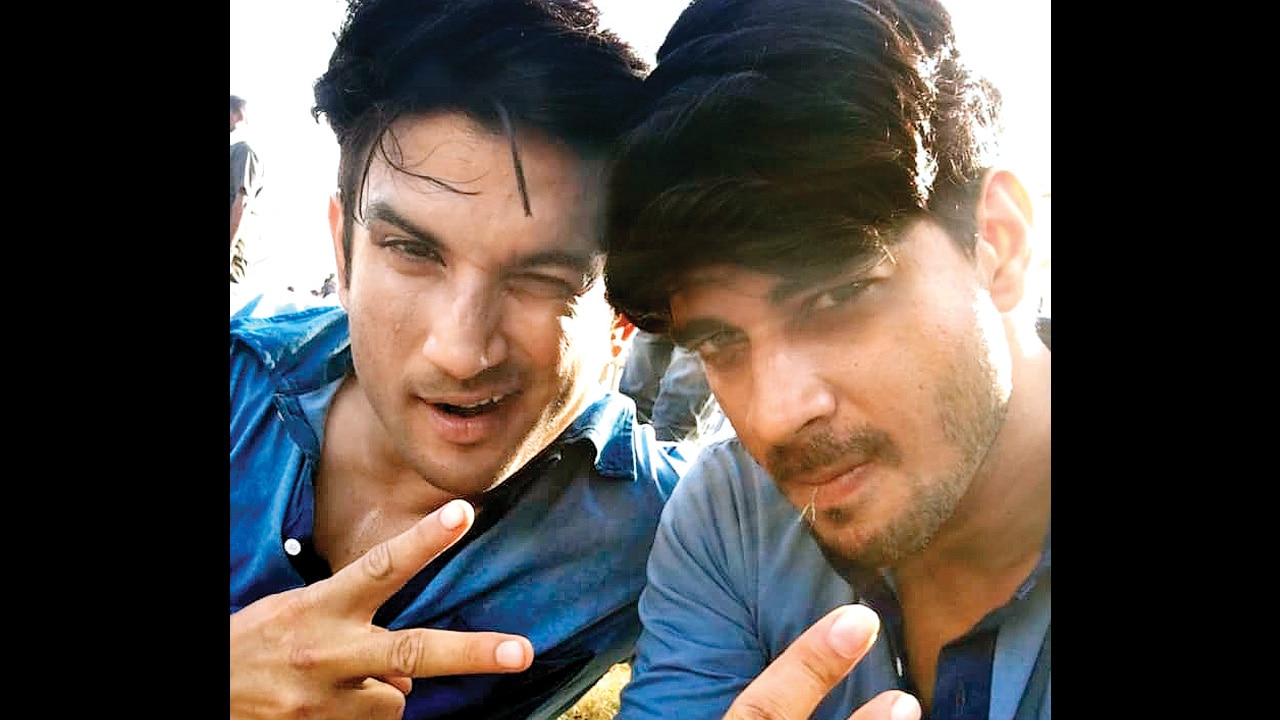
It’s like we had won the World Cup too-Kabir Khan
8:47 AM

Kabir Khan is ebullient as he wraps up a three-month shoot for his Ranveer Singh-starrer in London, bang on schedule
Himesh Mankad (MUMBAI MIRROR; September 2, 2019)
 On Sunday, Kabir Khan wrapped up a three-month schedule of his sports drama, ’83, in London, which features Ranveer Singh as then-skipper Kapil Dev who led Team India to its first cricket World Cup win in 1983. For the director and the team, it was an emotional moment as they had become close, like a family, during the shoot, and felt a sense of triumph after wrap-up, quite like the historic win. “It was like we had won the World Cup too,” Kabir laughs. “I knew ’83 was an ambitious film and we have achieved more than what we had planned.”
 The director, who is also producing the film with Sajid Nadiadwala, Madhu Mantena, Shibasish Sarkar and Vishnu Induri, goes on to add that since logistically it was a difficult shoot, he airdashed to London every month for a year to work with the local production crew to get the required permissions. “Securing permissions to film at some places, like inside Lord’s cricket ground, was not easy. This is the first unit that has ventured into the players’ locker room and the long room there,” he points out, saying since they were recreating a real event, there was a lot of detailing involved in terms of locations and replications. “We had to make half of London look like it did in ’83. Shooting at Lord’s on the last day was magical.”
The film kicked off in London on June 5 and a major chunk of the shoot coincided with the 2019 World Cup. While many matches were interrupted by rain, Kabir’s screen journey was hassle-free. “We have been blessed by the Gods of cricket. We got so much goodwill from legends like Sunil Gavaskar, Kapil Dev, Jimmy Amarnath, Balwinder Singh Sandhu and Clive Lloyd that even the rain god helped us out,” Kabir exults. “When we were shooting interiors, it would rain the entire day, but the minute we stepped out, it would stop. It’s rare and next to impossible for anybody to complete a big shoot in the UK on time. On paper, we were to end on September 1, and we are done,” he signs off on an ebullient note.
It's a crying shame, say Shyam Benegal and Sai Paranjpye after Doordarshan loses priceless footage
7:59 AM

A recorded discussion lost: Michelangelo Antonioni and Akira Kurosawa with Satyajit Ray during their visit to India in 1977
Stalwart filmmakers Shyam Benegal and Sai Paranjpye rue the rigid unaccountability of Doordarshan, which has resulted in the loss of priceless documentary footage, exclusive interviews and several serials
Khalid Mohamed (MUMBAI MIRROR; July 3, 2019)
Even as the hallowed Doordarshan has announced recruitment for 89 vacancies in its English news channel, beyond priceless footage has gone missing or has been cavalierly erased.
No official in the public service broadcaster initiated by the government of India on September 15, 1959, has an answer to the missing documentary footage, exclusive interviews and several of its commissioned TV serials.
 Filmmaker and writer Sai Paranjpye (left), who incidentally was among one of the first six women to be recruited as a producer at DD in New Delhi, states, “For years, I went blue in the face asking officials—senior and junior—to locate four of my programmes. I should have persisted for an answer. Admittedly, now I’ve become lackadaisical because of the who-cares! attitude about the disappearance of its treasure trove.”
Gone missing are Paranjpye’s documentaries on Captain Lakshmi Sahgal, revolutionary of the independence movement, on movie-hoarding painters including bytes from M F Husain, a human-interest story The Little Tea Shop on a feisty woman running a dhaba single-handedly on the Delhi-Agra highway, and a portrait of the revered composer and singer Pankaj Mullick.
According to a source in the capital, a 1980s documentary on the proposed statehood of Gorkhaland featuring the first teleinterview of the leader of the Gorkha National Liberation Front, Subhash Ghisingh, and the then West Bengal chief minister Jyoti Basu, is untraceable.
A programme on Tamil Nadu politics including an interview with Jayalalithaa after the passing away in 1987 of the state’s chief minister M G Ramachandran, is either inaccessible or has been binned.
The same fate has befallen the original video-tapes of the two-part documentary Footprints Across India on the global media baron Rupert Murdoch’s visit to India in the 1990s, as well as a bold account on the dacoits of the Chambal Valley.
These, in fact, form just a miniscule part of the missing DD footage. A majority of the official as well as independent producers and directors are no longer living. Most of the surviving filmmakers contacted shared the view, “Why re-open wounds? Over the decades, the various chiefs of Doordarshan have pinned the blame on their predecessors.”
Clearly, the lapse –unintentional or not-—is part of a larger issue of lost content in the history of broadcasting. Besides DD, the All-India Radio and Films Division, have remained rigidly unaccountable. From personal experience, I can recall that shortly after the imposition of the Emergency, the International Film Festival of India had hosted the legendary Akira Kurosawa, Michelangelo Antonioni and Elia Kazan. A round-table discussion between them and Satyajit Ray was recorded by columnist Amita Malik, simultaneously for DD and AIR. And it has been confirmed that those were erased since there was a shortage of recording tapes. A producer at DD is lored to have recorded another programme over the valuable interview.
Malik, during her lifetime, would often lament that her exclusive with the iconic actor Marlon Brando, interviewed during his UNICEF-sponsored visit to India circa 1967, was also wiped out.
There is no news either of the tapes of interviews with the legendary actors Jeanne Moreau from France and that of Vanessa Redgrave from Britain – in the course of their visits to the International Film Festival of India.
On the sports front, archived tapes of the tied 1987 Ahmedabad test between India and Pakistan are one among the many disappearing chronicles. The match was singularly important, showing Sunil Gavaskar as the first cricketer to cross the 10,000-run mark.
 On being quizzed about this, Gavaskar had described the incident as “unfortunate” adding that perhaps in the 1980s technology wasn’t as advanced, leading to the loss of an incalculable number of files, tapes and papers. “At least from now on, they should ensure that they archive stuff properly,” he had suggested.
In response, a Doordarshan official had stated that of late tapes are being digitised to ensure there is a back-up support in case a tape has to be re-used. Seemingly, earlier there wasn’t an option. In the absence of “proper guidelines, it was easy to overwrite a tape.” Easy? The word speaks for itself.
Filmmaker Shyam Benegal (left), who has consistently demanded the need for preservation of documented footage, states candidly, “It’s a crying shame really. Supposedly DD is required to hand over its material to the National Film Archive of India in Pune. How many have been handed over is a mystery. The archive is meant to store and preserve our national heritage of cinema and TV series. Clearly, the archive has never been looked after or given any priority.”
 Although some episodes of Benegal’s seminal series Bharat Ek Khoj (right) (1988)– based on Jawaharlal Nehru’s book Discovery of India --have been officially uploaded on YouTube, the original tapes shot on 35 mm gauge have disappeared. “The storage facilities at the archive are awful,” Benegal remarks. “I am clueless about how many of the 53 episodes are still surviving.”
His documentaries revolving around the subject of the various forms of music like rhythm and melody were given to the archive but are no longer accessible. Moreover, the auteur’s documentaries on the sarod maestro Ali Akbar Khan, and the sitar wizards Ravi Shankar and Abdul Halim Jaffer Khan, have either perished or are mouldering in the cans somewhere.
Any salvaging operations possible? To that, Benegal ripostes, “None that I can think of. Except to raise the consciousness that it’s never too late to start preserving filmed material.”
And he makes the point, that it’s not only the national film heritage which has been squandered over time. What about our books, which should have been looked after? Where have all the original parchments gone? We must have lost out, he contends, on at least a millennium of our literature.
To encapsulate the topic, Benegal has a one-liner. And that is, “Whatever token attempts have been made, they have amounted to zilch.”

Also gone missing is Sai Paranjpye’s documentary on Captain Lakshmi Sahgal (seen above with Subhash Chandra Bose), revolutionary of the independence movement
I look forward to meeting Sunil Gavaskar after my training-Tahir Raj Bhasin
8:19 AM

Tahir Bhasin on portraying the original Little Master for '83
Upala KBR (MID-DAY; February 14, 2019)
While director Kabir Khan could not envision anybody except Ranveer Singh as skipper Kapil Dev for '83, filling Sunil Gavaskar's shoes proved to be a challenge. Following rumours that Tahir Raj Bhasin was in talks for the project, the director confirmed to mid-day that the actor will be seen as the original Little Master on screen.
"The casting of Sunil Gavaskar was important since he was one of the superstars of the team. I needed an actor with a certain gravitas to portray the Little Master. Tahir had the persona for that," said Khan.
Bhasin, who was previously seen in Mardaani (2014), says it is "a massive responsibility" to portray one of the greatest batsmen in Test cricket history. "For now, I'm focusing on striking the ball with half the panache that Gavaskar did. I look forward to meeting him once we're settled in the training regime. We train three days a week, focusing on our stance and batting technique."
So far, Singh's men in blue include Ammy Virk as Balwinder Singh Sandhu, Saahil Khattar as Syed Kirmani, Jiiva as Krishnamachari Srikanth and Pankaj Tripathi as manager PR Man Singh.

Successes or failures actually don’t affect us in the same way that we imagine they would-Sushant Singh Rajput
8:24 AM

In an in- depth chat, held before a live audience at IFFI, Goa, the actor dives deep to reveal his fundas, on life and films
Mayank Shekar (MID-DAY; December 3, 2017)
AS we entered the Bioscope Village, a tent- pole cinema, temporarily created for the International Film Festival of India (IFFI) in Goa, the collective chants across the venue made it seem like we were at a political rally. If you heard closely, the audiences weren’t screaming, “Modi, Modi, Modi.” They were in fact yelling something sounding similar — “Dhoni, Dhoni, Dhoni” — looking at actor Sushant Singh Rajput, whose performance as India’s top cricketer M S Dhoni on screen, remains his best known work yet. Also the crowd, a lot of them kids, had returned from a show of Neeraj Pandey’s M S Dhoni - The Untold Story, held right before.
Rajput calmed the audience down a bit, repeating his favourite moment/line from the film, which is Dhoni’s mother telling herself that her son won’t be satisfied with little — he’ll always aim for more. That sort of set the tone for this interview, which appeared as much a psychologist’s take on life/films, as a motivational speech for the young. Excerpts from the conversation:
Here’s what you often confess in your conversations — that you’re an introvert, not much of a talker, suffer from stage fright (or at least did). Now, these are exactly the reasons why someone may not turn into an actor. In your case, you’ve mentioned, that was exactly why you did. What does that mean?
Genuinely, this is essentially the problem I have with the education system globally. We’re taught that there is one right, definite answer to a question. As a result, we are increasingly become good at thinking, and convincing ourselves, about the only one correct answer. Normally, what’s missing is the skill of asking questions. And that can come with the understanding of the fact that no matter how good or passionate you are about a job, you can create something new, only when you’re aware that you’re standing on an assumption. You have to question that assumption. If that question is engaging enough, you don’t think about results, or acknowledgements. Of course, you’ll like it if there is acknowledgement for your work. But that is not why you do it. Having a personal question, and moving in that direction, is important enough.
There is a thought I’d read once, which I didn’t understand then, is about how experts have the most informed answers. But they’re not experts at asking questions. The kids have the best questions. The pattern one notices about creative people, who do something new, is they’re a combination of someone who asks questions like a child, and attempts to answer employing the method of an expert.
Now to answer your question, we are all story-tellers, and we’re acting all the time. The issue I always had was over how I should pretend to not show what I’m feeling. This went on for many years. And then I learnt a little about acting. Since I had learnt some acting, then I thought I may as well become an actor, and earn from it. But that shyness, and the hunger to find a great way to tell a story, hasn’t left me yet.
You’ve in fact said that since you were shy, it seemed easier to hide behind other people, or characters.
Exactly. When you know you’re standing on assumptions, you don’t take yourself seriously. And when that happens, it becomes dramatically easier to play other people.
Your first brush with performance art was actually through dance; is that how you began to feel most comfortable, expressing yourself publicly?
Absolutely, I was never good at expressing myself. I would think something, but when I would say it, it would seem like there’s something amiss. And I didn’t think of it as an issue, because I was happy being a science student, studying engineering. Around the time I joined dance school, and when I was on stage, performing, I felt that I could actually communicate, even without words. I could see the audience getting affected by what I was doing on stage. That was a start for sure; and then I thought, let’s use the help of words also. I began doing theatre.
Let’s look at your journey: you were academically bright, worked with (theatre director) Barry John, moved from theatre, television, to films, and also moved from Delhi to Mumbai. That’s totally Shah Rukh Khan, isn’t it?
There’s also a line in Shah Rukh Khan’s film (Om Shanti Om), “Kabhi kisi cheez ko shiddat se chaho, toh saari kaynaat… (If you will it; it happens).” I was a little stupid, and so I took it rather seriously. But I can tell you one thing — that it works. Of course, we may all love the fame and the riches, but importantly, if something interests you a whole lot, it’s fine to aim for it, and dream big.
There’s a term in psychology that you quote often: Impact bias. By which you mean that when you actually achieve what you dream for, it doesn’t seem all that significant after all.
It’s a popular subject in behavioural economics, and it’s revolutionary, because it’s counter-intuitive to how we usually think. There was an experiment done with two groups. One had an extremely bright set of CEOs in their early 20s and 30s. The other group comprised people below the poverty line. Now the first group, for some reason, had become disabled — paraplegics. The second group had just won a million dollar lottery. There was a downward mental spike recorded in the case of the first group, and equally upward, in the second.
Now, I’m not talking about months or years, but after just 10 to 12 weeks, when the same two groups were tested, their mental spikes had stabilised to exactly the same levels already. This tells you something — successes or failures actually don’t affect us in the same way that we imagine they would. If you enjoy a process itself though, you get so good at the skill, that it automatically places you in the top percentile of people on the (happiness) index.
This ‘impact bias’ realisation, I’m told, happened to you once when you’d begun hanging out at malls. You’d become famous, thanks to television. You loved being recognised. Soon enough you stopped enjoying the attention. Is that true?
No, what I’m trying to say is that public acknowledgement is a good feeling, and one can’t be immune to it. But when we are actually at work — there is no one around, the pay cheque isn’t staring at you, neither is there fear or exhilaration at how people will perceive your work.
The work being good is all you care about. Sunil Gavaskar once said that if God gave him a super power, he would really want to get inside M S Dhoni’s head, and examine how and what he thinks. And Dhoni told me just this: As much as he loves this nation, and his team, when he’s actually there in the middle (in a match), he doesn’t think about those things. He can only see the ball. It’s the same in the Mahabharat, with Arjun only being able to see the fish’s eye.
Back to movies. Every few years, there’s often one film, quite out of the blue, that spawns a mini-industry of talents. Kundan Shah’s Jaane Bhi Do Yaaro (1983), with an almost all-new cast and crew (Sudhir Mishra as a young writer, Satish Kaushik as writer-actor, Vidhu Vinod Chopra as production controller) was one. Or Ram Gopal Varma’s Satya (1998, with Anurag Kashyap as writer, Saurabh Shukla as actor-writer, Vishal Bharadwaj as music composer, among others) was another. Of late, do you think Kai Po Che (2013) falls into that category? You debuted with it. Rajkumar Rao had his first big role in it. He’s had a great run. Amit Sadh’s popular, the film picked up top screenwriting awards…
Again, here I’d like to highlight that we have a tendency to sense a design, when something works out well. And I’m not just speaking about Kai Po Che. The same sense of design isn’t as strong, when we have to predict the future. Often, it happens, that we put together all the diggaj (veteran) talents with a great story to tell, and it doesn’t work out. There is a reason for that. When Rajkummar, Amit and I were working on Kai Po Che, with (director) Abhishek Kapoor, we were absolutely certain on what we must not do, given a strong understanding of the script. But none of us were sure on exactly what we must do, including the director, who was flexible enough to trust us, and let us be. It’s not that something great came out of every shot. We tried various ways. And this is important to understand — we derive security from prediction, which is evolutionary. But preparation is only essential to know what not to do. No one can be in control, when you’re creating something new — you have to cut yourself loose.
Looking ahead, now that you’re a star, what’s becoming far more essential for that job, unlike as much back in the day, is an incredible script sense. How are you honing that craft?
I just have to able to personally react to a script — without looking at other factors, like its possible resonance among the public, or its commercially viability. If there is something I want to understand about a character and I’m unable to, I know that would be engaging enough for me to spend five to six months on it. It’s like, when I was studying for engineering, I would get an hour and half of play- time. I would wait for that moment, and when I’d go out, I would be so engaged — that time would seemingly get over in five minutes! Now my instincts are very likely to go wrong. But this is absolutely the time to encourage failure, rather than success. To give you an example, according to research, 65 per cent of the school kids right now will eventually take up jobs that don’t currently exist. The disruptive technology to enable those jobs is yet to happen. We’re at the stage of deception, since we’re unaware. What can you teach those kids then? That it’s okay to fail, because the rate of change is such. Bearing that in mind, it’s important to stress on emotional intelligence, and lack of stress.
Don’t want to take names, still, if you do a film like Raabta, do you sense a disconnect between what was the script, and what became the film?
Absolutely, I’ve never done a play, TV show, or film, where what I’d thought in my head is exactly how it turned out to be — for better or worse. Because you have no idea the choices the director, the music composer, or the editor, will take. It’s too collaborative a process for anyone to know, no matter what our intentions, which are inevitably good. I’m absolutely fine with the idea of knowing that I’m wrong, nine out of ten times.
Speaking of the three media you’ve been part of, how important is the size of the screen for you as an actor anymore, given that theatrical footfalls are dropping, and the web is probably where the best of the world’s stories are being told?
There is in fact an even bigger thing on its way, on which I’d like to take a chance, while it’s foolish to predict. Let’s go back in time, for instance, and look at when the talkies came in, and all the actors (who were part of silent cinema) assumed nothing would happen. A whole lot did. The most important aspect of a visual medium is to create an illusion, and convince you, that what’s happening is for real. Along with visuals, sound took it to another level. But the one thing that’ll change everything, virtual reality (VR), is already here, and it’s not a small transition. Within five to six seconds in VR, you lose your objectivity on the fact that you’re viewing something.
You become part of an actual experience. This is going to disrupt cinema, like how! I’m not saying story-telling will die. But films, as we know them, will drastically change. Everyone should think about it.
Surely you’re looking at virtual reality closely, but your next big step apart from films, I’m told, is going back to theatre!
Well I’ve been planning a play for a year now. I have to look at too many small things on that front. Unless we are totally enjoying ourselves with every aspect, we won’t step out with it. When we learn acting — or think that we’re learning — we’re taught about the fourth wall, which can be a live audience, or a TV camera, or a film camera, depending on the medium. In every case, you’re taught to forget the fourth wall anyway. So the idea of theatre to TV to film, as natural progression or graduation, is wrong. It doesn’t matter.
Team India that helped us get 1983 World Cup meet, give film rights to Phantom Films
8:18 AM

Madhu Mantena, Anurag Kashyap and Co. have bagged the rights to a reel life recreation of India's first cricketing victory
Roshmila Bhattacharya (MUMBAI MIRROR; July 12, 2016)
 On Sunday, at a suburban
five-star hotel, a select group of cricketing heroes met to raise a
toast to one of India's biggest sporting victories. Kapil Dev opened a
bottle of bubbly as his team members cheered on, and it was encore for
India's 1983 World Cup-winning team.
 What happened next is the stuff
Bollywood fiction is made of. The champions of champions signed papers,
handing the rights to one of the country's and their biggest triumphs to
Madhu Mantena whose company, Phantom Films, will be recreating the
unforgettable journey on screen with a bevy of actors playing these
pin-up idols. After the Azhar, Dhoni and the Sachin biopics and
docu-drama, this is the next reel life biggie to take cricket into every
home.
 A quick recap... On June 25, 1983, the Indian XI, in their
first final of the World Cup, faced off with the defending champions
West Indies, who were expected to complete a hat-trick. The Lord's
Cricket Ground was bathed in sunshine and packed with 24,609 spectators
as Clive Lloyd, after winning the toss, invited Kapil Dev and his boys
to bat. Sunil Gavaskar was out in the third over for two, Roger Binny
also went for two and Kirti Azad for a duck.Only Mohinder Amarnath's
dogged 26 from 80 balls and Kris Srikkanth's fighting 38 from 57 offered
some resistance in the top order to the dreaded attack of Andy Roberts,
Malcolm
Marshall, Joel Garner, Michael Holding and Larry Gomes. The tail wagged a
bit with Madan Lal chipping in with 17, Syed Kirmani with 14 and
Balwinder Sandhu remaining not out with 11 but India were bowled out for
a paltry 183 in 54.4 overs.
Everyone thought the match was over till Amarnath and Madan Lal
exploited the weather and pitch conditions, taking three wickets each
to demolish the world's best batting line-up. The Windies were 76 for
six. Jeff Dujon (25) and
Malcolm Marshall (18) took their team to 119 before 'Man of the Match'
Amarnath dismissed both and the underdogs had ripped apart the
favourites for
140 in 52 overs to notch up a 43-run upset win.
One of the most memorable moments from the match was the sight of Kapil Dev running 18-20 yards to take a catch and dismiss Sir Vivian Richards for 33 from a mistimed hook. On Sunday, India's former captain was there to autograph a specially designed poster chronicling some picture perfect memories for him and the 'boys'.
“It was an emotional journey for all of them and emotions were running high as Srikanth burst into a song and Madan Lal, Kiri and Sandhu clicked selfies. This victory has all the ingredients of a Bollywood blockbuster and Madhu was all smiles as he contemplated the future. Gavaskar who was bringing in his 67th birthday, was missed but his former teammates cheered for the Little Master and it was Sunny days in the dark of the night,“ informs a guest from the bash.
The film is expected to roll towards the year-end or early next year and in the audience will be these evergreen heroes who did every Indian proud.

Kapil Dev glad that a film on 1983 Cricket World Cup final is being planned
9:29 AM

Renuka Vyavahare (BOMBAY TIMES; June 26, 2014)

 Thirty one years ago, on June 25 1983, India
won her first Cricket World Cup title. The image of captain Kapil Dev
holding the trophy high at the Lord's balcony is etched in the country's
collective memory. And now, a film is being made on this landmark
achievement, allowing the current generation to revisit the beginning of
India's dominance in world
cricket. Vishnu Vardhan Induri, Founder of Celebrity Cricket
League who is producing the movie, says, “It's bizarre that even three
decades after that historic victory, we haven't produced a single film
that captures the achievement. In many ways, that win was instrumental
in turning cricket into a religion in India. I believe it's a story that
needs to be told."
Sanjay Puran Singh, who won the National Award for his debut film Lahore, is helming the project. Induri adds, “We are in touch with the members of the 1983 team and they will lend us full support. The project will hit the floors in the first quarter of 2015."
Says Kapil, “Like most of my teammates, I am glad that a film is being made on our journey during the 1983 World Cup. It's heartening to see the trend of movies being made on sports, which I am sure will inspire the youth."
CCL president to make film on 1983 Cricket World Cup
8:22 AM

Roshmilla Bhattacharya (MUMBAI MIRROR; March 24, 2014)
One of the most memorable matches in the history of cricket will soon get an onscreen adaptation. Plans are afoot to immortalise the Kapil Dev-led Team India’s ICC World Cup victory over the mighty West Indies at Lord's Cricket Ground on 25 June 1983.
Refuting speculation that he is planning a film on Celebrity Cricket League (CCL), Vishnu Vardhan Induri, the founder and MD of the League, disclosed to Mirror: “The film will be the official biography of India's first big win that was instrumental in putting the country on the international map.”
The film is being planned on a lavish scale and will trace the journey of the 14 players who brought the Cup home, both on and off the field. To stay true to the facts, Vishnu is in regular talks with Dev and other members of the World Cup-winning team. “We want them to officially be on board and give their inputs on the script. I also want them to take part in the promotions. We will sign A-list actors to play Dev and Sunil Gavaskar.”
According to a source close to the development, the players, who started the tournament as underdogs and returned as champions, will be seen playing themselves on screen. However, Vishnu insists that 70 per cent of the actors from the CCL league will step into the shoes of these legends. “If the script, which should be locked in a couple of weeks, requires real cricketers, you will see them on screen. But, this is a big-budget commercial film along the lines of Bhaag Milkha Bhaag. So, it’s mostly going to be actors playing the cricketers,” he says.
The film will be helmed by Sanjay Puran Singh Chauhan, whose directorial debut, Lahore, won him a National Award.
------------------------
Bharati Dubey (MID-DAY; March 24, 2014)
Sanjay Puran Singh Chauhan of Lahore fame is all set to direct a film that revolves around the India’s victory at the 1983 World Cup.
Produced by Vishnu Vardhan Induri, the founder-president of Celebrity Cricket League, the film will tell the story of the Indian cricket team and how it won the tournament that was played in the UK 31 years ago.
It may be pointed here that Shimit Amin was also considered to direct this film.
Says a source, “One wonders why the producers chose Sanjay over Shimit. The producers seem to be more confident about Sanjay’s skills. They feel he will be able to devote time and energy towards a film of this nature.” A source close to the unit says, “The film’s script has been finalised and pre-production work has already begun. They plan to recreate the 1983 moments. The film will be a big project and the makers are leaving no stone unturned to do justice to the story.” It is learnt that the film would cost around Rs 50 crore.
An international casting agency will also be hired for the film.
The filmmaker now plans to meet the cricketers who played in the 1983 World Cup final in a bid to add to the film’s authenticity. The source says, “The film will be shot in those very stadiums where 1983 World Cup matches were played. The final will be shot at Lord’s cricket ground in London. It would be interesting to see on the big screen how Kapil Dev and his men, including Mohinder Amarnath, Krishnamachari Srikkanth and Balwinder Singh Sandhu, managed to win the tournament.”
Subscribe to:
Posts (Atom)