Showing posts with label Sumit Roy. Show all posts
Showing posts with label Sumit Roy. Show all posts
I will never make Kabhi Khushi Kabhie Gham 2-Karan Johar
8:35 AM

Sonal Kalra (HINDUSTAN TIMES; March 21, 2026)
Iconic — the adjective doesn’t just describe the body of work, but the man behind it as well. Filmmaker-host-actor Karan Johar, in a candid chat on The Right Angle with Sonal Kalra, talks about everything under the sun — his upcoming films and the underworld threat looming large over the film industry to the rumours around a possible comeback of a much-loved film. Excerpts
The biggest speculation right now is whether Kabhi Khushi Kabhie Gham 2 is on the cards. There’s also buzz around whether it has something to do with the Takht script being revised. Any comments?
There is no Kabhi Khushi Kabhie Gham 2 (K3G2), and there is no derivative of Takht being made. I’d never make a K3G2. I’m not saying K3G was the best film ever made, not at all. Every film has its flaws, but what K3G has in abundance is nostalgia. Generations have grown up watching that film — for what they’ve loved, what they haven’t, what they’ve cried about and laughed with. They love the movie, and I’m very grateful to the universe that I got to create a film that still lives on. I would never mess with that nostalgia or the love the film has, because you’re setting yourself up for disaster when you make a film like K3G2. So yes, the absolute truth is there is no K3G2.
About Takht...
There isn’t a revival of Takht right now on the cards. But that is a film I will definitely make while I can still breathe and stand on my feet.
I consider it to be the strongest screenplay that was developed, written by Sumit Roy. Full credit to him — he’s the writer of the film — and I believe it’s the best-written piece of work in my career. What I have been developing is something nobody’s actually talking about. Thank God for that. So in the garb of this rumour, in the garb of this K3G speculation, actually jo ho raha hai, jo main likh raha hoon, jo main banane wala hoon, uske baare mein koi baat nahi kar raha.
You have just returned from a vacation with your kids, Yash and Roohi. Who’s closer to how you were as a child?
Roohi. She’s a quieter, empathetic, hypersensitive child. She also follows parental instructions, which is what I did. I was a good kid. Yash is a little more of a brat, but he’s also very sensitive. They are good kids.
We’re hearing about you and Sidharth Malhotra coming together for a film. Is there something you want to share?
Sid has been a student (launched by me in Student Of The Year; 2012), and he’s also been very close to the film company. We consider him and Kiara (Advani) family to us. Sid and I have been chatting about the possibility of coming together for a strong film, but right now it’s all too soon.
What is it with you and these blind items that seem to take a liking to you?
I have no idea! Maybe I don’t have an interesting life, so this is what makes my life interesting. I always say: love me, hate me, just don’t be indifferent to me. And I’m glad that Reddit, blind items or speculation keep the interest in what I’m doing alive. That means I may have done something right in my life to have created this sense of curiosity around me. Many of those blind items, when I read them, I find hilarious. Some of them are quite close to the truth, and some are distant from reality... Many a time, I’m amused, but I no longer get upset or angry at either the trolling or the speculation.
It’s good to hear you say that, because like everyone else, you’ve also had moments where it’s affected you. Today, many in the fraternity face intense negativity. If you had to give one piece of advice to stay unaffected, what would it be?
Many celebrity friends have asked me, ‘Why are you so calm even in a crisis?’ Even when there was a lot of Bollywood bashing happening at one point, a very close friend, who is also a movie star, came over and said, ‘Is everything okay? Why are you so calm? You should be reacting’. My parents raised me to know that if something is completely untrue, and people don’t know the person you are, then what is the point of getting upset? I would be upset if what they were saying about me was actually true.
Recently, you said talent management is becoming a difficult profession to sustain. Having spent three decades in the industry and launched many careers, do you feel there is less gratitude among the younger generation today?
The younger generation, with social media, technology and constant noise around them, is very restless and anxious. So I think we’re dealing with an anxiety-ridden generation that wants validation of stardom very fast. I don’t blame them because they are judged daily. None of us, when we started off, were recipients of this level of judgment. The kind of scrutiny that exists today is traumatizing. It can take a toll on your mental health. So I don’t judge them for decisions they make in their life and career that I may or may not agree with. I get it. I hear them. I see what they’re going through.
If you ask me whether I want my children to enter this profession, I can’t give you a resounding yes, because I know how tough it is, even for insiders.
There’s also an anti-incumbency factor when it comes to staying with one agency for long…
It’s the way of the world, and you have to accept it. As a filmmaker, I don’t work with just one actor all the time. I want to try different artistes, stories and technicians. So if someone wants a fresh start or a different approach, that’s fine. Anyone who has left our agency, I will always wish them well and continue to work with them. Many have left and I still collaborate with them. I’m not a talent manager per se, it’s just one arm of my company. I’m a filmmaker first. If someone is right for my film, I won’t cast them based on which agency they belong to.
There’s also concern about recent threats in the industry. Do you feel those difficult times linked to the underworld could return?
It is very worrisome... My thoughts are with those facing it today. But I do believe we are in good hands. Authorities act immediately and provide security. Every time I’ve reached out in a difficult situation, my city and state have been very supportive. I’ve always felt protected here, and I believe we will continue to be.
What makes Karan Johar the most angry, and what makes you the saddest?
What makes me angry is people who are not on time. I have an aversion to lack of punctuality. What makes me sad… I’m an old-fashioned loyalist. I will always be grateful to Aditya Chopra (filmmaker), Shah Rukh Khan (actor) and Yash Raj Films for being my mentors and my beginning. I say with pride that I would wipe the floors of YRF and Red Chillies. I would do anything that was asked because I owe my entire being to them. I don’t know if that level of loyalty exists anymore. But I am grateful to those who remain loyal to me. That is the first quality I look for in a person.
Showtime creator Sumit Roy, Heroine director Madhur Bhandarkar talk about depicting inner workings of the industry
9:57 PM
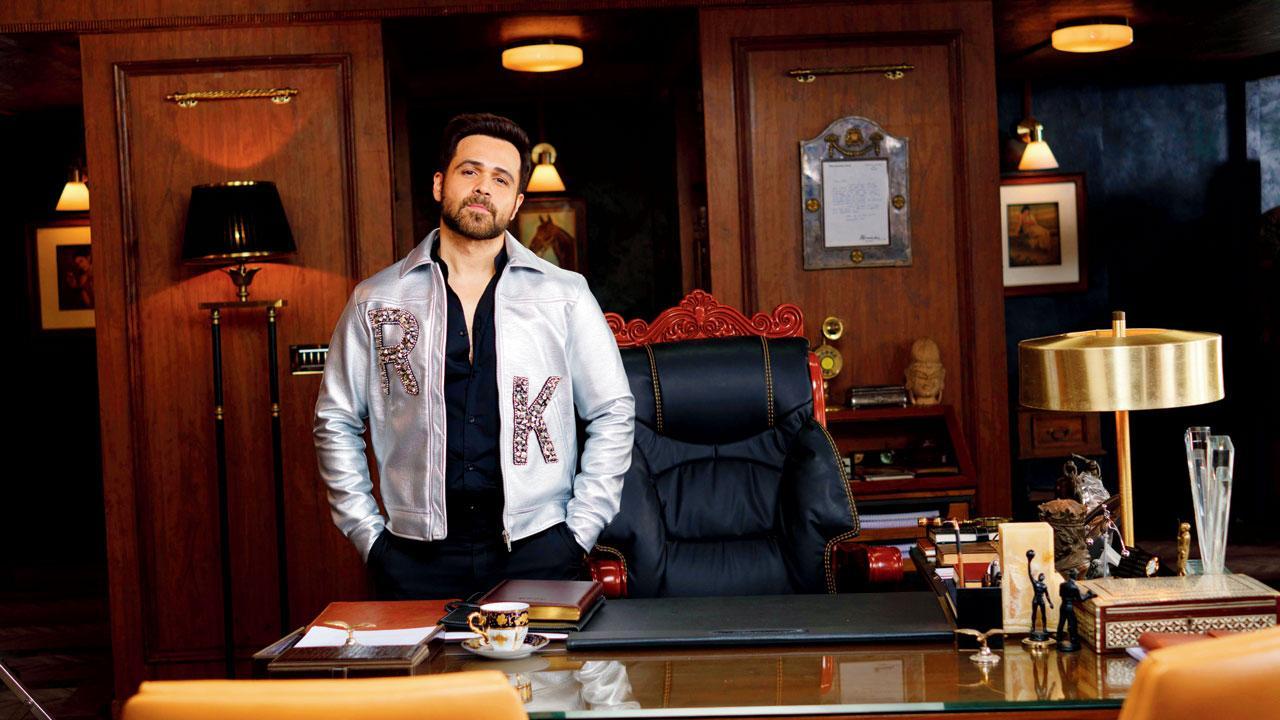
With Showtime set in the world of movies, creator-writer Roy and Heroine director Bhandarkar on what it takes to depict the inner workings of the industry
Letty Mariam Abraham (MID-DAY; March 5, 2024)
Movies about movies are a sub-genre unto themselves, each telling a distinct story. While Farah Khan gave a comedic touch to her directorial venture Om Shanti Om (2007), Heroine (2012) highlighted the ups and downs of stardom in a cut-throat industry; while Luck by Chance (2009) showcased the struggle of an outsider making it in showbiz, the series Call My Agent: Bollywood talked about the life of PR agents.
Disney+ Hotstar’s upcoming series, Showtime—featuring Emraan Hashmi, Rajeev Khandelwal, Naseeruddin Shah, Mouni Roy, and Mahima Makwana—is set to expose the inner workings of an industry that has often made people curious.
So, what does it take to tell an insider story about the industry? Access, one would say. However, to show all that goes on behind the tint of glamour, it takes much more—guts, the willingness to risk being in people’s bad books, the ability to get people to support your idea and a compelling narrative to get the audience hooked. The challenges of crafting such stories are as diverse as the films themselves.
Balancing authenticity with sensitivity
When Rajkumar Hirani tried to capture Sanjay Dutt’s life with Sanju (2018), it was created after months of long conversations with the superstar and the people around him. While the biopic, with Dutt at its centre, had the advantage of first-hand view, it also had the disadvantage of having a filtered perspective. The insider knowledge comes with the responsibility to portray the industry authentically while treading carefully to avoid stepping on toes. Striking that balance is paramount. Showtime writer-creator Sumit Roy says that a huge part of the writing process involved writers ruminating about their experiences in the film industry.
“A few years ago, there was a huge amount of misinformation about Bollywood, and I was aghast, as a member of the industry, at how people were saying and believing anything about it. When Showtime came to me, I thought it was a perfect opportunity to address the misconception that everything in the industry is bad. Bollywood is an artistic business and artistes tend to have huge egos. So much so that I feel there are some people in Bollywood whose body weight is like 90 per cent hot air and pompousness. They can be extremely sensitive sometimes about how they’re portrayed, how they’re spoken about. So, when we were about to start writing our show, which is going behind the scenes in Bollywood and spilling the beans, there were definitely concerns about how it will be received. But at the same time, I was clear that, the material has to come from a place of observation, a place of truth, [and must reflect] things that I have seen in the industry. Because in the last three-four years, Bollywood has been over-scrutinized,” says Roy.
He was certain that he didn’t want to get called out for giving an inauthentic take. “The intent of the show is to talk about larger themes within Bollywood—what it means to be an insider versus an outsider, or to be a woman in Bollywood, and also to talk about the tyranny of the superstar.”
He gives example of a scene in the series where Hashmi’s producer character is shown yelling at a superstar [played by Khandelwal], outside his house, for refusing a project. Roy says that this had actually happened between a superstar and a producer.
Fear of whitewashing
While authenticity is paramount, many times, filmmakers choose to avoid telling the whole truth so as to not aggravate the person involved. For instance, Hirani was criticized for whitewashing Dutt and going soft on the allegations of his connection with the criminal world. In sharp contrast, filmmaker Madhur Bhandarkar depicted the harsh side of showbiz with Heroine.
“When I made Chandni Bar [2001] or Traffic Signal [2007] or Corporate [2006], all the film industry people applauded me and were happy for my films’ success. However, when I decided to make Heroine, people were not thrilled. My movies are 70 per cent true and 30 per cent fiction, so people start drawing parallels and that can get tough sometimes. When the trailer of Heroine released, a lot of people got upset with me. This is the same film fraternity that appreciated my National Awards; they were all happy till the time it was not about them. People wondered how I’d expose my own fraternity. But I didn’t want to lose my integrity by sugarcoating things. My honesty is with the audience, not with the fraternity,” he says.
Industry politics
Behind the glitzy façade of Bollywood lies a complex mesh of power dynamics, rivalries, and groupism. Gaining access to insider information can be both a blessing and a curse. While it provides invaluable insights, it also means treading cautiously to avoid getting embroiled in industry politics or running the risk of offending many with the truth.
Bhandarkar shares, “That’s why I am an independent filmmaker. I am not part of any group, gang or circle. There is a pressure when it comes to the film fraternity because people think it’s uncomfortable because you are showing [the truth].”
While Roy is eagerly waiting for his March 8 release, there is also tension in the air. The creator-writer says, “The stars and filmmakers in the series are based on real-life stars and filmmakers. A lot of the plot points are anecdotes from our lives that we witnessed or knew of. After writing, one of the concerns was what would happen when we took it to Karan [Johar, producer]? I was a bit skeptical. But to his absolute credit, he was a complete champion. He immediately saw the intent of what we were going for. [I am not making this] because I have some axe to grind with someone. Lots of characters are amalgamations of different people, so they [audience] can have fun decoding. There are some worries about what will happen when the show eventually drops. Will people be offended? Maybe we should go underground for a couple of days.”
Emraan Hashmi will go the extra length if he is excited by the character. And that’s what he did on Showtime-Sumit Roy
10:42 PM
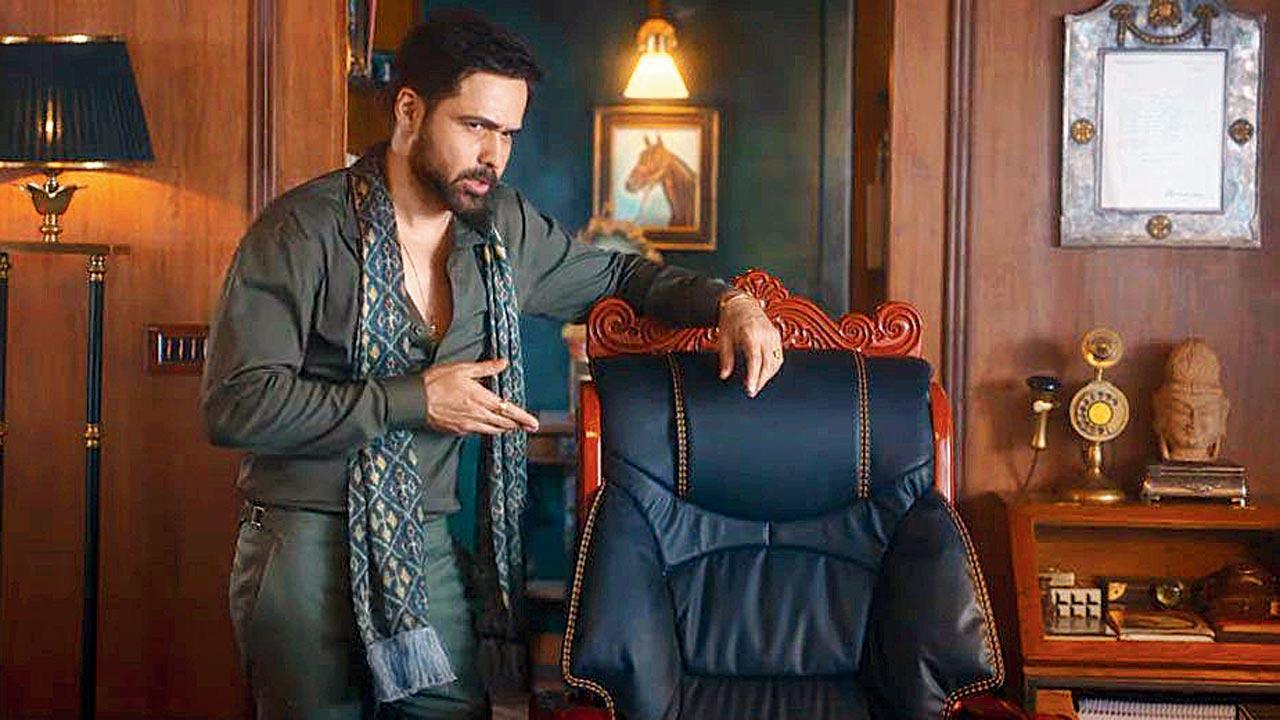
Creator Roy discusses collaborating with Emraan and KJo for Showtime
Priyanka Sharma (MID-DAY; February 29, 2024)
Collaborations often are fodder for innovation and excellence. For creator Sumit Roy, the making of the Disney+ Hotstar series, Showtime, proved to be a testimony to this fact. The series sheds light on the behind the scene functioning of the film industry, the power tussle between insiders and outsiders and volatile nature of fame. Featuring in Showtime—produced by Karan Johar—are Emraan Hashmi, Naseeruddin Shah, Rajeev Khandelwal, and Mouni Roy, among others.
Roy shares that multiple discussions with his fellow writers about their own experiences in the industry gave birth to the primary characters, including producer Raghu Khanna, played by Hashmi. “Raghu is an arrogant producer. He is a prick and a bas#$@*. He is successful and a force of nature. And has a street vibe about it. [Luckily], Emraan also loved the script and was onboard,” explains Roy, adding that the character’s fearlessness matched that of Hashmi’s.
“This role requires a certain fearlessness because there’s a lot of grey and darkness in him. We wanted someone who has a certain swag and star credibility but is not afraid of delving into the darkness of the character and retrieving something that makes other people uncomfortable. Emraan just went for it without fear.”
Roy claims that it was while watching Hashmi in Shanghai (2013) that he first felt the impact of the actor’s versatility. Although he detests the word, he says that Hashmi is “an underrated actor”. “At the current stage of his career, Emraan is fearless. He will go the extra length if he is excited by the character. And that’s what he did on Showtime.”
It marks his third collaboration with Johar, following his work on the latter’s directorial Rocky Aur Rani Kii Prem Kahaani and Gehraiyaan (2022). Crediting Johar for his support and giving him free rein, Roy says, “He is a man who can take a joke on himself. He wants to know how things are changing and wants to surround himself with people who push him. Which is why he manages to reinvent himself and stays relevant.”
Roy was surprised when Johar took an interest in him and conversed for over an hour at their first encounter a few years ago. “I wondered why he would be interested in my work because I had only known his public persona. But when I went to meet him, which resulted in writing Takht for him, he spent one hour just talking about me,” he recalls.
Kudos to the audience, they are making everyone in Indian cinema pull up their socks-Karan Johar
8:44 AM

Madhureeta Mukherjee (BOMBAY TIMES; May 25, 2019)
Yes, he’s known for all the glossy, glam, snazzy and stylish stuff we see on screen, but that’s only one aspect of his cinema. As Karan Johar rightly says, “I am a victim of my own image.” As a filmmaker, in the last few years, he’s backed some interesting movies like Kapoor & Sons (Since 1921), Raazi, Kesari and there’s more coming up from his platter — from biopics, a horror thriller to a fantasy film, and a historical drama. Today, as he turns another year older (and is bringing in his birthday in his favourite New York City), he tells us about his learnings over the past two decades, and how the world in and around cinema has grown and changed. And undoubtedly, he’s moved with the times, too, because in his own words, “being relevant is my mainstay.” This talkathon goes on long after the coffee is over, so let’s get started...
 Last year, your production house had a great run with Raazi and Simmba. 2019 started with a film like Kesari, which grew from strength to strength. It was a war film, unlike anything that your production house has ever backed...
It was a challenge to put Kesari out there with the right dose of action, emotion and tell it the way it deserved to be told. It was such a brave narrative, and the one and only choice for the film was Akshay Kumar. There was nobody else who could play the protagonist with that kind of conviction. When the director, Anurag Singh, narrated the story to us, it gave us gooseflesh. We didn’t know what the outcome would be, as this was a new space for Dharma Productions; this was our first war film. Kesari is what it is, because of the passion and conviction of two men, Anurag Singh and Akshay Kumar.
For the longest time, you were known for making certain kinds of films, like romances, family dramas and stories in that zone. However, there has been a turn with the variety of projects that you are dabbling with now, with films like Raazi (2018), Kesari, Brahmastra, Takht…
I am a victim of my own image, in a way. I have produced a series of films which are against the grain of what people perceive Dharma Productions, my production house, to be, whether it is Kapoor & Sons (Since 1921), Raazi or Kesari. We have tried to break ground, and we have dealt with subjects ranging from infidelity and homosexuality to patriotism. We have covered the landscape in terms of genres in movies and yet, I am asked, ‘Oh, you make candy-floss films?’ I have decided to remain silent, because no matter what I do, the baggage of what I have done will never stop coming in the way of people’s perception of me. I know that I represent a certain kind of image, and I will always bear the brunt of that, no matter what I produce or direct.
This year we have an interesting line-up of releases with Good News (Akshay Kumar–Kareena Kapoor Khan), the untitled horror thriller (with Vicky Kaushal). Films like the Gunjan Saxena biopic (Janhvi Kapoor), the biopic on Captain Vikram Batra (Sidharth Malhotra), Brahmastra (Ranbir Kapoor-Alia Bhatt) and Sooryavanshi (Akshay Kumar-Katrina Kaif) are all work in progress and will see a 2020 release.
Is there a strategic plan in place to bring such movies to the table, which, as you said, covers the landscape of genres?
We want to tell stories that we strongly believe in. There are stories that will go right, and stories that will go wrong. I am not chasing stories where I want good-looking people in good-looking places. It’s not a strategic decision; instead, it is an organic decision that comes as a result of our love for cinema. I feel that there is a certain order of our times that has changed. Today, we are in a very high-content zone, if we do something that is been-there-done-that, it will not do great business. Kudos to the audience, they are making everyone in Indian cinema pull up their socks.
It is getting tougher to get large volumes of audience to the theatre. Today, the moviegoers want far more value for their buck and filmmakers can’t rely on a stars’ fandom anymore. Would you agree?
We are in the toughest space now, films don’t open anymore. If the audience likes the film, over time, it grows. Gone are those bumper opening days, where the audience would stand in a queue to buy tickets. It is a thing of the past. The south film industry still has a loyal fan base, we don’t. And that is because we have treated our fans so badly with the content that we have dished out, that we don’t deserve their love anymore. We have to win their love all over again. So now, what makes a difference to the film’s success are these three words — ‘word of mouth’. That has become the biggest marketing tool. We can dance at malls, we can run around town with the cast of our movie as much as we want to, but eventually, word of mouth is what could take your film towards the victory line. Today, only two kinds of films work — high concept or big event. If the big event goes right, like it did with Baahubali, then nothing like it! By high concept, I mean a film like Badhaai Ho. So, you need to have either one of those, whatever lies in between…no one is interested in that. There was a time when people would say, ‘Oh, some films are critic-proof.’ There is also nothing like that anymore.
 Yes, everyone has an opinion on movies, and it’s out there, on chat groups, posts on social media, it’s everywhere…
(Cuts in) On the morning that your film releases, you have thousands of websites writing about your film, and everyone is a critic. Films are sparking so much conversation. On the day my film hits the theatres, from my building’s security man, my school friends, relatives, neighbours…everyone is texting and giving their opinion. And I am thinking to myself, I haven’t even asked you? (laughs!). Maybe that’s great, as the universe is throwing it at our faces, and telling us, ‘Listen, if you are putting something out there, you better make it good. Or don’t make it at all’.
With Takht, you are back in the director’s seat after three years. And it’s a film rooted in history and set in the Mughal era, a subject that we have never seen you associate with...
It is a lesser known fact that I am obsessed with history. Through my college years, I read a lot about history, and the Mughal era has always fascinated me, as it was such a majestic and menacing period. I have read several books on it and so many interpretations of it. I was always keen on making a film set in this period, and when Sumit Roy, who is a historian and the screenplay writer of the film, came up with a beautiful narrative embedded in this era, I was drawn towards it. This is the first film where I haven’t written a single line of the screenplay, which many might believe is a good thing, but I am okay with it. Hopefully, I won’t be criticised about making another film about rich people, because we can’t deny that the Mughals were rich at the time they ruled, and I can’t change history (laughs!). At its core, it’s a strong, emotional family story. The film will go on the floors by the end of the year, and I hope that I can bring such a strong narrative to life through the movie.
A few years ago, in an interview, you had told us, “I think the biggest reason why most directors take so much time to make their movies is their fear of failure. We are so nervous about holding on and maintaining our equity. I am very afraid of failure. I feel more accountable than upset.” With time, would you say your fears have lessened? Have you become more comfortable about taking risks and braver about your choices?
I have stopped fearing failure. I try to accept it, embrace it and make it my biggest teacher. Every time I succeed, I feel relieved, but every time I fail, I feel more energised. I have a new spring in my step. We all know that Kalank didn’t work, and post that I analysed it. We all felt that the film was special. Yes, we know that it was not accepted by the audience, but it does not take away from the fact that we have learnt from it. We sat down and spoke about it and said… ‘Okay, maybe there is a reason that this has happened’. Sometimes, you can’t find the reason for your success, but there is always a reason for failure.
Has this come with experience, age and maturity? Would you have dealt with the failure of a film the same way ten years ago?
Yes, I guess experience does make a difference. Post Kalank, I felt that I was standing tall as the leader of that pack and trying to control the energies of everyone. You have to stand tall with your team in times of failure, though it is harder. If you are leading the team, your energy is most critical. You can’t start falling apart and appear shaken up. You have to say…Let’s grow from here, and let’s emerge stronger. That’s what we all did together. When I made Kabhi Alvida Naa Kehna (KANK), it was met with such polarised responses. I made KANK after the success of Kabhi Khushi Kabhie Gham. I was much younger then, and I felt slightly invincible. When your film is not loved universally by the audience, it is not easy to deal with it. Now, after so many years, I have people coming up to me and telling me what they liked about the film, and how they didn’t like it when they saw it back then.
Sometimes, films live on. They don’t possibly make the cut commercially at that point of time for various reasons, but if a film is strong, it will live on. Box office numbers are a tag, but films are forever. We cannot remember films just for its BO tag, we have to remember films for what they create. If you have forgotten a film after two decades, then it probably wasn’t worthy of being remembered. A film has to rise above its BO status. Look, films are a tough business. We are the only industry which is judged on the same day by the whole world. Everyone, including your friends, family, neighbours and peer know your success or failure. It is exhausting at the end of it and that’s why so many people in the industry can fall off the edge. But you got to keep your chin up and move on.
A few years ago, you had said that as you were growing older, you felt the need to direct more films. But now, your quantity of work, as a producer is more...
I made the choice to turn my production house into an active studio. Yes, it could be at the cost of me not directing as many films. I have made eight films, but if I directed a film every two years, and along with that, just did some reality shows, I’d be a richer man. I chose the other path, as it was my way to contribute more to cinema. You can judge my cinema, you can hate me, you can love me, but I think I have earned the privilege…that the one thing you will not be is, indifferent to me. I think not being indifferent is being relevant and being relevant is my mainstay.

Takht has a beautiful mix of stars and actors-Karan Johar
8:24 AM

Nayandeep Rakshit (DNA; November 10, 2018)
Karan Johar has managed a casting coup of sorts for his ambitious project, Takht. The historical drama, which goes on floors next August, stars Ranveer Singh, Kareena Kapoor Khan, Alia Bhatt, Anil Kapoor, Vicky Kaushal, Bhumi Pednekar and Janhvi Kapoor. Ask the maverick filmmaker what appealed to him about the subject and he says, “I’m obsessed with the Mughal era. As a child, history was my favourite subject. I know many who would look at me with scornful eyes, but it’s the truth. I love reading books and studying what historians had to say about the period. There’s one segment in the entire dynasty that captured my attention and Takht is based on that.” Karan is happy with the eclectic line-up of actors for the period venture. He says, “There were some challenges over the casting, but we overcame that. I’m thrilled with the ensemble that I have in place for Takht. It’s my first with many of the cast members, besides Kareena and Alia. It has a beautiful mix of stars and actors.”
‘Ranveer has great energy’
This is KJo’s first association with Ranveer. He mentions, “Ranveer has great energy. Over a period of time, we have become the best of friends and we can share almost everything now. I’m excited to work with him because not only is he one of the finest actors that we have in this generation, but he also adds a mad, positive vibe to anything he does and I just love that.”
‘Bebo is my favourite’
Takht also reunites the filmmaker with his ‘best friend’ Kareena, whom he had last directed in Kabhi Khushi Kabhie Gham (2001). “I’m equally excited about working with Bebo after so long. She is my favourite. We’re just a phone call away for each other. I can’t think of anyone else for the character that Kareena plays in the historical. I’m sure the audience will feel the same when they watch the movie,” he asserts.
‘Takht is my most ambitious film’
The multi-faceted personality calls this his ‘most ambitious film.’ He states that helming this period drama is a challenge for him as he hasn’t written it. “This is the first time I haven’t penned a movie that I’m directing. It’s been written by Sumit Roy and Hussain Haidri has done the dialogues. That sense of detachment will make it exciting for me. Also, I have never felt more passionate about a single project than Takht. It makes me feel like I’m 20 again,” he exclaims.
Subscribe to:
Posts (Atom)