Showing posts with label Sujeeth. Show all posts
Showing posts with label Sujeeth. Show all posts
In Bollywood, we play it too safe. I think we should change that-Emraan Hashmi
10:05 AM

Onkar Kulkarni (BOMBAY TIMES; February 13, 2024)
Bollywood’s OG serial kisser boy has evolved. It has taken him time to break out of the box, but he did. In recent years, he’s been seen experimenting with a range of roles, including two-film hero projects like Selfiee and Tiger 3. The latter where he played the anti-hero brought him back into the spotlight. Emraan talks to us about why he doesn’t want to be slotted as a villain, his foray into south films and more.
‘Earlier, my idea of a villain was that he will only be painted as this dark character’
Talking about the switch in his career, Emraan says, “People wouldn’t have thought of me featuring me in a Salman Khan or Akshay Kumar starrer. They are two different worlds and when they collide, there’s something that sparks off. I think Once Upon A Time In Mumbaai would be one of my first films in that space. It took a lot of convincing on Milan’s (Luthria, director) part to get me to do that part. I was reluctant because I was playing just the main leads until then. Earlier, my idea of a villain was that he will only be painted as this dark character. But in that film, I played the anti-hero. The same goes with my role in Tiger 3. He is the hero of his own narrative. I wouldn’t like to play a one-toned villain in a film. I am grateful to filmmakers to have realized that and experimented with that. I just go with the flow, and I don’t yearn to do films in a certain genre.”
‘I don’t want to get slotted as a villain’
He enjoys playing the antagonist in films, but he doesn’t want to do that repeatedly. He elaborates, “I have done few antagonist roles. I don’t want to get slotted in villainous roles. Yes, it is an interesting time to experiment. People are liking the larger-than-life experience in films where two titans are taking on each other.”
‘There was a deliberate effort to try something different’
When he had started out, Emraan was known for a certain kind of cinema – intimate and bold. He was trapped in the image for years before he finally broke away from it. Ask him what’s his hook as an actor today and he says, “I think that finding a groove is dangerous because that could put you in a box again. I hated the fact that I was boxed into certain kind of roles for almost 15 years. There was a deliberate effort to get out of that box and try something different because I wasn’t growing as an actor. I was sleepwalking on every set. That is when I took up films like Shanghai and Once Upon A Time In Mumbaai. It’s actually a huge trap. A lot of actors from the West also probably bail out from doing characters like Bond, because you gradually get boxed in sometimes. They say it is detrimental to your career because people can’t see you as anything else when you come out of that.”
‘I never imagined myself getting into the south film industry’
Between all the leaps he has been taking as an actor, the biggest plunge is venturing into a pan-India south project. Talking about the film, where he features with Telugu star Pawan Kalyan, he says, “I never imagined myself getting into the south film industry. But it was a fantastic script and a great character. Sujeeth is a great director and is making this film on an enormous canvas.”
‘We have a lot to learn from the way south films are made’
Ask him how different it is working in the south film industry, and he says, “I think south filmmakers are way more disciplined than we are (in Hindi cinema). Every penny that they spend on their film shows on screen. I think we often spend money in the wrong areas in Hindi films, and it doesn’t eventually translate on screen. They have finesse in their films when it comes to VFX, the scale and choice of path-breaking stories. We have some ground to cover before we can match that and we have a lot to learn from the way they make films.”
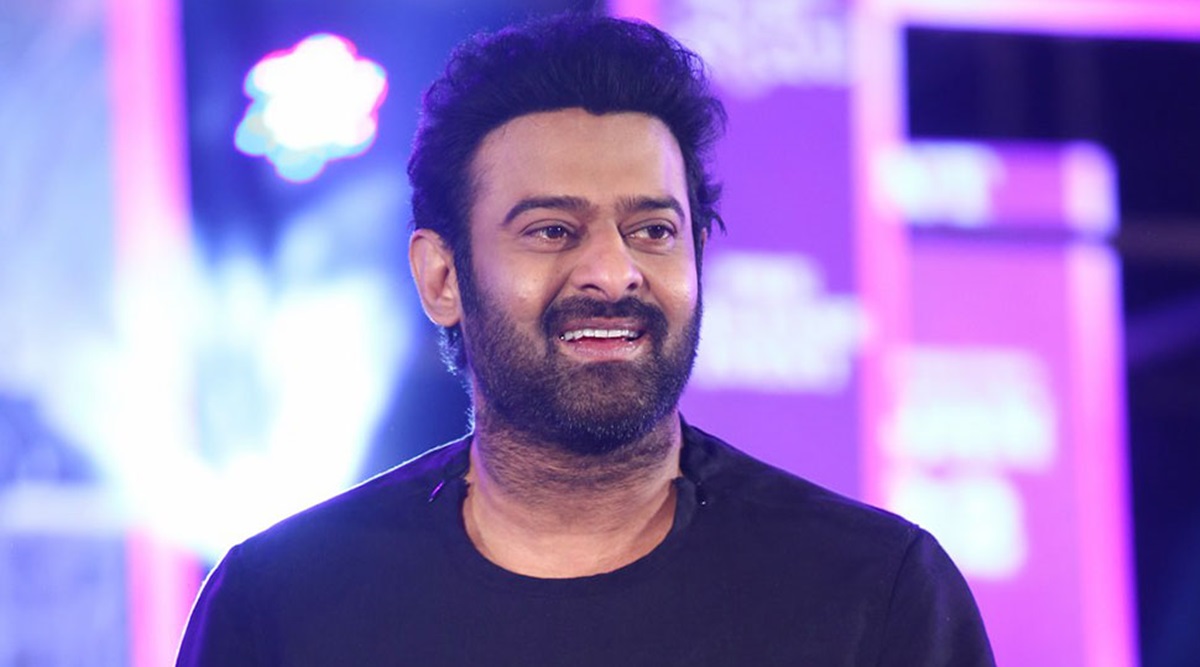
The audience wants to see me as Baahubali, and they want that image every time-Prabhas
8:42 AM
Madhureeta Mukherjee (BOMBAY TIMES; March 10, 2022)
In our cinema-crazy country, we have hugely popular actors, superstars and pan-India actors. Prabhas is one such combo, a mighty one. Baahubali broke the barriers (literally, too), in the mindsets of various filmmakers and film industries in India. And redefined Prabhas’ career as a pan-India star. The actor who was in Mumbai to promote his upcoming period romantic drama, the multilingual Radhe Shyam, in a conversation with us, spoke volumes (believe it or not!) about how tough it is to make a pan-India film, how we all are in experimentation mode, and that when it comes to movies — India is unstoppable now. Blending in with the spirit of Mumbai, the chat summed up with a cutting chai and vada pav. Get the mood? Read on…
You have another period drama pitched on a lavish canvas coming up, Radhe Shyam. Post Baahubali, you have won national recognition and fame, but with that, the stakes are now also higher with every film. How does living up to the constant pressure and hype feel?
The point is, I don’t want to do only big films. With Radhe Shyam, we initially thought that we could make it in 100-150 crores, but the producers didn’t want to compromise. We went to Georgia, where the schedule was planned for 40-50 days, but we had to wrap up in 12 days. In Italy, we had another 10-15 days of shoot, again we had to cancel that and create the set in India. Even in Hyderabad, we had to cancel many schedules because of the Coronavirus situation. We did the best that we could in the given circumstances. I am planning some comedy films, too, so yes, I don’t always want to do films on such a big scale.
But, more often than not, would you say that you get offered these mega projects. The makers and the audience now envision you in a certain way. As an artiste, is that a tad problematic?
That is a problem. The audience wants to see Prabhas as Baahubali, and they want that image every time. For me, it is not always exciting. Yes, of course, I enjoy doing it when I take on a project, as we grew up watching films like Superman, Spider-Man and we will continue to make and watch such big films and superheroes on screen, and I will too. But at the same time, I also want to do smaller films. I want to do something different in terms of storytelling and entertaining the audience, and I am planning that. Radhe Shyam is a big-budget film, but my character Vikram Aditya is not a superhero, he is powerful when it comes to his profession.
Radhe Shyam directed by Radha Krishna Kumar is your first multilingual (Tamil, Telugu, Kannada, Malayalam and Hindi) love story, does that make you nervous?
For me, doing a love story was so exciting. I have done it in Telugu, but the Tamil and Malayalam audience hasn’t seen it. This is my first multilingual love story, so I am a little stressed. The way we have shown vintage Europe, it has rarely been seen in Indian films, and I am keen to know how it will be received by the audience.
The concept of a pan-India film was known and used in cinematic parlance earlier, but the huge success of Baahubali only popularised it further. And now, we hear the term being used a lot by actors from South film industries, who are already pan-India stars or on their way to becoming one. Would you say, in this regard, Baahubali was a turning point for Indian cinema, and since then, there has been no looking back?
I think that is the way it should be. Films like Mughal-E-Azam, Sholay, Dilwale Dulhania Le Jayenge or Mayabazar (Telugu and Tamil epic fantasy film), among other landmark films in different languages, were seen by audiences across. I think our films should be categorised first as an Indian film, instead of being identified language-wise. You could say that in recent times, Baahubali became that starting point, but I think we had reached a phase where it was bound to happen. All of us are evolving, with that our films are evolving, too. The fact is that, right now, we are all still in an experimental stage, and filmmakers across the country are experimenting with their cinema. It doesn’t mean that they are thinking of big-budget films. They are looking at stories with big ideas.
For filmmakers and actors, it must be quite tricky to understand the pulse of the audience when making a pan-India film. In different parts of our country, we are used to watching a certain kind of cinema and the sensibilities also vary. So, telling a story that satiates the entertainment palate of viewers across India, seems like a mammoth task.
Yes! Baahubali: The Beginning was an experiment, with Baahubali 2: The Conclusion we were luckier as we knew that the audience was waiting for it. Again, Saaho was an action thriller, and it was only Sujeeth’s (director) second project. We were wondering…will people watch it? It was made on such a huge scale. So, everyone has questions on what is right. The problem is that we don’t exactly have a reference point — like what will the Bengal audience think, how will the audience in Punjab react? We don’t know, and we don’t have the answers. Hence, I said that we are all experimenting in this space. It is tough to understand which script will connect with the pan-India audience. Like, in the Telugu market Saaho did very well, but not as well in the Tamil market. The Hindi audience liked it more than the Telugu speaking audience. So, it’s interesting. Everyone is in research mode. Even when you are talking about Bollywood movies, if you grew up in Mumbai, your taste might be different from someone else living outside of the city, but consuming Hindi films. So, imagine appealing to audiences across a country as big and diverse as ours — is a really challenging task. The stakes are also higher. If you make Baahubali in 100 crores, it would be safer. But if it is made in 440 crores, the gamble is higher, but then we get a film like what we saw. Rajamouli and I had doubts regarding which audience is going to watch the film.
Stars down South have a massive fan following, however, pan-India stardom at some level also involves finding an audience in Bollywood cinema? Do you agree?
India’s biggest film industry is Bollywood. So, if you say pan-India film or pan-India actor, Bollywood is a big part of it, and you can’t ignore it or deny that. You can’t just do Tamil and Telugu films if you are a pan-India actor.
We are also seeing a huge number of actors from Bollywood, more than ever before, doing big projects down South. What do you think is drawing them southwards — subjects, filmmakers or the possibility of massive collections are garnering?
Now filmmakers want to reach audiences across, and the audience wants to watch all kinds of cinema. In the South, our markets are small, but yes, we make commercial movies, which become big hits. Tamil and Telugu markets combined could be bigger than Bollywood. But my point is, if we want to make the biggest cinema, and we want to reach our fans globally, why can’t our cinema and actors reach a wider audience across our own country first. I feel it is already too late, this should have happened long ago.
So, what you are saying is that we should head towards a direction where most films will be multilingual, instead of being just in Hindi, Telugu, Tamil, etc. And eventually, actors won’t be region-specific?
Many films are going to go that way in the future. We should be seen as one big film industry from India. Our cinema needs to reach every other place in the world, and that is the fight. Maybe we can make a film like The Lord Of The Rings, or Ben-Hur, but we need to have money for that, and we need all our audience which is such a huge population to watch it. Like films from China have reached Hollywood, then why not us? Why are we still saying Tamil, Telugu, Hindi? Why? Our journey towards that has started, and that is the exciting part.
On that note, working in Hindi films has been a new process for you. Given your reserved personality, did it take time to feel at home here?
During the first Baahubali, it was very stressful for me. For Telugu films, in 14 years, I had never given as many interviews in my life as I gave for Baahubali 1. I told Rana (Daggubati) and Tamannaah (Bhatia) to talk to the media so that I could take a backseat. I had never experienced 40 people sitting in front of me and asking questions. Till that time, I wasn’t even comfortable with the Telugu press (laughs!). I talk a lot when I get comfortable. I have a problem with starting a conversation. The media here has been really sweet, and now I am far more comfortable, as you can see.
In real-life, are you a romantic at heart?
Maybe I am, else I wouldn’t have done a film like Radhe Shyam (smiles!).
Every action scene in Saaho was curated by a different team
8:36 AM

Director Sujeeth talks about the thrilling aspects of putting together the Prabhas-Shraddha Kapoor starrer that opens this Friday
Rachana Dubey (BOMBAY TIMES; August 28, 2019)
 Anyone who has seen the trailer and songs of Saaho, starring Prabhas and Shraddha Kapoor, would know that the trilingual film is high on slick action scenes, filmed both in India and abroad. What not many would know is that every set of stunt sequences was shot by a different team of action choreographers. A heady mix of top-notch international names were brought on board to ensure that the film offers an edge-of-the-seat experience to the cinegoers.
 Given that Saaho took two years in the making, it would be interesting to learn what went into crafting its action sequences. Director Sujeeth told BT, “We had hired four different concepts and each one took us hours of creative discussion with the action directors and the direction team. We chose one form of action for every sequence, which required a lot of prep, actortraining and rehearsals.”
When asked why the team chose to have different stunt teams and directors, escalating the budget of the film, Sujeeth replied, “The script demanded different kinds of action sequences for different episodes. For example, Kenny Bates was approached, as he is a tried-and-tested name in action involving cars, bikes and chase sequences. When it comes to gunfights, we preferred Bob Brown. Likewise, when the scene required Prabhas to be involved in a fistfight, we had to hire Peng Zhang, as he is good in Chinese martial arts. Moreover, we wanted to add a comic flavour to the fight and Peng Zhang was the right choice as he usually collaborates with Jackie Chan. Considering that we also like masala action, we roped in Dhilip Subbarayan, Ram Lakshman and Stunt Silva to add the required desi touch.”
For a crucial action scene in the film, the stunt team locked down a highway in Abu Dhabi for a few days. The sequence is believed to be one of the highlights of the action-thriller. Elaborating on it, Sujeeth said, “This particular chase sequence, which the audience had a glimpse of in the trailer, comes in the pre-climax part of the movie and is an integral part of the narrative. So, the whole team was of the opinion that it should be a high-octane one. We used 70 specially designed cars and three huge custom-made trailer trucks. The bike used by Prabhas was also specially designed and imported from the US — it has safety gear and upgraded horsepower as a special requirement given to us by Kenny Bates. To shoot such an enormous sequence, we required a huge stretch of the road, and we zeroed in on a couple of roads in Abu Dhabi to get the whole act right. The government of Abu Dhabi supported us by cordoning off the road for our shoot.”

----------------------------
We did more than 100 set-ups-Sabu Cyril
While Saaho thrives on action scenes, it also employs a great deal of set-designing, which is another highlight of the film. For instance, the villain’s den shown reflects a crooked, evil mind. Talking about it, production designer Sabu Cyril told BT, “The villain is very dark and eerie. So, we wanted to go with a colour palette that would compliment that. The idea was to define the space, and yet defy it with odd sculptures, murals and furniture. Since we did more than 100 set-ups, it was important for us to define the characters. We had a particular colour and material pallet for each character. Apart from that, the entire film had an overall colour and material palette. The war set that we see at the end of the teaser, with Prabhas and a bunch of people running towards him, was another challenging set. It was an outdoor one on five acres of land. With the help of VFX, we were able to achieve the scale needed for that place.”
He added, “Apart from building so many sets, we also made a lot of special properties. The two black trucks were built entirely by our workers in Abu Dhabi, over 14 days. We also modified an industrial crane into an army tank in just 10 days. Prosthetics was another enjoyable aspect — we made silicone masks for body doubles and silicone arms for some of the action sequences.
When asked how the team had maintained the sets over a period of two years while the film was being shot at different locations, assistant production designer Sowmya Chakravarthula said, “We would have meetings with the director and the DOP, who would explain the scenario and the mood of the scene. We would then execute it over 15-20 days, depending on the complexity of the sequence. However, each set was required only for a few days, we would dismantle things immediately after the sequence was shot and finalised.”
Presented by Gulshan Kumar’s T-Series and Bhushan Kumar, a UV Creations production, Saaho is produced by Vamsi and Pramod. The film releases on August 30.

The Baahubali effect has not worn off yet, and I don’t think it ever will-Prabhas
8:59 AM

Rachana Dubey (BOMBAY TIMES; August 25, 2019)
Till 2015, Prabhas was known as a Telugu film actor. One mega film — S S Rajamouli’s Baahubali — changed the course of his career. Today, he is a pan-India star, and the Baahubali hangover lingers on. It’s hard to believe, but his larger-than-life character in the movie is a stark contrast to his down-to-earth and reserved persona off-screen. Point it out, and the actor admits that he’s lazy and extremely shy in front of a crowd. With his next film, the trilingual Saaho, gearing up for release, the 39-year-old actor spoke to BT about the pressures that come with expectations from three film industries, cross-pollination in cinema and why he will never enter politics. Excerpts:
Baahubali and Saaho have two things in common — grand action scenes and you leading the show. However, Saaho is evidently different from the period film that catapulted you to pan-India fame. Clearly, a lot rides on your shoulders to bring this film a promising opening. Your thoughts…
I didn’t have that pressure when I worked on Baahubali, but this time around, the pressure is indeed high. I’m not the only one feeling it; the entire team feels it because everyone has worked hard on this project for about two years now. The response to the trailer of Saaho has somewhat eased that pressure because viewers seem to have liked what they have seen. Yes, the Baahubali effect will definitely be there; it’s not worn off yet and probably, never will. While I don’t want people to forget Baahubali, I don’t want them to recall it while watching Saaho. We wanted people to see me in a new avatar and we have consciously worked towards that. Also, for any film to work, it has to have content that appeals to people. That is what worked in Baahubali’s favour. I know that expectations are high because I’m a part of Saaho. If things don’t work out well, it will impact me, but we’ll think of that when we get there.
When Rajamouli approached you for Baahubali, he was already an established filmmaker. After working with him, you chose to work with Sujeeth (director of Saaho), who is just one-film old. Were you at any point apprehensive about the decision?
The pressure for this film to work is on each one of us and every film has its own risks. Having said that, the makers of this film have introduced a lot of new talent in the past. Sujeeth, too, has been a part of many projects before. The stress is high because we didn’t think that our budgets would escalate so much, which adds an element of risk. After Baahubali, we were pondering over what we should come up with next. We wanted to make a love story, but couldn’t find the right script. That’s when Sujeeth told me about Saaho. He has worked hard to add scale to the script. We also have a strong screenplay. When we heard the final narration, we were sure that we could go ahead with this film after Baahubali.
Talking about Saaho, there’s an interesting coincidence about it — while it is your first film in Hindi, it marks Shraddha’s debut in Telugu. Did the fact that you both were sailing in the same boat, help?
She was good with Telugu from the word go, she was also fantastic with romantic scenes. The chemistry seen in the film’s poster is thanks to her. On my first day of shoot in Hindi, I didn’t have lengthy scenes or dialogues. By the second-third day, Shraddha and I had hit it off well and I was getting comfortable with Hindi. I know how to read and write Hindi, but since it’s not our spoken language, there was a slight discomfort. I had a tutor on the set, who helped me speak correctly. Also, I insisted on the dialogues being written in Devnagri so that I could get my pronunciation right.
Coming back to Baahubali, has its success changed the way you choose scripts now?
Yes, that film changed the course of my career. If you look at the larger picture today, trends in cinema — from action to family to realistic films — change in a matter of months. So, it’s not easy to entertain the audience anymore. Even the biggest masters of cinema in the country can’t ensure what will work with the audience. So, for any actor, choosing a script is not easy. Today, people know me in almost all the states of India, thanks to my last film. But I don’t know what they will think of me after Saaho releases.
Do you realise that you are now catering to two different kinds of fan base — one that worships the star and the other that doesn’t forgive a star for making wrong choices in most cases?
Yes, I do realise that, and it’s an interesting space for an actor to be in. It’s hard to please people, who speak so many different languages and whose cinematic sensibilities are varied. The only way to work in a country with so much diversity in cinema is to go with a script that you firmly believe in. The rest will find its way.

At one point, competition for you was limited to Tollywood. However, after Baahubali, every top actor from across industries is potential competition for you. Does that ever unnerve you?
No… (smiles!) This divide between North, South, East and West will become a thing of the past. I don’t know when, but it will, for sure. Baahubali reiterated the fact that you can make a film, which can appeal to an entire nation. I remember, Maine Pyar Kiya (1989) had run in my mother’s village for around 100 days and my grandfather loved Salman Khan. It was a simple love story that appealed to so many people. Cross pollination between industries has always happened. Sholay (1975), too, inspired so many remakes down South. However, I don’t think we have consciously tried to make too many Indian films (movies that appeal to the audience across the country) in the real sense. Business is about competition, and instead of competing with one another internally, we can join hands and compete with the largest film industries in the world. We can take Hollywood head on. Slowly and steadily, there will be more films that will work nationally, erasing barriers and making us one of the biggest industries in the world. When Sachin Tendulkar hit a six, it didn’t matter if he hailed from Mumbai or Hyderabad. All that mattered was his batting skills.
As an actor, who has worked in almost all genres of cinema, what kind of films appeal to you on a personal level?
I like action films like Matrix, but my favourite film is Geetanjali (1989). It’s a Telugu film, which doesn’t even show a slap on screen. That’s me. I can like anything that strikes an emotional chord. As an actor, I only feel that I need to give something new to the industry.
With the kind of exposure you’ve had, have you ever thought about getting into filmmaking?
I don’t think I can take that route. As a director, there are too many things to pay attention to, why get tortured doing so much? (Laughs!) I love acting and I am happy doing that.
Many actors, particularly from the South, have stepped into politics. It almost seems like a natural transition in their lives as public figures. Will we ever seen you in the neta avatar?
My uncle (Krishnam Raju) was a star-turned politician, and once, during our summer holidays, we had campaigned for him. I was very young then, and I didn’t feel comfortable with it. I live for cinema and this is my life. It has made me who I am. Now, I am getting comfortable being in the public eye, but I can never become a politician. I respect them and I think they can do a lot for the nation, but I am not that person. I can only act and entertain.
It’s strange, but the fact is that most male actors from the South have not had a very long run in Bollywood. On the contrary, women from the South have ruled Bollywood for years...
The past will be what it is, but the future could well be different. Increasingly, we will have more actors who will cross over into different regions. At the end of the day, it is India that we’re catering to.
Your stardom has increased manifold in the last two years. Has it changed anything at home?
I was a star in Telugu cinema even before Baahubali released. My uncle was a star and my dad (Uppalapati Surya Narayana Raju) also made films. So, people at home know what stardom is. Also, it’s not like I had it easy. I had to work hard to go from one stage to another in my professional life. Baahubali was a dream that just happened. It made my family happy while it left me thinking, ‘Is this for real?’ My family is inundated with calls from people who simply want to meet me. In fact, my mother gets irritated at times. She just wants me to rest it out after a hard day’s work.

The first day Shraddha Kapoor spoke Telugu, I was shocked-Prabhas
7:57 AM
Chaya Unnikrishnan (DNA; August 22, 2019)
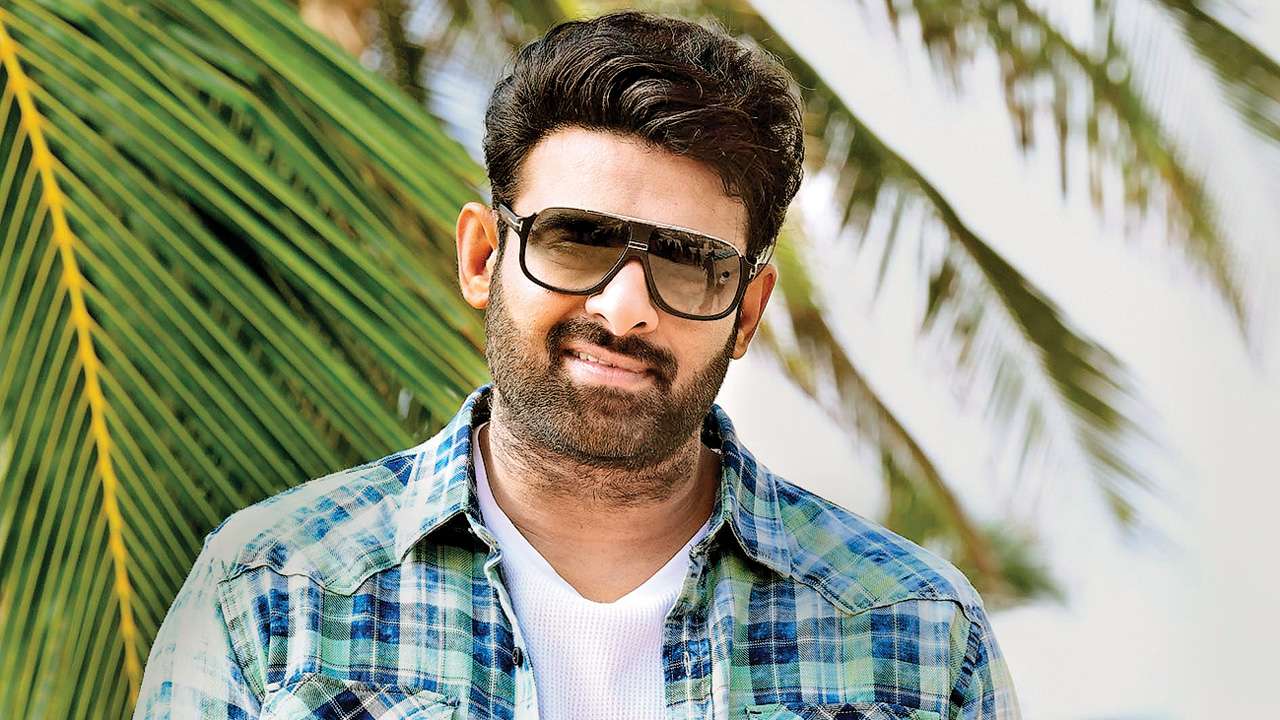
Prabhas has been jet-setting to different cities to promote his upcoming action thriller, Saaho. The film, which was simultaneously shot in Telugu and Hindi marks the 39-year-old actor’s debut in Bollywood. The day (rather, the night) we met, he had just finished filming for a reality show. Though he was a little fatigued, the Baahubali star never showed it and answered every question candidly — be it the immense pressure that he is under for Saaho, which comes after the massive success of his mythical period dramas that made him a national hero, wedding rumours or his link-up with South actress Anushka Shetty. Over to Prabhas...
Saaho is being touted as one of the biggest action films with a budget of Rs 350 crore. Did the success of Baahubali scale it up?
Yes, it was after Baahubali that the designing and the scale of Saaho become big; but the idea was in place earlier when Baahubali was being filmed in Telugu and Tamil. Even the script was ready. But after the success of the period drama, the action scenes were mounted up, the set-up was made bigger, and corrections were made to make the story stronger.
Was it your decision to start the film only after Baahubali 2?
Actually, after part one, we decided to take a gap of six months during which I thought we will shoot for Saaho because I knew Baahubali 2: The Conclusion (2017) will take one-and-a-half years. But after Baahubali: The Beginning (2015), I was so tired. I also felt it wouldn’t be good to shoot for a couple of months, stop and restart because, in between, I’d have to shoot for Baahubali 2. I cannot do the (different) looks or shoot them because I know the way it goes. And as I said, I needed some rest, so we decided to shoot after Baahubali 2.
Between the two action films, which one did you find more challenging?
Baahubali was definitely more challenging. Saaho is a contemporary film and the action scenes are designed to the next level. But in the former, everything was new. I always wanted to do a period film and the most exciting part was the war. In Saaho, the action is real. The truck that you see sliding in the trailer is real, it is not CG (computer graphics). That vehicle was travelling at a speed of 40 miles per hour and we needed to stop it. That stunt had to be done in real motion and it was extremely hard to stop the truck because the tyre was out of control. So, we got the drivers from the Hollywood film Transformers, and a lot of action and stunt masters from around the world to get that real feel.
Are you the kind who does all the stunts himself?
I do most of the stunts myself. When I was new to the industry, I was very enthusiastic and wanted to do all the stunts even those not captured by the camera, including the dupe shots! Later, when you start getting injuries, you think, okay, you’ll do what is necessary. I have done a lot of action films in Telugu, so, after some time, your body tells you that you need to be careful.
Saaho will be an acid-test for you coming on the back of Baahubali and it’s also your debut Hindi film.
Yes. I know. There is a lot of pressure on me, but the script is the master for any film, even for Baahubali. Also, because Saaho is releasing in so many languages, and the budget is so high. Sujeeth (director) worked for so many years on it. He and the producer are my friends, so it’s also a personal thing.
It was reported that you took a 20 per cent pay cut for Saaho...
Yes, because for films like Baahubali or Saaho, you can’t take whatever remuneration you get when you’re in demand. That part can instead be used to make the film bigger. These films require a huge budget and a lot of research because they haven’t been tried before.
How was the experience of filming it?
It was interesting because my friends were involved and they took a lot of care with details. Sujeeth is young and excited with fresh thoughts. He spent a lot of time on the film’s pre-production — on the script and planning. I think it was great of him to manage big names from the South like Sabu Cyril, Madhie sir and Sreekar Prasad in his second film, with such a high budget. There were (internal) fights but he managed so well, he never fought or showed his anger.
While you make your debut in Hindi, Shraddha Kapoor forays into the South with this film. Did you help each other?
The first day Shraddha spoke Telugu, I was shocked. She must have practised but still she was so good. She was excited about shooting the Telugu portion because it was new for her. The same thing happened to me while shooting Baahubali in Tamil because that was a first for me and it brings new energy. While filming Saaho, I used to ask several times whether my flow and accent in Hindi is right because words can be corrected later in dubbing, but the flow has to be right. I had a Hindi tutor, Kamal sir from Mumbai on sets and even during the dubbing.
Was it difficult to shoot simultaneously in different languages?
Yes, it was strenuous. I have been doing films for the past 16-17 years, where after you give a shot and it’s okay, you are done. But here you have to do it again in different languages and it becomes strenuous for actors and technicians because you have to capture the whole mood again. Sometimes, it’s that spark, which you get once. I am not a many take actor, I get done in a couple of shots, so it was stressful for me.
The film was to release on August 15 but was pushed by two weeks. Are you happy with the shift?
I’m happy because quality can’t be compromised, especially for a film one was working on for so many years. I understand it is not right for the business, and also for other films, which had to shift their releases because they already had plans. It is wrong from our side but for the quality of the film, I don’t mind.
Do you like doing action movies?
I like to do action as well as love stories. In Telugu, my favourite film is Geetanjali (1989) in which there is absolutely no action, not even a slap.
What would you like to do next?
I want to do a romantic movie or romcom after Saaho. But I will plan once the movie releases and I know the result.
You have had hits and flops in your career. How do you deal with it?
My first two films did not do well and I thought I will never get a hit. However, offers were pouring in and I got a big blockbuster. But then there was a phase when for three years my films were disasters. That was the hardest time. Then I had two hits and a flop. Next, Mirchi was a hit, Baahubali happened and the last four years have been really good. Now, after Saaho, let’s see...
Every time your film is up for release, there are rumours about your marriage, and there has been talk about you and Anushka Shetty dating each other...
I know there have been a lot of rumours since the last four years. Once I was linked to a politician, whom I had never met. That was one of the most hateful rumours, it was irritating. Anushka and I are friends and when we did Baahubali, we worked for four years together. People liked the love story and Devsena (her character). It is common to get linked with your co-star. But you cannot hide something like this for two years. And, why should we hide if there is something?
For Prabhas, fitness training is a stress buster-Laxman Reddy
8:03 AM

Prabhas' trainer of seven years on transforming the actor from the beefy Baahubali to the running and sprinting leading man in Saaho
Sonia Lulla (MID-DAY; August 21, 2019)
Citing the limited time he had to slip into an exercise routine in the midst of filming, Avengers actor Chris Evans had spoken about bulking up to play the part of Captain America. The actor had stated that his team would focus on making him look as big as possible ahead of the shooting schedule so that even as his muscle mass depleted over the leg, he would still look sufficiently beefed up throughout the film. On home turf, trainers of our Baahubali, aka Prabhas, encountered no such dilemma. Come what may, Prabhas, we're told, would never miss his training session.
"For Prabhas, fitness training is a stress-buster. It is something he genuinely enjoys. So, even if he'd wrap up filming at 12 at night, and regardless of how intense his action sequences of the day were, we would still train later," says Laxman Reddy, who has been working with Prabhas for seven years. Filming abroad where the unit could not have access to a physical fitness set-up, was no hindrance. "We'd carry dumbbells, weights and resistance bands. If we didn't find a gym, we'd train in rooms. With a pair of dumbbells, you can pull off a large number of variations. Without accessories, we would execute about 100 free squats and walking lunges over hour-long training sessions."

Physical Endurance
Jumping from crafting a body for the period franchise to doing so for the upcoming actioner, Saaho, couldn't be a mean feat for the actor. If one needed him to look larger than life, the other demanded that he appear lean and agile as he pulled off high-octane stunts. Reddy admits that given the physical transformations demanded of him, it is only fortunate that the actor has a 19-year history in athletics. "He is the best coach for his body because he has studied himself. Even though he may have started body-building only for Baahubali, he has been exercising for several years and well informed about fitness."
Despite shaving off 10 kilos for Saaho following the franchise, Prabhas, Reddy reveals, had been training for the same number of hours across both films. "For Baahubali, we took to old-school methods, targeting one body part, like chest, arms or legs, each day. Weights would be heavy to enable us to create that bulk. There was a point when he was lifting as much as body builders do." Reddy put him on a seven meal plan, comprising both, high proportions of carbohydrates and protein, to up his calorie intake. "He had generous portions of rice, bread, egg whites and chicken, and a lot of fats like nuts, as well."
Full Focus
Unlike many men in the show business, the South actor ensures his physical training is suited to enhance his lifestyle instead of merely furthering the demands of life before the camera. "He is among the few who will focus on training his lower body, just as much as he does his upper body. That is rare. People don't train the lower body because doing so is hard. But he enjoys the pain. He lifts extremely heavyweights when executing squats and lunges, or training his calf muscles. When in the gym, Prabhas is never distracted."
Two-hour training sessions were split into an hour-long session of cardiovascular activity, and another hour of medium intensity resistance training work. "Since he had to lose 10 kilos for Saaho, the hour-long cardio sessions would be either swimming, cycling or playing volleyball. Prabhas loves to play the sport, and it's only a coincidence that I am also a national-level volleyball player. So, we play together."
Meals were restricted to four portions a day and the diet chart would be arrived at after Prabhas and Reddy sat together to discuss what he'd like to consume. "There are certain things that work for him that may not for others. For instance, white rice is better suited for him than brown rice; as is mutton when compared to chicken. Prabhas is a foodie, but when it comes to his films, he is very dedicated." Action sequences for Saaho demand that Reddy up the mobility component in Prabhas's routine. The trainer says that coupled with the attention he pays to building strong legs, he is anatomically blessed with good muscle flexibility. "Despite being tall, at six feet two inches, he still has a good range of motion, which helps him perform the kicks as needed."

Kenny Bates On Designing The Stunts
During mid-2016, while working on 2.0 in Chennai, the team of Saaho met me. I heard about the challenging action sequence that Sujeeth [wanted to design]. I was absorbed by the scale of action that he proposed to tackle in the time that we had on hand. He wanted to make a sequence that was bigger than anything ever attempted in India. The Indian crew's relentless dedication inspired me. Our team has been referred to as a mobile Hollywood; bringing together A-list stunt performers from all parts of the world to work on films, regardless of the location. Prabhas is very athletic and trains regularly. He is on a strict diet. He did all his stunts if we allowed him to do so. A few of them were far too dangerous to risk such a talent to try. We spent time developing action beats that fit his character. We tested and trained, as Prabhas and Sujeeth kept aspiring for [more]. If I do not stay on top of my game, there is a line of people waiting to take my spot. I earned this sequence. The work is too dangerous to be taken lightly.
My only worry was that I might be replaced in Saaho-Neil Nitin Mukesh
8:12 AM

Playing baddie in Saaho, Neil Nitin Mukesh on fearing the worst when the film was delayed
Sonil Dedhia (MID-DAY; August 19, 2019)
 Thrilled as he is to be part of one of the biggest films of Indian cinema, Neil Nitin Mukesh says Saaho has had a long journey from the conceptualization stage to the big screen. A chance meeting with director Sujeeth at an awards gala set the ball rolling. "A few days after the awards function, he met me for the narration of Saaho. I loved the way he had envisioned the film and my character and instantly said yes. This was around the time that Baahubali [2015] was about to release. After it became a massive hit, we had to wait for over two years because Prabhas had to shoot for the second film. Even though I did other films during this period, my only worry was that I might be replaced in Saaho as many actors had changed. Fortunately, Sujeeth kept his word," smiles the actor, who plays the baddie in the actioner.
He counts the role among one of his "most physically demanding" since it boasts of several high-octane action sequences. "The shooting of Saaho took longer than I expected. At the same time, I was also filming my home production Bypass Road, for which I had to lose weight. So the fluctuation in the body weight was difficult."
Having collaborated with Prabhas for the first time, the actor says sharing screen space with the South superstar was an enriching experience. "Despite his success, Prabhas is so down-to-earth. While shooting in Abu Dhabi, he came to know that my wife [Rukmini] was expecting. He came to specially meet her and got her many gifts. That was sweet of him."
There were nights when I’d be awake, learning my lines-Shraddha Kapoor
7:52 AM

Shraddha Kapoor on playing a cop in her Prabhas co-starrer, learning how to hold a gun and completing a decade in films
Ankita Chaurasia (MUMBAI MIRROR; August 17, 2019)
Having changed from a nude lacy number, which she had worn for the trailer launch of her upcoming film Saaho, into a white dress with black embellishments which she pairs with chunky heels, Shraddha is a study in primness. Her entourage of makeup artistes and stylists shadows her as she flits from one interview to the next. A fresh coat of lipstick, a few mascara strokes and a fuzz of hairspray later, the actress settles down for a chat with an ear-bud in hand, dabbing at the corner of her eyes which are watery from the touch-up. She checks with her secretary if the light and camera team can leave, now that she’s talking to print journalists. When someone offers her peppermint tea, she refuses politely, signalling that she is ready for our tête-à-tête.
With Saaho releasing a week before Nitesh Tiwari’s Chhichhore, Shraddha is juggling promotions for both films but is unfazed. “It’s the producers’ call. We don’t have a say,” she points out, adding that it’s “exhausting but exciting”. “They are two entirely different films so, there’s no question of an overlap. Besides, I get to see myself on the big screen twice in such a short interval. What can be better than that!” she exclaims.
Ask her how she went from urban glam-girl to straight-faced crime branch cop, Amritha Nair, in the Prabhas action thriller and she exults, “It’s the first time I am playing a cop. An officer is in charge of the citizens, and it’s a privilege. It felt like tapping into my moral side. Amritha inspired me to be the right person and do the right thing.”
Since she had never held a gun before, it took some getting used to. “It’s a weapon of violence but as a cop, you use it for protection and defence. So, once again, there was a sense of responsibility in holding and firing it correctly,” Shraddha explains. Did she go to a firing range to learn how to shoot? “No, I practiced on the set. We didn’t shoot the complicated scenes till I was comfortable with the gun.” She goes on to reveal that she doesn’t have many action scenes in the film, compared to Prabhas. “But whatever I could do, I have tried my best,” she shrugs.
Besides gun-toting, mouthing dialogues and reprimanding Prabhas in Telugu as well as romancing him took the actress out of her comfort zone. “Speaking a language I didn’t know was tough but doable. But there were nights when I’d be awake, learning my lines, understanding what I was saying and then sitting with Sujeeth (director) to rehearse them before a shot. A coach also came home to help me get the dialect right,” she says.
Before she met her co-star, she’d expected a larger-than-life person, a la Bahubali, to greet her on the first day of shoot. But Shraddha remarks that she didn’t even get a chance to be intimidated by Prabhas. “He is extremely warm and welcoming and immediately put me at ease. He is also quite comfortable with Hindi and helped me with some Telugu lines,” she grins, adding that everyone on the set went out of their way to make her feel at home. “That’s why the film has turned out so well… we were all so comfortable during the shoot.”
After Saaho, which was shot simultaneously in Telugu and Hindi, Shraddha feels multilinguals are the way forward. “You get to explore different ideologies, interact with people from different industries, and try your hand at different languages. What’s stopping us?” she asks but is less forthcoming on the subject of her upcoming films. “As of now, I have only signed Baaghi 3,” she shares, adding that she doesn’t have “that much action” in it either. “I just remembered I have a lot of action in Baaghi 3. I don’t know why I forgot...I think I am just trying to underplay it,” she adds quickly.
While she is happy with the roles coming her way, she rues the fact that she is left with no time to sing. “I love singing but it has taken a back seat as I focus on my characters,” she shares, the smile still intact.
Next year, Shraddha will complete a decade in the industry—she made her acting debut in 2010 with Leena Yadav’s Teen Patti. A mention of the approaching milestone takes her by surprise. Taking stock of her career, she says, “I really enjoy being a part of commercial films, to have that mass connect. Right now, I am here, and I am very happy to be here. Next, I don’t know where I will be. I like to go with the flow. I have no plans but work-wise, I always feel that the best is yet to come,” she concludes on a promising note.

It was only fair that we shoot Saaho with IMAX's high-end cameras and equipment-Sujeeth
8:37 AM

Pulling out all stops, Saaho director Sujeeth films Prabhas-starrer in toughest tech format
Shaheen Parkar (MID-DAY; August 10, 2019)
Saaho's teaser is indication enough that the makers have left no stone unturned in making the Prabhas-starrer a visual spectacle. Given the high-octane action sequences and the elaborate VFX at play, director Sujeeth says that he knew early on that only original IMAX cameras would do justice to the entertainer.
While many filmmakers digitally remaster their movies for the IMAX screen, the director chose to shoot the actioner in this format, thus making it one of the few Hindi films with the distinction. "Saaho is one of the biggest action entertainers and it was only fair that we shoot it with high-end cameras and equipment. Granted the huge production budget that we had and the countless hours of work put in by the crew, it's only fitting that the audience sees the action sequences in the best visual space possible. We are glad to present the movie in IMAX format," says the director.
The trailer will be released on an IMAX screen to provide the audience a sneak peek into the extravaganza.
Prabhas would call everyday to check if my pregnant wife was okay-Neil Nitin Mukesh
8:30 AM

Chaya Unnikrishnan (DNA; August 10, 2019)
He was last seen as the villain in Golmaal Again (2017) and now two years down the line, Neil Nitin Mukesh will be back as the baddie, this time in the action thriller Saaho, headlined by Prabhas. The actor who had an unconventional launch in Johnny Gaddaar, has played characters with an edge in most of his films. He also has worked with the best of filmmakers from Sriram Raghavan to Vishal Bhardwaj, Sooraj Barjatya and Rohit Shetty in Bollywood and AR Murugadoss in the South, and yet his career trajectory doesn’t boast of many hits. He, however, has no complaints. “I have worked with 15 National-Award winning directors, and learnt a lot from them. Unfortunately, the films didn’t work. That doesn’t mean the choices were wrong. There is a lot of math behind a film. But I am happy, I am still surviving in this industry after 12 years,” he says. The 37-year-old talks about his upcoming film, working with Prabhas and playing the baddie.
How did Saaho come about?
Right after Prem Ratan Dhan Payo (PRDP), I was offered the Telugu film Kaththi by A R Murugadoss. At that time I was thinking that every actor needs one film to sharpen his skill set. When you are constantly working you lose your perspective. I wanted a challenge, speak and dub my own lines (in Telugu). It kind of took me back to school. Then I was at that phase of my career — PRDP did really well and Kaththi was a blockbuster — when I met Sujeeth (director of Saaho) at an awards function where I won the best actor in a negative role. We instantly connected as friends. One day he called to meet and gave me a narration of the film. I instantly jumped onto it. I found it lavish and intriguing. Around that time Baahubali 1 was releasing and Prabhas was in it. We knew it would have a Hindi release, so, it kind of made sense that Sujeeth was making Saaho in three languages.
What was it about the role that appealed to you?
My character is well-etched. Without giving much away, I can tell you it’s multi- layered. I needed to do this at this point of my career. There are certain perceptions about me and I like shocking the audience about what I am playing. From Johnny Gaddar to Saaho, I have switched as much as I can. Whether it was Wazir, Indu Sarkar, Players, Saat Khoon Maaf or David there were shades of grey in my character. Jai (his character) in Saaho is unpredictable. As much as you think he is planning something, you’ll see there is more than what meets the eye. The character is delicious and I liked to add to those layers to him.
Did you have to do any prep for the role?
The physicality and the body language was important. I had to be agile. For the role I had to look robust so I gained some muscle mass. However, at the same time I had committed to my production Bypass Road, which is directed by my brother Naman. In that film I play a paraplegic for which I had to lose weight and I didn’t know how long I would be shooting for Saaho, so that was the only stress.
You have established yourself as the antagonist now. Is that the way you want it to be?
I don’t really understand the bifurcation of protagonist and antagonist. For me it’s a character, however much we use that lingo in terms of discussing films. We have so many stalwarts like Rajini sir (Rajinikanth), Amitabh Bachchan and Shatrughan Sinha, who started their career as anti-heroes or played characters with grey shades. They have also pulled off great comedies and family dramas. I am open to all genres, but I find playing an antagonist interesting. It’s always a challenge to come up with a new approach to a grey character. I like being unpredictable. In the West several actors essay characters with a bit of an edge and it makes them intriguing. We don’t make those Alfred Hitchcock kind of movies or suspense thrillers where all characters are grey.
How was it working with Prabhas post his Baahubali success?
He is a darling. Yes, there was always this apprehension going on a set and facing the camera with Prabhas post Baahubali — How would he be? How would his approach be to his co-stars, etc. But, he is such a simple, down-to-earth person making all his co-stars comfortable. He gave me so much room to explore and expand my character. That is why in general people call him darling. I truly love him. My wife (Rukmini Sahay) was pregnant when we were shooting some action sequences in Abu Dhabi. I had just got to know Prabhas, but he came down to my room and got gifts for my wife. Every day there would be one phone call from him to find out if she is okay, and looked after. Who does this? Everyone is so self-absorbed. I learnt a lot from him. My father always says when a tree grows big it starts bowing down to earth. Prabhas is such a big star but he is more humble.
Have you thought of exploring the digital platform, which is the in-thing right now?
It is a great platform to explore different genres and scripts. The audience is used to great shows like Stranger Things and Game of Thrones. Here also there have been shows like Sacred Games and Typewriter which have been good. I would love to be a part of something where the maker is pushing the envelope. Right now, it’s not exciting me at all.

Prabhas takes on 100 international fighters as he shoots for climax of Saaho in Abu Dhabi
7:54 AM

Climax of actor’s next, filmed in Abu Dhabi recently, was choreographed by Peng Zhang who has designed action for Hollywood biggies like Rush Hour 3
Himesh Mankad (MUMBAI MIRROR; July 18, 2019)
Ever since Saaho kicked off in 2017, the film has been in the news primarily because it marks the return of Prabhas on the big screen after S S Rajamouli’s Bahubali franchise. While interacting with Mirror earlier (June 14), director Sujeeth had informed that shooting has taken longer than expected because of the scale which demanded almost two years of prep. Now, Mirror has learnt that the makers have shot an eight-minute long action-packed climax, recreating a desert in Abu Dhabi.
“A set resembling a ruined place was erected on a 10-acre land and special black soil was strewn over it to give it an authentic desert look. A team of 100 fighters from across the globe were hired for a larger-than-life action sequence involving Prabhas and the baddies. It cost Rs 70 crore and was choreographed by the internationally-acclaimed action director Peng Zhang of Hollywood biggies like The Last Samurai, Hellyboy II: The Golden Army and Rush Hour 3,” revealed a source close to the development.
Last month, leading lady Shraddha Kapoor had flown to Austria to film a lavishly-mounted romantic track and some scenes. In the same schedule, the team had also shot a dance number composed by Badshah with Jacqueline Fernandez in a special turn. After that the team had reunited in Hyderabad for some patchwork with Prabhas.
The multilingual, presented by Bhushan Kumar in Hindi, was finally wrapped up on July 15 in the Telangana capital.
Actors give us cues with their acting-Mohamaad Ghibran
7:54 AM

Score composer of Saaho, Mohamaad Ghibran on how the performances in films alter his method of working
Sonia Lulla (MID-DAY; June 24, 2019)
If the teaser of Saaho is anything to go by, Ghibran's background score is reeking of quirk. It's not quite the quality you'd associate with a thriller. But he says the Prabhas starrer is a "complete package" filled with humour, and hence demanded the element of fun. Evidently then, Gibhran has been winning praise for his composition. He discusses mixing EDM and orchestral sounds for Sujeeth's thriller.
What did your early discussions with director Sujeeth about the score's identity touch on?
The film, its demography and characters, are all presented in a manner that's larger than life. As far as scoring is concerned, several factors determine the instrumentation. This film demanded a symphonic sound because there are emotions at play, and the characters have different shades.
Can you chronicle at what point in the film-making process is a background score composer roped in?
Usually, after the dubbing. As soon as I get the rushes, I watch the rough cut with my director. I see myself as the voice of the director. Emotions are conveyed through the actor's performance and dialogues. But, a director may want to say something more; something that's non-verbal. That depends on the score, and that's where I come in. We discuss what the director wants the audience to feel when watching a particular scene. Often, I even have to connect a seemingly irrelevant scene at one point in the film to a point where it finds its value. All that comes with the score. Once we have decided on these elements, I begin the process. Then, I disconnect from everything.
When creating music for a three-hour film, what is the kind of investment of time that you put in?
I will first watch the film and understand the characters' motives and the scenes' motives. I will pen the score through musical notations. Sometimes, if you see my first draft, you may find it funny. There may be a big [scene unfolding], and I will back it with only a piano and one tune. But the process of programming [is time-consuming]. I watch each scene a minimum of 100 times before adding any instrument. When you score for symphony orchestra, you have 80 people working on it. So you have to write notes for each one of them. On average, it takes 20 minutes to create two-minutes' worth of music. Saaho has a raw [undertone]. After recording the score, we transformed it to achieve an EDM [Electronic Dance Music] kind of tune. That's the process that's currently underway. Saaho has a 50-50 ratio of orchestral and electronic arrangement. The characters are human, not mechanical. However, the landscape is action-oriented. To get the right texture of the locality, [we employed] the electronic tunes. To depict the human complexities, I took the orchestral approach.
What role does an actor's performance play in determining the score?
Actors give us cues with their acting. An extraordinary actor [communicates with] his eyes, body and [dialogue] delivery. That determines how much we need to enhance [the scene]. If an actor is very good, there may be no need for music. But, if the performance is bad, the music must [make up for] the emotions he has left out. If a scene is intensely emotional, and the actor has the inability to convey them, the music has to make up for what's missing. We refer to a few actors as legends because they don't depend on [anything]. Even if the [camera] angle is not good, the lighting is bad, the editing is poor or there's no music, they can still [hold the scene] with their [act].
Was there an instance where you had an opinion on how a scene's score would be but changed it owing to the way it was enacted?
There was one in the Kamal Haasan film Uttama Villain. His character meets the step-father of his [estranged] daughter, who he [Haasan] doesn't know he had. It was a complicated and lengthy scene. It featured Haasan and Jayaram, another multiple award-winning actor. I [created] the entire three-minute score, but needed to include only 20 seconds.

For me, Prabhas sir has always been a superhero-Sujeeth
7:41 AM

Himesh Mankad (MUMBAI MIRROR; June 14, 2019)
 While Saaho has been in the news in Mumbai ever since its inception, its director, Sujeeth, arrived in the city on Monday, ready to talk about his first multilingual action-thriller. The filmmaker, who received acclaim for his Telugu directorial debut, Run Raja Run , at 23, discusses the challenges of making “India’s biggest action film”, directing Prabhas and working with Shraddha Kapoor. Excerpts:
Was it stressful to work with Prabhas, considering this is his first film after the Baahubali franchise?
It’s not an added responsibility because every director feels the pressure to deliver. But yes, the expectations are higher than usual because Prabhas sir is returning after Baahubali. I concentrated on my work. I stayed true to the script and the focus was on making a good film.
The film has been in the shooting stage for two years…
We didn’t shoot for two years, as a lot of time went into the prep. There was one schedule, followed by prolonged prep, and then another one because the film’s scale required a certain amount of planning. That aside, there is VFX and other things required time.
Was the shoot challenging as well?
The main challenge was Abu Dhabi as the temperature there was around 48 degrees Celsius and we had to shoot hardcore action on roads. It was a 22-day schedule and everything you see on screen is real - we blasted 37-38 cars. It was a huge set-up with 150-200 foreign crew members who have worked on films like Transformers and Avengers.
Did you make a conscious effort to present Prabhas in a larger-than-life avatar?
I had something in mind for Prabhas sir. For me, he has always been a superhero, even before Baahubali. He was always a huge star in the Telugu belt, and Baahubali has made him even bigger. I had discussed this script with him in 2015. Since it is such a huge action thriller, the pre-production went on for over two years. I took my time and you can see the impact in the visuals. I’ve tried to present him in an avatar that is popular among audiences but I incorporated my vision in it.
When was the script conceptualized?
I started work on the script in November 2014. My journey with this film is almost five years old.
How did you decide on casting Shraddha Kapoor? What was it like working with her?
I loved her performance in Aashiqui 2. I was looking for someone who’d be good in romance as well as action. Shraddha’s character is a girl named Amrita and I believe she has never done action at this level before. This was a new space for her and she has done complete justice to it.
What does Saaho mean?
Saaho is a Sanskrit word used to praise somebody. For those who don’t understand it, there is a story in the film that explains it.
You are catering to a pan-Indian audience with your second film. What kind of work do you see yourself doing hereon?
I am not sure. I always wanted to make a Hindi film, so let’s see if somebody offers me one to direct.
Do you have any favourites in Bollywood?
Shah Rukh (Khan) sir and Salman (Khan) sir are my favourites. I have grown up watching Shah Rukh sir’s movies. Salman sir has the vibe of a big superhero.

Varun Dhawan mixing it up well with commercial films and also with Badlapur and October-Murli Sharma
8:05 AM

Murli Sharma is reuniting with the actor for Remo D’souza’s next
Himesh Mankad (MUMBAI MIRROR; June 12, 2019)
Murli Sharma, who played Shetty Anna in Remo D’souza’s 2015 directorial ABCD 2, has reunited with the choreographer-turned-filmmaker on his next, Street Dancer 3D, which features Varun Dhawan and Shraddha Kapoor.
The actor, who recently flew to Dubai to shoot for his turn in the dance film, describes it as a “cute role” and reveals that he appears at an interesting point in the story. “I play a cop who tries to take control of a sequence which features everyone from the cast,” Murli adds.
He hails his reunion with Remo as working with an elder brother. “He specifically asked his casting agent to rope me in for this role. He had done the same during ABCD 2,” he recalls. What about his reunion with Varun, with whom he featured in Sriram Raghavan’s Badlapur as well? “I have always bonded well with Varun. He’s doing so well. You need a lot of courage to be a mainstream hero and do films like October and Badlapur. He is mixing it up well,” he smiles.
Next up for Murli is Prabhas and Shraddha’s futuristic thriller, Saaho. “It’s the biggest action film of our generation. Sujeeth (director) knows what he wants, and he is great at articulating it. I also got to work with Prabhas, who is a Baahubali in real life as well. It’s one of the most outstanding scripts that I have come across,” he signs off.
Neil Nitin Mukesh to be wheelchair bound for brother Naman’s directorial debut Bypass Road
8:10 AM

The actor’s protagonist is a paraplegic in the thriller which he has also penned; says Indian cinema ‘has not seen a film like this one before’
Natasha Coutinho (MUMBAI MIRROR; January 31, 2019)
 Mirror had earlier reported (July 11, 2018) that Neil Nitin Mukesh is turning producer for brother Naman’s directorial debut, a thriller titled Bypass Road, for which he has also penned the script. We have now learnt that the actor plays a paraplegic in the film.
Informing that the film is 95 per cent complete, Neil said, “It’s been a challenging role because of the genre and my character. I had to undergo a drastic physical transformation. I had got in great shape for Saaho but for this role, I was required to gain weight. A wheelchair-bound man can’t have six-pack abs… we had to make it realistic. There was a lot of research that went into the equipment my character uses.”
According to the actor, both manual and automatic wheelchairs were used in the film. “I also had to learn how to operate the joystick. It’s not as easy as I thought it would be. You are constantly using your arms to pull yourself up. Now that I have gained weight, pushing myself around was tough as well. My trainer was present on set as the shoulder bears the brunt of all the movement,” Neil informs, adding that he also had to control the speed of his wheelchair so as to make sure that the cameras were following him.
The team shot the Madan Paliwal production in 16-17-hour shifts that included action sequences with Neil in the wheelchair. “There’s a great amount of detailing that has gone into this role,” the actor asserts, adding that Indian cinema hasn’t seen a film like this one before.
And what was it like working with his brother? “We have just six days of principal shooting left. After the last schedule of Saaho in Hyderabad, I will complete this film. Naman has done a fabulous job. I’m lucky to work with so many young directors. Both Naman and Sujeeth (Saaho director) are 26. Naman is my baby brother and I’m protective of him. But on set, he’s a man with the controls,” Neil signs off.
I wanted to explore other aspects of filmmaking-Neil Nitin Mukesh
7:50 AM

Dhaval Roy (DNA; October 31, 2018)
Neil Nitin Mukesh has got two new roles to play. The actor has turned producer and also a father. “I’m completely in love!” he exclaims about his daughter Nurvi, who was born last month. As for venturing into production, he states, “It’s been 12 years in the industry and I have always believed that creativity has no boundaries. I’m just exploring a new aspect.” The 36-year-old talks about his choice of films and the biggest film of his career, Saaho, among other things. Excerpts...
Bypass Road is your first production and your brother Naman’s directorial debut...
Naman has learnt filmmaking and worked with Abbas-Mustan and Bejoy Nambiar. I was quite certain that he would get into direction. As luck would have it, I was writing Bypass Road and he was actively involved in it. So, it had to be this one. For the first few days, I was more nervous about him turning a director than he was (laughs). My protective instincts kicked in because I have been a father figure to him. But he handled all the departments so confidently that my inhibitions were laid to rest soon.
As for me, I had been working as the director of entertainment for the banner that produced Madaari (2016). So, I wanted to turn a new leaf and get into other aspects of filmmaking. As an actor, I will follow instructions because it’s the producer’s call and the director’s vision. But, as a producer as well as an actor in the same project, I have more creative freedom and control.
How do you look at your career trajectory as an actor so far?
There have been a lot of ups and downs, but life has to have a graph; it can’t be a straight line. I have worked with some fine filmmakers like Vishal Bhardwaj, Sriram Raghavan, Madhur Bhandarkar, Sooraj Barjatya and more. I’m grateful that I’ve sustained so far.
Initially, people said I would probably not last too long because a singer’s grandson and son becoming an actor was a major question mark. I’m glad I’ve been able to carve a niche for myself, no matter how small it is. At least people know of my existence a little bit and I am happy and proud of that. It’s tough to get the roles you want, but I look forward to it in future.
Your choice of films, right from your debut movie Johnny Gaddaar (2007), has been unconventional. Is that deliberate?
I’m not trying to be rebellious in the way I have moulded my career so far. It’s just that it comes instinctively to me. No one would have expected that kind of a debut as most prefer going the conventional way — playing a good guy and doing the singing and dancing routine. I have always tried to maintain the niche. I’ve been choosy and I’m not too sure if that has taken me on the path of success. But as far as creative satisfaction goes, I’m more than happy to have done an array of roles in films like David (2013), 7 Khoon Maaf (2011), Indu Sarkar (2017), and so on.
Tell us something about your upcoming projects...
I have Saaho coming up, which is the biggest film of my career. It’s being shot on a humongous scale. I have been filming for it for the past one year and it will continue for some time. In the interim, I managed to complete Firrkie and am almost done with Bypass Road.
The biggest film of your career has come more than a decade after your debut. Has the wait been too long?
Well, I have been part of big productions like Prem Ratan Dhan Payo (2015), Golmaal Again (2017) and also A R Murugadoss’ Tamil film Kaththi (2009). Actually, New York and Johnny Gaddaar were very big films for me at the beginning of my career. People still remember me for my debut. But, yes, I’m super impressed with director Sujeeth. He is just 26 and is handling a mammoth film like Saaho so efficiently.
How’s fatherhood treating you?
I’m completely in love with Nurvi and I have become a kid myself (laughs). A certain amount of responsibility has suddenly kicked in. I’m nervous, excited... it’s all mixed emotions. I was a hands-on brother, uncle and now dad. My wife (Rukmini Sahay) was quite shocked that I could look after a baby so well.
We start Saina Nehwal biopic next month-Shraddha Kapoor
8:22 AM

Shraddha Kapoor on following the Asiad, taking badminton lessons, ghostly experiences and plans of coming up with a book someday
Roshmila Bhattacharya (MUMBAI MIRROR; August 28, 2018)
Saina Nehwal created history on Monday by bagging the first individual medal for India in 36 years in women’s badminton at the ongoing Asian Games, taking home a bronze, even as fellow shuttler P V Sindhu moves into the fi nals, assuring herself of at least a silver.
Back home, Shraddha Kapoor who has two releases coming up in quick succession — the horror-comedy Stree which opens this Friday, followed by the social drama, Batti Gul Meter Chalu, on September 21 — doesn’t have the time to watch matches on TV but is clued into the score in Jakarta as badminton is a part of her life now. She plays Saina in Amole Gupte’s upcoming biopic which rolls in September.
“It’s a difficult sport, very challenging, but I’m enjoying myself. I’ve already taken 38–40 classes, but there’s still a long way to go which is why even though we start filming next month, we will shoot the badminton scenes only early next year,” informs the actress, who has already impressed her director with her sincerity and commitment.
She’s already at home in Hyderabad, thanks to her Hindi–Telugu bilingual, Saaho, admitting that working in two languages has been a novel experience for her. “We take a shot in Hindi or Telugu, then repeat it, in the other language. It’s like shooting two films simultaneously,” she shares.
For Shraddha, the fact that Telugu is not a language she is familiar with makes the job tougher. “I have been badgering the director, Sujeeth, who’s very bright, to explain the meaning of every dialogue because I don’t want to rely on placards and prompters as that breaks your chain of thought and emotions,” she says, adding, she could say her lines in her sleep so didn’t have to worry about what she was saying on the set and could focus on how she’d say it.
Quiz her on her co-star, Prabhas, and she describes him as one of the simplest people she has ever met. “It’s such a beautiful thing for someone who is such a huge star!” she exclaims, saying that it’s their simplicity and that they are so ‘real’ that sets both Prabhas and Rajkummar Rao, her Stree hero, apart from the rest.
Shraddha hasn’t met any ghosts for real but when she was a child, her building started shaking just when she was about to get into bed. “It was terrifying! Mom (Shivangi) hurried me out of the room and we all stood under a beam till the shaking stopped. Later I learnt that an earthquake had hit Mumbai,” she reminisces.
On another occasion, an old chauffeur, was at the wheel one night when he accidentally drove over a divider. “The car toppled to one side with me in the back seat. Through the window I saw people running towards it. They dragged us out. I was badly shaken but unhurt while our driver suffered a minor injury. The incident still gives me the shivers,” she shudders, fear writ large on her face. Did producer Dinesh Vijan and director Amar Kaushik frighten her on the sets? “On the contrary, they were the comedy part of the horror comedy,” she laughs. “Stree was a refreshing change from the films I’ve done in the past and the energy was very positive. Thank God they came to me with this role.”
There was talk of nightmares during the Chanderi shoot of Stree but Shraddha is quick to dismiss them, saying there were nights when she couldn’t sleep and the eerie silence of a small town which even in the day did not have the bustle of a metropolis, added to the restlessness. “That’s when your mind starts playing tricks on you, more so because you are filming a story about ghosts. I’m not sure if spirits exist but I do believe that we are surrounded by energies, good and bad. It’s best to let them be and not intrude into their space,” she says.
So, how did she deal with the jitters when in Chanderi, you wonder, and she surprises you by admitting that she would get out of bed and start writing. “I pen down snatches of poetry… Musings about life and the world around,” she admits shyly, adding that in Chanderi she often rhapsodised about the cobbled paths, the unbelievably starry nights, the bright colours of the saris and the craftsmanship. “I brought a couple of saris for myself, some for my mom, friend, aunts and even the extended family like Lata ji, Asha ji and all the Mangeshkar sisters,”she reveals. Any plans of coming out with a book someday, like Twinkle Khanna, Sonali Bendre, Divya Dutta and Shilpa Shetty, and she murmurs, “I will. I even have a title in mind, Reflections.”
Meanwhile, back in Mumbai, Shraddha has bought a place of her own but has no plans of moving in. “It’s next door to our home and a place to chill, read scripts, paint and write,” she says, happy to be back with her family and friends like photographer Rohan Shrestha. “I’ve known Rohan for the last nine years. He and I connect on a spiritual level. It’s good to spend time with the family. I love the beautiful world of films, but it’s also good to get away from this world of make-believe occasionally. I just got back from a family vacation. Hopefully, we will get to go away again in December and bring in the New Year together,” she says.

I’m hoping one day I will be a superstar-Prabhas
8:11 AM

Madhureeta Mukherjee (BOMBAY TIMES; January 2, 2018)
This man needs no introduction. Well, not after he flexed his perfectly greased, rock-solid bahu (arms) at the box office. Yes, the man is Prabhas, whose magnum opus Bahubali swept all records nationally and globally in 2017. Bollywood threw open its gates for him and suddenly, moviegoers across the nation were waiting with bated breath for one unanswered question — Kattapa ne Bahubali ko kyu maara? (in Bahubali 2: The Conclusion).
But even after all the adulation and success, the actor remains a man of few words. He believes in letting his action speak out loud, literally. Recently, the actor, who rarely gives interviews, got chatty with us about the landmark year (2017) of his career, his life after the epic drama, his affair with Bollywood and his step to superstardom.
“Bahubali was a life-changing experience. Without that film, people wouldn’t have recognised me across the country. I have done good Tamil films, too, but after Bahubali, people across cultures and languages started recognising me, including the overseas audience. S S Rajamouli (director) knew that he was making something big, given the budget and scale of both the films, but the response that we got was beyond expectations.”
‘Instead of saying that the script does not work, we say that the actor didn’t work in the role’
Ask him if there was a huge difference in his life before and after Bahubali, and he’s quick to reply, “Yes, you can definitely say that there was a life before and after Bahubali. This was a once-in-a-lifetime movie. I definitely feel that it has been a huge change for me, even my old dubbed films got an opening after three-four years, and they enjoyed a good run.”
This year, the actor has moved on to other films, like the trilingual Saaho with Shraddha Kapoor, but he fondly reminisces the five years that he spent living as Bahubali. “Walking into such a grand set every day is exciting for an actor. I was part of a great wonder, so the experience didn’t ever exhaust me. It’s just in the last one month of the shoot that I felt that I should do something else. I told Raja also that I wanted to do something else now,” he says. In the same breath, he adds, “During the first part, the pressure was far more, as we didn’t know how the Hindi-speaking audience would react to it. The Tamil and the Malayalam audience are slightly different, so when it worked with the Hindi audience, we were shocked. But Rajamouli made a universal film, so that made a huge difference. His vision is larger than what you can even imagine. Someone like Karan Johar backing the film also helped a lot. Initially, we wanted to make part one and two together, but then Raja thought that the script was becoming too long, and he wanted to focus on many characters like Kattappa, Devasena, Shivamani and Avantika. Of course, the question — Why Kattappa killed Bahubali — kept the audience engaged for a year.”
About Saaho, he adds, “Our director (Sujeeth) was very keen to have Shraddha on board. When he discussed it with the producers and all of us in the team, everyone felt that Shraddha is perfect for the role and luckily, she accepted the film.”
‘ANUSHKA (SHETTY) AND I ARE JUST GOOD FRIENDS’
The Friday fate is every actor’s nightmare, so for an actor to devote five years of his life to one ambitious project was a humongous risk. “I was never insecure about how the film would turn out. I am from the film background, so I know how it works. Even if Bahubali didn’t work, I would treat it like — here is a film I gave the kind of time in which I could have done three films and it bombed. So what? I put the maximum effort on the greatest film. I knew Raja could make the greatest film in Indian cinema, and this was the biggest opportunity of my life, so I didn’t want to miss it for anything,” he asserts.
During the course of filming Bahubali, rumours had sparked about love brewing between his co-star Anushka Shetty and him. Any truth to that? “When you are paired opposite someone on screen (for so long), people tend to link you up with them. As for Anushka and me, we are just good friends,” he clarifies.

What is interesting is that in today’s times when we are talking about new-age cinema, urban stories et al, India’s fourth biggest blockbuster, Bahubali, was an epic film. It was a fantasy drama rooted in Indian ethos and tradition, albeit told in a very Indian style, presented with the grandness of new-age special effects.
It goes to prove that stories that are purely Indian in nature are still very close to our hearts, right? He spontaneously replies, “People want to watch Indian stories. There was a time when Mughal-E-Azam was the most grand cinema that was made. Bahubali was Rajamouli’s way of saying a story, but we all are somewhere unknowingly still inspired by epics like the Ramayan, Mahabharat, and stories from the Amar Chitra Katha. These stories will always be inside us. We make modern films, but then again, something in us wants to revisit historic films and tales from the past. After 10 years, we might get bored of all this, and make something else.”
‘I HOPE THAT I NEVER LET STARDOM GET TO MY HEAD’
Talk to him about working in Bollywood and watching Hindi films, and he says, “I watch a lot of Hindi films; I live in Hyderabad, where 60 per cent of the people speak in Hindi. I am getting good offers from Bollywood; I had okayed a script three years ago. It is a love story that I will do post Saaho.” What about friends in Bollywood? “I made a good association with Karan Johar; if I want anything, I think I can ask him. He has helped us a lot. In fact, I met some actors (from Bollywood) in Karan’s house. They were all very chilled out.”
Now that he has made an entry into BTown circles, we ask him if stars down South are different, in the way they interact with each other. “There might be some small regional differences, but they are all generally very cool. I think that Bollywood stars are more chilled out than actors in Tamil or Telugu cinema, though the new generation of actors (down South) are also more chilled out,” he says.
For an actor who is now at the top of his game, Prabhas is grounded, humble and keeps a low profile. “From my first film, I was like this. While dubbing for Bahubali, Karan Johar told me that publicity is important. Basically, I am a shy person,” he explains.
About being high on success, he says, “I hope that I never let stardom get to my head. I always have my childhood friends around me; some of them are my producers, too, and for them, it doesn’t matter if I am doing films. They just feel happy for me. I have grown up with them, so they don’t see me as a star. I have the best people around me, so if I let success go to my head, they will be the first to put a hammer to my head.
South actors have a massive fan following, they are put on pedestals and worshipped by their fans. Does all that pressure make him fiercely competitive? “There is competition in every industry. Healthy competition is something that helps you get better and better. So, in that way, I am competitive,” he replies.
‘IF THE SCRIPT IS NOT GOOD, THE FILM WILL NOT WORK’
To break away from the larger-than-life image of Bahubali is also no mean feat. Will filmmakers be able to downplay that aura with ease and cast him in roles that are closer to reality?
“Well, in Hollywood, the guy who plays Batman and Spider-Man also plays normal characters. The biggest stars in the world want to play different characters. We can’t give the excuse that because an actor played a superhero in his previous film, his next one won’t work. If the script is not good, the film will not work. Instead of saying that the script does not work, we say that the actor didn’t work in the role. That is the problem. I was doing a lot of action films and people loved me in those movies. After that, I did a small love story and it was a hit as the script was good. People forgot that I had done so many action films and started liking me in the love story,” he explains.
Apparently, Prabhas had never set out to be an actor. With time, choices changed. And fate too. Today, he’s titled a superstar, and that’s a mighty leap. But he quickly reacts to that and says, “Not yet, but I’m hoping one day I will be a superstar."

I injured my foot so I am on a break from badminton-Shraddha Kapoor
7:49 AM

Shraddha Kapoor on training for Amole Gupte's Saina biopic and the Prabhas-starrer trilingual for which she is learning Telugu
Sanyukta Iyer (MUMBAI MIRROR; November 24, 2017)
Over 4000 Goans queued up to catch a glimpse of Shraddha Kapoor, who was hard to miss at the sea-facing Bioscope Village in Panjim. The 30-year-old actress, accompanied by aunt Padmini Kolhapure, was to meet Goa Chief Minister Manohar Parrikar and inaugurate a mobile theatre at an Entertainment Society of Goa event. Also present at the event were filmmaker Subhash Ghai.
During the three-hour visit to the state, Shraddha crooned "Galliyaan" for her fans and binged on Goan delicacies with her actress-aunt. "This reminds me of the time we filmed Aashiqui 2 here," she gushed. Her schedule may have been choc-o-bloc but Shraddha reveals to Mirror that she is on a month-long break from Amole Gupte's biopic on badminton ace Saina Nehwal, for which she had been undergoing rigorous training till recently. "The sport is just amazing. It makes me feel energised, alive and also de-stressed. But recently, I injured my foot so I am on a break from badminton. I will resume practice as soon as I get the all-clear from the doctor," she adds.
Then, there's the Prabhas-starrer, the Tamil-Telugu-Hindi trilingual Saaho, which is being shot simultaneously in all the three languages with Shraddha dubbing for her own dialogue in Telugu. "I am enjoying the process of delivering my own lines in a different language. I find it easier because I speak Marathi, thanks to my mom (Shivangi Kapoor) and aunts. Also, growing up in a bit of a cocktail set-up of Punjabis (father Shakti Kapoor's side) and Maharashtrians, one tends to pick up words from different languages. I am ready to dub in the other South Indian languages too. If my director (Sujeeth) asks me, I'm up for it," Shraddha asserts.
The actress shoots down reports that suggested she had reservations about the film before coming on board. "Not at all," she is quick on the uptake, adding, "I said 'yes' immediately and was thrilled with the narration. It's a fabulous script."
Her last four releases — Rock On 2, OK Jaanu, Haseena Parker and Half Girlfriend — were lavishly-mounted productions that failed to live up to expectations at the box-office. Quite uncharacteristically for an actress, Shraddha doesn't avoid the topic. "My initial films — Aashiqui 2, EK Villain, and, even a year ago Baaghi — did phenomenally well. So anything that does not match up to those numbers gets viewed as a project that fell short," she reasons, subsequently recalling how she was ready to walk away from Bollywood after her debut film, Teen Patti, tanked. "But I stuck it out and worked really hard. Regardless how my films fared, the love I have received is priceless. Ups and down are a part of life but I just hope I keep making everyone proud," she signs off with a smile.
Subscribe to:
Posts (Atom)