Showing posts with label Sudhir Mungantiwar. Show all posts
Showing posts with label Sudhir Mungantiwar. Show all posts
Film City revamp takes off after Yogi Adityanath's efforts to lure film units to Uttar Pradesh
8:50 AM

The dream city will be a tourist attraction on the lines of Dubai Miracle Garden; UP CM Yogi’s invite to Bollywood has Maha govt taking the stalled project a step forward
Chaitanya Marpakwar, Chittaranjan Tembhekar & Bella Jaisinghani (MUMBAI MIRROR; January 22, 2023)
The fear of being outshone was the only prod that could get this stalled stallion to trot again. The Maharashtra government’s long-pending plan to revamp Mumbai’s Film City in Goregaon may finally see the light of day after Uttar Pradesh chief minister Yogi Adityanath made a proactive bid to lure film units from Mumbai to his state.
Cultural affairs minister Sudhir Mungantiwar has announced that within a year, Maharashtra will float a global tender seeking the participation of American and European architects and studios to prepare a very futuristic design to revamp the existing Dadasaheb Phalke Film City. The state plans to undertake a Rs 4,500-crore project to convert Film City into a global tourist attraction by combining it with the Sanjay Gandhi National Park (SGNP), he said.
The proposed revamp became a talking point after the recent visit of Yogi Adityanath to Mumbai to attract domestic investors ahead of his Global Investor Summit 2023 in Lucknow from February 10-12.
Adityanath met eminent members of the film fraternity and announced that UP's film policy will soon be amended to offer a 50% subsidy for web series, in line with the subsidy offered to films. It will provide for 25% subsidy for OTT films and another 25% from the state government for setting up studios and labs. Around 67 of 521 acres of UP's aspirational Film City have already been distributed for film-related activities.
Within days, the Maharashtra government announced that Goregaon Film City will be modernized. Mungantiwar promised to construct state-of-the-art studios and tourist attractions similar to Universal Studios of Hollywood. The new Film City and SGNP will combine into a three-day package tour for international tourists to carve the zone into a long-term revenue model along the lines of Miracle Garden in Dubai or the Eiffel Tower in Paris. "Within two-and-a-half to three years the project will break even," he said.
Amit Behl, honorary national secretary of CINTAA, said, "This Film City revamp has been in the offing for the past decade. In fact, in 2015, we had a meeting with Mr Vinod Tawde, who was the minister of culture, and tenders were to be floated at the time. But now it is very nice that Mr Mungantiwar has decided and the plan is finally taking off. Film City has many advantages, it is close to Western Express Highway, and its incredible topography and landscape include various contours, like mountains, lakes, forests, and jungles. Much of the land has already been cleared for studios."
Behl said this revamp will primarily help bring back all those TV production units that have seven-day telecasts and have moved elsewhere to shoot, like far-off Naigaon and Vasai if they are offered concessional rates.
“Even feature film units, and web series that have moved outside Film City – indeed outside Maharashtra – will come back if they are offered proper infrastructure. Most importantly, Maharashtra as a state should start first offering subsidies and support to the Hindi, Marathi, Gujarati, Rajasthani, and Bhojpuri industries that basically function from Mumbai. They may shoot anywhere,” said Behl.
Behl said the Maharashtra government should follow the module of other states like Uttarakhand, Madhya Pradesh, UP, and Jharkhand which are offering subsidies and discounts, and Delhi and Punjab which provide single window clearance.
Behl said, "It must function like a semi-private body. The red tape should be removed from Film City, and provide single window clearance. Film City authorities should involve maximum participation from film actors, producers, directors, and technicians from the entertainment industry and the Media Entertainment Skill Council, in its functioning, to enable Mumbai and Maharashtra to regain their lost glory and revenue. Then regional and foreign film units will come and stay with us. Also if hotel facilities like lodges and two-star hotels, five-star hotels, like Ramoji Rao Film City has, can be provided, then those actors and technicians that have moved out during the pandemic will come back. It will be a value add. But two things, single window clearance for shooting and losing the red tape, are very important," he said.
Talking to Mumbai Mirror, Mungantiwar said once the concept is prepared another tender will be floated but only after consent of the cabinet led by CM Eknath Shinde and deputy CM Devendra Fadnavis. "The CM and Dy CM will decide how to go about the contract. We are considering all three models of construction, EPC (engineering, procurement and construction), PPP (public-private partnership), and BOT (build, operate, and transfer),” he said.
Before awarding contracts, however, the encroachments on site will have to be removed, he admitted. An ambitious Mungantiwar is looking at roping in reputed international film studios such as Universal, Fox, Sony, and Disney in the project.
Birendra Nath Tiwari, president of FWICE (Federation of Western India Cine Employees), said, "We knew for long that a revamp of Film City was the need of the hour. It is in such bad shape, you cannot take a good photo from anywhere. It is not picture-perfect at all. It looks like the setting for a horror movie, no beautiful film can be made here. We had given a few suggestions to the state government earlier. But we welcome Mr Mungantiwar's decision to implement the plan. Film City's management is zero. Politics and corruption is rife, people are appointed to serve vested interests and MDs are transferred on a whim. The state's idea of bringing in foreign architects is good, but we also have brilliant architects and professionals who build grand sets, they should also be involved in the revamp. Other states like UP, MP, Uttarakhand, and Haryana are all either building or planning a Film City, but Mumbai in Maharashtra, which is the capital of the entertainment industry, is lagging."
Tiwari said, "I welcome this revamp on behalf of lakhs of industry workers. I look forward to the new morning when we can visit our Film City and actually feel that we can complete our film here."
In 2018, the state invited global tenders for Film City, but there was no response. However this time, tenders will be more "bidder-friendly" and a competitive response is expected, said officials.
Meanwhile, reacting to Yogi’s meeting with the film industry, Shiv Sena (UBT) MP Sanjay Raut said that the UP CM would be naive to assume that the industry will shift from Mumbai. "Dadasaheb Phalke started the film industry which then spread to the entire country. It belongs to everyone. If he (Yogi) wants to make a Film City in UP, then he should. But no one can take the industry out of Mumbai," Raut said.
Yogi’s visit shook not just the state but indeed Film City authorities from their slumber. Soon after, following a request from Film City, the state's urban development department wrote to BMC commissioner Iqbal Singh Chahal, asking for 15 km of roads within the area to be concretized. And the political quagmire deepened.
As there is no clarity on who will pay for road repair, opposition parties alleged that the government is trying to milk the cash-rich BMC. Samajwadi Party MLA Rais Shaikh said the letter itself mentions that all this is being done for shows like 'Big Boss'. "Why should public money be spent for their convenience? Today, the average cost of concretizing per km of road is Rs 15 crore. This means the authorities will spend Rs 225 crore to concretize these roads which is not going to benefit the public,” he said.
"If the BMC starts constructing roads in areas that are not in its jurisdiction, when will it focus on works it is obligated to do? This is nothing but an attempt by the state government to save face as Yogi Adityanath has tried to woo Bollywood and the UP Film City plans have been announced in a big way. The BJP must not politicize Bollywood or any arts,” said former Congress corporator and opposition party leader Ravi Raja.

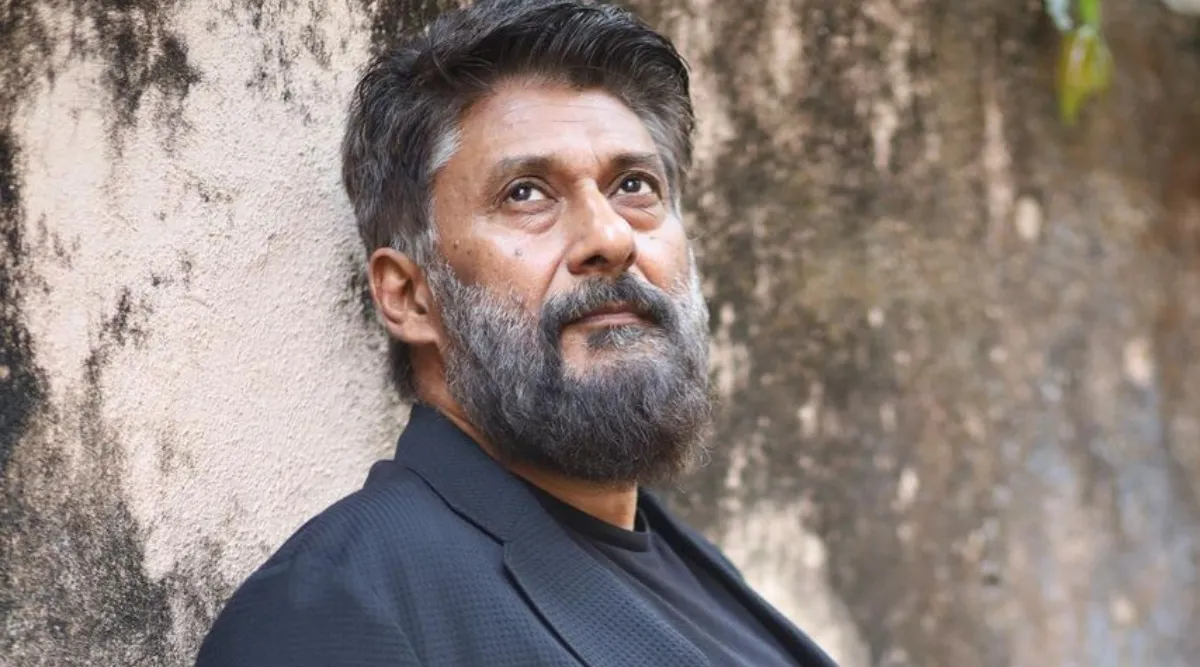
Vivek Agnihotri appointed as an expert member on Raj Kapoor Lifetime and Special Contribution award committee
8:46 AM
Chaitanya Marpakwar (THE TIMES OF INDIA; December 12, 2022)
Mumbai: The Shinde-Fadnavis government recently re-constituted close to a dozen state-level award committees for arts, film, culture, singing, and theatre among others. The state’s Cultural Affairs department, which issued the orders recently, appointed The Kashmir Files director Vivek Agnihotri as an expert (non-government) member on the Raj Kapoor Lifetime and Special Contribution award committee along with directors Subhash Ghai, Madhur Bhandarkar, Mohan Joshi and Ved Rahi. Similarly, actor Sumeet Raghavan was appointed as an expert member of films on the state cultural award committee.
The new committees are all headed by Cultural Affairs Minister Sudhir Mungantiwar of the BJP. “Close to a dozen such state-level award committees related to arts and culture, films have been reconstituted recently. The state’s Cultural Affairs department has several such committees that decide on giving state-level awards. There are members appointed from within the government and there are non-governmental expert members who are picked from the field,” said a senior government official.
Aap aage badho hum aapke saath hain, says Maha Cultural Affairs Minister Sudhir Mungantiwar to Bollywood
8:47 AM

At the recently held 67th Wolf777news Filmfare Awards, Deputy Chief Minister Devendra Fadnavis and Sudhir Mungantiwar, Minister of Cultural Affairs, Government of Maharashtra, stressed on how the government is creating policies that will bring ease in doing business to support the film industry
Rachana Dubey (BOMBAY TIMES; August 4, 2022)
The 67th Wolf777news Filmfare Awards recently concluded in Mumbai amidst great pomp and show. The evening that celebrated the finest filmmakers, artistes and technicians in Hindi cinema also spotlighted the greatness of the state of Maharashtra, which partnered with the event as a part of the Azadi Ka Amrit Mahotsav initiative. The evening began with Deputy Chief Minister Devendra Fadnavis and Sudhir Mungantiwar, Minister of Cultural Affairs, Government of Maharashtra, lighting the ceremonial lamp. It was followed by an ode to the cultural heritage of the state and a speech by Sudhir Mungantiwar that highlighted the strong connection between the Hindi film industry and the state.
“Yeh baat sahi hai ki jis bhoomi pe hum hain, iss bhoomi se hi 1913 mein pehli shuruat Dadasaheb Phalke ne ki Raja Harishchandra banake… Jab main Marathi bhasha ki film ki baat karta hoon, toh uski pehli film, Ayodhyecha Raja, 1932 mein V Shantaram ji ke nirdeshan mein bani,” said Mungantiwar.
Talking about how Bollywood is the pride of the state of Maharashtra, he added, “The film industry will always have our support. It’s an industry that brings this state its aan, baan aur shaan. Aaj hamare upmukhyamantri Devendra ji aur hum yahan yeh batane ke liye upasthit hai ki aap aage badho hum aapke saath hain. We are working towards creating policies that encourage the film business to thrive in the state and encourage filmmakers to shoot here.”
“We are rich in geographical beauty. Yahan aisi sundar-sundar jagahein hai ki Switzerland jaane ki aavashaykta nahi hai. Bharat ka Tiger Capital Vidarbha mein hai, jungle hamare paas hai, nadiya hai, bahut paani hai, we have a lot of biodiversity, too. The state is rich in cultural and historical heritage. The film industry doesn’t just entertain all of us, it makes us think and reflect. It influences us in so many ways. When I arrived here, I was thinking of the first love letter I wrote to my wife, which had a Hindi film song in it. And when she had welcomed me into her maiden home, she, too, was inspired by a Hindi film song to convey her emotions. This industry has a role to play in everyone’s life. The Filmfare Awards are not just an acknowledgement of the work that the industry puts in, it’s also a form of encouragement to the industry that relieves everyone’s stress,” said Mungantiwar.
Sending his wishes out to the whole industry and hoping that it grows from strength to strength, he added, “Main bhagwaan Siddhivinayak ke charno mein prarthana karta hoon ki jo desh ki chitranagri Mumbai mein hai, yeh bahut fale-fule itni aage badhe ki jitna GST film industry ne pichle paanch saal mein nahi bhara uska dus guna woh agle saal mein de sake, itna vyavasay usko mile.”
In his address, Deputy Chief Minister of Maharashtra Devendra Fadnavis said, “Mumbai is the entertainment and economic capital of India. We are very proud of our film industry. Main aisa maanta hoon ki jo hamara Bollywood hai usne duniya mein apni ek pehchaan banayi hai. Regional film industries are also making a name for themselves. Hamari Marathi film industry toh pehle se hi ek apni alag pehchaan rakhti thi. Lekin aaj jis prakar se dakshin ki filmon ne hamare desh mein hungama machaya aur duniya mein ek naya chitra tayar kiya hai, mujhe aisa lagta hai ki ek bahut hi naye daur se aaj hamari film industry guzar rahi hai. This industry doesn’t merely entertain, it creates employment and gives wings to dreams. We are working on creating policies that bring ease in doing business here. We hope to facilitate whatever the industry requires in various areas for its smooth functioning. The new government in Maharashtra is for everyone and for the film industry, too.”
Vanity vans strike ends after meeting with Transport Minister; association to meet State Finance Minister
8:19 AM

Association hopes meetings with the State Finance Minister and Transport Minister will help ease their burden
Hiren Kotwani (DNA; December 17, 2018)
Within three days of the announcement of an indefinite strike by All Camper Van Owner’s Association, which provides vanity vans for B-Town celebrities and film production, it has been called off. This was the members’ way of protesting against the state government for charging ‘exorbitant Rs 1,25,000 per van annually’.
However, with several A-list stars like Ajay Devgn, Akshay Kumar, Saif Ali Khan, John Abraham having films under production currently, we hear the association decided to end their protest, albeit for now. Ketan Rawal, president of the association reveals, “We called off the strike after State Transport Minister, Vijay Deshmukh, assured us that they will look into our grievance and decide on it by January 15. Moreover, even the film industry guild and affiliated associations requested us. So, on the basis of these factors, we decided to end our strike.”
He says that all over India, vans are charged Rs 12,500 each as annual taxes. “But, for the same van, Maha Govt is charging 10 times the tax, Rs 1,25,000. And if that’s not bad enough, only this government taxes camper vans at per square meter.”
Interestingly, in the pre-GST era, vanity vans were certified under the ‘Rent-A-Cab’ category and were required to pay their service taxes accordingly. “Even the RTO permit calls vans as ‘Rent-a-Cab’. That time, we had service tax, which we paid as per the category. Now under GST, we’re no longer ‘Rent-a-Cab’, but ‘Tangible Goods’,” he says adding, “Moreover, we are also being told to pay for the last five years according to ‘Tangible Goods.’ When we informed the authorities that the last five years, we charged our clientele the service tax as per the category allotted to us, we are told that it’s not the department’s fault but ours and we have to pay the appropriate penalty.”
He says that by way of this correction by the department, each vanity van owner is shown a liability of Rs 2-3 crores of the last five years. He adds, “The department is saying that tax was paid under the wrong category and the correction has to be done because it’s our fault.”
So, the ‘new unreasonably high taxes’ and last five years’ penalties because of ‘Rent-A-Cab’ catergorisation by the authorities before GST came into effect are the two major issues the association is fighting against. Rawal sums it up, “On December 19, we will meet Sudhir Mungantiwar, the State Finance Minister in Mumbai and discuss our predicament because taxes come under his department. We’re hoping for the best. After this meeting, we’ll decide on our next course of action. Also, as assured by Minister Vijay Deshmukh, they will decide on the categorisation and our grievances by January 15. So we’re biding our time for now.”
Nana Patekar urges government to slash tax on performing arts to 9 per cent
8:10 AM

Upala KBR (MID-DAY; January 31, 2018)
Close on the heels of the Goods and Services Tax (GST) Council’s decision to increase the threshold limit for tax exemption on tickets for theatrical performance to Rs 500, from the earlier Rs 250, Nana Patekar intends to bat for further reduction.
The council’s decision resulted from the constant plea of the performing arts community, which has been battling the 18 per cent tax levied on tickets priced over Rs 250. The slab, they say, has had an impact on footfalls.
However, Patekar hopes that the government can further slash the tax percentage to half to address the community’s concerns. “I connected with Sudhir Mungantiwar [Maharashtra’s cabinet minister of finance, planning and forests departments] and asked him to reduce the tax percentage to half. While communication has halted after he had a throat surgery, I plan to take up the issue again. I will be happy if they eliminate all taxation on this [entertainment] community since it is impacting us immensely.”
Although actors of his calibre can earn a sizeable share for projects by procuring them from the producers, Patekar says it is the artistes who eventually suffer. “Humko kya hai? Hum producers se lenge. But what about the writers, directors, cinematographers and other technicians? You are applying GST on everything. This should not happen,” says the veteran actor.
The impact of GST will deliver a big blow to the movie industry
8:06 AM

While the film industry is divided over the revised GST rates on movie tickets, BT delves into the matter to find what's on the minds of the movers and shakers...
Rachana Dubey (BOMBAY TIMES; June 14, 2017)
 With the Goods and Services
Tax (GST) implemented from July 1, getting watching movies might turn
out to be a costlier affair in several parts of the country. Initially, a flat GST of 28% was levied on all movie tickets, regardless of their price. However, on Sunday, Union Finance Minister Arun Jaitley announced
revised GST rates, where in tickets costing Rs 100 and below were brought
under the 18% slab, while those costing higher than Rs 100 will continue
to fall in the 28% slab. While the industry feels that the rates are
still very high, what has irked
them even more is the possible implementation of a local body tax (LBT),
which will vary across the country, making movies the only
product/service with dual taxation. However, levying LBT is at the
discretion of individual states. For example, while reports suggest that
states like Maharashtra, Gujarat and Rajasthan are already empowering
their local bodies to levy entertainment tax over and above the GST,
states like Kerala have decided against the idea.
With the Goods and Services
Tax (GST) implemented from July 1, getting watching movies might turn
out to be a costlier affair in several parts of the country. Initially, a flat GST of 28% was levied on all movie tickets, regardless of their price. However, on Sunday, Union Finance Minister Arun Jaitley announced
revised GST rates, where in tickets costing Rs 100 and below were brought
under the 18% slab, while those costing higher than Rs 100 will continue
to fall in the 28% slab. While the industry feels that the rates are
still very high, what has irked
them even more is the possible implementation of a local body tax (LBT),
which will vary across the country, making movies the only
product/service with dual taxation. However, levying LBT is at the
discretion of individual states. For example, while reports suggest that
states like Maharashtra, Gujarat and Rajasthan are already empowering
their local bodies to levy entertainment tax over and above the GST,
states like Kerala have decided against the idea.
18% IS TOO SMALL A RELIEF
Associations representing single-screen owners and multiplex chains met Maharashtra Finance Minister Sudhir Mungantiwar on Monday, to discuss the implementation of the new taxation scheme among other things. Nitin Datar, President of COEAI (Cinema Owners and Exhibitors Association of India), who was at the meeting, told BT, “Some exhibitors are happy that GST rates have been revised; it will bring in some uniformity in the tax structure. Earlier, while some states didn't levy any entertainment tax, some were levying 45% or more. However, smaller centres, where the tax rates were much lower than 18%, are likely to feel the heat. Of the 2,100 films made in India annually, only 400 are in Hindi. The rest are all regional films, of which few make a mark at the box office, despite being tax-free. Regional films across the country will be in a mess because for them, 18% and 28% are still very high figures. They shouldn't have been taxed over 5%, given that they incur more losses than profits. Regional producers employ so many people despite their losses. For them, it will now be a fight for survival. Also, there's no clarity on the structure and implementation of local body taxes either.“
Deepak Asher, President, Multiplex Association of India, says that 18% GST on cinema tickets priced under Rs 100 is too small a relief. The mathematics is simple: Tickets priced below Rs 100 form roughly 10% of the total number sold, which is around 6% of the revenue. Also, with the current rate of tax on cinema exhibition across India being around 19.5%, the new rates can prove to be detrimental, especially when they're clubbed with local body taxes. He rues, “We are grossly disappointed because this will hamper growth. Cinema halls across the country have been downing shutters over the last two-three years, even in states where the tax rates were lower than 18%. Regional films that were so far exempted from entertainment tax will land in a suicidal situation with the new tax regime. Smaller multiplexes in the interiors depend on these movies. What will they do? We also have to pay an additional entertainment tax that the local municipal bodies will levy, depending on various factors. Where does that leave us?“

HIKING TICKET RATES NOT AN OPTION
Modest estimates suggest that India approximately has 9,000 screens, of which roughly 4,000 are in the Southern states of Tamil Nadu, Kerala, Andhra Pradesh, Karnataka and Telangana, where most movies screened are in regional languages. Asher continues, “On multiple occasions, we requested that cinema be taxed lightly because it helps generate income, employment, add more screens and check piracy and black marketing. However, not only have we been placed in the 'sin industry' bracket, we have also been taxed heavily in two layers. And, we can't even escalate ticket prices beyond a point because that will affect consumer footfall. Only when we have more clarity on local body taxes can we decide the way forward.“
If the municipal bodies choose to do away with the local body taxes, cine-goers in states like Maharashtra and Delhi could gain from the 28% GST rate, since the existing rate in these states is around 38% to 40% on an average. On the other hand, it will have an adverse effect on states like Punjab, Andhra Pradesh, Telangana, Gujarat and Chhattisgarh where the rates were much lower before. Vikram Malhotra, producer of movies like Noor and Airlift, says, “The government has missed the only chance it had; they could have corrected so many flaws in the existing tax structure. To begin with, this is an expensive business, with very little scope to cut corners. Talent is the costliest element in my scheme of things and since it's based on an individual's demand and supply, I can't tackle its cost. For producers, it's a squeeze situation - we can't pass on our cost pressure to the audience, we have to tackle organic industry competition from every corner and grapple with dual taxation as well.“
INDUSTRY SIDELINED
A few days prior to meeting the state Finance Minister, a delegation comprising studio honchos, producer bodies and Censor Board chief Pahlaj Nihalani had met Maharashtra Chief Minister Devendra Fadnavis and Union Minister Venkaiah Naidu, requesting some relief for the entertainment industry. Filmmaker Mukesh Bhatt, the former chief of the Film and Television Producers' Guild of India, says, “Successive governments were made aware of our situation, but nobody has done anything for us. How much tax do they expect us to pay when the business isn't as great as they think it is? Most countries in the world don't tax their entertainment industry the way we do. With this so-called One Country One Tax scheme, they will ensure that our industry dies of breathlessness. Eventually, dubbed Hollywood films will take over.“
In fact, over the last couple of weeks, representations have been made to various power lobbies to ensure that the film industry doesn't fall under heavy taxation, but in vain. Siddharth Roy Kapur, the current chief of the filmmakers' guild, says, “The industry does appreciate the revision the GST slab on cinema tickets. However, we believe that the Indian film sector deserves to be taxed at a much lower rate to encourage further investment, employment and growth, which in turn will lead to higher tax revenues for the government. We also urge local bodies across the country to avoid imposing additional entertainment taxes.“
Arjun N Kapoor, who has produced Rustom, points out how America has used films to establish its supremacy in the space of art and culture. “I don't know why our government doesn't see that potential in our films. If the tax structure was friendlier, we could do so much with our stories. Besides, we'd also contribute immensely in the space of employment and revenues.“
Producer-distributor N R Pachisia, who was also part of the delegation that had met Fadnavis earlier, says, “I'm glad to see Arun Jaitley help the film industry with revised GST rates. Though the government has been considerate, the final impact is yet to be seen. States like Punjab had no entertainment tax so far. While Marathi and Tamil cinema had tax exemptions, tax was nominal for Telugu and Bengali cinema. With the new rates ready to be implemented, we'll have to wait and watch how the situation unfolds.“
SOUTH INDUSTRY RAISES CONCERNS
Abirami Ramanathan (president, Tamil Film Chamber of Commerce and president, Chennai Theatre Owners Association) believes that the proposed GST wouldn't impact Tamil cinema to a large extent. He says, “Only a few theatres in the city charge Rs 120 per ticket. It's less than Rs 100 at the remaining cinema halls. So, I don't think the new GST will affect the business.“
However, actor Vishal (president, Tamil Film Producers Council, and general secretary, South Indian Artistes' Association) feels that price revision is necessary to cushion the impact of the new GST rates. He says, “We will appeal to the state government to remove the cap on ticketing to break even. Since 2009, there has been no revision in ticket rates (the maximum that a multiplex can charge is Rs 120). Of course, certain movies enjoy tax benefits (Thirty per cent entertainment tax is waived off for films that are titled in pure Tamil and have procured U certificate), but the fraction is quite nominal. I believe that theatre owners and distributors should be allowed to decide the price of tickets of every film - big or small - according to its capabilities. In Telangana, the government had announced flexible pricing policy to not burden the audience. For instance, if it's a Rajinikanth film, everyone would want to see it in the first three days, irrespective of the price. So, we should be able to increase the rates during the weekends and bring it down on weekdays so that the other section of audience can watch it, too. Also, we should focus more on the transparency in BO collections. These two moves should help us tackle GST.“
A senior member from the Kannada Film Producers' Association said, “While the reduction of GST on single screens comes as a temporary relief, we have a bigger problem to contend with. Till now, our films were completely exempted from taxes, but with the multiplexes having the same tax rates for all languages, it will hit our consumers harder. We still are wondering how to get this problem sorted.“ The Kannada film industry is hoping to ask the state government to waive off their share of the GST, given how the new tax will be equally split between the Centre and the state. Whether the state government will continue to lend its support to the local industry is the current topic of concern in Sandalwood.
-Lakshmi.V@timesgroup.com and Sunayana.Suresh@timesgroup.com

Multiplex rates may dip if govt extends tax relief
2:13 PM
Sujit Mahamulkar (THE TIMES OF INDIA; August 14, 2016)
 If this development has a
happy ending, movie-goers may end up paying less for tickets at
multiplexes. The Multiplex Association of India (MAI), that
represents more than 18 cinema chains operating over 400 multiplexes
across the country, has written to finance minister Sudhir Mungantiwar,
demanding reduction in entertainment tax to 20%, which is currently 45%
in Mumbai and 40% in the rest of the state.
If this development has a
happy ending, movie-goers may end up paying less for tickets at
multiplexes. The Multiplex Association of India (MAI), that
represents more than 18 cinema chains operating over 400 multiplexes
across the country, has written to finance minister Sudhir Mungantiwar,
demanding reduction in entertainment tax to 20%, which is currently 45%
in Mumbai and 40% in the rest of the state.
Sources said the minister may be inclined to consider the proposal, but only if multiplex owners pass on some benefits to movie-goers by reducing ticket prices. Any relief would be well received by movie-goers. However, a decision has not been taken yet. A meeting with MAI may take place in September, added sources. When contacted, Mungantiwar said, “A decision about multiplexes has not been taken yet.“
MAI represents more than 130 multiplexes in the state with over 500 screens. Apart from the entertainment tax issue, MAI has also pointed out administrative difficulties related to licence renewal, permissions and clearances. “It is extremely difficult for a national chain of multiplexes, having 20-25 properties in a state, to deal with multiple permission clearances every year,“ said Deepak Ashar, president of MAI in a memorandum submitted to the finance minister. Permissions and licences permitting payment of entertainment tax on a weekly basis, getting a fire safety NOC, renewal of PWD electrical and civil licence, health, canteen, hoarding and neon licences should be given for five-year periods instead of on an annual basis, demanded MAI.
Given that ticket rates are very high, it is possible that the state may consider extending concessions if the rates can be brought down. Ashar, however, said there may not be any cut in ticket prices even if entertainment tax was reduced.
He said the state would get more revenue though. “I am sure the state would get more revenue through entertainment tax and investment in the industry will be viable in the state. And people will get more options - more multiplexes and screens,“ he added.
 If this development has a
happy ending, movie-goers may end up paying less for tickets at
multiplexes. The Multiplex Association of India (MAI), that
represents more than 18 cinema chains operating over 400 multiplexes
across the country, has written to finance minister Sudhir Mungantiwar,
demanding reduction in entertainment tax to 20%, which is currently 45%
in Mumbai and 40% in the rest of the state.
If this development has a
happy ending, movie-goers may end up paying less for tickets at
multiplexes. The Multiplex Association of India (MAI), that
represents more than 18 cinema chains operating over 400 multiplexes
across the country, has written to finance minister Sudhir Mungantiwar,
demanding reduction in entertainment tax to 20%, which is currently 45%
in Mumbai and 40% in the rest of the state.Sources said the minister may be inclined to consider the proposal, but only if multiplex owners pass on some benefits to movie-goers by reducing ticket prices. Any relief would be well received by movie-goers. However, a decision has not been taken yet. A meeting with MAI may take place in September, added sources. When contacted, Mungantiwar said, “A decision about multiplexes has not been taken yet.“
MAI represents more than 130 multiplexes in the state with over 500 screens. Apart from the entertainment tax issue, MAI has also pointed out administrative difficulties related to licence renewal, permissions and clearances. “It is extremely difficult for a national chain of multiplexes, having 20-25 properties in a state, to deal with multiple permission clearances every year,“ said Deepak Ashar, president of MAI in a memorandum submitted to the finance minister. Permissions and licences permitting payment of entertainment tax on a weekly basis, getting a fire safety NOC, renewal of PWD electrical and civil licence, health, canteen, hoarding and neon licences should be given for five-year periods instead of on an annual basis, demanded MAI.
Given that ticket rates are very high, it is possible that the state may consider extending concessions if the rates can be brought down. Ashar, however, said there may not be any cut in ticket prices even if entertainment tax was reduced.
He said the state would get more revenue though. “I am sure the state would get more revenue through entertainment tax and investment in the industry will be viable in the state. And people will get more options - more multiplexes and screens,“ he added.
Subscribe to:
Posts (Atom)