Showing posts with label Sudhir Mishra. Show all posts
Showing posts with label Sudhir Mishra. Show all posts
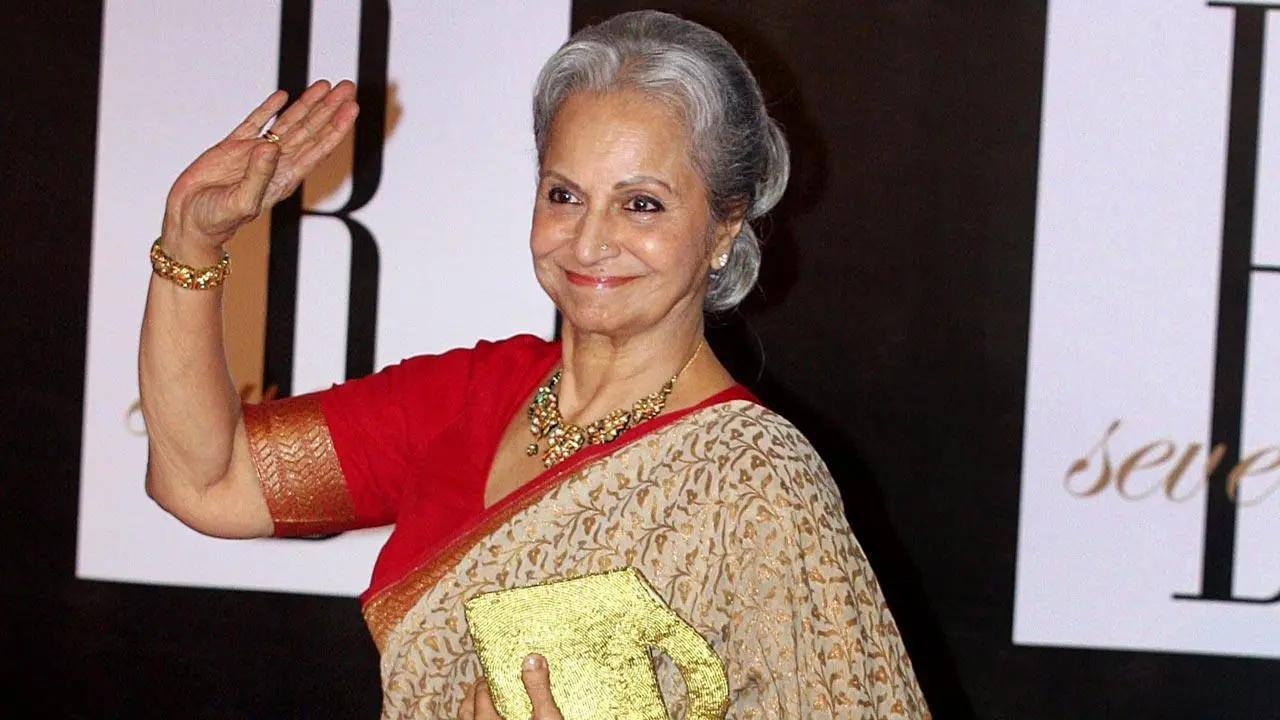
Waheeda Rehman to make rare screen comeback as Mahatma Gandhi’s mother Putlibai in Manoj Bajpayee starrer
4:36 PM
Iti Shree Misra (BOMBAY TIMES; September 21, 2026)
It took more than a few sittings and a promise of the best food in Lucknow to coax Waheeda Rehman back onto a film set. After a brief, memorable appearance in the 2021 OTT film Skater Girl, the veteran actress had been reluctant to take on new assignments, citing age and a desire to step back – until now. The actress will be seen in a major role in Sudhir Mishra and Anubhav Sinha’s next.
The pitch that worked
Director Sudhir Mishra was adamant about having Waheedaj i in his Mahatma Gandhi film, and producer-director Anubhav Sinha backed him with a series of patient meetings.
“Waheeda ji was rather unsure of coming back to acting in another movie. But Sudhir was very keen on having her as part of the cast,” Sinha says.
Over several rounds of conversation, Mishra reassured her about the role, while Sinha leaned into charm and cuisine. “I promised to feed her the best food in Lucknow,” he says.
Waheeda Rehman, who had visited Lucknow a long time ago and wasn’t very familiar with the city, finally agreed. She is now in Lucknow, shooting for the film and playing what the team describes as a very important part although not Putlibai, as some reports suggest.
Sinha further shared, “Waheeda ji found the script very exciting and the character very interesting but she was reluctant and unsure if she wanted to come back to acting. But Sudhir and my insistence and the story convinced her enough to say yes to the role.”
For the two filmmakers, securing Waheeda Rehman was less about casting and more about legacy. Sinha says that sitting with her to discuss cinema and this particular script has been ‘an incredible honour’.
A 21-day chapter, a starry ensemble
The yet-untitled film, currently working under the title Gandhi And My Mother, focuses on a lesser-known 21-day chapter from Gandhi’s life. Manoj Bajpayee essays the Mahatma, reuniting on screen with Saurabh Shukla after Satya (1998) and Aarakshan (2011).
The ensemble also includes Divya Dutta, Aamir Bashir and Ashwath Bhatt in significant roles. Divya, incidentally, plays Sushila Nayyar, Gandhi’s personal physician and close associate, who authored several books on her experiences with him. Her brother Pyarelal Nayyar served as Gandhi’s personal secretary.
“For me to be playing such an iconic character is a real high”: Divya Dutta on playing Sushila Nayyar
For Divya, signing up for the biopic felt like a double win. “For me to be playing such an iconic character is a real high. Being on the set and just playing the role takes me back to that remarkable era and that feels amazing,” says the actress.
The film also marks her first collaboration with Mishra, a filmmaker she has long admired. “To be part of the cast of such a talented and amazing director is like a dream come true,” she says. With producer-director Anubhav Sinha, meanwhile, it’s reunion time. “This is my second film with Anubhav who’s an amazing friend and being back on the set with him is like party time,” Dutta adds.
Though Divya and Manoj Bajpayee have acted together in several films earlier, this will be the first time they share screen space in the same frame, a milestone she notes with quiet excitement. In a project that blends legacy, craft and camaraderie, Dutta’s enthusiasm is simple, “It’s an all-out win-win situation for me!”
There should be one or two films made on Gandhi every year for the next 100 years-Anubhav Sinha
9:44 AM

Anshul Chaturvedi (BOMBAY TIMES; October 2, 2026)
Hindi cinema doesn’t have a great track record, at least of commercial success, when it comes to projects around the generation of freedom fighters. Not many movies have been made, fewer still have connected to the larger audience. Is there any point in making more movies on characters such as Mahatma Gandhi? Anubhav Sinha says yes, that filmmakers have a responsibility to keep making these films, in the hope that maybe the next one will work, or the one after that, or the one after that...
Why should another film be made on Gandhi today?
I feel there should be one or two films made on Gandhi every year, for the next hundred years. His contribution to the modern history of our country is just amazing. The weaknesses he shows, the strength that he shows, the tough decisions that he takes…
I was telling my son ki Gandhi woh aadmi tha jo kehta tha ki tum log jhagda band nahi karoge toh main khana nahi khaunga. Toh mera beta hasne lag gaya. Bola toh? Toh maine kaha log jhagda band kar dete thay. Ek baar nahi hua, kai baar hua. Ye uss aadmi ka power tha. Ambedkar ke, Gandhi ke views sabko maloom hain. Par jab Constituent Assembly banti hai toh woh Nehru se jaakar kehta hai ki Constitution inse likhwao. Because yeh desh ko behtar samajhte hain. Desh ke vanchiton ko behtar samajhte hain. Aur woh aadmi jo criticize karta tha, woh aisa karne ko agree kar deta hai. Woh Congress party join karta hai. Yeh bade unique log thay. Ambedkar ho, Gandhi ho, Patel ho. Yeh baat toh sach hai na ki Patel ko vote zyada mile thay aur Gandhi ne kaha ki nahi Nehru. Toh woh step back kar jaate hain, aur aapko kahin bhi Gandhi aur Patel aur Nehru ke beech mein koi animosity ya koi sarcastic remark kahin dekhne ko nahi milta. Ye bade unique log hain! Patel, Nehru, Gandhi, even V P Menon. Inn logon par toh itna zyada kaam hone ki zaroorat hai. Bhagat Singh. Bose. Matlab aapas ke itne contradictions...
A counter thought: We had a large number of Bhagat Singh movies in 2002. Five came out together. And maybe some of them did not even recover their cost. Is the audience willing to consume all those movies if you make them?
We have to understand that we are not making glucose biscuits. These are films, and these films live. A glucose biscuit is consumed with a cup of tea and it’s over. Then you buy a new packet. This is a different ball game. This is an art form. And every film, every such film will leave an impact on X number of people.
And slowly for all we know that X number of people will swell into a much larger number, which it should and it will. So just because two films on Bhagat Singh did not work, it doesn’t mean that the audience is not interested in him.
And also, those films were made with people who were in their thirties. When Bhagat Singh started, he was 17. He was born in 1907. He died in 1931. 24 saal mein toh phaansi ho gayi thi. Toh 17 saal ke ladke ke saath Bhagat Singh kab bani? Jab tak aap 17 saal ka Bhagat Singh nahi dekhenge, aap Bhagat Singh ko samajh hi nahi sakte.
A second counter thought: India is fascinated, captivated with the persona of Subhas Bose. And I remember vividly when Benegal’s The Forgotten Hero was released. I went to Kanpur to meet Captain Lakshmi Sehgal (who was then 90 years old), to ask her what she thought of the portrayal of her character. She said, “Beta abhi I have not watched the movie, because it is not running in a single hall in Kanpur.” And I was taken aback. Sahara was the distributor, I had gone from Lucknow, it was on Bose – and the INA veteran hadn’t been able to find a show in her city. As an audience, do we care about these movies – at least proportionate to how we apparently idolize those leaders?
Those are the predicaments of the cinema being run by corporations, right? See, any art form is very intimate, very personal. But cinema is so capital intensive that it becomes a corporate-run art form. So it will have these hiccups and roadblocks. But that still doesn’t mean that the next Bose should not be made or the one after that should not be made – or the one after that should not be made. It is our responsibility as filmmakers to keep on doing it because these people have played the most significant part in the making of India that we live in and that we chant about. We will never be able to contribute to India like they did.
That’s a legit POV too. Hollywood never tires of making movie after movie on the men who fought for them in WWII, and it just keeps coming. And they never say, we are now tired of seeing what our soldiers did. From the Battle Of The Bulge (1965) to A Bridge Too Far (1977) to Pearl Harbor (2001), Saving Private Ryan (1998), to Dunkirk (2017)… there are dozens, literally.
True. And we do not; we do not have this argument about the other side of the spectrum. So are you telling me that if a film about Air Force warfare doesn’t work, we should stop making films about Air Force warfare? No! It didn’t work. The next time it will work. Maybe the time after that.
Maybe a Safed Sagar comes in 2026 and it will sort of restore the perception.
Yeah, yeah. Maybe in 2047, a Netaji Subhas Chandra Bose film will work. We have to keep making it. And it’s not easy to make these films. It’s very difficult to make these films. But that’s the game. That’s the business of films.
So you say films on Gandhi should keep being made. There are films on Godse also now. What is your take on that?
But why shouldn’t they? I am not opposed to it. There are people who believe in Godse. They should make films about Godse. There are people who believe in Savarkar. They should make films about Savarkar. There are people who believe in Nehru. They should make films about Nehru. These people, whether it’s Godse or Savarkar – they have a place in history, right? They have a definite place in history, and their stories should be brought to the table.
We should not live on WhatsApp myths. There should be a biopic on Godse. There should be a biopic on every such person who played a part in the making of this nation. Because we can have these n number of dining table conversations about them, but we have a responsibility to acknowledge them, to recognize them, to talk about them, to know them. I’ve just ordered a book by Savarkar. I want to read Savarkar. I want to know Savarkar. And why shouldn’t I?
You’re saying, essentially, that people of every single spectrum/affiliation should understand every other spectrum as well to know what the actual debates were, rather than taking this condensed version 70 years later and arguing over it?
I think they were all human beings. I’m reasonably certain that they all made mistakes. But there was something going on between 1915 and 1950. There was something going on, and there were significant things going on. People losing lives, people changing history’s course. According to me, there are 200 films between 1915 and 1950. 200. 200 films minimum.
The Komagata Maru ship tragedy is not explored yet. A whole lot of things, like even Bose. Bose’s days in Germany when he goes to meet Hitler, there’s a film there. You can agree, disagree with anybody. That’s besides the point. But there are at least two movies there. There’s maybe more. What happened in Singapore?
What was Bose doing in Singapore? There’s a story there. There’s a film there. I would love to make a love story between Nehru, Gandhi and Patel. I think it’s a love story. It’s a beautiful love story.
Did you read up on Gandhi earlier as well?
Yeah, There’s... In my office, in my room, there’s only one picture on a wall, which is Gandhi. And for a reason. I try to visit every place that Gandhi visited. I go and sit there alone. I went to Bhitiharwa where he started his first Indigo Revolution. I sat there for two hours. I was sitting in the cottage that he made with his own hands. I sat under the tree that he planted. I… sort of spent time with him. One thing I miss terribly is that I never met him.
Any movie you think that got Gandhi’s persona right? We all began by seeing, of course, Attenborough’s Gandhi as a first starting point.
That’s a very hagiographical film.
Irrespective, but that’s the first time most Indians saw Gandhi on screen, so that remains your initial definer of what... it’s like seeing Arun Govil as Ram.
Yeah. No, there’s no other film on Gandhi, actually, and there’s none that treats Gandhi as a human being, which this film is doing. Just as a human being. I mean, we forget that the first time Gandhi ever got political, it was a rather racist cause. In South Africa, he was saying, ‘Don’t treat Brown people like Black people. Treat them like White people.’
But then he corrects himself. By the time he comes back in 1915, he’s a different man, and between 1915 and 1948, he’s a different man. And he’s changed over time. He’s constantly improving himself and at the same time not rejecting his mistakes. You read his autobiography, he talks about his stint with non-vegetarianism. He talks about that night when his father passed away.
By the time he wrote this book, he was a Mahatma already. He didn’t need to write all that. He didn’t need to write all that. His non-vegetarianism was between him and his friend and could easily have been buried. You and I wouldn’t talk about it today. But he wrote it in his autobiography. And that’s when I... And it comes on the fourth page or the sixth page, and I was like, “Whoa. What a man.”
We haven’t seen a film of that kind about Gandhi, the kind of truthfulness and faithfulness he has in his narrative about his own life without being worried of, uh, its interpretations.
He wrote what he lived. That’s a lot of courage. I was recently reading something that Marcus Aurelius said – that nobody knows you fully well. There are 17 sides that are inside of you. Nobody knows you. Even if you don’t know yourself very well. Then why should you worry about what people think of you? Because they don’t know you. And Gandhi explores himself in that book, and, he says everything that he knows about himself.
Some of the pictures are dark, some of the pictures are bright, but he puts them out, and he allows you to interpret him in the manner you choose to.
What was your buy-in into the project when Sudhir discussed it with you?
The first thing was that I... The first thought that came to mind was, how can I steal this story? (laughs). Can I... Should I ask him? Can I? Because he had come over. He comes over home quite frequently in the night, sometimes for dinner, sometimes for post-dinner coffee or ice cream, and we sit and we talk about films and life and the world. And one of these days, he told me that story, and I actually considered asking him, ‘Do you want... Do you mind giving this story to me?’ But then I didn’t, because he was so passionate about it. So, I thought I’ll get associated with it as a producer.
No, but what stayed in the story? I don’t know that part.
The fact that he was looking at Gandhi in such a personal humanist vision. A man who could make mistakes.
Betrayals will occur but churning will also happen-Sudhir Mishra
8:40 AM

Sudhir Mishra says the story isn’t Sonam Wangchuk’s, but of a generation seeking its voice amid India’s social churning and demanding to be heard
Sudhir Mishra (MID-DAY; July 19, 2026)
I don’t belong to the haloed tribe of left liberals who, every time the compromises of their own shitty lives burst up all around them, suddenly find some cause. I think sticking to one’s ideas and making films that allow you to make difficult films is a much more honourable path than farting around on X, which I sometimes do. Beg your pardon. I am who I am.
I have made Hazaaron Khwaishein Aisi [2005], and it was about a generation that, in a sense, rejected the idea of a nation, place, and legacy that was given to them by their fathers. They rejected their fathers, both metaphorical and real. In a sense, they felt orphaned. So they latched on to something.
In that churning, there were many wrong things that happened. History is never tidy. Every upheaval carries within it both emancipation and injury. Beneath every settled order lie voices waiting to be heard, lives waiting to be acknowledged, and dignities waiting to be restored. When they finally emerge, they arrive burdened by contradiction, anger, memory, and hope.
So now, there’s another churning, and beyond the shore, I see a man called Sonam Wangchuk. I’ve heard many things about him. I’ve heard about his support for the abrogation of Article 370. There are problems in everybody. There are problems in me, and the man probably has flaws. Some of the demands around him are odd and even undemocratic. They say, “Put so and so in place of so and so!” Not surprising, since most liberals in India are classists.
But the point is not Sonam Wangchuk. The point is, again, these young people feeling orphaned, unrepresented, feeling lost again, and, in a sense, rejecting the ideas that are handed over to them by their parents. To them, we owe something.
If they have felt that someone can hold the lifeline and pull them out of a certain morass, or that at least someone is talking on their behalf when no one else is, then maybe it is our job also to listen and hold their hands, in whichever way we can.
I know that the movement itself needs to answer many questions. However, I still think we need to talk to the young. Even though I know, ultimately, almost certainly, some betrayal will occur. But some churnings will also happen.
Chal Cinema Chale: 'I know my country better now,' says filmmaker Anubhav Sinha
10:29 AM

Anubhav Sinha (BOMBAY TIMES; February 4, 2026)
Distribution teams, over years, would regularly inform me – of ten with charts – that “intelligent cinema” does not work in smaller centres or single screens. This came as news to me, because as a youngster I had seen Ardh Satya, Chakra, Dharavi, Khamosh, Jaane Bhi Do Yaaron, Aakrosh in packed theatres – many of them single screens, many of them smaller centres. Apparently, intelligence had since migrated exclusively to metros. I was shown data. Lots of data. And as everyone likes to say, data never lies – though it occasionally misses reasons.
All this while, another idea was quietly taking shape. Earlier in 2025, while working on a script about youngsters in a small town, I realized I had no idea what youngsters in small towns actually did anymore... I felt strangely disconnected from my roots, which is not a great feeling when you’re writing about them. These were not answers available in books, newspapers, or even panel discussions. They needed to be experienced: all over again. Then came the declarations: cinema theatres were dead. COVID had killed them, we were told, and the funeral seemed to be held every Friday.
Meanwhile, films continued to break box-office records with impressive disregard for these obituaries. 2022 gave us The Kashmir Files and Bhool Bhulaiyaa 2. 2023 followed with Pathaan, Jawan, Animal, Gadar 2. The box office was witnessing numbers so large they required new adjectives. And yet, article after article mourned the death of theatres – sometimes with what felt like enthusiasm. One began to wonder who was benefiting from this narrative. Because this was no accident. It was a campaign. It still is. So I decided to go and check for myself.
Multiplex chains are listed companies; their numbers are easily available. They also represent only about half of India’s theatrical business. The other half exists utterly ignored, away from press releases and publicity materials. I wanted to meet cinema hall owners in these cities and ask them what was actually happening. I will admit – since honesty is the theme – that local food was also a motivating factor. We listed forty cities and made a travel plan. The budget file was named Chal Picture Chalein. I had no idea this yatra would soon become about far more than movies – people, society, changing culture, history, and an alarming amount of street food. I had passed through some of these cities before, even visited a few briefly, but never with intent.
This time, the plan – or the lack of it – was to spend a day in each city and pretend that was enough. The team decided the journey should be documented, which is how four air tickets and two cars entered the picture. The first stop was obvious: home. Benaras. I made a firm decision: no fine dining. All meals would be on the street. I would meet anyone who wanted to meet me. A message went out on social media with a phone number.
The Times of India found this intriguing and sent a photographer from Delhi to document my Benaras days. They published a generous spread. Benaras, as it tends to do, took charge of the journey. Over the next few weeks, across 33 cities, I met digital creators, film clubs, theatre workers, literary organizations, vice-chancellors, senior journalists. I visited schools, colleges, universities, newspaper offices, and radio stations. Young people ferried me around on motorbikes, navigating traffic with a confidence I no longer possess.
One morning in Benaras, my understanding shifted. A group of young digital creators invited me for a 6.30 am photowalk, followed by what they called a “breakfast crawl.” They showed me parts of my own city I had never seen, and eateries I had never entered. They knew Benaras better than I ever had.
That morning, I realized something uncomfortable but important: I had been away too long. I am grateful to those youngsters for the reminder. It reset the tone of everything that followed. In every city, I visited cinema halls – some crumbling, some renovated. Some in ruins and some flourishing. Almost unanimously, the owners dismissed two popular beliefs: that theatres were dying, and that smaller centres wouldn’t watch “intelligent cinema.” So why did Mumbai’s data show poor collections for non-massy films?
There were explanations – technical ones – but not ones that fit into headlines. Nor should they. That’s our problem to solve, the audience should just concentrate on liking the films or not. I am also wary of public self-flagellation. “Bollywood this, Bollywood that.” I’ve heard it often, sometimes from people who have made their entire living from the industry. I don’t subscribe to that. Yes, Bollywood is flawed. But then, so is most of humanity. We can return to that later. Friends often ask me what I learned. I don’t have a tidy answer. I may never. When I asked Sudhir bhai (Mishra, filmmaker) what this journey might do to me, he said, “You will never know. But it will show up in your future work.”
That felt accurate, and also safely unquantifiable. The plan was forty cities. Thirty three are done – after days of three to four hundred kilometres of driving, a rotating cast of hotel rooms, and a growing intimacy with unfamiliar beds. It was exhausting. It was also completely worth it. I know my country a little better now.
Satish Shah's energy was unmatched-Sudhir Mishra
8:26 AM

The filmmaker recalls working with the late actor in Jaane Bhi Do Yaaro, saying his rhythm and timing were ‘effortless’
Natasha Coutinho (HINDUSTAN TIMES; October 27, 2025)
Filmmaker Sudhir Mishra, co-writer of the story and screenplay of Jaane Bhi Do Yaaro (1983), fondly recalls working with actor Satish Shah on the film, who died on Saturday at the age of 74.
Sudhir shares, “Kundan (Shah, director) had brought in a lot of new people like Nasser (actor Naseeruddin Shah), Om (Puri) and Satish... out of all, Satish and actor Ravi Baswani were the most comfortable with the idea that it wasn’t a realistic art film. The film was funny and they were completely in tune with the kind of nonsense that Kundan used to talk about.”
Talking about the famous coffin scene, the 66-year-old says, “Renu (Saluja, editor) suggested an intercut. After all, what sense did it make to linger on a dead body? But that’s when Satish began changing his expressions, and it became a pattern. It was the same during the Mahabharata scene.”
Sudhir adds, “The idea of comedy as a farce, yet milking the scene to its fullest, came naturally to Satish. The rhythm and timing were effortless, perfectly in sync with Kundan’s style. Shooting with him was great fun. We once shot for 72 hours at a stretch, but the energy was unmatched.”
Sharing some of his favourite memories from the film and their later collaborations, he says, “I still remember some of those famous lines like ‘Thoda khao thoda phenko.’ I went on to work with him in Mohan Joshi Hazir Ho! (1984) and he was just amazing each time.”
You can’t even name five mainstream filmmakers who are united-Nikkhil Advani
9:53 AM

Rohan Kanawade, Nikkhil Advani
Priyanka Sharma (MID-DAY; September 24, 2025)
Rarely does this emotion strike filmmakers, but when it does, it hits hard. Nikkhil Advani experienced it — that feeling of a filmmaker reminding you of your younger self — when he watched Rohan Kanawade’s Sabar Bonda. “Rohan is the filmmaker we set out to be 30 years ago. But along the way, we had to take other decisions,” he says. “The purity with which Rohan has made the film is beautiful.”
Sabar Bonda tells the story of Anand, who, while navigating the grief of his father’s demise, finds love in Balya. The Marathi film has Advani, Vikramaditya Motwane, Sai Tamhankar, and Nagraj Popatrao Manjule as its executive producers. It’s notable how the movie brought several filmmakers together. Not a rare phenomenon, according to independent producer Shiladitya Bora, who recently told us that mainstream Bollywood filmmakers have more unity than their indie counterparts.
But Advani disagrees. “You can’t even name five mainstream filmmakers who are united. In the 1990s, 44 Aram Nagar was Sudhir Mishra’s office where all of us — myself, Tigmanshu Dhulia, Irrfan Khan, Manoj Bajpayee, Anurag Kashyap — used to hang out. Today, there’s more unity among indie artistes because their struggle is the same.”
As an executive producer, Advani is happy to nurture Kanawade and hopefully ease some of his struggles. Asked whether he felt almost envious while watching the director’s work, and he admits, “When I saw Aligarh [2016], I said, ‘Wow! Hansal [Mehta], what have you done?’ When we saw Udaan [2010], we were like, ‘Who is Vikram!’ I want to be jealous of [good] films when I see them.”
Advani, who made his directorial debut with Kal Ho Naa Ho (2003), knows that preserving one’s voice is far from easy. For Kanawade, he has a simple advice.
“He has to learn from me. I made Salaam-E-Ishq [2007] as my second film. My [approach] was that since nobody is giving me credit for my first love story, I’ll make six love stories. The decision was wrong because it was [born] out of arrogance. But you have to tell yourself, ‘I won’t go against [my instincts]’.”
We've stopped fighting for the other's right to exist regardless of differences of opinions-Sudhir Mishra
9:12 AM

Filmmaker Sudhir Mishra has adapted his grandfather DP Mishra's memoir for his eight-part series Summer Of '76. He talks to us about how it is absolutely possible for different viewpoints and polarising opinions to peacefully coexist in a healthy democracy
Mohar Basu (MID-DAY; July 13, 2025)
On Samvidhaan Hatya Diwas, June 25, a reminder of the Indian Constitution’s suspension during the Emergency, we sat down with filmmaker Sudhir Mishra at his Versova bungalow to discuss his Sony Liv series, Summer Of '76. It’s supposed to be an adaptation of a political memoir by his grandfather Dwarka Prasad Mishra, former CM of Madhya Pradesh — Living an Era.
He clears the air right away saying “it’s not just based on my grandfather’s book”. Then what is it? For Mishra, it’s a retelling of a time that’s never studied with the clarity it deserves. “I have an intimate understanding of the power politics of the Congress and in a very odd way, the politics of India in general. My grandfather had been active since 1939. I’m not totally in agreement with his politics. I’m also my father’s son. My father’s a mathematician. For me, you know, there’s a hypothesis, and it has to be proved. DP Mishra may have been opposed to or followed another kind of politics, like the socialist movement. There was someone called Ramesh Dixit, one of the students who was arrested. So, we took the rights to his life. He’s very close to me, almost like an elder brother. There’s this person called Pushpesh, who is a writer. He was a professor. So he’s also an activist,” he says.
The series is a work of imagination based on the lives they have studied. As Mishra says, “It is roughly based on memories. I was 15 when the Emergency happened. We also have the benefit of hindsight. The Emergency, for me, becomes a metaphor. It’s when the powerful stop listening. What happened during the Emergency was that the connection to the ground was lost. There’s a whole generation of people who did not agree with the idea of India that was being handed down to them by their parents. They thought it was problematic. Summer Of '76 is a bit of everything. It’s a rebellion. It’s a rebellious time, which confronts people in power.”
The eight-part series for Sony LIV begins in a university in Delhi. That’s where the confluence of varied ideologies starts. Mishra says, “Everyone is from different backgrounds. There are characters from Dalit backgrounds for whom political commitment is not a choice — it’s a necessity. There are also Muslims whose parents chose to remain in India, and they wanted to participate in this development. It’s a flux of people who accidentally meet and then it becomes their story — a story of passion, of youth, of young people, and excitement..”
A common dialogue about Emergency is the blatant unconstitutional censorship. Censorship has been a constant in India regardless of the party in power. Mishra tells us, “Artistes find a way to tell their stories. Many times, we are censoring ourselves. There’s also market censorship. ‘You can’t make this film because people say it won’t run’. Or, ‘You can’t make a film with a woman protagonist because it won’t work’. When I was making Yeh Saali Zindagi, the head of the CBFC asked why the title should have ‘Saali’. Even when I was making Hazaaron Khwaishein Aisi, they said, ‘Take out the name of the Congress party’. But if you’re not a sensationalist, and if you have facts behind you, you can make it work. I’m not saying I want censorship, I’ve always opposed it. But sometimes it forces you to avoid the obvious and do something else. There’s a line I use all the time, ‘The shortest distance between two points is a straight line, but the shortest real distance between two points, taking obstacles into account, is never a straight line’. There are always obstacles. So, you have to mark that path and navigate it.”
But censorship in cinema in 2025 has been alarming. A few days ago, mid-day reported how the CBFC’s e-cinema website, which listed all the cuts made to films, went down due to a technical issue. And now it’s clear that people will no longer be able to access what cuts or changes are being requested by the body. Films like Punjab 95, Santosh, Monkey Man, L2 Empuraan, have faced the ire of the CBFC, most not even making it to the release. Mishra says filmmakers need to fight for each others’ rights regardless of their own beliefs.
“We’ve all retreated into our own rooms and platforms. We don’t meet each other like we used to. Something changed after the pandemic. The lockdown disconnected people. That community feeling is gone, which is sad. We have stopped fighting for each others’ right to exist regardless of differences of opinions! Politics has become quite polarizing. But contrast that with the 1970s during the Emergency. People were still taking stands, even if they were ideologically opposed. Everyone should have views, but we must also support the right to another view. Now, obviously, there are extremes — like supporting rape or genocide. I cannot support that. But if we disagree on how the world should be better, and we’re both coming from good faith, then that’s a healthy disagreement. I had a very good friend, we used to have massive fights. We’d yell and scream at night, but in the morning, it was fine again.”
Even at 66, Mishra constantly wants to be challenged. “I’ve had people come up to me and say, 'That’s the crappiest film I’ve ever seen'. And I didn’t agree, but they had their reasons. I remember one boy once told me, ‘Your film was like the binding on a canteen’s menu—it’s ugly.’ It’s the best criticism I’ve ever heard! It’s about having a view, engaging with the film. Now everything is about 'likes'. That word has become a four-letter word. Instead of provoking thought, we want likes. Even among left-leaning or liberal artistes—there’s a kind of toxicity that mirrors the right. I’m not into constant negativity either. A lot of critics sound like there’s nothing to celebrate in India. But I want to celebrate India more. And I have issues with nepotism too—especially the kind of liberal nepotism where people believe genius comes from genes. Nobody owns cinema. It belongs to all who love it. There are kids in Darbhanga making films now.”
One of the prototypes that came out of the ’70s was the Angry Young Man, which everyone says was born out of the rage the common man was feeling at the time. Was there an antithesis to the Angry Young Man?
“The angry young man broke the established monopoly and turned everything on its head. He broke the rules because that was the only way in. That’s why he was called a fixer — because there was no other way for him to enter the system. Not everybody was angry, but a lot of people were. They were not being heard. That’s what the Congress didn’t get at the time. The anger wasn’t directed at a specific figure — it was because people weren’t getting justice. They weren’t receiving what was promised. That’s what the Angry Young Man represented — especially in the Salim-Javed films, right? There were people before that too — like Guru Dutt and Bimal Roy — who had already begun questioning society. Popular filmmakers back then were very connected to the people. They came from among them. That’s not the case now. And that’s the criminal act of nepotism — today, cinema has been handed over to people who have no real connection to the audience. How will you make popular cinema if you’re not connected? Cinema needs healthy popular storytelling. For a while, it happened — with people like Vishal Bhardwaj, Anurag Kashyap, and Imtiaz Ali. They all came from small towns and had that connection. But then those doors shut again. Every few years, the industry needs a correction. Back in the day, the state supported cinema. Pather Panchali wouldn’t have been released without government support. That support made Indian cinema what it was.”
I think I should have done more work-Chitrangda Singh
8:08 AM

Chitrangda Singh with her son Zorawar
Onkar Kulkarni (BOMBAY TIMES; June 19, 2025)
Between career breaks and some critically acclaimed roles, Chitrangda Singh has always chosen what brings her peace. In this conversation, she opens up about personal choices, professional learnings, and the joy of raising her son.
‘When I see some of my old films, I feel I could have done much better’
The actress is honest and realistic when it comes to analysing her own work, performances and choice of roles. She says, “When I see some of my old films, I say… damn, I just threw away the opportunity when I could have pulled it off in much better way. I felt like in some parts of Baazaar, I could have explored the character more. Slowly, you understand that what’s on the paper is not the character that you are supposed to play. The script is your guideline, but acting is beyond that. I worked much harder on Gaslight (on OTT), where I worked on the tone of the voice, the way she looked and moved.”
‘I didn’t like my performance in Saheb Biwi Aur Gangster 3’
Chitrangda mentions that after working on Modern Love Mumbai with Arshad Warsi, she learned to engage more deeply with her characters.
“I was lucky to have Sudhir (Mishra) direct most of my films (like Hazaaron Khwaishein Aisi, Yeh Saali Zindagi and Inkaar). The characters that I played in them are memorable. I also took away a lot from Saheb Biwi Aur Gangster 3, because I did not like my performance at all. Jo paper pe tha maine wohi kiya. As an actor, I should have worked harder in fleshing out the character. For me, that film is a very good example of what not to do. I wanted to hide under a bed when I watched it while dubbing for it. After watching Saheb, Biwi… I worked harder,” she admits.
Does she wish she had done more work? “Yes, I would want to do more work for sure, and I do feel that I should have done more work. A lot of people think that I am too choosy, but that’s not the case,” she explains.
‘I’ve no regrets about the breaks I took in my career’
Many believe that she’s based out of Delhi, however, the actress clarifies that she lives in Mumbai for work and shuttles between both cities, as her family lives in the capital. “People ask me, ‘Do you live in Mumbai or Delhi?’ So, let me put this out here that I live in Mumbai. Many people have family living in other cities, and you keep going back all the time, which I do, too,” she says.
‘Raising a child never felt like an effort’
When asked about raising her son, Zorawar (17), she says, “So many women are doing it. I don’t think I’m this one special case that it needs to be glorified. I don’t think it’s been tough, honestly. Emotionally, yes, it’s tough. But otherwise, I have the means to manage things, and I’m grateful for that. Raising my son has been the most beautiful part of my life. It never felt like an effort. I think that’s the one thing that keeps me rooted and keeps me happy no matter what. Everything else feels like a bonus because you have something which is so beautiful in your life anyway.”
Pahalgam, Gulmarg, Sonamarg, Srinagar: The Kashmir you’ve mostly seen on screen
8:05 AM

Niharika Lal (BOMBAY TIMES; April 28, 2025)
For Bollywood, Kashmir has often meant snowy peaks, chinars, and shikaras. The scenic sites of Pahalgam, Sonamarg and Gulmarg are among the most frequently filmed locations in Indian cinema. Be it the likes of Roja to the recently released Ground Zero, the valley has been woven into our filmi narratives – often becoming a character in itself. Even this year, multiple productions were lined up for shoots in Pahalgam. However, in the wake of the recent terror attack in Baisaran, film shoots might be affected. We revisit the films that were shot in these scenic locales.
Talking about shooting in Kashmir, Sudhir Mishra, who shot his series Tanaav there, told us recently that people were really welcoming, “I just love Kashmiris. They are really compassionate people. The people in Kashmir are really warm, but they are also very sad, so you have to work with that rhythm. I tried to bring out the human aspect. After making Tanaav, I understand Kashmir better. I emotionally connected with Kashmir through the characters. When I direct, I have to feel the pain of the mother, the brother, the son. Conflict zones are complex.”
Speaking about films on Kashmir and how he managed to avoid controversies while making a series about the region, he says, “Most films about Kashmir are made by outsiders, and I don’t think many of them have a deep enough connection to the place in real ways. If your purpose is not to offend, and you approach things without bias – seeing things as they are – I don’t think anyone gets offended.”
‘Laila Majnu was filmed in Khilanmarg, Pahalgam, Srinagar’
The beauty of Kashmir was the backdrop for not only classics such as Kashmir Ki Kali (1964) and Kabhi Kabhie (1976), but the 2018 release Laila Majnu.
A staff member at a cinema in Srinagar says, “When we re-released Laila Majnu last year, it was houseful for months. The film has shown the culture and tradition of Kashmir. Kashmiri youngsters could relate to it, and they see the film as their own. It was shot in Nishat Bagh, Zero Bridge, Nigeen Lake, Khilanmarg and Pahalgam, and people from across Kashmir came to watch the film.”
‘More than 80% of Ground Zero was shot in Kashmir’
Arhan Bagati, co-producer of Ground Zero, shares, “Initially, many locations were being discussed for Ground Zero. My reaction was, ‘Why not Kashmir?’ Because it is a film set in Kashmir. I thought the authentic way to do the film was by shooting in Kashmir and going to actual locations. We went to the locations where the encounter happened. That authenticity can’t be created with CGI. More than 80% of Ground Zero was shot in Kashmir. The administration was extremely helpful, the LG supported it, and the J&K Police was indispensable through the entire process – not just showing us where the actual encounter happened, but also in giving us access to the locations.”
The valley through Indian cinema in the recent years
- In 2014, Fitoor was shot at Srinagar’s Dal Lake and Pahalgam
- In 2014, Alia Bhatt’s Highway was also shot in Pahalgam’s Aru Valley
- The qawwali scene of Bajrangi Bhaijaan was shot at Aishmuqam Shrine. The film’s end was shot in the Baisaran Valley
- Ground Zero was filmed across Kashmir
- Shah Rukh Khan’s Jab Tak Hai Jaan was shot in Betaab Valley, around the Lidder River, Aru Valley, and Baisaran. The Jiya Re sequence was filmed in and around Betaab Valley
- Ranbir Kapoor and Deepika Padukone shot segments of Yeh Jawaani Hai Deewani (2013) in Pahalgam
Gurez, Machil also open up for filming: J&K Film Policy 2024
In recent years, Ground Zero, Sam Bahadur, and Laila Majnu were all filmed in Pahalgam. The Jammu and Kashmir Film Policy 2024 aimed to give filmmakers easier access to the region. It opened up scenic areas closer to the Line of Control (LoC) including Gurez, Machil, and Tangdhar for the first time in several decades. “A well-nurtured film industry can be a major source of wealth creation, employment generation, and an effective tool and platform for the preservation of culture and the expression of the people of Jammu & Kashmir,” it states.
20 Years of Hazaaron Khwaishein Aisi: My whole reputation with the younger generation is built on-Sudhir Mishra
9:10 AM

Niharika Lal (BOMBAY TIMES; April 21, 2025)
“Hazaaron Khwaishein Aisi precedes me whenever I walk into a room. First, Hazaaron walks in, then I,” says the film’s director Sudhir Mishra. Even two decades after its release in 2005, the film, starring Shiney Ahuja, Chitrangda Singh and Kay Kay Menon, is regarded as one of the finest political dramas of Hindi cinema, and Mishra believes, “There are many films – but none like Hazaaron. Even I haven’t made another film like it.”
As the film clocks 20 years, Mishra offers a glimpse into the ideas that shaped the movie.
‘THE FILM IS A LAMENT FOR A LOST GENERATION’
For Mishra, the period of Emergency shown in the film is used as metaphor. “It’s about a generation that rejected the version of India that was handed down to them,” he says, adding, “Perhaps it was the last generation that truly rebelled – for whom life wasn’t all about loving your parents. Life was also about holding the hand of someone who wasn’t yours, but was less fortunate. It was about recognizing that this world isn’t the best of all possible worlds. I think all of that was communicated through the film. It’s also a requiem, a lament for a lost generation. It’s a lament, too, for an India that could have been, and wasn’t.”
‘HAZAARON... LAUNCHED MANY CAREERS’
Mishra calls the film an accident. “Everything that could go wrong in a film went wrong. But strangely, every problem led to a solution that turned out better than the original,” he says.
Citing examples he says, “For example, I had cast someone (as female lead), but it didn’t work out due to certain issues – then I found Chitrangda, and she turned out to be a better choice. The same thing happened with Shiney (Ahuja). Even Swanand Kirkire – he was right behind me, assisting on the project. This film ended up launching many careers.”
‘I’ve lost count of how many young people have seen the film’
Mishra recalls Shekhar Kapur’s reaction to the film’s first screening. “He said, ‘Who will see this? The young don’t know anything about anything.’ But now, I’ve lost count of how many young people have told me they’ve seen it,” Mishra says, adding, “My whole reputation with the younger generation is built on Hazaaron.”
‘First title was Twist With Destiny’
Talking about the title of the film, Mishra says, “Like tryst with destiny, the film was initially titled Twist With Destiny. It was a play on Nehru’s Tryst With Destiny speech. But Pritish said, ‘Hindustani film nahi lagegi.’ And I thought he was right, so we dropped it. I was going to use the song Hazaaron Khwaishein Aisi anyway, so we went with that as the title.”
Baawra Mann changed my life: Swanand Kirkire
Swanand Kirkire, who was the chief assistant director on the film, sang one of the most popular tracks of the film – Baawra Mann. Recalling how he ended up singing it, Kirkire shares, “Baawra Mann was written 3–4 years before Hazaaron... I never thought it would become a song for a film and would live on. I never used to sing it for anybody, but on that set, I sang it for Kay Kay, Sudhir, and everybody. It clicked with them, and Sudhir asked me, ‘Yeh kiske liye likha hai? Yeh film mein le sakte hain kya?’ Then Shantanu Moitra polished it, and it became a part of the film. It changed my life. I never wanted to become a singer. But Sudhir said, ‘Tu hi gayega.’”
How Hazaaron Khwaishein Aisi came to be
Mishra was working on a different film when the story for Hazaaron... came along. “I was sitting with my friend and cowriter, Shiv Kumar Subramaniam. Various things were happening, and in one of the stories, Vikram appeared (played by Shiney). And we thought, what if we tell the story of our generation, or of those who wanted to rebel, through the eyes of a guy who didn’t want to rebel – the fixer. And if we humanise that fixer, make him more than just a type… then we could tell our story through the eyes of someone who hated the rebels, and yet was one of them. That’s what completes the picture of India. So, when Vikram (Shiney’s character) came into the story, the film came together,” he recalls.
20 Years of Hazaaron Khwaishein Aisi: The only criteria was no known faces-Sudhir Mishra
8:22 AM
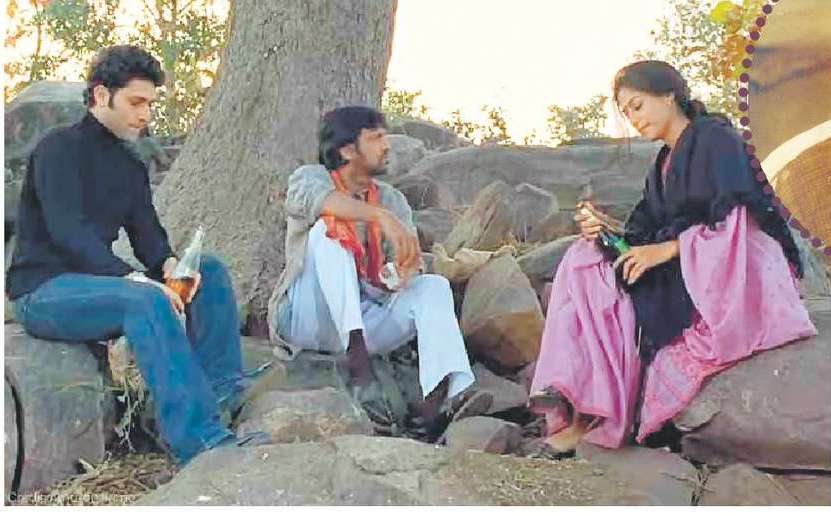
As Hazaaron Khwaishein Aisi (HKA) clocks 20 years, writer-director Sudhir Mishra reflects on its cult status now
Deep Saxena (HINDUSTAN TIMES; April 16, 2025)
Starring Kay Kay Menon, Chitrangda Singh, and Shiney Ahuja, Hazaaron Khwaishein Aisi (2005) was a semi-hit but garnered widespread love and acclaim over the years. Dismissing rumours of a remake, Sudhir Mishra, who served as both director and writer, says that a sequel could be worked out.
A big screen viewing again?
It is the time of re-releases, and Sudhir shares that there were talks about HKA, too, getting a re-release before the death of producer Pritish Nandy: “It’s surely in consideration. HKA was released without PR and was a minor hit. (But) the kind of viewership it got later is weird!”
‘Kharab nahin kar sakte’
The filmmaker feels that HKA is no longer his film: “Over the years, the audience made it their own.” He is also asked about a possible sequel or remake wherever he goes and shares, “A sequel can be done as the story of the three characters can move on. But, nothing should not be done just for the sake of it! If something comes to mind, it will be, but I can’t spoil the memory of the film – kharab nahin kar sakte.”
The biggest award
“The film was rejected by the National Award jury headed by (filmmaker) Basu Chatterjee. The industry thought that it would be sent for the Academy Awards but lost to Paheli (2005). But HKA went to several festivals and won awards all over,” the filmmaker shares, adding “The test of a film is that it has meaning for its audience across time and keeps finding other audience. HKA does. That is the biggest award!”
Fresh faces
Sudhir was certain about casting fresh faces for the film. He recalls how, Swanand Kirkire, who wrote and sang Bavra Mann and also appeared as a villager in the film, auditioned hundreds of actors for the lead roles.
“I had already cast someone for Shiney’s role, who is still very angry with me. But then, Zoya (Akhtar, filmmaker) sent Shiney. I originally tested him for Kay Kay’s role but changed it... Chitrangada was going to catch a flight when I called her... The only criteria was no known faces,” he recalls.
Pritish Nandy asked me for a sequel to Hazaaron Khwaishein Aisi-Sudhir Mishra
9:08 AM
Director Sudhir Mishra on the man who made his Hazaaron Khwaishein possible
Sudhir Mishra (MID-DAY; January 10, 2025)
“You seem stressed”, a voice next to me half-whispered into my ear. I must’ve been crying or something. I was very stressed. I turned around and through my tears, I saw a blurred face of a man, who I recognized to be Pritish Nandy.
We were on a flight to Delhi, and the funding for my film had just fallen through. That film was Twist With Destiny, which would later be known as Hazaaron Khwaishein Aisi. The guy, who was funding me, told me to f*** off, because it was too obtuse, too unlike anything else, too political, and not political enough, where the main girl character was a kind of a sl**.
“Who’s going to sympathize with a bitch like that,” Money Man had said. I turned to look at Pritish again, and trying to get a hold of myself, I told him I was trying to make a film. And now that Money Man had said no, I’ll be unable to make it.
He looked at me, and smiled. Of course, I knew Pritish: the publisher and editor of The Times of India group, and that he had taken over the Illustrated Weekly magazine from the hands of Khushwant Singh!
He had done a lot of famous interviews with Mr Patnaik, the chief minister of Orissa, at the time. The interviews had almost toppled his ministry! I knew that the Delhi circles were quite upset with him. I knew that he didn’t give a damn.
I also knew that he had taken over the Sunday Observer magazine and then left it again! Rumours were that he had started a production company, but there were too many rumours in Mumbai, and we seldom took everything seriously.
I must’ve stared at him blankly, because I didn’t know how to reply when he suddenly asked me what the film was about. Anyway, I was going to spend two hours with the man [on the flight], and he had bothered to ask. My gut instinct told me that he’d get the film, creatively.
I sort of gave him a 15-minute narration. There was a long pause, and he told me “Come to my office tomorrow. I’ll give you the money.” That’s exactly how Hazaaron began.
We met the next day, I signed the contract in a couple of days. He never asked me what the cast was. I showed him pictures of the people I was casting. 40 per cent of the money was supposed to come from France, in kind. This came to us in the form of the DoP, the editor, and the sound designer.
Everyone else from India was new. The actors Shiney Ahuja, Chitrangda Singh were absolutely fresh faces and while KK had done some work, it was still initial days for him. Shantanu Moitra was the music director nobody knew at the time. Swanand Kirkire happened to be my associate director and he would go on to write the songs. He was also the main casting director.
Pritish never said much. He never talked about the film, but talked around it. He was very respectful to us as filmmakers, and very generously tried to tell us things around the subject-matter of the film—in the hope that some things would land, be understood and therefore, become part of the film.
In those conversations, I understood how deeply he knew about those times. There was also a lament inside him for what was changing. There was this Radical Kolkata interacting with the Cosmopolitan Kolkata. The Radical Kolkata was also the product of the Cosmopolitan Kolkata, and the various fissures tearing apart Bengal then.
Pritish Nandy was a product of the Kolkata of that time, and he carried that with him wherever he went. Sometimes, I think, you could feel the loss in his poems, although he never directly talked about them.
Another great thing about Pritish was that he never imposed his power as producer. When he didn’t like something, he never issued instructions. Instead, he gave you many options, of which you could take one, or many. There was never any insistence from his side. But the depth and force of his arguments were so great that you often incorporated his understanding of things into your film.
One day he called me and said, “Your film is about my time, but then it should also be about any time.” For him, the ’60s were also visible in the ’70s; and so was a yearning for the future.
“So, your film should indicate the time period subtly, but not constantly thrust it in the audience’s face. Everyone should not have sideburns. Not everyone should wear a bell bottom, and so on.”
I thought it was a sharp observation and something that I implemented. As a result, Hazaaron became about the people, and the Emergency became its backdrop, and therefore, now it’s not only about the young people of that time, but about the young people and their passions in any time period.
Another sharp memory. I was going to the shoot one day, and he called me and said, “You know, Sudhir. Your title ‘Twist With Destiny’ doesn’t do justice to the film. So, change it, but please don’t give me an English one. It’s an Indian film. Give me a title, which doesn’t just appeal to the anglicized set, but to everyone.”
Five minutes later, I asked him if we can call it ‘Hazaaron Khwaishein Aisi’. He immediately said yes, and put the phone down.
When Hazaaron didn’t release for a long time I was quite upset and he said to me, “I let you make the film you wanted to, right?” Now, let me put it in front of the audience in a way that the audience deserves, and he did.
Hazaaron, in some strange way, in the way he marketed it [though not everyone agreed] became a silent, cult hit, and that has a lot to do with Pritish.
Then we made Chameli. During that time, I met his two lovely, young daughters. He said, “I used to hate them, when they were children. But when they grew up to be bright, intelligent children, I fell in love with them.” You wouldn’t think so, when you met a man like Pritish. But he really adored his children.
I often met him later… We were going to do another film, but it didn’t work out. He called me, and we met again. He asked me for a sequel to Hazaaron. It’s one of my regrets that I couldn’t come up with a worthy sequel for Hazaaron.
We were supposed to meet this month and over a cup of tea, talk about life and cinema. That too is one regret.
My nationalism is different. Nobody can force that nationalism on anyone-Anubhav Sinha
8:28 AM

Anshul Chaturvedi (BOMBAY TIMES; December 31, 2024)
Anubhav Sinha’s first OTT project, IC 814: The Kandahar Hijack, hit some turbulence almost as soon as it took off, but held on to its flight path, broke through to calmer skies after a while, and coasted thereafter. The director looks back at 2024 from the lens of the series. The initial days were a mix of audience appreciation and unexpected trolling, he says, but as he looks back, he is happy at the reach of the show and the praise for his work, and wants to make more films on India’s intelligence agencies. Excerpts from a chat:
You entered the OTT space for the first time in 2024 with IC 814, and the series was talked about a lot, continues to be. What has been the feedback, other than the immediate controversy around release time?
Bahut tareef aati hai. I’m not saying I’m endorsing it, but people in general believe this is my best work. I was with Naseer bhai recently and he doesn’t need to, but he was still saying how wonderful it was to make the show, and how people reacted to it. The reviews, too, were very kind to the show. So, I have no complaints about that. In terms of the audience love and press’s love, it was outstanding. The PR teams were constantly telling me that 10/10 reviews, not a single lukewarm review. I’ve been told by responsible people that this is the best show of the year. Aur mujhe zyada shows karne bhi nahi thay, ek karna tha, woh kar liya maine.
Do you agree with the view that it’s your best work?
That’s not my call. I don’t think my best work is my call, and I don’t think best work is an absolute measure... that there can be a measure to judge your best. It is the way sometimes people express love, and I don’t think it has any bearing on you or any of your other good work. I don’t take it very seriously. But two things happened – one, most people ended up calling it a ‘movie’, and my deduction is that because they binged it, it felt like a movie. And two, a very large percentage of the reactions said, ‘This is your best work’. I don’t know if there is a way to measure if it is. But it’s their way of expressing love.
You didn’t talk too much when the series released, perhaps because much of the public conversation veered off into what was probably a needless controversy. As you look back at the year, what stays with you from the whole thing?
I think it was such a huge hit. The actors get more feedback than us, because actors meet people on a daily basis. And also, the numbers that Netflix keeps telling me. It is probably their biggest hit of the year. And baaki haan, thodi bahut controversy thi, thoda shor tha. Ab you know how internet has become so... it has become very impossible to figure what a human being is saying and what a computer is saying.
You had made a point regarding the portrayal of the people from the intelligence services – that you brought them with their flaws, as they were as people, and not like some Avengers entity. In Hollywood films, like a Zero Dark Thirty or any other, they also struggle with their flaws, and that’s how things happen in real life. Perhaps our audiences are not as accustomed to the grey portrayal. Did the community ever get back to you? Because it’s easier to put a policeman or an intelligence officer as one of those heroes on a horse who just come and do everything.
There’s a shot when they get out of the aircraft in Kandahar – the first time the four of them walking in. That’s my most favourite image from the series, actually. So, I thought what we accomplished... How ridiculous is it that a plane which is carrying close to 200 people is hijacked by some people that we don’t know who, why for three days and they take it to a city called Kandahar, where Osama bin Laden lives, where Mullah Omar lives, who are also internally at war. How ridiculous is that situation! And guess what? We brought them all back!
Ever since I’ve worked in this series, I have studied a lot about spying and intelligence gathering and all. It’s not as easy as it sounds. I think the four guys that went to Kandahar did a fabulous job, all four of them. They were talking to extremely unreasonable people, but they got everyone back safe. I think we did fairly well. And you know, such mature people who at the end of it are discussing, did we win? But they got the people back and that’s what the series is.
When I did my research, I realized our agencies are quite fantastic. But you know, you can see anything in any light. And that’s okay. US mein filmein banti rehti hain unki agencies ko celebrate karne ke liye. Hamare yahan unko celebrate karne ke liye filmein hi nahi banti. Bahut rare. I can’t remember many. And the things that our agencies have done are outstanding, and I’m a fan. I think I’d love to make more films about their achievements.
Do you feel under pressure to reassert your pro-nation credentials?
By whom?
Just by the trolls, or random critics who can question your nationalism over micro points in a show?
No, I don’t even read them anymore. I used to when it started in Mulk. I used to, but not anymore. I am who I am. I have loved Gandhi all my life. I have loved Bhagat Singh all my life. I want to read Vivekananda. These are the stalwarts of this country.
My nationalism is different. Nobody can force that nationalism on anyone. I deeply love where I am from – Banaras. My company is called Benaras. I have been saying this for years that I am made up of two cities – Banaras and Aligarh. These are two of the most precious cities to me as an individual.
I don’t question anyone else’s nationalism. Yours can be different, mine can be different. You celebrate, I crib and I fix. As long as... Country is a word, country is a geopolitical word, it’s the society that we’re talking about. It’s a society that we live in. Country is people. If I think there’s something that I need to do to criticize some of those people, I will.
As to the controversy at the time of the release – I mean, when you’re receiving 40 calls a day praising this thing and calling it your best work and what not, then this noise, at the same time, obviously is not welcome. And there are moments when you’re disturbed. But no, I think I’ve learned to deal with it.
You’re not new to being disturbed.
Just the other day I was talking to somebody, and he said, ‘Anubhav, your films love India so much. Not many do’. I asked, ‘Why do you say that?’ He said, ‘Because a man is looking at his country in a manner that a 4,000-year-old, 5,000-year-old tradition bothers him and he says, let’s correct it.’
I’m a great believer of this country. And the more I travel, the more I think we are probably the greatest country in the world. But we need to fix some problems, and we will fix them. We are a very young country. We’ve only just begun. The US got liberated in 1776. What was it doing 75 years later? It was still struggling with slavery. It still had the long civil war coming up. India is way ahead of that in 75 years. And you know, it’s a 10,000 times more complex society.
Expectations will be higher now. Iss saal ka ye aap ka best work tha toh ek do saal rahega woh pressure thoda?
Haan, but I can’t pay much heed to it. Aisa bahut zyada seriously leta nahi main inn sab baaton ko, na apne aap ko. I like to be happy. I like to eat good food. I’m playing the piano from the past 18 months – learning. That’s my big high every day.
Are you calmer, or more cynical, as the year ends?
Both, interestingly. I was telling Sudhir bhai (Sudhir Mishra) the other day – I said, ‘I’m getting more cynical’. He laughed. But I find myself way calmer now. Like this time, I did not react to the controversy. I did not feel like it.
The calm of the cynic?
I don’t know what that is. What is a cynic? A cynic is one who foresees the futility of things, right? So ya, but it has no contradiction with calm. The more you live, the more you understand the futility of most things, and it makes you cynical. Wiser, cynical. I think wise and cynic are close to each other. Wisdom is a problem. And age gets you wisdom, you can’t help.
Has age got you wisdom?
Yeah, I think so.
I am not that white campus American liberal who thinks no one else can talk-Sudhir Mishra
3:36 PM
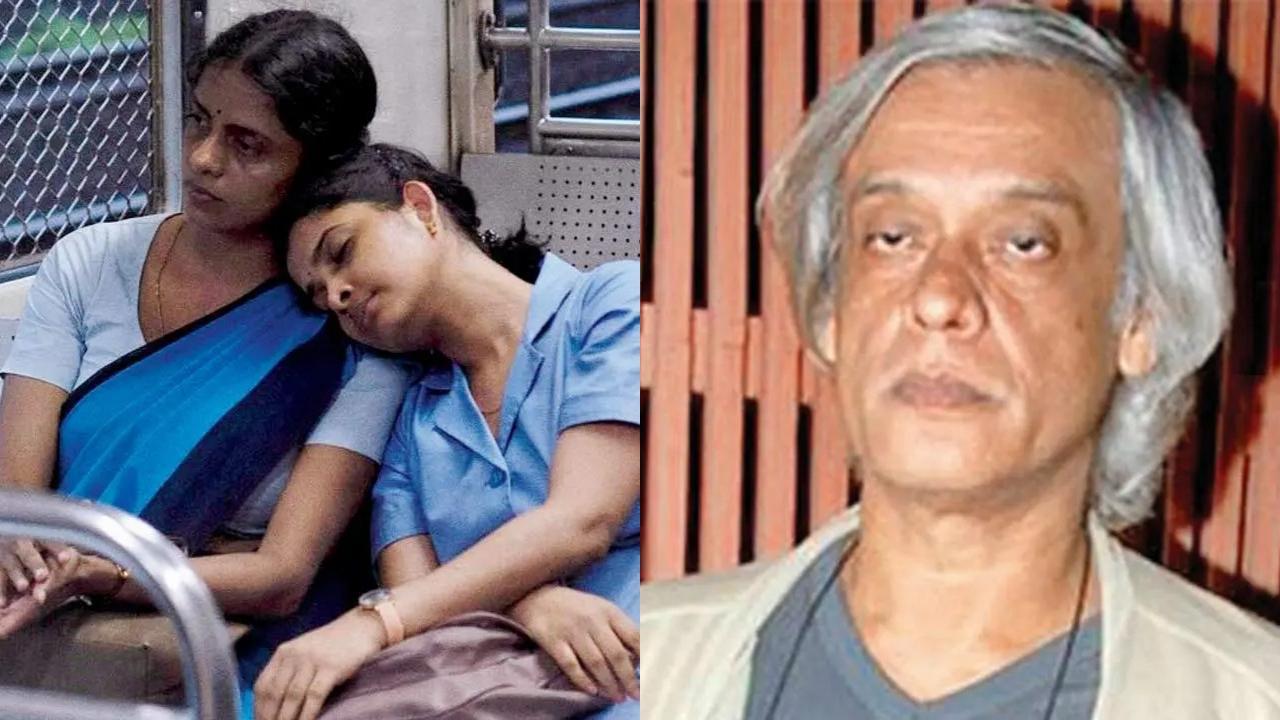
Tanaav 2 director Sudhir Mishra talks all things industry, from the surge in propaganda films to the big directors sidelining and patronising female storytellers
Priyanka Sharma (MID-DAY; December 6, 2024)
There are no pre-release jitters for Sudhir Mishra as the second season of Tanaav drops today. The director is confident of the thriller—an adaptation of the popular Israeli show, Fauda—that is set in Kashmir. To tell a story involving Kashmir politics, he has a fundamental approach.
“Luckily, I know my country. I am inquisitive, I travel and meet people not just for the sake of making something, but for its own sake. Also, I follow the craft of filmmaking, which means every character should be nuanced. I listen to the characters, and people of Kashmir. I don’t sensationalize. I am not coming into it with any agenda. Neither is there a need to create a jingoistic piece in order for it to become a hit,” he says.
Over the past few years, there has been a surge in political films. Does it pain him to see thinly-veiled propaganda films or political stories that sensationalize?
Absolutely, says Mishra. “It is sad. Why do young, talented people submit to other forces? They should stay true to their calling. Some people aren’t faithful to their own talent. I’m not here to ban anyone. I am not that white campus American liberal who thinks no one else can talk. I’m not woke; I’m a leftist. I am not here to fulfill any agenda.”
In the post-pandemic years, mid-budget films have struggled to find their deserving place on the big screen—be it Mishra’s last theatrical release Afwaah (2023), or Kiran Rao’s gem Laapataa Ladies that was rediscovered on OTT. In the current climate of horror comedies and franchises, where does it leave smaller films?
“The problem is theatrical releases are expensive. I’ve always said that films are a public service. Film theatres should be tax-free. There has to be space for all kinds of films. If somebody likes RRR [2022] or Pushpa, so be it. But there should be space for other films too, like All We Imagine As Light and Kennedy. There should be space for smaller voices. Why do the big boys want everything? Let Payal Kapadia’s film be shown,” he urges.
The director wants more female filmmakers to come to the fore. Critiquing the industry for not encouraging diverse voices, he says, “Women have told stories with great difficulty. Does the industry applaud them? No. They will say put women’s films in a festival. We need to pat them, not patronize them. Women filmmakers are much better than most of the men. All We Imagine As Light should have one good show in every town. We don’t encourage talent; we get scared of it.”
The beauty of Varun Dhawan is his excitement and the fact that he is still the same man-Saqib Saleem
8:03 AM
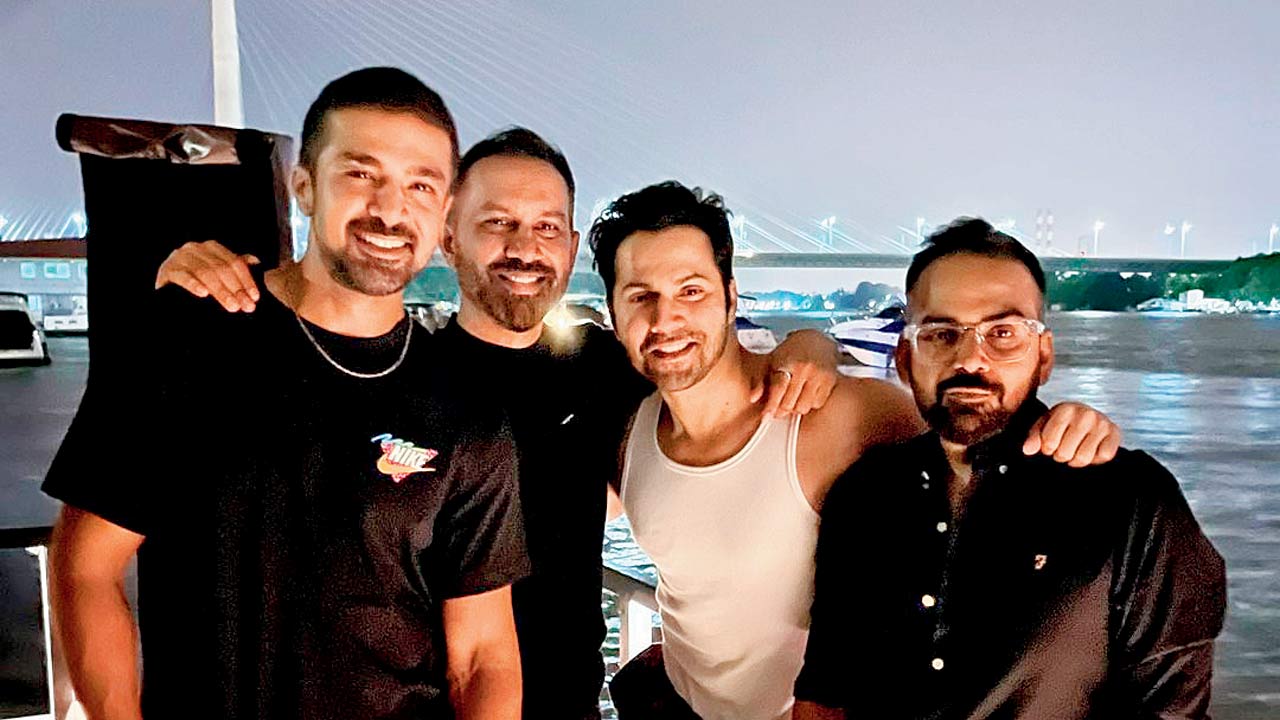
Actor Saqib Saleem, who was absent from Citadel: Honey Bunny promotions, admits he stepped aside after the makers positioned it as a Varun Dhawan-Samantha Prabhu story; says one must move on instead of ruing about the industry’s unfair ways
Mohar Basu (MID-DAY; November 22, 2024)
It has been two weeks since Citadel: Honey Bunny dropped online. While the Varun Dhawan and Samantha Ruth Prabhu-led spy thriller has received mixed reviews, the audience largely agrees on one thing – that Saqib Saleem is impressive as the antagonist KD. “It’s a little overwhelming when you don’t think of something too much and then that starts giving you love,” starts the actor, when we sit across from him for a chat.
He continues, "This is like a proper massy binge show. Which is why we started watching OTT, right? I had the most fun with the action. The action. Because as young boys, we've all grown up wanting to be action heroes, right? So when you get to do cool stuff, you really feel cool when you come back to your vanity van after you've done a scene. You feel exhausted, of course. But also just feeling like, ‘oh, I've done something awesome’. That child in you gets very happy.”
To him, joining the Prime Video series was a no-brainer as it gave him the opportunity to team up with director duo Raj-DK, who also co-wrote it with Sita Menon.
“What I really enjoyed about them is that they're very collaborative people. They give actors the respect that, hey, we've cast you for a part. You exactly know what you're supposed to do. We've cast you because you're good. And they're not one of those directors who tell you how you should act. They just set the scene for you well. And whenever you give some feedback to them, they're not very reactive people. So when you give them feedback, it may just feel like, did I say the right thing or did I make sense at all? But when the material comes back to you, you see traces of your discussion. This is why they are people who've done so much quality work. It's very heartening to see that even after having such success, you're so collaborative and wanting to hear what the other person has to say. We were an eclectic bunch. Kay Kay Menon is a masterclass. You will read a line on script and you're like, okay, we'll do it like this. But he just finds this new, organic way to do it. And he would surprise you so much with his performance. Both me and Varun, in fact, we used to just keep looking at him. He is so much in sync with himself and his craft. The beauty of Varun is his excitement and the fact that he is still the same man. He still committed. He still wants to do one more take and do better. You enjoy when people really want to work. He feels like if you're taking one more shot, he could do better. And that attitude, I really love it. Because he's also had an interesting body of work behind him. And he's had his share of successes. But that thing hasn't diminished in him. That he really wants to give his best. Then we had Samantha. Who I've met for the first time she's a firecracker. I have so much love and respect for her. Because of course she was going through what she was otherwise. But at no point that became an excuse. It was like this big set is here to do this action piece and we'll pull it off. So I genuinely learned that about her and how to just keep going. I made good friends with Sikandar on this. To a point that I asked him to act in a film that I was producing. Everybody came in with that mindset: let's have fun, let’s do good.”
We quote to him a video that’s going viral of him and Kay Kay. “I get at least 10 tags a day on social media somewhere. But I'm very happy, yaar, this is what I hear, right? Ki agar memes banne lag jaye toh somewhere the shows hit home.”
Clearly, shooting the series was a creatively satisfying experience for Saleem. Yet, things took a different turn when it came to the show’s promotions. The actor was absent from all the events, beginning with the trailer launch to pre-release promotions. It got the internet talking about the 2020 episode when Disney+ Hotstar announced its seven-film slate, but did not invite two of the films’ leading heroes Kunal Kemmu and Vidyut Jammwal for the virtual event. At the time, the two actors had spoken about the lack of level-playing field in the industry. Evidently, things haven’t improved despite the discourse.
Saleem explains, “If you talk about my absence from the trailer launch to the premiere, I'm a very simple guy. So when you see the trailer you see that, of course, there's a certain narrative that these guys - the makers and the creators want to take. And they feel like it's in the betterment of the show. When I saw the trailer, I'm like, okay, this is the narrative you want to take. I would like to clarify it's not like I wasn't invited for the trailer launch. I decided, okay, I'll only talk when you show the impact of my character. I can only talk there. I love myself and respect myself. And I've worked really hard to be in the position that I am. So I really respect that position. So it's okay if there's a narrative you want to follow. I don't want to come walk in there and be detrimental to that narrative. I want the show to fare well. I also don't want people to ask me, what are you doing in this? So I'm like, okay, whenever the show's out, it's better to talk then. So there's no grouse or bad blood or animosity or anything of that sort. Yeah, they took a narrative that they wanted to take. And whether I agree or don't agree, it doesn't matter because the team wanted to take it. I thought, okay, let's wait this one out. I'm very sure of what the impact of my part is. Let the show come out. And today, the show's release has been two weeks and I have been on calls since 8.30 am. Usually people disappear after the release happens, right? So I just thought, okay, let's try this route. Do I blame the world for it or I crib about it and say, oh, how unfair? Not really. I don't take things like that. I've moved on. I'm starting to do my next now. I don't try and be like, oh, the industry's such a bad place. It's unfair for the outsiders. It's unfair for everybody."
We bring up the nature of the systemic disadvantage at play here. It’s widely believed that the industry has its cliques, and if you don’t belong to one of them, you get sidelined.
Saleem reflects, “It's the way things work. A lot of people think about me that he's just a lazy actor. He doesn't work a lot. But to get each opportunity, you have to work really hard. So when things don't go as per plan as you thought that they would go with this opportunity. Does it feel bad? 100%. But it's just, I feel like there are two ways to look at life. One is to keep crying about how wrong I was. Like, okay, this happened to me. I tried this and this happened. Let me prepare better or do something different so that this doesn't happen to me again. I'm okay faltering. It’s not my mistake, but being in a situation. But can I avoid this going forward? Because it's going to be difficult. It's going to be very difficult with what you want to do. You want the whole country to love you. That's what you're aiming for, right? To make that happen, you'll cross several of these speed breakers. For the sake of your mental health, you say - nothing is easy in the world and see the positive side of it and start thinking about what to do next. I feel like everybody knows what they've signed up for. With the advent of OTT at least more voices are coming to the fore. Before this, when I came to Bombay in 2011, there was - either you did TV or films. And films were only options for theatrical films. Now, as an actor who's come from the outside, he's getting a chance to show his work to people, if the industry is still not wanting to see it. Do such work that the common man is saying, it's good. And if the common man is saying it's good, then somehow that will translate for more work. That's the only way. I don't wish this journey on anyone. I came here when I was 20. Right now I'm 36. It's been 16 years since I have reached this place. It's a very difficult road. On some days you feel am I doing the right thing? Because how you see yourself, a lot of people here don't see you. People always want to try to undercut you. That is the line of work we're in. They are always figuring, if he had this much last Friday, then he's worth this much right now. After a point, talent doesn't do much. No matter how good you are, it is a numbers game. So you focus on doing your bit and hoping people find you."
And people have. The actor cites the example of director Sudhir Mishra, with whom he is collaborating on a series. “It was therapeutic to work with Sudhir Mishra. He knocks on some interesting doors inside of you as an actor. He takes you to places and gives you the confidence the industry erodes from you,” says Saleem.
He is also producing films under the banner that he has rolled out with his actor-sister Huma Qureshi. “We’ve put together a couple of films that should release next year. I’m also developing a film for myself.”
Imagine Chameli without Kareena Kapoor's face; A R Rahman was a co writer in Lagaan-Sudhir Mishra
7:49 AM
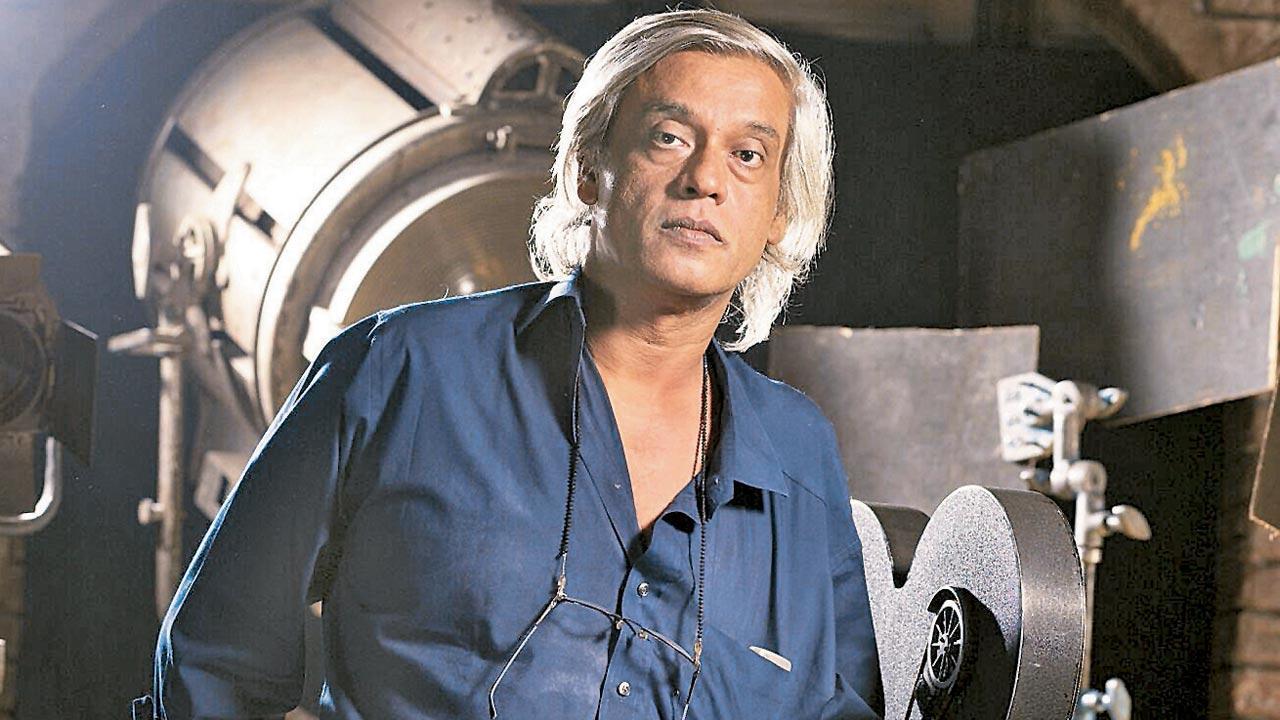
Niharika Lal (BANGALORE TIMES; November 8, 2024)
Sudhir Mishra sees filmmaking as a constant process of rewriting. But, he insists that filmmaking is not only a director’s medium. “Actors are co-writers of the film. Every actor has a different process, and the director’s job is to follow their process,” he says. In a recent interview, the filmmaker opened up about the making of Tanaav Season 2, his love for long-form storytelling, how he connected with Kashmir, and what it’s been like working with actors throughout his career.
‘WHAT’S THE POINT OF ACTORS IF EVERYTHING IS PRE-WRITTEN’
Sudhir Mishra tells us, “I consider cinema a constant process of rewriting. You rewrite with locations and with the actors, otherwise, what’s the point of actors when everything is pre-written? Imagine Hazaaron Khwaishein Aisi without Chitrangda Singh’s face, or Chameli without Kareena Kapoor, or Serious Men without Nawazuddin Siddiqui, Yeh Saali Zindagi without Irrfan Jhan, or Dharavi without Om Puri and Shabana Azmi. You can’t – they’re co-writers.”
He adds, “Then, the camera takes its position, the location speaks, and you gather all that material and sit with the editor. The film you imagined may not be there, so you try to find it. You add music – take A R Rahman’s score in Lagaan. Put another piece and the film changes. So, for me, Rahman is a co-writer of Lagaan.”
‘THE FILM I MAKE SHOULD IMPACT ME’
For Mishra, discovering the film is the aim of making a film. He says, “When I make a film, I should learn something I didn’t know before. The film should impact me – that’s the fun, the excitement, the therapy.”
Sudhir Mishra says all his films have surprised him – sometimes for the better, sometimes for the worse. “You can’t say it’s not the cinematographer’s medium – then why do you hire him? The director is a bit like an architect or a designer of the overall film. A director is like a conductor of an orchestra. Sometimes he writes the score and also conducts it,” he adds.
‘After making Tanaav, I understand Kashmir better’
About making Tanaav and shooting in Kashmir, he says, “I just love Kashmiris. They are really compassionate, warm, but also very sad. So, you have to work with that rhythm. I tried to bring out the human aspect (in the show). After making Tanaav, I understand Kashmir better.”
Talking about films on Kashmir and how he managed to avoid any controversies, Mishra says, “Most films about Kashmir are made by outsiders, and many of them don’t have a deep enough connection to the place. If your purpose is not to offend, and you approach things without bias – seeing them as they are – no one gets offended. If you’re not a sensationalist, not pretending to be the final word on anything, not strutting around like someone who thinks they know everything, there’s no issue.”
--------------------------------------------
About working with Rajat Kapoor, the filmmaker says, “You just have to indicate the character to Rajat and he will bring himself to it”
--------------------------------------------
Talking about Irrfan, Sudhir Mishra says, “He knew the character and was more interested in ensuring the entire scene works, because if the scene worked, he worked”
Rain machines to waterproof makeup: All that goes into shooting a rain song
8:14 AM

Natasha Coutinho (BOMBAY TIMES; July 27, 2024)
Who can forget Aishwarya Rai Bachchan dancing in the rain in Barso Re (Guru) or Sridevi's seductive blue sari from Kate Nahin Kat Te (Mr India)? The ethereal, romantic beauty of rain songs are imprinted in our collective memory, and they have been a staple of Hindi cinema over the decades. But the shooting of rain songs is quite the opposite of the romance they portray – with logistical challenges, detailed coordination between production departments and an extensive backend crew that must function in sync. This monsoon, we explain the mechanics of a rain song shoot.
KAREENA KAPOOR’S SARI KEPT GETTING HEAVIER WHILE REHEARSING IN THE RAIN: SUDHIR MISHRA
Bhage Re Mann, Chameli
Kareena plays a sex worker in Chameli, but the rain song brought out the child within her. Rain songs are difficult to shoot and you have to constantly coordinate with the cinematographer to get the desired effect and the correct camera exposure. I wanted the set to look very realistic, like a Mumbai street in the rains. Kareena was dancing in a sari and there were several rehearsals before the final take, and the outfit kept getting heavier in the water. But the difficulty did not show on her face. Saroj Khan was the choreographer and she ensured that her dance and expressions were perfect. The film was shot in 28 days and we put aside two days just for this song.
THERE WERE 24 WATER TANKERS IN PLACE TO SHOOT TIP TIP BARSA PAANI
Tip Tip Barsa Paani, Sooryavanshi
No rain song is complete without rain machines that are used to create what production teams call ‘controlled rain’.
Swapnil Bhalerao, who was the production designer for the new Tip Tip Barsa Paani song from Sooryavanshi, says, “We had around 24 water tankers on set for the shooting of the song. For closeup shots, we use three-four nozzles to shower water over the actors. To ensure hygiene, we use alum to purify the water. Some actors demand that mineral water is used for closeups. If the rain song is being shot in winter, the water must be heated as well. While shooting rain songs in the day is relatively easier, for night shoots we have a safety team to look after the electrical setup. The SFX department is in charge of creating thunder and lightning effects in the song.”
Tip Tip Barsa Paani was shot over four days on a set in Hyderabad.
WATERPROOF MAKEUP IS A MUST WHILE SHOOTING A RAIN SONG
Cham Cham, Baaghi
One crucial aspect of a rain song is the makeup of the actors involved, since it needs to stay in place for hours while the song is shot. Makeup artist Suraj Shekhar Sharma, who oversaw Shraddha Kapoor's makeup during the shoot of Cham Cham, says, “We use waterproof high-definition makeup that does not come off, and a primer and fixer to ensure it stays in place. During shot breaks, we keep an eye out to see if a touchup is required. It’s very important to dry their hair between takes so that an actor doesn’t fall ill.”
Cham Cham, which also featured Tiger Shroff, was shot over four days, partly on a set in Mumbai and at a real railway station in Kerala.
VINTAGE FABRIC WAS SOURCED FOR AISHWARYA’S BARSO RE COSTUME. IT SURVIVED THE ARTIFICAL RAIN
Barso Re, Guru
Aishwarya Rai Bachchan’s costume was created from fabric sourced from shops in and around Chor bazar in Mumbai. Antique saris and brocade borders with gharchola and bandhani fabric were chosen to create her ghagra-choli in Guru’s iconic Barso Re song.
“The costumes were sturdy, but I was paranoid that the vintage fabric may disintegrate in the pressure of the artificial rain. There were scenes of her jumping into a river and swimming, and swinging from a tree. She had to wear the costumes through the entire course of the shoot, which lasted a couple of days. It would be a disaster if the colour started running from the fabrics. Luckily though, it all worked out fine,” says Ameira Punvani, costume designer of Guru.
FACT BOX
Rs. 25-30 lakh is the per day cost of shooting a rain song, depending on the scale of production
---------------------------------------------------
Dancing in the rain is difficult, as there is always the danger of slipping and falling. Lip syncing to the lyrics and having the correct facial expression can also be tough to pull off. Aesthetics go for a toss and it’s important as a choreographer to remember that the dance steps should not be too difficult for the actors to pull off. I was part of a music video for the song Aao Na sung by Vishal Mishra, where I realized first-hand the difficulty of lip syncing in a rain song
- Terence Lewis, choreographer
Subscribe to:
Posts (Atom)