Showing posts with label Sudeep Nigam. Show all posts
Showing posts with label Sudeep Nigam. Show all posts
Indian filmmakers fear to tread many paths these days
7:58 AM

Sensitive themes being increasingly dropped at the ideation stage amid increased censoring, legal scrutiny and social media backlash
Rajesh N Naidu (THE ECONOMIC TIMES; July 18, 2026)
Mumbai: The removal of Punjabi film Satluj from a streaming platform has brought attention to a trend that writers and film-makers say has been quietly reshaping India's entertainment industry: self-censorship.
Over the past three to four years, creators say an increasing number of subjects have become difficult to touch, prompting many ideas to be dropped long before they make it to the scripting stage.
Scriptwriters, directors and producers told ET that topics such as Kashmir, communal riots, caste, religious identity, farmer protests, China, national security, the Northeast and Punjab militancy are increasingly being avoided at the ideation stage itself, narrowing the range of stories entering development.
While concerns over regulatory scrutiny continue to loom large, many creators say the fear of organised social media backlash has emerged as an equally potent constraint. Others, however, view the environment as an intellectual challenge, attempting to navigate sensitive themes through more nuanced storytelling without compromising their creative intent.
"There is fear among creative minds. Today, one has to think even about the names of the characters one writes. This speaks for the extent of self-censorship in the industry. One cannot write or create anything against the system today," said Honey Trehan, director of the film Satluj.
"Even before censorship, producers often ask us to change or remove things because they fear trouble. How much of real life or vision is left in a work after these changes," said scriptwriter Sudeep Nigam, known for the web series Illegal - Justice, Out of Order. "I wonder if we could make a film like Rang De Basanti today."
Production houses have legal teams which examine scripts line by line, said industry insiders.
Consequently, the universe of stories which writers can tell has been shrinking. "There is an unwritten but widely accepted self-censorship of certain topics among writers. It has materially shrunk the available universe of storytelling," said Jaidev Hemmady, who wrote the script for the web series Hunter - Tootega Nahi, Todega.
According to scriptwriter Sudeep Nigam, many people feel it is safer to write a romantic comedy than deal with difficult truths.
A scriptwriter who requested anonymity said: "I am tired. Today, most of my decisions are not creative but strategic in nature. I don't know what aspect in my story will trigger an unfavourable response from producers, streaming platforms, people or even the government."
Personal backlash is a key worry, said writers. "Earlier, writers would avoid certain things out of sensitivity. Today, we think twice before selecting a subject. We worry about legal action, social media attacks and even the impact on our families," said Abhishek Chatterjee, scriptwriter for the web series Sutliyan.
"What worries me most is not just whether a film will be stopped but the personal backlash that can follow. This fear is real."
But Chatterjee said he has not lost optimism. "There are challenges today. Despite these challenges, we must find ways intellectually and not compromise on our vision, like Iranian film-makers," he said.
Whose script is it, Anyway? Writers question credit and compensation
2:57 PM

A still from Madgaon Express, which was Kunal Khemu’s first writing credit for screenplay; (right) YRF’s Mere Brother Ki Dulhan launched writer Ali Abbas Zafar
A film production house posted a call for submissions recently, but an eyebrow-raising clause has brought up the question of screenwriters’ credit and payment. It’s an age-old battle, but how should new writers navigate the system?
Junisha Dama (MID-DAY; October 19, 2025)
It was an announcement from Yash Raj Films, asking writers to send in scripts to their submission portal. Innocuous enough, until a clause screenshot from the YRF website found its way to social media, with a post titled “This is wrong on so many levels.” Soon enough, WhatsApp groups were buzzing, setting off alarm bells among film enthusiasts.
The clause reads as if it was from a dystopian contract: “Any submission, solicited or unsolicited, shall become the property of the production house unless there’s a prior written agreement, and may be exploited in any way at YRF’s sole discretion.” The fine print went on to state that those submitting their work would not be entitled to “any compensation, credit, or notice”.
What made the post blow up was its reference to YRF’s announcement just days earlier of the submission portal, “Script Cell”.
We reached out to YRF for a clarification; however, they only issued a public statement claiming that the viral clause was not part of its Script Cell terms but from a separate disclaimer (now removed) on their website.
However, screenwriters say such clauses are not unheard of. Contracts often support producers more than the writers. Independent screenwriter Sailesh Ramaswamy lists some examples, including the credit clause, which gives credit as per the producer’s or platform’s (in the case of OTTs) discretion. “Earlier, we used to be able to push back. Back in 2019, 2018, and 2020, I signed contracts where I had put in clauses that my name would be on the poster. We have regressed from there,” he says.
The second big thing, Ramaswamy says, is the shift in the payment structure. Contracts are now being structured to pay writers only 40 to 50 per cent for the final draft, and the rest in parts. Ramaswamy adds, “At times, if the writer has insisted on a buyback clause, successful producers want writers to buy it back at 40-50 per cent more than the price that they paid you for writing it.” In many contracts, payments are also tied to draft approvals: 20 per cent on the first draft, another 20 per cent on the second, and so on.
While Ramaswamy has more examples that even established writers struggle with, we wonder if it is even logical to submit scripts via a portal.
How do new writers, looking to get their foot in the door, even navigate this system? “I feel that script submissions done without knowing the person to whom you are submitting are not that useful,” says Sudeep Nigam, screenwriter and creator.
Instead, Nigam recommends pitch festivals, like the one organized by the Screenwriters Association (SWA), as better platforms to bring new scripts forward.
In the real world, where young writers have little to no bargaining power, you can’t depend only on luck. “Over the last five years there has been a lot of chatter around writers’ rights, and we want to push that discourse forward. The Writers Guild of America (WGA) strike in 2023 gave us a lot of momentum. It’s still not equitable, it’s still not great bargaining power. But at least there is chatter and there is fight,” says Nigam.
But why is credit and compensation even a question? Anu Singh Choudhary, a screenwriter who has recently transitioned to being a director and producer, says that the Copyright Act in India is strong, but it gets murky as “filmmaking is such a collaborative idea”. “At what point is a director’s voice or a producer’s voice giving input? When you have submitted your script and then they come back with feedback or “notes” and they are making it supposedly their own, does that make the material theirs? Therefore, I feel a basic minimum contract is important to have. We are only fighting for that,” she says.
The SWA, for some time now, has been working on standardizing writers’ contracts that cover fair compensation and credit with a Minimum Basic Contract (MBC). “The ecosystem is changing, and there is pushback now. Therefore, my advice to young writers is that before they sit at the negotiating table, they should be ready to walk away,” says Anjum Rajabali, a veteran screenwriter and senior activist of the Screenwriters Association.
Despite tug-and-pull, the MBC has made progress, but as Rajabali says, the contract will ensure “more vulnerable writers are protected.”
In the meantime, what can writers do at an individual level? Riya Rajkumar Sharma, counsel at AM Sports Law and Management Co, who handles gaming, media, and entertainment law, explains: “When writers submit a script on a portal, they often consent to its exploitation in line with the portal’s terms and conditions. If they’re not careful, they may inadvertently surrender all ownership and rights, including derivative rights [ie, the right to create new works based on their original material]. Moreover, when writers share their ideas through such portals, they usually have little to no bargaining power. It is therefore crucial to understand the implications of any submission. Everyone should carefully read all terms and conditions before uploading or sharing their original work on any platform.”
Sharma further clarifies that there is no intellectual property in an idea itself. “What I mean is that an idea, by itself, is merely a concept. It gains protection only when expressed in a tangible form, for example, as a written script or a painting. The intellectual property rights lie in that expression, not in the idea alone,” she adds.
Nigam also emphasizes the need for writers to speak up, instead of simply complaining about it on social media. “The more they speak up, the better it is for the entire ecosystem to not allow for this to happen. Most writers are fearful, and that’s where the problem lies. At SWA, we have a dispute settlement committee, which is specially designed just to do this. We handle over 500 cases in a year, and we have the capacity to handle even more,” he says.
Would it then help if copyright and IP law were taught as a module in film schools? It would, says Anu, adding, “Also, the art of negotiation. We can all benefit from this and learn not just our rights, but also a producer or studio’s perspective.”
Naturally, coming together as a community is crucial to this cause. Anu says that young writers should constantly check with each other on what kinds of terms and conditions one is agreeing upon. She says that trusted whisper networks do exist, and writers usually compare notes and red flags before signing projects. There is a flipside, though.
“Unfortunately, there is such tough competition and such little work that we end up taking these exploitative contracts only because everybody needs work,” she says, adding that “the responsibility of advocacy at various levels then falls on senior writers, which means constantly talking and creating awareness. And if there are red flags, let the community know. Be, in that sense, champion of the other writers. All this while, this ecosystem has really thrived on a lack of unity between the writers.”
Rajabali echoes this, “If writers stand united… collective bargaining is very strong.”
Franchise flicks lose their shine as big bucks bounce back small
10:23 AM

High budget film series and sequels are struggling to generate buzz and recover costs
Rajesh N Naidu (THE ECONOMIC TIMES; October 3, 2025)
Mumbai: Franchise films and sequels, once billed as sure-shot insurance against fickle audiences and shrinking theatre turnouts, are increasingly backfiring in India, with many high-budget releases struggling to generate buzz and failing to recover their massive investments.
In the first nine months of 2025, at least 10 big-ticket franchise films and sequels hit theatres, but most stumbled at the box office.
Among the biggest disappointments were Jolly LLB 3, Baaghi 4, War 2, Dhadak 2, Son Of Sardaar 2 and Housefull 5. War 2, a part of Yash Raj Films' ambitious Spy Universe, managed collections of just Rs 236.55 crore in India against a production budget estimated between Rs 300-400 crore, according to box office tracker Sacnilk.
Industry experts say the problem is that Bollywood builds its franchises as forced extensions rather than carefully thought-out universes.
"Hindi franchise films are not planned organically like Cinematic Universe films in the West. These films are made as an 'afterthought'," said scriptwriter Sudeep Nigam, known for the mini-series The Indrani Mukerjea Story: Buried Truth. Nigam gave an example of the recent horror films. "I don't understand the connection between Shaitaan (2024) and Maa (2025). Shaitaan is a film about black magic. And Maa is a demon in a forest. Can these films belong to a universe because they share a theme?" he explained.
In the West, franchise films are planned well in advance and connected through consistent characters and narratives.
For instance, Marvel Studios planned for two years before it released its first Marvel Cinematic Universe film Iron Man in 2008. To date, the studio has released 33 films with careful planning in terms of budgets ($130-300 million range) and timeline (in six phases).
Lack of connection in stories between the original and the sequel has also added to the failure, especially of recent sequels and franchise extensions.
"Sequels must have plots which take stories of original films ahead. But this is not observed in recent sequels. These films are made just to cash in on the brand value built by original films. It is just weak writing," said Girish Johar, producer and film business expert.
In this context, scriptwriter Nigam cited an example of the Jolly LLB film series.
"The first two Jolly LLB films worked. Then, the idea of bringing together both heroes in a film sounded viable to its makers. But did the makers have a proper plot to justify their presence and create a proper franchise film?" Nigam explained.
After the pandemic, the box office outcome of films across geographies has become more unpredictable than in the pre-pandemic period, as films are either accepted wholeheartedly or shunned completely.
The days are gone when a film would do average business and break even. In this context, large production houses have been focusing on franchise films or sequels as they have an established audience base.
"As regards franchise films, there is too much reliance on the 'stardom' of stars rather than creating 'characters' which utilize their stardom, talent and add emotional depth to these films. Today, the story is a film's star, which makers are not fully recognizing yet," said Varun Kapoor, producer and founder of Brooken Reels Production, a film production company.
Trade analysts pointed out the poor performance of War 2 to its makers' excessive focus on the stardom of the film's stars. They noted that in the past six months at least fifty new franchise films and sequels have been announced in the industry. A few of these are Border 2, No Entry 2 and Awarapan 2.
Not enough bang for the binge, Indian streamers flip the script
9:11 AM

Ad-supported long-format web series make a comeback, reversing the ad-free premium content trend, as growth slows and viewer habits change
Rajesh N Naidu (THE ECONOMIC TIMES; June 26, 2025)
India's streaming industry is witnessing a return to ad-supported long-format web series - typically spanning 20 to 50 episodes - as subscriber additions stagnate and margins on premium ad-free content fall.
The share of such long-format shows in total web series content on OTT are expected to rise to 70% in the next one year, up from about 50% now, as streaming platforms increasingly embrace traditional television consumption and monetization patterns, industry experts said.
The shift away from big-ticket original shows, which had surged to 50% of streaming content, is being driven by a binge fatigue among Indians partly due to time constraints.
"Traditionally, the Indian television audience is more attuned to daily soap or episodic format of storytelling," said Sudeep Nigam, a scriptwriter known for mini-series The Indrani Mukerjea Story: Buried Truth. "Binge-watching is essentially a western concept."
While binge-watching spiked during the Covid-19 lockdown, Nigam said the trend was temporary. "Post the pandemic, due to hectic lifestyle, an average Indian viewer can spare little time for viewing. In this context, ad-supported long-format web series has high relevance in India, as premium content demands intense engagement from a viewer," he said.
The share of premium originals on OTT platforms could drop to around 30% over the next one year, according to industry estimates.
"India is still not a subscription economy," said Manish Sinha, founder and CEO of RunnTV, the country's first independent free ad-supported streaming television (FAST) platform. "It is expensive to retain subscribers. Subscribers buy subscriptions for specific content and then do not renew subscriptions."
Latest numbers confirm that the paid subscription base is not expanding. According to media and entertainment research firm Ormax Media, subscribers who had access to paid content in India fell by 1.6% to 150.6 million in 2024 from 153 million in 2023.
Industry analysts said streamers have realized that focusing only on premium content does not materially improve profitability, which has become one of their key focus areas post the pandemic.
The reluctance of top Hindi film actors to take up roles in streaming content is also posing a challenge to creating premium content, experts said. These actors fear that appearance in streaming content may deplete their 'star' value. Also, there is unchecked piracy which impacts the returns on investments on premium OTT content, experts said.
Meanwhile, the base of ad-supported content subscribers grew more than 20% between 2023 and 2024, industry analysts said. This has warranted the demand for mass content. The recent Netflix-Balaji Telefilms creative partnership must be seen in this light, experts said.
One of the key advantages of producing ad-supported long-format web series for streamers is its cost-effectiveness.
"Today, streamers want new subscribers. This necessitates telling new stories in familiar ways. Ad-supported long-format web series have been familiar with the Indian audience. It is cost-effective for streamers," said Samar Khan, CEO of Juggernaut Productions, a platform agnostic content creation hub.
It is estimated that the cost of shooting an episode of an original for a streamer is between Rs. 1 crore and Rs. 3 crore. In comparison with this, the cost of shooting an episode of an ad-supported large-format web series is between Rs. 20 lakh and Rs. 30 lakh.
Srijit Mukherji's next after Shabaash Mithu is Sherdil; stars Pankaj Tripathi
8:20 AM
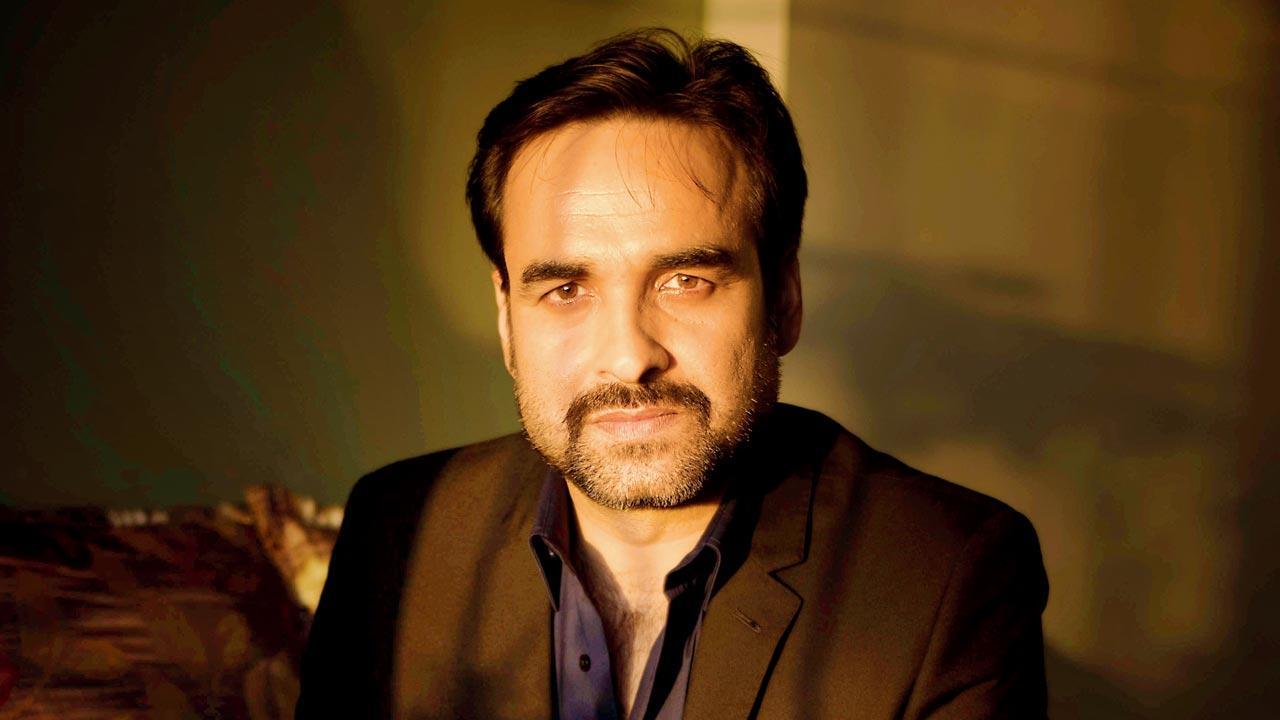
In his next, Srijit Mukherji highlights the story of villagers leaving elderly as prey in a tiger reserve for compensation
Upala KBR (MID-DAY; July 25, 2021)
Even as he preps for Shabaash Mithu, his next with Taapsee Pannu, Srijit Mukherji has begun work on another offering, Sherdil. It is based on a real-life story, which will be headlined by Pankaj Tripathi as a village head, who goes into the forest to save his poor family. The film was initially set to roll in November 2020.
“I have written the story with Sudeep Nigam, a promising, bright, and young writer. He is familiar with the required dialect. Sherdil is inspired from a real-life incident that happened in the Pilibhit Tiger Reserve, where people would leave their [older] family members for tigers to prey on, and subsequently claim compensation from the government. A string of attacks on the older folk had led the forest authorities to grow suspicious,” says Mukherji, admitting that his tale substantially deviates from the news report on the subject that he read in 2017. “My version is satirical and uplifting. Pankaj’s character is a heroic and inspiring one.”
Tripathi and he would often “talk about various movies and stories, and this is my first movie with him. Despite his fame, he is a simple, person, but a powerful actor”.
Should the situation be favourable, he plans to start shooting by the year end. “I plan to conduct recces across natural forests to lock the location,” he says.
Subscribe to:
Posts (Atom)