Showing posts with label Subodh Bhave. Show all posts
Showing posts with label Subodh Bhave. Show all posts
I’m the only one to have two films releasing in different languages-Tejas Prabha Vijay Deoskar
8:53 AM

Bringing both his films Ground Zero and Devmanus to theatres on April 25, director Tejas Deoskar on attempting a distinct genre with each and juggling their post-production
Upala KBR (MID-DAY; April 12, 2025)
Every director will tell you about the Friday jitters they experience when their movie is releasing. One can only imagine the pressure and excitement that director Tejas Prabha Vijay Deoskar will feel when his two movies, Ground Zero and Devmanus, hit the theatres on April 25. “Somebody told me that before this, only Priyadarshan sir had two films releasing on the same day. I’m the only one to have two films releasing in different languages,” grins Deoskar.
Language isn’t the only factor separating the Hindi offering, Ground Zero, and Mahesh Manjrekar’s Marathi outing Devmanus. Inspired by real-life events, the Emraan Hashmi-starrer chronicles the aftermath of the 2001 Indian Parliament attack.
Deoskar explains, “Ground Zero is an intense action drama based on BSF Commandant Narendra Nath Dhar Dubey’s life and real events. Emraan plays him, and is seen [on the hunt] for a terrorist. Devmanus is an emotional thriller, where a man—played by Manjrekar—finds himself in a moral dilemma. I was initially apprehensive about both my movies releasing on the same day. I feel the audience gets divided, especially since the Marathi audience is a subset of the Hindi one. But the two production houses felt that both films had different viewers. They didn’t see it as a clash. The only thing I had to figure out was to run around for the films’ post-production, which was tough.”
While shooting each movie came with its challenges, the director believes Ground Zero was the more demanding one. “It was a tougher one to execute as action films are demanding. Plus, we were shooting in Srinagar and other parts of Kashmir, and the region has certain complexities.” Having an earnest actor like Hashmi helped matters.
“Emraan is a director’s delight. He asks a lot of questions related to his character and the story, and comes on the set having done a lot of homework. So, we’re halfway through when we start. Also, he has an uncanny memory,” shares Deoskar.
Working on Devmanus was a unique experience as actors Manjrekar, Renuka Shahane and Subodh Bhave are also directors in their own right. Deoskar reflects, “While there were four directors, including me, on the set, nobody overpowered me. There was mutual respect. We could collaborate, discuss their suggestions, and do what was best for the film.”
I couldn’t complete my graduation. But I worked three times harder-Gulzar
9:19 AM

Dipti Singh (MID-DAY; February 19, 2025)
If you are a student feeling stressed, finding ways to deal with the pressure is essential for your well-being, especially during exam season. With some board exams underway and others set to begin, we speak to renowned personalities who have faced failure and struggles in their lives—experiences that either shaped them into who they are today or became challenges they overcame to excel in their fields.
In conversation with mid-day, veteran Indian Urdu poet, lyricist, author, screenwriter, and film director Gulzar, along with Dr Narendra Jadhav, a noted economist, public policy expert, and former member of the Rajya Sabha and Planning Commission—both of whom are mentioned in Arun Shevate's book Napas Mulanchi Goshta—share their perspectives and advice for students on overcoming academic and personal setbacks. They also reflect on their own life experiences, the challenges they faced, and the resilience that led to their success.
‘Worked thrice as hard’
Speaking with mid-day, Gulzar said, “I couldn't complete my intermediate education due to various factors, including the partition. Later, I had to leave St Stephen's College in Delhi and move to Mumbai in search of a job because of family circumstances and financial difficulties. My education came to a halt, and I couldn’t complete my graduation. But I worked three times harder to achieve what I have today. My parents played a crucial role as a support system, helping me overcome those struggles and carve out the life I have now."
He then spoke about how the pressures on students have evolved over time. “Times have changed, and with them, the expectations placed on students. Today, parents’ high aspirations and expectations often add to their children's stress and anxiety. Back in the day, families offered a built-in support system, helping to ease such burdens and pressure. But in today’s world, things are different. Parents need to be a source of reassurance for their children, giving them the freedom and emotional space to develop. It's crucial to help them realize that an academic setback does not define their future.”
A message for students
To students, Gulzar shared a heartfelt message. “Failures are lessons, not the conclusion of a chapter in your life. Life goes on, and you must take the lessons with you while leaving failure behind. Students need to understand—failing an exam is not failing at life. Exams are merely a way to test what you’ve learned; they are challenges that encourage you to keep growing. If you score low, it doesn’t mean you are less talented or a less capable person.”
Encouraging students to adopt a growth mindset, he added, “Success is like climbing a mountain… you can’t take a straight path; you have to move in a spiral to reach the peak. Keep moving forward, keep learning, and don’t be disheartened until you achieve what you set out to do.”
“Aadmi bulbula hai paani ka… Aur paani ki bahti satah par tootta bhi hai, doobta bhi hai… Phir ubharta hai, phir se bahta hai… Na samundar nigla saka isko, na tawarikh tod paayi hai… Waqt ki mauj par sada bahta aadmi bulbula hai paani ka. (Man is a bubble of water… Breaking and sinking on the flowing surface… Yet rising again, drifting once more… Neither the ocean could swallow him, nor history could break him… Ever flowing with the waves of time, man is but a bubble of water),” Gulzar added, reciting one of his verses.
Meanwhile, Dr Jadhav shared that although he had never failed any annual or board exam, he did experience failure in a school test. “I failed a math exam in Std VII because I had typhoid and couldn’t attend school for several days. Unfortunately, during that time, a crucial chapter on compound interest was taught. As a result, I scored only 30 out of 100. It came as a shock to my classmates, my teachers and me. But instead of feeling defeated, I took it as a challenge, or perhaps even a kind of revenge. In the next exam, I doubled my score. I believe that for any exam, big or small, students should always set ambitious goals.”
Aspire for more
He further emphasized the importance of aiming high. “Having no aim or setting low goals is a bigger crime than failure itself. Too often, students are content with just passing, thinking that 35 per cent is all they are capable of. But one should always aspire for more.”
Sharing words of encouragement, Jadhav drew from his motivational speeches. “Pratyek vyaktimadhye ek rajhans dadlela asto (Within every person lies a swan, a symbol of excellence)—whether in academics, arts, sports, or any other field. One must recognise their strengths and talents. No one is born without potential; they just need to explore and discover what they are truly good at,” he said.
‘Scores don’t define us’
“Scoring high in school or college doesn’t necessarily define success. I believe everyone has faced failure at some point, big or small, but what matters is how they overcome it. There is no need to feel disheartened by low marks or failure in an exam.
I grew up in the slums of Wadala and studied in a municipal school until Std IV. At one point, I thought I would become a goon, and later, I even considered being a peon. But life had different plans, and through sheer hard work and determination, I was able to shape my future,” he said.
Jadhav also shared an inspiring example. “Take Sachin Tendulkar for instance… he wasn’t particularly good at academics, yet today, he is a legend in the world of cricket. Success is not defined by exam scores alone; it’s about recognizing your true calling and working relentlessly toward it,” he signed off.
mid-day also caught up with award-winning actor, director, producer, and writer Subodh Bhave. Only a few people are aware that he failed in three subjects—Physics, Chemistry, and Mathematics—when he appeared for his HSC exam. However, instead of letting failure define him, he used it as motivation to pursue his passion for acting. Bhave believes that academics alone don’t determine success in life.
Don’t let pressure ruin you
“As board exams approach each year, students often experience fear and stress. My advice is simple—don’t let exam pressure ruin your life. You are the future of this country, and your potential is far greater than any exam result. Exams come and go, and even if you don’t succeed at first, life always gives you another chance. The pressure around exams is often created by society, but students must believe in themselves. You have immense power within—discover it, use it, and trust yourself. Have faith in your abilities and in God.”
- Inputs from Archana Dahiwal
Nitin Desai was not the kind to be afraid of anything or accept defeat-Subodh Bhave
8:47 AM

Actor Subodh Bhave recollects the late producer’s positive energy and larger-than-life dreams
Hiren Kotwani (MID-DAY; August 3, 2023)
While Nitin Desai was synonymous with art direction in Hindi period films, he turned producer in 2002 with a devotional film. In 2011, he produced a biopic in Marathi on singer-stage actor Narayan Shripad Rajhans, famously known as Bal Gandharva. Subodh Bhave, who epitomized the role in the film—titled Balgandharva—reminisces about his collaboration with the art director-producer.
“I had taken the concept to Nitin ji. Just 10 minutes [into reading] the story, he asked me when I could start. The next day, we began work on the film and were on set in three months. He was driven to make the film bigger and better,” says the actor.
Bhave shares that the team was often perplexed about matching Desai’s energy as he worked through the night after starting at 6 am. “[It was not easy] to catch up with his pace of work. He showed everyone a dream and helped us achieve it together without worrying about budget. Nothing was impossible [in his dictionary]. I have never seen a more passionate artiste, and I consider myself lucky to have had the opportunity to work with him,” recollects Bhave, who was set to team up with Desai again on a series based on Maharana Pratap.
While the web show didn’t materialize, the actor had done a recce of the location [within the studio] with Desai for another project, last month. “I met him last month at his studio [to see] some locations and was supposed to return in a few weeks to finalize everything. I should have called him earlier. He was not the kind to be afraid of anything or accept defeat. Last year, a portion of his studio was gutted by fire. When I visited him, he had rebuilt [the area] better than before.”
Reminiscing about Desai’s vision and his penchant to stay happy, Bhave adds, “He was always positive. He never shared his problems with anyone; he only spread joy. His dream of making a big studio remains. I hope someone takes care of his studio. It was a huge dream.”
Vikram Gokhale is one of the greatest actors that I have ever worked with-Sanjay Leela Bhansali
8:03 AM
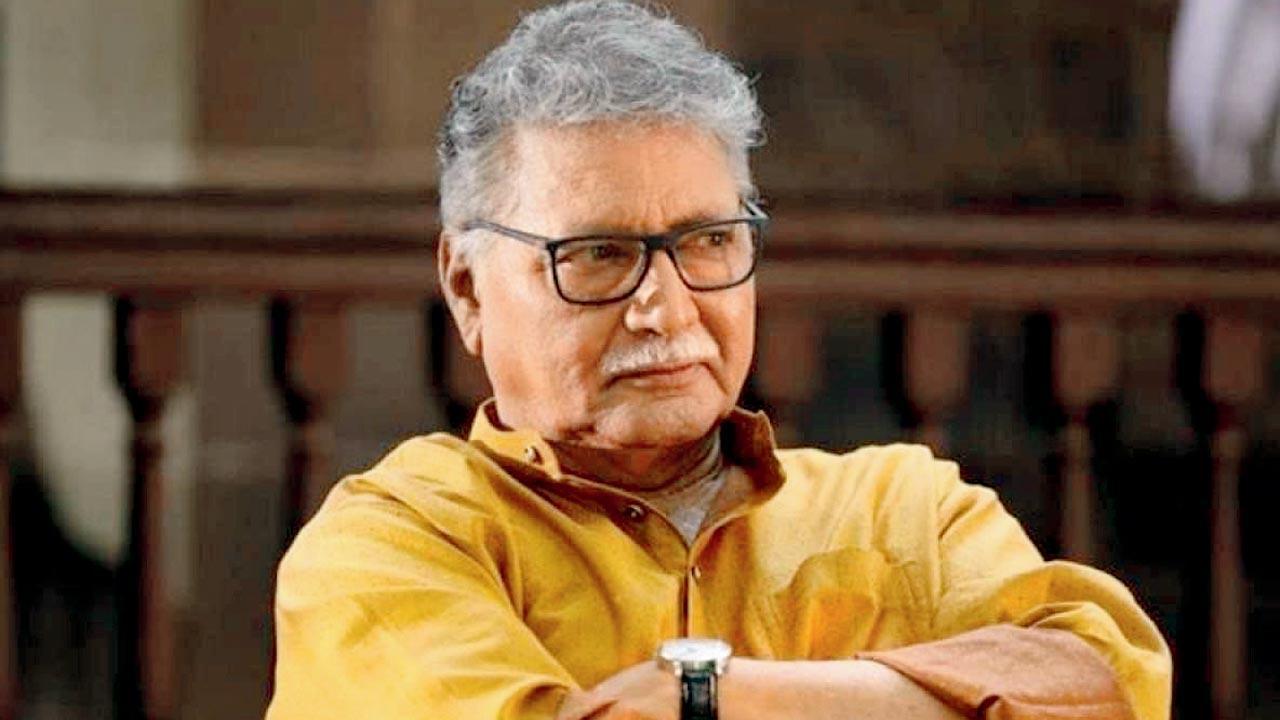
Bhansali, Kulkarni, and Manjrekar remember the actor’s tremendous talent and down-to-earth nature
Priyanka Sharma (MID-DAY; November 27, 2022)
National Award-winning actor Vikram Gokhale, who was a stalwart in Indian cinema, television and theater, has passed away following multiple organ failure. The actor, aged 77, breathed his last at a hospital in Pune, his daughter told mid-day. “We would like to thank everyone for their good wishes, support and prayers through this difficult time,” she said.
Gokhale remained synonymous with substance throughout his five-decade-old career that saw award-winning performances in both Hindi and Marathi. He debuted in the Hindi film industry with the Amitabh Bachchan-starrer Parwana (1971). Even in an ensemble that comprised popular stars, Gokhale stood out, courtesy his tremendous talent. In fact, it remained his strength to elevate even the smallest appearances and the thinnest characters offered to him.
What also set Gokhale apart from his contemporaries was his reliance on minimalism. Whether it was as the strict patriarch in Sanjay Leela Bhansali’s Hum Dil De Chuke Sanam (HDDCS, 1999) or the portrait of grief in Anubhav Sinha’s Tum Bin (2001), Gokhale performed with just his expressions, where others needed words.
“Vikram ji is one of the greatest actors that I have ever worked with. I feel people should learn from his legacy. Despite being a great reader, orator, and so well-read, he was simple-hearted. When I met him, he was like a friend and colleague, who often told me, ‘Sanju main tere saath hoon. Tu bol kya aur kaisa karna hai’. He was a great colleague to be on the set with, as he was always there for [me]. Vikram ji introduced me to Indian classical vocalist Pandit Ajay Pohankar, who suggested the Albela sajan raag [a version of which is used in HDDCS]. It was hard, but he [barely] took an hour to learn the song,” says Bhansali, adding that he learned the nuances of the craft when he saw Gokhale perform.
“Vikram ji was the complete master of his craft. Always in control of every aspect—in words, dialogue, expressions, and diction. He was spontaneous. We don’t get actors like him anymore.”
Thicker than his association with the Hindi film industry was his relationship with Marathi cinema and stage. In return, Marathi directors did justice to his talent, as he became one of the tallest stars in the fraternity, also earning a National Award for his work in Anumati (2013).
Gokhale’s Anumati co-star and longtime collaborator, Neena Kulkarni, fondly remembers him as the one of the most knowledgeable artistes she had ever met. “He was an intelligent and responsible actor. You could talk to him for hours on the process of acting. He was also well-informed about everything—from literature to politics. His performances are acting classes for the next generation. In Godavari [2006], he had just one dialogue, but he delivered it in variations; that is education in itself. I will obviously miss [my] friend, as we go back a long way. The fact that we have portrayed all relations from husband-wife, lovers to siblings and to me even playing his daughter-in-law was a running joke between us,” she reminisces.
“He used to call me Maya,” says Mahesh Manjrekar, who directed Gokhale in Natsamrat (2016), after which, they did another movie together, Me Shivaji Park (2018). “Vikram Gokhale was an institution in the field of acting that has shut down today. He was the most complete actor in the industry. He could enhance a scene by just using a handkerchief and make it look believable. I have seen him in theatre doing everything, including comedy. [Even though we were] young, he always treated us on par with each other. He was a close friend. Vikram was a director’s actor, but I never had to tell him what to do. Despite his acting prowess, he was casual about it on the sets,” adds the director.
-----------------------------------------
HINDUSTAN TIMES (November 27, 2022)
Vikram Gokhale, a towering personality in the Indian theatre and cinema space, died on Saturday, after days of being hospitalised. The actor, who was 77, suffered multiple organ failure and breathed his last around 2pm, Shirish Yadkikar from Deenanath Hospital, Pune, confirmed.
Born in Pune, the actor comes from an illustrious lineage. His father, Chandrakant Gokhale, was a renowned theatre and film actor, while his great grandmother, Durgabai Kamat, is credited for being the first female actor in Indian cinema. Having worked in Marathi theatre productions, Gokhale made his Bollywood debut in 1971 with Parwana. Thereafter, he starred in hits such as Hum Dil De Chuke Sanam (1999), Bhool Bhulaiyaa (2007), De Dana Dan (2009), Mission Mangal (2019), etc. A man of many talents, he donned the director’s hat in 2010 for the Marathi film, Aaghaat.
In 2013, his Marathi film Anumati fetched him the National Film Award for Best Actor. While he retired from stage work in 2016 due to an ailment, he continued working in films. He was last seen in Nikamma.
The last rites took place on Saturday evening, ANI reported. htc
Smita Jayakar
I worked with Vikram ji since the beginning of my career, in Marathi and Hindi projects. He was a very good friend and an amazing human being. I met him two months ago at a wedding in Pune. He didn’t look very healthy, but I did not imagine he’d leave us within two months. It is a big loss.
Neena Kulkarni
I’ve played his wife, girlfriend, sister and in our last film, his daughter-in-law. You would not see an actor like him. The fearlessness of Vikram Gokhale is what I’ll take from his life. I’ve lost a very good friend.
Subodh Bhave
The first commercial play I watched was Vikram ji’s. I was zapped by his performance. I’ve been fortunate enough to work with him in a few films. He was like my father, as he has played my father on screen. I’m certain that he’ll be talking to God passionately about plays.
Ameesha Patel
The more that is said about Vikram Gokhale, the less it is. I had the privilege of working with him in Bhool Bhulaiyaa, I got to learn a lot. His death leaves a huge void in the industry.
Shilpa Shetty Kundra
Vikram Gokhale ji was a fantastic actor, a thorough professional. I worked with him in Nikamma. He had great memory. He remembered an entire scene and did the whole monologue in just one shot.
Making movies on our fight for independence redefined the idea of patriotism for us, say filmmakers and actors
8:43 AM

BOMBAY TIMES (August 15, 2022)
‘THE ROLE OF BOSE CHANGED ME AS A PERSON, AS WELL AS AN ACTOR’
The role (of Subhas Chandra Bose in Shyam Benegal’s Netaji Subhas Chandra Bose: The Forgotten Hero) changed me as an actor and as a person as well. It was academically enriching. Until that role became my second nature, we didn’t start shooting for it. In fact, the character stayed with me even after the film was made and released in theatres. As a part of the prep that went for around six months, I read as many books as used for reference to the script. In fact, I lived the character for almost three years. It, by far, remains my best work. As we complete 75 years of Independence, I feel the younger generation must go back to read about our leaders, or at least watch films to be aware. — Sachin Khedekar, actor Subhas Chandra Bose
‘WORKING ON FILMS ON BOSE AND GANDHI BOOSTED MY PATRIOTISM’
Over the years, I have been associated with several films dealing with our national leaders. (My directorial) The Making Of The Mahatma depicted Gandhi’s evolution into becoming an unparalleled national figure. He managed to mobilise people in an extraordinary way. My other film, Netaji Subhas Chandra Bose: The Forgotten Hero, showed how he mobilised Indians living outside India, like Singapore, Malaysia, etc. to fight for India’s freedom even from the outside. Both these stories are very different from each other and working on these films clearly boosted my patriotism as these are the people who fought against great odds for so many years. The research and the shooting process left me touched. — Shyam Benegal, director
‘THERE SHOULD BE A SPECIAL PERIOD IN SCHOOLS WHERE STUDENTS LEARN ABOUT THEIR DUTIES AS CITIZENS’
When you do a film on a freedom fighter, it leaves a huge impact on you. Going back to that history makes you realise how important it is for an individual to do something more for the nation. You live the character for 60-70 days of shoot and that influences the kind of vision you have for your country. I am lucky to have played Bhagat Singh (in Shaheed-e-Azam). My mother, a history professor, used to share books on our fight for independence. Right from my school days, I would read and watch such films. For everyone who is associated with a patriotic film — be it the technician or the audience — it changes everything. For me, Independence Day is not just about hoisting flags, but touching the lives of fellow Indians. There should be a special period where students learn about their country, their duties as a citizen and humanity. These things will prompt the newer generation to think more about the nation. — Sonu Sood, actor

‘I HOPE A DAY COMES WHEN THE WHOLE WORLD BECOMES ONE NATION’
For Rang De Basanti, apart from understanding the ideologies that the freedom fighters believed in, I didn’t do much research for my role (of Rajguru). But just hearing their stories inspired all of us. The kind of sacrifices our men made for our country… everyone has the right to freedom and these brave men fought for that. For me, patriotism means respect and love for the land you live on. It also means to respect and love the others who live on the land. I hope a day comes when the whole world becomes one nation — Sharman Joshi, actor
‘PATRIOTISM MEANS DIFFERENT THINGS TO DIFFERENT PEOPLE’
I always wanted to make a film about the armed revolution and the young guns of India who stood up against the British Raj because it made me wonder why these 20-something boys picked up the gun and walked to the gallows for the country with a smile. Patriotism means different things to different people. I wouldn’t call Rang De Basanti a patriotic film; it was about a generation waking up. You want to make the country perfect? Dirty your hands with running the country.
We all criticize the machinery like fence dwellers. When I found myself in the director’s chair, I felt I had a chance. — Rakeysh Omprakash Mehra, director
‘BIOPICS ON FREEDOM FIGHTERS REMIND US OF OUR DUTY TO OUR COUNTRY’
When I made Bharathi, I wrote the screenplay with the intention of bringing Subramania Bharathiyar’s multifaceted nature on screen. Bharathi’s inability to work under a feudal king, joining forces with other extremist leaders in the freedom struggle, composing songs about nationalism and independence, resisting the British rule through newspapers and cartoons, his emphasis on women’s emancipation... I wanted the film to talk about it all. When you make a biopic on someone like Bharathi, it doesn’t stop with being a documentation of a life of a personality, but also becomes a film that reminds us of patriotism and our duty to the nation. — Gnana Rajasekaran, director
--------------------------------------
Subodh Bhave who played Bal Gangadhar Tilak in Lokmanya-Ek Yugpurush, says, “When you portray the character of a great patriot like Tilak, you get a better understanding of the country. Their stories are so inspirational that you become more sensitive towards situations and people.”
— With inputs from V Lakshmi, Onkar Kulkarni, Preeti Atulkar, Rachana Dubey, Ruman Ganguly, M Suganth and Sunayana Suresh
Please focus on the stage, not your phone, say actors after Sumeet Raghavan’s performance halt
7:33 AM

Sumeet Raghavan also spreads the #NoMobileDuringPerformance message on social media, in reaction to unruly audience members
Anup Satphale (BOMBAY TIMES; June 14, 2019)
Actor Sumeet Raghavan recently stopped a performance in Nashik midway, due to mobile phone interruptions from the audience, during the play Knock Knock Celebrity. He followed it up with a post explaining his stand with the hashtags #ZeroTolerance and #NoMobileDuringPerformance. The incident however, is not the first time an artiste has had to resort to such an extreme measure.
Actors Vikram Gokhale, Chinmay Mandlekar, and many others have had to do the same. A few months ago, Chinmay halted his play Sukhanshi Bhandto Aamhi, when a man used his phone. “More than 18 times I’ve had to stop performing and request people to stop using their phones. This is a problem of basic respect towards an artiste, which unfortunately some of people don’t have,” he says.
 Some artistes feel that it is usually older people whose phones end up ringing mid-performance. Despite facing such issues, veteran dancer Shama Bhate says that she has never stopped a performance. “We can’t just stop the performance. We have to keep calm and continue as it’s our duty towards loyal audience members.” Shama’s solution to the problem is mobile lockers at auditoriums. “There are many religious places where mobiles are not allowed and people do not object. Auditoriums too, should have such facilities,” she says. Theatre-TV actor Imran Khan (left) says, “It’s so unethical. I haven’t faced a situation like that, yet, but if it ever happens, I wouldn’t stop the act, but would definitely make him or her apologize to every one after the show ends. Or, I would give a pause and stare at that person so hard that he gets up and leaves.”
 On the other hand, veteran actor Vikram Gokhale (right) has gone to the extent of telling people not to come for plays if they are more interested in their phones. “I used to make announcements in Hindi, English and Marathi. But despite that, I had to stop my plays midway, several times,” he says, adding, “I suggest theatre owners or associations use jammers in halls.” Citing an example, actor Subodh Bhave says that jammers have been used in the past during one of his plays, Kala Ya Laglya Jiva. “It was based on a serious subject and had a cast of two artistes. Such things happened during some of the performances and I had to stop performing a couple of times. After that some theatres installed jammers when the play was being staged,” he says.
Popular theatre personality Salim Arif says, “In the midst of an intense scene in the silence of the auditorium, a phone ring can switch you off as an actor. You can even go blank, as it disrupts the flow of your thought process. The ring cuts you off from wherever you are in your created mindspace.
Sumeet is not the first one to do something like this. “Actors like Atul Kulkarni and Harsh Chhaya have done this in my shows, too. It is extremely irritating and rude on the part of the audience, who, after repeated announcements before the show and in interval, don’t bother to check their phones and put them on silent mode. Each actor reacts differently when a phone rings. While deal with it by making a humorous comment and moving on, some get worked up and react with frustration and anger. But it is difficult to be oblivious to such sounds and continue.”
Speaking from the perspective of his audiences, director Prajakta Deshmukh says that using jammers or not allowing mobiles inside auditoriums is not a solution. “When I go as an audience member, I would feel insulted if someone asked me to deposit my mobile at the entrance. It is upto the audience to ensure they do not disturb a performance.”
Actor Priya Bapat, who recently turned producer of Marathi play Dada Ek Good News, asserts that it is the responsibility of every member of the audience to maintain decorum irrespective of age. “Even my baba doesn’t know how to switch off or switch on his mobile phone. But when I go along with my parents to watch a play, I ensure that I put their phones on silent. Similarly, youngsters among the audience can help senior citizens and seniors can ask for their help.”
Classical singer Rahul Deshpande who has performed in sangeet nataks, says that it’s ultimately in the hands of the audience and organisers can’t do much. He says, “I too have had to stop performances, but the best we can do is hope for the audiences to start respecting us.” And going by the fact that Sumeet’s recent show in Nashik last Sunday went on without any mobiles buzzing, it looks like audiences might finally be getting the point.
— With inputs from Rishabh Deb, Preeti Atulkar, Sushmitav Jha & Soumya Vajpayee

Not just a drag act: Why men dressed in a woman’s garb are so popular on TV
8:08 AM

Here’s taking a look at why men dressed in a woman’s garb are so popular on TV. Also, we have to ask... is it a trick tried too often now?
Harshada Rege (DNA; October 12, 2016)
Be it Daadi, Guthi, Palak, Chutki or more recently Pammi Aunty...all these characters have one thing in common; they’re all female characters played by men. These drag acts have been performed by experienced comedians. As more and more characters of the same genre pop up, one can’t help but wonder if this is a trick that’s been used to raise a few laughs and if it has already been overdone.
The beginning
Be it India or the West, women had to face a lot of hurdles before they could take to the stage. To make up for the absence of female actors, the men used to dress up for those parts. Many actors on stage like Balgandharva carved a career for themselves by playing such characters. Says Subodh Bhave, who eassayed the role of Balgandharva in the biopic made in Marathi, “Back then, there were no women who would step on the stage due to societal pressure. That’s why men who could look the part stepped into such roles.”
B-Town’s drag tales
Every now and then, Bollywood actors have donned feminine clothes and worn make up on the big screen. It’s mostly been done to raise a few laughs. Kishore Kumar didn’t just dress up as a woman in Aake Seedhi Lage Dil Pe from Half Ticket, he even sang in a feminine voice in this number. The results were exceedingly hilarious. Rishi Kapoor made for an extremely beautiful woman in Rafoo Chakkar. Many times, actors faltered and made the drag act crass, but Kapoor kept it seriously classy. Rishi in Rafooo Chakkar or Amitabh Bachchan’s Mere Angne Mein Tumhra Kya Kaam Hai (Laawaris) saw him dressing up as women of all shapes and sizes.
Aamir Khan, Salman, Khan and Shah Rukh Khan too have tried this trick. While Aamir sported curls when he danced in the Dole Dole Dil Dole number from Baazi, he recently dressed in a much sober avatar for a commercial. Salman wore a white strappy dress with heels in Jaan-e-Mann, while SRK was dressed as a girl for a scene in Duplicate. Govinda became an ‘aunty’ for his comic caper Aunty No 1.
But it was Kamal Haasan, who won this battle with Chachi 420, when he dressed up as a Maharashtrian woman Laxmi Godbole. Right from the make-up to the mannerisms, he got everything right.
Says Sajid Khan, "After a while, men dressing up as women did become stereotyped and as a viewer, you expect a punchline. And when a punchline is expected, it becomes less funnier. But the fact is, men dressing up as women always brings smiles on viewers’ faces. It can be a smile of acceptance or rejection, but it is always there. When Ram Kapoor dressed in a women’s attire in Humshakals, he said, ‘I am looking like Shrek’, I told him, ‘Even if you are looking like Shrek, people will still laugh’. When you see Rishi Kapoor in Rafoo Chakkar or Kamal Hassan in Chachi 420, these are fine actors portraying characters in a non-stereotypical way and in a non-offensive manner.”
Small screen wonders
For many years, TV didn’t really see men dressing up as women. Sajid Khan, who before turning filmmaker, hosted shows like Ikke Pe Ikka, did have a woman’s character among the various other characters that he played.
Sajid says, “The character I used to play in Ikke Pe Ikka was of a woman, who was funny in a tarty way, is an absolute flirt. The thing is that even if you want to do something tarty it has to be done in a fun way without being vulgar. The one thing that I have always steered clear off is vulgarity — be it film or TV. The content is such that it can be viewed by a family.”
What it works...
Though there are many such characters around, the popularity of these characters has lessened. Says producer J D Majethia, “In the world of comedy, you can take a lot of liberties. There is toilet humour, adult humours, etc... In a slightly conservative society, people might take offense if a woman does certain things or behaves in certain manner, but a man dressed as a woman gets away with it. Take for example, Ali Asgar, if it was a woman was doing what he is doing, the show would have been in trouble. Take the legendary song Mere Angne Mein, Mr Bachchan has seven or eight different attires as a women in it, but he had done it so gracefully, that people loved it.”
Saturation point?
While people have loved these shows and characters, aren’t there too many of them around these days? Sajid says, “Like films, television also follows the herd mentality. If a comedy show is working then all channels will want to do something similar, the same holds true for mythological shows or family dramas. You and me are nobody to talk about it because the channels know what works for them. If something doesn’t work then the channel themselves will change the track. It’s exactly how they add or kill characters.” JD, too, feels that people need to be careful and not overuse a formula. “Because it has worked, everyone is copying the format. And copies are always poor imitation,” he says.
Subodh Bhave says, "Back then, men didn’t dress as women out of choice. It was a compulsion. There were many male actors and there were no women who were ready to step on the stage. But today, when I see so many talented actors, who can do any role, I wonder why do they do it? Sometimes, it’s absolutely ugly. Where is the humour in dressing up as a woman? In movies like Ashi Hi Banva Banvi, where Sachin Pilgaonkar dressed as a woman, it was the need of the script. But now it’s just become an easy way out.”
Cringe factor
One can’t help but notice that many actors who visit the sets of these comedy shows often cringe when the men in drag get too affectionate. Subodh says, “Yes, its very uncomfortable. When I was promoting Balgandharva, I refused to wear a sari because I was not comfortable with it. I got many offers to dress as a woman for events. I probably could have made a lot of money, but you have to maintain the dignity of the character that you are playing. I fail to understand why they keep repeating it. If you have done it once, you should move on and come up with other interesting characters. Why do you have to repeat it? As audience, I feel cheated.”
According to J D Majethia, "You can script the show, but you can’t script the reactions of the star. So, you have to set the tone of your performance as per the situation. But you can also edit it on the table if you feel that it’s not right. But more than the comedy shows. I find it troublesome, when in fictional shows, the characters are not written well.”
It’s just not funny
Shekhar Suman, who started the trend of stand-up comedy, too wasn’t too happy with the trend. In an earlier interview, he said, “Though Kapil is good and has great set of talent around him, it’s getting repetitive. Why, for Christ’s sake, do you require men to become women for humour’s sake? A little act here and there is fine, but becoming a cross-dresser doesn’t make sense to me. However, there is an audience for everything.”
Internet sensations
Gaurav Gera’s Chutki and more recently, Ssumier Pasricha’s Pammi Aunty have built a huge fanbase. But it’s not just about dressing up as a woman on this medium. As Gaurav says, “I don’t identify myself just as an actor who plays a woman. I create the content as well. It’s five per cent of what I do. Even with Chutki, it’s not just her, there’s the shopkeeper, her younger brother, and Suyash... I have created all these characters. So, I am more of a content creator. I don’t want to limit myself to playing somebody’s husband on a soap. I can play anything... even a dog, a cat or a plant. You may think it’s funny, but I could do that. Right now, I play Billi Masi, who is popular on Snapchat.”
Ssumier, the brain behind Pammi Aunty videos, echoes Gaurav’s sentiments. He says, “There has never been a boundary in comedy as long as you can touch hearts and create humour. If I have to become a dog and make people laugh, I will do it. As an actor, there shouldn’t be boundaries. If the script demands me to be funny and dress like a woman, I will do it.”
Do it well
The bottom-line is that content will make or break the show or the character. Ssumier says, “The authenticity, the humour and the clean comedy is what is clicking with everybody. People are relating to it because this is how Punjabi families react to certain situations that I am creating. I have people telling me this has happened in my house or you are talking like my saas, chachi, daadi, etc. These are common silly situations of typical Punjabi families.”
JD adds, “See the movie The Danish Girl, the subject was brilliant. When the actor is supported by the story and the character is executed well, everyone will love it. I loved Ali as Daadi. He would be loud, he would be drunk...whose grandmother is likely to be like that. That kind of humour is discomfort humor. When he kisses someone you are not laughing because he is kissing someone, you are laughing at the discomfort of the other person.”
Marathi actors join hands to adopt a school for slum children in Kurla
8:27 AM
Sonali Joshi Pitale (MID-DAY; July 17, 2014)
 Marathi actors
Aadesh Bandekar, Subodh Bhave, Sharad Ponkshe, Amol Kolhe and Digambar
Naik have come together for a cause. They have adopted the Marathi
medium school, Prabodhan Kurla Madhyamik Shala, which is located in a
slum area in Kurla. The idea behind this move is to ensure that the slum
children attend school and hone their talents.
Bandekar says, “I had proposed the idea to my actor friends Sharad, Subhod and others to adopt the school. They willingly agreed. It is not just the money which we will be providing to improve the condition of the school, but we are also hoping to help the students develop their interests. If a child is good in swimming, we will make sure that he gets the proper gear and training for it.” He adds, “It is a small school, but the management cannot afford to have more teachers and facilities. So we want to provide the facilities to ensure that more and more children join the school. Moreover we want to break the misconception of people that students from vernacular mediums cannot progress in their careers.”
The actors are also open to conduct guest lectures for students in various subjects which they are well- versed in. “Some of us are good in sports, some in languages, economics and history. Therefore we are even ready to give guidance to these kids and conduct classes for them. It is our first initiative and if get a good feedback, we are planning to involve more celebrities and adopt more schools in Mumbai,” Bandekar adds.
Subscribe to:
Posts (Atom)