Showing posts with label Stree 2. Show all posts
Showing posts with label Stree 2. Show all posts
Without Tamannaah Bhatia, Aaj Ki Raat wouldn’t have reached where it has-Vijay Ganguly
2:43 PM

Tanvi Trivedi (MUMBAI MIRROR; August 17, 2026)
Winning the National Award for choreographing Aaj Ki Raat from Stree 2 is a milestone Vijay Ganguly says he never expected. While he hoped the song would connect with audiences, he did not anticipate it becoming one of the year’s biggest party anthems.
“When we choreograph, we always hope our work reaches the maximum number of people. But every song has its own fate. Sometimes you’ve done great work, but the song gets cut from the film or never reaches people. For instance, we had shot for a very beautiful song in Chhaava with Vicky (Kaushal) but in the end it got edited. With Aaj Ki Raat, we knew we had done a good job, but we had no idea it would connect with so many people. We just did our job and hoped it worked. And it did.”
He believes the song’s appeal came from its music and the way the choreography carried the same energy visually. “The audio was so good that everyone — from children to older people — connected with it. Once kids connect with a song, it becomes huge because they keep playing it everywhere.”
Ganguly also credits Tamannaah Bhatia for the song’s success. “Tamannaah definitely played a huge role because what people ultimately see is the performer. If she hadn’t performed the way she did, the song wouldn’t have reached where it has today. The biggest credit goes to her.”
A national award that adds to the family legacy
Vijay’s father, filmmaker Anil Ganguly, had won two National Awards. “My father had won two National Awards Best Story for Kora Kagaz (1975) and Best Feature Film in Hindi for Tapasya (1976). This is the third one coming into the house, but my first. It’s the biggest honour in the country.”
Vijay Ganguly on his National Award win: "I was just numb for five minutes"
9:25 AM

Tanvi J Trivedi (BOMBAY TIMES; July 24, 2026)
Vijay Ganguly says he never saw coming. The choreographer, who once had no interest in dancing, admits he is still processing the honour.
“I was just numb for five minutes. I couldn’t believe it. When messages started pouring, I realized, okay, this is really happening. I’m still processing it,” he says.
The award is especially meaningful for Vijay as it continues a family legacy. “My father had won two National Awards (Anil Ganguly received Best Story for Kora Kagaz and Best Feature Film in Hindi for Tapasya). This is the third National Award coming into our home. It’s a fantastic feeling,” he adds.
Ironically, Vijay’s journey into dance began almost by accident. “Growing up, I was never interested in dancing. I would only perform during Durga Puja celebrations. In 1999, just for fun, I enrolled in a Shiamak Davar dance class. I realized I really enjoyed it, and the rest is history,” he shares.
Looking back at Aaj Ki Raat, Vijay says he had hoped the song would connect with audiences but never imagined it would become one of the year’s biggest party anthems. “We knew we had done a good job, but had no idea it would connect with so many people. We simply did our job and hoped it worked. Everyone, from children to older people, connected with it.”
He is also quick to credit Tamannaah Bhatia for bringing the choreography to life. “Tamannaah definitely played a huge role because, ultimately, what people see is the performer.”
It’s just love: Vijay on his mother Rajani Ganguly’s viral dance reel
His mother, Rajani Ganguly’s dance reel on his song Shararat from Dhurandhar recently won hearts online. Vijay says the family never expected it to go viral. “I don’t share too many reels, but this one was special. Mumma loves dancing and she’s a very good dancer. We always feel people should see her dance. Whenever one of my songs becomes a hit or excites her, we ask her to dance and we post it. It’s just for fun. It’s not social media content that we expect will go viral. It’s just love.”
The industry seems to put you in a box and then overuse it-Madhubanti Bagchi
9:06 AM

(L-R) The singer with Usha Uthup. Pics/Instagram, Youtube
Priyanka Sharma (MID-DAY; July 13, 2026)
It’s not common for a singer to bring out a chartbuster even as their last song is dominating everyone’s playlists. But that’s the kind of run Madhubanti Bagchi is enjoying at the moment. Her latest track, Jab Talak, from Cocktail 2 continues to make waves even as Shararat from Dhurandhar (2025) as well as her other numbers released years ago continue to be popular.
“It’s a fulfilling feeling for sure,” she tells mid-day, as she sits down for a chat about the industry’s tendency to pigeon-hole artistes and preserving her art in a business that over-relies on a few voices. Excerpts from the interview.
How did Jab Talak happen?
Jab Talak was recorded after the film’s first teaser was dropped. I am happy with the way the female part was composed. Pritam da is a magician. Who doesn’t want to work with him? It’s a dream for any artiste to sing a song composed by him.
It’s the latest addition to your streak of hits that began with Aaj Ki Raat. After that song’s success, you must have been flooded with offers of similar songs. How tough was it to avoid that trap?
It wasn’t difficult to say no to such offers. The industry seems to put you in a box and then overuse it as much as possible until you do something else. Then they will put you in another box. Before Aaj Ki Raat, my Heeramandi song [Nazariya Ki Maari] came and everybody saw me as a classical singer. When Aaj Ki Raat released, people jumped from ‘She is a classical singer’ to ‘She sings dance numbers’. As artistes, we have to think about the narrative we are going to set for the audience. Why would I restrict myself to [one genre]?
Arijit Singh often mentioned that there was an overuse of his voice. Is there a way out of the industry’s over-reliance on a few voices?
Arijit da’s problem is of a different scale altogether because he is so versatile. He is one of those artistes who plays a character when he sings. There was no other male singer [dominating the scene] since he arrived. Also, Bollywood music industry is male-dominated. An album will have five male songs, and at best two female-led songs. So, for 13-14 years, an industry is producing 90 per cent male songs, of which Arijit da is the only one singing. There will obviously be fatigue because he doesn’t have anybody to share that load with. Now, it’s time for the industry to find not another Arijit Singh, but five-six singers. His space cannot be taken up by one person.
How do you balance the independent artiste and playback singer in you?
First and foremost, I am a playback singer. My non-film journey started much later. As a playback singer when I sit with a composer, I like getting into the details of the song and character. For instance, if you have an outspoken character, the song’s rendition will be different from that of a shy character. But when I’m doing a non-film song, I’m being myself. These are stories from my own life. As a non-film artiste, there is no purdah between my audience and me.
No to remixes, but yes to ‘Ramba Ho’
Madhubanti Bagchi is admittedly “scared” of remixes, but she voiced the ‘Ramba Ho’ recreation for ‘Dhurandhar’ (2025). It earned appreciation not only from listeners, but also from Usha Uthup, who had sung the original.
“After the song released, I was stressed and wanted some kind of validation from Usha ma’am. So, I called her and sent her the song. Later, we made a video on the song. That reel went viral,” recalled Bagchi.
Dhurandhar The Revenge top grosser in West Bengal; 2nd highest hit in CP Berar after Pushpa 2 - The Rule
9:20 AM

Box Office India Trade Network
DHURANDHAR THE REVENGE has smashed the record for Hindi films across India by a huge margin of 30% but it has turned out to be no competition for PUSHPA 2 - THE RULE in CP Berar as the latter is around 27-28% better. DHURANDHAR THE REVENGE has done extraordinarily well in the circuit but the collections of PUSHPA 2 - THE RULE were something else due to the appreciation of PUSHPA: THE RISE - PART 01 in the centers of CP Berar.
There are other circuits where DHURANDHAR THE REVENGE is second best to PUSHPA 2 - THE RULE like Rajasthan, CI, Bihar and Odisha and also sub circuit Gujarat but the gaps are nothing like CP Berar. Even an Odisha, where the gap was most likely to be the highest, is only 15% less but it can be due to a Telugu version of PUSHPA 2 - THE RULE in play in the circuit. Both CP Berar and Odisha have a history of out performing for South films. Even that 80's phase where they were not South films but Hindi films made by South producers/directors tended to do better in these circuits.
DHURANDHAR THE REVENGE may not be the top grossing film in the circuits mentioned above but to be close to a PUSHPA 2 - THE RULE in the likes of Rajasthan, CI, Bihar and Gujarat is actually a huge achievement in itself as the former is not a mass film like the latter and that can be seen by the collections in the smaller centres of these circuits. It is the bigger centres of these circuits be it a Jaipur, Patna or Indore which have taken it close to the PUSHPA 2 - THE RULE collections. The biggest film in the circuit ever is SHOLAY (1975) like in most circuits while second place you would give to HUM AAPKE HAI KOUN (1994). This century, it would be GADAR (2001) followed by PUSHPA 2 - THE RULE.
The all time top ten grossers in CP Berar are as follows.
1. Pushpa 2 - The Rule - 56,07,00,000
2. Dhurandhar The Revenge - 44,09,00,000
3. Baahubali 2: The Conclusion - 34,84,00,000
4. Chhaava - 34,40,00,000
5. Dhurandhar - 33,79,00,000
6. Gadar 2 - 32,32,00,000
7. Stree 2 - 30,70,00,000
8. KGF - Chapter 2 - 28,03,50,000
9. Animal - 23,86,50,000
10. Jawan -22,14,00,000
-------------------------------------
DHURANDHAR THE REVENGE has emerged the highest grossing film ever in West Bengal which did not look like happening on release. It was pretty much certain on day one that it would be the top film in North India, South India and probably Mumbai as well though Central and Eastern side would be tougher. It has not got to the top in any circuit in the Central circuits of Rajasthan, CP Berar and CI but has managed to be number one in West Bengal and Assam in the East.
The record in West Bengal was a big one as JAWAN had a big total which was 9 crore nett higher than anything else and West Bengal had been one of the weaker circuits for DHURANDHAR. Compared to JAWAN, it has underperformed in West Bengal but that is more to do with the Shah Rukh Khan factor who is by far the biggest star in the circuit. It can be seen below that it is JAWAN and PATHAAN that have out performed in this circuit. So, despite the star factor not being what it used to be, it still pays a part but its area by area an is not across the board.
There is also WAR but had advantage of Puja week and its possible that Hrithik Roshan is next most popular star here after Shah Rukh Khan. DHURANDHAR also has that Punjabi base which historically has never worked that well in West Bengal but the series overcame that too as well due to the content. DHURANDHAR THE REVENGE is practically at the end of its run and will finish at around 44.25 crore nett as its hardly playing in the circuit now.
The top ten grossers in West Bengal are as follows.
1. Dhurandhar The Revenge - 44,25,00,000 apprx (Ten Weeks)
2. Jawan - 43,68,50,000
3. Pushpa 2 - The Rule - 35,32,00,000
4. Pathaan - 34,95,00,000
5. Dhurandhar - 32,56,00,000
6. Stree 2 - 28,18,00,000
7. Baahubali 2: The Conclusion - 27,47,00,000
8. KGF - Chapter 2 - 24,77,50,000
9. War - 22,89,50,000
10. Animal - 19,69,00,000
Dhurandhar The Revenge first film to cross 10 million mark in Canada
2:21 PM

Box Office India Trade Network
DHURANDHAR THE REVENGE smashed all records in Canada as it has collected almost $10.8 million till date which is a record by a distance and the first $10 million Indian film in the country. The film beat the record of DHURANDHAR by over $3 million and ANIMAL, by $3.7 million which are second and third best.
The market has grown by leaps and bound post the pandemic and is the fastest growing market for Hindi films in Overseas. There was a time 8-10 years back when $2 million was a big mark in Canada and here you have a film crossing $10 million. The share of Canada from the US/Canada market is 31% for DHURANDHAR THE REVENGE. This is roughly the average today though if the film has less of a gentry audience, then Canada can go up as USA has a bigger market for gentry films.
DHURANDHAR THE REVENGE has not beaten the BAAHUBALI 2: THE CONCLUSION record in USA alone as that was $19.9 million and DHURANDHAR THE REVENGE will be $17.5 million. But BAAHUBALI 2: THE CONCLUSION was only $275k in Canada while DHURANDHAR's sequel will be $7.9 million (USD) giving it $25.4 million total as compared to $20.175 million of BAAHUBALI 2.
Below are the all time top grossers in Canada. All figures are in CAD $.
1. Dhurandhar The Revenge - $10,800,000
2. Dhurandhar - $7,700,000
3. Animal - $7,103,000
4. Pathaan - $6,054,000
5. Jawan - $5,278,000
6. Pushpa 2 - The Rule - $4,218,000
7. Stree 2 - $4,213,000
8. Jatt & Juliet 3 - $3,860,000
9. Kalki 2898 AD - $3,623,000
10. Rocky Aur Rani Kii Prem Kahaani - $3,281,000
Fenil's Bollywood Talk # 926
2:57 PM

DHURANDHAR THE REVENGE ALL SET TO REWRITE HISTORY
In our last edition, we reported how the advance booking of Dhurandhar The Revenge has been off to a flying start. The film’s paid previews will begin today, March 18, at 5:00 pm and the ticket sales are historic, to say the least.
Dhurandhar’s first part had a modest start at Rs. 24 crores. The demand is such that the paid preview of the sequel will be more than that of the first part’s first-day collection. Earlier, the hope was that Dhurandhar The Revenge will collect around Rs. 20 crores today. Then the estimate went up to Rs. 25 crores, followed by Rs. 30 crores. At present, the film is all set to collect around Rs. 35 crores.
Dhurandhar The Revenge has broken all records for paid previews. The earlier record holder was Stree 2, which earned Rs. 8.75 crores, followed by Chennai Express at Rs. 6.75 crores. Dhurandhar The Revenge will earn more than four times the paid preview collections of Stree 2.
Dhurandhar The Revenge will have a full-fledged release from tomorrow, March 19, and the ticket sales for the release day are also huge. The record for the highest day one is held by Pushpa 2 - The Rule at Rs. 65 crores, followed by Jawan at Rs. 63.87 crores. Dhurandhar The Revenge is expected to beat these numbers, that too, after collecting nearly Rs. 35 crores in the paid previews. The day 1 collection should be in the range of Rs. 65 and 75 crores. Hence, in 1 ½ days, Dhurandhar The Revenge will cross the Rs. 100 crore mark.
Its next target will be to beat the fourth day (Sunday) collection of Pushpa 2 - The Rule. That film’s collection of Rs. 76 crores is the highest that the film has collected in a day. The hope is that on Saturday and Sunday, Dhurandhar’s sequel will be able to beat this number.
Eid will be celebrated on Friday, March 20 or Saturday, March 21. Hence, Wednesday and Thursday and maybe Friday will be pre-Eid days, when collections ideally should not be as big. Yet, the film is raking up such collections and this speaks volumes about the film’s tremendous craze.
Dhurandhar’s first part is the highest grosser of all time, collecting close to Rs. 790 crores in its lifetime. Dhurandhar The Revenge is sure to beat the number. It is expected to cross the Rs. 250 crores in its extended weekend. The open run until April 10 will also prove handy.
In our last edition, we reported how the advance booking of Dhurandhar The Revenge has been off to a flying start. The film’s paid previews will begin today, March 18, at 5:00 pm and the ticket sales are historic, to say the least.
Dhurandhar’s first part had a modest start at Rs. 24 crores. The demand is such that the paid preview of the sequel will be more than that of the first part’s first-day collection. Earlier, the hope was that Dhurandhar The Revenge will collect around Rs. 20 crores today. Then the estimate went up to Rs. 25 crores, followed by Rs. 30 crores. At present, the film is all set to collect around Rs. 35 crores.
Dhurandhar The Revenge has broken all records for paid previews. The earlier record holder was Stree 2, which earned Rs. 8.75 crores, followed by Chennai Express at Rs. 6.75 crores. Dhurandhar The Revenge will earn more than four times the paid preview collections of Stree 2.
Dhurandhar The Revenge will have a full-fledged release from tomorrow, March 19, and the ticket sales for the release day are also huge. The record for the highest day one is held by Pushpa 2 - The Rule at Rs. 65 crores, followed by Jawan at Rs. 63.87 crores. Dhurandhar The Revenge is expected to beat these numbers, that too, after collecting nearly Rs. 35 crores in the paid previews. The day 1 collection should be in the range of Rs. 65 and 75 crores. Hence, in 1 ½ days, Dhurandhar The Revenge will cross the Rs. 100 crore mark.
Its next target will be to beat the fourth day (Sunday) collection of Pushpa 2 - The Rule. That film’s collection of Rs. 76 crores is the highest that the film has collected in a day. The hope is that on Saturday and Sunday, Dhurandhar’s sequel will be able to beat this number.
Eid will be celebrated on Friday, March 20 or Saturday, March 21. Hence, Wednesday and Thursday and maybe Friday will be pre-Eid days, when collections ideally should not be as big. Yet, the film is raking up such collections and this speaks volumes about the film’s tremendous craze.
Dhurandhar’s first part is the highest grosser of all time, collecting close to Rs. 790 crores in its lifetime. Dhurandhar The Revenge is sure to beat the number. It is expected to cross the Rs. 250 crores in its extended weekend. The open run until April 10 will also prove handy.
My school teacher rejected me and told me I didn’t have it in me to be a dancer-Vijay Ganguly
10:00 AM

Once told by a teacher that he didn’t have what it takes, Vijay A Ganguly has just bagged a top award—more importantly, his choreography has colonised dance floors around the world
Nisrin Saria (MUMBAI MIRROR; February 22, 2026)
On the way to the Super Star Hall in Andheri on the metro, I noticed the person in front of me absently scrolling through reels — until one made her stop. It featured two girls dancing to the viral hook step of Shararat from the film Dhurandhar. She watched it on a loop, as though mesmerized. That is the thing about a truly great piece of choreography: it cuts through. The man behind those moves, Vijay A Ganguly, just won The Iconic Gold Awards 2026 for the same dance on February 18.
Ganguly, 45, walks into the second-floor of the dance studio dressed in a black sweatshirt, denim jeans, and black-and-white sneakers. He greets his team with enthusiasm, and immediately joins a brainstorming session for a patriotic track in an upcoming film. “When creating the choreography for this song, I want to do something that even soldiers stationed at the border in freezing temperatures could dance to,” says the Worli resident.
A meticulous process guides how each song eventually unfolds on screen. “There is always a plan before hitting the set,” Ganguly says, noting the importance of research and alignment with the director and actors. Yet, he remains open to the occasional lightning strike of spontaneity.
He points to a viral moment in Dhurandhar, where Akshaye Khanna’s Rehman Dakait character dances to Sher-e-Baloch. “That wasn’t planned. He just started dancing, and we kept the camera rolling.”
Inside the hook step
For Shararat, the creative groundwork began eight months before the first day of shooting, he says. Director Aditya Dhar provided a steady stream of reference videos to help Ganguly deconstruct the specific nuances of Balochistani wedding celebrations. Typically, at festive gatherings, these celebrations include folk dances like Chaap and Do-Chapi, which are performed in circles with rhythmic clapping and coordinated steps, often to the beat of dohol and sorna. What the film captured, Ganguly says, represents only a fraction of the energy festive Balochi dances can generate.
“What we have filmed represents only about 30 per cent of the energy that goes into it,” Ganguly says. He recalls footage of women jumping off stages, falling, then springing back up, an atmosphere he describes as “pumping with energy.” The task was to translate that raw, communal intensity into something cinematic without losing its force.
The resulting video has since amassed over 200 million views on YouTube, with the hook step being recreated globally—a clear metric of success. The impact, however, didn’t end at the steps; it was in the utility of the design. “The costumes couldn’t be revealing, but a sharara would have restricted the choreography, so we added a slit for mobility,” Ganguly reveals.
This was a relatively easy assignment, he says of Shararat, noting the final step was a mix of two options chosen by Aditya Dhar. In contrast, he designed 32 versions for Stree 2’s Aaj Ki Raat. Despite his fame in dance, editing remains his true passion: “I edit all my songs myself; Shararat was 90 per cent cut by me on my little laptop.”
Growing up near the camera
Being on set comes naturally to him, as he grew up watching his father, filmmaker Anil Ganguly, at work. “My sister Rupali and I would accompany my father and seeing how everyone listened to him on set made me want to do the same or at least something similar,” he admits. He appeared in several of his father’s films, including Saaheb, Dushman Devta, and Sadak Chap, absorbing the rhythms of production long before he understood them.
Performance, however, did not begin with easy validation. “When I was ten and wanted to take part in my school play, I auditioned to Everybody Dance with Pa Pa Pa by Mithun uncle, but my teacher rejected me and told me I didn’t have it in me to be a dancer.” The verdict lingered. For years, performance slipped into the background, returning later by chance.
A wrong that made a right
In 1999, he walked into Shiamak Davar’s academy to submit the fee cheque for his sister’s class. The receptionist assumed it was for him and enrolled him instead. Persuaded to try one session, he started at the back of a beginner’s batch, caught Davar’s attention and stayed on, eventually teaching there for 13 years.
In 2013, he left to pursue films. “That’s when my struggle started again — my father had told me at 18, ‘Find yourself; I won’t make calls for you.’”
He waited outside offices for any job he may land. Jagga Jasoos, a four-year musical, shifted his trajectory. Close to quitting in 2016, he held on after his father reminded him, “Time se pehle kisi ko kuch nahi milta.” Galti Se Mistake became his breakthrough and won him the 2018 Filmfare Award.
Ganguly is clear that he does not believe in a formula. “One of my favourite works remains Main Parwaana from Pippa because it blended jazz with Bollywood.” It did not go viral. Not everything does.
Craft without pronouns
In an industry where dance is often linked to names like Farah Khan or the late Saroj Khan, Ganguly maintains, “When it comes to dance, there is no gender.” He points to Chaka Chak from Atrangi Re as proof. As COVID restrictions thinned his team, assistant Abhishek Pai became the reference for the entire routine. “We had to set the song immediately and Abhishek became the blueprint for it,” he says. The result became one of the film’s most recognizable numbers.
Now, Ganguly champions what he calls expression-led dancing, inspired by Govinda, where a fleeting facial reaction can outshine an elaborate step. His guiding principle comes from his father: treat the crew with respect. “People leave their families and work long hours for you. If they are there for you, that day should feel worth it.” should feel worth it and you must treat them with respect.”
Once closed off to anything beyond choreography, he is now open to whatever cinema offers, be it acting, producing, directing, or simply learning the art of lighting a scene. “After all,” he says, “choreography was never the plan, yet it became my calling.”
Top 10 films in Mysore circuit: Dhurandhar beats Jawan by a huge margin
10:18 AM

Box Office India Trade Network
DHURANDHAR has smashed records in Mysore by crazy margins as the film stands at around 69 crore nett which is 20 crore nett more than JAWAN, the previous record holder. JAWAN itself set a record by a considerable margin. Not only that, the film will be beating all the the local Kannada films released in 2025 apart from two of them and here its Mysore for us and Karnataka for them which includes all of the state while for us, some of the state goes into Mumbai circuit.
The circuit has shown immense growth post pandemic and this is reflected by the fact that a film like FIGHTER gets 20 crore nett in the circuit and stands just outside the top ten which is more than films like SANJU and SULTAN from before the pandemic. Actors like Aamir Khan, Shah Rukh Khan and Hrithik Roshan are stronger in this circuit and this could be another reason why FIGHTER did well here also but no doubt the circuit has grown.
If we count all films including the South ones, then this Mysore collection will be just outside the top ten but if we add the numbers of North Karnataka, which is in Mumbai circuit, then the film will be among the top ten grossing films in the state. Now with the second part this figure could go even higher and if the does three times DANGAL, its pretty much unthinkable as that film was considered insane in the circuit pre pandemic and now here is a film which may do three times the business.
The top ten grossers in Mysore are as follows.
1. Dhurandhar - 69,00,00,000 apprx
2. Jawan - 48,24,00,000
3. Animal - 36,69,00,000
4. Pathaan - 35,77,00,000
5. Stree 2 - 33,08,00,000
6. Chhaava - 31,00,00,000
7. Dangal - 27,81,00,000
8. Uri - 25,00,00,000
9. Padmaavat - 23,87,00,000
10. PK - 23,85,50,000
My unconventional voice became my biggest strength-Madhubanti Bagchi
10:23 AM

Following up her smash hit ‘Aaj Ki Raat’ with the latest song from ‘Thamma’, Madhubanti Bagchi on breaking into the industry with an unusual voice and dance numbers
Priyanka Sharma (MID-DAY; October 13, 2025)
When Tamannaah Bhatia dazzled in Aaj Ki Raat from Stree 2 (2024), it promised a resurgence of special dance numbers. The popular song also guaranteed something else — the breakthrough of a unique voice, Madhubanti Bagchi. Even though she had been singing Hindi film songs since 2019, it took Sachin-Jigar’s composition to mark her arrival. Now that she has reunited with the composers for Tum Mere Na Huye, a dance song in Thamma, mid-day speaks to her about new fame, fear of typecasting, and the challenge of having an unusual voice. Excerpts from the interview.
Tum Mere Na Huye marks another collaboration with composers Sachin-Jigar. What was their brief for the song?
They wanted the song to be intimate yet cinematic, something that would not just complement the narrative of Thamma, but also stand strong as an individual piece of music. Sachin-Jigar added their signature depth to the composition, ensuring that every note had its own space to breathe. For me, the challenge and joy were to bring that vision alive vocally.
Your collaboration with them is turning out to be solid — first Aaj Ki Raat, now the Thamma song.
Working with Sachin-Jigar has always been a creatively fulfilling experience. Aaj Ki Raat gave us a chance to explore a high-energy, dynamic sound. With the Thamma track, we ventured into a space that is far more emotional. That contrast speaks volumes about their versatility. What I admire most is how they bring out the best in every singer. They know exactly how to guide you, yet give you the freedom to interpret and make the song your own. With them, it never feels transactional, it feels like a true collaboration.
You’ve emerged as one of the most sought-after voices in Hindi cinema. How validating has it been to experience this rise?
It feels gratifying and quite humbling. Every singer dreams of their voice reaching millions, but when filmmakers and composers of such calibre trust you repeatedly, it becomes the highest form of validation. What excites me most is the diversity. I’ve lent my voice to some of the most popular leading ladies of today. To adapt my singing to bring alive their emotions on screen has been a challenge as well as a joy.
Your rise is also special because your voice is unconventional for Hindi playback. Was it difficult to get the big break?
It’s true that my voice is different from the usual palette in Hindi playback. Breaking in wasn’t instant, there were moments of doubt. But I always focused on staying true to my sound rather than fitting into a mould. What helped was finding the right collaborators — composers like Sachin-Jigar, Pritam da, and Amit Trivedi, and filmmakers like Sanjay Leela Bhansali, who were willing to experiment and give my voice space to tell the story authentically. Once that alignment happened, things started clicking. In the end, I feel fortunate that what initially seemed unconventional became my biggest strength.
Having voiced dance numbers one after another, do you fear getting typecast?
I’ve had several dance numbers, but each one has its own personality. At the same time, I actively seek out projects that challenge me vocally. I have sung in Heeramandi [2024] and Coke Studio. Rather than fearing typecasting, I focus on growth and experimentation.
Your singing influences in Hindi cinema?
Begum Akhtar for her depth and mastery in ghazals, Lata Mangeshkar and Asha Bhosle for their range and timeless appeal and Arijit Singh for redefining contemporary playback with his emotive singing.
Bihar emerges the best performing circuit for Saiyaara; beats Baahubali 2, Animal
8:47 AM
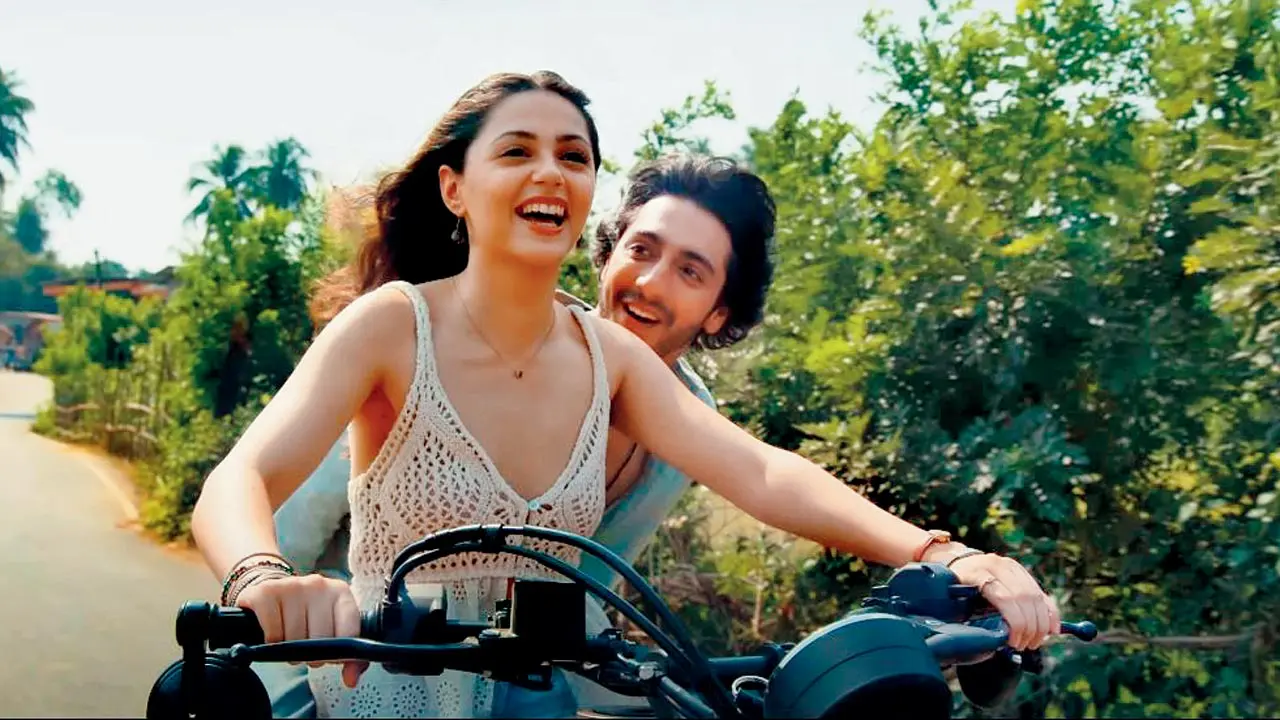
Box Office India Trade Network
SAIYAARA is coming to the end of its run and surprisingly BIHAR has emerged the best circuit for the film as it does business of over 16 crore nett which is more than ANIMAL. The film is the seventh highest grossing film ever in the circuit with only two non action films in the list being STREE 2 and SAIYAARA.
Bihar is a circuit still dominated by single screens and that is why generally action films score here big time. Also, historically action films have fared best though musicals can also score in the circuit and this was seen in the 90's with a lot of films with the music of Nadeem Sharvan out performing here even though other circuits may not have done well. PUSHPA 2 - THE RULE is on top by a distance with 30 crore nett plus business while GADAR 2 and STREE 2 are the only other films to cross 20 crore nett. SHOLAY (1975) and KRANTI (1981) are probably the biggest films of all time in the circuit.
The performance of SAIYAARA will have a lot to do with the music as well but when a film like this becomes a huge blockbuster, you could not even dream that Bihar would be the best performing circuit. The circuit has done around 5% of the all India business but the potential is much more as it used to be a 10% circuit when all was equal. The major downfall started as tickets pricing moved higher in the late 90's and higher pricing was not viable in most of the centres in Bihar. Still, this is better than the 2-3% that the circuit went to in the 2005-2010 period though there is much more potential as most of the centres do not have multiplexes.
The top ten films in Bihar is as follows.
1. Pushpa 2 - The Rule - 32,60,50,000
2. Gadar 2 - 23,23,00,000
3. Stree 2 - 22,37,00,000
4. Jawan - 18,56,00,000
5. KGF - Chapter 2 - 18,35,00,000
6. Pathaan - 18,09,50,000
7. Saiyaara - 16,30,00,000
8. Baahubali 2: The Conclusion - 15,00,50,000
9. Animal - 14,94,50,000
10. Tiger Zinda Hai - 12,27,25,000
For us, it’s a matter of pride if Pardesiya even gets compared to A R Rahman's work - Sachin-Jigar
10:41 PM
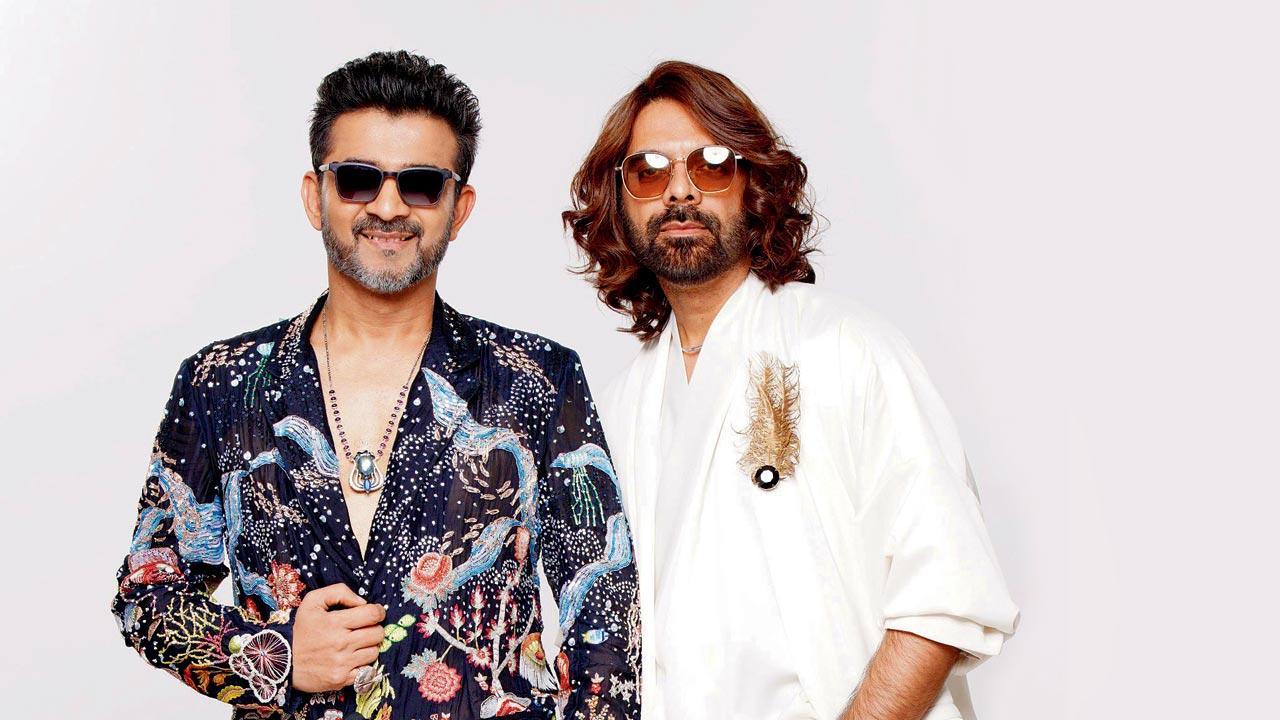
As listeners say that ‘Pardesiya’ is influenced by AR Rahman’s music, Param Sundari composers Sachin-Jigar reflect on how the album is their tribute to the maestro. They also share that they are proud that their work is being compared to A R Rahman's
Mohar Basu (MID-DAY; August 25, 2025)
Few composer duos in Hindi cinema today straddle madness and melody as deftly as Sachin–Jigar. Over the past decade, they’ve swung between quirky tracks like Kamariya, romantic numbers like Mileya Mileya, and chartbusters like Aaj Ki Raat. Ahead of their latest outing, Param Sundari, the duo talks about their mindset, music, and their tribute to the master. Excerpts from the interview.
What’s the secret of a long-term collaborative equation?
Sachin: It is destiny. We never sat in business meetings to plan this partnership — it just happened. I first met Jigar to share some workload, and there’s no way two people living so far apart could’ve just decided to become a jodi. It feels like something beyond us put us together. Let me give you a recent anecdote: I needed Jigar not just as my business partner but as family, and he came through for me. That’s when I realised I admire him beyond music. He’s five years younger but has this politeness, manners, and ability to communicate that I really look up to. He’s also the rebel in our duo, the one who pushes.
Jigar: The common thread between all of us is that we’re mad but sane enough to know that we’re mad! Otherwise, who decides to make a song “Baba Ji Ki Booti”? And when we did that track, everyone sang — Raj, DK, Anand, Kunal, me. Whoever was in the room. None of us was in it for stability. I think it’s that madness that connects us and keeps us together.
Last year was stupendous for you, with Aaj Ki Raat becoming 2024’s most-streamed song. When you start a new project after such a success, what is your mindset?
Sachin: Jigar doesn’t sleep — and he doesn’t let anyone else sleep either! (laughs) For him, the moment a song works, that gate is closed. He won’t allow us to repeat ourselves in the same way. That forces us to think differently, and that’s why we’ve managed to stay versatile. For me, that success gave me a certain ease. I’ve lived through the struggle of not finding popularity, so to be on the other side feels nice. But we were never in the game for just hits or flops. We came here to make good music, and even after success, that hasn’t changed.
Our mantra is never to define a “Sachin–Jigar sound.” We don’t want people to say, this is exactly what they always do. We move on, leave that sound behind, and try something new. If others want to pick it up, great. If not, no problem. That’s why after Stree 2, we thought, okay, we’ve done the madness in Stree, we’ve done dance numbers, now how do we break out again? That’s how Param Sundari happened. It’s become an unplanned pattern with us — one big dance number, then one big love song, then something unexpected.
Jigar : We’re also conscious of not getting typecast as “the commercial dance anthem guys.” So if we’ve just done a massive dance track, next time we’ll want to balance it with a love song or something soulful.
When the Param Sundari teaser dropped, it went viral, with Sonu Nigam’s voice everywhere on social media. How did that feel?
Sachin: A day before Jigar and I flew to Dubai for the Param Sundari music session, Dinesh Vijan called us to his office and told us this is a once-in-a-lifetime opportunity. Instantly, [A R] Rahman sir started playing in my head. Roja [1992] changed my life forever — if I’m a composer today, it’s because of those five years of listening to him. So working on Param Sundari felt like living a dream.
Jigar: South Indian music has also inspired us a lot because it stays rooted in its culture. Even in the most commercial films, you’ll hear classical influences. I trained in classical singing for 10–12 years, and often had to “unlearn” some of it to compose for cinema. But “Param Sundari” brought everything we wanted together, it felt like a dream we didn't want to wake up from. As for Sonu Nigam: growing up, albums like Yaad, Deewana, Jaan were my everyday listening. First it was a dream to see him live, then to hear him sing songs we produced. The first track we ever programmed was sung by Sonu Nigam. That was already a big moment.
But as composers, we never got to record him again. We always kept it inside us. One day, we have to make a tune worthy of his voice. I was such a huge fan, I would literally pray to him before going to school! (laughs) So when we composed Param Sundari, we both knew deep down: this is it. We didn’t even say it out loud to each other, but we knew this was the song for Sonu Nigam.
We called him, he heard it, came to the studio, and recorded it in half an hour. It was magical. For us, it’s the greatest tribute — to have the man who inspired us be part of our music. Recently, he called and told us how much love he’s receiving for the song. To hear that from your idol — that’s the biggest moment of the year.
With the first track going viral, the flip side is that the rest of the album has to match up. Do you worry about how people will receive a song?
Jigar: Definitely the latter. That’s not our job. Once we put our music out, it belongs to the audience. As fellow creators, we may form opinions, but as listeners, people have the right to completely own or dismiss what we make.
We learned early in our careers to detach ourselves from the fate of a song. It hurts when a track you love doesn’t do well, but once you release it, it’s no longer yours. You’ve shot the arrow, and it’s out in the world. What feels “good” to me might not land with someone else, and that’s okay. So yes, we’ve made peace with it. Especially today, when there’s such great indie music and such strong new artists coming through, we’re not greedy. We just try to give our best and then leave it to the universe.
Has it happened that you expected a song to be a big hit and it didn’t catch on?
Jigar: Many times! One example is Happy Ending [2014]. The album actually caught on months later. At release, it didn’t get the traction we hoped for, though we felt it was a true coming-of-age album in terms of sound and concept. The first song, Jee Phaad Ke, generated noise, but the other tracks didn’t bloom immediately. And because once a producer sees one song breaking through, he’ll naturally invest all his energy and money into pushing that one, the rest often get sidelined. We always believed the album would find its way — and it did, but very late. There are other examples too. A beautiful song like Pinjra Tod Ke in Simran, or Hoor in Hindi Medium with Atif Aslam. We thought they’d immediately catch on. They didn’t at first, but later people came back to them, and now they even request us to perform them on shows.
Sachin: It’s a part of the game. That’s why having the first song of an album break through is actually a huge victory. Because imagine if you’re waiting until the fourth track for something to click — by then the producer may lose hope, and the entire album can collapse.
Jigar: For us, every film’s music carries big stakes. Actors want to be seen in a good light, producers are investing heavily, directors have worked hard. If the first song doesn’t land, there’s panic. And in those moments, you have to put art aside and think practically: we have to make this work. When the first track works, it also gives us the liberty to experiment with the rest of the album. For example, because Stree worked, we could make Stree 2 completely different — even put a ghazal on a beat. That was a risk, and it only happened because the first one clicked. So yes, we’ve learned that “first song tracking” is the safer and better place to be in, even if the others don’t explode in the same way.
Dinesh Vijan, Amitabh Bhattacharya and the two of you almost function like a unit. And every time this unit comes together, it delivers. What makes it work?
Sachin: Dinesh is extremely critical of his own work, and Amitabh Bhai is the same. He’ll come back after six days to change just one word in the last line of an antara, or fight with us about a line even before a shoot mix is delivered. That level of self-criticism keeps the bar high.
The truth is, at the end of the day, no matter how many aspirations or ideas we all come in with, there’s only one song to be made. That perspective keeps us grounded. We keep checking each other.
Dinesh loves to experiment — he’ll come to us with a reference, or say, “Here’s this Afro-inspired song, can we make it a love track?” He’s always hustling, always infusing new ideas. Jigar, as I’ve said, is the rebel — he refuses to repeat himself, and he shares a bond with Dinesh that goes beyond work, which makes them almost like brothers.
Jigar: For me, I try to stay objective, to keep perspective when things get too passionate. And Amitabh Bhai has this magical ability to bring in a word or phrase that sparks a whole song. Among the four of us, someone always has the starting point.
Because this unit has delivered before, we have the courage to keep pushing further — to take one more risk, one more step. The balance of being able to check each other and push each other is what keeps us both grounded and moving forward.
Also, we’ve been through failures together — films that didn’t work, songs that vanished without a trace. That’s why now, even if something doesn’t work, it doesn’t shake the association. Our bond isn’t dependent on hits. It’s dependent on whether we’ve fulfilled each other’s creative soul. If between the four of us, we’ve inspired and satisfied each other creatively, then that’s success, no matter how far the song travels.
On social media, people are calling Param Sundari’s music derivative and influenced by A R Rahman. Do you worry about that?
Sachin: Never. From the beginning, this song came from a place of pure art, dedication, and a tribute to the master. For us, it’s a matter of pride if one of our songs even gets compared to his work. I look up to Rahman sir not just for his work, but for the person he is. On the inlay card of his first independent album [Vande Mataram], he wrote: ‘Hope to become the song of an independent India.’ That’s the man we’re paying homage to.
Jigar: When people say Param Sundari feels familiar, for us, familiarity isn’t bad. Familiarity can make you feel at home, and once you’re there, you can surprise the listener with new things hidden inside.
The women centric approach in Stree was developed while filming-Amar Kaushik
9:01 AM
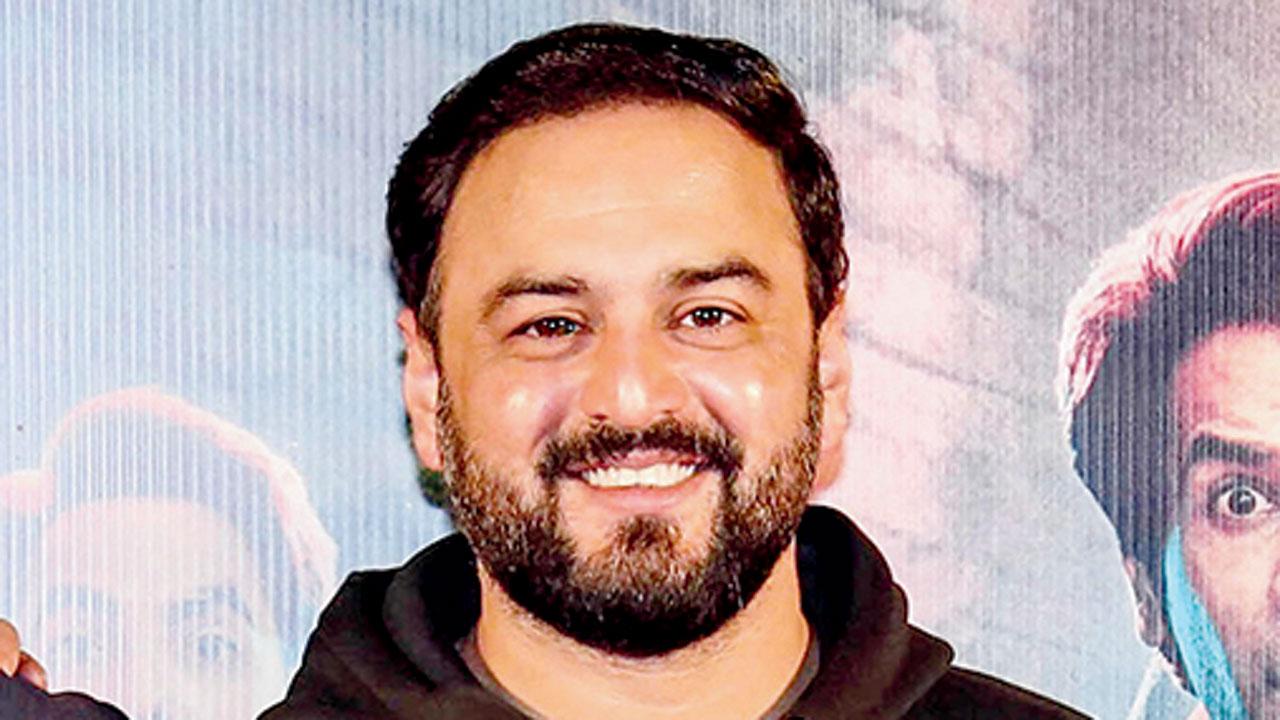
Niharika Lal (DELHI TIMES; March 5, 2025)
Director of Stree and Stree 2, Amar Kaushik believes that horror-comedy is all about the balance. According to him, the trickiest – and most important – part of the genre is making it feel relatable. So, is there a secret formula for horror-comedies? Kaushik breaks it down, “I treat horror scenes as pure horror and comedy scenes as pure comedy. I always remind myself that my film is a comedy where horror is inbuilt, not a horror film with comedy thrown on top.”
In a recent chat with us, Kaushik spoke about the mayhem he creates in his horror-comedies, and why it is so important for him to convey a message through his films.
‘SET PE AGAR COMEDY NAHI AATI TOH META JOKES ADD KAR DETE HAIN’
Scenes in Stree and Stree 2 have jokes on Aadhar and GST. Talking about why he incorporates topical discussions as one-liners, Kaushik says, “I use such dialogues and scenes so that if someone watches my film 20 years later, they will understand what the previous time was like. Set pe agar comedy nahi aati toh hum ye meta jokes add kar dete hain.”
‘WOH STREE HAI KUCH BHI KAR SAKTI HAI BECAME A POWERFUL DIALOGUE’
Both the films in Stree franchise carry an undercurrent of commentary on the position and treatment of women in India. Kaushik says, “Cinema is 2.5 hours of entertainment. Mujhe lagta hai ki agar aap entertain-ment ke saath audience ko hansao, rulao aur thoda motivate kar do, toh maza aa jata hai. Otherwise, I keep asking myself – why did I tell that story? What was the point of that story?”
Quoting examples from Stree, he adds, “We thought heroine ki entry full music ke saath hogi, jaisi aaj tak nahi hui hai. Ladke jo rakshak hain, woh chooriyon ki dukaan mein ja kar chhup jayenge. Woh stree hai peeche se vaar nahi karegi, woh saamne se aayegi. Then came this line – ‘Woh stree hai, kuch bhi kar sakti hai.’ And then we developed (our film) on these lines. That dialogue became so powerful. The women-centric aspect in Stree was not in our script; we developed it while we shooting the film.”
‘KOI BHI GENRE KABHI MARTA NAHI HAI’
Kaushik says that it is the story that works for horror-comedies. “Maine koi horror film dekhi bhi nahi thi pehle. But, when I started my career as a director, a horror film somehow came to me and I thought, ‘Let’s not do horror like typical horror,’” he says.
However, he believes that just because horror films did well in a particular year doesn’t mean horror is the only genre working. He adds, “Koi bhi genre kabhi marta nahi hai. Abhi kitne time se DDLJ jaisi koi kahani aayi nahi. Ab aayegi toh kitna chalegi!”
‘Log bolte hain aapne toh Chanderi ko bhootiya bana diya’
After Stree, Chanderi gained immense popularity and even became a travel destination. “I have been told by locals that tourists want to visit the places where we filmed Stree. When we were shooting, we used to stay in a guesthouse, and now hotels have come up. There are also people who tell me – ‘Aapne toh Chanderi ko bhootiya bana diya!’” says Kaushik.
What makes for a hit horror-comedy
- Characters should be relatable and fascinating
- Mediocre actors can’t make the audience laugh, so good actors are essential
- There should be a balance between horror and comedy. When I shoot a horror scene, I treat it like horror, and when I shoot a comedy scene, I treat it like comedy
Top 25 films of 2024; only 5 hits in the year and 6 films crossed the 100 cr mark
8:38 AM

Box Office India Trade Network
The box office results in 2024 were pretty much a disaster as the the top 25 films accumulated around 2250 crore nett when the same was done in 2019 by just 12 films. Also, in 2019, there was no mega grosser like STREE 2 which is contributing 25% of the collections of the top twenty five films.
It is a dire strait of affairs and at the moment, there does not seem a way out with satellite and digital markets crashing. On top of it, the films are generally not getting the desired box office results which is resulting in the production sector practically at a stand still. Only the box office can turnaround the satellite and digital markets on which the industry is so dependent. Even when a film does well, it does not help the scenario much as generally films are doing far below what is expected of them.
There were four films to get to the 200 crore nett mark but for the likes of SINGHAM AGAIN and FIGHTER, these are mediocre totals as these two were the biggest original Hindi films of the year. SINGHAM AGAIN got there mainly due to Diwali in Mumbai circuit and FIGHTER got some decent numbers in South but faced mass rejection in Hindi circuits. Today, 200 crore is just around 1.25 crore footfalls which is not much of an ask from the bigger films.
The stand outs were STREE 2 and MUNJYA with support from BHOOL BHULAIYAA 3, SHAITAAN and ARTICLE 370. Hence, there were just five HITS in the whole year from the Hindi film industry and this does not look like getting better anytime soon.
The top twenty five films of 2024 are as follows.
1. Stree 2 - 5,79,61,00,000
2. Bhool Bhulaiyaa 3 - 2,50,71,00,000
3. Singham Again - 2,38,46,00,000
4. Fighter - 2,00,01,00,000
5. Shaitaan - 1,48,54,00,000
6. Munjya - 1,00,07,50,000
7. Teri Baaton Mein Aisa Uljha Jiya - 82,59,00,000
8. Crew - 81,57,00,000
9. Article 370 - 77,08,00,000
10. Bad Newz - 63,54,50,000
11. Chandu Champion - 60,78,00,000
12. Bade Miyan Chotte Miyan - 58,74,50,000
13. Maidaan - 51,16,00,000
14. Srikanth - 46,03,50,000
15. Khel Khel Mein - 40,80,00,000
16. Vicky Vidya Ka Woh Wala Video - 39,49,75,000
17. Madgaon Express - 35,72,50,000
18. Baby John - 34,86,50,000
19. Mr & Mrs Mahi - 34,52,00,000
20. Yodha - 32,20,00,000
21. The Sabarmati Report - 32,14,00,000
22. Jigra - 31,12,00,000
23. Swatantrya Veer Savarkar - 24,49,00,000
24. Kill - 23,68,50,000
25. Sarfira - 23,55,50,000
Top ten footfalls post pandemic; Pushpa 2 - The Rule rules
3:49 PM

Box Office India Trade Network
PUSHPA 2 - THE RULE in Hindi will finish its run with roughly 4 crore footfalls which has only been seen twice this century with GADAR 2 and BAAHUBALI 2: THE CONLCUSION and these two went over 5 crore. No other film has crossed the 4 crore mark with DANGAL being the best at 3.7 crore while before GADAR, it was RAJA HINDUSTANI in 1996 to hit 4 crore.
There are many films to hit 4, 5 and even 6 crore in the older days when cinema had less competition from other entertainment and also was the only option to watch films though population was also only half of what it is now which more than compensates. Basically the films held wide appeal in those days. PUSHPA 2 - THE RULE joins an elite group of around 15-20 films in history to get 4 crore footfalls.
This is a huge target that PUSHPA 2 - THE RULE has set as post pandemic, 4 crore seemed like an impossible target due to the dwindling audience coming to the theatres. There are four South films dubbed into Hindi in the list and are probably more to come in the next few years especially if sequels of liked films are released. A realistic target for most of the big Hindi films will be 3 crore as GADAR 2 also looks a one off as that sort of single screen business can be written off for most films.
The box office number of GADAR 2 could have been higher with better multiplex pricing and footfalls could have been a little higher as well if it was not released in a crowded period. But as mentioned before, this is probably a one off and its 3 crore which is the biggest original Hindi films but that is also more than good enough as its around 600 crore nett business this year for the film released as a blockbuster film.
The top ten footfalls post pandemic are as follows. The original Hindi films are in bold.
1. Pushpa 2 - The Rule - 4 crore
2. Gadar 2 - 3.4 crore
3. Stree 2 - 3.2 crore
4. Jawan - 3.1 crore
5. Pathaan - 2.8 crore
6. Animal - 2.7 crore
7. KGF - Chapter 2 - 2.55 crore
8. RRR - 1.70 crore
9. The Kashmir Files - 1.55 crore
10. Kalki 2898 AD - 1.50 crore
Panorama Studios to remake Turkish film Dabbe
8:53 AM

Panorama Studios to remake Turkish film Dabbe, unveils movie franchise with a combination of horror and black magic themes
Rajesh N Naidu (THE ECONOMIC TIMES; January 15, 2025)
Mumbai: Production and distribution company Panorama Studios will remake Turkish film Dabbe in Hindi, as the production and distribution house known for movies such as Drishyam, Raid and Shaitaan prepares to create a full-fledged horror film franchise.
"The Turkish horror film Dabbe has a gripping narrative and cultural nuances that make its horror deeply unsettling," said Panorama Studios chairman Kumar Mangat Pathak. "We saw an opportunity to adapt its unique storytelling to connect with Indian audiences while preserving the essence of what made it so impactful."
The company will create a horror cinematic universe that will deal with a combination of horror and black magic themes, he said.
Panorama Studios will be the second production company to create a franchise specifically dedicated to the horror genre in India. Recently, Maddock Films - known for producing one of the biggest blockbusters in Hindi, Stree 2 - announced a slate of eight new films which will be expanding its well-established horror movie series such as Stree, Munjya and Bhediya in the next three years.
Apart from the Dabbe remake, Panorama Studios plans to build a franchise of the movie Shaitaan, which will include two additional films. It also plans to remake Shaitaan in Telugu, Tamil and Malayalam. Recently, the studio announced a horror comedy film, Jhalak.
"Audience for horror films in India is quite large. The appetite for these films is very high. Importantly, the theme pulls audiences to theatres. But very few horror films are being made in Hindi," said producer Rajesh Nair, known for films such as Kaminey and Adipurush.
"A horror film works well if it gets the three elements right: good writing, thrills and, of course, the horror in the film. A clear example is the film Munjya, which had no stars or known faces. It worked on the power of its storytelling," he said, adding: "These are actually grandmother tales, which never fail in their charm and pull. Problems arise when makers focus away from writing and try to make 'projects' out of these films by making them bigger in scale."
It is estimated that a horror film combined with different genres such as comedy, drama and thriller generally attracts at least 25% higher footfalls in theatres than a non-horror film. Also, a concept-based horror movie does not entail high investments like a spectacle or epic film.
"The horror genre is the most profitable across languages not only in India but also Hollywood. In fact, Blumhouse Productions in Hollywood is an entire production house dedicated to horror films," said producer and film business expert Girish Johar. "I think horror films will revive the sentiment in the industry which is in doldrums right now."
Last year, the theme of horror ruled not only the Hindi box office but also in the southern markets. In Hindi, films such as Stree 2, Shaitaan, Munjya and Bhool Bhulaiyaa 3 performed well, while Bramayugam and Aranmanai 4 recorded high collections in the South.
Interestingly, the re-released horror film Tumbbad (2018) collected Rs. 52.2 crore at the box office. The horror genre has caught on so well in the Indian film industry that makers are experimenting with it by combining it with different genres. Recently, a sea-horror action-adventure trilogy called Kingston was announced, which will be released in Telugu and Hindi in March this year.
Chillar Party had no takers until Salman Khan came on board; industry seniors should support younger generation-Abhishek Banerjee
9:41 AM
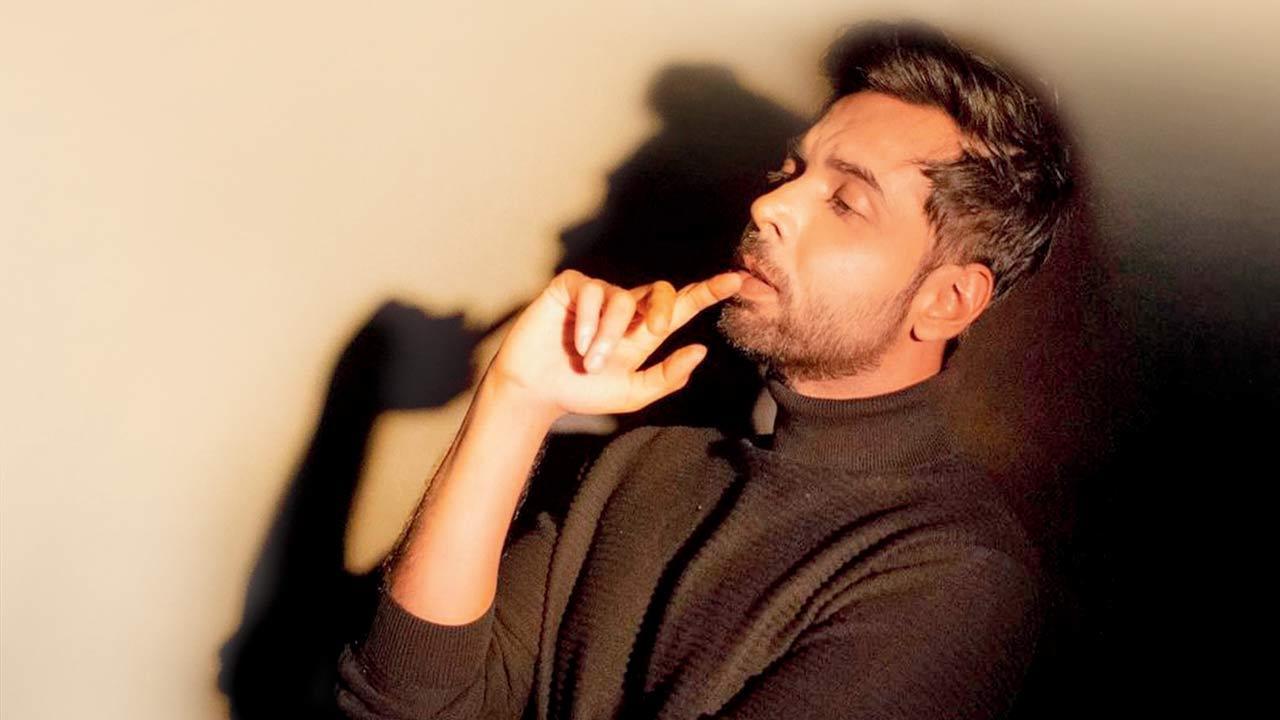
With the spotlight on him following the commercial success of Stree 2, actor Abhishek Banerjee shares details on the India release of his 2023 film, Stolen
Mohar Basu (MID-DAY; January 6, 2025)
In an era when a film’s production budget may only be rivalled by its marketing expenditure, it’s arguably rare for a small-budget offering to become the money-spinner of the year. Stree 2 (2024) actor Abhishek Banerjee will agree, considering the fact that the horror comedy was touted to have been made on a budget of around Rs 60 crore and grossed over Rs 880 crore worldwide.
“It was a medium-budget film that was a clutter-breaker. The three boys [lead characters], and the legend that the film is based on are characteristic [features] of India. It’s not a borrowed script. I hope this opens doors for many new filmmakers and writers. This move is growing in Malayalam cinema,” says the actor, who calls 2025 the year that he has been working for.
Being part of one of the highest-grossing films of the year may place an actor among the top brass of the industry. But Banerjee celebrates his wins in smaller ways.
“I feel that what the film’s success does for an actor like me is that it gives me the confidence to be in this city. It tells me that I [am capable of] entertaining the audience,” he says. In a world where every other artiste may have a roaring audience on social media, Banerjee believes people’s interest in a theatrical release is the real litmus test for an actor.
“This year, there’s a sense of satisfaction. I am on the radar of production houses and directors. They want to make something with me, even though many want me to play the same character that I’ve already played. When big directors, actors, and production houses are involved, it’s difficult to say no. But then, it’s important to do so as well. Sure, acting is a career, and you have to earn money. But it’s also a form of art. I want my performance to matter.”
At a time when the spotlight is on him, we suggest it may be apt to release his offering, Stolen, for Indian viewers. Prod him on the reason behind the delay of the India release of the 2023 film that made waves at the Venice Film Festival, and he says, “We are speaking to a few studios and takers, and might have somebody on board by this year. I’m waiting for it to be released. It has done well globally, and won awards. It’s a proper edge-of-the-seat commercial thriller. On a podcast, Kiran Rao [filmmaker] said she loved the film. That made me so happy. It’s a contemporary, edgy thriller, and sheds light on the [existence] of two Indias—one of privilege and one without it.”
Guneet Monga Kapoor had previously told this reporter that a big studio can give wings to a smaller film.
We ask him if the commercial success of Stree has benefited Stolen, and he says, “This has been happening for years. Chillar Party [2011] had no takers until Salman Khan came on board. This should be the norm—industry seniors should support the younger generation so that there are more films being created. You need collaborators. We need to take risks and [make films], not just [commercial] projects. Sure, we must make money out of projects, but we must also make films after that. If we are constantly making projects to safeguard our recovery, the cinema culture will not grow. That’s a change I want to see in 2025.”
I try to watch a film a day; theatres are our chotu vacation-Rajkummar Rao
9:18 AM
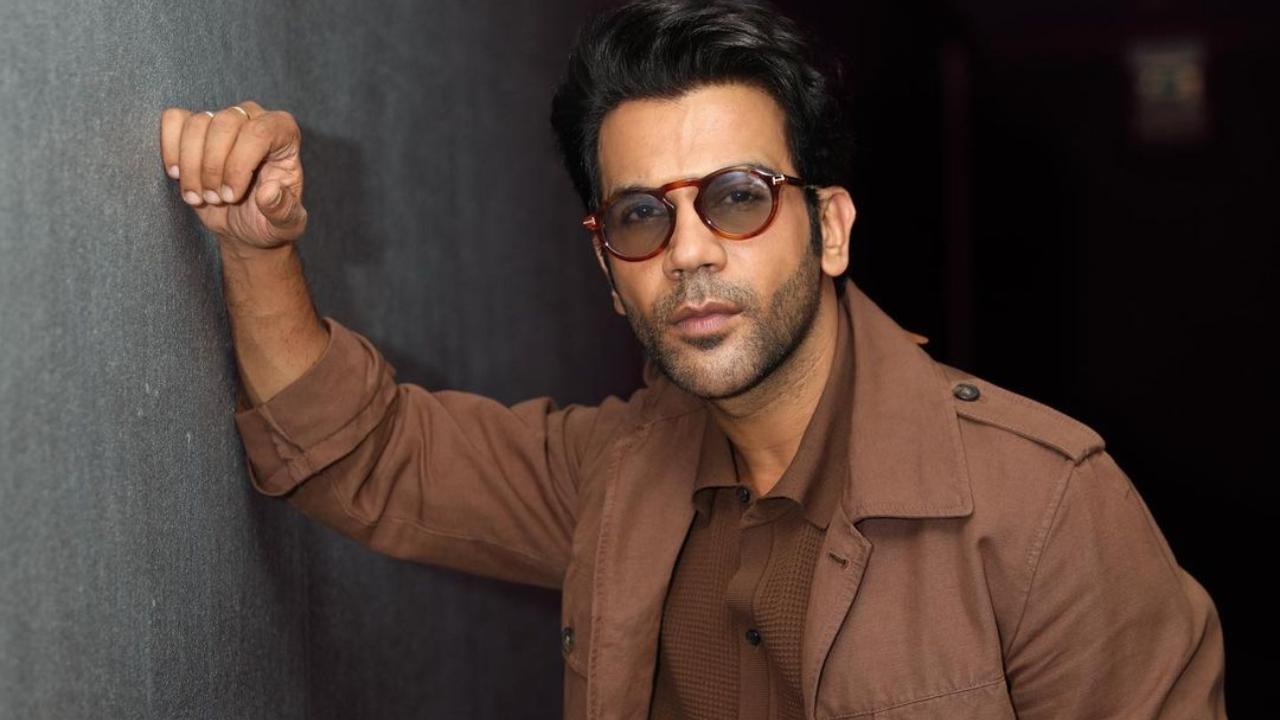
Renuka Vyavahare (BOMBAY TIMES; January 2, 2025)
Following a great run in 2024 with commercial success and critical acclaim, Rajkummar Rao believes that powerful stories will always prevail. Last year saw some massive hits and then some unexpected failures. While some Hindi films like Stree 2 and Bhool Bhulaiyaa 3 enjoyed immense success, a few big-ticket movies didn’t live up to the hype around them. The dawn of a new year brings with it new beginnings, and Rajkummar is optimistic about good stories ruling the roost this year.
‘Stree was a unique film, but we didn’t know it would be such a huge success’
The actor, who headlined Stree 2, Mr & Mrs Mahi and Srikanth in 2024, says, “A good film will always find its audience. A story must connect with an audience. When we made the first instalment of Stree in 2018, we didn’t know it would turn out to be such a huge success. We knew we were making a unique film. I don’t know how box office numbers work. Stree 2, again, turned out to be a massive hit. As a cinema lover, I am happy that good stories are working. On paper, the film was about a small-town simpleton and his friends. They are lovable, but stupid. It wasn’t some larger-than-life visual extravaganza, but it struck a chord with the audience. This will give hope to budding filmmakers and make them realise that you need to focus on your writing.”
‘Cinemas are our chotu vacation’
The actor, who is a big advocate of theatrical viewing, believes that the big-screen experience will never go out of fashion.
He shares, “If I am shooting outside Mumbai, and I have a day’s break, I go to a theatre to watch a film. I try to watch a film a day. If there’s a long break between two shots, I watch a movie at that time. It inspires me. As Indians, we love watching films in theatres. It’s in our DNA. Theatres are our chotu vacation. When TV came in, people said no one would go to cinema halls, but nothing changed. Now OTT is here, but people will continue to go to cinemas.”
Can we have unique content for everyone, everywhere, all at once? Dinesh Vijan speaks up
8:57 AM
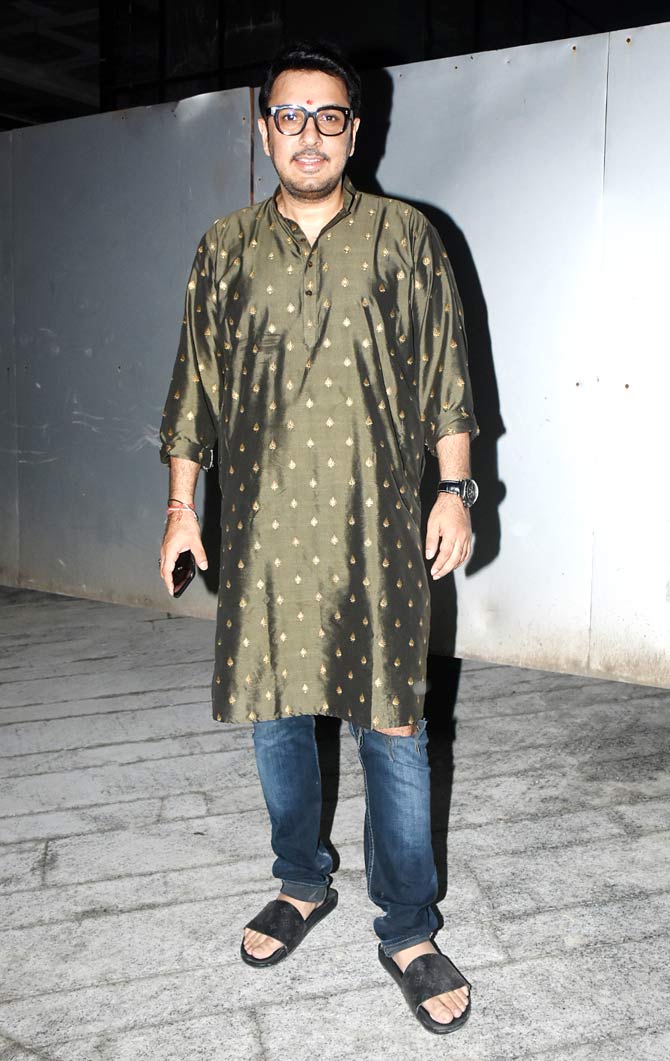
Dinesh Vijan (THE ECONOMIC TIMES; December 31, 2024)
The future of entertainment lies in the hands of audiences, who will decide how and where they want to consume content. Imagine a scenario where a QR code allows viewers to choose whether to watch a film in a theatre, on the phone, or on TV. This flexibility will define new-age entertainment.
However, content must reach a wider audience, especially in a country with India's massive population. For example, while Stree 2 was a blockbuster, it was watched by only 45 million people. This highlights the huge scope for broader content distribution.
In the coming years, technology-particularly AI and innovative distribution models-will empower filmmakers and create platforms for new content. The key, however, is to craft stories that resonate with a large, diverse audience. We need to focus on creating content that is about India, for India, and of India.
I don't believe there's a "takeover" by southern cinema. Since the pandemic, the Hindi film industry has seen remarkable successes, with films such as Animal, Gadar 2, Pathaan, Jawan, and Stree 2 achieving box office collections of Rs. 500-600 crore in India. This clearly shows that the Hindi film industry is performing as well as its southern counterpart. What truly matters is giving audiences something fresh and unique-exactly what these films have delivered. Instead of viewing southern and Hindi films as separate entities, we should embrace them as part of one Indian film industry. My hope is that films from across the country resonate with audiences nationwide.
Both southern and Hindi industries produce hits, but there are also films from both that fail to connect with audiences. As someone who stays in touch with creators from both industries, I am optimistic that next two years will bring unique stories from across India.
Streaming platforms are not a threat to cinema-they will coexist with theatres. While streaming services are still expanding their reach, they complement rather than compete with the theatrical experience.
Bollywood in 2024 saw a mix of scares, sequels and surprises
8:53 AM

Bollywood’s 2024 saw a mix of scares, sequels and surprises, with horror hits and small-budget triumphs outshining big-budget disappointments
Rishabh Suri (HINDUSTAN TIMES; December 31, 2024)
If 2023 marked Bollywood’s comeback year with a blockbuster revival, 2024 has been a “semi-hit” year, unanimously state trade experts. “The year started with a whimper,” rues trade analyst Taran Adarsh, adding, “Fighter (first release of this year starring Hritik Roshan-Deepika Padukone) didn’t meet expectations, especially with (filmmaker) Siddharth Anand riding high after Pathaan. It ended similarly with Baby John, which crashed on day two. Between these films, it’s been a case of kabhi kabhi khushi, kabhi bahut saara gham. Last year, we had four Rs. 500-crore grossers — Pathaan, Jawan, Gadar 2 and Animal. This year, big-budget films like Bade Miyan Chote Miyan and Maidaan tanked, and even Singham Again fell short of expectations.”
‘SCARY’ NEW SUCCESS
Surprisingly, horror turned out to be Bollywood’s lucky charm this year. Films like Munjya, Shaitaan, Stree 2: Sarkate Ka Aatank and Bhool Bhulaiyaa 3 broke genre barriers. Trade expert Atul Mohan observes, “Horror has been a hit-or-miss genre for our industry. These films changed that narrative.”
RE-RELEASES RULE
Old films found new love in 2024. The Avinash Tiwary-Triptii Dimri-starrer Laila Majnu (2018) became a sensation during its re-release. Similarly, Rockstar (2011), starring Ranbir Kapoor, saw renewed love. Movies such as Rehnaa Hai Tere Dil Mein (2001) and Veer-Zaara (2004) also pulled crowds to theatres. This trend shows no signs of slowing, with Yeh Jawaani Hai Deewani (2013) gearing up for a return.
SMALL TO MID-BUDGET FILMS
A major conversation this year revolved around escalating production costs and actor fees. Consequently, films made on controlled budgets stood out. Munjya, made on Rs. 30 crore, tripled its investment. Its director, Aditya Sarpotdar, says, “Even we didn’t anticipate these numbers, because it starred newcomers, was local in its flavour, had a CGI character.”
Yami Gautam’s Article 370 and Prasanth Varma’s HanuMan were other winners, with HanuMan delivering an impressive 241% ROI on a Rs. 25-crore budget.
Another triumph of controlled budgets was Laapataa Ladies. Sarpotdar credits its success to producer support: “Aamir Khan backing the movie further elevated its success. Even small profits matter when you consider the economics.”
FRANCHISE FACTOR
Franchise films continued to wield power this year, with Pushpa 2 – The Rule raking in massive numbers, especially from its Hindi-dubbed version. Other sequels like Stree 2 and Bhool Bhulaiyaa 3 (BB3) also performed exceptionally well.
Anees Bazmee, director of BB3, says, “Sequels enjoy goodwill, but you must deliver a good film. If one part fails, it’s not just the film that suffers; the entire franchise collapses.”
BIG HITS BUDGET BOX OFFICE
STREE 2
Budget: Rs. 60 crore
Box Office: Rs. 579 crore
PUSHPA 2 - THE RULE
Budget: Rs. 450 crore
Box Office: Rs. 700 crore
MUNJYA
Budget: Rs. 30 crore
Box Office: Rs. 107 crore
SHAITAAN
Budget: Rs. 60 crore
Box Office: Rs. 148 crore
BHOOL BHULAIYAA 3
Budget: Rs. 150 crore
Box Office: Rs. 245 crore
KALKI 2898AD
Budget: Rs. 600 crore
Box Office: Rs. 285 crore
ARTICLE 370
Budget: Rs. 20 crore
Rs. 77 crore
BIG MISSES
BADE MIYAN CHOTE MIYAN
Budget: Rs. 350 crore
Box Office: Rs. 59 crore
FIGHTER
Budget: Rs. 250 crore
Box Office: Rs. 200 crore
BABY JOHN
Budget: Rs. 160 crore
Box Office: Rs. 19 crore
MAIDAAN
Budget: Rs. 250 crore
Box Office: Rs. 51 crore
JIGRA
Budget: Rs. 80 crore
Box Office: Rs. 31 crore
I can’t be emotionally manipulated anymore-Tamannaah Bhatia
8:03 AM

Akash Wadhwa (BOMBAY TIMES; December 20, 2024)
In Lucknow recently, the Aaj Ki Raat fame actress Tamannaah Bhatia shared how she has a special connection with the City of Nawabs. The Sikandar Ka Muqaddar actress also talked about her journey in the entertainment world, her spiritual side and more. Excerpts...
How is it coming to Lucknow? You have been here before?
Actually, Lucknow is my father’s birthplace. My dad was born in Lucknow, and it is always special to be here. He hasn’t shared with me much about the city, as he himself was quite young when he left Lucknow, but it feels really nice to come to a place that is your parent’s birthplace. It is more emotional than anything else. I don’t know anything about the city, but wherever I am going to a place, being a foodie, I want to know about the food there. So, I am getting a lot of food recommendations for Lucknow - both vegetarian and non-vegetarian.
You spell your name differently and changed it as per numerology.
Haan bahot bachpan mein I had changed it to this. When I started working in my teens. usi time pe. I changed it to Tamannaah. And clearly, it has been a fairly good decision.
How has the overall journey been in the entertainment world?
For me, it was a very strong urge to do what I am doing today. While I was doing theatre and some kind of work initially, the performing arts also brought a kind of joy to me. Even though sometimes the timings have been crazy, it never felt like work to me. Strangely, people keep asking me what I do for pleasure, but for me, work only has been my pleasure, and I never seek pleasure anywhere else. Having said that, do I like that every day, maybe not! Do I have boring days, yes! Do I have dreadful days, yes! And would I still do this? Yes! I do have days like ‘Mummy mujhe school nahi jaana hai’ but largely I wake up enthusiastically for my work.
How do you see the industry changing with the OTT boom?
The OTT boom has actually done a great thing by giving people variety. Now the viewers are not restricted to watching a certain kind of genre. When we were growing up, I remember we didn’t have that kind of exposure and had to rent out a handful of international CDs available in the market. Today, literally everybody has choice. So, what OTT brought is a platform for different kinds of cinema to be showcased. Now because of the OTT one can be focused on the art form more and not worry so much about the numbers. With theatres, there is always a number game, which is very important for it to survive because it is very expensive art form. We can’t make very experimental films with theatre audience because it is still community viewing and has to appeal to the masses to do well. But with OTT, now we have movies that only a certain section enjoys. OTT has created a choice situation for the viewers.
With so much debate over the censorship of the medium, what are your views on the topic?
I am not in the right position to answer this question, but I do feel like there has to be some space for creative people to make things that they really feel strongly about. I do feel that something that is really problematic, the platforms are taking care of it. OTT platforms today are so careful about the kind of content they are putting out and they are doing a great job of being sensitive to most people and understanding that we want people to consume content.
How do you see the rise of regional cinema, especially down South?
We have always been doing good work, but somehow it has gotten into the limelight now. With films, we are now more bothered about whether they evoke some kind of emotion in us as a viewer, language no bar. South has told a lot of rooted stories that are about their land and about their people and projects there are now magnum opus kind, especially the folklore ones. And we also have a Baahubali from the South, which is exceptional.
Being a very spiritual person, how do you see spirituality today?
For me, I was always intrigued as in who am I? Those questions were very prevalent at a very young age. I feel lucky to have been in an artistic field where exploration is a part of the job we do. We are playing different people in each character, and you can’t do that unless you understand yourself well. The best thing that spirituality has done for me is that I can’t be emotionally manipulated anymore. Spirituality makes a lot of things very apparent, like you start seeing things for what they are. I am a regular meditator now.
Your last item number, Aaj Ki Raat, continues to be a rage. Did you anticipate that it would be such a hit when you signed up for the movie Stree 2?
For me, it is different when actors try to attempt a song. Because I felt like I wanted to perform like the character Shama would do it. I had a character to back it up and not do just another dance number. And I think that’s why it also got a distinct flavour of its own. Also, there was fluidity and grace in a rather fast-paced song. It was a fusion of a ghazal and techno. But yes, we didn’t imagine it while shooting that people would love it so much. I still get so much love for Aaj Ki Raat.
Subscribe to:
Posts (Atom)