Showing posts with label Srijit Mukherji. Show all posts
Showing posts with label Srijit Mukherji. Show all posts
A plethora of problems persists even as intelligent Bengali cinema is starting to break its decades-long shackles
8:21 AM

A plethora of problems persists even as intelligent Bengali cinema is starting to break its decades-long shackles
Rajesh N Naidu (THE ECONOMIC TIMES; January 26, 2025)
The opening scene of Anirban Bhattacharya’s 2021 streaming series, Mandaar, sears itself in the viewer’s mind. A drone shot tracks a dirt road leading up to a milestone identifying the location — Geilpur, a coastal fishing town in West Bengal. The next shot shows a fish flopping on the beach while a figure in the background seems to mimic the fish’s contortions, heralding a visually striking adaptation of Shakespeare’s Macbeth. It also sets the stage for a depiction of contemporary thuggery and violence in non-bhadralok Bengal, outside the bubble of Kolkata.
Kaushik Ganguly’s 2019 film Nagarkirtan (Town Song) delves into the complex and complicated relationship that exists between gender and class. Exploring a transgender person’s way of navigating a world that is neither urban nor urbane, Riddhi Sen as the protagonist puts up a sterling, nuanced performance that is brilliant in its subtlety. Debaloy Bhattacharya’s 2024 film Shri Swapankumarer Badami Hyenar Kobole (Sri Swapan Kumar in the Grasp Of The Brown Hyena) is a biting satire that not only upturns the ludicrousness of the Bengali action film genre, but is also a homage-cum-ironic take of the grand pulp-fiction legacy of the bestselling Bengali writer Swapankumar aka Samarendranath Pandey.
It's back:
Bengali cinema, written off for the last 30-odd years as being in terminal decline since the heyday of the trinity of Satyajit Ray-Ritwik Ghatak-Mrinal Sen, seems to be rearing its intelligent, sharp head to be taken note of. It is doing so at a time when cinema-goers have thinned out, preferring the comfort and non-hassle of the remote control at home. Films such as Nandita Roy and Shibo Prosad Mukherjee’s 2024 heist movie Bohurupi (Chameleon) and Soojit Rino Dutta’s 2024 action thriller Khadaan have been blockbusters, the latter becoming the fastest Bengali film to cross the Rs 5 crore mark in five days.
Quality Bengali films, in a minority even in their heyday in the 1960s and ’70s, punched above their weight. But even that critical mass was drowned out by terribly produced, formulaic films that producers put their money in for quick box office returns. With the latter drying out—because of cinemas in money-strapped Bengal closing down as well as Hindi films upping their production quality and popularity among the ticket-buying masses—Bengali cinema’s reputation died a slow, rear-stall death.
But with OTT, the splutter of intelligent popular films—like the 2012 Bhooter Bhobishyot (Future Of The Past, or Future Of The Ghost), a trenchant comedy that showcases Kolkata living off its past and gives it a rip-roarious shake—is once again attaining a critical mass. It may not yet be discernible outside the Bengaliphonic sphere, but within the Bengali cinema-watching and -streaming audience, people are sitting up.
Breaking out:
The return of good Bengali movies is despite the trying cinema ecosystem, not because it has had a change of direction. Apart from Srijit Mukherji— the reigning name in middle-brow Bengali cinema, director of crossover Hindi films like the 2017 Vidya Balan-starring Begum Jaan (a remake of his Bengali film Rajkahini) and co-director with Rohan Sippy of the 2024 TV series Shekhar Home, a desi take on Sherlock Holmes, starring Kay Kay Menon— Bengali cinema still languishes in the “glorious past ” for non-Bengali movie followers.
Director-actor Anirban Bhattacharya explains this paucity: “Bengali audiences are not committed to their own language. It is a result of an intellectual downfall in Bengal. It is a socio-political tragedy in every stream of Bengal: theatre, film, poetry, painting and music,” he says, adding, “I am not blaming the audience…. The crisis is more in our own selves.”
Laments Bhattacharya: “If you ask a person in Bengal about her favourite actor, she will name Shah Rukh Khan or Ranbir Kapoor first and then a Bengali actor like, say, Parambrata Chattopadhyay and Abir Chatterjee. This is not the case in the South. There, a person will name Fahadh Faasil or Allu Arjun first and then a Hindi actor.”
Southern films of the kind Bhattacharya cites, especially Malayalam and Tamil, have found a huge audience who do not speak or read these languages. That’s because of the ‘sincerity’ and ‘authenticity’ in their vision and storytelling. Bengali cinema is gaining ground on this front. The story is once again becoming important.
The question is when there will be enough of this kind of cinema for the industry to make a reputational change, especially outside the Bengalisphere.
Shiboprosad Mukherjee, director of critically acclaimed films like the 2013 thriller Alik Shukh (Unreal Happiness) and 2019 Kontho (Voice), says, “A film has to be rooted in its language and culture. That is why Marathi films such as Sairat and Natsamrat have worked beyond Maharashtra,” adding, “Today we need to make Bengali films with its culture intact.”
Films, like Indranil Roychowdhury’s 2013 Phoring (Dragonfly) on the relationship between a new schoolteacher and a boy in a town in North Bengal where the main industry has shut down, do mirror contemporary culture and politics. Aniket Chattopadhyay’s 2019 movie Shankar Mudi (Shankar the Grocer) is a searing tale of how big retail and online shopping affect a kirana owner. More and more films are depicting “reality” and, importantly, telling stories in an intricate, engaging fashion bearing quality production.
Producers are certainly looking for quality writers. Himanshu Dhanuka, MD, Eskay Movies, paints a pessimistic picture: “After the death of director Rituparno Ghosh, there has been a void. There is a talent problem. There are no ground breaking stories. The last hero introduced in Bengali was probably a decade ago.”
Despite Dhanuka’s woes, Bengali streaming platform Hoichoi throws up a growing number of films and shows, including Mandaar and the other aforementioned films.
One can argue that this uptick is happening after the malaise was identified and called out. As Anirban Bhattacharya points out, “The Malayalam film industry is experimenting with films such as Bramayugam and Manjummel Boys. But in Bengal, there is no willingness or zeal to experiment with new themes.”
He adds, “There are filmmakers in Bengal who want to do everything with a reference point. They are using references from Mumbai or South Indian films and making movies. Bengali cinema has always been about ideas. If you want to explore an idea, you don’t need a big budget for it. It is impossible to convince people that small ideas still can be as penetrating as big films."
MARKET MATTERS
Cultural, creative and financial challenges exist. Lack of interest by streaming platforms like Netflix and Amazon Prime Video in Bengali films—perhaps due to the fact that Hoichoi monopolizes the content—may be hobbling the industry.
Mahendra Soni, cofounder, SVF Entertainment, a leading production house and distributor in Kolkata, says, “If I know about the existence of a film, then probably I will watch it. Some great films are being made every year in Bengal. They are not the talking points because there is no discovery of these films on international streaming platforms.”
Soni is also cofounder of Hoichoi. “Today, a large number of southern films are mostly discovered through these international streaming platforms. But these platforms are not picking Bengali films because they have not built this category on their platforms thoroughly.”
The limited reach of Bengali films is a chicken-and-egg conundrum: people are not betting on good Bengali films because they don’t know of their existence, while there is a shortage of good Bengali content because nobody is putting their money there.
Director Arin Paul, who made the 2008 comedy 10:10, points out, “In the South, a film is simultaneously released in more than two states apart from the home state. So, there are multiple markets to make good money. In Bengal, filmmakers are largely dependent on the state itself for revenues. Even the budget of promoting Bengali films is very small.”
More than 80% of Bengali films are made within a budget of Rs 2 crore. Only films which boast big names can have budgets of Rs 5-7 crore. But the additional cost of promotion—between Rs 75 lakh and Rs 1.5 crore—is pretty much that of making the film. As a result, films are hardly marketed after their release and no one outside West Bengal, even among the Bengali diaspora, gets to know about them. This is something that OTT platforms like Hoichoi have started to rectify, especially since West Bengal has only 24 multiplexes when Maharashtra has 200.
West Bengal contributes only 7-8% of the total box office of Indian films.
Bengali film watchers are coming out of the moan-zone of ‘Oh, for the good old days’ as they are treated to better-made, bettertold, better-shown movies and shows.
Your turn, rest of the world.
---------------------------------------
Signs of Revival
- Bohurupi (2024) and Khadaan (2024) emerged as the third and fourth-largest grossing films at the box office
- More than 30 screens added in West Bengal in 2024
- Two-three multiplexes are being constructed in districts in West Bengal
- Eskay Movies recently released teasers of 18 upcoming films
- Gross box-office collections jumped 4% in 2024 to Rs. 68 crore from Rs. 66 crore in 2023
- Average ticket price in West Bengal was Rs. 109 in 2024 compared with Rs. 106 in 2023
Benedict Cumberbatch is not playing Shekhar, right? Nor is Robert Downey Jr. I am playing Shekhar-Kay Kay Menon
8:17 AM
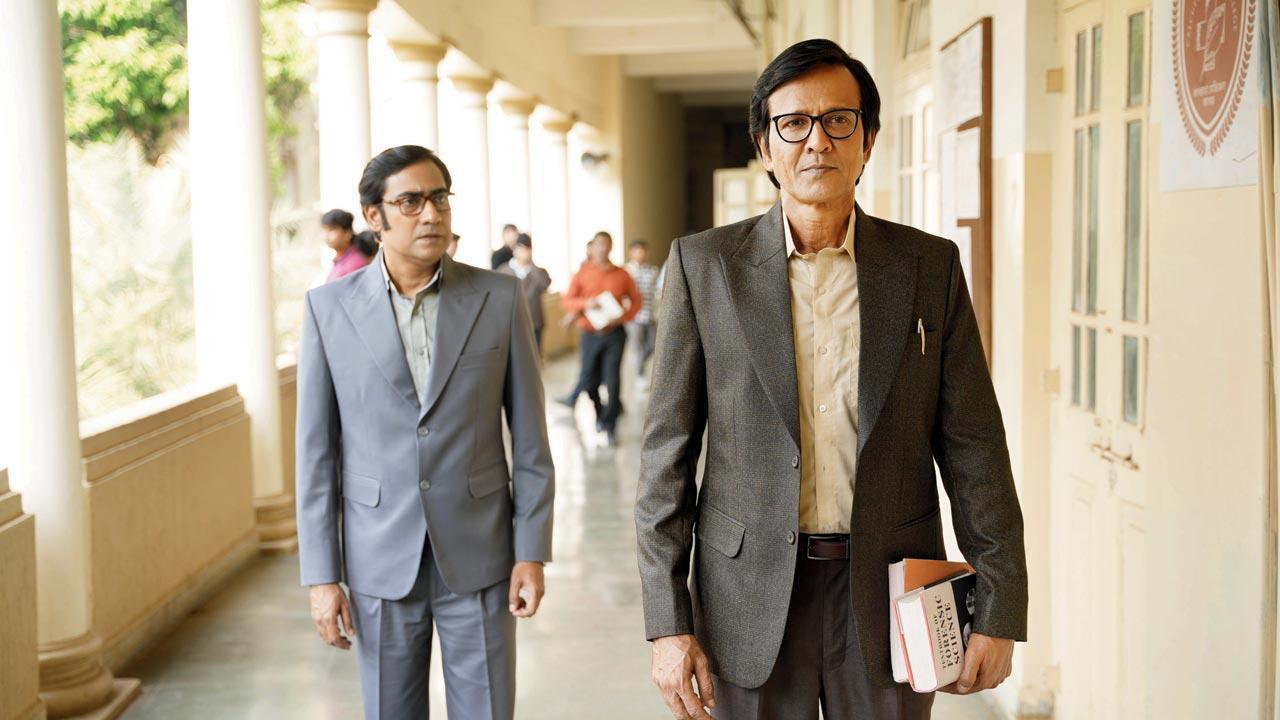
With Shekhar Home reimagining Arthur Conan Doyle’s famed detective Sherlock Holmes in 1990’s India, Kay Kay on how the setting influenced his acting
Letty Mariam Abraham (MID-DAY; August 13, 2024)
If Kay Kay Menon features in a project, it features in our watch-list. And if it blends his acting prowess with Sir Arthur Conan Doyle’s much-loved work, Sherlock Holmes, it’s a no-brainer. That explains why we’re looking forward to Shekhar Home. The Jio Cinema series reimagines the iconic detective in the setting of 1990s India. Playing the famed detective can be a big draw for any actor, but Menon says it was the story’s adaptation that attracted him deeply.
“I normally don’t go with inhibitions at all. I go with an open mind [when approaching] any script. This story is set in a sleepy town called Lonepur in the 1990s, without telecommunication, mobile phones, or Zoom meetings. It felt so good while reading it that I was transported to that era,” says the actor.
Helmed by Srijit Mukherji and Rohan Sippy, the mystery series also stars Ranvir Shorey, Rasika Dugal and Kirti Kulhari. Over the years, there have been many adaptations of Doyle’s detective series, including the hugely popular Sherlock, fronted by Benedict Cumberbatch, and Robert Downey Jr’s Sherlock Holmes (2009). Didn’t the fear of comparisons cross his mind? Menon says he embraced the challenge without falling into the trap of comparison.
“That is a trap. If I think like that, then I would never be able to perform. Benedict Cumberbatch is not playing Shekhar, right? Nor is Robert [Downey Jr]. I am playing Shekhar. I don’t look at it from the prism of something that has already been done. Otherwise, every love story would seem like Romeo-Juliet and Heer-Ranjha. I go with the principle that this is a unique script and given to me only, and I need to do justice to it.”
Holmes’ biggest strength is his power of deduction. The actor is quick to admit that he doesn’t have his subject’s observation skills. So, he embodied the character by gleaning out his other characteristics from the script, even letting the fictional town’s mood influence the role.
“I found that there’s a certain pace and rhythm that Shekhar sets, irrespective of the situation that he is in. I also represented Lonepur, that sleepy languid nature of the town seeping into this person. I let myself be; the mannerisms and body language happened. I don’t design as an actor. It’s all slightly transcendental.”
He adds that the production team had to carry out extensive recces before finalizing Bholpur and Haldia in West Bengal as the locations for the fictional town.
What added flavour to the story is that it was helmed by Sippy and Mukherji, each bringing their distinct voice.
“Their voices are very different. Srijit has a stereophonic voice, while Rohan has a softer voice. They are a powerhouse of talent and know how to go about a story. When I was doing Special Ops, I worked with both Neeraj [Pandey] and Shivam [Nair]. I love seeing the jugalbandi. Cinema is the most collaborative art possible.”
Filmmakers discuss ways to cut costs
8:06 AM
Bollywood grapples with rising budgets even as many big-screen offerings bring disappointing box office numbers. While organizations like the Producers Guild of India and Indian Motion Picture Producers’ Association are working towards solutions — filmmakers tell Yashika Mathur about steps that can help reduce costs across levels
Yashika Mathur (HINDUSTAN TIMES; August 12, 2024)
Srijit Mukherji
One practical approach to reducing costs is to adjust actors’ remuneration based on the average earnings of their last three box-office films. This method could address the financial imbalance that big-budget films underperforming causes.
Anil Sharma
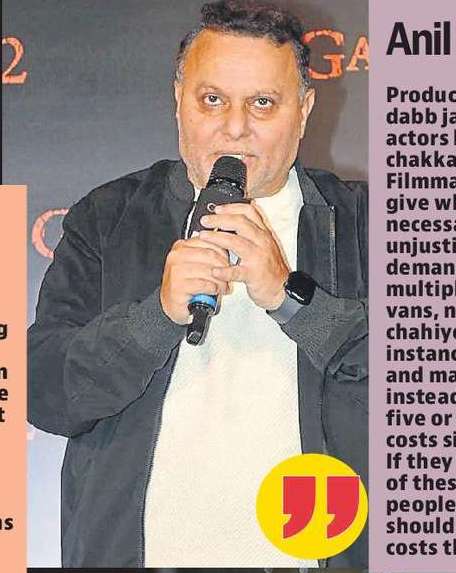
Producers bechare dabb jaate hain actors ke costs ke chakkar mein. Filmmakers happily give what’s necessary but unjustified demands, jaise multiple vanity vans, nahin hone chahiye. For instance, one hair and makeup artist instead of a team of five or six, could cut costs significantly. If they still need all of these extra people, then they should cover the costs themselves.
Suparn S Varma
The cost of securing and maintaining permissions for shooting a Hindi film or series in India is exorbitant. Governments in Hindi-speaking states should consider reducing these costs, similar to how subsidies are provided for Telugu and Tamil films.
Sudhanshu Saria
Pre-production is crucial for managing budgets effectively. Spending more time planning with actors before shooting can streamline the process, This, in turn, will allow for efficient execution of complex scenes, reducing shooting days, particularly beneficial in expensive locations such as, say London (where he shot Ulajh). Additionally, being decisive during pre-production — such as finalising clothing choices and other details — can prevent budget wastage.
Ramesh Taurani
A clear script and directorial vision can help control costs. Jab ek script well-defined hoti hai and it is locked before shooting begins, it reduces the need for last-minute changes and rewrites. This can help reduce production expenses.
As someone who knows many Cumberb*tches, I hope we have fared well-Rasika Dugal
10:27 PM
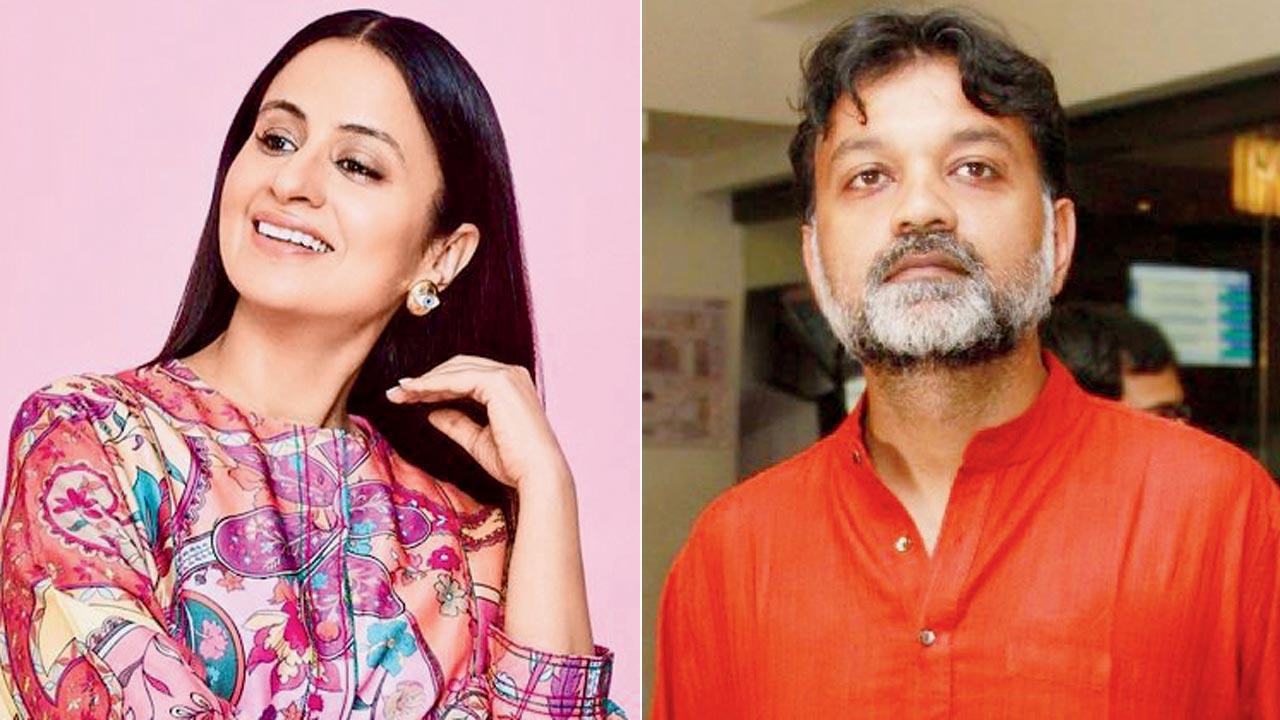
Rasika discusses playing Irene, who outsmarts detective Sherlock Holmes, in Srijit Mukherji’s Indian adaptation
Upala KBR (MID-DAY; February 9, 2024)
What would an Indian Sherlock Holmes be like? Would he be Satyajit Ray’s Feluda or Sharadindu Bandyopadhyay’s Byomkesh Bakshi? Guess we’ll know when Srijit Mukherji’s Shekhar Home, which sees Kay Kay Menon portray the iconic detective, streams later this year. For now, Rasika Dugal, who steps into the role of Irene Adler in the mystery drama, tells us that Shekhar Home is fresh and fun.
“I finished the shoot by mid-2023, but Srijit and the team had two more episodes to go, which they finished by December. This is a challenge because it’s hard to please Sherlock fans. Like everyone else, while growing up, I read the Sherlock Holmes series on and off. I am a huge fan of the Benedict Cumberbatch series, but our show is not a take on it. What it attempts is to bring to the table the same authenticity and finesse of storytelling. As someone who knows many Cumberb*tches, I hope we have fared well,” the actor laughs.
Dugal is thrilled that the upcoming series gave her the chance to work with the National Award-winning director. She says, “We spoke so much over the years about [possible collaborations], but none of them materialized. I guess this was waiting to happen. My character Irene is sharp. She is constantly outsmarting Sherlock, so that play was interesting.”
Working across mediums doesn’t take away from my stardom, it elevates it-Prosenjit Chatterjee
8:18 AM
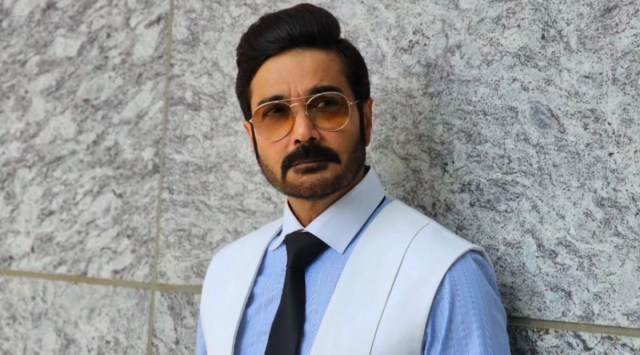
The actor, who made his web debut with Jubilee, talks about experimenting with various mediums, his long, successful career in films and more...
Madhureeta Mukherjee (BOMBAY TIMES; July 2, 2023)
Superstar of Bengali cinema, Prosenjit Chatterjee, recently made a remarkable debut on OTT with Jubilee. The actor, who has reigned in his industry for over three decades, as a leading commercial star and has also shown his acting prowess in parallel cinema – which is rare, says that even today, he feels like a frontbencher on set. And in his words, Prosenjit says, “I am ready to take on any challenge to do different kinds of roles, such is my hunger as an actor.” In a conversation with us, he talks about how he lives and breathes cinema.
You recently made a remarkable web debut with the show Jubilee and followed it up with Scoop. Prior to this, in the Bollywood space, you were seen in Shanghai. As a superstar in Bengali cinema, didn’t you want to explore more roles in Hindi cinema, or was the work that was offered to you here not creatively exciting?
After my debut film in Hindi (David Dhawan’s Aandhiyan), while I was shooting in Mumbai for a Bengali film, Pahlaj Nihalini told me, ‘You are a big star, chalo film karte hai.’ I did some more films here, but I never planned or structured my career in Bollywood. I was a rockstar in mainstream Bengali cinema. I had 22 releases in one year. I felt that I was not alone and that I was taking an industry along with me. In Bengal, people would say that I was number 1 and 2, 3, 4, in mainstream cinema. I wasn’t sure that if had come here (Bollywood), I would have become Shah Rukh Khan. If I had taken that chance, I probably wouldn’t have done justice to the filmmakers in Bengali cinema, as they were the ones who believed in me and made me a star. Today, I can do that because I don’t have those challenges. My intent is to get one new audience every day. I like the fact that my audience cuts across generations. I love to work with new directors. Yes, I am a star, but I broke that image for my films. OTT is the future, and all the big actors are doing it. I don’t think working in different mediums takes away from my stardom, it elevates it.
You made a shift from mainstream to middle-of-the-road Bengali cinema at some point, was that well thought through?
Yes, it was planned. I knew back then that the language of cinema would change. Even before I did Srijit Mukherji’s Autograph, I saw the growth of multiplexes. Every ten years, in our cinema, there has to be a shift in the audiences’ tastes. In my own way, I have observed and studied the change that is going to happen. For over 30 years, I have been a mainstream commercial actor, and I am grateful that this is not my area now. I had created a record of sorts—where I was shooting in my own city (Kolkata) for 19 days at a stretch but didn’t go home for 19 days. Back then, there were no vanity vans, so I would sleep in my car. Now I tell the younger actors, ‘Abhi aap log isko aage le jao (laughs!)’. I am enjoying what I am doing now.
But you do believe that commercial cinema needs to thrive, right?
Yes, absolutely! It has to survive, but we have to do it differently. What is commercial cinema – one that will be watched by people in large numbers? But why do we think that the audience will not understand good cinema – whether it’s commercial or not? We are underestimating the audience. Rituparno Ghosh would tell me that he cast me in Chokher Bali, as he, too, wanted to cross that border. So, I feel I need to support this kind of cinema (middle-of-the-road). Chokher Bali that was made 20 years ago, was a pan-India film, but at that time, no one would talk about it. We didn’t do it for business, today, it is a business model.
Bengal has given us so many iconic filmmakers and actors, what do you think the Bengali film industry needs to do to expand the reach of their cinema and get their footprint pan-India?
Cinema of every language has its own strength, and we need to tap that. Bengali cinema won’t be able to do a Baahubali or an RRR right now, and it’s not because of the budget. Bangla’s strength lies in its literature. We need to make subjects that stem from there and resonate across audiences. Why did I like Kantara? It’s because it struck a chord as it spoke about something close to their culture, which I wasn’t aware of. We need to give the larger audience those subjects that are close to our culture. I would love to do South films and Marathi films. The Marathi film industry has such great actors and directors.
Is your son Mishuk showing a keen interest in becoming an actor?
He is a big fan of Shah Rukh Khan and Bengali actor Dev. He’s a good footballer, and now he’s turned 18 and I feel ki usko actor banna hai. I have told him that I will help him prepare and guide him as I know what a commercial actor needs to do and be. But then, mein usko market mein chhod doonga. I have told him that I am not going to launch him, even I wasn’t launched by anyone. His journey has to be his.
Why Bengali films are giving trams a pass now
8:13 AM

Scrapped trams stored at the Tollygunge tram depot
Modern Kolkata Moves In The Metro And App-Cabs While Its People Are Shifting To Highrises. So, The Tram Is Reduced To A Cliche That Appeals To The Outsider But Not Contemporary Bengali Directors
Priyanka Dasgupta (THE TIMES OF INDIA; February 19, 2023)
There’s a West Bengal tourism commercial that shows the city through the lens of a foreigner. Its last sequence features a tram car chugging past the Maidans by night on Route 36. The climax is the spectacular entry of Bengal’s brand ambassador, Shah Rukh Khan, singing Tagore’s ‘Ami chini go chini tomare ogo bideshini’. When the tram car finally chugs out of the frame, the camera zooms in on the words, ‘Experience Bengal: The sweetest part of India’.
Six years since the commercial aired and a pandemic later, Kolkata’s once-ubiquitous trams are chugging out of the city. Even the sound design of contemporary Bengali cinema no longer uses the chimes of tram bells to capture Kolkata’s essence.
Inseparable For Years
Bengali cinema’s tram connection meandered from Satyajit Ray’s ‘Mahanagar’ (1963) to Amitabha Chaterji’s ‘Manohar & I’ (2018) via Buddhadeb Dasgupta’s ‘Kaalpurush’ (2005), Atanu Ghosh’s ‘Abby Sen’ (2015), Nandita Roy and Shiboprosad Mukherjee’s ‘Praktan’ (2016), Srijit Mukherji’s ‘Ek Je Chhilo Raja’ (2018), and Raj Chakraborty’s ‘Parineeta’ (2019).
Not just films, even their opening credits celebrated this connection. Subrata Mitra filmed the two-minute-long title sequence of Satyajit Ray’s ‘Mahanagar’ (1963) by only focusing on a moving tram cable. Once Ray’s credits for the film’s screenplay, music and direction have rolled, the camera moves inside the tram car to freeze on Anil Chatterjee’s tired face.
“Ray used just the electric cable to depict the big city. In the background score, he also changed the tempo and volume of violin, flute and cello to heighten the drama of everydaylife,” said Riddhi Goswami, a member of the Ray Society.
Criss-crossing tram wires form the backdrop for the opening title card of Mithun Chakraborty-Rahul Bose-Sameera Reddy starrer ‘Kaalpurush’. “My father loved everything quaint and old that stood witness to time and defined his Kolkata in its purest form,” said music director Alokananda Dasgupta, daughter of the film’s director, the late Buddhadeb Dasgupta.
Later in the film, Bose falls asleep inside a compartment and has imaginary conversations with his father about his love, hatred, regret and memories. “It is such a vulnerable and sensitive scene. What better than the long-lost tram to act out this metaphor of extended realism in his film,” she added.
Metaphorical Journeys
Ritwik Ghatak used trams in ‘Bari Theke Paliye’ as a metaphor for Kolkata’s mechanical transport. But film scholar Sanjoy Mukhopadhyay said Ray and Ghatak used trams differently. “In Ray’s ‘Apur Sansar’, the tram becomes a space where dreams turn into reality when Apu reads the editor’s letter. In contrast, the tram in ‘Bari Theke Paliye’ symbolizes crude mechanization and not fantasies.”
Trams also appear in Mrinal Sen’s ‘Interview’. “The protagonist nabs a pickpocket in a tram. That was more of an emblem of day-to-day life and living in 1970s’ Kolkata,” Mukhopadhyay said.
Parked In Nostalgia
Once an emblem of modernity and the metropolitan mind, trams now symbolize old-world charm. “People who joined college in the midor late-1980s remember how romantic tram rides were during noon, especially if a couple got the front seats just behind the driver’s cabin,” said Atanu Ghosh, who directed the 2015 sci-fi film ‘Abby Sen’. “As a tribute to my fond memories, I devised the tram ride scene as a metaphor for nostalgia and romance in ‘Abby Sen’. In the story, Abby travels 33 years back in time from 2013 to 1980 and meets his wife in an illusion scene inside a tram.”
Poet-turned-filmmaker Srijato penned ‘Chol rastae saji tramline’ for Srijit Mukherji’s ‘Autograph’ (2010) that highlighted the word tram. Despite the song’s popularity, Mukherji didn’t use a tram shot to picturise it. He waited for eight years to use the tram as the setting for the conversation between Aparna Sen and AnjanDutt in ‘Ek Je Chhilo Raja’. “Tram for me is quintessential Kolkata. I use trams to portray a character of the city which is traditional, old-world, slightly laidback with its own rhythm or something very intimate, quaint and personal,” Mukherji said.
Few contemporary Bengali films use trams for a nuanced portrayal of urban loneliness. One rare exception is a 13-minute-long scene from ‘Manohar& I’, which is among British Film Institute’s 10 great films set in Kolkata. Two strangers-turned-acquaintances hop on to a tram car. The languid pace and the empty space of a tram car allow a lot of time for the characters to communicate. The camera placed up close captures the hoardings and wall graffiti through the huge windows while the protagonist garnishes his narrative with half-truths and yearnings.
“In between their conversation, I deliberately kept some top shots of a serpentine tram negotiating the traffic. The tram becomes a metaphor for Kolkata’s indifference that alienates migrants from the suburbs. The metropolis shuts them up inside boxes. Their existence resonates with tram cars moving around the city like long matchboxes in motion,” director Amitabha Chaterji said.
Iconic For The Outsider
Most contemporary Bengali films steer clear of the tracks to avoid clichés. Besides, their plots have long shifted to highrises where the chimes of tram bells hardly reach. “As a child, I used the tram regularly while commuting. But trams have now disappeared from the cityscape. If I set a realistic film in the city, where is the space for trams since my characters will use the metro and app-cabs?” said director Aniruddha Roy Chowdhury.
But those who haven’t lived in this city as an insider rely on trams, Howrah Bridge and Victoria Memorial to reinforce a stereotype. From Mani Ratnam’s Yuva (2005) and ‘Guru’ (2007), Sujoy Ghosh’s ‘Kahaani’ (2012), Tigmanshu Dhulia’s ‘Bullett Raja’ (2013), Shoojit Sircar’s ‘Piku’ (2015), Dibakar Banerjee’s ‘Detective Byomkesh Bakshy!’ (2015) to Mridul Toolsidas’ ‘Toolsidas Junior’ (2022), Kolkata’s trams and even tram depots remain the perfect backdrop for period films and romantic songs.

Sourav Ganguly told me, ‘Mithali Raj is legendary. You must do this well’-Srijit Mukherji
10:52 AM

Rachana Dubey (BOMBAY TIMES; July 12, 2022)
It took him five years to return to direct a full-blown Bollywood film after Begum Jaan in 2017. In a conversation with Bombay Times, National Award-winning director Srijit Mukherji talks about making his upcoming film,
Shabaash Mithu headlined by Taapsee Pannu, which is based on the life of ace cricketer Mithali Raj, his passion for the sport and the changing norms of content creation today. Excerpts:
Shabaash Mithu had a different director on board earlier and when you took charge, the film had already gone on floors. Was it difficult to find your space in such a scenario?
It was difficult. The pre-production work was already over and I had to restructure it. The original plan had to be changed. Looking at the way modern cricket-watching has evolved, we could not shoot matches for real. We decided to use footage, which was the more prudent thing to do. Also, we were shooting with COVID scare still in the air. A lot of locations became out of bounds and so on. So, we had to restructure the blueprint, which was challenging, but we managed well. As an ardent cricket follower, I was clear about how those portions had to be shot and shown in the movie.
We even cast many state-level players in the film, which is easier than training actors to become cricketers. Also, I reinstated certain things that had been taken out of the original screenplay. The points where your vision doesn’t match the writer’s or the studio that’s backing the film, is where you have to arrive at a consensus, which I enjoyed.
Since Taapsee had already prepped herself based on the vision of another filmmaker, how did you get her on board with how you wanted to shape the film?
It started with our first meeting where we started talking about her stance and I suggested some technical changes to the way she held the bat and her body language. Subsequently, it turned into a freewheeling chat about issues like how there is inherent sexism in the way cricket is perceived in India, the lack of focus on women’s issues, how Mithali has been vociferous about these matters and has fought a hard battle for several years. I’ve followed Taapsee on social media, and she has similar views about sexism, pay parity and so on. We also discussed how much the script emphasizes on these points, how the message in the film should be strong but put across subtly without being preachy and how we should do all of this without sacrificing the cricket portions. I was extremely excited to work with Taapsee. I had first met her when Pink had released, and we’ve been in touch since then. We always discussed stories, but I guess the stars aligned themselves for this special project. Taapsee lends herself wonderfully to the role — she’s incredibly hardworking and a natural athlete. Cricket is my first passion in life. I ventured into it as a writer, a commentator and a reader. I’m glad Taapsee and I came together to make Shabaash Mithu.
Women cricketers have not received that kind of adulation and attention that their male counterparts enjoy in our country. Given that this is a sports biopic, how did you strike a balance between talking about these topics while keeping the focus on a legendary cricketer’s journey?
Most of the sequences depicted in the film have happened in Mithali’s life. Our writer, Priya Aven, has articulated them wonderfully in the screenplay. I just shot them dramatically, which I felt was needed. Before every sequence, Priya, Taapsee and I would discuss everything — from the setting to the dialogues to how they had to be delivered to ensure that they don’t sound textbookish. While writing the film, Priya shadowed Mithali, interviewed her and spoke to her at length. After that, when I joined in, I also started interacting with Mithali. She would be at different tournaments and in bio bubbles, but she would answer all my queries. I had a lot of technical questions about the evolution of her stance, her grip, whether she had ever done any sledging on the field, her evolving body language and her stroke-making style. These were small, but extremely important parts of depicting her journey on screen. Shooting the cricket portions was the most difficult aspect. We were still in the thick of the pandemic. Also, there was a lot of rain to be battled. Shooting outdoors was a nightmare. Strangely, the only thing that favoured us was that the grounds could be kept empty. India mein women’s cricket mein stadium nahi bharte, so we didn’t have to show that, which was an advantage as far as shooting the film was concerned at that time.
As a cricket enthusiast, what took you so long to make a film revolving around the sport?
It took this long because of Sourav Ganguly. I’m fond of dada and I wanted to start by making his biopic. We kept exchanging notes and I had researched and figured out everything. We kept discussing things over three-four years, but he was so busy that we couldn’t make this work. I couldn’t translate my research into something concrete. So, when Shabaash Mithu came to me, I informed him and he was happy for me. In fact, he said, ‘She is legendary. You must do this well.’ Now, I hear his biopic is being made by another production house.
You made your first Hindi film, Vidya Balan-starrer Begum Jaan, in 2017. If one doesn’t count the anthology, Ray, in the online space, it took you five years to make another Hindi film...
My first Hindi film didn’t work at the box office. I got Ray because my direction was appreciated for Begum Jaan. Success begets success in Bollywood. Begum Jaan barely broke even. With that tag, it gets difficult. If it were a hit, I would have had more offers. But trust me, I didn’t mind it because I feel it’s important to tell stories, irrespective of the language. Today, I want to make films in different languages. I want to make a movie in Malayalam with Fahadh Faasil. I am in talks for a web series where I want to cast a brilliant artiste like Nimisha Sajayan.
OTT has broken the language barrier. Fahad and Nimisha have a following all over the country. In the last five years, I won three National Awards for my Bengali films. I have travelled to festivals with my material and had a blast. I am ready to work in any language, as long as I work on my terms. When I was making Sherdil: The Pilibhit Saga, I wasn’t getting funds because the hero of the film was Pankaj Tripathi. OTT platforms changed that barometer completely. The OTT revolution has given brilliant actors and directors their due recognition. Shefali Shah and Rasika Duggal are the busiest names in the market. I have a plethora of things that I’m in talks to make after this. So, irrespective of the language of the content, I have exciting times to look forward to.
I wanted Taapsee Pannu to do as many single takes as possible-Srijit Mukherji
8:15 AM
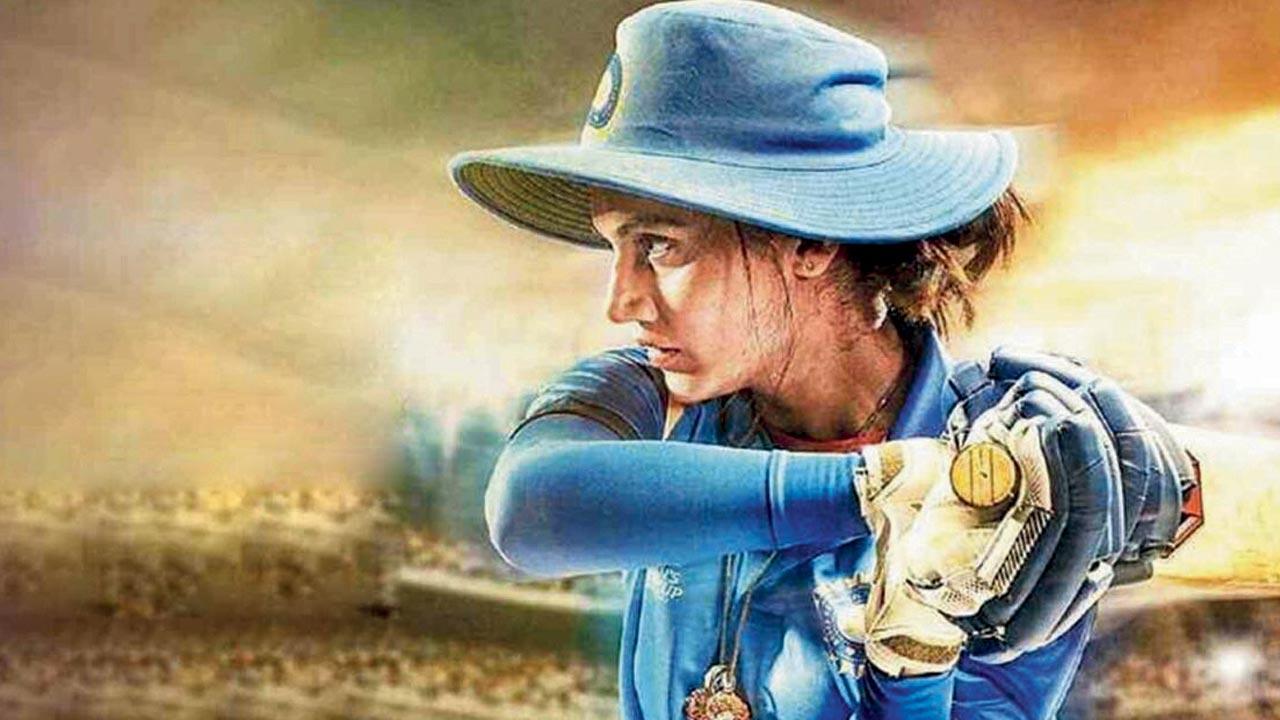
Making an exception to the rule, director Srijit on his reasons to come aboard Shabaash Mithu
Mohar Basu (MID-DAY; June 26, 2022)
It’s not unfounded for directors to be replaced mid-project. By the time Srijit Mukherji came on board to helm Shabaash Mithu—the biopic on Indian cricketer Mithali Raj—not only was the script locked but an entire schedule was wrapped up under the tutelage of filmmaker Rahul Dholakia. While the footage was later scrapped, the vision was set, but that didn’t deter Mukherji, who believed he brought his own love for the sport to the film.
“I have witnessed how her [Mithali Raj] cricket has evolved over the years, and I have read extensively on the sport,” said the Begum Jaan director, who played the sport through university.
Mindful that sports films and biopics are often dissected extensively, Mukherji ensured that he had experts on set to help him take care of the nitty-gritty. “We hired a consultant to help with camera placements for the broadcasting of matches. I decided the choreography for strokes, what stance to take and what kind of cricketing to focus on based on my research,” he said, adding that since films based on cricket often banked on many cuts, he wanted Taapsee Pannu to “do as many single takes as possible”. “Taapsee learnt the sport and didn’t use a body double throughout the film.”
Mukherji expressed his gratitude to Raj for giving him free rein to narrate the story. “Mithali gave us full autonomy to cinematically tell the story how we deemed fit. We shot this film in COVID, so most of our prepping with Mithali happened on Zoom. Shabaash Mithu is a faithful recounting of what happened in women’s cricket,” added the National Award-winning filmmaker.
The film highlights how a generation of female cricketers dignified the sport for the whole tribe of women who aspired to be in the Gentleman’s sport. Mukherji explains, “I wanted to do a film on this, even though I usually don’t direct films whose scripts I haven’t written. The script [of Shabaash Mithu] was spectacular, and the story was power-packed. It is a golden opportunity to celebrate a legend’s life and underline everything she powered through to win.”
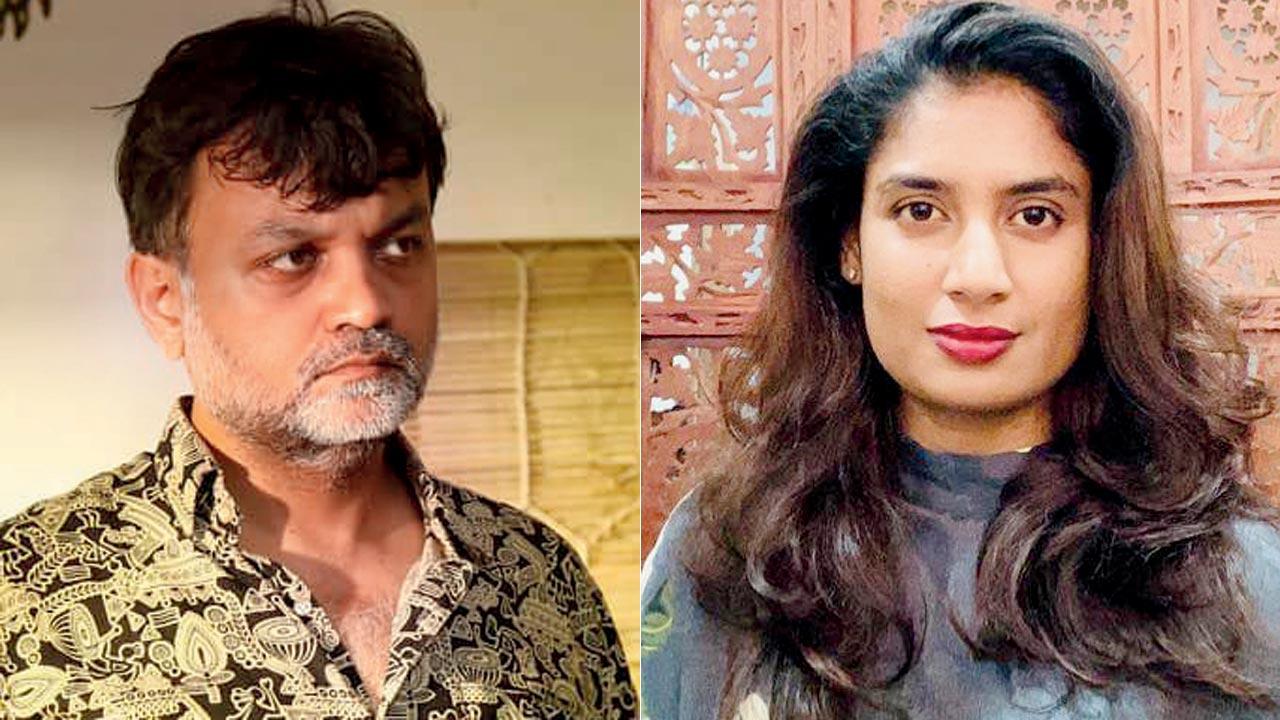
Srijit Mukherji and Mithali Raj
Trailer of Taapsee Pannu-starrer Shabaash Mithu to be unveiled today
8:21 AM

BOMBAY TIMES (June 20, 2022)
With the call of ‘Nazariya badlo, khel badal gaya’, Viacom18 Studios production’s Shabaash Mithu’s trailer will be unveiled today. The film, headlined by Taapsee Pannu, is based on the life and career of Mithali Raj, the decorated former skipper of the Indian women’s cricket team, who recently announced her retirement from a career spanning 23 years over which she has captained the team in four World Cups and scored over 10,000 runs in ODIs.
Taapsee says, “It has been an honour and a milestone for my career to play such a strong, determined and powerful icon. It’s a film very close to my heart, as personally, I’m a fan! It has been a hyperbolic learning experience, and I’ve now nailed down one more sport.”
The film, produced by a studio that has previously made hits like Bhaag Milkha Bhaag, Kahaani, Queen, Mary Kom and Andhadhun, promises to show how women’s cricket is treated in a country obsessed with the game. Unfortunately, even today, with exemplary cricketers like Mithali leading the charge in women’s cricket, people are dismissive of young girls wanting to take up the sport. The film showcases the story of the legendary player, who not only changed the game but also inspired billions of young girls and women. The trailer teases the audience with a sneak peek into the compelling journey of the ace cricketer.
Ajit Andhare, COO, Viacom18 Studios, says, “Women’s contributions in various fields go relatively unrecognized by society and nowhere is this more apparent than cricket. Our girls have been shining globally for a decade, but in India, our society is yet to recognize their achievements. This story that’s been in the making for four years will inspire every girl to pursue their dreams fearlessly. Riding on the capable shoulders of Mithali, this story is a shining example of what determined Indian women can achieve. We are excited to bring it to the silver screen.”
Mithali Raj shares, “I’m looking forward to Shabaash Mithu and I hope it reaches every home and every little girl’s heart, so that she too can follow her dreams just like I did.”
The film, directed by five-time National Award-winning filmmaker Srijit Mukherji, releases on July 15.
I wish Mithali Raj got the chance to play for a grand finale like Sachin Tendulkar-Srijit Mukherji
7:59 AM

BOMBAY TIMES (June 11, 2022)
Mithali Raj's decision to retire saw a flurry of messages on social media, while fans and followers of her game paid emotional tributes to the trailblazing batter. One of them was Srijit Mukherji, director of the biopic Shabaash Mithu, in which Tapsee Pannu essays the role of Mithali.
Srijit ruled out any possibility of a change in the narrative of the film, which is supposed to hit theatres a month later. "The narrative follows a certain journey, a certain rhythm and climax, and this announcement will not find a place in it," he says.
The announcement, he says, has had a huge imp act as "it brings forth a lot of messages, a lot of emotions from cricketers & fans." Says Srijit, "Many people who were not aware of how tall a legend she is, got an idea from social media and it may help them understand the enormity of the legend called Mithali. And her stature and her contribution goes beyond cricket in so many ways."
Srijit, however, wishes the highest run-scorer in women's international cricket had that one chance to play a grand finale, for her fans to be able to give her a standing ovation – something which every sportsperson yearns for. "Sachin Tendulkar got one tailor-made at Wankhede from his home crowd, which made for a fitting finale to an unbelievable career. Mithali could also have had a similar one. But it is entirely her decision to retire, we respect that," he adds.
-----------------------------------
YOU CHANGED THE GAME, NOW IT’S OUR TURN TO CHANGE THE PERSPECTIVE: TAAPSEE
Taapsee, too, took to social media to share a heartfelt message for Mithali along with their photo after the announcement. She wrote, "Youngest ODI captain for Indian cricket Team. The only Indian cricketer to captain the team in 4 world cups and reach finals twice! Youngest cricketer to score 200 in a test match. Highest scoring Indian cricketer in the debut international match. The only indian cricketer to score 7 consecutive 50s in ODI 23 years from hustle to glory. Some personalities and their achievements are gender agnostic. You changed the game, now it's our turn to change the perspective! Etched in history OUR CAPTAIN forever @mithaliraj On to the next innings of life (sic)."
Had we not called the film Ray, the expectations would’ve been different. It’s hard to live up to the name-Ali Fazal
10:11 PM

As we showcase select nominees in the run-up to the mid-day and Radio City Hitlist OTT Awards, Best Actor: Series award contender Ali Fazal on Ray and why revisiting the legend’s stories was a flawed but fabulous effort
Mohar Basu (MID-DAY; February 19, 2022)
It has been a wonderful week for Ali Fazal. Only days after he enjoyed a big international release in Death On The Nile, he has bagged a nomination at the upcoming third edition of mid-day and Radio City Hitlist OTT Awards. His act as the sharp but unempathetic entrepreneur Ipsit Nair — who leads the segment, Forget Me Not in Netflix’s Ray — has earned him a place in the Best Actor (Male): Series category. “I remember meeting Srijit Mukherji [director] and Sayantan Mukherjee [creator] for the project. I loved it on paper, and wanted to be that annoying kid who asks a lot of questions,” he laughs.
With Forget Me Not, the director gave a dark twist to Satyajit Ray’s short story Bipin Chowdhuryr Smritibhrom. Tampering with legends’ creations is often not taken kindly, and the anthology received mixed reviews on its release. “Everyone is selling out these days, so some things should be sacrosanct, like our favourite stories. I feel that had we not called the film Ray, the expectations would’ve been different. It’s hard to live up to the name,” Fazal smiles. Even then, he appreciates the new lens through which the auteur’s much-loved tales were revisited.
“It was a fresh take on Ray’s story. I do believe people misunderstood it along the way. Everyone assumed that we were doing a direct adaptation. We made some headway, but it could’ve been better.”
On his part, the actor received glowing reviews for his performance that saw him going from a confident and cocky entrepreneur to an emotional wreck in under 30 minutes. Fazal’s early exposure to the cinematic genius helped him prep for the part.
“My mother was a film buff. I had watched all the famous movies of Ray, thanks to her. Over the years, I read more about the impact of his movies. My favourite is this eight-minute film called Two that revolves around two kids playing with toys. In [under] 10 minutes and no dialogues, Ray establishes the impressionable minds of children and their ability to absorb their surroundings. While making this film, we all agreed that we all have had that one [episode] that flips our lives. Ipsit witnesses a dismantling of his brain, and is completely thrown off by it. Personally, I am not a fan of [the sequence] in the mental asylum. As an actor, I get it, but I think the idea of dark has to delve deeper than brooding faces and half-lit rooms.”
The actor, popular for his Guddu act in Mirzapur, says it was a refreshing change to walk out of the gory and gritty world of the crime drama and transform into the suave Ipsit for the anthology series. “Shedding Guddu is so much fun. I am a sucker for new parts. So, doing this series was a welcome move. I enjoyed even something as superficial as getting to wear sharp suits,” he quips.
Cast your vote for the Hitlist OTT Awards
Ali Fazal has been nominated in the Best Actor (Male): Series category for Forget Me Not, Ray. The other nominees are:
- Anshumaan Pushkar (Grahan)
- Dhruv Sehgal (Little Things S04)
- Kay Kay Menon (Special Ops 1.5)
- Manoj Bajpayee (Hungama Hai Kyon Barpa, Ray)
- Manoj Bajpayee (The Family Man S02)
- Mayur More (Kota Factory S02)
- Pavan Malhotra (Tabbar)
Log on to www.radiocity.in/hitlistawards to cast your vote.
You can also vote via SMS. Send HITLIST <space> category name <space> your choice (a/b/c as on the website) to 57575.
Voting lines close on March 18.
Sherdil's idea has haunted me for four years-Srijit Mukherji
12:10 PM
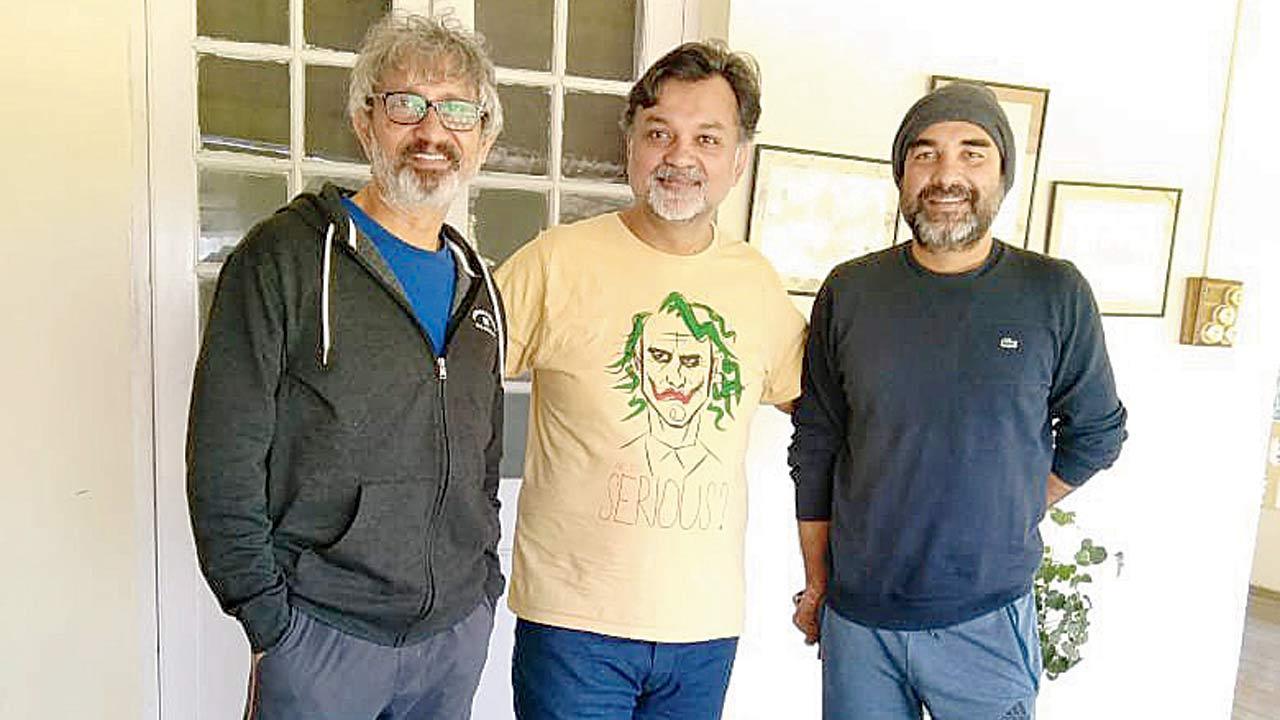
Having wrapped up Sherdil shoot in the Dooars in less than a month, director says it’s fulfilling to bring project to fruition after adversities
Upala KBR (MID-DAY; December 16, 2021)
Srijit Mukherji is a relieved man today. After kicking off the shoot of Sherdil in the Dooars in North Bengal on November 21, the filmmaker called it a wrap by the first week of December. The three-week shoot stands in stark contrast to the many years it took for the project to get off the ground. “The film’s idea has haunted me for four years. To watch the story unfold in front of my eyes was incredible,” begins the noted Bengali filmmaker.
The idea for the Pankaj Tripathi, Neeraj Kabi and Sayani Gupta-starrer came to him after he read an article about poverty-stricken villagers living near the Pilibhit Tiger Reserve, who would send their elderly family members to the forest as tiger prey so that they could claim compensation.
It has been a long struggle to make the movie that was considered commercially unviable by certain studios. The project rolled when T-Series and Reliance Entertainment came on board. “We had been working on it since 2018, and were to shoot in 2019. It then got pushed to 2020, only to be delayed further by the pandemic.”
Giving shape to the film with Tripathi was a joyful experience, just as the director had expected. “It was cold and everything a forest could possibly be in the winter. Pankaj would stay back with us after his shoot, wandering around the jungle. After working in the city, when you visit the jungles, it’s a cathartic experience. We all used to have long addas after shooting.”
Mukherji is all praises for his leading man. “As an artiste, Pankaj is in control of his craft. He contributes creatively, but is never interfering. He was euphoric when we completed the movie ahead of time.”
Pankaj Tripathi kicks off shoot of Srijit Mukherji’s Sherdil that is centred on man-animal conflict
8:56 AM
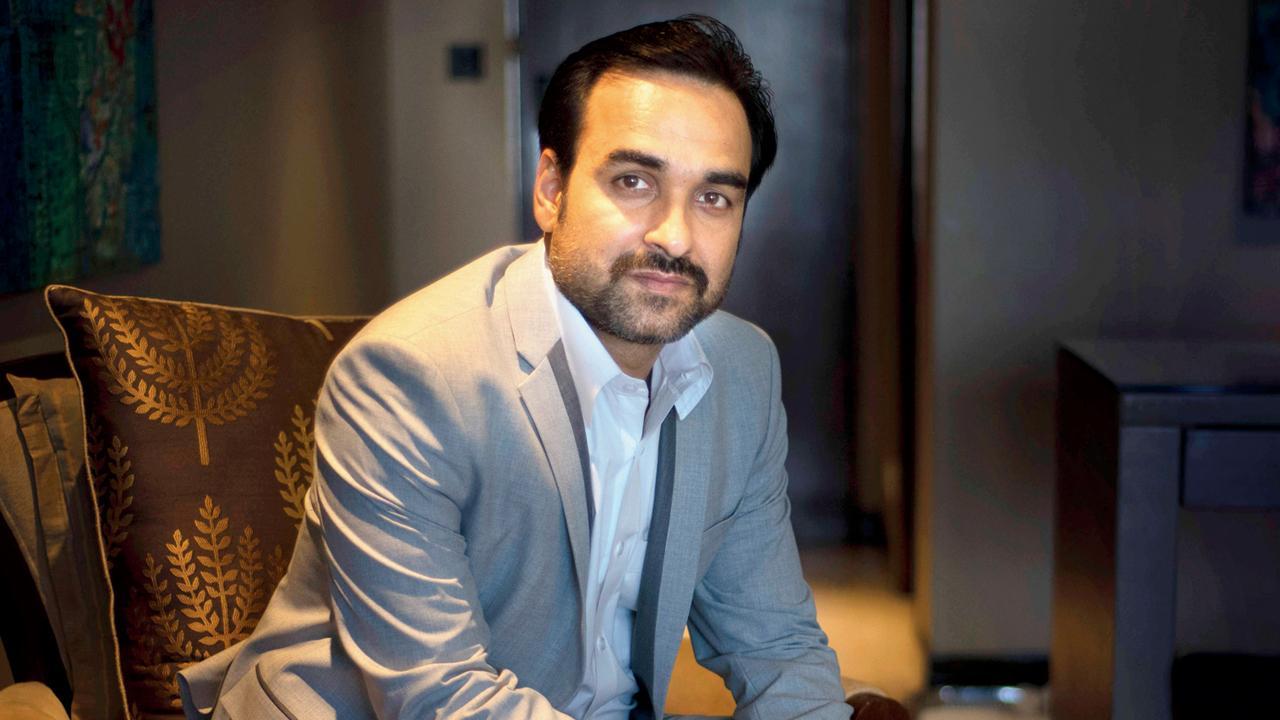
Mohar Basu (MID-DAY; November 24, 2021)
Srijit Mukherji has little time for a breather. Only days after wrapping up the shoot of Shabaash Mithu, the filmmaker has kicked off his next, Sherdil, with Pankaj Tripathi. The film’s idea came to him after he read a news article about poverty-stricken villagers living near the Pilibhit Tiger Reserve, who were suspected of sending their elderly family members to the forest as tiger prey so that they could claim compensation.
The idea, shocking as it was, piqued Tripathi’s interest as soon as he heard the script narration. The joy of working with Mukherji was another reason to give his nod to Sherdil. Currently shooting in Darjeeling, Tripathi says the noted director is every actor’s dream come true. “Srijit needs no introduction. His work speaks for itself. When Sherdil was offered to me, I jumped at the idea. It is a beautifully written script, and I trust Srijit to bring each character to life convincingly.”
The satire, also starring Neeraj Kabi and Sayani Gupta, was originally slated to roll in 2020, but had to be deferred due to the pandemic. Mukherji says he couldn’t envision anyone except Tripathi to play the protagonist — a villager who voluntarily goes to the forest. “Pankaj is one of the finest actors in the country today. Having him on set is half the battle won. He is always excited to try new things and improvise,” says the director.
When I hold a bat while playing a friendly match, I can sense men going, ‘I will show her now’-Taapsee Pannu
8:11 AM

Taapsee, who restarts Shabaash Mithu shoot today, discusses how Mukherji is envisioning the Mithali Raj biopic after taking the directorial baton from Rahul Dholakia
Mohar Basu (MID-DAY; September 13, 2021)
It will be fitting to release Shabaash Mithu by March when the ICC Women’s World Cup 2022 will be held. With that goal in mind, Taapsee Pannu is returning on the pitch to tell the story of Indian women’s cricket team captain Mithali Raj. The pandemic wreaked havoc on the biopic’s schedule, resulting in director Rahul Dholakia bowing out and Bengali filmmaker Srijit Mukherji taking on the mantle.
As she starts a two-month schedule today, Pannu says her objective is to stay true to the story’s essence. “I am always in a dilemma whether to get the game right, or focus on her mannerisms and body language on the field. But for [Raj], the message matters the most.”
The actor, who along with Dholakia, had shot for six days in April before the second lockdown was imposed, says she is approaching Shabaash Mithu with a clean slate. “Those portions were about her getting selected in the international squad. Now, Srijit wants me to learn things, which I hadn’t as per Rahul’s brief. He wants me to tweak a few mannerisms. I have washed off the previous memories, and am viewing it as base training for the film. Now, we are getting into further detailing of the game.”
Thrilled as she is to tell an untold story, Pannu is aware of the criticism that may come her way when she picks up the bat. “Cricket bat aadmiyon ki jaagir hoti hai,” she jokes. “When I hold a bat while playing a friendly match, I can sense men going, ‘I will show her now.’ They are either dismissive of the woman holding a bat, or they want to put her down. If I face this as an actor, I can’t imagine what Mithali has faced through her journey. It must’ve been an arduous journey for women’s cricket to reach where it is today.”
Having trained for six months cumulatively, Pannu wishes she had more time at hand to learn the sport in its entirety. “Had I trained for a year, I would have [perfected] Mithali’s gait. We can’t overburden a woman-led film; it has restrictions. I hope our stories change things for the next generation.”
After wrapping up Blurr, Taapsee Pannu to kick off Shabaash Mithu next month
8:14 AM
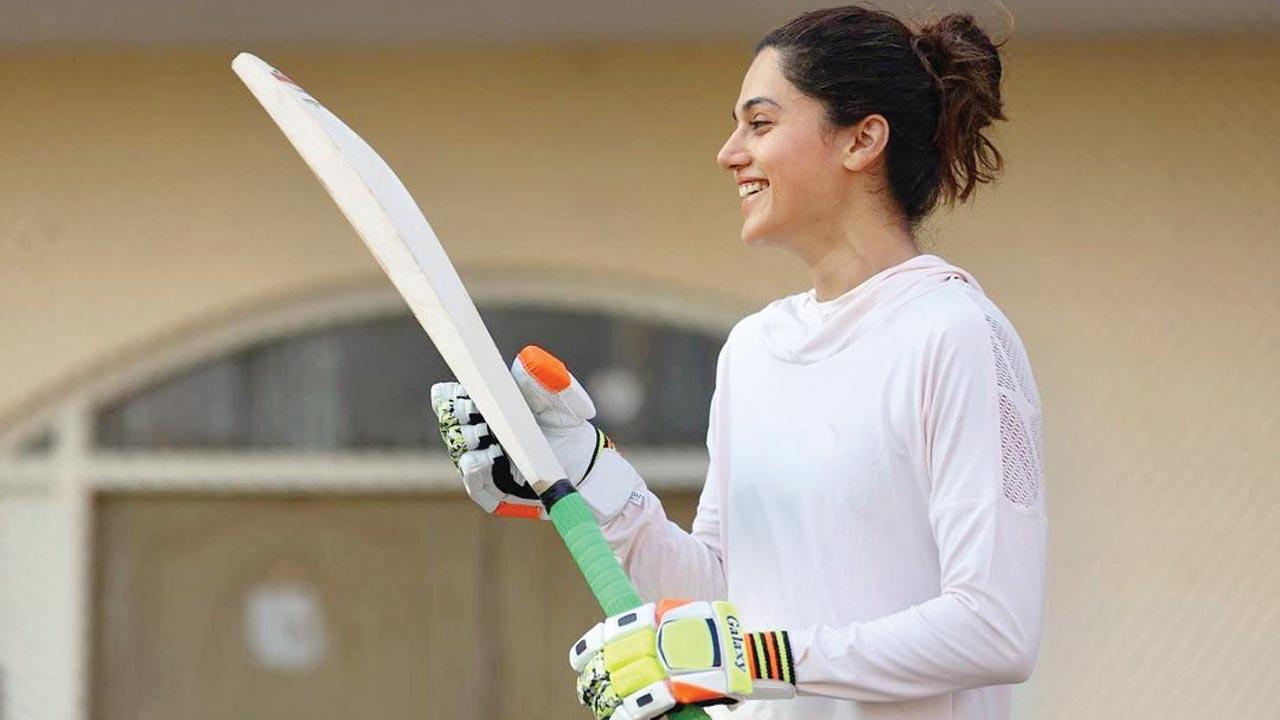
Mohar Basu (MID-DAY; August 4, 2021)
Like any first-time producer, Taapsee Pannu is giving undivided attention to her maiden project Blurr, which is being shot in Nainital. But before leaving for the hill station, the actor met Srijit Mukherji to understand the way forward for Shabaash Mithu. In June, the noted Bengali filmmaker replaced Rahul Dholakia as the director of the biopic on Indian women’s cricket team captain Mithali Raj.
It is heard that in the recent meeting, Pannu discussed at length her prep and notes on the character that she has been living for the past one year. After it’s a wrap on Blurr, she will begin shooting for the sports drama in early September.
A source reveals, “The biopic was slated to go on floors in April, but the second wave of the pandemic made the team hit the pause button. Srijit is currently in Mumbai, setting the groundwork for the ambitious movie. Once Taapsee returns to the city, the film will start rolling, followed by an international schedule. The director is expected to meet Mithali soon.”
Maine dekha ke ek kilometre tak chitayein jal rahi hain-Ali Fazal
8:09 AM

Ali Fazal hopes to see more than just happy slogans on getting back to work
Sugandha Rawal (HINDUSTAN TIMES; August 4, 2021)
Ali Fazal is just not ready to see happy slogans about getting back to work, after the deadly second wave of Coronavirus. The actor, instead, hopes to witness some dedicated efforts to win back compassion.
“I lost my grandfather earlier this year. Main Lucknow gaya, and everybody in the house had Covid. I felt like it was a very privileged loss, kyunki main bahar ja raha hun aur wahan maine dekha ke ek kilometre tak chitayein jal rahi hain,” he says, recollecting the moment that made him realise the suffering endured by all as a “collective society”.
And, Fazal asserts that it will require time and effort to come out of this phase. “I don’t want to see a slogan that says, ‘Hey, we’ve come back on our feet and let’s go to work’. Sure, that’s positive. But, the real work lies (somewhere else), like being able to talk (to people about anything and everything to cope up),” shares the 34-year-old.
The Mirzapur star once again picks up a reference from his life to elaborate his point, saying, “When I went to Lucknow, my bigger job was not to do the funeral rituals for my grandfather, but to take care of all the patients in the house who are there and are alive.”
And, that’s when he realised how the virus and the race for survival has made everyone desensitised. “We have become numb. Ab darr lagta hai agar kisi ne photo dala ke ‘s**t kya ho gaya’. We have to win back compassion, some sense of sensitivity,” says the actor, adding that the only way out is to “think who are the people we can talk to, call up somebody and just cry out”.
Last seen in the web anthology series, Ray, in which he plays a successful businessman who is slowly losing a sense of reality and battling a mental breakdown, Fazal admits he managed to detach from the character, and didn’t let it affect him for long. “I was just being focused, as Srijit Mukherji wanted very minute dismantling and changes in the character, and slowly. So, it didn’t take a toll on me,” he signs off.
Why are Bengali films conspicuous by their absence on OTT platforms?
8:03 AM

Superstar Jisshu Sengupta feels that collaboration is the need of the hour
Once hailed as cinema for the thinking viewer, Bengali films are conspicuous by their absence on OTT platforms. Is it creative drought or failure to market? Or the classic Bengali priggishness?
Mohar Basu (MID-DAY; August 1, 2021)
In the same week that Aditya Vikram Sengupta’s third movie, Once Upon A Time In Calcutta, was selected in the Orizzonti (Horizons) section of the 78th Venice International Film Festival, journalist Rituparna Sengupta tweeted, “Are good Bengali films not being made or are they not being acquired by OTT platforms? Because I see the same things on Netflix and Prime for months and months.”
Despite Srijit Mukherji’s 2020 film Gumnaami earning a National Award recently and Sengupta wooing the international fans with his cinema, it’s fair to say that Bengali cinema hasn’t managed to attract the attention of the OTT audience in India to the degree that Malyalam, Tamil and Telugu movies have.
We pick Aditya Vikram Sengupta’s brain for what the reason could be—creative bankruptcy or an inability to connect with the masses? He ponders a bit before answering. “Are we making good enough cinema? Whether it’s a Malayalam or Telugu film, at the end of the day, the film speaks for itself. If my film is at Venice, it’s because the film fared well. Here’s my analogy — an IIT degree can give us a head start but after that, it boils down to the person [to succeed professionally]. There are no frills needed for a film to work, other than that it has to be a good film.”
He is speaking from experience. Sengupta’s debut film, Labour Of Love, won the FEDEORA award for the best debut at the Festival’s Venice Days section in 2014 and was subsequently acquired by Amazon Prime Video. “Film distribution was the easiest part of my job. Inox gave us a big release and it ran full house for eight weeks. Abhay Deol distributed the film and eventually it went to Prime. The next film, Jonaki, got picked up by Netflix. It got picked up two years after its release, and they said they chose it because they really liked it.”
That said, Sengupta has consciously followed a different monetary model for his films, which doesn’t involve working with traditional production houses of the industry. “My language of work is Bengali but I don’t work in the Bengali film industry. Shooting in Calcutta comes with its challenges. I have realised filmmaking is not just about the money but collaborating with someone who shares your creative vision. Say, SVF [Shree Venkatesh Films] wants to give the money, but what they wish to do with a film is very different from the process I would like to follow.”
A fair chunk of films in the Bengali industry are helmed by SVF, one of the industry’s biggest producers and distributors, who also control and maintain Hoichoi, an exclusive app for Bengali content, that has both originals and acquisitions. This, say some, has created the classic market monopoly problem.
But Shiboprosad Mukherjee, a well-known filmmaker from Bengal, says that this is not quite the hindrance. “SVF are solid producers, distributors, have their own theatrical chain and OTT platform, so, a large number of films made go straight to their platform. In Bengali films, satellite and digital rights are bought in combination. That is the industry model. We, as producers, will sell to whoever gives us the best deal. I don’t feel our content lacks the sting to make it big. The Malayalam industry is buying rights to my films, too. My film Kantho is being remade in Malayalam. Viacom has bought my films Belasheshe and Posto, which is only possible because the films have fared well commercially and have piqued audience interest. Most of my films are on Hotstar and the rest are on Hoichoi. What we probably suffer from is a slack attitude when it comes to wider publicity. None of us are actively seeking the Hindi film audience or fame. The more regional you are, the more global you will be.”
Thankfully, Anindo Banerjee, head of originals at Hoichoi, has a less lofty approach to the challenge. He says that what is viewed as market monopoly is a culturally symbiotic equation. “SVF has been in the business for 25 years and culturally, cinema in Bengal is synonymous with SVF. As far as our app is concerned, it is created for the diaspora and enjoys great reach, both locally and internationally. But we are now, trying to reach the non-Bengali diaspora, and have elaborate plans to achieve this.”
Srijit Mukherji, whose Gumnaami has won him two National Awards, looks at it slightly differently. “If we give content to OTT players, they will market it well. But we, as filmmakers, need to deliver genre-bending, clutter-breaking movies which can capture audience attention across 170 countries. Malayalam films are going through a renaissance where a lot of great filmmakers are making one brilliant film after the other. That’s not happening in Bengali cinema for sure. The Malayalam new wave has people addicted right now. Actors like Fahadh Faasil, Parvathy are creating a following which is hard to replicate,” he says.
Mukherji, fresh after wrapping up Netflix anthology Ray, is now helming Shabaash Mithu, a biopic on star woman cricketer Mithali Raj, starring Taapsee Pannu. “Bengali films are doing well in festivals, and on the awards circuit. But it’s true that OTT platforms don’t acquire a lot of Bengali films. Both Gumnaami and Vinci Da did brilliantly on Amazon Prime. In fact, after the Amazon release of Vinci Da, I was able to sell the rights in Tamil, Telugu, Hindi and Malayalam. But overall, there are lesser Bengali movies on OTT platforms, and perhaps it has to do with the price they offer, which is prohibitive. Hoichoi mops up all Bengali releases and its reach is great in the diaspora, but not enough outside it. Gumnaami’s success is also an aberration. I think the OTT players are waiting for us to prove our universal appeal, before investing in the Bengali film market.”
While Netflix India and Amazon Prime Video declined to comment officially, a member from the acquisition team of the latter told mid-day, “The platform doesn’t have a strong presence in Bengali. In terms of demography, Bengal is not a strong point for the platform. We are still making plans to scale up.”
Another official at Hotstar, however, says that over the last year they have seen a marked rise in viewing of Bengali films on the platform. “We have good pre-existing relations with well-known makers from the region. We will be investing more actively in Bengali content over the days to come. Over and above that, the television serials in Bengali have been widely viewed by people from the diaspora over the last few months since lockdown. Internet viewing has gathered strength.”
Bengali superstar Jisshu Sengupta, who starred in Shakuntala Devi, Thalaivi, and Antim, and acts across Bengali, Hindi and Telugu films, says it’s a misconception that people don’t watch Bengali cinema. “Right now, the Bengali film market is still healing from the pandemic. The last two years have hit us hard and market players like Amazon, Netflix and Hotstar are not coming up with enough content for this language. I think a lack of interest is creating a lack of output. We, as artistes, need to push our boundaries, which artistes like Paoli Dam, Swastika Mukherjee, Parambrata Chattopadhyay and I are trying to do. But wanting to watch Bengali content is eventually the audience’s call.”
Srijit Mukherji's next after Shabaash Mithu is Sherdil; stars Pankaj Tripathi
8:20 AM
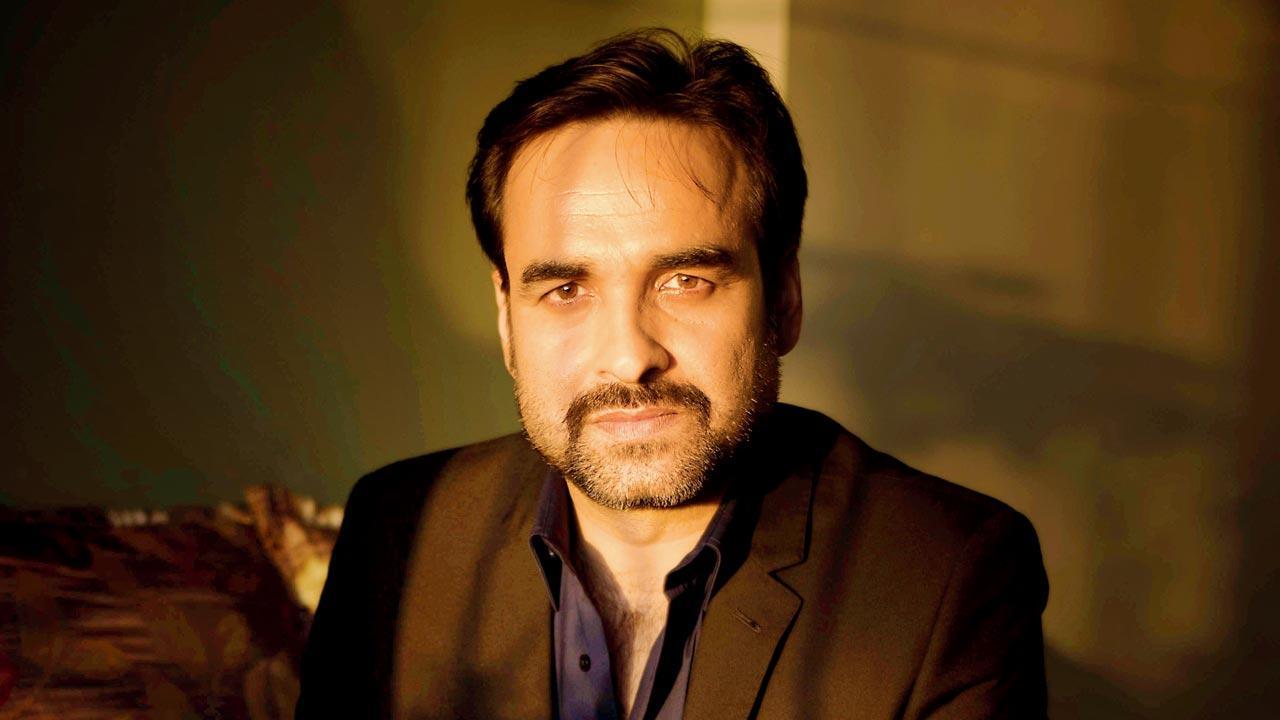
In his next, Srijit Mukherji highlights the story of villagers leaving elderly as prey in a tiger reserve for compensation
Upala KBR (MID-DAY; July 25, 2021)
Even as he preps for Shabaash Mithu, his next with Taapsee Pannu, Srijit Mukherji has begun work on another offering, Sherdil. It is based on a real-life story, which will be headlined by Pankaj Tripathi as a village head, who goes into the forest to save his poor family. The film was initially set to roll in November 2020.
“I have written the story with Sudeep Nigam, a promising, bright, and young writer. He is familiar with the required dialect. Sherdil is inspired from a real-life incident that happened in the Pilibhit Tiger Reserve, where people would leave their [older] family members for tigers to prey on, and subsequently claim compensation from the government. A string of attacks on the older folk had led the forest authorities to grow suspicious,” says Mukherji, admitting that his tale substantially deviates from the news report on the subject that he read in 2017. “My version is satirical and uplifting. Pankaj’s character is a heroic and inspiring one.”
Tripathi and he would often “talk about various movies and stories, and this is my first movie with him. Despite his fame, he is a simple, person, but a powerful actor”.
Should the situation be favourable, he plans to start shooting by the year end. “I plan to conduct recces across natural forests to lock the location,” he says.
I told our director Srijit Mukherji that Ray's climax was written from a male gaze-Shweta Basu Prasad
8:08 AM

Sugandha Rawal (HINDUSTAN TIMES; July 14, 2021)
With female-fronted content gaining prominence amid the OTT boom, actor Shweta Basu Prasad feels it is important to get the female perspective right in projects. And the filmmakers must be willing to make changes, wherever necessary.
“It all starts with the writing, it’s really important to understand both perspectives. For that, the directors need to be approachable and should be able to mix and work to just get the right perspective,” she says.
Citing example of her recent anthology, Ray, she says, “I told our director Srijit Mukherji that the climax was written from a male gaze or neutral gaze, and not from a female perspective. It was important for me as a woman to personalise it.”
Prasad, 30, was relieved when the director not only heard her inputs but also used them to alter the segment. “It’s so refreshing when you’ve a director like that,” she says.
The actor also notes there have been “fabulous filmmakers” in the country who’ve written “fantastic feminist films” in the past. “Starting from Bimal Roy’s Sujata (1959) to Satyajit Ray’s Devi (1960). It is fantastic how Ray explored women in his stories,” she says, adding, “I think Mirch Masala (1987) by Ketan Mehta is so ahead of its time. It’s such a feminist film. I wish it was a movie from the OTT revolution”.
For the actor, it is important to find the right balance while defining a character. “Like the way Zoya Akhtar looks at Ranveer Singh in Gully Boy (2019), or Farah Khan looks at Shah Rukh Khan. A lot of crosses that have happened where male directors have written fantastic female characters,” the actor concludes.
Ali Fazal has all elements of a superstar-Srijit Mukherji
8:03 AM
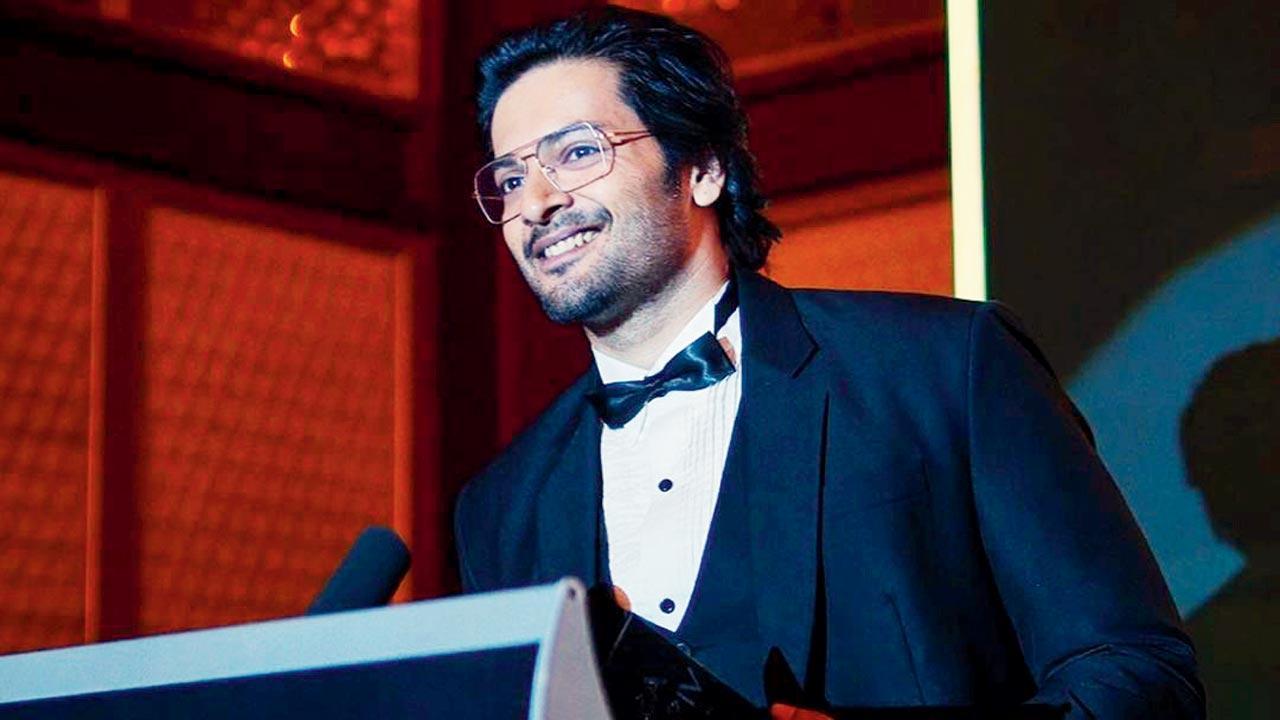
As his shorts in Ray win praise, director Srijit Mukherji says he is highly impressed with Ali Fazal in their first collaboration
Uma Ramasubramanian (MID-DAY; June 28, 2021)
The late Satyajit Ray has probably influenced every filmmaker in Bengal, and Srijit Mukherji admits he is no exception. It’s only fitting then that he has helmed one-half of 'Ray', Netflix India’s tribute to the legendary writer-filmmaker on his birth centenary year. With Forget Me Not, featuring Ali Fazal, and Behrupiya that stars Kay Kay Menon, Mukherji has painted Ray’s stories in grim and gory shades. “Anyone in Bengal who is a story teller inevitably steps into Satyajit Ray’s world; you are brought up on his films and writings. I know all his short stories by heart,” says the director.
Content as he is that his short films in the anthology are winning praise, Mukherji is happy to note that Ray’s stories are reaching far and wide, thanks to digital entertainment. He believes that the biggest advantage of the OTT boom is that it has put the spotlight on talented actors. “Now, the likes of Pankaj Tripathi and Rasika Dugal are superstars, and rightfully so because they are superb actors. The definition of a superstar is changing, thanks to OTT platforms.”
While Menon hardly gets a note wrong in his performances, Mukherji was surprised by Fazal’s act. “After watching his film, I messaged him, ‘You are a superb actor, I hope you become a superstar soon’. People stop replying to WhatsApp messages after they have enjoyed a hit, but Ali is a grounded guy. He has all the elements of a superstar.”
Subscribe to:
Posts (Atom)