Showing posts with label Sooraj Barjatya. Show all posts
Showing posts with label Sooraj Barjatya. Show all posts
Sooraj Barjatya told me ‘You’re harming the industry by working less’-Irshad Kamil
10:24 AM

Lyricist Irshad Kamil says the biggest challenge before him isn’t writing another hit. It’s finding a more honest language for romance
Soumya Vajpayee (MUMBAI MIRROR; July 12, 2026)
Irshad Kamil has little left to prove. Over two decades, he has written some of Hindi cinema’s most memorable songs, from Tum Se Hi, Nadaan Parindey and Kun Faya Kun to Agar Tum Saath Ho and the recent Saiyaara. Yet the National Award-winning lyricist insists he is still a student.
“My journey has been about coincidences and evolution,” he says with a laugh. “It’s about what I want to become.” Sitting over tea on a rain-soaked afternoon in Andheri, Kamil looks back at a career that began almost by accident. As a student with a deep interest in theatre and poetry at Panjab University, he drifted into television before finding his way to films. More than 100 films later, he still believes every project teaches him something new.
Still learning
“I stumbled into television. I stumbled into films,” he says. “With every song, I understand a little more about what it means to be a lyricist. There are so many layers to lyric writing. Just as there are many kinds of love, I’m still learning them.” That desire to keep evolving changed the way he works.
For years, Kamil deliberately restricted himself to four films annually. Then filmmaker Sooraj Barjatya offered advice that stayed with him.
“‘Irshad, you’re harming the industry by working less,’” he recalls. “That really struck me.” He decided to say yes more often. “The more time you spend in a creative environment, the more you learn. That’s how projects like Krishnavataram and the ghazal EP with Papon happened.”
Making love believable
If there is one emotion Kamil keeps returning to, it is love. Ironically, he considers it the hardest to write. “I feel most love songs don’t have the purity that love deserves,” he says. “My language for every film is love. I want to redefine that language for today’s world.”
His ambition is not to make lyrics more poetic, but more truthful. “Love has evolved. Society has evolved. I want to reflect that in my writing. I want songs to feel less fake.”
That philosophy shapes Main Vaapas Aaunga, on which he worked alongside A R Rahman while simultaneously writing for Tere Ishk Mein. Before beginning, the pair watched James Mangold’s Bob Dylan biopic, A Complete, Unknown together. “Bob Dylan’s journey charged me creatively,” he says.
One song from Main Vaapas Aaunga, Kya Kamaal Hai, juxtaposes images of Partition with those of present-day refugees. “For me, it isn’t just a song,” he says. “It’s a dream of love, peace and hope.”
No room for ornament
Kamil is equally clear about what he doesn’t want his lyrics to become. “In every art form, people struggle to balance mass appeal with artistic quality,” he says. “We’re diluting art to make it more popular. Dilution isn’t the solution. Accessibility is.”
Instead of reaching for ornate vocabulary, he prefers words people are familiar with. “I don’t want to impress listeners with difficult words from a dictionary. I’m trying to make my lyrics more accessible without compromising on quality. At the same time, I’m trying to redefine myself, and romantic songs in films.”
That openness also informs his collaborations. Having worked with veterans such as Rahman, Pritam, Vishal-Shekhar, Amit Trivedi, and now with a younger wave: Shashwat Sachdev, Tanishk Bagchi, Sachet-Parampara, Vishal Mishra, Sarthak Kalyani, Hiral Viradia, is the process of working with new-age composers different? “There’s no fixed pattern,” he says. “Every composer has a different way of thinking, so every project challenges you differently. That’s where the learning happens.”
Some of his most rewarding work has emerged from those unstructured sessions. While writing Dhurandhar, he, director Aditya Dhar and composer Shashwat Sachdev often worked through the night, with Dhar’s home doubling up as a studio.
“We’d start at six in the evening and sometimes continue till six the next evening,” he says. “Phir Se was born during one of those sessions.”
The long game
Unlike singers and composers, lyricists rarely enjoy the visibility of live performances. But Kamil believes the profession has become more sustainable.
“Being a lyricist now comes with a pension plan,” he says, referring to royalties collected through IPRS. “Sometimes the royalty from a successful song can become many times what you were originally paid. And it keeps coming.”
Social media often compares him with Gulzar, Javed Akhtar and Anand Bakshi. Others have likened aspects of his recent work to Bob Dylan. Kamil accepts the compliments but rejects the comparison.
“There can never be another Bob Dylan,” he says. “Just as there can never be another Sachin Tendulkar. Every artist has their own zone. Irshad Kamil has to remain Irshad Kamil.”
Perhaps that is why, even after two decades in Hindi cinema, Kamil still speaks less about success than about discovery. At 54, his ambition is simpler, or perhaps some might say harder: to write songs that feel a little more honest than the ones he wrote yesterday.
You should be privileged to get my thappad-Saumya Tandon
8:39 AM

Onkar Kulkarni (BOMBAY TIMES; July 3, 2026)
For an actor who had relatively few lines in Dhurandhar, Saumya Tandon found herself at the centre of one of the franchise’s most discussed moments. As Ulfath Rehman, the wife of Rehman Dakait (Akshaye Khanna), she portrayed much of the character’s grief, anger and resilience through silence rather than dialogue — a challenge she later revisited in Dhurandhar 2 The Revenge.
Ironically, what audiences remember most are the slaps. When told she has earned the unofficial title of Bollywood’s newest “Thappad Queen”, Saumya laughs and says, “I’ll take that as a compliment. But those scenes were never really about the slap. There was so much happening underneath — the emotions, the conflict, the pain. They were actually among the most difficult scenes I’ve done.”
She reveals that the physical action may have lasted only a moment, but the emotional build-up required far more work. “People remember the thappad, but for me it was everything before and after it. Har kisi ko thappad nahi milta hai... you should be privileged to get my thappad,” she adds.
One of those scenes involved Ranveer Singh and talking about that Saumya shares, “I really didn’t want to slap him. I kept hoping there would be some camera trick. But he kept saying, ‘Go for it.’ Finally, he picked up my hand and said, ‘Maar de.’ After that, there was no escaping it.”
Away from the intense world of Dhurandhar, Saumya is now looking ahead to a very different project with filmmaker Sooraj Barjatya. The shift, she says, is part of a conscious effort to avoid being boxed into one kind of role.
“People have seen me in cheerful, bubbly characters. Then they saw me in a much more intense space. As an actor, I feel there is still a lot left to explore. I really want to do a romance film. I hope I get to play many different shades and keep surprising people,” she says.
Pati Patni Aur Woh Do was tentatively titled Prayagraj Ka Prajapati-Ayushmann Khurrana
8:34 AM

From clutterbreaking cinema to family entertainers, Ayushmann Khurrana reflects on his evolving choices
Sonal Kalra (HINDUSTAN TIMES; May 16, 2026)
His career spans 14 years, and he already has a National Award to his name, apart from the moniker ‘clutter breaker’. Actor Ayushmann Khurrana, currently tickling the audience’s funny bone with his latest flick Pati Patni Aur Woh Do (PPAWD), spoke on The Right Angle with Sonal Kalra about his upcoming choices, post-Covid trajectory shift, and more:
Currently, high-end, action, nationalistic-flavour films are trending. It’s said that the era of films keeps changing, and this one’s the current flavour. What do you think is the future of slice-of-life films like yours?
Kisi bhi zamaane mein aaiye, clutter break hona chahiye. I don’t feel like following whatever is working. This has been my genre, of course, but going forward, even I am doing an action film, it will be an action-comedy. I guess whatever interests me or engages me to my core, I go for it rather than thinking about trends or algorithms in cinema.
You bring relatability to the table as an actor. Pati Patni Aur Woh Do has three female leads with you. Is there stress that along with the relatability, people might brand this character a ‘cheater’?
We are not promoting infidelity with this film. In fact, out of all the films in the Pati Patni franchise, only ours has a male lead who doesn’t have a roving eye. He’s loyal to his wife. It’s a comedy of errors; he gets caught in such situations.
You shot in Prayagraj. What was special about the experience?
I had never shot there before this film. In fact, this film was tentatively titled Prayagraj Ka Prajapati! But since Pati Patni Aur Woh has been an iconic franchise since the first film in the 1970s, the producers titled it this. So many films have been based in Kanpur and Varanasi till now, so we thought Prayagraj is the one!
You said recently that failure doesn’t bother you, you are more afraid of making safe but boring films. Can you elaborate on this?
I always wanted to be courageous when it comes to my choices. Courage surpasses talent most of the times. Kabhi kabhi aap mein voh kadam lene ki himmat nahi hoti, jabki aap ke paas talent hota hai. This (PPAWD) is a commercial, safe film. My upcoming films are courageous. I did films like An Action Hero (2022) and Andhadhun (2018). It has to be a mish-mash so that my commercial films can help my other kind of films.
You have Yeh Prem Mol Liya coming up. What’s the status of the shoot, and what’s it like to be on a Sooraj Barjatya film set? A lot of sanskaari vibes?
It’s 90% shot; one song and two scenes are left, which is a maximum of seven days of shoot. It will release on November 27 this year. Jab main Sooraj sir ke set pe jaata hoon toh unke set ko naman karta hoon, touch his feet! It really feels like I have come to a temple. He’s such a spiritual person, very clean-hearted. Unse zyaada sant insaan industry mein koi nahi hai. He’s a purist and goes by his vision, hamesha audience aur fans ko saath mein leke chalte hain. Every actor in his film’s cast is the hero. The last time I did a film like this was Badhaai Ho (2018), jahaan naani se lekar daadi tak, everyone was an important character. We are going back to that. The entire family is the star of the film, and only Sooraj Barjatya can do that.
Are there any actors, too, whose feet you feel like touching as you are blown by their talent?
(Actors) Amitabh Bachchan and Shah Rukh Khan sir, of course we revere them. Among my contemporaries, I really love Ranbir Kapoor and Ranveer Singh. We have a lot of exciting actors in our industry, but these are the ones I really respect.
When you are home, is there active involvement of your family in your work? Is there advice that you get from your kids, or any suggestion?
I am doing films which cater to family audiences. My daughter Varushka (12) watched the edit of Pati Patni… recently, and she loved it! That’s the barometer — that my kids enjoy my films. It has to reach Gen Alpha also, apart from Millennials and Gen Z. I want to do family films and get them into theatres. The fun of community watch is amazing.
You have done a host of films on taboo subjects — from sperm donation to erectile dysfunction. Is there another taboo which makes you think, ‘Iss pe film banegi toh I would want to work in it’?
I think maine saare taboo topics khatam kar diye hain (laughs). I have worked in so many films based on them. It limits the family audience. I did films on taboo subjects before the Covid pandemic. Even after that, I did Chandigarh Kare Aashiqui (2021) and Doctor G (2022), which didn’t get as much at the box office as I hoped for. After OTT became big, I only looked for films which were for wider audiences. Taboo break se zyaada relatable subjects which people can watch together. Everything was so different before the pandemic; the films I did had tremendous box office uproar. But things changed post-pandemic.
What’s your life mantra?
Courage is bigger than talent. Take risks. Sahi waqt kabhi nahin hota; jab aap karte ho, tabhi sahi waqt hota hai.
Boman Irani puts up gala to celebrate screenwriters; Aamir Khan, Karan Johar to attend the event
2:46 PM

Priyanka Sharma (MID-DAY; April 30, 2026)
During the 2020 lockdown, actor and director Boman Irani began Spiral Bound, an initiative that trained aspiring screenwriters. Six years on, it has grown into a nurturing hub for writers. The actor, who had announced a writing competition after conducting 870 sessions, is set to felicitate the winners at a special gala in Bandra on April 30.
Irani told mid-day that the idea of the competition was to instill confidence in the writers. He explained, “Many of them are afraid to share their work. They are unsure whether the writing is good or bad. So, I told them to just write, send it ahead, and come for the gala.”
Noted writer and lyricist Javed Akhtar will felicitate the winners. Other attendees include Aamir Khan, Anil Kapoor, Karan Johar, Sooraj Barjatya, and Anupam Kher.
Irani added, “I told the students that so many people are turning up to support writers. If we don’t support writers, we can’t complain that we are not getting [good] stories.” We got to support the writers, pay them well and give them a place on that stage. They set the ball rolling, and if you don't respect and encourage that, we have no right to complain,” he said
Top 10 among the applicants will be announced at the event, while the best three will be rewarded with a trip to Moscow.
Irani shared. “The Russian Film Confederation is sponsoring them a trip to Moscow. The trip will take place in June. And it’s not just about the trip, what matters is that they can turn around and say that their writing got them there, something that everyone say has no money and gratification. But there is a prize, a victory and gratification. And that’s what I'm proud of, because what it's doing is waking up people. Finally you get messages from people, saying, ‘I'm so glad you did this. Finally I'm not afraid to put pen on paper’,” he said, adding that Spiral Bound precisely aims to make writers more confident about their skills.
“No one is ever scolded or reprimanded in the class, even if they ask stupid questions. Ask the questions. Clarify your doubts. There's so much of learning. It's not just a community. It's not a support group. It's where serious, hardcore, high-level learning happens. I've been trained by Oscar-winning writer Alexander Dinelaris Jr, whose next is with Tom Cruise. He teaches me, I share. It’s as simple as that,” Irani said.
Apart from teaching, Irani also makes sure he helps students earn opportunities by recommending them to the right people in the industry.
“It has to be done, right? Otherwise what’s the point of all of this? We had a girl in our class in 2020. I have her a prompt to write a scene. She wrote the scene and it had four-five lines in it. But I told her to apply what we teach. Today, she is writing multiple web series. I'm not trying to be ‘Mr Nice Guy’. I have a great love for cinema and I'm looking forward to good movies. So, this is out of a very selfish reason.”
Swanand Kirkire joins Sooraj Barjatya’s next directorial Yeh Prem Mol Liya
4:05 PM

Renuka Vyavahare (MUMBAI MIRROR; February 20, 2026)
Acclaimed lyricist, singer, actor and writer Swanand Kirkire is all set to be a part of filmmaker Sooraj Barjatya’s upcoming romantic family drama Yeh Prem Mol Liya. Headlined by Ayushmann Khurrana and Sharvari Wagh, the film marks Barjatya’s much-anticipated return to the traditional romance and family storytelling space that he is celebrated for.
While details of Swanand Kirkire’s character are being kept tightly under wraps, sources close to the production reveal that he plays a very interesting and pivotal role in the narrative one that adds emotional weight and texture to the film’s core storyline.
Swanand told us, “Working with Sooraj ji feels like coming home to a certain kind of storytelling that shaped many of us as audiences. His films have always celebrated love not just between two people, but within families, across generations, in quiet gestures and unspoken understanding. When I heard the world of Yeh Prem Mol Liya, I was deeply moved by its emotional simplicity and sincerity. What I love about Sooraj ji’s writing is that even the silences carry meaning. There is dignity, restraint and warmth in the way he builds relationships on screen. As an actor, that is both challenging and fulfilling because you are required to underplay and yet remain emotionally present."
He continues, "Being part of a Rajshri film carries its own legacy. There’s a certain purity and belief in goodness that the banner represents, and to collaborate with a team that values emotional honesty over spectacle is incredibly refreshing. Sharing the screen with Ayushmann and Sharvari has also been a beautiful experience they both bring such individuality and sensitivity to their craft."
With production underway, Yeh Prem Mol Liya is shaping up to be one of the most awaited romantic family dramas of 2026, blending nostalgia with contemporary emotion under Sooraj Barjatya’s lens.
Sooraj Barjatya’s hero is always a green flag-Ayushmann Khurrana
9:46 AM
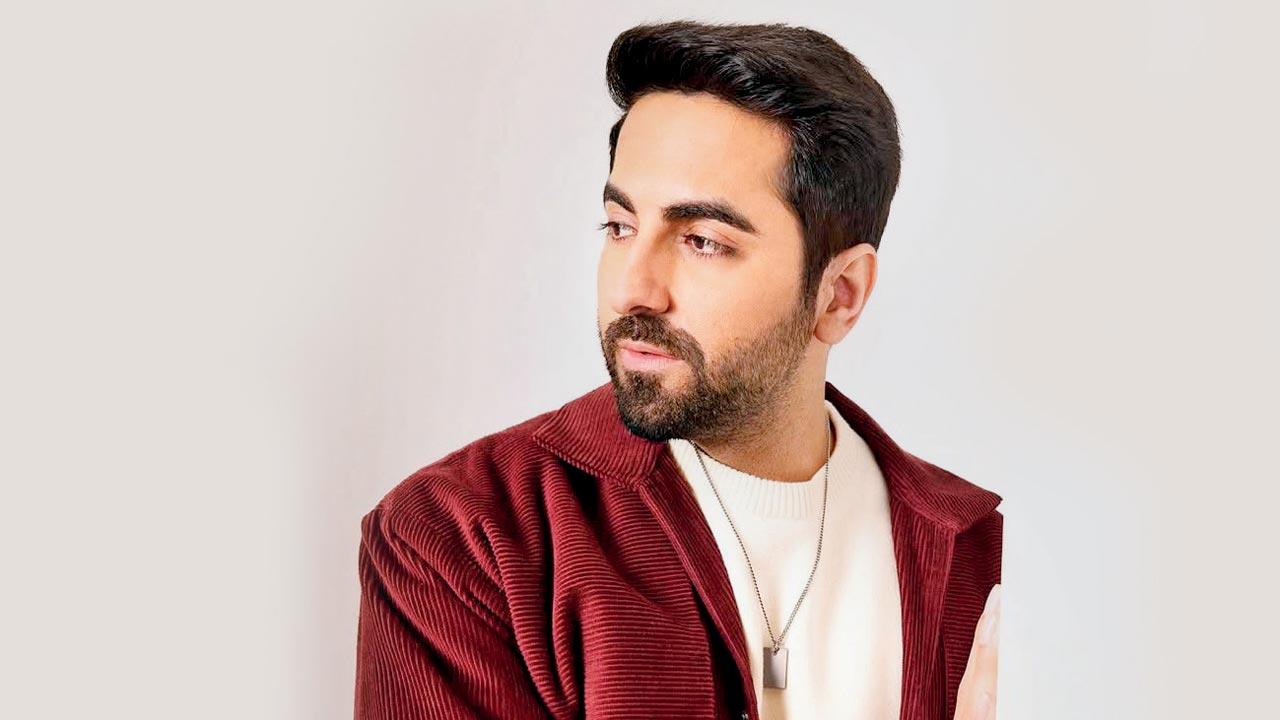
Mohar Basu (MID-DAY; December 17, 2025)
A good old family drama was missing from Ayushmann Khurrana’s filmography even as he attempted diverse genres. Now the actor is doing one with the best in business, Sooraj Barjatya. Having recently completed the first schedule of Yeh Prem Mol Liya, he is deeply impressed by the filmmaker’s humility.
“Sooraj sir is one of the most successful directors, but he’s simple and hard-working. He works like a nerd, and that inspires me the most,” said the actor.
Stepping into the role of Prem is a big feat. But to Khurrana, what’s noteworthy is that the role is at odds with the characters he gravitates towards.
He explained, “The best part of a Sooraj Barjatya film is that the hero is always a quintessential green flag. I usually love portraying characters who are flawed and have an arc, but here, the entire family is a green flag.”
In 2025, Khurrana had a sole release in Thamma. The actor will open 2026 with Pati Patni Aur Woh Do. He realises that the two offerings are a departure from the out-of-the-box films he has been known for — from Shubh Mangal Saavdhan (2017) to Andhadhun (2018).
“The reason I’m doing films like Thamma and Pati Patni Aur Woh Do for a wider audience is because I also want to do films like Andhadhun and Article 15 [2019]. I believe An Action Hero [2022] could have done better. So, I’m mixing up genres — commercial films with projects that are unique. You have to gain the audience’s faith. That’s what I tried to build with Dream Girl 2 [2023] and Thamma. That will get translated to my other films as well.”
Aamir Khan wanted me to direct Jaya Jaya Jaya Jaya Hey, but some things didn’t work out-Seema Pahwa
9:03 AM

Priyanka Sharma (MID-DAY; December 2, 2025)
Family dramas continue to be a draw for Seema Pahwa. If she explored a dysfunctional family in the recent web series Perfect Family, the actor has now stepped into filmmaker Sooraj Barjatya’s world of large and loving households. Currently shooting for Yeh Prem Mol Liya that stars Ayushmann Khurrana and Sharvari, the actor is pleased to be part of Barjatya’s story.
“The film is shaping up beautifully. Sooraj ji’s films continue to be connected to our values and families. I am hopeful that this one will turn out as lovely as his past works,” she tells mid-day.
Throughout her four-decade career, Pahwa has dabbled across mediums and roles, never putting one above another. So, if she is shooting for a big-screen offering, she is simultaneously gearing up to front and direct the play, Kuch Panne. It will open on December 9 at the ongoing Rangshila Theatre Festival in Mumbai.
“It’s always exciting to be a part of a theatre festival because it creates an audience that is in the mood for the play. Usually, when you go to see a play, by the time you get into the mood, the story is over. But in a theatre festival, the audience is in the mood to enjoy the performances,” she explains.
The buzz was that producer Aamir Khan had zeroed in on Seema Pahwa to direct the Hindi remake of the 2022 Malayalam black comedy, ‘Jaya Jaya Jaya Jaya Hey’ (left).
Ask her about the project, and she says, “We had a conversation with Aamir Khan. He wanted me to direct, but some things didn’t work out. I’m not doing that film.” Khan has reportedly dropped the idea of the adaptation as he couldn’t find the right cast.
Seema Pahwa, who turned director with the wonderful ‘Ramprasad Ki Tehrvi’, is stepping behind the camera again. “I am taking [my second film] on floors soon. The prep is on. I like family-oriented stories. So, I can’t make anything far removed from that space. The new story is also about relationships,” she says.
Ayushmann Khurrana, Sooraj Barjatya kick off 60-day start-to-finish shoot for Yeh Prem Mol Liya
8:18 AM
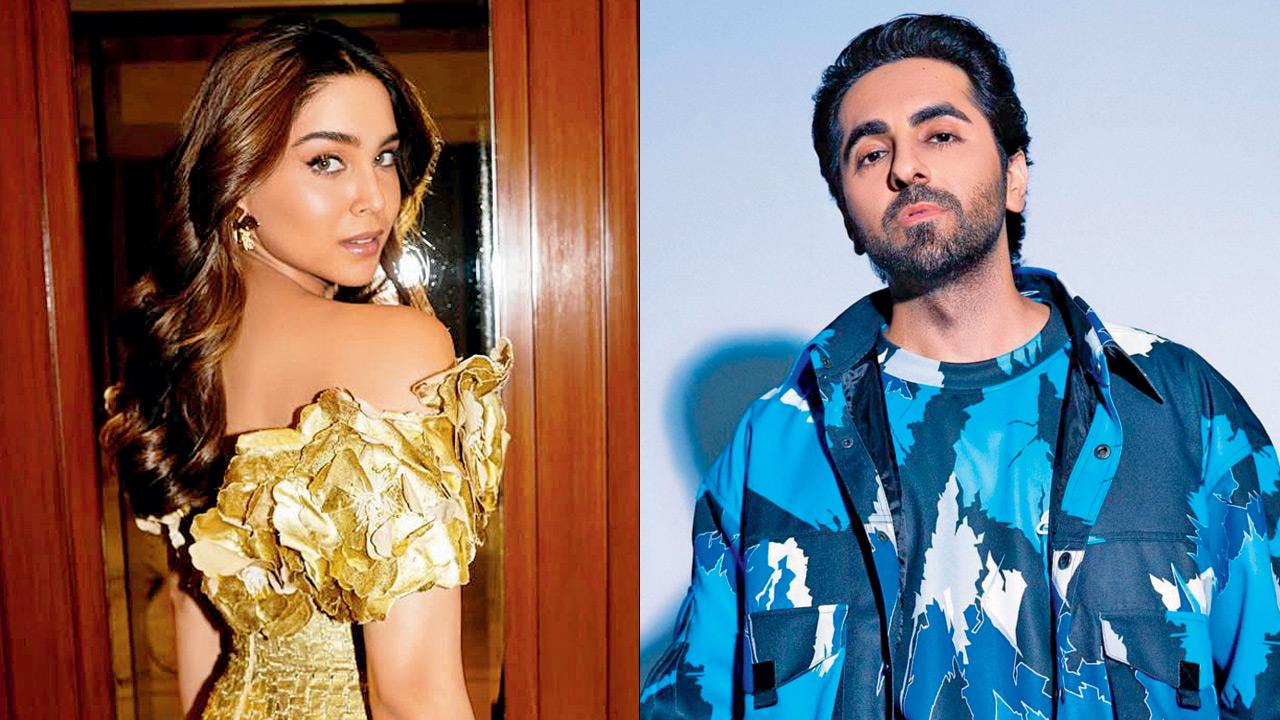
Mohar Basu (MID-DAY; November 9, 2025)
Sooraj Barjatya has plunged straight into his next directorial venture with Ayushmann Khurrana — and he is wasting no time. The film, originally titled Prem Ki Shaadi, is now called Yeh Prem Mol Liya. It went on floors on November 1, and the team has already wrapped a week-long song shoot in Kandivli. The cast and crew will now begin a 60-day start-to-finish schedule.
The next leg, beginning this week at Mehboob Studios in Mumbai, is designed to film most of the drama and family sequences, according to sources from the production house. Intricately detailed indoor sets have been constructed across three floors of the studio.
“The team plans to wrap up the shoot by January 2026. Almost 80 per cent of the film will be completed in Mehboob, with a few outdoor patch portions. The idea is to maintain the creative continuity and shoot the emotional graph of the story in one flow,” reveals a crew member.
The first song, filmed over seven days, featured the lead cast, a large ensemble, and 200 background dancers. “The song was choreographed in true Barjatya fashion. It sets the tone for the film’s world and introduces the leads in a big, joyous way,” says an insider from the unit.
Led by Khurrana, Yeh Prem Mol Liya features Sharvari as the leading lady, with Anupam Kher, Seema Pahwa, and Supriya Pathak in pivotal roles. Unlike his previous films, Barjatya is said to be exploring a more contemporary take on love and relationships with this romantic family drama.
After reaching a certain age, you trust a film more than a star-Sooraj Barjatya
10:52 AM

Tanvi Trivedi (BOMBAY TIMES; April 23, 2025)
Filmmaker Sooraj Barjatya, who captured the charm and innocence of old-school romance in the 90s superhits like Maine Pyar Kiya, Hum Aapke Hain Koun..! and later Vivah, in a conversation with us, reveals how he still believes in pure love stories and fairy-tale-like romances.
'We should keep the Prince Charming alive in our films'
While Bollywood hasn’t seen the quintessential lavish love story on screen for some time now, Sooraj truly believes in the power of that kind of romance.
He said, "It is high time we go back to our roots and make films around simple characters and show dreamy scenes. It is important to keep the Prince Charming alive in our films. We might believe that the youth has fallen for dating apps and relationships are no longer permanent, but I don't think that's true. We should never give up on the pure definition of love because everyone at their core does believe in long-lasting romance."
'Web platforms should not stick to just the thriller genre'
Sooraj, who recently forayed into the web space with the show Bada Naam Karenge, which revolved around a love story, shares, "I thought the web space was only about maar-dhaad and thriller shows. But I am glad these platforms are now interested in making love stories, too. When I have a story which can’t be told in just two hours, I think the web platform is a good choice as it will do justice to it.”
'Salman is a star for the masses, but I know he is still that simple Prem I met many years ago'
Sooraj, who has worked with Salman Khan in many hit films, wants to work with Salman and Madhuri again, but not in a sequel to any movie. "I would not want to make a sequel with them, and even if I were offered to make a sequel to Maine Pyar Kiya, it would have a fresh cast," he explained.
He added, "Salman and I share the same level of friendship even after so many years. He might be a star for the masses and puts up that persona, but at heart, he is a simple guy who likes to sit outside the vanity van in a chair and interact with the crew. If there is a good script with characters that suit them, I would work with Salman and Madhuri. One wants to work with stars, but I have always believed that a good script is bigger than anything else. After reaching a certain age, you trust a good film more than a star."
Prem Ratan Dhan Payo did well but when I look at it now, I don’t like to see the climax-Sooraj Barjatya
3:07 PM

One of Bollywood’s top blockbuster directors, Rajshri bossman, Sooraj Barjatya, 61, dives deep into his film journey as he switches into web-series with Bada Naam Karenge
Mayank Shekhar (MID-DAY; March 22, 2025)
Before I sit down with Sooraj Barjatya, 61 — the director rightly deemed the father of the great Indian family drama, ever since the blockbuster success of his Hum Aapke Hain Koun..! (HAHK, 1994) — I entertain an unusual thought in my head.
For decades, the gentle, reticent Sooraj has maintained a stoic, quiet public image. What if the actual man behind those conservative movies, dipped in shudh desi ghee, espousing love for mamaji, chachiji, samdhan, devar, is actually a wayward chiller, himself—given to slasher flicks at home, for his private pastime!
I playfully poke him with these fantasies, for this profile—asking him what he does for fun. He’s sweetly measured, as usual. For his hobby, he says, “I am right now into Puranas, reading the Gita, [Tulsidas’s] Ramcharitmanas; that’s my time for fun, when I am actually by myself.”
With Sooraj, what you see is what you get. There is no fakeness. We can see that. In fact, back circa 2001, he recalls, he had once gone over to Fire ‘n’ Ice, a popular nightclub in Mumbai’s Lower Parel. Director Farah Khan spotted him there. She instantly called up Karan Johar, wholly shocked: “Look, who’s here!”
Sooraj was with his wife, Vineeta. They retreated to a nightclub corner, where another partygoer simply asked him to please leave, bellowing: “Yeh [jagah] hum paapi logon ke liye hai [This place is for sinners],” Sooraj laughs.
The filmmaker was actually at a discotheque, in a sense, researching for his forthcoming film then, Main Prem Ki Diwani Hoon (MPKDH, 2003).
Which he wished to make, feeling the need to reflect something more trendy/hip. This is soon after Hum Saath Saath Hain (1999), an adaptation of the Ramayan, set in an Indian joint family.
Sooraj was in his “early thirties”, looking for a reset. He sacked his traditional music composer, Raam Laxman; brought onboard Anu Malik. For the lead cast, he had Hrithik Roshan, Abhishek Bachchan, Kareena Kapoor, instantly ready for the roster.
He says, “I feel so guilty towards all of them. Because they gave me everything. But while making that film, I realized, I am not there. This is not me. I was asking others, if they’d like what I’m making!”
A big feedback came to him from Bollywood’s resident pop-philosopher, actor Govinda. Sooraj says, “Govinda Ji sweetly met me [after MPKDH] to say that hits, flops come to everyone. That’s not the point.
“But, he told me, everyone has a purpose—ghode ka apna kaam hota hai, sheep ka apna kaam hota hai, sabka apna kaam hota hai. These words of wisdom stayed with me so much, that I then made Vivah [2006]. From that film onwards, I stopped wanting to be someone else. Then I can go to a night club to observe, and that’s good enough—but not try and become that person. It’s a liberating thought.”
MPKDH bombed in the theatres. Vivah had a “silver-jubilee [25-week] run in 125 cinemas, across the country.” Perhaps the last such film. To the point that the term ‘silver jubilee’ itself may be lost on the present generation of filmgoers.
But that’s how family films work—Sooraj, who’s also the bossman of Rajshri Pictures, the fountainhead of desi family entertainers, for over 75-plus years, explains its footfall math.
For one, he confesses, his core audience are women. They’re the ones who bring the family into theatres, in the first place. Sooraj says he’s deeply conscious of their tastes—even literally.
For instance, “Observe the food in our films. I make it a point that they’re carefully shot like advertising. In Maine Pyar Kiya [MPK, 1989], when Laxmikant Berde has to carry a tokri of puris, we kept reshooting it, because the puris had to be properly full-blown, on every take.”
Secondly, Sooraj distinguishes the mainstream family film, from a massy actioner. The latter gets the excited audiences right from Day One, for the first dib.
For example, “One would go to see a Dhoom 2, first. Which is what happened at Jaipur’s Raj Mandir theatre, where it replaced Vivah. But after eight weeks [once the audiences had seen Dhoom 2], Vivah was back for a 35-week run. People keep telling [others, about a family entertainer], and people coming, slowly, slowly...”
That’s the Rajshri experience. Sooraj recalls, “I’m going back to 1969. Two films released that year. One was Jigri Dost and the other, Jeene Ki Raah, from LV Prasad Ji’s banner. Both were with Jeetu Ji [Jeetendra], who was a big star. Jigri Dost had a house-full, whereas Jeene Ki Raah barely had collections in its fourth week.”
“L V Prasad Ji called up my grandfather [Tarachand Barjatya] to ask, ‘Where did I go wrong?’ He calmed him down, ‘You did no wrong. That’s Jigri Dost, and people will watch it first; it’s glamorous. Yours is Jeene Ki Raah, that audiences will visit, aaram se [in due course of time].’ That’s exactly what happened.”
The analogy Sooraj uses sort of settles the debate: “One is the new McDonald’s [in your neighbourhood]. But then, you have to come down to Maharaja Bhog [eventually].”
This is the theatrical thumb-rule, from those who’ve known them better. I suspect the same theory might apply to content on OTT platforms as well.
Wherein a new, flashy movie/show on a streamer catches full-on attention as the talking point on the first weekend. As if it’ll disappear after. Only, that sustainable content stays to be discovered, or rediscovered, forever.
Consider the Gen Z/Young Adult family (romantic) drama, Bada Naam Karenge (BNK), on SonyLIV. That’s the web series that Sooraj has turned show-runner with.
It bears the Rajshri stamp, like nothing you’ve watched on a streamer so far—large network of families, a sense of innocence among the young, flavour of small towns Ratlam, Ujjain, Indore…
Shailesh Kapoor, from the content tracking agency Ormax, I noticed, called the series a potential “game-changer” for the home-viewing ecosystem. I can see why. For years, the Rajshris weren’t entertained in the OTT scene; as Sooraj recalls, “They were looking for something edgier.”
BNK is a family series, quite separate from the over-the-top, overlong, swish-pan saas-bahu serials of Star Plus, that dominated Indian TV, 2000 onwards. It’s about subtle, real, young love, in the times of Corona.
What I was struck by is its unpretentious simplicity. It’s possible that you haven’t seen the series. It’s more possible that families will chance upon it at some point, while the word spreads.
The show features two lovely, debuting lead actors, Ayesha Kaduskar, Ritik Ghanshani—part of families that are loving, but conservative. And as it happens with the latter, extra-possessive of their young.
Their transgression is that they once lived together in a big city, out of a circumstance, given COVID-19. Their graver transgression, to me, for a Rajshri product, is they even drink at a party together!
Sooraj laughs, “Well, there is only one party-scene. And even there, I kept telling [director] Palash [Vaswani], if we can set it during Holi, and therefore thandai being passed around.”
It’s a world that Sooraj knows, because he spent a lot of time at his maternal grandparents’ home in Agra, growing up. Also, he says, his own Mumbai home mirrors that same joint family set-up/culture, including the youngest generations.
In the sense, more particularly, of the Marwari community, that the protagonists of BNK belong to. As does Sooraj.
Who, I find to be a fascinating lot—originally from a 50-odd kilometre radius in Rajasthan; spread across the country, broadening their business empires locally, retaining their filial and commercial connections globally.
Sooraj argues, “[Marwaris] are an amalgamation of the entire Bharat. We love to have a lot of money. But there are very few of us in the film business. Because we want to be safe. Before we invest anything, we must know how much we are going to get back. This is very difficult in this profession. Especially, creativity doesn’t come first to us. We know how to make money, out of money. But I think [Barjatyas] had to be here. And we had to tell some stories.”
Before there was fake news, there were quiz masters, who made up facts for questions at inter-school/college competitions. And since Internet hadn’t deepened enough to verify the supposedly right answer, we just won/lost points, from our guesses, and moved on.
One such question asked to my team, I remember, was the visual of a female actor in a song, perhaps from Janwar (1965), ‘Tum se accha kaun hai’.
Question: Who’s the actor, and what’s her relevance to Bollywood history? Answer: Rajshree, V Shantaram’s daughter, on whom Rajshri Pictures is named. This was during college/school. Although I won’t find that phony quiz-master again, it’s taken me years to prove this as fake fact/news.
Sooraj tells me Rajshri Productions is named after his paternal aunt, Rajshri Saraogi (nee Barjatya), who was born the same year the film company was founded by his grandfather, Tarachand. That date being August 15, 1947—making Rajshri exactly as old as independent India!
The company was founded in Kolkata, which is where young Tarachand moved to, from “Kuchaman, a small estate in Rajasthan.”
The only thing Tarachand ever wanted, Sooraj says, was to earn well for his mother: “She came from a poor background, she couldn’t eat well in her sasural. And he wanted to provide for her. That ambition drew him to Calcutta.”
Tarachand found a job as a manager in a Bengali film company, Chamaria Pictures, where he performed rather well. Except, as his family grew, he wished to expand, and go his own.
The company allowed him to pursue his side-gigs, alongside. Which is how Tarachand started a small arm, distributing films for Central Provinces-Berar, a tiny province of British India. But what films could he start with?
Sooraj says, “My grandfather would get tears in his eyes, when he’d tell me about Gemini Pictures, and Shri S S Vasan, in Madras.”
Basically, Vasan/Gemini Pictures had made a huge blockbuster, Chandralekha (1948). Tarachand urged them to dub it in Hindi. Vasan was unsure—who would watch a non-star cast pic across India?
Tarachand persuaded him nonetheless, including shooting portions of the film, with actors originally mouthing some lines in Hindi. Once done, Vasan offered “all India distribution rights of Chandralekha” to Tarachand.
It’s something the young entrepreneur couldn’t believe. “Chandralekha was the Baahubali of its times, or what Pushpa would be today,” Sooraj recalls. Such is how Rajshri entered the big league, subsequently setting up distribution offices across North India.
Similarly acquiring films from the South, for nation-wide releases, with Hindi dubs. Essentially, what’s now called the pan-India release.
And then, of course, they combined it with distributing popular Hindi titles, having established a deep trade-network.
Rajshri entered film production, only in the early 1960s. That’s the business Sooraj’s father, Raj Kumar Barjatya, oversaw. Their breakthrough was Dosti (1964), starring two unknown male leads, Sudhir Kumar, Sushil Kumar, with a phenomenal soundtrack, that continues to resonate.
Sooraj says, “Dosti took everyone by surprise. People first said, who would watch? It’s a black and white film. Langde andhe ki picture hai [it’s about a blind and lame man]. But my grandfather was spiritually inclined, and he was convinced.”
Throughout his career, Tarachand would visit The Mother at her ashram in Pondicherry with his film ideas. She had decreed that he only make films that “elevate the consciousness of humans/society.”
Dosti was one of them. He never looked back after. Sooraj remembers, “As a child, I’d be on story sessions with my grandfather, listening to all the top commercial pictures, and he’d say, ‘It’s a superhit film, but of no use to us.’ I used to wonder, if it’s super-hit, why is it of no use to us? So, then, he took me over to our company emblem, that is [Goddess] Saraswati. And he told me, ‘Jo yahan banega usmein Saraswati ka vaas hona zaroori hai [Saraswati must reside in whatever gets made here]’.”
The script of Rajshri mainly drew from Indian literature. The directors were relatively lesser known. Also, since, as Sooraj puts it, the celebrated ones would want to produce their own films.
But, more importantly, as he says, the lead actors in those films couldn’t be the popular hero-heroines of the times. The subjects were such. The superstars could simply not slip in.
He says, “For example, if you see Uphaar [1971]. There’s a crazy girl. Now, you can’t just put any star in there. You need someone without a screen image. Or a film like Geet Gaata Chal [1975], about a teenager. How can you put ‘Shah Rukh Khan’ in a teenage role? It has to be a newcomer. Those were the subjects we picked.”
For instance, Amitabh Bachchan did star in a Rajshri film, Saudagar (1973). But this is right before Zanjeer (1973). Which made his ‘angry young man’ stardom too big to fit into a Barjatya vehicle.
It took Bachchan almost 50 years to feature again in a Rajshri production, aged 79, with Uunchai (2022), directed by Sooraj; about friends, who are family.
What Rajshri mastered was essentially “the non-star film” that, in turn, gave debutants breaks into an industry that has perennially faced the insider-outsider divide.
As Sooraj says, “I can go on listing the breaks from Rajshri: first film of Sanjay Khan, Jaya Bachchan Ji, Rakhee Ji… We can go down to Mithun [Chakraborty] Da’s first commercial picture; Raj Babbar Ji’s first film was signed with us. Naseeruddin [Shah] sir’s first commercial film…”
It’s astounding alright. What’s equally astounding about Rajshri that I had heard, years ago, is they’ve had a rather precise rule-book of sorts, detailing stuff you can/can’t do in a Rajshri film. This is besides that the whole family should be able to watch the film together.
For instance, Commandment #1: You can’t have a villain in a Rajshri film. The ‘circumstance’ is the villain! Commandment #2: There should be no action. And if there is a required action sequence, the number of punches cannot exceed 14!
Not 13, not 15; 14, to be sure. No, wait, is this really true? Guess what, Sooraj says, “Yes, it is,” and asks me how I know. Actually, I have no clue how I know!
Sooraj smiles, “My grandfather and father’s point was that since the villain is a must—it’s best if it can be a circumstance. We don’t need to have too much of violence, hence.
“HAHK: Bhabhi (Renuka Shahane) dies. That’s all there is to it. She slips. It’s a circumstance. MPK: Currency notes get destroyed by water. Poor boy, so that is a circumstance. Now, Uunchai: The heroes want to climb up [a mountain]. There, age is the circumstance [for an antagonist]. As for 14 punches in an action sequence—that was told to me while making MPK, because I was a young man, and the action director can go on, with a fight sequence [if you don’t put a cap to it]. So, 14 punches. That’s it.”
And it’s not that the rules have always been followed, though. Sooraj admits, “Whenever we have deviated, it hasn’t quite gone down well.”
I bring up his last film with Salman Khan, Prem Ratan Dhan Payo (2015), for instance. He says, “Salman and I can see through each other. The first draft [of Prem Ratan] that I took to him, he said, why are we complicating things; go for simple. Yet, I put some action into it, because I wanted to [serve his audience]. I tried to play it safe. I should have just made a straight emotional affair. The film did well. But when I look at it now, I don’t like to see the climax.”
While Rajshri has been around since 1947, Sooraj was the first member from his family firm to actually direct films. His late father, Raj—better known as Raj Babu in film-industry circles—he says, “had modelled himself on Irving Thalberg of MGM Studios.”
But he had the eye/ear for great stories. And what Raj Babu left behind for Sooraj is actually a detailed file, with plot-points from movies he’s liked—whether from Rajshri or other productions.
Knowing his son’s natural inclinations as director, Raj Babu felt the file would serve as the North Star for subjects to pick. One of the notings, for instance, is where Uunchai came from.
I never got a chance to interact with Raj Babu. I do remember observing him once, from a distance, at a talk by Hollywood’s top screenwriting guru, Syd Field. Everybody was listening. I noticed Raj Babu, sitting down like a student, taking copious notes, instead. Which is ironic, only for the fact that if Syd Field, a stickler for the three-act screenplay structure, ever watched Raj Babu’s idea for Sooraj, HAHK—he could still flip in his grave. Now, that’s a film, without a conflict, up until its final 30 minutes, that defied all logic of screenwriting.
Sooraj says, “The [HAHK] structure originally belongs to [Rajshri’s] Nadiya Ke Paar [1982]. We owe it to K P Mishra’s novel, Kohbar Ki Shart. Which was a textbook in Agra University. My father had read the book. And if you relate the novel to HAHK, Madhuri [Dixit’s character] gets married to Mohnish [Bahl’s character]. What follows is a massive drought in the village, where everyone dies. That’s the third act. My father didn’t like that [final] part of the story.”
So, technically, HAHK was without a third act. Hardly ever has a film been loved more. Madhuri Dixit was its superstar. Incidentally, she had also debuted in a Rajshri production, Abodh (1984), where Sooraj was an assistant.
Back then, Sooraj was given the charge of counting Madhuri’s bangles on the sets of Abodh. Which is when his mother had come to visit.
She was dead against him turning into a director, which she felt was a financially unsafe pursuit. She would’ve liked him to own/run studio-floors instead.
Back home, she admonished Sooraj, “Is this what you’re going to do in life—count bangles?” Sooraj’s dad, with a filmmaking bone of his own, fully betted on his son.
This was at a time when Rajshri were at their financial lowest. Mad actioners had taken over Indian screens. Middle-class audience stayed in to watch films on video players, that made for a more comfortable home entertainment. It was a novelty.
The 1980s, being no different from 2025, with the cycle repeating. And people hitting theatres, only for spectacle as cinema, and bingeing on OTT platforms, at home, for everything else. It’s a phase, of course.
That said, Raj Babu and Sooraj could see the revival of musicals with Saturday Night Fever and Grease, and the like, in Hollywood. That’s the genre Sooraj picked for his first film, a young romance, while he’d only just turned 20.
MPK became a sensation. It revived Rajshri. A condition that Sooraj’s mother had laid before him turning director was that he must get married first.
Which is what he did at 21. HAHK followed. I wonder if he put all that he saw at his own wedding into HAHK! Sooraj says, “That, and so many other family weddings I had been to.”
HAHK is packed with songs and anecdotes, as in kissa, as against story, or kahaani. The beauty of the film is, of course, the space it accords the ensemble cast.
You have Salman [back from MPK] standing in a corner of scenes, while the samdhi, samdhan, mama, chacha, etc, take centre-stage! And this can only happen, because the new superstar had already trusted the director Sooraj’s conviction once.
They first met, because a model, Shabana Dutt, who had also tested for a role in MPK, didn’t land the part, but recommended Salman.
Sooraj recalls, “Salman thought he’d be given dhoti and bansuri for his role, because those are the films Rajshri used to make. He heard the script slouched on his seat, and straightened up only once he heard the ‘Kabootar jaa’ segment. But his auditions didn’t go well. His voice had no throw.”
Choreographer Farah Khan, Salman’s friend, came over to help him with the dance auditions. That bombed too. It’s just that once Sooraj got him to pose to the Rishi Kapoor romantic song ‘Oh hansini’, he could see a debutant heartthrob.
Only, that Salman was already appearing as a second-lead in a mid-tier film [Biwi Ho To Aisi]. Newcomer lead was a must. All this while, Salman kept sending Sooraj pictures of his friends he could cast instead.
Even when Sooraj went over to an ad shoot to finally express regret to Salman for MPK, the actor continued to introduce blokes on the set that he should have for the film!
Sooraj says he was floored by the “genuineness of a human being, first.” It had to be Salman. The rest is history.
Which, I realize, actually goes back to one more generation! Sooraj says, “Salim [Khan] Saab [Salman’s father] tells me he owes his move to Bombay, also to Rajshri Productions. He lived in Indore. That’s where the wedding of my tauji/uncle [Kamal Kumar Barjatya] was being held. Salim Saab said he was a ‘struggler’ then. He knew there would be lots of film dignitaries at the wedding. So, he came to see [having gate-crashed]. There, he met producer, Mr. K Amarnath, who told him, ‘Hero banega? Aaja Bombay!”
And he came to Bombay.
I cannot have Salman Khan do a film like Hum Aapke Hain Koun again-Sooraj Barjatya
8:44 AM
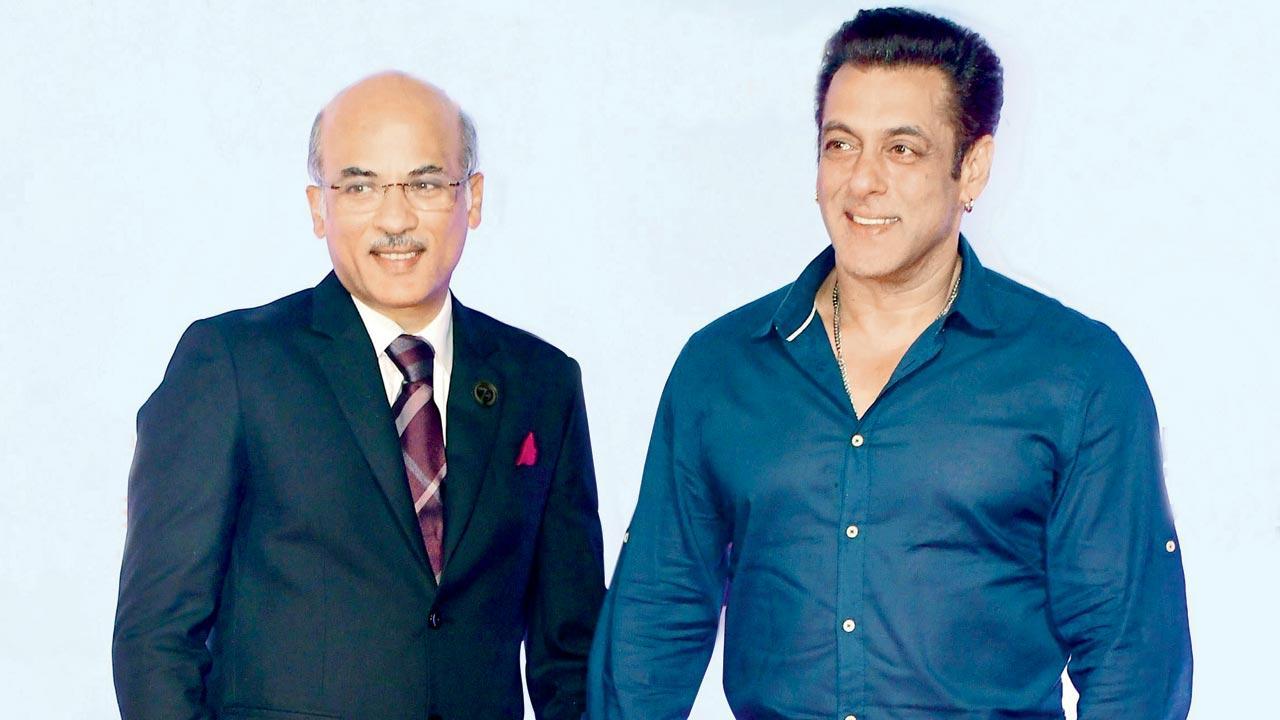
Filmmaker Sooraj Barjatya initially planned to work on Prem Ki Shaadi with Bollywood superstar Salman Khan, but sources claim the project has been put on hold
Letty Mariam Abraham (MID-DAY; February 23, 2025)
Salman Khan and Sooraj Barjatya share a successful partnership, having delivered several hits together. Nearly a decade has passed since their last collaboration, Prem Ratan Dhan Payo (2015). They initially planned to work on Prem Ki Shaadi, but sources claim the project has been put on hold. Instead, Barjatya is now developing another film with Khan.
“The film has been pushed a little because, with Salman, I need a subject that is age-appropriate. The story has to fit him correctly; I cannot have him do [a film like] Hum Aapke Hain Koun [1994] again,” says Barjatya.
He explains that Khan has a vast fan base eager to see him in roles that suit him. “It’s not fair to anyone. I have to showcase a love story that suits him. We have cracked the story. It is taking me some time. Before that, I’ll make another story,” he shares.
Rumours suggest that Barjatya is planning a film with Ayushmann Khurrana. When asked to confirm, he says, “I cannot say anything. I will make the announcement next month.”
If we are only going to show how bad society is, what are we showing our kids?-Sooraj Barjatya
4:51 PM
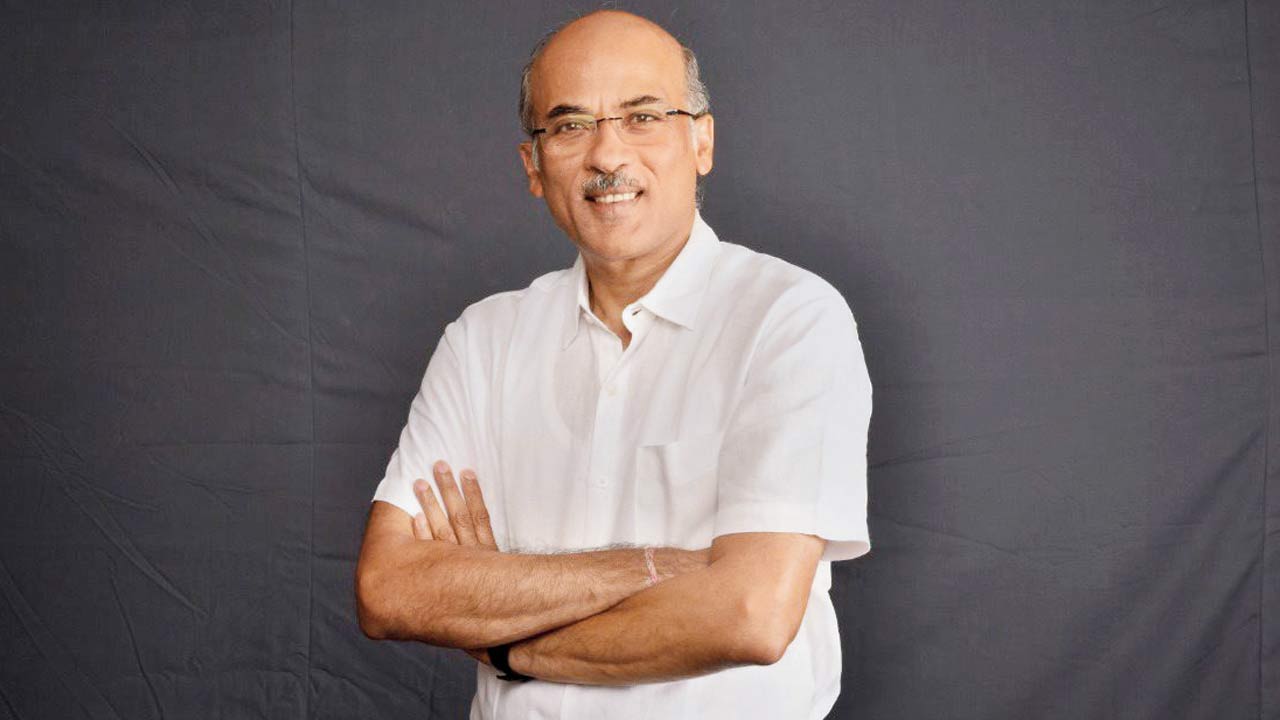
With thrillers and regional offerings dominating OTT entertainment, Sooraj Barjatya is confident his family drama Bada Naam Karenge will stand out
Letty Mariam Abraham (MID-DAY; February 11, 2025)
OTT shows have primarily become about personal viewing experiences. As filmmaker Sooraj Barjatya forays into the OTT world with Bada Naam Karenge, he hopes the nine-episode series will take people back to the culture of family viewing. In conversation with mid-day, the showrunner talks about making content for Gen Z, why his projects always boast of green-flag characters, and how a section of OTT viewers misses family dramas.
Where did the story originate from?
It was narrated to us by S Manasvi; he came up with the concept in 2013. We were [struggling] with the climax then. In 2020, when we had a meeting with Sony LIV, they wanted a Rajshri show. They wanted to recreate the world of Hum Saath Saath Hain [1999] and Vivah [2006] on OTT. So we met Manasvi, and cracked the story. I’m grateful that the streamer backed our vision. The other [platforms] told us that OTT is a younger and urban space.
Tell us about the story.
It’s about a boy from Ratlam, who wants to expand the family business and a woman from Ujjain, who wants to do her Masters in microbiology. They are not able to fit in, in Mumbai nor are they able to fit in where they come from. The story is about how they fall in love.
Thrillers and gangster dramas dominate OTT entertainment. Will a romantic family-oriented show find its place?
After the pandemic, a lot of people have moved on to the fire stick. But there are many who want to see something different, who are not happy reading subtitles or watching gore. I believe there is an audience for everything. So, why shouldn’t I make a romantic family drama? I think it’s the right time for us to enter with Bada Naam Karenge.
What did you learn while making the series?
The platform was clear that they wanted to bring the audience from Tier II and III. The best thing about the project was to get Gullak director Palash [Vaswani] as a director. He comes from this world and is experienced. We’ve made a lot of films and television shows, but he guided us on how it is different from television. It took us almost a year to write, two years to get this project through, and post-production took another six months. The web is a beautiful medium to tell a story.
Do you think you can bring the family-viewing culture back with this show?
I think [we] will and we should. It is a necessity of the day. If you talk to the OTT platforms, the money is missing. [So, we need] everyone to come together and watch. Today big televisions screens are back. This culture has to come back where everyone watches content together. For my movies, youngsters would come less to theatres. But they’d come to show the film to their grandparents and parents. That is what we are aiming at.
For people living in the right-swipe generation, how will you convince them that old-school romance is real?
Here, we are catering to the audience that wants [fast-paced] content. That is the world Palash has brought. I feel we try to show youngsters as kids who are partying, taking drugs, drinking or smoking, but that’s not true. I look at my own kids who make mistakes, are stressed, but they rise again. I think Gen Z will connect with the story, especially kids from small towns, the Bharat.
All your characters are green flags. Isn’t that far from reality?
In this show, they are not entirely green flags. But a lot of people tell me that my [depiction] isn’t the reality. I feel at least one in 10 would be [like my characters], but they don’t show that because they want to fit in. I want to show dreams. If we are only going to show how bad society is, what are we showing our kids? My daughter is 26 and wants to get married, but she doubts [the kind of partner she’ll get]. If they are not [like my characters], at least they can try to be and they may get a Poonam [Amrita Rao’s character in Vivah].
Sooraj Barjatya observed but never interfered, even when I sought his direction-Palash Vaswani
8:21 AM
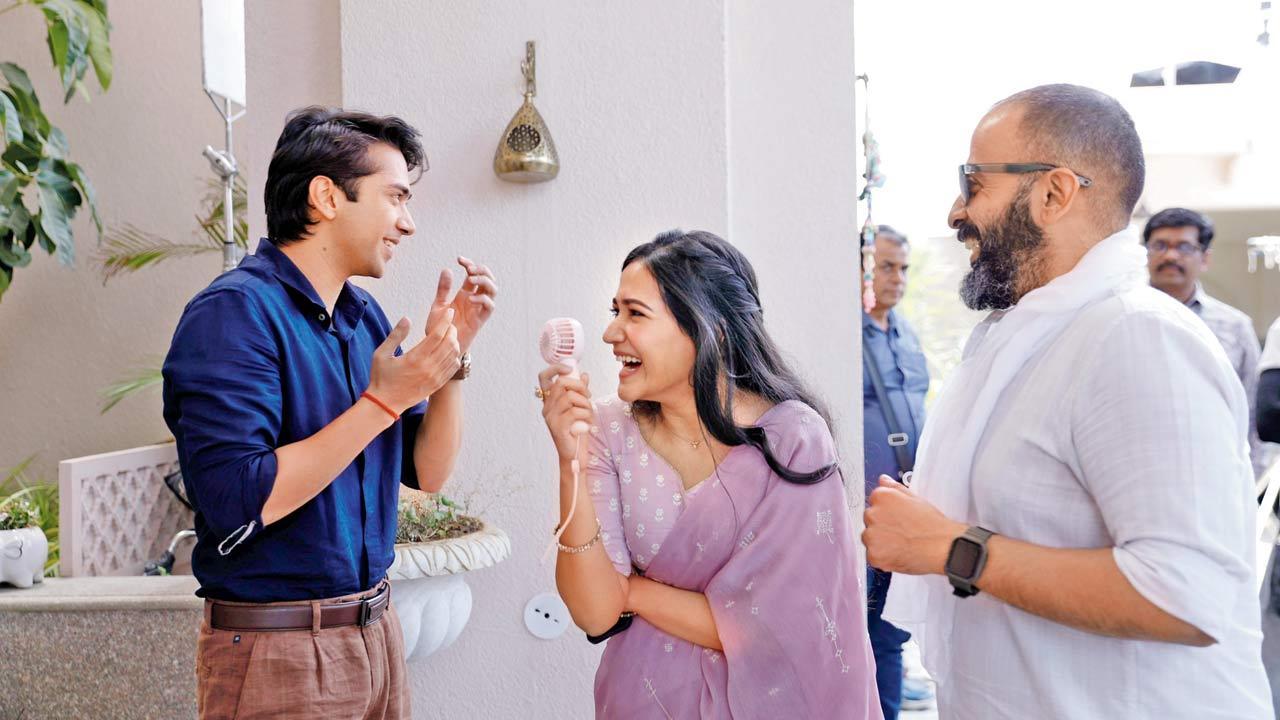
(From left) Ritik Ghanshani, Ayesha Kaduskar and Palash Vaswani on the set of Bada Naam Karenge. Pics/Instagram
Director Palash Vaswani of Gullak fame on his collaboration with ace Bollywood filmmaker Sooraj Barjatya and navigating emotions for Bada Naam Karenge
Letty Mariam Abraham (MID-DAY; January 28, 2025)
He says Sooraj Barjatya wanted to collaborate with him because the veteran filmmaker loved how he brought simplicity to the screen. However, for director Palash Vaswani of Gullak fame, it was a dream come true. Vaswani had always wanted to create a love story, but making a show with the signature Rajshri touch while ensuring it remained relatable across all age groups was a challenge. Bada Naam Karenge commenced in April and concluded filming in October. However, the team spent nine months refining the script before beginning production.
In conversation with mid-day, Vaswani discusses how he drew inspiration from real-life stories of people from small towns to shape the narrative, what he learnt from Barjatya, and how he expresses himself through his storytelling. Edited excerpts from the interview.
The show seemed like the OTT version of Vivah (2006). Is that just our prejudice?
The series is my tribute to Maine Pyar Kiya [1989]. I still love watching the film. These kinds of stories are missing from screens nowadays. You no longer see innocent romances with a couple in the foreground and the family in the background. The kind of storytelling seen in Dilwale Dulhania Le Jayenge [1995], Hum Aapke Hain Koun [1994], and Kuch Kuch Hota Hai [1998] is absent in the Hindi film belt, though it still exists in south films. This was my attempt to revive that genre.
But romance is no longer so innocent. Do you agree?
Rocky Aur Rani Kii Prem Kahaani [2023] is a similar film, but there was a long gap before it. The last such film I remember is Kal Ho Naa Ho [2003]. Today, if I wish to tell that kind of story, how do I narrate it? I must use a contemporary approach with new voices, so that it resonates with people. The OTT audience is quite young, so connecting with them first—who may then share it with their parents—makes the series ideal for community watching.
Will Gen Z relate to a romantic story like this?
I come from a small town, Raipur, though I have lived in Mumbai since 2007, so I understand the dynamics in both places. Films today do not focus on relatability. If you watch Premalu [2024], it precisely fills that gap; Hridayam [2022] is also a pure college romance. These stories were once told in Hindi cinema but not anymore. Such people exist and are in the majority, yet we do not create content they can relate to. This is why people from the Hindi belt increasingly connect with south movies.
Raipur has a significant Marwari community. They are business-oriented and wealthy. While they can afford to send their children abroad, they often send them only to Pune. These children do not admit to drinking alcohol or dating because their parents wouldn’t understand and would judge them morally. This happened to a friend’s brother. Similarly, another friend fell in love with a girl he was stuck with during the lockdown for 15 days. For him, those 15 days felt like a film. We are confident people will relate to our show, just like how they reacted to Gullak.
How did this collaboration with Sooraj Barjatya happen?
Sooraj sir must have seen my work in Gullak [seasons 2 and 3], and people from SonyLIV recommended me. I received a call from Rajshri Productions, stating that Sooraj sir wanted to meet me. Despite being a towering personality, he is simple and clear about his vision and what he wants to convey. He told me he loved Gullak and that not everyone could capture simplicity the way I did. When he narrated Bada Naam Karenge, the story resonated with me, particularly as I come from a small town. Moreover, I had always wanted to make a love story, and the chance to work with him was unmissable.
What did you learn from working with him?
I learnt how to tell a story in a massy way and reach a wider audience by focusing on content. S. Mansvi, Sooraj sir, Vidit Tripathi [writer of Gullak season 4], and I worked on the story for nine months. I was insistent that we perfect the script on paper before starting production. We rewrote several drafts until we were confident, only then moving to pre-production. Since it was a Rajshri project, it needed their signature touch, so Sooraj sir was involved during pre-production. On set, he observed but never interfered, even when I sought his direction.
Did anyone’s performance surprise you?
Casting took six months because we needed actors who believed in the story. We chose newcomers to avoid expectations nor will the audience have any preconceived notion about them. The leads, [Ritik Ghanshani and Ayesha Kaduskar], were superb and carried the strong themes effortlessly.
During a table read, Kanwaljit [Singh] sir had a scene where he had to cry, but he felt his character wouldn’t. However, I insisted because the climax depended on it. In my stories, men cry. I think I am unable to emote so these emotions come out in my story. He agreed to do it both ways, but after one take, he was convinced by my vision. Watching him perform that scene brought tears to everyone’s eyes.
Sara Ali Khan, Triptii Dimri frontrunners for Sooraj Barjatya’s next with Ayushmann Khurrana
8:07 AM

Mohar Basu (MID-DAY; December 27, 2024)
Earlier this week, it emerged that filmmaker Sooraj Barjatya has found his new Prem in Ayushmann Khurrana. The actor has been roped in for the filmmaker’s yet-untitled next. With the male lead in place, the obvious question is: Whom will Khurrana romance in the family drama? Insiders tell us that Sara Ali Khan and Triptii Dimri are the top contenders for the role.
We’ve heard that the two actors are in discussion for the role, which requires someone who can embody Barjatya’s vision of grace.
An industry insider revealed, “Sara has the charm and mainstream appeal that could align with the Rajshri universe, while Triptii’s nuanced performances in films like Bulbbul [2020] and Qala [2022] make her a strong candidate to bring a layered approach to the character. Ayushmann is already doing another film with Sara whereas it will be a new jodi if he teams up with Triptii. That said, Triptii is busy for a good part of next year with Vishal Bhardwaj’s film on Hussain Ustara and two other projects. Sooraj-ji will meet both actors in January, and a look test will determine the decision. Their chemistry with Ayushmann will also be another factor.”
If things go as planned, Barjatya will take the project on floors in the summer of 2025.
Anna Singh on Hum Aapke Hain Koun clothes: "Rohit Bal, Sandeep Khosla told me, 'What the hell are you doing? This is very gaudy'
4:44 PM

As told to Vinay MR Mishra (BOMBAY TIMES; December 21, 2024)
I remember 30 years ago, the wedding palette was either pink, gold or red. I was sitting with Sooraj Barjatya ji for the wedding looks in Hum Aapke Hain Koun..!, and we said, ‘Maybe we just need to change the projection of this.’ It was a big risk at that point. We kind of changed the whole colour palette and the way people dressed at weddings. Even for the bride, we used an unconventional colour. Then we tried to create embroidery which was original. While we were doing it, we didn’t realise this would become so big.
In those days, there were about 10 of us who were into the fashion scene, including Rohit Bal and Sandeep Khosla. They kept telling me, “This is crazy. What the hell are you doing? This is very gaudy.” I didn’t get the best feedback from my friends in the industry, but we decided to experiment. We put it out there, and then there was no looking back.
I would get calls from local designers asking for the original design. Today, costume designing is becoming extinct because nobody is really building characters except for three or four filmmakers. We used to build a look. We created a universe that was colour-coded and emotionally tuned to what was going on. Today, people are just putting together clothes, and there’s no specialization. So, there’s a big difference. I feel the actresses are not looking to change themselves completely to get into a character.
‘We used to have magical moments every day’
Back then, I’d often be the only girl on the set. Many people would wonder why I wanted to design clothes for films. It would be demoralizing because they implied that you are the wrong person for the wrong job in the wrong place. Then, I met Jackie Shroff and he had a passion for fashion. We started speaking a different language. So, there was this beautiful phase that began. The 90s were the bold years. We used to have magical moments every day. The actors in those days were conventionally good-looking. It was the era of handsome men.
— As told to Vinay MR Mishra
Led by Aattam, South Indian cinema walks away with top honours at National Awards
9:10 AM

Best Director Award For Barjatya Marks Bollywood’s Presence
Manash Gohain (THE TIMES OF INDIA; August 17, 2024)
New Delhi: Southern cinema grabbed centerstage winning a clutch of major awards in the 70th National Film Awards. The best feature film award went to the Malayalam movie “Aattam: The Play”, while Rishabh Shetty received the best actor award for the Kannada hit “Kantara.” Best actress prize was shared by Nithya Menen for the Tamil film “Thiruchitrambalam” and Manasi Parekh for the Gujarati movie “Kutch Express”.
Sooraj R Barjatya (Hum Aapke Hain Koun) seized the best director award for “Uunchai”, marking Bollywood’s presence among the top categories. Nina Gupta received the best supporting award for the same film while Pavan Malhotra, known for his riveting performances in films such as Salim Langde Pe Mat Ro and Bagh Bahadur, earned the supporting actor award for Haryanvi film, Fouja.
The jury members presented the list of winners for 2022 to Union I&B minister Ashwini Vaishnaw on Friday.
Malayalam cinema led the charge, winning eight awards, including for best child actor, best screenplay, and best editing. Overall, 20 south Indian films bagged awards a cross various categories in the feature film segment. In the feature film category, out of the 24 awards, excluding the sub-category of best feature film in each language, 20 awards were shared by Malayalam, Haryanvi, Kannada, Gujarati, Tamil, and Bengali movies. Only six awards were bagged by three Hindi films, with two being shared with other regional language movies.
“Fouja” won two other awards: best debut film by a director for Pramod Kumar and best lyrics by Naushad Sadar Khan.
The award for Best Popular Film Providing Wholesome Entertainment also went to a non-Bollywood film, the Kannada blockbuster “Kantara”, which explores the intricate connection between humanity and nature through its folklore-based storytelling. Rishabh Shetty played the dual roles of a father and son in this film.
The top honour, the best feature film “Aattam: The Play”, directed by Anand Ekarshi, revolves around a theatre troupe and the changing dynamics after its only woman member alleges she has been groped by one of the men.
The best female playback singer award went to Padma Shri awardee “Bombay” Jayashri Ramnath, a champion of Indian Carnatic music, for the track “Chaayum Veyil” from the Malayalam film “Saudi Vellaka CC 225/2009” (Saudi Baby Coconut CC.225/2009), which also won the best Malayalam film award.
A R Rahman won the National Film Award for best music director (background music) for his work in Mani Ratnam's ‘Ponniyin Selvan-Part 1’, which was also named the best Tamil film. Pritam got the award for best music director (songs) for ‘Brahmastra-Part 1’.
------------------------------------------
Rishabh Suri, Mugdha Kapoor, Soumya Vajpayee, Yashika Mathur, Akash Bhatnagar (HINDUSTAN TIMES; August 17, 2024)
I was not expecting it: Manoj
It’s Manoj Bajpayee’s fourth National Award and this time it’s a Special Mention for the actor for the film Gulmohar (2023). We break the news to him, and he exclaims, “Wow! Best Hindi film too! I must call my director (Rahul V Chittella) right away. I was not even expecting an honour. He is deserving of it, as he made such a beautiful film.” Bajpayee feels grateful that his work is getting recognised now: “There have been performances and films that went unrecognised.”
I am still processing it: Manas
Manasi Parekh, who bagged the Best Actress award for Kutch Express (2023), says, “I am shooting for my new film, and got a message from (actor-filmmaker) Anand Tiwari: ‘Congratulations on the National Award’. I exclaimed, ‘What!’ I am still processing it, I can’t believe it.” The actor looks at the award as a vindication for her hard work: “I love what I do. What makes this win sweeter is that my husband and I produced Kutch Express. I want to do the best work and make the best of films.”
Kantara is a tribute to our land: Rishab Shetty
Rishab Shetty, who won Best Actor for Kantara (2022), with the film also winning the Best Film Providing Wholesome Entertainment award, tells us exclusively, “The win feels overwhelming. I wanted to bring authenticity and a raw portrayal of our heritage. The film is a tribute to our land and the deep-rooted stories that have been part of our cultural fabric for many years, true to the essence of the Kannada culture. I’m thankful to the Daiva for their divine blessings and dedicate this award to the Daiva Nartakas.”
This feels so special: Pritam
Pritam Chakraborty, who won the Best Music Director award for Brahmāstra: Part One – Shiva (2022), says, “This feels so special. I am really grateful to the jury. I want to thank the makers and everyone who was associated with the movie for their support and trust in me. But, most importantly, a big thank you to the audience for their love to our music.”
’This is such an auspicious day’
“I didn’t know that the National Awards were going to be announced today!” says director Chandoo Mondeti, whose film Karthikeya 2 won the National Award in the Best Telugu film category. Mondeti also tells us how he heard of the win after a friend called to congratulate him. “It is such a happy day for us. Karthikeya 2 is a very special film. This is such an auspicious day,” the filmmaker beams, adding that celebrations will follow right away: “It is such great news for me and everyone associated with the film.” This is Mondeti’s first ever National Award.
Like a pat on the back, says Pavan Raj Malhotra
Actor Pavan Raj Malhotra, who won the National Film Award for Best Supporting Actor in the Haryanvi film Fouja, says, “This is my second award, and it feels really good. I remember the first time around, there used to be a rehearsal before the main ceremony without the President and I was wondering how to greet him. Suddenly, I uttered the words ‘Jai Hind’ and it was perfect. This kind of recognition is what every artiste works for. It’s like a pat on the back and as far as I know, these awards are not manipulated. Fouja is actually close to my heart as it is about the desire to join the army; it is a great honour to be a part of the Indian Army. I don’t know how much of an impact this might have, but I have been working for 40 years now. If you keep working and doing what you like, these awards just make you feel appreciated.”
When I was writing a film for Salman Khan, a voice inside me told me to make Uunchai-Sooraj Barjatya
9:00 AM
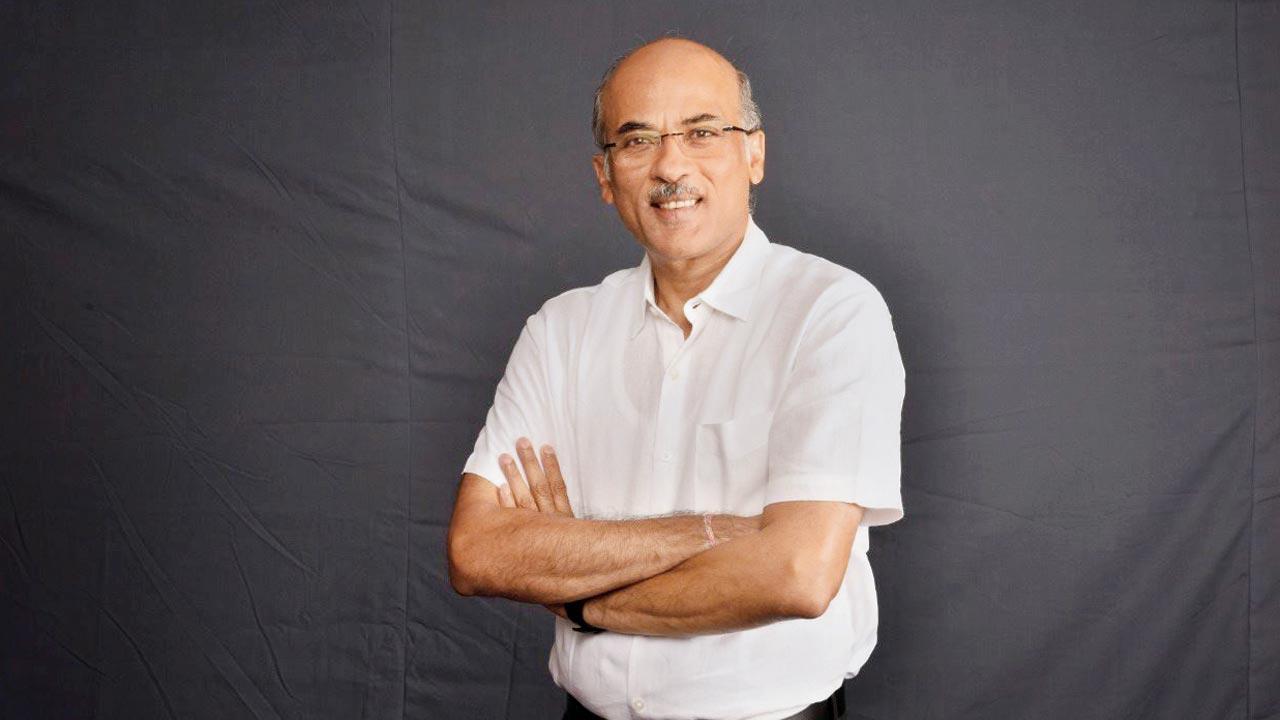
With Uunchai winning two National Awards, Sooraj Barjatya and Neena Gupta share their humble reactions to the recognition
Priyanka Sharma, Upala KBR (MID-DAY; August 18, 2024)
Thirty years ago, filmmaker Sooraj Barjatya and actor Neena Gupta received their first National Award honours for Hum Aapke Hain Koun and Woh Chokri (1994), respectively. On Friday, they received their second National Award, this time for Uunchai (2022)—a film they collaborated on. The relationship drama earned Barjatya the Best Director honour, while Gupta won the Best Supporting Actor award at the 70th National Awards.
The award is particularly special for Barjatya as Uunchai marked his comeback after a seven-year gap. “When I was writing a film for Salman Khan, a voice inside me told me to make Uunchai. I felt it was time to offer movies that [come] from my soul rather than trying to make what sells. Uunchai is the most layered film that I have made. In my films, I usually take up happy moments of life and create a happy [movie] around it. This is the first time that I had a clear story with such strong and layered characters,” he says of the film, which also stars Amitabh Bachchan, Anupam Kher, Boman Irani, Danny Denzongpa, Parineeti Chopra, and Sarika. Barjatya recalls a journalist once telling him that stories of friendship are usually made with youngsters but rarely with older people.
Gupta, who has had an eventful career since 1982, has starred in several unconventional films. She began her second innings in cinema with Amit Sharma’s Badhaai Ho (2018), which catapulted her back into the limelight.
“Uunchai was not just a story of four people. It touched on so many truths and had several layers. [My character] is visiting her daughter’s house for her birthday, but she doesn’t want the mother to be in the presence of her friends. This happens a lot in life,” says the actor. Gupta’s evolution also defies the ageist norms in the industry, which often regards women as dispensable after a certain age. Despite her achievements, the actor remains humble.
She shares, “I feel I should look at myself through other people’s eyes, but I can’t. I believe that if I keep working, I will be rewarded one day. The National Award is a big reward for my work, but that doesn’t get people to queue up to work with me. However, it does earn me a lot of respect.”
Winning the award, Barjatya feels not only humbled but also excited for the next chapter of his career. “When Hum Aapke Hain Koun won the National Award for [Best Popular Film Providing Wholesome Entertainment], the rush and happiness I felt as a young director was crazy. Today, there is a sense of gratitude and calmness. It’s a great honour to be chosen among the best [filmmakers] of our country. It unites our industry because it is a celebration of films made in every language. I feel I have truly climbed Mount Everest today. This immense recognition belongs to my entire team of senior actors and technicians, who braved the pandemic and shot at unheard locations with me. After 35 years, I still feel that I’m not done yet. There are so many more stories to tell,” he smiles.
Hum Aapke Hain Koun started with 32 screens, and everyone said that it was a suicide mission-Komal Nahta
10:47 PM
TOI Entertainment Desk (April 26, 2024)
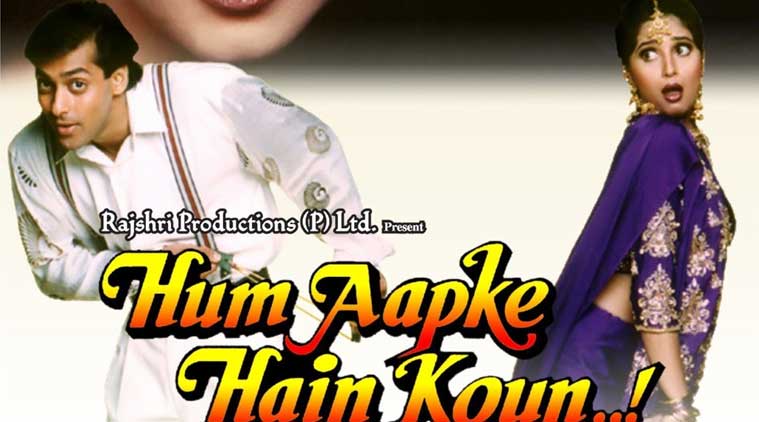
In our exclusive Box Office Nostalgia section, we revisit iconic hits and cult classics which have shaped cinema over the years. This week, we decode the number game behind one of Salman Khan and Madhuri Dixit's biggest hits - Hum Aapke Hain Koun...!
Film: Hum Aapke Hain Koun...!
Release date: August 5, 1994
Star cast: Salman Khan, Madhuri Dixit, Mohnish Bahl, Renuka Shahane, Alok Nath, Reema Lagoo, Anupam Kher, Satish Shah and Himani Shivpuri among others.
Director: Sooraj Barjatya
Hum Aapke Hain Koun...! is unarguably amongst the most ambitious and a game changer film in Indian Cinema. And the film's stupendous success is testimony to its makers' daring courage of conviction. Amongst its many successes, a few notable highlights include changing the way cinema idioms are used, and suddenly, music is taking the film's story forward. The film also revolutionized the way music was recorded for a film. The unusual and innovative marketing and distribution strategy forced the distributors and exhibitors to renovate their theatres. And the film brought the Indians back to the cinema halls – globally - like never before. HAHK also made homely and decent cool once again. While doing all the above, the film also escaped the era's biggest menace – piracy!
Hum Aapke Hain Koun...! was released in cinemas on August 5, 1994, with only 26 prints, and it was stipulated it would be released in only one theatre per city. In Mumbai, the theatre was Liberty; in Delhi, it was Delite. Only those cinema halls across the country equipped with an 'optical stereo system' were allowed to play the film. Exhibitors could choose to upgrade or miss out on being able to screen the film.
Senior trade analyst Komal Nahta reminiscences, "After ages, somebody dared to release a film on limited screens. It started with 32 screens, and everyone said that it was a suicide mission and they would destroy themselves because piracy was at its peak. But Rajshri had faith in their vision. They asked the exhibitors to renovate their theatres, and only then would they give their films for exhibition. They told the theatre owners to create an atmosphere for people to enter the theatres. They had put on lights at Liberty Cinema that would go on when the 'Didi Tera Devar Deewana' song would play."
Liberty Cinema in Mumbai was decorated for the film's grand release and upgraded to become a high-end cinema hall with optical stereo sound to match the film. Film historian Dilip Thakur said, "Before Hum Aapke Hain Koun...!, Liberty used to screen B and C-grade films, and therefore, they needed to facelift the film to bring back the audience to the cinemas."
Director Sooraj Barjatya told Etimes, "We had the biggest premiere at Liberty Cinema. I was shocked because there was no reaction. People were walking out during songs. I was scared. Adi (Aditya Chopra) and Salim Sahab (Salim Khan) had told me that the two-and-a-half songs were my indulgences and that I should cut them. I cut those songs."
The film did not take a flying start, and the initial reaction was mixed. The film was too different from the rest of the fare. The musical format took a while for the public to adjust to, and in the first three weeks of the release, Hum Aapke Hain Kaun got tagged as Chaayageet, the popular music program on Doordarshan.
P S Ramanathan of Rajshri Productions said, "Till the first three weeks, the reception was shaky, and it was only after the 5th week the film's business picked up, and that's when we started releasing the film in mono cinemas also, and it reached about 582 cinemas."
Made on a budget of Rs 6 crore, the film earned around Rs 10 lakh on its opening day and the India Gross collection of the film stands at Rs 117 crore.
Nahta recalls going to the cinema to watch the film and his initial reaction: "After one or two weeks of the film's release, Rajshri Cinema was opened, and we had been invited to the opening. The cinema's manager came to pick us up. I asked him, "What has clicked in the film for the audience? Because people are calling it a wedding tape." He said, “Kaunsi shaadi mein Madhuri naachti hai? Iss mein Madhuri naachi na?"
The film's story moves through music, and the sound needs the highest quality. Until the advent of HAHK, composers recorded music in one sitting, with all musicians performing together. With the young Sooraj at the helm, the music recording method changed forever. Every instrument was recorded separately and mixed for the optical stereo system experience.
And the game changed.
Film historian Dilip Thakur recalled, "The video piracy in the 80s almost ruined the business of cinema, and it was more of action films that were working, and family audiences had stopped going to the cinema, but with Hum Aapke Hain Koun...!, the family returned in a big way."
The world has opened up to the globalization of cinema and began with this film in a big way. While there was reluctance and most action films were working overseas, Hum Aapke Hain Koun...! changed the game, bringing the family audience back into the domestic market. It opened up an Indian diaspora to watch family films, and this film set the trend. They latched on to a movie about Indian traditions and values and celebrated weddings grandly.
Some of the inadvertent results of the film are that weddings in India became larger than life. Sooraj tells us that he wrote what he saw at home. Indian weddings were no longer just ordinary but became big celebrations, and wedding budgets shot up and reflected what one saw in Hum Aapke Hain Koun...!.
The Merchandise business boomed…
After Bobby, which was released in 1972, Hum Aapke Hain Koun...! popularized and was highly successful in attracting the audience to buy merchandise of the film from Madhuri Dixit saree to Tuffy to other accessories and clothes of Salman Khan and posters of the film, Mugs, etc. The film's merchandise is still sold online.
Salman Khan backs out of Sooraj Barjatya’s next over creative differences
8:52 AM
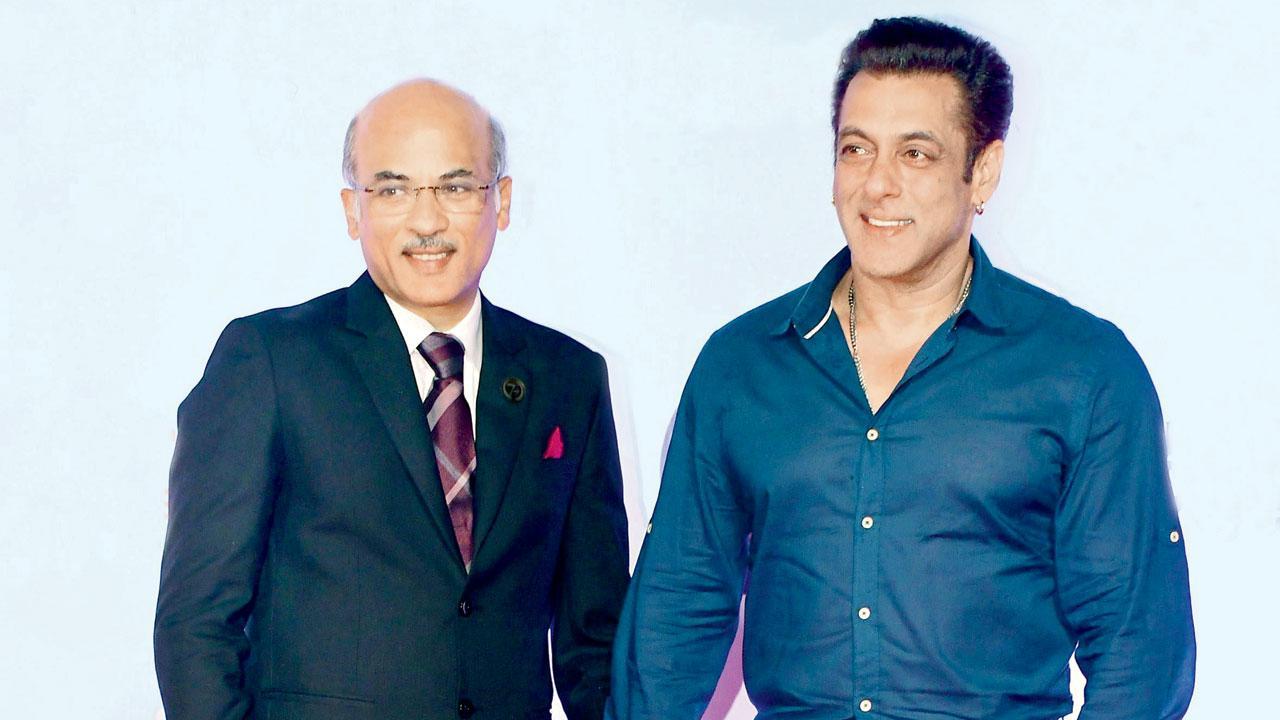
Sources say Salman has backed out of Sooraj Barjatya’s next over creative differences; filmmaker reworking script for a younger hero
Mohar Basu (MID-DAY; February 10, 2024)
Last year, Salman Khan and Sooraj Barjatya confirmed that they were reuniting over eight years after Prem Ratan Dhan Payo (2015) for their fifth collaboration. Understandably, it became a highly anticipated project. However, after generating much excitement over the past few months, it is now heard that the reunion is not happening anymore.
Those in the know attribute the development to creative differences between the duo. A source reveals, “If you see the sort of star that Salman Khan is today and the director’s films, the two are poles apart in terms of their creative sensibilities. The script was their common ground, but over time, there were too many things they couldn’t agree on. So, it made sense for them to call it off amicably.”
The filmmaker apparently intends to revisit the film’s script. It is being said that he is determined to rework the cast. “The script will be tweaked, with the protagonist being aged down. Sooraj sir will initiate talks with younger stars. There is a certain innocence to the film, and he wants an actor who can reflect that. Varun Dhawan and Ranveer Singh are the frontrunners at the moment, and a decision will be made by next month,” adds the source.
mid-day texted Barjatya, who didn’t respond till press time.
Sunny Deol gave the clap for my first shot is what made my first day special-Rajveer Deol
9:02 AM
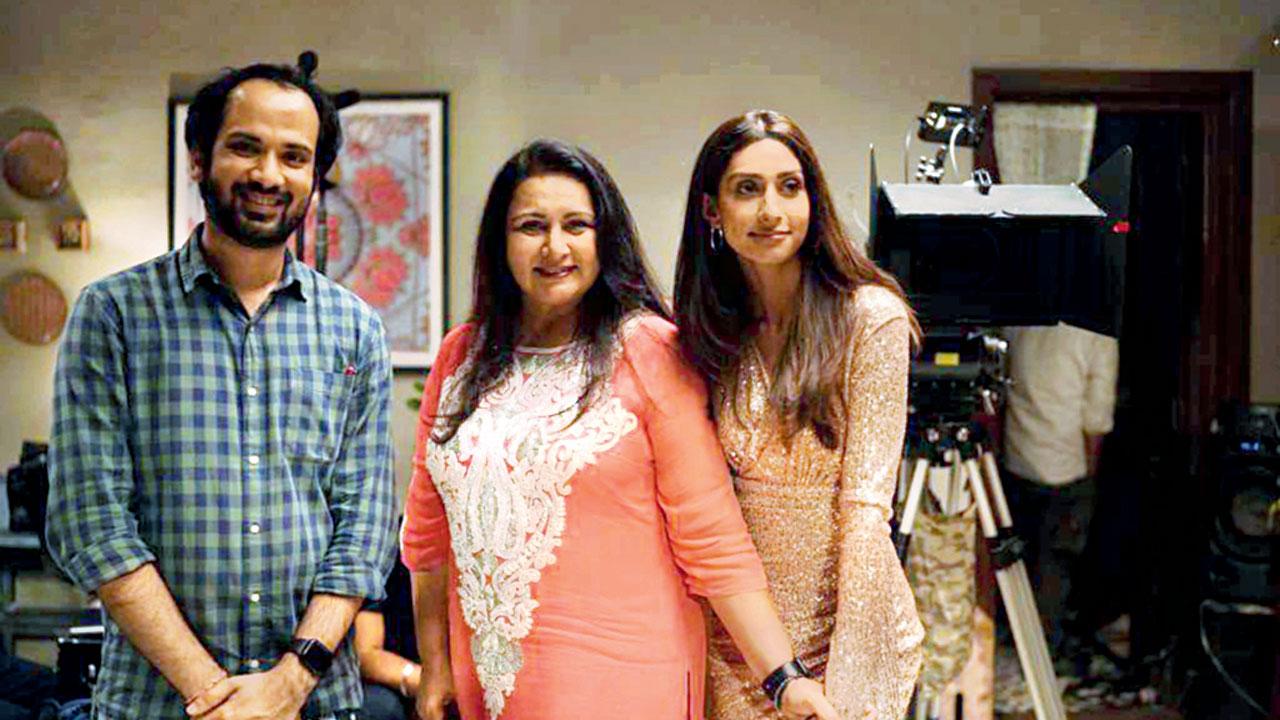
Poonam Dhillon with her actor-daughter Paloma, and Avnish
Dono actors Rajveer, and Paloma, and director Avnish on taking on the baton from their respective star parents, Sunny Deol, Poonam Dhillon and Sooraj Barjatya
Mohar Basu (MID-DAY; September 16, 2023)
Taking on the baton from their respective fathers, actor Rajveer Deol and director Avnish Barjatya are set to present a tale of love in Dono. While Sunny Deol and Sooraj Barjatya continue to aid in the promotional work of their children’s debut outing on the ground, the youngsters admit that having their father’s present on the set as well enabled them to seamlessly bring their dreams to life.
Discussing Barjatya’s unwavering support, Avnish tells mid-day, “Dad’s presence on set was the greatest strength for us. Even during stressful situations, his reassuring presence meant the world. His advice relating to the smallest things can make the biggest difference. He’s also the best person to bounce ideas off. I was lucky to have him there as a pillar of support throughout the film.”
For Rajveer, dad Deol’s attendance provided a similar kind of assurance. Stating that the senior actor had arrived on set to watch his son’s first scene, Rajveer says, “Papa was on set with the family on the first day. The fact that he gave the clap for my first shot is what made my first day special. That will always be my most cherished memory. Bade papa [Dharmendra] also turned up on a day when I was very nervous. I was shooting a difficult scene that comes before the interval, and he surprised me by walking in unannounced. His presence [boosted my] confidence.”
Interestingly, the film’s leading lady, Paloma, also comes from a cinematic lineage. Poonam Dhillon’s daughter shares that her debut vehicle is a cherishable one for her parents. “I could see the happiness in their eyes when they’d see me on set. Papa [producer Ashok Thakeria] arrived on the first day, and supported me. Seeing him there, I got emotional, and cried as well. Mom joined us on set multiple times. She was there to guide me when I was shooting my first dance piece.”
The offering, which releases on October 5, marks Rajshri Productions’ 59th film title.
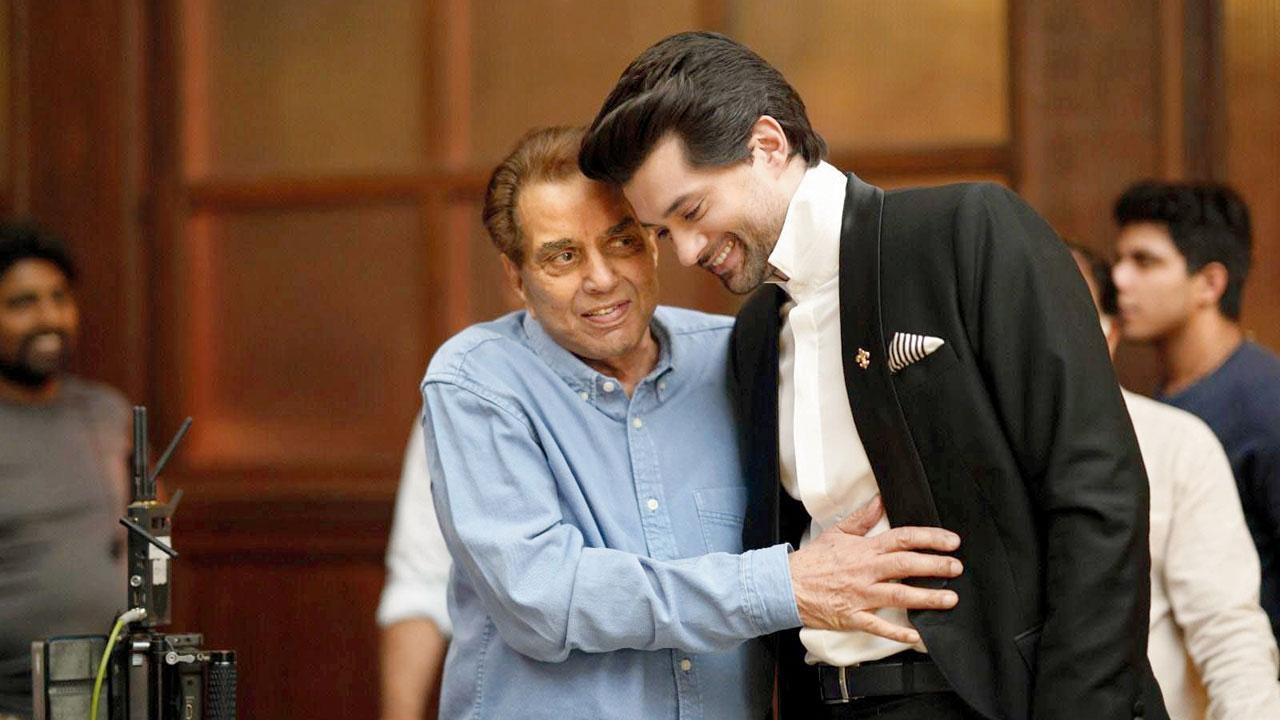
Dharmendra with actor Rajveer Deol
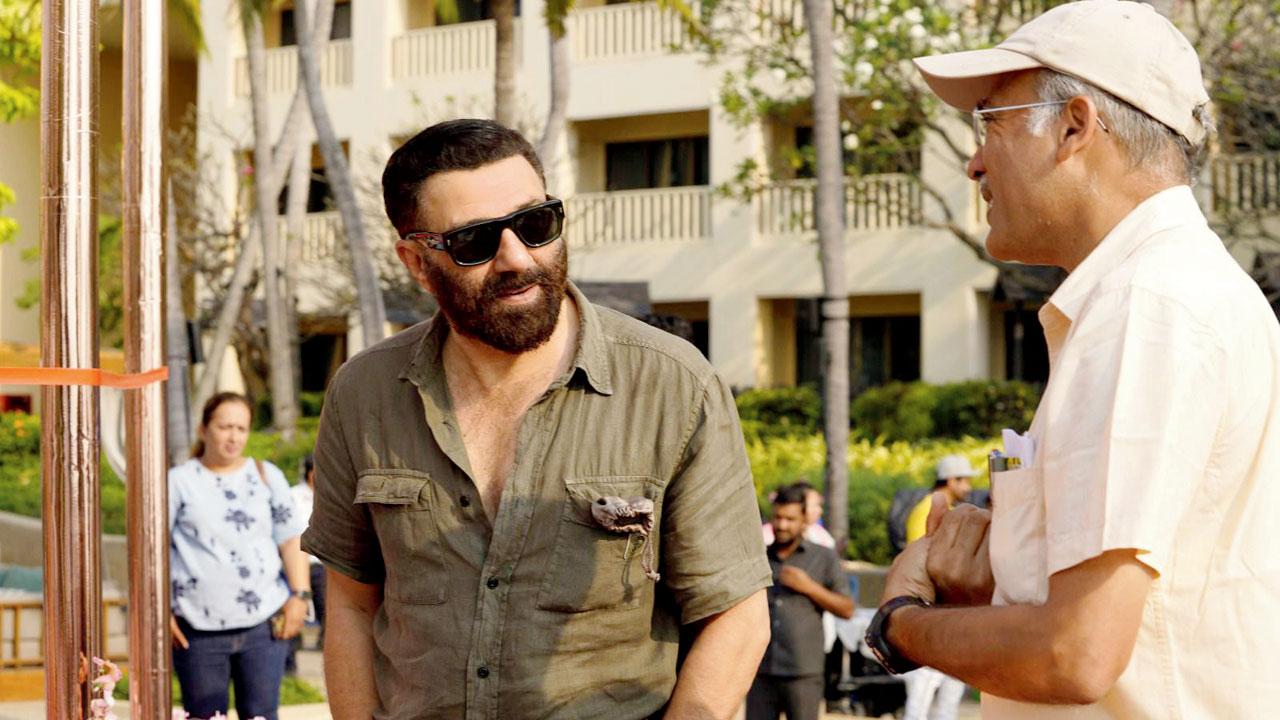
Subscribe to:
Posts (Atom)