Showing posts with label Sonali Kulkarni interview. Show all posts
Showing posts with label Sonali Kulkarni interview. Show all posts
Sonali Kulkarni shuts down rumours about Nani's The Paradise getting delayed
10:31 AM

Nishad Neelambaran (HINDUSTAN TIMES; September 10, 2026)
Telugu superstar Nani’s much-awaited film, The Paradise, recently made headlines with reports that the release might be pushed due to pending work on the climax and in post-production. However, Nani’s co-star Sonali Kulkarni, exclusively spoke to HT City and clarified that the film will release as per schedule on September 24, 2026: “Yes, it is our promise. We have also announced it on our social media. We are not delaying the release, and we are releasing on the 24th.”
About what caused the delay, the National Award-winning actor is quick to mention that the delay was only because the director wanted to put the best version out there for the audience to watch.
“All I can say is credit to my director’s vision. Srikanth is very particular about the details. The delay was because he wanted to entertain the audience with complete conviction. He didn’t want to compromise on anything. But we are releasing on the 24th, finally,” she explained.
Sharing the screen space with Nani, Kulkarni, 51, is in awe of how humble the actor is. “It was a joy working with Nani. He is a team member. He never treated himself like a superstar. He is not from a filmy background, but he has been an assistant director, and I felt that I was seeing a replica. I am a unit person on set. We bonded on many things. He is a director’s actor. He is humble and carries no weight about his stardom,” said an elated Kulkarni.
The growing anticipation for the film has fans and netizens drawing many parallels between Kulkarni’s character and Ramya Krishnan’s character as Sivagami in S S Rajamouli’s Baahubali series. Dismissing any commonality, Kulkarni mentioned that this is an absolutely fresh character.
“I wish I could tell you a lot more, but you will not be able to compare my character with anybody. This is something you have never seen before... Not necessarily a mother, because nobody called me a mother on the set,” shared the Dil Chahta Hai (2001) actor.
Besides, the actor also exclusively shared an update on yet another Bollywood release. Directed by Madhur Bhandarkar, Kulkarni will also be seen in The Wives Of Bollywood. There have been no formal updates on the film’s release yet; however, Kulkarni shared that the Madhur Bhandarkar directorial will hit the theatres this year. “A fortnight back I saw the trailer, and in their language, it is kick-ass (laughs). It should come in 2026 for sure,” she ended.
Dil Chahta Hai has given me my identity-Sonali Kulkarni
9:35 AM

Shreya Varanasi (MUMBAI MIRROR; August 31, 2026)
For Sonali Kulkarni, Hyderabad has become more than the backdrop to her latest film. Nearly two years into her journey with The Paradise, the actor is learning Telugu, finding comfort in pappu and discovering a new sense of belonging in an industry that has welcomed her warmly. As she makes her Telugu debut in Srikanth Odela’s film alongside Nani, Sonali reflects on matching the intensity of the team, the enduring legacy of Dil Chahta Hai and the many characters she is still eager to inhabit.
The Paradise schedule has left Sonali little time to explore Hyderabad, but the experience has nevertheless given her a strong sense of belonging. “The amount of affection and warmth I keep getting from the Telugu industry — I am overwhelmed,” she says. “The little world I have experienced here feels like paradise, literally.”
Food, however, has offered its own introduction to the city. “I am dying to have some double ka meetha! Earlier, I kept calling it shahi tukda and people here just wouldn’t understand what I was talking about!” she laughs.
On set, it is the pappu that has become her comfort food. “I don’t eat much rice, but I’ve been allowing myself a little indulgence. Maybe twice a week, I’ll have some rice with pappu. It’s become my little comfort food during the shoot.”
‘The energy of the entire team pushed me to give my everything’
Sonali says she was surprised when she was approached for The Paradise, particularly because the team saw her beyond the image created by films such as Dil Chahta Hai, Taxi No. 9211: Nau Do Gyarah and Mission Kashmir.
“When I heard the story, I was all ears. The story has drama and emotions. It’s super special. I just wanted to be part of that story. The intensity Nani and Mohan Babu sir bring to a scene, the passion Raghav brings, and the innocence and beauty Kayadu brings — for me, it was absolutely demanding and challenging to match that energy everywhere,” she says.
‘Dil Chahta Hai has given me my identity’
Twenty-five years after Dil Chahta Hai, Sonali still finds the milestone difficult to process. Looking back, she remembers the film as “a huge gang of friends making something beautiful” rather than a project anyone expected to become a cultural touchstone. “Dil Chahta Hai has given me my identity. Back then, nobody knew that it was going to create such history or records,” she says.
Its influence, she adds, continues to travel across generations. “My daughter watched it last year. She loved it. She was just 12 years old when she watched it. I am so happy that she liked it,” she shares.
----------------------------------------------
There’s so much I want to explore as an actor. I feel like I’m entering a very exciting phase of my career. I would love to play an athlete on screen because sport has always been a very real part of my life
- Sonali Kulkarni
Sonali Kulkarni opens up about childhood humiliation: "I was not a beggar"
8:46 AM

Onkar Kulkarni (MUMBAI MIRROR; May 19, 2026)
Sonali Kulkarni has opened up about painful childhood memories while speaking about her new podcast Half Ticket Full Nagrik, a show aimed at giving children and young adults a platform to express themselves and be heard with dignity.
The actress, who recently went viral after criticising massive traffic congestion on the Mumbai-Pune Expressway, also reacted to the opening of the long-awaited Missing Link route, saying commuters are finally getting some relief after years of delays and bottlenecks.
Although she has not yet travelled on the newly opened stretch, Sonali said people who have used the route are stunned by the reduced travel time between Mumbai and Pune. “People are reacting with disbelief — ‘Aise kaise ho sakta hai? Itni jaldi hum kaise pahunch sakte hain Mumbai ya Pune?’” she said.
While discussing Half Ticket Full Nagrik, the actress got emotional. Speaking about why the podcast matters to her, she recalled incidents from her childhood that left a lasting impact. One memory involved being humiliated at a birthday party after innocently complimenting the food. “Please be gentle — I was just a child,” she said, recalling how an adult assumed she was indirectly asking for more food when she was simply expressing appreciation.
She also remembered accompanying her father to collect his salary from a business associate’s home — an experience she says shaped her understanding of dignity and self-worth from a young age. “I was not a beggar,” Sonali said, remembering how she would stand outside for hours while adults ignored her. “No child should ever have to ask for something they rightfully deserve and then be treated like a beggar.”
Through her podcast, she hopes to create conversations where children are treated with empathy instead of being dismissed as too young to have opinions. “I am extremely fond of young people. They have original ideas, they think out of the box, they are fearless and innocent,” she said.
“But many adults are quick to dismiss children when it comes to family decisions, finances, travel plans, or even everyday conversations. They bring peace, joy and harmony into the world. We must protect their innocence, but also give them a seat at the table,” shared Sonali.
I can’t even tell you what women did because there were no washrooms on the bridge-Sonali Kulkarni
11:03 PM

Vinay MR Mishra (BOMBAY TIMES; May 2, 2026)
Sonali Kulkarni was stranded in traffic for nearly five hours on Mumbai’s Mankhurd bridge on Wednesday night while travelling to Pune, as severe congestion on roads leading to Navi Mumbai brought vehicles to a standstill. The Dil Chahta Hai actor took to social media to describe the ordeal, calling the situation “scary.” Now in Pune, Sonali speaks to Bombay Times about the experience.
‘The traffic team could not reach, they were helpless’
Opening up about why she chose to speak out on social media, Sonali says, “It was genuinely out of concern and fear. I felt like reaching out on social media because there were many people who were stuck. Some people who were going home chose to walk down the bridge. I took a walk for a kilometre, back-and-forth and saw that there were kids crying and people were hungry. There was no food or water. I can’t even tell you what women did because there were no washrooms on the bridge. The only positive point was that the traffic control room where I called was responding. The officer there was patiently answering all questions. The engineering team and the traffic team could not reach due to the situation, they were helpless. It was an extremely painful experience.”
‘I was not fighting with the government'
Clarifying her intent, Sonali emphasised that her voice came from conviction rather than confrontation. “So far, I feel that whenever I have raised a voice, I was convinced about it. I was convinced about the need to do it. I was not protesting, neither was I vehemently fighting with the government. I was stating facts about our harrowing experience”.
‘As a metro, we need to think about civic planning and what we lack’
Concluding with a broader reflection—something she has often articulated through her public interactions, the actor called for accountability and better planning in a growing metropolis.
“I think as a metro, we need to think about civic planning and what we lack. What if someone had a medical emergency, what would they do? We need to address this. What do we do about this and who do we ask? I think as a citizen who is sincerely paying taxes and showing trust in the government, we deserve these answers. The public emotion was amazing, there was nobody shouting, screaming and there were no quarrels. Many people had shut down their vehicle because there was fuel limitation. I feel resilience is not a virtue, but it is helplessness.”
Dil Chahta Hai was a trendsetter, not just in storytelling but also in terms of work ethics-Sonali Kulkarni
8:35 AM
Onkar Kulkarni (BOMBAY TIMES; February 28, 2025)
Sonali Kulkarni has worked across Marathi and Hindi film industries, and has now ventured into Tamil cinema. As films from the south continue to gain popularity, fuelled by the pan-India trend, she shares her thoughts on Marathi cinema and how different language films are coexisting in our country.
‘I believe there is already a lot of pressure on Indian cinema’
Sonali believes that one shouldn’t compare different language films, because what really matters to the audience is the story. “Let’s not rush to compare different languages. We should appreciate films as a whole. What truly matters is enjoying the story being told, rather than the language in which it’s told. Right now, I believe there is already a lot of pressure on Indian cinema across various languages, and I’m glad to see how they’re coexisting rather than competing,” says Sonali who's an author and recently released her book.
‘Marathi cinema has always stood out for its compelling stories’
Talking about Marathi cinema, the actress who featured in films like Deool and Gulabjaam, adds, “Marathi cinema has always stood out for its compelling stories on meaningful topics. It has consistently won national and international awards. We have incredible writers and actors in Marathi cinema, many of whom have contributed to Hindi films as well. I don’t feel burdened by comparisons; instead, I think we should celebrate the diverse and rich content coming from all languages. Ultimately, it’s the entertainment that should take centre stage, not any one language.”
‘I love it when people still greet me with the song Woh Ladki Hai Kahan’
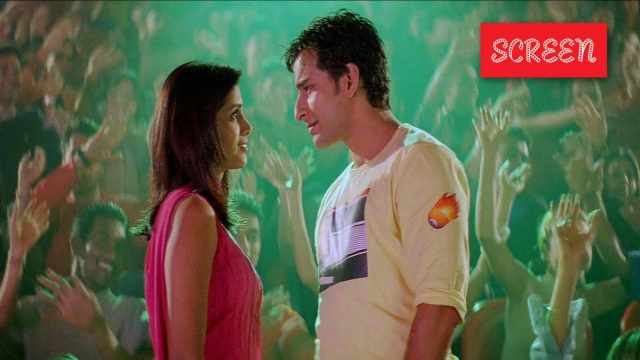
She’s been around in the industry for over three decades, and even today, Sonali is recognized for her iconic song Woh Ladki Hai Kahan from Dil Chahta Hai.
“I have no issues with it,” she says, adding, “I love it when people still greet me with that song. It’s been more than 20 years since the film, but it doesn’t feel like that at all. It was one of the most amazing experiences of my life. The film was a trendsetter, not just in storytelling but also in terms of work ethics. We started on time, received scripts a day ahead, knew our scenes, and finished on schedule. There were no last-minute surprises.”
I am proud that I worked in Marathi and regional cinema even before it became glamorous-Sonali Kulkarni
8:26 AM
Making her web debut, Sonali Kulkarni discusses her script choices
Letty Mariam Abraham (MID-DAY; January 4, 2021)
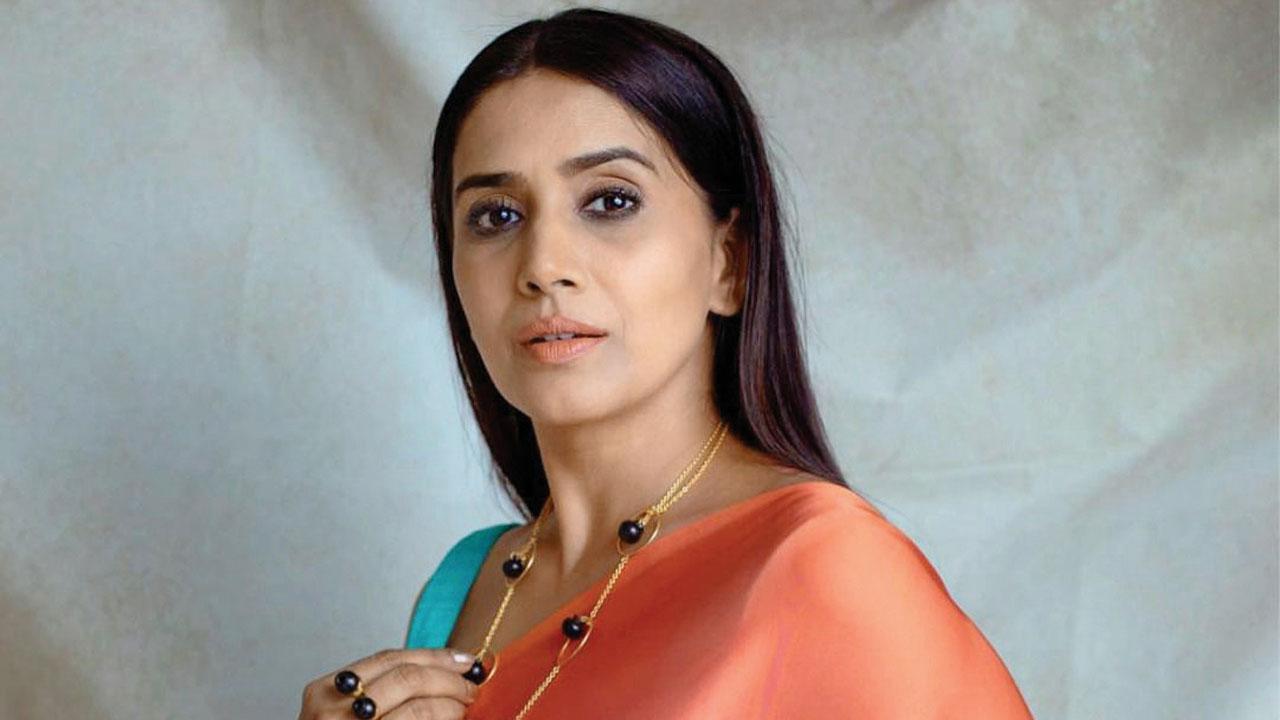
Sonali Kulkarni has always marched to her own beat — juggling theatre and regional cinema when her peers were Bollywood-bound. And her choices have held her in good stead. When it came to her web debut, the actor was certain she would take the plunge only if the content spoke to her. SonyLIV’s Whistleblower, which revolves around an admission scam, delivered on that count. Kulkarni discusses how her role of a news channel editor left her optimistic and the society’s apathy towards the growing corruption.
Edited excerpts from the interview.
What was your first reaction to the script of Whistleblower?
When my director [Manoj Pillai] gave me the narration, he did not start with how important I was to the story. Instead, he told me the story first. We are a complex society, and even while leading our individual lives, we somehow contribute to this society. Wrong things are constantly happening every day. What is our take on them? As a news channel editor, my character Zainab Parker has the discretion to decide how she exercises that power. The character made me feel optimistic in these times of corruption. She is idealistic and has the courage to stay with an issue.
At a time when journalism is being criticized for its supposedly agenda-driven narration, how did it feel to play an ideal character?
Whistleblower highlights that people are wrong, not the profession. Just because a few people went astray and sold their [ideals], the entire profession is criticized. My performance is a tribute to all the wonderful people I met in my life. Kumar Ketkar was my first boss when I used to write as a guest editor for Indian Express’ Loksatta. I had some fearless bosses who never [told me that] my opinion has to follow a particular narrative. I have been a part of this industry as a writer and actor, and I am empathetic towards every one of them.
Whistleblower revolves around an admission scam. Is it based on reality?
The show is fictional, but we have taken impressions from real life. The series depicts reality throughout. For us, some subjects are pure, like education and medicine. We don’t want to think that a doctor will say, ‘Give me Rs 50,00,000 and I will ensure the patient gets a heart transplant.’ [In some ways], the education system is corrupt. I remember [years ago] when I was told that my daughter was speaking primarily in Hindi and is not fluent in English. This, when she was three! A child, who is learning to speak, cannot decide which language s/he is fluent in.
How does the show encourage people to take a stand?
The show encourages people to be aware citizens and walk that extra mile. In Marathi, we have a saying: Shivaji janmu de punn koni doosryacha ghari. We all talk about our rights, complain about the things going wrong in our neighbourhood, but we don’t do anything about it. We are not willing to extend ourselves as we are comfortable in our own cocoons. The show will shake us out of our comfort zone.
After working for so many years, do you feel that Bollywood hasn’t given you your due?
I don’t think like that. I have made my own choices. I am proud that I worked in Marathi and regional cinema even before it became glamorous [with the OTT boom]. Today, we are talking about Bengali, Malayalam and Telugu films. We now know stars and directors from [regional] film industries. So, I am supremely proud of my choices since the beginning of my career. At the same time, I am also a proud homemaker. My industry didn’t tell me to sacrifice everything and immerse myself [in work] to encash my youth. I had wonderful teachers in Satyajit Dubey, Girish Karnad, and Jabbar Patel, who added insight to my life. I am ready to take on another 25 years in the industry.
I had to stand in the queue to get vaccinated. I wasn’t treated like a VIP-Sonali Kulkarni
8:09 AM

Titas Chowdhury (HINDUSTAN TIMES; June 15, 2021)
Sonali Kulkarni took the first jab of the Coronavirus vaccine back in April but says that the process has been nothing short of a “struggle”. She believes that no public figure should make use of their celebrity status to avail benefits at a time of crisis when everyone is struggling to get vaccinated.
“I don’t think any celebrity should try to get vaccination through a quicker route. The whole world is sailing on the same boat. Right now, we need to cooperate. As for me, I had to stand in the queue. I wasn’t treated like a VIP and I didn’t want to be treated as one either,” she shares.
Despite doing charitable work during the on-going pandemic, the actor has no qualms in confiding that she was not given any extra benefits as she had a hard time arranging vaccines for her aged parents who live in Pune.
Kulkarni says, “I’ve stood by every charitable organisation and given them shout outs. I haven’t charged anyone for any interactive session or a fund-raiser. I haven’t even publicized about my monetary donations. I’ve also been a part of organisations that were raising money for backstage artistes and technicians. Even after all that, I struggled to get appointments for my parents’ second jab.”
In her signature candour, the Bharat (2019) actor rues the lack of financial security for actors at a time like this. “We aren’t counted as frontline workers. Entertainment isn’t considered to be an essential. Hence, my fraternity doesn’t have any security. I feel for them. I wish more and more people stood for us. Yes, we aren’t social workers and we’re paid to entertain people. We aren’t considered important enough and that’s deeply painful,” she ends.
A playwright like Vijay Tendulkar should not be misunderstood or targeted-Sonali Kulkarni
8:39 AM

Few contemporary faces of Indian films and theatre have been as familiar with Marathi playwright Vijay Tendulkar, as both person and dramatist, as Sonali Kulkarni. Not only was the Dil Chahta Hai actor a friend of Tendulkar’s, who faces a fresh posthumous storm after his play in Madhya Pradesh was cancelled following objections raised by Bajrang Dal, she acted in two of his plays, one of them the iconic ‘Sakharam Binder.’ She speaks to Vaibhav Purandare about one of India’s great modern playwrights who wrote ‘Ghashiram Kotwal’ in Marathi and the Hindi screenplays for landmark movies like Ardh Satya, Nishant and Manthan
Vaibhav Purandare (THE TIMES OF INDIA; March 14, 2021)
The Bajrang Dal objected to Vijay Tendulkar’s play ‘Jaat hi pucho sadhu ki’ at the IPTA (Indian People’s Theatre Association) fest, calling it ‘anti-Hindu’ as it had the word ‘sadhu’ in its title, though the play isn’t about faith but about casteism and India’s education system.
There are times when I want to give the benefit to doubt to the objectors. There’s clearly a misconception about the title, and I hope things will be clarified soon.
But why is Tendulkar still at the centre of controversy after all these years? In the 1970s and 80s, the Shiv Sena tormented him over his plays such as ‘Ghashiram’ and ‘Binder’ and even tried to scuttle the ‘Ghashiram’ team’s US tour, and now this, more than a decade after his passing.
People have targeted Tendulkar because we need someone to target. To prove ourselves right, we feel the need to say someone’s wrong. But he wasn’t wrong in his writings, he was simply courageous. If he saw a wrong, he didn’t fear being a witness. He was the kind of person who, if he saw a woman being harassed, would say straight away she was harassed. So many of his plays are about women. I did two of them – ‘Binder’ and ‘Kovali Unhe’ — and was slated to do a third, the famous ‘Shantata, Court chalu aahe (Silence, the court is in session)’ when he died in 2008 and the plan was called off.
When did you first become familiar with his body of work?
When studying at Pune’s Fergusson College. Tendulkar came to speak to us one day, and something he said got stuck in my head. He said writers create pauses and put punctuation marks, but actors and directors often don’t pay attention to these. They should. There’s a reason they’re there. I did theatre guru Satyadev Dubey’s workshops thereafter, and he’d always talk about Tendulkar. Much later, Govind Nihalani reminded me of Tendulkar’s words.
You got to know the playwright as a person, too. What were your impressions of him?
I got to know him well after I did the lead role of a speech-impaired girl in ‘Kovali Unhe,’ directed by my brother Sandesh Kulkarni. The play gives voice to a literally speechless girl. After the death of Tendulkar’s daughter (actor and writer) Priya, I became a friend of his and, among other things (on a light note), introduced him to my favourite veg burger. He was open-minded, a genuine listener and observer, and he let people be, with all their ego issues, sorrows, griefs, success, fame, everything. He’d comment on things but there never was a hard expression. That’s why I’ve preserved an old and outdated mobile phone of mine just because it has messages from him and Satyadev Dubey. He compelled people to be true to themselves. I told him about the ups and downs in my life and he’d be deeply empathetic — a quality all his plays have. I was apprehensive about playing the character of the god-fearing, scared, helpless, dependent and, at times, apparently silly ‘Lakshmi’ in ‘Binder’ when I started reading the play, but when I got to the third act, I was shaken by what she does… But Tendulkar was like that, he could read and understand human beings.
With censorship on the rise in India, what’s the way out for artistes like you, writers and others in the creative arts?
Just as it is true that Shakespeare has been mined across the world for stories and themes, it is true that India is one of the richest places when it comes to original playwrights, be it Tendulkar, Badal Sircar, Mahesh Elkunchwar, Girish Karnad or Satish Alekar. That’s a powerhouse of talent that we can go to not only for plays but for films and screenplays. Tendulkar enriched Indian culture and cast a powerful torchlight on society, and I know of people who have travelled to India, or travelled long distances at any rate, just to see ‘Ghashiram Kotwal’. He brought a sense of pride to our country and pride to the Indian flag, so people like him and the other stalwarts I’ve mentioned shouldn’t be misunderstood. Reading and performing Tendulkar’s plays would be the best thing; it would be a major victory.
In Gardish Mein Taare, characters aren't classified as good, bad or ugly-Sonali Kulkarni
8:50 AM

Sonali Kulkarni, who essays a character inspired by Geeta Dutt in an upcoming play, on the role theatre plays in her life
Reema Gehi (MUMBAI MIRROR; January 4, 2015)
The last few years have been particularly exciting for Sonali Kulkarni. The 40-year-old actress, who made her film debut in Girish Karnad-starrer, Cheluvi (1992) was part of a National award-winning Marathi film, Deool (2011), the record-breaking Singham (2011) and Gyan Correa's The Good Road (2013) which was India's entry to the Oscars. In fact, currently, her Marathi-film, Dr Prakash Baba Amte: The Real Hero is running to houseful shows in cinema halls. "So, as an actor," she says, "I am deeply satisfied."
As she settles into a chair at a coffee shop in Khar, she reflects, "I was naive when I started off. But I feel my naivety has paid off. After my breakthrough in Hindi cinema, I never thought that now since I am a commercial star, I mustn't act in regional films or not go back to theatre. For me, the role was always more important, irrespective of the medium."
But theatre holds a special place in her heart. And she's only too happy to get back on stage with Saif Hyder Hasan's upcoming play, Gardish Mein Taare, which opens at the 1,100-seater Jamshed Bhabha Auditorium, NCPA, on January 26.
The play traces the paths of the two protagonists, Devdutt Bose (played by Arif Zakaria) and Bhavana, essayed by Kulkarni, inspired by the lives of the cinema genius Guru Dutt and his songstress wife, Geeta Dutt. The play, she adds, is a tribute to the creatively volatile period of Hindi cinema in the 1950s.
"What I appreciate most about this play is that the director is not trying to classify the characters as good, bad or ugly. He's seeing them as creative beings," says Kulkarni. "It's important for the aam janta to understand what creative souls go through, because they have passions and pursuits that don't match regular, mundane lives."
As far as her creative pursuits go, "I have never had a plan," she admits. "My calling is instinctive."
Kulkarni, who launched her theatre production, Sokul, in 2013, with a Marathi play, White Lily Ani Night Rider, is largely drawing her attention to the stagecraft.
She says she is perplexed by the quick, seamless transitions most of her actor colleagues are making across different entertainment mediums. "I have been slow in comparison," she says. When she participated in a reality dance competition in 2007, she dedicated six months to learning dance. "I am not the sort to make swift jumps," she says.
For Kulkarni, theatre is equal to revisiting ground zero. "It helps me understand my own pace and lets me find my own breath and balance."
In fact, while shooting for Dil Chahta Hai, Kulkarni was a part of Makarand Deshpande's theatre production Basant Ka Teesra Yauvan. She had the shoot dates adjusted to accommodate the show.
Kulkarni credits her intense involvement and dedication to the craft to late thespian, Satyadev Dubey. She was 16 when she first met Dubey, at a workshop he conducted in her hometown, Pune. She calls herself "a beautiful bag of complexes," until she met Dubey."I believed that I wasn't good, pretty, fair or rich enough. It was Dubeyji who told me that until I don't accept and like myself, people will have doubts about me. Theatre is a full-shot, not a close-up, he said," she narrates.
She calls his workshops "unique". Balancing an iPad on her head, she says, "It was commonplace for Dubeyji to make actors place light chairs on their heads to teach them how to walk straight, hold a pencil in their mouths and speak and scream when they'd ask nonsensical questions."
One such query she asked was what one must do if they don't like their voice. It took some courage, she says. "Dubeyji made me repeat the same question a 100 times. I broke into a sweat and trembled, but kept asking and he didn't let me complete the sentence because he kept insisting to ask in my 'own' voice. At one point, I took a deep breath, and determined to finish it, I screamed, 'agar kissiko apni awaaz acchi nahi lagti hai, toh woh kya karein?'. He then said that's my voice and made me realise that if I speak in my pitch and breath, I'd able to convey what I have to say truthfully."
Kulkarni clings on to this influence Dubey's workshops made on her young mind. "I will not put up a fight to claim my share in my parents' estate, but I'll fight to be considered Dubeyji's prodigy," she laughs.
Playwright Vijay Tendulkar was another maverick who made an impression. "I got to know him because my brother Sandesh dramatised some of his newspaper columns into a play. He was someone who reinforced fearlessness in me," she says, fondly.
"He urged me to stop being a good girl. He told me to open the cage and learn to fly. He allowed people to dream," she says.
By her own admission, "No other theatre school could reinforce the lessons these two geniuses taught me."
Subscribe to:
Posts (Atom)