Showing posts with label Smriti Mundhra. Show all posts
Showing posts with label Smriti Mundhra. Show all posts
The Romantics to be screened at Harvard University; included in FTII’s Winter Film Appreciation course
8:45 AM
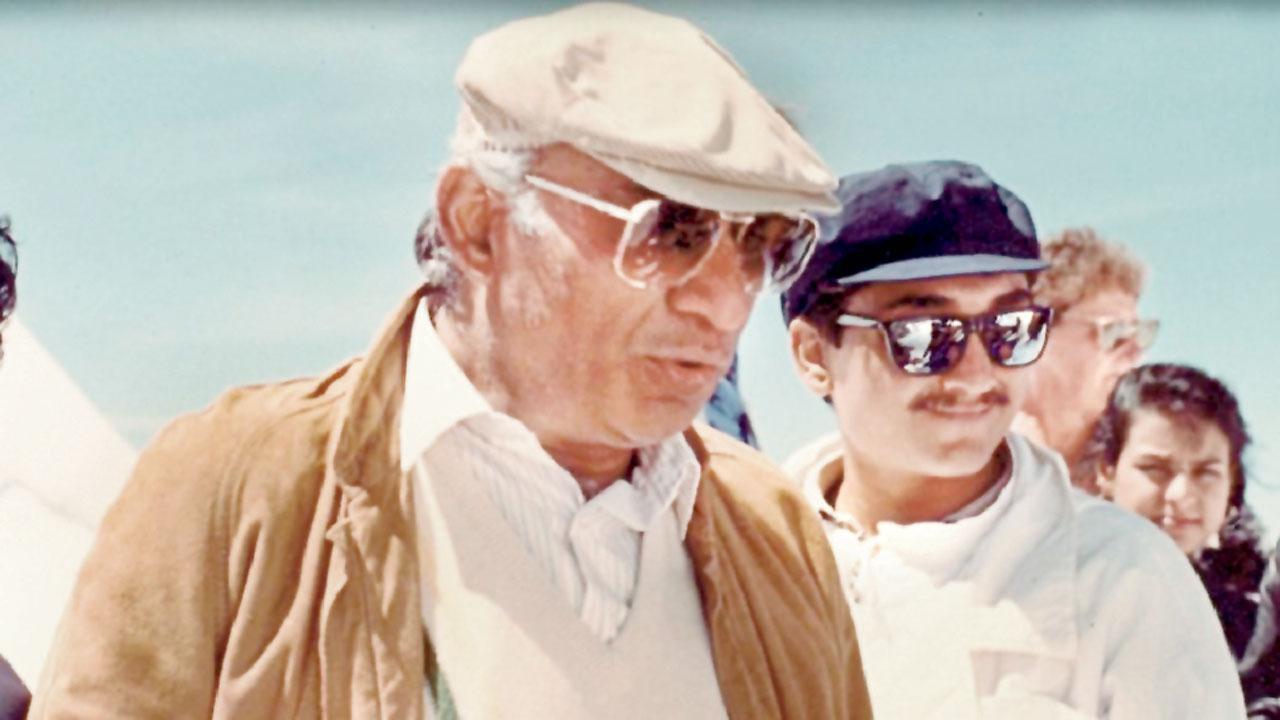
The Romantics, which celebrates late filmmaker Chopra’s legacy, to be screened at Harvard tomorrow; docu-series also included in FTII’s Winter Film Appreciation course
Upala KBR (MID-DAY; February 27, 2023)
In the fortnight since The Romantics dropped online, the docu-series has caught the attention of a wide-ranging audience — from movie buffs who grew up on Yash Chopra’s offerings, to aspiring filmmakers. Now, director Smriti Mundhra has double reason to celebrate. The Netflix documentary will be screened for students at Harvard University tomorrow. Not just that, the Film and Television Institute of India (FTII) has decided to include it in their Winter Film Appreciation course.
The four-part series traces the late Yash Chopra’s journey as he brought a new cinematic language to Hindi films, and how it influenced the country’s cultural landscape over the past 50 years. Through the film appreciation course, film students will watch, dissect and understand the filmmaker and his son Aditya Chopra’s brand of cinema.
Oscar-nominated filmmaker Mundhra says it is important to explore the work of one of the most successful directors of our country. “As a former film student, I studied the work of auteurs from all over the world. It always bothered me that my peers and I weren’t taught about the great filmmakers of Indian cinema. The Romantics is my attempt to shed light on the craft, journey, and global impact of Yash Chopra, and the generation of filmmakers and movie-goers he influenced,” she states.
Besides featuring an exclusive interview of the reclusive Aditya, The Romantics sees many stars from the Hindi film industry — including Amitabh Bachchan, Shah Rukh Khan, Aamir Khan, Rani Mukerji, Anushka Sharma, Hrithik Roshan and Ranbir Kapoor — come together to pay tribute to the late filmmaker.
That’s how Smriti Mundhra got Aditya Chopra to face the camera
8:21 AM
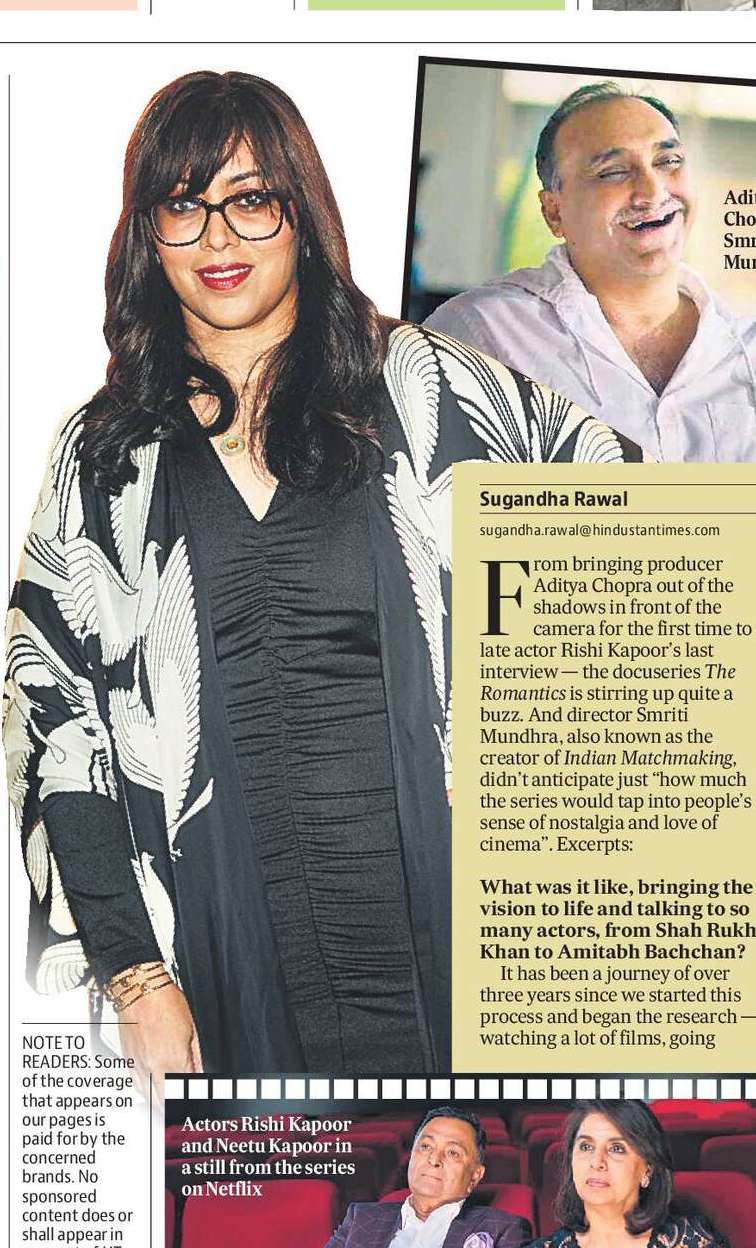
Sugandha Rawal (HINDUSTAN TIMES; February 22, 2023)
From bringing producer Aditya Chopra out of the shadows in front of the camera for the first time to late actor Rishi Kapoor’s last interview — the docuseries The Romantics is stirring up quite a buzz. And director Smriti Mundhra, also known as the creator of Indian Matchmaking, didn’t anticipate just “how much the series would tap into people’s sense of nostalgia and love of cinema”. Excerpts:
What was it like, bringing the vision to life and talking to so many actors, from Shah Rukh Khan to Amitabh Bachchan?
It has been a journey of over three years since we started this process and began the research — watching a lot of films, going through the whole catalogue of the production house and what was happening around the time these films were made. All this [was] because we wanted to paint a larger picture in terms of what movies tell us about the time we live in.
Tell us about putting the spotlight on the evolution of Indian cinema with the project.
One of the reasons I wanted to tell the story through the lens of Yash Chopra was because of the longevity of his career and how it started in the aftermath of the Partition. I realised how closely these elements of the political and socioeconomic climate are braided into their personal story.
This is the first time that filmmaker Aditya Chopra is facing the camera. You added the video interview footage of Aditya on the editing table and showed it to the team for his views. How relieved you were after he agreed to the cut?
Once I could show him what the series and telling of the story of his father would be with his perspective, that’s probably what convinced him, finally. Anyone who has worked in any capacity with Aditya Chopra can tell you that he holds creative integrity to the highest standard, and will move mountains to make sure that the creative integrity of whatever project he is involved with, is intact.
How did he react watching your first cut from his video interviews, which he agreed for archival use?
He kept a cool head with me. He had some time after seeing it to just absorb before I talked to him. Maybe if he was really angry, or horrified, he conveyed that to somebody else, but he didn’t convey that to me. After he saw it, the first conversation that I had with him was him saying, ‘Okay, I see what you mean’.
Can you walk us through late actor Rishi Kapoor’s final interview that also features in the docuseries?
It is one of the highlights of my career. I feel so lucky and privileged that I got that opportunity, not knowing that just a month later, we were going to lose him. He seemed his best on the day I interviewed him. He looked great, was gregarious, very chatty and charming. There was Neetu ji (Kapoor, actor and Rishi’s wife) with him, and they just had such great banter going on. I’m so glad that I got to interview him when he was in the mood to talk, especially given that it was his last interview.
Aditya Chopra's interview was harder than coordinating an interview with Salman Khan-Smriti Mundhra
8:27 AM
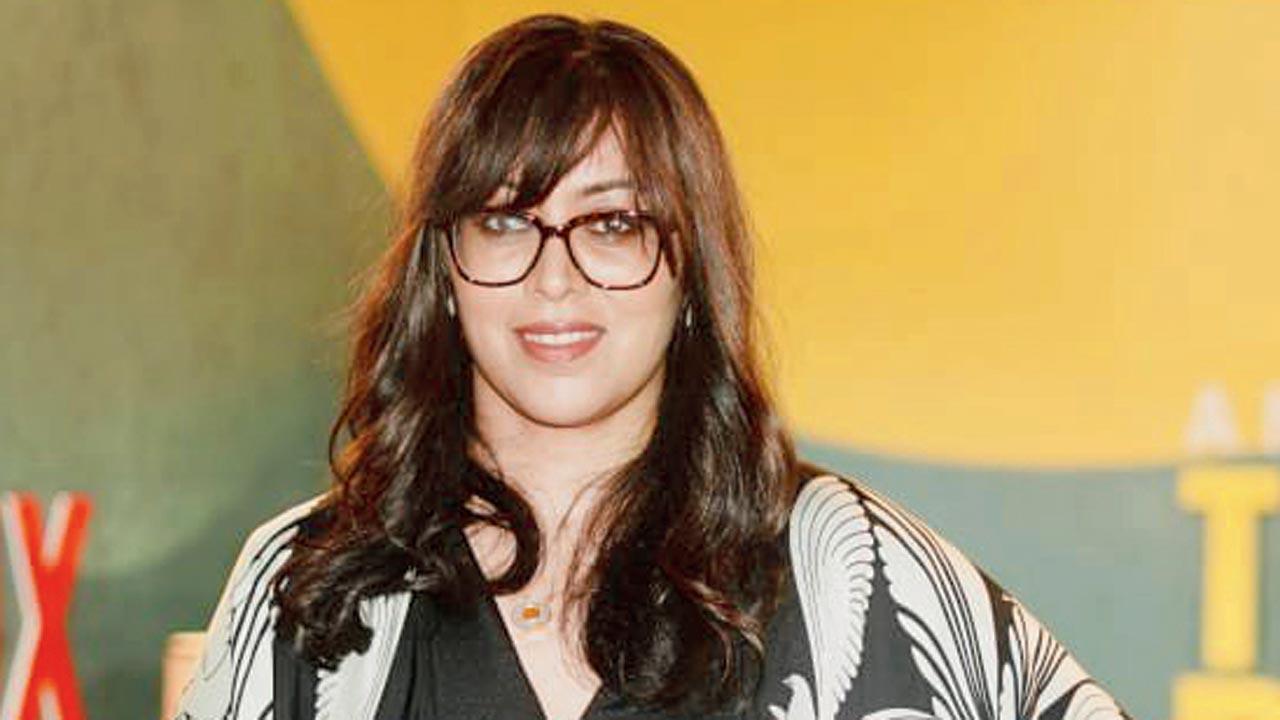
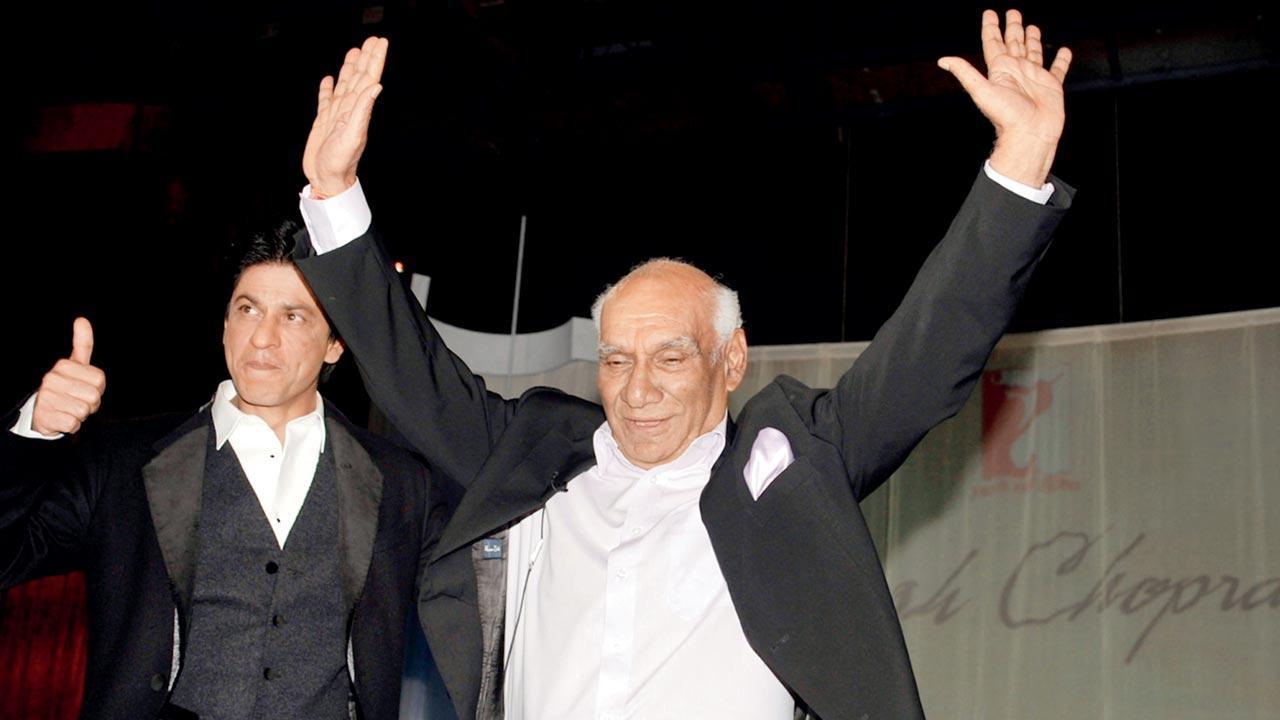
How do you get Aditya Chopra to sit before the camera? Manage time with Salman Khan? Inspire Rishi Kapoor to speak for three hours straight? The maker of a new docu discusses the late director-producer’s legacy, and the highs and challenges of going behind the scenes
Priyanka Sharma (MID-DAY; February 19, 2023)
More than 25 years ago, when Raj and Simran’s love in the lanes of London faced patriarchal conservativeness, an Indian-American teenager felt like someone had mirrored her identity crisis as a young member of the Indian diaspora.
Unsurprisingly, as the fan grew into a filmmaker, Smriti Mundhra desired to pay homage to the man behind the film, Yash Chopra. The result is the Netflix documentary, The Romantics.
“I wanted to explore the films that were important to me and formative in my adolescent years,” says Los Angeles-based Mundhra. To document the legacy of the late filmmaker, whose career spanned five decades, was anything but easy. To top it, she wanted to go beyond Chopra, and dip into the contribution of his son, Aditya, who has been at the helm of the production house since his father’s death in 2013.
“I first pitched the idea to YRF [Yash Raj Films] since they have the archival material, behind the scenes footage, no one had seen before. I was sure that it existed somewhere in a vault. So, I approached them to tell the story of Hindi cinema history through the lens of Yash Chopra and the studio he built. The timing was right because the studio was approaching its 50th anniversary. They were in a reflective headspace.”
The next hurdle before Mundhra was to be able to schedule meetings with the stars central to Chopra’s universe. “Everybody was willing and eager to talk because of the love and respect they have for him. But coordinating actors’ schedules was quite the challenge,” says the director, who eventually managed to get Amitabh Bachchan, Shah Rukh Khan, Salman Khan, Aamir Khan, Ranbir Kapoor, the late Rishi Kapoor, Rani Mukerji, Madhuri Dixit and Katrina Kaif among others to be part of the series.
Now, she had to convince Aditya Chopra himself. Famous for being the recluse, he is behind the running joke in Bollywood: Aditya Chopra is merely a rumour. His love for his father and his work managed to compel him to sit before a camera for an interview for the first time in 20 years.
“It was harder than coordinating an interview with Salman Khan, honestly. But we managed. He has so much respect and regard for his father that it was difficult for him to say, no,” Mundhra says.
While archival interviews of Yash Chopra that find their way into the series take the audience through his perspective on movies and approach to filmmaking, Aditya’s interview delves into how Yash Raj Films turned into the Yash Raj Studio. Mundhra found a stark difference between the way the two think; the reason perhaps for the director’s realization that Aditya is the producer Yash Chopra could never be.
“He is knowledgeable about the film industry in a way that’s similar to his father, but also very different. Yash Chopra was all heart, passion and love. Aditya is all brain, he is so smart. What they have in common is utmost respect for the audience. Their common and ultimate goal is to please the viewer.”
And so, the late veteran responded to the sentiment of the time. The initial years saw him make movies inspired by a broken post-Partition India, whether it was Dhool Ka Phool (1959) or Dharamputra (1961). His inclination towards poetry and human vulnerability was evident in the 1973 hit Daag, which was also his first film as independent producer. And while he knew that he had found a lifetime companion in romance, he reacted to the anti-establishment sentiment in 1975 India by giving the audience Deewaar. As Chopra evolved, so did his hero, eventually moving away from the “angry, young man” image to the softer, sometimes messier individual unafraid to love.
Aditya picked up from where his father left off and took it a notch higher when he made Dilwale Dulhania Le Jayenge, bringing to screen a hero who was desired by women and whom men aspired to be like.
This progression is what makes Hindi cinema unique, thinks Mundhra. “It was interesting for me to see how the male archetype evolved over the course of the studio’s filmography.... from say, Amitabh Bachchan in Deewaar to him two years later in Kabhi Kabhie—dramatically different. And then, in 2015, you have Ayushmann Khurrana in Dum Laga Ke Haisha. The idea of what a leading man or leading lady should be is constantly evolving, film after film, generation after generation,. And you see lots of unexpected heroes and heroines along the way, which I really love about Hindi cinema,” she says, adding that it was “incredible” to speak to perhaps the biggest of Yash Raj heroes, Shah Rukh Khan.
“He looked at Yash Chopra as a father figure. They were extremely close. And I think there’s still a bit of sadness [in Khan] that he’s no longer with us. Dare I say, I think he misses him. I don’t want to project too much, but I think there’s a [special] bond between the Chopra family and him. Obviously, their fates are intertwined too. Shah Rukh’s career is closely linked with YRF and its success. It’s like they’ve grown up together; the studio and the star.”
And while the hero was at the centre of it all, Chopra was faithful to portraying female desire, aspiration and dilemma. He didn’t view the woman’s identity as one derived from the actions of men, but rather made it one nurtured by agency and the ownership of her aesthetics and fallacies. Both, female film stars and women viewers wanted to be Yash Chopra heroines.
“There are ways in which he portrayed his female characters with respect for their desires and wants... I think those films were ahead of their time. He was sensitive to a woman’s point of view, which I don’t think too many filmmakers from his generation can claim,” she says, adding that while movies by Chopra, his son and the studio itself have been criticized for lacing stories with lavishness that only the privileged can afford, their complex themes, provocative and progressive reflections on relationships and love, made them stand the test of time.
“He would package them like big, multi starrers, with beautiful costumes. So, you didn’t realize immediately that he was gradually shifting your idea of what conventional love and marriage is.”
Mundhra rates her interview with the late Rishi Kapoor as one of her next favourites. She shot with him and his actor wife Neetu Kapoor a month before the veteran passed, in April 2020. “There was some energy that day [in the room] when we were talking... we talked for more than three hours. He wanted to keep talking, and had so many memories to share. He offered great insight. It was a magical conversation,” she recalls.
The documentary appears to have satiated the fan and filmmaker in Mundhra. She now hopes that the experience does to the audience what it did for her: bring them closer to the movies. “What we really want, as humans, and especially as Indians, is to remember that we are passionate about cinema. It’s so central to our culture, history and tradition; it’s a part of our contribution to the world and people are excited to be reminded of this, and don’t like to feel cynical when they think of Hindi films or Bollywood.”
The subject is personal, criticism is inevitable, says Indian Matchmaking director Smriti Mundhra
8:38 AM

It's the most talked-about web show right now and its Oscar-nominated director feels it has served as trigger for a long overdue conversation around marriage
Aastha Atray Banan (MID-DAY; July 26, 2020)
 The Internet is steaming, and Sima aunty from Mumbai is the trigger. Netflix's brand new show, Indian Matchmaking, has turned the arranged marriage business in India into a talking point, with a slice-of-life look at the unrealistic expectations harboured by young men and women, and boys with mild Oedipal complex. Its director, Smriti Mundhra, who made the Oscar-nominated A Suitable Girl, a story about three women fighting the pressure to get married, tells us she is not fazed by the avalanche of criticism.
What did you discover about the Indian marriage scene during research, and shooting?
The Indian marriage scene is as broad and diverse as India itself. No one method or set of ideals works for everyone. Having been through the process myself, I came to recognise that marriage in India is starting to become more flexible and adapt to the needs of young people. For many, the term "arranged marriage" is loose, and really just means that the parents are involved in the process of finding a life partner. Of course, the more conservative and traditional ideas of arranged marriage also exist in our culture.
Why choose "matchmaking" in the age of dating apps?
The idea behind the show was to show how the process of and ideas around arranged marriage are changing, and what's constant. We knew we could never make a show that would represent every aspect of this very complex and diverse topic, so we focused on one matchmaker and her clients, and tried to depict as many diverse points of view and backgrounds as possible, while staying authentic.
The people chosen are real, not actors. How did you go about the selection process?
First, it started with who was willing to go through this process with cameras on them. That prospect eliminated a lot of people from Sima Taparia's list of clients. We also did some outreach on our own. Of the group that was willing, we focused on the people who were the most open, ready to be honest and represented different aspects of the Indian and diasporic experience.
Did you stop to think if it may come across as regressive?
It was all about people being themselves, and us showing the process for what it really is. We tried to reflect the reality of our subjects, not project what we think the process should be.
What did you want audiences to take away from the show?
That Indians and South Asians are not monolithic: we have different experiences, backgrounds, ideologies and priorities that impact our approach to finding a life partner. This show only gets into a tiny bit of that. But I hope it continues to spark necessary conversations within families, among friends and between generations.
What do you make of the reactions—the good and the bad?
I welcome it all. I'm thrilled with the praise and also understand that with a topic like this, which is so personal, criticism is inevitable. We are having necessary and long-overdue conversations [because of the show] and that's a good thing.

Pradhyuman and Rushali met on the show. He is a jeweller from Mumbai and she, a model in Delhi
-------------------------
'Sima Aunty Is Not Wrong'
Mumbai's Hitesh and Aarti Chhabria, who run Soulmeet, a matchmaking service for Sindhis and Punjabis, turn reviewers for Sunday mid-day
 So, yes, the show is a bit dramatised, and the long pauses are awkward. But, that could be because the people are not actors, and they are uncomfortable in front of a camera. But the rest of it is quite real and matchmaker Sima Taparia, is really not a bad sort. Despite her age, she has the patience to deal with all kinds of people. When she says "compromise", she doesn't mean that you get married below your class or specifications. She means people need to adjust. For example, if you are a girl who stands at 5 feet 3 inches, and you only want a boy who is 5 feet 10 inches, she may tell you to see a man who is 5.8, but is still ticking off all the other boxes on your list. She is also right when she says that parents should be involved in the process. We have experienced sometimes that couples meet and date for months and eventually, don't get married if parents aren't involved.
Much like on the show, the girls are more demanding, and rarely want to climb down. We have had clients who came to us when they were 23, and they haven't found a match even at 36. Thanks to dating apps that may be fulfilling their emotional and physical needs, they are okay even if the match is delayed.
It could be because they want too much. Or it could be thanks to, as Sima says, destiny.
We once facilitated a couple who were in love, and got them married, and they got divorced in six months. We are not sure why some people are critical of the show. It reflects exactly what is happening.

Mumbai-based Akshay at the roka ceremony. His mother had specifications for the sort of person she was seeking as daughter-in-law
Subscribe to:
Posts (Atom)