Showing posts with label Siddharth Roy Kapur. Show all posts
Showing posts with label Siddharth Roy Kapur. Show all posts
Our house help watches Korean TV shows dubbed in Marathi-Siddharth Roy Kapur
9:53 AM

As filmmakers across Asia, Africa and the Arab world rethink their place in global cinema, one question looms large: how do you build the kind of cultural wave South Korea sent sweeping across the world?
Anand Holla (MUMBAI MIRROR; November 30, 2025)
As filmmakers across Asia, Africa and the Arab world rethink their place in global cinema, one question looms large: how do you build the kind of cultural wave South Korea sent sweeping across the world?
It’s the longest-running, cross-cultural magnum opus in the world of cinema, and its story has only just begun. For nearly three decades, films from the Global South have continued to reshape the future of cinema. Today, more than ever before, stories, talent and financing from the Global South are overhauling the global film ecosystem. And the most potent force driving this shift is not technology, budgets, or marketing — it’s authentic, culturally rooted storytelling.
Earlier this week, in Qatar, during the Doha Film Festival, this idea dominated a fascinating industry panel discussion featuring creators and producers from across the Global South. Invited to speak at the event, seasoned producer Siddharth Roy Kapur told Mumbai Mirror, “What Hollywood has managed to achieve over the last 100 years, and South Korea over the last 25, is to reach out to the world with their soft power. Both the government policy and the creative forces worked together to push out Hallyu,” he said.
Hallyu: a real superhit formula
Also known as the Korean Wave, Hallyu refers to the global spread of South Korea’s popular culture — films, K-pop, K-dramas, beauty and food. Korean cultural exports has evolved into a multi-billion-dollar global industry, supported by a mix of state-led strategy and a creative sector willing to take daring, stylistic leaps.
Yet the panelists agreed that numbers alone don’t explain Hallyu’s force. It’s the connection. “Our house help watches Korean TV shows dubbed in Marathi. Now that could be time spent watching a Marathi show,” Kapur said. “So, clearly something somewhere has resonated with the audience on a very deep level. We need to understand what that is and be able to do that with our own entertainment as well.”
The takeaway wasn’t that countries should copy Korea’s model, but that audiences worldwide are ready, even hungry, for stories that feel specific rather than generic. Kapur’s own film Dangal, for instance, became a phenomenon in China, earning over $200 million because Chinese families saw their own struggles in that story about Indian wrestlers.
The film RRR spawned fan clubs from Tokyo to Los Angeles without changing a frame for foreign viewers. K-dramas like Extraordinary Attorney Woo topped charts across Asia, Latin America and the Middle East despite being rooted in Korean legal and social structures. Nigerian film The Black Book entered Netflix’s global Top 5 in 42 countries. Japanese anime films like Suzume and Demon Slayer set records in India and Brazil even though their logic, pacing and spirituality come straight from Shinto folklore. The pattern is undeniable: people want texture. Meaning. A point of view. Besides, when stories travel, they rewrite boundaries.
“Chinese girls were taking their parents to watch Dangal,” Kapur said. “Sometimes we are blind to the commonalities between cultures which some stories are able to bring out.”
The real bottleneck, thus, isn’t talent or audience demand. It’s money. Around the world, the stories with the most cultural potential are often the least funded, which keeps entire regions from playing on the global stage. South Korea’s government, for instance, has long supported storytelling through film. In fact, just this year, the Korean Film Council (KOFIC) launched an initiative to revive mid-budget Korean films. The scheme allocates around KRW 10 billion (Rs 61 Cr) to back films with budgets between KRW 2–8 billion ((Rs12 Cr to Rs 49 Cr). Selected projects can receive grants of up to 30% of their production costs. All of this is aimed at restoring the industry’s “backbone.”
Financing: the largest hurdle
Saleem Albeik, a Palestinian film critic, novelist and cultural editor based in Paris, spoke plainly about structural obstacles. “Arab cinema mostly relies on European funding, often from France and Germany. This means limitations on the scope of the narrative. In the long run, say, over a decade, this controlled framework plays a big part in shaping what constitutes Arab cinema,” he said.
Kapur, on the other hand, spoke of the challenges faced by films that have an “Currently, the ambition in the cinema from South India is very high. Their commercial yet inventive storytelling approach is commendable. They are also taking big, bold risks because of individual financiers who are willing to take a punt on those ideas unlike in the Hindi film industry, where the financing has become very structured,” he said.
Albeik believes the way forward lies in South–South partnerships. “It’s easier to retain an authentic voice and nuance for an Egyptian film when the funding or a co-production is sourced from the Global South, like from India, Brazil, or South Africa, which share similarities on issues like socio-political tensions or poverty. There is a mutual understanding untouched by any colonial past between them, and therefore no power dynamic,” he said.
Qatar’s launch of its Film Committee signals a wider regional push. In recent years, countries from Saudi Arabia to Kenya and Indonesia have expanded film commissions, rebates and co-production programmes to build local industries with global reach.
Africa’s rising wave
If any region embodies this transition, it is Africa. Nigerian media mogul Mo Abudu, who launched the $50 million Afro Film Fund last year, spoke passionately about the stakes. “The global gatekeepers and studios don’t seem to fully realize the potential of great storytelling that they can possibly tap into from our continent,” she said. “They should think of Africa not as a charity case, but as a business case, because Africa has the youngest population globally (70 percent are under the age of 30), which means an audience and a workforce that can spend.”
Africa’s demographic weight is impossible to ignore. With a population nearing 1.5 billion in 2025 and booming streaming markets in Nigeria, Kenya, Ghana and South Africa, production and investment have surged. Abudu believes the world has barely begun to tap the continent’s narrative wealth. “We have 3,000 ethnic groups. We have 250 tribes in Nigeria alone. Be it a movie about a wedding, a funeral, a heist, or any universal theme, the specificity of our society and culture that shines through is what makes the audience experience our stories like they have never before,” she said.
India’s inflection point
In India, the diversity of filmmaking voices could inspire far richer storytelling — provided it isn’t flattened into a Bollywood-versus-regional binary. “We must take a few chances on films that haven’t been made before and help the films that have the ability to travel to do so,” Kapur said. RRR, after all, proved how quickly a local film can become a global phenomenon.
“When RRR dropped on Netflix around the world, the film had exhausted its South Asian diaspora audience overseas but generated a renewed interest from a crossover audience that started to trip out on this incredible, larger-than-life, Indian film,” said Kapur. “The next Squid Game or Parasite is going to come from somewhere. It should come from India.”
How Aditya Roy Kapur’s Afro hairstyle earned him a VJ gig
9:49 AM

Aditya Roy Kapur’s good hair day earned him a trainee VJ gig that eventually proved a springboard to Bollywood
Mohar Basu (MID-DAY; July 25, 2025)
There are many roads to Bollywood, some take the theatre route, others slog through auditions, and then there were the lucky few in the early 2000s who rode in on a wave of pop culture and VJ stardom. A prominent face among them was actor Aditya Roy Kapur. At 18, long before his chiselled abs and disarming smile made him a ladies’ favourite, he was a bright-eyed VJ at Channel V, standing out for his distinctive Afro hairstyle.
That hairstyle is what landed him the gig in 2003, the actor said candidly. He explained, “My brother [Siddharth Roy Kapur] had a friend, who used to work in Channel V. When she came home one day and saw that I have this Afro, she found it an interesting look and suggested that I audition for the channel. I was never interested in arts. So, I told her a hard no. But my mom kicked my a** and told me to do it. So, on a rainy evening, I grudgingly caught the train from Churchgate to Andheri,” he chuckled.
Channel V, one of the two leading music channels of India then, operated out of Split Labs in Saki Naka, Andheri East. Its popular music shows, from Very V to Basement were shot at Chandivali Studios, a stone’s throw away from the office. That is where Kapur landed. “Sarah Jane Dias, the star VJ at that time, was shooting one of those countdown shows. I reached half an hour late because of the rains, and grudgingly did that audition. They felt I had an interesting vibe, but wasn’t ready to be on screen yet. So, they made me a trainee VJ,” he recalled.
For the next month, Kapur would take the train from Churchgate to Andheri, sit in the studio, and observe what goes into the making of a show and a VJ. A month later, when Basement’s host, Juhi Pande, was travelling, he landed up on camera. And that too, with the best company — Anuradha Menon aka Lola Kutty. The two then regrouped for another show, Lola TV. “Lola Kutty is a legend. She’d train me, and then one evening, she said, ‘Let’s get on camera.’ So, the [producers] gave me a white T-shirt with ‘Trainee VJ’ written on it and cast me as an assistant to her. I would just sit in front of the camera,” he laughed.
Pakao, his first solo show as a VJ, came in 2004. Contrary to popular belief, it wasn’t where he interviewed Katrina Kaif, who would go on to become his co-star in Fitoor, in 2016. Before the Channel V interview, he had shot a Lakme ad with Kaif as well. “[The script was] that she walks by, all these boys look at her, and everyone gives a big reaction. Eleven of us boys were waiting in one room the whole day. At midnight finally, I was asked to shoot my close-up. Obviously, I didn’t meet Katrina — she had filmed her portions earlier. I told this to her later.”
Kapur has come a long way since then. Today, with hits like Aashiqui 2 (2013), Yeh Jawaani Hai Deewani (2013), and Metro... In Dino under his belt, he is among the leading actors of Bollywood. Understandably then, his first screen fame — the four-and-a-half years’ stint at Channel V — remains special to him. “We used to host in English. When Roadies and other reality TV shows became a rage, the channel pivoted to Hindi. After hosting in English for three years, suddenly they wanted us to host in Hindi. The whole syntax changed. That was tough for me as my Hindi was poor. If you ask anyone on the Channel V crew, they could never foresee me becoming a Hindi movie actor. They would’ve laughed at the thought.”
Since this is about firsts, when asked about his first splurge from his VJ job, he said, “It’s not as if I was making crazy money at the time, but at that age, I was happy with what I was getting. I remember my most expensive purchase was a Royal Enfield bike. I ride it to this day,” the actor ended. Well, dil bole vroom, vroom.

Aditya Roy Kapur with Anuradha Menon aka Lola Kutty. Pics/Channel V, Instagram
I always thought the boys were my real competition-Vidya Balan
4:00 PM

Madhureeta Mukherjee (BOMBAY TIMES; June 10, 2025)
The world may hail her as a game-changer, a sherni who roared her way through Bollywood’s rulebook — but Vidya Balan doesn’t see it that way. Twenty years in Hindi cinema, and she is still dancing to her own rhythm. The actor, who defied norms, wants to be free of those tags and labels – free of that baggage. There’s a newfound lightness about her, yet she’s just as fiercely passionate about her craft as she was two decades ago. In this deeply personal interview with us, she talks about her inner battles, her evolution shaped by heartbreak and healing – and all the joy that went into it.
If you could relive one moment from your 20-year journey in Hindi cinema, which one would it be?
The premiere of Parineeta in Amsterdam. I don’t remember watching the film, as that memory is a blur. It’s like your wedding day (laughs). What I remember is standing up on that stage along with the cast and looking at the world. It was a full house. It was something about that moment – this is what I had always wanted. I didn’t know if there was a road ahead, but I felt I had reached the summit. That moment has stayed with me. It’s like I walked up with my back to the audience, and when I turned to the world, my world had changed.
In your early days, how did you deal with stereotypes and industry expectations of how an actress should be? You’ve never been apologetic about the characters you’ve played – whether it was flawed, sensual, loud or silent. How did you stay so true to your choices?
I don’t think I did anything consciously. It’s just the way I am made. I am shamelessly accepting of my dreams and aspirations. I don’t think anything was stopping me from being a conventional heroine. Also, I never thought of myself as unconventional and different – these were the tags given to me. I wanted to be like all the actresses I had admired over the years. With every opportunity I got, I made the most of it – whether it was Guru with Mani Ratnam, Halla Bol with Rajkumar Santoshi or Salaam-E-Ishq with Nikkhil Advani. I played the lead in these films, but they were all different. That is who I am and that began to find expression. When there is success, you are okay being seen for who you are. There are two films where I feel I didn’t do my best – Heyy Babyy and Kismat Konnection. People enjoyed those films, but I got a lot of criticism for it.
It must have been shattering at that point. Would you say there were many such breaking points in your career, from where you had to rebuild your confidence, renew your spirit and rise again?
It happened at various points. After The Dirty Picture and Kahaani, many of my films didn’t work and I was going through a persecution complex. I felt everyone was out to get me. I began to assume a certain kind of self-importance thinking everyone was talking about me. Everyone is not talking about you, but you feel that because you are only looking at yourself. I thought, why is my dressing such a problem? Today, when I look back, yes, it was a huge problem, as I was not doing anything that I liked doing. I am so grateful for that period, those films, the criticism, the nasty things that people said and the humiliating experiences – it made me realize what is the kind of work I want to do. Who am I really? I slowly started embracing myself. It was tough and it came with a lot of heartbreak. I feel my father has given me a certain fearlessness to be myself and my mom has given me faith and that has taken me a long way.
When did the feeling of being comfortable with who you are — your work, your body — finally come in?
After The Dirty Picture, I was going through some health issues and the weight kept going up. I had also got married, so people thought that I was taking it easy. Every few months, there’d be a rumour that I was pregnant. I wanted to be invisible in those days, and that is a horrible place to be in. I was at my lowest professionally and personally because of the way I was viewing myself. I’ve been with a healer for the past 14 years, and that has been a huge help. It is a lifelong process. I feel now everyone goes through it and a lot more. At that point, I felt that I was being singled out and judged for everything. Today, I am more in touch with who I am.
If you met the Vidya of 2005 today, the Vidya who was on the cusp of becoming a star, what would you tell her?
I would say don’t try too hard. I’ve spent a lot of time trying too hard. Be yourself and go with the flow. Don’t think of where, what, when and how it will happen. It will all happen. Deep down, even I knew that, yet I needed life to teach me that through my journey.
In 2012, when your career was soaring, you married Siddharth (Roy Kapur) — despite having once said that marriage wasn’t really on the cards. Thirteen years in, has the experience changed your perspective?
Yes, I didn’t want to get married at all. Even today I don’t think partnerships are easy and I don’t think marriage is easy. But the fact that we both are from the industry is a blessing, because if anyone can understand our work and life, it is people from the same business. Now I’ve come to understand that marriage is always work in progress, it’s learning, unlearning, relearning and growing together. Siddharth and I never give each other advice, but we are fully supportive of each other and respect how passionate we are about what we do. I feel blessed to have a partner who lets me be. He is my anchor.
Your perspective on marriage has changed, but what were the beliefs or fears that made you resist it initially?
Earlier, I could never see myself getting married because I felt marriage was about domestication. I often wondered who my mother would have been if she hadn’t been married. I don’t know if she wondered that though. I always felt ki mujhe shaadi nahin karni hai. Also, I have always wanted to be better than the boys, so a long partnership with a boy seemed impossible. Come to think of it, maybe I never competed with the girls because I always thought the boys were my real competition. At the gym, I would lift heavier weights than the boys. We are two sisters, and I do think that my mom subconsciously wanted a boy, as she already had a girl. In our extended family, there were mostly girls, so the ones with boys were given that much more importance. These are very subconscious things, and I picked up on all those cues and I thought I will be better than the boys. Maybe that explains my career, too, in a way… don’t you think?
Perhaps, a lot of my hormonal issues were an outcome of this rejection of the feminine part of me and I fought it, as I wanted to constantly prove that I was better than the boys. But marriage has allowed me to accept that side of me. Maybe, it has made me realize that I’m not lesser and don’t need to be better than the boys to be good enough. I’m good enough just being me…wholly me!
Roy Kapur Films and WIIP collaborate to adapt historian William Dalrymple's book
8:33 AM
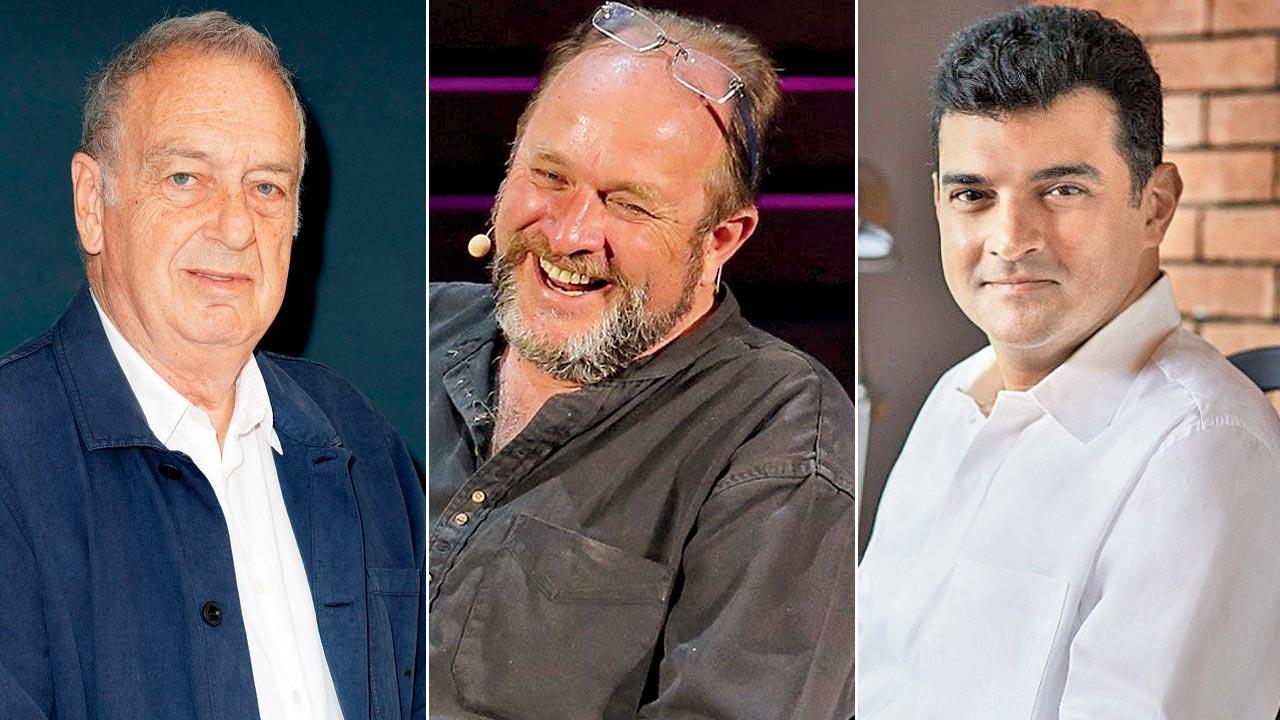
Stephen Frears, director; William Dalrymple, author and consultant; Siddharth Roy Kapur, producer. Pics/AFP, Yogen Shah, X, Instagram
Rajesh Naidu (THE ECONOMIC TIMES; April 24, 2025)
In a first for a big-scale collaboration, global independent studio WIIP (known for producing well-received web series Mare Of Easttown) and Indian production house Roy Kapur Films will be creating a web series adaption of writer-historian William Dalrymple's critically-acclaimed and bestseller book The Anarchy: The Relentless Rise Of The East India Company.
The web series will be produced across the UK and Asia. According to a source, it is estimated that the first season of the web series will cost $100 million, almost similar to the scale of critically-acclaimed big-scale web series such as The Crown and Game Of Thrones.
The Anarchy: The Relentless Rise Of The East India Company tells the story of how the East India Company based in a small London office took over the entire Indian sub-continent which constituted more than one-fourth of the world’s Gross Domestic Product (GDP) at the time.
The web series will be directed by legendary British director Stephen Frears known for films such as My Beautiful Laundrette (1985), and Dangerous Liaisons (1988)
"This is the most contemporary of themes: A ruthless businessman and his corporation seizing power, a group of oligarchs taking over a chunk of the world, asset-stripping, looting, manipulating the stock market, destroying whole economies for their profit. The East India Company stealing India in the 18th century, " said director Stephen Frears.
This will be the first big-scale collaboration of Indian production with an international production house in creating a web series adaptation.
The funding of the series is likely to be done by a global streaming platform. "Stephen’s range as a filmmaker is simply unmatched. He has directed some of the most beloved films of the last four decades. To have him come on board to helm this project is an absolute dream come true, " said producer Siddharth Roy Kapur, founder of Roy Kapur Films.
"Collaborating with our production partners at WIIP has been an incredibly enriching experience. This is a story that demanded scale, depth, and ambition, and I am proud that we have brought an extraordinary team together to bring it to life for a global audience, ” he added.
-----------------------------------
Collaborating with British director Stephen Frears to bring William Dalrymple’s The Anarchy to screen, Siddharth Roy Kapur shares his vision for the expansive series that will chronicle East India Company’s rise to power
Mohar Basu (MID-DAY; April 25, 2025)
On April 23, Siddharth Roy Kapur announced what may easily be his most ambitious project—the screen adaptation of William Dalrymple’s acclaimed book, The Anarchy: The Relentless Rise of the East India Company. Imagine our surprise when he, during our chat, tells us that mid-day has been instrumental in introducing him to the 2019 book. “I first read about the book in mid-day many years ago, before it got published,” he recalls.
That article led him to contact Dalrymple via his publishers in early 2019. Kapur remembers meeting the historian and author at the Taj Mahal Palace Hotel in Mumbai. “[When we started talking], what Dalrymple had in mind aligned with what I was trying to explore—the impact of global corporations that function as mini nation states today. Its ripple effects have been felt by everyone because almost every nation has been either a colonizer or colonized.”
The producer adds that after a bit of back-and-forth, Dalrymple came on board, even passing on the unpublished manuscript to him.
That sowed the seeds for the expansive multi-season series, which will have the author serve as the consultant and the Oscar-nominated British director Stephen Frears at the helm. Together, they will tell the story of how the East India Company rose to power in the Indian sub-continent in the late 18th century as the Mughal Empire crumbled. The story demands a large canvas, and Roy Kapur, along with Paul Lee’s studio Wiip—which produced the acclaimed Mare of Easttown (2021)—is determined to give it just that.
“It’s a sprawling piece about a lush world that has the Mughals, Marathas, British, Dutch and how they shaped the country’s tapestry. I call it our Game Of Thrones’ ambition meets The Crown’s telling. There are multiple seasons because we want to stay true to the nuance of his writing,” states Kapur.
When it comes to bringing nuance to screen, Kapur—who has grown up on Frears’ works, Dangerous Liaisons (1988), The Grifters (1990) and The Queen (2006)—knew he’d be the best choice.
“Stephen has the ability to treat characters as whole people, while retaining the story’s scale. It’s the most definitive story of modern history for us. The Anarchy shows India with a curious gaze. Only Stephen can pull this off,” he shares, adding that the casting process will begin in a few months.
Making an ambitious saga is daunting. It only becomes amplified in the current market when more films are failing than succeeding. Does that play on his mind? “It’s always a good time to tell a great story,” Kapur says assuredly.
“From time to time, we feel a creative and monetary vacuum. But that doesn’t mean one doesn’t swing for the fences. Yes, two years of COVID have shrunk our attention span. We’re competing with innumerable avenues, even Instagram Reels. But if you give people something breathtaking, they’ll come in hordes.”
Did you know?
The Anarchy: The Relentless Rise Of The East India Company had featured in Barack Obama’s list of favourite books of 2019. It traces the East India Company’s rise in the Indian sub-continent.
Tees is a film that is suppressed; it's like my Khosla Ka Ghosla experience being repeated-Dibakar Banerjee
8:46 AM
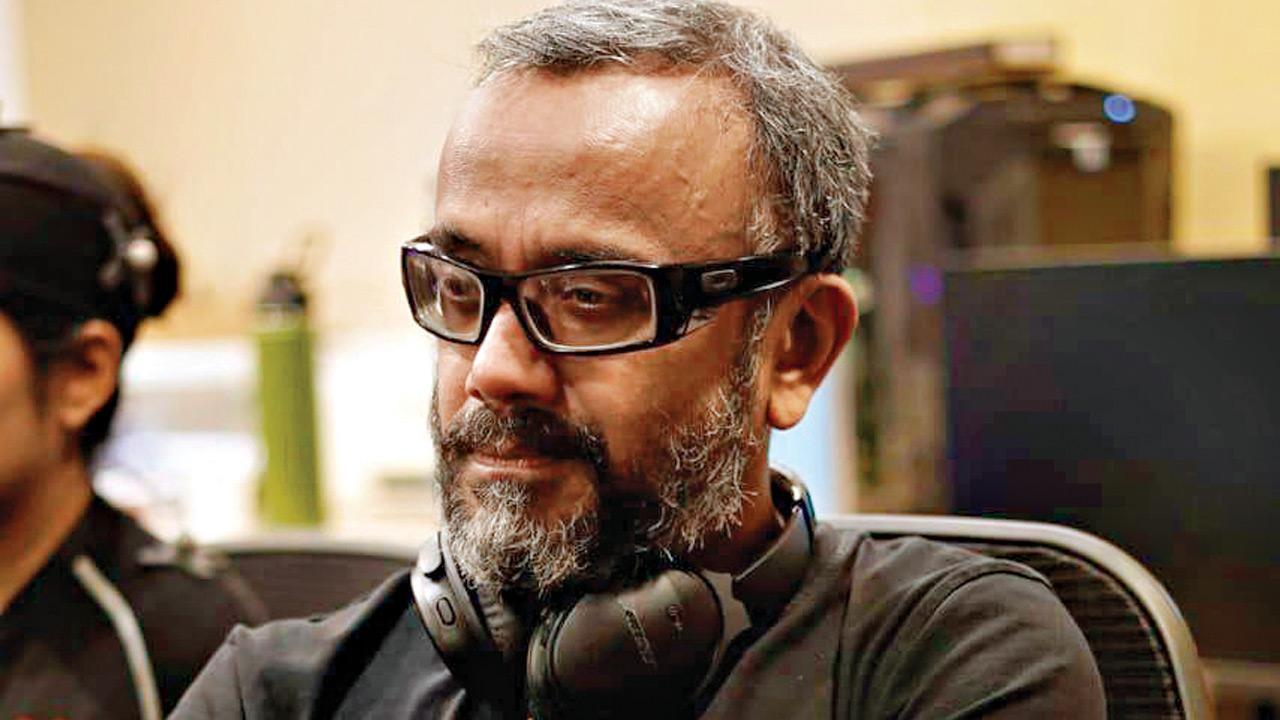
Even as he is developing three projects, director Dibakar Banerjee on how his 2022 film Tees has been shelved by Netflix and his struggle to find another producer for its release
Priyanka Sharma (MID-DAY; February 18, 2025)
One thing to know about Dibakar Banerjee is that his mind is always ticking, he is always pursuing his next story. That’s exactly what the director has been doing in the 10 months since his last release, Love Sex Aur Dhokha 2 (2024). He is currently co-writing three scripts and testing new waters with each.
“The need to start from zero is very important. Otherwise I’ll become a senior filmmaker. I don’t want that. My hair is falling, but my brain is still young. I want to start from zero. I have never done the kind of films that [I’m developing] now,” he says.
The new projects, however, share one aspect with the acclaimed movies that Banerjee has made in his 18-year career so far—dark humour. It has been a constant in his stories, be it Oye Lucky Lucky Oye (2008) or Sandeep Aur Pinky Faraar (2021). “I’m not making a funny film. But all my films have humour. I can’t tell stories without it,” he says.
Through each movie, the two-time National Award-winning filmmaker will explore the country’s different eras. “They are set in India— contemporary India, India of the past, and of the future.”
While Banerjee is looking forward to his future projects, the past is also on his mind. The director’s Tees, a Kashmiri family’s saga exploring India’s “personal, ideological, and sexual history,” was initially set for a 2022 Netflix première. However, the streamer held off the release of the Naseeruddin Shah and Manisha Koirala-starrer. Banerjee, who was reportedly told that it wasn’t the right time to release the film, has been since searching for a producer, who can buy it off the streamer. It has reminded him of the struggle he faced with Khosla Ka Ghosla (2006), which wasn’t finding takers as it was an unconventional film for the time.
“Tees is a film that is suppressed. I considered it my best before LSD 2. It’s made for the audience of Khosla Ka Ghosla, the same audience that started my journey. We are trying desperately [to find a producer]. It’s almost like my Khosla Ka Ghosla experience being repeated. We went around showing that film to every distributor for two years and everyone would say, ‘What a film!’ But nobody would buy it. It took Ronnie [Screwvala], UTV and Sid [Siddharth Roy Kapur] to release it.”
Subhash Ghai, Amitabh Bachchan gave up 'Deva' for Shahid Kapoor-starrer
8:33 AM
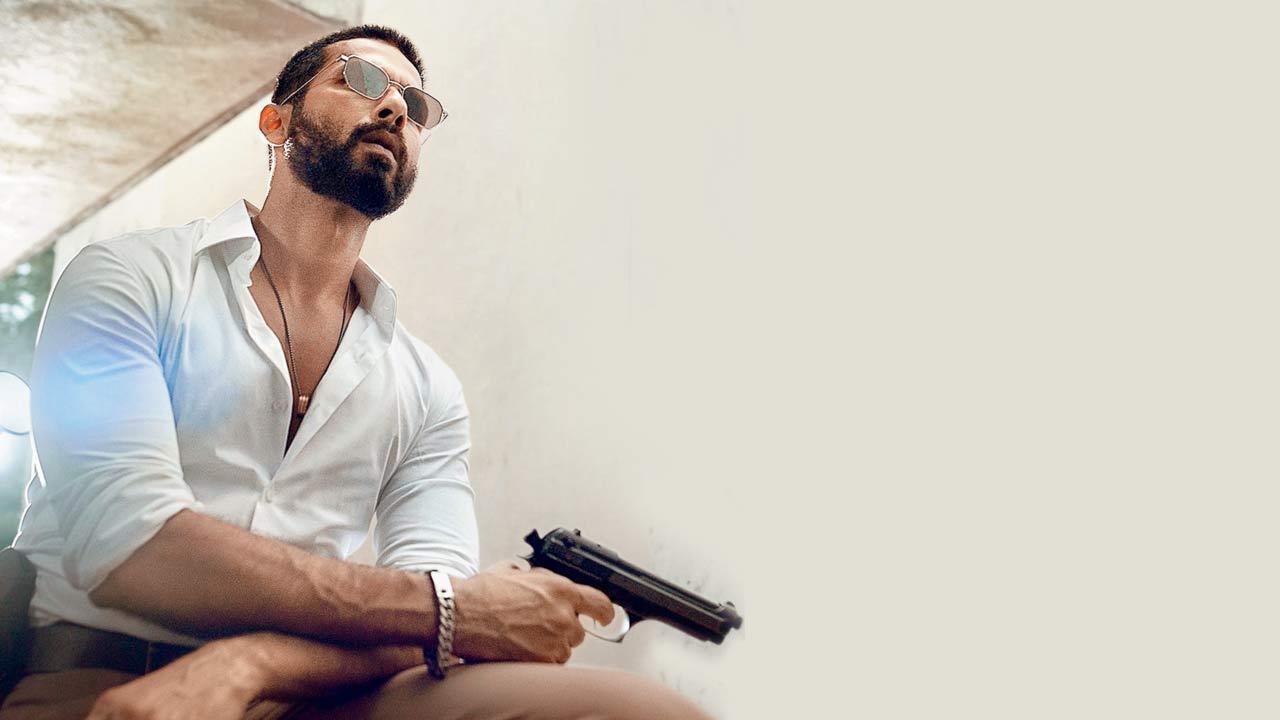
Deva maker Siddharth Roy Kapur reveals that Subhash Ghai, who had registered the title in the 1980s for an Amitabh Bachchan film, parted with it for the Shahid Kapoor-starrer
Priyanka Sharma (MID-DAY; January 24, 2025)
Next week, Deva will arrive in cinemas. But if things had gone according to filmmaker Subhash Ghai’s plans, a Deva would have already been in theatres about forty years ago. Siddharth Roy Kapur, who has produced Shahid Kapoor’s upcoming action thriller, reveals that the title originally rested with Ghai. “The film’s team is so honoured and grateful to Subhash-ji for entrusting us with the title, Deva,” says Roy Kapur.
It turns out Ghai, who celebrates his 80th birthday today, had envisioned Deva as a big-scale action film with megastar Amitabh Bachchan in the 1980s. The project, however, did not materialize. In late 2023, as Roy Kapur and director Rosshan Andrrews began work on their cop caper, they felt Deva would be the perfect title for the narrative and the angry cop protagonist, Dev Ambre, played by Kapoor. So, the producer called Ghai, who was happy to relinquish the title he had registered in 1987. The veteran filmmaker only had one condition—that they get Bachchan’s nod as well.
“Over just one call, Subhash-ji agreed to relinquish the title with the blessings of Mr Bachchan, who was also kind enough to give us the go-ahead. Deva is a title that carries immense legacy and weight, having been envisioned by Subhash-ji for a grand project with Mr Bachchan in the 1980s. His passing this torch to us speaks volumes about his generosity,” shares Roy Kapur.
Deva, which also stars Pooja Hegde, marks the Hindi debut of Malayalam director Andrrews.
How local mobile theatre company is creating movie magic with tickets at just Rs 100
10:48 AM
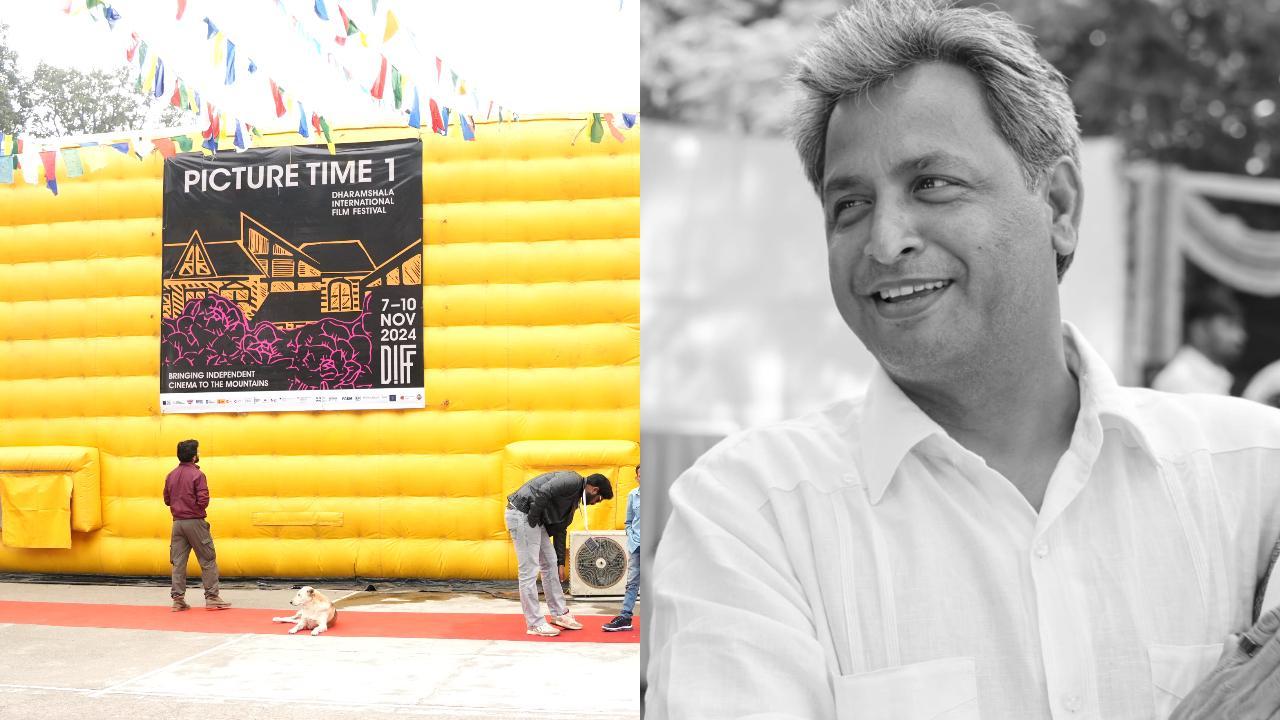
Priyanka Sharma (MID-DAY; November 28, 2024)
What comes after roti, kapda aur makaan? It should be entertainment if one asks Sushil Chaudhary, the man who aims to take cinemas to every nook and corner of the country. Chaudhary is the founder and CEO of the mobile theatre company PictureTime that screens films at inflatable theatres across the country.
“Everybody was talking about it but we took the cinema literally to people,” says Chaudhary, who is currently in Panjim, Goa as PictureTime is the screening partner of the 55th edition of International Film Festival of India (IFFI).
It’s a sweet home coming for PictureTime. Eight years ago, the company began their association with IFFI with the screening of S S Rajamouli’s Baahubali: The Beginning. It continued for the next three years until pandemic played a spoilsport. In the last two years, Chaudhary says, the company was regrouping and missed coming to IFFI.
“So, when NFDC and Ministry of Information and Broadcasting approached us, we immediately said yes. The number one problem for IFFI was the number of screens. It only has INOX. This year, we have put two inflatable theatres.”
If one happened to be in or around Panjim over the last week, it’s impossible to miss the IFF hype— the posters, standees and signboards won’t let it happen anyway. And once entered the primary IFFI venue of Kala Academy, one could spot the red coloured PictureTime inflatable theatre anyone could walk in to catch a film. The playlist at this theatre ranges from Pa Ranjit’s latest work, Thangalaan, Rajamouli’s blockbuster RRR (2022), Ranbir Kapoor’s much-loved 2011 romance Rockstar to Hindi film classics like Guide (1965), Bobby (1973) and Jane Bhi Do Yaaro (1983).
Unlike the rest of the festival, which needs a prior approved accreditation, PictureTime theatre makes no distinction. So, at a given time, the theatre is filled with festival attendees and non-delegates. Another such inflatable theatre is operating in Sanquelim. Not just that, PictureTime has also set up a mobile open-air screen that has been travelling across North and South Goa. Chaudhary is confident that PictureTime will grow bigger by the next edition of IFFI. We wanted to put five theatres time but couldn’t due to budget constraints. But next year we will do it in a bigger manner,” he says.
Chaudhary’s self-belief is not without a reason. From the inception of his company till now, he and his team have put inflatable theatres in more than 600 locations across the country. “These many locations in 18 states. In a state like Orissa, which has very less screen density, I have screened films in all its 29 districts. More than 70 percent of the districts in Orissa have no cinema penetration,” he shares.
It’s rather unfortunate that for a cinema-obsessed country, the magic of movies continues to elude a large population. “India not only has poor theatre density but also doesn’t have a clean entertainment option. For filmmakers to make movies and for movies to make money, the only answer are the cinemas, not OTT,” Chaudhary asserts. Trade experts say that India has around 9,000 screens. For context, let’s look at China, Chaudhary points out. “In 2007, it had more than 3000 screens and in 2015, it had around 55000 screens. Aamir Khan’s Dangal, which released in 2016, made Rs 400 crores in India but Rs 1800 crores in China,” he says.
Chaudhary is singularly focused on making films available to the country's remotest areas. “The government recognises 117 districts as having below-poverty line issues. And in all those districts, we are setting up theatres.” The purpose is to ensure a safe, enjoyable recreational experiences for the youth and families in small towns.
"You hear the stories of couples in small towns being harassed for going out and spending time together. People in the interiors want to go out in quiet, peace and safety but they do not have any place because if you go to the single screens, you are labelled. We managed to convince state governments and the centre government that entertainment zones are very important," Chaudhary mentions.
A 150-seater inflatable theatre takes a couple of days to set up. Five to six people can set up the full screen, and another such team can run full operation, we are told. "The idea is to make the theatre at a very efficient cost and keep the monthly operational cost below Rs 2 lakhs but do not compromise on the quality," he shares. So people get an air-conditioned theatre with Dolby 5.1 big screen and stories that are both Indian and foreign.
And because at the heart of PictureTime is to make cinema available to low-income areas, the ticket pricing is accordingly.
"Rs. 100 is our standard ticket price. Add Rs 50 for popcorn. The pricing depends on the expenditure power of a place as well on the film's producer and distributor. Like in Chhattisgarh, we have kept the ticket price to Rs 70, in Rajasthan it’s Rs 150-200. Normally, when a family of four goes out to watch a movie, it ends up spending Rs five-six thousand. We want it to all fall under Rs 1000," Chaudhary says.
Providing a wholesome experience to families has been another big pursuit of Chaudhary and his team at PictureTime. "We are creating family plexes. The first one will be in Bharatpur, Rajasthan. December 24 is the inauguration. The family plex will have nine retail stores, including food court, and live performances. Cinema theatre should anchor this arrangement and it’s a lifestyle we are taking to these places. Post the ’90s revolution, when the multiplex culture entered India, theatres went inside the malls. What we are trying to do is take malls to the theatres. So, imagine a theatre and a Dilli Haat type set up around it. So, I am creating a rural mall. We have tried this arrangement in Goa and other places and it has worked."
Chaudhary has found patrons in Indian filmmakers. "During our first IFFI association, we could show the theatre to filmmaker Kabir Khan and other senior people in the industry. Kabir Khan called the experience brilliant. Every filmmaker I met, from S S Rajamouli to Siddharth Roy Kapur, loved the idea and they all asked me to keep adding as many screens as possible."
AI use comes of age in Hindi film production
8:04 AM

From storyboarding to de-aging, new-age tools likely to save up to 30% of costs
Rajesh N Naidu (THE ECONOMIC TIMES; November 26, 2024)
Mumbai: Generative Artificial Intelligence (AI) is making its presence felt in the Hindi film industry as increasing use of such technology tools would help makers not only save time but also costs - both in the pre- and post-production stages of film-making.
ET spoke to producers, directors, writers, editors, and companies that provide AI tools to gauge the penetration of AI in the industry, advantages it offers to makers and how much time and cost makers save after using such tools.
Over the next two to three years, these stakeholders estimate that 40-50% makers in the industry are likely to use AI tools in various stages of a film's production from 15-20% at present. In the same period, these stakeholders estimate that AI will help save 40% of time required for post-production of a film from 20-25% at present. In terms of costs, in the same period, they estimate that producers may be able to save 25-30% of the cost involved in the making of a film from 15-20% at present.
In the past one and a half years, makers have been increasingly using generative AI tools in the various stages of a film's production.
In the pre-production stage of a film, AI plays a critical role in improving and providing relevant information about storyboarding, graphic look, scripting, poster (stills), casting, set design, costume and reece among others.
Debashis Das, an editor and veteran post production expert, said, "Today, all big production houses in the Hindi film industry are using AI tools in the pre-production stage."
One of the early stages of film-making where AI's role begins is pitching concepts and ideas.
Siddharth Roy Kapur, founder, Roy Kapur Films, said, "Currently, I can see AI tools being used by production houses, directors and writers in pitching concepts and ideas. This enables a clearer visual representation of the written word."
RECREATING SCENES
Storyboarding (visual representation of scenes) is another key area where AI tools are used considerably.
Gokul A, founder, D.cult Studio, a company which provides AI tools and has provided AI tools to 60 films in the Malayalam language, said, “One of the time-consuming processes in the pre-production is storyboarding. For the film ‘Jodhaa Akbar’ (2008), the makers took one year for pre-production. Storyboarding took a long time. A storyboard artist will take seven to ten days for drawings. Today, with the help of AI tools, drawings of a storyboard would take eight to ten hours.”
He pointed out that AI tools provide much better output as these tools generate images with colour and lighting instead of just sketches in a storyboarding.
Besides, AI tools provide relatively right promptings about the type of camera to use, lenses, and shots. To a great extent, these tools convert 2D image to 3D. Gokul A of D.cult Studio said, “AI tools are of great help in providing a clear idea about set design. This is a key reason why it is much easier to make a period film with AI-enabled tools today.”
According to industry observers, these tasks take a long time in a shooting schedule where time is money. A senior executive of a production who wished to be unnamed said, “With the help of a proper storyboard and a team to implement AI tools, a producer can save five to eight days of shooting days. This is a good saving considering the per day cost of a shooting schedule.”
It is estimated that production cost of a day’s schedule of a Hindi film is in the range of Rs. 15-50 lakh. Girish Johar, producer and film business expert, said, “If a producer saves time, then the producer saves money. If a producer saves five to ten days of a shooting schedule because of efficient AI tools, then it is a reasonably good saving.”
In the post-production stage of film-making, AI tools are being used for dubbing, subtitling, visual effects (VFX), animation, editing, cleaning and other laborious tasks.
Mautik Tolia, managing director, Bodhitree Multimedia, a content production company, said, “This is the first phase of Generative AI, which enhances or replaces services. This is most noticeably seen in subtitling and dubbing among others.”
Recently, AI tools were used to dub the Tamil film ‘Kanguva’ in eight languages. Upgradation and improvement in language templates have made dubbing through AI tools relatively accurate. This has saved time for film-makers.
Bhavika Karwarkar, founder, Mumbai Posst House, a post production studio based in Mumbai, said, “Earlier we required three people for dubbing. Today, with the help of AI, we require one person to monitor dubbing. AI tools have a wide range of language templates which help save time in dubbing.”
She added that a lot of tasks related to the backend work done in the post-production stage of a film are being swiftly done through AI tools.
She said, “These tasks in the post-production stage of films form 15-20% of the cost of production of a film. So, one can estimate how much a producer c an save.” She estimated that in the next two to three years, 40-45% of film-makers in the Hindi film industry will use AI tools from 15-20% at present.
EDITORS’ FAVOURITE
In addition to dubbing and subtitling, AI tools help save time in editing. The time taken to create a line-up of scenes for editing has been reduced drastically, pointed out veteran editors.
Vaibhav Desai, a veteran editor and owner, Videshi, an editing studio in Mumbai, said, “Once I feed my inputs to a machine using an AI tool in the night, I have a complete lineup of my scenes the next morning. Earlier this whole exercise would take two to three days.”
In the next two to three years, filmmakers will save at least 40% of their time on post-production work as more people use AI tools and more AI tools become available, he added. At present, in the Hindi film industry, AI tools help in saving 20-25% of the time on t asks related to post-production.
A clear and big advantage AI tools have provided Hindi film-makers in recent years is in animation and VFX domains. The spate of spectacle films across languages reflect this trend.
Bhavika Karwarkar of Mumbai Posst House, said, “AI is mainly used for 2D animation and VFX among other things. This is a great advantage especially if a film has heavy VFX. With AI tools, a director and cinematographer can easily explain lighting, camera angles, and colour of a film to the crew.”
Given these advantages, the Hindi film industry has been experimenting a lot with AI tools in recent years. The much popular deaging technique is being used prominently in Hindi films. A case in point is the younger version of actor Amitabh Bachchan’s character in the film ‘Kalki 2898 AD’. Even film director duo Raj & DK used AI tools to create character sketches of their recent web series ‘Citadel: Honey Bunny’. Down south, the makers of the Tamil film ‘The Greatest Of All Time’ used AI tools to use late actor-politician Vijayakanth’s AI version in the film. In the West, AI-enabled film-making has become an accepted norm.
ON-TAP INTELLIGENCE
Suniel Wadhwa, co-founder & director, Karmic Films, said, “In the West, AI is used in every stage of a film’s making. These include scriptwriting, audience analysis, real-time virtual production and advanced post-production.”
Concurring with him, film editor Debashis Das said, “70-80% of studios in the West use AI tools. If a person from a department of film-making turns up late on a set, then the whole shooting schedule goes for a toss.”
The recently released film ‘Here’ of actor Tom Hanks, which shows a young version of Tom Hanks for the large part of the film, is an example of how well AI tools have become integral to film-making in the west. Even director Martin Scorsese’s film ‘The Irishman’ used the de-aging technique seamlessly.
Globally, according to Business Research Company, a global market intelligence firm, generative AI in movies market is estimated to grow at a compounded annual growth rate of 24.1% in the next four years to reach to $0.77 billion (Rs. 6,545 crore) by 2028 from $0.32 billion (Rs. 2,720 crore) in 2024. This shows how AI tools are being rapidly adopted. Although AI tools are being used extensively, the underlying rationale behind their usage is to provide enough time to directors to focus on creative aspects of film-making.
I am so bored with the content around me. There is too much action-Vidya Balan
8:06 AM

Tired of dark thrillers and action films dominating the scene, Vidya says she was craving a sharply written rom-com when Do Aur Do Pyaar came her way
Mohar Basu (MID-DAY; April 16, 2024)
Sometimes, you just want to sink into your seat with a popcorn tub, and watch a feel-good movie. Vidya Balan says Do Aur Do Pyaar is that movie. At a time when the industry is churning out action fare on the big screen and dark thrillers on OTT, rom-coms have been few and far between. “This is a genre I’ve missed,” starts the actor, who, with Pratik Gandhi, leads director Shirsha Guha Thakurta’s rom-com.
“I was wondering why people aren’t making such films anymore. I am so bored with the content around me. There is too much action. When the film came to me, I loved the idea. I watched the original, The Lovers [2017]. Shirsha gave our film a new direction and Supratim Sengupta wrote the script, playing it differently [from the original]. This film makes me laugh and fills my heart. I wanted to go on a long drive, listening to music with Siddharth [Roy Kapur, husband]. Enough of pointless maar dhaad and diabolical people! I want to be in movies where I am enjoying, and so are my audiences.”
Do Aur Do Pyaar sees Balan and Gandhi play a long-married couple, who are happy in their extra-marital relationships until they find themselves falling for each other again. Balan’s Kavya as a woman with agency struck a chord with her.
“Kavya and her partner have an equal marriage. I related to the fact that she is stubborn and angry; she is not apologetic about her affair. Her predicament was funny, but I played it with a hint of curiosity. She is scared, confused and stuck.”
Often, female characters in Hindi cinema are one-toned. Rebellious parts are becoming predictable, too. Balan, who has built a 19-year career on fascinating characters, from The Dirty Picture (2011) to Kahaani (2012) and Sherni (2022), says we need to delve deeper into a woman’s complexities.
“In films, there is either the bitch or the bechari, but I’ve never done films [with such black-and-white parts]. Women-led cinema is in a nascent stage here. Ishqiya [2010] was an aberration for its times. It has been 14 years, but the grammar is still being formed. It will get formed, broken, and reformed. It’s time to reimagine the women we are writing. I think more films are expanding the idea of a badass woman now. Even with women-led cinema, it’s important we take ourselves less seriously. Crew was fun and not necessarily nuanced, but we had a good time. That’s enough at times.”
Maharashtra land for free for storytellers; Filmmakers rejoice
8:12 AM

Industry welcomes the state government’s announcement to allow shoots on government land free of cost
Vinay MR Mishra (BOMBAY TIMES; March 29, 2024)
Last week, the state government, in a government resolution (GR), announced that films, documentaries and advertisements can be shot on government land free of cost. The decision, which has been applauded by filmmakers, was made to send a positive message that the state is conducive to film production.
Reacting to this news, filmmaker Siddharth Roy Kapur said, “This not only fosters creativity but also underscores the state’s commitment to supporting the entertainment industry. Simplifying the process through a single-window clearance system further enhances efficiency, making Maharashtra an even more attractive destination for filmmakers.”
‘We hope booking these venues for filming will become a quick process’
The GR mentions that producers will have to go through a single-window clearance system. They will be charged Rs. 40,000 for advertisements, Rs. 1 lakh for TV serials and Rs. 2.5 lakh for films.
Shibasish Sarkar, President, Producers Guild of India, says that with this move, hopefully, the process will now be more efficient. “It’s a welcome move and we hope that booking these venues for filming will become a quick and efficient process under the single-window permission mechanism. Also, with a fixed security deposit, it helps us to get a go ahead to shoot on their live locations without paying multiple other costs and without confining us to shoot on limited sets.”
Simplifying what the process will now entail, producer J D Majethia explains, “All permissions like fire, road, BMC or anything required for the shoot, will be given to the producer through one window. Producers will not have to go to four different authorities for the same. They will apply at one window, and the government-appointed person will grant permission for it.”
‘Audience will get to see more of Mumbai’s heritage sites’
Talking about the tangible impact of the GR, Cine & TV artistes association (CINTAA) secretary Amit Behl shares, “We will be able to see more heritage sites and monuments, airports and railways which are owned by the government. The audience has missed seeing this and now they can have access to it.”
‘It can be the beginning of a new era for Marathi cinema’
This will possibly also be a game-changer for the Marathi film industry as well. “It is a monumental boost for the Marathi film industry. With our budgets often tighter than Bollywood or South Indian cinema, this support allows us to allocate funds more strategically, enhancing crucial aspects of our productions. Moreover, it empowers us to plan locations meticulously, enriching storytelling possibilities. This initiative can be the beginning of a new era for Marathi cinema, fostering creativity and resourcefulness while amplifying our cultural impact,” says Akshay Bardapurkar who is known for films like Chandramukhi, Tamasha Live, AB Ani CD.
‘It will boost tourism in Maharashtra’
Actor-producer Adinath Kothare, whose production house helms several popular TV shows, adds, “There are budget constraints with Marathi shows and films. Thus, live locations become a luxury. This will encourage filmmakers to shoot in prime areas. It will boost tourism in Maharashtra. Most shows will exploit popular parts of Maharashtra that will help them generate revenue.”
Even though we created Bangladesh, our contribution is not recognized by the Government of India-Brigadier Balram Singh Mehta
8:21 AM
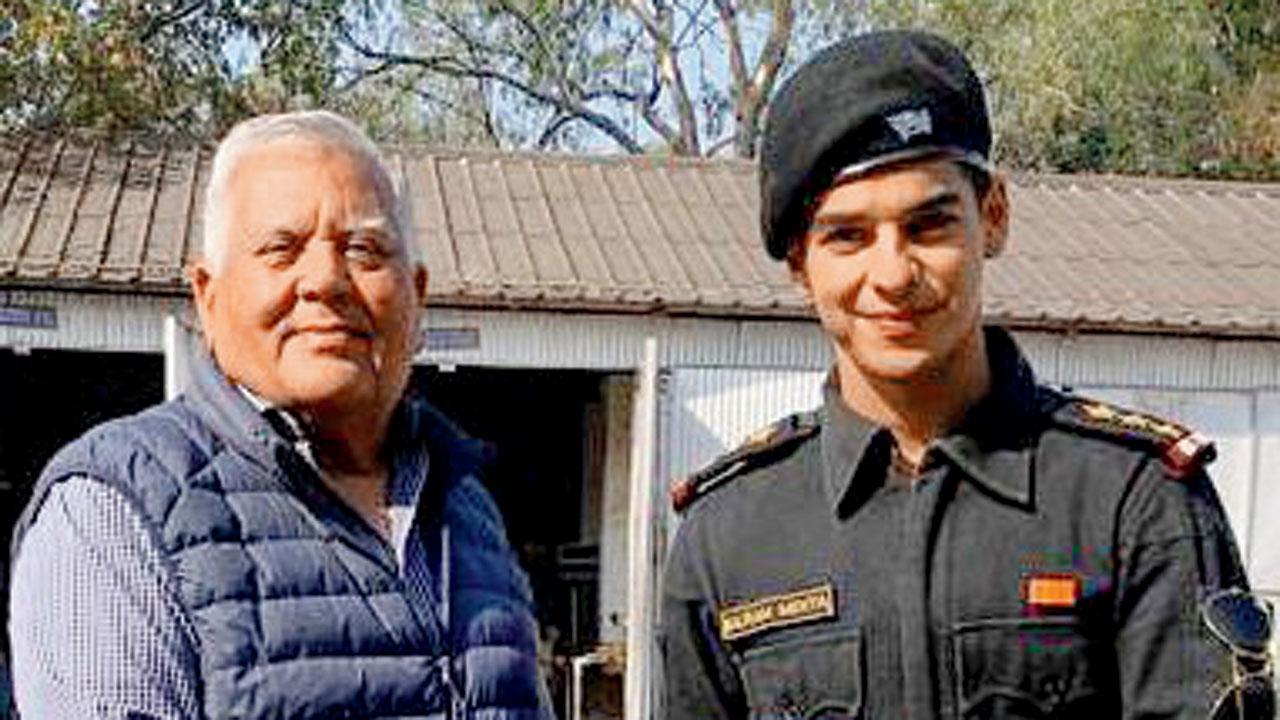
Brigadier Mehta, whose book has inspired Pippa, hopes Ishaan’s war drama will put spotlight on the Indian Army’s valour in the 1971 Battle of Garibpur
Mohar Basu (MID-DAY; November 11, 2023)
For Brigadier Balram Singh Mehta, Pippa is the realization of a promise he had made to his unit. In 2015, he wrote the book, The Burning Chaffees, as an ode to their bravery in the 1971 India-Pakistan War. As the story is retold on the screen with the Ishaan Khatter and Mrunal Thakur-starrer, Mehta says the valour displayed during the Battle of Garibpur must reach people.
“It was a battle fought for the freedom of another country. Over 10,000 refugees came to India and they needed a land that they could call their own. The battle had been launched by Lt Gen AAK Niazi [of Pakistan] to teach the Indian Army a lesson,” he recalls, before delving into the details.
“The story goes that the then-Indian Prime Minister Indira Gandhi was kept waiting in the White House, despite an appointment, for 40 minutes. This couldn’t be taken lightly. She returned from the tour and allowed the Indian Army to cross 10 kilometres into the borders of another country. The Pakistan Army’s sophisticated artillery confirmed the doubts of USA’s involvement. Our victory at Battle of Garibpur became breaking news. But even though we created Bangladesh, [our contribution is] not recognized by the Government of India. The unit has not been granted battle honour on the simple premise that the war had not been declared by Pakistan.”
For Mehta, it took one lunch with producer Siddharth Roy Kapur to set Raja Krishna Menon’s directorial venture into motion. “I had written The Burning Chaffees as a promise made to the tank troops in 1971. Siddharth believed it was a story that had to be told. I was present at the Durgapur schedule and saw the director’s motivation [to tell the story with authenticity].”
The war veteran, who is played on screen by Khatter, remembers his first encounter with the leading man. “I could size him up in the first few minutes, and he fitted the role of a cavalier captain.”
While the war drama premièred on Amazon Prime Video yesterday, the makers had held a special screening for military veterans earlier. At the screening, he says he was too intently looking at the reactions of army officers and highly placed bureaucrats of MoD. “They were transfixed,” he smiles.
It’s hard to root for a war drama when Ukraine and Russia have been at war all year, while Israel has reduced Gaza to rubble, amidst cries of freeing Palestine. As a military veteran, Mehta says Pippa will trigger conversation about the futility of war.
“What’s happening in Ukraine and Gaza, these wars are only destroying humanity. The [stakeholders] will eventually have to sit across the table and work out terms of learning to live together. War is a loss for all, mostly humanity. The sooner it ends, the better.”
Film Editors United to formulate guidelines establishing reasonable work hours, higher remuneration
8:48 AM
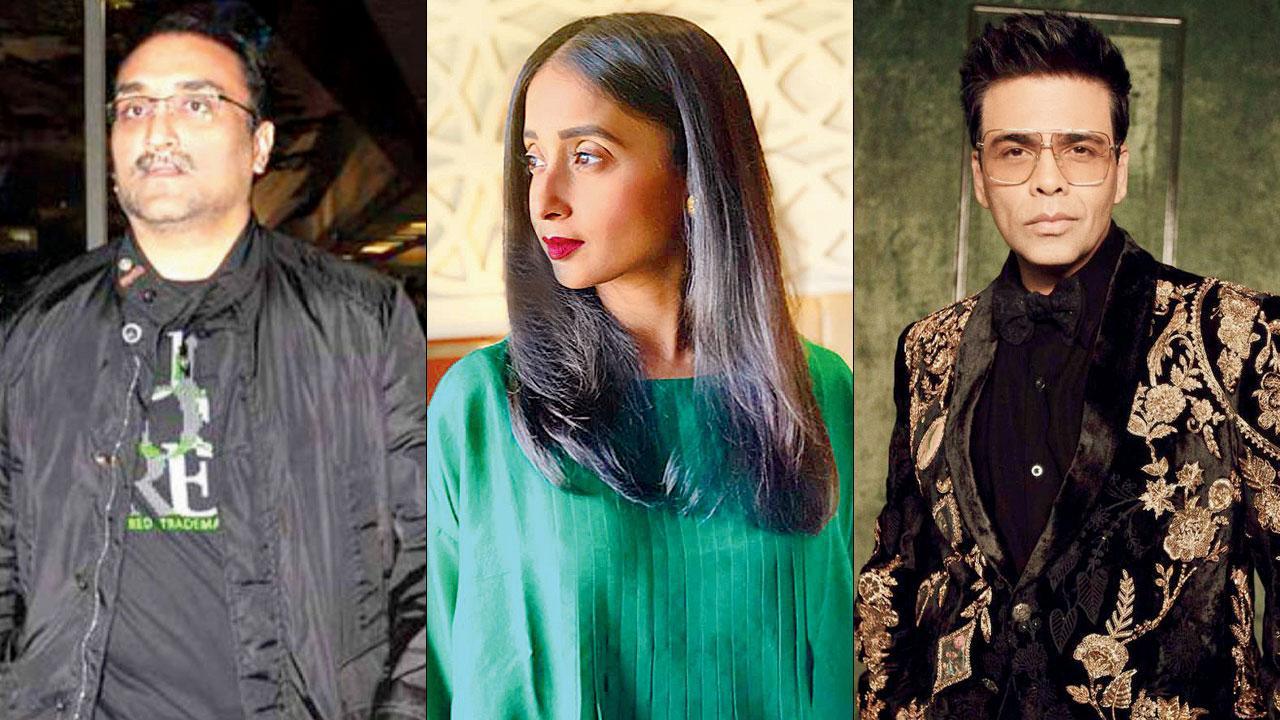
Production houses led by (from left) Aditya Chopra, Rangita Pritish Nandy and Karan Johar are known to be cognisant of editors’ needs
After Screenwriters Association, Film Editors United to formulate guidelines establishing reasonable work hours, higher remuneration; notes how streamers make assistant editors function without weekly off
Mohar Basu (MID-DAY; May 27, 2023)
Change can have a ripple effect as can be seen in the Hindi film industry. After the Screenwriters Association flagged the issues faced by Bollywood writers (Bollywood headed on the ‘write’ path, May 8), the editors’ community has put the spotlight on their grievances. The Film Editors United (FEU) – a 500-plus member collective comprising editors, associate and assistant editors – is taking cognizance of the long working hours that are being demanded from them, leading to multiple cases of burnout and depression. Keen to establish fair working practices, the FEU is having dialogues with editors across the board with the aim to formulate guidelines that are in their best interest.
Editor Antara Lahiri, who has worked on Delhi Crime, Rudra: The Edge Of Darkness (2022) and the recent Tooth Pari, says the FEU will present an agreement to the Association of Film and Video Editors (AFVE), which will then take it forward to the Federation of Western India Cine Employees (FWICE).
"For starters, they are trying to negotiate a basic minimum wage much like SWA. The issue with wage is that it can be forcefully implemented. If a production approaches a young editor and offers something lower than a minimum wage, and the editor feels this is the best I will get, then they will go for what’s being paid even if it is subpar. One part of the issue is that editors are not empowered to say no or ask for better. That is a systemic industry issue. Budgets are being slashed lower and lower everyday and there’s never been any discussion around overtime payments. Several productions in the meantime are opting for young, newer and therefore cheaper editors who are afraid to ask for what they deserve."
The biggest concern of the FEU – which includes leading editors Sreekar Prasad, Namrata Rao, Nitin Baid, Jabeen Merchant, and many others – is that assistants and associates are working 18-hour days, sometimes seven days a week. Editors are often receiving footage worth several hours per day because multiple cameras are being deployed to cover more angles and cover scenes faster on shoot.
On an average, an editor can safely edit 3-4 minutes a day. But current post-production schedules, specifically those received from streamers are not factoring in humane working hours, quantum of footage, or holidays for the edit team. In fact, most contracts have a clause where they have to agree to “work on all days of the week, irrespective of Saturday, Sunday or govt holidays”. The FEU is in the process of having conversations with editors of different Experience groups and creating a requirements draft.
Lahiri elaborates, “Independently, FEU can only present an ideal agreement to the Union, who can then present it to the federation (FWICE). A negotiation can then begin on the feasibility of the demands being made. Eventually, the matter will have to be heard by the Guild. Not to sound like a cynic, but there will still be producers who will not agree to certain things. The Guild and the union can only do that much but individual producers have to be less feudal in their approach.”
Overtime and no day off are the most concerning facets, says Lahiri. “The concept of overtime doesn’t exist in the industry. The Union says editors should get a day off every week. On shoots there is a compulsory day off. But in post-production, there have been situations with new editors that I have been told if there is work you have to come on Sunday. On paper all rules are there but in practice they are not followed. Unfortunately the contracts note that editors sign up to work on Saturdays, Sundays and Government holidays. When we checked with lawyers, unfortunately freelancers are not covered by the rules of the labour laws.”
Lahiri explains that even basics like meals are not provided to younger editors. “The working hours, pay and working conditions for editors ought to be improved. Many producers send a dabba for the team based on hierarchy. So HOD will get a good budget to order but assistants are meted out way lower budgets. There is a strange sort of hierarchy where juniors are getting below average food.”
She says that reputed producers, including Aditya Chopra, Karan Johar, Rangita Pritish Nandy and Siddharth Roy Kapur, are cognizant of editors’ needs. “Senior producers in the industry appreciate editors. Platforms like Netflix and Amazon make calls and understand how the post production process works better. The senior editors always have their way. They have clout. But it’s always about how the associate editors are treated. They know workflow processes and promote a certain level of equality. I don’t believe it is malicious. But many smaller set ups don’t value what editors bring to table. Bigger set ups are more cognizant of what editors (regardless of their designations) need. The spaces are clean and thoughtfully provided.”
The FEU is also seeking “good working conditions” that include:
>> A comfortable ergonomic chair for the editor, a work-appropriate table, and other equipment
>> A pleasant and clean edit room
>> Clean bathrooms, especially for women
>> Nutritious meals, clean drinking water, and fresh beverages
>> Adequate rest period, ideally 12 hours, for the editor and team
Antara Lahiri
How can this generation’s heroes just be from cricket & Bollywood?: Rocket Boys creator Nikkhil Advani at FICCI Frames
8:19 AM

Rocket Boys creator Nikkhil Advani and producer Siddharth Roy Kapur on why this generation needs to be reminded of real heroes like scientists Homi J Bhabha and Vikram Sarabhai and what made them true patriots
Niharika Lal (BOMBAY TIMES; May 10, 2023)
While discussing the lives of scientists Homi J Bhabha and Vikram Sarabhai at FICCI Frames, Nikkhil Advani and Siddharth Roy Kapur – who made the show Rocket Boys, which is based on the lives of Bhabha and Sarabhai – pointed out why they feel Bollywood heroes and cricketers are not heroes in the truest sense of the word.
Creator Nikkhil Advani said, “The definition of patriotism today is so skewed. Here are two guys (Homi J Bhabha and Vikram Sarabhai) who could have gone to any institution in the world, but both of them chose to stay in India with no resources whatsoever, and build (the newly-independent country). When Sid (Siddharth Roy Kapur) and I were discussing (about Homi J Bhabha and Vikram Sarabhai) in the beginning, we were saying how can the heroes of this generation just be from Bollywood? And we are from Bollywood,” adding, “How can heroes of this generation just be Bollywood actors and cricketers? Today’s generation needs to be reminded of (what) the stalwarts did, and how they are responsible for where we are today. They were lawyers, doctors, educators, scientists, and members of Parliament. All of us believe that was the true form of patriotism.”
Talking about the positive reactions Rocket Boys has garnered, producer Siddharth Roy Kapur said, “People are amazed about the optimism of these two men at the beginning of the journey of India, and the fact that they are actually having conflict about issues. The fact that their friendship was being affected because of the things they believed in, which when we reflect about it today, feels like people’s minds are a lot more muddled about the state of the country and the decisions that are being made. And these were two men who were the best definition of patriots. But they were normal human beings who were starting out and building a country together. They had conflicts and were fighting about their definition of what the country should become.”
Siddharth added, “A lot of people I talk to are like, ‘wow! these times also happened’. An India which was so fragile and susceptible to so many powers. I think the show does that with a light touch to tell that story.”
After WGA strike rocks Hollywood, Screenwriters Association in India drafts Minimum Basic Contract
8:29 AM
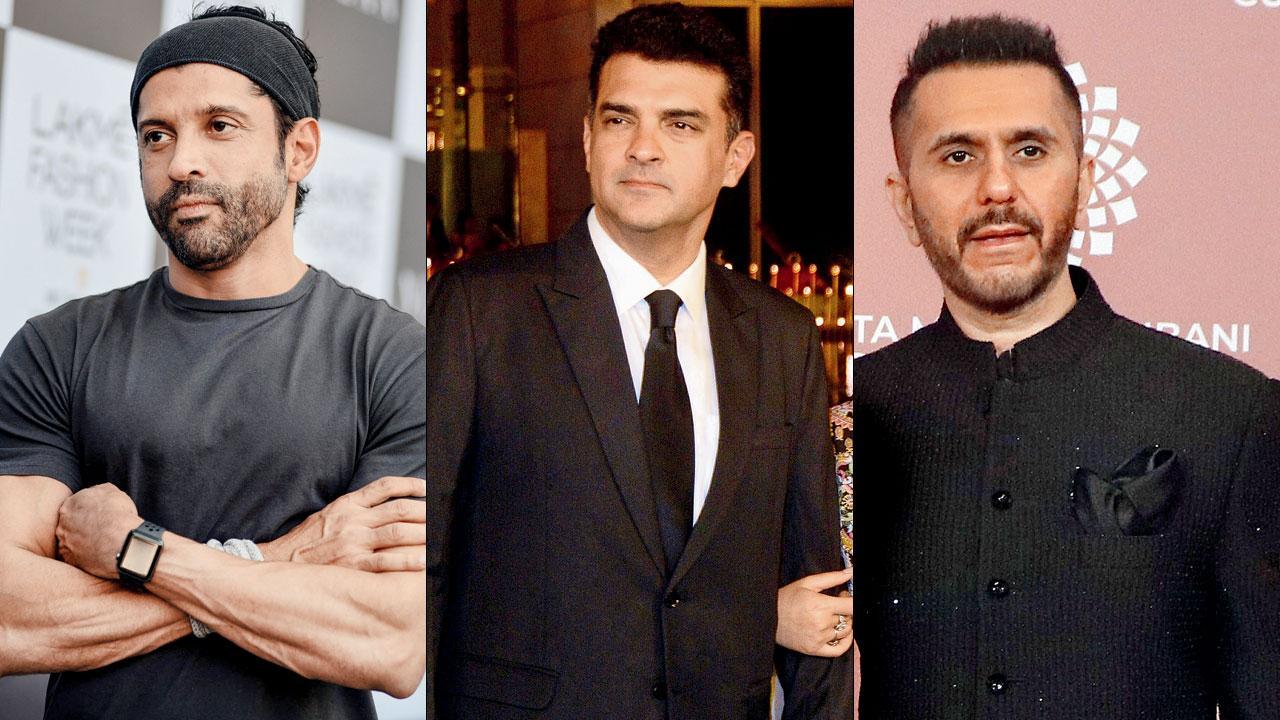
After WGA strike rocks Hollywood, Screenwriters Association in India drafts Minimum Basic Contract that seeks credit, higher remuneration for writers; lines up meeting with producers for next week
Mohar Basu, Priyanka Sharma (MID-DAY; May 8, 2023)
More than 11,000 members of the Writers Guild of America (WGA) went on strike last Tuesday, following the breakdown of their negotiations with the Alliance of Motion Picture and Television Producers (AMPTP). The WGA union criticized the studios for treating writing as a freelance profession rather than providing fair employment conditions to writers.
Closer home, the Screenwriters Association (SWA) has expressed its solidarity with the WGA. The episode has reignited the conversation about writers’ rights. Taking a cue from its American counterpart, the SWA is formulating a Minimum Basic Contract (MBC). Suhail Anwar, chief operating officer, SWA, says, “We need fairer contracts for writers. Credits are not guaranteed, neither are fees despite having a pay scale.”
The contract will focus on two key areas — credit, and remuneration. Zaman Habib, general secretary, SWA, rues that the fight in India begins from the fact that writers are often not acknowledged.
“When a writer is successful, they can negotiate, but new writers are exploited. The MBC will assure them credit and remuneration. We have seen cases where a writer has delivered a screenplay for [as low as] Rs 50,000.”
In 2018, a minimum-pay scale was set up. Among other things, it stated that for a film mounted on a budget of Rs 5 crore to Rs 15 crore, the writer should be paid Rs 24 lakh for the complete script. Habib notes that while these rules exist on paper, they are often not applied by producers and studios.
“This pay scale has to be agreed upon by unions and guilds so that there is no discrepancy or manipulation. It will be fair to both producers and writers in the industry. A basic respectable amount has to be assured. In films, a writer’s total remuneration is often priced at Rs 5 lakh. The tranches are spread out over nine months to two years, depending on the benevolence of a producer.”
Habib rues, “Many producers believe in keeping writers happy, but many others are repeatedly in the habit of not paying or delaying payments.”
To address the issue, the SWA will conduct a meeting with Producers’ Guild, Indian Film and Television Producers Council (IFTPC), Indian Motion Picture Producers Association (IMPPA), and individual producers next week. He adds, “Producers like Siddharth Roy Kapur, Ritesh Sidhwani and Farhan Akhtar are encouraging [of the MBC].”
The MBC is being formulated by a team of experienced writers and lyricists, headed by Anjum Rajabali, who has long been a champion of writers’ rights in India. He highlights that a new “offensive” clause has been introduced by some producers.
“The contract has a clause, which states that the final credit of the writer will be at the discretion of the producer. This has naturally outraged all writers. Credit indicates the writer’s contribution to the film. It is an inalienable right — legally and morally. If there are multiple writers and there is a dispute among them concerning credits, then experts, who understand screenwriting, should assess their individual contribution to the film and determine their credits,” Rajabali explains.
The SWA has set up a credit arbitration committee to resolve this issue, and Rajabali says it will be a key point of discussion in the upcoming meeting.
“In the credit arbitration committee, the drafts submitted by the writers are read and the extent of their inclusion in the final script is assessed by senior writers anonymously. We now seek that all credit disputes be handled by this process, and not at the producer’s discretion,” he asserts.
Habib adds, “Credits on a film or a series will be explained in this contract. Also, credits can’t be measured on industry seniority. It will be measured by the amount of work put in. Despite being a junior writer, if someone has put in more work, his name should come first.”
Royalty is another issue. By and large, in Bollywood, the norm is that the creator/writer transfers the Intellectual Property Rights (IPR) to the production house, studio, or platform. With the MBC, Habib says they are seeking royalty that would be over and above the remuneration. Rajabali is optimistic of arriving at an understanding with the producers regarding the MBC.
“We’re fully cognisant of their points of view, and their anxieties. The changes that we’re proposing are fair to both sides.”
SWA recommends
Consideration: Make sure that the amount of consideration is given in the draft and broken down into tranches. Avoid the one-time bulk payment that shall be made once the work is completed.
Credit: Ensure you receive your due credit. Make sure that the credit clause survives the termination of your agreement. Even if the agreement is terminated by either party, you shall still be credited for your work.
Icons are more heroic when they have the same vulnerabilities and flaws as you and I do-Siddharth Roy Kapur
8:10 AM
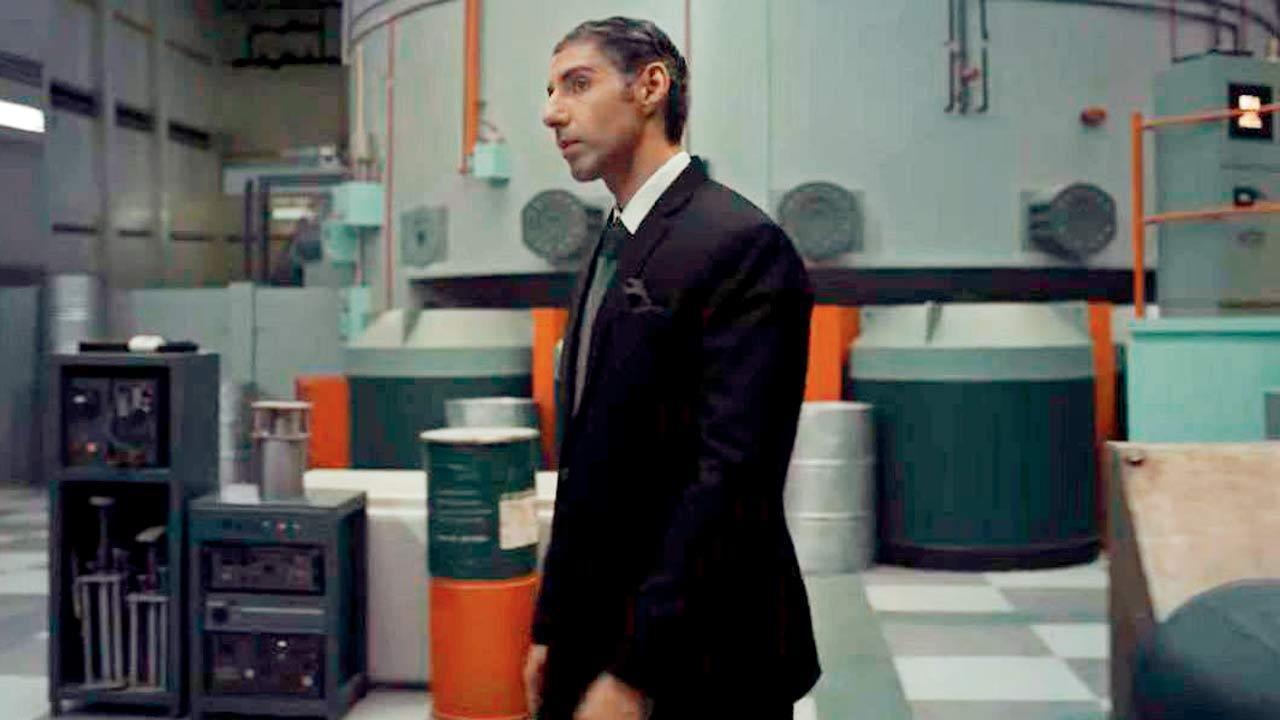
As Rocket Boys 2 wins acclaim, producer Siddharth says showing Bhabha and Sarabhai’s vulnerabilities worked in the show’s favour
Uma Ramasubramanian (MID-DAY; March 24, 2023)
Rarely has the second season of a series matched the brilliance of the first. Rocket Boys finds itself in that coveted club, with the latest edition of the Jim Sarbh and Ishwak Singh-starrer opening to wide praise. So, what’s the secret to the success? Producer Siddharth Roy Kapur attributes it to how director Abhay Pannu has humanized the protagonists, Homi Bhabha and Dr Vikram Sarabhai.
“We thought it was important to stick to the facts, but obviously dramatize them because that is important to creating a compelling series. We made sure to humanize these characters. Often, we depict these icons as demigods. But I believe such icons are more heroic when they have the same vulnerabilities and flaws as you and I do. Despite their flaws, they go ahead and achieve such great things. Abhay and his team have managed to show that,” explains the producer.
The second season of the Sony LIV series chronicles Bhabha and Sarabhai’s efforts to make India a nuclear power. While the drama is further elevated by fine performances, Sarbh steals the show with his portrayal of the dynamic Bhabha. Kapur agrees that the actor’s casting was a masterstroke.
“It’s one of those few times when the role chooses an actor, and vice versa. It felt organic for Jim to play Homi Bhabha. He has portrayed the brilliance, humanity and sensitivity of Bhabha beautifully.”
In an OTT world that’s full of violence and cuss words, we were proud to tell a story of scientists-Nikkhil Advani
8:06 AM
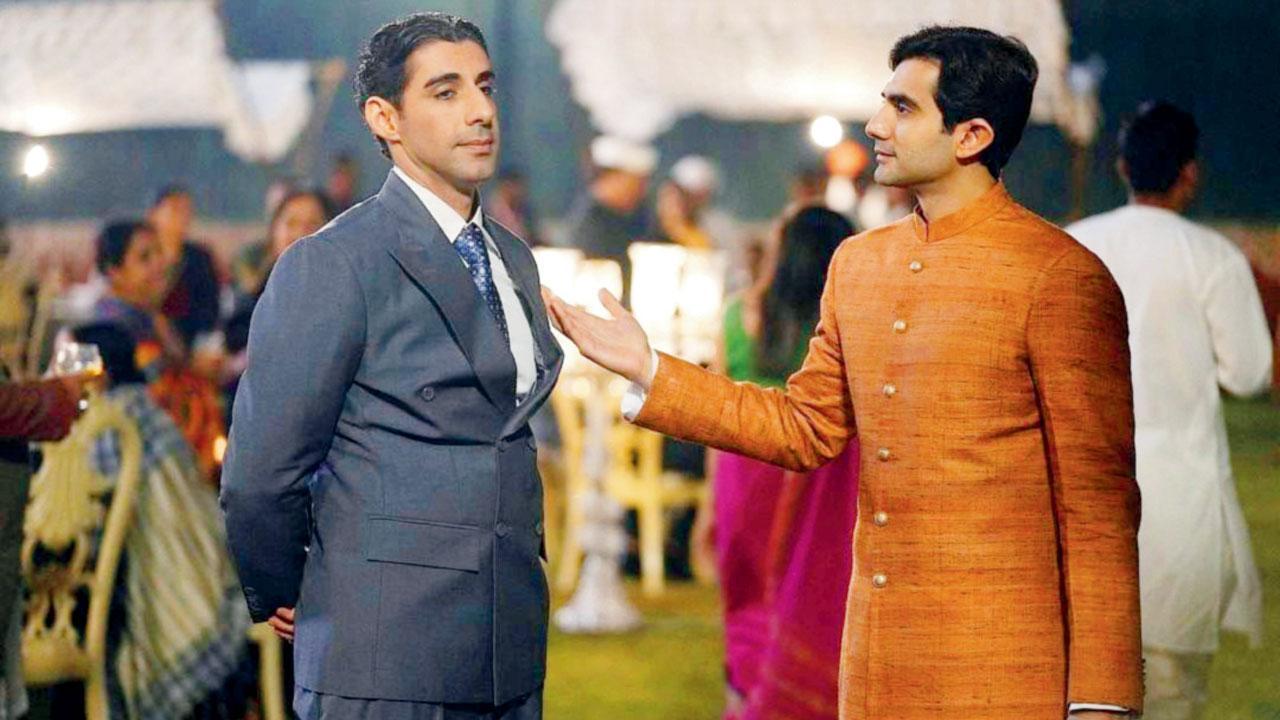
In contention for the Best Creator/Showrunner title at the mid-day and Radio City Hitlist OTT Awards, Rocket Boys show-maker Nikkhil Advani on telling the tale of ambitious Indian scientists
Upala KBR (MID-DAY; February 13, 2023)
Director Nikkhil Advani confesses to being fascinated by stories revolving around space. Having initially intended to create a film on the Mars Orbiter Mission (MOM), he recalls having had a change of heart after Akshay Kumar announced Mission Mangal, based on the same idea. The development, it appears, seemed to have turned in his favour, as Advani then created Rocket Boys, based on scientists Homi Bhabha and Vikram Sarabhai, which earned praise from fans and critics.
“I have always loved space research, rocket science and interplanetary missions. At the time when Siddharth [Roy Kapur, producer] approached me for this series, I didn’t know that Homi and Vikram shared a bond, but Sid’s team had done their research well,” says Advani, who will be among the contenders vying for the Best Creator/Showrunner gong at the mid-day and Radio City Hitlist OTT Awards.
Shooting a series based on rocket science, however, was not without challenges, especially since the team was working on it during the pandemic. That this was set in a different time period also implied that they had to scout locations wisely.
“Considering the scale on which we planned to mount it, and that too on a competitive budget, we knew we had to be innovative and creative. Our team had to choose locations that could not look modern, so we had to hide things like switchboards, wirings and windows.”
The genre of space science isn’t the first that comes to mind when one thinks of creating a series that can have mass appeal. But Advani believes Rocket Boys found favour among audiences because it is in stark contrast to the thrillers that have filled the web space.
“Nobody chose to do a show like this one, in which the hopes and achievements of India have been showcased. If I had to tell my 15-year-old to watch a show, it would be this one. It highlights the achievements of these two scientists, and is also entertaining. One is not burdened with the research. It simply tells the story of these two young men who wanted to be scientists. When we showed it to the Sarabhais, they had tears in their eyes. In an OTT world that’s full of violence and cuss words, we were proud to tell a story of scientists.”
Despite its success, a third season, he admits, is unlikely. “As a creator, it is important to know when to draw the line. I don’t think a third season is [essential]. Of course, the final decision rests with the channel and producer.”
Cast your vote for the Hitlist OTT Awards
Nikkhil Advani has been nominated in the Best Creator/Showrunner category for Rocket Boys.
The other nominees are:
- Tanuj Chopra (Delhi Crime S02)
- Shefali Bhushan (Guilty Minds)
- Shreyansh Pandey (Gullak S03)
- Neeraj Pandey (Khakee: The Bihar Chapter)
- TVF (Panchayat S02)
There are 16 categories that the public can vote in. Log on to www.radiocity.in/hitlistott to cast your vote.
Voting lines close on February 22.
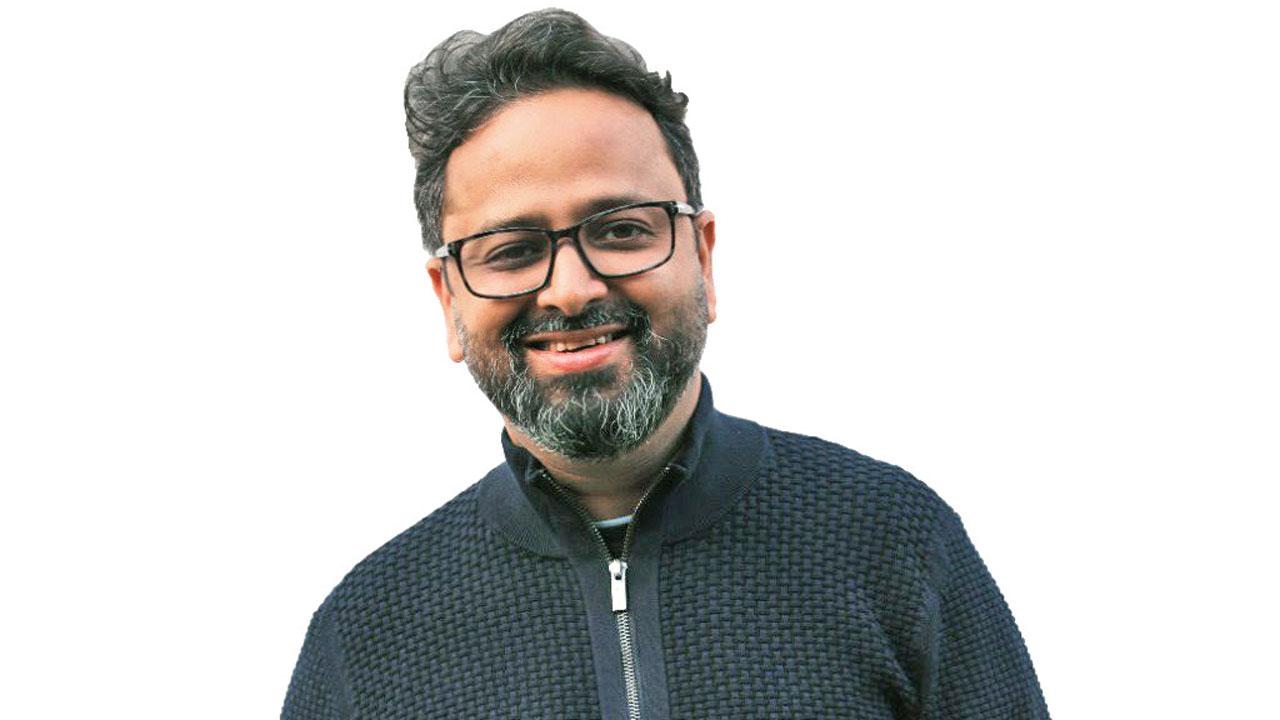
Instead of celebrating and campaigning in USA, we were busy fighting trolling-Pan Nalin
8:31 AM
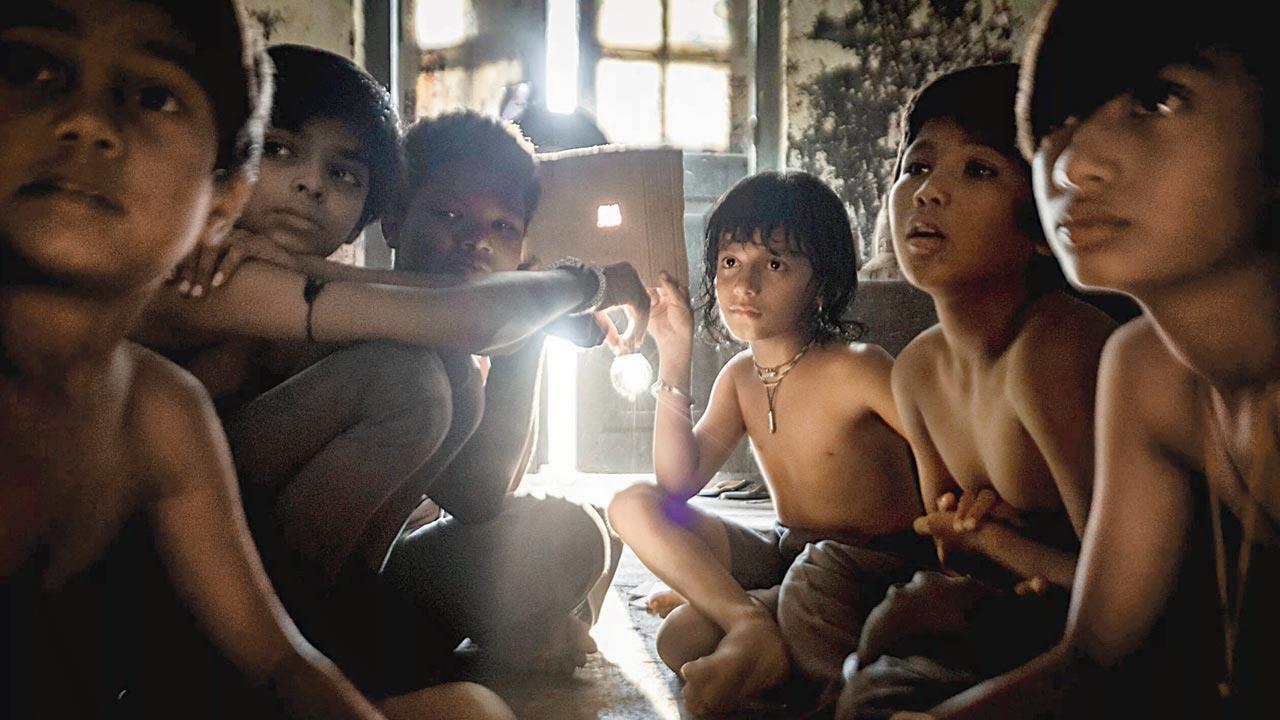
Director vindicated as Chhello Show, which had faced backlash in India, makes it to Oscars’ shortlist; says people’s opinion changed after seeing film
Priyanka Sharma (MID-DAY; December 23, 2022)
Unbridled joy, and vindication — that’s what Pan Nalin felt as Chhello Show (Last Film Show) was shortlisted in the Best International Feature Film category at the 95th Academy Awards, on Thursday. The road to here hasn’t been easy. When the semi-autobiographical film about a nine-year-old’s movie dreams was selected as India’s official entry to the Oscars, in September, the director’s joy was short-lived as the choice faced severe backlash.
“That moment soon turned sad [as we faced] baseless allegations, and trolling. The worst was the cyber attack prior to our film’s release. My team was threatened with warnings: ‘Oscars mein se film nikaal, nahin toh achcha nahin hoga’. Instead of celebrating and campaigning in the US, we were busy fighting this [vitriol] for three to four weeks,” recounts Nalin.
Many then felt that S S Rajamouli’s blockbuster RRR deserved to be submitted as India’s entry over the Gujarati film chosen by the Film Federation of India (FFI) jury. The director says that the tide started turning after Chhello Show was released in theatres, and subsequently, streamed on Netflix.
“When the Indian audience, film critics and industry folks finally watched the movie, they could not stop themselves from falling in love with it. In the end, the power of cinema won,” he beams.
At the Oscars, Chhello Show will compete with 14 other movies — including South Korea’s Decision To Leave, Belgium’s Close, and Germany’s All Quiet on the Western Front — to advance to the nominations. Producers Siddharth Roy Kapur and Dheer Momaya intend to amp up the film’s campaign by organising numerous screenings. “We must continue showing the film, and hope to [take it] to the next stage,” says Momaya.
The Academy members seem to have deeply connected with the movie. Kapur says, “It takes people back to that first moment of wonder, when they [first] watched a movie. Also, in a land of more than a billion dreams, this boy is so resilient [about] achieving his dream. People are taking back that sense of hope.”
Also in the Oscars 2023 race
- Naatu Naatu from RRR has been shortlisted for the Best Original Song.
- All That Breathes, which focuses on Delhi’s air pollution, is in the running for the Best Documentary.
- The Elephant Whisperers, revolving around an Indian couple and a baby elephant, is shortlisted for the Best Documentary Short Film.
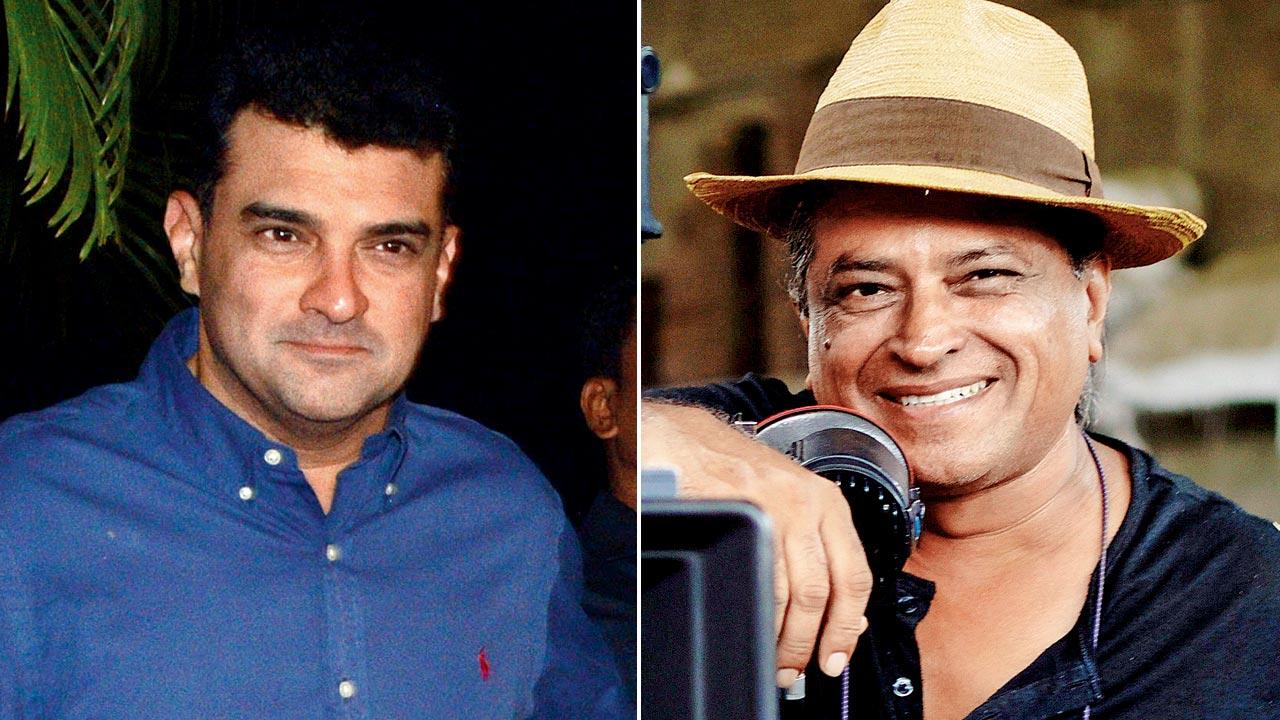
Siddharth Roy Kapur and Pan Nalin
Chhello Show-RRR row: It was a unanimous decision, says FFI selection committee
8:42 AM

The film is universal, applicable to any child in the world and gives you hope’, said the committee, while talking about what set it apart from contenders that included RRR, Badhaai Do & Rocketry: The Nambi Effect
Niharika Lal (BOMBAY TIMES; September 22, 2022)
Director Pan Nalin’s Gujarati film Chhello Show, an Indo-French co-production, has been selected as India’s official entry for the 2023 Oscars. According to the Film Federation of India (FFI) president T P Aggarwal, Chhello Show was unanimously chosen over films such as S S Rajamouli’s RRR, Ranbir Kapoor-led Brahmastra, Rajkummar Rao-Bhumi Pednekar-starrer Badhaai Do and R Madhavan’s directorial debut Rocketry: The Nambi Effect, for its storytelling technique and the universal appeal of its theme. There were 13 films in the contenders’ list this year.
OUR ONLY PARAMETER IS THAT A FILM SHOULD TOUCH YOUR HEART: FFI SELECTION COMMITTEE
Chhello Show (or Last Film Show in English) is set against the backdrop of Indian cinemas witnessing a transition from celluloid to digital, where hundreds of single-screen cinemas are either shut or in ruins. The film follows a nine-year-old boy, Samay, whose life is turned upside down after watching his first movie at a cinema hall.
Filmmaker T S Nagabharana, who chaired the selection committee for India’s official entry to the Oscars, told us, “It was the Indianness of Chhello Show that appealed to the jury. It was a unanimous decision. The film is about a child’s innocence and his dream. It gives you hope that if you chase a dream, it can come true. The film’s idea has universal appeal and is applicable to any child anywhere in the world. We liked how the film begins innovatively and ends with hope. All 13 films which were in consideration, six of which were Hindi, were good films.”
Chhello Show was among the 13 contenders last year too. Then why was the film not selected then? T S Nagabharana replies, “Last year, the film was under consideration, but it had not been screened publicly by then – which is one of the criteria for selection. This year, the film has had screenings and it will be released soon.”
What are the parameters that the jury looks for while selecting a film? He laughs, “The only parameter is that the film should touch our heart.”
NOW, I CAN BREATHE AGAIN AND BELIEVE IN CINEMA THAT ENTERTAINS, INSPIRES AND ENLIGHTENS: PAN NALIN
After the announcement, director Pan Nalin, who has earlier directed films like Samsara, Angry Indian Goddesses and Valley Of Flowers, and was also invited to be an Academy member this year, says, “Chhello Show has been enjoying love from around the world, but there was an ache in my heart, that how do I make India discover it? Thank you for believing in Chhello Show. Now, I can breathe again and believe in cinema that entertains, inspires and enlightens.”
The film had its world premiere at Tribeca Festival last year. It won the Golden Spike at the 66th Valladolid Film Festival in Spain and the Audience Award in the World Cinema strand of the Mill Valley Film Festival.
DECODING THE SELECTION PROCESS
T P Aggarwal, President, FFI, says, “The selection process is quite simple. The Film Federation of India (FFI) informs all producer bodies to submit their films, who in turn, inform their members, and then films are submitted. Following which the selection committee members vote and decide about the film which is sent as an Oscar entry from India. This year, 17 members of the jury unanimously voted for Chhello Show among 13 films.”
WE HAD THE BEST TECHNICAL TEAM THAT HELPED US COMPETE WITH THE REST OF GLOBAL CINEMA: DHEER
Dheer Momaya, the film’s producer who has been working on it for five years, says that had they not been selected as India’s official Oscar entry, they had planned to apply for the mainstream categories as well. He says, “Our film has been acquired internationally by good distributors (especially in the US and France), who have a record of Oscar selections. This is the first time that distinguished global studios have acquired distribution rights to an Indian film. The highest number of Academy voting members after the US is in France and distributors from both countries have acquired our film. We know how we are going to navigate the road to the Oscars. It is a long fight and it is not easy. The selection as an Oscar entry is not victory, it is just the beginning. It definitely helps to make inroads for a film which doesn’t have famous Bollywood actors and team. We have already been working with foreign distributors.”
At the same time, Momaya adds, “The fact that we had the best technical team – cinematographer Swapnil Sonawane, who has done shows like Sacred Games, casting director Dilip Shankar, who has worked on multiple Oscar-winning films like Life Of Pi, sound designer Gilles Bernadeau and DI colourist Kevin Le Dortz who have worked on many Oscar, Cesar and Cannes winning films – allows it to stand technically strong with the rest of global cinema.”
On social media, the film is being compared with Cinema Paradiso (1988) which is about the friendship between a boy and a cinema projectionist. Dheer says, “That is the only similarity between the two. Saying both films are the same is like saying all spy movies or all action movies are the same. It is the originality of our film that impressed foreign distributors.”
IT IS A MATTER OF GREAT PRIDE FOR US TO REPRESENT INDIA WITH THIS FILM, SAYS SIDDHARTH ROY KAPUR
Siddharth Roy Kapur, under whose banner the film will be released in India, said in a statement, “There could not be a more apt time for a film like this one, that celebrates the magic and wonder of cinema and the theatrical experience. When cinema-going around the world has been disrupted by a pandemic, it reminds audiences anew of the first time they fell in love with the experience of watching a movie in a darkened cinema hall. It is a matter of great pride for us to represent our country with this film, and with the backing of our partners, we will make sure that we give it our best shot at the Academy Awards.”
-------------------------------------
NOT THE END OF THE OSCARS ROAD FOR RRR
RRR was among the fave contenders for India’s official Oscars entry this year, with foreign press naming it as a frontrunner in the International Feature Film, as well as Best Song category.
However, filmmaker T S Nagabharana – who chaired the selection committee for India’s official entry to the Oscars – says, “RRR will have its own term (path) and it has got a value. It doesn’t mean that it has to be Oscars (entry) only.”
Though it may be out of the International Feature Film race, reportedly, the US distributor of RRR will launch a full awards campaign and the film will be submitted for Best Picture, Best Director (SS Rajamouli), Original Screenplay (Rajamouli and V Vijayendra Prasad), Lead Actor (NT Rama Rao Jr and Ram Charan), Supporting Actor (Ajay Devgn), Supporting Actress (Alia Bhatt), and other categories.
FILMS SUBMITTED FOR CONSIDERATION FOR INDIA’S OFFICIAL OSCARS 2023 ENTRY
- Iravin Nizhal (Tamil)
- Rocketry : The Nambi Effect (Hindi)
- Ariyippu (Malayalam)
- The Kashmir Files (Hindi)
- Badhaai Do (Hindi)
- RRR (Telugu)
- Jhund (Hindi)
- Chhello Show (Gujarati)
- Brahmastra (Hindi)
- Sthalam (Telugu)
- Aparajito (Bengali)
- Anek (Hindi)
- Semkhor (Dimasa)
-----------------------------------------------------
Sugandha Rawal (HINDUSTAN TIMES; September 22, 2022)
Contrary to the popular consensus on a nod for RRR or The Kashmir Files, Pan Nalin’s Gujarati film Chhello Show (titled The Last Film Show in English) has been named India’s official choice for Best International Feature at the upcoming 95th Academy Awards.
“I could have never imagined such a day would come. Now, I can breathe again and believe in cinema that entertains, inspires and enlightens,” Nalin said on the honour for his film, which is set against the backdrop of cinemas in India that saw the transition from celluloid to digital.
However, this move by the Film Federation of India (FFI) has also seemingly upset a section of cinegoers rooting for films such as RRR and The Kashmir Files. The same was evident on social media as well, with #RRRForOscars trending within no time.
Reacting to the chatter on the FFI’s decision, director-actor T S Nagabharana, who served as the head of the committee of selection for the Oscars, revealed Chhello Show was picked “unanimously” by a 17-member jury. “We know everyone was expecting RRR. But, the idea was to have a film that represents the country in an Indian, unique way. Chhello Show transcends the narrative of the regular Indian reality in a broader sense, while tugging on emotional chords,” he says.
On the RRR snub, he adds, “Do people mean to say only marketing, entertainment value or collection figure are the criteria to make a mark at the Oscars? It is the story that matters, not the popularity.”
But, all is not lost for the S S Rajamouli-directorial, for the film’s US distributor is set to seek nomination in other categories. According to Variety, the film will be submitted for best picture, director, original screenplay, lead actor, supporting actor, supporting actress, original song, among other categories.
Vivek Ranjan Agnihotri’s The Kashmir Files was also seen as one of the top contenders. But the filmmaker is not sure about going the independent way like RRR.
“I wish the whole team of Chhello Show good luck for the Oscars 2023. I have nothing else to say. When it comes to applying independently, it is a decision the producers will take. Right now, I am doing another film and have moved on,” Agnihotri tells us.
In India’s Oscars history, three films have been nominated for Best International Feature, namely Mother India (1957), Salaam Bombay! (1988) and Lagaan (2001). But, none have won.
According to trade expert Atul Mohan, RRR still holds a chance to shine bright at the awards, but he believes it is “too early to shrug off the chances of Chhello Show”.
Echoing similar sentiments, trade expert Taran Adarsh adds, “Let’s keep our fingers crossed and hope for some Oscar glory for India.”

Subscribe to:
Posts (Atom)