Showing posts with label Shuchi Talati. Show all posts
Showing posts with label Shuchi Talati. Show all posts
If only five big producers can support independent cinema, things can drastically change-Rima Das
9:13 AM
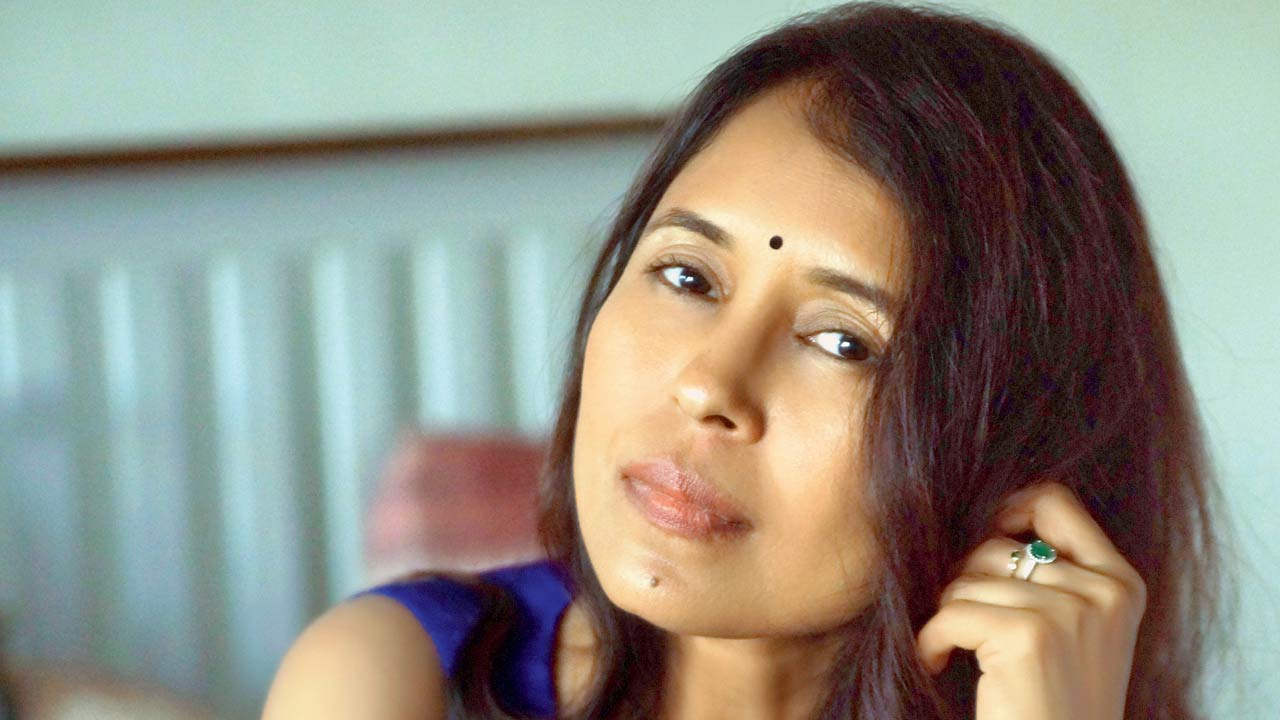
As Village Rockstars 2 premieres at the Berlin Festival, Nation Award-winning filmmaker Rima Das opens up working on a folk-horror story for her next, and why financial support for independent filmmaking in India needs to go beyond just lip service
Priyanka Sharma (MID-DAY; February 16, 2025)
It's time for Rima Das 2.0. The National Award filmmaker is currently at the coveted Berlin International Film Festival for the premiere of her latest work, the Assamese movie, Village Rockstars 2. The festival darling lets us in on a new resolution when we speak to her—she is ready to turn over a new leaf. “I have realized going to festivals is not enough. Now, my main aim is that my work reaches more people,” she says.
In her over a decade-long career, Das has created an enviable filmography—her breakout film Village Rockstars, Bulbul Can Sing to Tora’s Husband—and now the sequel to her National Award-winner, which has already travelled to several national and international festivals.
“At Busan Film Festival last year, a producer from Singapore told me, ‘Rima, I think this is the only sequel of an independent film. We haven’t had any other sequel to an indie film before’.” Das laughs as we mention that her film couldn’t have come at a better time, as sequels seem to be the latest obsession.
“While making Village Rockstars [2018], I never thought of a sequel. But while editing it, it did strike me that the story has a natural progression and another film can be made. But I thought if I took it to festivals, how will they react to a sequel? Also, for the audiences who haven’t watched the first part, will the title Village Rockstars 2 work? Then, I thought about the long-term value of a story and that’s why I decided to make the sequel.”
Village Rockstars is about Dhunu, a 10-year-old girl, who dreams of buying a guitar and is saving up for it. However, when calamity hits her village, she must re-evaluate her priorities. Part 2 revisits the life of Dhunu, seven years after the events of the last film.
The filmmaker began working on the film, on which she also serves as the writer, cinematographer and co-producer, in 2020. But it ended up consuming Das’ time more than she anticipated.
“In 2020, I wanted to start something with Tillotama Shome. Then, the pandemic happened. I felt like I was in a cocoon, so I started making Tora’s Husband and Village Rockstars 2 simultaneously, but there was a lot of physical, mental trauma because of the pandemic. I lost my father. So, to finish both the films took a long time. I had to rewrite and re-shoot portions of Village Rockstars 2. It took me four years to finish the film,” she shares.
As rewarding as making Village Rockstars 2 was, it also left the filmmaker feeling stagnated. Das knew it was time for a reboot. “I had been shooting in the same location for years because Village Rockstars and Bulbul Can Sing were shot in the same area, while Tora’s Husband was shot nearby. I stopped enjoying it. So, during that time I started developing other ideas because I felt like doing something new,” she says.
Now brimming with ideas, the filmmaker is having a party. “I am writing something set in Mumbai, and it’s folk horror. When I look around, I see a lot of stories. Then, I feel like telling these stories is more important than making something perfect.”
With creative expansion on her mind, Das wants to enter unfamiliar territories. “Now, I also want to do commercial and semi-commercial films. Not being officially trained in filmmaking, my perception and knowledge of art is probably different from other filmmakers. Keeping the essence of cinema intact, I want my films to be accessible and reach a wider audience. Some films I think feel very arty. If I am making a Village Rockstars, I have a message to tell. If only cinephiles are watching it, it’s not enough for me. I want my films to reach marginalized sections or the [regular] audience. That is success for me. I don’t like my films to be a piece of art that is consumed by only a section of the audience. This wasn’t exactly on my mind when I made Village Rockstars. It was made without music and I thought the way it had shaped up was for a foreign audience but when it was released in India and I saw people loving it, I realized there are no boundaries to art.”
What also calls out to the filmmaker today is the need to embrace collaborations. Since the beginning of her career, Das has made movies largely by herself— from writing to producing. “I am looking for more collaborators, who are like-minded. I don’t want to be in the lonely place of doing everything by myself. I know when the time is right, the right kind of people will align with my vision and understanding of cinema.”
Making movies is as much about having talent as it’s about finding people who believe in it. It becomes particularly difficult to find believers of stories that don’t conform. Das, one of the biggest success stories in India’s independent space believes, “If you look at our audience, it should not be difficult to be an independent filmmaker in India. But there aren’t many forces to support it. There is a lot of lip service. If only five people, who are big producers, can support the scene, it can drastically change. But that’s not happening and I don’t know why. We look at old architecture and marvel at it, but nothing new is being built. Good art, poetry, and film are as important as good architecture. When I hear about the box office, it is only about two per cent of our population watching a film that is called a huge success. So, when we spend Rs. 50 lakh to a crore on an indie film, the recovery in India is very easy. You just need to find your audience. But there is no support.”
On this note, Das registers praise for actor-producer couple Richa Chadha and Ali Fazal, who made their production debut with the marvellous Girls Will Be Girls. “We need more people like Richa and Ali. Look how they supported an independent filmmaker [Shuchi Talati] and a beautiful film got so much visibility.”
Beyond that, Das believes one has to just be at it. “These problems have always been there in the independent space. Films are a catharsis for me. Every time I am doing something, I am creating opportunities for people, whether the number is 10 or 40.”
An A list actor might receive better treatment, while others don’t. Everyone should be treated equally-Kani Kusruti
9:15 AM

Niharika Lal (BOMBAY TIMES; January 4, 2025)
Kani Kusruti says she is happiest at home with her plants in Goa, practicing the sitar - a routine that got disrupted due to the year-round celebrations of All We Imagine As Light and Girls Will Be Girls, two internationally critically acclaimed films she was part of this year.
Kani says, "I think this is mostly the first time I felt there was more celebration than work. I feel it’s very disproportionate in terms of celebration - it’s like too much celebration. I’ve never had a year like this."
'Like in every field, in cinema, I think sometimes people get picked up by chance rather than the most deserving ones'
Kani shares, "I will honestly say, I don't think acting is really my cup of tea. I just happened to become an actor at a young age, and I ended up practicing it and continuing with it. I have many fellow actors and colleagues from Kerala, theater, and elsewhere who are way more talented, passionate about acting, and hardworking than I am. But, like in every field, especially in cinema, I think sometimes people get picked up by chance rather than the most deserving ones."
She continues, "Payal is a really nice person, a good director, and it was a great team. So, I loved working on Payal's film. Some projects come along like that, and I feel truly happy about the way we work together. But when I talk to other actors, I know they feel very happy just acting alone, just being able to play a character - they're genuinely happy. I don't have that kind of happiness. For me, happiness comes when the team is great or when we enjoy the process. I find joy in other things, like the stories we tell, not necessarily in my character."
"I thought maybe Payal reached out to me for a diploma film at FTII, didn't know it was feature film." Payal contacted Kani Kusruti for the film when she was studying at FTII. Over the years, Kani has seen different drafts of All We Imagine As Light. Payal initially offered her younger part and years later when the project was finalized she ended up doing the elder nurse role."
Today, it's understandable when someone is excited to work with Grand Prix winner Payal Kapadia. But back then, when she was just a film school student, what was it about her that made you look forward to working with her? Kani says, "It was not so much about the character for me. Why should women bear the burden of making only good films and proving themselves constantly? They should be able to make bad films too."
Kani has worked with many female directors. She says that she didn’t plan it; it just naturally happened. She says, "I’m just very happy every time it’s a female director - I feel a different kind of happiness. Maybe it’s because I’m a woman in India, and when I see female directors coming up, I already feel a sense of joy. It’s like, 'Oh, who is she? How is she thinking?' You also feel a little safer and that you can express yourself. I’m not saying all women directors are always going to be nice and amazing- not necessarily. In fact, true diversity will come when more women enter the field. Then, we’ll have all kinds of films - even bad films - made by women. Why should women bear the burden of making only good films and proving themselves constantly? They should be able to make bad films too, just like everyone else."
Kani says that the female directors who have helmed projects in the last 10 years, whether in commercial cinema or other sections, have really paved their own paths by putting in a lot of work on themselves. She says, "I believe these women are slightly exceptional in some way, which is why they’ve reached where they are today. It’s not an easy journey. They’ve worked hard, and some may have had certain privileges, but they’ve earned their place."
She says, "I’m sure male gazes and patriarchal perspectives may sometimes come from female directors too. Most female directors I’ve worked with have been kind, collaborative, and understanding. They created environments where we felt safe. And it’s not just about female directors - the sets are often run by women. Right now, we mostly talk about two genders, women and men, but there are many genders. When the industry becomes more inclusive of all genders, I think everyone will feel safe. I believe all artists, regardless of gender, have to work hard on themselves to create a healthy workspace. I consider myself fortunate that most of the male directors I’ve worked with were also good, with only a few exceptions where I felt the working environment wasn’t healthy. Most of the male and female directors I’ve collaborated with have had good spirits. However, there have been instances where I worked with female directors and felt that the workspace wasn’t ideal. So, it’s not exclusive to one gender. Creating a positive and healthy working environment is everyone’s responsibility."
Often luxuries take away from ensuring that other crew members get enough rest
What does she mean by a healthy working space? Kani explains, "What I meant by a healthy workspace is that there are often different kinds of abuses that happen- taking people for granted, exploiting their time excessively, underpaying them, making them work overtime, not providing proper contracts, or verbal abuses that sometimes occur during shooting. We have many such practices in India. I understand that someone may get angry once during a 60-day shoot. People are under stress - that much I can understand. Everyone is human. But when such behaviour becomes a habit is what is a problem. For example, an A-list actor might receive better treatment, while others don’t. Everyone should be treated equally. That’s what I meant by a healthy workspace."
Kani says that it is normal that people may occasionally misbehave, but that’s not the only issue. There are entrenched hierarchical and unethical practices in workspaces that need to be removed. She shares that fortunately, the next generation is already bringing in new ideas, and she is hopeful things will change. However, even when people don’t intend to misbehave, bad workspace practices and lack of resources can lead to stress-induced behaviors, like shouting. She says that’s why she believes the resources of a film should be allocated properly, not just for stars. Sometimes, the allocation feels excessive - for instance, spending disproportionately on entourages.
She says, "I understand the need for one or two assistants in some cases, but often, these luxuries take away from ensuring that people, like those in lighting crews, get adequate rest. These crew members often sleep the least, leave last, and arrive first."
Kani shares, "We have a history of bad practices; how to change it, I don't know. For example, in Kerala, they are trying to have an ICC (Internal Complaints Committee), but what kind of power it can have depends on whether people are willing to consciously change and whether producers are willing to put the money in the right places to establish good ethics and practices, such as ensuring people get enough rest. Are we able to allocate money in a way that we can give everyone an ample amount of rest, proper conveyance, and good food? In Hindi projects that I’ve been a part of, I see there are different eating places. Actors eat in a separate mess with specific catering, technicians have a different one, and daily-wage artists who work on the film have another buffet. I don't understand this. It's unbelievable. That disparity is so clearly visible, even in the food. So, we have to work a lot to achieve equality and treat everyone with equality."
Kani on her directors
Payal Kapadia, All We Imagine As Light
Payal was completely different. At the location, we were just trying to remake what we had achieved all day in the rehearsals. It was more like a theater production. Before going to the location, we already knew everything. Payal shot all that rehearsal on camera. Then she also edited it to see how it looked. So, she already made a film, which looked very similar, sometimes even with the actual costumes. Sometimes, it wasn't the actual actor, but another actor playing the role. We all felt we knew how the film was turning out because she made everyone involved in the film - like an equal collaborator
Shuchi Talati, Girls Will Be Girls
We would first rehearse, then every department would watch it. Everyone would know what the actors are going to do. Everybody is part of it. Then everyone would prep for the scene, right there, and then we would shoot the scene. Also, Shuchi had a completely different interpretation of the characters. The same dialogues were said with completely different intentions. So, I was very curious to watch Girls Will Be Girls finally because I was like, which Anila is coming out? I was also curious Is it the Anila close to the script, or the Anila that was discovered on the set? Shuchi made Anila different on set. She interpreted Anila very differently on set, so that was very interesting.
Richie Mehta, Poacher
Richie is not much of a rehearsal kind of person. He'd rehearse a bit on the spot but doesn't really fix the performance exactly how he wants it. He also goes with the spontaneity and what the actor brings to the scene. Most of my scenes in Richie's series were shot with handheld cameras. So, the DOP (Director of Photography) had a free-flowing approach, following the actor's movements. The DOP also chooses which parts to focus on, and sometimes it's not your face; it might be yourzfingers or what your hands are doing. This approach brings out a different kind of performance.
People think that a nuanced, quiet film means it’s slow and boring-Shuchi Talati
8:36 AM
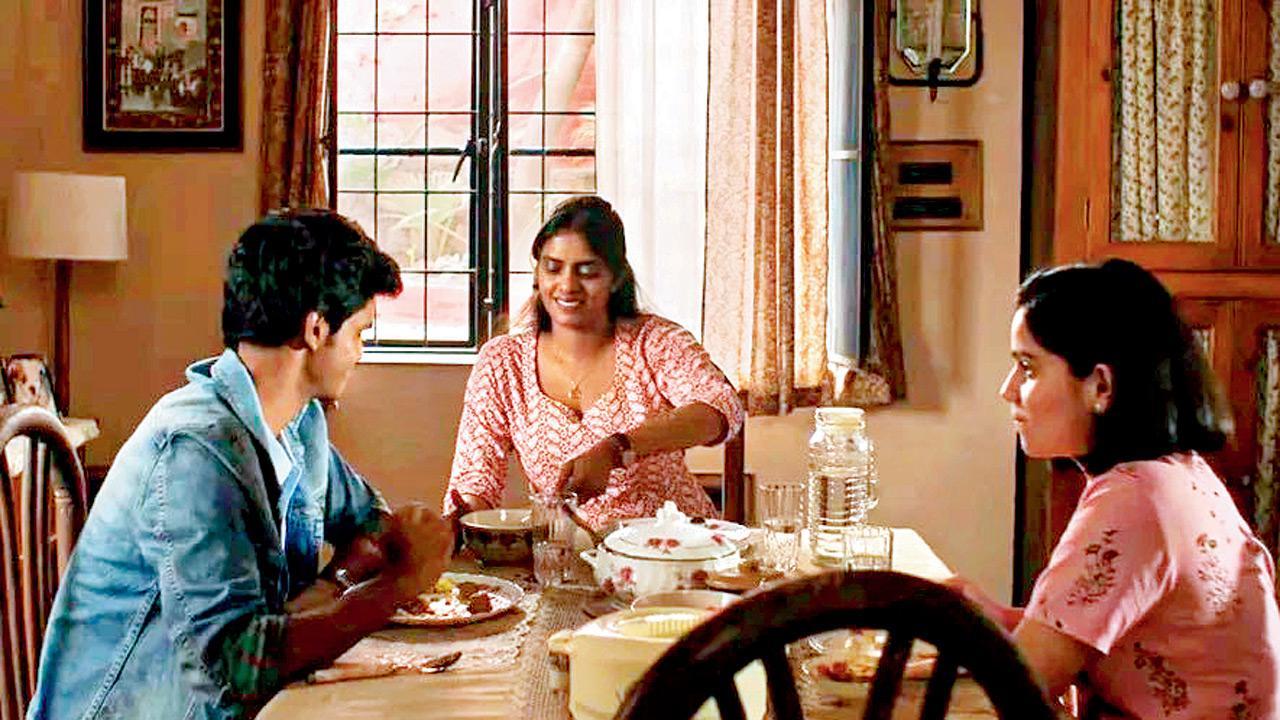
Girls Will Be Girls stars (centre) Kani Kusruti and (right) Preeti Panigrahi
Director of Sundance winner Girls Will Be Girls, Shuchi Talati, speaks about how rebellion sparked the mother-daughter story starring Preeti Panigrahi and Kani Kusruti
Mohar Basu (MID-DAY; November 29, 2024)
Why is that skirt so short? Why are you bending over the desk like that? Who is calling you so many times? Shuchi Talati remembers these questions being thrown at her constantly during her teenage years. Those years of being questioned and her defiance have led to her maiden feature film, Girls Will Be Girls.
“I started to make this film from a place of anger and rebellion. As teenagers, [girls] are subjected to constant policing and surveillance, which instills in them a deep shame about desire or sexuality. I wanted to tell a story about a young girl’s first romance, her sexual awakening, but treat it as a normal part of growing up. I wanted to do it in a way where the storytelling doesn’t shame it at all,” starts the director.
Girls Will Be Girls—which won two awards at the 2024 Sundance Film Festival—tells the story of 16-year-old Meera, essayed by Preeti Panigrahi, and her complex relationship with her mother, played by Kani Kusruti. Their friction only increases when the daughter’s boyfriend starts showering attention on the mother. Talati reveals that the mother’s track came to her much later.
She recalls, “The character of the mother appeared in a later draft. It was so rich because I was closer in age to the mom. I felt, ‘This woman is in her late 30s. Why should she not have desire? Why should she not have fun?’ This boy is giving her attention. Nobody else in her life did that. So, I started feeling a lot of empathy for her. The film became about the two generations of women, who are trying to break out of the box that society [imposes] on them. They are trying to subvert, circumvent, and somehow live their life with more freedom.”
She adds, “Their friction is key to our story [because initially] Meera looks down on her mother, who stays at home and seems unfulfilled. Through the film, she grows up to see her mother as a full person. That kinship comes to them eventually.”
To Talati, the movie is of much emotional value, not only because it is her first feature film, but also because it comes from a personal space.
However, she points out that it is not autobiographical in nature, as she says, “With first-time women filmmakers, people assume that they’re writing about their life. This film is deeply personal. Not because any of these things happened to me, but because I felt all of these things. For instance, Meera gets worried that her boyfriend is getting close to her mother. I have felt [a similar] insecurity when my boyfriend was talking to some girl who seemed older, cooler and more interesting. I have felt [that pang of sadness] that the mother feels when she sees that someone is going to have so many more opportunities than her.”
Filmmaking is a career that happened by chance to the Baroda-born writer-director, who was almost on her way to become a doctor. But a conversation with a friend made her realise that her calling is in the arts. It is in journalism school that she met classmate Richa Chadha, who, years later, along with actor-husband Ali Fazal, backed Girls Will Be Girls as their maiden production.
“Richa was the first person to come on board. I was pitching it at Film Bazaar at the co-production market. I called Richa as she is the only person I knew in the industry. She read the script and loved it. She said, ‘I wanted to produce for a long time. What could be better than backing one of my oldest friends’ scripts that I love!’”
In the past few weeks, All We Imagine As Light director Payal Kapadia has shed light on the challenges of indie filmmakers in India. Talati chooses to be optimistic as she gears up for her movie’s 2025 release.
“Hopefully, people will hire me to do other films. I am hoping to write something new. The thing is people misunderstand nuance. People think that a nuanced, quiet film means it’s slow and boring. But since we all observe humans all our lives, we understand nuance. So even though this film is nuanced, it’s extremely accessible,” she states.
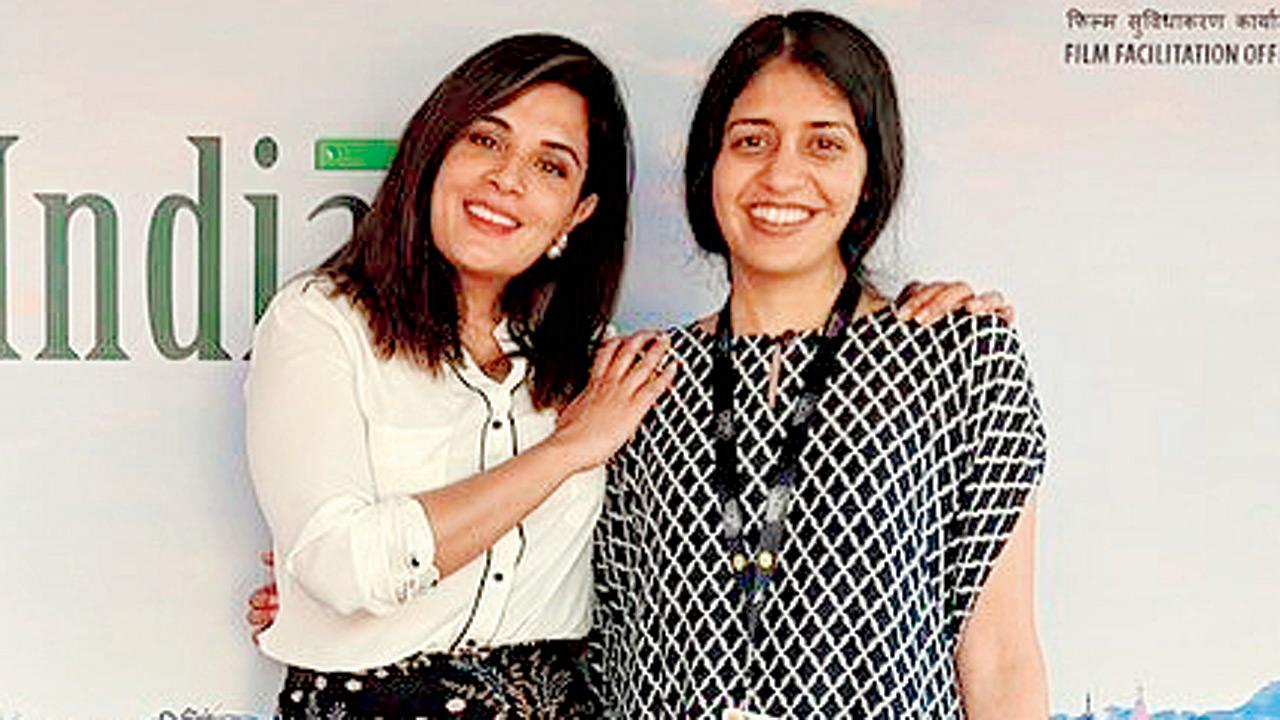
Richa Chadha and Ali Fazal’s debut production Girls Will Be Girls wins two awards at the Sundance Film Festival 2024
8:39 AM
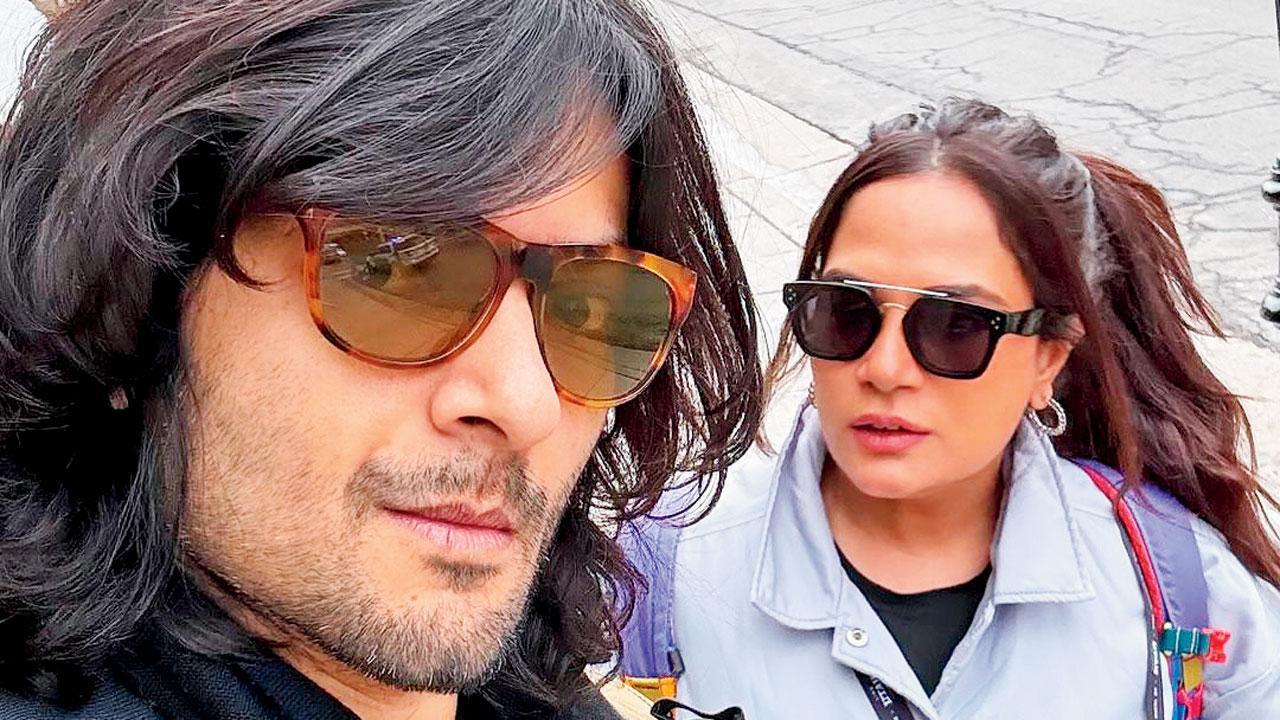
First-time producers Richa-Ali say Girls Will Be Girls’ double win at Sundance reaffirms their faith in unheard stories; plan to take film to Gothenburg fest
Mohar Basu (MID-DAY; January 29, 2024)
Is there a greater joy for filmmakers than seeing their maiden movie winning awards? Over the weekend, Richa Chadha and Ali Fazal’s debut production, Girls Will Be Girls, clinched two awards at the Sundance Film Festival 2024—the Audience Award in the World Cinema Dramatic Entry category, and the Special Jury Award for Acting for Preeti Panigrahi.
Starring Panigrahi and Kani Kusruti, Shuchi Talati’s directorial venture revolves around a 16-year-old girl’s complex relationship with her mother. In the coming-of-age drama, Chadha and Fazal found just the kind of meaningful stories that they want to back. Their belief in championing unheard stories has been rewarded with the wins.
Chadha says, “It seems as if life is going in all directions at the same time, in a good way. I hope this gem of a film maps out its own journey.”
Actor-producer Fazal is already planning the film’s festival run. “Up next is the Gothenburg Film Festival and another festival. This win helps us dream bigger and take on some more stories that we want to push the buttons on.”
Crediting Chadha for advocating the movie, Talati says, “It’s fulfilling to see our story strike a chord with viewers and reviewers, igniting discussions about the often-overlooked coming-of-age encounters depicted on screen.”
I have always been deeply inspired by the women I grew up with-Ali Fazal
8:48 AM
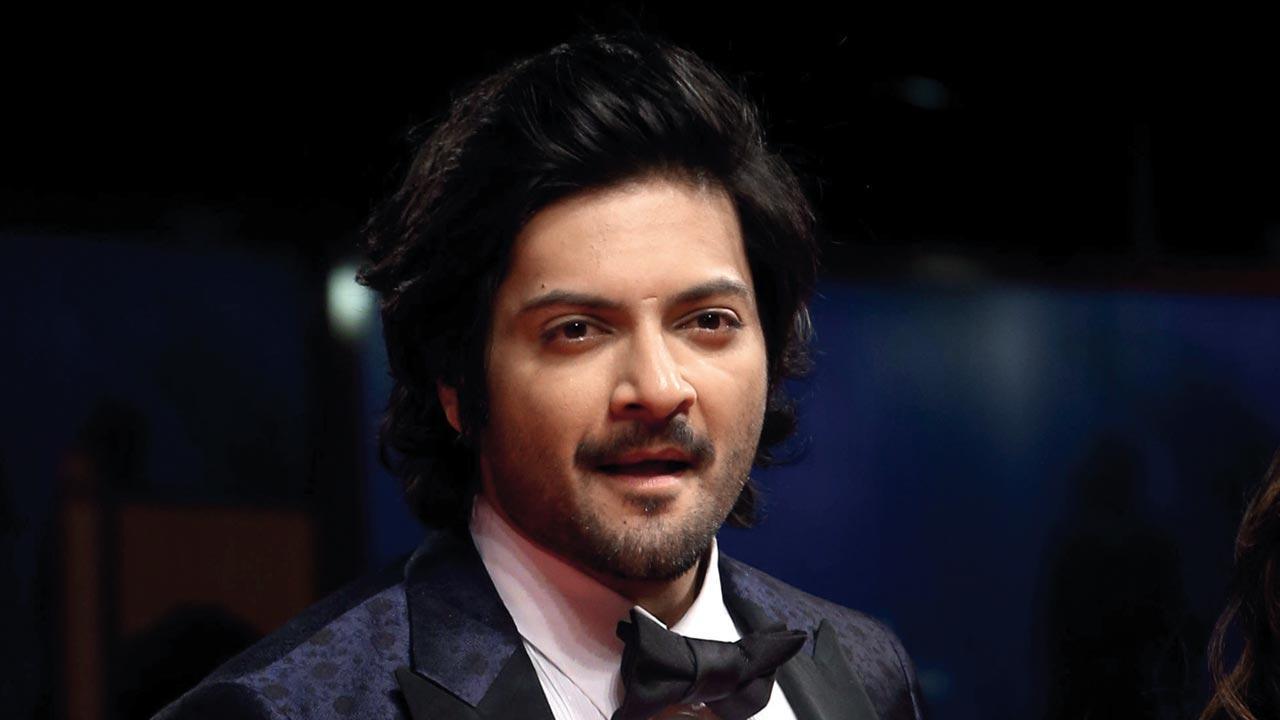
As they wrap up training of female gaffers, Ali Fazal on being feminist ally and promoting gender equality in industry
Mohar Basu (MID-DAY; July 16, 2022)
Richa Chadha and Ali Fazal recently wrapped up the first training programme of Undercurrent Lab, which aims to train female gaffers, thus increasing women’s participation in the lighting department of the Hindi film industry. The idea of the incubation programme struck them when Chadha and director Shuchi Talati sought to hire an all-women crew for their film Girls Will Be Girls, only to realize that the lighting department is a largely male-dominated field.
Tanya Negi, who is associated with Chadha’s maiden production venture, then suggested creating a lab that would promote the inclusion, training and mentorship of women in these technical areas.
Fazal, who launched the production house Pushing Buttons Studios with partner Chadha in 2021, is glad to be an ally as women explore new opportunities for themselves. “I have always been deeply inspired by some dynamic personalities in my life, mostly the women I grew up with. I suppose it reflects in my work and life choices,” says the actor, who also attended the week-long programme.
“I attended all the sessions to educate myself as well as extend my support. From the guests to the lecturers, I’m grateful to all those who supported the lab, [especially] Nasir bhai [Shaikh] and others who allowed us to conduct the training at Light n Light studio.”
The actor duo hope that the women gaffers will be hired by production houses and filmmakers.
We realised there are no women in some film departments-Richa Chadha
7:45 AM
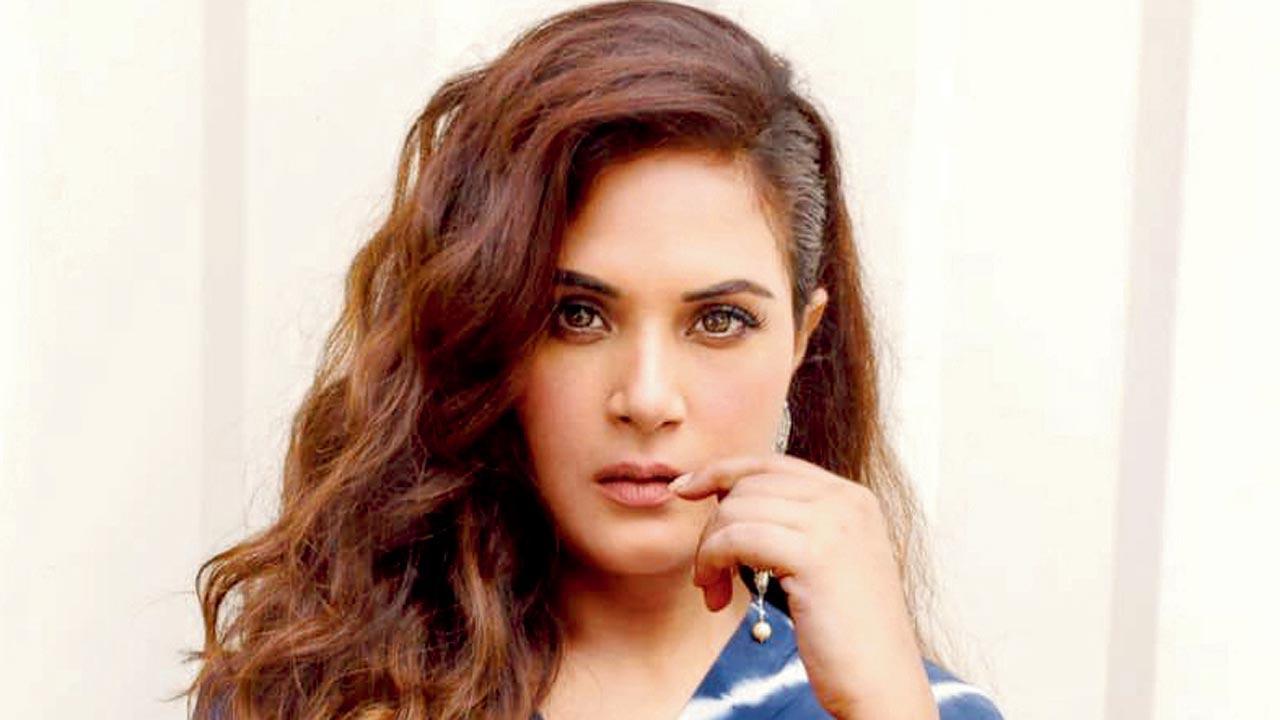
Before her maiden production rolls, Richa designs incubation programme to train women in lighting; proposal wins grant at Berlinale
Mohar Basu (MID-DAY; February 18, 2022)
Richa Chadha’s maiden production Girls Will Be Girls has a reason to celebrate. At the Berlinale Co-production Market that was held from February 12 to 16, the film won the Talents Footprints Mastercard grant — an annual funding designed to help filmmakers achieve social impact through financial support, mentorship and public awareness. Chadha and director Shuchi Talati’s winning proposal was an incubation programme to increase women’s participation in the grips and lighting department in the Hindi film industry.
The programme was proposed with the vision to promote women’s inclusion and training in technical areas that are currently dominated by men. Chadha says the idea struck them when they began production work on Girls Will Be Girls. “When Shuchi and I were building an all-women crew, we realised there are no women in some departments. That’s when we thought, ‘How can we come up with solutions to increase the participation of women?’ Our teammate Tanya Negi came up with the idea of the incubation programme. We sent in an application since our script was at the Berlinale Script Station last year, and won this grant,” she says.
Having received the grant of €5,000, Chadha hopes to rope in Bollywood’s senior cinematographers and members of Indian Women Cinematographer Collective (IWCC) to train the applicants. Director Talati adds, “We are inviting all Mumbai-based women who are interested in learning about cinema lighting. Electricians, engineers, and aspiring cinematographers should apply. We are also [hoping] the film fraternity supports us by providing mentorship to our trainees.”
Richa Chadha bats for all-female crew in production debut
8:00 AM

Rishabh Suri (HINDUSTAN TIMES; September 6, 2021)
Actor Richa Chadha recently announced that she has decided to try her hands at production with a film called Girls Will Be Girls, along with boyfriend Ali Fazal. Besides being her maiden venture, what makes this project more special is her decision to work with an all-female team.
The 34-year-old tells us that it was her director, Shuchi Talati’s idea to aspire to have an all-female crew. She continues, “Shuchi wanted to see what that would do, having only women on board. We have had one round of interviews with some aspirants. Our co-producers in Delhi, who have produced several award-winning feminist indie films, also feel strongly it should be women-led.”
Set in a boarding school in a hill station in north India, the plot of the film revolves around the coming of age of a 16-year-old girl and her relationship with her mother. Talati’s last film, A Period Piece, had a largely-female crew and she found it to create a nurturing and supportive environment. This influenced the duo to push for an all-female team for this project.
Chadha feels that this move holds the potential to change a lot of things across film industries everywhere. “I think it’s a great, positive, social experiment. I experienced a certain freedom from male expectations, from dressing up, etc in my last year of education at a girl’s college... I don’t know if it’ll usher in a revolution but I definitely think it’s worth trying,” confesses the actor, who is currently busy filming for another project.
Ali Fazal-Richa Chadha’s Girls Will Be Girls among 15 scripts selected for global film market, Gotham Week
8:05 AM

Mohar Basu (MID-DAY; August 3, 2021)
First-time producers Richa Chadha and Ali Fazal are overjoyed as their project, 'Girls Will Be Girls', is making waves in the international circuit. The movie, to be directed by Shuchi Talati, was chosen for the Berlinale Talents Script Station programme earlier this year. Now, it is among the 15 international scripts selected for the international features section at Gotham Week, a prestigious global film market where established and emerging filmmakers get the opportunity to network with film financiers, festival curators, and producers. The annual event, sponsored by Netflix, Amazon Studios, Audible, SAGindie and Warner Media, will be held virtually between September 19 and 24.
Ahead of taking it to the global film market, the team has shot a pitch video that will help in raising funds. Chadha says the script’s selection has given them the confidence that they are on the right path. “At Gotham Week, we hope to find like-minded investors and collaborators who will join us in making this film. It is a fresh and feminist story, and I believe Shuchi is a new voice in Indian cinema,” she says.
Writer-director Talati hopes to make the movie with an all-women crew. “The film deals with gendered power dynamics and female sexuality, and I always thought the story would resonate internationally.”
Richa Chadha and I will be detached as actors and invested as producers-Ali Fazal
8:12 AM

When the world came to a standstill, actor couple Richa-Ali conceived and brought to life what they call their ‘first baby’ - their production house, Pushing Buttons
Mohar Basu (MID-DAY; July 23, 2021)
Richa Chadha, 34, and Ali Fazal, 34
The actor-turned-producer duo have rolled their first film, Girls Will Be Girls, which has been chosen for the Berlinale Talents Script Station programme
When the bustling city of Mumbai came to a screeching halt overnight last March, owing to the pandemic, Richa Chadha and Ali Fazal found some breathing space after months of relentless shoots, chaotic schedules and wedding planning. But within weeks, the curious minds knew that they couldn’t waste the free time holed up in their apartment. Wasn’t this the perfect time to set in motion their long-cherished dream of turning producers, they asked each other. “Both of us have had our distinct journeys, and seen what it takes to run a production house — be it [roping in] investors or directors, hiring technicians or discovering writers. Richa and I have always wanted to tell stories. We have some great ideas and good experiences,” begins Fazal, who felt emotionally ready to graduate to the next step after a 12-year acting career.
Thus was born what the couple considers their first baby — Pushing Buttons Studios, a boutique production house. In Fazal’s words, the studio’s launch was driven solely by the duo’s love for indigenous stories. “Hamari zameen par bohot kahaniya hain jo humein sunani hai. We wanted to set up a space that’s easy for people to work in. Our vision is to become a medium for artistes from diverse walks of life to come together and make films. It’s like a club where you are tied by emotions, but are free to be employed by anyone else. We believe that art and artistes cannot be tied down.”
But would this have happened without the lockdown? Chadha thoughtfully says, “What helped was us moving in together. It made it easier for us to work together. But setting up a small creators’ lab was something we’ve been [discussing] for the past two years.”
In June 2020, the two rolled up their sleeves and got down to work. Their first step was to send out feelers to friends and frequent collaborators, inviting them to share their scripts. After sifting through almost 100 scripts and step outlines, they struck gold with Chadha’s friend Shuchi Talati’s story, Girls Will Be Girls. Then, it was time for the bigger hurdle — finding investors. Enter French producer Claire Chassagne of Dolce Vita Films, whom Chadha knew since her Masaan (2015) days, and Sanjay Gulati of Crawling Angel Films.
Attribute it to beginner’s luck or their keen eye for scripts, but their maiden project is one of the 10 scripts chosen for the Berlinale Talents Script Station programme this year. “Shuchi and I studied together for a year. Girls Will Be Girls is a story every ’90s kid will relish. She will be one director to watch out for, and the fact that Berlin picked it up gives us the confidence that we are headed the right way,” says a proud Chadha.
One would’ve expected that her short film would be their first offering. After all, the actor was utilising the stay-at-home period to hone her writing and directorial skills as well. “I am not sure I will ever release it. I am done with the first draft of another script, a surreal film that is a mix of magical realism and comedy,” she explains.
The actors-turned-producers officially launched their banner in March 2021, eight months after they began working on it. As new producers, they are making their way through the teething issues. “It’s a new role, and I have to stop to remind myself, ‘You are a producer now. Think like one.’ I am a bit too generous without realising the constraints,” laughs Fazal.
The duo don’t have an office yet, working out of their Juhu home and connecting with the team of Girls Will Be Girls virtually. “Shuchi is in New York, [Chassagne] is in France, [Gulati] in Delhi and we are in Mumbai. Richa and I do weekly calls to brainstorm on concepts and ideas. I am glad we aren’t acting in our first project because we will learn more as aides on the job. We will be detached as actors and invested as producers, which will help us sharpen our on-ground skills,” he explains.
The couple is waiting to complete their first outing before sanctioning any more scripts. They have unwittingly ventured into storytelling at the perfect time — after all, the content landscape in the country has seen a radical change in the past 16 months.
However, Chadha disagrees with the notion, “All the lockdown has done is accelerated the process of the audience moving to a different content design. With rising ticket prices and the OTT boom pre-COVID, the shift was unfolding gradually anyway. Private viewing has put the focus on stories over stars because the pressure of selling tickets doesn’t exist. Narratives are winning, which is why Pratik Gandhi, headlining Scam 1992: The Harshad Mehta Story, despite being a fresh face, has been able to shine. As a result of the audience getting picky, the writing will get better.”
Once the production house finds its feet, the couple intends to take it to foreign shores. Fazal, who has starred in international outings, including Death On The Nile starring Kenneth Branagh and Gal Gadot, says, “Without me even trying that door, we’ve done well. Richa is a step ahead in the European sector [due to Gangs of Wasseypur and Masaan doing the festival rounds]. With time, and trust in our work, we will be able to pull in some good studios. It’s a matter of time before people all over [the world] see our work.”
Richa Chadha and I have set ourselves on a Salim Javed hunt-Ali Fazal
8:03 AM
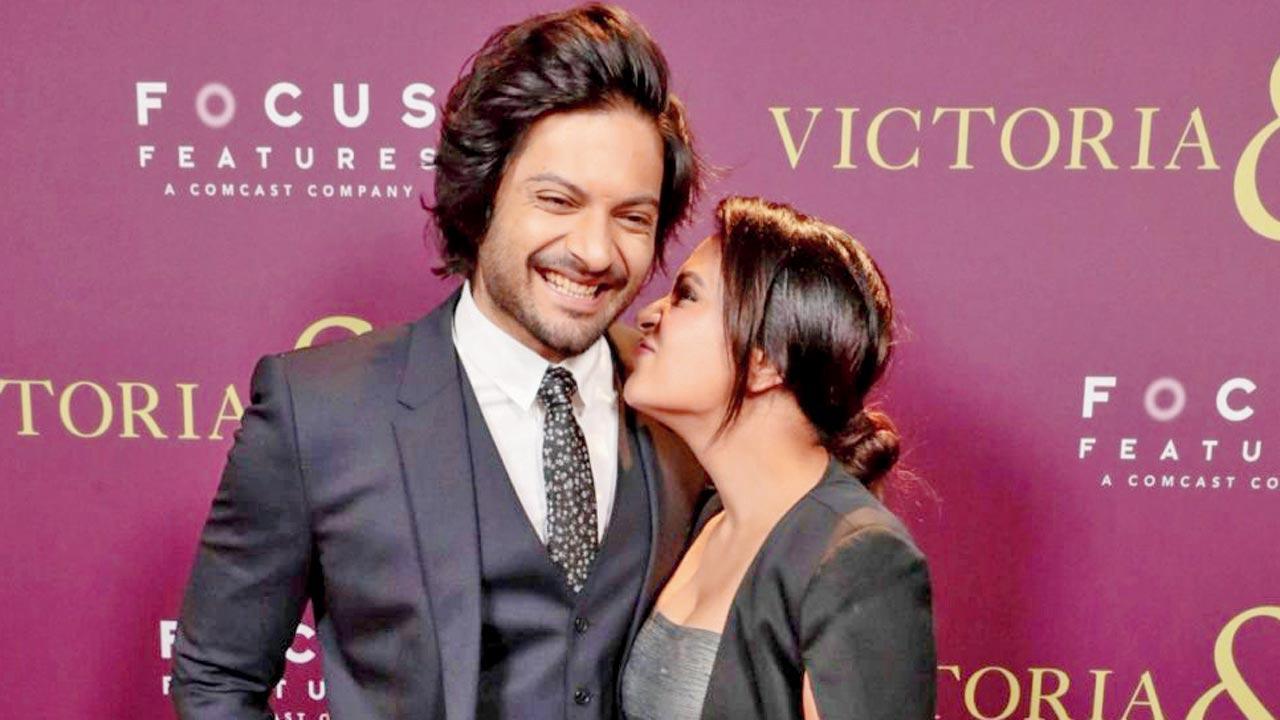
Richa-Ali call out to small-town writers; plan to back scripts under their newly launched banner
Mohar Basu (MID-DAY; April 9, 2021)
Richa Chadha and Ali Fazal have already greenlit their first movie, Girls Will Be Girls, under their newly launched banner, Pushing Buttons Studio. Even as the film is currently in pre-production under the supervision of Brooklyn-based director Shuchi Talati, the actor-producer duo have turned their attention on their next. Keen to give a platform to budding writers across the country, Chadha and Fazal have invited aspiring screenwriters to send their scripts to the studio, one of which will be chosen for their second project.
While the move helps bring in stories that are raw and realistic, Fazal emphasises that it will also provide an opportunity to writers from smaller towns to gain a foothold in the industry. “I believe there is no lack of talent, even in the remotest parts of our country. If given the right platform, the writers will soar,” he says, before quipping, “So, we have set ourselves on a Salim-Javed hunt.”
Chadha chimes in, “Ali and I are big fans of Malayalam and Assamese films. We hope to give a platform to creators from everywhere.”
Richa Chadha and Ali Fazal’s first Indian production challenges gender taboos
8:14 AM

The script by Shuchi Talati has made it to the Berlinale Script Station 2021
Renuka Vyavahare (BOMBAY TIMES; March 4, 2021)
A couple who stays together works together. Richa Chadha and Ali Fazal have collaborated as producers, and work on their first project has commenced. We hear that the projects they will back aim to tell stories that are rooted in the Indian ethos for a global audience. The first script to be green-lit under their banner is titled Girls Will Be Girls and is written and will be directed by debutant Shuchi Talati. Interestingly, it is the only Indian script invited to the prestigious Berlinale Script Station 2021 — a lab that selects only 10 projects from around the world each year.
Talking about the venture, Ali Fazal said, “This is the first time that Richa and I are collaborating on a film as producers, and the experience so far has been very rewarding. This film being our first is close to our hearts. I am also excited that we are making a foray as filmmakers with such a progressive, female-led story. We hope to be able to tell thought-provoking and universal stories with humour and love.”
The film is set in an elite boarding school in a small Himalayan hill-town. It follows the story of 16-year-old Mira, whose sexy, rebellious coming-of-age phase is hijacked by her mother, who never got to come-of-age. Mother and daughter grow up together through the course of the script, and their fraught, but loving relationship lies at the heart of the film. Shuchi Talati, the writer-director, who is based out of New York, says, “I like my work to challenge dominant narratives around gender, sexuality and the Indian identity.”
Richa says, “The world that Shuchi has created is relatable, often cruel, but never hopeless or nihilistic. Its honest awkwardness will make you chuckle, not weep. It’s full of relatable incidents, that one finds oddly satisfying — like popping a zit. The mother in our story routinely dodges the self-sacrificing stereotype of the typical Indian mom — she’s complicated, grey and not a martyr. The dynamic between mother and daughter is so under-explored in Indian and world cinema.”
Shuchi and Richa have been longtime collaborators. They co-directed a documentary about adults living with autism and Down’s Syndrome while they were students at Sophia College in Mumbai, as an assignment. Even as Richa became an actor and Shuchi became a director, the two remained close friends and often talked about making films together.

Subscribe to:
Posts (Atom)