Showing posts with label Shrayana Bhattacharya. Show all posts
Showing posts with label Shrayana Bhattacharya. Show all posts
It's raining men: Why alpha males are in cine spotlight
2:44 PM

Macho action movies dominated the box office this year while female-led films have been releasing only on OTT
Shruti Sonal (THE TIMES OF INDIA; December 10, 2023)
Men in thick, flowing beards. Shotguns that seemingly come with infinite shells. Fights on top of helipads, trucks, bridges. A background score that drowns out everything else. And, a box office register that doesn’t stop ringing for angry young bros.
This roughly sums up the year’s blockbusters. Of course, nothing matches the misogyny of Sandeep Reddy Vanga’s A-rated ‘Animal’. It has the male character cracking jokes around menstruation, gratuitous violence and even the hero asking a woman to lick his shoes to prove her love for him.
“Like revenge tourism, 2023 was the year for revenge movie-watching in India,” says Girish Johar, Mumbai-based producer and film business expert. “Action has always been a safe bet. However, after the pandemic, filmmakers and producers know they need big-scale, larger-than-life films to pull audiences out of their homes. Other types of films, they prefer to watch on OTT,” he adds.
The statistics bear this out. The top seven grossers in 2023 all belonged to the action genre, including ‘Jawan’, ‘Pathaan’, ‘Gadar 2’, ‘Jailer’, ‘Leo’, ‘Animal’ and ‘Tiger 3’. ‘Rocky Aur Rani Kii Prem Kahaani’, which took the eighth spot, stood out as one of the only rom-coms that emerged a hit. There were several female-led films such as Kareena Kapoor Khan-starrer ‘Jaane Jaan’, Tabu-led ‘Khufiya’ etc but they did not hit the theatres and were directly released on OTT platforms.
ADRENALINE RUSH
Through the years, Hindi cinema’s male protagonists have shown several shades. The 1950s showed a tempered masculinity, gentled by the trauma of independence and partition, hopeful about the future. Think of Guru Dutt’s romantic artist — philosophical and doubting. Raj Kapoor’s tramp is bewildered by industrial modernity, Dev Anand is a louche charmer. None of them is particularly muscular, some even have an androgynous quality. In these early movies, there was a resistance to social norms, a questioning and conflict around tradition, even as many films implicitly reaffirmed gender conventions.
Of course, the straitjackets of virtue and good-girlism confined women. They were usually props and symbols, whether as deified mothers and bhabhis, vamps and ‘items’, or even ‘heroines’: love interests with no independent character arcs or complexity. But the men had range.
The ’70s moved from Rajesh Khanna singing about lost love, to Amitabh Bachchan’s smouldering rage at unfulfilled promises to the working classes. In the ’80s, this subaltern male anger turned into a darker thing, with lawlessness and vigilantism as central themes. It was pretty much standard to show stalking and harassment as a prelude to love. The movies lingered over rape, showing it as a titillating spectacle, and as a method to teach other men a lesson, as a loot of izzat.
The post-liberalization era saw themes of love and rebellion emerge, with romantic heroes grabbing the spotlight. However, a 2002 study of Hindi movies from the late ’90s said moderate sexual violence against female characters was “depicted as fun, enjoyable, and a normal expression of romantic love”. Now, a new hype masculine ideal has gathered strength.
While the depiction of violence in films isn’t new, the present surge marks a ‘shift’ in the use of it, says Geetanjali Chadha, professor of gender and cinema at Ashoka University. “During the ‘angry young man’ era, the violence had a purpose. It was more about the difference between the rich and the poor, and made the audience root for the underdog. Today, it’s closely tied to nationalism, strength, and glamour. The women too are no longer passive, often playing a key role in accepting it,” she says.
Economics plays a role too, points out Shrayana Bhattacharya, economist and author of ‘Desperately Seeking Shah Rukh’, which analyzed the moviegoing experience in India through the lens of gender and class. “Because men hold 82% of the country’s income, movies that depict strong men may do better at the box office than those that depict more vulnerable men or stronger female parts,” she explains.
SHRINKING SPACE
However, while the action genre means good business, it has also raised questions about the shrinking space for women moviegoers and women’s stories. Paridhi, a 22-year old from Delhi, says the rise of such ‘alpha male’ characters, shrinks her options. “The problem is not with violence, but the glorification of it. I also went to watch ‘Pathaan’ and ‘Jawan’ in the theatres, but with ‘Animal’, the clips really made me uncomfortable. Looking at its collections, other male actors will definitely gravitate towards this genre too.”
However, Nikhil Taneja, co-founder of youth-centred media organization Yuvaa, and host of the podcast ‘Be A Man, Yaar’, says he isn’t convinced that hypermasculinity is the only thing that works. “There’s a space for alternative conversations, even in action films. In ‘Pathaan’, for instance, Shah Rukh Khan has a female boss, and is saved by a female spy. In ‘Jawan’, he has an army full of young women,” he points out.
However, he adds that it’s important to understand why many young males today are tilting towards ‘alpha male’ content, espoused not only by films like ‘Animal’ and ‘Kabir Singh’, but also podcasters such as Andrew Tate. “I have interacted with over 15,000 students across campuses in the last four years for research work. While women dealing with various forms of patriarchy are often able to find sisterhood and community, men have told me they lack positive communities to talk about loneliness, which leads to bitterness, anger, and violence,” he says.
In a scenario like this, they often turn to characters they can relate to, or those who vindicate their emotions, he says, adding that therefore, filmmakers should have a certain degree of accountability of what they’re putting out there.
“Toxic characters should be represented on screen, but they have to be self-aware and have context. For instance, in films like ‘Darr’ and ‘Anjaam’, everyone knew SRK was the bad guy and he met his fate in the end. However, in some films being made today, if the directors put a cool background track as the character commits violence, they make it a character worth aspiring for. Men look at it and think it’s cool.”
Jasmeet K Reen,, writer of the critically acclaimed ‘Darlings’, feels that artistic freedom is paramount, and the audience can be the only judge. Her Alia Bhatt-starrer depicted a woman breaking free of a marriage filled with physical and psychological abuse. Some scenes were graphic, and the writer grappled with how to depict them.
“Every filmmaker has their own ideology which, whether they like it or not, reflects in their films. If I’m making ‘Darlings’, what I feel, what my ethics are, what I feel about sexism, what I feel about gender, what I feel about violence, it will show in the film. It also means that everybody has a distinct voice and I cannot control how other people should tell their stories,” she says.
I realized the women were no longer talking about Shah Rukh Khan. They were using him as a metaphor-Shrayana Bhattacharya
8:57 AM
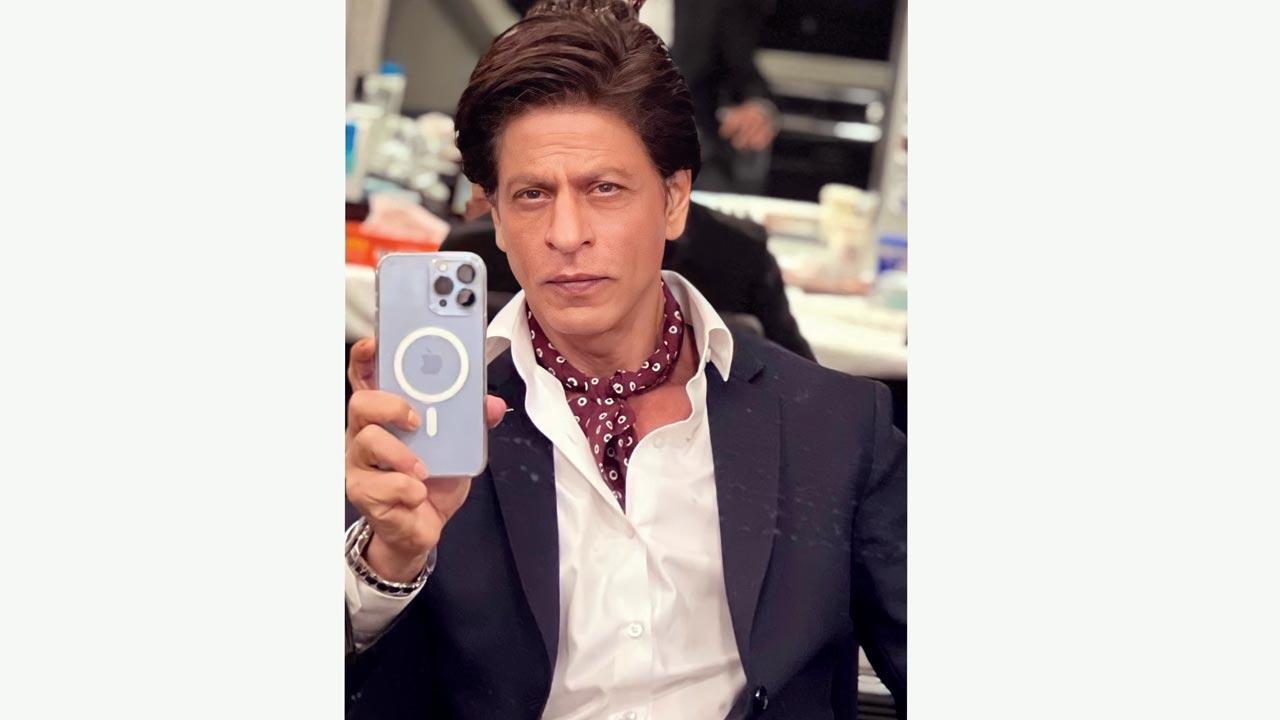
Thirty years after the Hindi film industry welcomed SRK into the movies, his legacy shines on. A social scientist, a documentary filmmaker, and his biggest fan deconstruct the myth and madness of Bollywood’s baadshah
Jane Borges (MID-DAY; July 3, 2022)
On our table at the Aquarius poolside restaurant of The Taj Mahal Palace Hotel, actor Shah Rukh Khan dominates the conversation. Writer-economist Shrayana Bhattacharya, who we are here to meet, teases the mid-day photographer, “Please, take good pictures… you never know, Shah Rukh might see.”
It’s been over half a year since her book Desperately Seeking Shah Rukh—already a bestseller—made it to bookshelves, and just about two months since her fortuitous visit to Mannat to meet the incidental subject of her book. “I am very happy to report that I didn’t faint. He is really presidential,” she shares.
On June 25, when Khan, Bollywood’s undisputed Baadshah, completed 30 years in the movies, Bhattacharya was among those who celebrated it with her two bits on social media: “An artist whose images and interviews changed the way I approach economics, writing, social science research, gender studies and myself. He is more than a ‘star’, he is a universe of concepts and meaning,” she wrote, with the hashtag #pictureabhibaakihain.
Bhattacharya tells us now, how she dislikes words like “star-struck”—often used callously for the actor’s admirers—to describe her work as a social scientist. “I am too ordinary a fan,” she confesses. What she was purely interested in, is telling the story of “what happened to women in post-liberalisation India”. “India is one of the few countries where as we have grown [economically], women’s employment drastically declined. Today, we are at the bottom five [when it comes to women’s employment],” says Bhattacharya.
“I wanted the reader to understand data, the different explanations, the technical substance of it, but of course, I wanted to do it in a way which would not bore them to death. It had to be interesting and accessible, and I was very committed to that for a long period of time.” As luck would have it, SRK came into the picture.
Her research began in 2006, when she was working on projects for Self Employed Women’s Association (SEWA) and Institute of Social Studies Trust (ISST) in rural hamlets of Gujarat and Uttar Pradesh. While investigating questions “about their employment and working conditions” she sensed a disinterest on their part. After all, they had answered these questions so many times before, she says.
“In research, we are taught to employ different methods [to eke out information]... like ice breakers. So, I started asking people about their favourite actor, and lo and behold, everywhere I went, I met these giant Shah Rukh fans. The energy and enthusiasm when talking about your favourite actor is much more, when compared to talking about your economic circumstances, which honestly can be quite depressing. We live very harsh lives in India, at least most people. I decided I will give energy to that [the conversations about Khan],” she says.
Her pursuit was a revelation of sorts. “For the next six to seven years, as I was sent to different areas of the country, speaking to women fans about him, I realized the women were no longer talking about him. They were using him as a metaphor.”
Fandom, explains Bhattacharya, is not a “silly cultural activity”. “It actually is an economic activity… to follow the work of an artiste requires money, free time, access to markets, media, public space, and even a mobile phone. None of these things, women in India [especially in rural India], can claim with ease.”
She learnt along the way that one of the ways in which Khan’s Indian female fans “flexed their economic independence was to buy a movie ticket or a television set, so that they could star gaze at their favourite actor”. He became a means to articulate their autonomy. Not to mention, a benchmark to critique masculinity.
There is a line in her book that Bhattacharya harks back to: “As real men retreat, superstars gain more glory. An ideal man is found in fantasy. You scour the landscape of everyday life, but he is nowhere to be found.” The idea of Khan, the King of Romance as that “ideal” is what Indian women continue to celebrate even 30 years on.
Khan represents the softer, gentler kind of man, thinks Bhattacharya. Having had her own “heart smashed” in 2013, when she was in the midst of research, made her realise this more certainly than ever. “All the ordinary frustrations of not being seen and acknowledged, and all the labour that women are doing... [in Khan] they see a man who is acknowledging that, not just in his films, but also in his interviews. Through the interviews I conducted with the women, I realised that he is not just some silly celebrity crush... he is a well-thought out formulation of a man who helps in a kitchen, performs emotional labour, a man who accords a certain kind of dignity to women’s experiences, and the burdens our society places on us. He is a powerful icon not just because he is a remarkable personality of our contemporary age, or because so many people’s memories and life experiences are bound to him, but because he is a language. How many people become language?” she asks.
People’s love for Khan, argues Bhattacharya, is a serious social and cultural phenomena. Even his interviews to the media elicit emotion, she says, while narrating the experiences of her interviewees mentioned in her book. “When these women would feel lonely, they’d listen to his stories of loneliness and the struggles he had. And, they drew a lot of solidarity from that.”
Back in 2005, documentary filmmaker, TV producer and author Nasreen Munni Kabir and Peter Chappell gave fans a peak into the life of their most admired icon in a two-part film, The Inner And Outer World of Shah Rukh Khan. The documentary, in a first, showed us Khan, beyond the veneer of his stardom—the family man, diligent actor and live performer, committed smoker, who was dealing with the tragedy of losing his parents at an early age, and fighting the insecurities that came with success. Kabir, who is now in London, says that since 1988-89, she had been documenting a number of film personalities. “My choice for my documentaries were those who in my view were history makers and left an imprint on the industry.”
Khan then was at the peak of his career with blockbusters like Dilwale Dulhaniya Le Jayenge, Dil To Pagal Hain, Kuch Kuch Hota Hai and Kal Ho Naa Ho under his belt. “This was the time before Facebook, Twitter or Instagram, so your connection with the stars was still quite fictionalized. To see someone [like him] in their daily life, came as a revelation.”
During the nine weeks she spent with him, Kabir saw a side of Khan, which was humbling—and that directly translated into how he came across in front of the camera. “He was a natural. He allowed you to film him, and was never really pretentious,” she remembers. “He was not vain. An actor, who is in front of the camera, would be constantly fiddling with his hair or checking himself out in the mirror... he was utterly the opposite of that. That was also the most endearing quality about him.”
Kabir says when you interview Khan, you realise that “he is, who he is”. “And when he is with you, he is completely there. That particular capacity of being totally present, even in a fictional film, makes him so relatable.” That he is also intelligent means that he can analyse himself and his craft with great clarity.
Kabir admits that it is impossible to make an absolutely objective film about anyone, leave alone Khan, but the attempt here, was to understand what he meant to people. She remembers the time when she and Chappell went with the actor to New Delhi, where he visited the grave of his parents. “Even there, in the graveyard, he had all these people following him. They really didn’t think about that moment he needed with the memory of his parents. Peter and I, however, were at quite a distance from the grave. We chose a wide shot [to give him privacy]. I remember he said something very nice after that; he said, ‘you are not greedy. You could have been up my nose, but you chose to keep a distance’.”
To understand the reason why Khan continues to be loved among fans, Kabir says, you must go back to the 1990s, when the romantic hero was adored across generations. “Stardom doesn’t come before the films. The films [of the actor] have to match up first, and have to be lived by the fans for a certain number of years, before this actor is proclaimed a star.”
In that, Khan had proved himself ably. “But there are some stars whose stardom is set in stone. So whether, the last film or the last two films are popular or not, nobody can shift them from their position. Shah Rukh is a bit like that... fans still have an attachment to him. He has become bigger than his films.”
Khan’s biggest fan, arguably, is Vishahrukh Singh of Lucknow. Vishahrukh’s fandom is both personal and public. He has christened his home Shah Rukh Palace, and his children, Simran and Aryan. His own birth name is Vishal, but he chose to keep Vishahrukh after director Subhash Ghai, who happened to see him on the set of Pardes, suggested that he take on the name of his favourite actor.
“My love for Shah Rukh ji only keeps growing,” he tells us over a video call. He is wearing a black T-shirt which has Khan’s name printed on it, and his brown hair is neatly parted in the middle, with strands inching close to his aviator glasses. It’s a “’90s SRK hangover,” we admit. Vishahrukh first saw Khan on Doordarshan, when he won acclaim for his roles in Fauji and Circus. “But, it was his character in the film Deewana [1992] that caught my attention. I had installed a music system on my bike, and I’d play two songs from the film and roam around every day... just like Shah Rukh ji.”
After he got married, he and his wife Ruchi came to Mumbai to meet Khan. This was in 1996. “We didn’t even know how far Bandra was from Colaba, where we were lodged,” he remembers. At the time, Khan lived in Amrit Building on Carter Road. On someone’s suggestion, the couple even dined at the Taj Mahal Palace Hotel, as they were told that Khan visits a particular restaurant there after shooting. “We spent the entire evening there, and also incurred a huge bill, but Shah Rukh ji never came.”
Vishahrukh finally came face-to-face with the superstar days later—it involved hovering around his building daily and befriending the security guards. He recalls creating a ruckus, when he tried to run behind Khan’s car, as it entered the gates. “I was screaming and wailing like a lover-boy for his attention. He had already read a letter that I had sent through the guard, where I had mentioned that I’d jump into the sea, if he didn’t meet me. So, he knew about me. He got out of his car, hugged and spoke to me. I was so emotional, that he had to remind me to get my camera out and take a picture with him.”
His love for Khan, he says, has only grown over time. Vishahrukh has since met the actor on several occasions, and each time, Khan has obliged him and the family. “He addresses my wife as bhabhi. When the world’s biggest superstar says something like this, who will not fall in love with him.”
In 2004, when Khan brought his fans to tears with his stoic performance in Kal Ho Naa Ho, where he is seen fighting a terminal heart condition, Vishahrukh was himself battling cancer. “I had bought the home I called Shah Rukh Palace around the same time... all this while I was undergoing chemotherapy. I drew strength from him and continue to do so,” says Vishahrukh, who has also launched a production house and an institute, where they teach dance and acting.
For Khan’s film, Fan (2016), he says the writers had reached out to him, to understand what obsessive fan worship can do. Vishahrukh was, however, disappointed with the character of Gaurav Chandna, the 20-something young man, whose world revolves around a mega movie star Aryan Khanna, based on Khan. “True fans won’t harm their heroes,” he tells us. His dream now is to make a film with Khan, titled Hum Bhi Hain Shah Rukh. “I have had many ups and downs in life, but Shah Rukhi ji has and always will remain a constant.”
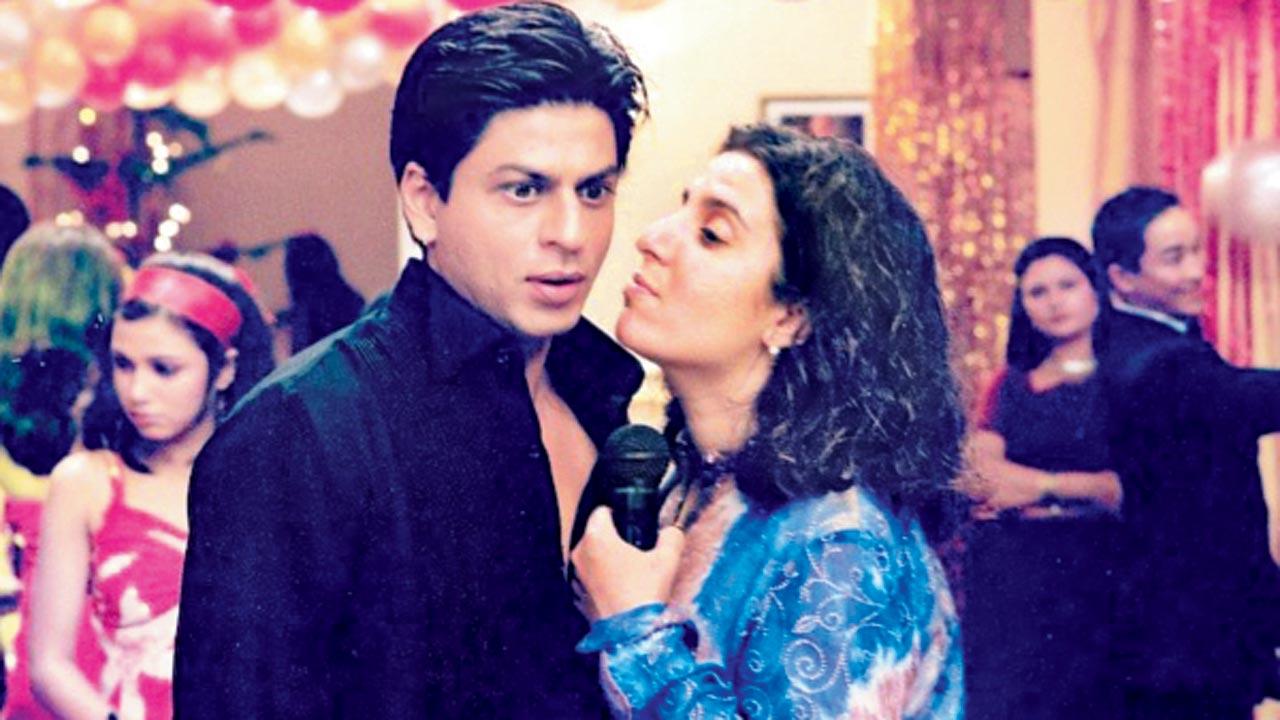
During the making of The Inner World of Shah Rukh Khan, 2004. On the set of Main Hoon Na, with director Farah Khan
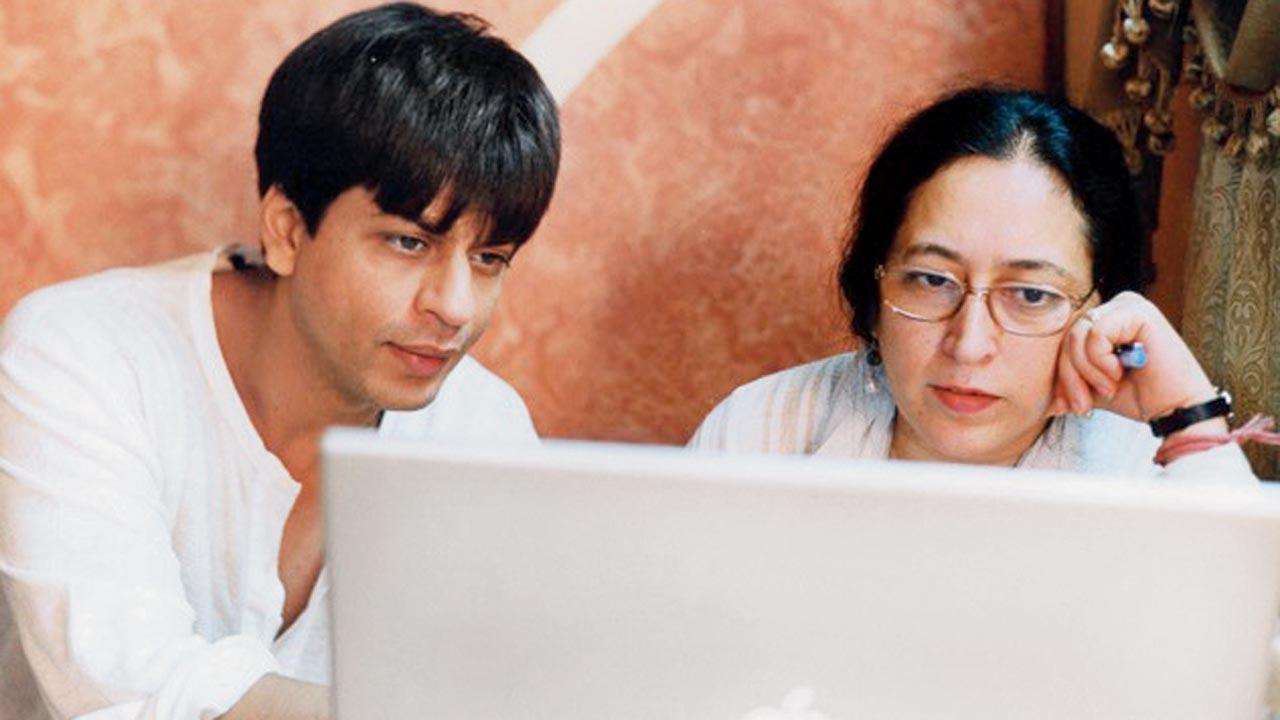
With director Nasreen Munni Kabir. Photographs by Peter Chappell. Pics courtesy/Hyphen Films, UK
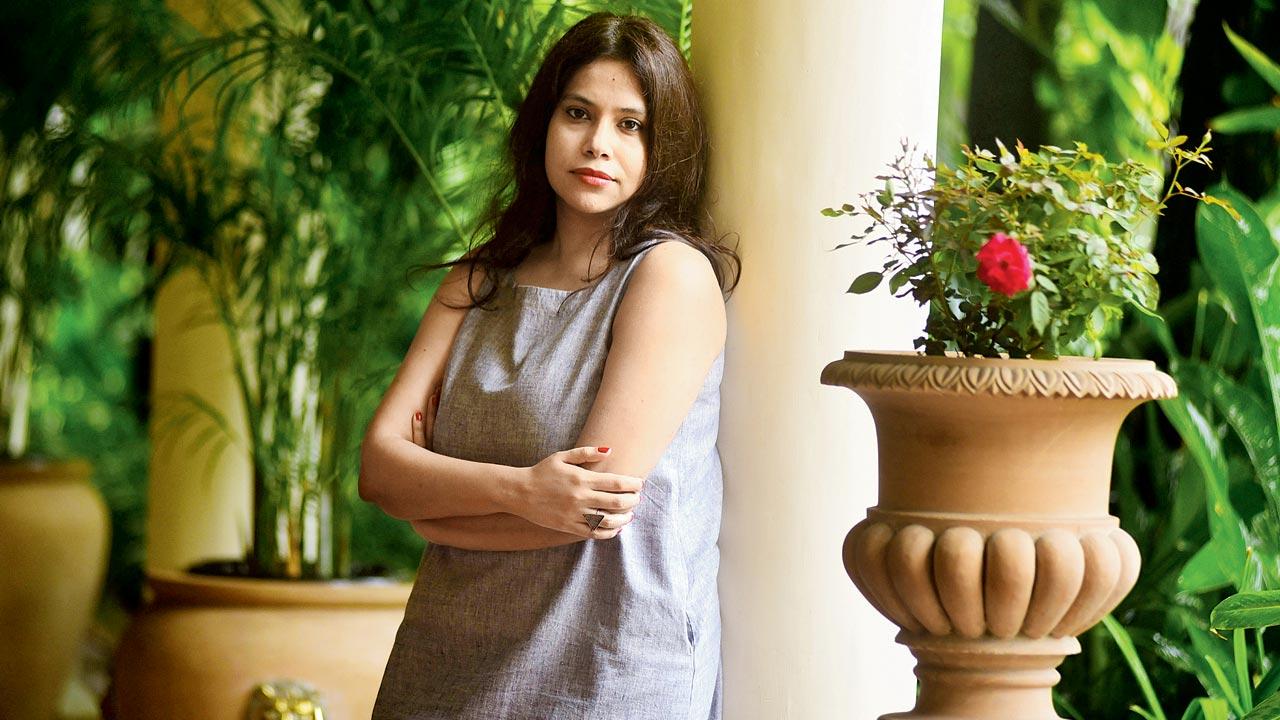
Writer-economist Shrayana Bhattacharya’s book Desperately Seeking Shah Rukh (HarperCollins India) uses the actor as a metaphor to explore the economic circumstances of women in post-liberalisation India. Pic/Shadab Khan
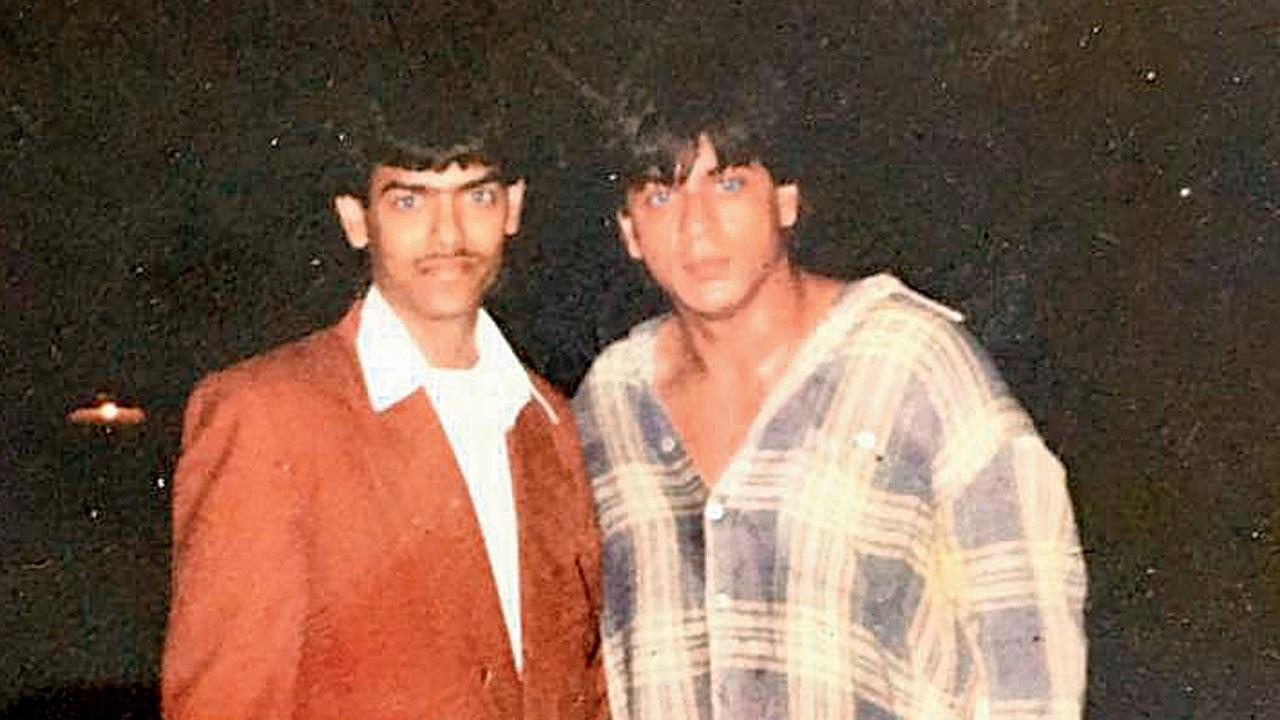
Vishahrukh wants to make a film with the actor so Vishahrukh Singh with Khan during their first meeting in 1996.
Shah Rukh Khan’s open arms make many Indian women feel less lonely, marginalized-Shrayana Bhattacharya
10:34 PM

The next time Shah Rukh Khan makes his signature open-arm gesture, you might see a graph of the widening gender gap in the urban Indian workforce pop up. That’s among the side-effects of reading World Bank economist Shrayana Bhattacharya’s ‘Desperately Seeking Shah Rukh’, a survey of the modern Indian woman’s doomed quest for love and jobs in post-liberalisation India. In an interview, the author tells Sharmila Ganesan Ram what the actor’s fandom says about men, money and misogyny
Sharmila Ganesan Ram (THE TIMES OF INDIA; February 6, 2022)
Who are members of the SRK fan club and what are they seeking in King Khan’s wide embrace?
In 2006, I met women working in different sectors across India as I studied women’s employment issues. Everywhere I went, from garment workers gossiping in the villages of UP to female cabin crew members taking cigarette breaks at airports, I met fellow SRK fans. For elite Indians, watching an SRK film is no big deal. But for most women, it’s a struggle to do something as simple as watch their favourite actor. The inequality in access to jobs, public space, cinema halls, technology and incomes manifests in the inequality to have fun and watch film stars. The first thing any woman I interviewed would say is how difficult it was to find money or media devices to watch films, or the freedom and safe spaces to do so, or how they would be made to feel guilty for spending on something that gave them pleasure. It was okay for men to enjoy a film alone or with friends, not for women. Our economy and society don’t really want women to have fun on their own terms. I also hope the stories convey the psychological function of the wide-open arms. Some posh Indians may cringe at those scenes or not like his films. But, for millions of women, that imagery offers deep comfort when they feel lonely, marginalized and unloved in their communities and relationships.
How do men, especially Delhi’s ‘Ground Reality Uncles’ as you call them, react to figures revealing the Covid-exacerbated women’s job crisis in the country?
On gender gaps, we are stuck in an equilibrium of platitudes and lip service. Data in the book shows how women, particularly those working outside the home as well, are so tired and have barely any time for rest.
India ranks in the bottom five countries in the world when it comes to men helping in domestic chores. If the Uncles genuinely wanted to unleash women’s creative potential in the world, they would help in the kitchen and socialise their sons to do the same. They would also wholeheartedly support cash transfers and affirmative action for women.
Do such reactions stem from a wounded masculinity in your view?
Behind the mansplainer (like the Uncles I joke about in the book), there is an insecure man struggling to deal with a new generation of confident vocal women who expect much more autonomy and achievement than their mothers did. They expect partnership from men, not protection. Femininity has evolved, and masculinity is struggling to adapt and respond.
Has this also made the Indian woman increasingly lonely? Is SRK responsible for her doomed quest for love?
The gender crisis in India is not a problem of dry statistics; there is a huge psychological and emotional cost being paid by women. Loneliness is one manifestation of this cost. Economists call these ‘hidden taxes’ that families, lovers, and communities impose on women when they try to pursue professional ambitions. Each of the women in my book dares to deviate from the standard script of what a ‘good woman’ should be and do. Each pays a heavy price. One woman faces violence for owning a mobile; another is abandoned by her husband as she tries to create an independent livelihood; all elite English-speaking women in the book complained about men being unable to love women who were as successful as them. Our society does not like or love defiant women. So, I do not think SRK is responsible. But his interviews, songs and scenes offer smiles and relief as these women deal with their loneliness.
How does the Indian economy look through the female gaze?
India is in the bottom five countries of the world when it comes to women’s economic freedoms and participation. Seven out of ten women in their 30s are engaged exclusively in unpaid housework. The female gaze towards the economy would understand that the economy does not only reside in our factories and fields, but also the home. As many as 64% of women in manufacturing work from home. Also, we would have no workers without the cooking and caring women do.
Have you met SRK?
No, but I have tried for an autograph at a media event. It was rather embarrassing, and I describe the episode in the book.
Who is the next SRK?
SRK is the next SRK! With the internet and increased fragmentation of our media landscape, the space for pan-national superstars is smaller. But amongst younger Gen Z women, I notice a deep fascination for female actors in Hindi cinema.
In Bollywood, women get screen time but very little talk time
8:24 AM

Study of box-office hits reveals female characters get 25 mins of speaking time in 2.5-hr movie
Mohua Das (THE TIMES OF INDIA; March 21, 2021)

However, research tracking speaking parts in the world’s biggest movie-making industry reveals that in the biggest pan-national box-office hits from the past five years — on an average, “women have less than a third of the dialogue”. In other words, men significantly out-talk the women.
This data measuring dialogue share of women in popular Hindi films comes from Shrayana Bhattacharya, a Delhi-based economist who, while researching for her book Desperately Seeking Shah Rukh that releases in October, stumbled upon this irony of Bollywood’s box office hits largely featuring what she calls “gorgeous mute women.”
“Since 2006, through various research projects on women’s employment and labour, I’ve met working women across India. During breaks, we would talk about our favourite movies and film stars which introduced me to Shah Rukh Khan (SRK) fangirls from diverse communities,” recounts Bhattacharya who followed several such fangirls for more than a decade to realise that one reason why the actor appealed to women from Jor Bagh to Jharkhand was how his on-screen characters would talk to women — lovers, mothers, friends and sisters — unlike films with other male actors. Bhattacharya decided to back this anecdotal evidence with data. “The only way to do this was to measure what share of dialogue was spoken by men and women in popular films.”
But deter mining speech patterns in nearly 50 Bollywood films between 1995 and 2020, replete with a chorus of singing voices, posed a challenge. Using a voice recognition program didn’t work so she coded and collected the data manually by watching each film closely, noting down the number of sentences and the gender of the speaker for each minute of the film. “For 15 films, I also measured the minutes that women would speak.”
What she found disrupts the age-old assumption that women speak more than men. “Four of the biggest hits of the past five years had women speaking for an average of 25 minutes in a runtime of at least 2.5 hours. Women occupy half the screen time but a quarter of the dialogue,” she observed.
Although in recent “multiplex” films like Queen, Kahaani and web-series such as Made In Heaven, women’s voices are emerging in full force, a disproportionate amount of movies are dominated by men who get more lines than women across different genres. And with ensemble casts, as the number of characters grow, so does the gender inequality.
For instance, in Dangal, a biographical drama centred on two female wrestlers or in PK featuring Anushka Sharma in a prominent role — there was an awful lot of talking by the men. “The narrator is a male and men speak much more dialogue in Dangal whereas in PK, Anushka spoke for approximately 35 minutes and there’s a full 45 minute segment where no women have speaking roles,” measured Bhattacharya.
Her study also reveals that speaking roles for women in “big mass hits” have only reduced over time. “Most of the ‘mass’ hits of the past five years have been heavily masculine action films where the universe is full of superman-type characters who talk amongst themselves — be it War or a Baahubali that had around 15 male speaking characters and five women,” she pointed out, as opposed to hits in the late 90s that were usually romances or family-dramas and featured more female characters and dialogue.
“As a result, while women only speak 28% of the dialogue in Baahubali: The Beginning, they have 60% of the dialogue in Kuch Kuch Hota Hai that had nine female speaking parts and five male,” tabulated Bhattacharya.

While Vohra attests to the fact that “recent cinema is far more masculine than before,” Shohini Ghosh, documentary filmmaker and media professor, feels the importance of a character in a film cannot be measured only through dialogue spoken by the character. “Film has its own language in which silence can be as eloquent as speech. The famous opening sequence of Charulata is almost wordless but a world of information is conveyed about the female protagonist. I personally feel much is changing especially with the advent of streaming platforms which show great diversity in the representation of genders and sexualities.”
Subscribe to:
Posts (Atom)