Showing posts with label Shoojit Sircar interview. Show all posts
Showing posts with label Shoojit Sircar interview. Show all posts
Shoojit Sircar, Ajay Gahlaut remember working with Piyush Pandey on 2 memorable Amitabh Bachchan campaigns
9:15 AM

THE ECONOMIC TIMES (November 5, 2025)
Ajay Gahlaut, Former Group CCO, Dentsu Creative Services
UNICEF’s Pulse Polio, ‘Do Boond Zindagi Ke’ (2002): Do Boond, One Brilliant Idea
I wrote the line ‘Do Boond Zindagi Ki’ for the Pulse Polio campaign. But the real genius of the campaign, the central idea, came from Piyush Pandey. And that idea was showing Amitabh Bachchan angry with people who had not immunized their children against polio. Only Bachchan could get away with berating an entire nation. Only he commanded that kind of respect and love. And only Piyush could have come up with that idea. Stunning in its simplicity, understanding of Indian culture and impact.
One day, I read a criticism of it on social media. Some random guy had written: “What’s so special about this campaign? Just another celebrity talking to the camera.” I was furious and wanted to reply with a sarcastic tirade. I sent Piyush a screenshot of the tweet and told him that I was going to write a riposte. Piyush smiled and said, “Tere paas kaagaz-kalam hai?” I said yes, excited that he would give me some points to write.
“Likh Dhenchu, Dhenchu, Dhenchu!’”said Piyush. (The Hindi equivalent of ‘Hee-Haw’, a donkey’s call) “Matlab?” I asked, puzzled.
“Is gadhe ko aur kya samajh mein aayega?” said Piyush with a laugh. What a lesson.
-----------------------------------------------------------
Shoojit Sircar, Filmmaker
Gujarat Tourism, ‘Khushboo Gujarat Ki’ (2010): Two Giants, One Simple Act
The Gujarat campaign started off with one film, but it went on for nearly five or six years. During filming, Piyush and I would eat, sleep, discuss and shoot side by side, often with Amitabh Bachchan, since he was part of this campaign.
Piyush was the country’s top creative mind, but he was open to everyone — be it a client, a director or someone from the crew. He would listen to, and manoeuvre ideas as long as the core remained intact. My production manager, Kumar Thakur, became his best friend because they both came from the heartland.
Once we had a 6 am shoot call time. The previous day we had an early pack-up, so we were partying a little and it got late. Next morning, Piyush knocked on my door at 6 am, saying, “He [Amitabh Bachchan] has reached the location, nobody’s there!” We ran to Kumar who scurried out barely dressed, and Piyush told him, “Arre pant toh pehno!”
Piyush and I then ran to see Mr Bachchan in the distance, picking up all the garbage people had left from the previous evening. We started apologizing, after which Piyush said, “Main bhi aapke saath saaf karta hoon,” and joined him in the clean-up as we readied for shoot. The visual of him and Piyush cleaning up after everyone will remain etched forever in my mind.
I was just watching Vicky Donor and I was thinking, 'did I make this film?'-Shoojit Sircar
8:02 AM

Niharika Lal (BOMBAY TIMES; April 28, 2025)
For Shoojit Sircar, the re-release of Vicky Donor is not just a moment of nostalgia - it’s an emotional ride. "I can't control my excitement as a director, that the film is re-releasing," he says with disbelief and joy. "This thought itself is addictive to me because aisa hua nahi hai. I’m in awe. Aise hota nahi hai normally that a film is re-releasing. For a director and a technician, and for everybody associated with the film, the film coming on the big screen is like a boon. I'm over-excited, not excited. I'm over-excited," he says.
Thirteen years later, the humour in Vicky Donor still lands, the warmth is still felt - but what remains for him as a director when he returns to it now? He says, "Somehow, it doesn’t feel like a 13-year-old film. It just feels like - Abhi yaar, kuch saal pehle hi banaya hai. It doesn’t feel 13–14 years have gone by."
In conversation, he walked us back through the film - what it was, what it became, and the nostalgia of seeing it again.
'I was just watching the film and I was thinking - did I make this film?
Shoojit Sircar watched the film again while preparing for the re-release, and says it stirred more than just excitement. He says, "I was just watching the film and I was thinking - did I make this film? Am I the same person I made this film? I was really amazed." he says.
Talking about the cast, he says, "Such an amazing cast, such amazing performances, such exuberance in their performances. There's so much joy," he says, crediting the film’s energy to the team behind it.
"The way Juhi wrote the film, the way Ayushmann came and the way my friend Ronnie came to produce the film, the way Annu Kapoor came, Yami was cast, Dolly ji and Biji came, and the songs. The entire thing - I think ho gaya hoga. Ho jata hai na kabhi kabhi," he adds.
'After Vicky Donor, a question came up in conversations - are you a Punjabi?'
Shoojit Sircar shares that he hadn’t anticipated the film’s success. He says,"Three things happened. The film became quite a talk of the town, which I didn't expect. I was really scared when the film was released because I thought this film is not a regular subject to deal with."
The film on sperm donation, touched on a taboo subject. He adds, "Second, a lot of conversations came up tha - are you a Punjabi? That question came up - 'how do you know Punjabi, how do you know Punjabi culture so well?"
He reveals, "Then I tell people that I have spent time in Delhi, I have so many Punjabi friends. Somewhere I'm a ghost Sardar. Even after being a Bengali, somewhere there is a lot of punjabiyat in me."
The cultural richness of Delhi - particularly the Punjabiyat of Lajpat Nagar - flowed into the film naturally. “Those little things that we picked up in the Punjabiyat of Delhi, especially among Delhi Punjabis and Lajpat Nagar. All my friends are from there. And they actually got married to a girl from CR Park, so that has happened. If we actually start showing culture clashes (in movies), it can be much bizarre than this. We have shown it in a very conservative way (in Vicky Donor), but actually mein toh abuses aa jayenge, gaali-galauj aa jayega.”
He says, "Third was Dolly ji and Biji drinking together. That one scene was talked about a lot - how beautifully Juhi had written it, and what the two of them brought to it. I often look back at that scene - Will I be able to pull off that scene today or not? I think we all go through everyday drills. But at the end of the day there is some kind of warmth in relationships that also exists."
'If we actually start showing culture clashes (in movies), it can be much more bizarre than this'
That cultural clash in Vicky Donor - between the Punjabi and Bengali families, especially the wedding scene really stuck with people. The ‘Rum rum whiskey’ has become a go-to track on reels.
Talking about the scene where the families meet, he says, "What Jayanto Da (who played Yami Gautam's character's father) has done – and between him and Dolly ji and Ayushmann and Pishi (Swaroopa Das) - she is too good. I think what happened there in that room that day was amazing. Jayanto Da has actually lived in CR Park in Delhi. He knew that elite Bengali – talking about culture."
He says that the cultural contrast between Biji (Kamlesh Gill) and Dolly Ahluwalia on one side, and the Bengali family on the other, required no forced staging. "It was naturally flowing because Dolly ji and Biji were as frivolous as they could be. They were just talking. When we were writing the character of Dolly ji, we told her – we are writing you. I think that cultural clash, we live with that. Even in Bengal, and when I talk about Punjabi, there is an understanding, love, criticism – everything. You can understand when a Bengali girl is married to a Punjabi, and in this kind of marriage discussion, this is just evident," he says.
'Lajpat Nagar is in my blood'
In Lajpat Nagar, almost every house has a biji and Dolly ji - small houses, interconnected terraces. Vicky Donor took out Lajpat Nagar from Delhi and made it a city in itself in Hindi movies. How did he create that identity for Lajpat Nagar.
Shoojit Sircar recalls his good old Lajpat days, "Lajpat Nagar ke chhole kulche, chhole bhature and all the garment shops, all the ladies being there for that salwar and dupatta shopping. My school was KV, Andrews Ganj, a short walk away. From my school days, every Friday, Saturday, Sunday I used to spend in Lajpat Nagar."
During his theatre days, he would frequent the area with friends, jamming, writing at Piyush Mishra's place in Lajpat Nagar. “I'm a south Delhi boy. My upbringing was in CR Park and in other parts of Delhi, but Lajpat Nagar never left me. I knew every house there. 75 gaj wala ghar hota tha wahan pe – chhota se entrance, straight lamba sa. Then there was Nirula’s below the flyover – so Lajpat Nagar never left me. Lajpat Nagar is in my blood.” (laughs)
The writer of Vicky Donor, Juhi Chaturvedi, also lived there. “Lajpat Nagar and Connaught Place – I don't think I will ever forget Lajpat Nagar,” he says. Back then, many of his friends from Lajpat Nagar were just starting out. “Some have become actors, writers, directors, some big producers. Lajpat Nagar is a city in itself.”
The interiors for the film were shot in Rajouri Garden. “We actually shot in Rajouri Garden. We shot exteriors in Lajpat Nagar and we shot interiors somewhere in Rajouri Garden because there are many parts of the city that actually look like Lajpat Nagar.”
He says glimpses of Delhi can be found across his work - in Piku, October, and beyond. “You will get a reflection of Delhi in all my films.”
'Vicky of Vicky Donor is so much Ayushmann than Ayushmann being Ayushmann'
In an interview, Naveen Kasturia said that when Vicky Donor came out, he would tell people, ‘This is my story,’ because he identified so strongly with Ayushmann’s character as he is also from Lajpat Nagar.
How did Shoojit Sircar create such a Lajpat Nagar boy? Shoojit Sircar says, "The character of Vicky that we created - he knows jugaad, he knows where to get his things done, but he is clueless about his life. Some kind of jugaad work he will do and he will manage."
And then there’s Ayushmann Khurrana - for whom Vicky Donor was a breakout. He says,“Ayushmann will always be known as Ayushmann for Vicky Donor. I had a very strong feeling about it.”
What stood out, Shoojit Sircar says, was the sensitivity of his performance. “It’s not just the loud Vicky that he played, but it's his delicate performance. Vicky of Vicky Donor is so much Ayushmann than Ayushmann being Ayushmann, I would say."
He remembers Ayushmann once telling him - ‘Dada, that will always be there. I’m also doing a lot of films that seem inspired from Vicky Donor.’
I would have expected a bit more footfall for I Want To Talk-Shoojit Sircar
8:38 AM

Stating that he made I Want To Talk to spread hope, director Shoojit Sircar reveals how artistes in the industry often battle mental health issues while hiding behind the facade of glamour
Priyanka Sharma (MID-DAY; November 28, 2024)
At the moment, Shoojit Sircar is all about observing and learning. Reason? His latest film, I Want To Talk, had a slow start at the box office. “The pre- and post-COVID releases are a different dynamic altogether. I’m getting beautiful reactions from whoever is walking into the theatres. But I would have expected a bit more footfall,” the director tells us candidly over a phone call.
But that hasn’t shaken his faith in the Abhishek Bachchan-starrer. Or in his brand of cinema. Over the years, the filmmaker has championed middle-of-the-road films — from Vicky Donor (2012) to October (2018)—in an industry that values mainstream entertainers and box-office numbers over all else.
“That persistence is required, otherwise filmmakers like me will vanish. It’s my job as a filmmaker to tell a different kind of story. Somewhere, I need the support of the audience, too, to survive. Many recent films that fall in this category have slowly grown and I am expecting my film to grow in the coming weeks,” he says optimistically.
In I Want To Talk, Sircar tells the true story of a cancer patient, who was told he had 100 days to live, but went on to create a longer and beautiful life for himself. The film has themes that are recurring in the director’s world—death, hope, and mental health.
“We are always fearful whenever the word death [comes up] or when we have to explain it to a child. I have embraced it in such a way that it makes me free of fear, and opens me up to live in joy, awe and wonder. In these times of mental issues, I want people to have hope, and maybe my device to make them more hopeful is death,” he shares, adding that the movie is also inspired by his observation of the mental health challenges that his colleagues from the film industry face.
Sircar says, “I do a lot of healing. [Mental health issues] are so rampant in our industry, you can’t imagine. With their make-up on, artistes can smile at you, laugh, hug you, and show off, but I have seen deep inside in their eyes a lot of insecurity and mental pressure; I can see that loneliness. Many times I have taken them to a corner, spoken to them and they have started crying. That has given me a lot of understanding.”
As we talk about the film industry, it’s impossible not to mention how his movies have almost always been led by top Bollywood stars, who turn up in non-glamorous avatars for the parts—be it Deepika Padukone in Piku (2015), Varun Dhawan in October (2018) and Vicky Kaushal in Sardar Udham (2021). The realisation has hit Sircar only now, with I Want To Talk.
“If someone in front of you feels not so insecure and calms down, a lot of things can happen. The most important thing is to calm them down and get them out of their vanity. We call them stars, but at the end of the day, they are also normal people. Because of the pressure of vanity, they carry it to the set also. But if you calm their nerves down, they will understand the character more.”
So, what is the filmmaker up to next? He laughs and replies, “I have nothing right now. I may work on a romantic or a mythological project. I’m working on a couple of subjects.”
Satyajit Ray brought me into my senses. In many of my films, I try to adapt his expressions-Shoojit Sircar
8:12 AM
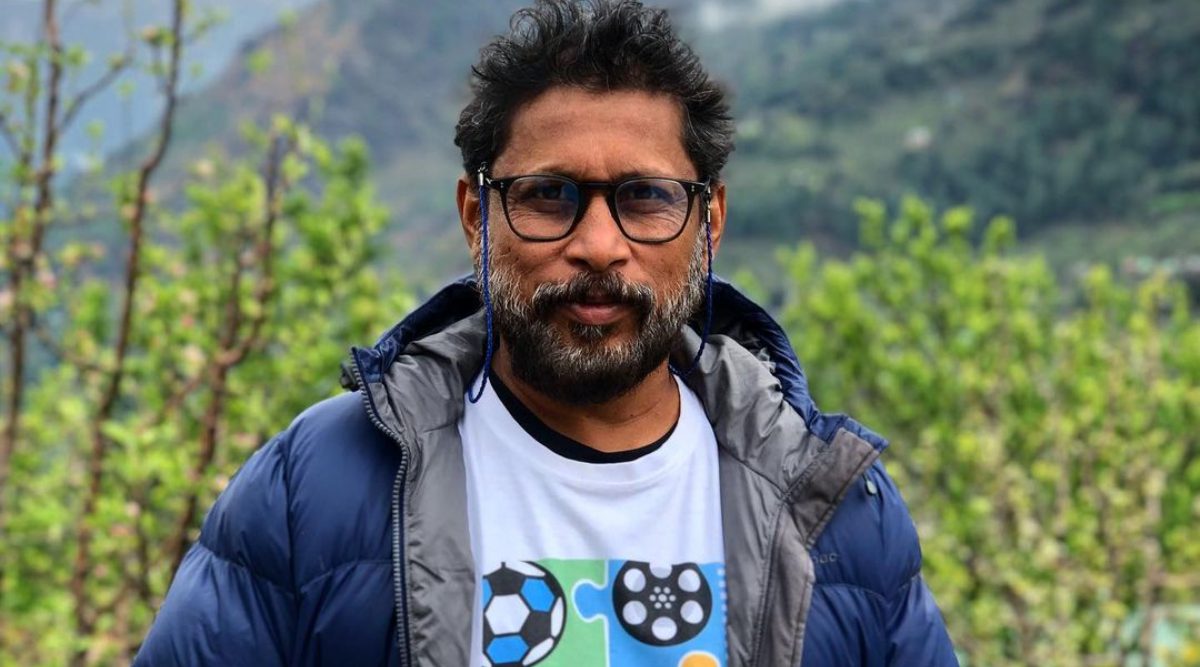
BOMBAY TIMES (April 30, 2022)
Director Shoojit Sircar, who considers the films of Satyajit Ray as his Bible, feels the maestro may have designed posters and composed music for his movies himself “out of compulsion”, as no one else would have been able to do full justice to the spirit ofhis work.
Delivering the Satyajit Ray Memorial lecture at the 27th Kolkata International Film Festival, Sircar said he cannot work with someone who has not watched the works of the legend.
“Ray is called a multi-talented director...But this may be out of compulsion. He did his own posters because probably he thought others won’t realise it in the same way. He did music in his films as he was not sure if he could explain the context of the music in its entirety to another person. He did not have any casting director either,” Sircar said. The director said that in several of his films, including October (2018), there are silent moments inspired by Ray’s works.
“There are so many jargons about cinema – art, commercial, etc. For me, Ray is more commercial. Someone who would give me lots of positivity and optimism, even if it is a tragedy. Remember the scene of the death of Apu’s mother (in Aparajito)?” he said, referring to its subtlety.
Sircar talked about another scene in Pather Panchali (1955), Ray’s maiden film and the first in the Apu Trilogy. Young Apu and his elder sister Durga were following a sweet seller on a village path. “They are not running behind him to buy something. It is just the hope that they will finally be given sweets. It is just that hope, the everyday reality that is what I discovered in Ray’s works,” the Piku director said, adding, “Many people abroad say there is an element of mysticism in his films. I try to find where is this mysticism? I always think when you are aware of the reality, there lies the mystery. It was there in Ray’s films,” Sircar, who brought references to Ray in Piku (2015), said.
Sircar said he had never studied art and literature. “This man brought me into my senses. In many of my films, I try to adapt his expressions,” he added.
I have been offered big money to make sequels-Shoojit Sircar
8:35 AM

Rishabh Suri (HINDUSTAN TIMES; January 8, 2022)
Director Shoojit Sircar’s films have been loved by audiences — right from Vicky Donor (2012) and Madras Café (2013) to October (2018). And the filmmaker reveals that, naturally, people expect him to make sequels to them.
However, he has no such plans, despite being offered big amounts of money by makers. “You need to have a powerful story to do that (make sequels). I think, more or less, we’ve tried to put everything in that one film, so I don’t know what is left for the second film. I also get bored with the same idea, so I need to move on. I have been offered big money to make sequels to more or less all my films — Piku (2015), even Madras Café. People ask me for the next part of Pink (2016). But I have not found any story to move ahead and make a sequel,” explains the director, whose last release was Sardar Udham.
While actors and filmmakers tend to have multiple projects in different stages of production at any given point in time, it’s not the case with Sircar.
Admitting that he has no next project in mind, he says, “I am not a factory that I will keep churning out films. I am studying, doing gardening, playing football, and doing a lot of thinking and discussing. Let’s see what comes out.”
And what happens in a scenario where a good idea doesn’t come to him for years at a stretch? Is he willing to wait that long just for a good subject? Sircar replies in the affirmative.
“At the end of the day, art is an expression. It comes from pure passion, so it is not just my livelihood. Yes, I am dependent on it, but I am not doing all this because I have to churn out films and make sure it (livelihood) is running. It is purely what drives me. Only when it triggers me do I move, otherwise I don’t,” he concludes.
You can’t escape criticism, it’s part and parcel of the work we do-Shoojit Sircar
6:11 PM

Rachana Dubey (BOMBAY TIMES; November 28, 2021)
Filmmaker Shoojit Sircar has been on the receiving end of criticism and praise in equal measures for his recent film Sardar Udham. The filmmaker, who had a masterclass at IFFI (International Film Festival of India) recently, spoke to us about his life post the film, whose story he had lived with for over 21 years. Excerpts:
By your admission, you’ve lived with the story of Sardar Udham for over two decades. You spent about five years just on the scripting. What has life been like post the movie?
You sometimes feel you have nothing left to do anymore. Kabhi kabhi hota hai aisa. The film was mounted on a big canvas, though we tried to not make it too big. Now, after the movie is over, suddenly I feel like I don’t know what to do. There is an emptiness that creeps in. Ronnie (Lahiri, the co-producer) and I have ideas and we keep talking about them, and discussing them, but it’s hard to get rid of that khaalipan, that vacuum created after Sardar Udham went out of our system. Both Ronnie and I had never thought it would go through the way it did. It’s like there was a little storm which has now blown over, and now we don’t know what to do.
How do you deal with that emptiness?
You have to keep nurturing yourself. This is a very crucial period and often, people end up making wrong decisions during this phase. You want to quickly start something and put it out there. But the better way out is to remain calm and do things with proper thought and planning. Creatively, you have to keep yourself engaged and active — you have to keep the fire burning. Sometimes, you can do it through cinema and sometimes, you just do things like gardening, playing football or reading something or watching something.
Is that why you often escape to villages in north Bengal and spend time cooking and gardening?
Yes, that’s right! I regularly go to north Bengal where I was born. I grew up there and I spent my childhood in those places that I visit even now. It’s very peaceful. I’m going to stay in Goa for some time now and do some reading there. I also plan to jam with my researchers and see what we can arrive at. I am not in a hurry to make a new film.
Sardar Udham and Gulabo Sitabo were both appreciated and criticised in equal measures. Have you been able to go over the points of criticism that have been raised on the films?
Look, I have realised that criticism is something that you have to take. You can’t escape it and it’s a part and parcel of the work we do. You have to be ready for it and for observations that people make. Also, as a creative person, you cannot possibly cater to everyone and to everything that is asked of you. As Ronnie said during our masterclass session, we did not and we have not compromised on Sardar Udham in any manner. Yes, we may have made mistakes. We will go through the content and whatever mistakes we can identify, we will make a note of it and make up for it in our next films. The idea is to not repeat those mistakes again. I am absolutely not worried about criticism. It can affect you depending on the way you take it. Sometimes, criticism is very healthy and helpful. You have to know which part of criticism is important for you. Sometimes, you have to just let criticism pass and sometimes, you have to hold on to the things people tell you. I believe in taking just those points that are beneficial, learning from those and taking it forward.
During the session, you said that you would probably use all the material you couldn’t include in the film in a series, if you make one. Are you considering that seriously?
Frankly, I don’t know what I will do with the material that I am left with from the film. There is a lot of research that I have. I have heard that Ram Madhvani is making a film on Jallianwala Bagh. I might give it to him. I would love to offer him all my research. It’s a creative and competitive line but I have told everyone that I am ready for any discussion on this subject. I have books that have been marked out, taped and set aside. I can help anyone who needs help on research on this subject.
Using flashbacks or going back and forth in time in a screenplay is commonplace, but the way you did it in Sardar Udham was experimental in many ways, which seems to have increased expectations from you. Does that scare you?
I am very scared of expectations, please don’t expect anything from me. The next movie that I make may not cater to everyone. So far, I have tried to make films that I am happy about. The subjects Ronnie and I are discussing are about films that are completely out of the box. So, don’t expect anything from me. And frankly, expectations scare me a lot!
I have not left any single shot in my edit room for the Jallianwala Bagh scene. Everything is used-Shoojit Sircar
8:28 AM
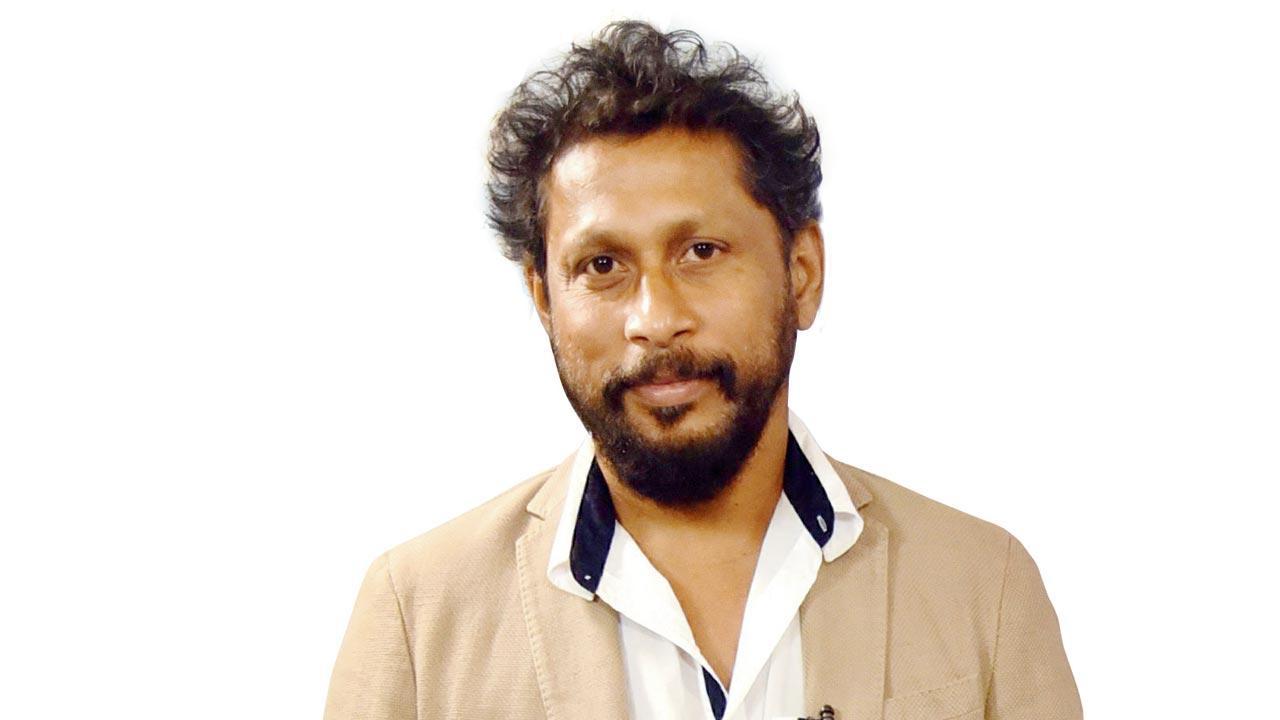
In the latest edition of our award-winning interview series, Shoojit Sircar decodes how he created a hatke brand of commercial Bollywood with an indie heart
Mayank Shekhar (MID-DAY; November 13, 2021)
“But you’re not like this [as a person],” an assistant on the sets of Sardar Udham exclaimed to filmmaker Shoojit Sircar — observing him seated, with two buckets full of fake blood, getting constantly replenished on either side of his feet.
He would dip into it with a mug, splashing that blood to dry earth himself, to get the colour right — all the while operating the camera, filming the Jallianwala Bagh sequence in Sardar Udham (2021).
It’s gory as hell. But Sircar wanted to get April 13, 1919, just right. Martial law in Punjab. Curfew in place. No one allowed to help the injured and dead. One man dealing with dead bodies after dead bodies.
It’s a scene Sircar had been living with, ever since he first visited the actual Jallianwala Bagh site in 1998 — much before he’d even thought of becoming a filmmaker. He’d been going back to that sequestered memorial park, through a narrow passage to the entrance in Amritsar, every year since. It’s a walk down from Golden Temple.
This was his only chance to recreate what he believes was the turning point of India’s freedom movement — the massacre of thousands of people, peacefully protesting the draconian Rowlatt Act, that allowed the British government to incarcerate Indians, without proper trial, under the pretext of ‘national security’: “It gave birth to many unsung revolutionaries, of which we only know about Bhagat Singh, and now Sardar Udham.”
It took Sircar four months to get the colour of blood right. Real blood for shoots is usually imported. They didn’t have the budgets. Jallianwala Bagh is also kinda immortalised from Gandhi (1982), by Richard Attenborough, who had resources to bring down train loads of people from Punjab, to shoot the short scene in Delhi.
Sircar had to shoot in Punjab itself, to get the look of thousands of actors/extras right. He hired locals. Some of them were children trained in Gatka style of martial art. They’d do free-falls and heavy-duty acrobatics, although they’d never faced a camera before.
On day one, actor Vicky Kaushal was his usual enthusiastic self. But as the shoot progressed, with humans being carried like carcasses in wooden carts, and the smell of fake blood and dust around, the cast and crew started getting affected.
Once, when the shooting had packed up for the day, a young girl was still around, that the assistants insisted they should shoot with, anyway. Sircar decided to casually pick the scene, knowing they didn’t need more. Soon as the girl started crying for her mother (in the scene), Kaushal began uncontrollably howling as well. The girl was a little flummoxed. They kept the camera rolling from a distance, most of which made it to the final film.
Every moment in the Jallianwala Bagh scene, step by step, Sircar says, is mentioned in Hunter Commission and the Congress report, besides survivor statements of ladies named Ratan Devi and Attar Kaur. It lasts a lifetime in Sardar Udham: “I have not left any single shot in my edit room. Everything is used.”
Some might dub this as an over-indulgence of sorts. It will remain etched as one of the most haunting sequences in Hindi cinema still. Unsurprisingly we talk about it for a good portion in this conversation. Only as a nod of sorts for the fact that Sircar filmed this one sequence, over 21 days in Punjab!
Sardar Udham is essentially a London-based period film, for which Sircar extensively referenced series such as Peaky Blinders and The Crown to get the era right.
As for a wider inspiration, while there is no direct connection, Sircar calls Sardar Udham “a tribute to Akira Kurosawa’s relatively lesser known film, The Hunters, set in Siberia, filmed as a Japanese-Russian collaboration.”
Which makes me segue into his film company, Rising Sun. Is that a reference to Japan? “Well, we didn’t think about it. My producer Ronnie [Lahiri] suggested Rising Sun. It sounded positive. I asked him to check if there is any other Rising Sun Films. There wasn’t, so went ahead!”
I ask this because over a decade and half, while the eclectic Sircar undoubtedly has belonged to commercial Bollywood, he remains essentially an independent filmmaker, which is an anomaly of sorts.
Throughout, he has teamed with the same producers, Goa-based Lahiri originally from Shillong, and Bihar-born, Russian educated Sheel Kumar, taking care of the finances. Besides more or less the same crew of writers (Shubhendu Bhattacharya, Juhi Chaturvedi), cinematographer (Avik Mukhopadhyay), editor (Chandrashekhar Prajapati), and the like.
He says, “[By independence], you [mean to] do a film on your own terms. Of course, we compromise sometimes. And I have been compromising [as well]. But film after film, I have reduced that. Crafting your own path is a lesson I have learnt from the city [Bombay] itself, and its film industry. Otherwise, nobody will let you be what you are — forcing on to you what works. And in cinema, there is nothing like, ‘what works’ — it is an expression. You do what you are compelled to, from the inside — what you feel like; you do that.”
Which explains how the money being thrown at him to script a sequel to Vicky Donor (2012) is pretty much the budget of an entire film — he doesn’t reveal the number — but he won’t click that bait, simply because Vicky Donor is behind him, and he’s “not that filmmaker anymore.”
The auction is only natural, given that a Rs 4.5 crore Vicky Donor — a slice-of-life comedy on sperm donation, that even Sircar hadn’t imagined would capture an audience beyond those interested in quirky movies — picked up close to Rs. 80 crore at the box-office! This equals ‘family audience’ in Bollywood speak.
Debutant Ayushmann Khurrana was the star. Which also opened up a minor film industry for Khurrana headlining a series of comedies on similarly taboo subjects — balding, old mother pregnant, gay love, etc.
With Sircar, these benefits can be a challenge: “I am actually very scared of the wrong audience, and unnecessary hope. I am openly telling you — with Gulabo Sitabo (2020), I faced so much of that. I was doing a film with Amitabh Bachchan and Ayushmann Khurrana. So people think it is Vicky Donor and Piku coming together! I faced so much flak after [Gulabo Sitabo came out] — this film is so slow, nothing happens… But that is what I had made. I wasn’t thinking [Vicky Donor and Piku] in my head. Don’t expect it. Yet, how do I convey that? It is so difficult. So sometimes, wrong audiences can really harm your film!”
To be fair, Sircar has dabbled in multiple genres, without getting overwhelmed by the success of his previous work. In fact, if you notice, he consciously shifts from light-hearted to serious subjects/treatments — say, a political thriller Madras Café, after Vicky Donor; a strikingly sombre October, after Piku. It’s something he describes as mere coincidence. Rather than an effort to alter his mind space.
“A movie is not like a mask, that you take off after it’s over, and put on another. It stays inside you forever. I am Sardar Udham. I strongly feel about it. I strongly feel about greed in Gulabo Sitabo. I feel for October, because I have been in ICU for three months with my mother. And I know exactly what happens [being around] a comatose patient. I cannot just throw it away.”
Sircar debuted as a feature filmmaker with Yahaan (2005), set in Kashmir, about a local girl and an Army officer, during the height of insurgency/militancy. One of the aspects that stood out in that film was its coolly lit bluish tint, lending a surreal touch to the screen, although the film was shot on actual locations.
I am wondering of this level of visual sophistry had much to do with his work in advertising, which is how he first got into films. Sircar says, if anything, his works are often more informed by documentary filmmaking, which is also what he dabbled in for close to five years before.
Yahaan was also the debut feature film of Swedish cinematographer Jakob Ihre. What’s Ihre best known now for? Shooting the stunning HBO series, Chernobyl. Yup! “Jakob was once in Delhi to shoot a documentary for BBC4. A friend of mine was the sound person for the film, who introduced us. Of course I knew of the Polish film school he was from, which is really good. I did a commercial with him, which was also done on my own terms. The ad was for toughened glass. But the film, for around three minutes, unheard of at the time, was all about reflections. With Yahaan, I was wondering if I would get Kashmir right — I had done a documentary there, and knew what Charar-i-Sharief or Habba Kadal Bridge will look like. I needed a different perspective. The first thing Jakob told me when I took him to Kashmir is it looks like Bosnia, which also had problems going on at the time. In winters, Kashmir, like Bosnia, is brown and silver. Jakob got onboard and shot Yahaan.”
They’ve been friends since. The script of Yahaan “bounced like a ping pong ball” between all the corporate studios in Mumbai, until Sircar first went ahead with it himself, with Jimmy Sheirgill and Minissha Lamba in the lead roles.
Ad films have also allowed Sircar financial independence, and some flex to make only the features he wants. It also turned him into a patron of the arts early on, in the early ’90s, while he worked in an amateur theatre group Act One in Delhi: “I was a mole from my [theatre] group in the advertising industry. I’d make money from ads, and whatever I’d earn, I’d put into theatre. That is what my job with the group was — you make the money, bring it to us, and we will do plays!”
Act One had performers like Manoj Bajpayee, Gajraj Rao, Piyush Mishra, among others, who later moved to movies and Mumbai. Sircar continued in advertising, mitigating the struggle that involves, in hindsight, romanticised notions of stepping into showbiz city, with few rupees in wallet, friends with culinary benefits, and sleepless nights in railway platforms. Sircar has none of those heartbreaking stories of following a personal passion.
In fact, strangely enough for a Bengali, the arts, cinema, and literature were totally external to his growing up years. Football was his life’s primary goal; something he actively pursues at 53 still.
Graduating in commerce from Delhi’s Bhagat Singh College, Sircar was quite comfortably placed as an accountant in one of the city’s top hotels, Le Meridien. Which is a longish walk down from the Capital’s cultural district, that houses National School of Drama, and several theatre performance spaces.
Almost like a turning point of a movie script, a moment of epiphany as it were, Sircar’s friend [his writer now] Shubhendu Bhattacharya asked him once to step out to watch a play, after lunch, during work hours.
That was Satyadev Dubey’s production Andha Yug, written by Dharamvir Bharti, starring Naseeruddin Shah, Amrish Puri, Rohini Hattangadi. He says something happened to him once he watched that 3 pm show. There were no tickets available for the following 6 pm show, but he bribed the guard to enter again. By 9 pm, when he walked back to his office, he had “turned into a zombie.”
Following week, he watched Satyajit Ray’s Pather Panchali at India International Film Festival in Delhi’s Siri Fort auditorium. A film he had repeatedly slept through, during growing up years. The penny had dropped: “Then I started reading and watching with a different eye.” He joined theatre, then ads, thinking little of the debit and credit accounting of such a call.
Which takes us back a little to the film October (2018), one of his most personal works, since as he said, it came from the experience of nursing his mother in an ICU ward. But its setting — the full expanse with doors that demarcate the contrasting inside and outside world of a five-star hotel is clearly from his time from Le Meridien?
“When [writer] Juhi bounced off the structure, character and idea about how the film would be, it clicked: ‘Okay, hotel — I know hotel, so I will go into this’. I had no problem in understanding the hotel. My art team said we will create it. I said, no, you cannot create this. It has to be real.”
As is the story — emotive, seeping through the pores, at every level. Even if there’s a touch and feel of Sircar in the lead character, Dan, the fact is, if you rewind to when the film was being planned, the last person you’re likely to imagine in the lead role is the boisterous Varun Dhawan — of ‘tera dhyan kidhar hai, tera hero idhar hai’ fame! There has to be a story behind Dhawan breaching a likely mental/casting block. There is.
Sircar recalls, “Varun had been calling to meet me for quite some time. I live in Kolkata, and would be in Mumbai for two days and leave, so I wasn’t getting time. Once when I had a flight to catch, I saw his text, “Dada, when is your next?” I told him that I was in town, but leaving in a bit. He said his house was close by. I asked him to quickly drop in. He said he’ll take a shower and come, and that he’d just woken up. I told him nobody will see him: ‘Just walk in as you are’. I still have his picture from that day — he was clumsy, holding a bottle that fell. He said, ‘Sorry, Dada, sorry.’ While talking, he zoned out completely. I don’t know what he was talking to me about. [As an actor], he wasn’t on my radar at all. I looked at his torn jeans. He said, please, don’t look there. He just sat there, said, ‘Theek hai, Dada.’ And left. In the flight I kept thinking about him. As I landed, I called up [writer] Juhi and [producer] Ronnie. This is what the clueless Dan is, you know — he doesn’t know what he’s doing, saying, where he is…”
The unlearning of the Bollywood star started before shoot. For script, Sircar only shared the first half of the film. For prep, Sircar passed on a piece of meditation music to Dhawan and asked him to simply stare at a house-plant every morning with it!
“On the first day, we shot the film’s last day’s conversation with the girl — it’s an important scene. I thought I’ll catch him raw, the way I had caught him in the office that day. He said, ‘Dada I am not doing anything [in the scene]’. We rolled the cameras in the rehearsal take, and used it in the film.”
It’s a little like how Sircar got Ayushmann Khurrana into the infamous sperm donation scene in Vicky Donor. Khurrana had to go to a private room to donate sperm.
Except, there were no instructions on paper about what he’s supposed to do. There were CCTV cameras placed in the room. Khurrana was clueless. He got out of the room and said, “Aise thodi hota hai? (What am I supposed to do; this is not how it happens!”) The cameras captured that actual line.
In Dhawan’s case of course, the idea was to keep him slightly clueless all through the shoot, instead — something the camera captures convincingly in October.
As for another unlikely casting, the one that comes to mind is John Abraham. Abraham incidentally won the National Award for Vicky Donor—as the film’s co-producer. No knock on Abraham. But he isn’t quite the first actor one might have in mind for Sircar’s reasonably intellectual political thriller, Madras Café. It was a deeply researched procedural on the plot to assassinate Rajiv Gandhi, called “the PM” in the picture.
Sircar admits, “You can say Madras Café was one film that I just quickly wanted to make. By 2010, the entire Tamil group [LTTE] had been wiped off. The [assassination] case was completely shut. I just thought I must go ahead and make this [before it’s too late]. I didn’t wait too long. The research and script were quite good. In terms of my craft around making the film, I would do it completely differently now, and with an absolutely fresh mind. It could have been much more powerful. That’s one film I would really want to go back, and remake.”
What would he do differently, in particular? “Of course, I will take real names [of characters], as I did with Sardar Udham. I’ll go with a completely new set of cast. There are many places where I have compromised, in terms of dialogue. Then there is the heroism part of the film. My idea of heroism has changed, from then and now. For me, heroism is not about [being a] hero [type]. For me, heroism is doing the right thing — rather than not. That is what it is.”
That’s of course a film yet to be seen, but from what we have of Madras Café, as it exists, it is by no means even vaguely a low point in Sircar’s career — wonderfully farmed from the Jain Commission Report, it survives as an important, albeit slightly over-the-top document, detailing the assassination of PM Rajiv Gandhi.
If at all, the cursory low point in Sircar’s career might well be a film of his that we haven’t seen. And that’s because it never got released—Shoebite, the director’s first collaboration with Amitabh Bachchan. From my memory of what went wrong with the film was a dispute between two companies, Percept and UTV. The former were first producing the film.
There was a hitch over Bachchan’s remuneration, reportedly. Percept brought on board Anil Kapoor for the lead part instead. Sircar and Bachchan jumped ship together, bringing in UTV to produce the film instead. Copyright issues followed. I needlessly jog my memory for Sircar, who is understandably not so forthcoming on this.
“Well, it’s a long story. But I can tell you where we are now, I think. So, finally, the film is with Disney. And Disney is also Fox, and Disney is also UTV. They can actually release the film. They are still figuring it out. What’s happened in the past is over.”
The Fox angle in the story could have to do with the original concept of Shoebite being Hollywood filmmaker M Night Shyamalan’s. Is that true? “So, the script was adapted by Rensil [D’Silva], who had just done Rang De Basanti. Later we found out that this was an idea by Manoj Night Shyamalan. I stepped back. Then Ronnie Screwvala [UTV boss then] was doing a film with Shyamalan and [our project] restarted. Since the basic idea was written by Shyamalan for a Hollywood film, we requested for a regional version. It was messy. But it is quite sad that the film still in the cans. It should release.”
The other messy stuff that’s made it to print in the past, so far as Sircar is concerned, are cases registered by writers against two of his films, Gulabo Sitabo and October, over copyright infringement. Much talked about before release, allegations hurled, press lapping up.
“It is distressing. When it happened with October (a Marathi filmmaker alleging rip-off), I was completely shaken up. We thought we were creating something absolutely fresh, and new, and everything had come out from my own deepest experiences, and Juhi’s as well. Same with Gulabo Sitabo. This is no way. Tons of stories can stem out of landlords and tenants. But after the film [releases], there is nothing. After the film is gone, there’s nothing. The entire panel of writers’ association has seen the film, and given us a clean chit. What else you can do? I was telling Ronnie the other day: I hope with Sardar Udham, nothing comes up. Ronnie told me I should get used to it. It will come, so it’s okay; be ready for it. It is distressing sometimes. We could not enjoy the release of October, because of this. Normally I go to the theatre and watch the film [with the audience]. We didn’t.”
Thankfully none of the above this has impacted his works consequently. Bachchan, for instance, was happy to sign up with Sircar, despite their first film together having been a non-starter. The released movie is Piku (2015), of course. The brief he gave to his writer (Chaturvedi) for it was long scenes; “sometimes 20 pages long.”
Sircar wanted to stage Piku as a play first — “experience from theatre really helped” — and then cut at the editing stage. The driving force being to test the acting styles of three really diverse performers—besides Bachchan, Irrfan and Deepika Padukone, whose subtly expressive eyes were really the leads as well.
Sircar reasons, “Mr. Bachchan, as a person, is all method—he will rehearse, and be so particular — you can’t use left-hand on the rehearsal, and right-hand on the take. You can’t. On the other hand, Irrfan is someone who just lets go. And he can go on. Deepika is natural. You have to tap into her internally, as an artiste. My instruction was that in this film, nothing is happening, nothing is moving. It’s in the drawing room of a Bengali household. If you notice, there are a lot of silences in the film. And I want audiences to hate this Bengali family. Irrfan, though, had just convinced himself that there will be a love angle to the story eventually: ‘You’ve cast me with Deepika, there will be conversations; of course we’ll get romantic’. I had to constantly explain to him that’s not going to happen. People will define [this relationship] in their own way!”
It’s not like the actors didn’t have other apprehensions. Bachchan, for one, did. Until Sircar practically convinced him by actually enacting his part over a narration — after Big B had read the script, with long notes on side margins sent as feedback. While it doesn’t show, the soft-spoken Sircar does have a stubborn streak. It’s that same indie cinema spirit about working on one’s own terms.
When Piku released, Sircar says, it was being deemed as an altogether Bengali movie: “I said no, it’s a Hindi film.” Unsure why he had to be defensive, because Piku is indeed a Bengali film — so specific, that it’s universal enough.
With the added bonus that most Bengalis I’ve met have so identified with this family — of a cranky daughter, who’s had it with a loud un-selfconscious, child-like dad, obsessed with his bowel movements — that they repeatedly watch Piku, as if it was their home video.
An air force officer’s son, Sircar grew up across defence establishments, given his father’s transferrable job. He spent a lot of time in Delhi. For home, he chose Calcutta still — far from Mumbai’s maddening movie crowd, that he occasionally returns to, for work, and disappears into the “17 football fields” around his Salt Lake, Kolkata address. He says this is also to root his two daughters into a local/Bengali culture — a privilege he didn’t enjoy himself.
But speaking to him for an hour and some, before a live audience, I sense this could be because Sircar, an ardent devotee of Satyajit Ray, is as genially Bengali as it gets. When it comes to the most special skill the community enjoys, no matter where they are in the world — ‘adda’, that long, warm conversation on things from here and there, that can carry on, even when the cameras are switched off. As was the case with this edition of Sit with Hitlist.
Shoojit Da would tell us a thing or two about good health — the importance of walking. Not brisk walk; just walking. And the right posture to hold a phone, which is not to hold it at all — 20 minutes of cellphone on palm plus wrist equals 17 kg burden on the shoulder. I’ll take that advice from a footballer, who can be quite the Dada on a field, dribbling much younger men like Ranbir Kapoor and Abhishek Bachchan into exhaustion.
He’s also happy to heckle on the field. Which isn’t my mental image of him, given the gentle demeanour. Equally unsurprised that his assistant was flummoxed looking at him going absolutely berserk with blood and gore, shooting the iconic Jallianwala Bagh sequence in Sardar Udham.
Shoebite comes up at each meeting with Mr Amitabh Bachchan-Shoojit Sircar
8:12 AM
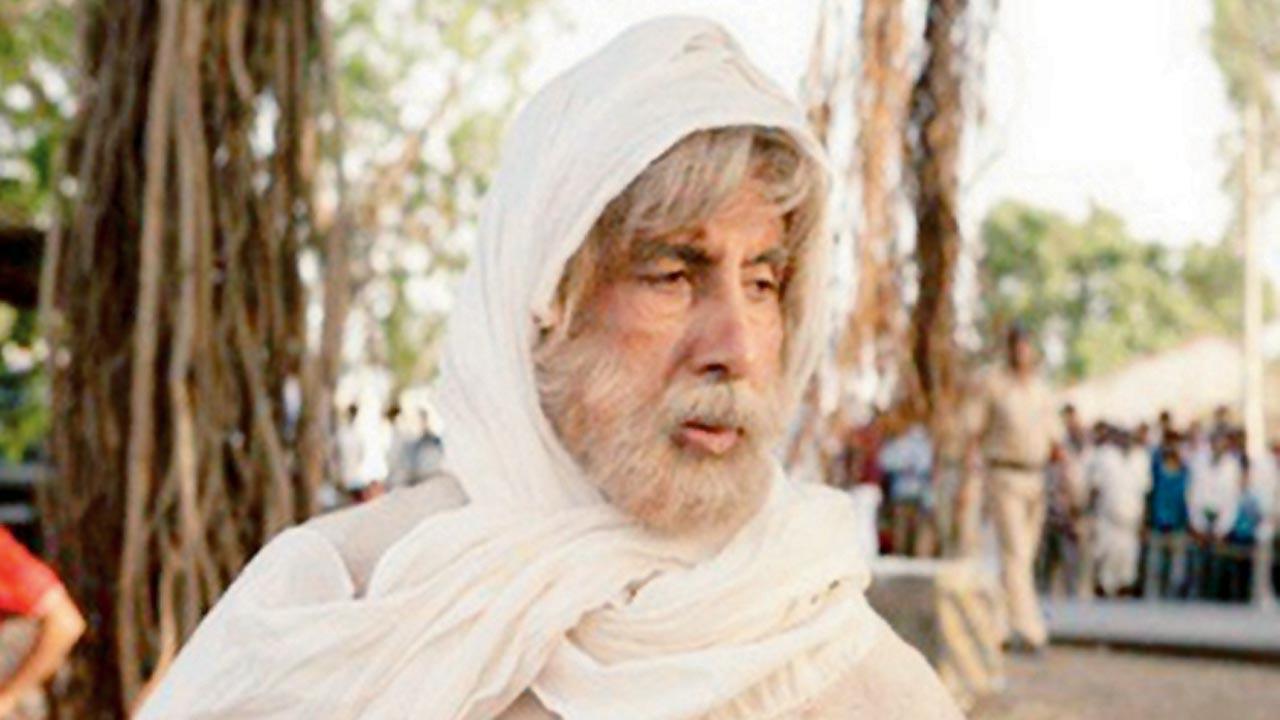
With Shoebite ready since 2009, director Sircar laments how Bachchan-starrer has been in limbo as it awaits NOCs from LA collaborators; says open to OTT release
Upala KBR (MID-DAY; October 19, 2021)
Shoojit Sircar has added another rich film to his résumé with Sardar Udham. While the filmmaker has given the audience diverse offerings — some light-hearted, others melancholic — in the past, he is saddened that Shoebite has yet to see the light of day. The film, headlined by Amitabh Bachchan, has been stuck in the cans since 2009.
Explaining the reason for the inordinate delay, Sircar says, “There were issues regarding the rights between the different partners [on the] film — Disney, Fox [Star Studios], some writers and collaborators in Los Angeles. Their NOCs and permissions are required.”
Shoebite is apparently based on Manoj Night Shyamalan’s story, Labour Of Love. In 1994, Shyamalan was said to have sold the rights to 20th Century Fox Studios. Years later, it was picked up by UTV Motion Pictures. However, later, the Hollywood filmmaker and Fox reportedly asked UTV to not release the film until he made the screen adaptation of the story in the US.
The director breaks it down further, “Earlier, [Shoebite’s rights] were with UTV; now, they rest with Disney [the parent company of Fox and erstwhile UTV]. But the last time Disney officials spoke to us, they said the Hollywood partners were wondering whether the Hindi movie should be released.” He elaborates that the concern stemmed from the fact that Shoebite was originally supposed to be an English offering.
On social media, Bachchan often expresses how he wants the film — also featuring Nawazuddin Siddiqui and Sarika — to reach his fans. “Shoebite comes up at each meeting with Mr Bachchan. He puts his heart and soul into every movie, but this one is special. Whenever I talk about the film, it makes me sad. There was a child in the cast who has now become a young woman,” emphasises the director, before adding, “Only post-production work is left on the project. Disney and Fox should do something about its release.”
Is he open to an OTT premiere, should the matter be resolved? “At this moment, I am so deep into the film that any form of release is okay by me — whatever the [producers] want. I just want Shoebite to be released.”
Like Udham Singh, there’s a revolutionary in everyone-Shoojit Sircar
8:18 AM

Renuka Vyavahare (BOMBAY TIMES; October 11, 2021)
Shoojit Sircar’s upcoming film Sardar Udham pays tribute to an unsung hero — Sardar Udham Singh, an Indian revolutionary, who assassinated Michael O’Dwyer in London (1940), to avenge the Jallianwala Bagh massacre (1919). The former British colonial official was the Lieutenant Governor of Punjab (British India) at the time.
O’Dwyer had said the killing of hundreds of protesters during a demonstration at Jallianwala Bagh in the city of Amritsar, Punjab, was justified. Actor Vicky Kaushal portrays Sardar Udham in the film that premieres on Amazon Prime Video on October 16. In an interview with Bombay Times, Shoojit Sircar opens up on his much-awaited film that he has been meaning to make for the past 21 years!
Were you surprised to discover that not many people know of Sardar Udham Singh, let alone his ideology?
I first visited Jallianwala Bagh in 1999. I was brutally affected. Shaheed Udham Singh ko itnay kam log kyun jaante hai? He was a courageous man, who travelled the world to get to London. I came to Mumbai in 2000 to make this film. I didn’t have money, and no actors knew me. Like Udham Singh, I waited for 21 years to realise my goal of making this film and it was shocking to know that people are unaware of him. That’s the problem of modern times. We are ignorant of who we are in this free world. We tend to forget about our past. Ronnie (Producer Ronnie Lahiri) and I made sure to add that thought in the trailer itself. The world should not forget Udham’s message. It’s unfortunate and sad that he is forgotten, but I hope I am able to bring forth his courageous act.
Devastating humanitarian crisis like the Holocaust, 1971 genocide in Bangladesh (then East Pakistan), terror attacks of 26/11, are events that can trigger and reopen old wounds. It’s like ripping off a band aid. How did you as a filmmaker manage to revisit the Jallianwala Bagh massacre without resurrecting the pain?
You are absolutely right. Sometimes, revisiting an incident is bound to reopen old wounds. My idea of making this film was for people to know that Udham was an ordinary person, a normal human being. We should not forget that there’s a revolutionary in everyone. As a filmmaker, your integrity and take on an issue is extremely important. First and foremost, are you a responsible citizen? The viewers by now know my sensibility and treatment. It all depends on who is making the film and why. I never compromise on my cinematic narrative.
How do you dig into or portray a person like Udham Singh, who hasn’t been well documented?
It was difficult. I went to various libraries, met many historians, writers, professors and referred to the statements of the Jallianwala Bagh survivors.
I was moved by their pain and sacrifices to the extent that I had to tell their story. Those statements were with the Hunter commission and the Congress report. The information is there, but it’s scattered.
What made you zero in on Vicky Kaushal to play Sardar Udham Singh?
My first choice was Irrfan Khan for playing Sardar Udham. Both of us wanted to make this film for a very long time. It’s not easy to cast someone when you have lived with the thought of Irrfan doing the film. Vicky came into the picture much later. I had seen only one film of Vicky and that was Neeraj Ghaywan’s Masaan. It was beautifully made and Vicky was able to convey the innocence and turbulence in his mind calmly. I needed someone who could do that. He has integrity. Being a Punjabi, he’s closer to the sentiment, language and pain of the character and knows what Punjab has gone through. All these factors led me to him and also the fact that he could play all ages — 20, 30 and 39 convincingly. He managed it quite well.
Your prep for the actors is unique. For this film, you made Vicky listen to a particular music. Take us through your process.
When I am conceiving a film and the writing part is on, you are constantly evolving. I have a habit of picking theme music or anything that transports me to that world.
Music gives me food for thought. That could be anything. In this case, I shared the music with Vicky. I do it to acclimatize actors to my world and way of thinking. That’s me sharing my emotion behind making the film with them. There’s no fixed routine as such, but I try to take my actors through the emotional journey that I underwent.
Irrfan Khan had a mysticism jo kheenchke uske paas leke jaata tha-Shoojit Sircar
8:09 AM

Calling Irrfan God’s special child, Shoojit Sircar, who directed him in Piku, talks about his close bond with the late actor
By Shoojit Sircar (BOMBAY TIMES; April 24, 2021)
‘THE PURITY IN IRRFAN’S THOUGHTS MADE HIM SPECIAL’
I can’t believe it’s been a year since he left us. I recall him as God’s special child. He was that – very pure in terms of his craft, artistry and his conduct. That purity in his thoughts made him special as a person. He was like a free bird. He just always wanted to fly in the sky – ‘let’s fly’ is all that his spirit asked for, and he’d always say things that gave this away.
‘OUR UNDERSTANDING GREW TO A POINT WHERE WE COULD COMMUNICATE WITHOUT A WORD BEING UTTERED’
Our equation started off with work, as an actor and filmmaker. It was after we wrapped up Piku that I could not think of anyone else but him to work with. I wanted him for all my films, somehow. Gradually, our relationship matured into quite a deep friendship where we could see or sense or communicate a lot of things that we wanted to do together. He would talk to me about going back to farming and then, about his many creative pursuits he wanted to complete. It was a pure equation, with no pretences. After he was diagnosed, we got closer to each other. Our understanding grew to the point where we could communicate without a word being uttered. He’d call me and tell me about people I should meet in London who are exactly like me. He thought about me, that matters to me.
‘I’VE STARTED TO BELIEVE IN THE MAGIC OF LIFE THAT IRRFAN BELIEVED IN’
A lot of Irrfan’s personality has rubbed off on me. I sometimes feel guilty I could not work with him again but in the time that I got to know him, I realised that pretty much like him, I’ve also started to believe in the magic that life spins around us all the time. I believe in the magic of life that he believed in.

More than conversations, there are memories I have of him. On one occasion while shooting for Piku, he wanted to wear a particular chequered shirt. He and the costume in-charge for the film, Veera, picked it. They were very happy with it. When she told me about the shirt, I told her to change it to something else. We went back and forth. Irrfan also jumped in to convince me, saying ‘Yeh pehenne do na dada...’. They planned and persuaded me into saying yes. When I see that frame today, he looks so happy, almost like a child getting the toy he wanted. In another scene where he’s leaving Kolkata and Mr (Amitabh) Bachchan is trying to stop him, Mr Bachchan was supposed to be eating a banana that he had to offer to Irrfan. By the time we started rolling, the banana was almost finished. Irrfan noticed it and started laughing. We had to get so many retakes because Irrfan could not stop laughing. When I see that behind-the-scenes moment, he looks so happy and peaceful.
‘IRRFAN BELIEVED IN A KIND OF SPIRITUALITY THAT SHOWED IN HIS WORK AND BEHAVIOUR’
I think he had this mystic quality as an artiste which got you addicted to him as a person. He believed in a kind of spirituality which showed in his eyes and work and his behaviour. He had that mysticism jo kheenchke uske paas leke jaata tha.
— As told to Rachana Dubey

Now that the vaccine is out, I’m ready to start shooting-Shoojit Sircar
8:02 AM

Shamayita C (BOMBAY TIMES; February 20, 2021)

You’ve been in Kolkata for a long time after the Coronavirus lockdown. How did you manage your work from there?
I was working from home in Kolkata. In the last one year, we released Gulabo Sitabo and worked on other projects through online meetings and video calls. I am currently working on the post production of Sardar Udham Singh. We are midway through the film. Also, I’ll be going back to Mumbai this month, after almost a year, and the next few months will be heavy for us since the film will release this year. We will be able to decide the date by March.
Planning a theatrical release?
Yes, it (Sardar Udham Singh) will be released in theatres as many cinema halls have reopened now. People have started going back to the halls. We are hoping that other films releasing in theatres in the coming months will show us the way.
Any other projects in the pipeline?
We are discussing a few projects and I’m working on a couple of scripts. The plan is on for a few new films. I cannot shoot in a very constrained environment and hence, haven’t started shooting yet. It has to be freeflowing. I am not in any hurry. Now that the vaccine is out, I think things are moving in a positive direction and I can resume shooting. Shooting a film requires a personal touch and close proximity. I am sure we will be able to get back there soon.
Releasing Gulabo Sitabo on OTT sparked a debate on the significance of cinema halls. Your take on that?
Films are meant to be watched in cinema halls but this was an unusual scenario for all of us. We had not planned to release it on OTT, but the situation left us with no choice. I know there was a lot of debate. It made many in the fraternity unhappy. But I had no option at that moment. Also, there is a financial aspect to it. There is a large team of almost 180 to 200 people whose survival is dependent on the film. For filmmakers like us who make one film a year and run a production company, it is important to get financial support. By releasing the film, we made sure the entire team could survive the lockdown blow. So, I think I made the right decision at that time. It was my first time and I enjoyed the journey. I always say, I took the bullet first (laughs!). After that quite a few films were released online.
Does an OTT release give you the same sense of satisfaction compared to the feeling of releasing films on the big screen?
Theatrical release involves a certain amount of pressure — from the industry angle, about box office collections and so on. If a film is released on OTT, it becomes more accessible without any such pressure. It is there in everybody’s living room. OTT is a big medium now.
In the last year, groupism in Bollywood became a talking point. Being someone who has been associated with this industry for a long time, what do you feel?
I have been working here for more than 15 years and this has always existed. I have seen several ups and downs. Initially, there were individual producers. Then came the corporate houses. Polarisation happens everywhere. It is important to know where you are standing and what you want to do as an individual. Many people say that it is easy for me since I worked with so many stars. But in the beginning, I even worked with newcomers. I have always stood my ground. I handled the finances and also the prejudices to make sure I do the kind of films I want to do on my own terms.

Shoojit Sircar opens up about his social media sabbatical
8:03 AM

Shreya Mukherjee (HINDUSTAN TIMES; January 14, 2021)
The year 2020 was harsh on everyone due to the pandemic, and more so for Bollywood as there was a lot of hate and anger directed towards the industry after actor Sushant Singh Rajput’s death. The social media toxicity that ensued led to many celebrities take a break from Twitter. Filmmaker Shoojit Sircar was one of them; however, he had his own reasons.
“If you want to be sane and concentrate on work, you need to get out of that space. There was too much happening and the Coronavirus pandemic only made it worse. Irrfan left us (in April). I was already disturbed. Then Gulabo Sitabo’s release on OTT drew flak... I thought let me get out of it first,” reveals the filmmaker, who announced his social media sabbatical on June 22.
Though Sircar returned to social media on January 3, if things get bad, he won’t mind taking another break. “You can try to avoid these to an extent, but it does affect you. The foul language people used wasn’t apt for a public platform. I didn’t want to be in that muddy well, and wanted some peaceful time,” he adds. The Piku (2015) director stresses that everyone needs to behave responsibly online.
Sircar confesses he didn’t miss out on anything. “In fact, I felt relieved, relaxed... I was getting the necessary updates on internet, TV and newspapers,” he states. One good thing that this break did for Sircar was, it helped him concentrate on editing his next film, a biopic on freedom fighter and revolutionary Sardar Udham Singh. While the release date isn’t out yet, talks are on if it will be an OTT or theatrical release. “We want to release it in theatres... [But] we can’t deny that OTT has seen a change in consumption pattern,” he concludes.
Rakeysh Omprakash Mehra, Shoojit Sircar and Nikkhil Advani share their perspective on patriotism
8:55 AM

Rakeysh Omprakash Mehra, Shoojit Sircar and Nikkhil Advani share their perspective on patriotism and how the sentiment has been expressed differently in our cinema
Rachana Dubey (BOMBAY TIMES; August 15, 2020)
On Independence Day, filmmakers Rakeysh Omprakash Mehra, Shoojit Sircar and Nikkhil Advani participated in a discussion on the Bombay Times Talk Show about the depiction of patriotism in Hindi cinema. Over the years, Rakeysh has helmed films like Rang De Basanti (2006), Delhi 6 (2009) and Bhaag Milkha Bhaag (2013), all of which had uniquely linked events of national and historic importance with an entertaining narrative. Shoojit debuted as a filmmaker with Yahaan (2005), a drama set against the backdrop of Kashmir. He also helmed Madras Cafe (2013), a partreal-part-fictitious account of the disturbance in the Tamil Nadu region at the turn of the 1990s. Nikkhil directed DDay (2013), a precursor to several films in the future that would talk about bringing
India’s Most Wanted terrorist to book. He also directed Batla House (2019), which was widely appreciated for its balanced narrative of the much-debated Batla House encounter in Delhi. Excerpts from our conversation with the trio:

PATRIOTISM MEANS DIFFERENT THINGS TO DIFFERENT PEOPLE: RAKEYSH OMPRAKASH MEHRA
To begin with, it is very sad that a subject like Rang De Basanti remains relevant even today. What inspired me to make that film was my experience while growing up. I can’t define patriotism, because it means different things to different people. It was not patriotism, but something to do with the state, which was the villain in my film. We had had enough, and we had to say something. I wouldn’t call Rang De Basanti a patriotic movie. Patriotic film is a label; a film like Rang De Basanti or Shaheed (1965) works on different levels. A movie is a movie, and it’s a story. Thumping your chest and saying that your film is patriotic, is jingoism. If I had to, I would still make Rang De Basanti today. The struggle to make the film is not important. It’s the voice of the film that matters. Films need to be made when they are not allowed to be made. Thinking that patriotism is winning against someone, defeats the very idea of patriotism. Shoojit Sircar’s Madras Cafe belongs to a voice and to the people; not to any state. That is a true patriotic film. I have never understood defeating another nation as patriotism. Also, when we are making films, we come from a place of responsibility. Let the expression of those who can express prevail. I don’t want any filmmaker to be misunderstood when he talks about freedom of expression; the mention of that leads to a debate. When I was making Rang De Basanti, someone said that we were doing some politically incorrect things in the film. In my naivety, I told the person that filmmaking is not about being politically correct; it’s about being humanely and emotionally correct.

IT’S NEVER EASY TO MAKE FILMS THAT QUESTION THE SYSTEM: SHOOJIT SIRCAR
 We are all storytellers, and we want to tell stories that compel us. Madras Cafe didn’t release in Tamil Nadu, Malaysia and Canada. It had deferred releases in Singapore and London, because the issue at hand was so sensitive. It was not an easy film to make. It was a true story, but in our country, we are not as democratic with cinema as the West is. We still can’t talk about things that are already in the public domain in one form or the other. It’s never easy to make films that question the system. As filmmakers, we are also responsible individuals and conscious citizens. We are not here just to show some glamour. That part of us is always overlooked by different sections of people. We are conscious of our social reforms and what is happening around us. One has to give it to our rational judgement, too. We are lawabiding individuals. So, even if I talk about freedom to express, it is never absolute. It has its own discipline.

WHEN I TALK OF PATRIOTISM, I AM INTERESTED IN THE FREEDOM TO SAY WHAT I HAVE TO SAY: NIKKHIL ADVANI
When I was making D-Day, I had to haggle for every rupee. Also, I was not allowed to use the name of the individual, but I got all the threats, and I had to get security. It’s not easy to make such films. Every time that we are thinking of a subject, we have to analyse what we can keep and what we can’t, and what the repercussions could be. Patriotism, to me, is a very personal thing. However, today it is being defined by people who assess it on the basis of what you do or don’t do. Not conforming to certain ideas makes you an anti-national, which is not the way to look at things. Filmmakers are always soft targets, who are constantly reminded about what they have to do or what they can do.
When we are talking about something that can polarise public opinion, people have to understand that we do it with even more caution. We think harder on whether we should do it or not and how we should go about it. We’re constantly being told about the repercussions. Eventually, we are here to tell stories, and we do it with absolute responsibility. When I talk of patriotism, I am interested in the freedom to say what I have to say. Not having that, will only drive filmmakers away from narrating difficult, and yet very important stories.

Shoojit Sircar logs out of social media
8:10 AM

Prashant Singh (HINDUSTAN TIMES; July 24, 2020)
The Coronavirus lockdown period may have brought people to the online space in droves, but Shoojit Sircar is surely an exception. For over a month now, the filmmaker has kept himself away from the social media world. As a result, Sircar has deactivated his Twitter account and hasn’t logged into his Instagram and Facebook pages, too.
“Yes, that’s true,” says Sircar, adding: “I felt there was too much noise (on social media) and I wanted to keep myself away. I, anyway, get my share of news and updates through TV and newspapers. So, honestly, I am not missing being on social media. I realised that one gets addicted to it, and then you spend a lot of time on it unnecessarily. You can do so many constructive things during that time.”
Since he is away from the noisy social media, Sircar, 53, “has all the time in the world to happily indulge in cooking, mediating and spending time with family.” Also, his professional commitments take up most of his time. “I am working on the editing of my next (Sardar Udham Singh starring Vicky Kaushal). Plus, I am in the middle of penning other projects, so I also spend a lot of time doing research, reading and writing,” says Sircar, who is stationed at his family home in Kolkata.
Even as India slowly trudges towards the unlock mode, Sircar has no plans yet to travel to Mumbai. “There’s nothing specific that I need to be in the city for. Plus, I am enjoying living the simple life here (in Kolkata) where I am doing household chores, watching some interesting content including documentaries and also taking time out for gardening. Plus, this lockdown period has given a lot of time for introspection as well,” he concludes.
I knew I had to name Gulabo Sitabo around the puppet characters, to pay an ode-Shoojit Sircar
8:33 AM

Director-writer team Shoojit Sircar and Juhi Chaturvedi say that their upcoming movie is about everyday people and how their struggles shape them
Aastha Atray Banan (MID-DAY; June 7, 2020)
 While the rest of India counts the days to a full lifting of the Coronavirus lockdown, director Shoojit Sircar says he's quite at home, at home. Despite a career in Bollywood, he lives in Kolkata, and arrives in the city only when he has work. "The rest of the time, I am at home, not interacting much. I actually don't like doing movie promotions at all. I just want to release my movie, and let the audience watch," he says in a telephonic interview.
He has emerged from temporary hiding because his movie, Gulabo Sitabo, which was slated for an April release, is now seeing a digital release on Amazon Prime next week. He thinks it's not viable to "sit on a film" and with digital entertainment being the new frontier, he decided to take the plunge. His previous films include the critically acclaimed October (2018), Vicky Donor (2012), which changed actor Ayushmann Khurrana's fortunes, and Amitabh Bachchan and Deepika Padukone-starter Piku (2015) Gulabo Sitabo, also stars Bachchan and Khurrana as warring tenant and landlord, as Sircar teams up with his writing partner Juhi Chaturvedi. They have set the movie in Lucknow, the city Chaturvedi belongs to. The name comes from the puppet characters Gulabo Sitabo, the ever-fighting sisters. The movie, they say, is about simple people, who are shaped by their circumstances. "It could be moral or financial limitations, and how that leads to specific behaviour. We are not judging them, we are just pointing the camera on their lives," says Chaturvedi, known for crafting realistic characters and poignant slice-of-life stories. Sircar adds, "It's about the struggle called life, but with a grin at the end."
Other than the protagonists, Lucknow is also an important character in the movie. "Everything about old Lucknow is stuck in time. It has nothing to do with the new Lucknow. Time stands still here. It reflects Juhi's personal memories — Hazratganj, and the river Gomti. When she told me about puppetry, which is a dying art form, I knew I had to name the movie around the characters, to pay an ode," says Sircar.
When Chaturvedi speaks of the city, her childlike enthusiasm shines through. It's almost like she is telling us about an old friend. "I was very clear that the film had to be set in Lucknow because I had the confidence of getting the flavour right and giving the cultural and historical connections an authentic voice. A city lends its people a mindset, and that comes through in the movie," she explains.
For Sircar, it also reflects a big influence on his filmmaking—the fact that he grew up in an environment that wasn't burdened by distinctions surrounding class and religion. "I was a sportsperson and we used to play with kids from all strata—there were sons of teachers, doctors, an Indian Air Force officer, a rickshaw wala and rag picker. We never saw disparity. That disparity is missing in this movie too. Religion has no impact on the characters. They are just people to me, and will be to you," says Sircar.
The film then seems like just the distraction the audience needs at a time when the health crisis seems far from over. Chaturvedi, to her credit, has a positive attitude. "We have lived extremely mindlessly for a long time, and not given anything back to the world. But I think this has helped us evolve as human beings. We are now valuing everything, and everyone. Many may go back to the way they were, and some may not. And that's okay. It will keep the balance going."
Basu Chatterjee's simplest stories leave sweetest aftertaste-Shoojit Sircar
9:14 AM

Director Shoojit Sircar, who started his career as Basu Chatterjee's assistant, remembers flag-bearer of India's middle-class films
Mohar Basu (MID-DAY; June 5, 2020)
 As many of us romanced the rain from our windows on Thursday morning, listening to Rimjhim gire saawan, the filmmaker who gave us the classic bid adieu to the world. Basu Chatterjee, with his stories that were sprinkled with love and the everyday truths, has inspired an entire generation of artistes. Of the current lot, Shoojit Sircar has retained the beauty of Chatterjee's works, bringing a similar affable quality to his films.
After all, his first brush with movies was through Chatterjee's lens — in the late '80s, Sircar began his career as an assistant on the set of a Bengali series the auteur was helming. "Theatre actor Ruma Ghosh had got me the gig. For the first few days, I didn't know I was on a Basu Chatterjee set. When I finally saw him on the set, I told them I am ready to work for free," says Sircar on phone. The director, then a wide-eyed boy just out of college, remembers his first interaction with the filmmaker. "We were shooting in Delhi's CR Park. I was watching the scene, and he kept shouting, 'Field e achho; bero eikhan theke' [You are in the frame, step out of it]. I didn't even know what a field was."
As an assistant, Sircar's job entailed getting the director to and from the set. "I was also entrusted with arranging a bottle of soda for him every day after the pack-up," he chuckles. The errands may have been menial, but the learning on the set was that of a lifetime. "The first one you work with leaves an indelible impression on you. He was quick on the set, and like him, I don't waste time. He would never shoot beyond 6 pm. Also, his planning had an impromptu quality to it. I have heard stories about how he decided to shoot Rimjhim gire saawan when he saw the downpour. The shoot didn't have an elaborate planning, which is why its simplicity stands out."
In the '70s when action films dominated Bollywood, Chatterjee became a pioneer of the middle-of-the-road cinema, giving us the everyman — the antithesis to the 'angry young man'. From Piya Ka Ghar to Chhoti Si Baat and Swami, the leading ladies in his films were crafted with respect, and had an independent voice. "Baton Baton Mein and Rajnigandha are such lively films. He became a game-changer when he made Ek Ruka Hua Faisla. Like him, I always wanted to make charming movies that have a long shelf-life. When I shot with Moushumi di [Chatterjee] and Mr Bachchan for Piku, they were chatting about him. That's when I realised his legacy of movies cannot be recreated. Films don't always need to be about drama. Sometimes, the simplest stories leave the sweetest aftertaste."
When I read Inox's statement, I understood the theatre owners' point of view-Shoojit Sircar
8:33 AM

As Gulabo Sitabo opts for the digital premiere, director Shoojit Sircar on taking the leap of faith despite empathising with exhibitors
Mohar Basu (MID-DAY; May 29, 2020)
Shoojit Sircar made a brave move when he opted for a digital premiere of his next, Gulabo Sitabo. Expectedly, it invited the wrath of exhibitors and distributors who felt betrayed by the director's decision. As several filmmakers followed in Sircar's steps to seek direct-to-web release for their offerings, leading multiplex chain Inox warned of "retributive measures".
Sitting in his Kolkata home, a week after Cyclone Amphan wreaked havoc in West Bengal, Sircar is poised and pragmatic when asked if he is worried about the consequences. "Once you've made a decision, there can be no scope for fear. It's not about being brave; the situation compelled us to adapt. When I read Inox's [statement], I understood the theatre owners' point of view. If I were in their position, I, too, would have expressed my discomfort. I told them it's not a personal decision. If it weren't for the Coronavirus lockdown, the film would have released in theatres."
Sircar reveals that he considered releasing the Amitabh Bachchan and Ayushmann Khurrana starrer on Amazon Prime Video only after the original release date — April 17 — went by, without the promise of a solution in sight. "I work on one film at a time. I finish the film, take care of the finances and move to the next. I have no bank [of movies to fall back on]. Moreover, I have a history of movies not releasing, like Shoebite. Amazon promised that they would [promote] this film like a big cinema release. I have never had my film releasing in 200 countries in multiple languages," he says, adding that a few releases on OTT in the current scenario will not compromise the theatre business. "These platforms co-existed with theatres for the past few years. Binge-watching can't change the experience of going to cinemas."
The quirky comedy is his third directorial venture with Bachchan after the unreleased Shoebite and the much loved Piku (2015). Such is his admiration for the megastar that Sircar couldn't imagine anyone except him in the role of the acid-tongued landlord Mirza. "Even while writing the script, I knew that it'd be Mr Bachchan. As soon as a film is over, he is hangla [greedy] for my next. The idea of Ayushmann playing Banke developed later, after we determined the character's age."
We are open to Gulabo Sitabo's digital release, but will wait till May 3-Shoojit Sircar
8:18 AM

Shoojit Sircar discusses his Amitabh Bachchan, Ayushmann Khurrana-starrer that was to hit theatres on April 17; informs that the Udham Singh biopic is in post-production
Roshmila Bhattacharya (MUMBAI MIRROR; April 28, 2020)
 Amid a mass of anxious humanity, Shoojit Sircar is like a restful oasis, content at his Kolkata home, to which he flew back much before the lockdown. Sighing over lush green, homegrown mint leaves and expressing gratitude for the ever-handy mop, the creator of films like Vicky Donor, Piku and Pink, and a doting dad, is happy he doesn’t have to wake up early to pack his daughters’ tiffins and can be around them all day. “It’s a simple, disciplined, busy life, packed with routine chores, with a few hours to catch up on reading and a few documentaries. When you don’t know what the future holds, it’s best to shed the mental baggage, let go of ambitions, cut down on needs and be happy with the little you have,” he murmurs, his voice soothing over the wire.
The only disappointment is that his comedy-drama, Gulabo Sitabo, which reunited him with Ayushmann Khurrana after 10 years, and frequent collaborator Amitabh Bachchan, and was to release on April 17, has now been indefinitely delayed. “As a filmmaker, I’d want to see my film open in the theatres, but the situation today is unlike anything anyone had ever experienced. So, I’m open to a digital release if need be, but we will take a decision after May 3,” he shares.
And what about the Sardar Udham Singh biopic, his most ambitious period film? Shoojit informs that he has finished shooting, but post production remains. “Since it is scheduled for January 2021, we are not thinking about it right now. I’d like a film like this to be a big screen experience. I have lived with this dream for so long that when we were shooting at Jallianwala Bagh, I had tears in my eyes,” he reminisces emotionally, all praise for Vicky Kaushal. “Today, after finishing the film, I can say with certainty that I can’t think of anyone but Vicky playing Udham. The role was tailor-made for him and he lived it.”
A change that Shoojit forsees is a boom in TV, going by escalating TRPs. He believes that soon people may get so comfortable with home entertainment that when life gets back to normal and cinemas reopen, only the aficionados will want to watch a film on the big screen. “The others will invest in a bigger and better TV or a home theatre. In this scenario, cost correction in film budgets and a cap on the price of film tickets is imperative. By then, people will have got into the habit of not spending much and saving for another calamity, so, it’s important to bring down inflated costs,” he reasons, pointing out that while actors, writers, filmmakers and a few senior technicians will survive the Coronavirus pandemic, it’s the spot boys, dress men and lower rung crew who will need looking after.
 The filmmaker himself is happy that there is growing appreciation for his October, an audience for Madras Café and an resurgence in the popularity of Piku and Vicky Donor. The latter recently celebrated its eighth anniversary, with Vicky fans tweeting dialogues online. “I must have done something right for the film to touch so many hearts. What is even more heartening is that this story of a sperm donor became the stepping stone to other taboo subjects coming to the screen, many of them frontlined by Ayushmann, who has grown into a more relaxed and trained actor as was evident during the Gulabo Sitabo shoot,” he asserts.
The Big B and Ayushmann had collaborated with Shoojit years ago on Shoebite that remains unreleased. Is there hope of the film seeing the light of the day? “Now, that both the studios have come together, maybe it will. It’s my most innocent film since I was just starting out and the mind was pure. Every time someone discusses Shoebite, Mr Bachchan immediately calls me, as excited as a child. With him the relationship is one of mutual trust. On the last day of a film’s shoot, he looks at me with the unspoken query, ‘So, where’s the next script?’ which prompts me to write something We’ll definitely do something again together, he’s always on my radar,” admits the director.
Prod him on his next and he points out that after what we are currently undergoing, he hopes there is a change in audience’s perception and that the new sensibility will bring about a change in our filmmaking style and narrative. “I’ll be happy to bring simple and beautiful stories to the screen, but till a story evokes something in me, I’m quite happy in my Kolkata home, connecting with my inner self,” he signs off.
Subscribe to:
Posts (Atom)