Showing posts with label Shonali Bose interview. Show all posts
Showing posts with label Shonali Bose interview. Show all posts
I wrote Amu around a mum and daughter to tap into my pain-Shonali Bose
11:11 AM
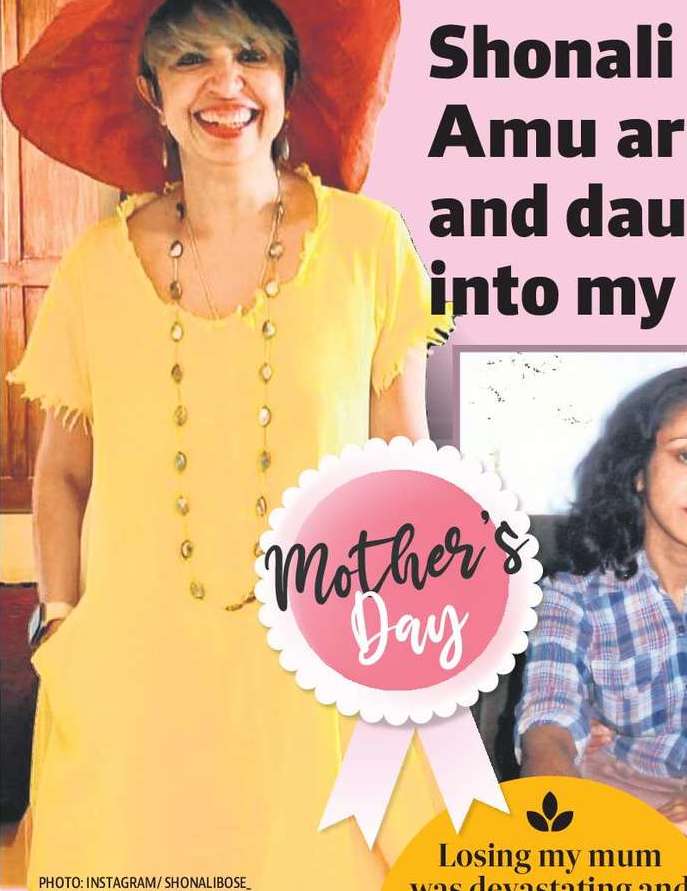
Yashika Mathur (HINDUSTAN TIMES; May 10, 2025)
Shonali Bose has faced two devastating losses in life — first, as a daughter, when she lost her mother. And then, as a mother, when she lost her son. Ahead of Mother’s Day tomorrow, the filmmaker talks about how she has channelised her pain into her work, over the years.
Talking about her mother, Junie Dass’s death in 1986, Shonali shares, “Losing her at 21 was devastating and it changed my life. I have explored themes such as mother-daughter relationship and death in Amu (2005), Margarita With A Straw (2015) and The Sky Is Pink (2019). In Amu (her directorial debut), we consciously wrote a story around a mother and daughter to tap into my pain. Writing from the depths of your pain can be powerful.”
While Mother’s Day was a painful occasion for her for years, it changed when her son, Ishan was born. However, life dealt another blow when he died in 2010. So, when she directed The Sky Is Pink, there was a personal touch to it as well. “His death took me to another place… I felt a deep peace about death. In The Sky is Pink, the character played by Priyanka (Chopra Jonas; actor) wears a vibrant pink scarf to her daughter’s funeral. Just as I had worn red. To celebrate. Not mourn,” says Shonali.
Meanwhile, she takes us back to shooting for Amu, which starred her maternal aunt, politician Brinda Karat: “She just wouldn’t tear up. So, when a scene was being shot, I crouched under the seat of the car and after calling ‘action’, I took her through the memory of my mum’s last moments in the hospital. And, she couldn’t hold back her tears after that and we got the shot right.”
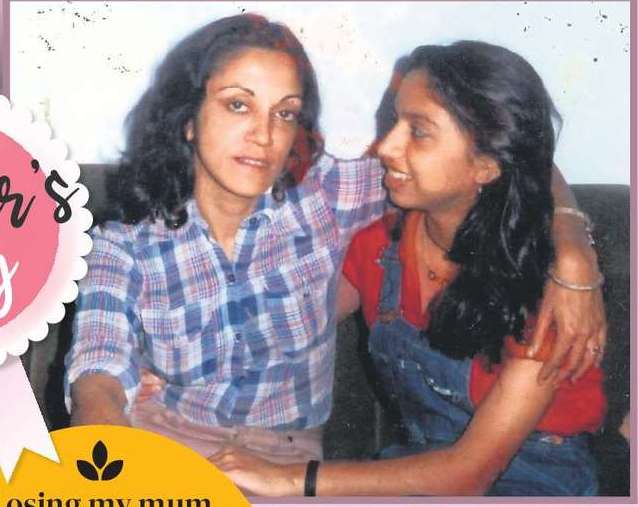
Shonali Bose with her mother, Junie Dass
The Sky Is Pink made me wary of telling true stories-Shonali Bose
8:08 AM

Natasha Coutinho (BOMBAY TIMES; July 16, 2024)
Director-writer Shonali Bose, known for her films Amu and Margarita with a Straw, expressed reservations about telling real-life stories after her experience with the Priyanka Chopra and Farhan Akhtar starrer The Sky Is Pink (2019). The film, which depicted the true story of Aditi and Niren Chaudhary and their daughter Aisha’s battle with a rare disease, presented unexpected challenges.
The Sky is Pink marked Bose’s first film to narrate a real-life story.
According to Bose, a significant challenge arose in convincing the couple to accept a portrayal that included imperfections in their relationship. Bose said, “Aditi and Niren resisted the depiction of marital discord in the film. Nilesh Maniyar (co-writer) partnered with me on this journey and the big struggle we faced was to convince Aditi and Niren that it was okay that they don't come across as perfect people and that their marriage had ups and downs. They were very conscious of their image - which is understandable and as a result were extremely resistant to them being shown as anything less than perfect as a couple. While the film acknowledges a disagreement about Aisha’s surgery (as portrayed), the couple didn’t want to show this scene. A film doesn’t work without conflict, and they needed to agree to let us create it.”
Bose further added that just before the shoot, the couple even suggested changing their names in the film.
She said, “Priyanka Chopra, who portrayed Aditi in the film, met with the real Aditi to convince her to let us use their real names, as it was a true story. Ultimately, they had faith in me and Nilesh, which I appreciate. Once they saw the film’s response, they were ecstatic. However, this experience made me wary of working on any other real-life stories without being given absolute freedom in character portrayal.”
It’s important for me to form an emotional bond with my cast-Shonali Bose
8:01 AM

The Sky Is Pink director talks about how she brought her characters to life on screen
BOMBAY TIMES (October 5, 2019)
 A film is an amalgamation of many factors, but its core lies in the idea that stems from one person. And in the case of The Sky Is Pink, it is director Shonali Bose. The film is about a family celebrating the beauty of life as well as death, and it resonated with Shonali on a personal and emotional level. Bringing together the feelings of happiness, loss and peace, she worked towards making the big screen come live with these characters.
To begin with, the National Award-winning filmmaker, who has written the film with Nilesh Maniyar, decided to forge a bond with all her actors. Recalling her first meeting with Priyanka Chopra Jonas, she said, “It’s important for me to form a close, emotional bond with my cast. Great performances are also about the exchange of energy between actors and director, and among themselves. Priyanka and I bonded fast, as we spoke about the death of my son and her father. These conversations are a core part of the work that went into her brilliant performance.”
 Speaking about Farhan Akhtar, she adds, “I was very intimidated with him, as he is not only a brilliant actor, but also an excellent director. But when Sid (Siddharth Roy Kapur, producer) and I met him to discuss the film, he just looked into my eyes and said that he will do it, but that he is terrified. And that he was going to place himself in my hands. The trust, power and confidence he gave me was amazing. We had a beautiful relationship from that moment.”
Shonali shares how crucial the young actors, Zaira Wasim and Rohit Saraf, too, are to the story. She says, “Zaira plays the role of Aisha and that is a huge responsibility. Though it’s based on a real person, I didn’t want the character to be a carbon copy. And, the best way to avoid that was to cast somebody who does not look like Aisha. I did not want her to lose weight either, because I don’t believe in it. What I wanted for this character is a beautiful spark in the eyes, and Zaira has that. She has the spirit and spunk that Aisha had. She is the heart and soul of this film and is spectacular in it. Aditi (Chaudhary, Aisha’s mother) said at the world premiere in Toronto International Film Festival that she feels as if Aisha was reborn on this day.”
Shonali adds, “As for Rohit (Saraf), he has a very special place in my heart as he is playing Ishaan, Aisha’s brother. He was the only one who had to audition for the role. He was one of the hundred actors who auditioned to play Ishaan Chaudhary, and he stole my heart right away. His vulnerability was beautiful even in the audition and I absolutely loved him. He was also easy to work with.” .
As a true captain of the ship, Shonali became the support system for all her actors in challenging situations. During Aisha’s death scene, all the actors (and some crew members) broke down at different points, and looked to her for strength. Having dealt with grief multiple times in her own life, Shonali effortlessly transformed into a pillar of strength for her team. The filmmaker says, “I was in a place of light, peace and strength on that day, as that has now become my relationship with death. I was able to hold them in my arms and give them the love and support they needed to be able to perform. Each of them surpassed themselves, giving me goosebumps.”
The Sky Is Pink, produced by RSVP and Roy Kapur Films, in association with S K Global and Purple Pebble Pictures, releases on October 11.


Priyanka Chopra would tell me that Nick was going to propose to her and whether she should marry him-Shonali Bose
8:12 AM

Onkar Kulkarni (BOMBAY TIMES; September 28, 2019)
After making films like Amu (2005) and Margarita With A Straw (2014), Shonali Bose is all set to present another heart-wrenching tale with The Sky Is Pink. The film stars Farhan Akhtar, Priyanka Chopra Jonas and Zaira Wasim, and is based on the life of Aisha Chaudhary, who was diagnosed with pulmonary fibrosis, and her family. In a conversation with Bombay Times, Shonali spoke about her late son Ishan, narrating an emotional tale on the big screen, shooting the film amidst Priyanka’s wedding preparations and a lot more.
The film sees Priyanka and Farhan share screen space four years after Dil Dhadakne Do (2015).What prompted you to get them on board as Aditi and Niren for The Sky Is Pink? Did it require some convincing on your part or were they on board right away?
Priyanka and Farhan were my first choice and so getting them on board was a dream come true. When I say first choice, it’s not in terms of the stardom, but purely as actors. Frankly, I was terrified and even intimidated with Farhan stepping in as an actor, because he is a director himself and he has even directed Priyanka before (Don and Don 2). I was thinking that I was going to be watched (laughs!) Also, Priyanka has done so many things (as an actress in her past films), so I was really nervous about teaming up with her.
I got a text (from Priyanka) on my son (late) Ishan’s birthday, in which she said that she wanted to meet me. I went to New York to meet her and discussed the film. The plot revolves around the death of a child, and I have been through that grief in my personal life as I had lost my nine-year-old son. She got teary-eyed and she even talked about her (late) father. It was interesting to see that for the first time I was meeting this big star and we immediately connected heart-to-heart.
As far as Farhan is concerned, we had asked him to read the script, post which he was going to meet us to tell us his decision. When I met him, he just stood up, looked deep into my eyes and said that he was terrified of doing this film because he thought it was a raw, emotional and honest script. He knew that I would demand an honest performance from him as a father. Giving such a real performance is much tougher than doing it in the typical Bollywood way. He told me that he was just going to put himself in my hands. I felt happy that he trusted me as a person because that’s what you want from your actors, right?
The film is based on the life of Aisha Chaudhary, what were your interactions with her family like?
Aisha’s parents told me that her brother, Ishaan Chaudhary, didn’t want this film to be made because he was very nervous about a Bollywood film being made on his sister. However, his mother said that she had no problems with the project and that we could go ahead with it. I told her that I wouldn’t make the film if her son didn’t want that. So, when I had the screening of Margarita With A Straw in New York, I invited him for it. He came for the screening. Later, we met at a coffee shop and he wept in my arms. His mother, who was surprised, told me that he had never wept in her arms even when his sister passed away. He cried and talked about his sister with me, and I talked about my son. I asked Ishaan, who is also a music composer, for an original song from him at the end of this film. Thus, the film ends with a song composed by Ishaan for his sister.
It was amidst the shooting of the film that Priyanka got married to Nick Jonas. How was that phase of filmmaking?
I have seen Priyanka’s journey from the time when Nick was not on her horizon, to the time when he became her husband. At the time, I felt like her mother as she would talk to me and tell me that Nick was going to propose to her and whether she should marry him. We have laughed, cried, talked for hours deeply about many subjects. This bond helped me direct her with ease just the way I directed Kalki (Koechlin in Margarita with a Straw) or Konkona (Sen Sharma in Amu).
Talking about the shooting phase, I feel that Priyanka has this ability not to get distracted by anything. That’s her forte as an actor. Once we got to know that she was going to get married and was hosting two big ceremonies in India and overseas, we just supported her. There was a separate room made on the sets where she held her wedding-related meetings. In between the scenes, she would go there, have a meeting about her wedding plans and then come back and give a shot. Initially, I was worried about how she would be able to do it, but, I could see that she did it with ease and that gave me confidence. It didn’t affect her performance at all. Once we were shooting in Chandni Chowk, post which she had to catch a flight, as they needed her to come to Paris to try the wedding gown. The next day she flew back, came to the set and continued shooting. In Delhi, we shot for five days right before her wedding. During Thanksgiving, it was Nick who came to Mumbai to be with her as she was busy shooting for the film. He even visited the sets. As a surprise, Priyanka arranged for a turkey from somewhere. After wrapping up, we had a party with him where we all danced together.
On the last day, we had decided to do a bidaai ceremony for Priyanka. We had called for a cake and champagne. That day, Priyanka had an intense scene, and suddenly, I heard some sniffs on set, I was surprised to see Nick standing next to me and crying seeing Priyanka give the shot.
This subject is close to your heart, was it tough, especially when you were shooting the emotional scenes?
I remember that when I was shooting Margarita With A Straw, there was a scene at the hospital where the mother is dying of cancer. We were shooting at a real hospital and the smell reminded me of being with my son at the time as he was admitted in the hospital during his last days. I started wailing and broke into pieces during the shoot. I was the director and producer of the film, I had 100 people around me and they wouldn’t know what to do when you are the leader and are supposed to be strong, but instead, you break down. As a filmmaker, I could have wrapped up the shoot for that day, but I decided not to give up and continued shooting. I went around hugging everybody on the set. Seeing me, a lot of people on the set opened up and shared stories about losing their near and dear ones. It’s been nine years since Ishan’s death. Shooting for The Sky is Pink was a joyride, and I was just laughing throughout the film. I must say that I have done a lot of grief work in order to process his death in terms of my feelings, pain and loss. I have reached that place where I can feel that he is always with me and I am not disconnected from him.
The day when we shot the death scene, I had called all the ADs (assistant directors) to my room and I did a light meditation where we all held hands. They all were feeling nervous. On that particular day, Zaira, Farhan and Priyanka cried as they had to perform an emotionally tough scene.
The film premiered at the Toronto International Film Festival. What was that experience like?
I felt so blessed that the project which began on Ishan’s birthday premiered on his death anniversary (September 13). On that day, we walked the red carpet, where there were over 1,000 fans. There was Farhan, Priyanka and the rest of the team with me, and I was surprised to see that people were screaming my name, too. They even took my autographs. Later, we went inside the auditorium, which was a three-tier space with seating for 2,000 people. The size made me extremely nervous, and my heart was beating faster. I told the audience that we were watching the film with them. We all could hear people laugh and even cry loudly. In fact, Farhan was crying, too. After the film ended and the credits rolled, I could see everyone standing up and applauding us. Later, at an after-party Aisha’s family joined us. They said that they felt as if Aisha has been reborn. Now, my terror is about the reaction in India. With The Sky Is Pink, I feel I have done a trilogy. The focus has been on the mother-child relation in all my three films. In Amu and Margarita With A Straw, the mother dies, while in the third one, the child dies. Though I did not set out to do this subject as a trilogy, I feel that I have explored the subject thoroughly. It just happened… Subconsciously, there was continuity in my work.


After one scene, Priyanka Chopra could not stop crying-Shonali Bose
8:18 AM

Shonali Bose on love, loss and how her new film, which premiered in Toronto on Friday, rounds off a trilogy of sorts
Avinash Lohana (MUMBAI MIRROR; September 16, 2019)
After her debut film, the National Award-winning 2005 drama Amu, followed by Margarita with a Straw nine years later, director Shonali Bose recently returned to the Toronto International Film Festival (TIFF) with her next. The Sky Is Pink is the love story of a couple—Aditi and Niren Chaudhary (Priyanka Chopra and Farhan Akhtar respectively)—who lose their daughter Aisha (Zaira Wasim) to pulmonary fibrosis. Rohit Saraf plays their son. The film premiered at TIFF on Friday, September 13, and that leads to the first question:
The Sky Is Pink was the only Asian film in the fest’s Gala section. How was it returning with a hat-trick?
It is a huge honour. I have a special connection with Toronto as this is where I started the fundraising drive for Amu (headlined by Konkona Sensharma) and also got help to release it. When I came back for screenings in Canada, a Sikh taxi driver refused to take money from me, saying, “You’re the Amu filmmaker, I can’t take money from you.”
During a screening for the Sikh community, a lady sitting next to me was sobbing. Later, she said, “Bless you, you’ve given me healing and relief.”
All three films have got emotional responses. After watching the rough cut of The Sky Is Pink, Cameron Bailey (Artistic Director, TIFF) admitted that he felt deeply healed, having lost his mother just two weeks before.
What kind of reactions did you get at the world premiere last Friday?
It was a spectacular night with close to a thousand fans on the red carpet. We entered the Roy Thomson Theatre and I introduced my cast and crew to an audience of 2,000 people. It was so special.
We heard them sniff loudly, laugh, go still and silent. We got a standing ovation and TIFF old timers told me they hadn’t seen a response like this in years. We went to Soho House and hung out until 3am. I kept smiling and saying “thank you”. People couldn’t stop praising the film.
The real Chaudharys were also at the premiere. How involved were they with the film? Were you nervous about screening the film for them?
Yes, they were there and hosted a dinner event for us last week where everyone got very emotional. I was not at all nervous about showing the film to them because they had seen the rough cuts. I’d have been terrified otherwise! The first thing I showed them was the scene of the day their child dies and how each of them reacts. They watched it while I stood outside the edit room nervously. When they came out, they hugged me and wept in my arms, saying that I’d captured it exactly as it happened. It’s difficult to capture somebody else’s memory about the loss of their child, I know how it is, having lost one myself.
Is that why you were drawn to their story?
 My film is related to my son’s (Ishan; right) death, in a sense that I, too, have lost a child and so, understood the emotions deeply and could write easily about two parents and their grief. I was drawn to Aditi and Niren’s story because I found it inspiring. I saw them as carers for their daughter, inspiring thoughts that they came up with, like life has to be lived to the fullest and just because there’s death looming over your head doesn’t mean that you succumb to it. Aditi wanted to put on Aisha’s grave, “She lived” and boy, they did know how to make their daughter live!
The story moved me, and I was ready to explore the subject. I feel like I’m filled with light and love over the death of my own child. It’s a wonderful vehicle through which I bring out another layer to the issue of death, which, maybe, the Chaudhary family didn’t have.
Did you miss Ishan while making the film?
I don’t miss Ishan because he’s with me 24/7. He’s the light, love and the fuel of my life, like my younger son Vivaan. Both my children are equal to me. I don’t miss Ishan because I never have to say goodbye to him anymore. I cry when Vivaan leaves for college. I miss him but Ishan is with me wherever I go. On his birthday, on January 20, 2018, I got a text from Sid (producer Siddharth Roy Kapur) that Priyanka had finished reading the script and wanted to meet me. I laughed when I read the text because I knew it was a sign. The world premiere happened on the day he died, September 13. There’s something uncanny in the way Ishan blessed me and this film all the way.
How did Priyanka and Farhan deal with complexities of their characters?
I think the script was gold for both Priyanka and Farhan and a lot of it is all written, so it was easy for them. The workshops helped. I also told them well in advance that I’d need rehearsal days. I really enjoyed working with these actors and had formed an emotional bond with them, including with Rohit and Zaira, which you see in the film.
Priyanka borrowed from your stories of Ishan, even referring to Rohit’s character Ishaan as Ishlu, your nickname for your son. Were these scenes difficult to shoot for you, specially Aisha’s death scene?
Thank you for asking this question. It’s so beautiful that you’ve noticed that Priyanka called Ishan “Ishlu” which is not a name Aditi calls her son by. Priyanka heard me calling my Ishan that when I spoke about him and asked me, “Can I call him Ishlu in this scene?” I just smiled from ear to ear.
Another emotional shoot was when she had to break down after a scene. After I called “cut”, I hugged her and she couldn’t stop crying. She kept whispering, “I’m so sorry, I’m so sorry. I know now what it means to lose a child. I am so sorry for Ishlu.” I continued holding her.
Getting back to your question: Was it difficult? Not at all. After Ishan died, I spent an entire year doing what I call “grief work”. I took my pain in my own hands and I just sat with it. When you do that you transcend your pain, and that’s what happened with me. As a result, I am in a place of complete acceptance of his death and feel his presence with me so much that I don’t miss him.
What’s next for you?
I can’t think of my next film while I am finishing one. All my three films are fresh and original; they are a trilogy in the sense that they are all about close, beautiful mother-child relationships and death. But I think I will end with this subject after this film and move on, perhaps to a comedy. I’ve made people cry enough, I think now I need to make them laugh a lot.
I was super excited about showing my naked body-Kalki Koechlin
7:48 AM

Srijana Das (BOMBAY TIMES; April 13, 2015)
Margarita With A Straw
portrays the story of Laila, played by Kalki Koechlin, who has cerebral
palsy - and a tremendous zest for life. Alongside Laila stands her
mother, played by Revathi, and Laila's visually
impaired girlfriend Khanum, played by Sayani Gupta. Director Shonali
Bose and Margarita's three leading ladies speak about disabilities,
empowerment, sex, censors - and mother-daughter bonds:
What's the story behind this story?
Shonali: Well, Malini Chib, my younger cousin, has cerebral palsy. I never thought of her as different. We'd slap her around like any other kid - she was very goodie-goodie, she'd tell my aunt everything! We faced social discrimination when we went out. But we got used to it. We'd stick out our tongues at people staring, get into fights. It was normal. When we were teens, Malini would tell me, 'That boy's in love with me, he has a crush on me.' It would break my heart because if you're not used to someone of the opposite sex giving you attention, you can misinterpret that. But I forgot it and Malini went onto Oxford to do a double MA. Later, my aunt, who started India's first school for cerebral palsy, said, 'Why don't you make a film on this?' But something I knew so well wasn't exciting to me as a filmmaker. Then, Malini and I had this conversation where she talked about yearning at 39 to have sex, be kissed, to have love. To hear that shocked me because at that point, you've been there, done that, other things have become more important. This was like hearing a teenager speaking. That was a revelation to me. I thought I'll teach her how to masturbate to deal with this situation. I had to find the right vibrator - which wasn't easy. That's why there's a funny scene in the film involving a vibrator. It's interesting because even if you're an able-bodied woman, going to a shop and asking for a vibrator is difficult.
Revathi: Even asking for a condom is embarrassing!
Shonali: But that moment sparked it for me as a filmmaker - to explore this unexplored thing in cinema. We took a year and a half on the script, then came the actors. Revathi had never rehearsed for any film. But here, they had to bond - and let me form an umbilical cord with them. For me, the director-actor relationship is like a mother-child one. If your actors can be like toddlers, then they play freely because they know their mama is there for them - that's when they don't worry. I never allow actors to see the monitor. They've only now seen the full film.
Kalki, Sayani, you play characters with physical challenges. What preparations were needed?
Kalki: For me, it was hugely intimidating. Thank God Malini let me into her life! She shared her secrets and bottles of wine with me. I stayed at her house, went to her workplace. I worked with her physiotherapist and speech therapist to understand how the muscles work - there's less control on them. That affects emotions like laughter. The tongue is a muscle too, so this affects your speech - it's like someone's holding your tongue while you're trying to speak. They can't take deep breaths. They run out of oxygen halfway through a sentence. I worked with Malini, with professionals, with people who have cerebral palsy - then practiced every day. I wanted to make it muscle memory. I had six months. I was shooting songs for Yeh Jawaani Hai Deewani, doing a play, but I had an hour everyday when I'd only be Laila.Whatever I did, working on my computer, making dinner, I'd do it in Laila mode. When we began shooting, I decided to stay in the wheelchair. I felt so restrained, so frustrated. People would stare at me. Shallow breathing left me exhausted. I had pains. It made me very emotional - I could cry at the drop of a hat! But it also made me humourous. I'd make jokes, so that others felt comfortable around me.
Sayani: I had a month. I called Naseeruddin Shah who'd taught me, he listed exercises. The basic thing was to live with darkness. I blindfolded myself. I cooked, bathed, crossed roads like that. I took classes at the National Association for the Blind, learnt basic Braille. I met a special voice and accent trainer. She told me how she arranges her wardrobe, recognises her kitchen containers. She showed me her life.
Was filming the sex, gay to hetero, difficult?
Kalki: I was super excited about showing my naked body! I was like, oh, don't worry, I'm totally uninhibited - but on the actual day, on a closed set, with both my director and DOP women, I was so uncomfortable! So many people looking at you and you must repeat actions several times. That was really difficult...
Shonali: I was terrorised. Apart from being undressed, they had to be authentic, sensuous, emote - and in the very first take, Sayani bit Kalki by mistake!
Kalki: For ten minutes, I was in shock! I went to boarding school with girls, having showers, practising kissing on our arms, so I thought, no big deal. But here, I was terrified! I felt like a virgin all over again.
Shonali: Then, in the hetero scene, we realised Kalki's nipples are the wrong colour! That was really funny. We were giggling, she was lying there, the make-up person was colouring...
Kalki (putting on a sour face): The make-up person was like, 'I've not applied for this job.'
Shonali: William Moseley, the American actor, was even more terrified! He'd never done a sex scene. Your actors are dying a thousand times - but you have to make them go for another take. That's hard.
Given all the frankness, were you worried about censorship?
Shonali: Very worried. Aamir Khan told me we wouldn't get the certificate, there's a crazy board right now, why didn't we do it earlier?! Everyone abroad said India wouldn't even release the film. All we got was one small eight-second cut.
This is an unusual Hindi film, showcasing a mother-daughter, not son, bond - tell us more?
Revathi: Well, my mother and I have a very beautiful bond. I let those emotions flow. For me, it was about looking at Kalki, connecting with her. I had to feel she's my daughter. And that happened. It was easy, I don't know why. A few scenes were cathartic, like when the mother breaks down in front of her mirror. Her whole worry is what her daughter's going through. A million things live inside your head - in a scene like that, they help you. Also, we stayed together in New York. You understood when to give people space - and when to pamper them!
Kalki: Revathi was a mother off set too! She'd check if you'd eaten, if you were tired. She'd cook sambhar. She'd talk Tamil with me. She'd always nurture.
Shonali: The mother-daughter bond is actually very important for me. I was very close to my mother. I lost her at 21.I think I've re-enacted that in both my films... I've always had that yearning - and it still remains with me.

Censor's RC cut the scene when the couple was to reach climax-Shonali Bose
7:48 AM

Director Shonali Bose is happy that her film Margarita With A Straw moved censor board members and that it only got a single cut
Subhash K Jha (DNA; April 2, 2015)
 Filmmakers needn’t lose hope if director Shonali
Bose’s recent experience with the Central Board Of Film Certification
(CBFC) is anything to go by.
Her starkly real film Margarita With A Straw had been recommended several cuts by the CBFC’s Examining Committee. However, the Board’s Revising Committee asked only for one. And that means the love-making between the two female protagonists played by Kalki Koechlin and Sayani Gupta, is now intact.
Shonali sounded happy, but said guardedly, “I was devastated when the EC recommended drastic cuts. No way was I going to allow my film to be mutilated. So my first reaction was to celebrate when my film was passed by the Revising Committee(RC) with only one cut. But after a few hours I began to wonder what the hell I was celebrating. It is my film and they were threatening to cut it. Was I feeling grateful just because they made one cut? It’s like a battered wife feeling grateful that her husband has given her only one slap”.
Shonali would have fought for that one cut too had it affected her film. “But it doesn’t really effect my narrative. It’s a scene of heterosexual lovemaking. They only wanted me to cut when the couple was to reach absolute climax. I agreed. It didn’t take anything much away from my film”.
What Shonali is jubilant about is that the crucial lesbian love-making scene remains. “There was no way I was going to let even a single moment of that go. When the EC wanted that sequence reduced, I was shocked. How can they tell me that the crux of my film is invalid? But thankfully, they’ve allowed me the freedom to have my say. In a country where homosexuality is still illegal, it is no small victory to allow two women to make love in a film.”
When reminded of Deepa Mehta’s Fire which had lesbian love-making scenes, Shonali laughs, “Oh that was nothing compared with what we’ve shown.”
Shonali says, “I am enormously relieved that Margarita With A Straw has been certified without cuts. My biggest moment of triumph was to see members of the censor board, all above the age of 45, admitting to being moved by the film. Even when the EC wanted monstrous cuts, some of the women members of the Board told me they were very moved. But they had guidelines of dos and don’ts to follow, so why don’t I approach the RC? That was the biggest triumph for my film.”
I spoke to my kids about masturbation, sex, homosexuality when they turned 12-Shonali Bose
7:52 AM

Director Shonali Bose on her latest film that wowed TIFF, and her previous film's 'A' tag
Roshmilla Bhattacharya (MUMBAI MIRROR; September 19, 2014)
Nine years after Amu, Shonali Bose is back with another tale of a woman on the path of self-discovery. While Amu saw a woman confront her past and the anti-Sikh riots of 1984, Margarita, With A Straw revolves around a woman with cerebral palsy exploring her sexuality.
Fresh from her win at the Toronto International Film Festival where the Kalki Koechlin starrer won the NETPAC award for Best Asian Film, Shonali speaks to Mirror from Los Angeles. Excerpts:
After all the problems you had with Amu-even Doordarshan refused to air it despite two National Awards-one would have thought you'd play safe with your next.
I tried to be light and brainless but it's not in me! My films are passionate and intense. Each one takes me three years, from idea to screen. I give birth to them. I'm open to a comedy but I need a script. Within myself are untold stories, usually about women.
Margarita, With A Straw is inspired by your cousin Malini. What was her reaction to it?
She loved it, has watched it several times and howled each time. Right now, she is organising the European premiere after-party in London's Leicester Square where we have a red carpet screening at the BFI London Film Festival. It's a margarita and cheese party funded by her employers. It'll be special and emotional to have her there.
You picked up the script after a break, following your 17-year-old son's death. How much did the experience affect the film?
My co-writer, Nilesh Maniyar and I had spoken about the story, but I started writing the first draft on Ishaan's birthday, January 20, 2011, four months after his death. On that day, I was able to celebrate him even though he was no longer there, and that gave me the courage to go back to writing
How much of you is part of Laila's mother Shubhangini?
I'm the least like her and most like Khanum. Shubhangini is a traditional Maharashtrian housewife and Nilesh who grew up in small town in Maharashtra shaped her. I spoke to my kids about masturbation, sex, homosexuality and being comfortable with their bodies when they turned 12. Yet, when I tried to get into my kid's hotmail account one day and a porn site emerged when I typed 'hot', I was so shocked by the visuals I shut down the computer with the same expression as Shubhangini's.
Kalki was the first to be cast, what convinced you that she is your Laila?
Her smile. Nilesh showed me this picture of her. She can look childlike. She's also a powerhouse of talent and understands the discipline and hard work needed for such a role. She immersed herself in it for three months.
And how did you get the nod from Revathi?
The second she read the script, she wanted to do it. Years ago, in Mani Ratnam's Anjali, she'd played mom to a child with cerebral palsy. Now, it's a daughter grown up with it.
Will the NETPAC award help the film in getting a wider theatrical release?
Our Indian release was in place before TIFF. I don't care for international festivals; I had my share of them with Amu. I'm thrilled that my film will be getting a nationwide release in early 2015. We'd also sold to Japan before but yes, the award will help. Audiences coming out of all three screenings--75 per cent of them non South-Asian, said it was the best film they had seen at TIFF this year.
Tigers was the film everyone was expecting to win. What did you think of it?
I liked it but I didn't consider it competition. There were amazing Iranian, South Korean, Japanese, Thai, Malay and Palestinian films which I thought would win. I didn't think we had a chance and left for LA a day before the awards.
Margarita, With A Straw...How did you come upon the title?
I finished the first draft on February 20, 2011, and the title came organically from the script. It arises from the thought that when life hands you lemons you can be bitter or sour or you can make nimbu pani or better still, a margarita and raise a toast.
My sister Malini is a boozer. When we go out to a restaurant, I ask for a whiskey-soda or rum-and-coke in her plastic sippy cup with a straw. It's ironic and funny, you'd think that someone would drink only juice or milk from that kiddy cup.
Now that we have a new government, will Amu be at least shown on TV now?
I'm in the process of changing the censor certificate to U/A. It got an 'A' even though it has no sex or violence, because the censor board, under Anupam Kher, argued that young people shouldn't know a history better buried. It is outrageous that our films can be rated by the government on political grounds. Films with an A certificate cannot be shown on TV so even though it won two National Awards, it could not be shown on Doordarshan. But this is the 30th anniversary of the genocide and several cable channels are interested in screening it.
Subscribe to:
Posts (Atom)