Showing posts with label Shoebite. Show all posts
Showing posts with label Shoebite. Show all posts
Give me credit for Shoebite as it originated from me, and let’s get on with it-Shailendra Singh
8:30 AM
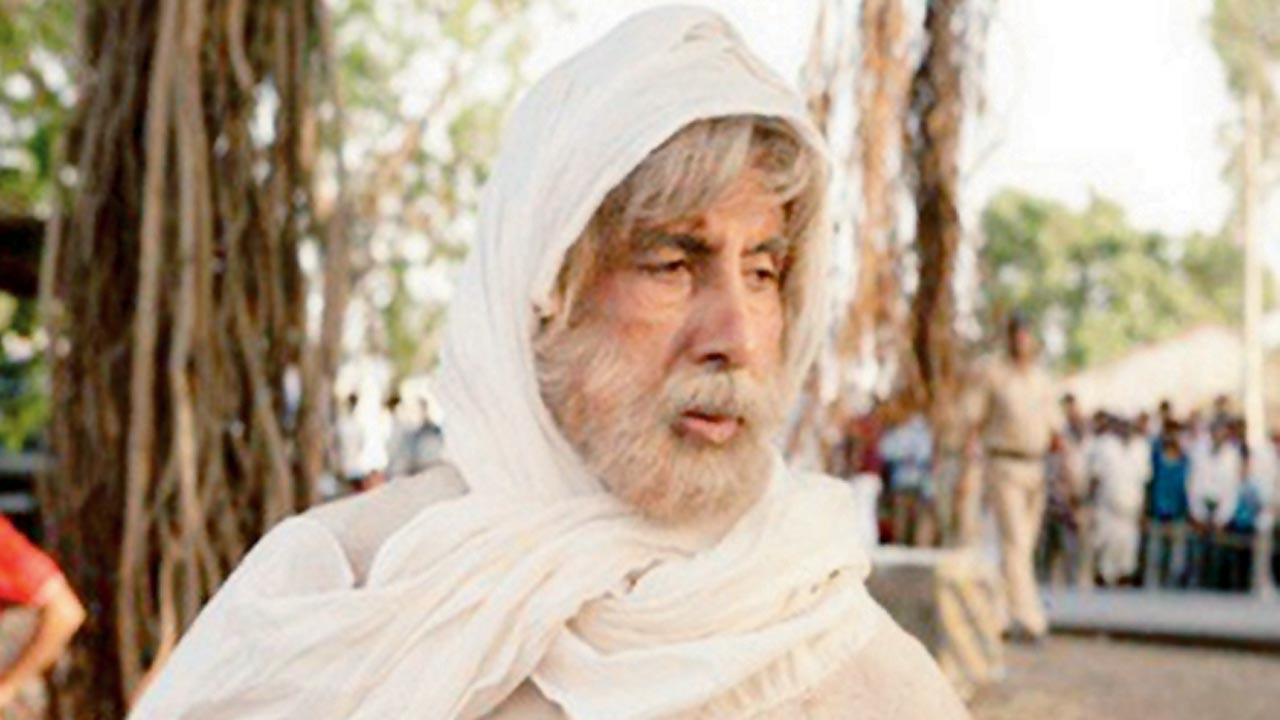
Singh, who filed an injunction against Shoebite’s release in 2012, says he doesn’t want to block Big B-Shoojit’s film anymore; seeks acknowledgement and dialogue with duo
Upala KBR (MID-DAY; April 2, 2024)
It’s heartbreaking to have your labour of love lie in the cans for 12 years. Last week, director Shoojit Sircar told mid-day that he was trying to resolve matters so that Shoebite, which has been mired in legal issues, could have an OTT release (Out of the limbo, Mar 31). Now, Percept Pictures Company’s Shailendra Singh, who had filed an injunction against the film in 2012, says that he will support its release as long as the makers give him due credit.
The poignant drama, which marked Sircar’s first collaboration with Amitabh Bachchan, has had a turbulent history. In 2007, Singh had originally announced the film as Johnny Walker with Bachchan and Sircar. However, the project didn’t roll, and the director went on to make Shoebite with UTV Motion Pictures. That led Singh to file an injunction against its release in 2012. Since then, both Bachchan and Sircar have often expressed their desire to have Shoebite reach the audience.
Singh rues that the episode is the perfect example of “what Bollywood does to independent filmmakers”. “Johnny Walker was initiated by me. I paid a Rs 4 crore cheque to Amitabh Bachchan; at that time, he didn’t know who Shoojit was. I chose Shoojit and took him to meet Amit ji for the narration. I spent Rs. 86 lakh as Shoojit went on a 20-city recce. Yes, Amit ji later returned my money. Amit ji wanted to become its producer by getting AB Corp on board. When I rejected [the idea], they changed the movie’s name and went to Ronnie Screwvala.”
Twelve years on, Singh says he doesn’t want to block its release anymore. He wants to come to an understanding with the actor-director duo. “I don’t want to block the film. I want a transparent dialogue among the three of us about what transpired. Shoebite is a brilliant story, and I want them to acknowledge that Johnny Walker was my film and this is what happened. I don’t want an apology because nobody will give it. I don’t want money or compensation either, I just want credit. I want a big slide to come in the film’s beginning, thanking me for it. I had gifted the title Singh Is Kinng [2008] to Akshay Kumar; similarly, I gave the title Chak De [India, 2007] to Aditya Chopra. They both thanked me in the credits. Give me credit for Shoebite as it originated from me, and let’s get on with it.”
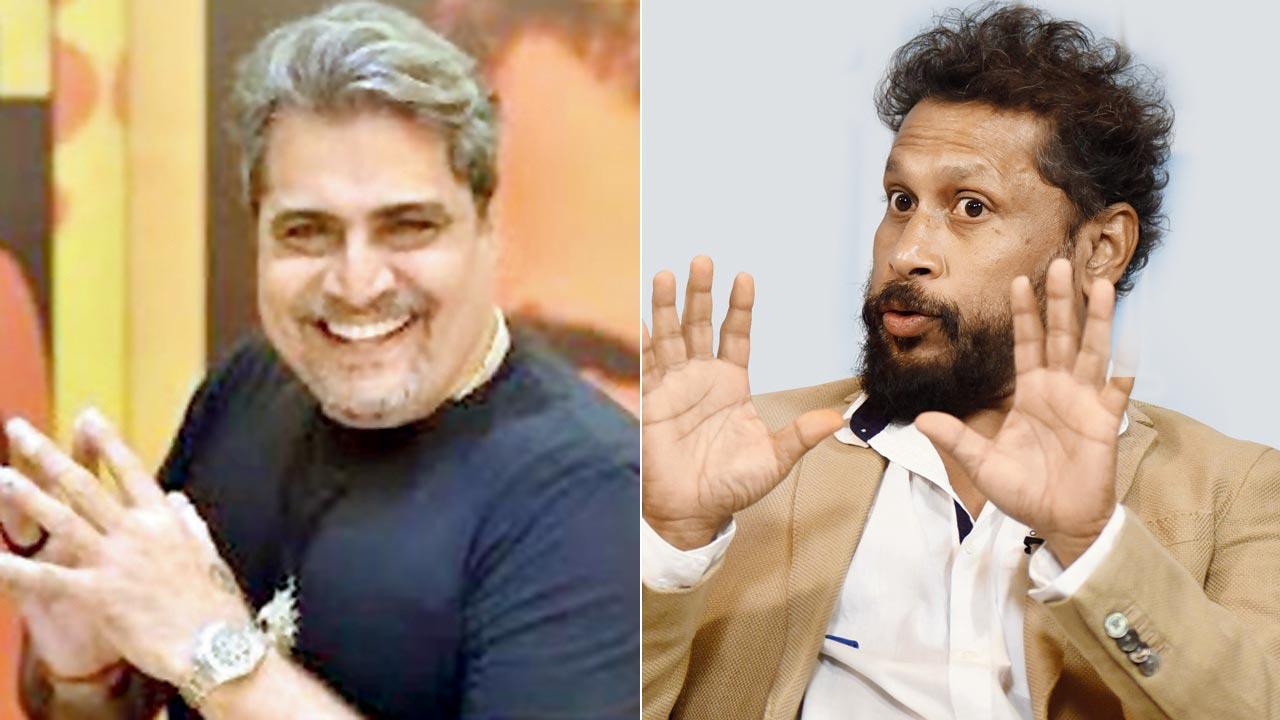
I have not left any single shot in my edit room for the Jallianwala Bagh scene. Everything is used-Shoojit Sircar
8:28 AM
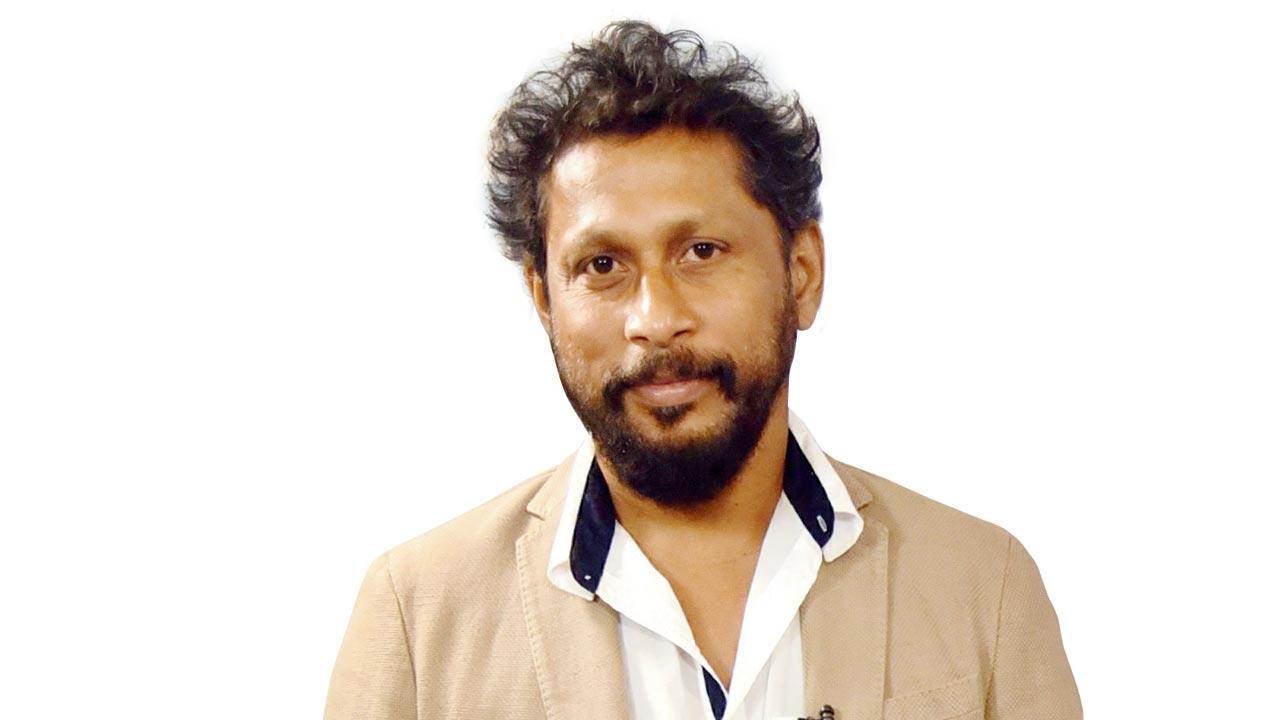
In the latest edition of our award-winning interview series, Shoojit Sircar decodes how he created a hatke brand of commercial Bollywood with an indie heart
Mayank Shekhar (MID-DAY; November 13, 2021)
“But you’re not like this [as a person],” an assistant on the sets of Sardar Udham exclaimed to filmmaker Shoojit Sircar — observing him seated, with two buckets full of fake blood, getting constantly replenished on either side of his feet.
He would dip into it with a mug, splashing that blood to dry earth himself, to get the colour right — all the while operating the camera, filming the Jallianwala Bagh sequence in Sardar Udham (2021).
It’s gory as hell. But Sircar wanted to get April 13, 1919, just right. Martial law in Punjab. Curfew in place. No one allowed to help the injured and dead. One man dealing with dead bodies after dead bodies.
It’s a scene Sircar had been living with, ever since he first visited the actual Jallianwala Bagh site in 1998 — much before he’d even thought of becoming a filmmaker. He’d been going back to that sequestered memorial park, through a narrow passage to the entrance in Amritsar, every year since. It’s a walk down from Golden Temple.
This was his only chance to recreate what he believes was the turning point of India’s freedom movement — the massacre of thousands of people, peacefully protesting the draconian Rowlatt Act, that allowed the British government to incarcerate Indians, without proper trial, under the pretext of ‘national security’: “It gave birth to many unsung revolutionaries, of which we only know about Bhagat Singh, and now Sardar Udham.”
It took Sircar four months to get the colour of blood right. Real blood for shoots is usually imported. They didn’t have the budgets. Jallianwala Bagh is also kinda immortalised from Gandhi (1982), by Richard Attenborough, who had resources to bring down train loads of people from Punjab, to shoot the short scene in Delhi.
Sircar had to shoot in Punjab itself, to get the look of thousands of actors/extras right. He hired locals. Some of them were children trained in Gatka style of martial art. They’d do free-falls and heavy-duty acrobatics, although they’d never faced a camera before.
On day one, actor Vicky Kaushal was his usual enthusiastic self. But as the shoot progressed, with humans being carried like carcasses in wooden carts, and the smell of fake blood and dust around, the cast and crew started getting affected.
Once, when the shooting had packed up for the day, a young girl was still around, that the assistants insisted they should shoot with, anyway. Sircar decided to casually pick the scene, knowing they didn’t need more. Soon as the girl started crying for her mother (in the scene), Kaushal began uncontrollably howling as well. The girl was a little flummoxed. They kept the camera rolling from a distance, most of which made it to the final film.
Every moment in the Jallianwala Bagh scene, step by step, Sircar says, is mentioned in Hunter Commission and the Congress report, besides survivor statements of ladies named Ratan Devi and Attar Kaur. It lasts a lifetime in Sardar Udham: “I have not left any single shot in my edit room. Everything is used.”
Some might dub this as an over-indulgence of sorts. It will remain etched as one of the most haunting sequences in Hindi cinema still. Unsurprisingly we talk about it for a good portion in this conversation. Only as a nod of sorts for the fact that Sircar filmed this one sequence, over 21 days in Punjab!
Sardar Udham is essentially a London-based period film, for which Sircar extensively referenced series such as Peaky Blinders and The Crown to get the era right.
As for a wider inspiration, while there is no direct connection, Sircar calls Sardar Udham “a tribute to Akira Kurosawa’s relatively lesser known film, The Hunters, set in Siberia, filmed as a Japanese-Russian collaboration.”
Which makes me segue into his film company, Rising Sun. Is that a reference to Japan? “Well, we didn’t think about it. My producer Ronnie [Lahiri] suggested Rising Sun. It sounded positive. I asked him to check if there is any other Rising Sun Films. There wasn’t, so went ahead!”
I ask this because over a decade and half, while the eclectic Sircar undoubtedly has belonged to commercial Bollywood, he remains essentially an independent filmmaker, which is an anomaly of sorts.
Throughout, he has teamed with the same producers, Goa-based Lahiri originally from Shillong, and Bihar-born, Russian educated Sheel Kumar, taking care of the finances. Besides more or less the same crew of writers (Shubhendu Bhattacharya, Juhi Chaturvedi), cinematographer (Avik Mukhopadhyay), editor (Chandrashekhar Prajapati), and the like.
He says, “[By independence], you [mean to] do a film on your own terms. Of course, we compromise sometimes. And I have been compromising [as well]. But film after film, I have reduced that. Crafting your own path is a lesson I have learnt from the city [Bombay] itself, and its film industry. Otherwise, nobody will let you be what you are — forcing on to you what works. And in cinema, there is nothing like, ‘what works’ — it is an expression. You do what you are compelled to, from the inside — what you feel like; you do that.”
Which explains how the money being thrown at him to script a sequel to Vicky Donor (2012) is pretty much the budget of an entire film — he doesn’t reveal the number — but he won’t click that bait, simply because Vicky Donor is behind him, and he’s “not that filmmaker anymore.”
The auction is only natural, given that a Rs 4.5 crore Vicky Donor — a slice-of-life comedy on sperm donation, that even Sircar hadn’t imagined would capture an audience beyond those interested in quirky movies — picked up close to Rs. 80 crore at the box-office! This equals ‘family audience’ in Bollywood speak.
Debutant Ayushmann Khurrana was the star. Which also opened up a minor film industry for Khurrana headlining a series of comedies on similarly taboo subjects — balding, old mother pregnant, gay love, etc.
With Sircar, these benefits can be a challenge: “I am actually very scared of the wrong audience, and unnecessary hope. I am openly telling you — with Gulabo Sitabo (2020), I faced so much of that. I was doing a film with Amitabh Bachchan and Ayushmann Khurrana. So people think it is Vicky Donor and Piku coming together! I faced so much flak after [Gulabo Sitabo came out] — this film is so slow, nothing happens… But that is what I had made. I wasn’t thinking [Vicky Donor and Piku] in my head. Don’t expect it. Yet, how do I convey that? It is so difficult. So sometimes, wrong audiences can really harm your film!”
To be fair, Sircar has dabbled in multiple genres, without getting overwhelmed by the success of his previous work. In fact, if you notice, he consciously shifts from light-hearted to serious subjects/treatments — say, a political thriller Madras Café, after Vicky Donor; a strikingly sombre October, after Piku. It’s something he describes as mere coincidence. Rather than an effort to alter his mind space.
“A movie is not like a mask, that you take off after it’s over, and put on another. It stays inside you forever. I am Sardar Udham. I strongly feel about it. I strongly feel about greed in Gulabo Sitabo. I feel for October, because I have been in ICU for three months with my mother. And I know exactly what happens [being around] a comatose patient. I cannot just throw it away.”
Sircar debuted as a feature filmmaker with Yahaan (2005), set in Kashmir, about a local girl and an Army officer, during the height of insurgency/militancy. One of the aspects that stood out in that film was its coolly lit bluish tint, lending a surreal touch to the screen, although the film was shot on actual locations.
I am wondering of this level of visual sophistry had much to do with his work in advertising, which is how he first got into films. Sircar says, if anything, his works are often more informed by documentary filmmaking, which is also what he dabbled in for close to five years before.
Yahaan was also the debut feature film of Swedish cinematographer Jakob Ihre. What’s Ihre best known now for? Shooting the stunning HBO series, Chernobyl. Yup! “Jakob was once in Delhi to shoot a documentary for BBC4. A friend of mine was the sound person for the film, who introduced us. Of course I knew of the Polish film school he was from, which is really good. I did a commercial with him, which was also done on my own terms. The ad was for toughened glass. But the film, for around three minutes, unheard of at the time, was all about reflections. With Yahaan, I was wondering if I would get Kashmir right — I had done a documentary there, and knew what Charar-i-Sharief or Habba Kadal Bridge will look like. I needed a different perspective. The first thing Jakob told me when I took him to Kashmir is it looks like Bosnia, which also had problems going on at the time. In winters, Kashmir, like Bosnia, is brown and silver. Jakob got onboard and shot Yahaan.”
They’ve been friends since. The script of Yahaan “bounced like a ping pong ball” between all the corporate studios in Mumbai, until Sircar first went ahead with it himself, with Jimmy Sheirgill and Minissha Lamba in the lead roles.
Ad films have also allowed Sircar financial independence, and some flex to make only the features he wants. It also turned him into a patron of the arts early on, in the early ’90s, while he worked in an amateur theatre group Act One in Delhi: “I was a mole from my [theatre] group in the advertising industry. I’d make money from ads, and whatever I’d earn, I’d put into theatre. That is what my job with the group was — you make the money, bring it to us, and we will do plays!”
Act One had performers like Manoj Bajpayee, Gajraj Rao, Piyush Mishra, among others, who later moved to movies and Mumbai. Sircar continued in advertising, mitigating the struggle that involves, in hindsight, romanticised notions of stepping into showbiz city, with few rupees in wallet, friends with culinary benefits, and sleepless nights in railway platforms. Sircar has none of those heartbreaking stories of following a personal passion.
In fact, strangely enough for a Bengali, the arts, cinema, and literature were totally external to his growing up years. Football was his life’s primary goal; something he actively pursues at 53 still.
Graduating in commerce from Delhi’s Bhagat Singh College, Sircar was quite comfortably placed as an accountant in one of the city’s top hotels, Le Meridien. Which is a longish walk down from the Capital’s cultural district, that houses National School of Drama, and several theatre performance spaces.
Almost like a turning point of a movie script, a moment of epiphany as it were, Sircar’s friend [his writer now] Shubhendu Bhattacharya asked him once to step out to watch a play, after lunch, during work hours.
That was Satyadev Dubey’s production Andha Yug, written by Dharamvir Bharti, starring Naseeruddin Shah, Amrish Puri, Rohini Hattangadi. He says something happened to him once he watched that 3 pm show. There were no tickets available for the following 6 pm show, but he bribed the guard to enter again. By 9 pm, when he walked back to his office, he had “turned into a zombie.”
Following week, he watched Satyajit Ray’s Pather Panchali at India International Film Festival in Delhi’s Siri Fort auditorium. A film he had repeatedly slept through, during growing up years. The penny had dropped: “Then I started reading and watching with a different eye.” He joined theatre, then ads, thinking little of the debit and credit accounting of such a call.
Which takes us back a little to the film October (2018), one of his most personal works, since as he said, it came from the experience of nursing his mother in an ICU ward. But its setting — the full expanse with doors that demarcate the contrasting inside and outside world of a five-star hotel is clearly from his time from Le Meridien?
“When [writer] Juhi bounced off the structure, character and idea about how the film would be, it clicked: ‘Okay, hotel — I know hotel, so I will go into this’. I had no problem in understanding the hotel. My art team said we will create it. I said, no, you cannot create this. It has to be real.”
As is the story — emotive, seeping through the pores, at every level. Even if there’s a touch and feel of Sircar in the lead character, Dan, the fact is, if you rewind to when the film was being planned, the last person you’re likely to imagine in the lead role is the boisterous Varun Dhawan — of ‘tera dhyan kidhar hai, tera hero idhar hai’ fame! There has to be a story behind Dhawan breaching a likely mental/casting block. There is.
Sircar recalls, “Varun had been calling to meet me for quite some time. I live in Kolkata, and would be in Mumbai for two days and leave, so I wasn’t getting time. Once when I had a flight to catch, I saw his text, “Dada, when is your next?” I told him that I was in town, but leaving in a bit. He said his house was close by. I asked him to quickly drop in. He said he’ll take a shower and come, and that he’d just woken up. I told him nobody will see him: ‘Just walk in as you are’. I still have his picture from that day — he was clumsy, holding a bottle that fell. He said, ‘Sorry, Dada, sorry.’ While talking, he zoned out completely. I don’t know what he was talking to me about. [As an actor], he wasn’t on my radar at all. I looked at his torn jeans. He said, please, don’t look there. He just sat there, said, ‘Theek hai, Dada.’ And left. In the flight I kept thinking about him. As I landed, I called up [writer] Juhi and [producer] Ronnie. This is what the clueless Dan is, you know — he doesn’t know what he’s doing, saying, where he is…”
The unlearning of the Bollywood star started before shoot. For script, Sircar only shared the first half of the film. For prep, Sircar passed on a piece of meditation music to Dhawan and asked him to simply stare at a house-plant every morning with it!
“On the first day, we shot the film’s last day’s conversation with the girl — it’s an important scene. I thought I’ll catch him raw, the way I had caught him in the office that day. He said, ‘Dada I am not doing anything [in the scene]’. We rolled the cameras in the rehearsal take, and used it in the film.”
It’s a little like how Sircar got Ayushmann Khurrana into the infamous sperm donation scene in Vicky Donor. Khurrana had to go to a private room to donate sperm.
Except, there were no instructions on paper about what he’s supposed to do. There were CCTV cameras placed in the room. Khurrana was clueless. He got out of the room and said, “Aise thodi hota hai? (What am I supposed to do; this is not how it happens!”) The cameras captured that actual line.
In Dhawan’s case of course, the idea was to keep him slightly clueless all through the shoot, instead — something the camera captures convincingly in October.
As for another unlikely casting, the one that comes to mind is John Abraham. Abraham incidentally won the National Award for Vicky Donor—as the film’s co-producer. No knock on Abraham. But he isn’t quite the first actor one might have in mind for Sircar’s reasonably intellectual political thriller, Madras Café. It was a deeply researched procedural on the plot to assassinate Rajiv Gandhi, called “the PM” in the picture.
Sircar admits, “You can say Madras Café was one film that I just quickly wanted to make. By 2010, the entire Tamil group [LTTE] had been wiped off. The [assassination] case was completely shut. I just thought I must go ahead and make this [before it’s too late]. I didn’t wait too long. The research and script were quite good. In terms of my craft around making the film, I would do it completely differently now, and with an absolutely fresh mind. It could have been much more powerful. That’s one film I would really want to go back, and remake.”
What would he do differently, in particular? “Of course, I will take real names [of characters], as I did with Sardar Udham. I’ll go with a completely new set of cast. There are many places where I have compromised, in terms of dialogue. Then there is the heroism part of the film. My idea of heroism has changed, from then and now. For me, heroism is not about [being a] hero [type]. For me, heroism is doing the right thing — rather than not. That is what it is.”
That’s of course a film yet to be seen, but from what we have of Madras Café, as it exists, it is by no means even vaguely a low point in Sircar’s career — wonderfully farmed from the Jain Commission Report, it survives as an important, albeit slightly over-the-top document, detailing the assassination of PM Rajiv Gandhi.
If at all, the cursory low point in Sircar’s career might well be a film of his that we haven’t seen. And that’s because it never got released—Shoebite, the director’s first collaboration with Amitabh Bachchan. From my memory of what went wrong with the film was a dispute between two companies, Percept and UTV. The former were first producing the film.
There was a hitch over Bachchan’s remuneration, reportedly. Percept brought on board Anil Kapoor for the lead part instead. Sircar and Bachchan jumped ship together, bringing in UTV to produce the film instead. Copyright issues followed. I needlessly jog my memory for Sircar, who is understandably not so forthcoming on this.
“Well, it’s a long story. But I can tell you where we are now, I think. So, finally, the film is with Disney. And Disney is also Fox, and Disney is also UTV. They can actually release the film. They are still figuring it out. What’s happened in the past is over.”
The Fox angle in the story could have to do with the original concept of Shoebite being Hollywood filmmaker M Night Shyamalan’s. Is that true? “So, the script was adapted by Rensil [D’Silva], who had just done Rang De Basanti. Later we found out that this was an idea by Manoj Night Shyamalan. I stepped back. Then Ronnie Screwvala [UTV boss then] was doing a film with Shyamalan and [our project] restarted. Since the basic idea was written by Shyamalan for a Hollywood film, we requested for a regional version. It was messy. But it is quite sad that the film still in the cans. It should release.”
The other messy stuff that’s made it to print in the past, so far as Sircar is concerned, are cases registered by writers against two of his films, Gulabo Sitabo and October, over copyright infringement. Much talked about before release, allegations hurled, press lapping up.
“It is distressing. When it happened with October (a Marathi filmmaker alleging rip-off), I was completely shaken up. We thought we were creating something absolutely fresh, and new, and everything had come out from my own deepest experiences, and Juhi’s as well. Same with Gulabo Sitabo. This is no way. Tons of stories can stem out of landlords and tenants. But after the film [releases], there is nothing. After the film is gone, there’s nothing. The entire panel of writers’ association has seen the film, and given us a clean chit. What else you can do? I was telling Ronnie the other day: I hope with Sardar Udham, nothing comes up. Ronnie told me I should get used to it. It will come, so it’s okay; be ready for it. It is distressing sometimes. We could not enjoy the release of October, because of this. Normally I go to the theatre and watch the film [with the audience]. We didn’t.”
Thankfully none of the above this has impacted his works consequently. Bachchan, for instance, was happy to sign up with Sircar, despite their first film together having been a non-starter. The released movie is Piku (2015), of course. The brief he gave to his writer (Chaturvedi) for it was long scenes; “sometimes 20 pages long.”
Sircar wanted to stage Piku as a play first — “experience from theatre really helped” — and then cut at the editing stage. The driving force being to test the acting styles of three really diverse performers—besides Bachchan, Irrfan and Deepika Padukone, whose subtly expressive eyes were really the leads as well.
Sircar reasons, “Mr. Bachchan, as a person, is all method—he will rehearse, and be so particular — you can’t use left-hand on the rehearsal, and right-hand on the take. You can’t. On the other hand, Irrfan is someone who just lets go. And he can go on. Deepika is natural. You have to tap into her internally, as an artiste. My instruction was that in this film, nothing is happening, nothing is moving. It’s in the drawing room of a Bengali household. If you notice, there are a lot of silences in the film. And I want audiences to hate this Bengali family. Irrfan, though, had just convinced himself that there will be a love angle to the story eventually: ‘You’ve cast me with Deepika, there will be conversations; of course we’ll get romantic’. I had to constantly explain to him that’s not going to happen. People will define [this relationship] in their own way!”
It’s not like the actors didn’t have other apprehensions. Bachchan, for one, did. Until Sircar practically convinced him by actually enacting his part over a narration — after Big B had read the script, with long notes on side margins sent as feedback. While it doesn’t show, the soft-spoken Sircar does have a stubborn streak. It’s that same indie cinema spirit about working on one’s own terms.
When Piku released, Sircar says, it was being deemed as an altogether Bengali movie: “I said no, it’s a Hindi film.” Unsure why he had to be defensive, because Piku is indeed a Bengali film — so specific, that it’s universal enough.
With the added bonus that most Bengalis I’ve met have so identified with this family — of a cranky daughter, who’s had it with a loud un-selfconscious, child-like dad, obsessed with his bowel movements — that they repeatedly watch Piku, as if it was their home video.
An air force officer’s son, Sircar grew up across defence establishments, given his father’s transferrable job. He spent a lot of time in Delhi. For home, he chose Calcutta still — far from Mumbai’s maddening movie crowd, that he occasionally returns to, for work, and disappears into the “17 football fields” around his Salt Lake, Kolkata address. He says this is also to root his two daughters into a local/Bengali culture — a privilege he didn’t enjoy himself.
But speaking to him for an hour and some, before a live audience, I sense this could be because Sircar, an ardent devotee of Satyajit Ray, is as genially Bengali as it gets. When it comes to the most special skill the community enjoys, no matter where they are in the world — ‘adda’, that long, warm conversation on things from here and there, that can carry on, even when the cameras are switched off. As was the case with this edition of Sit with Hitlist.
Shoojit Da would tell us a thing or two about good health — the importance of walking. Not brisk walk; just walking. And the right posture to hold a phone, which is not to hold it at all — 20 minutes of cellphone on palm plus wrist equals 17 kg burden on the shoulder. I’ll take that advice from a footballer, who can be quite the Dada on a field, dribbling much younger men like Ranbir Kapoor and Abhishek Bachchan into exhaustion.
He’s also happy to heckle on the field. Which isn’t my mental image of him, given the gentle demeanour. Equally unsurprised that his assistant was flummoxed looking at him going absolutely berserk with blood and gore, shooting the iconic Jallianwala Bagh sequence in Sardar Udham.
Shoebite comes up at each meeting with Mr Amitabh Bachchan-Shoojit Sircar
8:12 AM
With Shoebite ready since 2009, director Sircar laments how Bachchan-starrer has been in limbo as it awaits NOCs from LA collaborators; says open to OTT release
Upala KBR (MID-DAY; October 19, 2021)
Shoojit Sircar has added another rich film to his résumé with Sardar Udham. While the filmmaker has given the audience diverse offerings — some light-hearted, others melancholic — in the past, he is saddened that Shoebite has yet to see the light of day. The film, headlined by Amitabh Bachchan, has been stuck in the cans since 2009.
Explaining the reason for the inordinate delay, Sircar says, “There were issues regarding the rights between the different partners [on the] film — Disney, Fox [Star Studios], some writers and collaborators in Los Angeles. Their NOCs and permissions are required.”
Shoebite is apparently based on Manoj Night Shyamalan’s story, Labour Of Love. In 1994, Shyamalan was said to have sold the rights to 20th Century Fox Studios. Years later, it was picked up by UTV Motion Pictures. However, later, the Hollywood filmmaker and Fox reportedly asked UTV to not release the film until he made the screen adaptation of the story in the US.
The director breaks it down further, “Earlier, [Shoebite’s rights] were with UTV; now, they rest with Disney [the parent company of Fox and erstwhile UTV]. But the last time Disney officials spoke to us, they said the Hollywood partners were wondering whether the Hindi movie should be released.” He elaborates that the concern stemmed from the fact that Shoebite was originally supposed to be an English offering.
On social media, Bachchan often expresses how he wants the film — also featuring Nawazuddin Siddiqui and Sarika — to reach his fans. “Shoebite comes up at each meeting with Mr Bachchan. He puts his heart and soul into every movie, but this one is special. Whenever I talk about the film, it makes me sad. There was a child in the cast who has now become a young woman,” emphasises the director, before adding, “Only post-production work is left on the project. Disney and Fox should do something about its release.”
Is he open to an OTT premiere, should the matter be resolved? “At this moment, I am so deep into the film that any form of release is okay by me — whatever the [producers] want. I just want Shoebite to be released.”
When I read Inox's statement, I understood the theatre owners' point of view-Shoojit Sircar
8:33 AM

As Gulabo Sitabo opts for the digital premiere, director Shoojit Sircar on taking the leap of faith despite empathising with exhibitors
Mohar Basu (MID-DAY; May 29, 2020)
Shoojit Sircar made a brave move when he opted for a digital premiere of his next, Gulabo Sitabo. Expectedly, it invited the wrath of exhibitors and distributors who felt betrayed by the director's decision. As several filmmakers followed in Sircar's steps to seek direct-to-web release for their offerings, leading multiplex chain Inox warned of "retributive measures".
Sitting in his Kolkata home, a week after Cyclone Amphan wreaked havoc in West Bengal, Sircar is poised and pragmatic when asked if he is worried about the consequences. "Once you've made a decision, there can be no scope for fear. It's not about being brave; the situation compelled us to adapt. When I read Inox's [statement], I understood the theatre owners' point of view. If I were in their position, I, too, would have expressed my discomfort. I told them it's not a personal decision. If it weren't for the Coronavirus lockdown, the film would have released in theatres."
Sircar reveals that he considered releasing the Amitabh Bachchan and Ayushmann Khurrana starrer on Amazon Prime Video only after the original release date — April 17 — went by, without the promise of a solution in sight. "I work on one film at a time. I finish the film, take care of the finances and move to the next. I have no bank [of movies to fall back on]. Moreover, I have a history of movies not releasing, like Shoebite. Amazon promised that they would [promote] this film like a big cinema release. I have never had my film releasing in 200 countries in multiple languages," he says, adding that a few releases on OTT in the current scenario will not compromise the theatre business. "These platforms co-existed with theatres for the past few years. Binge-watching can't change the experience of going to cinemas."
The quirky comedy is his third directorial venture with Bachchan after the unreleased Shoebite and the much loved Piku (2015). Such is his admiration for the megastar that Sircar couldn't imagine anyone except him in the role of the acid-tongued landlord Mirza. "Even while writing the script, I knew that it'd be Mr Bachchan. As soon as a film is over, he is hangla [greedy] for my next. The idea of Ayushmann playing Banke developed later, after we determined the character's age."
We are open to Gulabo Sitabo's digital release, but will wait till May 3-Shoojit Sircar
8:18 AM

Shoojit Sircar discusses his Amitabh Bachchan, Ayushmann Khurrana-starrer that was to hit theatres on April 17; informs that the Udham Singh biopic is in post-production
Roshmila Bhattacharya (MUMBAI MIRROR; April 28, 2020)
 Amid a mass of anxious humanity, Shoojit Sircar is like a restful oasis, content at his Kolkata home, to which he flew back much before the lockdown. Sighing over lush green, homegrown mint leaves and expressing gratitude for the ever-handy mop, the creator of films like Vicky Donor, Piku and Pink, and a doting dad, is happy he doesn’t have to wake up early to pack his daughters’ tiffins and can be around them all day. “It’s a simple, disciplined, busy life, packed with routine chores, with a few hours to catch up on reading and a few documentaries. When you don’t know what the future holds, it’s best to shed the mental baggage, let go of ambitions, cut down on needs and be happy with the little you have,” he murmurs, his voice soothing over the wire.
The only disappointment is that his comedy-drama, Gulabo Sitabo, which reunited him with Ayushmann Khurrana after 10 years, and frequent collaborator Amitabh Bachchan, and was to release on April 17, has now been indefinitely delayed. “As a filmmaker, I’d want to see my film open in the theatres, but the situation today is unlike anything anyone had ever experienced. So, I’m open to a digital release if need be, but we will take a decision after May 3,” he shares.
And what about the Sardar Udham Singh biopic, his most ambitious period film? Shoojit informs that he has finished shooting, but post production remains. “Since it is scheduled for January 2021, we are not thinking about it right now. I’d like a film like this to be a big screen experience. I have lived with this dream for so long that when we were shooting at Jallianwala Bagh, I had tears in my eyes,” he reminisces emotionally, all praise for Vicky Kaushal. “Today, after finishing the film, I can say with certainty that I can’t think of anyone but Vicky playing Udham. The role was tailor-made for him and he lived it.”
A change that Shoojit forsees is a boom in TV, going by escalating TRPs. He believes that soon people may get so comfortable with home entertainment that when life gets back to normal and cinemas reopen, only the aficionados will want to watch a film on the big screen. “The others will invest in a bigger and better TV or a home theatre. In this scenario, cost correction in film budgets and a cap on the price of film tickets is imperative. By then, people will have got into the habit of not spending much and saving for another calamity, so, it’s important to bring down inflated costs,” he reasons, pointing out that while actors, writers, filmmakers and a few senior technicians will survive the Coronavirus pandemic, it’s the spot boys, dress men and lower rung crew who will need looking after.
 The filmmaker himself is happy that there is growing appreciation for his October, an audience for Madras Café and an resurgence in the popularity of Piku and Vicky Donor. The latter recently celebrated its eighth anniversary, with Vicky fans tweeting dialogues online. “I must have done something right for the film to touch so many hearts. What is even more heartening is that this story of a sperm donor became the stepping stone to other taboo subjects coming to the screen, many of them frontlined by Ayushmann, who has grown into a more relaxed and trained actor as was evident during the Gulabo Sitabo shoot,” he asserts.
The Big B and Ayushmann had collaborated with Shoojit years ago on Shoebite that remains unreleased. Is there hope of the film seeing the light of the day? “Now, that both the studios have come together, maybe it will. It’s my most innocent film since I was just starting out and the mind was pure. Every time someone discusses Shoebite, Mr Bachchan immediately calls me, as excited as a child. With him the relationship is one of mutual trust. On the last day of a film’s shoot, he looks at me with the unspoken query, ‘So, where’s the next script?’ which prompts me to write something We’ll definitely do something again together, he’s always on my radar,” admits the director.
Prod him on his next and he points out that after what we are currently undergoing, he hopes there is a change in audience’s perception and that the new sensibility will bring about a change in our filmmaking style and narrative. “I’ll be happy to bring simple and beautiful stories to the screen, but till a story evokes something in me, I’m quite happy in my Kolkata home, connecting with my inner self,” he signs off.
The younger generation is far more accomplished than I am-Amitabh Bachchan
8:35 AM

Madhureeta Mukherjee (BOMBAY TIMES; September 17, 2016)
One would think blue is more
his colour. Or rugged shades of black and brown. Even suave greys and
olives. But one would've never associated the colour Pink with the macho
image of one who has had the swag to beat all swagger. Yet, he carries
off his role in Pink with panache, so characteristic of Amitabh
Bachchan. That's gumption. Yes, the movie is making waves and not just
for the colour he smote. He dauntlessly questions a woman in the
courtroom, “Are you a virgin?“ No jazz, no dramatic upheaval, yet, he
jostles you out of your comfort zone.And breaks the silence on a subject
that has been shamed and silenced in our society for generations. That's
the impact of just one of the many dialogues
the thespian delivers in his deep baritone. AB wears Pink with pride, a
new shade of pink -that's pretty, potent and powerful. Read on...
While shooting for the film you had tweeted, 'Work getting really tough on PINK... Scenes and the moment... days ahead are filled with apprehension.' Given the subject, was it very emotionally difficult?
Every film is a tough shoot, and I believe that every day is a test, a challenge. I always think about how the scene is going to be the next day and whether we are going the way the director wants. This film is not about women empowerment. It's not a documentary wanting to make any deliberate statements, but it is a story of three independent girls who live by their own rules. One day, they happen to meet these boys in a club and then an incident happens, which culminates at the courtroom. I play a character who lives opposite their building and observes them, and those are the mysterious moments of the story. What ensues in the courtroom is what you will find out after watching the film. Whatever has been written has been researched well and the makers have met several lawyers to ensure that the procedures, the language and protocol are as close to reality. When Shoojit Sircar shared the concept with me, I said yes to it within a couple of minutes. I strongly believed in it. I didn't know what role I was being offered; I didn't know how the screenplay was going to shape up and who would be cast in it. I just felt that since the concept is so strong, I had to be associated with this film. With Pink, we wanted to make certain statements which could be taken either way, but it was important that we say it. The film was also shot in a particular style where we had seven cameras working at the same time. Everyone who was involved in the frame and in the scene was active, and that required us to be shooting a 20-page scene at once. And so my apprehension was about how I would learn these 20-page scenes. It's like how some recordings used to be done in the olden days, when we had a live orchestra with 200-300 musicians and Lataji (Mangeshkar) and Kishoreji (Kumar) would sing live. At that point, even if one of the violinists went wrong, we had to stop and restart all over again. Of course, nowadays with modern technology all that has changed. So I was hoping that I didn't go wrong, because if did then the whole scene would have to be reshot.
Your first collaboration with Shoojit didn't work out, but ever since, both of you have done some commendable work together.
Yes, we did a film (Shoebite) which is ready but hasn't released due to some problem with the production house. But then we have done various other ad campaigns, Piku and now Pink. I am honoured to be working with him.
A lot of people from the industry argue with the term 'women centric' films. They think that by that logic, most films in our cinema would be called male-centric. What is your view on that?
Why should anyone think like that and what's wrong with a film that's women-centric? Such films have been made from times immemorial, like Mother India and several of Bimal Roy's films. Even in recent times, there are many movies made where women play the lead, and Piku is one of them. Actresses like Kareena (Kapoor Khan), Alia (Bhatt), Kangana (Ranaut) and Deepika (Padukone) are all playing pivotal roles in movies.
Do you think there are more roles written for women today as compared to the past?
I think it's important to realise that women comprise 50 per cent strength of the nation. Why women haven't been given prominence is a personal choice of the filmmaker. Jaya (Bachchan) has worked in so many films where she has played the central character. I think women should be given their place of importance and equality in society. Many thought processes with regard to women have changed over the years and I am happy as that is the way it should be. It's unfortunate that such an obnoxious and hideous incident like Nirbhaya happened for the issue to be given so much notice; while there have been many similar cases before. There is lot more focus on the issues now that should have been looked upon years and years ago. We have had several social issues or paradoxes, if I may say so, that have lived with us for centuries. All of that is changing now. Look at our own film industry, earlier the only woman on a film's set other than the actress, would be her mother. Today, there are so many women on the set and they are involved in several aspects of filmmaking. It shows how the temperament of people has changed over the years. I keep quoting two instances that show us how the thought process with regards to women has changed. One of them is a quote by someone as important and as valuable as William Shakespeare. In Macbeth, he says “bring forth men-children only.“ You can't dare say that today. Ek purani kahawat hai jo bahut sadiyon se chali aa rahin hai. Aaj kal aap woh kahawat nahi keh sakte -“Dhol, gawar, shudra, pashu, naari...yeh sab tadne ke adhikari.“ It means ki dhol, gawar, shudra, pashu, naari yeh sab pitne layak hai. You can't say that anymore. Dhol ke elawa baaki koi cheez aaj nahin hain jis par aap kuch keh sakte hain. So that makes you realise what women power is today and I think Pink attempts to open that conversation.
A lot has been spoken about pay parity in the entertainment industry - in Hollywood and our film industry. You recently said that Deepika Padukone was paid more than you in Piku and that was fair.
I feel that if Deepika played the central character in Piku and I played the side role, why I should be paid more than her? And the fact is that my value as an actor today is far less than the other stars, but so what?
So do you feel that the actresses are given their due monetarily?
That's a commercial decision of the filmmaker, how much is being invested and what are the budgets. If you have the biggest stars today like Salman Khan, Shah Rukh Khan Aamir Khan, Ranveer Singh, Hrithik Roshan and Ranbir Kapoor in a film, they have a certain attractive power and so they deserve that kind of money. They ask for that kind of money and they get it. Suppose, my first day collection is in the range of Rs 2-3 crore and other actors collection is in the range of Rs 30-40 crore, obviously they are going to be paid more, and you have to understand that it is a matter of commerce.
You are very active on social media, but a lot of negativity and criticism comes with it.
I don't block my views on social media; I feel that it is good to understand that everything you know is not absolutely correct. There's criticism and there's abuse on my blog. If you imagine and think that you are infallible and you are without any fault, then what the heck are you doing in this world? You might as well be sitting up in heaven, because we all have faults and we all make mistakes. If somebody points it out, I don't feel bad or block out anyone else's views. I only block out bad language and I warn them to stop using the F-word, as it doesn't suit this platform.
Director R Balki told me that while shooting for Shamitabh you were grouchy throughout the film, and when he asked you what was wrong, you said, 'I am in character.' When you are so absorbed in a character, does it take you long to step out of that zone?
He is joking, that's my natural temperament. I am grouchy, and I am always non-communicable with people. I am just joking (laughs!). Well, try sticking a beard on your face for 18 hours, you will be grouchy. So that's what it was. It was the beard that made me grouchy. Every time I put it on, I would say that this is the last time I am doing a film where I have to put a beard on my face.
Everyone who works with you says that you have a childlike enthusiasm on the sets. Do you keenly observe younger actors while working with them?
I am in great admiration of the younger generation as I feel they are far more accomplished than I am and far more alive. They are confident and determined, and I don't possess that quality. I have seen that they are so relaxed and easy, and as soon as the camera turns on they become incredible performers. I want to learn from them. This generation is remarkable and I feel very privileged to be in their company. I am 74 and the average age on the set is 30-40 years, so there is a huge difference. It is fantastic to see how aware they are about the world; they know what they are doing and where they want to go. They have a solution to every kind of problem and that's impressive.
You feel that they come more ready and prepared on the set than you were when you started out?
Yes, they are very prepared even before their very first film. I am pretty sure that they spend a lot of time studying, learning, going to training institutes before facing the camera. I am still learning, I'm not natural and as easy as I should be. I am amazed how they are and that is a quality that I don't have.
But I am sure, for them sharing screen space with you must be intimidating?
I don't believe that anyone should be intimidated by me. Are you intimidated sitting in front of me? No, of course not. Then why should they be? I should be the one intimidated, because I don't want to make any kind of mistake in front of the camera, or in front of anyone as that would be embarrassing.
While shooting for the film you had tweeted, 'Work getting really tough on PINK... Scenes and the moment... days ahead are filled with apprehension.' Given the subject, was it very emotionally difficult?
Every film is a tough shoot, and I believe that every day is a test, a challenge. I always think about how the scene is going to be the next day and whether we are going the way the director wants. This film is not about women empowerment. It's not a documentary wanting to make any deliberate statements, but it is a story of three independent girls who live by their own rules. One day, they happen to meet these boys in a club and then an incident happens, which culminates at the courtroom. I play a character who lives opposite their building and observes them, and those are the mysterious moments of the story. What ensues in the courtroom is what you will find out after watching the film. Whatever has been written has been researched well and the makers have met several lawyers to ensure that the procedures, the language and protocol are as close to reality. When Shoojit Sircar shared the concept with me, I said yes to it within a couple of minutes. I strongly believed in it. I didn't know what role I was being offered; I didn't know how the screenplay was going to shape up and who would be cast in it. I just felt that since the concept is so strong, I had to be associated with this film. With Pink, we wanted to make certain statements which could be taken either way, but it was important that we say it. The film was also shot in a particular style where we had seven cameras working at the same time. Everyone who was involved in the frame and in the scene was active, and that required us to be shooting a 20-page scene at once. And so my apprehension was about how I would learn these 20-page scenes. It's like how some recordings used to be done in the olden days, when we had a live orchestra with 200-300 musicians and Lataji (Mangeshkar) and Kishoreji (Kumar) would sing live. At that point, even if one of the violinists went wrong, we had to stop and restart all over again. Of course, nowadays with modern technology all that has changed. So I was hoping that I didn't go wrong, because if did then the whole scene would have to be reshot.
Your first collaboration with Shoojit didn't work out, but ever since, both of you have done some commendable work together.
Yes, we did a film (Shoebite) which is ready but hasn't released due to some problem with the production house. But then we have done various other ad campaigns, Piku and now Pink. I am honoured to be working with him.
A lot of people from the industry argue with the term 'women centric' films. They think that by that logic, most films in our cinema would be called male-centric. What is your view on that?
Why should anyone think like that and what's wrong with a film that's women-centric? Such films have been made from times immemorial, like Mother India and several of Bimal Roy's films. Even in recent times, there are many movies made where women play the lead, and Piku is one of them. Actresses like Kareena (Kapoor Khan), Alia (Bhatt), Kangana (Ranaut) and Deepika (Padukone) are all playing pivotal roles in movies.
Do you think there are more roles written for women today as compared to the past?
I think it's important to realise that women comprise 50 per cent strength of the nation. Why women haven't been given prominence is a personal choice of the filmmaker. Jaya (Bachchan) has worked in so many films where she has played the central character. I think women should be given their place of importance and equality in society. Many thought processes with regard to women have changed over the years and I am happy as that is the way it should be. It's unfortunate that such an obnoxious and hideous incident like Nirbhaya happened for the issue to be given so much notice; while there have been many similar cases before. There is lot more focus on the issues now that should have been looked upon years and years ago. We have had several social issues or paradoxes, if I may say so, that have lived with us for centuries. All of that is changing now. Look at our own film industry, earlier the only woman on a film's set other than the actress, would be her mother. Today, there are so many women on the set and they are involved in several aspects of filmmaking. It shows how the temperament of people has changed over the years. I keep quoting two instances that show us how the thought process with regards to women has changed. One of them is a quote by someone as important and as valuable as William Shakespeare. In Macbeth, he says “bring forth men-children only.“ You can't dare say that today. Ek purani kahawat hai jo bahut sadiyon se chali aa rahin hai. Aaj kal aap woh kahawat nahi keh sakte -“Dhol, gawar, shudra, pashu, naari...yeh sab tadne ke adhikari.“ It means ki dhol, gawar, shudra, pashu, naari yeh sab pitne layak hai. You can't say that anymore. Dhol ke elawa baaki koi cheez aaj nahin hain jis par aap kuch keh sakte hain. So that makes you realise what women power is today and I think Pink attempts to open that conversation.
A lot has been spoken about pay parity in the entertainment industry - in Hollywood and our film industry. You recently said that Deepika Padukone was paid more than you in Piku and that was fair.
I feel that if Deepika played the central character in Piku and I played the side role, why I should be paid more than her? And the fact is that my value as an actor today is far less than the other stars, but so what?
So do you feel that the actresses are given their due monetarily?
That's a commercial decision of the filmmaker, how much is being invested and what are the budgets. If you have the biggest stars today like Salman Khan, Shah Rukh Khan Aamir Khan, Ranveer Singh, Hrithik Roshan and Ranbir Kapoor in a film, they have a certain attractive power and so they deserve that kind of money. They ask for that kind of money and they get it. Suppose, my first day collection is in the range of Rs 2-3 crore and other actors collection is in the range of Rs 30-40 crore, obviously they are going to be paid more, and you have to understand that it is a matter of commerce.
You are very active on social media, but a lot of negativity and criticism comes with it.
I don't block my views on social media; I feel that it is good to understand that everything you know is not absolutely correct. There's criticism and there's abuse on my blog. If you imagine and think that you are infallible and you are without any fault, then what the heck are you doing in this world? You might as well be sitting up in heaven, because we all have faults and we all make mistakes. If somebody points it out, I don't feel bad or block out anyone else's views. I only block out bad language and I warn them to stop using the F-word, as it doesn't suit this platform.
Director R Balki told me that while shooting for Shamitabh you were grouchy throughout the film, and when he asked you what was wrong, you said, 'I am in character.' When you are so absorbed in a character, does it take you long to step out of that zone?
He is joking, that's my natural temperament. I am grouchy, and I am always non-communicable with people. I am just joking (laughs!). Well, try sticking a beard on your face for 18 hours, you will be grouchy. So that's what it was. It was the beard that made me grouchy. Every time I put it on, I would say that this is the last time I am doing a film where I have to put a beard on my face.
Everyone who works with you says that you have a childlike enthusiasm on the sets. Do you keenly observe younger actors while working with them?
I am in great admiration of the younger generation as I feel they are far more accomplished than I am and far more alive. They are confident and determined, and I don't possess that quality. I have seen that they are so relaxed and easy, and as soon as the camera turns on they become incredible performers. I want to learn from them. This generation is remarkable and I feel very privileged to be in their company. I am 74 and the average age on the set is 30-40 years, so there is a huge difference. It is fantastic to see how aware they are about the world; they know what they are doing and where they want to go. They have a solution to every kind of problem and that's impressive.
You feel that they come more ready and prepared on the set than you were when you started out?
Yes, they are very prepared even before their very first film. I am pretty sure that they spend a lot of time studying, learning, going to training institutes before facing the camera. I am still learning, I'm not natural and as easy as I should be. I am amazed how they are and that is a quality that I don't have.
But I am sure, for them sharing screen space with you must be intimidating?
I don't believe that anyone should be intimidated by me. Are you intimidated sitting in front of me? No, of course not. Then why should they be? I should be the one intimidated, because I don't want to make any kind of mistake in front of the camera, or in front of anyone as that would be embarrassing.

We should trust the National Awards jury-Shoojit Sircar
7:53 AM

Anirban Das (MID-DAY; March 31, 2016)
Bollywood and box office biggies bagging top honours at the 63rd National Awards has left a section of netizens as well as regional filmmakers upset and suspicious about the credibility of the prestigious film awards. But Shoojit Sircar, who is elated about his Piku star Amitabh Bachchan being named the Best Actor, chooses to disagree. In a quick chat with hitlist, he talks about the controversies surrounding the awards...
Had you ever imagined that Big B would win a National Award for your directorial?
To be honest, I had expected him to win one even for Shoebite, but unfortunately, that has not released yet. In fact, even for Piku, I always believed that Bachchan sir would be a strong contender for National Awards. I had a sixth sense.
Did you speak to him after the news trickled in?
Yes, I called up to congratulate. He was thrilled to have received his fourth National Award. You know, it was like a jinx because Shoebite did not release, but the journey that Piku has made makes us happy. It received people’s love and now a prestigious award. It is satisfying.
Many raised questions about the Best Actor award being given to him since he was not the main lead…
I don’t agree with that debate. The story was about a father-daughter relationship and he was the lead in that sense.
Were you expecting Piku to get awards in other categories too?
I did want Juhi (Chaturvedi, writer of Piku) to win an award. And one for Deepika Padukone too. She was fantastic.
The credibility of the National Awards has been questioned with Bollywood and commercial entertainers hogging the limelight…
I think it happens every year. But, we should trust the jury. In 2012, Vicky Donor and Paan Singh Tomar also won National Awards. Bollywood films have been appreciated on the National Awards stage since the last few years. The perception that Bollywood films are only about song and dance has to change. It is no more that way. In fact, I always believed that my films will not work at the box office, but they have all done well. So, Bollywood and its audience have evolved over the years, and that’s why the films are also being recognised at prestigious award functions. The National Awards jury is sensible and we should have faith in their judgment.
Now that Bachchan has won a National Award for your film, do you plan to commence talks to release Shoebite?
Talks are definitely on and I am hopeful it will release.
People in ad world were surprised that Aamir Khan hadn’t changed anything I had written-Juhi Chaturvedi
3:24 PM

The writer of Vicky Donor and Piku — Juhi Chaturvedi – gives an insight into her world
Harshada Rege (DNA; July 5, 2015)
It’s a calm mid-morning in Juhi Chaturvedi’s
household. Her daughter is at school and husband at work, this is the
time that she has all to herself. Juhi, who created the world of Piku,
sits down to talk about not just the movie that’s become the success
story of the year, she also gives a glimpse into her life. This is her
story...
The childhood yearsI was born and raised in Lucknow. Life there is very easy-going and pretty secure. Everyone knows everyone there. As a student, I was into drawing completely. Art was my space. I wanted to be an artist. My father (Dhirendra) ensured that I participated in all the art competitions in the city. Luckily, I would win everywhere. That was a big confidence-building exercise. My mother (Mridula) was a housewife. Life at home was a little tough because of my mother’s bad health, but it made me emotionally strong. In spite of that, I had a beautiful childhood. We had lots of trees in the house. There was a huge kitchen garden. Lot of hours spent in my childhood were just spent with nature, with myself. It wasn’t like today, where you sit in front of the TV and switch it on. You had to entertain yourself, nobody is going to play blocks with you. I used to water plants, climb trees. I have an elder brother, so his friends, my friends...we had this big gang in our mohalla. We really didn’t need anyone or anything. Times were different, it wasn’t as unsafe.
Losing mom
I was in Class 2 or 3 when mom had a haemorrhage, she survived that. Then there was kidney faliure and transplant, cancer.... I almost grew up in hospitals and around doctors. It was like hum hi aadhe doctor khud ban gaye the. I was checking blood pressure when I was in class six. I guess if I wasn’t in this profession, I would’ve ended up being a doctor. She passed away after 30 years of suffering, just before Vicky Donor released, but we managed to show it to her at home.
Ad-mad world
I did a five-degree course in arts. I wanted to be a proper painter and all. But my professor told me to get into advertising. He said ‘You’ll get a salary and you can always paint’. I joined Ogilvy in Delhi in 1996. Ogilvy is the Mecca of advertising. You have to be there to know what creative energies can do to you. Everybody is passionate. The time, deadlines are very tight. You are smoking, you are drinking, you are cracking ads. There’s frenzy all around. The computers had just come in. We would do all our work by hand. As an art person, that was a part of your grooming. In the office, only the studio people could use the computers, so you would sit and beg them to do your work. It was lovely. There was a place called Some Place Else, which had an advertisers and bankers night every Friday, so after a week of work we would party.
Yeh Dilli hai mere yaar
In Lucknow, I hadn’t seen any women smoke or drink or abuse, I didn’t even see them wearing any make-up. I remember I was going to for a client meeting when my senior called me to her cabin and said, ‘I know you are good at your job, you work is perfect, but maybe a little bit of make-up wouldn’t hurt’. I couldn’t understand why I needed make-up. Back home, only a certain kind of girl put kaajal and you didn’t dress to catch attention at all... all those demarcations were in my mind. My first set of make-up was bought my boss. When I would see women abusing openly, I would wonder ‘Where have I landed!’ At that time, print advertising was big. Only your bosses and their bosses cracked TV ads. My print ad for Duracell was nominated and won the One Show Award, which judges ad campaigns from across the world.
Moving to Mumbai
In 1999, I moved to Mumbai with my husband (Asheesh Malhotra). And around that time, advertising changed. It was no longer creatively driven, you had to show numbers. Earlier there were no hard feelings between two groups in an organisation, but that started happening. That was because everything was getting judged. By the time I left Delhi, I was in a decent place. But then I came to Mumbai, the head office. I could feel everyone thinking that she has come from Delhi, has won an award, now let’s see how good she is. I would keep telling them that I am not from Delhi, I am from Lucknow. People didn’t know much about Lucknow or even Delhi. I would be asked things like ‘It gets really cold in Delhi na, does it snow there?’ I would be stumped. When you come from up North, you learn things differently. We have studied all states in so much depth. But that’s not the case here. And I realise now after living here for 15 years, why it is so. There is nothing beyond Mumbai... I mean why would you care about anything when you are in Mumbai? What you would probably care is about a New York or London or Singapore. There is no rest of the country, but at that time I wouldn’t understand that. I would keep telling people around me you should visit Delhi, you should see the capital of your country. I would even volunteer to plan their trip, but no one listened to me.
Initially, when I came here, I wanted to run away. I would fight with my husband every morning. My speed was just not matching with the speed of the city. The hours required, the commute...it was just not working out for me. The first year was terrible. Here spending time with friends meant go out and have a drink...maybe that was because of the profession I was in. In Delhi, you would go to each other’s house, your relationship was more personal. Here it would be finish your work, drink and then go home. And if you don’t drink, you just go home after work. It took me a year to adjust. We worked together briefly and then he decided to shift out.
Picking the pen
Around 2002-2003, I was working with a writer on an ad, but for some reason we were not clicking. So my boss said, ‘Why don’t you give it a shot’ so I began writing 20-30 second ads. They were liked. Then I wrote a Sprite ad. That was the turning point. After that, I shifted to Bengaluru briefly with my husband in 2004. There were big businesses there like Titan and Bru, Red Label, Taj Mahal, Brooke Bond, but there was nobody to write ads. So I was asked to write. I was still doing art, but I also started doing this, too. I didn’t mind the change. But all this happened with huge support from Piyush Pandey. He would evaluate my writing. During this time, I worked on all the Aamir Khan Titan ads.
Writing for Big B
In 2006, I came back to Mumbai. By that time, Shoojit Sircar had already made Yahaan. Around 2007, he was doing Shoebite. He asked me to write dialogues for it. My TVCs were detailed. Aamir was known to change everything. Even in the ad world, they were surprised that he hadn’t changed anything I had written. It was like a feather in my cap. Shoojit said, ‘Tu itne lambe lambe ads likhti hai, dialogues likhna start kar’. That was the first movie I wrote. I went to the shoot too because Mr Bachchan wanted the writer to be there. It was on the sets of Shoebite that I realised the scale and difference between ads and films. The liberty that film-writing can give you is amazing. You get to have someone say what you want them to say... in this case, it was Mr Bachchan. I thought to myself, ‘Shit, Yeh bhi ho sakta hai!’.
Snubbing Bollywood
There’s a certain snobbery in the ad world when it comes to Bollywood. They looked down on Bollywood. I was a part of that brigade, too. Firstly, I had not seen many movies. And also, most of the movies that came out in the 90s were pathetic. There were some good movies like Bandit Queen, but such films were few. I didn’t tell anyone other than my family members and close friends about writing for films. I didn’t want to talk about it unless it actually happened. I knew I wanted to write films after working on Shoebite, but I also thought, ‘What if I am not able to do it?’ I just decided to keep quiet. I would have to take holidays and my boss would be a bit irked. In 2008, I left Ogilvy and joined McCann where Prasoon Joshi is the head. Somehow, the high wasn’t there. Around 2009-10, I quit and started writing Vicky Donor.
Hello, Vicky
One night, I called Shoojit at 10.30 pm with the idea for Vicky Donor. I decided to write it just as a story first before developing a screenplay. The only screenplay that I had read before was Shoebite. And I am glad I didn’t know the way things are supposed to be done. I am happy that my content consumption is limited. While writing, I didn’t know where it was going. Advertising trained me to recognise whether the idea is clutter-breaking or not. I would think which of my advertising friends would come see it and how would they react. During Vicky, both Shoojit and I were clear that it will not be a gag-filled film, it will not have any cheap content. It was about a sperm donor, but the crux is the desire to have a child. It’s just about childless couples. If you write with that in mind, it couldn’t be cheap. I identified with Vicky. Like he was a guy who has got himself into something that he has no clue about, I had gotten myself into writing something that sounded quirky, but I had no clue how I was going to get it done. It took literally a year. We shot the seventh draft.
Writer on set?
I was present for the shoot of Vicky Donor as well as Piku. I think it’s a must for a writer to be present when the movie is being shot. I don’t think anybody understands a film the way the writer does. With Shoojit, he reads the draft so many times that he knows it thoroughly, but not every director does that. You know the mood of the scene, you know which scene is connected to which scene ahead. I don’t write A-for-Apple kind of stuff. I don’t make my screenplays audience proof ke sab kuch bata do because there are so many layers. Something is getting answered because of some doubt or some thought that’s in the previous scene. You have to be around to see what you have written, sometimes suffered for nights to write a particular scene, is done correctly. So the producers and directors must make sure that the writer is involved through the making of the film.
Setting aside the formula
I have come at the time when everyone is willing to keep the formula on the side and give more space and respect to films with good stories. These are no more “niche” or small-budget films... They are commercial films. Piku is an absolute commercial film when it has Mr Bachchan and Deepika Padukone...it’s as commercial as it gets. The good thing is that there is space for stories now. It’s no more ke kiske baad ek gaana aa jayega, iske baad ek fight sequence aa jayega. People are looking for and welcoming stories with open arms. I don’t know how many of them are going to be doing justice to those stories. There are those who say that let us get the story, then we’ll make something out of it, as opposed to those who say that this is the story, this is what we will make. There are few directors who do that. I have run away from those meetings where I hear this scary line. Or filmmakers say ek baar sign karlo, then we’ll make them do what we want. That doesn’t work. You make what I write.
Working with Shoojit
With Shoojit, there’s a trust that has only strengthened over time. I don’t have to worry about why he is not getting my point. Even if the solution is different from what I am suggesting, I have the patience and maturity to wait it out and believe in it. Because I know that he won’t do something just for the heck of it. He doesn’t owe me an explanation. Of course, he tells me why he is doing what he is doing because he treats me like his writing partner. But frankly, writers are not that valued in the industry. I got to know Shoojit only because we would make ads together. There’s this comfort of me writing, him directing and me intruding in every aspect of filmmaking and him letting me be a part of it.
The process of writing
For me, the story comes first. Then I think about the backdrop. I think of things, like: Can my character be born in the city? Who did he interact with? Which part of the city did he grow up in? What were the limitations? Why didn’t he live in Defence Colony, why did he live in Lajpat Nagar? All of it has to fall into place. I think a lot of it comes from living in Lucknow, it’s society driven by a certain class having certain traits. I don’t need to explain all these things to the world, but I know that I have explained and reasoned it out in my head. In Vicky Donor, Vicky Arora’s ancestors were refugees, so their house has a certain energy. If you think about a generation in advance, then your main characters seem authentic. For me, coming to a name like Vicky Arora or Bhashkor Bannerjee is extremely critical. That is a process and I like to follow that. Because from where else can I draw these references? Fortunately, those hours of doing nothing in Lucknow translated into these observations.
Money matter!
Writers are definitely not paid well. Some time ago, I was talking to a person from the industry who told me your market price is X amount and I was like ‘Oh really!’ because I had absolutely no clue. The process of writing is so lengthy that what you get in parts is really not sufficient. A film might not even take off. Most writers think that just write a draft so that they can get the signing amount because you don’t know what’s going to happen in the future. Writers also have to run their houses, right? Even if you give three per cent of the profit to the writer that would be great if you are asking me to commit to a film for an entire year. The makers may say that we don’t ask you to do that, but that’s not how it works. As a writer, the commitment is much more.
Pressure point
There was no pressure with Vicky Donor as nobody knew who I was or what I was writing. Second time around, there was pressure initially. It took some time before Piku happened. It came to a point where people said, ‘God knows what she is doing!’ But I knew I wasn’t going to succumb to that pressure. The only thing on my mind was that whatever I write, it has to do justice to my thinking. I had to figure out if I have done the right thing by quitting advertising and letting go of so many things because I am writing... am I really writer material? For me, that was the pressure. It was never about whether people will like what I write, because after 17 years in advertising, you develop a thick skin. It’s a selfish agenda when I am writing. I am not writing to please anyone... I have done that for 17 years for a salary. I have been through that grind.
No preaching
My stories are not about giving a message, but they have a purpose. There has to be something that you take home. I am asking you to commit your two hours to watch something and not watch something else. If you are going to spend Rs 2000 if four people are coming together, then why should you be doing that? That needs to be answered for my own self. I know the story is leading to something. It doesn’t have to have a social message. I don’t know how moralistic Piku is, but it is the truth of today’s generation, who is struggling to keep pace with their social life and the responsibilities of the parents. They’re not burdened by these responsibilities, but are dealing with them. It’s not even fair to expect your spouse to take care of your parents for you because he/she has their own parents to look after.
Writer’s block
Whenever I face writer’s block, I take a break. It’s not just about writer’s block, but it’s important to detach yourself from what you’ve written to get a fresh perspective. After writing the scene of Piku’s father Bhashkor’s death, I was in tears...it was extremely disturbing. I remember it was around 2.30 am when I finished writing that scene, then I went of to sleep. The next day, too, I was very disturbed. So, for one week, I did not touch anything. I didn’t even know that now that he has died, what happens next. Probably my reaction was exactly like the ones I saw on people’s face when they were watching the movie. Now that Bhashkor has died, they don’t know what will happen next. Now what? That was my state exactly. It was like recovering from someone’s death.
Sounding board
I discuss my ideas with my husband Asheesh, but we end up arguing more often (laughs). But I know whatever his inputs are, he is brutal about it. So only when I am in the mood to hear all the brutal stuff, I talk to him. I don’t make him read anything till a draft is ready. He didn’t read Vicky Donor. He saw the movie only on the day it was premiered. Piku also he read after the draft was read by Shoojit. I follow that rule. Apart from him, I discuss my ideas with Shoojit.
What’s next?
I am working on my next and hopefully, it will won’t be as long a break as it was between Vicky Donor and Piku. I need my time when I am writing a movie. If I had said yes to the number of offers that I got after Vicky Donor, I would been flooded with movie releases. Apart from writing in a hurry, I also didn’t want to commit myself to other people’s stories, their thoughts and their ideas.
Piku is not a love story between Irrfan Khan & Deepika Padukone-Shoojit Sircar
8:10 AM

Shoojit Sircar speaks from Kolkata on finding his protagonist in Deepika, putting a paunch on Big B and Shoebite
Roshmilla Bhattacharya (MUMBAI MIRROR; November 5, 2014)
Your next is titIed Piku. Isn't it an unusual name for a girl?
It's her nickname. But everyone calls her Piku, which is common with Bengalis. It's a cute, unisex name, apt for Deepika's (Padukone) character.
Deepika, a mainstream star, is an unconventional choice for a Shoojit Sircar film...
When Juhi (Chaturvedi) and I work on a script together, sometimes we have certain actors in mind. While writing Vicky Donor, we knew we had to get Annu Kapoor to play Dr Baldev Chaddha and Dollyji (Ahluwalia) for Vicky's mother Dolly. In the case of Piku too, we wanted Mr Bachchan (Amitabh) and Irrfan (Khan) but casting Piku was a bit of a dilemma. I wondered if I'd be able to convince Deepika, a big star, to do the role. To my surprise she jumped at it.
Irrfan and Deepika make an interesting love match...
Actually, Piku is not a love story. It's Piku's story, and Irrfan is one of the characters around her. It's a significant role. We rehearse for almost half the day before going in for a take. The trio has never worked together and I can see the bonding happen, offcamera.
Do you ever discuss Shoebite with Mr Bachchan?
We do, though it is not a happy memory. It's one of his best films. Now that the legal issues have been sorted out, I'm urging the studio to release it soon.
Kolkata is in a tizzy because their 'jamai babu' is on the city streets shooting a film after eight years...
Yes, and even better, he plays an elderly Bengali gentleman who could have stepped out one of Hrishida's (Hrishikesh Mukherjee) films. Having lived in Kolkata and knowing a lot of Bengalis, Mr Bachchan worked on his get-up with me. The saltand-pepper locks, the glasses...
And the paunch. Is that because of digestive problems? Buzz is, Piku is a comedy about constipation...
No, it has nothing to do with any medical ailment. It's basically a father-daughter story.
You're returning to the City of Joy again for your next film, 1911, a film on football. The sport is getting popular again thanks to the Indian Football League. Will IFL help your film?
It's too early to talk about 1911, which is a special film since we're still scripting it. I genuinely want to give a boost to football in India, and it has nothing to do with my film or the IFL. Football was my first passion.
Out of Kolkata's three elite football clubs, Mohammedan Sporting has shut down. East Bengal and Mohan Bagan too are under a cloud because one of their sponsors, Saradha, is under investigation and the government has sealed the bank accounts of the two clubs. Will you approach these clubs for your film?
1911 is about a historic Mohan Bagan win but I will take the help of both clubs. Eventually, football must win.
Why isn't Running Shaadi.com releasing even though it's complete? And when is director Amit Roy's next film, Agra Ka Daabra, going on floors?
My job as a producer was to get Running Shaadi.com made and deliver it, which I have done. Now, my co-producer will decide on the release date. It's a sweet film revolving around a matrimonial website and I'm eagerly waiting to see it on screen. As for Agra Ka Daabra (earlier Hamara Bajaj), once Amit Roy is done with the script, it'll roll.
Kolkata is not going to leave you without giving them a Bengali film...
(Laughs) They have to wait only a couple of months for that. Singer Anindya Chattopadhyay of Chandrabindoo, a Bangla band, is making his directorial debut with Open Tee Bioscope, which I am producing. It will open on January 16.
Talking about debutants, Minissha Lamba whom you launched in Yahaan is today an inmate of the Bigg Boss house. As her mentor how do you view the direction her career has taken?
I still remember Minissha as my Ada from Yahaan. And I thank her for being a part of my first film. I hope she gets better films and the right roles for herself.
Subscribe to:
Posts (Atom)