Showing posts with label Shilpa Rao father. Show all posts
Showing posts with label Shilpa Rao father. Show all posts
My father S Venkat Rao tore down my Leonardo DiCaprio posters because I hadn’t practised-Shilpa Rao
9:13 AM
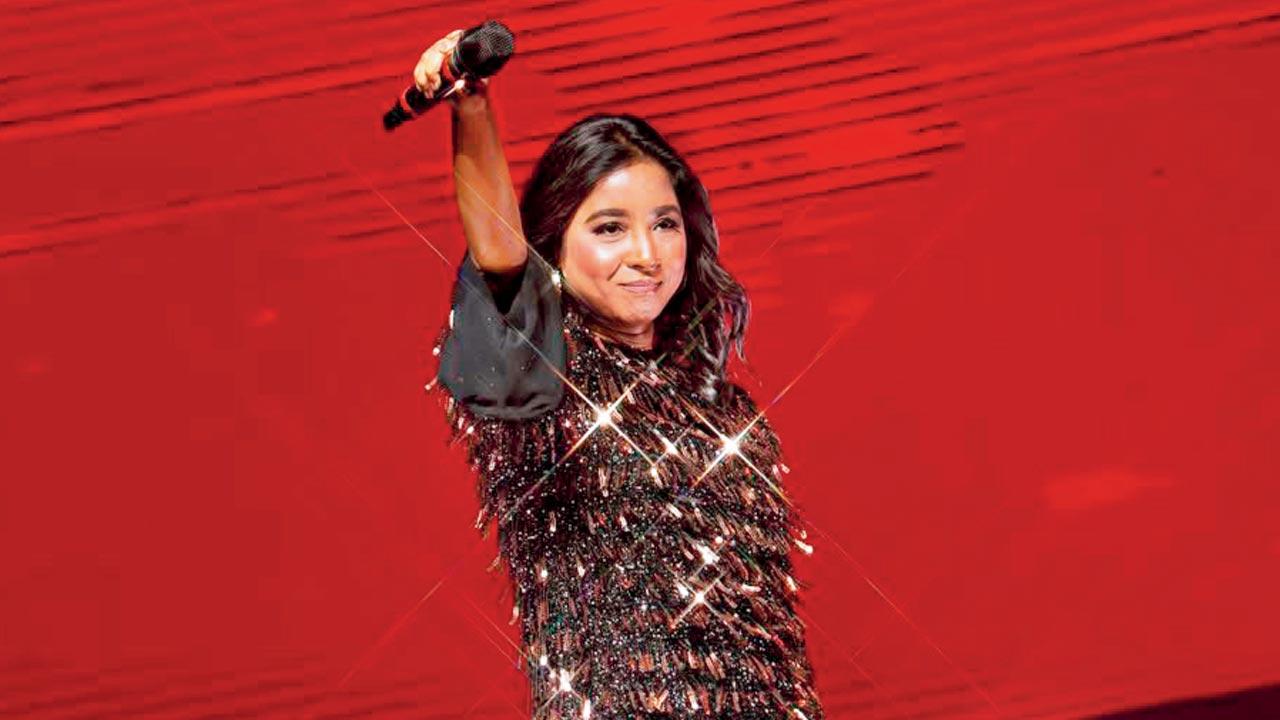
Shilpa Rao, the first musician appearing on The Bombay Film Story, recounts how her father once tore down posters of Led Zeppelin and Leonardo DiCaprio as she didn't practised for a week
Mayank Shekhar (MID-DAY; December 29, 2025)
Navigating two names and many worlds, Shilpa Rao has existed in a state of contradiction — classically trained yet instinctively contemporary, intensely disciplined yet emotionally fluid, present everywhere in popular memory and almost invisible as a personality. Her voice has travelled further than her face, from the haunting minimalism of Tose Naina in Anwar (2007) to Chaleya from Jawan (2023). Sitting down for mid-day’s The Bombay Film Story, the National Award-winning singer speaks about choosing music as a way of life rather than hobby. Excerpts from the interview.
You were born Apeksha Rao. So how did Apeksha become Shilpa?
Shilpa Rao: I was actually born Shilpa. That’s what everyone at home always called me. Apeksha came later, when I went to school and had to fill out official forms. So, that became the name on my school records and 10th standard certificate. But when I got my passport made, everything officially became Shilpa Rao again. Apeksha literally means expectation. It felt heavy. I’ve always been someone who prefers being in the background, doing things at my own pace, and not carrying the burden of expectations. Shilpa felt lighter.
You hail from Jamshedpur. That city has produced Imtiaz Ali, R Madhavan, Priyanka Chopra, and Abhishek Chaubey. What’s it about that city?
Rao: Jamshedpur is a unique place. It’s a Tata township, and most people there are professionals — engineers, doctors, teachers. The only flex parents have is education. That creates an environment where ideas matter. You have XLRI [Xavier School of Management], Loyola School, film clubs, and theatre culture. We grew up watching classical maestros like Parween Sultanaji and Ustad Bismillah Khan sahib. There were no phones, no distractions, just conversations. That’s what shaped us.
Was music internal or external to your home?
Rao: It was my first education before the alphabet. My brother Anurag is the better musician; he’s a jazz pianist. He knew what he wanted at three years old. I didn’t want to do anything! But music became my safety blanket. My father always said, ‘There are two lives — one with art and music, and one without. Always choose the one with art.’ Even if you don’t make a career out of it, it enriches your life. Music becomes a friend.
Your father S Venkat Rao trained you. Was he a taskmaster?
Rao: He could be strict. Once he tore down posters of Led Zeppelin and Leonardo DiCaprio in my room because I hadn’t practiced for a week. He said, ‘The point is you didn’t even realize you hadn’t practiced.’ What truly made him happy wasn’t success or awards, but my desire to learn. He believed music isn’t a hobby. Once I had said music is my hobby, and he was furious. His thinking was that anything that would deter me from pursuing my music should not exist in my life.
Your father isn’t a professional musician, yet he trained you deeply.
Rao: He is an engineer, he also has an MA in music. He heard Ustad Amir Khan live in 1972, and it transformed him. He believed in being an educated musician.
At 13, you met Hariharan. That was your first Bombay film story, wasn’t it?
Rao: Yes, we were visiting Mumbai on a holiday. My mother got his landline number through a friend and called him. It was my birthday, and he invited us home. No industry connection — just kindness. I sang a ghazal he had composed in Raag Durga, written by Bashir Badr. He corrected me line by line, teaching me the ebb and flow of the ghazal right there. For a 13-year-old, it was magical. At that time, my stand changed. That meeting made me start taking [my music] seriously.
Autotune is just a symptom, not the main problem-Shilpa Rao
8:07 AM

Shilpa Rao with husband Ritesh Krishnan in Lucknow
Iti Shree Misra (BOMBAY TIMES; November 26, 2024)
Since she sang her first playback song Tose Naina Lage Re in the film Anwar in 2007, Shilpa Rao has captivated music afficianados. Be it Khuda Jane from the Ranbir Kapoor-Deepika Padukone starrer Bachna Ae Haseeno, or Tere Hawale from Laal Singh Chaddha, Chaleya from the SRK starrer Jawan and Besharam Rang from Pathaan, Shilpa’s unusual voice has garnered much love and appreciation from her fans across.
Her love for Urdu poetry and ghazals is well-known and the singer has been a very successful independent artiste as well. In Lucknow recently, the singer shared thoughts on Lucknow, which also happens to be her sasural, to changes in the music industry, and more...
What are your thoughts on Lucknow? Please share some memories associated with the city.
My first memory of Lucknow is from when my dad used to visit the city for work here. He would always bring back beautiful chikankari sarees or suits for my mom. Later, when I started visiting Lucknow for my concerts, I fell in love with the food and the language. There’s a charm and beauty in Lucknow that is truly special.
Your performance of Paar Chanaa De at a global music platform showcased music’s power to unite cultures. What does that experience mean to you?
Art, in any form—whether it’s music, painting, dance, or poetry—brings people closer. That’s what I felt while working on the music platform. Music has the unique ability to cross borders and connect people, and that’s what made the experience so meaningful to me.
How do you see the Indian and Pakistani music industries promoting artistic exchange?
We listen to Pakistani compositions and songs, and they listen to our music. This exchange of music and culture has always existed and will continue, driven by a never-ending love for art and tradition.
How has the music industry changed since you started?
The industry evolves every six months. There are constant changes, phases, and trends. It’s important to keep evolving and growing with the times to stay relevant in this ever-changing industry. There was a time when female voices were scarce in the industry. Now, there are many female-driven albums, songs, and even films. This is a beautiful change to witness.
Do you think the abundance of auto-tune and tuning tools has diluted the musical process, making it harder to spot genuine talent?
Autotune is just a symptom, not the main problem. The real issue is that people aren’t taking the time to learn music properly. They’re not understanding the art and skill behind it. If people learn music well, the whole system will improve. So, the real problem is not learning music.
What’s the most surreal moment you’ve experienced in your career?
Every time I see people reacting to my songs, it feels surreal. That feeling never gets old, and it’s always magical to see how music touches lives.
As a successful female artist, what changes do you hope to see in the music industry regarding representation and opportunities for women?
It’s about creating equal opportunities for all genders. I want to see more independent, unique, and authentic voices coming forward. The more diverse voices we have, the richer our industry will be.
For the longest time, people said that I couldn’t sing-Shilpa Rao
8:18 AM

Debarati S Sen (BOMBAY TIMES; August 31, 2024)
Shilpa Rao first sang for the Hindi film music industry over 17 years ago and since then, has had hits like Khuda Jaane, Kalank, Subhanallah, Bulleya, Ghungroo, Tere Hawaale, Chaleya and Besharam Rang among others to her credit.
In a conversation with us, this Grammy-nominated singer talks about creating a space for herself in the music industry despite her voice being termed unconventional at the beginning of her career. Excerpts:
Initially, your voice was termed unconventional. Did you face challenges to get a break in the music industry because of that?
Throughout my childhood, people said I couldn’t sing, and I believed them. Back then, I was learning to sing because I liked music. I never thought I’d be a musician. I wasn’t very goal-oriented, in that sense. Even now, I am learning music because it brings me happiness. Also, today, I don’t think much about what people say. I just believe in working hard. People can say whatever they want, but we must filter out the comments that are not relevant. If someone like Rashid Khan sahab would say something to me, I would listen and see value in it, but not from everyone. It's important to use your own mind, pick things that you're passionate about, work hard on that and listen to people who are wiser than you. Like, if Pritam tells me something, I will think hard.
How did you manage to find your voice even after facing criticism at a young age?
I think it helped me when people said I couldn’t sing (laughs). On a serious note, my parents instilled in me the idea of having my own voice and opinions, which shielded me from being too affected by others’ opinions. My dad always believed in learning music because it enriches your life, and I still hold onto that outlook. My voice was nurtured by my parents, who were big fans of artistes like Begum Akhtar, Prabha Atre ji, and Parween Sultana ji. I was fortunate to have seen some of them perform live as a child. Listening to Farida Khanum was also common in our house. My parents instilled in me the idea of having my own voice and opinions, which shielded me from being too affected by others' opinions on my singing abilities. My dad always believed in learning music because it enriches your life, and I still hold onto that outlook. Attaching happiness, love and good energy to my songs translates to the audience, and that’s important to me.
You’ve sung numerous popular Bollywood songs in the past few years. What’s your process when it comes to singing?
For me, it’s about approaching each studio session as if it were my first. Every recording is a fresh opportunity to connect with music, like a child in a chocolate factory exploring new flavours. For instance, when I was first told about Kaavaalaa (Jailer, 2023), I wondered why Anirudh (composer Anirudh Ravichander) chose me for it, as it was unlike anything I had sung before. However, trusting the composer and director’s vision is crucial. With Besharam Rang (Pathaan, 2022), Siddharth Anand was confident about me singing it. That meant a lot to me. People have told me how much they have loved the song. Sometimes, it’s not just about singing for a movie, it’s also about the emotional attachment people form with the song. So, having faith in what you do is essential.
During recording sessions, is your input as a singer considered?
Yes, always. Artistes who have been in the industry for a long time, whether it’s Pritam, Vishal-Shekhar or Mithoon, are always open to inputs from singers. They’re willing to listen to ideas and suggestions because they understand that it can only enhance the work. I enjoy collaborating with new people as witnessing their spontaneity and energy in the studio is amazing. There’s a unique dynamic that emerges when you bounce off ideas and energy, and often, something magical happens when they listen to your input.
You'd said earlier ‘Kalank’ took three months to complete. Which other song has been challenging for you?
Every song requires dedication and hard work. But if I had to pick, Mudhi Mudhi Ittefaq Se (Paa, 2009) was particularly challenging. I worked with Ilaiyaraaja Sir for that song, and he is known for his discipline and perfection. Impressing him wasn’t easy. Gustakh Dil (English Vinglish, 2012) was also tough because it conveyed complex emotions. Bulleya (Ae Dil Hai Mushkil, 2016), too, posed its own challenges, depicting a unique relationship dynamic.
And are there any songs that you breezed through?
I’d say "Manmarziyan" was definitely one of those songs. It felt tailor-made for me, and Amitabh (Bhattacharya) and I wrapped it up in just 30 minutes. It's quite rare for things to come together so seamlessly like that. Initially, it wasn't even called Manmarziyan, but as soon as I sang the first line, Amitabh immediately named it. Another quick recording was Chaleya. We finished the recording in just 20 minutes because we were both (composer Anirudh Ravichander) present, making decisions swiftly and bouncing off each other's energies. It really does make a difference when you have multiple perspectives in the room, including the composer, lyricist, and sometimes the director. When you're alone, it's challenging to navigate all those possibilities.
In an industry where most songs are male dominated, Tere Hawaale from Laal Singh Chaddha was one of those rare ones where male and female voices were given equal weightage. How did this song come about? How involved were you all?
Tere Hawaale is an ideal duet. The film is not just about one character; it's about the parallel lives of Laal Singh and Rupa, intersecting and drifting apart. The song reflects this journey, where they finally acknowledge their need to be together. It took a lot of time to perfect. We started working on it before COVID in 2019 and experimented with different ways of singing the two lines, and then the final recordings were done. Aamir Khan sir felt that the last part should be from Rupa’s (Kareena Kapoor Khan’s character in the film) perspective to conclude the song properly. It was truly a collaborative effort.
Subscribe to:
Posts (Atom)