Showing posts with label Sheykhar Ravjiani. Show all posts
Showing posts with label Sheykhar Ravjiani. Show all posts
Some of our best work has come from creative clashes - Vishal-Sheykhar
4:29 PM

Debarati S Sen (BOMBAY TIMES; March 25, 2026)
From Dil Diyan Gallan, Aankhon Mein Teri, Sheila Ki Jawani to Besharam Rang, composer duo Vishal–Sheykhar have shaped the sound of Bollywood for 25 years.
Known for their instinct-driven partnership and genre-bending hits, the two continue to reinvent themselves while keeping the fun, and the music, at the heart of their collaboration. In this conversation with Bombay Times, they look back on their journey, the trust that binds them, and the madness behind their melodies. Excerpts...
After so many years, do you finish each other’s musical sentences, or argue over commas?
Vishal: Absolutely. We do finish each other’s musical sentences. That’s uncannily true about us. But yes, we also have those “commas” you mention. We argue, we debate, we break things down—where a song can go, where it should go, what it should sound like, the beat, the energy—everything is discussed to the bone. And yet, somehow, we always end up on the same page.
Sheykhar: At this point, we know each other so well musically that one of us can easily complete a thought that begins in the other’s head.
Twenty-five years is a long time in any profession. What has been the glue that’s kept you both together all this while?
Vishal: Honestly, it doesn’t even feel like 25 years. We still have fun doing what we do, we love the process, and we’re always laughing—whether we’re working or just hanging out. There’s a deep respect for each other, and just as importantly, we give each other space. Every person needs an individual identity, even within a partnership, and I think holding on to that individuality has kept us strong all these years.
Sheykhar: At the heart of it, it’s always been about the music—the joy of creating something bigger than either of us. That singular purpose has been the driving force of our collaboration from day one.
When you both hit a deadlock in opinions, how do you break it?
Sheykhar: Taking a break usually works best. Stepping away gives us distance and helps us regain perspective. Sometimes, even a really long break has done the trick. As our friend, lyricist Irshad Kamil, once wrote, “Kuch rishton ka namak hi doori hota hai, na milna bhi bahut zaroori hota hai.” That thought has stayed with us. At the end of the day, it’s always about the music, and whatever makes the song better is what wins.
Vishal: Honestly, we don’t really have deadlocks. We don’t see them as conflicts, just as strong opinions. Both of us are secure enough in our partnership to voice what we feel without ego getting in the way. But if ever there was a deadlock, we’d just step away for a couple of days, come back refreshed, and move on.
Do you have unspoken rules at work, or do you still surprise each other?
Vishal: In many long-term partnerships, roles get fixed. Thankfully, that’s never happened with us. Sheykhar is a far more qualified musician, he’s taught me a lot, but our process is symbiotic. Anyone can do anything. If he sings me a tune and I tweak it, he runs with it. If I sing him an idea and he adds a line, that becomes part of it. It’s fluid.
Sheykhar: Life would be boring without surprises. Over time, we’ve both grown individually, and those experiences naturally shape how we collaborate. The ‘rules’ keep rewriting themselves as we go.
Looking back, is there one moment in the studio or on stage that perfectly sums up your equation as collaborators?
Sheykhar: Honestly, every day in the studio or on stage asks something different of us. Each director is unique, every audience responds differently, so our collaboration keeps shifting too. We’ve learned to recalibrate pretty organically—whether it’s composing for a film or performing live. That ability to adapt has kept things seamless for us all these years.
Vishal: If I had to pick one defining moment, it would be the composition of Jo Bheji Thi Dua (Shanghai). That song was pure instinct. I’d been carrying the hook melody in my head for a couple of days, and when I walked into the studio, Sheykhar already had the mukhda. The hook just slipped in there like they were meant to be together.
If your 25-year journey as a duo were to be described as a track, what genre would it fall into—rock, pop, EDM, or a mashup? Or name a song.
Sheykhar: I’d definitely describe it as a Mashup.
Vishal: For me, it’s Dus Bahane Karke Le Gaye Dil (Dus). By hook or by crook, you’ll end up loving our music, we’ll draw you in. Our songs are meant to become part of people’s lives, and we want everyone to feel included in that experience. I still remember the first time a car drove past playing Woh Pehli Baar from Pyaar Mein Kabhi Kabhi. It blew my mind! I’ve been hooked to that feeling ever since.
Take us inside a Vishal–Sheykhar jam session—how does a melody or beat usually find its way from your minds into a finished track?
Vishal: And these sessions don’t always happen in a studio. It could be in the car, at a coffee shop, or even on the phone when we’re in different countries. Wherever we are, once we’re in the zone, it becomes a session. It’s unstructured, but it has its own rhythm, a method to madness. Sometimes we begin with a melody, sometimes with words, sometimes by just sitting with a script or listening to a director’s narration. Ideas can spark from anywhere.
Sheykhar: The seed of an idea or melody can come from either of us, but it’s our different perspectives that merge to create something we’re both proud of. Sometimes, even the occasional casual jam has turned into a hit unexpectedly.
You’ve often been described as having very different temperaments. How has this contrast been a superpower, and how has it sometimes been a stumbling block?
Sheykhar: Disagreements and differences are inevitable in any partnership. In fact, some of our best compositions have come out of creative clashes. Even when we don’t see eye to eye, the key is trusting each other’s instincts. If one of us feels strongly about an idea, the other gives it room to breathe. Over the years, we’ve learned when to push, when to pull back, and when to simply listen.
Come Fall In Love changed our sensibilities; We got 60 standing ovations-Vishal Dadlani
8:23 PM
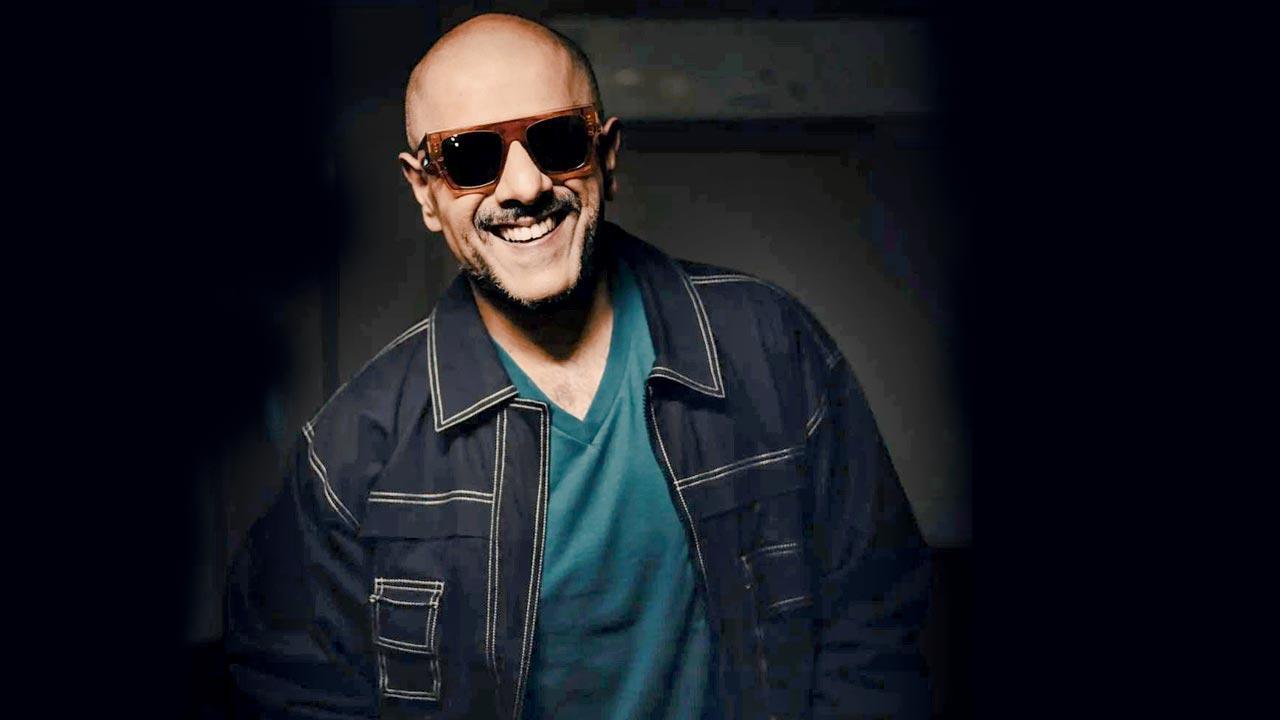
Having rendered Sachin-Jigar’s composition Paisa Hain Toh for Farzi, Vishal on reigning in his music sensibilities as composer to serve the song
Sonia Lulla (MID-DAY; January 23, 2023)
There are some matters that Vishal Dadlani won’t talk about, like the Pathaan track, Besharam Rang, which emerged to be among the best performing songs of 2022, but was mired in controversy with fans stating that it resembled a bunch of old numbers. Then, there are matters on which he pours his heart out, like his work on the recently concluded Dilwale Dulhania Le Jayenge musical, Come Fall In Love, an international production that offered Dadlani, along with his long-time collaborator Sheykhar Ravjiani, a once-in-a-lifetime opportunity.
Considering the fact that musical adaptations of Bollywood films are a rarity, we are eager to know what transpired behind the scenes as the cult classic found a theatrical adaptation in San Deigo. Stating that the project “changed our sensibilities”, Dadlani says, “Dilwale is the fabric for modern pop culture. We worked with Nell Benjamin, who is a multi-Tony Award-winning [composer], and we learnt a lot about approaching music [from a place of] joy. [We were told to] let the lyrics speak to us, and by the end of each page, we [usually] had the song [conceived]. We got 60 standing ovations, and our crowd comprised both American viewers, and individuals who had flown from Mumbai to see it,” he relives the experience, as though it occurred yesterday.
Given that it marks the amalgamation of story-telling techniques and live music, a musical, Dadlani says, is a powerful medium to express emotions. “Sheykhar and I usually get to head on [tours], but we never get to perform the same set on the same stage, over and over again. This experience provided that. We had people coming back to watch it [twice over]. It was challenging, but was one of the best experiences of our lives.”
Dadlani’s recent work is an upcoming track from Amazon Prime’s Farzi, and one that brings him under the familiar wings of composer duo Sachin-Jigar. “They are friends. When they call me for a song, I don’t even ask them about it, I simply show up. By now, they know my range, texture, and the things that I like to do [as a singer],” says Dadlani, who rendered Paisa Hai Toh, along with Mellow D for Shahid Kapoor’s project.
We would assume that his success as a composer would influence his renditions while working for other composers, in the capacity of a singer. But Dadlani disagrees. He adheres to one principle — “I come in knowing nothing,” he says.
“I only bring my heart. I treat each song as an opportunity to learn something. When a composer calls me, he/she is giving me a chance to improve myself as a musician. You have to put your faith in the composer, because the composer chooses your voice as the instrument for the song.”
Being on TV filled me with confidence-Sheykhar Ravjiani
8:11 AM

Soumya Vajpayee (HINDUSTAN TIMES; November 21, 2022)
Composer-singer Sheykhar Ravjiani is thankful to television for giving him an identity and taking him to every household. From being a reality show participant to making it to the judge’s chair, Ravjiani says the small screen has been an integral part of his musical journey. “In an era where there was no social media, as a composer and singer, I had to rely on mass media to connect with my listeners and fans. It was always good to be seen on television, as I could connect with a wider audience through my music and my presence on reality shows,” he tells us on World TV Day, today.
The Vikram Vedha composer was a contestant on Sa Re Ga Ma Pa in 1997, which he calls a “milestone moment”. He explains, “I suddenly found myself on stage, with the whole country watching. It was a defining moment for me as a singer. It filled me with the confidence I needed to take the next leap of faith towards my dreams. I also remember making a silent oath to myself to one day become such an accomplished composer and singer that I’d next appear on the same show as a judge and mentor — a dream that’s come true not once, but thrice.”
Ravjiani applauds TV for giving exposure to so many talented artistes: “Over the past decade, we’ve seen an unearthing of some incredible talent through music reality shows. These shows help discover the most treasured singers. It’s something to be proud of.”
Subscribe to:
Posts (Atom)