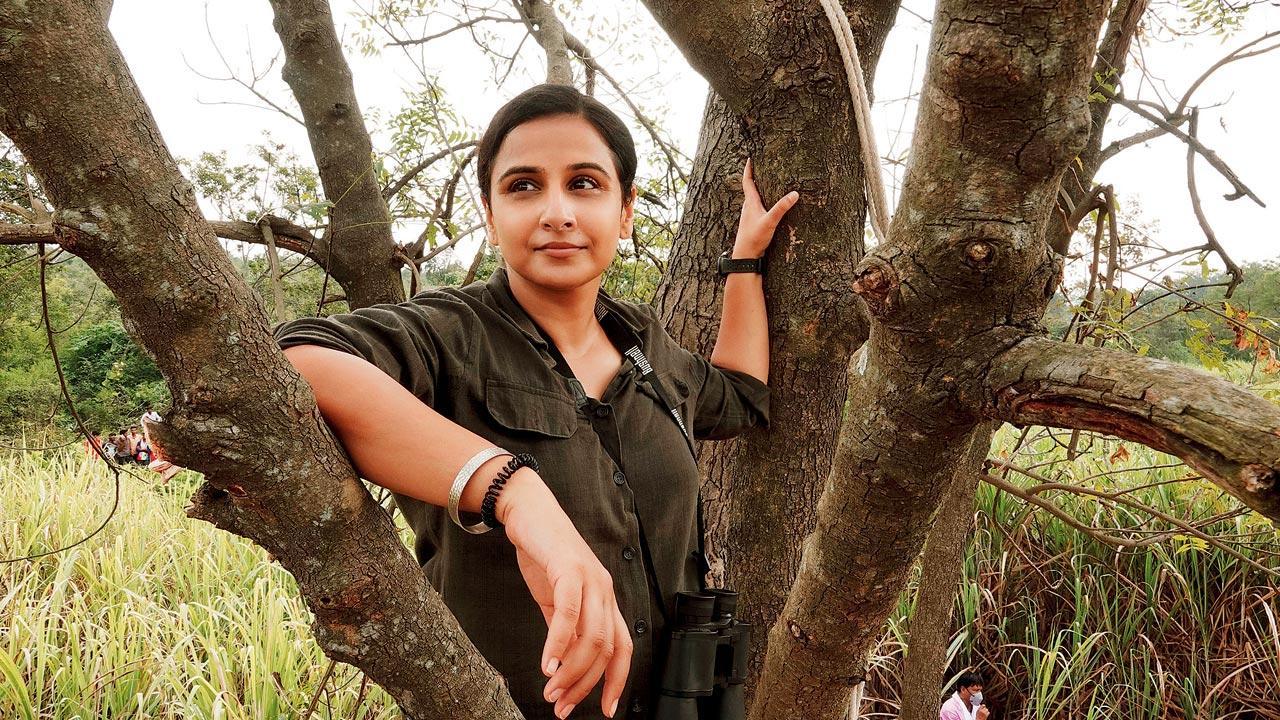
Showing posts with label Sherni. Show all posts

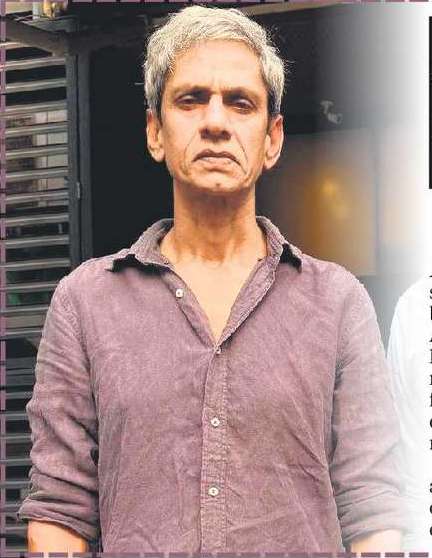
Insufficient evidence or lack of investigation? Vijay Raaz acquitted in sexual harassment case

Insufficient evidence or lack of investigation? Vijay Raaz acquitted in sexual harassment case

HINDUSTAN TIMES (May 17, 2025)

A Maharashtra court on Thursday acquitted actor Vijay Raaz in a sexual harassment case filed by a female colleague in 2020. Additional Chief Judicial Magistrate Mahendra Sorte ruled that the “prosecution failed to present sufficient evidence against him”, PTI reported.

A crew member had accused the 61-year-old actor of sexually harassing her during the shoot of the 2021 movie Sherni. As per the complaint, the alleged offence was committed in late October 2020. On November 4, the same year, Vijay was arrested in Balaghat (Madhya Pradesh), where the film crew was staying. He was released on bail the same day.

The complainant stated that the incident took place in a hotel, but the investigating officer did not visit the spot, the court said. The judge also said that the complainant mentioned the names of a few hotel employees, but their statements were not recorded.

“The investigating officer did not conduct any further investigation. Therefore, the evidence presented by the prosecution appears weak and insufficient,” the court said.

Meanwhile, Vijay’s lawyer, Saveena Bedi Sachar, said that the actor not only had to leave Sherni midway, but also lost work thereafter because of the allegations.

We were like schoolgirls on the set, say Vidya Balan and Ila Arun


Debarati S Sen (BOMBAY TIMES; November 19, 2024)

At the recently concluded Literature Live! The Mumbai LitFest 2024, held at the National Centre for Performing Arts (NCPA), the audience was treated to a heartwarming exchange between Bollywood star Vidya Balan and the actor-singer-thespian Ila Arun. The event marked the unveiling of Ila Arun’s autobiography, Parde Ke Peeche.

The story behind the curtains
“After my song Choli Ke Peeche (Khalnayak, 1993) became popular, it became my signature,” explained Ila. “Koi yeh nahi janta tha ki Ila Arun kaun hai, parde ke peeche kya hai. And that’s how I named my autobiography. Logon ko aana padega parde ke peeche mujhe jaanne ke liye,” said Ila Arun, revealing the inspiration behind the title.

A friendship beyond generations
Vidya Balan expressed her deep affection for Ila Arun, highlighting the unique qualities that have endeared Ila to her over the years. “My favorite thing about Ila ji is her child-like quality, that immense enthusiasm she has in everything she does,” Vidya said.

“What is so amazing about her is that I never felt that there was any sort of age difference between us, from the moment we first met. I love her! She genuinely is one of my most favourite people. She has always been the youngest person in any cast, and I don’t mean this in an ageist way. Ila ji is just so much fun to have around! I’ve also had the opportunity to watch her on stage and she is magic. I’ve met Ishita, (her daughter), who was my junior in college, and she is great fun, but I feel Ila ji is the child! It’s just so easy to talk to her about anything. She levels with you so beautifully.”

Their camaraderie was evident as Vidya recalled their collaborations in films like Shaadi Ke Side Effects (2014), Begum Jaan (2017), and Sherni (2021). “We would be yapping away between takes, like schoolgirls! Yet, when the camera came on, she would just transform,” Vidya remarked.

The mischievous side of Vidya and Ila’s playful recollections
The stage was alive with laughter as both shared amusing anecdotes from their time on set. Ila Arun, tearing up at Vidya’s heartfelt praise, recounted a mischievous moment: “Vidya would crack a joke on set and make everyone laugh while she kept a straight face. Once, when I was preparing for a serious scene in Begum Jaan, she asked someone to play the song DJ Wale Babu! She knew that if I heard music like that my feet would tap to the music. When the shot was ready, she played the song and I couldn’t help moving! The director asked me to be still and Vidya stood there seriously for action!”

Vidya, laughing, added her version of events, “Ila ji was in a white sari, and we were doing a Holi scene. She kept asking the director, ‘Main nai Holi khel rahi? Rang mujhpe nahi lagayenge?’ The director explained the historical context, and Ila ji was heartbroken. She stood sulking in a corner. To lift her spirits, I said, let’s play DJ Wale Babu. It was her childlike spirit shining through!”

Adventures in Shantiniketan and Jharkhand
Vidya also reminisced about their shared adventures while shooting in Shantiniketan and Jharkhand. “On Saturdays, Shantiniketan would have a Boul Mela where folk artistes gathered to perform. Imagine having Ila Arun perform live with them! It was incredible.”

In another memory, Vidya spoke about their encounters with snakes and scorpions in the wild. “The director once chased us with a bottle containing snakes, and I hid behind Ila ji. But she was always such a sport, playing along!”

The blessing of Ritwik Ghatak
Vidya reflected on the opening chapter of Ila Arun’s autobiography, which recounts a blessing from legendary filmmaker Ritwik Ghatak. “He told her in Bengali, ‘You will die on stage.’ He saw in Ila ji what perhaps she couldn’t see in herself at the time. You’ve been on the stage in various avatars, on various stages, in various stages of your life. It’s so beautiful and inspiring."

Ila Arun, with her characteristic humor, responded, “That’s what I really want for me to happen. But Kunal pe taras aata hai (Kunal Kapoor, Trustee, Prithvi Theatre.) I want my last breath to be at Prithvi but aap itna arrangement kaise karenge. Meri iccha hai (to die on stage) but main location dhoondh rahi hoon, yahan (NCPA) nahi toh wahan.”

There have been thrillers after Kahaani, but it continues to be a benchmark-Vidya Balan

Jalsa, vidya balan, shefali shah

Madhureeta Mukherjee (BOMBAY TIMES; March 16, 2022)

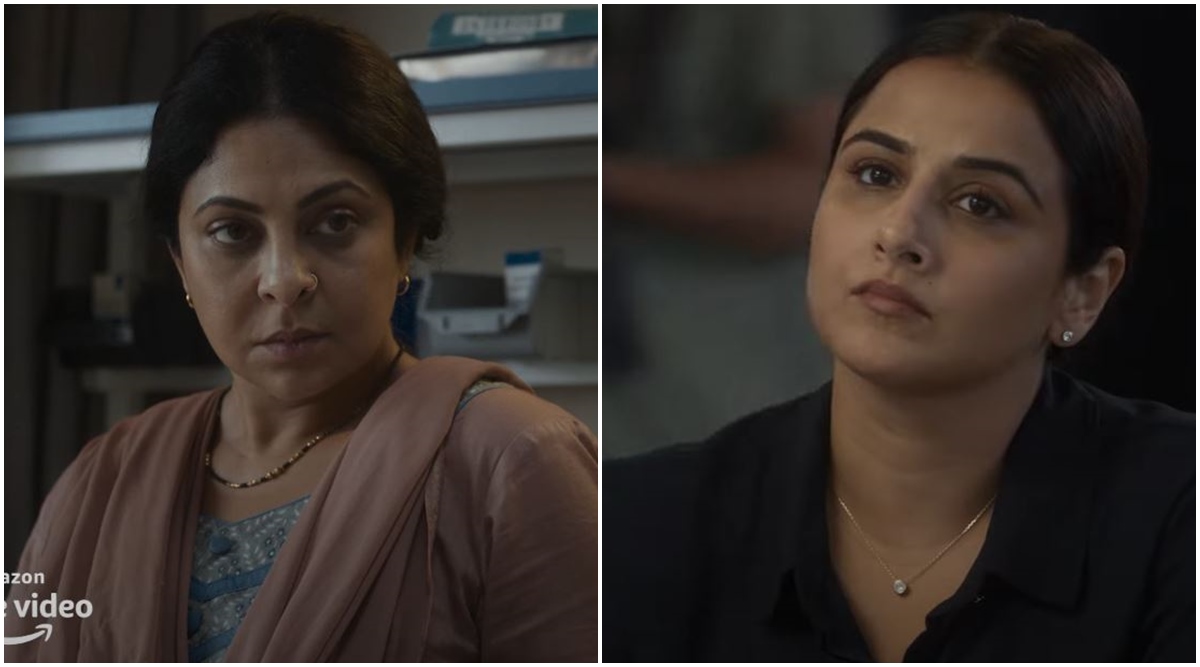
She says she is a greedy actor. The fierceness with which she bites into every role, bringing alive every character she portrays and owning it wholly, we couldn’t agree more with Vidya Balan. It’s her greed for great roles, and the audiences’ hunger to see more of her on any platform that maybe, results in the making of some unforgettable cinema. Vidya leads the show, along with Shefali Shah, in the upcoming, Jalsa, a thriller drama that releases on Amazon Prime Video on March 18. In a conversation with us, she shares her views on women in cinema, in the OTT space, in society, and how the concept of stardom is changing. Here’s a Vidya-view on all these subjects that matter…

This year marks 10 years of Kahaani, a landmark film of your career, and for our cinema. It came at a time when thrillers were far and few in Bollywood, leave alone a woman leading the show with such a compelling story. Ever since, we have had several more, and some of those featuring you. It is indicative of the changing narratives in our cinema, and of course, how you continue to do roles that defy stereotypes and redefine trends.
I was a bit taken aback when you said 10 years of Kahaani. I didn’t realise that, wow! It just seems like yesterday. You are right when you say that there weren’t many thrillers being made back then. And with Kahaani, you had a thriller with a woman at the centre of the story, and not just that, a pregnant woman. People just didn’t know what to expect from it. For Sujoy Ghosh (director), it was a challenge to put the film together. A lot has changed since… now there is a wide range of women’s stories being told. It is so exciting, though I have to say that I hope that the tag of the ‘woman-centric film’ is done away with at some stage. In Jalsa, you have two women leading the story, but it’s a kind of story that could happen to anyone. It is about one incident that just changes your life. Maya (my character) is a journalist. She is self-righteous, and here she is thrown into a sudden situation. It is easy to pronounce judgements on others, but now she is at the receiving end. Every character in this film is under the stress of being judged or judging themselves. Talking about Kahaani, yes, there have been other thrillers, but I think even today Kahaani is a benchmark.

A lot of female actors don’t subscribe to the term ‘woman-centric’ role/movie. In many of your finest films, while you were leading the show, it was the subject and story that took center stage. To put it simply, the subject was the hero, and hence, the films drew the kind of audience they did. Subjects have no gender, so here, the actresses are right in having a problem with the term ‘woman-oriented’. Your view?
I totally agree, and I love the way you have articulated it; I have never been able to articulate it like that. Yes, subjects have no gender and I think universal subjects appeal to me. When the story is not restricted to a gender, and it is about people and humans, it draws me. Like when I first heard the story of Jalsa, I said, ‘This could happen to anyone.’ That’s what hits you hard — the story.

You play a journalist in Jalsa. Over the years, your journey with the media has been interesting. For this part, did you draw any references from your interactions and relationship with the media that you have shared all these years?
Maya is not an entertainment journalist, so there was no exact reference point for me there. A lot of journalists we see around us, and credible names who you think are beyond blemish, are also human. When the camera turns towards them, and they are confronted with certain situations in their life, it would be interesting to see how they would deal with it. Maybe a better way of putting it would be, when the lens of judgement is on them, what happens? Will they crumble? It is easy to put others on the stand, but what happens when you are on the stand, what are the calls that you will take, and what are the choices you will make? Everyone has secrets, and everyone knows their truth — this is the crux of the story and the narrative of every character in the film.

You have worked with director Suresh Triveni in Tumhari Sulu, which was in a very different zone. Jalsa seems to be an intense drama. Is he trying to make a social commentary through this film?
I stay away from any sort of commentaries, but different people will have a different take away from the film and story. At times, people will find layers in everything, and yet, sometimes, they will find nothing at all, so it is subjective. Jalsa is a gripping story, with oodles of drama. I don’t think it is trying to make a commentary. I think it will leave you feeling, ‘Oh, my god, this could be me.’

Currently, there is a lot of conversation around how the digital space has given female actors ample opportunity to play diverse roles, a chance to break the mould, take risks et al . In this case, would you agree that you were ahead of the game, as what we are talking about today — the chances and variety of roles, you took that leap for the big screen long before we were rejoicing in this new wave of content on OTT?
May I say that it is very easy for everyone to now say that. ‘Oh, the OTT space has opened up opportunities for women’. They are basically mitigating the value of the journey that the Hindi film heroine’s arc has gone through. I don’t think the OTT wave has changed anything for women alone, I think it changed the way we view content, and therefore, it has changed content. Obviously, because of that, there is a wider variety of stories being told, and different genres being explored. I think what the OTT space does is that it offers you an intimate, personal experience. When you go into the theatre today, the difference is very stark. You go into the theatre to get the big-screen, heroic, larger-than-life experience. On OTT, you have the luxury of when and what you want to watch. It troubles me when people talk about the OTT space being a game-changer for female actors or female story writers. I don’t think that’s true at all. I am credited with being at the helm of things, but even that, I believe, is about timing and being at the right place, at the right time. And I am not the only actor who has been doing that. Most importantly, there have been others who have followed it up, and we are all in it together.

So, the choices of films that you are making now are irrespective of the medium?
Absolutely! I am medium agnostic. I am a very greedy actor. The platform depends on the content and what sort of film will appeal to what audience. I believe that Jalsa will appeal to a universal audience, it is not just for the Indian audience.

In Jalsa, we have two actors (who happen to be women) who are superb at their craft — Shefali Shah and you — leading the show. It again points to the steady and positive change that we are seeing around us and in our cinema.
Yes, it is because of changing mindsets and evolving audiences, but most importantly, it is reflective of the change happening in society where women are taking centre stage. Today, women are in charge of their own life stories, which is why we are seeing much more of those stories in our cinema.

Do you feel that the concept of stardom has changed, or has been redefined in the current times? And the audience is willing to watch the actors they admire on any medium, as long as they have a great story to tell?
Yes, I think the concept of stardom has changed. The larger-than-life quality of stars has changed over time because of their accessibility on social media. The OTT platform has also created a new breed of stars. If you like an artiste, you will watch what they have to offer on any platform. I don’t think the previous success of a film of an actor has actually mattered ever for their fans. Also, today, I think it’s how exciting your trailer is and what it makes the audience feel is what determines whether they will watch the film or won’t.

Two of your big films released on OTT in the last two years, Shakuntala Devi and Sherni. While releasing a film on a digital platform could be a new experience, do you miss the excitement around a theatrical release, where the box-office numbers keep coming in on a Friday, and there is all that hysteria around it?
Not really. Honestly, it’s the best thing to have happened to Shakuntala Devi and Sherni. Our films were ready, and we had a platform. Both were loved and were very different films, and so is Jalsa. Whether a film is releasing in theatres or OTT, I still feel butterflies in my stomach until I know how the audience is responding to the film. It’s the same nervousness. It’s like you are showing your Simba to the world. The first time you hold your baby out to the world, it will always make you nervous, no matter where and how you show it.

I believe that if you look the part, half the battle is won, says Sharat Saxena on his Sherni act

A still from the film

Sharat Saxena, Best Supporting Actor nominee at Hitlist OTT Awards, on resembling his Sherni character
Sonia Lulla (MID-DAY; March 11, 2022)

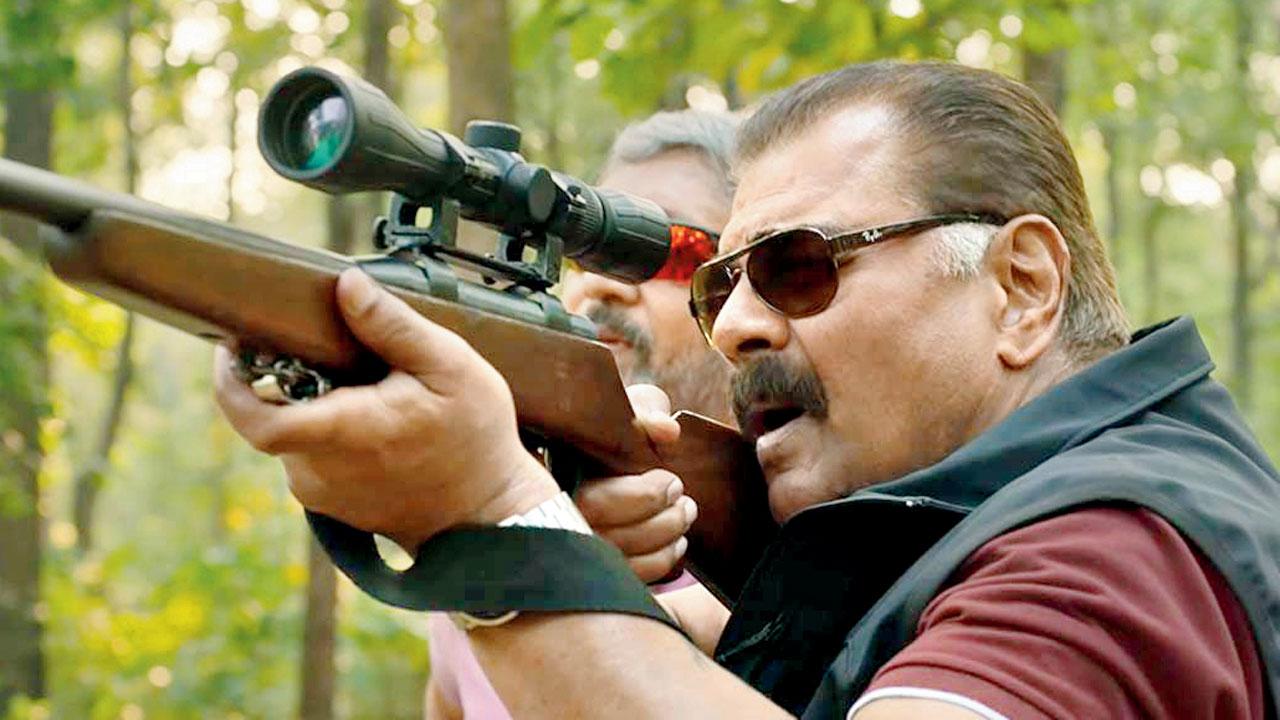
As someone hailing from a small town of Madhya Pradesh, and having “been around” people who hunted, Sharat Saxena says he was a natural fit for the part of callous hunter Ranjan Rajhans in Sherni. “I believe that if you look the part, half the [battle] is won. Because I belong to Madhya Pradesh, and am built like them, I could fit the [bill],” begins Saxena.

Saxena’s performance in Sherni has earned him a Best Supporting Actor (Male): Film nomination at the mid-day and Radio City Hitlist OTT Awards. On its release, the Vidya Balan-starrer was praised for beautifully highlighting the man-animal conflict. Saxena credits script writer Aastha Tiku for her diligent research on hunters appointed by the state governments to shoot animals that are considered a threat to human settlements around.

“I was given several photographs and descriptions about them. When I read about these [hunters], I understood that they are different from those who hunted for pleasure, 20 years ago. They are small-town engineers and businessmen who have learnt to hold a gun and hunt from their grandfathers.”

He adds that he enjoyed shooting the film amid nature and wildlife.

Cast your vote for the Hitlist OTT Awards
Sharat Saxena has been nominated in the Best Supporting Actor (Male): Film category for Sherni.

The other nominees are:
- Ashutosh Rana (Pagglait)
- Pankaj Tripathi (Mimi)
- Paran Bandopadhyay (Bob Biswas)
- Paresh Rawal (Toofaan)
- Stephen Hogan (Sardar Udham)

Log on to www.radiocity.in/hitlistawards to cast your vote.

You can also vote via SMS. Send HITLIST <space> category name <space> your choice (a/b/c as on the website) to 57575.

Voting lines close on March 18.

With Sherni, there were times when I wondered whether I was doing enough-Vidya Balan

Vidya Balan: Wondered if I was doing enough in scene

Vidya Balan, nominated in the Best Actor category in the Hitlist OTT Awards, on how shooting for Sherni made her unlearn aspects of her craft
Uma Ramasubramanian (MID-DAY; March 9, 2022)

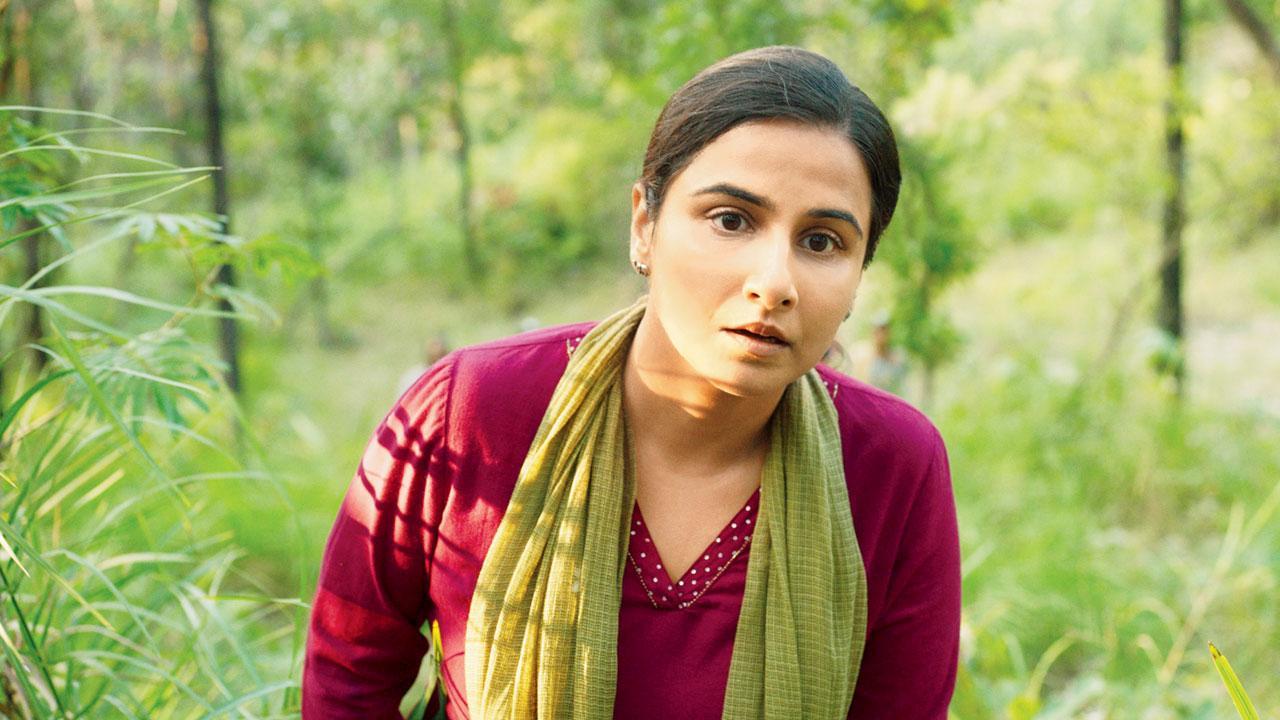
A powerful film can make an actor explore new facets of themselves, helping them learn things about their art along the way. For Vidya Balan, who has built a rich filmography over the years, Sherni (2021) is one such project. Director Amit Masurkar’s realistic style of filmmaking was admittedly a new process for the actor. “Sherni made me unlearn a lot of things as an actor. Amit’s approach is different from other [filmmakers]. There were times when I wondered whether I was doing enough, whether I was getting the scene right. So, it’s gratifying when people compliment me for Sherni,” says Balan.

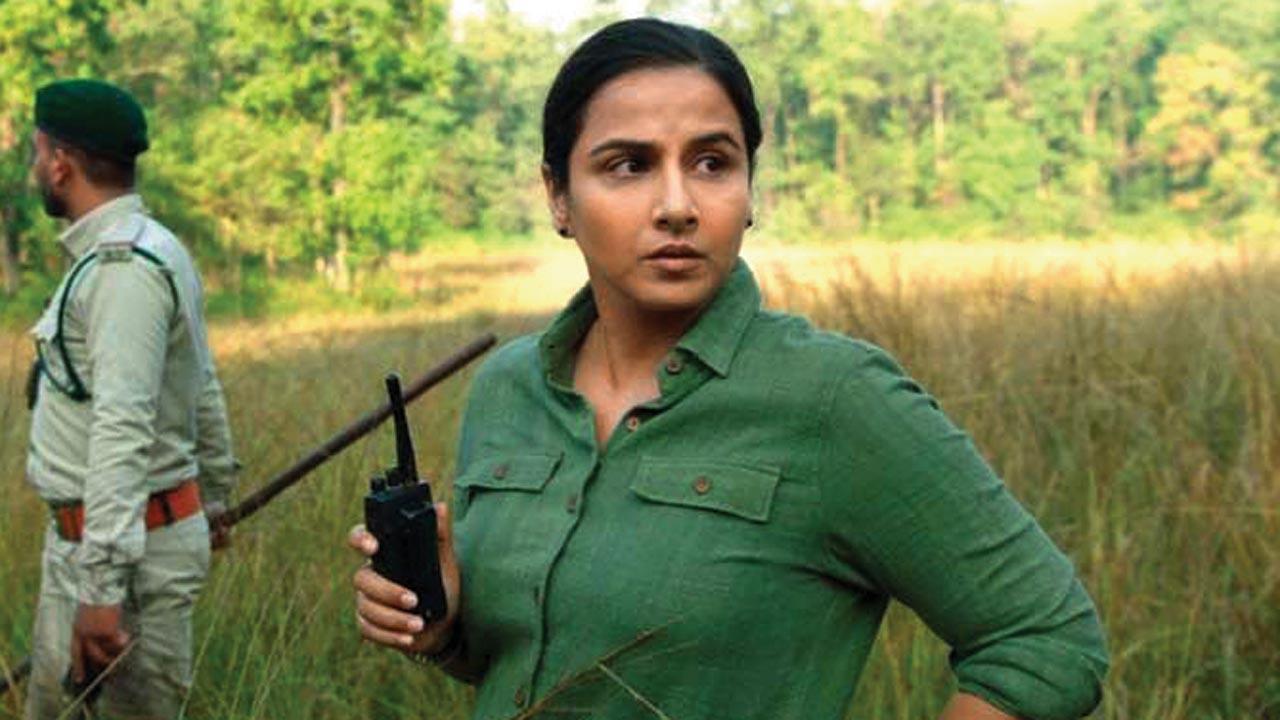
The actor’s measured performance as divisional forest officer Vidya Vincent has won her a nomination in the Best Actor (Female): Film category of the mid-day and Radio City Hitlist OTT Awards. In telling the story of the protagonist’s struggles to save a tigress from hunters and release her into the national park, the director highlighted the man-animal conflict. It was only when Balan immersed herself in the movie’s universe that she fully understood how humans take the environment for granted. “I was also indifferent [towards wildlife conservation]. We’ve read about global warming and climate change, but none of that has impacted me as much as this story has.”

It is to Masurkar’s credit that he has skillfully tackled patriarchy and sexism through the protagonist’s track, while staying true to the central theme. Balan seconds it, saying, “What I like about Vidya Vincent is that she is a woman of few words, and yet has the courage to stand up for what she believes in.”

Cast your vote for the Hitlist OTT Awards

Vidya Balan has been nominated in the Best Actor (Female): Film category for Sherni.

The other nominees are:
- Kiara Advani (Shershaah)
- Konkona Sen Sharma (Geeli Pucchi, Ajeeb Daastaans)
- Mrunal Thakur (Toofaan)
- Sanya Malhotra (Pagglait)
- Taapsee Pannu (Rashmi Rocket)

Log on to www.radiocity.in/hitlistawards to cast your vote.

You can also vote via SMS. Send HITLIST <space> category name <space> your choice (a/b/c as on the website) to 57575.

Voting lines close on March 18.

Meet Aditya Gupta, who is in charge of safety measures on Dhamaka, Ram Setu and Darlings set


Aditya Gupta, in charge of safety measures on Dhamaka, Ram Setu and Darlings sets, discusses challenges of bio-bubble shoot, and executing ever-evolving sanitisation practices
Mohar Basu (MID-DAY; July 4, 2021)

As shoots have resumed in bio-bubbles post the second lockdown, the primary concern on a film set has been safety. Many projects — including Dhamaka and Sherni — have relied on Aditya Gupta for their health and safety management. The former assistant director started a company called Life First, which takes care of sanitisation needs on set. “We do everything, from formulating SOPs to location analysis and pointing out venue loopholes in scripts. Besides sanitisation and testing, we handle PPE management, waste management, tie-ups with hospitals and creation of bio-bubbles,” he says.

Gupta was supervising the safety norms of Akshay Kumar’s Ram Setu, whose shoot came to a halt in Mumbai after the leading man and 45 people tested positive for Coronavirus in April. “There was such a hue and cry about Ram Setu. At the beginning of the second wave, a lot of crew members tested positive, but we had caught it ahead of time and the shoot was suspended immediately,” he defends.

Gupta has 15 projects on his plate, including Alia Bhatt’s 'Darlings' and Riteish Deshmukh’s 'Plan A/Plan B'. The safety norms laid down on these sets follow those adopted during the filming of Kartik Aaryan’s 'Dhamaka', which had zero cases. “We create people pods, where only certain sections are allowed to break social distancing rules. That way, if someone tests positive, we don’t have to quarantine the whole crew. For instance, we break the lighting team into zones so that if one zone has a case, the other can replace it and the work continues. Doing two RT-PCR tests is mandatory to ensure we don’t have a false negative.”

With crew strength exceeding 150, Gupta says movie sets require more vigilance because people can be negligent sometimes. “The issues arise when people in the bubble break the norms. They want to chill and have a drink together. To combat that, we deploy security on each floor of the hotel we are staying in. Another issue is daily-wage workers often pop a pill and show up for work [despite showing symptoms] because they haven’t earned enough in the past few months. We have had to ask producers to have a strong discussion that they can’t put others at risk, and assure them that they will be paid.”

We don’t know whether vaccine certificates are acceptable for travel, says The End producer Vikram Malhotra


Eager to roll The End, creator-producer of Akshay’s web debut says lack of clarity regarding international travel rules delaying the project
Mohar Basu (MID-DAY; July 2, 2021)

Even as producer Vikram Malhotra doled out three films in the past 12 months, including the recent Sherni, he has had his focus constantly trained on his passion project, The End. Akshay Kumar’s maiden OTT project, which has to be shot in foreign locations, has not got off the ground due to the pandemic-induced travel restrictions. Though Europe has reopened its borders for fully vaccinated travellers, the producer says that lack of clarity on several counts has made him play the waiting game.

“We’ve been speaking to authorities and their local counterparts to understand the protocols [for international travel]. We don’t know whether vaccine certificates are acceptable for travel. Which vaccines are [deemed] acceptable is another area of discussion. We are awaiting official statements on the matter. We have utilised the lockdown period to finish writing The End and begin pre-production,” says Malhotra.

The creator-producer is determined not to let the roadblocks hamper his grand vision for the Amazon Prime Video series. “We have to keep two variables in mind — Akshay’s dates, and the status of international travel.”

With Chhori and portions of Ram Setu being shot amid the pandemic, he maintains that filming on home turf is no cakewalk either. “In trying to mitigate Covid risk, we have created safety protocols that sometimes come in the way of shoots. For instance, everyone on set wears a face shield. But on ground, it becomes challenging for the DoP [director of photography] to check if the framing is on point [due to the additional filter],” he notes.

For now, Malhotra can take heart in the love pouring in for Vidya Balan’s Sherni. The movie not only highlighted the man-animal conflict, but also offered a sharp commentary on patriarchy. “Conservation is not just the [responsibility] of those in authority; that’s the message Amit [Masurkar, director] and Aastha [Tiku, co-writer] have beautifully conveyed. The Forest Department let us engage with forest officers, guards and trackers.”

I have faced sexism from men, women and myself-Vidya Balan


With 'Sherni' highlighting patriarchy besides its central theme, Vidya Balan on how society’s gender bias made her underestimate herself
Uma Ramasubramanian (MID-DAY; June 22, 2021)

With 'Sherni', Vidya Balan has done again what she does best — highlight a larger story through the journey of a commonplace character. While at it, she has also delivered a compelling performance. “It’s overwhelming to receive so many messages. I make films for people to watch; the more people watch it, the happier it makes me. That said, it is not about validation. I choose the stories I want to tell. My decision is not based on what [subjects] the audience will like. When they do like what I am putting out, it’s a form of gratification. It encourages me as an actor. I think anyone who says they are making films for themselves and don’t care about box-office is bullshi**ing,” says Balan, flushed from the praise for her latest release. 

In showcasing divisional forest officer Vidya Vincent’s efforts to save a tigress from hunters and release her into the national park, director Amit Masurkar has highlighted the man-animal conflict. The director, while staying true to the central theme, has also tackled patriarchy, depicting how men are reluctant to take orders from a woman forest officer. Balan says the track resonated deeply with her. “Sexism is not only about how men treat women; it is as much a mindset that women have, as a result of their deep-rooted conditioning. I have faced sexism from men, women and myself. Sometimes I have underestimated myself because I am a woman. But over time, I’ve realised that there is a way out. I don’t have to hold myself back because [of my gender].”

The actor acknowledges that the Amazon Prime Video offering has impacted her, making her realise how humans have been taking the environment for granted. “We have all read about global warming and climate change. But I don’t think any of that has impacted me as much as being part of this story has. I don’t retain anything that’s taught to me in theory, but the moment you infuse a story into it, I connect with the subject.”

Mid-day’s wildlife and environment correspondent Ranjeet Jadhav calls Sherni a good attempt and a well-written film


K M Abharna, the deputy conservator of forests (DCF), Pandharkawada, was heading the operation to trap the tigress T1. Pic/Shadab Khan

mid-day’s wildlife and environment correspondent, who extensively covered the killing of tigress T1 for this paper, gives his thumbs up to 'Sherni'
Ranjeet Jadhav (MID-DAY; June 19, 2021)

Bollywood has not attempted a film on the complex, but important, subject of man-animal conflict in such detail and Sherni is a good attempt. The story seems to have been inspired by the cold-blooded shooting of the tigress Avni (or T1) in Yavatmal, Maharashtra. Back in 2018, I had reported from Pandharkawda in Yavatmal about how the son of a controversial private shooter had killed T1, who was responsible for the death of 13 villagers. (Disclosure: I was consulted by the makers at the early stages of scripting.)

The Maharashtra Forest Department, which enlisted the private hunter to resolve the issue, had faced a lot of criticism for their actions.

Balan’s IFS officer Vidya Vincent is modelled on Deputy Conservator of Forest K M Abharna, a smart and young officer, who was then leading the department’s mission to capture the tigress alive. From her looks to the way the character talks, it felt like Abharna was playing herself on screen; Balan has done so much justice to the role.

The film sheds light on the daily difficulties of the forest department in such areas. It also highlights how the actions of an inexperienced and unqualified person can make things spiral out of hand.

However, the film doesn’t show the involvement of expert veterinarians and elephants who were brought from Madhya Pradesh to capture Avni alive. It would have been an interesting addition to the narrative, since not many know about how elephants are often used to catch wild tigers.

I mention this because the MP forest department has an excellent team that, in the past, has successfully rescued tigers and saved people. Given the liberty, they could have well captured Avni alive. Otherwise, the makers have been accurate in showcasing the use of camera traps and technology to monitor and track tigers. The locations in Sherni are realistic and resemble the forest and the adjoining habitats near Pandharkawda.

I hope this well-written film helps explain the complex man-animal conflict issue to the lay viewer effectively.

(Crisp) Movie Review: SHERNI by FENIL SETA

Sherni makes an important comment on the man-animal conflict. It is also a rare Bollywood film that takes up this issue and also analyses its government apathy and red tape angle. It is directed by Amit Masurkar, who gave the wonderful flick Newton. His brilliance can be seen in several scenes. Also, his dark sense of humour comes across alive very well and it keeps the interest going. On the flipside, the film is slow and is too long at 2 hours 10 minutes. The climax is a bit disappointing. Several questions remain unanswered. Vidya Balan’s character could have been a little stronger and also a conventional sherni! But full marks to her performance, as always. It’s commendable how she gets into the skin of her character beautifully. Sharat Saxena gets a very meaty and lengthy role and he’s too good. Vijay Raaz is not playing the funny man for a change and is great. Brijendra Kala is dependable. Neeraj Kabi, too, gives his best but his character’s actions are confusing later on. Mukul Chadda is okay. Amar Singh Parihar (MLA G K Singh) and Satyakam Anand (P K Singh) do well. Gopal Dutt is wasted. All in all, Sherni is a decent one time watch, despite the minuses. This should have been released in cinemas. It’s also a film that should have been shown to school students. The producers could have earned a decent moolah through block bookings. Nevertheless, here’s hoping it gets its due on Amazon Prime!

My rating - *** out of 5!

Women have had to navigate their way through the dense jungle of patriarchy-Vidya Balan


Madhureeta Mukherjee (BOMBAY TIMES; June 17, 2021)

A decade ago, even in our wildest imagination, we wouldn’t have thought that a top actress would play the titillating Silk Smitha in The Dirty Picture. Vidya Balan did — with guts and gumption, she unleashed herself on the big screen for a film that went on to roar for the right reasons, and we mean, beyond the glory of box-office numbers. It paved the way for more power-induced roles for actresses in an industry where the natural habitat is hero-dominated. After a variety of films which include Kahaani 2, Tumhari Sulu, Mission Mangal and Shakuntala Devi in recent times, Vidya is now stepping into the wild territory, as she plays a forest officer in Amit Masurkar’s (of Newton fame) Sherni, which will premiere globally on Amazon Prime Video, on June 18. In a conversation with us, Vidya talks about women who battle the deep-rooted problem of patriarchy in our society and the sherni that lives within all of them. Read on…

With Sherni, we will be seeing you in another seemingly challenging and rare role, and this time you have crossed the boundaries and stepped into the wild, literally. How was it treading on that path?
It was quite refreshing, and like you said, I have stepped into the wild and it was really unfamiliar territory for me. I had been on jungle safaris and that was my only experience of being in the wild. I have watched documentaries on wildlife to understand that world, but I have never been a part of anything like this before. So, the experience of working on this film has definitely altered my relationship with nature.

Apart from focusing on the man-animal conflict, the film tackles another issue as old as the forest trees — patriarchy. As part of your prep, did you interact with women forest officers to understand the challenges that they face on ground, in a territory that’s largely male-dominated?
Yes, I interacted with the female forest officers, and I was surprised to see quite a few of them. Of course, it is still a male-dominated bastion. I wanted to understand what their job entails, what kind of training they go through and how passionate they are about conservation. It’s a tough job, which often requires them to stay away from their families for long periods of time. In the trailer of the film, you get a whiff of the patriarchal mindset of our society, where we are constantly underestimating women. And no one is to blame here, it stems from lack of awareness. The female forest officers see themselves as someone doing their job and not as ‘female’ forest officers. Yes, it is considered a male-dominated profession as it is physically arduous and dangerous — and we don’t typically associate women with such jobs. Women have had to navigate their way through the dense jungle of patriarchy.

Your character, Vidya Vincent, seems to be restrained, dignified, a woman of few words, but deep down there is a lot simmering. The sherni inside her is waiting to roar. Did you at any point identify with it? Were there situations in life where you were calm on the exterior, but the tigress within was waiting to come alive?
Of course, many times, however, as individuals, Vidya Vincent and I are very different. She is reserved, rarely smiles and feels that the forest is her safe haven. She is someone who would rather not engage with the world. She is not what you call a stereotypical sherni, and you won’t see the obvious manifestation of the sherni within her. When you define someone as a sherni, they are strong, but in an obvious kind of way; Vidya is not like that, and yet, she is a woman of great integrity, is strong-willed and uses her voice where it matters. It’s not like by the end of it, she roars. It is not her personality. She is an everyday hero.

You don’t have to roar to show your might. Power and will can be demonstrated in other ways, too, is what you are saying?
Yes, absolutely! You don’t need to roar to prove you are a tigress. For me, the line in the teaser encapsulates what a sherni is, ‘Jungle kitna bhi ghana kyun na ho, sherni apna raasta dhoondh hi leti hai.’ This line speaks for every woman and this film is also an ode to the faceless, innumerable individuals who go about doing the right thing without expecting glory at the end of it. Every woman might not be standing on the world stage, making a difference politically, climbing the corporate ladder, or facing the camera — she doesn’t have to do something that’s celebrated, yet she can be a sherni. If we are being able to do what we are doing today, it is because of all those shernis in our lives who sacrificed their dreams, but gave us the strength and courage to move on fearlessly. There are women who have navigated their way through families where they literally had no rights and were disrespected, but they endured it all so that their children didn’t have to go through similar experiences. Are these women any less shernis? No! Sometimes you don’t have the tools to break the shackles, but you have the will. That will is what sees you through. For me, this film has redefined what a strong woman and a real hero is.

Last year, your film Shakuntala Devi was slated for a theatrical release, but due to the Coronavirus pandemic, it released on an OTT platform. Likewise, Sherni had to change course and is now seeing a digital release. How do you think the landscape of our cinema is changing, evolving in the new normal, with so many external factors impacting the usual, traditional ways of the film business?
We couldn’t have done anything about it, as this is not a situation that’s been created by the film industry. It is not like the video revolution that happened in the 80s that affected the industry, it’s a pandemic that has impacted all humans and industries, and the film industry is no different. I think OTT platforms offer you a great alternative to showcase your content, especially content that’s ready. At the time of Shakuntala Devi, we didn’t know what it even meant to release a film on OTT. By the time we shot the second schedule of Sherni, we had thought it would get a theatrical release as things were better, but the scenario changed. It’s finally releasing on OTT, and I am so glad we have avenues like these that allow us to take our films to people across 240 countries and earn us new audiences. When theatres reopen, I believe that OTT platforms will continue to thrive and so will theatres. They will always be two different experiences.

Smashing stereotypes, bending norms is what we have seen you do through a lot of your work — The Dirty Picture, Kahaani, Tumhari Sulu, Shakuntala Devi. Do you set out to seek such roles, or do such roles attract you? It is like… this is what we expect Vidya to do — from an audience’s point of view. We call such movies women-centric films, in your case, I think the audience looks at the movie and says that this is ‘Vidya-centric’ cinema.
(Laughs!) I am really humbled by that. But I don’t think on my part it’s a conscious call at all, as I do films that resonate with me. The films that I choose are a reflection of my current state of mind. I was ready to embrace the wild, and therefore, Sherni happened. So, I don’t think that through my films I have made a conscious attempt to smash patriarchy or challenge the status quo, it happened along the way. I am glad and thankful that people are writing such stories and making the films that I believe in. You can’t step out to do these films specifically. In Sherni, you will get to see a new kind of strong woman — the one who goes about doing the right thing. The silent, invisible strong woman. My film choices are a two-way street — where people are writing and offering me some of these stories and I am steering towards it. We meet mid-way, somewhere. Am I seeking such roles? I guess I don’t know the answer to it, and I think it’s a good thing that I don’t.

Sherni is about wildlife conservation, so it would have been unethical to use animals in captivity-Amit Masurkar


Considering 'Sherni' revolves around wildlife conservation, director Amit Masurkar on how he felt morally obliged to use VFX instead of shooting with tigers
Uma Ramasubramanian (MID-DAY; June 17, 2021)

After the widely acclaimed 'Newton' (2017), director Amit Masurkar’s next, 'Sherni', comes bearing the weight of expectations. It is evident that the filmmaker means business as he highlights another urgent subject — the man-animal conflict — through the drama. “The philosophy behind the film is that one person cannot bring about change. Conservation is a community effort. To destroy nature is easy, but to build or sustain it requires effort from a lot of people. So, if you look at the film, it is not hero-driven. It sees the [protagonist] listening to people and learning from them,” says the director.

Headlined by Vidya Balan, the Amazon Prime Video offering takes us through the journey of forest officer Vidya Vincent who believes in wildlife conservation. Given the story’s central theme, shooting with animals posed a moral dilemma for Masurkar. “Many film crews shoot with tigers in Thailand where it’s easy to get permissions, but we decided against it. We were making a film about [wildlife] conservation, so it would have been unethical to use animals in captivity. Instead, we roped in a VFX company that specialises in [creating] sequences of wild animals.”

For Masurkar, Balan is the perfect choice to play the silent but steely forest officer. “Vidya Vincent is written as a layered character, and we needed someone who could do justice to it. Vidya was ready to put in that extra effort. Plus, we needed an actor who is rooted and humble as we were working with many non-actors.”

Fenil's Bollywood Talk # 678

WILL VIDYA BALAN’S SHERNI MANAGE TO GIVE AUDIENCES A THRILLING TIME?

Vidya Balan at one point was considered to be a force to reckon with, especially after the back-to-back success of The Dirty Picture and Kahaani. She then had a downward spiral as most of her films failed to entice and even succeed at the box office. But things got better for her with Tumhari Sulu, which was a decent success. Mission Mangal had Vidya in a prominent role and it was a huge hit. Last year, she was seen in Shakuntala Devi, which was released on Amazon Prime. It overall received a favourable response from the audiences.

And now, Vidya Balan is back with another film with huge potential. Titled Sherni, it sees Vidya in the role of a forest officer. The film is about forest officials and others trailing a dangerous tigress. But at the same time, it also addresses misogyny and patriarchy. Interestingly, the makers have drawn parallels with Vidya’s character and that of the tigress, and how both have to battle several obstacles to move ahead in life. Sherni is directed by Amit Masurkar, who had helmed 2017’s surprise success, Newton. He also became co-producer with this film. Apart from Vidya, it also stars Vijay Raaz, Neeraj Kabi, Ila Arun, Sharat Saxena, Mukul Chadda and Brijendra Kala.

Sherni sadly won’t be released in cinemas. Like Shakuntala Devi, it’ll premiere on Amazon Prime tomorrow, that is, on June 18. By now, it has become clear that any film starring an A-lister gets great viewership on digital platforms. Sherni won’t be an exception. Of course, it has to be a great film and only then will a section of people make the effort to watch the flick.

There were times I wanted to react, but Amit Masurkar would say, lesser is better. I actually felt challenged-Vidya Balan


Award-winning writer-director Amit Masurkar and stellar performer Vidya Balan come together to address a theme not many Hindi films have dared to tackle
Aastha Atray Banan (MID-DAY; June 13, 2021)

When director Amit Masurkar and team began researching for Sherni, they learnt that in conservation circles, the tiger is the flagship species. If you conserve the tiger, the ecosystem and other minor species that inhabit it, are safeguarded. It’s how the focus on conserving the tiger became the thrust of the movie.

The film directed by Masurkar, written by Aastha Tiku, stars Vidya Balan in the lead role, and releases on Amazon Prime Video this week. It tackles the complex human-animal conflict. Balan plays an Indian Forest Services officer, who is assigned with the job of finding a solution to a man-eating tigress, who has caused havoc among the villagers and forest officials alike.

Masurkar, best known for directing the National award-winning film Newton, says there was a four-pronged process behind making the movie. “Firstly, we wanted to set the philosophy in place. Conservation is a community activity that needs effort by a team. It’s what Vidya’s character is assigned to manage,” he says.

Addressing the issue of underlying patriarchy that Balan’s character fights while doing her job, the film looks at how she puts systems in place when she realises that a transfer may be imminent. “Second, we had to create the character, which we did after detailed meetings with forest officials. Third was about getting the plot right, which was the easiest bit. And last was to address the little details, which we took care of as we filmed and the actors brought their own little something to their roles.” 

It is here that Masurkar says Balan’s character, whom he chose to name Vidya, was shaped greatly by the actor herself. “She is the strong and silent type, who reacts less, and acts more,” Balan says of Vidya, “I met a lot of officers who offered me an insight into their life, how they manage to survive in the jungle for years at a stretch. The hard bit about playing her was that here was a character who is a woman of few words. She is self-assured without making a show of it. There were times I wanted to react, but Amit would say, lesser is better. I actually felt challenged.” 

To challenge Balan, who has taken on every possible role in her career like a chameleon, is hard. Her last movie was Shakuntala Devi, where she played the famed mathematician known as the “human computer” pat down to the finest detail. “I think the character emerged from her organically. Vidya lives by the sea, and is connected to nature in some way. She dug deep into herself to find that love. And as we lived in the jungle while filming, she would take off on long walks. When you are in the forest, you start listening more, start smelling, using all your senses—you have to be more aware of everything. So, she used all of that.”

On the face of it, the movie is about conservation, but the film also addresses the subtle and overt misogyny that women in senior positions face at work. Though Balan says the movie is not trying to preach, she does say that the tag line “Jungle kitna bhi ghana kyun na ho, sherni apna raasta dhoond hi leti hai” speaks to all women. “They could be CEOs, journalists, actors—I think we are all navigating our way through our professions, one step at a time, in this jungle of patriarchy, of which we are perpetrators too. We don’t realise it. I think people will take away various things from the movie, and this could be one of them,” Balan explains. 

Unlike stars who have expressed disappointment  at their films not being able to release in theatres during the pandemic, this team is happy that Sherni is getting an OTT release. “It’s going to release in 240 countries, and because the issue of conservation is universal, it will find an audience everywhere,” hopes Balan. They also say they don’t want to saddle the watcher with the hope that the film will change circumstances and their point of view dramatically. “We just want people to watch it, get entertained. It’s a layered film; you can watch it a couple of times,” says Masurkar.

Balan says that if she had to give audiences a reason to watch Sherni, she would tell them how her mother reacted to it. “My mother said it was a breath of fresh air; it made her feel like she was out in the open again. And that’s a plus.”

When one gets a wildlife posting, they are cut off from civilization, living in a parallel reality-Vidya Balan


Admitting that her knowledge of wildlife was earlier limited to safaris and NatGeo shows, Vidya Balan charts out how she prepped to play forest officer in Sherni
Uma Ramasubramanian (MID-DAY; June 10, 2021)

Our last brush with Vidya Balan was the joyful Shakuntala Devi (2020), where she played the gregarious math genius with aplomb. Almost a year on, the exuberance has been replaced with an air of reticence, the teasing tone, by measured words, as Balan transforms into Vidya Vincent, the quiet forest officer in Sherni. For the actor, the world of the Amit Masurkar-directed film comes as a breath of fresh air.  

“Playing a forest officer was refreshing because it’s a world I am not familiar with. My interaction with this world [was through] a few safaris, and watching Animal Planet and NatGeo,” she shares.

The more she read up on forest officers, the more she understood the demanding nature of the job. “I met a few forest officers to understand what their job entails. It was an eye-opener. They have to undergo an intense three-year course before they make the cut. When one gets a wildlife posting, they are cut off from civilization, living in a parallel reality and are most probably away from their families. The job can be physically arduous and dangerous at times, so [the field] was traditionally male-dominated. But the women officers shared how they negotiated their way around the patriarchal mindset.”

While the Amazon Prime Video offering puts the focus squarely on the man-animal conflict, it also studies how a woman has to fight harder to survive in what is considered a male domain. “I like that Vidya Vincent is a woman of few words and yet has the courage to stand up for what she believes in. You don’t have to be aggressive or be a man in a man’s world; you can be a woman and still find your way.”

The drama was largely shot in Balaghat, Madhya Pradesh. Filming in the dense jungles was an experience of a lifetime for Balan. “I have been on safaris in the past, but the wild would always intimidate me. But this time around, I stayed in a tent, which was fun. I would go for long walks in the summer when it was safe. It was heartening to see how the unit was conscious not to litter around as we were shooting in a forest.”

Despite being an incredibly committed actor, Vidya Balan is quite the prankster-Mukul Chadda


Mukul Chadha discusses working with Balan in Amit Masurkar’s Sherni
Mohar Basu (MID-DAY; May 30, 2021)

It’s understandable when acclaimed film, theatre and OTT actor Mukul Chadda gets excited about sharing screen space with Vidya Balan in Amit Masurkar’s Sherni. “Vidya is a wonderful person. She’s such a giving co-actor, that I forgot what a huge star she is,” says Chadda of Balan, who is known for her work ethic and easy-going personality in the industry.

However, the shoot of the Amazon Prime Video film was not just about an exchange of histrionics, but also about free flowing fun and bonhomie. “Despite being an incredibly committed actor, Vidya is quite the prankster. She has a wicked sense of humour, which she delivers with a straight face. And of course, an absolutely infectious laugh. She has such a joyful and warm energy that everyone in her proximity feels at ease,” recalls Chadda, with the hope of working with Balan again.

Releasing in June, Chadda says that the film is “quite unusual”. “It revolves around the theme of wildlife and its interplay with the people living around it. I enjoyed playing a character who has an interesting relationship with the upright forest officer played by Vidya,” adds the actor. The film also features Sharad Saxena, Vijay Raaz, Ila Arun, Brijendra Kala, and Neeraj Kabi in pivotal roles.

Exhibitors soften stance; warm up to digital premieres as it facilitates cash flow, enables new projects to roll


As pandemic drags on, a section of beleaguered theatre owners is rethinking effects of online releases on business
Mohar Basu, Uma Ramasubramanian (MID-DAY; May 21, 2021)

In 2020, when Gulabo Sitabo became the first Bollywood film to bypass a theatrical run for a digital premiere, exhibitors and distributors across the country were enraged, with a leading multiplex chain warning of “retributive measures”. A year and two severe waves of Coronavirus pandemic later, trade analysts and exhibitors seem to have softened their stance.

With Vidya Balan’s Sherni becoming the latest film to be OTT-bound, exhibitors are viewing the digital route as a favourable option that keeps the wheels of the business turning.

Vishek Chauhan, who owns cinemas in Bihar, explains, “What’s the point of holding on to films? Sooryavanshi’s trailer was released in March 2020. We are in May 2021, and the film is beginning to get dated. I’d be okay if the makers decided to go the OTT way. We can only hope that theatres will be functional, like before, by Diwali this year. Akshay [Kumar] has completed Bellbottom, Prithviraj and Raksha Bandhan [which can enjoy theatrical run if things improve].”

Chauhan emphasises that survival of the primary stakeholders — which consists of directors and producers — is the need of the hour. “The industry is reeling under economic strain. For the cash flow to continue, if makers decide to give their film to an OTT platform, it is understandable. The money that they make off the OTT release will be pumped back into making their next film, which will open in theatres.”

Rumours are rife that Shilpa Shetty Kundra’s Hungama 2 and Saif Ali Khan-starrer Bhoot Police are also considering taking the web route. Exhibitor Akshaye Rathi, who has a chain of cinemas in Maharashtra, Madhya Pradesh and Chhattisgarh, says the move will help movie halls in the long run. “There is no doubt that theatres will be back with a bang. But the big question is when will things settle, leaving people comfortable to go back to halls. In the current scenario, every business in the entertainment sector is only trying to survive — be it us or the producers. I hope that whenever cinemas open, there is enough content to have them up and running.”

However, a section of multiplex owners are standing their ground. Kunal Sawhney, senior vice president, operations, Carnival Cinemas, says, “I wouldn’t want a movie to release on an OTT platform, but it also depends on the amount the producers have invested and their holding capacity. That said, the big movies haven’t been appreciated on OTT. From Laxmmi to Radhe, these films wouldn’t have fared as badly in movie halls because there are viewers who like the community-viewing experience [more than the film itself].”

Vidya Balan's Sherni to release in June?


With post-production work on Sherni in full swing, producer of Vidya Balan-starrer says unit is eyeing a summer release
Upala KBR (MID-DAY; February 14, 2021)

As the industry limps back to normal, filmmakers are revisiting their decisions of cracking deals with OTT giants, and considering cinematic releases instead. Makers of Vidya Balan’s Sherni, while indecisive, are also eager to have a summer theatrical release, should favourable conditions prevail. 

“While shooting has been completed, post-production work is on in full swing. We are yet to decide on which platform the film will release, but we are targeting a summer release; perhaps in June or July. So far, we plan to release it in theatres, but we will have to see how things pan out. We want the whole world to see it,” says producer Vikram Malhotra. 

A source adds that the movie, which banks on its imagery, would best be consumed on the big screen. “Given that it touches upon the subject of encroachment of forests, it has been shot in the jungles of Madhya Pradesh to lend it an authentic feel. We also filmed in Bhoot Palasi and Balaghat. It is hence apt for a cinematic release.”

I hope 2021 is going to be the lull after the storm-Vidya Balan

Juhi Chakraborty (HINDUSTAN TIMES; January 1, 2021)

January 1 is not just the start of a brand new year for Vidya Balan but also her birthday. However, this time around, it’ll be a different kind of celebration for the actor on her special day, as she rightfully notes how the world itself has changed amid the pandemic.

“This year, obviously we won’t have a party, it’ll just be family because no one feels safe stepping out,” shares Balan, who turns 42.

There may not be a grand celebration but that does stop the actor from having a birthday wish. “It’s going to be a different start to the year but there’s hope that the year is going to be kinder. I feel the new year will be gentler,” she adds.

And Balan is not giving up hope. “Normally, they say there is a lull before the storm but I hope 2021 is going to be the lull after the storm. It’s all going to be sunshine and happiness again,” she says.

While the actor is looking forward to the new year, she says there are important takeaways for her from the year gone by. “Who knows what’s going to happen tomorrow, that’s what the pandemic made us realise that we must live in the moment. There has been a recalibration of life in general. Facets of our lives have changed. We’re all trying to go back to what used to be normal to us but we are still not there,” she explains.

Balan also feels that there has been a change in priorities in our lives. “We’re capable of so much more than what we thought we were, and that’s a huge realisation. Despite everything, we’ve seen the spirit of human resilience rise and shine.”

Last year, Balan had an OTT release with Shakuntala Devi, a short film Natkhat and she also shot for her film, Sherni amid the pandemic.

“We were trying to do all that we could to normalise the situation. I shot for Sherni. I started the film before the pandemic and finished it when things opened up and I’m very proud to say that we didn’t have a single Coronavirus case. That wasn’t easy, to follow so many protocols. Ab kaam ho raha hai toh hum kaam karenge, whatever it takes,” she concludes.

BT Exclusive: People are bound to make judgements without hearing the other side of the story-Vijay Raaz


Renuka Vyavahare (BOMBAY TIMES; November 13, 2020)

Last week, actor Vijay Raaz was accused of molestation by a female crew member of their upcoming film Sherni. The shoot of the film starring Vidya Balan had resumed a few days back in Balaghat (Madhya Pradesh) after the long break owing to the pandemic. The cast and crew of the film was staying at a hotel in Gondia, a few kilometres away from the shooting location. Vijay Raaz was arrested by the Gondia police late night on November 2 and was released on conditional bail by a local court the next afternoon. Right after the incident, the actor returned to Mumbai as he received an email dated November 3, 2020, from the film’s makers Abundantia Entertainment Pvt Ltd, stating his temporary suspension from the film due to the complaint received. The producers have even set up an Internal Complaints Committee (ICC) to probe the molestation allegations against Raaz.

So far, Raaz hasn’t commented on the matter, but when Bombay Times reached out to him, after much deliberation, he opened up on the allegations against him. He said, “Women’s safety is of prime concern. I have a 21-year-old daughter, so I understand the gravity of the situation. I am all for an investigation by the authorities. However, to ostracise me, suspend and terminate my services from my forthcoming films even before any sort of investigation, is shocking. I have no words to express. It’s a very dangerous place to be in. I have been working in the film industry for 23 years! Bohot mehnat se maine apna career banaya hai. Tinka tinka jodke maine apna ghar banaya hai. Anybody can sabotage anyone’s career? Kisine bol diya aur aapne maan liya that I am a harasser? People are bound to make judgements without hearing the other side of the story. No matter what the outcome of this case, aap pe ek thappa lag jaata hai. I have been pronounced guilty even before the investigation. My right to earn a livelihood is badly affected. Am I not the victim here? My old father who lives in Delhi, also has to face the society and so does my young daughter.”

We reached out to a unit member who was apparently present during the shoot at all times, but she refused to divulge details saying that the matter was sub judice. She briefly said, “We have said what we had to say. Everything has been told to the police. Law will take its course and people should get justice irrespective of their gender.”

According to sources, the complainant has reported in her FIR that she felt uncomfortable on various occasions between October 25 and 29. The source also added that Raaz putting his hand around her shoulder and touching her hair didn’t go down well with her and when he was informed of her discomfort, he immediately apologised.

Raaz added, “I have been working with the same crew for over a year. We play cricket on set. It’s how we are with each other. Yet, when I was told she felt uncomfortable, I apologised. This was in front of the entire crew. My apology meant I respect your feelings. But it didn’t mean that I acknowledged the claims made later at the police station. Saying sorry doesn’t always mean that you are wrong. It means you respect someone’s feelings more. I also have responsibilities and I need a job. Mere itney saalon ki mehnat can go down the drain if people jump to conclusions without verifying the claims. This should not be one-sided. Truth prevails, but the damage is done.”