Showing posts with label Shefali Bhushan. Show all posts
Showing posts with label Shefali Bhushan. Show all posts
The arranged marriage programme felt like ragging in colleges-Jayant Digambar Somalkar
8:44 AM
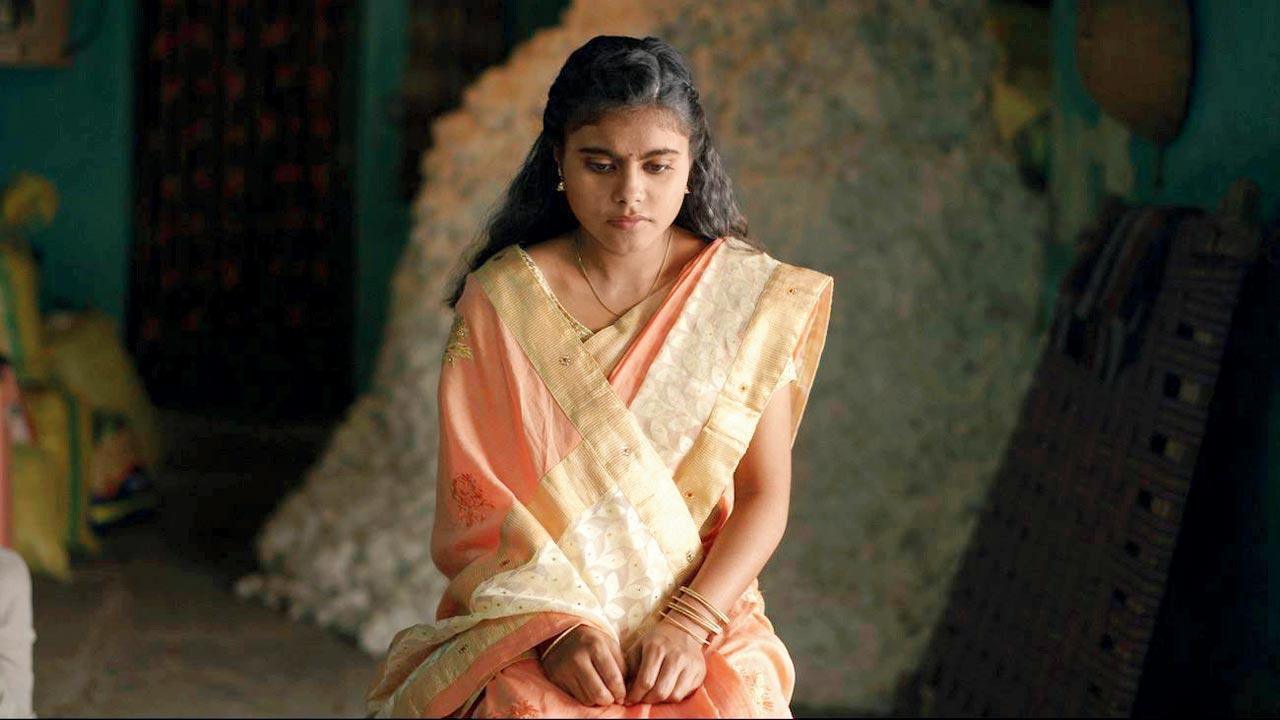
A Marathi debut feature set to premiere at the Toronto International Film Festival this week examines deep-rooted social evils through the lens of match-making traditions in rural Maharashtra
Sucheta Chakraborty (MID-DAY; September 3, 2023)
“It's called a ‘kanda-poha’ programme in Marathi,” Jayant Digambar Somalkar tells us over a video call, referring to the “match-making” ritual where potential suitors come to gauge young girls for prospective marriages. The popular Maharashtrian snack, which is typically served in such situations, has come to stand for such formal meetings for arranged marriages. It is this repeated ritual that a young girl is put through in a village in Maharashtra, throwing up deep-rooted issues of colourism and patriarchal prejudices in our society, that forms the subject matter of Sthal (A Match), Somalkar’s writing and direction debut set to premiere at the 48th Toronto International Film Festival starting this week. Sthal is the only Indian film selected in the festival’s Discovery Programme this year.
Somalkar, who shot the film in his native village of Dongargaon in the Chandrapur district of Maharashtra, explains that as the youngest in the family with two sisters, he has witnessed several such match-making programmes growing up. It was at one such event, that he attended with a cousin, that the idea for the film first came to him.
“I started thinking about what the girl must be feeling, while surrounded by a group of men asking her questions. I have an engineering background and am familiar with rituals of ragging, and this felt just like that,” he says.
Somalkar, who has in recent years co-written the Amazon Prime Video show Guilty Minds, calls the film a passion project filled with personal connections and memories. Produced by Dhun, the production house run by Somalkar, his wife and fellow director Shefali Bhushan, Karan Grover and Riga Malhotra, Sthal features locations from the director’s own childhood as well as members of his village and extended family.
“I was born in the house where we shot and studied at the college that our protagonist, Savita, attends. I still remember taking an exam sitting on the third bench in the same classroom where we shot scenes for the film,” Somalkar recalls.
The film includes a cast of all non-actors, hailing from his native village. The people of Dongargaon speak a dialect of Marathi known as Varhadi, and he explains that he wanted the characters of his film to be able to speak it fluently.
“I wanted to work with non-actors because I wanted the film to bear a real and authentic look. The character of the girl’s father, for instance, is played by an old friend while her mother is played by a cousin who runs a flour mill in the village. I noticed the nuances and mannerisms they had and wanted them to retain those in the film. I didn’t have to direct them to get into the skin of a character as they already were those people in real life. There is a lot of talent there, it was just a question of discovering it. I felt that if I could come to Mumbai and accomplish something, they could too,” he says.
But, he adds, since these individuals had never faced a film camera, they had to be familiarized with the technicalities. “They managed the wide-angle shots but for the close-ups, we had to guide them as to where to look, as they would get too conscious.”
For Shefali Bhushan, working with a shoestring budget and being the producer on set in charge of ensuring that the film was completed within the resources that they had pooled, not to mention the unpredictable circumstances of working in a village where no film had been shot before, and where no replacement crew could be arranged for in case of a problem, proved a major challenge. “My director doesn’t like to say cut. He just goes on rolling and rolling,” she laughs.
“So I was the one having to worry about the fact that the hard drives might run of out space and that it would take very long for another set of hard drives to arrive from Mumbai. These are things I’ve never worried about earlier.” It was also important not to interfere with the director’s vision, she adds, which was yet another challenge for a fellow director like her who was on the sets in the role of a producer.
As Somalkar’s wife shooting in his home village, Bhushan’s personal and professional roles saw a clash too. “It is my sasuraal in a sense and they’ve never seen me in my professional avatar. I was dressing, behaving and talking differently. They’re not used to seeing women in any sort of position of command, especially like a producer. So, some of his relatives would call me ‘Shefali Madam’, and it was really awkward for me because I call them tai and dada,” she tells us, pointing out that there were other sensitivities to be handled too, because they were shooting in people’s houses, many of whom were relatives and acquaintances.
She goes on to narrate how, during the shooting of a scene in the local college, parents of students who were in the scene started showing up in the evening, livid that their children still hadn’t returned home. “There was this one parent who was really mad and when I tried to talk to him, he just yelled ‘shut up!’ There were all kinds of things to be handled, which was a very new challenge for me, because I’d never been on that side of things.” she laughs.
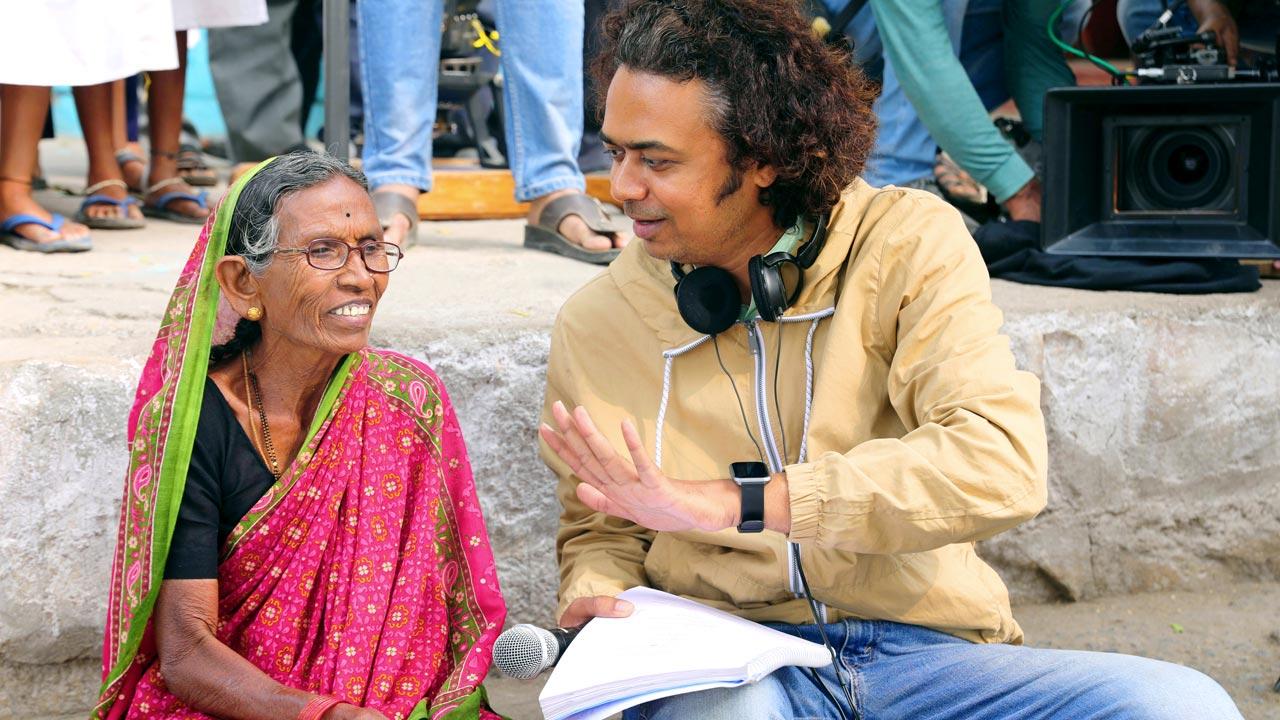
Jayant Digambar Somalkar who shot Sthal in his native village of Dongargaon in the Chandrapur district of Maharashtra cast family members and villagers to retain the authenticity and rawness of the place
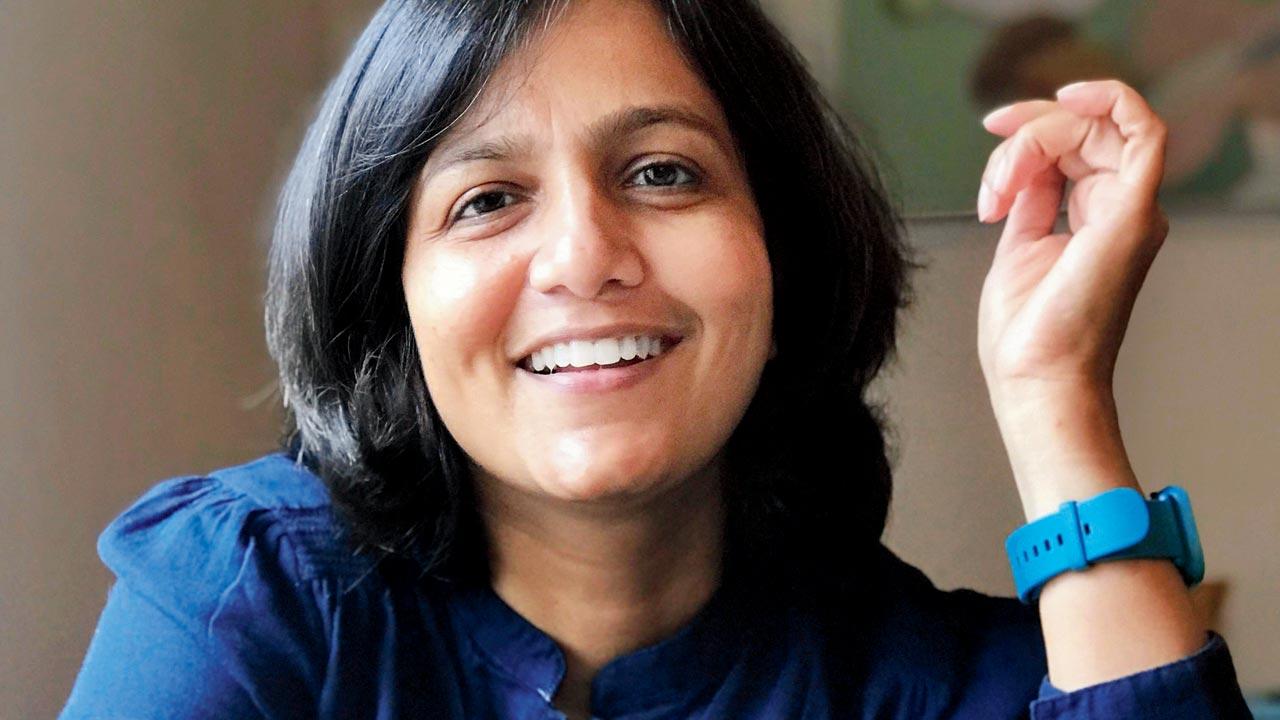
Shefali Bhushan
My father Shanti Bhushan was keen I give him a meatier role in Guilty Minds' second season-Shefali Bhushan
8:19 AM
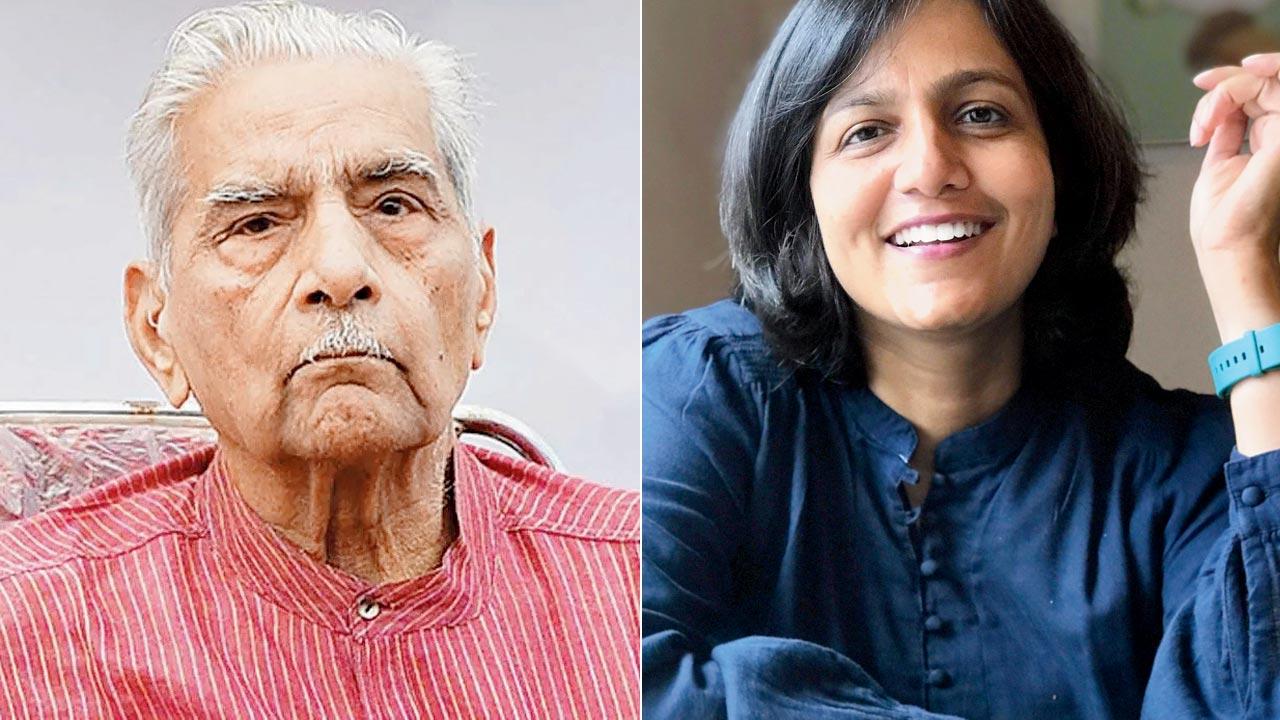
Shefali, a Best Creator nominee at mid-day and Radio City Hitlist OTT Awards, on lawyer-dad Shanti Bhushan’s deep influence on Guilty Minds
Upala KBR (MID-DAY; February 16, 2023)
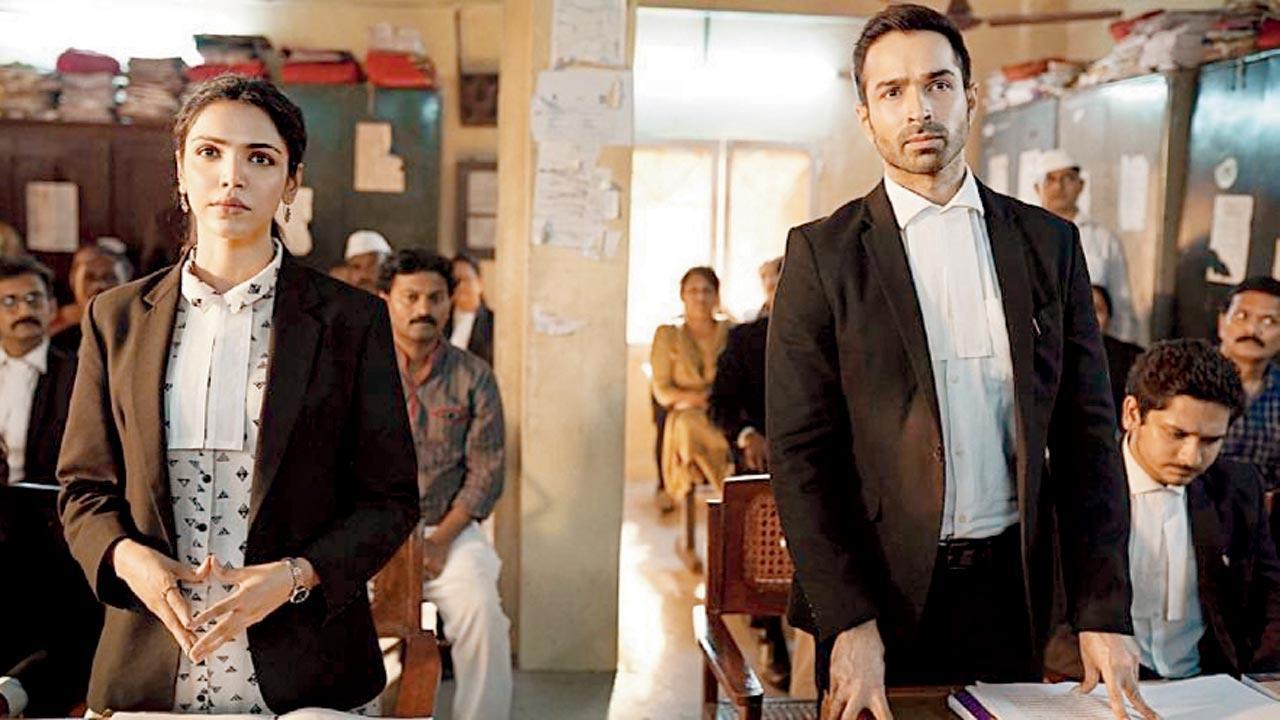
During Shefali Bhushan’s growing-up years, dinner-table conversations were always about the law, thanks to her father — the late Shanti Bhushan, former Minister of Law and Justice of India — and grandfather Vishwamitra Bhushan. Not surprising then that Shefali’s years of subconscious learning have led her to make Guilty Minds, one of the finest courtroom dramas to have come out of Indian entertainment in recent times.
Fascinating cases and realistic treatment were the biggest wins of the Shriya Pilgaonkar and Varun Mitra-led series. Shefali, who has bagged a Best Creator/Showrunner nomination at the mid-day and Radio City Hitlist OTT Awards, says research was the backbone of the series.
“The writers’ room [comprised] co-director Jayant Somalkar, two lawyers Manav Bhushan and Deeksha Gujral, and me. While Manav contributed in the selection of cases, Deeksha made sure our arguments were consistent with the laws. Also, I included details that I have seen in my home, which is full of lawyers.”
Did her father give insights into the legal drama? “He read several drafts of the first few episodes, and enjoyed watching the show. In a scene, he is sitting as a lawyer who practices under a tree. He was keen that I give him a meatier role in the second season. Sadly, we lost him before I could do that.”
Shefali is currently working on the show’s second season. Guess we can expect some more intriguing cases, like in the opening season that explored many themes — from violence in video games, to the perils of artificial intelligence. Which was her favourite episode? “It’s the one about copyright violation claim around a song. Having studied Hindustani classical music, I liked the debate.”
Cast your vote for the Hitlist OTT Awards
Shefali Bhushan has been nominated in the Best Creator/Showrunner category for Guilty Minds.
The other nominees are:
- Neeraj Pandey (Khakee: The Bihar Chapter)
- Nikkhil Advani (Rocket Boys)
- Shreyansh Pandey (Gullak S03)
- Tanuj Chopra (Delhi Crime S02)
- TVF (Panchayat S02)
There are 16 categories that the public can vote in. Log on to www.radiocity.in/hitlistott to cast your vote.
Voting lines close on February 22.
I dislike Bollywood's tendency to stick to just one trend-Clinton Cerejo
7:35 AM

Musician Clinton Cerejo talks about his latest album Jugni, the quality of music in Bollywood and his Sufi connect
Debarati Sen (BOMBAY TIMES; February 19, 2016)
For Clinton Cerejo, music is
one of the most powerful mediums of communication and influence.
Working closely for years with the likes of A R Rahman and Vishal
Bhardwaj, Clinton admits that it has only strengthened his Sufi connect.
The composer, musician and singer confesses that he is subconsciously
searching for something bigger, amidst the current music scenario where
hit songs mostly speak of meaningless partying and revelry. Excerpts from
the tête-à-tête...
Jugni marks your debut as a Bollywood composer. Tell us about it.
When Shefali Bhushan, the director, first gave me a copy of the script, I realised that, in many ways, Jugni was a story I could relate to. It was a story centred around the lives of musicians and I completely identified with the characters. The fact that the film was based in Morinda, a village in Punjab, meant that the songs had to have Punjabi folk flavour. But since Shefali called me, as opposed to anyone else, it gave me the idea that I should try and approach Punjabi music from a different perspective. It was a personal challenge.
For the first time, Vishal Bhardwaj has sung for another composer (Dugg Duggi Dugg in Jugni). How was it working with a success ful composer like him?
Vishalji is someone I've had the pleasure of working with for many years. I've been a music producer on almost all his projects, right from Omkara and he has always inspired me on a professional and personal level. When I had composed this song, his voice seemed like the most obvious choice to add the lilt it required. And when he agreed, I was really happy. In fact, he heard the scratch in my voice and kept suggesting that I should record it in my own voice. But I insisted that he give it a shot and the result was magical - pure, honest and straight from the heart.
What do you think of the quality of Bollywood music these days?
I've always disliked the tendency of Bollywood to stick to one trend until it completely loses all novelty. When I had produced Beedi Jalaile in Omkara, for the next two years I used to get calls to produce other songs with the brief, 'We want something like Beedi'. I wish people would realise that once a song is a hit, it's done, it's out there. We should create something that has its own strong character, rather than try and sound like a wannabe version of a hit song. Having said that, I'm grateful for the influx of indie musicians in Bollywood, that is giving it a fresh perspective.
What do you look for in your singer?
I think most of the time, I look for a certain X-factor, which will take the song beyond what I had conceived. When a singer gets behind the mic and starts thinking about how to interpret this melody in a way that makes it their own, that's what really excites me as a composer. That is my number one criteria when choosing a singer. There are a lot of singers who unknowingly fall into the trap of a certain style and lose their individuality. People these days also seem to be doing covers left right and centre. I have nothing against covers but currently, it seems to be the easiest way to get noticed.
You are immensely influenced by Sufi music. How did that happen?
I think what attracts me to Sufi music is the philosophy, as I find many similarities in the ideology to my own personal faith and journey as a Christian. Also, I think that in the current music scenario where we have songs that speak of meaningless partying and revelry, there's always a subconscious search within me, for something bigger. Music is such a powerful medium of communication and influence and Sufism taps into that power. I'm definitely talking of the purer forms of Sufi music here, and not necessarily the cookie-cutter genre that it has evolved into. I also love Urdu and some of the Rajasthani and Persian dialects of Sufiana qalams as a phonetic sound, and expressing that in my music helps me approach Hindi more as a world music sound.
Jugni marks your debut as a Bollywood composer. Tell us about it.
When Shefali Bhushan, the director, first gave me a copy of the script, I realised that, in many ways, Jugni was a story I could relate to. It was a story centred around the lives of musicians and I completely identified with the characters. The fact that the film was based in Morinda, a village in Punjab, meant that the songs had to have Punjabi folk flavour. But since Shefali called me, as opposed to anyone else, it gave me the idea that I should try and approach Punjabi music from a different perspective. It was a personal challenge.
For the first time, Vishal Bhardwaj has sung for another composer (Dugg Duggi Dugg in Jugni). How was it working with a success ful composer like him?
Vishalji is someone I've had the pleasure of working with for many years. I've been a music producer on almost all his projects, right from Omkara and he has always inspired me on a professional and personal level. When I had composed this song, his voice seemed like the most obvious choice to add the lilt it required. And when he agreed, I was really happy. In fact, he heard the scratch in my voice and kept suggesting that I should record it in my own voice. But I insisted that he give it a shot and the result was magical - pure, honest and straight from the heart.
What do you think of the quality of Bollywood music these days?
I've always disliked the tendency of Bollywood to stick to one trend until it completely loses all novelty. When I had produced Beedi Jalaile in Omkara, for the next two years I used to get calls to produce other songs with the brief, 'We want something like Beedi'. I wish people would realise that once a song is a hit, it's done, it's out there. We should create something that has its own strong character, rather than try and sound like a wannabe version of a hit song. Having said that, I'm grateful for the influx of indie musicians in Bollywood, that is giving it a fresh perspective.
What do you look for in your singer?
I think most of the time, I look for a certain X-factor, which will take the song beyond what I had conceived. When a singer gets behind the mic and starts thinking about how to interpret this melody in a way that makes it their own, that's what really excites me as a composer. That is my number one criteria when choosing a singer. There are a lot of singers who unknowingly fall into the trap of a certain style and lose their individuality. People these days also seem to be doing covers left right and centre. I have nothing against covers but currently, it seems to be the easiest way to get noticed.
You are immensely influenced by Sufi music. How did that happen?
I think what attracts me to Sufi music is the philosophy, as I find many similarities in the ideology to my own personal faith and journey as a Christian. Also, I think that in the current music scenario where we have songs that speak of meaningless partying and revelry, there's always a subconscious search within me, for something bigger. Music is such a powerful medium of communication and influence and Sufism taps into that power. I'm definitely talking of the purer forms of Sufi music here, and not necessarily the cookie-cutter genre that it has evolved into. I also love Urdu and some of the Rajasthani and Persian dialects of Sufiana qalams as a phonetic sound, and expressing that in my music helps me approach Hindi more as a world music sound.
Subscribe to:
Posts (Atom)