Showing posts with label Sheetal Sharma. Show all posts
Showing posts with label Sheetal Sharma. Show all posts
Rs 150 second-hand saris were transformed into printed shirts for Allu Arjun in Pushpa 2, reveals Sheetal Sharma
9:51 AM

From Rs 150 second-hand saris to Gangubai’s vintage whites, costume designer Sheetal Sharma, who just bagged a National Award, builds characters one telling detail at a time
Nisrin Saria (MUMBAI MIRROR; October 4, 2026)
Sheetal Sharma’s Santacruz living room doubles as a home, archive and costume lab. Copper curios and family photographs share shelf space with hefty books on Chanel, Givenchy and Prada. His team gathers here to dissect scripts and build characters. At present, the room is occupied by a mythological drama set before the Ramayan.
“I don’t like working in production-house boardrooms. They feel very cubical,” says the 44-year-old, dressed in his own uniform of white linen shirt and olive-green trousers. “Here, there’s open space to think and bounce ideas around.”
There is a new object in the room too: the National Film Award he shares with Deepali Noor for the costumes of Pushpa 2 - The Rule. Sharma initially assumed the email announcing it was a scam. “With so many online scams around, I didn’t even open the link,” he laughs. A call from the Ministry of Information and Broadcasting eventually convinced him otherwise. On September 22, he received the honour from President Droupadi Murmu in Gujarat.
From kitchen to costume
Cinema was never the plan. Raised in a military family between Jammu, Amritsar, Pathankot and Mumbai, Sharma first enrolled in hotel management, “because I wanted to be a chef.” Dyslexia made the mathematical side difficult, and he left after 18 months.
An aptitude test guided him towards creative work. Graphic design proved too geometric; fashion finally stuck. At the Wigan and Leigh college of fashion and management in Mahalaxmi, he learnt to sketch, cut, stitch and embroider, before studying period costume for theatre in Britain. Then came the 2009 recession and a return to India without a job.
His real education began on Ashim Ahluwalia’s Miss Lovely, where a tiny budget meant Sharma did almost everything himself. “I ironed garments, distressed fabrics and learnt to navigate Mumbai’s wholesale markets.”
He still does. Crawford Market, Mangaldas Market and Chor Bazaar are as useful to him as any fashion archive. For Pushpa 2, Rs 150 second-hand saris bought off the street were cut up and transformed into printed shirts for Allu Arjun and the supporting cast. Sixteen blue saris were used to a create look for Arjun in one dance sequence alone.
From kitchen to costume
Sharma reads a script closely, and likes to pick apart every detail. He annotates it line by line, inventing histories that may never be spoken on screen: how long a character’s hair might be, whether they would have a tattoo, how much money they possess, what they would realistically buy.
Sometimes the clue comes from life. “Gangubai’s sunglasses in Gangubai Kathiawadi were inspired by women I spotted on Mumbai local trains, pairing saris with goggles. Her white wardrobe drew upon the scant historical description of Gangubai as a woman who wore white and plenty of gold. One sari I sourced was an 80-year-old piece from Jodhpur, woven with real silver thread.”
The clothes had to work with Sanjay Leela Bhansali’s sets and light too. Sharma recalls how, on Kesari Chapter 2, a miniature of the courtroom helped the departments decide whether charcoal coats would photograph better than black. In Imtiaz Ali’s Main Wapas Aunga, clothes became a direct narrative device for Ishar Singh Grewal, the elderly protagonist played by Naseeruddin Shah, who has Alzheimer’s disease. A traditional Chand Bali earring changed size between scenes, while one outfit shifted from white to red without changing its tailoring, signalling the character’s growing memory loss. His private costume archive in Govandi now holds pieces from several films, kept with the producers’ permission: Shah Rukh Khan’s black kurta-pyjama from Raees, jewellery made for Vicky Kaushal in Chhaava and other remnants of characters whose lives ended when the cameras stopped.
For Stree, a vintage shawl found in Chor Bazaar became Shraddha Kapoor’s maroon embroidered jacket. When costumes from the first film could not be traced, Sharma says, “My team recreated them for Stree 2, re-dyeing and reprinting fabrics and even recreating materials that were no longer available.”
Fashion without fashion
That obsessive eye does not make Sharma particularly interested in fashion trends. He cheerfully admits that contemporary terminology can escape him and prefers the permanence of a trench coat or Patiala salwar to whatever happens to be fashionable that season.
It may explain why his work rarely feels like celebrity styling. On Animal, where he joined after four previous costume designers, Ranbir Kapoor ended up in the linen shirts Sharma himself favours. “On set I was told, ‘You made him like you,’” he recalls. Nor does he believe cinema must always dress people exactly as they dress in life.
“Films also need to sell aspirations,” he says. “We are city people, so we might say, ‘Who does stuff like that?’ But in small towns, people really adore those things. They aspire to go to college looking like that. In the end, films are selling dreams.”
His own taste remains considerably less grand. If he ever starts a clothing label, Sharma says, it will be “easy and breezy”, built around simplicity rather than trends. Which seems fitting.
After years of making clothes speak for everyone else, Sharma is happiest when his own clothes speak the least.
Varun Dhawan preps for two months to play Param Vir Chakra awardee Major Hoshiar Singh Dahiya in Border 2
8:13 AM
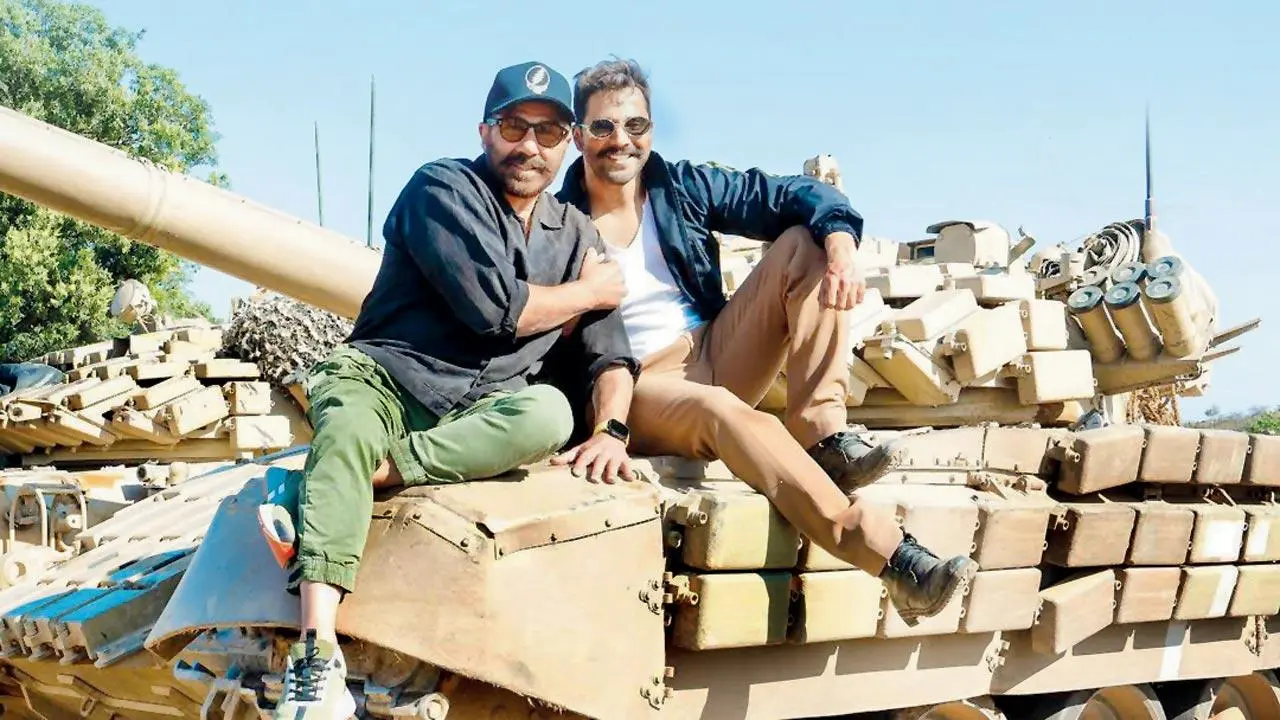
Upala KBR (MID-DAY; May 11, 2025)
There’s not a moment to rest for Varun Dhawan, who is in the war zone. Well, only cinematically. While we are aware that Sunny Deol is reprising his role of Major Kuldeep Singh Chandpuri from Border (1997), Diljit Dosanjh plays Air Force Officer Nirmal Singh Sekhon, and Ahan Shetty portrays a Naval Commander in the Anurag Singh-directed film Border 2, Dhawan’s character had remained under wraps until now. An insider informs us that he will play Major Hoshiar Singh Dahiya, who received the Param Vir Chakra for his bravery and was promoted to Colonel after the 1971 Indo-Pak war in 1976.
Before the shoot kicked off in the second week of January in Jhansi, Madhya Pradesh, Dhawan had physically prepared for the shoot over two months. “Apart from holding look sessions with designer Sheetal Sharma, Varun met Indian officers, celebrated Army Day with them and [in conversations] tried to gain a deeper understanding of their lives,” said a source, adding that the cast and crew prepped for a year before going on floors.
“Varun’s scenes will begin with his departure from Sisana village in Haryana, joining the army, to his journey in the Indo-Pak war.”
His physical prep involved three hours of cardio and weightlifting every day, followed by training in handling arms and ammunition. “Varun’s first scene includes a massive action sequence, with heavy artillery and guns, designed by Hollywood filmmaker Nick Powell. Major Hoshiar Singh led from the front at Jarpal post in the Shakargarh sector and refused evacuation till the ceasefire, though he was heavily wounded.” The Major was ordered to capture the Pakistani locality of Jarpal by establishing a bridgehead in the Shakargarh sector.
The source added, “To encourage and motivate his men to stay strong and fight, he went from trench to trench, and even manned the machine gun on his own. His company fought back all the attacks, imposing heavy mortality on the Pakistani army.”
An ex-Army Major was roped in to give approvals on everything — from references and research to the badges and uniforms.
Sunny Deol, Varun Dhawan, Diljit Dosanjh's Border 2 shoot to kick off in January
3:39 PM
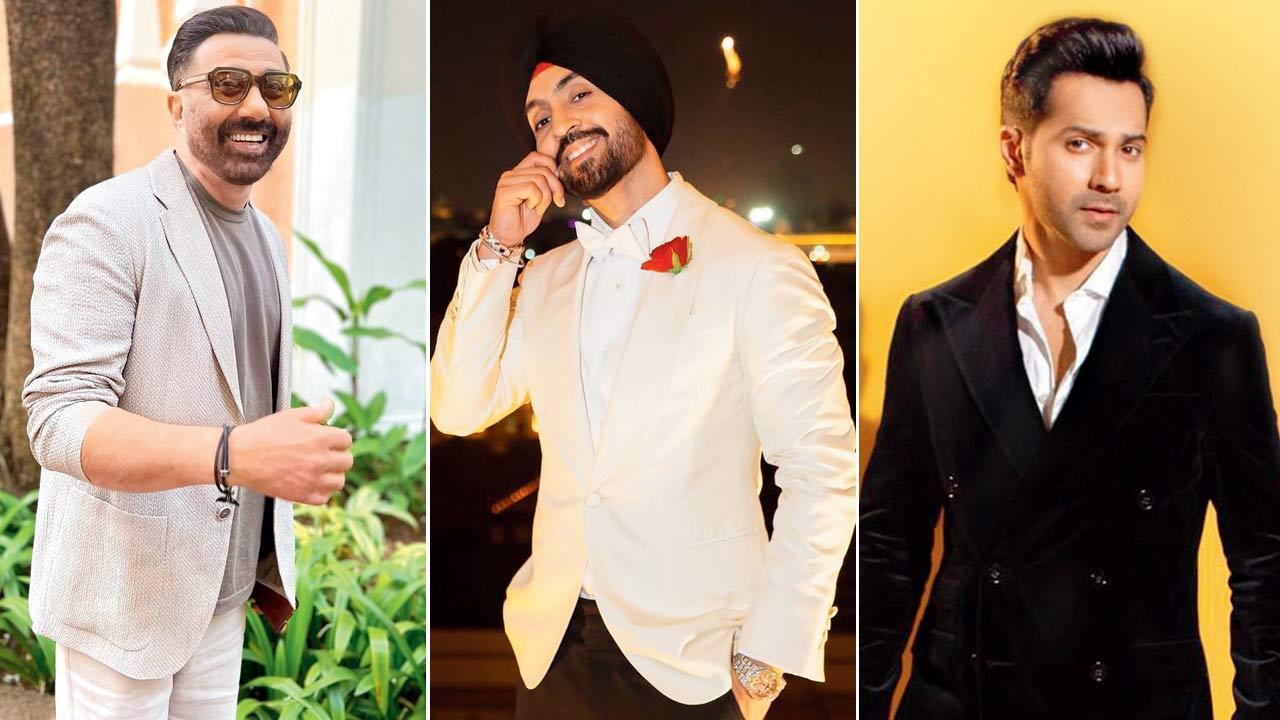
Sources say Border 2 shoot to kick off in Dehradun on January 6 with Varun Dhawan; Sunny Deol and Diljit Dosanjh’s look tests lined up this month
Upala KBR (MID-DAY; December 8, 2024)
If things had worked out according to producer-writer Nidhi Dutta’s original plans, actors Sunny Deol, Varun Dhawan, Diljit Dosanjh and Ahan Shetty would have faced the camera for Border 2 in November-end (Jawans summoned for the battle, September 30). But there seems to have been a change in plans. Now, mid-day has learnt that the sequel to J P Dutta’s hit Border (1997) will go on floors on January 6 in Dehradun. With less than a month to go, director Anurag Singh began look tests for the primary cast this week.
Sources tell us that a former Major in the Army, has not only guided Singh and Nidhi through the research but is also overseeing the styling of the film that focuses on a chapter of the 1971 India-Pakistan war.
A source in the know reveals, “While designer Sheetal Sharma is doing the costumes, the ex-Army Major is giving approvals on everything related to it—from the references and research, to the badges and uniforms, ensuring that they are accurate in terms of the period and designation. His contribution is not restricted to the costumes alone. Nidhi is seeking his guidance on the artillery that was used in the war, as well as the military strategies that were adopted. She wants the movie to look as authentic as her filmmaker-father’s Border. Varun and Ahan did their look tests this week, while Diljit’s is slotted after December 15. Sunny, who plays a Sardar again, will have his look test in the last week of December. The Major will be present for all the rounds.”
Following the intensive prep that will run throughout December, as Singh will call action on the war drama in January, Dhawan will be the first to slip into the jawan’s uniform.
The source elaborates, “Initially, the plan was to start with a massive action sequence involving Sunny, Diljit and Varun on November 25 in Jammu and Kashmir. But now, the schedule will begin in Dehradun with Varun, with sequences reflecting his journey from a small-town boy to someone who joins the Armed Forces. The war drama—which sees the four leads play officers from the Army, Navy and the Air Force—will be shot across real locations in north India.”
We took pictures of saree that Indira Gandhi wore when she was killed and replicated it-Sheetal Sharma
8:33 AM
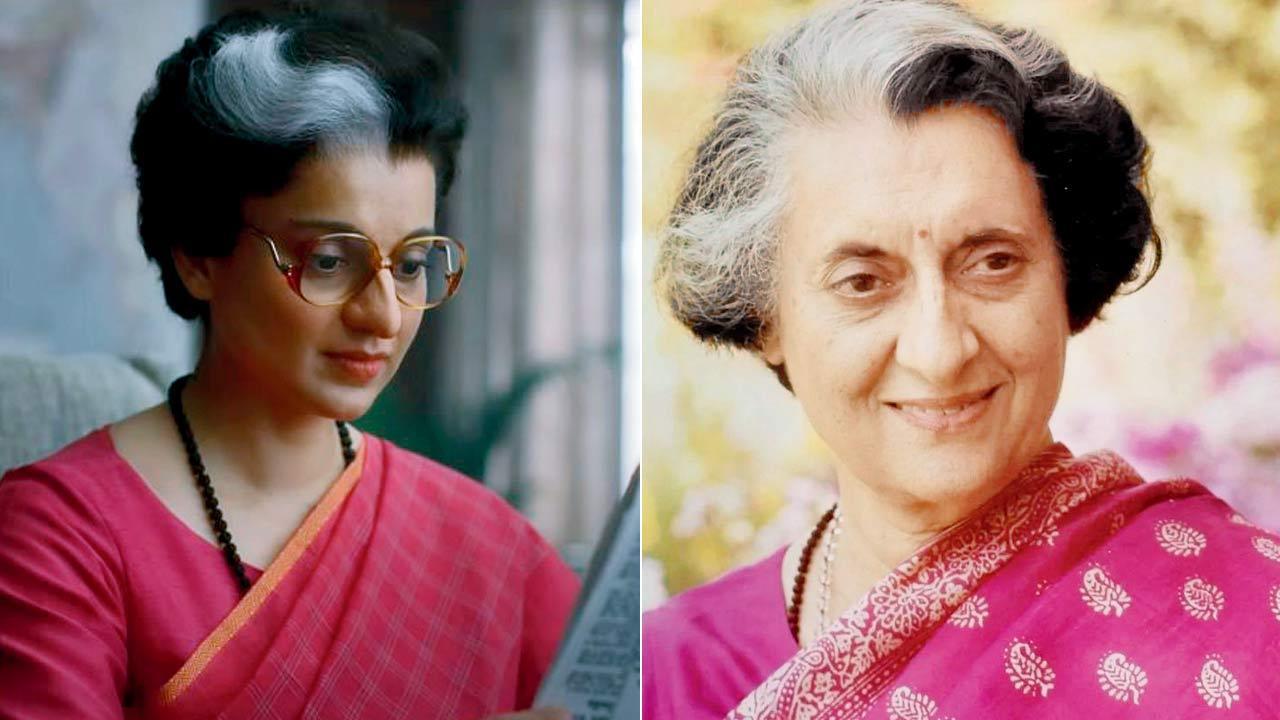
Emergency costume designer decodes how Kangana and he made weavers replicate late PM Indira Gandhi’s sarees, in their bid to ensure authenticity
Upala KBR (MID-DAY; August 24, 2024)
Nailing the look is among the many critical steps when making a biopic. It becomes all the more important when you’re telling the story of the former Prime Minister of India, Indira Gandhi. Sheetal Sharma, who serves as Emergency’s costume designer, says staying true to the subject was actor-director Kangana Ranaut’s top priority.
“Kangana [found] references from archival videos of Mrs Gandhi’s speeches, newspaper articles, and albums from the Parliament,” he starts.
The film, also starring Anupam Kher as Jayaprakash Narayan and Shreyas Talpade as Atal Bihari Vajpayee, spans from the ’60s to the ’80s, with an emphasis on how Gandhi declared the Emergency in 1975. Ranaut’s brief was simple—the audience should be convinced that she is a spitting image of the late PM.
Sharma says, “In The Crown, [Elizabeth Debicki] looked and behaved almost like Lady Diana. Kangana too wanted to look like Indira Gandhi down to the minutest details—her clothes, prints, fabric, and glasses. We replicated what she wore during the Shimla Agreement signing, or when taking the oath as the PM. We also [incorporated] the way she draped her shawl, wore French chiffon sarees and khadi blouses, and her famous hairstyle.”
For certain looks, the stylist hired weavers to weave the sarees from scratch, as per the fabrics and prints of the original.
“The saree that she wore when she was killed is in Indira Gandhi Memorial Museum, Delhi. We took pictures and replicated it. She wore a stunning white silk saree at Sanjay Gandhi’s wedding. Kangana made sure the other characters also looked exactly like the real [politicians].”
Pushpa 2 designer Sheetal Sharma decodes Allu Arjun’s look: "We created shirt with a bloodstained handprint"
9:20 AM
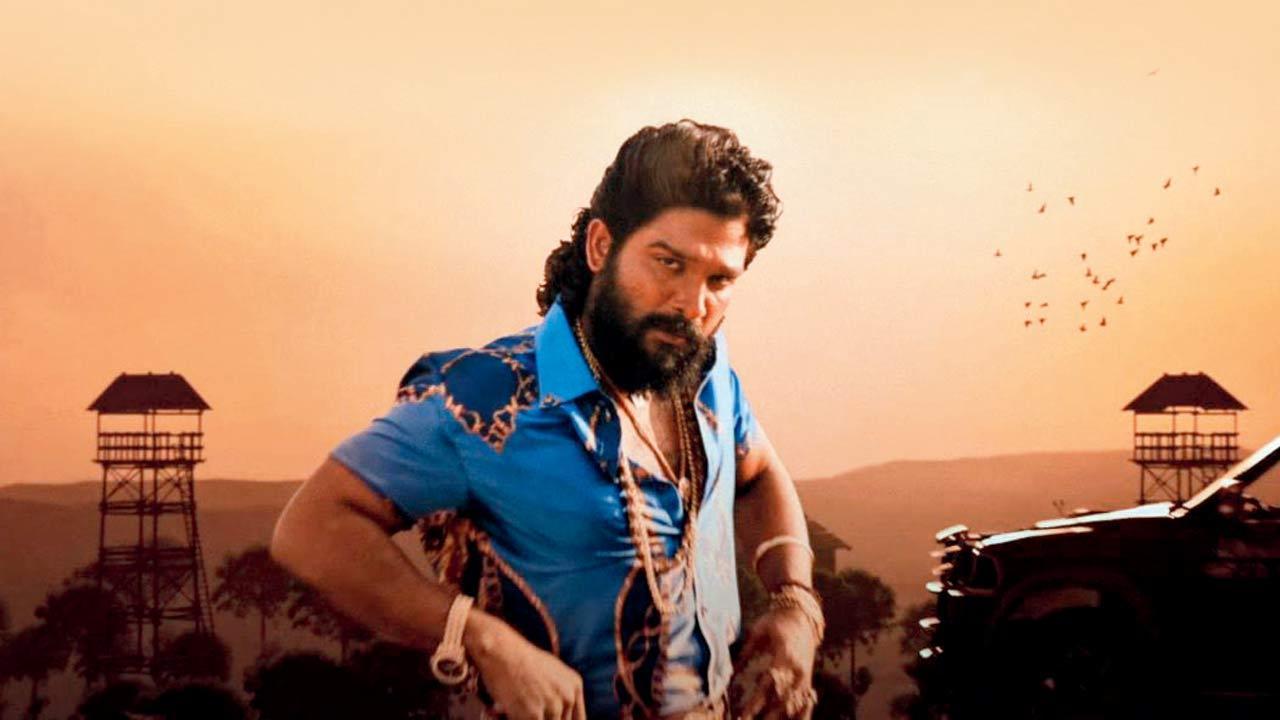
Pushpa 2 designer decodes Arjun’s look; says flamboyant clothes reflect character’s rise as international smuggler, jungle prints are a nod to his past
Upala KBR (MID-DAY; August 2, 2024)
Fiery, ruthless, ambitious— Allu Arjun’s character Pushpa Raj is anything but understated. His outfits in Pushpa: The Rise (2021) depicted that. Now, as the team is shooting the last leg of Pushpa 2: The Rule in Hyderabad, costume designer Sheetal Sharma says that he has created a distinct look for Arjun. Director Sukumar’s brief for the leading man’s avatar was simple: since the character has gone from a local sandalwood smuggler to an international force, his appearance should reflect the transition.
“I didn’t design costumes for Pushpa: The Rise. In the sequel, while his look remains rustic, Pushpa has become richer and more powerful as his smuggling has gone beyond India to Indonesia and Japan. So, his look now is more flamboyant, colourful and over-the-top. His wardrobe has become more expensive, but in a showy manner,” explains the designer.
While the sequel went on floors in October 2022, the costume department began its work in August that year. Right at the beginning, Sukumar made it known that the costumes had to reflect tidbits of the character’s journey in the first instalment.
“In Pushpa, we showed him patting his back with bloodied hands. From that, we got the idea to make a shirt [with a bloodstained handprint] for Pushpa 2. His shades have the axe motif, while his belt has a buckle with a rotating axe. His boots are made of fake snakeskin, as Allu Arjun is conscious about not using leather or animal-based products. His shirts have prints of wild animals and jungles to reflect that the protagonist comes from the forest.”
From the film’s first poster that was released in 2023, it was obvious that the makers didn’t believe in half-measures. It had Arjun sporting a look that borrowed heavily from avatars of Lord Shiva and Goddess Kali.
Sharma decodes it, stating, “From the colours [used] to his accessories, it was a look inspired by Kali-meets-Shiva. There is a Goddess called Gangamma, who is believed to have emerged from Shiva’s tandav. We drew inspiration from that.”
Also starring Fahadh Faasil and Rashmika Mandanna, the sequel is slated to release in December 2024. But before that, don’t be surprised if the makers roll out a special merchandise line. “Sukumar was clear that everything should be custom-made. The makers are planning to come up with a Pushpa clothing line, but it’s still in the discussion stage.”
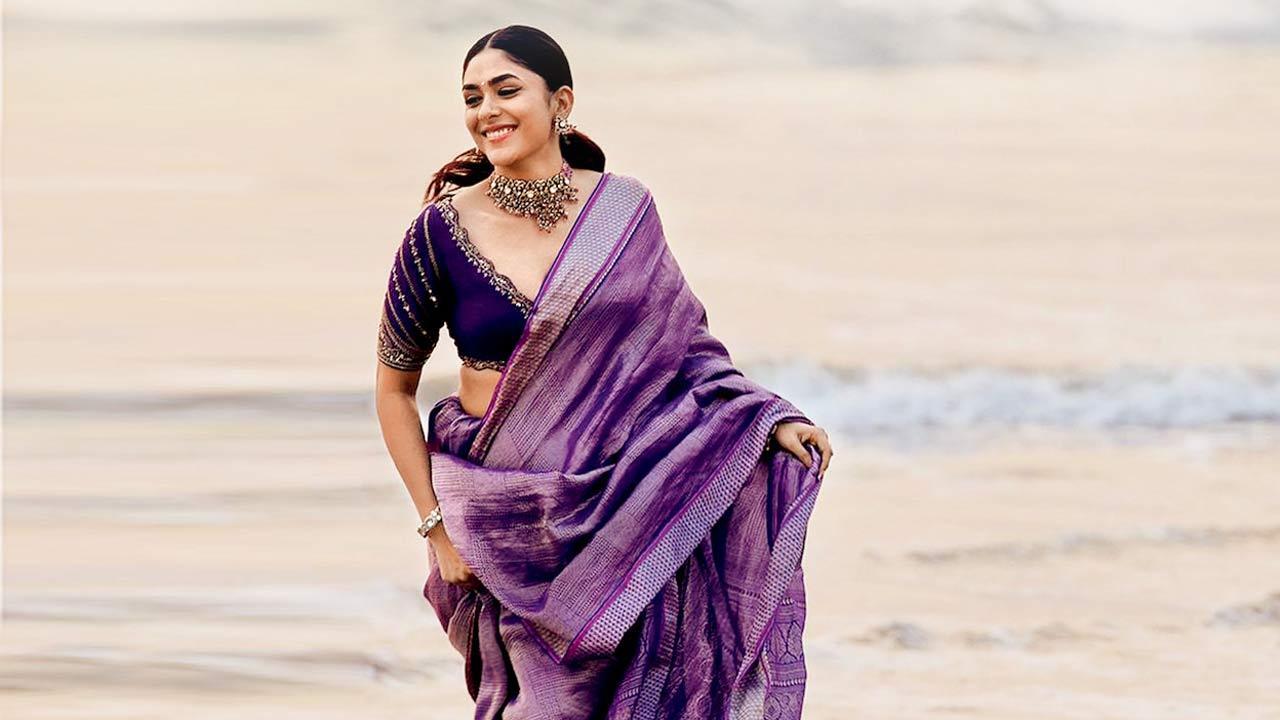
Mid-Day Exclusive: Check out Mrunal Thakur's look from Goa schedule in Nani 30
4:53 PM
Mohar Basu (MID-DAY; June 29, 2023)
'Sita Ramam' (2022) brought much success to Mrunal Thakur. She hopes to be equally lucky with her second Telugu film, the working title of which is 'Nani 30'. Fronted by Telugu star Nani, the family drama went on floors in January in Hyderabad, followed by schedules in Mumbai and Goa. mid-day has now scooped exclusive pictures from its Goa shoot. In her first look from the movie, the leading lady is seen in a purple saree and ethnic jewellery, strolling on the beach.
A bit of digging revealed that the shoot was conducted earlier this month, near the Betalbatim Beach in south Goa.
A source tells us, “The makers wanted a picturesque beach against which they could shoot Mrunal’s introductory scene. To ensure a smooth filming experience, the local authorities cordoned off the beach. A team of 30 shot these portions in the first week of June. Costume designer Sheetal Sharma styled her for the film.”
After the Goa leg, the unit—led by debutant director Shouryuv—headed to Coonoor. “The team wrapped up the principal shoot in Coonoor last week. Now, only patchwork shoot is remaining.”
For The Empire, I pulled out a lot of my personal Central Asian jackets. I [shaved] my eyebrows partially-Shabana Azmi
8:10 AM
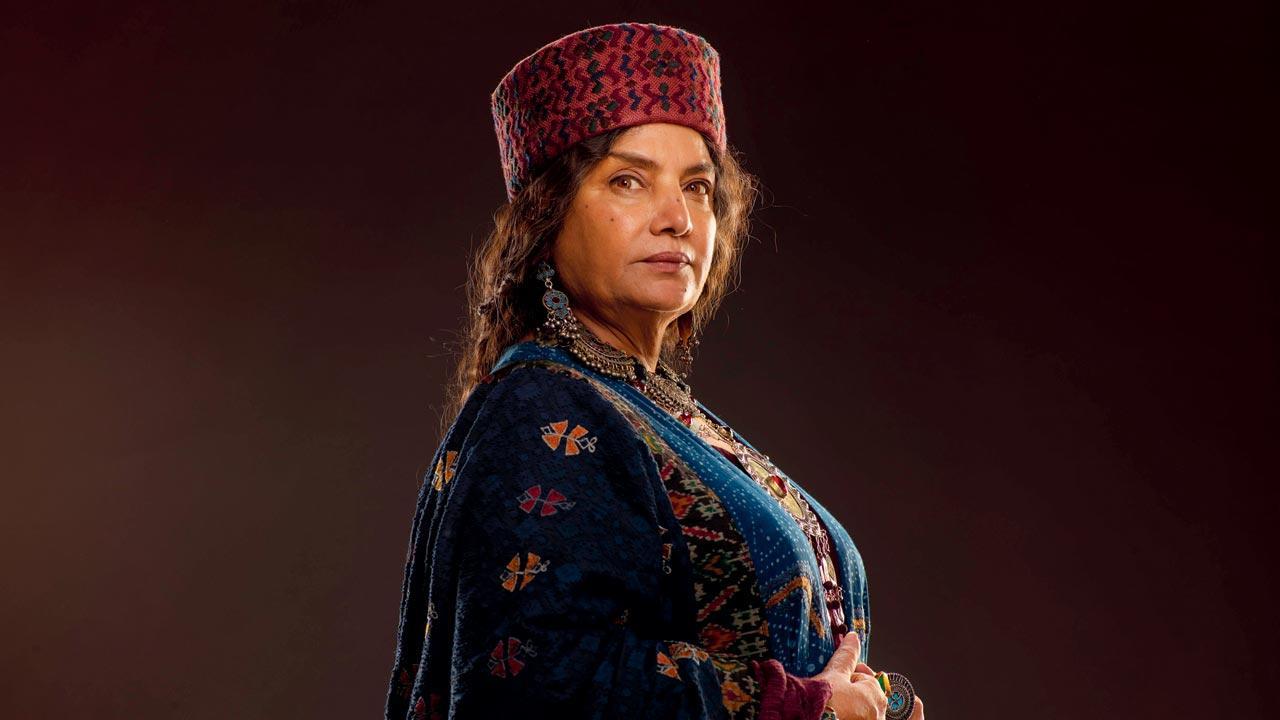
Shabana Azmi discusses using elements from her wardrobe to style her look as the tenacious Aisan Daulat in The Empire
Upala KBR (MID-DAY; August 29, 2021)
Mughal emperor Babur’s rise to power would perhaps be incomplete without the guidance and tenacity of his grandmother Aisan Daulat Begum. Director Mitakshara Kumar’s The Empire, which premiered over the weekend, not only charts the early years of Babur’s journey, but also explores how his courageous grandmother—played by Shabana Azmi—was the true kingmaker. Casting director Kavish Sinha says the senior actor was an asset on the set as much for her acting prowess as for her command over the Urdu language. The actor would help her co-stars perfect the enunciation of the Urdu alfaaz.
“Shabana ji worked hard on the diction of other actors because she is particular about the Urdu language and its pronunciation,” says Sinha. He adds that the Disney+ Hotstar series, featuring Kunal Kapoor, shines a spotlight on the women in the Mughal dynasty.
Talking about becoming the unofficial language coach on the set of the Nikkhil Advani production, Azmi jokes that she was “aadat se majboor”. The senior actor sometimes found herself correcting the pronunciations of the director, producer and DoP too. “I did it with some of the principal actors too, but the cast changed, and only the young boy who played Babur and I were retained. For me, the greatest pleasure in doing the series was that it gave me a chance to speak Urdu, and the care with which we worked on Aisan Daulat’s look.”
Alex Rutherford’s Empire of the Moghul book series serves as the foundation for the adaptation, with the first season based on his first book, Raiders from the North. Since the book offered little description of the clothes and jewellery used in the era, Azmi along with the director and costume designer Sheetal Sharma put together her look. “We decided on using Central Asian costume and tribal jewellery rather than gold and pearls. I pulled out a lot of my personal Central Asian jackets. I [shaved] my eyebrows partially as I believe the eyebrow shape [enhances] expressions.”
Nikkhil Advani would tell me no one is checking if the flags in the battle sequences are aligned or not-Mitakshara Kumar
8:16 AM
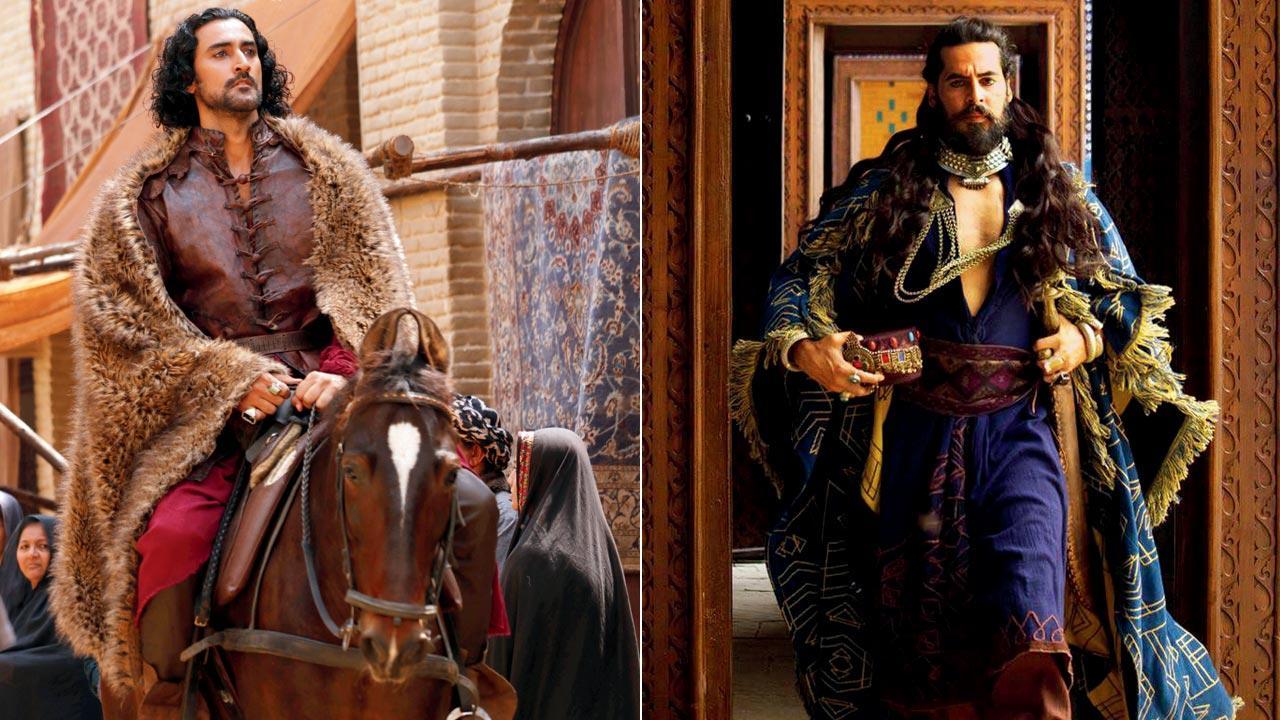
Kapoor as Babur; (right) Morea as Muhammad Shaybani Khan
As Kumar rolls out The Empire, the team on its making, and shooting the historical drama amid the pandemic
Mohar Basu (MID-DAY; August 24, 2021)
Retelling the events leading up to the First Battle of Panipat, led by Mughal emperor Babur, on screen is a tall order. The challenge is heightened when you have to recreate the 16th century battle amid the biggest setback of the 21st century — Coronavirus. So, how did creator-producer Nikkhil Advani and director Mitakshara Kumar create The Empire — featuring Kunal Kapoor, Shabana Azmi and Dino Morea, among others — in the face of such obstacles? “Detailed research, patience and with the help of an army of people,” says Kumar, who walks us through the making of the Disney+ Hotstar offering.
Setting up the stage
It helped that Kumar trained Sanjay Leela Bhansali’s projects, Bajirao Mastani (2015) and Padmaavat (2018), two of the country’s most ambitious period dramas. The director admits her eye for precision was often a joke on set. “Nikkhil would tell me no one is checking if the flags in the battle sequences are aligned or not. But when one is making a show of this nature, we might as well perfect it.”
The beginning — adapting the first book from Alex Rutherford’s Empire of the Moghul series into a screenplay — was not daunting for writers Kumar and Bhavani Iyer, courtesy the book’s thorough research and gripping story. But bringing alive the screenplay was a different ball game altogether. Much like mentor Bhansali, who had once famously said that he scores for his songs while in the shower, Kumar says music played a key part in visualising the world. “Music helps me transport myself to that era. I visualise everything.”
After developing the screenplay through 2017-18, came the detailed storyboarding by Advani and her. The duo roped in cinematographer Nigam Bomzan to support their vision on ground. “We have not had a historical series in Indian digital entertainment, but we’ve had shows like Tipu Sultan or even Bharat Ek Khoj, which were brilliant. Sadly, we stopped making them. There is no visual reference for a DoP [director of photography] for stories belonging to that era, besides all the [international] shows and films.”
Even as his lens captured the visual grandeur of the era, Bomzan says his focus was on the story. “In this case, it was more of the conflict of an individual’s mind and his internal battles. We never let the backdrop of royalty overpower the story of Babur.”
He remembers being a ball of nerves before shooting the first battle sequence at Film City in January 2020. “It is difficult to shoot large-scale battles, and the realisation dawned on me as I drove to the set at 5 am. All I could see was several tents in a row, with a sea of people getting into their costumes. When the time came to film the battle, there were an additional number of horses, elephants and cannons. It was nerve-wracking, but then there was Nikkhil [director for the war scenes] who was calm and brought in his years of experience. He had all the shots broken down beforehand. He was patient as that’s the only way one can shoot with animals in the midst of live explosions that we were doing.”
The responsibility of dressing Kapoor’s Babur and Morea’s Shaybani Khan in the finest while staying true to the nomadic vibe of the clan was given to costume designer Sheetal Sharma. She fell back on the paintings and books to study their sartorial evolution. “We have used a lot of central Asian embroidery. Textile-wise, we have used raw jute and handloom fabrics, taking inspiration from the rugs of Persia.”
For the artillery, Sharma added a touch of mushroom leather and faux fur to make the armour look more powerful. While the women — Aisan Daulat Begum and Khanzada Begum portrayed by Azmi and Drashti Dhami respectively — were draped in earthy tones, with a slight splash of blues and reds, it was their jewellery that was paid attention to. “We’ve used a lot of rustic antique jewellery and beautiful stones like turquoise and blue sapphire.”
Babur’s biggest enemy — the pandemic
It was sheer luck that the makers had scheduled the primary war sequences in the first schedule. Only 21 days into the shoot, the team found themselves facing an entirely unexpected enemy — the pandemic. The shoot was halted for five months as the country went into lockdown, and shoots were suspended till August. As the team returned to the set in September, Kumar remembers wondering how she would pull off a period drama in the face of the COVID-induced restrictions. “It was a nightmare post COVID. You couldn’t shoot with more than 50 people, so scenes had to be reconstructed to accommodate the crowd. The looks of the characters had to be reworked as the number of people on screen reduced, but the scene had to stand out. We worked around the logistical limitations, including shooting intimate sequences first. We shot a lot less, which is why 90 days stretched to 120 days,” recounts Kumar.
The biggest blow of the pandemic was having to drop the 35-day schedule in Uzbekistan that was slated for 2020. “Real locations lend authenticity. No one will notice, but I would have preferred a bustling set with 300 junior artistes. That said, as a director, I feel my finesse will show if the show is grand despite all these limitations.”
Recreating Uzbekistan
With the Uzbekistan schedule out the window, art director Priya S found herself shouldering a daunting task — to recreate the central Asian country in Mumbai. “Wai became Babur’s Samarkand. Film City [housed] Shaybani Khan’s tent. In Madh Island, we [built] Fergana Darbar. Budget was the biggest challenge,” she recalls.
Primarily an architect, Priya says she studied the architecture of Uzbekistan to rise to the job. “We tried to do justice to the beautiful Uzbekistan architecture by way of colourful mosaics, religious symbols, and abstract geometrical patterns. [These are found] on almost every palace, mosque, and minaret, and characterise the turquoise-hued country,” she explains.
How did they stay within budget, given the change in plans prompted by the pandemic? Producer Madhu Bhojwani, who handles the finances of Advani’s productions, quips, “What makes you think we didn’t go over-budget?”
She says it wasn’t creating the show that cost them as much as the inactivity of 2020 did. “We had to work hard to hold together. Daily-wage workers had to be paid, and we were responsible for those on our payroll. There have been some crucial takeaways that we will employ in the future seasons.”
All’s well that ends well
A crew of 80-plus, four schedules and 120 days of shooting later, Advani and Kumar are ready to offer their retelling of Babur’s journey to the audience. The genesis of the show was four years ago with the erstwhile Fox team, during the making of POW: Bandi Yuddh Ke that was produced by Advani as well. Producers Monisha Advani and Bhojwani are fairly confident that they have a great series at hand. Though it’s probably the first big-budget historical series in Indian digital space, Bhojwani believes the story itself is familiar. “If anything, we are the last to tell it,” she notes.
In fact, Karan Johar was to make the period drama, Takht that focused on the Mughal empire. Monisha remembers a dinner party where Johar and Bhojwani were exchanging notes on the period. “He had just come back from his Italy recce, and Madhu was in the thick of things with this series. There they were amid all that laughter, showing each other their visual palettes, and locations of Florence and Uzbekistan,” she laughs.
The challenges have been myriad — from the inception to the latest comparisons with Game Of Thrones. Needless to say, nothing was as excruciating as the pandemic constraints. “But we’d do it all over again, and hopefully for many seasons,” signs off Monisha.
The legality of it all
Telling a Mughal story comes with the risk of hurting sentiments in the current climate. Monisha explains, “There is a level of sensitivity in us as storytellers to make sure we are respectful of everyone’s culture. We focused on telling the story of a family and the drama of these personalities.”

The Samarkand palace recreated in Wai
We made sure power and leadership reflected in the styling of my Hurdang character-Vijay Varma
8:02 AM

Gully Boy breakout star Vijay shares his first look from Hurdang, a social drama set in ’90s
Mohar Basu (MID-DAY; August 23, 2019)
A month into the shoot of Hurdang, actor Vijay Varma says he has eased into his character of Loha Singh. The college love story, which also features Nushrat Bharucha and Sunny Kaushal, plays out against the backdrop of the Mandal Commission in the ’90s. To stay true to the milieu of the Nikhil Nagesh Bhatt-directed venture, Varma and designer Sheetal Sharma spent weeks zeroing in on his look.
“We arrived at the final look after many trials. We took references from many pictures from the late ’80s and early ’90s, which the team had gathered for mood boards,” says Varma, who will be seen wearing his hair long — as was the style in the ’90s — and sporting tinted sunglasses, another rage in the decade. “Sheetal and I worked closely to get the vibe of Loha Singh right. Power and leadership are his main traits, and we made sure they reflected in the styling.”
While Varma flaunted a barely-there moustache in his breakout film Gully Boy, he decided to grow it out to lend “gravitas” to his character in the social drama. “The moustache was an idea that I had to try, to make my character look intimidating.”
Kabhi rakish, kabhi suave: Rajkummar Rao's stylist decodes his two distinct looks in Judgementall Hai Kya
7:45 AM

Sonil Dedhia (MID-DAY; July 18, 2019)
Always glad to team up with Rajkummar Rao, stylist Sheetal Sharma says their fourth collaboration, Judgementall Hai Kya, is special as the plot allowed them to play with distinct looks. The stylist explains that director Prakash Kovelamudi's brief for the first half was to make Rao's character Keshav appear "raunchy". "So, we gave him tight t-shirts and vests, which we sourced from local shops, including Big Bazaar. We also wanted him to sport earrings. While we had clip-ons ready on the set, Rajkummar chose to get his ears pierced. We were at Mehboob Studios when he excused himself from the shoot; half an hour later, he came back with piercings. He is always open to experimenting."
To depict the dichotomy in Rao's character, Sharma gave him a suave look in the second half. "His character is based in London then. So, the climate allowed us to give him layered clothes, including trench coats and mufflers. His character also switches from lenses to glasses.

Akshay Kumar starts shooting for Kesari in Mumbai; stuns everyone with the first look
8:05 AM

The actor kicked off work on his upcoming period film on Friday, based on the Battle of Saragarhi
Avinash Lohana and Natasha Coutinho (MUMBAI MIRROR; January 6, 2018)
Fresh off his annual family vacation in Cape Town, Akshay Kumar kicked off the shoot of Anurag Singh’s Kesari, which is inspired by the Battle of Saragarhi of 1897, on Friday, in a studio of a Mumbai suburb. The 50-year-old actor plays Havildar Ishar Singh in the period-drama.
To mark the occasion, Akshay shared his look from the film, saying, “Feeling nothing but immense pride and gratitude while sharing this; Beginning 2018 with Kesari, my most ambitious film and a lot of passion.” The actor showed up on the set at 7.30 am and began with a pooja.
“Sheetal Sharma, who has worked with Akshay in Airlift, has designed his look. Shooting kicked off only after the look test was approved a day earlier. On Sunday, Akshay will shoot an action sequence on the same set but major portions of the battle have been reserved for Wai, a town in the Satara district where huge sets of the Saragarhi and Gulistan forts will be erected,” a source told Mirror.
An Afghan village has been recreated to shoot sequences of soldiers mingling with the locals. According to the source, Akshay will shoot in the suburb for four days, after which he dives into the promotions of his home production, Pad Man. “Later, he will head to Wai schedule,” the source informed.
Mirror (Nov 30) had earlier reported that the makers have roped in Lawrence Woodward, the stunt coordinator behind Hollywood films Mad Max: Fury Road and Moulin Rouge, to design action for Kesari. He will be training Akshay in sword-fighting besides other sequences which also include hand-to-hand combat.
Incidentally, while speaking to Mirror recently (January 2), Akshay had revealed that swordfighting and paragliding are on the cards for him in the New Year. “One is for pain and the other for pleasure, both to be enjoyed equally as my passion for them is off the charts,” he had said.
Sheetal Sharma decodes Shah Rukh Khan's look in Raees
4:06 PM

From his glasses, surma to his clothes, stylist Sheetal Sharma deciphers Shah Rukh Khan's look as the Gujarati don from his upcoming film 'Raees'
Sonil Dedhia and Aastha Atray Banan (MID-DAY; December 9, 2016)
Glasses
When I heard SRK's name, I was like, glasses? SRK's eyes do the talking, so I was apprehensive. But, he loved this idea too. I showed him 10 options and he chose a pair of plastic chashmas I'd bought from a dingy shop in Chor Bazaar. He said it was a bit distorted and not aligned, which suited his character. He said contact lenses has worked for him in Baazigar, and he was game to try eye gear again.

Surma
The brief given to me was that it would be a masculine, manipulative character. I went ahead with kohl eyes for a gritty look. When told about SRK's casting, I wasn't sure if he would wear surma, but he readily agreed. When we met for the first time, he got his make-up man and put on the surma, which has now become a hit.

Clothes
SRK told me to keep things as organic as I could. So, I referred to old photo albums of my friends from Gujarat. I wanted to know how their grandparents dressed. I have used terricot, teriwool and velvet fabrics, which are not used anymore. I shopped for it from Ahmedabad, Surat and Junagadh. SRK would wear them, stretch in them, sit in them and say 'let them take the shape of my body'.
Taweez
The film shows a strong bond between his character and his mother. For a symbolic effect, we thought of a taweez (locket) on the arms, but it was clichéd. Later, Shah Rukh showed us a pendant — his lucky charm — which he never worn in any of his films. There is an aayat (verse) from Quran inscribed on it and a photo of his parents.

Sheetal Sharma
What went into recreating vintage costumes for five upcoming period films
8:41 AM

Natasha Coutinho (MUMBAI MIRROR; March 12, 2016)
RAEES: Sheetal Sharma
We wanted to make Shah Rukh Khan's character look like a regular guy, yet someone manipulative so we incorporated a lot of pastel shades in his look and the surma-lined eyes. The denim-n-denim look in the film is a throwback to Kamal Haasan and Rishi Kapoor, who had popularised it in that era. Since the film is set in 80s Gujarat, we referenced some old family albums of people from the state to get the clothes right as well. We did around seven-eight trials with Shah Rukh.

SARBJIT: Shaahid Amir and Neetu Singh
The story had a rural Punjab feel and starts in the early '90s. We chose sunset as our primary colour palette keeping the narrative in mind. The look is mostly monochromatic, going from shades of orange to more earthy tones. We have used hand-woven, naturally-dyed fabric, and a lot of coarse, natural weaves that absorb light to give them a worn-out look, enhancing the look and the feel.

AZHAR: Manoshi Nath and Rushi Sharma
Azharuddin shared his family albums and sent samples of his uniforms. He looked at the suits we'd made for Emraan, pointed out that he'd never wear a light tie with a dark shirt. There was colour-blocking with hues like tangerine-brinjal or canary-electric blue. We featured '90s trends like geometric prints, tight trousers, trainers and polyester fabric.

CABARET: Pooja Bhatt
Richa Chadha's character transitions from a Dubai bar dancer to Bollywood's IT girl. We have tried not to go overboard with her look. Besides the usual reds and blacks that represent glam our, a lot of beige and white has been used too.
RUSTOM: Shital Bhatia
We're introducing the col our patterns, checquered style, tie formats from the late '50s. Unfiortunately we dont have bell-bottoms since they were only introduced in the mid-60s. Apart from the standard uniform, the format for the navy outfits included caps, cardigans, flared pants and charcoal ties. You will also see the leading ladies, Ileana D'Cruz and Esha Gupta, in elaborate ballgowns while Akshay Kumar is seen in a lot of prosthetics as he ages through the film.
We wanted to make Shah Rukh Khan's character look like a regular guy, yet someone manipulative so we incorporated a lot of pastel shades in his look and the surma-lined eyes. The denim-n-denim look in the film is a throwback to Kamal Haasan and Rishi Kapoor, who had popularised it in that era. Since the film is set in 80s Gujarat, we referenced some old family albums of people from the state to get the clothes right as well. We did around seven-eight trials with Shah Rukh.
SARBJIT: Shaahid Amir and Neetu Singh
The story had a rural Punjab feel and starts in the early '90s. We chose sunset as our primary colour palette keeping the narrative in mind. The look is mostly monochromatic, going from shades of orange to more earthy tones. We have used hand-woven, naturally-dyed fabric, and a lot of coarse, natural weaves that absorb light to give them a worn-out look, enhancing the look and the feel.
AZHAR: Manoshi Nath and Rushi Sharma
Azharuddin shared his family albums and sent samples of his uniforms. He looked at the suits we'd made for Emraan, pointed out that he'd never wear a light tie with a dark shirt. There was colour-blocking with hues like tangerine-brinjal or canary-electric blue. We featured '90s trends like geometric prints, tight trousers, trainers and polyester fabric.
CABARET: Pooja Bhatt
Richa Chadha's character transitions from a Dubai bar dancer to Bollywood's IT girl. We have tried not to go overboard with her look. Besides the usual reds and blacks that represent glam our, a lot of beige and white has been used too.
RUSTOM: Shital Bhatia
We're introducing the col our patterns, checquered style, tie formats from the late '50s. Unfiortunately we dont have bell-bottoms since they were only introduced in the mid-60s. Apart from the standard uniform, the format for the navy outfits included caps, cardigans, flared pants and charcoal ties. You will also see the leading ladies, Ileana D'Cruz and Esha Gupta, in elaborate ballgowns while Akshay Kumar is seen in a lot of prosthetics as he ages through the film.

Subscribe to:
Posts (Atom)