Showing posts with label She. Show all posts
Showing posts with label She. Show all posts
Everything’s very hush-hush when it comes to female sexuality-Aaditi Pohankar
8:14 AM

Aaditi Pohankar calls out the veiled and suppressed representation of female desire on screen
Sugandha Rawal (HINDUSTAN TIMES; June 24, 2022)
When it comes to female representation on screen, a lot has changed. But Aaditi Pohankar feels there is still some inhibition around the subject of female sexuality. The actor, who plays the protagonist in the web series, She, says she is glad to be a part of a project which does not shy away from the same.
“The show has always been more about a woman expressing or realizing her power, more than sexual awakening. I feel, when you’re not scared of being a woman, that’s [when] true empowerment [takes place]. Till now, we have been suppressing our own sexuality, our own being as women. Everything’s very hush-hush when it comes to female sexuality. However, the same is not the case for men,” Pohankar says.
Elaborating on how the portrayal differs when it comes to a male character, the 27-year-old continues, “For instance, if you see a typical suhag raat scene, a man is pushed inside a room where his bride is sitting and waiting for him. Why can’t it be the other way round?”
The actor, who was also seen in the web series Aashram and Love Sex Aur Dhokha (2010), believes this could be a result of sexism being normalized in our society. “I won’t debate the whole man and woman thing. But women are always considered to be the receivers (in this scenario),” she adds.
As a result, Pohankar not only takes pride in being a part of the web show which touches upon the subject of female sexuality, but is also glad that the makers did so without making it crass. “What I love [about working on She] is that it has been two seasons so far, and no one has ever asked me ke yeh scene aise kyun kiya, ya yeh scene waise kyun kiya. The audience is following the mind of a human being, not of a man or a woman,” she wraps up.
We are not in the game of skin-show. Aaditi Pohankar deserves a pat on the back for pulling off the role-Imtiaz Ali
8:17 AM

As the second season of She opens to mixed reviews, showrunner Imtiaz on how the crime drama took him back to his theatre days
Uma Ramasubramanian (MID-DAY; June 22, 2022)
With the first season of She, many felt that writer-showrunner Imtiaz Ali squandered away the chance of telling a compelling story of a woman who discovers the power of her sexuality. Does the second season fare better? The Aaditi Pohankar-led crime drama, which dropped online over the weekend, has received a mixed response so far. Ali says that over the past decade, the social media buzz gave him a fair idea of whether his offerings struck a chord with the audience.
“Even if I don’t go looking to find out how my show or movie has fared, [the reviews] come to me. I get to know that this is what they thought about Tamasha [2015], or this is how people are reacting to She. It’s not a mechanized or a calibrated process; it’s instinctive. Other than that, Netflix has the data to tell us how the show has done.”
The Netflix series follows constable Bhumika Pardeshi, essayed by Pohankar, who goes undercover as a sex worker to expose a drug lord. Ali says prepping for the seven-part season took him back to his theatre days. “The subject is such that you have to treat it in the right manner. We are not in the game of skin-show or making it titillating. Aaditi deserves a pat on the back for pulling off the role. In a way, we have worked on She like we used to do in theatre, because Aaditi is from theatre, as are we. We did several rehearsal shoots in my house, and reading sessions before taking it on floors. We thoroughly enjoyed the process.”
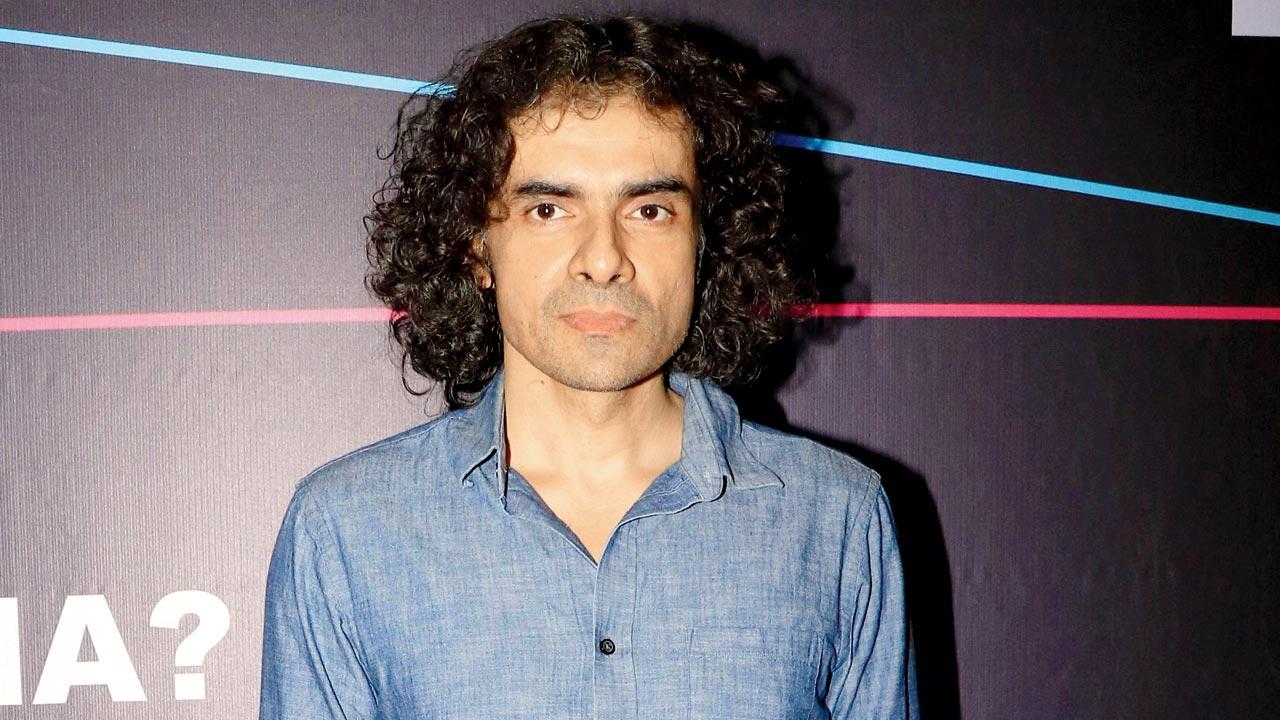
The family is very fond of Arif; I am the slightly off one. And the ladies love him-Imtiaz Ali
8:59 AM
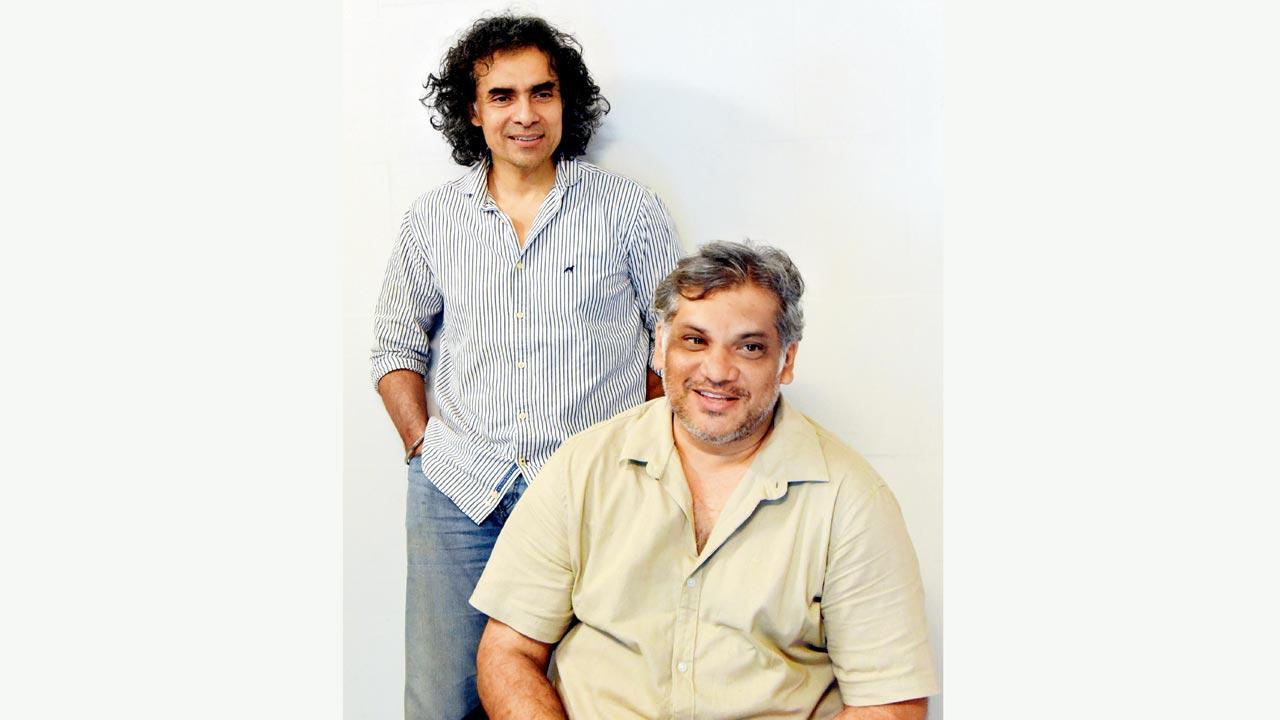
Imtiaz and Arif Ali, who are back on OTT with the second season of thriller She, talk about their bond made of mutual acceptance, admiration and adaptability
Aastha Atray Banan (MID-DAY; June 19, 2022)
“We have similar food tastes,” says director Arif Ali of his elder brother, writer and director Imtiaz Ali. Somehow, the conversation that has to be about the second season of Netflix thriller She, which Imtiaz has created and written, and Arif has directed, has become about the cuisine that Mumbai is home to and isn’t. “We share the same opinion—the North has better food, but we need to find a few places and then be happy within that,” says Arif. Surprisingly, this attitude is also reflected in the rest of the conversation, which is about the brothers believing in the same philosophy—do the best you can, and then just put it out in the universe.
When it comes to She, a story about a woman constable who goes undercover as a sex worker to bust a kingpin no one has seen, the two seem to be in sync as well. The second season is about the lead, Bhumi, played by actress Aaditi Pohankar, coming into her own, realising the power of her sexuality, and how she can use it to gain control over others. “That’s what I find most fascinating about the second season—the fact that she uses it now like a weapon,” says Imtiaz.
The two brothers often look at each other before they answer questions, almost taking unspoken permission, a courtesy that may have helped them through the making of the show. “Imtiaz pays attention to the details, while I am more macro. He has written certain things the way he sees them… there is a comma, or a full stop, because of a reason. And he wants it a certain way. We have had to change some scenes, because he didn’t think they were true to what he wanted. And I am okay with that—at the end of the day, it’s his vision.”
Imtiaz gets it, but says that as showrunner, he was responsible for the final product, unlike a project where he may have just written a script and handed it off. We remind him of the time when we pointed out discrepancies in Homi Adajania’s Cocktail, which he wrote. The film didn’t share his vision. “Yes, but with Arif I can say anything, and know that I am not being judged. I can’t impress him, and I can’t fool him. He knows it all. So when I am signing off on something, it has to be absolutely right. A scene, a moment, a dialogue… is all there for a reason. Or else let’s chop it off completely.”
Arif laughs when we ask if he wants to give his elder brother some “feedback” on his process. “There are times where what he may have written, could be different. He spent two hours on one scene, I spent many on the recce, and the preparation. I thought that maybe this could be different. But sometimes, he is obstinate about it. And it [the scene] eventually got cut on the editing table!”
But the brothers show no signs of discontent or disagreement. They talk about spending a lot of time together growing up. “We were the constants in each other’s lives. He got married first, so he had a TV and a home, and we used to spend evenings watching movies. We have similar likes and dislikes,” says Arif, who is the natural extrovert between the two.
“Oh, he is very popular and genial, and gets along with people. He is the one who is interested in people being together. The family is very fond of him—I am the slightly off one. And the ladies love him,” says Imtiaz, who we have discovered through interviews over the years is the natural introvert, who talks only because he has to. “I am not popular with the ladies the way he is,” Arif interjects.
Is the mutual love of and from women, the reason they could get into the mind of Bhumi, a lower middle class Marathi girl shunned by her husband because he saw her as cold, manly, asexual, who is now grappling with the nuances of her own sexuality? “I don’t think we disagreed about any way in which we showed her. We were clear she was coming into herself. But it wasn’t to be woke. I am socially responsible in the way that I don’t want my movies to make audiences take the wrong steps, but at the end of the day, it’s a story.” Arif adds, “Yes, I’m glad we are talking about all the issues that are important to women and us, but for us this was a character, and the character will have an organic journey.”
Maybe Bhumi is just looking for the “self”, a trait common to many of Imtiaz’s characters—Dev in Tamasha, Veera in Highway or Aditya in Jab We Met. “Ya, maybe. I am not looking for my ‘self’ at all, but my characters seem to be. There has to be some deeper psychological reason for that.”
At the end of the day, the brothers can put aside work, hang and talk about other things. “But we do talk about work as well; work is life.” Do they care how critics and audiences will react to She? Arif takes this one—“You can never know what audiences want. But we knew what we wanted, and we made that product. Now, it’s out of our hands.”
Imtiaz Ali would ask, why is this not the way I have written?-Arif Ali
8:12 AM
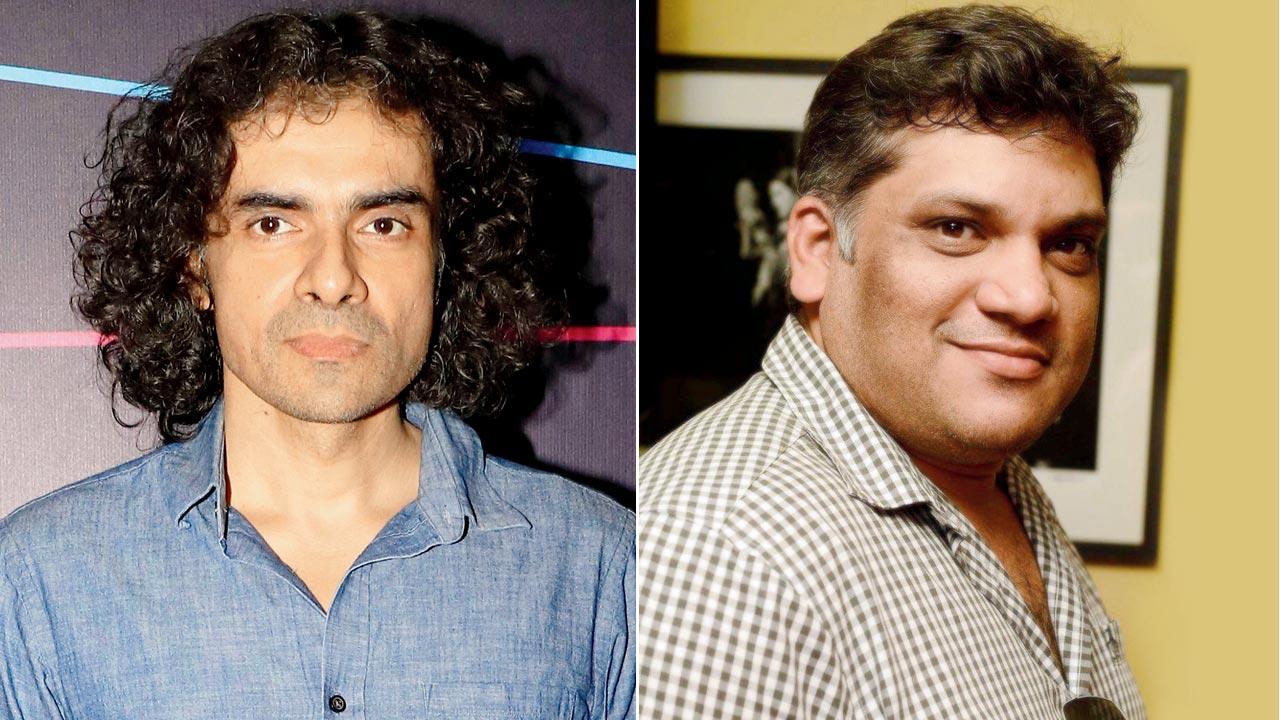
Teaming up with Imtiaz on She, director Arif on how it wasn’t easy to please showrunner-brother
Uma Ramasubramanian (MID-DAY; June 16, 2022)
How is it to collaborate with one’s sibling on a project? For Arif Ali, who has resumed his place behind the camera for the second season of She, it is daunting as well as a learning experience. The director admits it is not easy to please filmmaker-brother Imtiaz Ali, who serves as the showrunner and writer on the Netflix series.
“My job becomes difficult because Imtiaz goes by [the written word]. He would go, ‘Why is this not the way I have written? The comma is here, why hasn’t [the pause] translated on screen?’ He has the triple impact of a writer, showrunner and an elder brother. So, [shooting] was not easy. But, at the same time, there was a huge amount of guidance and clarity from him. It was exciting to take the baton from him and run the distance,” says Arif.
Starring Aaditi Pohankar and Vijay Varma, the crime drama follows constable Bhumika Pardeshi as she goes undercover as a sex worker to expose a drug ring. In the process, she sheds her timidity and discovers the power of her sexuality.
Arif, who previously helmed the movie, Lekar Hum Deewana Dil (2014), believes making a series is more challenging as it requires one to dive deep into its central characters. “There are several tracks, many characters, and you can explore many shades. It’s interesting to dive deep into something.”

With She, I am not getting out of my comfort zone. I am getting into it-Imtiaz Ali
8:04 AM
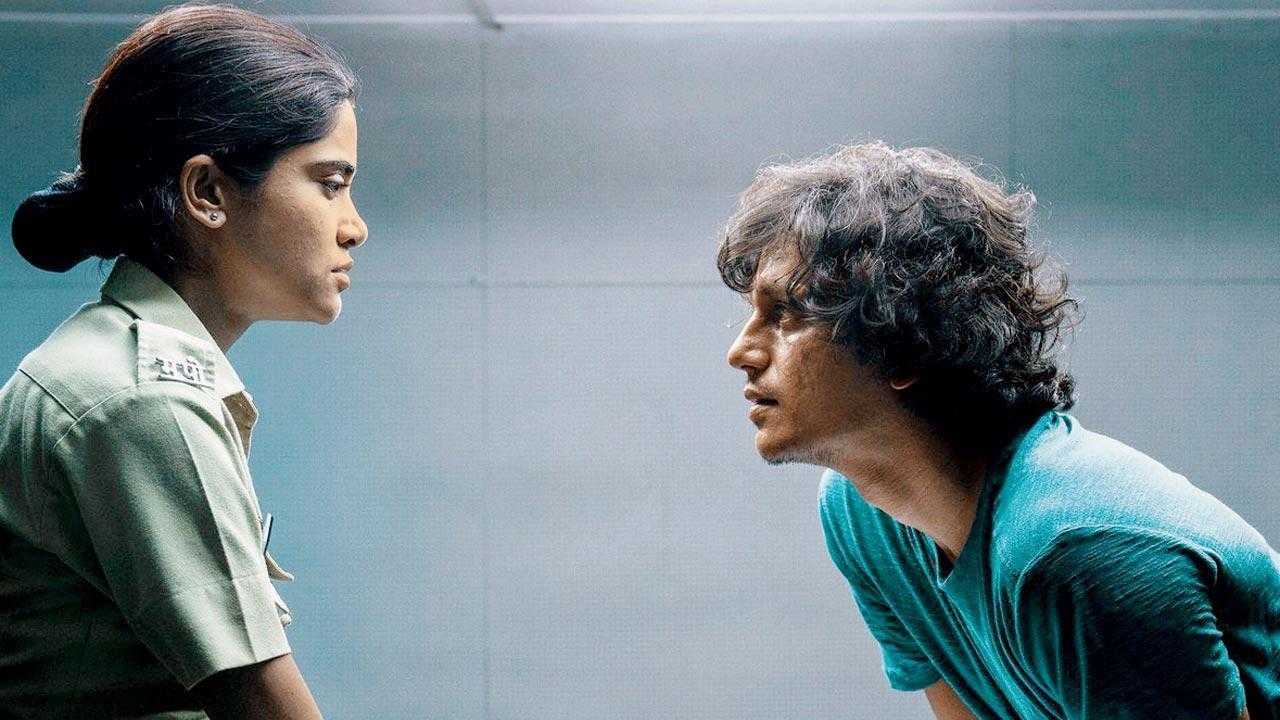
Serving as showrunner on second season of She, Imtiaz Ali discusses how he doesn’t interfere with director Arif’s vision for the Netflix crime thriller
Uma Ramasubramanian (MID-DAY; June 11, 2022)
Jab We Met (2007), Love Aaj Kal (2009) and Rockstar (2011) have shown us that Imtiaz Ali is at his best when helming love stories. You would think the gritty thriller, She, is almost a deviation. But the filmmaker surprises us when he says, “[With She], I am not getting out of my comfort zone. I am getting into it. There is a lot of drama, discovery, intimacy and journeys that I have not been able to bring to the screen before.”
In the crime drama, Aaditi Pohankar’s constable character Bhumi goes undercover as a sex worker to discover the secrets of Mumbai’s underbelly. While Imtiaz serves as the writer-showrunner of the Netflix offering, filmmaker-brother Arif Ali has resumed his place behind the camera for the upcoming second season. Being a director at heart, is it easy to step back and not interfere with another filmmaker’s vision?
“I never step in as the director. Sometimes, for a particular scene, if Aaditi or Arif [seek my guidance], I go as a friend or an associate. I have no interest in directing something that another director is working on. I would hate that [to happen to me] as a director. I can call the shots on my turf, but not here.”
Stepping into the role of a showrunner is not easy, Imtiaz admits. “I have to approve what Arif directs. It’s difficult because people do things differently from how you do them. It’s not better or worse, it’s just different. So, it’s important to collaborate. I am learning to create a space where two minds work [together].”
The first season had some drawbacks — from the barely fleshed-out central character, to the inherent male gaze of the show. Being a male writer, does it get difficult to develop a woman-led story? “I have never thought of it that way. As a man, I am more fascinated with women [and their stories] than of men. I might write something that people do not like, or it might be at odds with their world view. But with She, I am telling a story. That said, I have learnt a lot from the women in my life — my mother, daughter and my friends — and that reflects in my work.”
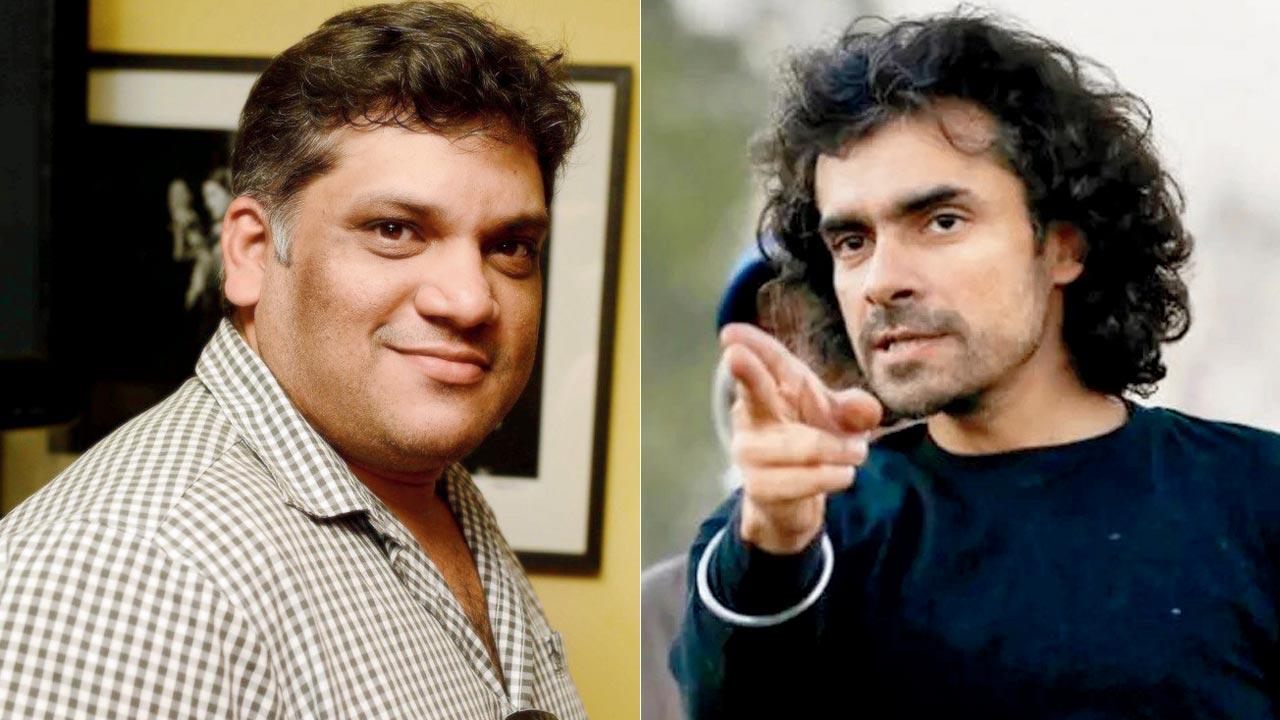
Arif Ali and Imtiaz Ali
I hope Darlings gets a theatrical release-Vijay Varma
7:57 AM

The actor feels that OTT platforms gave a fresh lease of life to content that was stuck laborum
Juhi Chakraborty (HINDUSTAN TIMES; December 4, 2021)
With work coming to a sudden halt during the pandemic, many actors had a tough time maintaining their careers. But actor Vijay Varma is grateful that he had a different experience altogether. And the 35-year-old credits OTTs for helping him keep the momentum going.
With projects such as Bamfaad (2020), A Suitable Boy, Mirzapur Season 2, She and OK Computer releasing digitally, Varma tells us, “OTT kept me going. I was a bit scattered in the beginning because She released just at the time of the first lockdown. But after that, I had back-to-back projects coming out.”
Calling the last couple of years a “blessing in disguise”, Varma, who broke into the scene after his performance in Gully Boy (2019), says, “I am happy that I was able to reach out to the audience through my work and I was in their minds, I didn’t go out of sight.”
The actor also feels that OTT platforms have given a fresh lease of life to content that was stuck. “I’m glad we have these streaming services. I know of so many actors whose work relied on theatres, especially big stars who had to wait for theatres to open for [their] work to be seen,” he adds.
Varma, who has an exciting line up for 2022 with Darlings, Fallen, Hurdang and an untitled project, feels this year has been good for him. “I hope Darlings gets a theatrical release. I am looking forward to experience how 200-400 people react to watching me on the big screen again,” he ends.
Bold and edgy: OTT breaks sexual taboos
7:54 AM

The digital space is revolutionsing the portrayal of female sexuality by exploring its varied dimensions
Sugandha Rawal (HINDUSTAN TIMES; March 27, 2021)
For decades, female sexuality has remained a hushed topic onscreen, with no focus on the demands, needs or pleasure of a woman. But not anymore, as the OTT space is scripting a change in the narrative, while stripping off the taboo around such subjects, changing mindset – one show at a time.
“Female sexuality is finally being acknowledged in storytelling. This is a positive change. Women are finally being acknowledged as sexual beings and not merely as objects of male desire,” says actor Rasika Dugal, who received acclaim for her role of a sexually dissatisfied wife, who starts a relationship outside marriage in web series Mirzapur.
There was a time when the subject of sex came with a bundle of awkwardness, sometimes wrapped together with suggestive lyrics or visual metaphors like brushing of flowers. Yet, sex was hardly a female affair, and that is what the filmmakers are out to change now. Be it a story of four friends exploring their sexuality in Four More Shots Please!, or the importance of consent in Aahana Kumra’s Marzi, or a more complex look at sex play in recently launched, Bombay Begums.
And filmmaker Imtiaz Ali is pleased by this positive change in the way these subjects are being explored. “OTT platforms allow the point of view and the duration to look at women in a more multi dimensional manner,” says Ali, creator and writer of She, adding, “Sexuality is something that in our society is often used as a weapon to repress people. And being able to make a story about that was very interesting”.
Interestingly, now, the focus is not just on sex, but on exploring one’s sexual identity and owning it up without any hesitation. If there are women indulging in acts of self-pleasure, then there are also women struggling with their orientation. Some examples of redefined portrayal include shows such as Lust Stories, A Married Woman, Dolly Kitty Aur Woh Chamakte Sitare, and Made In Heaven.
Dugal finds it encouraging that “scripts are now exploring and celebrating femininity”; however, she has her concerns. “Filmmaking is a visual medium and there’s a long journey between the written words and the visual. Sometimes, even the most well-meaning scripts end up with sexualised images or visuals. Even with the best intentions we’re finding it hard to break away from those,” she rues.
Actor Shweta Tripathi Sharma, whose introduction scene in Mirzapur showed her character indulging in an act of self-pleasure, feels it’s time to normalise the conversation about women having desires. “This happens, there’s no point shying away from it. Let’s not be hypocritical,” she says. Recalling her introduction scene, Sharma says, “I didn’t think it was a big deal. But there were so many journalists who asked me about it, and I was like ‘Come on.. As actors, we put ourselves out to tell a story... toh iss ko itna bada mat banao.”
For Sharma, the intent of a story is more important than the act. “As long as that intention is correct, it should definitely be explored,” she says, adding, she’ll never associate with a scene which is done just to catch eyeballs. “We have huge responsibility as actors and as storytellers, and we shouldn’t exploit the power... Our moral compass should be in the right place,” she shares.
Director Abhishek Pathak feels that “the way the content is perceived by the audience has also changed in a positive way”. To this, Sharma adds, “The more educated we are, the better it will be. I think the audience is definitely more aware.”

A still from (L to R) She, Bombay Begums and Dolly Kitty Aur Woh Chamakte Sitare
With work-from-home in effect, ISP and OTT giants struggle to keep up with the increased usage
8:38 AM

As Internet usage increases due to work-from-home policy, binge-watching; providers increase bandwidth, OTT giants reduce bit rates
Mohar Basu (MID-DAY; March 26, 2020)
 If you've been working from home over the past few days, chances are you've made frantic calls to the customer care department of your Internet service provider to complain about the reduced speed. With a large part of the population adopting work-from-home policy and turning to Netflix or Amazon Prime to unwind due to Coronavirus outbreak, the Internet Service Providers (ISP) across the board have been struggling to keep up with the increased usage.
In the first step to reducing the bandwidth usage, Cellular Operators Association of India (COAI) wrote to OTT giants to forgo their HD option, last week. Netflix India, Amazon Prime and Hotstar, among others, promptly complied with the request. The official spokesperson of Amazon Prime states, "We are working with mobile and ISP to help mitigate network congestion. We've already begun the effort to reduce streaming bit rates."
 However, that has brought little relief to the ISP as online traffic has risen substantially and the OTT players have kept the momentum going with relevant shows and new releases on offer. While The Test has been trending on Amazon Prime, there is also renewed interest in the 2011 movie, Contagion (right), which mirrors the current situation. Varun Dhawan's Street Dancer 3D, which failed to set the box office on fire, found many takers when it dropped online earlier this month. Similarly, Netflix has seen high viewer engagement in the case of She (left; above), Guilty and Pandemic: How To Prevent An Outbreak. A source from a streaming platform explains, "The time spent on an OTT platform has gone up by three hours on an average, globally."
With a drastic shift in consumer usage patterns, Internet providers will have to take adequate measures. "Each service provider will have to increase their bandwidth. But with networks offering special work-from-home plans, the pressure is only increasing."
With She, I am glad that I am doing something I am not associated with-Imtiaz Ali
8:37 AM

Known for his romantic dramas, Imtiaz Ali discusses why he chose to explore the thriller genre for his maiden digital offering, She
Shaheen Parkar (MID-DAY; March 22, 2020)
 One would believe that Imtiaz Ali and crime thrillers don't go together. After all, he is the mind behind some of Hindi cinema's famous love stories. But Ali says he was happy to give in to the allure of the uncharted path as he explored the thriller genre with She on Netflix, his maiden digital offering. "I did not plan it [the shift of genres]. I am glad that I am doing something I am not associated with. It's my first web series, so I might as well make a new beginning," he says.
Though he always writes and directs his projects, She sees Ali as a writer and show runner with the directing duties assumed by filmmaker-brother Arif Ali and Anaarkali Of Aarah director Avinash Das. "I realised I could not do everything, as making a web series is like making four feature films at the same time. So, I preferred to look after the creative side and hand over the directorial reins to them."
Starring Gully Boy (2019) actor Vijay Verma and Aaditi Pohankar, the film revolves around a female cop who has a self-awakening journey as she joins an undercover operation to expose the underbelly of Mumbai. The filmmaker was not tempted to rope in big names from Bollywood, instead focusing on the demands of the roles. "In the digital world, it is all about the actor [being the perfect fit for] the character. Most web show actors, especially in the US, became big names due to their performances in the shows."
Will Work Harder To Understand Audience: Ali On Love Aaj Kal's Failure
Ali's last Bollywood outing, Love Aaj Kal—a modern twist to his 2009 outing of the same name—was panned by critics and audience alike, with some cinegoers even demanding a refund on their tickets. Ali agrees that he has introspected since the film's failure. "I will have to work harder to understand who I am talking to and how I should be telling the story for them to enjoy," he says, before adding, "It's not the question of what I did was right or wrong. I did what I felt at that point of time. I hope to get an answer from the audience over time. Some films are appreciated much later. For instance, Sholay did well after weeks [of its release]. I am not saying my film was a Sholay, but nowadays, we only look at short-term gains at the box office and not at a film's longevity."

Subscribe to:
Posts (Atom)