Showing posts with label Shashwat Sachdev interview. Show all posts
Showing posts with label Shashwat Sachdev interview. Show all posts
I don’t fear AI, I fear humans making music like machines-Shashwat Sachdev
8:49 AM

Debarati S Sen (BOMBAY TIMES; August 3, 2026)
From composing the adrenaline-fuelled soundtrack of Uri: The Surgical Strike and the National Award-winning music of Article 370 to delivering chartbusters such as Challa (Main Lad Jaana), Behe Chala and the hit songs from Dhurandhar, music composer Shashwat Sachdev has steadily carved a niche for himself in Bollywood. With his latest work generating buzz, Sachdev reflects on building a career without industry connections, why equal access still remains a challenge, and why the greatest threat to music is not artificial intelligence but a growing dependence on algorithms over artistic instinct.
Despite winning the National Award, Sachdev believes the industry has not yet become an entirely level playing field for newcomers.
"I do not think the industry can be described with one verdict. It is more open in some ways, but access is still unequal. If you inherit a musical family, you may inherit vocabulary, introductions, a safety net, or simply the confidence that a life in art is possible. Someone without that inheritance may take longer to enter the room and may have to prove the right to remain there. That difference is real, and it should not be romanticized."
At the same time, he insists that privilege alone cannot sustain a career. "Inheritance can only take you to the beginning. It cannot write the melody, carry a film through difficult months, or create trust with collaborators. Once the work begins, discipline, imagination, temperament and the ability to serve a larger vision are the same demands for everyone."
Reflecting on his own journey, he says, "No success is solitary either. Behind any person who is recognized are people who sacrificed, waited and worked without being seen. So yes, merit matters, but access often determines how early you are allowed to demonstrate it. My own journey has made me grateful, not bitter. I came with no professional inheritance, but I did not come empty-handed. I came with my parents' faith, my guru's training and an unreasonable love for music. Those were my first riches."
As artificial intelligence and algorithm-driven streaming reshape the music landscape, Sachdev remains less worried about technology itself than how creators respond to it.
"Originality has always been a complicated word. Every artist is made of memory: music heard as a child, teachers, heartbreak, cities, books and other people's work. Creation has never meant having no influences. It means transforming those influences through a life that only you have lived."
While he sees AI as a creative tool, he believes the human element remains irreplaceable. "A tool does not decide what is worth saying. The emotional decision still has to come from a person: why this note, why this silence, why this imperfection, why now."
His biggest concern, however, is the industry's increasing reliance on algorithms. "What worries me is not that machines will make music. It is that human beings may begin making music like machines, endlessly repeating what the data says is safe because algorithms reward familiarity and speed. Streaming numbers and social media can tell us what travelled quickly. They cannot always tell us what will remain in someone for twenty years."
For Sachdev, the future of music will continue to depend on artistic honesty. "Originality survives when an artist has the courage to interpret experience honestly. Technology may change the studio, distribution and even the questions around authorship, but the centre of creation must still be a human being trying to communicate a complex inner life to another human being."
Dhurandhar music composer Shashwat Sachdev says "The idea is never to use a song simply because it’s old or familiar"
2:45 PM

Komal RJ Panchal (MID-DAY; June 29, 2026)
Sure, the Dhurandhar franchise is star-studded. The bigger stars, however, are its screenplay, Aditya Dhar’s stylised direction, and certainly, its music. From placing beloved retro songs in action sequences to crafting original numbers that up the narrative’s tempo, composer Shashwat Sachdev showed how music can be a powerful storytelling tool. As audiences continue to dissect the soundtrack and score, scene by scene, the composer, in a chat with mid-day, breaks down how he created the spy action thriller’s album using nostalgia and contrast. Excerpts from the interview.
Did the response to Dhurandhar’s (2025) music influence the risks you took in the sequel?
Most of the music for the second film wasn’t driven by expectations or outside noise; it was driven by the material. The screenplay was inspiring, and there was only one objective: create great music.
What made you remix retro songs and place them in a gritty espionage universe?
The idea is never to use a song simply because it’s old or familiar. It has to serve the scene’s emotion. Sometimes a melody carrying memory, innocence, or longing can reveal something about a character that a conventional approach cannot. When an unexpected choice creates a stronger emotional response, it becomes interesting. For us, the question was always: does it help tell the story better? If the answer was yes, it belonged there.
Many feel your biggest achievement was making retro songs feel relevant again. How do you revive a track without reducing it to a remix?
I don’t see it as remixing. Around the world, artistes sample older music and create new ideas from it. For me, it was about using fragments of an existing idea to tell a new story. I think of sampling as an instrument, no different from a piano, guitar, or an orchestra. If sampling is an instrument, then the whole world becomes your palette. The challenge is learning how to play it well.
How were the songs chosen?
It started with Aditya’s vision because he wrote the script and designed the world. But filmmaking is always collaborative. It was his vision, mine, and Shivkumar V Panicker’s [editor] interpretation of the score. Then there was my interpretation of what both of them were asking for. Often, what we ended up with was very different from what any of us initially imagined, yet it worked.
The use of cheerful songs in brutal action scenes felt almost Tarantino-esque. What can a song achieve in those moments that a traditional score cannot?
Music can create contrast. A traditional score often guides the audience towards a specific emotion. A song can create irony, memory, tenderness, discomfort, or tragedy while something completely different is happening on screen. That tension between what you hear and what you see can make a scene stay with you much longer.
Hans Zimmer, Russell Emanuel liked the work I had done in Indian cinema-Shashwat Sachdev
7:48 PM
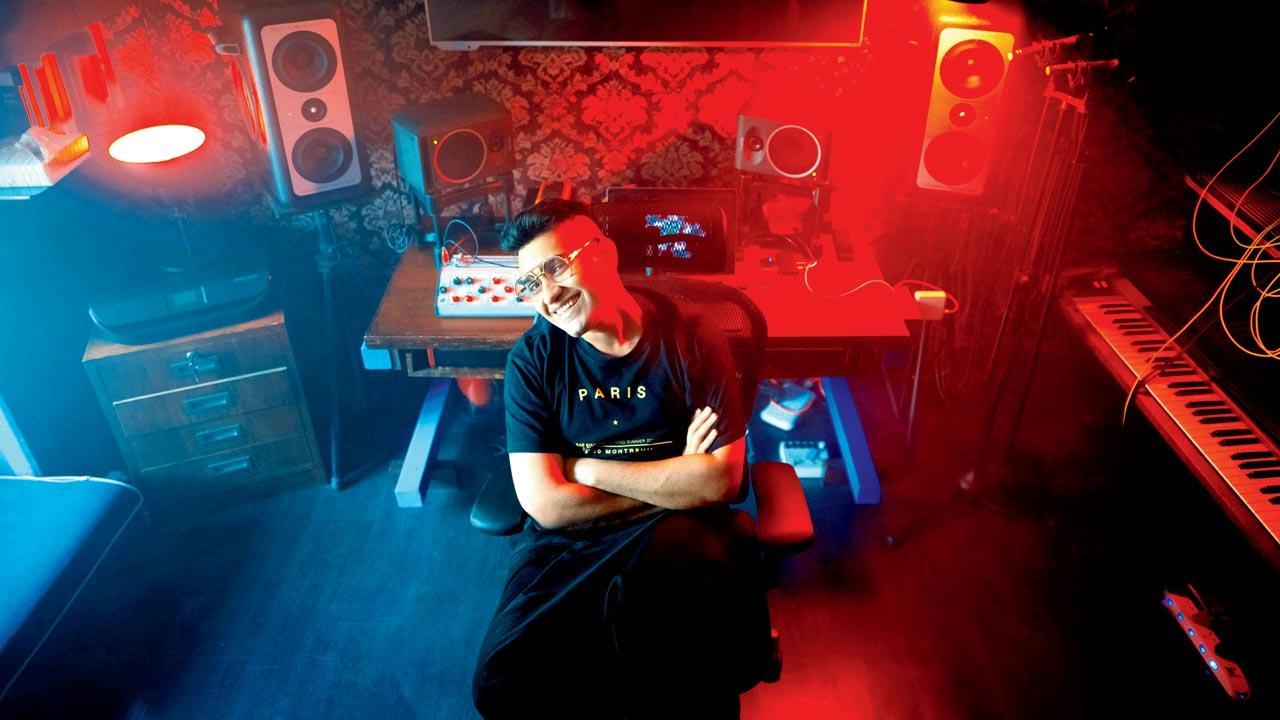
Bagging one of his biggest projects as he joins hands with Hans Zimmer, Shashwat on crafting the music for a thriller series based on an Indian family
Sonia Lulla (MID-DAY; March 4, 2024)
Shashwat Sachdev joins hands with German film score composer Hans Zimmer for the BBC thriller series, Virdee. Based on a Sikh detective, Harry Virdee, it follows his tryst to hunt down a killer targeting the Asian community in Bradford, even as he faces backlash for marrying a Muslim woman.
In this interview, Sachdev discusses the challenges of crafting an Indian score with an international appeal.
Edited excerpts of the interview.
Can you talk about how you came aboard this project?
I have been working with them for four years. I connected with Hans’s team that creates sync music and did two albums with his label. This show is of Indian origin. Hans and Russell [Emanuel, from Zimmer’s music label] both wanted me to collaborate with them on it because they liked the work I’ve done on Indian films.
Because this is an international thriller series, I knew it would have a western palette. But having grown up in India, our music is an important part of my upbringing. That is what Hans and Russell loved about my work. Even though the backdrop is western, the elements are all Indian. The show is based on an Indian community living in the United Kingdom, so this reflection was important.
Even though the Indian community living overseas consumes Indian music, their sensibilities are still different from those of the masses here. Did you study those small nuances to incorporate them into your work?
The consumption of music is getting pretty universal. There may be a small difference in the instrumentation and the language. But, if you see the top 100 songs in the UK, America and India, you’ll realize that they are not distinctly different. Every audience enjoys music that moves them based on their environment. But, subjects like love, heartbreak, and [joy] are emotions that are common among cultures. A dance and party song in America will sound similar to one in India. The language will be different, of course.
Often composers turn to existing Indian music when representing Indian families based in foreign countries. Did you also pick popular Indian songs to establish that connection?
I may not consider Bollywood songs but I may use Punjabi folk songs for that purpose. Although work on it is underway, I have recorded with folk artistes from Punjab and Rajasthan for the purpose. I will begin working on the score later this month.
I want to develop a palette that’s international and edgy. It needs to be universally applicable. So, while it should perfectly fit the show, I also want the score to have utility when people listen to it otherwise. I wanted to also take this opportunity to thank Russell for giving an Indian boy an opportunity to represent my country at this level.
How is the process of working with an international team different from doing so with an Indian team?
It’s similar when it comes to approaching the music. What’s different is that people there are more [disciplined]. When it comes to locking a schedule, there is more clarity. Here, things are more flexible and fluid. You have to be available at all times to your directors and producers.
Subscribe to:
Posts (Atom)