Showing posts with label Shashwat Sachdev. Show all posts
Showing posts with label Shashwat Sachdev. Show all posts
I feel composers ko aur thodi si freedom milni chahiye-Kumar Sanu
11:12 PM

Debarati S Sen (MUMBAI MIRROR; August 8, 2026)
Nearly three decades after Aankhon Se Tune Kya Keh Diya from the Aamir Khan starrer Ghulam, became one of Bollywood's most-loved romantic melodies, the iconic track has found a new life now with Aankhon Se Tune 2.0 (in the film Bhai Tera Star Hai). Bringing together the original voices of Kumar Sanu and Alka Yagnik with Palak Muchhal and Dev Negi, the recreated version introduces the classic to a new generation while retaining its nostalgic charm.
Aankhon Se Tune Kya Keh Diya has been recreated after nearly three decades. What was your reaction when you heard Aankhon Se Tune 2.0?
I originally sang this song with Alka ji, and hearing the recreated version after so many years has given me immense joy. It reminded me of the time when we first recorded it. The song became very popular back then, and seeing the recreated version connect with today's audience honestly makes my heart full. When we recorded the original, we never imagined that the song would stay with people for so long and come back in a new form years later. I have always been very fond of this song, and hearing it again brought back many memories of that time. I am happy that the song is reaching today's listeners as well, and I hope they give the new version the same love and affection that they have given the original over the years.
Your songs continue to be recreated for a new generation, often with electronic beats and altered arrangements. Do you believe these recreations help preserve the legacy of the originals, or do they dilute the emotion and craftsmanship that made those songs timeless?
Ye depend karta hai ki kaun bana raha hai. There are some composers jo original song ke soul ko intact rakh ke usme new elements add karke banate hai. Some composers retain the soul of the original while adding fresh elements to make it appealing for today's listeners. When that's done with sincerity, these recreated versions help the songs reach a new generation. I'm happy to see that happening because it gives classic hits a new life and makes people rediscover and fall in love with them all over again.
There is growing criticism that Bollywood relies too heavily on remakes because it has run out of original musical ideas. As one of the defining voices of the 1990s, do you think the industry today is taking the easy route instead of investing in fresh melodies and new composers?
I definitely feel new composers ko chance milna chahiye to create the kind of music they want. Aaj kal production houses ka pressure bahut rehta hai, aur purane gaanon ko recreate karna ek easy way hota hai sure-shot hit ka. That's because those classics had strong compositions, meaningful lyrics and soulful singing that stay with people for years.
Having said that, it's not true that original music isn't being made anymore. We have immensely talented composers like Mithoon, Amaal Mallik, Sachin-Jigar and Shashwat Sachdev, who have already proved they can create excellent original music. Bas unhe aur creative freedom milni chahiye. If they're trusted to experiment and express themselves, we'll hear many more memorable original songs.
If a filmmaker wanted to recreate one of your iconic songs today, what would make you say yes? Do you think original singers and composers should have a greater say in how a classic is reimagined?
The first thing is that the rights to most of these songs are owned by the music labels. So, anyone who wants to recreate them only needs permission from the label. Unfortunately, as singers, we don't really have much of a say in that process. What I would always request is that the soul of the original song should remain intact. You can certainly add new elements and give it a contemporary sound, but don't lose the emotion that made the song a hit in the first place. Audiences get upset only when their favourite songs are spoiled. Composers should remember that these classics are deeply connected to people's hearts, so they deserve to be recreated with great care and respect.
I don’t fear AI, I fear humans making music like machines-Shashwat Sachdev
8:49 AM

Debarati S Sen (BOMBAY TIMES; August 3, 2026)
From composing the adrenaline-fuelled soundtrack of Uri: The Surgical Strike and the National Award-winning music of Article 370 to delivering chartbusters such as Challa (Main Lad Jaana), Behe Chala and the hit songs from Dhurandhar, music composer Shashwat Sachdev has steadily carved a niche for himself in Bollywood. With his latest work generating buzz, Sachdev reflects on building a career without industry connections, why equal access still remains a challenge, and why the greatest threat to music is not artificial intelligence but a growing dependence on algorithms over artistic instinct.
Despite winning the National Award, Sachdev believes the industry has not yet become an entirely level playing field for newcomers.
"I do not think the industry can be described with one verdict. It is more open in some ways, but access is still unequal. If you inherit a musical family, you may inherit vocabulary, introductions, a safety net, or simply the confidence that a life in art is possible. Someone without that inheritance may take longer to enter the room and may have to prove the right to remain there. That difference is real, and it should not be romanticized."
At the same time, he insists that privilege alone cannot sustain a career. "Inheritance can only take you to the beginning. It cannot write the melody, carry a film through difficult months, or create trust with collaborators. Once the work begins, discipline, imagination, temperament and the ability to serve a larger vision are the same demands for everyone."
Reflecting on his own journey, he says, "No success is solitary either. Behind any person who is recognized are people who sacrificed, waited and worked without being seen. So yes, merit matters, but access often determines how early you are allowed to demonstrate it. My own journey has made me grateful, not bitter. I came with no professional inheritance, but I did not come empty-handed. I came with my parents' faith, my guru's training and an unreasonable love for music. Those were my first riches."
As artificial intelligence and algorithm-driven streaming reshape the music landscape, Sachdev remains less worried about technology itself than how creators respond to it.
"Originality has always been a complicated word. Every artist is made of memory: music heard as a child, teachers, heartbreak, cities, books and other people's work. Creation has never meant having no influences. It means transforming those influences through a life that only you have lived."
While he sees AI as a creative tool, he believes the human element remains irreplaceable. "A tool does not decide what is worth saying. The emotional decision still has to come from a person: why this note, why this silence, why this imperfection, why now."
His biggest concern, however, is the industry's increasing reliance on algorithms. "What worries me is not that machines will make music. It is that human beings may begin making music like machines, endlessly repeating what the data says is safe because algorithms reward familiarity and speed. Streaming numbers and social media can tell us what travelled quickly. They cannot always tell us what will remain in someone for twenty years."
For Sachdev, the future of music will continue to depend on artistic honesty. "Originality survives when an artist has the courage to interpret experience honestly. Technology may change the studio, distribution and even the questions around authorship, but the centre of creation must still be a human being trying to communicate a complex inner life to another human being."
Kartik Aaryan, Yami Gautam, Mammootty, Dhanush headline the winners at the 72nd National Film Awards
8:36 AM

Priyanka Sharma (MID-DAY; July 19, 2026)
Firsts are always special, but they mean even more when they come as National Awards. Yami Gautam and Kartik Aaryan bagged their first National Awards in the Best Actress and Best Actor categories for Article 370 and Chandu Champion, respectively, at the 72nd National Film Awards, announced on Sunday. Aaryan shared the honour with Malayalam superstar Mammootty for Bramayugam.
Article 370 emerged as one of the biggest winners, also taking home Best Feature Film and Best Music (Songs) for composer Shashwat Sachdev.
Sachdev said, “I came into cinema with no inheritance, only a deep love for music, so this National Award feels like a beautiful pause to look back at every uncertain day, quiet sacrifice, and every person who stood by me.” Tamil film Amaran won three awards — Best Director, Best Music Direction, and Best Editing.
Rajkummar Rao-starrer Srikanth won Best Hindi Film. Director Tushar Hiranandani told mid-day, “Actually, for Srikanth, the only award that I won before was in Moscow. I was not even nominated in any other category, in any other awards. At last, I feel happy. I dedicate this to my mom and father-in-law, who passed away before the release.”
For Randeep Hooda the win for Best Debut Director for Swatantrya Veer Savarkar came as a surprise. Reacting to the big honour, he said, “This film asked more of me than anything I’ve ever done. The journey was filled with challenges at every juncture, but I’m glad we saw it through and overcame each of those.”
List of winners
Best Feature Film: ‘Article 370’
Best Actor: Kartik Aaryan (‘Chandu Champion’) and Mammootty (‘Bramayugam’)
Best Actress: Yami Gautam (‘Article 370’)
Best Director: Rajkumar Periasamy (‘Amaran’)
Best Supporting Actor: Sanjay Mishra (‘Bhakshak’)
Best Supporting Actress: Ropashree Varkady (‘Mithya’) and Sachana Namidass (‘Maharaja’)
Best Popular Film Providing Wholesome Entertainment: ‘Kalki 2898 AD’
Best Debut Director: Randeep Hooda (‘Swatantrya Veer Savarkar’)
Best Film Promoting National, Social, and Environmental Values: ‘Captain Miller’
Best Hindi Film: ‘Srikanth’
Dhurandhar music composer Shashwat Sachdev says "The idea is never to use a song simply because it’s old or familiar"
2:45 PM

Komal RJ Panchal (MID-DAY; June 29, 2026)
Sure, the Dhurandhar franchise is star-studded. The bigger stars, however, are its screenplay, Aditya Dhar’s stylised direction, and certainly, its music. From placing beloved retro songs in action sequences to crafting original numbers that up the narrative’s tempo, composer Shashwat Sachdev showed how music can be a powerful storytelling tool. As audiences continue to dissect the soundtrack and score, scene by scene, the composer, in a chat with mid-day, breaks down how he created the spy action thriller’s album using nostalgia and contrast. Excerpts from the interview.
Did the response to Dhurandhar’s (2025) music influence the risks you took in the sequel?
Most of the music for the second film wasn’t driven by expectations or outside noise; it was driven by the material. The screenplay was inspiring, and there was only one objective: create great music.
What made you remix retro songs and place them in a gritty espionage universe?
The idea is never to use a song simply because it’s old or familiar. It has to serve the scene’s emotion. Sometimes a melody carrying memory, innocence, or longing can reveal something about a character that a conventional approach cannot. When an unexpected choice creates a stronger emotional response, it becomes interesting. For us, the question was always: does it help tell the story better? If the answer was yes, it belonged there.
Many feel your biggest achievement was making retro songs feel relevant again. How do you revive a track without reducing it to a remix?
I don’t see it as remixing. Around the world, artistes sample older music and create new ideas from it. For me, it was about using fragments of an existing idea to tell a new story. I think of sampling as an instrument, no different from a piano, guitar, or an orchestra. If sampling is an instrument, then the whole world becomes your palette. The challenge is learning how to play it well.
How were the songs chosen?
It started with Aditya’s vision because he wrote the script and designed the world. But filmmaking is always collaborative. It was his vision, mine, and Shivkumar V Panicker’s [editor] interpretation of the score. Then there was my interpretation of what both of them were asking for. Often, what we ended up with was very different from what any of us initially imagined, yet it worked.
The use of cheerful songs in brutal action scenes felt almost Tarantino-esque. What can a song achieve in those moments that a traditional score cannot?
Music can create contrast. A traditional score often guides the audience towards a specific emotion. A song can create irony, memory, tenderness, discomfort, or tragedy while something completely different is happening on screen. That tension between what you hear and what you see can make a scene stay with you much longer.
Sooraj Barjatya told me ‘You’re harming the industry by working less’-Irshad Kamil
10:24 AM

Lyricist Irshad Kamil says the biggest challenge before him isn’t writing another hit. It’s finding a more honest language for romance
Soumya Vajpayee (MUMBAI MIRROR; July 12, 2026)
Irshad Kamil has little left to prove. Over two decades, he has written some of Hindi cinema’s most memorable songs, from Tum Se Hi, Nadaan Parindey and Kun Faya Kun to Agar Tum Saath Ho and the recent Saiyaara. Yet the National Award-winning lyricist insists he is still a student.
“My journey has been about coincidences and evolution,” he says with a laugh. “It’s about what I want to become.” Sitting over tea on a rain-soaked afternoon in Andheri, Kamil looks back at a career that began almost by accident. As a student with a deep interest in theatre and poetry at Panjab University, he drifted into television before finding his way to films. More than 100 films later, he still believes every project teaches him something new.
Still learning
“I stumbled into television. I stumbled into films,” he says. “With every song, I understand a little more about what it means to be a lyricist. There are so many layers to lyric writing. Just as there are many kinds of love, I’m still learning them.” That desire to keep evolving changed the way he works.
For years, Kamil deliberately restricted himself to four films annually. Then filmmaker Sooraj Barjatya offered advice that stayed with him.
“‘Irshad, you’re harming the industry by working less,’” he recalls. “That really struck me.” He decided to say yes more often. “The more time you spend in a creative environment, the more you learn. That’s how projects like Krishnavataram and the ghazal EP with Papon happened.”
Making love believable
If there is one emotion Kamil keeps returning to, it is love. Ironically, he considers it the hardest to write. “I feel most love songs don’t have the purity that love deserves,” he says. “My language for every film is love. I want to redefine that language for today’s world.”
His ambition is not to make lyrics more poetic, but more truthful. “Love has evolved. Society has evolved. I want to reflect that in my writing. I want songs to feel less fake.”
That philosophy shapes Main Vaapas Aaunga, on which he worked alongside A R Rahman while simultaneously writing for Tere Ishk Mein. Before beginning, the pair watched James Mangold’s Bob Dylan biopic, A Complete, Unknown together. “Bob Dylan’s journey charged me creatively,” he says.
One song from Main Vaapas Aaunga, Kya Kamaal Hai, juxtaposes images of Partition with those of present-day refugees. “For me, it isn’t just a song,” he says. “It’s a dream of love, peace and hope.”
No room for ornament
Kamil is equally clear about what he doesn’t want his lyrics to become. “In every art form, people struggle to balance mass appeal with artistic quality,” he says. “We’re diluting art to make it more popular. Dilution isn’t the solution. Accessibility is.”
Instead of reaching for ornate vocabulary, he prefers words people are familiar with. “I don’t want to impress listeners with difficult words from a dictionary. I’m trying to make my lyrics more accessible without compromising on quality. At the same time, I’m trying to redefine myself, and romantic songs in films.”
That openness also informs his collaborations. Having worked with veterans such as Rahman, Pritam, Vishal-Shekhar, Amit Trivedi, and now with a younger wave: Shashwat Sachdev, Tanishk Bagchi, Sachet-Parampara, Vishal Mishra, Sarthak Kalyani, Hiral Viradia, is the process of working with new-age composers different? “There’s no fixed pattern,” he says. “Every composer has a different way of thinking, so every project challenges you differently. That’s where the learning happens.”
Some of his most rewarding work has emerged from those unstructured sessions. While writing Dhurandhar, he, director Aditya Dhar and composer Shashwat Sachdev often worked through the night, with Dhar’s home doubling up as a studio.
“We’d start at six in the evening and sometimes continue till six the next evening,” he says. “Phir Se was born during one of those sessions.”
The long game
Unlike singers and composers, lyricists rarely enjoy the visibility of live performances. But Kamil believes the profession has become more sustainable.
“Being a lyricist now comes with a pension plan,” he says, referring to royalties collected through IPRS. “Sometimes the royalty from a successful song can become many times what you were originally paid. And it keeps coming.”
Social media often compares him with Gulzar, Javed Akhtar and Anand Bakshi. Others have likened aspects of his recent work to Bob Dylan. Kamil accepts the compliments but rejects the comparison.
“There can never be another Bob Dylan,” he says. “Just as there can never be another Sachin Tendulkar. Every artist has their own zone. Irshad Kamil has to remain Irshad Kamil.”
Perhaps that is why, even after two decades in Hindi cinema, Kamil still speaks less about success than about discovery. At 54, his ambition is simpler, or perhaps some might say harder: to write songs that feel a little more honest than the ones he wrote yesterday.
Here's why the 2003 original song Jogi went missing from streaming platforms after the release of Dhurandhar title track
9:04 AM
Mohar Basu (MID-DAY; October 18, 2025)
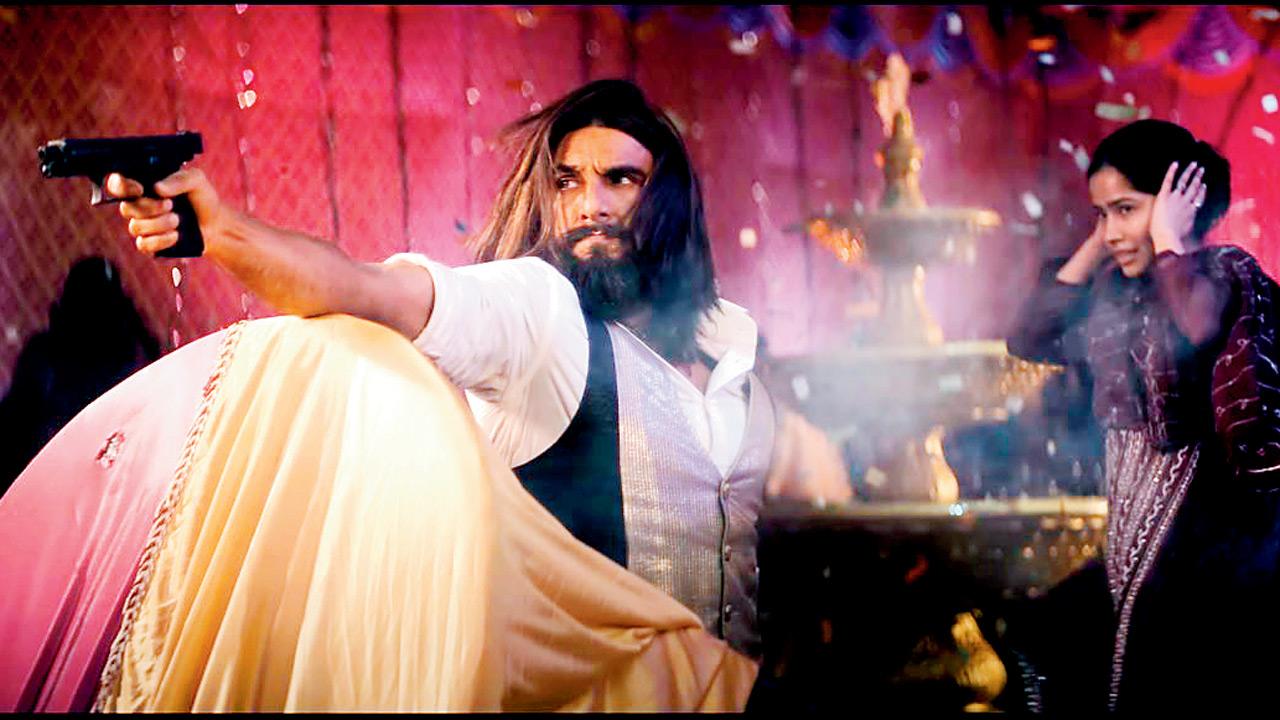
In July, when the first look of Dhurandhar was unveiled, the high-octane song playing in the background caught as much attention as leading man Ranveer Singh’s raw avatar. No surprises then the title track broke the internet when the makers released it on October 16. At the same time, fans were quick to notice something strange — the 2003 number Jogi by Panjabi MC, of which the new song is an iteration, has mysteriously disappeared from Spotify and Apple Music.
Sources tell us that director Aditya Dhar and the makers have bought the rights of Jogi, which in turn is a remixed version of the 1995 track Na Dil De Pardesi Nu, sung by Muhammad Sadiq and Ranjit Kaur. For the Dhurandhar track, composer Shashwat Sachdev and rapper Hanumankind have given a new spin to Jogi.
A source shares, “At this point, the makers want the song to be associated with their film only. As Jogi’s rights rest with them, they must have, in discussion with its creators, pulled it down for now. The original’s creators must be aware of this while selling the rights, else they would have created an uproar. It was taken off YouTube too, only to be uploaded by a fan channel after Dhurandhar’s teaser was unveiled.”
Famous for its infectious dhol beats and underground UK bhangra energy, Jogi has long been a club staple. Its sudden disappearance from audio streaming platforms has fuelled speculation of a tie-up between its producers and Dhurandhar’s music team.
The source adds, “Given Aditya’s knack for paying homage while reinventing, it’s possible a version with Panjabi MC will be launched closer to the release.”
Hans Zimmer, Russell Emanuel liked the work I had done in Indian cinema-Shashwat Sachdev
7:48 PM

Bagging one of his biggest projects as he joins hands with Hans Zimmer, Shashwat on crafting the music for a thriller series based on an Indian family
Sonia Lulla (MID-DAY; March 4, 2024)
Shashwat Sachdev joins hands with German film score composer Hans Zimmer for the BBC thriller series, Virdee. Based on a Sikh detective, Harry Virdee, it follows his tryst to hunt down a killer targeting the Asian community in Bradford, even as he faces backlash for marrying a Muslim woman.
In this interview, Sachdev discusses the challenges of crafting an Indian score with an international appeal.
Edited excerpts of the interview.
Can you talk about how you came aboard this project?
I have been working with them for four years. I connected with Hans’s team that creates sync music and did two albums with his label. This show is of Indian origin. Hans and Russell [Emanuel, from Zimmer’s music label] both wanted me to collaborate with them on it because they liked the work I’ve done on Indian films.
Because this is an international thriller series, I knew it would have a western palette. But having grown up in India, our music is an important part of my upbringing. That is what Hans and Russell loved about my work. Even though the backdrop is western, the elements are all Indian. The show is based on an Indian community living in the United Kingdom, so this reflection was important.
Even though the Indian community living overseas consumes Indian music, their sensibilities are still different from those of the masses here. Did you study those small nuances to incorporate them into your work?
The consumption of music is getting pretty universal. There may be a small difference in the instrumentation and the language. But, if you see the top 100 songs in the UK, America and India, you’ll realize that they are not distinctly different. Every audience enjoys music that moves them based on their environment. But, subjects like love, heartbreak, and [joy] are emotions that are common among cultures. A dance and party song in America will sound similar to one in India. The language will be different, of course.
Often composers turn to existing Indian music when representing Indian families based in foreign countries. Did you also pick popular Indian songs to establish that connection?
I may not consider Bollywood songs but I may use Punjabi folk songs for that purpose. Although work on it is underway, I have recorded with folk artistes from Punjab and Rajasthan for the purpose. I will begin working on the score later this month.
I want to develop a palette that’s international and edgy. It needs to be universally applicable. So, while it should perfectly fit the show, I also want the score to have utility when people listen to it otherwise. I wanted to also take this opportunity to thank Russell for giving an Indian boy an opportunity to represent my country at this level.
How is the process of working with an international team different from doing so with an Indian team?
It’s similar when it comes to approaching the music. What’s different is that people there are more [disciplined]. When it comes to locking a schedule, there is more clarity. Here, things are more flexible and fluid. You have to be available at all times to your directors and producers.
Uri background score made into an album now
8:20 AM

Sonil Dedhia (MID-DAY; January 24, 2019)
A sleeper hit at the box office, Vicky Kaushal’s Uri: The Surgical Strike is being celebrated for its strong narrative and promising performances.
Interestingly, the background score of the military drama too has caught the audience’s attention. So much so that the makers have now decided to release it officially. Composer Shashwat Sachdev tells midday, “Fans would reach out to Vicky, the producers or even me inquiring where they could listen to the background score. So, the makers decided to release it on various music platforms. It should be available by this weekend.”
Of its 80-minute-plus background music, Sachdev points out that the Uri theme was the most significant as it had to enhance a crucial sequence in the Aditya Dhar-directed film — the drum-heavy composition plays out on screen when Kaushal’s character decides to avenge his brother-in-law’s death. “I wanted it to sound original yet contemporary, so I added a hip hop feel to it. I got a modular synthesiser from Germany to put together a hybrid score,” says Sachdev.
He adds that his favourite is the score that accompanies the action sequence which sees Kaushal take on terrorists in the North east. “Fans are using it as their caller tunes,” he exclaims.
Indicating the toil he put into these pieces, Sachdev adds that another composition had him record a live symphonic orchestra with over 60 musicians at the famous Synchron stage in Vienna.

Subscribe to:
Posts (Atom)