Showing posts with label Shankar-Jaikishen. Show all posts
Showing posts with label Shankar-Jaikishen. Show all posts
Shankar-Jaikishen used to visit Gaylord all the time and they had a table reserved here-Divij Lamba
10:09 AM
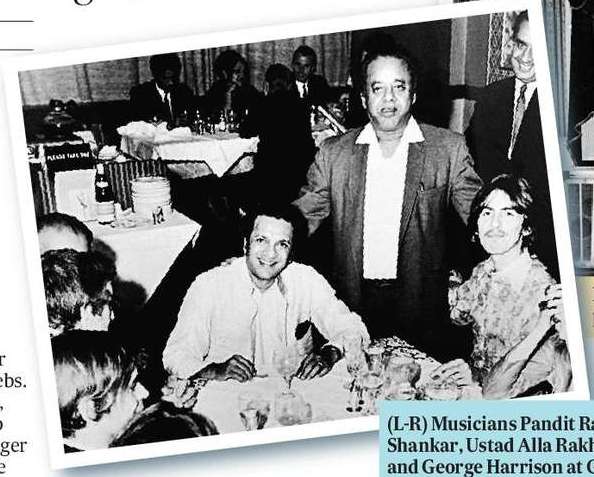
(L-R) Musicians Pandit Ravi Shankar, Ustad Alla Rakha Khan and George Harrison at Gaylord
The city’s iconic eatery serves up rich history and memories to today’s power-dining frat
Ismat Tahseen (HINDUSTAN TIMES; May 4, 2025)
Mumbai is on the list of the Best Food Cities in the World for good reason. And one establishment in the city that holds the torch out to this culinary heritage is Gaylord, which opened in 1956. The flagship dining house in Churchgate embodies a rich history, having been the flavour of international and Indian celebs. Bollywood veterans B R Chopra, Raj Kapoor, Rishi Kapoor, Dilip Kumar, Rajesh Khanna and singer Lata Mangeshkar had their fave delicacies here, so did the iconic musicians Pandit Ravi Shankar and The Beatles!
After it’s first-ever extended closing, Gaylord has reopened. It’s a case of old-meets-new, as co-owner, Divij Lamba, calls the decor, “a love letter to our past”.
‘For cricketers, this was the post-match destination’
Divij goes back in time as he shares how his great-grandfather, Pishori Lal Lamba launched Gaylord in collaboration with Iqbal Ghai (both Delhi-based entrepreneurs who established the Kwality restaurant chain in 1947).
Divij and his brother Dhruv grew up hearing stories of the who’s who dined at Gaylord. He says, “Celebrities were regulars here, so were a lot of cricketers. They made it their post-match destination as CCI Club almost opens into Gaylord. Veteran composer duo Shankar-Jaikishen also used to visit all the time and they had a table reserved here.”
The transformation sees Gaylord’s iconic alfresco-style seating now exuding a warm and contemporary Parisian vibe along with red couches on its mezzanine floor. But the makeover apart, Gaylord also holds on to its past. “We’ve made sure that history is not lost; the decor still takes people to another age,” adds Divij as he points to a collection of 155 photos around — sitar maestro Pandit Ravi Shankar with George Harrison. French designer Christian Louboutin had also visited.
‘The past is the real treasure’
Of course, the food undeniably does the talking, too. Divij adds, “We’ve ensured that the faves — Chicken à la Kiev and Lobster Thermidor are back. So is the signature butter chicken, given the North-Indian lineage of the restaurant.” The revamped space has plans to host cultural nights from live grand piano recitals, to live music events and specially curated high tea parties.
Today, as the brothers helm the business, Divij admits, “There is this sense of responsibility to carry forth our legacy. We’ve tried not to change the DNA of the place as that is what Gaylord is known for. The idea is to maintain the past, as that is the real treasure.”
How did it get its name?
Gaylord is a combination of both the partner’s names ‘Ghai’ & ‘Lamba’. Lamba had posted an advertisement asking for suggestions and one of the reader suggested the name ‘Gaylord’. They liked it as it had both partners initials.

In Monica O My Darling, we roped in singers who perform at Asha Bhosle Nights or Kishore Kumar Nights-Vasan Bala
8:38 AM
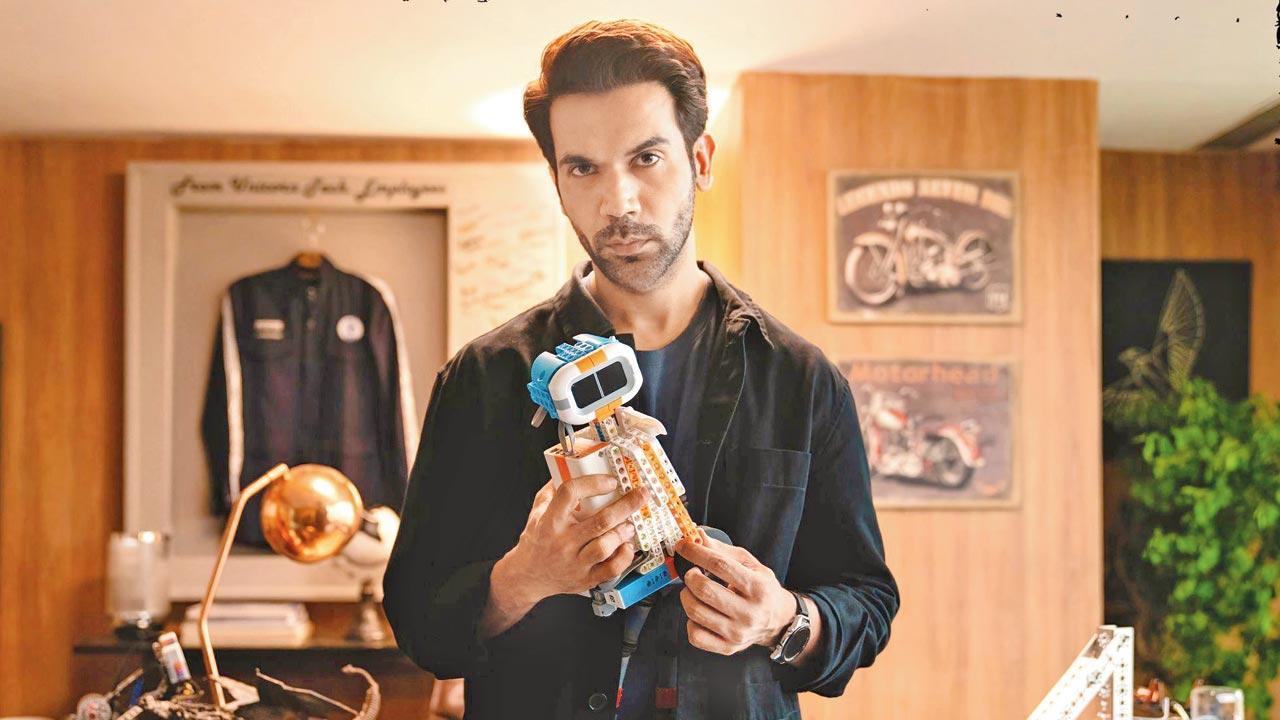
Taking a cue from Sriram’s style of storytelling, Monica O My Darling director Vasan says sharp crime thrillers are all about throwing curveballs at audience
Uma Ramasubramanian (MID-DAY; November 8, 2022)
What’s the secret to a deliciously crafted thriller? Vasan Bala hopes to have the answer with Monica O My Darling, starring Rajkummar Rao, Huma Qureshi and Radhika Apte. For the noir thriller, the director has been inspired by filmmaker Sriram Raghavan, whom he considers the genre’s pioneer in the Hindi film industry. “With thrillers, I don’t take the pressure of making it a whodunit. I think all the masters have followed the [rule]. Be it Sriram Raghavan or any other director, they never take the pressure of hiding a lot from the audience. In fact, they give away a lot and hide a few [elements], which works as a surprise for viewers,” says the director.
The Netflix film follows Rao’s character Jayant, who has been double-crossed by his ladylove, essayed by Qureshi. For Bala, the film’s biggest win is its casting. With dependable actors on board, the director says he only concentrated on the technical aspects of filmmaking.
“There wasn’t too much of direction [required],” he says candidly. “I could concentrate on other aspects of filmmaking. I had the privilege of leaving a lot to the actors and just going with the flow, thanks to the calibre of the people involved. It’s a pleasure to work with actors who are technically trained. They are not only involved as actors, but also as technicians. They gave due respect to the entire technical team. A lot of actors don’t do that.”
Mard Ko Dard Nahi Hota (2018) showed us how Bala likes to add quirky elements to his storytelling. This time around, he knew that he wanted a retro album to lend the required mood to the crime thriller. The director turned to composer Achint Thakkar for the task.
“It was great to go back to [the music of] Laxmikant-Pyarelal, Shankar-Jaikishen and Usha Uthup. We blended [their musical sensibilities] to create music that is authentic and not spoofy. We also roped in singers who perform at Asha Bhosle Nights, or Kishore Kumar Nights. They have not broken into professional playback singing, but are on the periphery, thanks to their ability to [mimic the singers of the bygone era].”
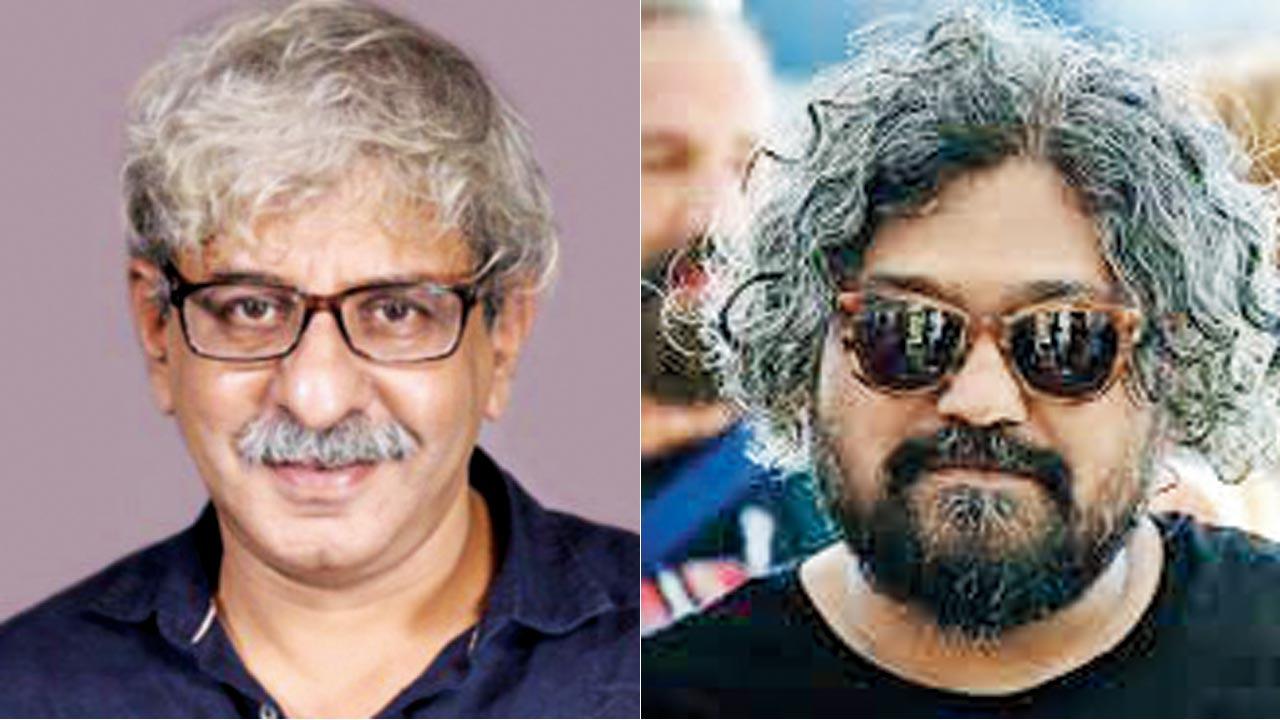
Raghavan and Vasan Bala
Sadhana was a God-gifted artiste who knew exactly what the director wanted from her-Prem Sagar
8:27 AM

Roshmila Bhattacharya (MUMBAI MIRROR; September 4, 2020)
It’s hard to forget Sadhana in Arzoo, a vision in white, against the backdrop of Chinar trees, their reddish-brown leaves carpeting the ground below, as she sighs about lost love, “Bedardi Balma Tujhko Mera Mann Yaad Karta Hai, Barasta Hai Jo Aankhon Se Woh Sawan Yaad Karta Hai”. The autumnal image is intercut with memories of spring when the same trees were lush and green, and the man of her dreams by her side. The evergreen chartbuster is among Lata Mangeshkar’s top five songs and producer-director Ramanand Sagar’s son, Prem Sagar, recounts how one day, while they were filming at the Rajkamal Studio, Jaikishen, of the composer duo Shankar-Jaikishen, suddenly walked in and reminded his Papaji that they still had one sad song to complete. Then, using the cameraman’s paatla (low wooden stool) as a makeshift drum, he began to belt out a tune even as his alaap rend the air. Then and there, the song was composed, with Jaikishen ji, whose recording for the day had been cancelled, urging Ramanand ji to record the song immediately as the studio was free, and Lata ji was there too, along with a 100-piece orchestra and Mangesh Desai, the best sound recordist in the business.
Soon after, Ramanand ji sent his lyricist Hasrat Jaipuri on a recce to find apt locations for the song. Once they were identified, they flew to the Valley for the shoot. But being a writer himself, Ramanand ji wanted a different colour palette for words like “Tujhe Is Jheel Ka Khamosh Darpan Yaad Karta Hai…” Being a much-loved son of Kashmir, he roped in the state tourism department to tell him when the Chinar trees would turn the exact shade of red-brown he had in mind. “Papaji knew he’d have a really short window of three-four days for this portion of the shoot and had warned Sadhana she’d have to drop everything when he called. She was game and after a flurry of telephone calls and telegrams, we rushed to the same location, this time in autumn, and completed the song,” narrates Prem Sagar ji, who has penned the bestselling book on his father, The Epic Life - Ramanand Sagar: From Barsaat To Ramayan.
There is a scene in the romance drama where Sadhana ji and Rajendra Kumar ji are walking along the banks of the Dal Lake in Srinagar, reading each other’s thoughts. “Yeh raasta kahaan jaata hai?” he asks, and she replies, again without words, “Yeh toh mujhe bhi nahin pata.” Prem Sagar ji acknowledges that it’s not easy speaking through silences, the language of the dead. “But Sadhana didn’t need words. The expressions flitting across her beautiful face spoke for her,” he says, chuckling as he recalls how the locals, including Chief Minister Ghulam Mohammed Sadiq, were amazed to see unseasonal poppies growing by the lake during the shoot. “How did they suddenly bloom?” they wondered aloud. Ramanand ji only smiled, unwilling to divulge that he had artificial flowers specially imported from Hong Kong for the sequence.
Arzoo started where An Affair To Remember ended, with Cary Grant’s Nickie realizing that the reason Deborah Kerr’s Terry did not keep their meeting at the Empire State Building is because she can’t walk. Ramanand ji took the same theme forward, with Rajendra Kumar’s Gopal aka Sarju, a champion skier, refusing to go back to his fiancée, Usha, after he loses his leg in an accident. He is afraid that she will reject him having heard her say that it is better to die than live the life of a disabled. Sadhanaji, as Usha, is unable to accept that her Sarju would leave without a word and keeps searching for him. She even goes to a skiing competition, where she spots someone who looks exactly like him on the slopes. But he tells her that he has been an invalid since he was a child and has never skied.
“Papaji wanted 10 feet snow for this sequence and we were cooped up in a hotel in Kufri, waiting for a heavy snowfall to call our lead pair, who were at the peak of their careers and really busy, for the shoot. “We had them fly out after it snowed for two days, but then, none of us could step out because it continued snowing. On the fifth day, Papaji told his hero and heroine that they were free to fly back, but both voluntarily decided to stay back another day. The next morning, the sun blazed bright and Papaji got what he wanted,” Prem Sagar ji flashbacks, all praise for the cooperative duo. “Sadhana was a God-gifted artiste who knew exactly what the director wanted from her. And despite being a top star and amongst the five most beautiful actresses in the industry, she had no airs and no requirements. She was a simple, homely girl and a great cook who’d bring biryani for the whole unit, from the director to the spot boys,” he raves.
September 2 marked the 79th birth anniversary of the actress who was also a style icon and Prem Sagar ji remembers that after the film’s release, her costumes, designed by Bhanu Athaiya, were such a craze among teenagers that as part of Arzoo’s promotional campaign, they designed a contest around her wardrobe. The winner was a young girl, who owns Cooper Chikki Shop in Lonavla, and, as promised, she was flown to Kathmandu and got to meet Princess Annapurna because she’d correctly answered all the questions about Sadhana ji’s clothes.
On Amitabh Bachchan’s recommendation, Khayyam saab landed Kabhi Kabhie-Talat Aziz
8:11 AM

Roshmila Bhattacharya (MUMBAI MIRROR; February 20, 2020)
In 1978, on a visit to Mumbai from Hyderabad, at a mehfil in Khar, singer Talat Aziz ran into music director Khayyam who complimented him on the purity of his voice and promised to record a song with him for a film if he got a chance. Talat saab did not hear from him till ’80-end when, one day, out of the blue, Khayyam saab called, saying he had a song for him and asked him to come over for rehearsals. “He was very particular about rehearsals. Even Lata ji (Mangeshkar) and Asha ji (Bhosle) had to drive down all the way from town, like me, to his apartment in the suburbs for 10-15 rehearsals before going in for recording. We would sit in his music room and Muzaffar Ali, the director, would be standing at the doorway, watching me go on and on. Sometimes his wife, Jagjit Kaur ji, would feel sorry for me and tell Khayyam saab to let me go, but he would argue that I could sing it better with practice,” Talat saab recounts.
Much later, the composer confided, that singer-actress Suraiya ji, who was among the guests at the mehfil, had been equally impressed by his voice and had urged Khayyam saab to give him a break only in a good film. “He’d retorted saying he only did good films,” Talat saab shares.
 Talat Aziz made his debut as a playback singer in Umrao Jaan with the ghazal “Zindagi Jab Bhi” (left). The song was not there in the original script. But Khayyam saab pointed out to Muzaffar Ali that the Umrao had plenty of suitors and the only way the courtesan would be drawn to Farooq Shaikh’s character, Nawab Sultan, was if he wrote nazms. “The film didn’t do well commercially, so I was surprised when, after its release, I was inundated by requests for this particular song at mehfils abroad and learnt that people there had heard it on video cassettes. In some cassettes though it was snipped out because the film was too long,” Talat saab laughs.
 The following year, they collaborated on the melodious “Phir Chhidi Raat Baat Phoolon Ki” (right) for Bazaar which was recorded at Bombay Lab. Talat saab recalls how nervous he was to be singing with the legendary Lata ji, and how, when he told her “darr lag raha hai”, she quickly put him at ease. After three takes, Khayyam saab’s voice boomed over the headphones, complimenting them and saying he was on the way to their booth. “Wait and watch, as soon as he comes in, he will say, ‘ek aur’, Lata ji told me, and that’s exactly how it happened. That ‘ek aur’ was Khayyam saab’s ‘safety’ take,” he informs.
Quiz Talat saab on the man himself, and the singer describes his mentor to be “frugal” in every sense. He visited Khayyam saab at home every Friday after prayers as the mosque was next door. The composer waited to have lunch with him. “It was a simple meal of tomato soup, dal, doodhi or turai ki bhaaji and a chapati for him, and overriding my objections, he’d insist his cook Nirmala make chicken for me. After the meal, brushing away my reluctance, he’d insist I eat an apple, at least a slice, as it was a healthy dessert,” he flashbacks.
 After that, they’d chat for hours. Sometimes Khayyam saab would recite verses— “he knew Sahir Ludhianvi’s book of poetry, Talkhiyan, by heart”—and sometimes he’d narrate stories, like how he landed the 1958 film, Phir Subah Hogi (left), which was a turning point in his career. “Khayyam saab had gone to RK Studio and played different tunes for Ramesh Saigal (the film’s producer-director), and Raj Kapoor, its hero, with his team of musicians for almost an hour. Raj saab had listened without expression, then gone into the room next door. Thinking he’d been rejected, Khayyam saab was packing up to leave, when Raj saab returned after around 30 minutes, and asked him to play some tunes again. He ended up getting the film which was a big deal then for a newbie composer as it was unthinkable for RK to do a film without Shankar-Jaikishen,” says Talat saab.
 The memories continue... How one day, after Kamaal Amrohi’s Mercedes had dropped him off at home close to midnight, Khayyam saab had come upon Sahir Ludhianvi taking a nightly stroll. The lyricist told him he was doing a film with Yash Chopra. Soon after, Jaya Bachchan turned up at his door, wondering if he had the Razia Sultan song, “Dil-e-Nadaan Tujhe Hua Kya Hai” which had become a craze, on a cassette. “Amit ji wants to hear it,” she told him. He didn’t, but the next day, when he told Kamaal saab this, the filmmaker had it recorded on a cassette and rushed to Bachchan’s office. “On Amit ji’s recommendation, Khayyam saab landed Kabhi Kabhie (right),” narrates Talat saab. The film remains unforgettable for Sahir and Khayyam’s evergreen “Neela Aasmaan”, “Main Pal Do Pal Ka Shayar Hoon” and of course, the title track, “Kabhi Kabhie Mere Dil Mein Khayal Aata Hai.”
Khayyam saab has given the music for many love stories, but the one Talat saab loves best is his own. He remembers how, after his mentor collapsed in his flat last year, on July 28, nattily dressed in jacket and trousers, his trademark topi on his head, they rushed Khayyam saab to the hospital, where, soon after, his wife, was admitted too. “Three days before he died, I wheeled Jagjit Kaur ji into the ICU where he lay, eyes closed. She took his hand and whispered, ‘Dekho saab, main aa gayi hoon. Kholo aankhen, mujhe chhod ke mat jao. I love you.’ I could see something flutter beneath his eyelids as if he was trying to come out of the coma. But this time even love failed,” he sighs.
Mohammed Zahur Khayyam Hashmi passed away on the night of August 19. The next morning when Talat saab gave the news to Lata ji she sighed, “He was the last of the Titans. With him an era has ended.”
Shammi Kapoor's song Aaj Kal Tere Mere revisited in Kunal Kemmu-starrer Lootcase
7:55 AM

Shaheen Parkar (MID-DAY; September 27, 2019)
 Even as the debate over reboots of classic numbers continues, the makers of Lootcase have revisited the yesteryear chartbuster, Aaj Kal Tere Mere Pyar Ke Charche, from the Shammi Kapoor-starrer Brahmachari (1968). However, director Rajesh Krishnan explains at the outset that they have not tampered with the Shankar Jaikishen composition. "We have incorporated the entire track, as it is, in the film," he clarifies.
The recently dropped teaser of the Kunal Kemmu-starrer sees the protagonist's adventures after he discovers a suitcase filled with hard cash. As his obsession with the suitcase piques the curiosity of those around him, the Mohammed Rafi ditty plays in the background. "Aaj Kal Tere Mere has quirk written all over it, especially when you use it in today's context. In the case of Lootcase, it helped us amplify the madness of the plot," explains the director.
I told Saira Banu that her mother Naseem Banu was better looking than her-Biswajit
8:38 PM

Roshmila Bhattacharya (MUMBAI MIRROR; August 24, 2019)
A few years after Junglee, Biswajit was surprised by a call from the writer-director-producer of the 1961 musical, Subodh Mukherji. Everyone had expected him to repeat his hit pair, but the filmmaker felt Biswajit da rather than Shammi Kapoor was more suited for April Fool. It was at Mukherji’s residence, during a photo-shoot, that Biswajit da met his heroine Saira Banu. They not only struck lovey-dovey poses, but since the film was a romcom, there were photographs with masti too. These were used in banners to promote the new jodi with the tagline ‘Prince Charming meets the Beauty Queen’.
“Saira was undoubtedly a beautiful girl but I was a huge fan of her mother, (actress) Naseem Banu ji. When she swung by the set one day, I told Saira that her mother was better looking than her. She reacted with a laughing ‘Nooo,’” the veteran actor smiles over their camaraderie.
 He recalls a long outdoors in Ooty when the sun would play hide-and-seek. Rather than sit around twiddling their thumbs, the unit would quickly divide themselves into two teams and start a cricket match. “Subodh da was passionate about sports and never travelled without his cricket kits. Sometimes Saira would join us for a spot of underarm bowling,” Biswajit da laughs, adding that even after the light returned, they’d plead with the ‘boss’ to let them finish an over.
It was in Ooty that the title track was filmed. “Neither Saira nor I had time to stand and stare during the song. Either I was chasing her or she was chasing me with an umbrella. People still play 'April Fool Banaya' on April 1,” the film’s hero points out.

 On Sunday evening, Biswajit is having his first live musical concert at Mumbai, at Ravindra Natya Mandir, during which he will be recounting anecdotes and playing some of his chartbusters. “I will sing 'April Fool Banaya' live, it will be my birthday gift to Saira who turned 75 yesterday,” Biswajit da promises.
Strangely the playful duo never worked together again after April Fool, which released in 1964. But they did bump into each other at parties, and once at a wedding in Lucknow. “I had to fly directly to Kolkata but my wife Ira and daughter Prima returned with Saira and Dilip saab on the same flight. Ira wasn’t keeping well and they were both very solicitous, offering to drop them home because they’d landed very late till Ira assured them that our chauffeur was waiting,” he reminisces. “Dilip saab is an institution, our real Kohinoor. Just his presence is a guiding light for us. And with Saira by his side, I know he has all the love and care in the world. She’s his better half in the real sense, I admire her devotion.”
An Evening in Paris: When Shammi Kapoor had to fortify himself with a huge peg of brandy for the helicopter shot
7:54 AM

Roshmila Bhattacharya (MUMBAI MIRROR; August 16, 2018)
This story goes back to Singapore, when Shakti Samanta was shooting his 1960 thriller, Singapore, there with Shammi Kapoor. The filmmaker was going through a rough patch because Naughty Boy, the romcom he was producing and directing with Kishore Kumar and Madhubala, had stopped abruptly after 10 reels. The doctor had forbidden Madhubala to shoot for even a day after they detected a hole in her heart. The film had to be re-shot with a new heroine, Kalpana, leaving Shakti in the red.
“Noticing the worry writ large on his face, Shammi uncle asked him one day why he’d retreat into a shell occasionally and dad explained what had happened,” Shakti’s son Ashim reminisces. “Shammi uncle told him to start another film with him, pointing out that since his market was good, he’d be able to sell it easily and get money. That’s how China Town happened, after which dad never looked back.”
However, while they were shooting the film which had Shammi in a double role, money was tight and Shakti requested Shammi to delay the last instalment till after the release. China Town was a huge hit and 10 days after it opened, the filmmaker went to Shammi’s house with the balance. He was left sitting in the living room for 10 minutes. On his return Shammi told him he’d been speaking to a top actor who when told that Shakti had delayed the payment, had snidely remarked, “Tab to tere paise mile.” “I told him my friends are not like his, you’re here now with the money,” he informed.
Shammi, Shakti and Jaikishan (from the Shankar-Jaikishan composer duo) were the three musketeers who went by the names of Shammi, Shaky and Jacky and it was a given that Kashmir Ki Kali would have music by Shakar-Jaikishan. But just before it rolled, O P Nayyar who’d worked with Shakti in two films, including Howrah Bridge, confided that he was going through a bad patch and had many songs in stock. Not wanting to disappoint, Shakti hopped over to O P Nayyar’s music room where the composer played around 100 tunes for him from which he selected 20. The next day he called Shammi to tell him about this treasure trove. “When he demurred saying they had already decided on Shankar-Jaikishan, dad suggested they visit O P Nayyar’s music room together that evening to listen to these 20 tunes. If he didn’t like them, they’d go back to S-J. Shammi uncle picked 12, eight were used in Kashmir Ki Kali and four in Sawan Ki Ghata,” narrates Ashim.
For An Evening in Paris they went back to Shankar-Jaikishan and for “Aasmaan Se Aaya Farishta” came up with the brainwave of having Shammi serenade Sharmila Tagore from a helicopter with Shammi suggesting he hang out from it. But on the day of the shoot in Beirut, he had an attack of nerves and had to fortify himself with a huge peg of brandy. “But then they realised that the roar of the helicopter was drowning out the music so dad stood right below and mimed the lines with his mouth. Reading his lips while hanging from the sky, Shammi uncle synced it perfectly. It was an incredible feat,” marvels Ashim
They did two more films together, Pagla Kahin Ka and Jaane Anjaane and Ashim remembers his uncle as a flamboyant guy, full of life and fun, and a flirt who’d stand on the balcony attached to their hall, blowing kisses at the girls screaming his name from their balconies and they’d swoon. “He was our Elvis Presley, even off screen. There’s never been another star like Shammi Kapoor,” he asserts.
Shakti Samanta bid the world goodbye on April 9, 2009. On August 14, 2011, it was curtains for Shammi but their “Asmaan Se Aaya Farishta” lives on.
Raj Kapoor was at the airport, inconsolable, when I returned with papa’s body-Nitin Mukesh
7:55 AM

Nitin with father Mukesh, Raj Kapoor, Jaikishan, Randhir and Rishi Kapoor and recordist Minoo Kartik at the song recording for the film Mera Naam Joker
Roshmila Bhattacharya (MUMBAI MIRROR; December 14, 2017)
With a cheer, not a tear in your eye, Wish me luck as you wave me goodbye, Give me a smile, I can keep for a while, In my heart while you are away, Till me meet once again, you and I, Wish me luck as you wave me goodbye...
 These were the first lines Nitin Mukesh recorded for Mera Naam Joker at Mumbai’s Famous Studio. He was then about 15, and he was recording for Rishi Kapoor, younger by two years, who played the young Ranbir Raj aka Raju in the 1970 film. Rishi was present on the occasion along with his older brother Randhir and father Raj Kapoor as also was Nitin’s own papa, the legendary singer Mukesh.
“Raj uncle decided on the spur of the moment that he wanted Mukesh’s son to sing for his son. Papa asked me if I could and I assured him I would. Jaikishan saab (of the composer duo Shankar-Jaikishen) rehearsed the popular song during World War II with me for a couple of days before I recorded it live with the other children singing in chorus,” recalls the singer. He chuckles and says that his father was more nervous than he was. Raj Kapoor was emotional, and showered him with blessings. He predicted he’d become as famous as his father. “I’d later joke with Chintu that my voice made him a star while he would attribute his success to papa who sang 'Teetar Ke Do Aage Teetar' for him in the same film.”
The actor-filmmaker was a permanent fixture in Mukesh’s life and when rehearsing or recording with him, Raj Kapoor’s Chevrolet Impala would often land up outside the singer’s one-room-kitchen apartment in Napean Sea Road in the middle of the night and bring gawking neighbours to their doors. Mukesh’s five children, who would be sleeping on the floor, would be hurriedly woken up, and his wife would rush to the kitchen to rustle up dinner for the showman who’d relax with Mukesh over a drink.
“When we moved to a three-BHK close by, he was the only outsider present at the house-warming and after walking through the rooms, he announced that he liked the children’s bedroom best but it needed an air-conditioner. The next day his gift arrived, making us feel like little emperors in our palatial bedroom, because air-conditioners were a luxury those days,” says Nitin.
He says that while most people referred to Mukesh as Raj Kapoor’s voice, the filmmaker himself admitted to Simi Garewal in her documentary that after Jaikishen passed away he felt like he’d lost an arm and after Shailendra’s demise the other, but after Mukesh succumbed to a sudden heart attack in Detroit on August 27, 1976 while on a concert tour, he realised he had lost his soul. “Raj uncle was with us at home till we left for the airport. Little did he know then that this was the last time he’d see his Mukesh Chand alive (Kapoor always addressed him by his full name). He was at the airport, inconsolable, when I returned with papa’s body. He’d been filming the flood sequences for Satyam Shivam Sundaram near Pune when he got the news and despite knowing how difficult it would be to get a busy Shashi Kapoor’s combination dates with Zeenat (Aman), and without a thought for the losses he’d incur, he drove down to be with our family for the next 10 days,” says Nitin Mukesh. Kapoor kept in touch via frequent phone calls and his wife Krishna would drop by to ensure that the singer’s family was doing well.
The times were tough for Mukesh’s family, and Nitin Mukesh would accept show offers for as little as Rs 100 to keep the kitchen fires burning. So, when Swami Chidanand Maharaj, for whose Divine Light Society his father had done a fund-raiser every year for free, offered to organise a show for him for which he was willing to pay him Rs 50,000, he was delighted. The only condition was that Raj Kapoor had to present Nitin Mukesh.
“Raj uncle had returned to shoot Satyam Shivam Sundaram but since the money would make things easier for us, I went to meet him and sounded him out. He agreed immediately and put the RK Studio machinery to work to invite the entire film industry for the show. The Kapoor family was present, along with Amitabh Bachchan, several actors and other big names from the music fraternity. It was a full house and it set the ball rolling for me,” acknowledges the grateful singer.
“Chanchal Sheetal Nirmal Komal” was the last song my father recorded for Satyam Shivan Sundaram before we left for the US. On his return he was to sing “Woh Aurat Hai Tu Mehbooba”, but I ended up crooning it with Lataji and after that I never looked back,” says Nitin Mukesh. As a tribute to his ‘Raj uncle’, who would have turned 93 on December 14, he begins every show with Mukesh’s Mera Naam Joker song, “Jeena Yahan Marna Yahan” and ends the show with his own, “With A Cheer, Not A Tear…”
Aarzoo began where An Affair to Remember ended
9:14 AM

Roshmilla Bhattacharya (MUMBAI MIRROR; February 17, 2015)
 Ramanand Sagar's 1965 love
story, Aarzoo, took off from where the 1957 Cary
Grant Deborah Kerr starrer, An Affair To Remember,
ended. Nicki spots his painting and a wheelchair in the bedroom and
realises why Terry hadn't kept their rendezvous at the top of the Empire
State Building. An accident had left her immobile but he embraces her as
she murmurs, “If you can paint, I can walk, anything can happen, don't
you think?“ The film had left both the filmmaker and his son, Prem
Sagar in tears and their Aarzoo began with Kumar, a skiing champ,
picking up the crutches after an accident which left him disabled. He is
determined to keep away from Usha, whom he'd lost his heart to while
holidaying in Srinagar because she'd confessed she'd rather die than be
disabled. “Papaji was a born romantic who at 16 had written Pritam
Pratiksha much to the disbelief of the
principal of Srinagar's Pratap College who'd added a note at the end of
the story saying he was not responsible for the story's originality,“
Prem Sagar reminisces with a laugh, adding that according to him Aarzoo
was Dr Sagar's best work in a career spanning 65 films.
Gopal and Usha's love story blossomed without words, as they walked or
sailed down the Dal Lake together, Usha unaware of his real
identity.“Sadhana's father was so surprised by this romance that one
day, watching them, he fell into the lake, bringing shooting to a halt,“
says Prem Sagar.
Ramanand Sagar's 1965 love
story, Aarzoo, took off from where the 1957 Cary
Grant Deborah Kerr starrer, An Affair To Remember,
ended. Nicki spots his painting and a wheelchair in the bedroom and
realises why Terry hadn't kept their rendezvous at the top of the Empire
State Building. An accident had left her immobile but he embraces her as
she murmurs, “If you can paint, I can walk, anything can happen, don't
you think?“ The film had left both the filmmaker and his son, Prem
Sagar in tears and their Aarzoo began with Kumar, a skiing champ,
picking up the crutches after an accident which left him disabled. He is
determined to keep away from Usha, whom he'd lost his heart to while
holidaying in Srinagar because she'd confessed she'd rather die than be
disabled. “Papaji was a born romantic who at 16 had written Pritam
Pratiksha much to the disbelief of the
principal of Srinagar's Pratap College who'd added a note at the end of
the story saying he was not responsible for the story's originality,“
Prem Sagar reminisces with a laugh, adding that according to him Aarzoo
was Dr Sagar's best work in a career spanning 65 films.
Gopal and Usha's love story blossomed without words, as they walked or
sailed down the Dal Lake together, Usha unaware of his real
identity.“Sadhana's father was so surprised by this romance that one
day, watching them, he fell into the lake, bringing shooting to a halt,“
says Prem Sagar.He recalls his father ordering a million artificial poppy flowers from Mumbai. Chief Minister, Ghulam Mohammed Sadiq, was taken aback when he saw the unseasonal flowers blossoming on the banks of the Dal.
“For the song, Bedardi balma, papaji sent lyricist Hasrat Jaipuri, to Srinagar twice, once in spring-summer when nature was in full bloom, and once in autumn-winter when it was desolate, so he could bring out the contrasts in his verse,“ informs Prem Sagar, adding that he also sent a unit member there to monitor the colour of the Chinar leaves. “The day they turned a burnt amber, carpeting the ground, he flew his unit out and shoot a sequence he had in mind.“ The song was scored by Shankar-Jaikishen. The composer duo had to cancel an earlier recording with Lata Mangeshkar and an Mangeshkar and an orchestra of 100 musicians at Raj Kamal Studio. Jaikishen compensated by arriving unannounced on the sets one day. He took the lyrics and disappeared into Mangesh Desai's recording studio where he composed the song on the table top in an hour. Word was sent word to Sagar who stopped the shoot and rushed across and record the song. Prem Sagar landed the job of organising 100 truckloads of salt to recreate the snow his father had shot in Kufri after being snowed in with his unit for six days. Art director Sudhendu Roy set out to make snow in Mumbai's Kardar Studio with cotton before he realised that it didn't register the imprint of footprints and asked for the salt. “I bought the salt for Rs 10,000 and sold it back for Rs 5,000,“ says Prem Sagar.
They also bought a 1948 Dodge for Rs 2,500 and after taking out its engine and the cameras, pushed it down the ravines. Six months later, the cops came knocking, having found the car and suspecting that a murder had been committed. “We convinced them that we'd only used it for the accident sequence and were told to pull it out. The crane operator wanted Rs 10,000 but a scrap dealer dismantled the spare parts and towed them away, after paying us Rs 5,000,“ beams Prem Sagar.
After the film released, Ramanad Sagar travelled all over India to watch it with the audience. At a remote village, 100 miles from Kolkata, he was welcomed by the exhibitor of a touring theatre. Thirty minutes passed but the show didn't start. Sagar was told they were waiting for a man who'd watched the film everyday since its release. The man when he finally turned up confessed that after losing his foot in an accident, he'd been on his way to commit suicide when he'd ducked into the theatre. After seeing the film he went back to the girl. “We're happily married today,“ he confided to Sagar who was delighted that Arzoo had saved a life.
Subscribe to:
Posts (Atom)