Showing posts with label Shakuntala Devi. Show all posts
Showing posts with label Shakuntala Devi. Show all posts
I have only been in the industry for 20 years and still have 40-50 years to go. So, I will get more romantic roles-Amit Sadh
8:29 AM
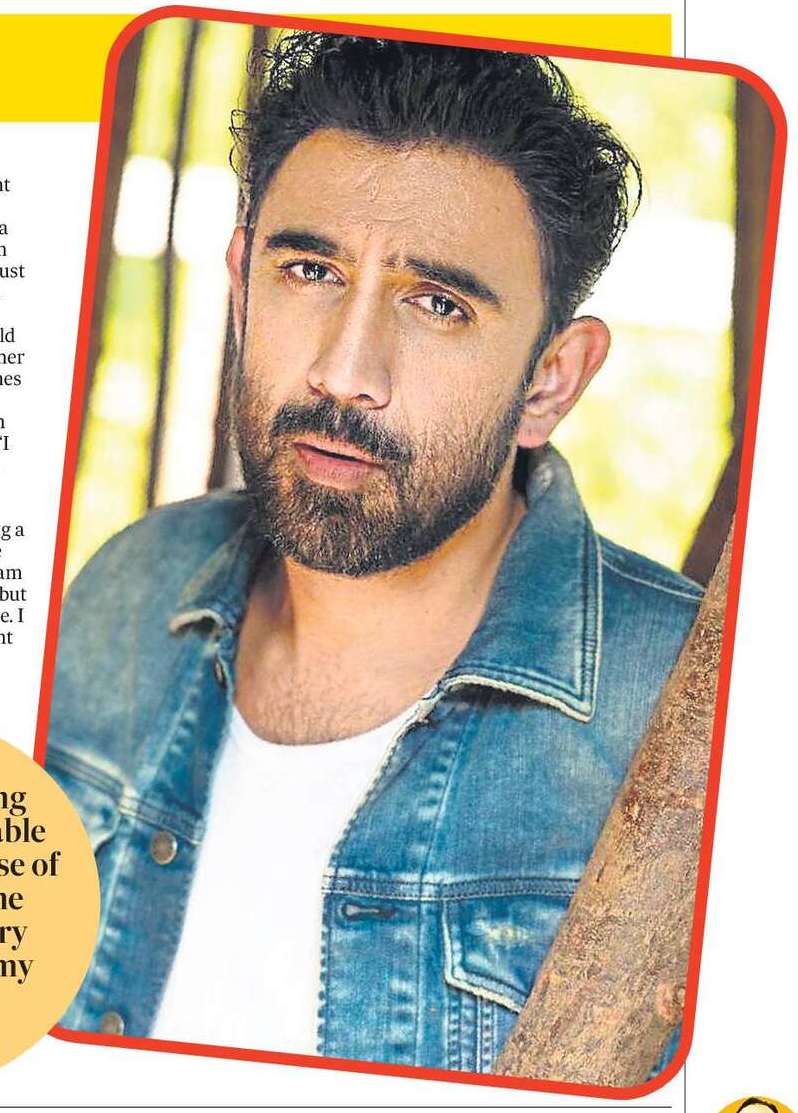
The actor clarifies that he hasn’t distanced himself from rom-coms
Navya Kharbanda (HINDUSTAN TIMES; May 16, 2023)
Around 20 years ago, actor Amit Sadh won hearts as Aditya Bhargav in the TV show Kyun Hota Hai Pyarrr. He has since gone on to do a slew of serious roles in web series such as Jeet Ki Zid and Breathe, among others. In his next, Main, the actor is playing an encounter specialist.
Is it a conscious choice to stay away from rom-coms or romantic roles? Sadh says, “I am not a cry baby, but I don’t really get so many movie options.”
He explains, “When I did Gold (2018), the role of Raghubir Pratap Singh was very charming. The audience liked it. I remember Reema Kagti, my director, asked me, ‘Why don’t they give you such roles?’ I said, ‘I can’t really complain’. I have only been in the industry for 20 years and still have 40-50 years to go. So, I will get more [romantic] roles, it’s not like I won’t be getting any such roles.”
Having cemented his position in the industry as a versatile artiste, is there a particular kind of role that he wishes to portray on screen? Sadh is quick to mention that he doesn’t have any kind of inclination and his only motive is to “entertain”.
“I have shown that I can play a hockey player, Army officer and cop. In Shakuntala Devi, I played a husband... I have been lucky that I got versatile roles,” he shares, adding, “I am an actor, I want to work. I want to entertain, make movies — I want to do everything! I want to do romance, jump off planes, play a psychopath... I want to entertain people, that’s my inclination. I just want to improve and work with great people.”
Going forward, the 39-year-old wants to challenge himself further with the roles he picks and wishes to mix it up.
“You just have to choose from what you get,” he says, adding, “I have a romantic role in the film Sukhee opposite Shilpa Shetty (Kundra, actor), which is also releasing very soon. I am playing a light-hearted role and I am sure my fans are not complaining. I am not sure what the future holds, but as an actor, I want to be versatile. I want to be challenged and I want to do different roles. Fingers crossed, I think things will be good!” he signs off.
There have been thrillers after Kahaani, but it continues to be a benchmark-Vidya Balan
8:18 AM
Madhureeta Mukherjee (BOMBAY TIMES; March 16, 2022)
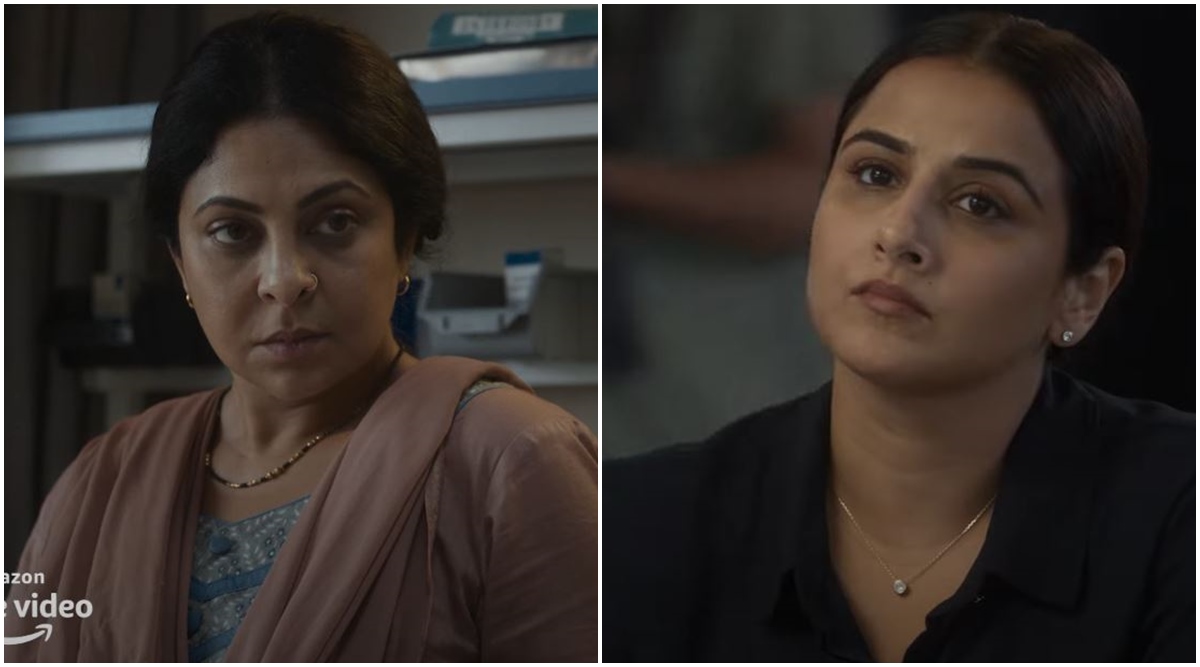
She says she is a greedy actor. The fierceness with which she bites into every role, bringing alive every character she portrays and owning it wholly, we couldn’t agree more with Vidya Balan. It’s her greed for great roles, and the audiences’ hunger to see more of her on any platform that maybe, results in the making of some unforgettable cinema. Vidya leads the show, along with Shefali Shah, in the upcoming, Jalsa, a thriller drama that releases on Amazon Prime Video on March 18. In a conversation with us, she shares her views on women in cinema, in the OTT space, in society, and how the concept of stardom is changing. Here’s a Vidya-view on all these subjects that matter…
This year marks 10 years of Kahaani, a landmark film of your career, and for our cinema. It came at a time when thrillers were far and few in Bollywood, leave alone a woman leading the show with such a compelling story. Ever since, we have had several more, and some of those featuring you. It is indicative of the changing narratives in our cinema, and of course, how you continue to do roles that defy stereotypes and redefine trends.
I was a bit taken aback when you said 10 years of Kahaani. I didn’t realise that, wow! It just seems like yesterday. You are right when you say that there weren’t many thrillers being made back then. And with Kahaani, you had a thriller with a woman at the centre of the story, and not just that, a pregnant woman. People just didn’t know what to expect from it. For Sujoy Ghosh (director), it was a challenge to put the film together. A lot has changed since… now there is a wide range of women’s stories being told. It is so exciting, though I have to say that I hope that the tag of the ‘woman-centric film’ is done away with at some stage. In Jalsa, you have two women leading the story, but it’s a kind of story that could happen to anyone. It is about one incident that just changes your life. Maya (my character) is a journalist. She is self-righteous, and here she is thrown into a sudden situation. It is easy to pronounce judgements on others, but now she is at the receiving end. Every character in this film is under the stress of being judged or judging themselves. Talking about Kahaani, yes, there have been other thrillers, but I think even today Kahaani is a benchmark.
A lot of female actors don’t subscribe to the term ‘woman-centric’ role/movie. In many of your finest films, while you were leading the show, it was the subject and story that took center stage. To put it simply, the subject was the hero, and hence, the films drew the kind of audience they did. Subjects have no gender, so here, the actresses are right in having a problem with the term ‘woman-oriented’. Your view?
I totally agree, and I love the way you have articulated it; I have never been able to articulate it like that. Yes, subjects have no gender and I think universal subjects appeal to me. When the story is not restricted to a gender, and it is about people and humans, it draws me. Like when I first heard the story of Jalsa, I said, ‘This could happen to anyone.’ That’s what hits you hard — the story.
You play a journalist in Jalsa. Over the years, your journey with the media has been interesting. For this part, did you draw any references from your interactions and relationship with the media that you have shared all these years?
Maya is not an entertainment journalist, so there was no exact reference point for me there. A lot of journalists we see around us, and credible names who you think are beyond blemish, are also human. When the camera turns towards them, and they are confronted with certain situations in their life, it would be interesting to see how they would deal with it. Maybe a better way of putting it would be, when the lens of judgement is on them, what happens? Will they crumble? It is easy to put others on the stand, but what happens when you are on the stand, what are the calls that you will take, and what are the choices you will make? Everyone has secrets, and everyone knows their truth — this is the crux of the story and the narrative of every character in the film.
You have worked with director Suresh Triveni in Tumhari Sulu, which was in a very different zone. Jalsa seems to be an intense drama. Is he trying to make a social commentary through this film?
I stay away from any sort of commentaries, but different people will have a different take away from the film and story. At times, people will find layers in everything, and yet, sometimes, they will find nothing at all, so it is subjective. Jalsa is a gripping story, with oodles of drama. I don’t think it is trying to make a commentary. I think it will leave you feeling, ‘Oh, my god, this could be me.’
Currently, there is a lot of conversation around how the digital space has given female actors ample opportunity to play diverse roles, a chance to break the mould, take risks et al . In this case, would you agree that you were ahead of the game, as what we are talking about today — the chances and variety of roles, you took that leap for the big screen long before we were rejoicing in this new wave of content on OTT?
May I say that it is very easy for everyone to now say that. ‘Oh, the OTT space has opened up opportunities for women’. They are basically mitigating the value of the journey that the Hindi film heroine’s arc has gone through. I don’t think the OTT wave has changed anything for women alone, I think it changed the way we view content, and therefore, it has changed content. Obviously, because of that, there is a wider variety of stories being told, and different genres being explored. I think what the OTT space does is that it offers you an intimate, personal experience. When you go into the theatre today, the difference is very stark. You go into the theatre to get the big-screen, heroic, larger-than-life experience. On OTT, you have the luxury of when and what you want to watch. It troubles me when people talk about the OTT space being a game-changer for female actors or female story writers. I don’t think that’s true at all. I am credited with being at the helm of things, but even that, I believe, is about timing and being at the right place, at the right time. And I am not the only actor who has been doing that. Most importantly, there have been others who have followed it up, and we are all in it together.
So, the choices of films that you are making now are irrespective of the medium?
Absolutely! I am medium agnostic. I am a very greedy actor. The platform depends on the content and what sort of film will appeal to what audience. I believe that Jalsa will appeal to a universal audience, it is not just for the Indian audience.
In Jalsa, we have two actors (who happen to be women) who are superb at their craft — Shefali Shah and you — leading the show. It again points to the steady and positive change that we are seeing around us and in our cinema.
Yes, it is because of changing mindsets and evolving audiences, but most importantly, it is reflective of the change happening in society where women are taking centre stage. Today, women are in charge of their own life stories, which is why we are seeing much more of those stories in our cinema.
Do you feel that the concept of stardom has changed, or has been redefined in the current times? And the audience is willing to watch the actors they admire on any medium, as long as they have a great story to tell?
Yes, I think the concept of stardom has changed. The larger-than-life quality of stars has changed over time because of their accessibility on social media. The OTT platform has also created a new breed of stars. If you like an artiste, you will watch what they have to offer on any platform. I don’t think the previous success of a film of an actor has actually mattered ever for their fans. Also, today, I think it’s how exciting your trailer is and what it makes the audience feel is what determines whether they will watch the film or won’t.
Two of your big films released on OTT in the last two years, Shakuntala Devi and Sherni. While releasing a film on a digital platform could be a new experience, do you miss the excitement around a theatrical release, where the box-office numbers keep coming in on a Friday, and there is all that hysteria around it?
Not really. Honestly, it’s the best thing to have happened to Shakuntala Devi and Sherni. Our films were ready, and we had a platform. Both were loved and were very different films, and so is Jalsa. Whether a film is releasing in theatres or OTT, I still feel butterflies in my stomach until I know how the audience is responding to the film. It’s the same nervousness. It’s like you are showing your Simba to the world. The first time you hold your baby out to the world, it will always make you nervous, no matter where and how you show it.
Much like Vidya Balan, Sandra Oh would spend hours talking about the character-Anu Menon
8:08 AM
Four More Shots Please director Anu Menon discusses coming on board to helm two episodes of Killing Eve season 4
Mohar Basu (MID-DAY; March 8, 2022)
Desi audiences remember Anu Menon as the director of Vidya Balan’s Shakuntala Devi (2020) and the hit Amazon Prime Video series, Four More Shots Please. But over the past week, there’s only one way to describe her — the director of the fourth season of Killing Eve. Contrary to what many actors who straddle Bollywood and the West believe, Menon says the difference in terms of work culture is merely a myth. “I think content is made in a similar fashion the world over. It starts with having a vision, getting the best bunch of people and going all out. Killing Eve is an American-British set-up. Initially, I did think ‘What if I forget everything I knew? What if I make a fool of myself?’ But I felt comfortable in my skin thereafter,” starts Menon, who is currently in London.
The Sandra Oh and Jodie Comer-starrer is one of the biggest network shows of recent times. Bringing a female gaze was imperative when telling the story of two women protagonists. While the series previously had writers like Phoebe Waller-Bridge and Emerald Fennell, the latest season has been helmed by an all-female trio — Emily Atef, Stella Corradi and Menon. From its cast to the talent behind the scenes, it’s evident that the series believes in championing diversity.
“I went to the London Film School. I live in London. But I never got to make anything here. I don’t wish to be an exotic Indian in a western film. Neither do I want to make a story about God and honour killing. There is a perception that an Indian should say of a certain kind of story in today’s market. I passed a lot of those things. I want to be hired for my skill rather than my ethnicity.”
Killing Eve ticked the box on that count. The makers were looking for a strong-minded woman director. “I made my presentation; they liked it and gave me the job. It matters to me that it was a meritorious process. I didn’t get it because I am a woman, nor because I am South Asian. I interviewed and got the job.”
She started her innings in Bollywood with London Paris New York (2012), but it was with Waiting (2016) that she felt a shift in the kind of stories she wanted to tell and the way she was perceived. “After Waiting, my agent got me into a lot of those all white studio/network rooms which were not accessible for people of colour easily. I always knew what I was doing but once I got a job and I did it well, things opened up. Someone had to take a chance with me.”
By the time the British spy thriller came her way, Menon was adept at telling women’s stories, complete with the many moods that come with it. But before taking on the project, it was important to understand what lay at the heart of the show that revolves around a British intelligence agent and an assassin. “It’s not as much about the plot as it is about the feeling. It’s dangerous, sexy, and pushes boundaries. In the culmination, all characters realise something profound about themselves. Here are these women who can’t be together, yet can’t be without each other. I held on to that. When you come to a show that’s so successful, you have to adapt to its rhythm and grammar. Even though Phoebe created the show, each of us who have come on board thereafter has the liberty to make it their own. Each of our life experiences is distinct, and our journeys reflect in the show.”
When you’re talking Killing Eve, you have to talk about Oh. The former Grey’s Anatomy star is a hot favourite with women across the globe for her no-nonsense personality. “She is passionate, invested and gives it her all. It reminded me of when I was working with Vidya Balan. Much like Vidya, Sandra would spend hours talking about the character. We perched on the sofa and had a long brainstorming session. Like me, she has 2000 ideas a minute, and all of it works towards culminating into better.”
Menon is set to kick off her next soon with Balan. Rumours are rife that the film will also star Neetu Kapoor. “It has been 10 years since London, Paris, New York. I want to tell everyone who said yeh nahin kar sakti, that in a decade, the world has caught up with women’s stories. The patriarchal imbalance exists, but we will address it and shift it with time.”
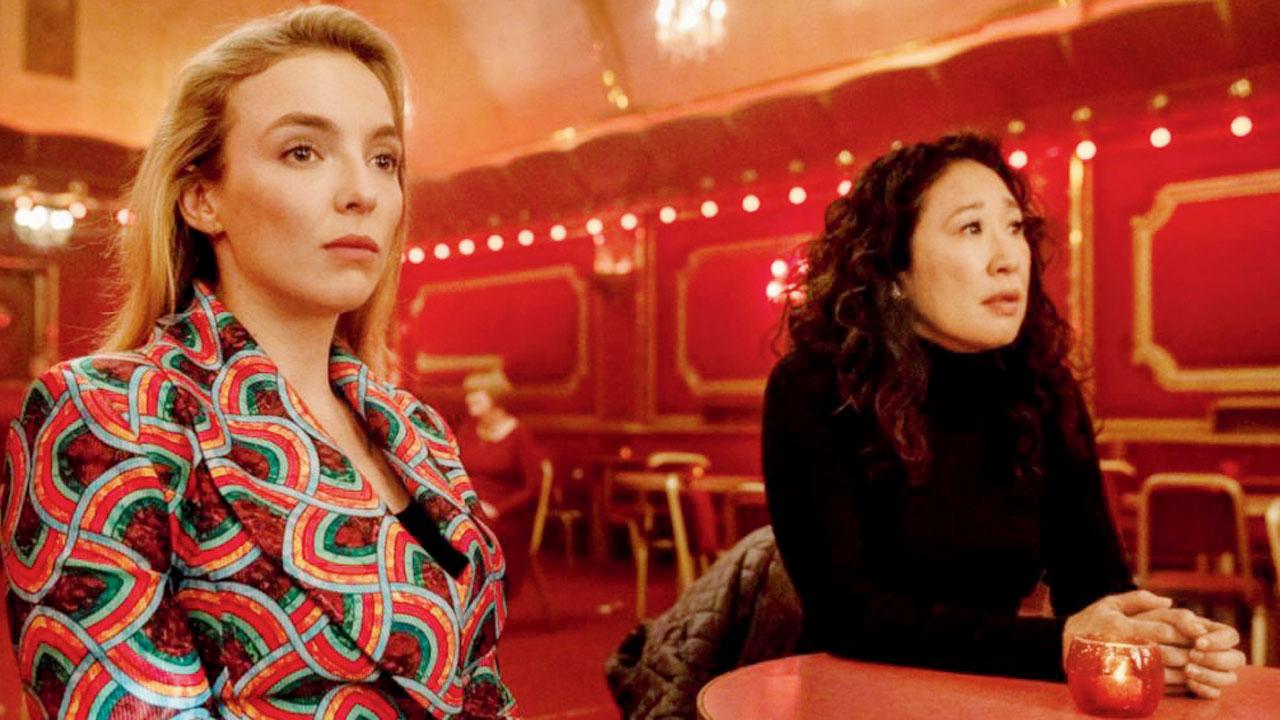
A still from Killing Eve
Channelling your inner goddess is about using your voice and spelling out your choices-Vidya Balan
8:09 AM
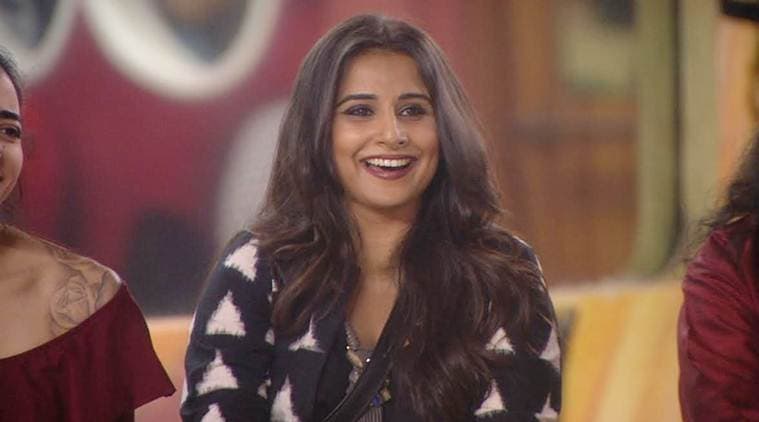
Rachana Dubey (BOMBAY TIMES; October 13, 2021)
While actresses across film industries, age groups and nationalities have played strong characters on screen, Vidya Balan set a standard that few could match. She chose to play mothers who were unlike the sacrificial kind that Hindi cinema was accustomed to. She played love interests, but not the damsels in distress. She essayed women who were not afraid to make choices, who didn’t always tick the socially acceptable boxes. On the occasion of Navratri and Durga Puja, Vidya speaks exclusively to BT about not just the powerful characters that she has portrayed on screen, but also how every woman should channelise the inner goddess within her. Excerpts:
When we talk about channelling one’s inner goddess or harnessing the power within, how do you interpret and explain the concept?
It’s about so many things… It’s about drawing healthy boundaries, learning to say no, valuing yourself more, using your voice and being authentic and unapologetic, or at least, working towards it. It’s also about valuing and spelling out your choices and what you want in life. The thing is, we have been trained to put ourselves after everyone else around us. Channelling your inner goddess means learning to prioritise ourselves without feeling selfish. We have been taught that everyone else should be our priority, but it is for us to realise that our needs, desires and wants can be placed alongside what we do for others. Channelling your inner goddess means acknowledging that you have the right to a life of your choice and dreams, focussing on your own health and taking that break when you are bogged down, asking for help and support instead of trying to be a superwoman.
In recent times, the audience that consumes Hindi cinema is more than willing to embrace strong female characters on screen who live by their own ideals, morals and rules. What inspires you to pick such characters?
I guess I try to practice what I just said, and so, I get drawn to these stories naturally. I have often spoken about how I came to accept myself the way I am and what it took me to do that. You have to be in allowance of your dreams that are beyond you or doing something that no one in your family has done before. You have to know and accept that there will be days when you will be more acceptable to people and some days when you won’t be, and that it’s okay. There will be days when I am angry, or badly behaved or something like that; there will be days when I am intolerant, and days when I am kind, compassionate and giving. All of that is a part of me and should be first accepted by me.
About a decade ago, my mother had put me in touch with a healer. I was going through some health issues at that time. From then till now, I speak to my healer from wherever I am in the world and express what I am feeling. That’s the most transparent space for me as an individual whose life and work is in public glare. It has helped me understand what I am feeling, spell it out and follow what I want to do in most situations.
It’s not about what anyone else wants, but what you want. It’s about choosing that. Doing that has helped me be authentic, live the life I want. Also, that is a gift from my parents to my sister and me - they have allowed us the space to be who we want to be. The fact that I am a woman of a certain size or maybe someone who does not necessarily possess certain skills that are thought of as prerequisites didn’t stop me from wanting to do things my way. I feel most women feel this very restlessness, this unwillingness to settle, and it’s this what is happening in the world around us that has found its way into films because it always does.
Is that why the women, especially the mothers that you have played on screen, have seldom followed a rule book or settled for the shorter end of the stick?
In 2015, during a panel discussion, I remember talking about the change we need to see in cinema, and one of the things I spoke strongly against was the glorification of the sacrificial mother. I have always disliked the idea. Maybe the universe heard me that day. The films that came my way in the subsequent years, including the ones where I play a mother, like in Shakuntala Devi and Mission Mangal, had me essaying characters who wanted things for themselves; they had flaws, and they were thinking, feeling women. Mind you, that did not make them lesser mothers. We see women like that around us all the time. They have been punished and judged for having feelings, desires, which didn’t revolve around others and for not putting themselves behind everyone else. But it’s these women who have inspired other women to make choices irrespective of the repercussions. I remember everyone that I spoke to told me how Shakuntala Devi wanted the most out of life. The point where she says, ‘Agar main amazing ho sakti hoon, to main normal kyun banoon?’ sums it up.
We often set unreal standards for women to meet in every walk of life. Do you think cinema can steer a conversation on accepting women as individuals before being identified by their professions and relationships?
Cinema is already trying to bring about a change in the way we perceive women around us through stories and characters. We see and worship the goddess in so many forms. What we also need to realise is that the goddess is you and me. She is not an otherworldly creature who is perfect. For instance, Maa Kaali symbolises the angry side of the woman, the kind that can wreak havoc. Nothing can really calm her rage when she’s pushed to the brink. But do we let women in real life express their anger amply? The purpose of our mythological and religious scriptures is also to make us understand human behaviour. I think Mahabharata is the most in-depth study of human behaviour and how nothing is right or wrong. It’s about how you see things. Today, we need to look into the nuances and subtle messages that these books actually hold for us. We need to go past our limited views of things. When a woman channels her inner goddess, she leaves no option for the world, but to accept her for who she is. We have to remember that the goddess is not outside; she is within each woman around you, and more importantly, within you.
Women have had to navigate their way through the dense jungle of patriarchy-Vidya Balan
11:27 AM

Madhureeta Mukherjee (BOMBAY TIMES; June 17, 2021)
A decade ago, even in our wildest imagination, we wouldn’t have thought that a top actress would play the titillating Silk Smitha in The Dirty Picture. Vidya Balan did — with guts and gumption, she unleashed herself on the big screen for a film that went on to roar for the right reasons, and we mean, beyond the glory of box-office numbers. It paved the way for more power-induced roles for actresses in an industry where the natural habitat is hero-dominated. After a variety of films which include Kahaani 2, Tumhari Sulu, Mission Mangal and Shakuntala Devi in recent times, Vidya is now stepping into the wild territory, as she plays a forest officer in Amit Masurkar’s (of Newton fame) Sherni, which will premiere globally on Amazon Prime Video, on June 18. In a conversation with us, Vidya talks about women who battle the deep-rooted problem of patriarchy in our society and the sherni that lives within all of them. Read on…
With Sherni, we will be seeing you in another seemingly challenging and rare role, and this time you have crossed the boundaries and stepped into the wild, literally. How was it treading on that path?
It was quite refreshing, and like you said, I have stepped into the wild and it was really unfamiliar territory for me. I had been on jungle safaris and that was my only experience of being in the wild. I have watched documentaries on wildlife to understand that world, but I have never been a part of anything like this before. So, the experience of working on this film has definitely altered my relationship with nature.
Apart from focusing on the man-animal conflict, the film tackles another issue as old as the forest trees — patriarchy. As part of your prep, did you interact with women forest officers to understand the challenges that they face on ground, in a territory that’s largely male-dominated?
Yes, I interacted with the female forest officers, and I was surprised to see quite a few of them. Of course, it is still a male-dominated bastion. I wanted to understand what their job entails, what kind of training they go through and how passionate they are about conservation. It’s a tough job, which often requires them to stay away from their families for long periods of time. In the trailer of the film, you get a whiff of the patriarchal mindset of our society, where we are constantly underestimating women. And no one is to blame here, it stems from lack of awareness. The female forest officers see themselves as someone doing their job and not as ‘female’ forest officers. Yes, it is considered a male-dominated profession as it is physically arduous and dangerous — and we don’t typically associate women with such jobs. Women have had to navigate their way through the dense jungle of patriarchy.
Your character, Vidya Vincent, seems to be restrained, dignified, a woman of few words, but deep down there is a lot simmering. The sherni inside her is waiting to roar. Did you at any point identify with it? Were there situations in life where you were calm on the exterior, but the tigress within was waiting to come alive?
Of course, many times, however, as individuals, Vidya Vincent and I are very different. She is reserved, rarely smiles and feels that the forest is her safe haven. She is someone who would rather not engage with the world. She is not what you call a stereotypical sherni, and you won’t see the obvious manifestation of the sherni within her. When you define someone as a sherni, they are strong, but in an obvious kind of way; Vidya is not like that, and yet, she is a woman of great integrity, is strong-willed and uses her voice where it matters. It’s not like by the end of it, she roars. It is not her personality. She is an everyday hero.
You don’t have to roar to show your might. Power and will can be demonstrated in other ways, too, is what you are saying?
Yes, absolutely! You don’t need to roar to prove you are a tigress. For me, the line in the teaser encapsulates what a sherni is, ‘Jungle kitna bhi ghana kyun na ho, sherni apna raasta dhoondh hi leti hai.’ This line speaks for every woman and this film is also an ode to the faceless, innumerable individuals who go about doing the right thing without expecting glory at the end of it. Every woman might not be standing on the world stage, making a difference politically, climbing the corporate ladder, or facing the camera — she doesn’t have to do something that’s celebrated, yet she can be a sherni. If we are being able to do what we are doing today, it is because of all those shernis in our lives who sacrificed their dreams, but gave us the strength and courage to move on fearlessly. There are women who have navigated their way through families where they literally had no rights and were disrespected, but they endured it all so that their children didn’t have to go through similar experiences. Are these women any less shernis? No! Sometimes you don’t have the tools to break the shackles, but you have the will. That will is what sees you through. For me, this film has redefined what a strong woman and a real hero is.
Last year, your film Shakuntala Devi was slated for a theatrical release, but due to the Coronavirus pandemic, it released on an OTT platform. Likewise, Sherni had to change course and is now seeing a digital release. How do you think the landscape of our cinema is changing, evolving in the new normal, with so many external factors impacting the usual, traditional ways of the film business?
We couldn’t have done anything about it, as this is not a situation that’s been created by the film industry. It is not like the video revolution that happened in the 80s that affected the industry, it’s a pandemic that has impacted all humans and industries, and the film industry is no different. I think OTT platforms offer you a great alternative to showcase your content, especially content that’s ready. At the time of Shakuntala Devi, we didn’t know what it even meant to release a film on OTT. By the time we shot the second schedule of Sherni, we had thought it would get a theatrical release as things were better, but the scenario changed. It’s finally releasing on OTT, and I am so glad we have avenues like these that allow us to take our films to people across 240 countries and earn us new audiences. When theatres reopen, I believe that OTT platforms will continue to thrive and so will theatres. They will always be two different experiences.
Smashing stereotypes, bending norms is what we have seen you do through a lot of your work — The Dirty Picture, Kahaani, Tumhari Sulu, Shakuntala Devi. Do you set out to seek such roles, or do such roles attract you? It is like… this is what we expect Vidya to do — from an audience’s point of view. We call such movies women-centric films, in your case, I think the audience looks at the movie and says that this is ‘Vidya-centric’ cinema.
(Laughs!) I am really humbled by that. But I don’t think on my part it’s a conscious call at all, as I do films that resonate with me. The films that I choose are a reflection of my current state of mind. I was ready to embrace the wild, and therefore, Sherni happened. So, I don’t think that through my films I have made a conscious attempt to smash patriarchy or challenge the status quo, it happened along the way. I am glad and thankful that people are writing such stories and making the films that I believe in. You can’t step out to do these films specifically. In Sherni, you will get to see a new kind of strong woman — the one who goes about doing the right thing. The silent, invisible strong woman. My film choices are a two-way street — where people are writing and offering me some of these stories and I am steering towards it. We meet mid-way, somewhere. Am I seeking such roles? I guess I don’t know the answer to it, and I think it’s a good thing that I don’t.

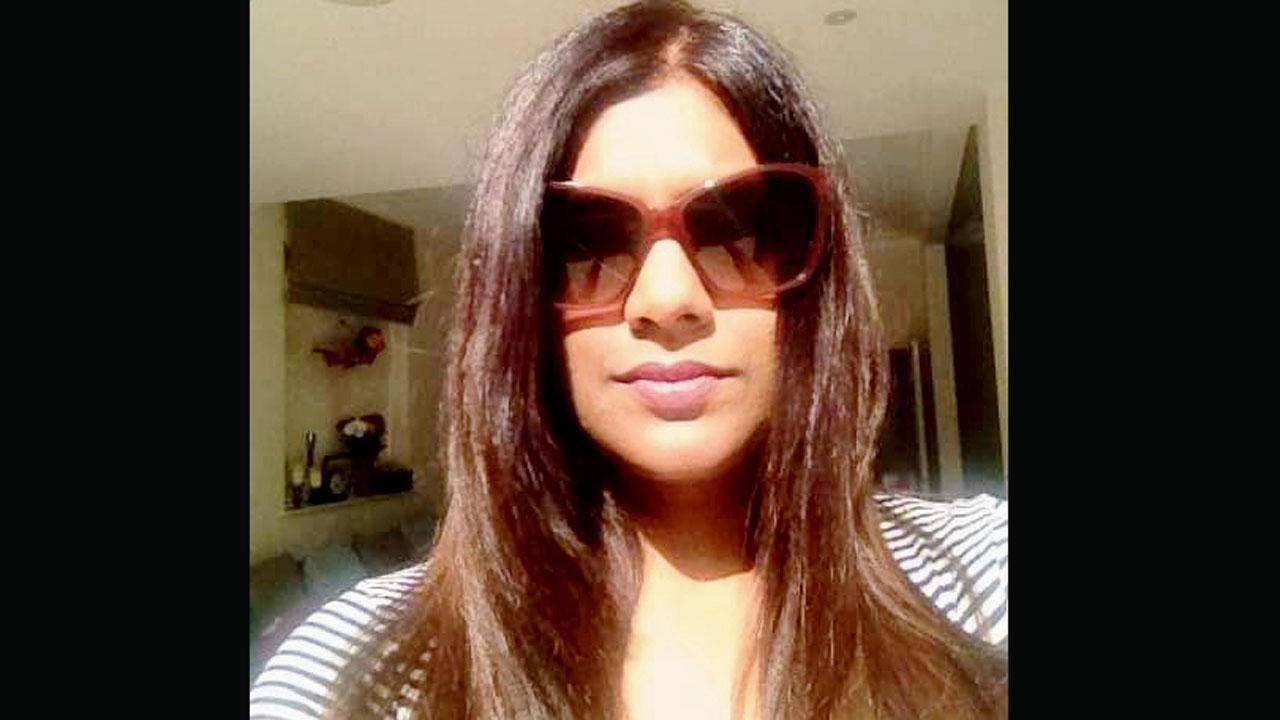
Top casting director Seher Aly Latif passes away
8:21 AM
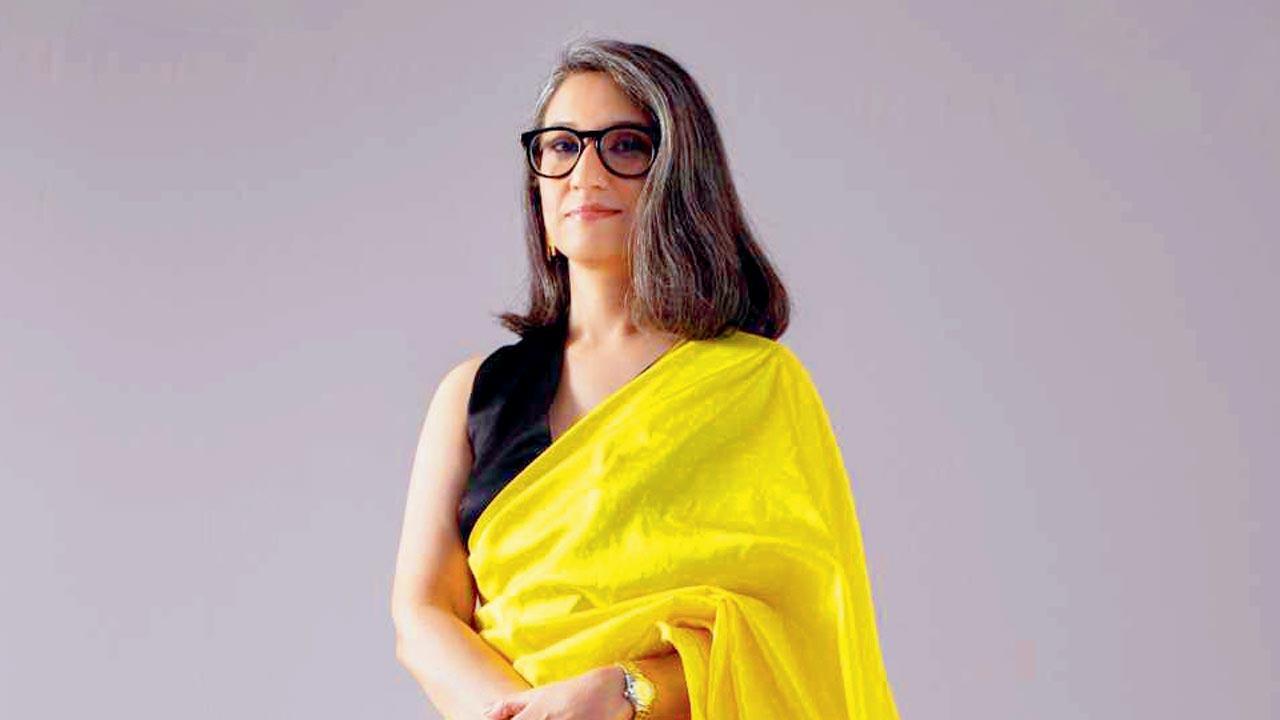
Seher Latif, who succumbed to a cardiac arrest, contributed to a spate of Indian and international projects
MID-DAY (June 8, 2021)
Casting director Seher Aly Latif, known for her work on films like 'The Lunchbox' and 'Durgamati', passed away yesterday due to a cardiac arrest, her associate and director Neeraj Udhwani said. She was in her early 40s. The co-founder of independent production company Mutant Films, Latif backed the Netflix series 'Bhaag Beanie Bhaag', starring Swara Bhasker, and 'Maska', a film for the streaming service, which featured Manisha Koirala.
Udhwani, who directed 'Maska,' said Latif was admitted to Lilavati Hospital eight days ago due to kidney failure. “There was some infection, which caused renal failure. She was admitted last weekend. She was on antibiotics and was recovering. But today she suffered a cardiac arrest and suddenly it was all over,” the filmmaker said.
Latif was known for her extensive work as a casting director on projects like mathematician Srinivasa Ramanujan’s biopic, The Man Who Knew Infinity, starring Dev Patel, filmmaker Gurinder Chadha’s period film Viceroy’s House and Bhumi Pednekar-fronted drama feature Durgamati.
She was the Indian casting associate for acclaimed international projects like Kathryn Bigelow’s Zero Dark Thirty, Julia Roberts-starrer Eat Pray Love, the Netflix series Sense8, season four of the Showtime espionage thriller Homeland and the BBC One/AMC series, McMafia.
Latif’s popular works
- Latif was attached as the executive producer on films like Shakuntala Devi, starring Vidya Balan, and Akshay Kumar’s Gold.
- Some of her international credits include Dev Patel-starrer The Man Who Knew Infinity, and Eat Pray Love, Furious 7, Viceroy’s House, McMafia and Sense 8, in which she served as the Indian casting associate.
- Irrfan Khan-starrer The Lunchbox, and Dia Mirza’s Kaafir, were other offering that Latif worked on.
- Maska, starring Manisha Koirala and Nikita Dutta, is among the Netflix projects she was associated with.
Tribute pour in
- One of the kindest, most loving people Mumbai gifted my life with. Still trying to process this unreal news. Travel on into the light, my dearest, sweetest, Seher. The unpredictable, ghastly shortness of life remains baffling - Nimrat Kaur, actor
- I don’t believe it. Unfair parting with a kind soul and real friend. I hope there is another side - Ritesh Batra, filmmaker
- The heaven will be blessed with your mushy hugs and infectious smile. Still can’t fathom this though. - Nikita Dutta, actor
- Her default expression was a smile. You would always find her smiling. She was one of the nicest, kindest people I ever met. - Neeraj Udhwani, director
The female gaze will help change the narrative in the industry-Sayani Gupta
7:59 AM

Amrita Prasad (BOMBAY TIMES; March 19, 2021)

‘IT’S ABOUT TIME THAT THE PORTRAYAL OF FEMALE CHARACTERS IN FILMS AND TV SHOWS CHANGED’
Sayani has feature films, short films and web series to her credit and she says that working with women directors, writers, and actors is inspiring. She says, “I think the narratives of our shows and films need to change. Aren’t we tired of seeing unrealistic heroes on the screen? Incidentally, I read a quote that said, ‘You don’t see as many fantastic men in real life as you see on screen, and you never see as many fantastic women on screen as you see in real life.’ And that is so true.”
“The constant hetero-normative narrative that has been fed to us through popular cinema, where the unimaginable glorious hero comes to save everyone, is problematic. The women are given the side dish. They are constantly playing the subversions or a subdivision of a narrative which, again, is extremely problematic. So, we as women, must do stuff for ourselves and I think the female gaze in helping change the narrative,” asserts the actress. Sayani urges that it is time to change the way female characters are portrayed.
‘GOOD WORK MATTERS, THE LENGTH OF A ROLE DOESN’T’
For Sayani, it’s not the length of the role that matters, but the gravitas that it brings to the table. She says, “I do independent films where I play the protagonist, and, at the same time, play relatively smaller parts in big films, both with equal zest.
However, I do hope to get big parts in big films. As long as you have enough to do and you’re good at it, you must make something out of it. When I say this, I don’t mean you hog the limelight, but do a commendable job and make your presence felt.”
Ask her if she would like to play a real-life character on screen, and Sayani replies, “I wanted to play Shakuntala Devi for the longest time. I never expressed it out loud fearing someone might take the idea. But Anu Menon had already made a film on the math genius with Vidya Balan in the lead. So that’s done now. But I would like to play Maa Sarada Devi in a film someday. I think she was a feminist, visionary, and, in many ways, tutored and helped push human rights, gender movement and the feminist movement.” Sayani adds that she wants people to know her for the work and look at her with dignity.
‘IT’S UNFAIR THAT MILIND SOMAN LOOKS SO GOOD WITHOUT ANY MAKE-UP’
The actress has shared screen space with Milind Soman in a web series and she fondly describes him as ‘childlike’. Speaking about him, she says, “He is enormously good looking, and it is a little unfair that he looks so stunning without any make-up! You just put him in any frame and his good looks do the magic.”
She further adds, “He is like a child in many ways. When we were shooting, I kept scolding him for not reading his script and not knowing his lines and he would be like, ‘Ab kya ho raha hai?’ We also bonded over our mutual love for travelling, food and sweets. We both are rice eaters and we enjoyed Bengali sweets and all kinds of desserts.”

OTT has been a life saver for a lot of us-Vidya Balan
8:30 AM

Juhi Chakraborty (HINDUSTAN TIMES; January 24, 2021)
The realm of entertainment changed in the last 10 months with OTTs coming to the fore with a lot of force in the event of shutdown of theatres owing to the pandemic. Something that has now made a lot of actors, who have so far stayed away from dabbling with the digital platforms, rethink their career options. Vidya Balan admits that this has indeed brought about a change in the mindset of many actors including herself.
“We were watching a lot of content globally. A lot of the actors were feeling that the content here was not up to the mark, and therefore, we were shying away from doing any direct to OTT stuff. I don’t think the boom has now happened because of the Coronavirus pandemic. I think it has taken it’s time to come to become itself, and we have actually enjoyed the fruits of that during the pandemic,” shares Balan.
The actor says that she is now sure that she would be open to be part of an original OTT project like a series. “I was always sure that I wanted to do something in the OTT space. I was looking for the right thing, and hopefully I will find it soon,” says the 42-year-old.
The actor, whose film Shakuntala Devi, which was originally slated to release in theatres, made its way online because of the situation last year, says that the OTT platforms have been a boon in more ways than one.
“Not just actors but everyone is looking at and considering OTTs positively. Plus, the variety of content that is being made, curated, produced and consumed, means there is something for everyone. It has generated employment because there is that much work for people in the industry,” shares Balan.
She adds, “OTT been a life saver for a lot of us, who could not have afforded to keep our ready films on hold. We got an avenue to release our films and they were widely watched. We don’t know when people will be going back to theatres. Let’s hope it is soon, but OTT has opened up a completely new horizon, and that can only mean good news.”
OTT is necessary for right now, but bade parde ka charm khatam nahin hoga-Sanya Malhotra
8:09 AM

Juhi Chakraborty (HINDUSTAN TIMES; December 10, 2020)
As theatres took a back seat in the Coronavirus pandemic, it was OTT platforms that came to the forefront to entertain audiences. For Sanya Malhotra, too, the possibility of showcasing her work to her audiences became a reality only because of digital platforms.
The actor, who had two releases this year — Shakuntala Devi and Ludo — says, “As an actor, I am very happy that during the pandemic I got to entertain audiences. I was grateful that people could watch my movies and maybe take their mind off whatever is going on in the world right now. As an artiste it is gratifying to entertain people in such circumstances.”
While she admits that digitally released films are not exactly the usual way to connect with the masses, Malhotra asserts that this is the best option available right now.
“Obviously theatrical releases have their own magic, but I really like OTT, too. I like the idea of sitting in the comfort of my home and watching a film with my family. It has its own charm. I am also hoping that with theatres opening, we can get back to normal soon. But this is something major that we all need to fight before everything opens up,” she points out.
The 28-year-old, who was in Delhi with her family for the first four months of the pandemic, is getting back in work mode. While the fate of many films remains uncertain as to when they end up releasing, Malhotra is sure of one thing: that the big screen will never die out.
“That charm will stay forever, because going to a theatre is also an experience. Planning and getting ready and visiting with friends and family. It is an event. OTT is necessary for right now, but bade parde ka charm khatam nahin hoga,” she concludes.
OTT releases find place in Oscar entry selection
8:14 AM

Priyanka Dasgupta (BOMBAY TIMES; November 22, 2020)
Kolkata: No film may have released in most of 2020, but India will still send an entry for the Academy Awards. This is the first year that a good number of OTT releases will be among the 27 films that are currently being viewed online by jury members who will select the Indian entry to the Oscars.
Last year, Zoya Akhtar’s ‘Gully Boy’ was selected as India’s Oscar entry. This year, the jury is being chaired by director Rahul Rawail. According to a source, some of the Hindi films submitted for consideration are ‘Sir’, ‘Shikara’, ‘Gunjan Saxena’, ‘Shakuntala Devi’, ‘Bahattar Hoorain’, ‘Malang’, ‘Chhalaang’, ‘Gulabo Sitabo’, ‘Chhapaak’, ‘Bhonsle’, ‘AK vs AK’, ‘Kaamyaab’, ‘Serious Men’, ‘Bulbbul’, ‘I Pad’, ‘Atkan Chatkan’ and ‘Chintu Ka Birthday’.
Of these, ‘Gunjan Saxena’, ‘Serious Men’, ‘Shakuntala Devi’, ‘Bulbbul’, ‘Gulabo Sitabo’, ‘Chintu Ka Birthday’ and ‘Bhonsle’ have already been released on OTT platforms. Three Marathi films —‘Chippa’, ‘The Disciple’ and ‘Bittersweet’— and two Malayalam movies, ‘Moothon’ and ‘Jallikattu’, are also in contention. Not a single Bengali film is in the race this year, though last year ‘Nagarkirtan’, ‘Tarikh-A Timeline’ and ‘Konttho’ were considered.
Director Nila Madha Panda’s Odia film, ‘Yesterday’s Past’ (‘Kalira Atita’) has been submitted. “It is almost like a silent film about a man and the sea. The film is based on the vanishing villages by the sea,” Panda said.
‘Bittersweet’ director Ananth Narayan Mahadevan said it was important that the film representing a country ticked all the important boxes for an Oscar shortlist. The film had an original subject that had never been explored on the Indian screen. It is on how woman sugarcane-cutters in India are “advised” to undergo hysterectomy to save four working days a month that they may lose to the menstrual cycle.
“It is rooted in its country of origin, is about human rights, tells an emotionally charged story and has an international appeal — these are all requisite boxes for an Oscar jury. It will be a privilege to represent the country with such content that received rave reviews at Busan International Film Festival,” Mahadevan said.
Today's heroines aren't just girlfriends or wives-Madhuri Dixit
8:09 AM

Actor Madhuri Dixit Nene feels it’s a great time for women to be in movies as their portrayal is closer to real-life characters
Shreya Mukherjee (HINDUSTAN TIMES; November 21, 2020)
With a career spanning nearly four decades in the Indian film industry, actor Madhuri Dixit Nene feels it’s a good time for women to be in films as interesting female-oriented narratives are being penned and there is a wide acceptance of such films too.
“Times are changing and women are getting good roles. And these films, be it Badhaai Ho (2018) or Shakuntala Devi, have also done well. It’s a great time for women to be in movies as there are so many films that are being made around their stories,” she says.
The actor goes on to add that there “is a new sensibility” and the roles written for women these days are dynamic. “She’s not just a housewife, girlfriend, malicious woman… the characters are grey like we really are, similar to those we see in life and society. I think that’s great,” says the actor, whose last Bollywood project was Kalank (2019).
Dixit has witnessed many changes in the industry over the years and is happy with the focus now being on real-life stories. But asked about her journey, the actor says “it isn’t easy being in Bollywood”. “The highs here are very high and the lows very low, so it’s important to keep a balance. I would give my family the credit for making me strong, my mom and dad taught me to treat everyone as equal, respect people and always be humble in life. That’s exactly what I follow,” she adds.
Indeed, for the actor, what matters the most is her work, which she loves unequivocally. “What mattered is being in front of the camera, being able to emote and play various characters. Everything else that comes with it is baggage. I mean the glitz and glamour part of it. These things never interested or bothered me. I was just someone in a profession which happens to be acting. My mom encouraged me and gave the right feedback and said, ‘When you’re in the limelight people will both praise and criticise you, so don’t let the praise go into your head and the criticism ever disappoint you. Just be true to yourself and your work.’ That has been the principle of my life,” adds the actor, who is now shooting for her debut web series.
While she shot from home during the lockdown, it was only earlier this month that she stepped out to shoot.
“It’s wonderful to get back to work, but the set is a different place now. These are unprecedented times that call for unprecedented measures. We’re tested before we started shooting, the staff, directors, camera person… all wearing PPE outfits, masks and shields. We all are being very careful,” shares Dixit, who has also been doing her bit to help people in these trying times.
Talking of it, she says, “If we can extend support to others, then why not? These are times when you realise everybody needs to be responsible. Besides wearing a mask, following social distancing and proper santisation, we’ve to be there for each other in whatever way possible.”
Broken, I once walked in the scorching heat from Nariman Point to Bandra-Vidya Balan
8:44 AM

Ballsy Vidya Balan on Bollywood and the walk longer than Chembur to Juhu, or Nariman Point to Bandra!
Mayank Shekhar (MID-DAY; August 29, 2020)
 There's Sahir's 'Yeh duniya agar mil bhi jaaye toh kya hai' kinda quality to the last time actor Vidya Balan felt her thoughts on her professional life totally turn around. On the Sunday after the release of her film Hamari Adhuri Kahani (2015), directed by Mohit Suri — who she says she couldn't "gel with, in an actor-director relationship" — producer Mahesh Bhatt called to say that the film had pretty much tanked in theatres.
This, after a series of back-to-back commercial duds — Bobby Jasoos (2014), the outcome of which had disappointed her the most; Shaadi Ke Side Effects (2014); Ghanchakkar (2013). Unsure of what to do, Balan's husband, producer Siddharth Roy Kapur — a non-believer himself — simply drove her down to the Sai Baba temple in Chembur. Where she just wailed non-stop, totally out of breath. She knew something needed to change about her life.
The penny dropped. "I realised I'd begun to focus too much on numbers. That stress had taken the joy away from what I do — that I like, and enjoy so much!" I didn't ask the exact lane the said Sai Baba temple is in. Which Balan says she used to visit every day of her growing up in Mumbai's eastern suburb.
Glad she brought up Chembur though. For that's where I'm chatting with her (on video) from. She's at her husband's office in Khar, which is also the neighbourhood her parents moved to, while she lives in Juhu. These are heartwarming coordinates for Bombayites, among whom she remains still the 'Chembur girl'.
The now popular term 'outsider' refers to first-generation professionals in the film industry. And they're in huge numbers — lead actors aren't all there is to the movies. Still, there are in fact far fewer 'insiders' of Bombay, who are but outsiders to Bollywood, than you'd imagine. Despite the unmatchable geographical/real-estate head-start.
Especially among heroes, if you may. Even Govinda, the 'Virar ka chokra', is a producer's son. Off-hand one mainstream Bollywood hero from Bombay, but with no family connections to films, I can think of, is Balan's super-hit Bhool Bhulaiyaa (2007) co-star, Akshay Kumar, who grew up in Sion, quite close to Chembur: "Shilpa [Shetty] was three years my senior in school [St Anthony's], although I didn't know her personally then," Balan points out.
 "But it's such a valid observation, I wonder why," she asks, as an answer. "There are various levels of being an insider-outsider, in any case. This debate has left me confused. It's different for different people, right? Also family/financial support makes it easier, if you are not operating from a space of survival. Think it's about how hard you're willing to work, once you get that break. And even how much you're willing to wait out for that break!"
Speaking of which, one of the instant inspirations/reasons to invite Balan over for this edition of Sit with Hitlist was in fact music composer Shantanu Moitra, who recently spoke at length on the reality show Times Of Music, about how Balan had auditioned 75 times for her debut film Parineeta (2005). It was while she was in the front row of a Bryan Adams concert that producer Vidhu Vinod Chopra finally called to say she was on.
Hearing it from the horse's mouth, Bryan Adams has turned into Enrique Iglesias. The number 75, Balan feels, is way off the mark. But yes, Iglesias was playing her favourite track Hero. Chopra insisted she step out of the venue to take her call. She heard the sweetest music to her ears, "You're my Parineeta." Up until then, Chopra had wanted Aishwarya Rai for the part: "He was putting in a lot of money, I was a newcomer, and the film was called Parineeta [after the female protagonist] for God's sake!"
She only has to thank, first, the persistence of her ad filmmaker-mentor Pradeep Sarkar (Dada), who had written the role, based on Sarat Chandra Chattopadhyay's novel, keeping Balan in mind. She'd performed in a series of Sarkar's ad films, plus music videos, starting with Euphoria's Kabhi aana tu meri gully.
She had even assisted him on a Fanta commercial, with Rani Mukerji in it, and where she "learnt nothing on the set". Because the crew, knowing that she was Sarkar's future leading-lady, was too busy taking care of her instead!
"Before my last test for Parineeta, I went to Dada, and said whatever happens, this is also your first [feature] film —just make it with or without me. His wife was there. He looked at her and said, 'Tell her something, tu kya keh rahi hai?' He had more belief in me than I had in myself." Evidently, beyond talent, you need somebody to appreciate it, and offer you a job, basically —just as it takes a village to make both a film, and a star.
Having not formally trained in acting per se, Balan credits Naseeruddin Shah, for instance, for texting her during the shoot of Milan Luthria's The Dirty Picture (2011) that she learn to leave behind her character on set, before heading home. The film remains still her most iconic, and that took everything out of her. Kahaani (2012), in comparison, she suggests, was a breeze, because she had all along been part of the writing process as a sounding-board for director Sujoy Ghosh.
The Dirty Picture, inspired by the life of south siren Silk Smitha, is also iconic because of the line, 'Filmein sirf teen cheezon ki wajah se chalti hain: Entertainment, entertainment, entertainment. Aur main entertainment hoon!" It's an obvious take on hotelier Conrad Hilton's famous quote about three things you need to run a successful hotel: Location, location, location!
"Now, it is my introduction at every event I go to. I had no idea it would become so popular. There were other lines that I thought would. It's all in Rajat Arora's [dialogue] writing." The one I love from one of her films the most though, while not her dialogue, is the tag-line, "Tumhara ishq, ishq; aur hamara ishq, sex?"
Apparently actor Shiney Ahuja had responded with these words after being narrated Ishqiya's script by director Abhishek Chaubey. It stuck. Arshad Warsi finally played the part — vying with uncle (Naseer) for Balan's attention: "I was just amazed by how Arshad mouths a lot of throwaway lines, like it just came out of his head! That's the beauty of his delivery."
Yet, so far as shock value of a film is concerned, towering over The Dirty Picture might well be Paa (2009), with Balan playing Amitabh Bachchan's mom: "[Before shoot] I kept chewing [director] Balki's brains to set up a reading with Mr Bachchan. Mother and son have a very physically comfortable relationship. I just can't hit him on the head, or instinctively pull his cheeks. You normally do that with a child. He is Amitabh Bachchan! We were shooting from Monday. Balki called me to Mr Bachchan's house for a look-test on Friday — to be [finally] followed by a reading. Abhishek [Bachchan, who plays the husband] and I were ready with our costumes, waiting for Mr Bachchan to emerge from the make-up room. When he came out, I told Balki, I don't need a reading. I saw a 13-year-old Auro. Something happened. I'm getting that same feeling [recalling the moment]!"
And these are generally the instinctive/immersive moments that Balan has managed to create, movie after movie. The last time we saw her on screen was as the math wiz Shakuntala Devi. The film had to drop online — instead of releasing in theatres — due to the pandemic. Her film before that Mission Mangal (2019), with a female ensemble cast, plus Akshay Kumar, had her headlining the act — surpassing Rs 200 crore, touching Rs 300 crore, at the box-office.
By all accounts, Shakuntala Devi was equally well-received on Amazon Prime, although nobody knows its viewership figure. Personally, what's the difference that she's discovered between success online, and in theatres?
She says, "The reactions come staggered — well after the date [the film drops]. With movies in theatres, after the first weekend, all conversations are centred on numbers. Also, unlike with Mission Mangal, where my character was fictionalised, Shakuntala Devi was a real person. And so, people read more and more about her, and kept getting back with responses."
To pick a few, I cite mythologist Devdutt Pattanaik, who argued in his mid-day column that Shakuntala Devi's husband actually being gay was conveniently/unfortunately touted as hoax in the film. Balan gently counters, "Shakuntala Devi's daughter [from whose perspective the film has been written, and who partnered on the project] has been very transparent talking about her mother. Why wouldn't she do the same with her father?"
Some people who'd actually met Shakuntala Devi had found her to be reserved, even if witty; rather than boisterous as Balan played the part in the picture: "Maybe they met her at a time when she was not very boisterous for whatever reasons. Maybe she was going through something, I don't know."
Also, there was a phony element of contestable astrology/numerology mixed with her skill with numbers that the film hardly touched upon — let alone debated — from Shakuntala Devi's life: "It is a two-hour film. We wanted to definitely focus on the maths, which is what got her worldwide recognition. The politics, astrology and all of that came much later in her life."
To be fair to Balan, who's not the film's writer, but as she puts it, "People will have various opinions, especially because it is a real person that we're talking about. And I respect that. But then, it would have been a different film. This is the film we chose to make!" Point taken. Possibly applies to a lot of arguments around biopics, actually.
Where Shakuntala Devi does follow a seamless narrative — a natural extension of sorts — is actually in Balan's own current filmography — if you also consider Tumhari Sulu (2017), right before Mission Mangal. What's common to these films — besides feminist subjects — are the roles of almost impossibly secure and sweet men by her side. Whether it's Shakuntala's husband Paritosh (Jisshu Sengupta), Tara's Sunil (Sanjay Kapoor) or Sulu's Ashok (Manav Kaul). There seems to be a feminist film in the Balan mould, developing into a sub-genre of its own. Or too soon to tell? "I think that is my world view. The men in my life have been the same. They have just accepted me and the women around for who they are. I feel that's where it comes from."
Really? No jerk boyfriends, ever? "Yeah, well, it's literally a rite of passage. Unless you go through… I'm trying not to use harsh rude words here. But you know, you have to sift through life to get the real deal!"
 Maybe I'm just trying to locate/shame some douches of Chembur she grew up with! Or let's go back to my current Auro-like obsession: Why aren't there so many Bombay-born/bred superstars from outside Bollywood families? Could it be that Bambaiya Hindi is no good? Compare, say, Cyrus Broacha to Nawazuddin Siddiqui in a Hindi picture, if you may (no knock; just kidding Cyrus!).
Balan laughs. In her case, because she was clear she wanted to be an actor from a young age, she made sure her Hindi was perfect: "My parents have an accent, I don't." Besides, she can speak fluent Tamil, Malayalam, Telugu, Urdu, Bengali, English… What language does she think in? "In English. But on the set, at work, it's weird — only Hindi. I recently did a Telugu film (the NTR biopic), and I had to keep translating Telugu into Hindi in my head first."
If it wasn't for a string of bad luck, which ironically led her thereafter to be considered jinxed — having debuted opposite Mohanlal, and with around multiple Malayalam films signed up, on that account alone, Balan was once all set to kick off her career, between 2000-03, as a South Indian star. The Mohanlal movie, after being extensively shot, got shelved. All other producers backed off.
In the Tamil industry, Balan had been signed up by veteran K Balachander for two films. Subsequently, dropped from both. There were two other films that she got replaced from, after having shot for their first schedules. She also walked out of another, realising on the set, that it was a sex-comedy: "I got sued at 22!"
It reached a point that her parents landed up in Chennai at the office of one of the producers who had fired her. He simply remarked: "Just look at her; does she look like a heroine?" "For six months, I didn't look into the mirror. Broken, I once walked in the scorching heat from Nariman Point to Bandra, like a [revelatory] scene in a film — just to clear my head." That's 18 kilometres straight.
She did travel a much further distance, only few years later though. After Rajkumar Hirani's Lage Raho Munna Bhai (2006), she bumped into the same 'look at her face' producer at the airport, who right away offered her a film [opposite Kamal Haasan]. "I said sure, speak to my manager!" Kamal Haasan called later. She couldn't do the film: "My father felt a great sense of vindication. They've brought us up to feel the world's fair."
It rarely is. It also depends on how you look at it. Behind all the 'Miss Congeniality' exterior, if you observe her 15 years as a movie star, Balan comes across as one of the ballsiest in Bollywood. And yet never making a lamenting event of herself — almost disarmingly turning on its head the simplistic grammar/binary of victim and oppressor.
She's had a fair share of trolling — mainly body-shaming, style-policing online, and in the mainline press — a reason, I'm told, she rarely reads anything about herself. Whether any of this targeting has to do with groupism/favouritism, it's essential that this bullying aspect of the profession is being brought to light. As it has been, lately.
That's one of the reasons an old video-clip of her at a film-award show, being called out by hosts Shah Rukh Khan, Saif Ali Khan, for her tacky costume in the film Heyy Babyy (2007), started doing the rounds online. She looks visibly pissed in that moment. Such shows are typically scripted with celebs in the audience told in advance about what to expect for an impromptu engagement/act. Not the case?
"I'm a sport, and I was fine with it actually. But when I went there, I realised there were a couple of other contenders [for the worst dressed] award as well. They said they couldn't give it to them, because so-and-so, and the people around them, will get upset. I felt cheated and angry. I thought, now, that is a clear case of — and it didn't occur to me then, because I don't look at the world through that prism… I don't know, what is it called, nepotism?" Balan laughs.
OTT releases back in theatres: A viable option?
8:48 AM

We ask experts about the feasibility of OTT-to-theatre releases
Rishabh Suri (HINDUSTAN TIMES; August 27, 2020)

Divided opinions
Shibasish Sarkar, CEO, Reliance Entertainment, says it depends on the choice of the platforms. “When a producer has sold the rights of his movies, they lie with the OTT platforms. If they want to release, they may... Unless it’s not in the contract, it’s not the producer’s choice,” he tells us.
Earlier this year, Baaghi 3 had just released when the Coronavirus outbreak hit the country and theatres had to be closed. Actor Tiger Shroff had told us then that they were hoping to come back to theatres, even after it came on an OTT platform. “The bigger picture is the safety of people... Let’s see once the situation settles; perhaps we may re-release,” he had said.
 Meanwhile, producer Anand Pandit, who has decided to release his film The Big Bull on OTT, says he is up for re-release of such films theatrically. “Why not? It depends on the contract you have, and also whether it’s viable... But you have to do your analysis. If your films is more B- and C- centric, single screen type, then it is a good thing to consider; they might not have seen it on OTT,” he reasons, adding, “Producers could also buy back the rights, but not at the same price.”
Director Tigmanshu Dhulia, whose film Yaara released directly on a digital platform recently, says chances look slim. “It depends on when theatres will open, and how much content is there to exhibit... There might be some chance of these OTT films releasing, but it’s slim. So much money will have to be put on marketing,” he says.
Theatre owners, on the other hand, are apprehensive if OTT-to-theatre releases would work. Manoj Desai, executive director of G7 Multiplex and Maratha Mandir cinema, Mumbai, says, “If people are getting to watch films in their bedrooms, why would they come to theatres? The public won’t come to theatres in the beginning when theatres reopen as everyone is scared. Also, we don’t know what kind of [social distancing] guidelines we’d get, like seat people keeping one vacant in between. How will a couple sit? They would prefer to watch it comfortably on digital... I have three theatres with a capacity for 1,000 people; it will come down to 450. How will I accommodate everyone? I will have to incur charges on air conditioning and maintenance, too.”
Presenting lockdown list - Dil Bechara, Special Ops emerge most popular film and show
8:43 AM

As stay-at-home period runs into its sixth month, viewership tracking firm reveals Dil Bechara, Special Ops have emerged most popular film and show
Mohar Basu (MID-DAY; August 26, 2020)
 In a domino effect of sorts, the Coronavirus lockdown caused a shift in the entertainment consumption patterns of the Indian population. A country that has had more than its fill of dramas about shape-shifting serpents and family feuds turned to digital entertainment, thus discovering the grim journey of Hathoda Tyagi or rooting for Sushmita Sen as the unlikely queen of a drug cartel. As we enter the sixth month of lockdown, it is only fitting to determine which series and direct-to-web releases grabbed maximum eyeballs and dominated the mainstream consciousness.
 Refusing to divulge numbers, Shailesh Kapoor, CEO, Ormax Media, reveals that direct-to-web releases, though a recent phenomenon in the Hindi film industry, found an eager audience. "Dil Bechara has been the top film by a wide margin, followed by Gulabo Sitabo, Extraction, Shakuntala Devi and Gunjan Saxena: The Kargil Girl, in that order. These are based on estimates," he says. The results are arrived at basis the social media buzz generated by each offering, its reach and appeal.
Even as Paatal Lok captured the imagination of the country post its May 15 release and Jitendra Kumar sealed his position as an Internet star with the endearing Panchayat, Kapoor reveals that it is, in fact, an espionage thriller that tops the list of the most-watched Indian web series. "Disney+ Hotstar's Special Ops fared the best. Amazon Prime's Paatal Lok comes second, followed by Voot Select's Asur." Amazon Prime's Panchayat and Disney+ Hotstar's Aarya round off the top five shows.
He observes that TV consumption increased by 40 per cent during the lockdown, with viewers tuning in to news on a daily basis. The top five television offerings between April and June, when old shows were being rerun, were Ramayan (Doordarshan), Mahabharat (Doordarshan), Taarak Mehta Ka Ooltah Chashmah (Sony SAB), Mahabharat (Star Plus) and Shri Krishna (DD). "With fresh episodes being aired from July, Kundali Bhagya has become the most-watched show followed by Taarak Mehta..., Anupamaa, The Kapil Sharma Show and India's Best Dancer."

I would have liked to do songs but things are so controlled in the Bollywood music industry...-Karan Kulkarni
8:14 AM

Raat Akeli Hai and Shakuntala Devi's background score composer, Karan Kulkarni says to do what he does, you need to love movies as much as music
Aastha Atray Banan (MID-DAY; August 2, 2020)
 "Making background scores… it all happened by accident," says Karan Kulkarni. A fortunate accident it would seem, because Kulkarni is the man behind the scores for Abhishek Bachchan-starrer Breathe - Into The Shadows, and now, Amazon Prime's upcoming film Shakuntala Devi and Netflix's Raat Akeli Hai. Both released this Friday. The Punekar, who moved to Mumbai to make it as a musician, tells us why he shifted tracks.
"I would have liked to do songs, and I have done many, but things are so controlled in the Bollywood music industry, that only a few directors manage to get their songs into movies. So here, I am, doing background music," he laughs, adding, "I guess, it's best to adapt."
 Since Kulkarni moved to Mumbai nine years ago, he has given music for a short film directed by Vasan Bala. This was after he returned from Australia where he signed up for a music production course. He then started assisting music director Amit Trivedi, but it was with Bala's Peddlers in 2012 that his career truly kicked off. "That movie never released, but it gave me the chance to do something. Then I did Aligarh and Shahid, and it all took off from there."
He also may have been well accustomed to the wily ways of the music industry, and thus, started composing jingles for brands like Amazon and Flipkart. "I did Tumhari Sulu and Mard Ko Dard Nahin Hota, but as I said, it's all very controlled here—how much work a person actually gets [depends on other forces]. Web series have opened up the floor, and the bar is raised high, since you are competing with the best in the world. For example, Stranger Things, which has a great background score, is available to watch on the same platform as my work," says the 34-year-old.
Ask him what makes a music composer different from one who makes background scores, and his answer is deceptively simple. "You need to love movies! Otherwise, how will you know what fits with what? You also need to be able to tell a story through music—and be aware that change is constant, as emotions keep changing. So your music has to based on what's happening on the screen."
Keeping this in mind, Kulkarni's score for Breathe is more "psychological", with character themes for everyone. For Raat Akeli Hai, which is a murder mystery starring Nawazuddin Siddiqui and Radhika Apte, the music had to be darker. "For Shakuntala Devi, everything was more upbeat and positive. There is a certain brightness to it."
Personally, Kulkarni is inspired by music that is technology-driven, so composers like Trent Reznor are high on his listen list. After all, who can forget the brilliant score Reznor gave for Social Network, where the piano melody harbours the power to give rise to an emotion. And Kulkarni has made good use of technology this Coronavirus lockdown. He and his team completed the full score for Shakuntala Devi in four months of lockdown, sometimes going to a studio, but mostly working out of their bedrooms. "It was quite tricky, but we managed. We exchanged samples, and put it all together. It has been a lesson."
Here on, Kulkarni has decided to take on less work. "There are a few projects that have come up, but I am going to take it slow. I am utilising this time to study. I am practising guitar, and also working on the tabla, which is a brand new instrument for me. After a very long time, I am a student again, and I am completely enjoying it."
Creative liberty: How much is too much for a biopic?
8:39 AM

Directors feel a film on a true story shouldn’t over-dramatise real incidents
Juhi Chakraborty (HINDUSTAN TIMES; August 18, 2020)
 The recently released web-only film Gunjan Saxena: The Kargil Girl courted controversy after the Indian Air Force (IAF) objected to the portrayal of its work culture in it. They said that in a bid to glorify the screen character of ex-Flight Lt Gunjan Saxena, the film “presented some situations that are misleading and portray an inappropriate work culture, especially against women in the IAF”. Another recent project, Shakuntala Devi, too drew criticism about how the over-the-top drama overshadowed the brilliance of the legendary mathematician.
Thus arises the question that when it comes to real-life stories and biopics, how much creative liberty should a director or writer take?
 Tigmanshu Dhulia, who helmed the biopic Paan Singh Tomar (2012), says it’s subjective, adding it should be fine as long as one is not deviating or changing history. “If a film is on a person or an event which not many know of, then I could take a lot of liberties because nobody knows about that person. But fictional elements should be minimal. You may fictionalise a private moment, but beyond that one should not, as then it becomes unethical,” he says.
 Lamenting how Bollywood films, which claim to be on real life, lack research, director Ananth Mahadevan says many get carried away. “I took the pain to do so much research when I made films such as Gour Hari Dastaan (2015) and Mee Sindhutai Sapkal (2010). Bollywood directors somehow feel it is okay and well within their rights to romanticise the subjects they pick up, whether it is a sportsperson or an Air Force pilot or mathematician,” he says, adding, “They feel it’s alright to go over-the-top and over-dramatise situations. They don’t care if something is authentic, they think creative liberties can be stretched.”
 No stranger to dealing with real-life stories, the man behind films such as Shahid (2013), Aligarh (2015) and Omerta (2018), Hansal Mehta says, “When you make a true life story it is about the intent of the filmmaker. It should be to actually tell a story and to let the world know of the person in a better way.”
 Filmmaker Ali Abbas Zafar says there are two types of films, one inspired by real stories which can be fully fictionalised, and others completely based on reality which go on to become biopics. “I think as a filmmaker what is important is to have that clarity of thought. If you dabble in something in hardcore reality, I think you need to be 100% authentic to the story. If you are making something loosely based [on real life] then, as a writer and director, you can take the liberty of making a film which has combination of fact and fiction,” he says.
Echoing the sentiment, director Vivek Agnihotri says while there is no written rule about how much is too much when it comes to creative liberty, there is some restraint one should show while recreating a real-life story. “One can take leeway as long as it does not tamper with the original story. A bit of tweaking is fine with dialogue and scenes, but it should be in tune with reality,” he shares.
Does OTT takes over credit of a film?
7:11 PM

We figure out whether OTT platforms are overshadowing production houses on their own projects, and how much of it is fair
Juhi Chakraborty (HINDUSTAN TIMES; August 12, 2020)
 The Coronavirus pandemic and the subsequent shutdown of theatres have resulted into a beeline of films releasing on OTT platforms. And even before this present crisis, several films that were released on OTTs were either tagged as their presentations or called originals. This brings us to the question whether a project’s creative team takes a back seat when a film releases on an OTT? Has it become now more about the platforms and less about the films?
Ajit Andhare, Chief Operating Officer Viacom18 Studios, whose digital content brand- Tipping Point, has produced a number of ‘originals’, says from a makers perspective, you would want due credit being given.
 “Not just on platforms but also on various marketing collaterals such as the trailer, posters, the visible assets that you have created. The platforms will argue they are building their ‘original’ branding. The idea is to place it in front of consumers as what the platform is offering. That’s the lens through which they look at it. I think we should find a way of co-existing because I don’t think by giving credit to makers you’re taking away anything from the platform. I think proper representation of that collaboration is the responsibility of people in control of these decisions,” he shares
There is a way one can deal with this, feels Siddharth Anand Kumar, Vice President - Films & Events at Saregama India Ltd which owns Yoddlee Films, whose recent productions Axone and Chaman Bahaar released on an OTT platform.
 “The onus of building a brand is on us. Of course, when a film releases on OTT, the platform does its own marketing and a production house does its own marketing, so that should not stop. If a producer does not drive for his brand for an OTT release then they are being myopic and they will get wiped out. They won’t be able to sustain,” Kumar muses.
A lot of actors’ films, originally meant for theatres, made its way to the OTTs in the last few months. Actor Kunal Kemmu, whose film Lootcase skipped theatrical release, says that it is too early to say whether OTTs are indeed overshadowing films.
“There are certain films that are made for platforms and they are going to be part of the platform’s creative content, while there are now films which are acquisitions of OTTs. So, it remains to be seen what happens when we get out of the current situation,” the actor says.
Producer Anand Pandit feels that there is no question of a producer ever taking a backseat when it comes to their films. “There are two aspects to this — from a creative ownership point of view, from the time a project is conceived till the time it releases and even after, it remains the producer and team’s creative product. That never changes. The other aspect is the success of the film — for box office or OTT the one thing that assures eyeballs is awareness and recall,” he says, adding that for OTT since there are no ticket sales, word-of-mouth factor is huge and so is awareness, therefore one has to remain involved at every point.
The makers of recently OTT released film, Shakuntala Devi feel that there is no point cribbing about it as it is a win-win for both parties. “I mean we don’t see a problem with it. We are releasing a film on an OTT, it still remains our film. As a platform which is taking the film forward to the audiences, they will have some right over the film,” says Vikram Malhotra, CEO of Abundantia Entertainment.
Uri was a great film and I am a fan of Vicky Kaushal's work. I will be thrilled if he watches Avrodh-Amit Sadh
8:36 AM

With Avrodh depicting the 2016 surgical strikes, Amit Sadh says he is unfazed by comparisons with Vicky Kaushal's Uri
Letty Mariam Abraham (MID-DAY; August 4, 2020)
It has been a busy month for Amit Sadh. After Breathe - Into The Shadows, the actor had three more releases — Shakuntala Devi, Yaara and Avrodh: The Siege Within — all in a span of four weeks. "When I didn't have work, people complained that they don't get to see me. So, I'm sure my fans will be thrilled to see my work back-to-back. All I did was to submit to the masterplan that the universe had for me," grins the actor.
His latest series on Sony LIV, Avrodh, a retelling of the 2016 surgical strikes, is based on a chapter from Shiv Aroor and Rahul Singh's book, India's Most Fearless. The nine-part series, which was conceptualised after eight months of research, was ready since late last year. "I was offered this role when I was lean and weighed about 72 kilos, and was filming my cameo in Super 30. The director [Raj Acharya] gave me pictures of men in Special Forces who had big builds. That is when I took the challenge [of bulking up]. My brother, who is in the Indian Army, introduced me to someone in the Special Force units. Their training protocol, manner of functioning, orders and responses are quite different from regular armed forces."
Before facing the camera as a Special Force officer, Sadh read India's Most Fearless as part of his prep. "I have read both their books [in the series]. Their research in the books has been accepted by the army chief, and several others in the armed forces." The actor reveals arrangements are underway for a screening of the series for the army personnel.
The 2016 Uri attacks has already been depicted on the big screen with the much acclaimed Uri: The Surgical Strikes. Comparisons with the Vicky Kaushal-starrer do not bother Sadh. "I am like Arjun with my eyes trained on the target. We didn't make Avrodh keeping such comparisons in mind. Uri was a great film and I am a fan of Vicky's work. I will be thrilled if Vicky watches the series," he says.
While Abhishek Bachchan-fronted Breathe 2 has its share of fans, the series was panned by critics for its contrived storytelling. Says Sadh, "I have only read the audience's reviews, and they have loved it. I only consider the views expressed by the audience, my director, and the studio. With due respect, I will not [pay heed] to criticism by five people, who are doing the job of giving star ratings. I prefer to know whether my fans liked my work or not."

I was intrigued by Anupama Banerji's growing up years-Sanya Malhotra
7:55 AM

Playing Anupama Banerji in Shakuntala Devi, Sanya Malhotra discusses bringing the unusual mother-daughter relationship to screen
Uma Ramasubramanian (MID-DAY; August 1, 2020)
With Shakuntala Devi, director Anu Menon introduced us to the woman who had a way with numbers. But where she has celebrated Devi's achievements in the field of math, the director has also deftly showcased the protagonist's difficult relationship with daughter Anupama Banerji. Sanya Malhotra, who plays Banerji in the Vidya Balan-led film, says she was fascinated by the unconventional mother-daughter relationship.
"I was excited to understand her psyche because she must have gone through various experiences as she grew up with a famous mother. As a child, she used to often travel with her mother to the shows. I was intrigued by those years and how she rationalised it all. Anu helped me in prepping for the character; we developed a backstory to her. I also met my friends who shared a similar relationship with their mother," says the actor. Malhotra, who traded her signature curls for fringes, believes the styling and make-up brought her closer to inhabiting her character.
In her first collaboration with Balan, the actor notes that they wonderfully fed off each other's creative energies, thus bringing a spontaneous quality to the mother-daughter equation. "Initially, I was nervous about sharing screen space with Vidya. But the nervousness disappeared on the first day of shoot; she is a brilliant co-actor who has the ability to ground you with her energy."
Subscribe to:
Posts (Atom)