Showing posts with label Shakun Batra interview. Show all posts
Showing posts with label Shakun Batra interview. Show all posts
Fawad Khan asked me, ‘Is the homosexuality a whisper or a shout?’-Shakun Batra
4:15 PM

Natasha Coutinho (HINDUSTAN TIMES; March 17, 2026)
As Kapoor & Sons clocks 10 years tomorrow, director Shakun Batra reflects on the making of the family drama, starring Rishi Kapoor, Fawad Khan, Sidharth Malhotra, Ratna Pathak Shah, Rajat Kapoor, and Alia Bhatt.
“There was a two-year gap between when it was written and when it finally got made,” Shakun reveals, adding, “Many actors turned it down. Actors were not comfortable playing homosexuals back then. At one point, I thought I’d never get to make it.”
Eventually Fawad came on board after a brief but defining conversation. “He asked me, ‘Is homosexuality a whisper or a shout?’ I told him it’s a whisper and he agreed immediately,” Batra shares, adding, “We didn’t show anything off-putting. The scene where Fawad breaks down in front of Ratna Pathak Shah saying he isn’t the perfect son, I watched it from the lens of an audience, not a filmmaker.”
The filmmaker also fondly recalls working with late veteran Rishi Kapoor. “There wasn’t a single day when Rishi ji and I did not argue on set, but after watching the film he showered me with so much love... His prosthetics were done by Greg Cannom, the Oscar-winning makeup artiste who worked with Brad Pitt in The Curious Case Of Benjamin Button (2008). Even Neetu ji (Kapoor, Rishi’s wife) didn’t recognize him in the get-up.”
Is Shakun Batra’s series on Ma Anand Sheela shelved? Here’s what he says
8:32 AM

Rishabh Suri (HINDUSTAN TIMES; April 4, 2022)
There was a buzz around director Shakun Batra’s web series on the life of controversial Godman Osho and his disciple, Ma Anand Sheela. Actors Alia Bhatt and Aamir Khan were rumoured to be headlining the project, but the buzz fizzled out soon.
Ask Batra about it, and he says, “The story is very close to my heart. Of late, I didn’t have the time, as I was finishing Gehraiyaan. It’s something I do want to venture back into. I don’t know the timing of it, I don’t know if it’s next or after that, but it’s close to me.”
Like this web series, the 39-year-old’s choice of film subjects has always been offbeat — Ek Main Aur Ekk Tu (2012), Kapoor & Sons (2016), and Gehraiyaan, for instance. Does he ever get advised to make more mainstream films? “The idea is to never make mainstream [films], it’s always about what’s playing on my mind, what I feel and the story I am keen to tell... I am fortunate to have people who support me. Whether a film becomes mainstream or not, that’s something you can never know. A film gets accepted [by the audience] all of a sudden, and that makes it mainstream,” says the director.
He cites the example of Kapoor & Sons, which dealt with subjects like LGBTQI+ and infidelity themes. “It was considered extremely independent, but did much better than some films considered mainstream. So, I think we have to tell interesting stories. The films that I make will never be massy or entirely independent. I exist somewhere in between. With every film, I get surprised, which side the audience will put it on,” he ends.
This notion that a big film is for the big screen & a small film is for the small screen, that is going to change-Shakun Batra
8:33 AM
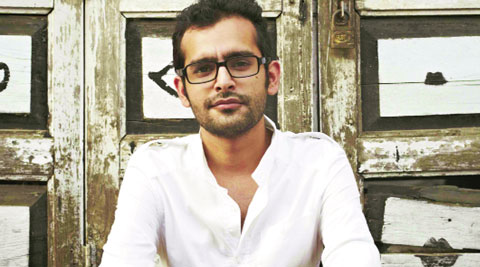
Madhureeta Mukherjee (BOMBAY TIMES; February 8, 2022)
He doesn’t claim to make tentpole films replete with elaborate song and dance moments. However, his stories are infused with several tender, yet emotionally powerful moments to hold on to, and in his own words, “It takes you on an emotional journey and makes you connect with characters and relationships.”
His last directorial was Kapoor & Sons, and now, the upcoming Gehraiyaan, an emotional and intimate drama that releases on Amazon Prime Video on February 11, seemingly dives into the deep end of love and relationships. And yes, it’s complicated. Read on…
From what it appears, the film delves with a certain maturity into the complexities and messiness that creep into a relationship. Has the attempt been to give a new voice to the way grown-up relationships and love is depicted on screen?
Yes, that was the intent from the word go. I had been thinking about the kind of oversimplified version of relationships we have been watching, and I felt that I wanted to make a grown-up film about grown-ups and see relationships from where I am today, at 40. I felt like all relationships came across like they were in their twenties. I constantly felt starved for stories that reflected more mature and complex relationships. That was a beginning point for me. I hope that comes across.
The last line in the trailer where Deepika asks Siddhant, “Are we just messed up people,” and he turns around and tells her, “ Haan, shaayad.” There is no pretence, it comes across with ease on screen, but at the same time, carries a lot of weight and depth. In our cinema,we seldom see characters baring their flaws and broken selves. And, of course, showing infidelity on screen has its challenges. Were there any moments of uncertainty about how it would unfold, what would be the reactions and how far could you go with the idea?
You are right, it carries a certain amount of weight and also gives you an insight into these characters. These are characters in their early thirties who are carrying the weight of their past, and they are aware of it. We wanted to make a film about relationships in your early thirties, and you know, physicality, your body and desires play a huge part. We have shied away from it, including myself, in my first film Ek Main Aur Ekk Tu. This time around, it was very important for me to make sure that I address intimacy in a way that comes from these characters and helps take the story forward. I was scared and shy, and I started reading a lot and understanding how it was being done in the West.
And then, the idea of getting an intimacy director on board came about?
Yes, I came across the idea of an intimacy coordinator in a post #MeToo world, and then, I called my very dear friend Dar Gai, and I brought her on board to collaborate. It made my life easy as we sat down and chalked out a process, routine and workshops. Those things are no different than a trust-building exercise. You create a safe environment for people to feel vulnerable, you create boundaries and understand consent. I was keen to also take a step in the right direction as a filmmaker and try to reform the system in whatever small way we could. As we do more grown-up storytelling, these things like having an intimacy director on board will become a more integral part of filmmaking. Right now, we are talking about it as it’s still new. My hope is to normalise it, so it isn’t a conversation.
In a film where the core lies in the interplay of emotions, I would assume that a lot of spontaneity unfolds on set. Even if there is a very well-etched-out character on paper, eventually, in front of the camera there could be ample room for improvisation, right? That, I guess also explains why your actors have been saying that you are a director of many takes...
Honestly, I am ambitious about where I’d like to see my actors go in their scenes. I want them to go to places where I haven’t seen them before, and sometimes, that doesn’t happen in take 5 or 6. I love this David Fincher (American director) quote where he talks about how we make these huge sets, we write our scripts, actors come and we put them up in hotels, and we are spending thousands of dollars in a day, and it’s not so that everyone can quickly run back. No, you do that so that you have an environment where you can come closest to the best version of the scene and story. I do have my own OCD sometimes, but I also know that my actors are workhorses. They wouldn’t be satisfied if they didn’t get to a place where they felt that they justified the scene. I have a process that is demanding, and I am not apologetic about it. It’s not like we are repeating the same take, we are trying to arrive at a take that is a little more nuanced and textured, and those are the things that I love.
Do a lot of your own life experiences go into writing such characters that are deep and complex?
For me, filmmaking is a way of exploring myself. And I think it would only be a half-interesting profession if I didn’t use the movie to do that for me. It is so fascinating that we do not do 9-5 jobs, instead, we are in a profession that makes us delve deeper into our own psyche and feelings. So, a part of the reason and as hard as it is to come up with a story, I really feel that the most rewarding part of making a film is that it changes you. It has an impact on your life, it changes who you are and makes you come to question things that you didn’t even know you had in your mind. I don’t know if you will ever find an answer to them, but it makes you reflect. I am not saying that you have to make dramas and serious films, but it’s a privilege to know that you have a job that pushes you to delve deeper.
Do you think that in the times ahead, the audience will be discerning about the kind of films that they want to watch on the big screen and what they want to view from the comfort of their homes, and ultimately, that will dictate which medium a filmmaker will choose to release their film?
I feel what will happen is the method of success will change. Right now, we are extremely seduced by the idea of box office as the metric of success. We need to redefine that. A lot of people are still running
after box office numbers, as that gives you a clear idea of how the film is received. Some people don’t want to go the OTT way, and they are like...‘Oh, it should not look like a small film.’ Also, I think that this notion that a big film is for the big screen and a small film is for the small screen — that is going to change. There is also a notion that big stars are meant for the big screen. However, that perception seems to be evidently changing course. Look, we know that the industry will not be how we see it today in the next five years. Instead, the idea is not to fight it, the idea is to open ourselves to change. Am I somebody who has a clear vision of what it will be? No. I think we are all taking a journey together in that direction, and I am 100% open to seeing how things change and the conversations that happen around redefining success. So, I want to be part of this change that is happening. That is what matters, not the size of the screen or the format.
Your film apparently belongs to the domestic noir genre. Now, we haven’t heard of that in the context of our Indian cinema...
I love that genre; it is my go-to thing for movies, at least it was. People are used to putting things in a box and understanding the label before anything, especially, if you are trying to do something that steps out of the conventional. So, it becomes your responsibility to define it for them. When I am pitching a movie, I always come up with these interesting terms that make people go and look up online (laughs!). It is part of my strategy, and it has done well so far. Is this film domestic noir? I would love to know your definition once you have watched it.
Ma Anand Sheela said, ‘People want to redeem themselves through me’-Shakun Batra
6:52 AM
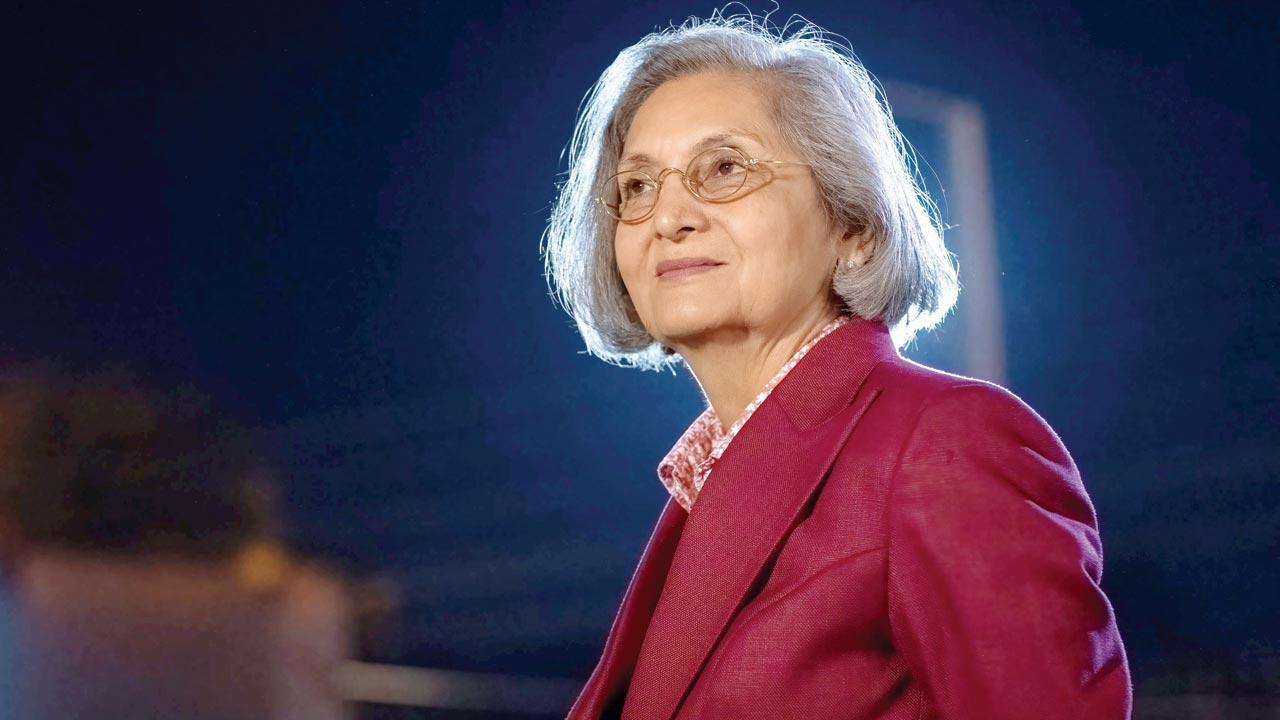
Will Shakun Batra's Sheela match up to the hype and curiosity Wild Wild Country's Sheela drummed up? But, I am not competing, he clarifies. Can we accept a controversial figure for who she is when no one is watching, is the question he asks in a docu that traces her homecoming to India
Aastha Atray Banan (MID-DAY; April 25, 2021)
Searching For Sheela, which dropped last week on Netflix, is a medley of parties, events, talks, and panel discussions. At all of these happenings, curious eyes and tongues, some famous too, tend to pose the same set of questions to Ma Anand Sheela, 71. Did she attempt murder and plan a bio terror attack in Oregon in 1984 in order to incapacitate the voting population of The Dalles, Oregon, so that candidates from the commune she represented would win the Wasco County Elections? And why wasn’t she furious at her mentor, soulmate and religious leader Bhagwan Shree Rajneesh, later known as Osho, after he publicly blamed and rejected her, even calling her a “prostitute”?
The Baroda-born Sheela Ambalal Patel, who is now a Swiss resident, was the chief spokesperson for the Rajneesh spiritual movement, following the leader from India to the US and playing a critical role as the commune’s power centre and his personal secretary from 1981 to 1985. In 1986, Sheela was tried for attempted murder and assault for her role in the 1984 Rajneeshee bio terror attack and was sentenced to 20 years in federal prison, and paroled after a year following good behaviour.
It would seem that the director of the documentary, Shakun Batra (Kapoor & Sons), is the only one who doesn’t really care about the answers to the questions posed at Sheela, who captured global imagination with her “tough ti***ies” attitude and blasé disregard for authority, as portrayed wonderfully in the 2018 Netflix documentary, Wild Wild Country [WWC]. “What many people don’t know is that I knew of Sheela even before WWC [became a talking point]. My father used to listen to recordings of Osho’s discourses, like so many others in my family. I had met Sheela in Switzerland [where she moved in 1999, married fellow Rajneeshi Urs Birnstiel and continues to run nursing homes] before WWC. So, my head was judgment-free. I went into my film with a clean slate. Once WWC released, she was once again in the limelight after so many years. I was curious then to find out how one negotiated this journey with the weight on her shoulders. She came back to India after 35 years!” Batra’s familiarity with Sheela is evident in the way he adopts a non-obtrusive approach, revealing a softer side to the fire brand protagonist of WWC.
A clean slate is what Sheela appears to be looking for too, as she tackles journalists and celebrities on her India trip who clamour to extract spicy details about her past. If ex-Tehelka editor Shoma Chowdhury likens her own experience with the now infamous journalist-publisher and former editor-in-chief of Tehelka magazine, Tarun Tejpal, to Sheela’s with Osho, Barkha Dutt asks Sheela why isn’t she more angry. Sheela is calm, smiling and not willing to share any dirt, and answers the questions with remarks that seem to say, “that’s what you feel, not me”. She seems to have made her peace with the past.
“They had so many questions for her—did you do it? How do you feel? She has lived with these questions. She has never hidden anything. In Switzerland, she often says, ‘she was living in a place where there were no opinions’. But Indians have so many opinions. It’s all about ‘cancel culture’—we decide how a person should react and what is the right reaction, and whether they deserve another chance,” Batra, 37, tells mid-day.
It’s a different Sheela we see through his lens—the maroon Osho robe replaced by Raw Mango ensembles, but admitting that she’d rather be at home in her pyjamas. This writer’s favourite moment from the docu is when she talks to her adopted daughter on video call, and tells her about all the “mee-mees” made about her (she means memes). Age and experience has made Sheela more like the wise grandmother you approach when in trouble. The fact that she has Bollywood producer-director Karan Johar, and Delhi socialites Malini and Bina Ramani, hosting dinners for her during the trip seems like a side effect. They all appear to be looking for their own version of Sheela. “I think everyone thought she had the answer, you know. It’s the reason we read Osho; we think we will find the answer to all our problems. You think you will meet Sachin Tendulkar, and he will tell you the trick [to acing cricket]. People think ‘if I can figure out her life, and her mistakes’, I can figure out mine’. She said, ‘People want to redeem themselves through me’. But, she also says, ‘life is the biggest teacher’. You can’t learn from her — you have to go through your own journey. But what she has done [here] is share insights on how to navigate life when people are watching. How can you be yourself? Can you forget all that’s happening, and be true to who you are. She teaches you how to do that,” says Batra.
In one shot, Sheela is seated on the swing of her Baroda home, where her father would read the letters she wrote the family from prison, her eyes moist. This is the Sheela Batra was hoping to find. He wants audiences to take away their own version of the “truth”. “We are pointing at bigger things like human nature and complexity. We don’t intend to offer answers or change the narrative; for me, that was never the job. I think there is so much more to learn from a life so extraordinary.”
Subscribe to:
Posts (Atom)