Showing posts with label Shakti. Show all posts
Showing posts with label Shakti. Show all posts
I felt my film didn’t get the showcasing it should have-Saqib Saleem
9:02 AM

Mohar Basu (MID-DAY; July 2, 2026)
Making Baby Do Die Do was only half the battle for actor-turned-producer Saqib Saleem. Paving the thriller’s road to release, without a studio backing its campaign or distribution, has been an education for the new producer. “Producing a film and trying to bring it to theatres is a humbling experience. In today’s cluttered market, trying to find a place for a film that is not studio-led has been a completely different experience,” began Saleem.
Baby Do Die Do stars his sister and actor Huma Qureshi in the lead role, and marks the duo’s first co-production under their new banner Saleem Siblings. Their previous productions, including Double XL (2022), were studio-backed and taught Saleem the mechanics of filmmaking. What frustrated him was what happened after the movie was complete.
“When it came to putting it out for release, I felt my film was not treated properly or didn’t get the showcasing it should have. If I did it independently, I’d be able to pull in more muscle because when other people are involved, you don’t have full control over how your film is positioned,” he recalled.
That perhaps fuelled Saleem’s desire to build an independent creative ecosystem rather than waiting for opportunities to arrive.
He shared, “We want to create an ecosystem for interesting voices. We call ourselves a boutique production house because our bandwidth doesn’t allow us to do more than one film at a time. With Baby Do Die Do, we just wanted to make a good film. Whether this works or not, everything is on us. I have no one to blame. I have reached a point in my life where I want far more agency in the decisions I take and the creative choices I make.”
Shah Rukh Khan and Aishwarya Rai Bachchan’s popular song ‘Ishq Kameena’ from Shakti has been recreated for ‘Baby Do Die Do’.
Admitting that the idea originated from Tips chairman Kumar Taurani, Saleem shared, “The idea was to make more people aware of the film. When you recreate a classic, there will be people who don’t like it. But if the purpose is to make people aware that our film exists, it served that purpose.”
The Grammy nomination was an absolute surprise-Shankar Mahadevan
8:23 AM

Shakti band members (L-R) V Selvaganesh, Shankar Mahadevan, John McLaughlin, Ganesh Rajagopalan and Zakir Hussain
Soumya Vajpayee (HINDUSTAN TIMES; November 14, 2023)
In their 50th anniversary year, things have become even more special for jazz-fusion stalwarts Shakti. The group, comprising guitarist John McLaughlin, tabla player Ustad Zakir Hussain, vocalist Shankar Mahadevan, percussionist V Selvaganesh and violinist Ganesh Rajagopalan, has bagged a Grammy nomination for This Moment, their first album in 45 years.
“It was an absolute surprise,” says Mahadevan, who has been associated with the band for 24 years. He adds, “On Dhanteras, I offered my prayers to Maa Saraswati and Maa Laxmi at my sister-in-law’s place and minutes later, Selvaganesh ji called to inform me about the nomination. I called Zakir bhai to congratulate him as he’s got three nominations. When I called John McLaughlin ji, he didn’t even know we were nominated (laughs).”
Released in June, This Moment comprises eight new compositions and has been nominated in the Global Music Album category alongside Peruvian music icon Susana Baca, Creole-French band Bokanté, Nigerian musician Burna Boy and American-Nigerian singer Davido, among others.
Ask how the album worked out and Mahadevan, 56, shares, “We’re a world fusion band that’s a perfect blend of strong Indian melodic content and complex rhythms of the East with the harmonic elements of the West. We never did a studio recording as we were always touring. I am glad we created this studio album after 45 years. I feel This Moment earned a nomination as it has the true essence of Indian and Western melody and harmonic structures.”
Shakti toured India and abroad to celebrate their 50th anniversary. They released the album in June in memory of mandolin stalwart and a key member of the band, the late U Srinivas.
Dilip Kumar is one of our icons, but we had limited options to pick from-Shivendra Singh Dungarpur
8:39 AM
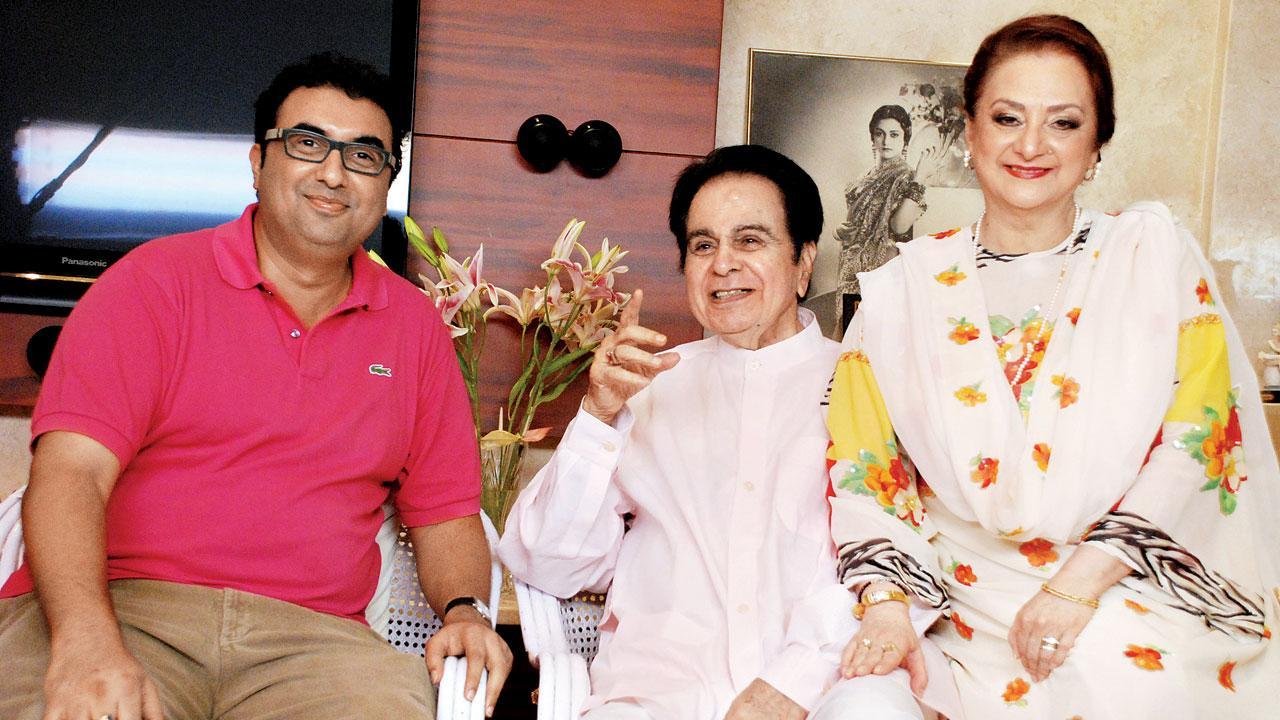
Urging industry to act, curator of restorative marking Dilip Kumar centenary laments that only seven of 60 films of superstar preserved
Priyanka Sharma (MID-DAY; November 29, 2022)
Citing an opportunity to celebrate the rich legacy of Dilip Kumar on his 100th birth anniversary in December, the Film Heritage Foundation decided to present the actor’s prominent works across 20 cities over a two-day retrospective. However, of the 60 films that Kumar frontlined across his five-decade career, only seven, we’re told, have been preserved for public screening in a cinema hall.
Film conservator Shivendra Singh Dungarpur — who has curated the films for the upcoming event — laments that the industry lends a blind eye to restoration efforts that are essential to retain the rich cultural history of Indian cinema.
“People have the misconception that a film has survived if it is available on YouTube, or on cassettes. But, look at the quality! It is terrible,” says Dungarpur, adding that the late actor’s celebrated offering, Gunga Jumna (1961), also couldn’t be salvaged.
“[Kumar] is one of our icons, but we had limited options to pick from. We wanted to choose films that he did in his prime. We have Aan [1952], which was India’s first techni-colour film, Devdas [1955] that got him the tragic hero status, Ram Aur Shyam [1967], which showed his impeccable comic timing, and Shakti [1982], his only film with [Amitabh] Bachchan,” says Dungarpur, adding that he hopes to showcase Kumar’s versatility to the young audience with this selection.
The retrospective, titled Dilip Kumar: Hero of Heroes, will play across 20 cities in the country. “There is a hunger in the youth to see these iconic performances on the big screen, because icons like Dilip Kumar are modern in their performances. There is a demand in Chennai, which is not even a Hindi-speaking belt,” says the conservator, who presented a similar restorative of Bachchan’s works last month.
What is film restoration?
Described as a series of ongoing efforts to rescue decaying film stock, and preserve the images they contain, film restoration aims to ascertain that movies continue to exist in forms that are as close to the originals as possible, so that they can be made available to the public.
Now, a film festival to celebrate Dilip Kumar’s 100th birth anniversary
8:42 AM

A two-day festival in December will showcase his iconic films like Devdas and Ram Aur Shyam on the big screen across 20 cities
Niharika Lal (BOMBAY TIMES; November 26, 2022)
It’s time for celebration for all Dilip Kumar fans. On the occasion of the actor’s 100th birth anniversary, the Film Heritage Foundation has curated a two-day film festival titled Dilip Kumar – Hero Of Heroes. The centenary celebration of the legend will take place on December 10-11, with screening of four of his films across 20 cities. The line-up includes Aan (1952), Devdas (1955), Ram Aur Shyam (1967) and Shakti (1982).
‘DILIP KUMAR’S FILMS HAVE A CONTEMPORARY APPEAL EVEN AFTER SO MANY DECADES’
Shivendra Singh Dungarpur, archivist and Director, Film Heritage Foundation (FHF), says the purpose of these screenings is to celebrate Dilip Kumar. He says, “Dilip Kumar’s centenary anniversary was an incredible opportunity to bring back one of the greatest actors of Indian cinema on the big screen. His films have a contemporary appeal even after so many years. He truly is the ‘Hero of Heroes’, as even today the biggest stars look up to him.”
He says that even though some of these films were released nearly seventy years ago, the power of the actor’s performances, his craft as a method actor and his charisma make him ageless.
‘MANY OF DILIP KUMAR’S FILMS ARE ONLY AVAILABLE IN LOW RESOLUTION AND CANNOT BE SHOWN ON A BIG SCREEN’
However, when the foundation decided to screen the actor’s films, the organizers found that many of his iconic films were not in a condition to be shown on the big screen. Dungarpur says, “I was excited about curating several of his films to mark the occasion. How can one choose only a handful of films for an actor with such an illustrious body of work? But I was shocked and heartbroken to discover that many of his great films survived only in low-resolution formats, which could not be projected on the big screen. We have cobbled together these four films with great difficulty.”
Dungarpur adds that he’s sure the actor’s fans will question why some of their favourite Dilip Kumar films are missing from the list. He says, “We have films available on online platforms, but these are not of good quality. Now we are aware how much of his work is available and how crucial it is to save what is remaining. That’s the reason we are also launching a campaign to save Dilip sahab’s films. This is also a tribute to the work of the actors, crew members and filmmakers of that time. Filmmakers and producers need to realise that time is running out and that they should look into preserving these films before it is too late.”
Dungarpur shares that when he decided to organize a retrospective of Amitabh Bachchan’s films to celebrate his 80th birth anniversary, it was difficult to convince everyone – from the stakeholders to producers – that people would come out to watch old films. He says, “People didn’t have confidence, but I knew theatres were going to be jam-packed.”
At a film restoration session recently, Dungarpur had shared how he failed to get Prakash Mehra’s Zanjeer for a film screening once because Mehra’s family assumed that if the hall runs empty, then the aura surrounding the movie would fade. He adds, “However (at the Amitabh Bachchan retrospective), the film’s screening was fully booked everywhere and even Amitabh Bachchan called for two tickets of the film.”
So, what changed between these two screenings? He says, “Now everyone knows that people will come to watch old films and there is always going to be an audience for classics. Cities like London have theatres dedicated to screen old films, but in India we don’t have any such theatres. That’s why I have decided to curate these festivals for stars like Dev Anand and Raj Kapoor too next year.”
IT WILL BE A JOY TO WATCH DILIP SAHAB BACK ON THE BIG SCREEN, LARGER THAN LIFE, LIKE HE HAS BEEN IN MY LIFE: SAIRA BANU
Talking about the film fest, Saira Banu shared, “I am so happy that the FHF is celebrating Dilip sahab’s 100th birthday on December 11 by screening some of his most popular films on the big screen across India. They could not have chosen a more apt title to commemorate India’s greatest actor – Dilip Kumar – Hero Of Heroes. He was my favourite hero from the time I was 12, when I first saw him in Aan in technicolor. It will be a joy to watch him on the big screen again, larger than life, like he has been in my life.”
WAS DEEPLY DISTURBED TO HEAR THAT MANY OF DILIP KUMAR’S FILMS ARE NOT IN A CONDITION TO BE SCREENED IN CINEMAS: AMITABH BACHCHAN
Amitabh Bachchan says, “I am glad that we are celebrating Dilip Kumar’s legacy with this festival of films. I would urge every film lover and contemporary actor, who has not watched Dilip Kumar larger than life, to not miss the incredible opportunity of watching this stalwart back on the big screen. Even today, I learn something every time I watch his films. Dilip Kumar was and is my idol.”
Bachchan says that he was deeply disturbed to hear that many of Dilip Kumar’s films are not in a condition to be screened in cinemas. Calling it a tragedy, he adds, “Film Heritage Foundation is working to ensure that the work of legends like Dilip Kumar survives and is preserved and restored to be shown to today’s young audiences.”

Shivendra Singh Dungarpur with late Dilip Kumar and Saira Banu
Dilip Kumar was hungry for another take-Ramesh Sippy
8:33 AM

As told to Uma Ramasubramanian (MID-DAY; July 8, 2021)
He was a great storyteller. As an actor, he had his own interpretation and used it to express things. With his demise, an era has come to an end. He is among the finest actors ever — choosy about what he did. My dream to work with him was fulfilled when Shakti (1982) came about.
When I narrated the script, he was taken aback, because it was entirely his film. His was the central character, and he did not hesitate to say yes. We had a reading session. I had heard that he rewrites [scripts], but he did not interfere with this one. We discussed the scenes. The fine actor that he is, he observed and imbibed it all, and made the performance his own.
He was a perfectionist; unfortunately, I am one too. We had a sequence in the film where his and his wife’s characters are in the kitchen. He starts eating the food made by her. We had innumerable takes because something or the other kept going amiss. By the 64th take, we got it right. But we had no lunch break because by then, everyone had eaten so much throughout the filming that they could no longer eat.
It was delightful to work with him, because he wanted to give his best. He was always hungry for one more take; eternally convinced that he could do it better. Sometimes, I had to insist that a take was beautiful.
Dilip Kumar was the first method actor in world cinema-Javed Akhtar
8:21 AM
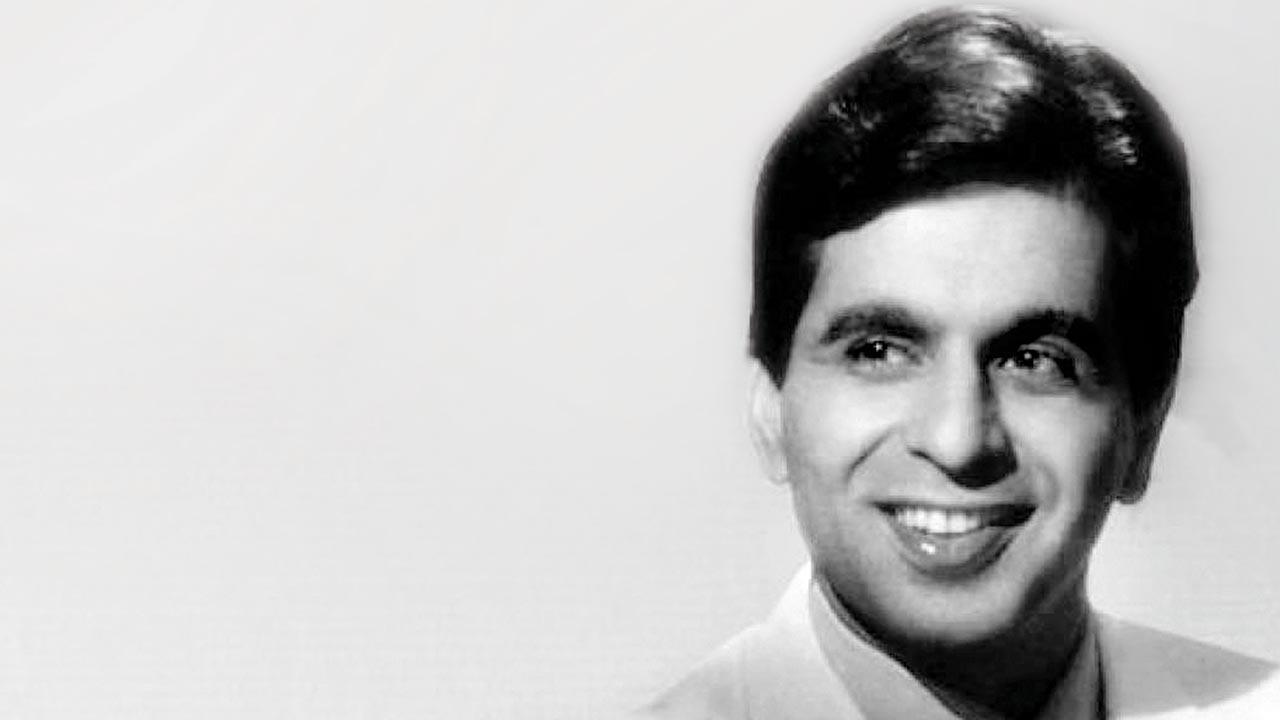
Acclaimed writer, who credits the thespian for his most memorable films, recalls how Kumar introduced melodramatic Bollywood to immersive acting
As told to Upala KBR (MID-DAY; July 8, 2021)
I first saw Dilip saab on screen when I was six or seven years old. My family was pleased that I had made it to the prestigious St Mary’s School in Lucknow, and wanted to treat me. They asked whether I would like to go to the zoo or watch a film, and I chose the latter. That led me to Aan [1952], the first movie I remember watching. Since then, Dilip saab was my favourite as I went on to devour Devdas [1955], Madhumati [1958], Gunga Jumna [1961], and many more films.
Decades later, when I was asked to speak at the release of his autobiography [The Substance And The Shadow], I said that each of us have our mental dictionary, where we conjure our own meanings. To me, the meaning of dignity has always been Dilip saab. He epitomised sophistication and refinement.
He brought new sensibilities [to Indian cinema]; that’s what makes him unforgettable. He found a new language and style — method acting. We know that Russian theatre director-actor Konstantin Stanislavski had invented method acting. I have no idea whether Dilip saab had read about his form of acting, or developed his own style, but [the superstar] was cinema’s first method actor in the world. While Marlon Brando is credited for [introducing] the form, he was six years junior to Dilip saab, in terms of his career. Dilip saab has gone unsung on this count.
Since Salim [Khan, writer] and I began our career in 1971, we were keen to write a film for Dilip saab. Our dream materialised with Ramesh Sippy’s Shakti [1982]. After that, we went on to work with him on Manoj Kumar’s Kranti [1981], Duniya [1984] and Mashaal [1984].
The distinguishing factor about him was that he knew that if the dialogues were powerful, an actor’s portrayal should be understated. [Conversely], in a scene in Paigham [1959], he is telling Vyjayanthimala’s character how he will move cities, regardless of whether he lands a job or not. The dialogues were prosaic, but his delivery made it sound as beautiful as a romantic scene. He would always go beyond the lines and make the scene his own. Also, unlike most actors whose five takes look identical, no two takes of Dilip saab would be similar.
Nobody can romance like him on screen. Most actors are so deeply in love with themselves that even when they look at their heroines, they want to see how they are looking. But when he looked at his heroines, he admired and appreciated them. In that moment, he surrendered [himself] to her, making it look so romantic.
Over the past decades, many actors have followed his style [of method acting]. They have no idea where it has come from. Only a few artistes today have the gravitas and dignity that he did. With [the passing of Dilip saab], an era of sensitivity and culture has ended.
Dilip Kumar's realism and brooding screen presence had a seminal influence on generations of actors to come
8:02 AM

Avijit Ghosh (THE TIMES OF INDIA; July 8, 2021)
Dilip Kumar’s best encapsulated the finest in popular cinema. Secure in his craft, he acted only in 60-odd films in a career spanning more than five decades. Kumar, whose real name was Yusuf Khan, even refused the part that made Omar Sharif a Hollywood star in David Lean’s Lawrence Of Arabia.
His brooding intensity and comic flair influenced Bollywood A-listers such as Rajendra Kumar, Manoj Kumar and Amitabh Bachchan. An obsessive perfectionist, he learnt to play the sitar for a song sequence in Kohinoor. Kumar was so immersed in the self-destructive protagonist of Devdas (1955) that he had to undergo psychiatric counselling. The doctor advised comedies as therapy. And he excelled in them too.
In the pre-independence era, Pramathesh Barua and K L Saigal had swayed a million hearts as Devdas. Yet a generation later Dilip Kumar made the part his own. He induced intensity into loving and losing in a way that pain became indistinguishable from pleasure.
His most-remembered performances had distinct tragic undertones. As a conflicted prince who rebels against his father, the emperor, for the woman he loves, Kumar was starch-perfect with his diction in Mughal-e-Azam. A scene with Madhubala, where he fondles her face with a peacock feather, is iconic for its eroticism.
A notable moment in his career came with Ganga Jumna (1961) where he conveyed the despair of the innocent villager forced to become an outlaw. “To me, it was his ultimate performance,” Amitabh Bachchan told TOI in 1990. Ironically, the Censor Board recommended major cuts to it on grounds of vulgarity and violence. The film was released following Prime Minister Jawaharlal Nehru’s intervention. But the struggle to get it exhibited took its toll on him. He never produced a film again.
Like Raj Kapoor, and Shah Rukh Khan, Kumar’s roots were in Peshawar where his father was a fruit merchant. The family shifted to Deolali near Nasik, and Bombay, in late 1920s.
He loved watching movies. Kumar once said he had watched For Whom the Bell Tolls, starring Ingrid Bergman, 21 times in seven days. Among others, he was influenced by the 1930s Hollywood star, Paul Muni.
A chance meeting in Nainital with Devika Rani, a top star of the 1930s who co-owned Bombay Talkies, led to his debut in Jwar Bhata (1944). He picked the screen name from three options -- Vasudev and Jahangir being the others -- provided by renowned Hindi writer Bhagwati Charan Verma, then associated with the film studio, revealed film historian Sanjit Narwekar in Kumar’s biography, The Last Emperor.
After watching it, Baburao Patel, the much-feared editor of Filmindia, whose reviews could make or mar a film those days, wrote, “Dilip Kumar, the new hero of Bombay Talkies, is an anaemic addition…He looks gaunt and famished and strikes one as a long ill-treated convict who has escaped from a jail…His acting efforts in this picture amount to nil.”
But Kumar improved in Nitin Bose’s Milan (1946), a profitable adaptation of Rabindranath Tagore’s Nouka Doobi. Kumar once said, “I learnt from Nitin Bose the value of silence,” as evident in his signature pauses in later films. His first superhit was the tragic Jugnu (1947), with Noorjehan as leading lady.
Historian Ashok Raj describes the years between Jugnu and Ganga Jumna (1961) as “the classical period” of his career, ranging from tragic love stories (Andaz, Devdas), swashbuckling costume dramas (Azad, Kohinoor) and semi-socialist yarns (Naya Daur, Paigham) to the romantic supernatural (Madhumati), the experimental (Musafir), where he sang his only film song (Laagi nahi chhute), and even a Left-leaning project (Footpath), a proto-Deewar.
After Ganga Jumna, Kumar took a break, acting in only two flops in the next five years. His marriage to Saira Banu in November 1966 -- he was 44, she was 22 -- proved lucky for him. Kumar’s double-role venture, Ram Aur Shyam, celebrated its golden jubilee. But by then middle-age had crawled onto his appearance. In the 1970s, Kumar was largely reduced to a yesteryear star.
The thespian made a stirring return in Kranti (1981) and Shakti (1981).The new Kumar was occasionally over the top. But superhits such as Vidhaata, Karma and Saudagar introduced him to a new generation of film buffs. A secret marriage and divorce to a Hyderabadi socialite, Asma, became fodder for gossip magazines during the same phase. There were other unpleasant memories too when he was targeted for his efforts to bridge ties between India and Pakistan.
Now he is gone. But in every movie rerun, Dilip Kumar will continue to astound and enrich us with his gift to lift a scene with silence and soul.
---------------------------

SUHANA SAFAR
- Born as Yusuf Khan on December 11, 1922. He was born in the same month as Raj Kapoor and in the same place, Peshawar, but was two years elder. Yusuf Khan's father was a fruit merchant
- Before joining films, Yusuf Khan worked in a military canteen at Poona; set up a fruit stall next to it with his employer's permission
- He was interviewed for a film career by Devika Rani, wife of Bombay Talkies boss Himanshu Rai. She asked four questions: "Have you ever acted on the stage?"; 'No madam" was his reply; "Would you like to act in films?"; "Yes madam" he said; "Do you smoke?"; "No madam"; "Can you speak Urdu fluently?" "Yes madam"
- He lost his parents and his disabled brother Ayub Khan in rapid succession. This is believed to have deeply affected him in his youth
- The phase from Devdas to Mughal-e-Azam is considered to be the best in his work
- In 1961, he turned producer with Ganga Jumna
- In 1962, he was offered Lawrence Of Arabia, which he turned down. The role was done by Omar Sharif
- In 1970s, his career took a dip with films like Gopi, Sagina and Bairaag failing at the box office. He took a break for six years and returned with Manoj Kumar’s Kranti in 1981
---------------------------

FAMOUS LINES
- Devdas Kaun kambakth hai jo bardasht karne ke liye peeta hai. Main toh peeta hoon ke bas saans le sakoon
- Saudagar Haq hamesha sar jhukake nahin... sar uthake maanga jaata hain
- Mughal-e-Azam Mera dil bhi aapka koi Hindustan nahi ... jispar aap hukumat karein Shakti Joh log sacchai ki tarafdari ki kasam khate hain... zindagi unke bade kathin imtihaan leti hain
- Vidhaata Jagawar agar zindagi mein bada banna hain... toh chhoti harkate chhod do
- Daag Din mein iski zaroorat hoti hai zaalim raat toh khud ek sharab hoti hai
- Aadmi Zindagi bhar doosron ka boj uthataa raha hoon aur aaj khud ek boj ban gaya hoon
---------------------------
FAMOUS SONGS
- Yahaan badla wafa ka bewafai ke siva kya hai Noorjehan-Rafi duet, composed by Firoz Nizami, was from 1947 hit Jugnu
- Gaaye ja geet milan ke Mela (1948) had great songs by Naushad. This one, sung by Mukesh, was memorable
- Meri kahani bhoolnewale Deedar reinforced the tragedy king image. This Naushad tune was sung by Rafi
- Yeh hawa yeh raat yeh chandni Talat Mehmood’s voice suited the thespian; this one by Sajjad Hussain is a classic from Sangdil (1952)
- Aye mere dil kahin aur chal From Daag (1952), composed by Shankar-Jaikishen and sung by Talat Mehmood
- Hum aaj kahin dil kho baithe Naushad’s score and Mukesh’s sonorous voice from Andaz (1949)
- Suhana safar aur yeh mausam haseen One of Dilip Kumar’s personal favourites, from Madhumati (1958), rendered by Mukesh, scored by Salil Chowdhury
- Nain lad jai hain Dilip Kumar did a fast-paced folk dance for this Ganga Jumna (1961) number. Naushad-Rafi combination again

Dilip Kumar and Amitabh Bachchan's 1982 film Shakti to return in a new avatar
8:14 AM

Shree Narayan Singh working on adaptation of 1982 film
Himesh Mankad (MUMBAI MIRROR; August 19, 2020)
Mirror had earlier reported (April 14) that some of Amitabh Bachchan’s popular hits, including Chupke Chupke, Kaalia, Shahenshah and Namak Halaal were up for a remake with younger actors stepping into Big B’s shoes. We have now learnt that another Bachchan film has joined this list, Ramesh Sippy’s 1982 action-crime drama Shakti, which revolved around a father-son duo, and is the only film to have featured Dilip Kumar as DCP Ashwini Kumar and Senior Bachchan as Vijay Kumar, together.
“Around 10 years ago, the idea of a remake had come up with Amitabh stepping in for Dilip Kumar as the father who, in his commitment to the force, alienates his only son, who is then caught in the crossfire between two warring gangsters. But eventually, he loses his life to a bullet from his father’s gun. Abhishek Bachchan was to play Vijay then. The project, which was put on the backburner, is on track again, but with a different team,” reveals a source close to the development, adding that Shree Narayan Singh, who has directed films like Toilet - Ek Prem Katha and Batti Gul Meter Chalu, wants to revisit the classic which bagged four Filmfare Awards, including Best Film, Best Actor (Dilip Kumar), Best Editing and Best Screenplay.
Confirming the same, Singh says, “I have been working on the film for the last two years with Anjum Rajabali and Saumya Joshi penning the script. It’s a huge responsibility, which is why we are taking time to finalise the script, even though ours is more of an adaptation than a remake. The idea is to take the film on floors by next year.”
Shahenshah, Satte Pe Satta remakes: Bollywood is ready for the return of Angry Young Man
8:09 AM

With Shahenshah, Satte Pe Satta, among others, B’wood ready for new wave of Bachchan remakes
Himesh Mankad (MUMBAI MIRROR; April 14, 2020)
 After Don, Agneepath, Zanjeer and Sholay, among others, 2.0 versions of several yesteryear hits featuring Amitabh Bachchan are under consideration. An industry source tells Mirror that Tinnu Anand, who directed the 1988 vigilante-drama Shahenshah, has been approached by many for the remake rights of the film. “He is yet to part with them. Another one of his directorials, Kaalia, is also a strong contender, with a lot of industry insiders keen to put a modern-day spin on the action-entertainer,” informs the source.
Meanwhile, we hear negotiations are underway for the rights of Prakash Mehra’s 1982 comic-caper, Namak Halaal, which featured the Big B, Shashi Kapoor and Smita Patil. “It’s a timeless comedy and multiple producers are in talks. If the deal is locked, one of them is looking to approach a top actor-star kid, whose forte is comedy, to step into Bachchan’s shoes,” the source shares.
Bhushan Kumar had announced a remake of Hrishikesh Mukherjee’s Dharmendra and Bachchan-starrer classic, Chupke Chupke, with Rajkummar Rao as botany professor Parimal Tripathi, who masquerades as chauffeur Pyare Mohan to hoodwink his wife’s (Sharmila Tagore) protective brother-in-law (Om Prakash). The actor, who will step into Bachchan’s shoes to play literature professor, Sukumar Sinha, is yet undecided.
Rohit Shetty is bank-rolling a Satte Pe Satta remake, with Farah Khan in the director’s chair. The 1982 original was top-lined by Bachchan in a double role—as Ravi Anand, who lives with his six brothers, and the antagonist, Babu. Farah was keen to have Hrithik Roshan step in for the Big B for the second time after Agneepath. After several rounds of discussions, the actor walked out, reportedly due to differences over the script. The director then approached Salman Khan, who was skeptical about playing a character previously essayed by the veteran actor. Buzz is, the makers are now in talks with Ajay Devgn for the part.
“It’s challenging to get such a huge ensemble in place. An official update on the film is expected once the Coronavirus pandemic subsides,” adds the source.
-------------------------
OTHER REMAKES
SHAKTI
A few years ago, a filmmaker was planning a remake with Bachchan Sr. playing DCP Ashwini Kumar, originally portrayed by Dilip Kumar, and Abhishek Bachchan stepping in to play the son, Vijay Kumar. Sanjay Gupta was to direct the film which was shelved before reaching the rewrite stage.
DO AUR DO PAANCH
In the 2010s, Vashu Bhagnani was planning to revamp the Rakesh Kumar-directed comedy, which also featured Shashi Kapoor, Hema Malini and Parveen Babi. After the success of Karan Johar’s Dostana, the producer approached John Abraham and Abhishek Bachchan but the film, to be directed by debutant Akshai Puri, never saw the light of day.
Subscribe to:
Posts (Atom)