Showing posts with label Shahid Kapoor interview. Show all posts
Showing posts with label Shahid Kapoor interview. Show all posts
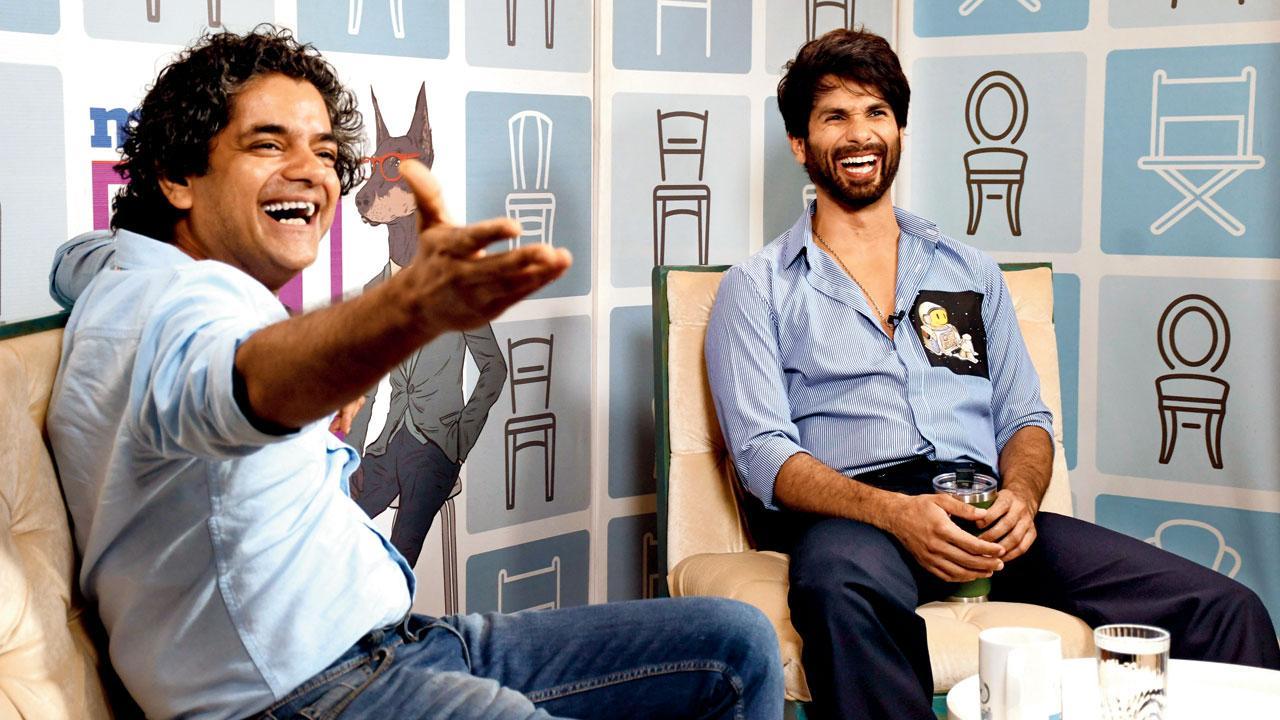
In O'Romeo, I was the heroine. Triptii Dimri used to take just 2 minutes to get ready-Shahid Kapoor
3:25 PM

Shahid Kapoor has defined the conflicted hero. Now, he talks creative honesty, family validation and bridging the gap between mass and meaningful cinema
Sonal Kalra (HINDUSTAN TIMES; February 13, 2024)
Actor Shahid Kapoor has played brooding men before, but as O'Romeo releases today, he appears surprisingly at ease. Calm, measured, almost detached from the chaos his character brings to screen. Excerpts...
O'Romeo is your fourth outing with filmmaker Vishal Bhardwaj. Does the script even matter now, or when he calls, is it an immediate yes?
In spirit, I would say yes to the latter! But from a professional POV, no. I don’t think any artist can give themselves to something unless they connect with it. When the connection is not there, there is always something missing in the product. In O'Romeo, of course it’s the titular part; I play Ustraa. And with Vishal Bhardwaj, it’s always a world that he creates. Ustraa’s attitude is that of Romeo. If, as creative people, you don’t connect, it is wrong for you to do the film. If you won’t be honest, it is unfair for everybody else. I very much connected with this film. I had one preset in my head before I met him, and I was very clear that at this stage in my career, I don’t want to do a film that is too experimental or a film meant for a smaller, intellectual audience and not for a wider audience, who have a simpler mindset and whose approach to filmmaking is that they go to theatres to get entertained. There’s the cinema you love and the cinema that people love. The whole endeavour has been for years to find a Ganga-Jamuna moment between them, to meet a middle ground. This film is an attempt at achieving that; it’s meant for an intelligent audience but also very much like a typical, mass audience.
In terms of intensity, where would you rank Ustraa, alongside Haider and Kabir Singh?
I wouldn’t place him in the same space as Haider and Kabir. Ustraa is a very entertaining character. What’s unique about him is that he is dark yet soft, and can also be very funny. He is a complete laundiyabaaz, yet falls in love to a degree that he loses himself. He’s a gangster but scared of his grandmother, played by Farida Jalal ji.
You want to be thrown into something that challenges you. My scenes with Nana Patekar sir are also special.
Which sequence in O'Romeo was the toughest or made you feel proud?
The toughest real estate in this film was actually my body! It was covered in tattoos; it would take two and a half hours to put them on before I got on set. Triptii Dimri, my co-star, had a no-makeup look. I told her, “In this film, I am the heroine. Tu toh do minute mein ready ho kar aa jaati hai set pe!”
O'Romeo isn’t like a superhero film where 75% of the work is done by costume and VFX. Then we had action sequences at night. I had undergone major hip surgery during one such sequence. That was very challenging.
Whose approval matters the most once they see your film?
First, I need to be happy with what I have done, which is always a challenge. Even above me, it’s the filmmaker. If they are not satisfied, there’s no point to the entire experience. I should be able to add more value than they expected. For me, the filmmaker comes first.
Beyond that, I have a very talented family, whether it’s my mother Neliima Azim, father Pankaj Kapur, brother Ishaan Khatter, or wife Mira Kapoor. They support me unconditionally, and I am always curious to know their views. They’re all very different from each other.
How affected are you by social media today?
Anybody who says they’re not affected, I don’t know... I wonder if they’re living under a rock. But anybody who says it deeply affects them is putting themselves in a dangerous place.
When you go on social media, you don’t know who is writing, under what name, or under what circumstances. It’s important not to live in a bubble. People around you will praise you. You live a privileged life. But you don’t know what the wider audience feels. It’s a difficult journey. Open up, but be mindful of how much you allow to sit in your system.
Main hamesha yeh kehta hoon – aapke bolne ki aukaat honi chahiye, tabhi mooh kholna chahiye. Yeh maine bachpan mein seekha tha.
What trait angers you?
In this profession, people can be very dual-faced with stars. Saamne kuchh, peeche kuchh. I don’t like that. I respect people who disagree and have a reason for it. There are rebels without a cause. Then there are those who stand by what they believe. Honesty and authenticity are very important.
Do your kids know they’re children of a star? Do they watch your movies?
The minute their dad stops doing adult films, I guess! When he decides to do frothy stuff. The next one is Cocktail 2. I did Teri Baaton Mein Aisa Uljha Jiya (2024). What ignites me as an actor are shades that aren’t just white.
I think social media is destroying potential actors-Shahid Kapoor
10:37 AM

Madhureeta Mukherjee (BOMBAY TIMES; February 5, 2026)
He has never chased trends, only trusted his own timing. From romance to rage, from comedy to drama, he has built a career on instinct and reinvention. Now in his 40s, he is calmer, more centred, shaped by fatherhood and a sharper understanding of self and cinema.
On the next episode of Rustomjee presents Bombay Times Lounge, Shahid Kapoor speaks with depth and candour – mapping his own journey, his relationship with self-critique, the curveballs life throws at us and what it means to be ahead of the curve. As he reunites with Vishal Bhardwaj for the fourth time in O'Romeo – a partnership that has always created magic – Shahid steps into a gangster’s world on screen, even as off-screen, he seems more at ease with himself than ever before. Here’s a sneak peek into the conversation – with the full episode coming soon on the Bombay Times YouTube channel. The promo drops today.
‘You can’t get affected by what other people have achieved’
Talking about why he never compared his journey in films with his contemporaries, Shahid says, “Everyone’s journey is different; someone starts right next to the finish line because that’s what destiny gave them, and somebody starts like 200 meters before the start line. You start counting your meters from the place you started. You see your own journey and merit yourself with that. You can’t get so affected by what other people have achieved.”
‘I think social media is destroying potential actors’
Speaking about how social media is impacting actors’ skill set, he shares, “We used to learn acting in a film theatre, now people are learning acting by looking at their phones. You know there’s a fundamental difference in the way you view a movie on your phone and on the big screen. Sitting in a theatre, seeing a story being told and having a social experience with so many people around you – there is a huge difference. I think a lot of new-age actors need to go to the theatres; they need to watch purana cinema. They need to go to smaller towns to understand our country. What happens is, globalisation ke saath... duniya ka sab kuch pata hai, lekin rootedness nahin hai, and rooted emotions come from these experiences. Actors really need to think about that… get off social media, go discover the world, experience reality and then get back on it.”
'Vishal and I have always had an unsaid creative understanding'
Speaking about his creative bonding with Bhardwaj, the actor shares, "The funniest thing is that, even though Vishal (Bhardwaj) and I are collaborating after seven or eight years, for O'Romeo, it didn’t feel any different than it was before. It felt like a very natural flow of things. Of course, I can sense that he has also evolved, and I am also at a different stage of my career, but we’ve always had an unsaid creative understanding."
‘I’m pretty obsessed with my kids’
Reflecting on how fatherhood had shaped his perspective, on life and career, Shahid says, “Parenthood has changed me completely. I was just dying to be a papa. I wanted it so badly, and I was consumed by it. Now that my daughter’s nine and my son is seven, I’ve started thinking about myself much more. Till about a year back, I was just very absorbed with them. I am turning 45 very soon, and these are very important years in my career. This is a young person’s job, and to stay relevant for the newer generation, you have to really grow, evolve and adapt. Sometimes these roles that life gives you are so much bigger than any of these things. As a parent, you want to be the best version of yourself. I’m pretty obsessed with my kids, and it’s been amazing.”
'We have to learn to define our own pace'
On charting his own path, Shahid says, "There are three places you can be in your career: You can be ahead of the curve, you can be right at the curve, or you can be behind the curve. The one place I don’t want to be is behind the curve. And if you’re trying to do something that has already been done because it was successful, rest assured, you’re behind the curve. We have to learn to define our own pace. Puri zindagi nikaal doge sochne mein ki yeh trend hai, woh trend hai, toh maza nahin aayega. You can fail, but be original."
'To get better at what you do, you have to be critical'
The Haider actor says if one wants to hone their craft, they have to be critical of their work. He adds, "I’ve learnt not to let negative chatter affect me in my head. I’ve worked very hard on myself to differentiate between what is critical and what is objective. And what is getting over critical and negative – there is a thin line there. To get better at what you do, you have to be critical, and if you get so affected by self-critique, then you’re not strong enough and you won’t progress."
Watch out for the full episode of the Rustomjee presents Bombay Times Lounge with Shahid Kapoor, coming soon on the Bombay Times YouTube channel
Title Sponsor: Rustomjee
Shot at Parishram by Rustomjee, Pali Hill, Bandra, Mumbai
I kept thinking, ‘Why did I do Padmaavat?’ I had no perspective-Shahid Kapoor
8:23 AM
Ishq Vishk to Jab We Met, Kaminey to Kabir Singh—Shahid Kapoor on his 20 years of Bollywood
Mayank Shekhar (MID-DAY; July 8, 2023)
It was around when he was about six or seven, Shahid Kapoor recalls, his father Pankaj Kapur took him out to New Delhi’s popular food joint, Nirula’s, for a meal. Unbeknownst to what would hit them, the two were suddenly surrounded by “a hundred people, who’d picked up gajar [carrots], and were charging at them on their restaurant table—almost like zombies, going, Hehehe…. Gajar khaiye, gajar, hehehe…”
“Par mein bete ke saath pizza kha raha hoon [But I’m having pizza with my son],” Pankaj Kapur shot back. But no avail. The public was, of course, responding to Pankaj Kapur’s iconic role of Detective Karamchand, and his love for gajar, in the 1980s, on Doordarshan.
Father-son had to eventually rush out of Nirula’s. Shahid told his dad, who was visiting him from Bombay then, to never take him out again! “By virtue of distance, the interaction between him and me was anyway limited.”
Shahid’s parents had separated/divorced, when he was quite young. He was then growing up in Delhi, with his mother, Neelima Azeem, and his maternal grandparents, who were both journalists with the Russian publication, Sputnik.
Sasha, that’s the “ghar ka naam” his grandparents gave him—and that his tribe of fans, self-named Shanatics, call Shahid by—is also a common Russian name, he points out.
It was only when he turned 10, that Shahid also moved to Bombay to be with his mom, a trained classical/Kathak dancer, who was looking at a career in acting.
Shahid himself was one of the top dancers at Shiamak Davar’s dance academy—moving up from the back rows, at dance performances, to the front row, and eventually becoming a trainer at the institute, “which is how it works at Shiamak’s school; you have to prove yourself, every step of the way.”
In fact, if you notice closely, you can find Shahid dancing in the group in Subhash Ghai’s Taal (1999), even Yash Chopra’s Dil Toh Paagal Hai (1997). On stage, he was ecstatic to be “moving right behind Aishwarya Rai, Salman Khan, at popular award shows.” By 16, Shahid says, he was already earning enough to manage without pocket money from home, “even help out with the household income.”
A picture, from a trivia night, we show Shahid, is of him with actor Ayesha Takia. They’re both such lovely children, posing with coffee mugs to the TV screen. Shahid and Ayesha were the OG: “I’m a Complan boy, she’s a Complan girl!”
He laughs, “Ayesha was a really big [child] star at the time. We had to wait for her to turn up on the set, while I got my solo shots done!” But these were “one-off appearances on screen, because I was a cute kid, and someone or the other saw and cast me.” His mom was clear she didn’t want him to get full-time with commercial/advertising work still.
Cut to: 2003. Which is when I first met Shahid, seated quietly at the reception area of the mid-day newspaper office, in Lower Parel. A publicist had called to check if I might be free to say hi to a young kid he’d brought along. I was a young recruit/intern type at that office myself.
Having stepped out for a minute as a favour to the publicist, you could see other people quizzically wondering who this boy in their midst was. They had seen him somewhere, just not sure where.
“Back then, before there was social media, it used to take years for you to reach out to people. Now, it can happen in weeks and months,” Shahid recalls. The exact date for that first meet-up is not hard to figure. Shahid says his debut film, as lead, the teenage romcom, Ken Ghosh’s Ishq Vishk, released on May 9, 2003.
On that Friday, he’d excitedly gone over to Bombay’s Sterling cinema to watch himself on the big screen for the first time: “Between noon, and when the film finished, while I had just been around doing nothing, the people’s perception of me had totally changed. Barricades were put up. I was too young, at 23—which from an exposure point of view, is very different from how 23-year-olds are, now. And I thought, oh, wow, is this what stardom is?”
That ‘media round’ must’ve taken place a couple of days after. Which is almost exactly 20 years since, that we’re recording the episode of Sit with Hitlist, at the mid-day office again (this time in Bandra East).
Only that Shahid is full of confident banter that’s hard to reproduce in text—he’s a major Bollywood star (with over 50 releases to his credit). Having been through a “turbulent journey, of ups and downs”, and indeed a cracker, eclectic career—over those two decades.
Starting out as the ‘chocolate boy’ romantic lead (Ishq Vishk to Jab We Met), graduating to a more action/masala hero (Bloody Daddy, his last release), and even layered parts, whether on the big screen (Kaminey to Kabir Singh), or OTT platforms/series (Farzi).
Even at the beginning of his stint, young Shahid never introduced himself as son of the great Pankaj Kapur. We might have seen him differently. It was a conscious, self-respecting call he had taken—of making it on his own.
For four years, Shahid remembers, between age 18 and 22, he’d simply been incessantly screen-testing for parts: “I like the word ‘struggler’, they use [only] for aspiring actors. It’s true. It’s a life full of rejections. Four years means about 1,200 days—and I would have easily given about 200 auditions.”
None of those films apparently made anybody’s career, so he’s glad for it. One of which, Shahid says, he rejected himself—N Chandra’s Style (2001), because he was clear, even at that age, that he would debut only as the solo-lead.
It’s another matter, he says, that once Ishq Vishk did well, commercially—he was considered too young for producers to cast opposite existing, established female leads: “They’d rattle out names of three-four popular, female stars, and say, ‘You’ll look like a kid with them! Where’s your ‘mardaangi’ [manliness]? There was no work for my age-bracket, and for the way I looked.”
Also, he submits, there was a perception in Bollywood at the time, that a star was born, at best, only once every half a decade: “And Hrithik [Roshan] had already become huge [with Kaho Naa... Pyaar Hai] in 2000. Vivek Oberoi quickly followed [with Company] in 2002. So, apparently [by law of averages], I didn’t stand a chance!”
Of course, all these rules are assumptive. They fail in the face of public choice, which is impossible to predict. Another such rule I point out to Shahid is how, when it comes to a loyal female following—the credibility built from a particular film cements it so much for a male lead sometimes, it can easily lead last them a lifetime.
Take Ryan Gosling, for instance. Take The Notebook (2004) out of his filmography. And he wouldn’t garner half the female fans that’s stuck around him since. Likewise, with Shah Rukh Khan, and Dilwale Dulhania Le Jayenge (1995). The connect is irreversible. The persona sustains. I wonder if it’s the same relationship with the female demographic that Shahid attained with Imtiaz Ali’s Jab We Met (2007), first. He says, “I know Jab We Met gets a lot of credit [as it should]. But let’s not forget Vivah [2006]. It was a small-budget film—by the legendary [producers] Barjatyas’ standards.”
“Their [more expensive film, with modern sensibilities] Main Prem Ki Diwani Hoon had just failed. Sooraj [Barjatya] and his father [Raj Kumar Barjatya] were planning to do a movie, with new actors, to test their original, traditional lower middle-class audiences/sensitivities. Vivaah is the last Indian movie to do a ‘silver jubilee’ (25-week run in theatres),” Shahid claims.
Audiences like me, of course, remember him more for Vishal Bhardwaj’s Kaminey (2009)—decidedly from the dark side of the moon, which was as diametrically a U-turn for his onscreen image.
We wonder how different could it be to be on a Barjatya set, over Bhardwaj’s: “Chalk and cheese. Vishal doesn’t like anything sweet. He’d keep asking me to go ‘kamina’. Sooraj would want me to throw way all city [slicker] influences, and be sweet. It’s schizophrenic [to be on both sets]!”
As for Imtiaz Ali, Shahid recalls, “He was a new director, when he came to me. The first thing that struck me was how good-looking he was, himself, [lost] in his dreamy thoughts. Then the fact that he narrated out of a bound script, which wasn’t common. Back then, you heard a 30 to 40-minute narration that the director would then develop, if you said yes [to it].
“The script had ‘Geet’ written on it. I asked him, ‘What does this mean?’ He said that’s the heroine’s name. I told him, ‘The next time you go to a hero—don’t go with a script with the heroine’s name on it!’
The next time, he came to me with the same script, he had ‘The Train’ written on it,” Shahid laughs.
Eventually they settled on Jab We Met, because big daddy Pankaj Kapur came up with the title over dinner: “I was telling him about how I want an English-Hindi mixed title, and what the story was about.
He said, call it Jab We Met.” Which was one of the titles entered into a public poll held by a newspaper. “The other was Bhatinda Express. The third one I don’t recall. People picked Jab We Met!”
As for his female following—evidenced from the fact that this conversation itself is being recorded with an all-women audience—Shahid attributes much to his more recent, by far the biggest hit of his career, Sandeep Reddy Vanga’s Kabir Singh (2019), as well.
The film was a scene-by-scene remake of Arjun Reddy in Telugu, by the same director. So Shahid knew exactly what he was walking into—the part of a drug-addled abusive boyfriend, that remains his most controversial yet. So much so that it’s been four years, and he feels the need to defend it still.
He says, “There were so many people refusing to accept that people are liking the film. I was like, ‘Arey bhai, logon ko acchi lag rahi hai, tum log baithe ho apni [high] chair mein—suggesting, how dare you like the film? Well, accept it.”
He’s also willing to engage on the criticism. Which is perhaps not that people were refusing to acknowledge the commercial numbers/footfalls. But that the film was about the sort of character, who may exist in real life, surely. But who was instead being lauded as a hero of sorts. That was the issue that some people may have had with arguably a misogynist subject.
Shahid disagrees, “Well, Kabir slaps the girl [Kiara Advani]. She slaps him back. But when he slaps her, it is so shocking that it stays with you, and it disturbs you, right? Everything that happens to him after in his life, is a downward spiral. Until the last moment when somehow, the girl agrees to be with him! He is a complete mess. A very cinematic character. It is like Taxi Driver, or Scarface.”
The deranged Travis Bickle (Robert De Niro) in Taxi Driver ultimately kills himself, though. “Kabir Singh is actually about how everyone should get a second chance. In love, who hasn’t messed up? And if you see it, right from the promo—at no point is it being said that he is a great guy.”
“I’m nothing like him. But as an actor, it’s my job to play different characters. You don’t have to like him. You should like my performance. He’s not the hero. He’s the protagonist.”
Which can be said of Shahid’s equally messed up, Punjabi hip-hop star, Tommy Singh, from Abhishek Chaubey’s Udta Punjab (2016). What did he find in common between both the characters?
“Nothing, besides that they are both Singhs,” Shahid laughs. “There is a scene [in Udta Punjab], where Tommy says that he’s never done anything for anyone else. And that he must [for Alia Bhatt’s character]. He’s been completely self-centred. Which is how he’s different from Kabir, who gives it all [for his love]. And she’s nice enough to have him back. Love stories must end with a note of hope.”
The other thing common between Tommy and Kabir is, of course, that they are both substance abusers, isn’t it? “Yes.” Played by an actor, who’s a sworn vegan, and teetotaler! It’s something you don’t associate with movie-stars still. “You can call me boring, I don’t mind,” Shahid smiles.
The other thing unusual for a movie star is getting into an arranged marriage, which is what Shahid made as a life-decision, when he married young Mira Rajput, in 2015.
“Well, if you’d asked me then, I’d have said arranged marriages don’t make sense to me, either. But it happened [organically].” He says they met through family: “We were part of the same spiritual group that I was obviously aware of. She was all of 20 years old. I was 34. I was a little embarrassed [about that].
“But I was really looking for someone who could understand both aspects of my life—the spiritual side, and that I’m an actor [a public figure]. She was genuinely interested in figuring me out as a person. And you can tell, when these things are real. She was not affected [by my profession].”
The first time they got on the phone, Shahid remembers, they spoke for seven hours straight. He knew he’d found the one. He feels the same way about her family, that he treats as his own: “They’re very classy, and sorted people.”
During the two years of the pandemic, Shahid says, he stayed over with his in-laws’ throughout, in a place called Dera, in Punjab: “We had reached there, just three days before the lockdown got announced.”
A few years back, Shahid had recounted to us a trigger point on this aspect of his life. He’d been single for a while. He was returning home, alone, having had won the Filmfare Award for Vishal Bhardwaj’s Haider (2014).
That big night, he slept with his statuette. Acknowledging a thing amiss, that he must do something about: “I felt the need for a companion. But even then, I didn’t know I’d find a perfect life-partner. It’s tough.”
Up until then, you could describe Shahid as ‘seriously monogamous’: “I had always been that guy in my 20s—in long, settled relationships.” The other aspect that early success in showbiz thankfully affords the young is a rich, rockstar life, when you’re merely in the 20s. Sports stars are similarly privileged. I’m sure that must’ve been a legit high, before he decided to proverbially settle down.
“It’s a stupid high,” Shahid explains. “So, I’d go and buy myself a fancy sports car, and then I would feel like, ‘Why did I do this? Now, I am broke, again!’ You’re a little stupid in your 20s—making stupid choices, and then you blame other things. When I look back, I’m like, ‘Okay, I should have made better choices, I would have been more comfortable, yar!’”
Which is to say, “I also didn’t have time for anything—too busy holding on to my position [professionally], working on the set 240 days of the year; let alone promoting my films thereafter.”
How about dating the hottest women in Bollywood, though—surely that’s a great perk of being a star into only life’s second decade, when most others are busy moving up from the low rank/station, attempting a half-decent living!
Shahid isn’t particularly impressed/nostalgic by that reminiscence: “See, at the end of the day, you are dating good-looking women. But you are also considered desirable, and good-looking, right?
“So, it is not something that you are getting three levels above your own league! I mean, there were enough women interested in me as well, right?” Spoken truly with that feisty swag of a 20-something!
Looks apart, going by talent from pedigree alone—as a star performer, doubtlessly, Shahid has picked up his dancing skills from the mother, and acting prowess from the father. He’s quick to point out here,
“I was more happy about getting my hair from my mom, and acting chops from dad! I was like, ‘Dad, I don’t want your hair!’
“He was semi-bald at 30, and he used to keep messing with me saying, ‘I’m an actor, I can play all kinds of characters. Abhi toh tu hero ban gaya hai, agar tere baal udd gaye toh tujhe kaam hi nahi milega [You’ve become a star. Now if you lose your hair, you’ll get no work!].’ He used to mess with me, dude!”
Much as the father and son couldn’t have had a more separate career graph, from the looks of it, Shahid did indeed imbibe the ambition of gaining respect as an actor from Pankaj Kapur. It’s part of his natural training.
“I’d seen all my father’s film, growing up—whether that be Rui Ka Bojh [1997] or Ek Doctor Ki Maut [1990]. Jaane Bhi Do Yaaro [1983] is, of course, one of my favourite films ever.”
The two collaborated most ambitiously as actor-director, in fact. Wherein Pankaj Kapur debuted as filmmaker with Mausam (2011), starring Shahid in the lead. They’d produced the film as well—charting a story as wide in scale as The Gone with the Wind, no less.
This was around the time, Shahid says, that he’d himself gone through a makeover, in terms of how he’d go about his career goals.
“I was done with walking into a set, being given dialogues to perform right there, and carrying on. I wanted to approach films with a sense of commitment, and had chosen to work in one project a year.” Which is the time and energy he spent on Mausam, along with his father, who spent over year and half on it.
“But we realized, that’s not how everyone else works. And so, while the film was in production, others had moved on. We were finding it hard to match dates [with cast/crew]. Even when I saw the film’s final cut, I knew this was not going to land [well]. It wasn’t the film that my father had envisioned.” Mausam bombed at the box-office, causing a career setback for Shahid, to start with.
One of the things, it appears, that Shahid regrets about stardom is the sort of time it takes to finally get a hang of the system: “By the time you know exactly what’s going on, you’ve already lost eight to 10 years. When you come from a [mainstream] film family, on the other hand, you’ve experienced much, up, close and personal, already.” That’s the advantage, he says, his half-brother, young Ishaan Khatter, has.
Having grown up under the wings of Shahid: “He’s watched me and my choices closely, and always had an opinion on it. For instance, he wouldn’t like me in a [Dil Bole] Hadippa, but totally love me in Kaminey. As an elder brother, you sort of become the guy riding the motorcycle, with him on the back seat!”
Having seen all his films, it would be fair to suggest some of Shahid’s early script-sense could be befuddling, at best. For instance, I point out, what could have made him sign up for a pic like Paathshala (2010), that I remember wondering the same, even while watching it: “That was a friend who asked me to give him seven days of my life, and he badly needed it.” All choices have a reason.
Consider Prabhu Dheva’s R… Rajkumar (2013), and Rajkumar Santoshi’s Phata Poster Nikhla Hero (2013), that Shahid hit the screens with, soon after Mausam hadn’t worked, theatrically.
“That was [me seeking] commercial success. If you’re not successful, you actually have no power to make any choices. So, you just have to get successful, first. It’s simple. R… Rajkumar, in fact, did well. And Phata Poster did not.”
From a film industry POV, he looks at movies very differently, Shahid concedes. Namely, you need films of all palette to march on as an industry: “What I don’t get is people who can only make dosas saying, that those who eat burgers, are no good. That’s not how it works. I stay away from such people.”
And it’s not that commercial success, or massive footfalls, is the only criterion, surely. Soon after the release of Sanjay Leela Bhansali’s blockbuster, Padmaavat (2018), there were news reports suggesting Shahid wasn’t pleased with his own presence in the pic, along with Deepika Padukone and Ranveer Singh, who evidently stole the show. Was there any merit to these assertions?
He candidly admits, “It’s true. Everyone was lovely in that film. And I don’t want to get into details. But I kept thinking, ‘Why did I do this film?’ I had no perspective. And I don’t want to blame anybody.”
Which also relates to insecurities that come naturally with an actor’s mercurial job? To take another example of published reports, there was one about how Shahid didn’t get along with co-star Kangana Ranaut, during the making of Vishal Bhardwaj’s Rangoon (2017). True?
“Not true. I got along fine with Kangana. She’s a fine actor.” Long pause. Okay, that is a long pause. “What do I say? You’re not asking me anything else. You’re talking about insecurities, looking in from the outside into an actor’s life. But it may not be [those] insecurities. There are so many things that can be there, if first of all, there is a problem!”
Which is fair. And being a star, as against a professional actor alone, inevitably involves media scrutiny—as part of the job, even if an occupational hazard, on occasion. Surely, over two decades of being right at the centre of Bombay showbiz, has come with its own potholes.
The one story I remember concerning Shahid, and in fact mid-day—shortly after we met first at the newspaper’s office reception—were a series of paparazzi pictures that the tabloid had published in 2004, starring Shahid and his girlfriend then, taken at a Juhu nightclub, Rain.
Those pictures were clicked by a bunch of kids randomly hanging around in the nightclub, with a digital camera. There were no feature-phones with cameras at the time.
Those juvenile delinquents arrived at the mid-day office, demanding Rs 500 for the set of blurry but innocuous images/video of Shahid, kissing, in love, evidently. Unmindful of possible minders around.
I wonder what that did to Shahid, once those pictures appeared, in what became a big, salacious, tabloid story. Which was hardly a big deal though, if you look at it objectively, rather than voyeuristically.
“Of course, it was a big deal. Let’s be honest—putting out pictures like that would get you a lot of eyeballs. That’s the honest truth of it. It’s okay. You know, we all take it with a pinch of salt. But what was your question, again?”
The question was, what did he feel about it, when that happened, then? I don’t think he’s spoken about it in all these years.
“Oh, I was destroyed at the time. I was just 24 years old, a kid. I felt my privacy had been invaded, and I could do nothing to protect it. I was a mess. At that age, especially—because you don’t even know your own feelings. You are figuring out how to be with a girl you are dating. And in the middle of all that, this happens…”
What’s changed with stardom and the media landscape since, of course, is that practically everyone is with a smart phone, making videos, pictures, selfies in public. Shahid, 42, reasons, “Now, you are aware that [a paparazzi snap] like that is 100 percent going to happen. At that time, we were caught off guard by it.
“So, that is like an informed devil, as opposed to an uninformed-devil scenario, then. You at least know, ‘Yeh toh hone wala hi hai. Also, ab toh meri shaadi ho gayi hai, bacche ho gaye hain (Now, I’m married with kids). Nobody is interested in those things about me. They have other 24-year-olds to focus on.”
Some enjoy playing a cute guy for their whole careers, but I am not one of them-Shahid Kapoor
8:26 AM

Neha Maheshwri (BOMBAY TIMES; April 20, 2023)
Shahid Kapoor’s journey from being the quintessential chocolate hero to an artiste with a penchant for playing layered characters has been interesting. The actor, who recently completed two decades in the industry, made his OTT debut as a con artist in Raj and DK’s series Farzi.
Ask Shahid if he is spoilt for choice when it comes to good content coming his way, and he laughs out loud as he says, “I wish that was true. I don’t think I am spoilt for choice; it’s just a perception. In fact, I find it challenging to find good content,” adding, “I participate in every possible meeting to see whether something good is coming my way. So, yes, it is a struggle to find good content. I am constantly on the lookout for it, and that’s why you learn to value it when something good comes your way. A case in point is Farzi.”
Shahid, at this stage of his career, is realizing and experiencing the truth behind his father, renowned actor Pankaj Kapur’s advice, which was — the day he begins acting, in the true sense of the word, the way he looks at and approaches his craft will change drastically. The actor, in a conversation with Bombay Times, gets candid about his craft, the highs and challenges he faced in his career spanning 20 years. Excerpts.
‘I AM PRIVILEGED TO HAVE A PRESENCE IN FILMS AS WELL AS OTT’
Shahid, who has been exploring all avenues there are as an actor, doesn’t like to get drawn into comparisons of any kind, even if that means discussing different entertainment platforms.
Ask him whether OTT has been more liberating than movies as an artiste for him, and he replies, “I don’t think there is more merit in either of the two platforms. Movies have their own space, and the same goes for OTT. I think it is a privilege that I can have a presence on both platforms; both have their own advantages and unique appeal. Having said that, I feel that while conceiving a product, one should be sure of where one wants to showcase it. I think choosing to showcase something on a platform different from what you had envisioned can sometimes be counterproductive.”
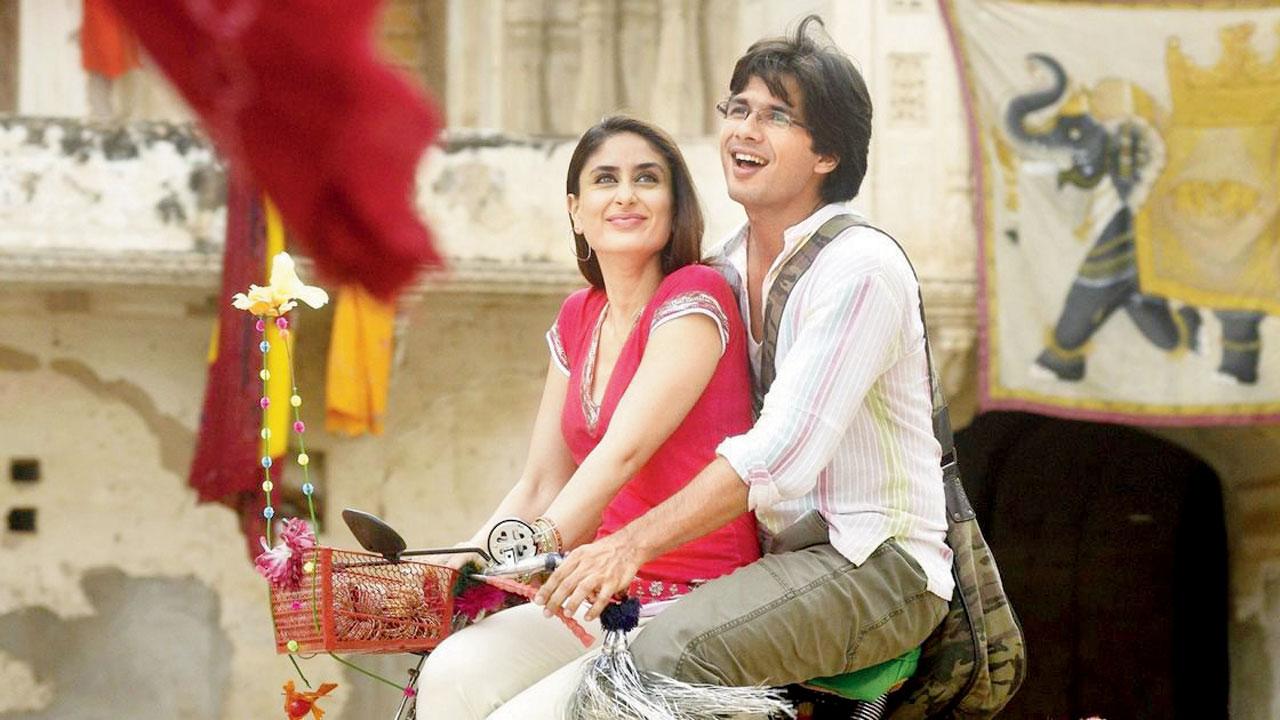
‘PLAYING THE CUTE GUY ALL THE TIME CAN GET A LITTLE BORING’
Shahid has now come to be associated as an actor who is drawn towards complex and flawed characters. While the actor acknowledges the shift in his career, he denies that his inclination for complex characters was an overnight wake-up call.
“The desire to do something complex and challenging was always there, but I was not offered those roles earlier. You can only choose from the choices that are in front of you,” he says, adding, “I feel as you become more secure and settled as an actor, you want to take up new challenges. Of course, playing characters that are layered, complex and sometimes flawed is exciting, as it is more challenging to get the audience to relate to them or feel compassion towards them. It’s harder than playing a guy who is just cute and sweet, which gets boring after a while. Some enjoy doing it for their whole careers, but I am not one of them.”
‘I DON’T WANT TO BECOME A CLICHÉ’
As a versatile artiste, he always looks for diverse characters and genres and finds the process liberating. He recalls, “My dad (Pankaj Kapur) once told me, ‘Beta, abhi tum kar lo yeh sab – cute boy, romantic and all, par jis dinn tum acting karna shuru kar doge na, tab aisa lagega ki sher ke muh mein khoon lag gaya hai, phir tumhe baar baar waise hi kirdaar karne ka mann karega.’ It has turned out to be just the way he said. After having worked for 20 years, I understand what he meant. I am happy about exploring diverse genres; every genre has its own appeal, but of course, the actor in me needs to feel satisfied and challenged.”
He adds that there is a risk in overdoing only complex roles. He says, “I won’t be doing only complex roles. I have to do different things. If I keep repeating myself in that zone, it will become cliché. The idea is not to become a cliché, and that is what I intend to do keep changing every time.”
I’d love it if my kids are able to connect with the characters I play-Shahid Kapoor
8:47 AM

Rachana Dubey (BOMBAY TIMES; May 15, 2022)
In his recent stint in Jersey, Shahid Kapoor played the father of a school-going child, who sacrifices his life to keep the promise he made to his kid. As a father in real life, Shahid, who is a hands-on dad to Misha and Zain, believes that children follow what they see their parents doing. He also believes that it’s up to a parent to find a way for their kids to be happy and proud of their professional achievements.
Talking about how he keeps his kids in mind while making professional decisions, he says, “You want to do the right things and put the right message out for your children. When you give your time to something outside of your home, the first thought is, ‘Will my family be happy and proud of what I have done, sacrificing the time I could have spent with them? Will they stand up and say that dad we love what you do and we are proud and happy that you went and did it?’”
Shahid says, “I can do 10 films today that will do great numbers, but what if five years down the line, my kids ask me what I was thinking when I did those films. At that time, I can’t sit them down and tell them, ‘Beta tab yeh chalta tha’. More than me showing my children what I have done, I would be happy if they saw it themselves. I’d love it if my kids are able to connect with the characters I play.”
Shahid, who is expected to play a father yet again in the Hindi remake of the French film Nuit Blanche, being helmed by Ali Abbas Zafar, adds, “Beyond everything else, I want to be a dad to my kids. I really don’t care if they eventually don’t know what I do. That is not fundamental to me. When they are 20 or 25, if they want to come back home and spend time with me because they feel a void, it would partly be because I’m working on that today. That is important. So, at times, when I sacrifice my personal interests and give that time to my kids, I also do it from a selfish space, so that tomorrow they, too, make that choice. You can expect to get their attention and love when you have also worked towards it.”
I consciously don’t post pictures of our kids on social media-Shahid Kapoor
8:26 AM

Shahid Kapoor is protective about his kids, doesn’t want to put them into the limelight
Rishabh Suri (HINDUSTAN TIMES; May 14, 2022)
Until recently, actor Shahid Kapoor wasn’t too active on social media, and would share his personal pics sparingly. However, in the last couple of months, he has changed drastically. From making reels to putting out random pictures with wife Mira Rajput Kapoor, he is going all out. And, as expected, it’s the Mira effect.
“She has been pulling my leg for the last couple of years: ‘Shahid, your social media game is so bad, it sucks, you are so boring’,” he shares, adding, “We were pretty much living in Punjab during the lockdowns. I was in a different headspace there... The minute I came to Mumbai, which was two months back, I thought, ‘Sweet revenge is coming, Mira’.”
While the 41-year-old admits that he does take social media seriously now, that still has not compelled him enough to upload pictures of his children, Misha (5) and Zain (3). Shahid is concerned about putting them in the public eye. “I consciously don’t post pictures of our kids on social media. There’s just one pic of Zain, maybe two, that I have put out, since he was born,” he says.
But how do his children react to his fame — people coming up to him for selfies when they step out or clicking their photos? The Jersey actor says it’s too early for the question. “They haven’t been here (in Mumbai) for two-and-a-half years. They have just about reached that age where they will be aware of it. We don’t tell them [about my profession] that much, they know what I do, but not in detail. They just know aisa kuch hai, papa shooting pe jaate hain... But kids today are smart. I am sure they will figure it out,” the actor ends.

When Mira Rajput saw Jersey, she hugged me and cried for 15 minutes-Shahid Kapoor
4:22 PM

Shahid on how wife Mira deeply connected with Jersey that sees him play a devoted father
Uma Ramasubramanian (MID-DAY; April 13, 2022)
With Jersey, Shahid Kapoor will be back on the big screen over two years after his last release, Kabir Singh (2019). While the actor is looking forward to the audience’s reaction to the drama, he has got wife Mira’s nod of approval. He has often stated that his wife is his harshest critic. “Sometimes, she just comes back home [after a screening] and says, ‘Don’t waste too much time on this film. Move on quickly,’” laughs Kapoor.
Director Gowtam Tinnanuri’s film, which sees the actor as a defeated man who revives his love for cricket, however, has left a lasting impression on Mira. Kapoor says, “When she saw Jersey, she hugged me and cried for 15 minutes. I think she was overwhelmed because I was playing a father in the film. To me, Jersey is the story of every married [person] in this country — all of us have dreams in our 20s. When you go on to have responsibilities and children, you sometimes give up on your passion and do the practical thing. After watching the film, Mira understood a lot about me as a person; she could understand my struggles. She connected with the film deeply.”
To Kapoor, Mira is his sounding board as well as an honest critic. He points out that he values her opinion as she responds emotionally to stories. “I remember seeing Udta Punjab [2016] with her. It had barely been a year since we were married. By the time it was interval, there was a six-foot distance between us. She said, ‘I am scared of you right now. Are you like Tommy?’ She has an [honest] reaction to every film.”

I never set out to coach people in societal behaviour-Shahid Kapoor
8:23 AM

Gearing up for Jersey’s release, Shahid on life post Kabir Singh and how he doesn’t justify his problematic parts
Uma Ramasubramanian (MID-DAY; April 1, 2022)
There are certain characters that speak to you in a way others rarely can. When Jersey came Shahid Kapoor’s way, the central character of Arjun — a defeated man who revives his love for cricket, at the behest of his son — left a lasting impression on him. He says that the protagonist’s quiet passion drew him in.
“I could relate to him strongly. In him, I got the right vessel to [pour] my emotions into. I have felt that success, big love [from the audience] and a wide-reaching film have come to me after years of waiting. We all have fire [in our belly]. There are certain people whose fire is dampened over time, and then, there are those whose fire keeps burning. I fall in that category, as does Arjun.”
A remake of Gowtam Tinnanuri’s 2019 Telugu film of the same name, Jersey sees Kapoor sharing screen space with actor-father Pankaj Kapur. Holding your own in front of the veteran actor is no mean feat. “It’s scary as hell to share a frame with him,” smiles Kapoor, before narrating an incident. “After a scene, Gowtam walked up to dad and told him it’s a good shot, [but looked despondent]. I asked Gowtam if everything was okay, and he said, ‘Your dad is a great actor, but my story is about your character. So, if you don’t do well, the audience will only be looking at him.’ I told him that I will try my best,” he laughs.
Kapoor’s last release Kabir Singh (2019), though a runaway success, wasn’t without its share of problems. There was much debate about the film’s glorification of toxic masculinity. In the past few years, there has been an increased awareness among artistes on the messaging of films. Has it made him scrutinise his roles harder?
“My concern is with the lack of authenticity or unfounded behaviour [in a character]. I never set out to coach people in societal behaviour. An actor’s role is to honestly represent life. I never try to justify my characters because I have played [parts] that are problematic or troubled. But cinema is a reflection of life. We are merely saying that these things happen. Whether it’s right or wrong, you decide. I think the junta gets it; the over-intellectual minds tend to chew on things a bit too much.”
I don’t have the ability to write; I am fascinated by people who can-Shahid Kapoor
8:28 AM

Rachana Dubey (BOMBAY TIMES; March 7, 2022)
In two years, Shahid Kapoor will complete his two decade run in Bollywood. In the course of the last 18 years, not only has he juggled several genres, but he has also proved that he can get into the mould of the toughest characters.
When we asked Shahid whether he has thought about writing or directing a film, like his immensely talented father Pankaj Kapur (who acts, directs and writes), the actor said, “I don’t think I have the ability to write. I am fascinated by people who can write and who can create music because they are the ones creating something fabulous out of nothing. I think my father does it very well. He writes like a dream, and I have had the honour of reading a lot of his work. He doesn’t share it with the world, but he’s brilliant. I don’t think I have that talent in me.”
The two actors, who have worked together in Shaandaar before, will soon be seen sharing screen space in the upcoming film Jersey, too. Shahid, who had assisted his father at the beginning of his career and also starred in his dad’s directorial venture Mausam, further adds, “As for direction, I am very focussed on what I am doing right now. I am learning new things within this job. So, I am not looking at a shift of job at the moment. I am not ready to give up acting right now. Direction is a full-time job, and it needs that shift. Besides, I don’t even have a story that is mine or one that I am eager to tell the world. I don’t have a story or a take on something that I want to present through a movie. Writing and direction are two things for which you need to be there fully and that’s not on my mind right now.”
I love Kay Kay Menon and Manoj Bajpayee in their web shows; they’re breaking new ground-Shahid Kapoor
8:17 AM

The actor talks about what made him sign his first OTT outing, shortly after delivering a big screen hit like Kabir Singh
Rachana Dubey (BOMBAY TIMES; February 22, 2022)
As most creative talents in show business will admit, there’s no time like the present when actors and content creators can float between mediums with absolute ease and conviction. Like many other actors from the talented stock, Shahid Kapoor, too, decided to foray into the digital medium. Soon after the success of Kabir Singh (2019), he gave his nod to Raj & DK’s (Raj Nidimoru and Krishna DK) show, while he was working on the Bollywood remake of the Telugu hit, Jersey.
Talking about what led him to make that decision, Shahid told BT, “Look, the challenge is not the only reason you make a decision. A career is driven by many factors, and the decision-maker is the only one who knows why he is making a choice. He’s in the best place to do that. Hence, he must take the onus for whatever happens — good or bad. That is what I have learned in life. I hear everyone and do what I feel, and not what I always want. As an actor, you should try and do what you strongly feel about. I wanted to try another format of content, hold on to a character for eight-nine episodes. I have done films for 18-19 years now, and the one thing that can happen which I am afraid of, is that I will get bored and start doing it like an everyday job. I like something that is different from what I usually do. I love Kay Kay Menon and Manoj Bajpayee in their web shows — they’re breaking new ground and trying different things. It’s so hypocritical to discriminate between what you do and what you like to watch, especially for an actor.”
Shahid is currently prepping for the Hindi remake of the French film, which is dubbed as Sleepless Night in English. It will be helmed by Ali Abbas Zafar. “I am in the middle of the prep. It is a tough role, and Ali has his take on the story, which is good,” says Shahid, adding, “I am having fun, but it’s also quite an edgy piece to work on.”
Shahid says, “Every role becomes challenging when you get in the depth of it. It’s difficult to explain an actor’s journey with a role. You realise it when you get there, and that is what is exciting for me. I have tasted that in a few films that came my way. The opportunities I got required me to push myself harder and after that, it was like tasting blood. I sometimes want to punish myself for choosing a tough role. But when I am somewhat unsure, I chase things even harder. Of course, I also want to try something that’s a little chilled out, but will it excite me? I don’t know! Being on your toes and trying to cope with what’s in front of you is a good place to be in.”
While talking about exploring challenging spaces, one can’t help but recall that Shahid was expected to headline and produce the biopic on boxer Dingko Singh, who passed away recently. The said biopic was expected to be directed by Raja Krishna Menon, who has previously helmed films like Chefand Airlift. Shahid was supposed to play the title role of the boxing legend, but plans were put on a backburner post the release of Kabir Singh in 2019. The director, in a previous chat with BT, had even expressed how much it would have mattered to make and release the biopic on the pugilist who inspired an entire generation of boxers while he was still alive.
On broaching the subject, Shahid says, “The film on Dingko Singh is not on the cards right now. It was a very challenging role, but when the pandemic struck, I didn’t have the opportunity to train in boxing. The film required a lot of dedication and time to undergo intense training. Also, the film wasn’t entirely developed, in fact, it was at a nascent stage at that time.”
Releasing a film in theatres is a blessing that we had taken for granted-Shahid Kapoor
7:53 AM

Rachana Dubey (BOMBAY TIMES; December 28, 2021)
In about a year, he will complete two decades in the Hindi film industry. The actor has enjoyed pushing his boundaries with roles that have brought to fore his versatility every time. Shortly after Kabir Singh, he jumped on to the OTT bandwagon, investing a lot of time in his first show, while being deeply involved in the Hindi adaptation of Nani’s Telugu hit, Jersey, which releases this week. In an interview with Bombay Times, Shahid Kapoor talked about being a part of two remakes in his 20-year-long career, and more. Excerpts...
Close on the heels of a hit like Kabir Singh, you chose to swing towards a web series. Of course, Jersey was in the works, too. And now, you have a line-up of some really challenging roles for 2022. What’s been driving your choices lately?
The film choices I make today are based largely on instinct. The first thing you feel from deep down inside is an amalgamation of all that you have experienced in life. And the first voice you hear is the purest; I am trying to listen to that. Of course, there are other factors that you have to account for.
It’s been two years since Kabir Singh released. I feel like kiske pair chooke thank you bolu that I again have a film releasing in theatres. It’s a blessing that we had taken for granted. At a young age, you take many things for granted, and with time, and ups and downs, you learn to respect everything in front of you. I am going through that time in life. I felt at ease after doing Kabir Singh. That was not the feeling I thought I would have after the film. Everyone wants a film with big numbers, right? If I have that big-number film, I thought, I probably will become more self-assured, but it turned into a more humbling experience. I have been just as hardworking. When something has to happen, it will happen at the right time. You learn to appreciate the energies of the universe and stop having ownership over it. I think that is a big realisation everyone must hopefully have in their life. After Kabir Singh, it was only a matter of months before we went into a lockdown which was an uncertain period.
Jersey was only halfway done with its shoot at that time, right?
We had half of Jersey to shoot. Shooting movies, which we took for granted, suddenly felt like a privilege. The circumstances were insecure, tentative and we were unsure as as to how we would make movies or and how would we find that atmosphere to make a movie like Jersey, which is personal, emotional, and not some sort of an itemised story. It needed to feel palpable and believable. After that phase, one has learned to appreciate everything that one took for granted. I always worked hard, but at times, I did things that I didn’t understand although everyone felt that was just the thing to do, so I went along. I came into the industry at a time when films were in a certain space which I didn’t connect with. They were not story or character-driven. I wanted to do films of the kind that I had grown up watching. I was doing things that were not me, but today, I am working on things that are closer to my sensibilities.
After spending about 15 years in the business, Arjun Reddy and Jersey remakes became two exceptions that you made in quick succession. What is drawing you to remakes?
Why not do a remake? Art is very fluid. People who critique art create certain boundaries for themselves. We all do, actually. We create boundaries which are limiting. I think the most interesting thing about art is that it’s limitless. As far as you are able to make it your own, and be honest, you can try anything. Shakespeare had said that there is no story that has not been told before. It’s not like I am looking out for remakes. It was an opportunity that came my way. Arjun Reddy was the first remake I did. Mira (Rajput, his wife) had seen it and said that I’d be a fool to let it go. I was tempted and yet, unsure. But I did it. And I enjoyed myself. I have a lot of respect for the fact that it is not that easy to do remakes or adaptations.
While shooting for Jersey, you were also working on your first web show with Raj Nidimoru and Krishna DK (Raj and DK). In their recent chat with us, they had mentioned how you took it on as a challenge and the pressure is more on you than them...
And if Jersey works, the pressure is probably back on them (laughs!) No, on a serious note, they had called me for a film, but I asked if they had something in the digital domain. I have loved their work and they have an understanding of narrating a story in an episodic manner in the long form. They were surprised that I was interested, and this was soon after Kabir Singh. They wondered why. My question is: why would Matthew McConaughey go from Dallas Buyers Club to True Detective? He has the maturity to understand that it’s the quality of content that travels. There is an audience waiting to consume good stories and characters. This is the time to go back to the basics. Why did I come here to be an actor in the first place? It’s to be able to tell good stories and play some characters that will help me evolve, challenge my abilities and push me as an actor. I don’t think digital is any smaller than theatrical. It might get bigger. I think we’re also being hypocritical here — we love content, but we want to discriminate between the content we’d like to work on as actors. Do it, enjoy it. Over-calculation is not so much fun.
In the last eight years, while your volume of work has gone up, do you try to strike a balance between work hours and family time? Do you consciously choose roles that will also make your kids proud of you when they grow up?
Yes, I do. Once you are married and have kids, you realise that, that is where life begins. Everything just converges. There is a thrust, focus and clarity in every sphere of life. I have felt that shift and I am grateful for it. As for Mira, when we fight, I use it all for my intense scenes, and when we have happier moments, I use that energy to spread positivity. It works for me in every way.

Shahid Kapoor is The Times Most Desirable Man of 2019
8:18 AM

BOMBAY TIMES (August 22, 2020)
Here’s unveiling the Times 50 Most Desirable Men 2019 list. India has voted and made their choice. The coveted list boasts of men under 40 across various fields and industries, and the ranking is based on votes cast in an online poll (www.toi.in/mostdesirablemen),along with inputs from our internal jury. From newcomers, who have made a mark with their charm, striking personality, talent and sex appeal, to the men who have been making news for the right reasons — these are the most stylish and dashing men in the country. Shahid Kapoor grabs the top spot this year. While he has always won accolades for his performances, in his 2019 film Kabir Singh, his intense and passionate portrayal of an obsessive lover won him immense appreciation. Here’s what Shahid has to say on being on top of the desirable list.
How does it feel to top the list of The Times 50 Most Desirable Men in India (2019)?
I very happily accept this very special title as it’s always nice to know that you are liked, loved or desired. So, thank you to all who thought that I am apt for the title, in a year that has been so challenging.
Would you like to credit someone for making you who you are today?
I think life in itself shapes you to become the person that you are, if you choose to gain from all experiences, good or bad, and learn from them. There are many people, be it from my family, friends circle or the film fraternity, who have contributed and participated in my journey. They all know who they are, and I am very thankful and grateful to them.
How much change has your wife Mira (Rajput Kapoor) brought into your life?
I think I have changed a lot ever since Mira and I got married. There is a lot I have learnt from her and I am sure the same holds true for her. I am sure in the past five years (since the time we got married), a lot of who I have become is influenced to a substantial degree by her.
According to you, what are the qualities that make someone desirable?
I never thought I qualified, so honestly, I’m probably the wrong person to answer this question. I think there are taller, more muscular, better looking and intelligent men out there. Desirability is very subjective. Each person has a different take on it. For me, it has to be in two stages. First, it has to do with how someone looks or how they make you feel, and with time, it’s the qualities that you find in a person that eventually make them desirable to you in a timeless manner.
Any other name that comes to your mind, who you would like to see on the top of this list?
Well, this year I guess the most desirable person should be someone who finds a cure for the Coronavirus, but till then, I will very happily accept this very special title (laughs)
From among the actresses of Bollywood, who do you think should win ‘The Most Desirable Woman’ title?
Kabir Singh’s favourite will always be Preeti! So, she should be Kiara Advani.
Family is priority over success or failure-Shahid Kapoor
7:57 AM

Shahid Kapoor, who turns 39 today, wishes to connect to his inner self, remain ‘a student for life’ and stay ‘good and pure’ in the coming year
Titas Chowdhury (HINDUSTAN TIMES; February 25, 2020)
A successful actor, a loving husband and a doting father, Shahid Kapoor has balanced his personal and professional life pretty well in all the years that he has been working in films. His last year’s release, Kabir Singh, created a stir at the box office and right now, he’s shooting for his next, Jersey (Hindi remake of the 2019 Telugu film by the same name), a sports drama in which he essays the role of a cricketer for the first time. As Shahid turns 39 today, he stresses that this year, he wants to connect to his inner self, remain “a student for life” and “stay good and pure”. He plans to celebrate the day working on the sets of the film, surrounded by colleagues and family. Excerpts from an interview:
So, it’s a working birthday for you this year. Any special plans?
I’m celebrating my birthday in Chandigarh, as we’re shooting here. I might get a little time off once my family is here and I’ll be spending some time with them. It’s a working birthday as I’m in the middle of the schedule and didn’t want to take a break.
Is there any professional or personal goal that you want to fulfil as you step into a new year?
Being grounded is very important. Success and failure come and go, but family is priority for me. To sustain a long career, you need to stick to the basics and stay connected with yourself as a human being. I feel very fortunate that I have two kids (Misha and Zain) and my wife (Mira Rajput) by my side. I’m happy that we’re always there for each other.
Walking down memory lane, what are some of your fondest birthday memories you can recall?
I have memories from my birthdays during childhood that include some bad behaviour on my part. I was quite into gifts. I’d grab gifts from the guests and run away. My mum would get very embarrassed. She’d call me back and ask me to thank them and behave well. But, I was very greedy for gifts. That’s something I remember and I hope I can teach my kids to not be like that (laughs).
Last year was a game-changer for you. With Jersey releasing this year, is it already looking exciting?
What happened with Kabir Singh is something that made us all extremely happy. It was a great year. Eventually, an actor understands that nothing matters more than the love and connection you have with the audience. They gave Kabir Singh much more than what any of us had expected. I’m very grateful and thankful for that. I don’t want to assume that everything I do will be the same. But, the only thing I want to do is to give my audience a really good film. When I saw Jersey, it moved me emotionally. I felt that the message that the film gave, was very inspiring. Also, it’s a very sensitive film about the victory of human spirit. I wanted to take the story forward and share it with a wider audience. I enjoy giving people something new and fresh each time. I don’t believe in formulas, and today, audiences want to see different things. My upcoming film will have its own unique energy and a very different character to offer the audience.
It’s been a defining year [for me] for sure-Shahid Kapoor
8:13 AM

Riding high on the blockbuster, Kabir Singh, Shahid Kapoor says he now feels ‘connected with people’; adds he’s happy to not have fallen in ‘any bracket’
Prashant Singh (HINDUSTAN TIMES; December 27, 2019)
He could easily be called ‘the box office disruptor’ of 2019. After all, breaking every archetypal notion and turning each trade mantra on its head, Shahid Kapoor delivered the biggest blockbuster of his career yet, Kabir Singh. And that too when not many — including the trade world — had many expectations from the film. “I’ve been doing this [acting in films] for the last 15 years but suddenly, I feel very different, and it’s only because of the love that audiences have given me,” says Shahid, who is currently busy with the shoot of his next, Jersey, a Hindi remake of the Telugu sports-drama of the same name. Excerpts from an interview:
Personally, how do you look at 2019?
It’s been a defining year [for me] for sure. I think 2019 has empowered me to play all types of characters. It has given me the belief that audiences are there to watch a good story. If you can emotionally affect them and give a new experience, they are not as restricted in their minds as I think some of us, within the industry, are about what can travel wide and what can’t. The first thing that I felt [vis-à-vis Kabir Singh] was a strong and direct connection with the audience. When you get such overwhelming love, you realise its intensity. So, now, I feel very connected with the audience, and everyone who gave me, and the film so much love. And I only feel answerable only to them.
Now, going ahead, does a hit of such a big size put any pressure on you?
Not really! I think during your early years in the career, when you haven’t done enough work, you tend to take pressure about these things as you think that you can control them. But after many years, when you understand that success and failure is not completely in your control, you actually feel kind of liberated. I just feel that I did something very instinctively, from my gut, which connected with people. And I want to continue doing the same.
You broke the mould of a ‘Bollywood hero’ with films such as Kaminey (2009), Haider (2014) and Udta Punjab (2015). And you did it again with Kabir Singh. Does that give you a kick?
I don’t think I’ve ever fallen in any bracket in the last 10 years of my career and Kabir Singh was also not the kind of film that people would expect me to do. So, I think giving the audience the unexpected is what my relationship with them is based on. I will always try and give them a new experience. I will never do the same thing, which may work at the box office, 10 times. I don’t think that’s my relationship with the audience. Every actor has a different equation [with audiences] and my attempt is to surprise them or give them something new every time with a story.
What has been your biggest takeaway from the year?
That’s a very large question (laughs). I feel we are standing at a crossroad where everything is being questioned a lot, everybody is feeling judged, and everybody is being judgmental towards others. However, I feel that at the end of the day, filmmaking is all about telling stories about good as well as bad people. It’s also about the craft, and about entertaining people and the only party who should have the last word is the audience. So, my biggest learning is that you are making movies for people, and your focus has to be on what they feel about it.
Looking back at 2019, would you call it a transformative year of sorts for you?
See, as an actor, what happens is that you have many ambitions of your own because of which you make choices accordingly. But after Kabir Singh, I feel one of the most important aspects for me – while making my film choices – would be, ‘how I can reach out to people who have given me all the love.’ I wouldn’t want to do a film that is limited in its appeal. Of course, in today’s times, there are no rules to the game. But I’d definitely want to give people as many good films as I can because I feel they are the wind beneath my wings. And that’s why I feel responsible towards them.
Kabir Singh has beat films such as Avengers: Endgame, Joker, War and Gully Boy to become the most-searched movie on Google in India this year...
See, Kabir Singh was also quite a controversial film [many felt that the film ‘glamorised misogyny’ and ‘toxic masculinity’] and many people spoke a lot about it. So, I guess that also contributed a lot to why the film is the most searched film. It’s surely one of the biggest hits of the year but these are conversations that need to happen. I feel one of the biggest things that a film does is to bring up a conversation in the society. It makes the society reflect upon itself. Films are not meant to sermonise but some films are surely meant to reflect upon life. A film can be purely for entertainment, or to scare people, or it can be based on somebody’s life story which somebody believes must be made, and then the audience will decide if it’s worth their time or not.
In essence, you are advocating for space for different kinds of films. Is that correct?
Absolutely! And it’s great to see that there are different kinds of filmmakers, who are making various types of films. After all, cinema needs to be a wide spectrum medium. There should be no rules to the game, otherwise where is the free speech and free expression? Agar humein filmein banana hai and if films are a part of the fundamental right of free speech and expression, then we should agree to disagree. Nobody should be forced to like something that they don’t. But I don’t think anybody also has the right to say that you should or shouldn’t make this because we are all on the same platform. For somebody to tell others that you can or cannot do this means they are on a pedestal. Right? And I don’t think anybody is on that pedestal. We don’t need to fight if we don’t agree. That’s what a healthy democracy is all about. Respect somebody else’s point of view and others must respect your point of view. Disagreement is the basis of free society and that’s what we should focus on.
From this point, how do you see 2020, and the future?
The future looks the same as it was earlier. It’s as unexpected and as unpredictable. I don’t think I have gained any special sixth sense. This job is just so unpredictable that you should just keep the head down, focus on work, enjoy what you are doing, make people happy and keep going on till the time people want to see you. The idea is to keep giving them the best you got and never think that is forever. I feel everything has a timeline, har cheez ki expiry date hoti hai toh jab tak chal rahe ho, chalte raho, kaam karte raho.
Do you feel such a big success has come at the right time for you?
It’s never a wrong time for the right thing (smiles). Whenever it comes, its welcome and I am thankful. Let me be very honest, I have just bought a house in Worli, and I need to pay for it, so I am very happy that I got a successful film (laughs). People see actors differently but we also have the same issues that every other person faces ke, ghar chalaana hai aur family ko accha ghar dena hai and acchi life deni hai. So, I felt relieved that now, hopefully, I will be able to pay for the house that I have bought.
To see Kabir Singh become one of the top 10 grossers of all time is a relief-Shahid Kapoor
8:31 AM

Shahid Kapoor says Kabir Singh’s stupendous success helped reinforce the actor’s belief in himself
Prashant Singh (HINDUSTAN TIMES; December 12, 2019)
Several Hindi films have hit bull’s eye at the box office this year. But of these, the Shahid Kapoor-starrer Kabir Singh surely shines bright as one of the biggest money spinners of 2019. And the actor is aware of the impact his big hit has had on him — as an actor and otherwise, too.
“Usually, an actor’s film does ₹70 crore and then ₹100 crore, then ₹140 crore and ₹170 crore, and finally ₹200-crore plus. But my solo films never went above ₹70 crore and now, it’s straight at ₹280 crore (smiles). That jump is so big, it gives you clarity that yeh maine nahi kiya hai, yeh ho gaya hai,” he explains.
Shahid, set to start work on his next, Jersey, a remake of the Telugu sports drama of the same name, feels that he just has to be “aware of my responsibility now”.
“At the same time, I feel I have had a certain work process which got me here. So, there’s no need to change it. If I got here by doing the work I believe in, I should continue the same way. Otherwise, what tends to happen is you start overthinking (on scoring such a big hit) and ‘Ab main kya karoon’. But I’m like, ‘Kucch nahi karna hai, bas kaam karna hai’,” he says.
The Haider (2014) actor also feels a “sense of relief” that he reached out to the masses with his last release. “To see Kabir Singh become one of the top 10 grossers of all time is a relief because I always believed that I had the potential in me to be able to talk to a very wide audience as an actor. However, it never happened. Some films did well and some didn’t, and they were always in a certain kind of range,” he admits.
Yet, reflecting on some of his previous hits, Shahid feels a few of them did appeal to a large audience. “I think many years back, Vivah (2006) and Jab We Met (2007) had reached a very wide audience. Then, I did Padmaavat (2018) which went wide but that film wasn’t focused or centered around me. But Kabir Singh is where I felt that everything was on my shoulders as I could feel that this film was all about me. When such a film gets that kind of love, it definitely makes you feel different,” the actor says.
Interestingly, right before Kabir Singh came along, Shahid says he had certain thoughts about resetting his goals and processes. “See, I have been doing this (acting) for 15 years and there’s a part of you that starts to feel, ‘Am I overestimating my own self?’ or ‘Am I thinking that I can be something which I’m probably not meant to be?’ Or ‘Should I change my plans and goals, bring it a bit down and be a little more realistic?’ Those thoughts had crossed my mind,” he adds.
Mira Rajput is really comfortable in her own skin-Shahid Kapoor
8:09 AM

Shahid Kapoor, after four years of marriage with Mira Rajput Kapoor, says he realised it right at the start that she has her own individuality
Prashant Singh (HINDUSTAN TIMES; November 20, 2019)
 They got hitched over four years back (on July 7, 2015). Ever since, Shahid Kapoor and his wife, Mira Rajput Kapoor have been one of the most loved couples of Bollywood. Although the Delhi girl Mira never had any connection with the showbiz, she has — quite clearly — never seemed to be out of place while handling the media as well as paparazzi. And Shahid says that he knew it from the “first day itself.”
“Yes, I realised it on the first day itself — when we got done with the marriage rituals and stepped out for some pictures,” says the actor. “I remember looking at us together, and at that moment itself, I knew that she has her own individuality. Later too, when we came to Mumbai and hosted a small get-together for friends and some people from the [film] fraternity, she was extremely comfortable.”
Shahid, who is now on his way to complete five years of blissful marriage, feels the best thing is that his wife is “really comfortable in her own skin”. He explains: “Mira doesn’t feel the need to change and adjust. She is who she is, and people like her for that. She has never tried to be someone else and that’s a great thing about her. I always knew that she is going to find her own space and will become her own person.”
The Udta Punjab (2015) actor says he has always “sensed instinctively” that Mira won’t feel out of place within the set-up of showbiz. “I felt that when I noticed it for the first time itself because she is that kind of a person. People will get drawn to her and will be curious about her as she has that kind of a personality. And that’s great, and I think it’s so good that she can do it confidently,” says Shahid, who has two kids — daughter, Misha, and son, Zain — with Mira.
Work-wise, Shahid is busy with the prep of his next, the Hindi remake of the Tamil hit, Jersey, after the super success of Kabir Singh. It’s interesting to note that the actor feels “relieved” and “undeserving” vis-à-vis his last film’s success. Ask him about it and he says: “I feel relieved because I guess I was waiting for an extremely successful film [like this] for a long time. And undeserving, because I don’t think any actor can ever work hard enough to get the kind of love you get when a film does this kind of business.”
The Padmaavat (2018) actor goes on to call this success a result of “destiny, love and divine intervention”. He says: “when I saw the first Friday, Saturday and Sunday collections, I was like, ‘yes, we deserve it’. But when Monday collections came in, which was the highest non-holiday Monday in the history of Indian cinema, it really hit me, that it has nothing to do with me. It goes beyond anything that can be justified through any amount of work. This is destiny and I recognise that, and so I can’t take complete credit for it.”
I believe a lot in destiny-Shahid Kapoor
8:12 AM

As Shahid Kapoor basks in Kabir Singh’s success, the actor says if he ‘hadn’t waited for so long’ for this, he ‘probably wouldn’t appreciate and respect it truly’
Prashant Singh (HINDUSTAN TIMES; October 23, 2019)
It won’t really be wrong to say that 2019 has been an extremely special year for Shahid Kapoor. After all, contrary to everyone’s expectations, Kabir Singh broke several records to become one of the biggest box office earners [made almost ₹280 crore in India] of all time. And of course, the actor is “feeling blessed”.
“You know, I really believe a lot in destiny. A number of people have told me, ‘oh, you have waited 15 years for a hit this size’, but maybe, if I hadn’t waited for so long, I wouldn’t truly appreciate and respect it. Honestly, I feel failures make you a man. Even boys can do well when success is under their feet but when that carpet of success gets pulled away, only the men can stand up and survive. The boys get knocked out,” says Shahid, with a smile.
The Padmaavat (2018) actor says he is filled with “gratitude” for the success. “I feel all the failures that I have seen have made me who I am today. So, honestly, I am very thankful for the fact that though it took so long, such a big success came my way because I know that it may well have never happened to me,” says Shahid, who is yet to start work on a new film after Kabir Singh. “I have been working since I was 16. So, sitting at home just doesn’t fly with me,” says the actor, who will next be seen in the Hindi remake of the Telugu hit, Jersey.
For the time being though, he is happy to be with family [wife Mira and kids, Misha and Zain]. “It’s [the break] great since I get to spend time with my family, Mira and kids. But having said that, after a point, you just want to get on the sets. Even if you ride a motorcycle after really long, you feel a bit nervous. So, you need to keep doing it and be on the sets. Nowadays, I get nervous even if I have to go for an award function because I haven’t been in front of the camera for so long. It does make you feel a bit odd,” says Shahid, who recently went on a bike trip across Europe with younger brother, Ishaan Khatter, Kunal Kemmu and a few other friends. “It was a 10-day long trip, and 5-6 boys were together throughout the trip. We had a great time. In fact, I would recommend it for everyone,” says the actor.
-------------------------
A new address!
For some time now, there has been a lot of talk about Shahid moving into a new, palatial home in Worli. But the actor clarifies that the shifting is going to take time. “It’s a bit far away [from being ready]. We still have to start getting it done up and all. I don’t think we can look at shifting for another year or two,” says the actor, who has already been called ‘Deepika Padukone’s neighbour’ by a section of the media. “I don’t think Deepika has her house in the same vicinity. But it makes for a good headline (laughs). I guess that’s why [such stories come],” he says.
Funnily, I don’t like flying. I do it as a part of my job-Shahid Kapoor
8:44 AM

As told to Avinash Lohana (MUMBAI MIRROR; July 9, 2019)
How do I prep for a film? Well, the first thing I do as an actor is to get into the head of the filmmaker I am working with as it is eventually his vision that needs to be interpreted and his world that I must inhabit and represent. This process also gives me the opportunity to learn, observe and create new material which comes from the script and in most cases, is written by the director himself.
Once I have understood that, the second step for me is to work on the physicality of the character, including his hair, body, body language, attitude and the overall personality. As an actor, I try to change my silhouette as often as I can, and that, in fact, is one of the reasons for my choice of films. I don’t feel comfortable if I am too comfortable about how I am going to play a certain character as this means it’s in my comfort zone and so obstructing me from finding and attempting something new.
For my just-released film Kabir Singh, I had to create three different silhouettes, one of which needed me to be out of shape. My normal weight is around 71-72 kg, I had to add on over five kg, going up to 76-77 kg, a lot of it fat, and look destroyed in those scenes. It was challenging but also, I admit, very exciting at the same time.
The part I was apprehensive about was the one in which I had to portray a younger avatar. At 38, I was expected to play a boy of 25. Today’s audience is much evolved and won’t overlook any discrepancies in appearance, knowing that I worked hard to get my look right.
I play a surgeon in the film, and here I must mention that my director Sandeep Vanga who is a qualified physiotherapist himself was of great help. I did my basic R&D too, but beyond that, I wanted to find the character and not just focus on his profession.
 Another challenging film was the 2009 caper thriller, Kaminey (right), directed by Vishal Bhardwaj, and my first double role, which had me playing twin brothers Charlie and Guddu with speech defects. While one lisps, the other has a stutter. As a part of my homework, I met people with speech disorders. I was very sure I was not going to mock them, rather I wanted the viewers to feel for the character and spent some time getting it right.
Strangely, I have not needed a coach for any of my films, except for the one that I have for my work-outs, to oversee my physical prep. Only for Abhishek Chaubey’s Udta Punjab, in which I played Tommy Singh, we had a dialect coach on the set. Now that I think of it, I had one for a scene in Kabir Singh too where I speak Punjabi. It was to make sure that I am not mispronouncing anything and that my lines would flow naturally and organically on screen. Being a Punjabi myself, I know and understand the language well, but since I have grown up speaking in English and Hindi, I am not too fluent in it. So, I spent a few hours working on my dialogue delivery before facing the camera.
 A film I had to train a lot for was my father’s (Pankaj Kapur) directorial debut, Mausam (left). I played an Air Force pilot in the film and had to go through three-four months of flight simulator training. The flight simulator is a device which artificially re-creates an aircraft flight and the environment in which it flies, for pilot training, design and other purposes.
I also had to be in great shape as one has to be in prime fitness to get into an Air Force aircraft. Back in Mumbai, I used to train three times a week. Funnily, I don’t like flying. I do it as a part of my job, but for me, the sky is not my favourite place in the world. However, once I started training, I had a lot of fun.
Imtiaz Ali’s Jab We Met is still remembered 12 years after its release. I had to play the guitar in one of the scenes and I specifically learnt how to do that so that when I played, it would look believable on screen. It took me around a week to 10 days to get it right. I want to learn how to play a musical instrument for real, also, martial arts. I also want to play more sports, but I don’t get the time to do these things and more. Having said that, I really enjoy my job and I am happy with it. As part of my prep, I learn so many new and different things.

Subscribe to:
Posts (Atom)