Showing posts with label Screenwriters Association. Show all posts
Showing posts with label Screenwriters Association. Show all posts
Sujoy Ghosh on decade-long Kahaani 2 plagiarism row: “It was one battle after another”
10:43 AM

Niharika Lal (BOMBAY TIMES; May 3, 2026)
It was like one battle after another, and winning this case was like winning an Oscar” – that’s how Sujoy Ghosh describes his decade-long battle in court over the plagiarism accusations against his film Kahaani 2: Durga Rani Singh (2016) . Now, after the case was quashed last month, he is revisiting the ordeal.
At a discussion hosted by the Screenwriters Association in Mumbai, Ghosh recalled the nightmare that the case caused.
‘IP IN OUR COUNTRY IS TREATED AS A CRIMINAL CASE’
Ghosh, who wrote and directed the film, said the complainant had first approached the SWA, which found no connection between the two scripts. He then went to court, allegedly concealing this. Ghosh said he discovered the SWA verdict later after missing the email and submitted it in court, adding that the complainant was a serial litigator.
He shared, “In 2016, we had just released Kahaani 2: Durga Rani Singh, which is the sequel to Kahaani, and Robin da (Robin Bhatt), who was part of the SWA, called me and said, ‘ Arey tune kuch kiya kya?’ I said, ‘What did I do?’ He said, ‘There is a gentleman who is accusing you of copying his script.’ I didn’t take it seriously because I had not. So I said, ‘No, I didn’t,’ and I gave all my details to Robin da.”
He explained, “I didn’t realize it. I didn’t take it seriously because it’s like somebody tells you, ‘you killed that person.’ ‘No, I haven’t!’ Why should I take it seriously? And that was my biggest mistake. And then suddenly, I had a criminal case against me because IP in our country is treated as a criminal case. So if I accuse you of plagiarizing – and that’s a big word – then a criminal case can be filed. Initially, I didn’t take it seriously. It’s like a little snowball that starts gathering momentum. It piles up, grows bigger, and before you realize it – boom! It has hit you. I was like, ‘yeh kya ho raha hai?’ It was one battle after another. It kept growing. The Supreme Court also took a lot of time. And thanks to the court, we got a judgment stating that whenever someone accuses another of copying any work, certain steps must be followed before making such a claim.”
Background
After Kahaani 2 was released, a case of copyright violation was filed against writer-director Sujoy Ghosh. The complainant, Umesh Prasad Mehta, had written a script for the film Sabak. He alleged that Ghosh had copied that script for Kahaani 2. A criminal complaint followed, and a June 7, 2018 summoning order by the Chief Judicial Magistrate triggered a legal battle that lasted nearly a decade.
In March 2026, the SC quashed the copyright infringement case, noting that Ghosh’s script had prior registration and that the complaint was baseless. Ghosh told the SC that the complainant was a serial litigator. He added that the complainant had approached the SWA, which found no similarity between the scripts and cautioned the complainant, but he allegedly concealed this verdict before proceeding with the case.
‘Would suggest fellow writers – don’t take such complaints lightly’
Writer Preeti Mamgain, who was hosting the session, and writer Jyoti Kapoor, then convenor of the SWA in Sujoy’s case, explained that regardless of who files a complaint – producer, director or writer – the SWA calls both parties. “We listen to both sides. Jo bhi verdict hota hai, we send it to both parties,” they said.
Mamgain added, “We have had cases where someone went directly to court, and the court sent the script to us.” Sujoy said, “The biggest mistake I made, which I would suggest to all fellow writers, was not taking it seriously. I didn’t give it the seriousness it deserved. There is no point in thinking you are safe because you know you are innocent.”
Saiyaara is a copy of my 2019 short film, claims Amit Jadhav
2:44 PM

Rishabh Suri (HINDUSTAN TIMES; March 15, 2026)
A much-in-love couple’s world comes crashing down when the girl is diagnosed with a memory loss condition. She goes missing one day, and the musician hero uses a song to find her.
This is not just the plot of Mohit Suri’s directorial Saiyaara (2025), but of the 2019 YouTube short film Khwaabon by Amit Jadhav. These glaring similarities are the basis of Amit’s allegations of plagiarism against the makers of the Ahaan Panday-Aneet Padda starrer, made in a now-viral Instagram Reel.
Talking to us, Amit, an actor, singer, and filmmaker, shares that he was about to convert his short into a feature film. “I had got producers, too. We were going to shoot in 2025, but then Saiyaara happened and everything got derailed,” he shares, adding, “I went into depression and one day, when sloshed, I almost committed suicide. But my parents saw me and stopped it from happening.”
Amit says that the entire ordeal dates back four years. “I had tried speaking up about this last year, too. In 2022, I received an Instagram DM from YRF Talent (a division of Yash Raj Films, which produced Saiyaara) about getting in touch with me. I asked which project they were reaching out for, but they did not respond. I did not know anyone there, nor had I given any auditions.”
After the release of Saiyaara, Amit’s friends pointed out the overlaps. “My friends said, ‘Tera toh story same tha’. I was shocked. I tried reaching out to them, even going to their office, but my friends told me they won’t entertain me... I wrote YRF two mails seeking clarification, but got no answer.”
When asked if he got his story or script registered, Amit admits that he did not. “I am a part of the Screenwriters’ Association, but I did not get the story registered in 2019 because it was a short film and out on a public platform as proof,” he says.
Now, all he is seeking is acknowledgement: “I should get some credit. Or maybe I can be cast in a role in some project. That’s all I am seeking.”
We reached out to both Mohit and YRF for comment on the matter, but did not receive a response till the time of going to press.
Screenwriter Sulagna Chatterjee to approach SWA over exploitation of microdrama writers: "Some regulation is needed"
9:17 AM

While vertical screens boom, Bollywood writers draw attention towards abysmal pay, exploitative working conditions
Priyanka Sharma (MID-DAY; January 10, 2026)
Vertical storytelling has established its dominance over our phone screens today. From homes to locals and metros, one can hear smartphones buzzing with short snippets of stories aka microdramas. But behind the boom lies a quieter concern: the exploitation of writers expected to churn out 60–90 minutes of content in less than a week. Poor pay, punishing deadlines, and unclear contracts continue to haunt many, particularly newcomers.
Screenwriter Sulagna Chatterjee is planning to take the issue up with the Screenwriters Association (SWA) through her group, Women Film Circuit (WFC). The committees are collecting an anonymous experience form, which will document the pay ranges, timelines and recurring patterns of the producers.
“I put up a social media post about it because this space is extremely exploitative. People are paid Rs 1000-2,000 per episode. Some sort of regulation is needed. The post went viral and many writers identified with it. But nothing happened after that,” Chatterjee tells mid-day.
Timelines, remain another major concern. She shares, “I got six days to turn around 50 episodes of one and a half minutes each. And when I asked them to give me 10 days, they said, ‘Nobody gets 10 days’.”
Out of 30 responses for the anonymous experience form so far:
- Writers got paid less than Rs 50,000 to write the entire show - 70%
- Between Rs 50,000 to 75,000 - 23%
- More than Rs 1.5 lakh at all: 0% - 0%
- Those who got between Rs 1 to 1.5 lakh - 1%
Micro shows that went viral in 2025
- ‘Gold Digger Kahin Ki’ (Story TV app)
- ‘Trials & Reposts’ (Instagram)
- ‘Shaitan Haveli’ (Story TV app)
Sulagna Chatterjee is known for writing:
- Amazon Mini TV show ‘Adulting’ (2018)
- ‘Firsts’ for Dice Media (2020)
- A segment of Netflix’s anthology ‘Feels Like Ishq’ (2021)
Women Film Circuit files complaint with Screenwriters Association about the exploitation of writers
8:48 AM

Stills from micro drama Firsts
Women Film Circuit has filed a formal complaint with the Screenwriters Association about the lack of fair pay in micro dramas’ development
Mohar Basu (MID-DAY; August 1, 2025)
On July 20, Women Film Circuit (WFC), a collective founded in 2021 to support and empower women in the film industry, submitted a formal complaint to the Screenwriters Association (SWA) regarding the growing exploitation of writers involved in the production of micro dramas. Running between one and three minutes, micro dramas are a new content format developed primarily for platforms like Instagram.
According to WFC founder Sulagna Chatterjee, writers working on these short-form digital series are being paid as little as Rs 1000-Rs 2000 per episode. Chatterjee points out that after creating an entire micro drama, say comprising 90 episodes, a writer is paid anywhere between Rs 90,000 and Rs 1.8 lakh. This is in contrast to SWA’s Minimum Basic Contract rate, which mandates that a writer should be paid Rs 12 lakh minimum for a full project that has a budget of less than Rs 5 crore.
Chatterjee, who has penned Code M (2020) and Feels Like Ishq (2021), says there is a boom in demand for writers for vertical format content. Unfortunately, the demand hasn’t translated to fair pay. “A major production house that was getting into micro dramas offered me Rs 3500 per episode. They said, ‘We’re offering you this because you have experience’. But that’s incredibly low for the amount of work involved. You’re [condensing] a 90-minute feature film into a micro drama, where every single minute has to have structure, tone, and a cliffhanger. There is no clarity about the number of rewrites expected,” she states.
The lack of transparency, coupled with poor remuneration, has made it a difficult situation to navigate. Chatterjee shares, “I’ve heard of newer writers getting paid as low as Rs 1000 to Rs 2000 per episode, for 90 episodes. That’s Rs 1.8 lakh for a 90-minute project! As per SWA’s 2019 Minimum Basic Contract rates, a writer is supposed to get around Rs 11–Rs 12 lakh minimum for a full project. So, paying Rs 1.8 lakh isn’t just underpaying; it’s outright exploitation.”
The WFC has called on the SWA to take urgent action, and ensure fair compensation for writers. But there is a loophole — the current SWA mandate applies only to film projects. Chatterjee says, “There is no updated, enforceable standard for web series or micro series. This gap is being exploited, leaving writers without protection or fair compensation. The SWA [must] establish clear rate cards for all digital formats, enforce accountability from production houses and digital platforms, and initiate open dialogue with writers.”
An insider from SWA says that besides the collective’s complaint, it is awaiting “official complaint from individual screenwriters.”
mid-day reached out to the SWA, which did not respond to the queries till press time.
There was a meeting at Aamir Khan’s house. It took 3 hours but producers agreed to the clauses-Anjum Rajabali
8:57 AM

In a historic moment, leading Bollywood producers and SWA have united to standardize writers’ contracts to ensure fair fee and due credits
Priyanka Sharma (MID-DAY; March 2, 2025)
Will things change?” every writer has repeatedly wondered and asked over years of being subjected to systemic disparity in the Hindi film industry. Finally, there is light at the end of the tunnel. Last week, prominent Bollywood voices spoke to mid-day about an urgent need for change in the working conditions of screenwriters. This week, writer Anjum Rajabali, the Senior Executive Committee Member of the Screen Writers Association (SWA), has the answer—change is coming.
Twelve leading Bollywood production houses, streamers and channels, including Aamir Khan Productions, Shah Rukh Khan’s Red Chillies Entertainment, Yash Raj Films, Siddharth Roy Kapur's Roy Kapur Films, T-Series, Maddock Films, Excel Entertainment, Applause Entertainment, Viacom, Tiger Baby, Amazon Prime and Sony Entertainment Television had met with the members of SWA last August to principally agree over the guiding principles on which writers’ contracts will be based.
“This is historic. For more than a decade, SWA has been trying to arrive at some kind of standardization of writers’ contracts so that those standard clauses are fair, reasonable and they don’t have to be renegotiated for every individual. There was a meeting at Aamir’s (Khan) house. It took over three hours but the producers agreed to the clauses,” Rajabali shares.
“I called Aamir, whom I have known for a long time now. I told him, ‘Writers’ contracts need to be made more reasonable, fair, and stopped from being one-sided’. Aamir, being sensitive to writers’ concerns, agreed to call a meeting with leading producers to help SWA resolve this grievance,” says Rajabali, who also wrote the 1998 blockbuster, Ghulam, in which Aamir played the lead.
The eight essential standard clauses agreed on address several long-standing issues faced by the writers—missing credits, irregular and unfair pay, moral rights to the script, indemnity, and stringent contracts.
“For writing or co-writing credit, 33 per cent of the shooting draft must be the writer’s work, with maximum three credits per element (story, screenplay, dialogue) to be accorded. When a writer-pair or a team works as one unit, their credits are counted as one. If more than 50 per cent of the shooting draft is a writer’s work, they receive top billing. More than 66 per cent, he or she will get solo credit. If it’s less than 33 per cent, ‘Additional’ credit for that element will be accorded to the writer,” explains Rajabali.
There is also a clause that the writing credits will appear in a film as one of the top three credits, along with director and producer, and in all publicity material. “Inadvertent failure to accord credit in the film will have to be instantly rectified via a press release, a copy of which should be handed to the writer/s and by re-inserting the credit/s in all digital and other versions,” says Rajabali.
Another essential principle agreed upon is that if a sexual harassment charge against a writer is proved, the credit will only appear in the film, not in the publicity material.
As far as the fee structure goes, Rs. 13 lakh has been decided as the minimum fee for a full script. “For story: Rs. 4 lakh, for screenplay: Rs. 5 lakh, for dialogue: Rs. 4 lakh. For the first and second drafts, tranches will be released on their submission. The final draft will be on the approval of the producer,” Rajabali says, adding that the first and the second drafts will be considered legitimate only if they adhere to the story and they incorporate the feedback given by the producer.
The next step for both the SWA and the producers is to translate the agreement into a legal language. “In principle, these producers have agreed to these clauses. There are certain checks and balances, and nuances that we have to be careful about. We have engaged a law firm to help us with the process. Now, in a week’s time, we intend to put the idea into motion,” Rajabali shares.
A standard agreement between the writers and the producers is not only the need of the hour for the former, but benefits the other side as well, Rajabali argues.
“Whatever we are asking is not just reasonable and fair, it is based on mutual concern. If writers aren’t stressed out or anxious or feel resentful about their contracts being one-sided, they can devote their efforts to creative work rather than hassling about these things, which only helps the writing process and a film overall."
We unite to make songs. Why not unite to fight?-Vishal Bhardwaj
8:46 AM
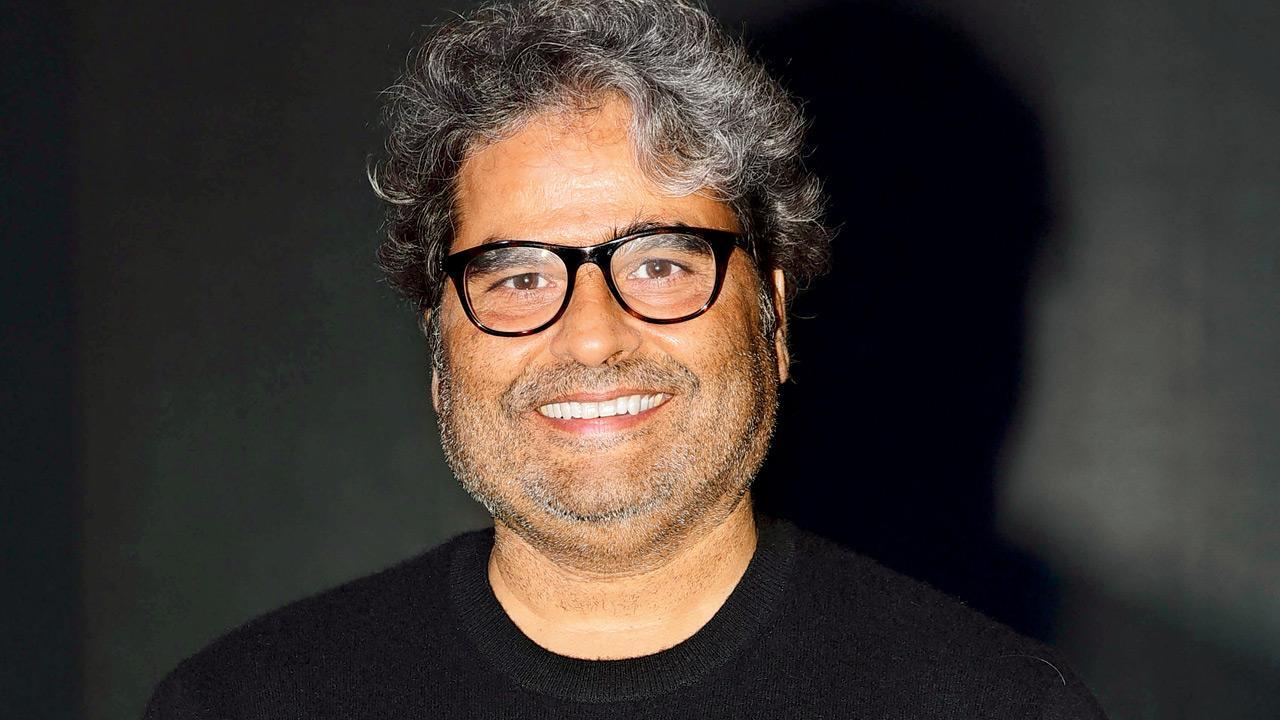
Music Composers Association of India, led by Vishal Bhardwaj, and Screenwriters Association sign MoU that make music directors and lyricists equal authors of songs; agreement mandates credit on promo material and streaming apps
Priyanka Sharma (MID-DAY; March 1, 2025)
“This should’ve been thought of earlier,” says filmmaker-composer Vishal Bhardwaj. But it’s never too late for positive change. On February 27, Bhardwaj, president of the Music Composers Association of India (MCAI), led the change as he signed a Memorandum of Understanding (MoU) with Screenwriters Association (SWA) that represents lyricists. The landmark agreement establishes composers and lyricists as equal authors of songs, and is designed to ensure fair credit and contracts for both parties.
The MoU proposes that lyricists and composers will be deemed “primary artistes”. This will serve as the artistes’ foundation for negotiations with producers and music labels. Bhardwaj tells mid-day that over the past year, the MCAI and SWA have been formulating the MoU, keeping in mind the challenges of composers and lyricists.
He hails the move, stating, “It’s a commendable development. Both parties are progressive. It took almost one year, as they brainstormed so that the point of view and challenges of both parties could be captured. Seventy years passed, and we hadn’t thought that we should come together for this. We unite to make songs. So, why not come together to fight? Each is incomplete without the other. If a song is a hit, it’s never only because of the tune or only for the words.”
A crucial consequence of equal authorship is fair credit. While lyricists are often not credited on a film’s publicity material or audio-streaming platforms, the MoU mandates fair creative practices.
Lyricist Raj Shekhar, who has penned songs for Deva and Animal (2023), states, “The MoU is the first step in ensuring fair credit. If on the publicity material of a film, HoDs are mentioned, composers and lyricists’ names will be mentioned as well. We’ve been talking to streaming platforms, and there are missing credits of a lot of artistes. I can reach out to [them] regarding the lack of my credit, but who will talk on behalf of Shailendra and Sahir Ludhianvi, who are no more? Their credits are missing, as are those of SD Burman and Madan Mohan. This needs to be changed.”
The agreement also mentions that a composer and lyricist will have separate contracts with a film’s producer to establish independence of the artistes. With the exception of certain leading lyricists, the practice so far was that a film’s composer would choose a lyricist, and act as the intermediary between the producer and them.
Shekhar elaborates, “Now, there will be no middle-men. Lyricists and composers will be treated as individual entities. A lot of composers are happy with this because they would feel an unnecessary doubt [looming] on them regarding transparency of fee.”
Looking ahead, Bhardwaj wants the two associations to fight for their moral rights. “Our derivatives are stolen from us; our composition or words are mutilated later. For instance, Goli maar bheje mein has been remixed [for Crazxy], and I couldn’t do anything about it. We aren’t even consulted on our song. We need to raise this issue so that the moral rights [rest with us],” he urges.
More say, more freedom
Hussain Haidry, who has penned songs for Sherni (2021), says lyricists are feeling “a sense of relief” with the MoU. He is happy that composers and lyricists, as primary artistes, will have ownership over their creations, and hence, greater freedom.
He explains, “The ownership of lyrics will reside with the lyricist, and that of the tune with the composer. But the ownership of the song recording would rest with the producer, who facilitated the recording. So, if a music director doesn’t like my lyrics, he can sell his tune to someone else. Similarly, I can sell my lyrics to someone else after getting consent from him/her. But the composite of the two, which has been produced by someone, cannot be sold by the lyricist or music director alone.”
I had to constantly message the music company for 7-8 days to credit me for Merry Christmas songs on YouTube-Varun Grover
8:58 AM
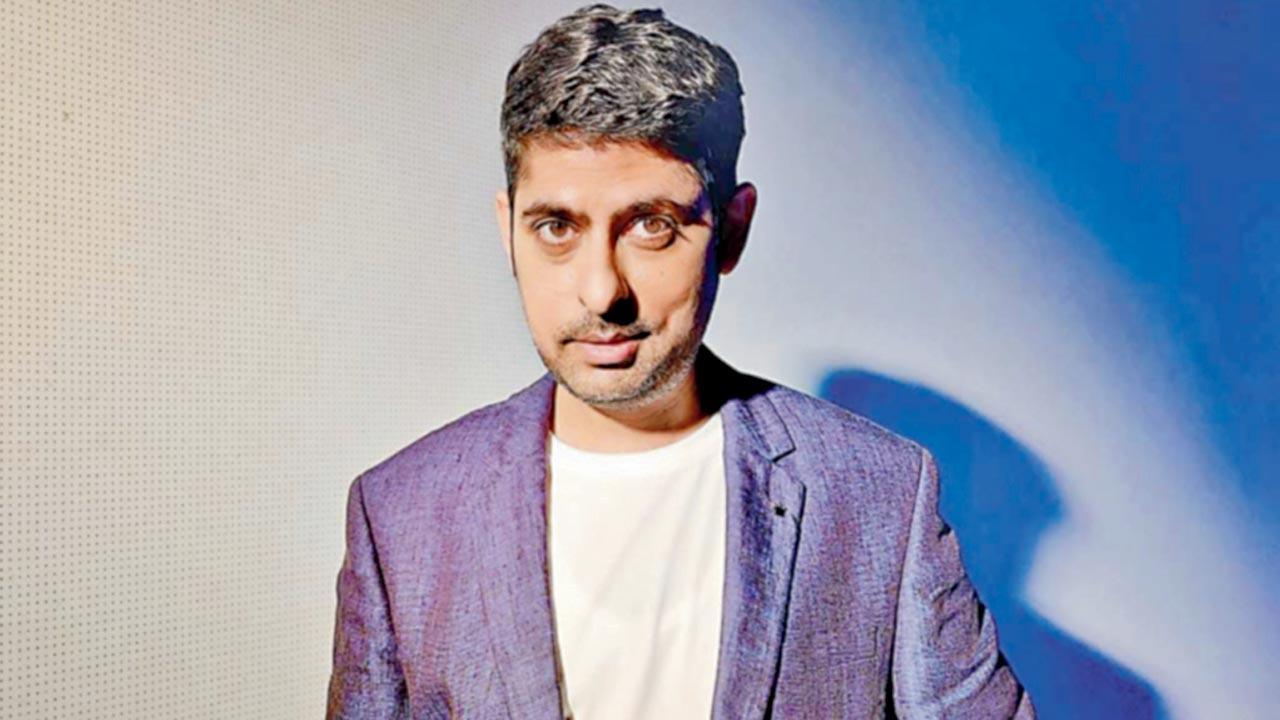
Leading from the front in enabling writers to get their due credit in the music industry, Varun Grover, as part of his association with The Indian Performing Rights Society, urges listeners to support artistes
Sonia Lulla (MID-DAY; February 19, 2024)
Via its nationwide campaign, My Music, My Rights, the Indian Performing Rights Society (IPRS) launched the Raga to Rock event, aimed at initiating dialogue on the need to support creators for the establishment of a sustainable industry. Writer Varun Grover, who addressed questions on the means to create a system that’s viable for artistes, emphasized the need to help individuals who envisage a full-time career in the field. In this interview, he spoke of the importance of creating a future that ensures artistes earn a sustainable livelihood from their craft. Edited excerpts from the interview.
When we speak about just giving authority and ownership of music to its creators, do you believe there is one set of artistes who suffer more than the others?
Yeah, absolutely. I think lyrics writers within the music industry suffer the most because people are made to believe that a song [is created] on its own and only the singers get the love and credit for it, because they sing it across venues. For that reason, they have the same status as actors in a film do. I don’t have a grudge against their success because they have the talent and put in the hard work. But, mostly, a singer is credited for a song; a composer comes in the second [place] and then it is the lyricist. Nowadays, several composers have their own [labels], but writers are seen as dispensable. Also, given the nature of the music industry today, composers are considered the heads of departments, and have more power. So, writers end up getting the least credit.
Why do you think we have reached a situation where writers are not given their due credit?
It has always been like that. There was a time when even All India Radio would only announce the names of the singer and the composer, and wouldn’t name a lyrics writer. Then, Sahir saab [Ludhianvi] had to protest to get them to start including the names of writers. Even when the era of television began, only the singers, and, at times, the composers would be credited. It’s a fight that has been underway, and occurs when a new medium is created. Now, with streaming platforms becoming dominant, this must occur again.
Recently, I wrote the entire album of Merry Christmas, and had to fight, and constantly message the music company for seven to eight days to credit me on the YouTube videos of the songs. In the headline, they would only credit the singer and composer. I had to ask for it, even though I have written the entire album. I don’t know why there is this cultural mindset in India where writers are considered lesser artistes than other musicians. A lot of them, whom I know, are very mild-mannered and not aggressive. That’s why, people take advantage of them.
The fight we are involved in is on two levels—one is the moral rights, which is that credit should be duly given. That [requires] a change in the mindset of the common listener as well. The second is getting fair royalties for fair play.
When I became a writer 20 years ago, I did ghostwriting for a lot of people. They would tell me that they would pay me. But they wouldn’t pay me. In one scenario, I had asked the director of a show whose pilot episode I wrote for the payment, and he asked me how much I would pay to be associated with the project. That’s the unfortunate state of the industry.
Considering how predominant and wealthy this industry is, one would assume that the scope for such exploitation is limited. Why does this grey space exist when we have contracts?
Music is kind of abstract. Words are still solid and real, but music is abstract. Someone can change a couple of instruments and beats and call it different. While writers can still copyright our work, I don’t know if there is a way to copyright a tune, because music is so intricate. So, it’s a difficult scenario to deal with.
What were the measures you’ll discussed when it comes to dealing with this scenario?
I think young musicians must be careful when it comes to deciding who they choose to trust. If you are working in bad faith, that’s a sad scenario. Lots of bodies like the IPRS and SWA [Screen Writers’ Association] are trying to put together a good contract for newcomers and everyone else so that nobody is exploited. They should sign contracts before they submit any work so that they don’t reach a place where they would need to accuse someone of stealing something they submitted.
All the bodies came together to create this after we got inspired by how WGA [Writers’ Guild of America] got together to fight for their rights. I hope we don’t have to go on strike, but, if it comes to that, I’ll be very aggressive.
Who do you believe should have ownership of a song?
The authority, in terms of the intellectual property of the song, should remain with the composer and the author, who are the music director and the lyrics writer. At the third level should be the singer. So, these three people should perpetually retain it. Subsequently, whichever music company comes on board, they should license the song for a stipulated number of years, and then share profits. Anything that [results] from one person’s efforts should stay with them. Being a musician is a lifetime’s effort.
Is there something about this subject that you think we haven’t addressed?
Just that I wish that the public also supports the artistes. There are so many music apps that people listen to, right from the time they wake up. I hope they give thought to the artistes who make the music and support them in their fight to earn their rights. We only ask to be treated with respect. It is only in India that we must fight for these things. There’s no royalty system for writers.
If content is called king then why are you not paying kingmakers, ask writers
8:14 AM
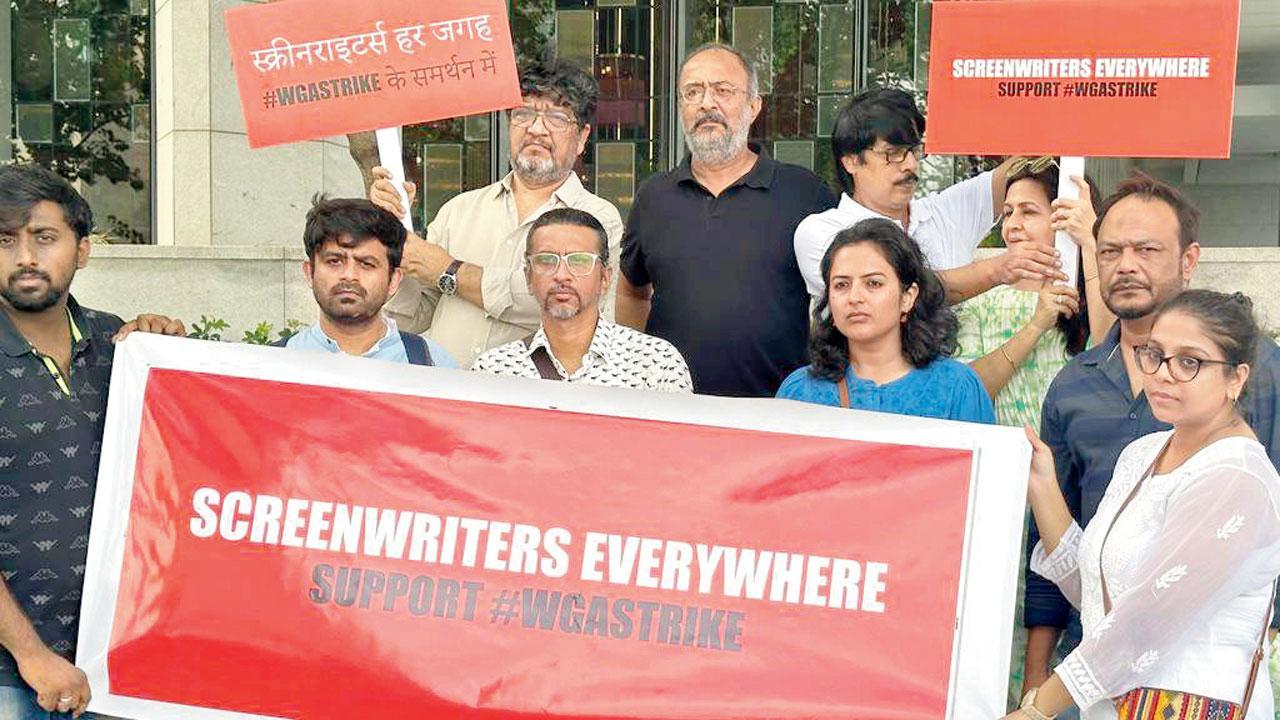
While writers in Hollywood are on strike demanding better pay from studios, screenwriters in India say that their condition is much worse compared to their US counterparts
Niharika Lal (BOMBAY TIMES; June 14, 2023)
The Writers Guild of America (WGA) strike, which kicked off in early May, is a result of a clash between writers, who see themselves working more but earning less in the streaming era, and studios attempting to rein in costs. Back in India too, writers of films and TV shows have demands that are quite similar – credit, compensation and fair contracts. However, many writers here feel that the situation is much worse compared to US.
Many writers point out, “Jinki stories pe taaliyan aur seetiyan bajti hain unko aksar screening pe bulana bhool jaate hai.” While the scenario has been slowly changing, writers feel it will take years for them to be at par with their US counterparts.
‘INDIAN WRITERS’ FEE MUCH LOWER THAN U.S. WRITERS’
In solidarity with the strike, India’s Screenwriters Association (SWA), asked all members working on US projects to stop working. SWA is fighting several battles on behalf of Indian writers. Anjum Rajabali, screenwriter and senior activist of SWA, shared his thoughts on the issues that Indian writers are facing:
‘CONTRACTS ARE ONE-SIDED’
Those who work on US projects are much better paid. In India, screenwriters, especially the new ones, receive fees far lower than the value of their work. Moreover, the contracts are one sided and protect their (producers and studios) rights, while the writer is left vulnerable. Credit is not guaranteed, termination can be at the whim of the producer, impossible indemnity is demanded from the writer.
‘OTT TREATS INDIAN WRITERS DIFFERENTLY COMPARED TO THEIR U.S. COUNTERPARTS’
More writers are now gainfully employed because of OTT. However, platforms brought in their own contract culture, with clauses that writers find unreasonable. OTT platforms treat Indian writers differently than their US counterparts. While US writers are striving to increase writers’ fees to fair levels, even their existing fees are still much higher than what Indian writers receive. Moreover, in the US, every time a show is aired anywhere outside of a cinema hall, the writer receives an additional remuneration.
‘SWA WILL NEGOTIATE FOR CREDIT’
Credit has to be given based on the work that the writer has done and not at the producer’s discretion. In case of a dispute between writers, SWA’s experts should arbitrate the issue by examining the respective written contribution of the writers to the final script and decide. Credit, dignified fees, regulation of the termination clause, indemnity, freedom to seek redress from the union are some of the clauses that need discussion with producers.
‘WHAT INDIAN WRITERS ARE SEEKING IS A SYSTEM CHANGE’
Screenwriter Mitesh Shah says, “What writers are seeking is a system change – equitable contracts, better compensation, credit guarantees, royalties. Streaming has given a lot of opportunities to writers. Things are certainly getting better but it’s still a long way to go. Be it a film or a web-series, everything starts with a blank page, and writers need to be accorded their due for filling up that page.”
Most writers say that they usually work on four-five projects at a time. Akshat Ghildial, who has written films like Badhaai Do and Badhaai Ho, shares, “From the initial idea to the dubbing, writers are paid in chunks. Kabhi kabhi chaar saal tak film ki total payment nahi aati. Agar aapne blockbuster likha hai toh aapki fees thodi zyada ho jayegi. Agar actor ki ek film blockbuster ho jaye to uski fees skyrocket ho jati hai, aisa writers ke saath nahi hota,” adding, “If content is called king then why are you not paying kingmakers?”
HOLLYWOOD STARS BACK U.S. WRITERS
The ongoing strike in US also saw many celebs step forward to stand in solidarity with screenwriters. Julia Louis-Dreyfus, Tina Fey, Rob Lowe and Modern Family stars Nolan Gould, Sarah Hyland and Jesse Tyler Ferguson, were among stars who protested with writers
WHAT INDIAN WRITERS HAVE TO SAY:
"A director doesn't ask for design credit when sharing his vision with a costume designer. But when it comes to writing credit, I have heard of many instances where directors have demanded their name be included. Sabko lagta hai writing sabko aati hai. Koi bhi aake suggest karta hai yeh dialogue work nahin kar raha"
- Akshat Ghildial, who has written films like Badhaai Do and Badhaai Ho
"It is quite common for some producers and directors to demand writing credit even for a minor input. It happened once with me when a producer wanted writer credit for giving feedback on the screenplay (that project never got made). In the last couple of years, writers have openly criticized these demands, which has changed things. Giving feedback is not the same as writing."
- Pooja Tolani, who has written Sacred Games
"The Indian screenwriting ecosystem is still learning how to read and execute a fair contract, negotiate good remuneration and deliver a good script"
- Hiteh Kewalya, who has written Shubh Mangal Zyada Saavdhan
"Because a lot of work is being done, the incremental value of writers have gone up in the last few years. But has it changed anything for writers and their rights in India? I'd say not much"
- Trishant Srivastava, who has written Jamtara
WHAT DO WRITERS DEMAND?
> Fixed minimum basic compensation
> Contract clauses like payment linked to approval, producer’s discretion if credit needs to be given
> Royalties – profit share in remakes and reruns
To express solidarity with WGA, Screenwriters Association holds symbolic protest in Mumbai
4:44 PM
Priyanka Sharma (MID-DAY; June 15, 2023)
It has been over a month since the Writers Guild of America (WGA) went on strike, following the breakdown of their negotiations with the Alliance of Motion Picture and Television Producers (AMPTP). The WGA union criticized the studios for not providing fair employment conditions to writers.
On Wednesday, 20 members of the Screenwriters Association (SWA) observed a silent protest outside the Netflix India office in Bandra Kurla Complex, Mumbai to express support for its US counterpart. The development came as a part of the decision taken by the International Affiliation of Writers Guild (IAWG) to mark World Solidarity Day.
Screenwriter Anjum Rajabali, executive committee member of the SWA, says, “Whenever any guild faces any obstacles, IAWG ensures the rest of us stand by them. This time, it was decided that writers’ guilds across the world, including India, parts of Europe, and Australia will hold a symbolic protest on the same day.”
Besides Rajabali, SWA chief operating officer Suhael Anwar, Shubh Mangal Zyada Saavdhan writer-director Hitesh Kewalya, Mohenjo Daro dialogue writer Priti Mamgain and Comicstaan writer Adhiraj Singh constituted the group.
Rajabali explains that the protest was motivated by the fact that most streaming platforms are members of the AMPTP that was in negotiations with the WGA. “This is not against [a specific streamer]. It is to boost the morale of the WGA members,” he emphasizes.
Film Editors United to formulate guidelines establishing reasonable work hours, higher remuneration
8:48 AM

Production houses led by (from left) Aditya Chopra, Rangita Pritish Nandy and Karan Johar are known to be cognisant of editors’ needs
After Screenwriters Association, Film Editors United to formulate guidelines establishing reasonable work hours, higher remuneration; notes how streamers make assistant editors function without weekly off
Mohar Basu (MID-DAY; May 27, 2023)
Change can have a ripple effect as can be seen in the Hindi film industry. After the Screenwriters Association flagged the issues faced by Bollywood writers (Bollywood headed on the ‘write’ path, May 8), the editors’ community has put the spotlight on their grievances. The Film Editors United (FEU) – a 500-plus member collective comprising editors, associate and assistant editors – is taking cognizance of the long working hours that are being demanded from them, leading to multiple cases of burnout and depression. Keen to establish fair working practices, the FEU is having dialogues with editors across the board with the aim to formulate guidelines that are in their best interest.
Editor Antara Lahiri, who has worked on Delhi Crime, Rudra: The Edge Of Darkness (2022) and the recent Tooth Pari, says the FEU will present an agreement to the Association of Film and Video Editors (AFVE), which will then take it forward to the Federation of Western India Cine Employees (FWICE).
"For starters, they are trying to negotiate a basic minimum wage much like SWA. The issue with wage is that it can be forcefully implemented. If a production approaches a young editor and offers something lower than a minimum wage, and the editor feels this is the best I will get, then they will go for what’s being paid even if it is subpar. One part of the issue is that editors are not empowered to say no or ask for better. That is a systemic industry issue. Budgets are being slashed lower and lower everyday and there’s never been any discussion around overtime payments. Several productions in the meantime are opting for young, newer and therefore cheaper editors who are afraid to ask for what they deserve."
The biggest concern of the FEU – which includes leading editors Sreekar Prasad, Namrata Rao, Nitin Baid, Jabeen Merchant, and many others – is that assistants and associates are working 18-hour days, sometimes seven days a week. Editors are often receiving footage worth several hours per day because multiple cameras are being deployed to cover more angles and cover scenes faster on shoot.
On an average, an editor can safely edit 3-4 minutes a day. But current post-production schedules, specifically those received from streamers are not factoring in humane working hours, quantum of footage, or holidays for the edit team. In fact, most contracts have a clause where they have to agree to “work on all days of the week, irrespective of Saturday, Sunday or govt holidays”. The FEU is in the process of having conversations with editors of different Experience groups and creating a requirements draft.
Lahiri elaborates, “Independently, FEU can only present an ideal agreement to the Union, who can then present it to the federation (FWICE). A negotiation can then begin on the feasibility of the demands being made. Eventually, the matter will have to be heard by the Guild. Not to sound like a cynic, but there will still be producers who will not agree to certain things. The Guild and the union can only do that much but individual producers have to be less feudal in their approach.”
Overtime and no day off are the most concerning facets, says Lahiri. “The concept of overtime doesn’t exist in the industry. The Union says editors should get a day off every week. On shoots there is a compulsory day off. But in post-production, there have been situations with new editors that I have been told if there is work you have to come on Sunday. On paper all rules are there but in practice they are not followed. Unfortunately the contracts note that editors sign up to work on Saturdays, Sundays and Government holidays. When we checked with lawyers, unfortunately freelancers are not covered by the rules of the labour laws.”
Lahiri explains that even basics like meals are not provided to younger editors. “The working hours, pay and working conditions for editors ought to be improved. Many producers send a dabba for the team based on hierarchy. So HOD will get a good budget to order but assistants are meted out way lower budgets. There is a strange sort of hierarchy where juniors are getting below average food.”
She says that reputed producers, including Aditya Chopra, Karan Johar, Rangita Pritish Nandy and Siddharth Roy Kapur, are cognizant of editors’ needs. “Senior producers in the industry appreciate editors. Platforms like Netflix and Amazon make calls and understand how the post production process works better. The senior editors always have their way. They have clout. But it’s always about how the associate editors are treated. They know workflow processes and promote a certain level of equality. I don’t believe it is malicious. But many smaller set ups don’t value what editors bring to table. Bigger set ups are more cognizant of what editors (regardless of their designations) need. The spaces are clean and thoughtfully provided.”
The FEU is also seeking “good working conditions” that include:
>> A comfortable ergonomic chair for the editor, a work-appropriate table, and other equipment
>> A pleasant and clean edit room
>> Clean bathrooms, especially for women
>> Nutritious meals, clean drinking water, and fresh beverages
>> Adequate rest period, ideally 12 hours, for the editor and team
Antara Lahiri
Why the historic Hollywood writers' strike matters in India
8:18 AM

While streaming has changed the way we consume content, screenwriters say some things haven’t changed — their compensation, lack of credits or the lopsided contracts
Mohua Das (THE TIMES OF INDIA; May 14, 2023)
A battle is raging in America’s Tinseltown. For the first time in 15 years, the Writers Guild of America (WGA) launched an industry-wide strike demanding fair pay and benefits rather than being treated like gig workers. In a spillover effect, writers guilds across the world united to fight back including India’s Screenwriters Association (SWA), which asked its members to stop work or not accept any new writing assignments on American films and series.
So, is a culture of collective bargaining — which has been a landmark hurrah of union power in Americ a’s film and television industry since the ‘30s — finally taking root in India’s screenwriting industry?
Writers are trying to stay optimistic. Over the next few weeks, the SWA intends to invite studios and independent producers to the negotiating table to discuss a ‘Minimum Basic Contract’ — a set of basic principles on which a standard writer-producer agreement should be based — that could tilt the scales of a lopsided industry, where writer contracts are not so much negotiated as dictated by production houses.
Anjum Rajabali, veteran screenwriter an d member of SWA’s executive committee, says that the WGA strike has come as a stark reminder of longstanding and fresh challenges that screenwriters in India face. “The WGA contract comes up for renegotiation every three years but we haven’t even reached a stage where the union can negotiate a standard contract for its members. Here each writer has to deal with producers independently and the bargaining power is disproportionate,” rues Rajabali.
The reason the Hollywood pen down has created ripples here is because the corporations that the WGA is agitating against are the same ones whose subsidiaries Indian screenwriters are working for, such as Amazon, Hotstar, and Netflix. “If the outcome of the strike is favourable, its implications could empower our writers to stand up for their rights,” says Rajabali.
But wasn’t the advent of OTT platforms and demand for more content expected to tilt the balance in favour of writers? The frustration is palpable as Rajabali says: “Not only has that not happened, it’s only gotten worse with contracts becoming harsher. The first squeeze in the budget is always the writer’s fee.”
It’s a fight about money, of course, given the “undignified low fees” especially for new writers, but also about fair treatment — one-sided contracts, lack of credit guarantees, arbitrary termination clauses and difficult indemnity demands.
Saiwyn Quadras, a screenwriter with a string of successful films like ‘Mary Kom’ and ‘Neerja’, opened up about his brush with whimsical terminations. In one instance, Quadras spent a year rewriting three drafts for a film, going back and forth with the producer, only to be told that none of it would be considered as even the first draft. The contract further prevented him from approaching the SWA for issues.
“It said that I could only go to court, which is a daunting prospect. Not every writer has the money and resources to keep a legal fight going which makes SWA’s legal cell a crucial resource because they help us decode legalese and assist with lawyers or finances.”
Even the way fees are paid is a problem. “Writers’ fees are divided into so many tranches — depending on casting to release — that we could be waiting for two years and running our homes on 30-35% of the total remuneration due to us,” Quadras exclaims. “This is my state after delivering three hits. I wonder what happens with novices.”
Rajabali says one issue is that writers are made to sign a ‘release form’, a legal agreement that absolves production houses and studios of any legal obligations and leaves writers without any recourse if their work is plagiarized. Another major hurdle is credit. “The issue of credits isn’t about vanity or ego but crucial to a writer’s future career,” points out Rajabali, known for writing films like ‘Ghulam’, and ‘Raajneeti’ and advocating for the rights of Indian screenwriters since he co-founded the Progressive Writers Group in 2008.
“However, a clause in writer contracts allows the producer or platform the discretion to determine the final credits for a film or series and there are dozens of instances where a junior writer may have done 80% of the scripting, but a senior writer engaged for rewriting the script receives the top billing and exclusive credit. Sometimes, the junior writer gets credited as ‘researcher’ or ‘additional screenplay writer’ and sometimes may even have their names knocked off, which not only undermines their creative merit but also the compensation they’re entitled to,” he says, adding that often directors and producers demand undue writing credit even if they have only given feedback.
Bhavani Iyer, who has written the stories and screenplays for ‘Black’, ‘Lootera’, ‘Guzaarish’, says the issue is far from straightforward. “It’s not just about disparity in pay and credit between senior and junior writers; it’s also about the absence of a framework for redressal.”
After WGA strike rocks Hollywood, Screenwriters Association in India drafts Minimum Basic Contract
8:29 AM
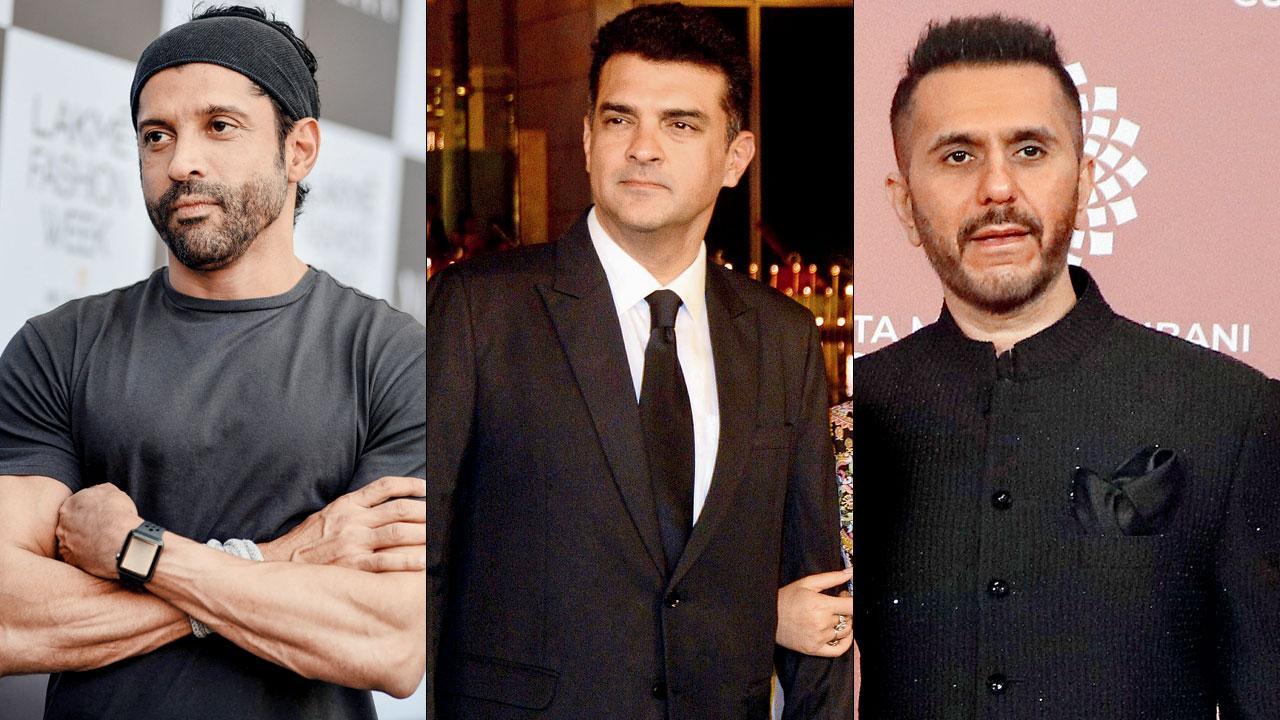
After WGA strike rocks Hollywood, Screenwriters Association in India drafts Minimum Basic Contract that seeks credit, higher remuneration for writers; lines up meeting with producers for next week
Mohar Basu, Priyanka Sharma (MID-DAY; May 8, 2023)
More than 11,000 members of the Writers Guild of America (WGA) went on strike last Tuesday, following the breakdown of their negotiations with the Alliance of Motion Picture and Television Producers (AMPTP). The WGA union criticized the studios for treating writing as a freelance profession rather than providing fair employment conditions to writers.
Closer home, the Screenwriters Association (SWA) has expressed its solidarity with the WGA. The episode has reignited the conversation about writers’ rights. Taking a cue from its American counterpart, the SWA is formulating a Minimum Basic Contract (MBC). Suhail Anwar, chief operating officer, SWA, says, “We need fairer contracts for writers. Credits are not guaranteed, neither are fees despite having a pay scale.”
The contract will focus on two key areas — credit, and remuneration. Zaman Habib, general secretary, SWA, rues that the fight in India begins from the fact that writers are often not acknowledged.
“When a writer is successful, they can negotiate, but new writers are exploited. The MBC will assure them credit and remuneration. We have seen cases where a writer has delivered a screenplay for [as low as] Rs 50,000.”
In 2018, a minimum-pay scale was set up. Among other things, it stated that for a film mounted on a budget of Rs 5 crore to Rs 15 crore, the writer should be paid Rs 24 lakh for the complete script. Habib notes that while these rules exist on paper, they are often not applied by producers and studios.
“This pay scale has to be agreed upon by unions and guilds so that there is no discrepancy or manipulation. It will be fair to both producers and writers in the industry. A basic respectable amount has to be assured. In films, a writer’s total remuneration is often priced at Rs 5 lakh. The tranches are spread out over nine months to two years, depending on the benevolence of a producer.”
Habib rues, “Many producers believe in keeping writers happy, but many others are repeatedly in the habit of not paying or delaying payments.”
To address the issue, the SWA will conduct a meeting with Producers’ Guild, Indian Film and Television Producers Council (IFTPC), Indian Motion Picture Producers Association (IMPPA), and individual producers next week. He adds, “Producers like Siddharth Roy Kapur, Ritesh Sidhwani and Farhan Akhtar are encouraging [of the MBC].”
The MBC is being formulated by a team of experienced writers and lyricists, headed by Anjum Rajabali, who has long been a champion of writers’ rights in India. He highlights that a new “offensive” clause has been introduced by some producers.
“The contract has a clause, which states that the final credit of the writer will be at the discretion of the producer. This has naturally outraged all writers. Credit indicates the writer’s contribution to the film. It is an inalienable right — legally and morally. If there are multiple writers and there is a dispute among them concerning credits, then experts, who understand screenwriting, should assess their individual contribution to the film and determine their credits,” Rajabali explains.
The SWA has set up a credit arbitration committee to resolve this issue, and Rajabali says it will be a key point of discussion in the upcoming meeting.
“In the credit arbitration committee, the drafts submitted by the writers are read and the extent of their inclusion in the final script is assessed by senior writers anonymously. We now seek that all credit disputes be handled by this process, and not at the producer’s discretion,” he asserts.
Habib adds, “Credits on a film or a series will be explained in this contract. Also, credits can’t be measured on industry seniority. It will be measured by the amount of work put in. Despite being a junior writer, if someone has put in more work, his name should come first.”
Royalty is another issue. By and large, in Bollywood, the norm is that the creator/writer transfers the Intellectual Property Rights (IPR) to the production house, studio, or platform. With the MBC, Habib says they are seeking royalty that would be over and above the remuneration. Rajabali is optimistic of arriving at an understanding with the producers regarding the MBC.
“We’re fully cognisant of their points of view, and their anxieties. The changes that we’re proposing are fair to both sides.”
SWA recommends
Consideration: Make sure that the amount of consideration is given in the draft and broken down into tranches. Avoid the one-time bulk payment that shall be made once the work is completed.
Credit: Ensure you receive your due credit. Make sure that the credit clause survives the termination of your agreement. Even if the agreement is terminated by either party, you shall still be credited for your work.
JugJugg Jeeyo 'plagiarism' row: Vishal Singh appeals to CBFC to withhold censorship
8:26 AM

After alleging that KJo’s JugJugg Jeeyo is copied from his story, writer Vishal appeals to CBFC to withhold censorship of the drama
Hiren Kotwani (MID-DAY; June 1, 2022)
It looks like JugJugg Jeeyo’s journey to the big screen won’t be without controversies. As soon as the trailer of the Anil Kapoor, Varun Dhawan, Kiara Advani and Neetu Kapoor-starrer dropped online on May 22, Vishal Singh — a chartered accountant and Jazbaa’s (2015) creative executive producer — alleged that the film was based on his story, Bunny Rani (Whose story is it anyway, May 23).
In a thread posted on Twitter, Singh claimed that he had shared the story with Dharma Productions in 2020, hoping to co-produce the project with them. At the time, the head of creative development at Karan Johar’s production house had told mid-day that should they receive a legal intimation, they would deal with it appropriately.
Almost 10 days since, Singh has shot off a letter to the Central Board of Film Certification (CBFC), requesting it to withhold censorship of the June 24 release.
Explaining his stand, Singh says, “I am not a script or screenplay writer. I write stories, and take them to different producers to co-produce with them. Filmmakers Nitesh Tiwari and Monisha Advani will vouch for it. If Dharma Productions had asked me to give the story to them, I would have happily collaborated with them. But the way they have gone about it is disheartening. If this can happen with me who has worked as a chartered accountant to several filmmakers, imagine what would happen to a rank outsider!”
In the May 30 letter — a copy is with mid-day — addressed to the CBFC, Singh has appealed that the certification of Raj Mehta’s directorial venture be withheld, as giving it a go-ahead would amount to “perpetration of illegalities committed by Dharma Productions.”
He wrote, “The acts, commissions, and omissions of Dharma not only amount to civil [wrongdoing], including copyright infringement and breach of confidence, but also amount to cheating, misappropriation and criminal breach of trust.”
To build his case, Singh cited the 2015 instance when Jyoti Kapoor won a copyright violation case against filmmaker Kunal Kohli, after the Supreme Court ruled that there were similarities between Kapoor’s script titled RSVP and the latter’s film, Phir Se.
This isn’t Singh’s first attempt to have his side of the story heard. After Johar’s team did not respond to his allegations on Twitter, Singh tagged the ScreenWriters Association (SWA) in another social media post. While the body hasn’t responded to his tweet, its rules allow a production house 15 days’ time to respond to a query or complaint.
“The problem is that at the end of 15 days, Dharma [Productions] can use the [excuse] that the release is close, so they can’t share any details,” he shrugs. While he awaits a response from the CBFC, Singh says he is contemplating taking legal recourse.
mid-day reached out to Dharma Productions, which didn’t respond till press time.

Vishal Singh and Karan Johar

A snapshot of the mail sent to the CBFC, on May 30
SWA Script Lab 2022: Vikramaditya Motwane, Abhishek Chaubey, Sujoy Ghosh and others to mentor aspiring writers
8:02 AM

Vikramaditya Motwane, Abhishek Chaubey, Alankrita Shrivastava and Sujoy Ghosh will serve as mentors
Screenwriters’ Association hosts its first script lab; six aspiring writers to be mentored by noted filmmakers, including Motwane and Chaubey
Uma Ramasubramanian (MID-DAY; September 9, 2021)
It is only in the past few years that Hindi cinema has come to recognise scripts for what they are — the backbone of every successful project. In a bid to encourage the future storytellers of the country, Screenwriters’ Association (SWA) has rolled out the SWA Script Lab 2022. The programme, in its maiden year, will see noted filmmakers Vikramaditya Motwane, Sujoy Ghosh, Abhishek Chaubey, Alankrita Shrivastava, Sudip Sharma and Raat Akeli Hai writer Smita Singh Khan serve as mentors to upcoming writers.
Those eager to see their stories transform into a feature film can send in their scripts to the association before October 25. After the panel of mentors have selected the six best scripts, they will guide the finalists in polishing them. The aspiring writers will get the chance to interact closely with the screenwriters and directors, thus understanding the finer nuances of taking an idea from paper to screen.
Shrivastava, who helmed Dolly Kitty Aur Woh Chamakte Sitare last year, believes the programme is the perfect platform to exchange ideas. “I have benefitted immensely from participating in script labs, and I look forward to working with new writers and learning from them. The culture of script labs is a must if we want to create more interesting stories,” she says.
Motwane is delighted to play a role in finding new voices that can shape the industry. “I’m honoured to be chosen as a mentor, and I’m looking forward to assisting in grooming the next brilliant generation of Indian screenwriters.”
The finalists will also gain free access to screenwriting software Final Draft 12.
I never accused Anurag Kashyap of stealing my idea-Wilson Louis
8:26 AM

After Wilson Louis notes how Netflix's Choked seems identical to his short film Choke, Anurag Kashyap calls him to clear the air; director to not pursue legal action
Mohar Basu (MID-DAY; May 25, 2020)
 Director Wilson Louis was in for a rude shock last week when he chanced upon the trailer of Anurag Kashyap's upcoming film, Choked. The almost identical titles aside, the Netflix film had a lot in common with the Louis-directed Choke — if the Saiyami Kher starrer revolves around a housewife who finds money flowing out of her kitchen pipe, the 2019 short film starring Seema Biswas tells the story of a BMC officer who hides gold in a choked pipe of his building.
On Friday, Louis, in a terse Facebook post, highlighted the uncanny similarities between the two stories. "Hansal Mehta, whom I have worked with in the past, reached out to me after reading my post. He had seen Anurag's film and was sure it's an original concept. By then, I had contacted Monika Shergill [VP, content, Netflix] who was taken aback by the similarities," shares the director.
Soon after, Kashyap called the filmmaker to discuss the matter. "I never accused Anurag of stealing [my idea]. But, let's admit that we live in an industry where ideas are often passed around. Writers don't feel secure about their material, and creators don't have the integrity to credit the original writers. In such a scenario, you assume the worst in everyone. After the conversation, we agreed that both films have an uncanny resemblance as far as the idea is concerned."
During the chat, Kashyap also informed him that writer Nihit Bhave had registered his script with Screen Writers' Association as early as June 2013. "I am not pressing charges of plagiarism. However, after consulting my team and lawyer, I want to put forth the fact that we created the film first and released its promo a year ago," adds Louis.
On his part, Bhave reiterates he had developed the story in 2013 with Choked as the title. "I have years' worth of correspondence on e-mail as I shared the script with multiple producers. Once Anurag decided to helm it, we developed it together over five years and tweaked it to include demonetization. Wilson and Anurag have agreed that there is no similarity between the two films, apart from the title and [the plot point of] the pipe. Also, since my script was registered four years before his, shouldn't I be the one worrying about similarities?"
FICCI Frames corroborated that Bhave had sold the script of Choked to Phantom Films in 2015 at their event, Frame Your Ideas.

Marathi writers allege that Betaal makers lifted the plot of their film Vetaal
8:19 AM

Marathi screenwriters move HC against Shah Rukh-backed Netflix series alleging copyright infringement, claim '10 plot points' similar to their zombie film
Mohar Basu (MID-DAY; May 23, 2020)
 No sooner did the trailer of Betaal drop online last week than Marathi screenwriters Sameer Wadekar (right) and Mahesh Gosawi moved the Bombay High Court, alleging that Netflix and Shah Rukh Khan's Red Chillies Entertainment have lifted the plot of their zombie film, Vetaal.
"We had taken our script to several production houses. We hadn't pitched it to Red Chillies Entertainment, so the onus isn't on them, but on the platform that commissioned it. I haven't been able to figure out how [the idea] reached them. I am told the show went on floors in July 2019, a year after my script was registered with the Screen Writers' Association [SWA]. We've registered a complaint with the SWA too," said Wadekar, hours after the hearing on Friday.
 While Betaal — written by Patrick Graham and Suhani Kanwar — revolves around a counter-insurgency squad that aims to displace tribals from a village, Wadekar claimed their Marathi feature is centred on an environmentalist who opposes a mining company that tries to drive away the villagers.
Drawing parallels, he said, "There are at least 10 plot points that are similar. We have depicted zombies as descendants of the Vetaal army from Shivaji's era while, in Betaal, they are shown as belonging to the British era. We had written a sequence where the army dances to folk music during a procession. A similar scene is included in their trailer."
Though the Bombay High Court dismissed their petition to put a stay on the show, he has a glimmer of hope. "The court has affirmed that we can seek damages if the plagiarism charges are proved."
Netflix remained unavailable for comment.
Screenwriter Association drafts a standard release form to help keep things fair and square for writers
8:22 AM

Screenwriters Association drafts a standard release form, which will be sent to production houses along with a request for compliance
Ankita Chaurasia (MUMBAI MIRROR; January 15, 2020)
Currently in its 60th year, the Screenwriters Association (SWA) aims to help members decode the confusing legalese that constitutes the first contract they are made to sign when submitting their script to a producer or production house. Termed ‘release form’, the contract binds the writer and producer to “honour the sanctity of a script”, but from their recent experience, SWA lawyers believe the document absolves producers of all legal obligations, leaving its members’ intellectual property vulnerable.
“We analysed release forms from around 15 production houses and found several clauses which are unfair to writers and won’t stand in the court of law,” elaborates Anamika Jha, who handles legal matters for the association. Anjum Rajabali, executive committee member of SWA, explains more simply, “It’s like I ask my neighbour to keep an eye on my house while I’m on vacation and he asks me to sign a note that I can’t sue him for stealing, even if later I see the same things in his house.”
To streamline the process, the writers’ body has now drafted an ideal contract. “It is an unbiased form, which serves the purpose of an initial contract and doesn’t victimise either party. It asks producers to honour confidentiality, respect copyright and do away with redundant clauses,” shares Jha, adding they’ll soon send out letters to all production houses and independent producers, asking for their support.
Vikas Mishra, head of the media sub-committee, points out that new writers usually don’t have bargaining power. If they don’t sign the contract, they lose out on an opportunity and if they do, it hampers their prospects. The idea is to empower them. “If they are dismissive towards our request, we will speak to the CEOs and try to work out a mutually beneficial agreement,” says Anjum, while Vikas adds that they will ask writers to not sign such contracts and also send a notice to those production houses. He, however, admits that there is no way to legally enforce their request since it is only a contract between two parties and the association is not involved in the deal.
Acknowledging that junior writers might be sceptical about letting go of opportunities, Anjum reasons, “Writers need to develop confidence in their script and take a stand. Just like they won’t agree to accept a lower remuneration, they should refuse to sign an unfair contract.”
CHANGES PROPOSED
1 The clause that prohibits writers from laying a claim or litigating if s/he believes that his/her work has been misappropriated, infringed upon or plagiarised by anyone, including a production house, is legally untenable as it violates Section 28 of the Indian Contract Act, 1872, as it asks the writer to waive his/her statutory right to seek legal remedies.
2 The material being submitted to the production house by the writer is in confidence, as it contains his/her intellectual property. The High Courts of Bombay and Delhi, in numerous judgments, have declared and established that such information by nature is proprietary and confidential.
3 There is a redundant indemnity provision in several release letters, which states that the writer shall indemnify the production house if it faces any loss due to infringing content. Such indemnity is unnecessary at this stage, since there is no assignment of rights or monetary dealing involved.
Screenwriters Association, CINTAA to fight various issues, including sexual harassment
7:53 AM
Hiren Kotwani (MUMBAI MIRROR; September 10, 2019)
 The Screenwriters Association (SWA) and Cine and Television Artistes Association (CINTAA) are signing a Memorandum of Understanding (MOU) to address and resolve all issues their members face in the line of work. The two organisations felt the need to combat problems common to both after Alok Nath’s refusal to respond to Indian Film and Television Directors Association (IFTDA), following writer-director Vinta Nanda’s allegation of rape in the wake of the #MeToo Movement.
Both SWA and CINTAA are a part of the Federation of Western India Cine Employees (FWICE) but since the Federation is burdened with 22 associations of as many departments, they address member issues independently.
 Sushant Singh, general secretary, CINTAA, points out that associations are the backbones of the industry and can work more effectively together. “With a lot of members from both CINTAA and SWA turning producers, there are chances of conflict. The idea is for both associations to form joint committees to address complaints. Together, they will have more power, be respected and feared more.”
Sunil Salgia (right), general secretary, SWA, added that the MOU will address all violations, be it sexual harassment, copyright, payment or breach of contract. “The idea is to fight and take action. The MOU will compel members to attend hearings or else they couldn’t expect cooperation in case of a personal grievance,” he concluded.
The Screenwriters Association (SWA) and Cine and Television Artistes Association (CINTAA) are signing a Memorandum of Understanding (MOU) to address and resolve all issues their members face in the line of work. The two organisations felt the need to combat problems common to both after Alok Nath’s refusal to respond to Indian Film and Television Directors Association (IFTDA), following writer-director Vinta Nanda’s allegation of rape in the wake of the #MeToo Movement.Both SWA and CINTAA are a part of the Federation of Western India Cine Employees (FWICE) but since the Federation is burdened with 22 associations of as many departments, they address member issues independently.
Sushant Singh, general secretary, CINTAA, points out that associations are the backbones of the industry and can work more effectively together. “With a lot of members from both CINTAA and SWA turning producers, there are chances of conflict. The idea is for both associations to form joint committees to address complaints. Together, they will have more power, be respected and feared more.”Sunil Salgia (right), general secretary, SWA, added that the MOU will address all violations, be it sexual harassment, copyright, payment or breach of contract. “The idea is to fight and take action. The MOU will compel members to attend hearings or else they couldn’t expect cooperation in case of a personal grievance,” he concluded.
Screenwriters Association formulates plan to ensure fair remuneration for film writers
8:49 AM

Screenwriters Association has formulated a plan to ensure fair remuneration for film writers; Ritesh Sidhwani is the first filmmaker to come on board
Himesh Mankad (MUMBAI MIRROR; June 22, 2019)
 With the dialogue around writers’ contribution to films and their remuneration gathering steam, the Screenwriters Association (SWA) has come up with a definitive plan to determine minimum wage (box below). According to the plan, a writer’s pay will depend on the scale of a production. “If there is no script, there is no film, and no job in the industry. It’s the blueprint on which the entire project is based, and therefore there has to be a certain value to the script, which will encourage people to write better,” explains Anjum Rajabali, Senior Activist, Screenwriters Association.
He goes on to point out that the structure will not just facilitate better pay for writers but will also help producers get better scripts. “Today, the industry needs a good script, and to get that you must give incentives to the writers,” he reasons, adding that the association has even found the first filmmaker to adhere to the guidelines—Ritesh Sidhwani, who owns a production house with Farhan Akhtar. “I am grateful that somebody like Ritesh, who makes truly interesting films, has agreed to this. These are minimum rates, which have been decided by the Screenwriters Association.”
Ritesh, meanwhile, wonders aloud why writers are underestimated in the ecosystem. “I am not a writer, but I know it is a demanding job. We already have a system in place wherein writers over the last few years have had the option of entering into a profit-sharing agreement with us. An individual can decide if he/she wants a higher base fee or a lower amount and coupled with two percent shares in the profit. Fukrey writers got around Rs 70 to 80 lakh, as they had a profit sharing agreement with us,” he reveals, adding that he and co-owner Farhan Akhtar were instantly on board with the SWA proposal.
The filmmaker believes that the move will remove the stigma attached to the profession. “This is a reasonably good amount of money and the slabs ensure that after spending five to six months on a script, the writers will be paid a decent amount, which can be taken higher based on merit,” he says Pay scale is not the only issue that SWA is addressing with the guidelines, which has also outlined specific terms that must be mentioned in a writer’s contract to ensure due credit for their work. Story, screenplay, script and dialogue have predominantly been a collective grey area so far, which lacks clear demarcation. To combat this issue, the association has devised a section in the guidelines. “The Minimum Basic Contract guarantees credit for script, screenplay, dialogue and story separately,” Anjum reveals, adding that the new plan also discourages arbitrary termination of contract.
Next up, Ritesh intends to push Producers Guild of India to make the guidelines mandatory to make the writers’ community more secure. “This is a basic criterion that everyone should adhere to,” the filmmaker signs off.

Vicky Kaushal asked me to change the line, ‘How’s the josh?’-Aditya Dhar
5:52 PM

Director Aditya Dhar reveals how he convinced his leading man to deliver it
MUMBAI MIRROR (April 10, 2019)
 The line, “How’s the josh?” has become synonymous with Vicky Kaushal’s true-life action drama, Uri: The Surgical Strike with even the prime minister quoting it. However, the film’s debutant director Aditya Dhar reveals that at one point during the shoot, he was about to change the line, following a suggestion from Vicky.
Recalling the incident, Aditya said, “We first used the line during the Myanmar sequence. Two minutes before the camera started rolling, Vicky came up to me and asked me to change the line because somewhere he thought the ‘feel’ wasn’t coming through. I tried explaining that to motivate their team, army commanders use such lines as pep talk and we should give it a try.”
He remembers that the first time their ‘hero’ spoke the line, all 30 members of our team had gooseflesh just hearing it. The 36-year-old director was chatting with veteran screenplay writer Robin Bhatt as part of an initiative by the Screenwriters Association (SWA).
Aditya went on to recount that as a little boy he would visit the Army Club in the capital with his friends and former officers would make the children line up and ask, “How’s the josh?” and they would reply, “High, sir.” Whoever was the loudest and the best, would get a chocolate. “Most of the time I used to win the chocolate,” the filmmaker smiled. The memory stayed with him and when scripting Uri, he wrote it as a dialogue for Vihaan’s character without realising it would become such a hit.
Given that the film has received so much appreciation from the audience and critics alike, has he been approached for a similar film? “Yes, Bollywood functions on what is trending. If a romcom is a hit, dozens of makers will start making one. Ditto for a war film,” he laughed, admitting that when he made Uri, war films were not a commercially successful genre. “But now everyone wants to make films on the Indian army and wars, so I will have to look for something different and start a new trend. When I start writing a story, it will be two-three years ahead of its time,” he added.
Bhatt responded to that saying a writer should think ahead because it takes a minimum of a year to make and release film so it’s important for the subject to be relevant till then and also have recall value long after. “Eventually we have only 10 stories to play with, the freshness in the narrative comes from the perspective and the expression of the storyteller,” explained the award winning screenplay writer of Baazigar, Aashiqui, Omkara to name a few.
Subscribe to:
Posts (Atom)