Showing posts with label Saurav Dey. Show all posts
Showing posts with label Saurav Dey. Show all posts
50th anniversary special: "Gabbar Singh is bad because he enjoys being bad"
3:05 PM
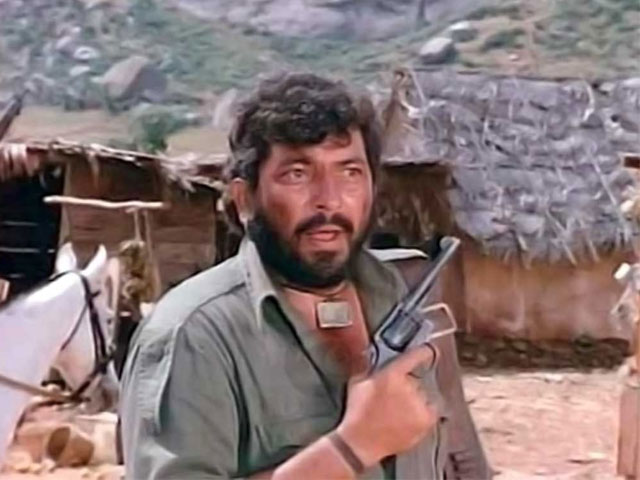
A ‘terrifyingly real’ villain without a tragic backstory or an apology – just a daaku who enjoyed being bad. This unadulterated evil, coming from a man with an un-villain-like personality and voice, is what made Gabbar an enduring pop-culture phenomenon – that’s what screenwriters now believe
Niharika Lal (BOMBAY TIMES; August 15, 2025)
Ruthless dacoits had been on the screen before Sholay, but Amjad Khan’s Gabbar Singh turned the stocky villain into a pop culture phenomenon. Such was the charming menace of Gabbar that he not only became an unlikely ‘hero’ of the film but effectively created a preand-post-Gabbar era.
‘GABBAR WAS TERRIFYING AND ODDLY CHARISMATIC’
“Villains in Indian cinema history can be divided into Gabbar BC and Gabbar AD,” says film historian Gautam Chintamani, adding, “Until Sholay , most dacoit characters followed a formula – exaggerated menace and theatrical delivery. Gabbar changed all that. In earlier films, like Mother India (1957), Ganga Jumna (1961), or Mujhe Jeene Do (1963), the dacoit was either tragic or a menace. Gabbar was realistic, terrifying, and oddly charismatic.”
However, Amjad Khan wasn’t the first choice, Danny Denzongpa was initially cast. But the latter was shooting Dharmatma in Afghanistan and had to step away. Khan, once on board, read extensively about Chambal’s dacoits, including Abhishapta Chambal – written by Jaya Bachchan’s father, Tarun Kumar Bhaduri – to make Gabbar authentic, not a caricature. Before the release, some doubted his soft voice and even suggested dubbing. But Ramesh Sippy refused. “Thankfully, the original voice stayed,” recalls Chintamani, “and those dialogues became some of the most iconic ones in Hindi cinema.”
Gabbar’s entry, too, is masterfully delayed – viewers only hear of him in fearful whispers for nearly an hour before he appears.
‘GABBAR WAS A PSYCHO LONE WARRIOR’
Gabbar became a synonym for fear says writer-director Hitesh Kevalya. “Unlike many villains before him who still feared the law or had a shred of accountability, Gabbar was a psycho lone warrior – no parents, no family, no moral compass. Kaanoon ke haath bahut lambe hote hain, but Gabbar chopped off Thakur’s arms, signalling he was above the law,” he adds.
Writer Saurav Dey feels it is Gabbar’s unapologetic evilness that makes him believable. “You’re not traumatized by the villain’s villainy, because it has that “oh, this could never really happen” feel. Even his most brutal acts, like chopping Thakur’s hands, entertain because you know retribution will follow. And unlike most villains, he doesn’t have a tragic backstory or an apology. He’s bad because he enjoys being bad and that freed the writers from inventing reasons for why bad has to be bad.”
Meanwhile, writer Deepak Kingrani credits Gabbar’s dialogues for his staying power. “After Sholay released, his lines were repeated in every household. Even today, people know them word for word. Villain jitna hum bada banate hain, hero utna hi bada hota hai.”
‘GABBAR’S SWAGGER MAKES HIM A ‘HERO’ IN A WAY’
In the film, Gabbar brags, “Yahan se 50 kos door gaon mein jab bachha raat ko rota hai, toh maa kehti hai – bete so ja, nahi toh Gabbar Singh aa jayega.” Dey notes, “Usually, it’s the heroes who are narcissistic; here, the villain has that swagger, which in a way makes Gabbar the hero of Sholay.”
For screenwriter Anjum Rajabali Gabbar’s “pure, unrepentant evil” with a stylish edge makes him memorable. “Villains like Ajit or Pran had a caricature-ish style, but Gabbar didn’t.” Rajabali believes Salim-Javed tapped into a universal truth: cruelty often stems from insecurity, and control comes from instilling fear. “Gabbar enjoyed his evil, he took pleasure in it.” He says that Gabbar’s character, who keeps saying ‘jo dar gaya samjho mar gaya’, also had a very human quality – fear.
'VILLAINS LIKE SHAKAAL OR MOGAMBO COULDN’T MATCH’
Before Sholay, villains were expected to be towering men with booming voices. But Gabbar defied stereotypes and proved that menace couldn’t be defined by just size or loud, threatening voices. “Amjad Khan was a man of average-build with a soft voice, yet he terrified audiences. His performance proved that menace can come from characterization, dialogue, and acting, not just physical presence. After Gabbar, casting became freer – a villain didn’t have to look like a giant to scare people,” says Dey.
When Sholay released, audiences kept returning to the theatres for rewatches, repeating Gabbar’s iconic dialogues loudly.
Chintamani says, “Villains who came after Gabbar, like Shakaal (Shaan), Mogambo (Mr. India), or Kancha Cheena (Agneepath) could never match his mix of realism and menace. Gabbar remains a pop culture icon because he was terrifyingly real and completely fresh in 1975 – and because audiences had no preconceived image of Amjad Khan. That shock factor still works today.”
Deewaar made the grey, varied, flawed character very cool 50 years back
7:58 AM

For actors, it remains a reference on how to play the angry young man. For writers, it’s a masterclass in screenplay writing. As Deewar, a cult classic that made the anti-hero likeable, turns 50, we take a look at its legacy
Niharika Lal (BOMBAY TIMES; January 28, 2025)
‘When you make a film, let it speak for itself’
Talking about the making of Deewaar, Rajiv Rai, son of the film’s producer Gulshan Rai, says, “Deewaar has inspired many films in various Indian languages. The film received a massive response upon its release. My father, Gulshan Rai, who produced the film, didn’t really talk much about its success. I believe that when you make a film, you don’t come home and discuss it – you let the film speak for itself. Every scene was a gem, and everyone has their favourite moments from it. Pran Mehra, an ace editor of his time, played a major role in the making of the film. He was a highly sought after editor at the time and instrumental in making this film what it became.”
‘Deewaar made the anti-hero likeable’
Film historian Gautam Chintamani says, “Deewaar made the anti-hero cool 50 years back. It was among the first few films that made the anti-hero, the hero. The 70s was the point in Indian cinema where films focused on anti-establishment themes, changing the system, and how the system oppressed the common man and his fight against the system.”
Writer Saurav Dey adds, “The film talks about taking a stand against the establishment, capitalism, and has social commentary – but the entertainment value of the film is still high. It is not a morose, silent film despite the heavy topics it deals with. It made the grey, varied, flawed character very cool 50 years back.”
“Films like Deewaar, Shakti, Zanjeer, and other such films of Bachchan sahab, gave us the confidence to stand up against those who were superior to us. These films gave us the belief that one can stand up for something we truly believe in,” says Adil Hussain, adding that Deewaar was one of the films that inspired him to get into acting.
Deewaar was very rugged and one wondered if Yash ji would agree to do something like this: Bachchan
In the documentary The Romantics, Amitabh Bachchan talks about Deewar and says, “Yash ji was looked upon as this new-age young director wanting to make different films. Salim-Javed suggested that he should direct Deewar. Yash ji, by that time, had established himself as a director who worked more in beautiful sceneries, objects and the beauty of nature. Deewaar was very rugged and one wondered if he would agree to do something like this. He never lost his mind towards nature and towards romance, even when he was doing a film like Deewaar.”
‘Deewar cemented Amitabh Bachchan’s legacy as the Angry Young Man’
Talking about the cult status of Amitabh Bachchan’s Angry Young Man persona, film historian Shivendra Singh Dungarpur, shares, “Deewaar has had a very strong influence in enhancing Amitabh Bachchan’s Angry Young Man persona – a rebel who takes on the system and almost single-handedly revolutionized the ideology surrounding workers’ rights. At the end, the film shows the triumphs of righteousness, as his own brother kills him. The intensity and drama between the two brothers and their mother, combined with the way the angry young man became a powerful symbol after this film, are unforgettable. Deewaar cemented Amit ji’s legacy as the Angry Young Man.”
Trivia
- Deewaar’s screenplay was written in 18 days and dialogues were written in only 20 days
- Two songs were removed from the film because of its length
- Aruna Irani and Deven Verma are credited in the film, but their scenes were removed because of the length
Subscribe to:
Posts (Atom)