Showing posts with label Saugata Mukherjee. Show all posts
Showing posts with label Saugata Mukherjee. Show all posts
Streaming platforms shift from dark thrillers to family-friendly stories to woo small-town India
10:47 AM

Streamers move beyond dark action, crime and thriller to family-friendly content to cater to tier-2, -3 audiences
Rajesh N Naidu (THE ECONOMIC TIMES; July 18, 2025)
Streaming platforms have diversified their content strategy over the past year and a half, moving beyond dark Action, Crime and Thriller (ACT) content to family-friendly dramas, romance and comedies that reflect cultural values, emotions, and everyday realities of small cities and towns. This shift, consultants and streaming platforms said, is aimed at connecting with a much wider and long-overlooked viewer base.
Web series such as Gram Chikitsalay, Mitti - Ek Nayi Pehchaan, Dupahiya (Amazon Prime Video), Ghar Wapsi and Thukra Ke Mera Pyaar (JioHotstar), Bada Naam Karenge (Sony LIV) and Pyaar Testing (Zee5) show this trend.
"Audiences from tier-2 and tier-3 cities are decisively shaping the next chapter of digital entertainment growth. We are expanding beyond metro-centric narratives and investing in stories rooted in regional ethos. This has led to deeper audience engagement,” said Raghavendra Hunsur, chief content officer at Zee Entertainment Enterprises.
The share of content in the ACT genres in the total streaming content has reached a saturation point at 43%, shows data from media and entertainment research firm Ormax Media.
“India’s streaming content is currently dominated by shows in the action, crime and thriller genres. As platforms increase their subscriber base beyond tier-1 cities, we will see a clear rise in family-friendly content,” said Keerat Grewal, head of business development, streaming, TV and brands at Ormax Media.
Increasingly, as streaming platforms expand their presence beyond metros, family-friendly stories will find more takers as ACT content lacks broad appeal, said industry consultants.
"Streamers have been aware of the political system in India. There are limitations to storytelling. In this context, Action, Crime and Thriller (ACT) emerged as safe and exciting genres. Data insights also supported the demand for such content,’ said Shrirang Nargund, an independent consultant on streaming business. ‘But content in these genres does not have a broad appeal especially with the Indian family audience,’ he added.
Even the treatment of Indian ACT content has also been unsuitable for family viewing, pointed out industry veterans.
‘‘Streaming content especially in the crime genre is handled so well in the west. There is so much warmth in their crime content. But the treatment of Indian streaming content in the crime genre is too dark to the point of being repulsive. This is unsuitable for Indians, especially family audiences,’ explained Saurabh Varma, a veteran film marketing strategist.
While only 45% of Hindi web series are set in small towns and rural settings, they account for 60% of high engagement shows, according to Ormax Media research. Besides comforting optimism and emotional connection, a key factor which has worked for them is their rootedness.
A case in point is one of the most acclaimed Hindi web series, Panchayat, of Amazon Prime Video. In its fourth season, the series shows the experiences of an engineering graduate who settles for a low-paid job as a secretary of a gram panchayat in a fictional village of Uttar Pradesh. According to the data shared by Amazon Prime Video, India, Season Four of the series in its launch week was streamed in 95% of India’s PIN codes as well as in over 180 countries and territories.
“For us, genre is just a way of telling a story that explores a particular theme. This approach allows us to tell deeper, more nuanced stories rooted in local sensibilities, enabling a wide range of viewing experiences, be it individual, family, or community-based,” said Nikhil Madhok, director & head, Originals, at Prime Video, India.
Increasing share of connected televisions (watching streaming content on TV) in India has also boosted the share of family-friendly content on streamers. In the past five years, the number of connected TVs in Indian homes has jumped four times. According to Ormax Media, this has led to a shift from solo viewing of OTT content to family viewing, leading to more balanced content offerings.
In addition to this, streamers are of the view that increasing share of family-friendly content is largely a part of a diversification strategy.
“The strategy is to have a diversified content slate. With connected TVs, there is a propensity towards a little more ‘inclusive viewing’. In this context, most of our shows have been covering upcountry and other geographies,” said Sony LIV content head Saugata Mukherjee.
Industry consultants said streamers must rely more on writers’ creativity than data insights to produce content.
Family-friendly genres such as sci-fi and horror-comedy, which are under-explored, can help streamers to gain more subscribers, they said.
Punjabi artistes have been shot dead while performing at shaadis-Rohit Jugraj
9:09 PM
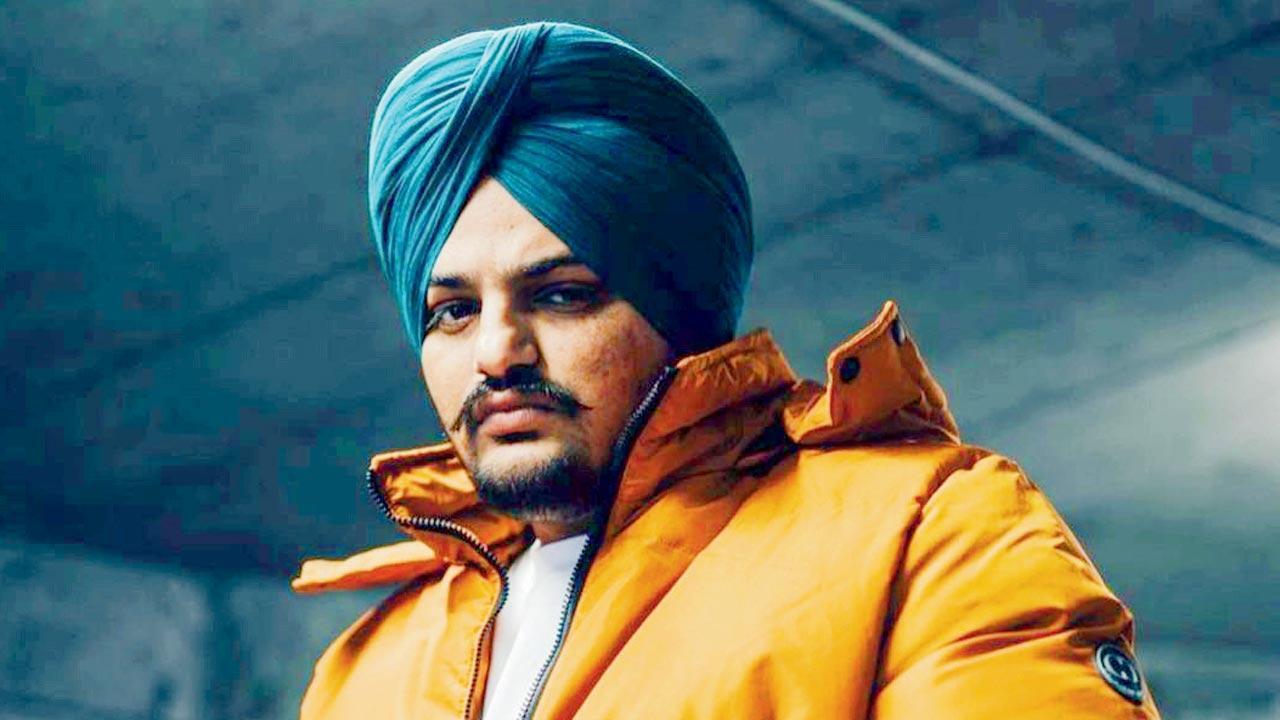
Lamenting that Moose Wala was killed before Chamak rolled, creator on how his murder fired up the team to fearlessly tell story of Punjabi music industry’s underbelly
Mohar Basu (MID-DAY; November 24, 2023)
For long, Punjabi pop numbers were known for groovy beats, catchy lyrics and the artistes’ swag. But the murder of Sidhu Moose Wala in May 2022 brought to the forefront the underbelly of the Punjabi music industry. Over a year-and-a-half since Moose Wala’s untimely demise comes Chamak, a musical thriller that tells the story of a Punjabi singer shot dead in broad daylight. When we get on a call with creator-director Rohit Jugraj, he says that the series doesn’t flinch from looking at the underbelly of the Punjabi music scene.
“Punjab is a land that reveres music the most. There, music is big, and the amount of money singers make is shocking. When money increases, crime follows. I have seen extortion of artistes. The underbelly of Punjab and crime are age-old issues; people are only hearing about it now. The biggest Punjabi stars don’t live in the state, they live abroad. This is not because of Sidhu Moose Wala’s [murder]. It has been happening since 1986, two years before folk artiste [Amar Singh] Chamkila was killed. Artistic jealousy is to the point that they can kill each other. Artistes have been shot dead while performing at shaadis, like Dilshad Akhtar was in 1996. What boils my blood is that people didn’t know about it till a global icon died.”
The Sony LIV series— starring Paramvir Singh Cheema, Mohit Malik and Isha Talwar—tells the story of pop star Kaala, who returns to India from Canada to unravel the mystery around the death of his father, who was a popular singer in Punjab. It’s evident that the story is not inspired by Moose Wala’s killing. But his death had a huge impact on the project. “We spoke about him every day on set. Not a day passed when we didn’t listen to his music or think of him,” rues the director.
The late pop star was originally to star in Chamak. The director recalls, “I had reached out to Sidhu bhai for a cameo in the second episode. He had said, ‘Veere, yeh karenge!’ But it wasn’t meant to happen. When [his murder] happened, we were yet to take the show on floors. I have to give it to Saugata Mukherjee [head of content], Danish Khan [business head] at Sony LIV that they decided to make this show. After Sidhu’s death, I thought they would back out. But they went all in and said, ‘Let’s make it well.’ They gave me the freedom to tell the story unabashedly. And they decided to retain his mention in the series as well.”
Another reason why the show matters is the timing of its release. Coming amid the strong anti-Khalistani wave from peace supporters across the world, the show takes us into the psyche of Punjabi musicians. Major pop stars like A P Dhillon, Shubh have had to cancel shows due to the hate directed at them. With Chamak, Jugraj has tried to show that the sanctity of music and the passion for uniting people through art is the core essence of Punjabi artistes.
“The music of Punjab is pure. There are two states in India that focus on culture more than religion—Bengal and Punjab. Punjabi music is far bigger than politics. Artistes, musicians, filmmakers have all strongly condemned terrorism of any kind. No one stands by that thought process.”
The director hopes that Chamak will have a second season, in which he wants to capture Punjabi music’s impact on the global scene. “This is the year Diljit Dosanjh played at Coachella. His attire, his music are now a phenomenon, and that has been highlighted in the show.” So, has Dosanjh made a cameo in the upcoming show? “Maybe,” he signs off with a grin.
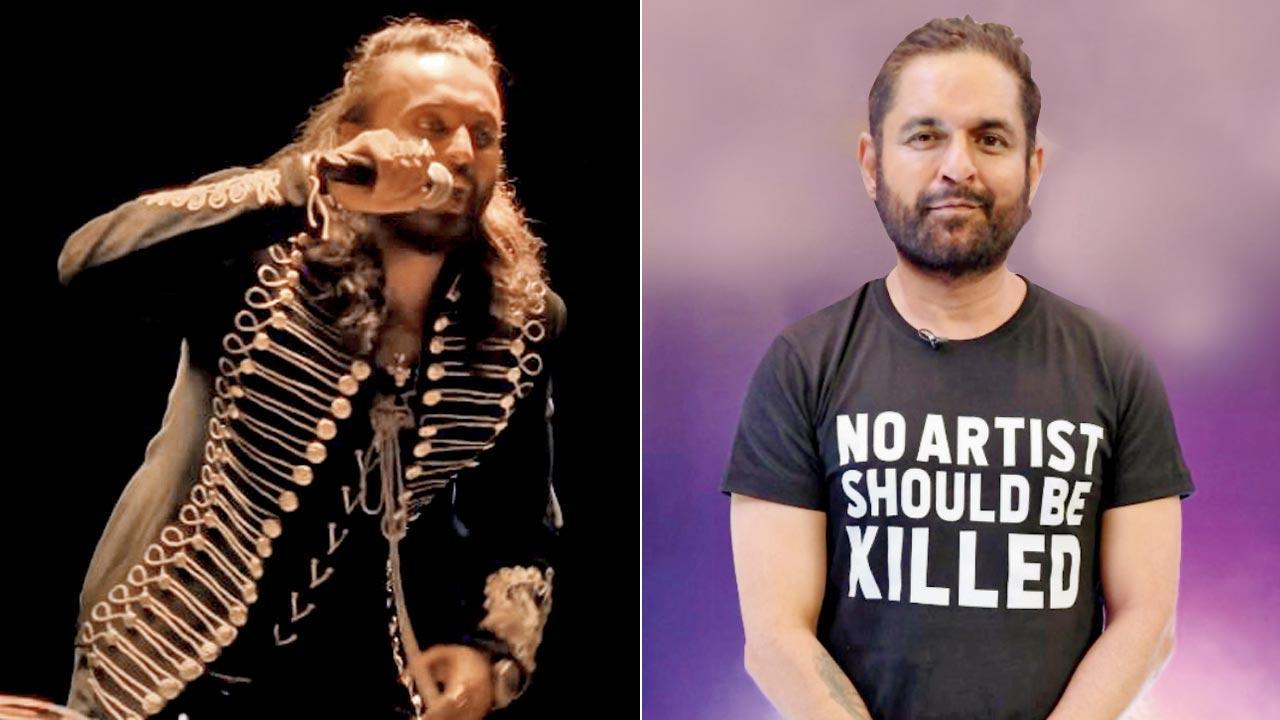
Chamak; (right) Rohit Jugraj
In India, OTT companies spend more on original shows despite market challenges
8:28 AM
Javed Farooqui (THE ECONOMIC TIMES; December 8, 2022)
Mumbai: Leading over-the-top (OTT) platforms are continuing to invest heavily in original content production, buoyed by an expansion in audience base and strong growth in content consumption. According to market estimates, top OTT players have spent between $600 million and $700 million on producing original shows in 2022.
This amount excludes movie and sports content which account for a significant chunk of the OTT content expenditure. Amazon Prime Video, Netflix and Disney+ Hotstar are the top spenders on original content productions, followed by platforms like Sony LIV, ZEE5 and Voot.
In 2019 and 2020, Netflix spent $400 million on content, including on movies. In April, Amazon Prime stated that it will double down on content investments in India with plans to launch more than 40 new titles across series and movies in Hindi, Tamil and Telugu. The platform's content plans are on track.
According to industry watchers, OTT platforms are expected to increase their content spending to fuel their business growth, notwithstanding the fact that revenues are under pressure due to inflation and a global economic slowdown.
“The content creation cycle for OTTs is very long and most of the projects to be delivered in 2023 are already at different stages of production. The investment in content will continue to increase as the OTT market expands and users increase their consumption because of better connectivity and increasing sales of connected TV,” said Uday Sodhi, partner at Founder's Room Capital.
Sony LIV, which has tasted success with original shows in recent years, is upbeat about the year ahead. “We are very bullish on our original content plans and we have a lot of big launches coming up in 2023. We are also dialling up on the originals space in regional languages,” said Saugata Mukherjee, its head of content.
As per Media Partners Asia estimates, the online video content investment in India stood at $1.3 billion in 2022 and is projected to increase to $4.2 billion by 2027.
"Since 2019 the contribution of online video to total content investments for the industry, including television and films has almost doubled. For 2022, online video grew 18% Y/Y to reach $1.3 billion, as domestic and global streaming majors invested heavily to bulk up their local content offerings. Over the next five years, these investments will scale further to $4.2 billion, to catch up with pay-TV," said Mihir Shah, Vice President of MPA.
‘India has Over 130 m Paying Subscribers’
Mumbai: The Indian over-the-top (OTT) market has 130.2 million paying (SVOD or subscription voice on demand) audiences compared to 110.5 million in 2021, media consulting firm Ormax Media has said in its latest study titled The Ormax OTT Audience Sizing Report 2022. The total SVOD base has expanded by 18%. The direct SVOD subscriber base stood at 49 million, while the indirect SVOD subscriber base came in at 81.2 million. Over 2021, direct and indirect SVOD subscribers will have grown by 19% and 16%, respectively. The study also reveals that there are 119 million active paid OTT subscriptions in India., which translates to an average of 2.4 subscriptions per paying audience member. — ET Bureau
Warner Bros Discovery puts HBO Max India launch on indefinite hold
8:05 AM

Gaurav Laghate (THE ECONOMIC TIMES; August 22, 2022)
Warner Bros Discovery has put the plans to launch popular American subscription video-on-demand (SVOD) service HBO Max in India on hold, even as the company is looking at cost-cutting measures globally and working on merging Discovery+ with HBO Max in the existing markets.
The move has prompted the India content head of HBO Max, Saugata Mukherjee, to quit within one year of joining.
“There is no clarity on what Warner Bros Discovery is planning around HBO Max in India. Earlier, the plan was to launch in 1-2 years and the content team had started working on some great projects. Now they are not even sure if they will launch a service in India,” said a senior executive with direct knowledge of the developments. “All we were told is that it will not launch till the end of 2024. In a fast-changing OTT world, two-years is a very long time.”
Mukherjee, who had joined as content head of HBO Max last year in November, is expected to go back to Sony LIV. He remained unavailable for comment.
“Saugata has decided to leave the company. He is an incredibly talented leader, and we wish him the very best in his future endeavours,” a company spokesperson told ET.
When asked about the company’s plans for India, a company spokesperson replied, “The intent is to launch a combined streaming service, including in key Asia-Pacific territories in 2024.”
Earlier in June, Arjun Nohwar was appointed as GM, Warner Bros Discovery for South Asia. Prior to this, he was responsible for the launch of HBO Max in India.
The changes at the company have stemmed from Warner Bros.’ merger with Discovery Communications, after the former was spun off from AT&T.
“It’s a major miss for the Indian content creators,” said a top producer, who was developing a series for HBO Max in India. “It’s a tough industry and we were working hard for the last nine months. In our business, it’s a long time. Just because Netflix and a few other international OTTs have not been able to crack the Indian market, doesn’t mean that India is not a good country to work in. It's been unfortunate that their strategy changes every week.”
In June, after the merger got regulatory approvals, company’s CEO and president David Zaslav put in place a slew of cost cutting measures across the globe, to save $3 billion, which has resulted in the exit of many HBO old timers globally.
Earlier this month, the company laid off around 70 workers, or 14% of its workforce, at HBO and HBO Max. The company had also shut down the CNN+ streaming service in the US within a month of the launch, which cost it around $300 million.
Globally, the company has done massive restructuring, which has resulted in a shakeup of the entertainment industry in the US. These include the cancellation of the movie, ‘Batgirl’ and several shows.
India’s top web bosses confess how the cloud of COVID had a silver lining that no one could’ve predicted
8:23 AM
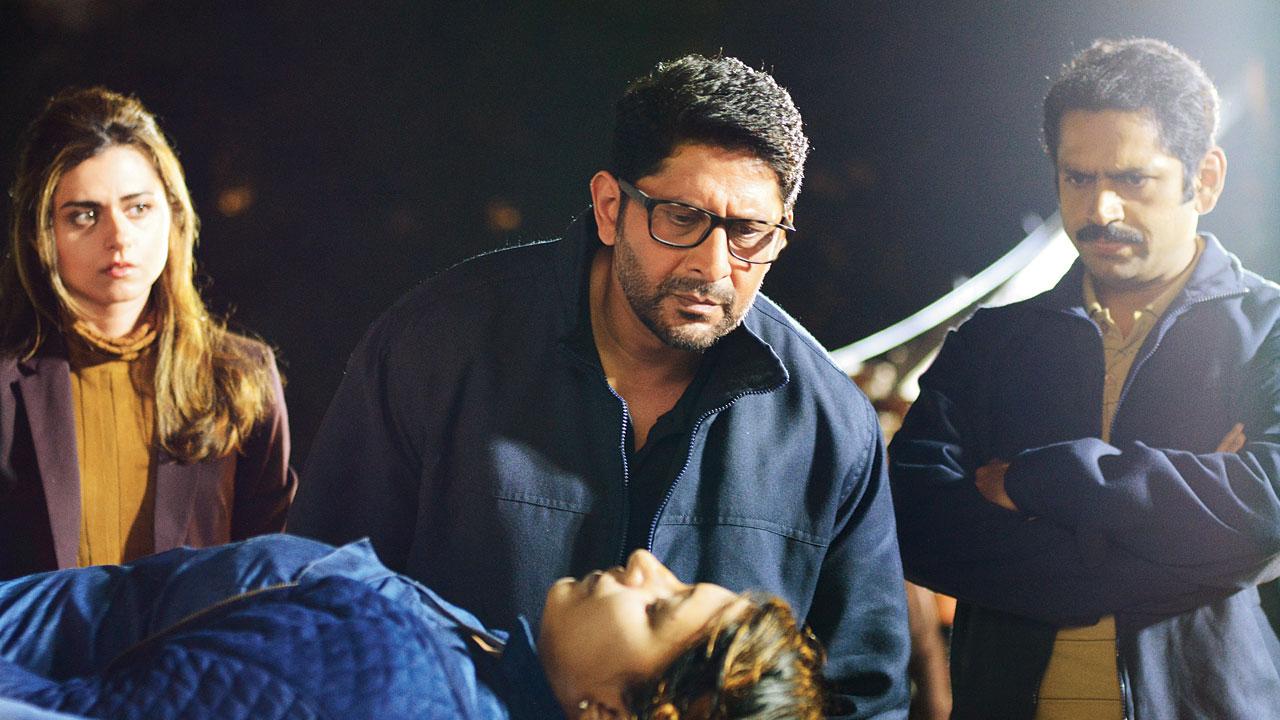
Ahead of mid-day & Radio City’s Hitlist OTT awards, India’s top web bosses weigh in how the cloud of COVID had a silver lining that no one could’ve predicted
Mayank Shekhar (MID-DAY; February 6, 2021)
Towards the end of 2019, Saugata Mukherjee, then with Disney+ Hotstar, switched job to head original content for rival, Sony LIV. Except, Sony LIV as a streaming app wasn’t quite Hotstar’s competitor in a real sense.
Because they had yet to develop a single web-only, original show or series. Which is strange, if you consider that Sony LIV is probably India’s first OTT platform - they’ve been around since 2013!
What was Sony LIV playing, up until early 2020? Catch-up TV - basically Sony broadcasting network’s shows downloaded on the app.
And then the pandemic struck. Production came to a halt. There was no new TV episode - only audiences with an insatiable visual appetite, sitting at home, staring at a screen, when not out of the window.
Mukherjee recalls, “Sony LIV re-launched right in the middle of the pandemic [with original web content]. One couldn’t have planned for the frenetic pace at which we had to recalibrate, from technology, business and content development point of view - [lead time on] all of which had to be crunched dramatically.”
Likewise for Ferzad Palia, from Voot, which as an app was also simply an advertising-led digital arm for Viacom as a TV broadcaster: “We’d been meaning to play the subscription game for sometime. We had to bring all the plans forward by about a year. Voot Select is a COVID baby. We launched on March 3, 2020. By March 16, we were working from home. To get tech like that so early in the game? It was chaotic as well, of course.”
But it paid off, as Palia points out, with audience numbers outgrowing estimates they’d made for both Year One and Two; and viewers from beyond top 10 Indian cities willing to pay for online entertainment, even post unlock!
Monika Shergill from Netflix, the nascent OTT industry’s first-mover in India, calls 2020 the year of “intense connection, with an acceleration in adoption [of streaming services]; a whole new set of audiences [coming in].”
The thriller Asur was the flagship show for Voot Select. Like Scam 1992 was for Sony LIV. Both of which have earned nominations at the mid-day and Radio City’s Hitlist OTT Awards that this discussion is a heads up for. Netflix has totally dominated the films and non-fiction nominations. They had 28 Indian original releases last year anyway, besides international productions, making Netflix an entertainment industry of its own! Rather than just a streamer/app.
The best instance of an independent producer inadvertently benefitting from Coronavirus might well be Sameer Nair, from Applause Entertainment, who delivered 11 shows in 2020 alone, across platforms, including the nominated Criminal Justice: Behind Closed Doors on Disney+ Hotstar.
Hungry eyeballs were all there. Library shelves on OTTs needed constant replenishment. While Nair denies there was a hard-sell on among platforms to pick up shows, rumours suggest the big Bollywood films were indeed up for top dollars, at astronomical rates, over a fierce bidding war, since theatres had shut down!
Shergill clarifies, “There is in fact a lot more juicy speculation around this; very little truth. What really happened is that with most services, there is already a pipeline of films you look at for a post theatrical [premiere]. Barring a couple of [mainstream] titles, most platforms that premiered [Bollywood] films [during pandemic] had already been signed up [from before].”
Which doesn’t take away from the bad blood between the OTT and cinema/theatre industry, as we speak, with the latter accusing top Bollywood producers of leaving the traditional exhibition sector in a lurch. Having sold off their major releases directly to web.
To a point that in a chicken-egg situation, theatre owners argue that, sure, cinemas have re-opened; and people aren’t still coming in. But even if they did, what’s there to watch?
Some of this drought was of course unavoidable. For example the Tamil event pic Soorarai Pottru that Guneet Monga co-produced: “We had a big music launch on a plane in February, 2020. And then with the lockdown and pandemic, we just kept sending out press releases for updates. We didn’t know how long this would continue?”
Nair reasons, “You really can’t fault anyone. Cinema is a heavily cash-flow business. And it’s not like movies will stop getting made. You can fight another day, once you survive.” Shergill is glad that Netflix and other OTTs stepped in to partner with Bollywood at this hour of need.
Rangita Pritish Nandy admits, “Surely there was job-loss in cinema business; even theatres that have shut down may never open again. But for a producer, [investment on a] film is a [financial] ticking bomb, until the [point of] release.”
Nandy should know, having been a film producer for almost a couple of decades. Her nominated show Four More Shots Please 2 was declared the most watched Indian content on Amazon Prime Video during the early part of pandemic.
While much is made of the current fracas between OTTs and cinemas, the impact of the pandemic on the television industry — a more direct competitor, with people’s changed viewing habits — isn’t perhaps highlighted enough. Also given that traditional TV is dependent on advertising, which in turn relies on the health of the economy.
Nair says the ratio between earnings from subscription and advertising had already reached 50:50 ratio by 2020. As for advertising revenue, Palia (Voot Select) and Mukherjee (Sony LIV), both broadcasters in the OTT space, contend the numbers have nearly returned to pre-pandemic levels already.
This is no time for media obituaries whatsoever. Whether TV, cinema, web, broad consensus at the Sit with Hitlist huddle is that they will all co-exist. Both audiences and their options are potentially limitless.
Right down to an app like Mubi that shows only world cinema and art-house titles, and that Monga helped launch in India in 2019: “That library has completely captured the imagination of cinephiles.”
And, why, even Netflix could become network TV, no? Shergill says, “Taking our shows back to a linear feed on TV in France is something new for us. Either way, choice and ease for consumers will determine audience behaviour. Linear TV versus streaming, versus cinema, are all slightly different spaces.”
Hardly five years old, the Indian OTT industry has clearly outdone itself in terms of globally competitive content. Rare happy news of 2020 was Delhi Crime (Netflix) winning an Emmy, where Four More Shots Please (Amazon Prime Video) was also nominated. Some of this has to do with how, unlike cinema and TV, web platforms in India (like with other democracies) have so far grown without the restrictive shadow of external control/suppression/editing.
Panelists don’t deny that this might just change, for the worse; who knows, with cloud of COVID-19 receding, and the darkness of state censorship looming instead. OTT content bosses, I suspect, would prefer to sit out this part of the discussion.
Nair says, “We’ve grown up watching flowers kissing instead of humans, but we grew up, right?” Palia says, “Take heart from the fact that we’re still better than a lot of countries.” Monga says, “Iranian cinema is so beautiful, and then you see Korean content that’s travelling across the world.” “She’s just drawn those parallels straight, and given you the best quote,” Nandy suggests. Well.

Subscribe to:
Posts (Atom)