Showing posts with label Satyameva Jayate. Show all posts
Showing posts with label Satyameva Jayate. Show all posts
Nora Fatehi wants to a dance film with Hrithik Roshan and a dance-off with this Bollywood actress
3:21 PM

Onkar Kulkarni (BOMBAY TIMES; April 29, 2025)
For Nora Fatehi, International Dance Day is more than just a celebration — it’s a tribute to the journey that shaped her. She began her career in the entertainment industry as a background dancer, but through hard work and passion, she has evolved into a dynamic performer on stage, who is now also dabbling in singing and acting. Known for setting the screen on fire with hits like Dilbar, O Saki Saki and Naach Meri Rani, Nora reflects on how dance has been a constant force in her life, shaping her from a young dreamer into the performer she is today.
‘International Dance Day is a reminder of how deeply dance connects us’
Given that her career revolves around dance, it’s no surprise that Nora feels excited to see the world take a moment to celebrate the art form. She says, “For me, dance is an emotion, a language of expression, and honestly, it’s my soul on stage. International Dance Day is a reminder of how deeply dance connects us — no matter where we’re from, what language we speak or what style we move in.”
‘I didn’t grow up in an environment where dance was encouraged as a career’
Reflecting on how it all began, Nora shares how she was drawn to this art form since an early age. “I’ve always said dance wasn’t just something that I liked, it was in me. As a little girl, I would watch music videos on TV and be mesmerized by how people could express so much without even saying a word. That was the spark. I didn’t grow up in an environment where dance was encouraged as a career, but I knew, deep down, that I was born to perform. The energy, the freedom, the storytelling… it just called out to me. I knew this was my path when I saw the crowd’s reaction to the first time I performed in front of an audience. The connection was magic. I didn’t just want to be a part of the world of dance — I wanted to shake it up,” says Nora, whose music video Snake, which she also sang and appeared in with Jason Derulo set a new benchmark in her international music career.
‘I’m still learning and never want to stop’
While Nora is loved for her high-energy performances in hits like Kusu Kusu and Kamariya, she admits that classical Indian dance forms challenge her like no other. “The precision, the grace, the deep cultural history — it demands so much discipline and respect. I’m still learning and never want to stop. Other dance forms like urban fusion, Afro styles, belly dance and hip hop are like speaking a native language — fluid, instinctive, raw,” explains Nora, who also connects with her fans through her campaign Dance With Nora.
‘Entering this huge, vibrant world of Bollywood was a dream’
Nora made Mumbai her home a decade ago and she’s worked across film industries in India. Recalling the moment she truly felt embraced, she says, “Coming from Toronto and entering this huge, vibrant world of Bollywood was a dream. I felt the acceptance and love from the Indian audience after Dilbar (Satyameva Jayate). People embraced not just the song, but me — my style, energy and persona. I feel incredibly grateful and proud of how far I’ve come."
Nora’s dream dance collabs
If you could team up with a Bollywood actor for a dance film, who would it be?
It would have to be Hrithik Roshan — his energy, precision and effortless style would be a dream to match on screen.
If you had the chance to have a dance-off with a Bollywood actress, who would you choose?
Madhuri Dixit ma’am, as she brings such grace and intensity to her performances. It would be an electrifying clash of styles — her elegance and my fire would be an incredible experience. I think the audience would love it.
During Satyamev Jayate, people whistled and cheered on my entry-Manoj Bajpayee
9:31 PM
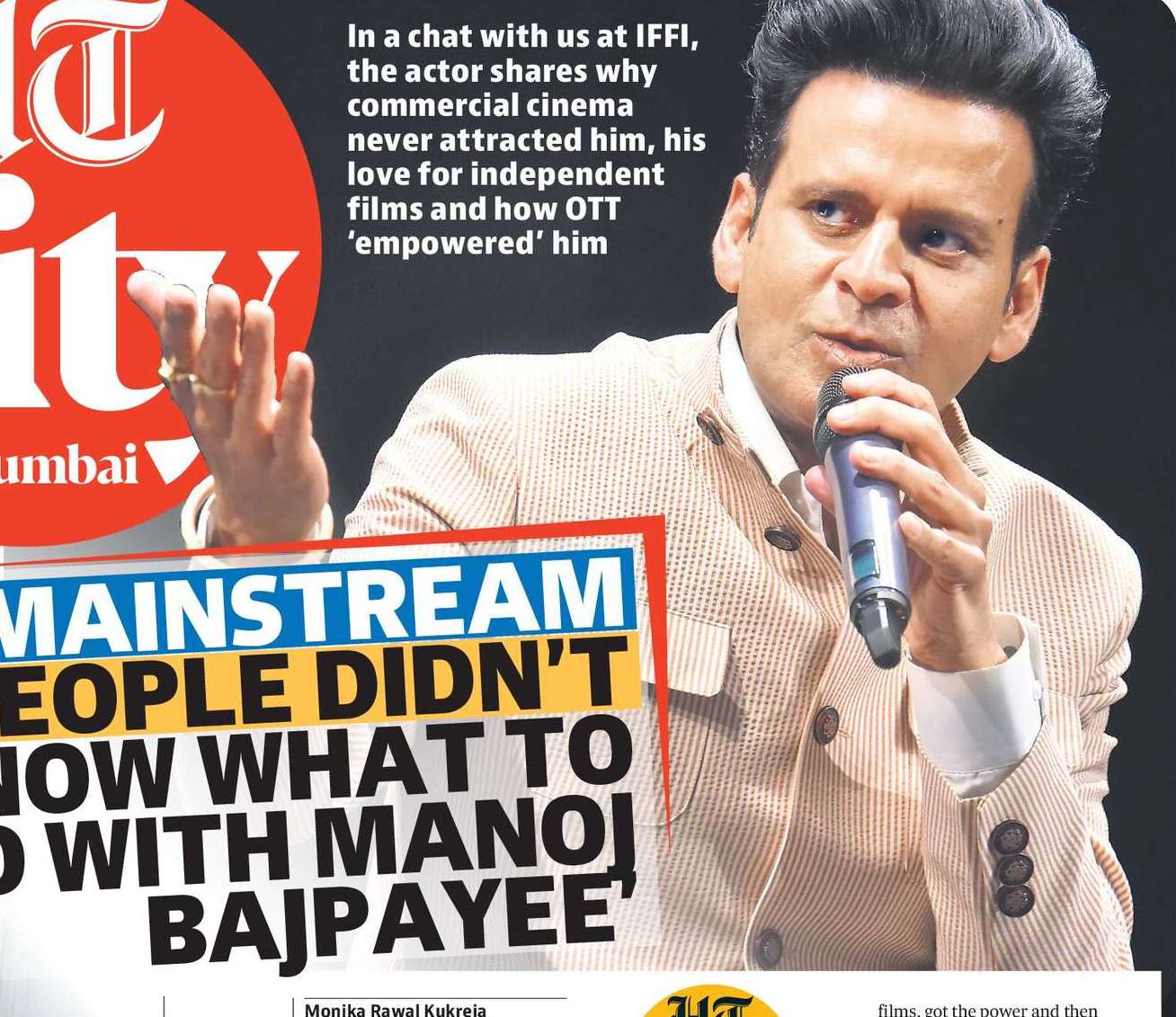
In a chat with us at IFFI, the actor shares why commercial cinema never attracted him, his love for independent films and how OTT ‘empowered’ him
Monika Rawal Kukreja (HINDUSTAN TIMES; November 27, 2023)
It has been three years since Manoj Bajpayee had a theatrical release, but the actor isn’t complaining. Instead, he has been making his presence felt in the OTT space with back-to-back releases. This year, his web projects — Gulmohar and Sirf Ek Bandaa Kaafi Hai — earned rave reviews. As the films were screened at the ongoing 54th International Film Festival of India (IFFI) in Goa, Bajpayee is grateful for all the love and adulation.
I have done very few films that gave me a chance to experience euphoria inside the theatre. Satya (1998) was one of them. It gave me a high. I would think that in this industry, I’d only get to do character roles, or play heroine ka bhai or the villain’s henchman. And suddenly, I had a career, which I never thought was possible. Then I got a high with Raajneeti (2010) and the dialogue ‘Karara jawaab milega’. Also, during Satyameva Jayate (2018), people whistled and cheered on my entry,” Bajpayee tells us the morning after his films were screened at a packed theatre at IFFI.
Ask why he feels he hasn’t done many mainstream films and the actor says the medium has never been a concern for him and all he’s cared for is good work. “In cinema, while I was dabbling in different genres, I just wanted to push and promote independent cinema and independent directors who I wanted to work with. And to do that, I needed that power for myself. So, I did a few mainstream films, got the power and then used it for my own independent films, which were quite a lot as I was enjoying my stint in independent films,” the 54-year-old says.
He adds, “I was looking for the directors because I realised that it was nearly impossible for any independent director to approach me. Also, it was evident that the mainstream people didn’t have a solid thing for me. They didn’t know what to do with Manoj Bajpayee. All they could think of me doing was [playing] a villain and that I never wanted to do. Such characters never excited me.”
And thanks to OTT, Bajpayee, who gave a masterclass on Crafting compelling web series for OTT at IFFI, witnessed an influx of diverse and experimental roles, which gave a new direction to his career. Saying that the web space empowered him, he adds, “It came at a time when the pandemic was at its peak and people were inside their houses. So, they got a chance to explore it deeply. Also, with streaming coming in, the choices became way too many [for actors]. And to my luck, The Family Man happened, which changed OTT’s demography. It empowered me. OTT was a turning point for me and many other talents.”
Making the chat with us more interesting, actor Manoj Bajpayee, who’s at the ongoing 54th International Film Festival in Goa for the screening of his films, talks about his upcoming theatrical release, Joram. He doesn’t mince his words, acknowledging that while most filmmakers would think “it’s apt for a digital release” due to the subject, the studio backing the film didn’t hesitate before taking it to the theatres, followed by OTT.
“It shows that makers now have a lot of confidence in Manoj Bajpayee and his talent. And I feel that confidence comes from what I’ve done in these four years. We (actors and filmmakers) have used the OTT medium very well to our advantage, helping expand the fan base and get the audience to watch the content they want,” he says, adding that going forward, his career is going to be a fine blend of OTT and theatrical releases.
“I’m not going to differentiate between them. The box office never bothered me in the past; it still doesn’t. It’s always about the content and the quality of the product that I am part of. This is where the buck stops [for me] because only [a project] that nobody knows how to do would get me excited [for the part]. The numbers will never decide how good the film is, and that will never change for me. My love story with the cinema will be whether it is on OTT or in theatres; it doesn’t matter,” ends the actor, who will be seen in the action-drama Bhaiyaaji next year.
South blockbusters have sent a shiver down the spine of Mumbai film industry-Manoj Bajpayee
8:31 AM
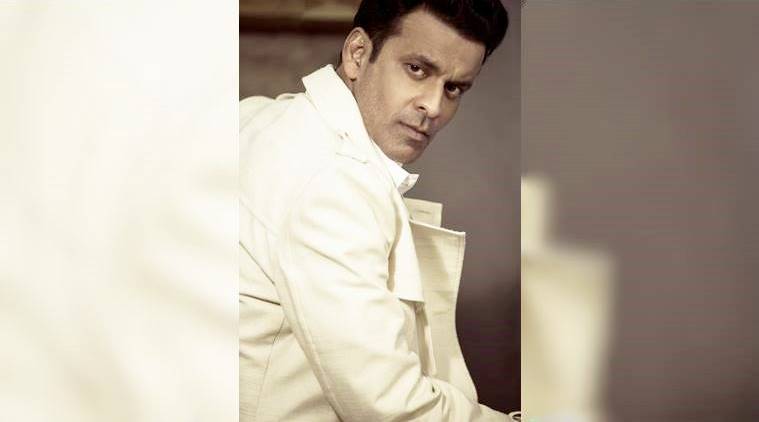
Anshul Chaturvedi (BOMBAY TIMES; May 2, 2022)
In the phase where halls were shut and anticipated blockbusters were on hold, OTT revitalised and rebranded Manoj Bajpayee yet again. However, he isn’t riding that wave to do mainstream projects at all. “I had a resolve that I will attach myself with middle of the road or independent cinema, and I am sticking to it,” he explains. And as to mainstream Hindi cinema, he has a word of caution: It has largely missed addressing the non-multiplex audiences for a while and so is unprepared for the current surge of the south. Excerpts from a chat:
You have acquired quite a degree of prominence via OTT in the phase when halls were closed and big-budget movies were on hold. But you haven’t used that to work with a big studio – you are instead working with a number of filmmakers who are, for want of a better word, non-mainstream. Stardom nahi chahiye aapko?
Star kaun hota hai hamare yahan? Dekhiye, star toh wohi banega, jo exhibitor aur distributor ki requirements ko puri karta ho. Woh requirement kya hai? Requirement hai: Larger Than Life. Extravaganza. Pushpa ne uss gap ko fill kiya, RRR ne kiya.
I had a resolve that I will attach myself with either the middle of the road cinema or with the independent cinema, and I am sticking to that. It is also about empowering all these filmmakers so that not only do I get to play those roles that I always wanted to play, work with scripts that I always wanted to be part of, but also, in that process, some very talented people are being empowered. And today one can take these decisions because of OTT. Kyunki agar woh (film) theatre mein nahi aayegi toh woh OTT pe aa jayegi.
When I work with Rahul Chittella (for Gulmohar), it gives me immense joy not only to play the character that I am playing, and be part of the film, which I am so proud of, but also I see a fantastic director-writer coming into the film world. Isiliye mere liye Rahul Chittella, Devashish Makhija, Kanu Behl, Dipesh Jain, ya phir Abhishek Chaubey, Ram Reddy – all of these directors have become very important for me. Mere liye bahut important baat hai. Main yeh nahi keh raha hoon ki industry ka har actor woh kare jo main kar raha hoon. Nahi, lekin woh mera resolve hai. I have been following this without even talking about it. But now I have to say this. I have to tell people what I am doing and why I am doing it. Inki filmein karte hue mujhe badi aantrik santushti hoti hai.
Independent cinema means smaller pay cheques for the actors, right?
That is true. Inke saath jab main kaam karta hoon toh mujhe apni bhi bahut saari sahuliyaton ko – jo dimag mein hai ki bhai yeh sahuliyat honi chahiye, ki itne saal ho gaye mujhe kaam karte hue, mujhe luxury chahiye – uss luxury ko mujhe cut down karna parta hai. Which is very good!
You are chasing the creative element over material luxury, or is this some sort of personal CSR, that you have to give back to the industry?
This is a responsibility that I have taken upon myself. I do things in a personal capacity, where I feel I have to give back, but I don’t talk about it. Many of us in the industry do what we can, where we can, but we keep it to ourselves.
Secondly, har actor ki yeh journey hai. Jahan bhi woh pahuncha hai uske liye bahut tyag karna pada hai. Maa-baap ka tyag karna pada hai, bhai-behen ka tyag karna pada hai, apne comfort ka tyag karna pada hai, apne ghar ka tyag karna pada hai. Woh kai raat rota-rota soya hai, bhookha toh chhor hi dijiye.
Har actor – actor as opposed to star?
Even stars. There are stars who have become so huge in our industry who have come from middle-class families. They have sacrificed so much before they have become what they’ve become. Lekin jab woh ban gaya hai toh (log) kehte hai samaaj ke liye kuch kyun nahi kar rahe ho? Samaaj ke liye karna na karna uska apna chunav ho sakta hai. Hum uss ke upar dabav nahi daal sakte hain. Kya yeh dabav hum corporates pe daalte hain? Kya hum unke accountable hone ke liye unke ghar ke bahar pradarshan karte hain? Nahi karte hain. Kyunki wahan par pradarshan kar ke humein kuch nahi milne wala evaj mein. Jab main Twitter pe ek star ko gaali deta hoon, toh uske evaj mein bahut kuch mil jata hai. Ek pehchan milti hai – ek identity.
(Pauses) We have always been looking for identity – for heroes. Unfortunately, we found our heroes in film stars. But they could not be. They cannot be. They are entertainers. They are actors.
This resolve to work with the names you have spoken of – is this purely on the basis of how good a filmmaker they are or is this because somewhere in your mind you are saying let me act as a bridge or let me use my stronger presence in box office because now I’m a name with a stature there, so let me bring this greater aura to their movies?
The intention comes from two-three things. I have always been looking for subjects that are genre-bending or stories which are not told or filmmaking that is not very familiar to our audience. These are my personal interests. When I watch a film say by Inarritu (Mexican filmmaker Alejandro González Iñárritu), it is a very new way of storytelling and I want to be a part of it. Where and how can I be a part of it? Definitely, Inarritu doesn’t know me. He is not going to cast me. So I have to find my own filmmakers here, whose films or storytelling I can be a part of. And yes, my own professional credibility will empower them to take the film forward.
Why is this space more interesting for you than conventional, mainstream Bollywood?
Had I chosen, say, only mainstream format, or maybe gotten a place as a celebrated villain, then I would have been finished long back, because even heroes look for new villains after five years. I would have been used, abused, and thrown away. Maybe because I wanted to do things differently, in my own way, so that I could be relevant, these filmmakers came to my mind as a rescue or as an alternative to really keep me going, keep my interest in filmmaking and acting going. And I’m still as interested. I am still as interested and enthusiastic and as angry as ever. That anger is only towards making these films possible for my own self and for the audience. I am really seeing to it that they get a platform and medium where they can showcase their work. Purely that.
Now, from Delhi, I have to go to Jharkhand where Devashish Makhija and the unit is waiting for me (for Joram). They want a certain kind of discipline from Manoj Bajpayee and they are not going to compromise on that. And I am not ready to compromise on my effort either. So everything is back-breaking, kneebreaking.
In 2012, Gangs Of Wasseypur in mainstream cinema and in 2021, The Family Man on OTT – they seem to be the projects that gave you the comfort to do things on our own terms, to be able to pick and choose, right? When you get a hit in the industry, it gives you the space for a while to make your choices
You said it. You just nailed it. You know, one Gangs Of Wasseypur (2012), one Rajneeti (2010), and then Special 26 (2013) has given me so much strength to do Aligarh (2016), Bhonsle (2018) and Gali Guleiyan (2018) and so many others...If I do Aligarh or Bhonsle, for me it is self-satisfying. I sleep very peacefully after doing it. And then The Family Man has given me choices that I never had till now.
That’s how I tried to maneuver my career. I always needed one project which could empower me, give me that strength to go ahead and be a part of these filmmakers’ vision which could help me to reinvent myself, and rekindle my energy. It’s all mutual when I am doing these films. For my next scene (as he was at a set) I’m ready to go, I’m all prepared. I’m ready to go. Everything is prepared. But having said that I must tell you that I am not a genre-specific person. After five-six films, you may see me in a complete mainstream film doing all sorts of stuff because it has attracted me, not the genre but the matter, the film as such or the passion of the director.
So you are saying that you’re not taking high moral ground ki mainstream nahi karna hai. But you are saying that I don’t need to be seen in mainstream for my inner satisfaction. If it works, it works, if it doesn’t work then it doesn’t work.
If it doesn’t work then it doesn’t work. I have done Baaghi 2 and Satyameva Jayate. I have done many films in the past, so the filmography itself says that I have done those films. I have never regretted, rather I have enjoyed because I don’t judge them. Because for me cinema is far more important. Films are important.
(Pauses) Itni blockbuster ho rahi hai (from the south). . . forget about Manoj Bajpayee and the likes of me for a minute, it has sent a shiver down the spine of all the mainstream filmmakers from the Mumbai film industry. They really don’t know where to look.
The south industry is shaking up Mumbai?
Yes! I have been part of Tamil films and Telugu films. I exactly know why this is happening.
Educate us. One reads so much about actors saying ‘the culture’ is different in making South films but one doesn’t get the specifics. Kya culture hai, koi samjhata nahi.
Koi nahi samjhaega aap ko kyunki apne aap ko criticise karna padega. Maine kaam kiya hai wahan pe. They are unapologetic, they are passionate, and every shot they take as if they are taking the best shot in the world. And so much thought and passion goes into it. Not even once do they talk about the audience in a demeaning way. They don’t say that the audience will understand. ‘Yeh massy hai, yeh chal jayega’ – they never talk in this language. They shoot a film as they have envisioned it, they don’t dumb it down for the audience because they hold their audience in the highest regard and their passion is supreme.
If you see Pushpa or RRR or KGF, the making of it – it is immaculate. Each and every frame is actually shot in a manner as if it were a life and death situation. This is what we lack. We started thinking about mainstream films only in terms of money and box office. Hum criticize nahi kar sakte na apne aap ko. So hum unko ‘different’ keh kar alag kar denge.
But it’s a lesson. This is a lesson for Mumbai industry mainstream filmmakers on how to make mainstream cinema.
As an observer, what you seem to be arguing broadly is that if somebody is looking for cinematic satisfaction as a viewer, he’s saying maybe OTT is giving me better choices. As an actor across all genres, you are doing half a dozen films outside of ‘mainstream’ Bollywood saying that is giving me more satisfaction and more space, and it excites me more. So your excitement quotient is not being met by the mainstream, at least at this moment in this space. But on the other hand, when it comes to the larger-than-life scale – then the south is doing better than Bollywood. Right?
I will tell you one thing – do you know that Ram Charan and Junior NTR and Allu Arjun and Pawan Kalyan were already stars in the B, C cities before their recent films became big hits. Their older films were already being watched in a dubbed version in all the interior places. Those were the films which were actually satisfying the B, C cities of this country. But we were satisfied with the multiplexes and popcorn films thinking that we are making the best mainstream cinema which is reaching everyone. No, it was not reaching everyone. That section – the audience of the smaller cities, the single screens – was really not entertained. They (mainstream Bollywood) stopped addressing those viewers. When multiplexes become very expensive and far away from their (audiences’) reach, then who is their star? Who is entertaining them all this while? For you, as a person who buys a ticket in a multiplex in Delhi, when you see RRR, Junior NTR is someone you have seen for the first time – but not for the viewers in the B, C cities. They have already seen him.
Someone told me before RRR’s release – “Bhaiyya, aap Junior NTR aur Ram Charan ko le kar chale jaiye Haryana ke kisi gaon mein, woh aaj bhi mob ho jayenge. Aap ka (Bollywood) superstar wahan mob nahi hoga kyunki woh audience unki filmein nahi dekhte hain. Woh inki filmein dekhte hai, dubbed version.”
That’s because Hindi cinema wasn’t giving them this content?
Upper middle class ko jab hero mila, aur multiplex bhi usi waqt aaye, uske baad humne ye space miss kar diya. Lekin multiplex mein jaana sabke bas ki baat rahi nahi. Ab Zanjeer, Naseeb, Khalnayak kahan banti hai? Ya Vishwanath? Kalicharan? Hamari upper middle class ka hero NRI ban gaya tha. Upper middle class ka aspiration woh raha. The successful huge megastars that we have created – they were not megastars of B, C cities.
----------------------------------------
‘THE MESSAGE WAS TO SPREAD HARMONY WHEN WE FIRST SHOT BHAGWAN AUR KHUDA TWO YEARS BACK’
Recently, a two-year old video (Bhagwan Aur Khuda ) of Manoj reciting a poem on harmony between religions has been circulating. He tells us, “This video was made during the lockdown. I was in Uttarakhand and Milap (Zaveri, film writer and director) wrote this poem and sent this to me, asking me to recite it. Mujhe poems recite karna waise bhi achcha lagta hai, and I really liked what he wrote, so I recorded it and sent it back to him. He then called me to say ki isko shoot kar ke bhej do agar wahan koi assistants hain jo mere saath phanse hue hain. It so happened that two assistant directors were there, stuck along with me, Sagar and Ashok. So we spent some time and shot it together.”
He reminds us that he also shot for another video during the first lockdown – Bambai Me Ka Ba for Anubhav Sinha. While it was initially posted online two years ago,it’s been seen more recently than it probably was then. “Jab uss samay daala tha tab bhi kaafi chala tha, lekin iss samay jis tarah se iss ka swagat ho raha hai woh unprecedented hai,” says Manoj, adding, “Mera apna maanna hai ki Bharat ko aage jaana hai toh sab ko saath mil ke chalna hoga. The message was to spread peace and harmony when we first shot this two years back. I am of course surprised that it has gone viral at this point. But as to why, perhaps the simplest answer is in what one of my co-actors messaged me: It was relevant then, it is relevant now, and it will always be relevant.”
‘I DELETED WHATSAPP TO STOP EXPECTATIONS’
While reaching out to Manoj for this interaction, we realised that our WhatsApp messages to him weren’t landing. The actor subsequently clarified that it was on account of him having deleted the app. “WhatsApp pe bahut saare known, unknown messages aate hain, everyone expecting you to respond to them quickly. There are invitation to all kinds of functions and then people expect you to respond in a positive manner. There are so many forwards – many of which are not in sync with my sensibilities – spams, unknown numbers and bulk messages coming in every day, unknown calls coming every day. It’s humanly not possible for any of us to entertain each and every message and answer them in positive. And your answer should match their expectation, which was getting a little too much. I also wanted to just keep a lot of time for my reading, for watching content and spending time with my family rather than just being stuck on the phone and being busy answering people. So I think it was just very, very important for me to delete it so that the expectations stop.”
I don’t give a sh*t about critics who didn’t like Satyameva Jayate-John Abraham
8:18 AM

Asserting that Satyameva Jayate was a well-made movie despite poor reviews, John Abraham says he has full faith in sequel
Mohar Basu (MID-DAY; April 9, 2021)
John Abraham has his plate full — with Mumbai Saga behind him, he is shooting for Mohit Suri’s Ek Villain 2 while looking forward to the Eid release of Satyameva Jayate 2. Though the Milap Zaveri- directed first instalment was a commercial success, it had opened to poor reviews. Asked if they kept the first outing’s feedback in mind to design a better sequel, the actor says, “I thought Satyameva Jayate was a smart film. I don’t give a sh*t about critics who didn’t like it. I am not being condescending towards reviews, but lately, they have become a joke. There are people on YouTube who have a lot to say about a film. Satyameva Jayate had elements of Deewaar [1975] in it, and that’s what drew me to the franchise. My reason was clear — I believed in the film, but above anything else, I like Milap. People who criticize me aren’t feeding me.”
Abraham believes that Zaveri has a finger on the audience’s pulse, making him the perfect fit to helm the upcoming vigilante actioner. “Once, Milap asked me, ‘What will you do if Satyameva Jayate 2 fails?’ I told him I will work with him again. The worst-case scenario will be that our budget for the third film will be Rs 5 crore. Milap has tremendous conviction when it comes to mass cinema. I have signed up to do that cinema, and if people don’t like it, it’s fine. But those who do, will devour it.”
Acknowledging that he is exercising his beliefs strongly now, Abraham says he is happy to chase stories instead of big filmmakers. “If my career has to head towards success, it can’t lean on big names. The young directors I have worked with have become big names after doing films with me. I am an industry by myself, and make my own kind of movies,” asserts the actor, who has Nikkhil Advani’s Gorkha in the pipeline.
Lyricists fight for credit on apps, streaming platforms
8:41 AM

Songwriters, long given short shrift in Bollywood, are now up in arms for recognition and royalties
Rishabh Suri (HINDUSTAN TIMES; July 26, 2020)
After nepotism and favouritism, another debate seems to be in the making in Bollywood. Recently, songwriter-singer Swanand Kirkire tweeted, “OTT pe lyricists ka naam na hona sirf credit ka na hona nahin hain balki Lyrics Writer ke Wajood ko na maanana hai”.
Last year, the Indian Performing Rights Society (IPRS) filed an FIR against a production house seeking around ₹100 crore in royalties due to composers and writers since 2012. Danish Javed, of the Screen Writer’s Association, says, “If lyricists get their name on a publishing platform, as a member of the IPRS, they get part of the royalty,” he says. We got in touch with some prominent lyricists on this.

SWANAND KIRKIRE (3 Idiots, Barfi!, Lage Raho Munnabhai)
Music companies and big labels put songs on YouTube, and don’t give proper credits. They don’t get back when we point out. Some platform did get back recently saying ‘thanks for bringing to our notice’. They didn’t even say it was a mistake. Apps don’t credit the lyricists anywhere in their algorithm. You can’t search a song by a lyricist’s name. You can search the music director’s name. I can search for songs I’ve sung as I am a singer too. I get a detailed history what’s happening with my song, how many are streaming it, which state or country they belong to, but lyricists have no way to find that out.

SHELLEE (Shahid, Manmarziyaan, Jawaani Jaaneman)
I wrote a song in 2014, Beparwah, for Shahid. Why is my name missing on YouTube? People comment ‘soulful lyrics’ but my name is missing! There’s a rule: if the name is missing, the royalties from the song won’t come to you, be it YouTube or music apps. Music apps have a different algorithm. If we are given credits, we’ll start getting royalty. But what about the royalties of the past? We don’t do gigs or concerts like singers. We get paid peanuts once, and nothing after that. Even if the spelling of your name is wrong, you won’t get royalty. IPRS controls the domestic royalties, we need more transparency in it too.

VARUN GROVER (Gangs of Wasseypur, Fan, Udta Punjab)
I have been talking about it for years now. Many official channels on YouTube, and music company channels of Eros, Sa Re Ga Ma, Shemaroo, Ultra, don’t credit lyricists or give wrong credit. We have a list of these song credits. Gulzar, Javed Akhtar, Shailendra, these legends have credits missing on YouTube channels. Apps pick data from music companies who provide them their libraries. In their library itself, they don’t have the lyricist’s name! Some apps work on the American mode, where they think composer is the songwriter. They don’t even have space for lyric credits in their software. You can’t search if you want to.
SAMEER ANJAAN (Aashiqui, Kuch Kuch Hota Hai, Dhoom 3)
The Screen Writer’s Association is taking a big step because I think people do this knowingly. They have a huge nexus and intention behind not keeping the writer or composer’s name, because then royalties will not go to the right place. But now we are trying our level best to make them (apps) aware. Then we will take legal action.
Also, about last year’s hit Dilbar Dilbar (Satyameva Jayate), a leading publication said, ‘Music by Tanishk Bagchi, lyrics by Shabbir Ahmed’, when the original song was by Nadeem-Shravan, and lyrics by me. Shabbir wrote one line in the beginning, rest of the song was original.

I would love to do a horror film; it’s a space I haven’t explored-John Abraham
8:18 AM

Harshada Rege (BOMBAY TIMES; April 24, 2020)
He is an actor, who has been seen leading content-driven films like Madras Café (2013), Batla House (2019) and Parmanu: The Story of Pokhran (2018), as well as backing some of his projects. In fact, with Vicky Donor (2012), John Abraham was one of the first actors from the big league to produce a film featuring another actor (Ayushmann Khurrana). And, he always insists that as an actor, “it’s important to do all kinds of films.”
Talking to BT about it, John said, “When people see a film made by my production house, they should know that they will get to see something different. But as an actor, it’s essential to do all kinds of films. Movies like Pagalpanti (2019) and Satyameva Jayate (2018) are the ones that I want to purely act in, whereas films like Parmanu and Batla House are the sorts that I will produce and act in.”
Given the business of Bollywood, producers attempt to make films on a tight budget to ensure higher returns. So, when we asked John whether it would be profitable to produce all the movies that he stars in, he said, “I want to have a specific brand identity. It would be easy for me to rake in the moolah and be the producer for a film like Satyameva Jayate 2 (the first one worked at the box office). But I won’t do that, because the idea is to build your brand as an actor with some films, as a producer with others and as an actor-producer with some. I am very clear about what I want to do. I have been that way since the time I produced Vicky Donor (2012).”
The actor-producer has often spoken about how creating projects for other actors excites him. He added, “The thought is not to power a film with my presence, but to create something entirely new. My vision is to tell great stories through films, but not necessarily with me in all of them.”
Though John is keen to do all kinds of films, there’s one genre that the actor will never attempt, and another that he is eager to do, but hasn’t explored so far. “What I can never do is an adult-comedy, because I am not comfortable with it. It’s something I can’t act or even produce. What I would love to do is a horror film; that’s a space I am keen to explore,” he signed off.
We want to bring out Satyameva Jayate every alternate year until John Abraham is 80-Milap Zaveri
8:38 AM

Ready to kick off the second edition in April, director Milap Zaveri hopes to churn out Satyameva Jayate instalments every alternate year until 'John is 80'
Upala KBR (MID-DAY; February 29, 2020)
 Encouraged by the box-office figures of Satyameva Jayate (2018), director Milap Zaveri has already developed a sequel to the John Abraham starrer. Even as he is concentrating on the second instalment, the director admits that he has ambitious plans for the franchise and its leading man. "John and I have a standing joke that [to me], he is like Sylvester Stallone in the Rambo series. I keep telling him that even when he is 80 years old, we will be making instalments of Satyameva Jayate. We want to bring out a new instalment every alternate year. Every edition will tackle the issue of corruption. John is my muse. I am always thinking about developing scripts that will make him look more heroic and larger than life," shares Zaveri.
The actioner, which also features Divya Khosla Kumar, will go on floors in April. The director acknowledges that he has designed elaborate action sequences, thus playing to Abraham's strengths. "There are almost 12 action sequences in the film that have been designed by action directors Anbu-Arivu. I have shot extensive rehearsal videos with them. Ideally, I would like to start the first schedule with a stunt. I will make John break or smash something on the first day itself!"
There is a fear of losing your identity at times, it’s scary-John Abraham
8:53 AM

John Abraham weighs in on risks of being in a character for long, says box office collections key
Nishad Neelambaran (HINDUSTAN TIMES; January 18, 2020)
He has worked in a variety of films, but John Abraham has always been identified with his macho characters. Films such as Dhoom (2004), Force (2011), Parmanu: The Story of Pokhran (2018), Satyameva Jayate (2018), Romeo Akbar Walter and Batla House (both 2019), have only carved a niche for him. The model-turned-actor, who ended the last year with Anees Bazmee’s Pagalpanti, talks about how actors need to be socially responsible, why it is fair to judge a movie by its box office collection, and more. Excerpts:
How do you switch from a serious role to a lighter one?
It’s tough. I did Pagalpanti after Batla House. I remember in the first few days of Pagalpanti, I went to Anees, and told him I need time. It took me two to three days to find my space. It is easy to impress people with action sequences... something I can do in my sleep. But making someone laugh is all about comic timing. Fortunately, I learned it early in my career.
As an actor, do you like to live with the character?
I do take the character home if I am doing an intense film. Like ACP Sanjeev Kumar, in Batla House, I lived with that character for a very long time. There is a fear of losing your identity at times, it’s scary.
It is 18 years since your debut, how has the journey been?
It’s been interesting. The best part is that I’m a very secure person. The language and audience of the films have changed, and today’s audiences accept the films I do.
Does the actor in you still get nervous before the release date?
Not at all. When I give the first or second shot of a film or when I sign up for it, I know the kind of business it will do. At times, I know it will be a sub ₹50-crore movie, but I’ll still do it.
Will we see you in the digital space any time soon?
I would find it, at least at this point of time, a little difficult to move into the digital space. I’ve made it very clear to people that John Abraham means large screen.
Do you think it is fair to judge a movie by its box office collections?
A film has to be commercially viable and that’s how the trade gauges you. But more than the money it makes, let me use the right term — return on investment (ROI). If I make my film for ₹30 crore and it makes ₹100 crore, it’s fantastic. But if I make my film for ₹200 crore and it makes ₹200 crore, it’s not really fantastic.
As an actor, how important is it to be socially responsible?
It is extremely important. We are a country where 60-65% of our population is below the age of 40. You are not just a model, you are a role model here. Say the right things and shut up if you don’t know what to say.
Do you feel the way women are portrayed in Bollywood has changed over the years?
Satyameva Jayate had an item song. Sometimes you have to do things according to what the film demands. I want to make socially relevant films, but we’re yet to come to a time when studios won’t say, ‘The numbers on this film are going to be this much if it’s a woman.’
If you are making a massy film, be unabashed about it-Milap Zaveri
8:21 AM

Neha Maheshwri (BOMBAY TIMES; November 11, 2019)
 Milap Milan Zaveri, who turned director with Jaane Kahan Se Aayi Hai (2010), after writing a string of successful sex comedies, is now looking forward to the release of his next directorial venture — Marjaavaan — which he says is an out-and-out massy film. However, his journey has been marred by several setbacks, with people writing him off after his directorial venture Mastizaade (2016), an adult comedy, was pronounced a dud. The resurrection wasn’t easy, but the filmmaker bounced back with the success of Satyameva Jayate (2018) and believes that the upcoming film will add to his repertoire as a successful masala film director. Excerpts from an interview:
Of late, there has been a lot of conversation around realistic cinema and most filmmakers and actors are tilting towards stories with relatable characters. However, Marjaavaan seems like a film straight out of the 70s, with a larger-than-life hero. Did you have any apprehensions about it suiting the current scenario?
Marjaavaan is a hardcore massy, commercial film, harking back to the 70s, 80s and 90s kind of heroism. The kind of films Mukul Anand sir, Manmohan Desai sir, Prakash Mehra sir and Rajkumar Santoshi made. I hope to hear whistles and claps in the theatres. I got an opportunity to explore that zone with Satyameva Jayate, in which a hero was fighting for a cause. He lived by the sword and died by the sword — the kind of anger that was seen in the 70s’ films; the kind Salim-Javed (Salim Khan and Javed Akhtar) made with Amit ji (Amitabh Bachchan).
I feel that anger has never abated; it’s still there in our system. Marjaavaan taps into the same. I believe that if you are honest to the genre, the film will work. It’s a problem when you are confused and trying to please everyone by doing a bit of everything. If you are making a massy film, be unabashed about it. You may succeed or fail, but at least you stood by your conviction. For Sidharth (Malhotra), Marjaavaan was a tough film to understand, because he has not done something like this before. The closest he came to being massy was in Ek Villain (2014), for which I wrote the dialogues. I drilled it into him that Marjaavaan is a massy film and he has to own it, or else it will reflect on screen. To his credit, despite being a city boy, Sidharth surrendered himself.
Sidharth has delivered hits in his career, but his recent films have underperformed at the box office. Was that a concern when you were casting him?
By that logic, John Abraham should have never done a Satyameva Jayate with me, because as a director, none of my previous films had worked. I always say that John is my real-life hero. In a very filmi way, he is my Ram and I am his Hanuman. After Mastizaade tanked, I was not only in the wilderness, but people said, ‘Bury him without leaving a marker on the grave. Let someone find and dig him up (laughs!)’. People behaved as if I had committed treason after Mastizaade. They didn’t want to give me another chance or meet me. John was the only person who had the courage to say, ‘I see something in this boy. I have faith in him and I will do this film (Satyameva Jayate) with him’. He has given me a new life as a filmmaker. Satyameva Jayate turned me into a mass director overnight. Now, no matter what happens in my life, I will always have a hit film to my name that struck gold and will now spawn a sequel. If Satyameva Jayate has been life-changing, I hope Marjaavaan will turn out to be life-defining for me.
How different are your sensibilities as a writer and a director, especially in the case of Marjaavaan, for which you are donning both the hats?
Nikkhil (Advani) always laments that the dialogue writer overpowers the director in me. It’s very difficult for me to separate the two because I have been primarily a dialogue writer. It also helps when I direct a film because sometimes you have to adapt to some unforeseen circumstances on the set. If an actor improvises a scene, you should have the ability to gauge whether it will affect the plot or his character. It becomes easier to take those decisions as a writer. Like in Satyameva Jayate, some scenes weren’t part of the script, but were played out on the set. In Marjaavaan, too, there are many such instances. The writer in me allows the director in me to take these liberties.
Nikkhil Advani is the producer of this film, and he is also a successful director. When you have a filmmaker backing your project, is there a possibility of him imposing his vision on you? Was there any such clash between the two of you?
There is no interference, but he certainly gives me his point of view. Though we are radically different as directors, we have the same sense of emotion and drama. The only thing is that I will push the envelope as far as the filminess goes, while he will hold back. There are times when he advises me technically, since he is an expert in that department. But to his credit, he always gives in to my conviction. I pull his leg saying that there are so many flashes of me in his directorial Batla House. If he incorporated a remixed version of the Saki Saki song, I had Dilbar in Satyameva Jayate. Similarly, while John crushed a phone in Batla House, in my film he ripped a tyre apart. I would like to believe that we have both rubbed off a bit on each other. That’s a great relationship and a partnership, wherein two different individuals love each other and co-exist.
You have been a dialogue writer for long, what made you take up direction? Was it the desire to have a greater say in the way you wanted a film to shape up?
Yes, because then you are the captain of your own ship. Whether that ship turns out to be the Titanic or reaches the shores safely is up to the audience. But it’s your baby and you are involved in every process and aspect. Every decision — good, bad or ugly — is yours, and so, the onus of the repercussion — success or failure — is on you, too. It’s a huge responsibility. As a writer, you do your job and someone else takes over. It’s like you do kanyadaan and give your daughter away to someone else.
Were people apprehensive about your ability to handle serious films as a director, given your background as a writer of adult comedies?
The first film I directed was Jaane Kahan Se Aayi Hai, which was a light love story and then I did Mastizaade, a sex comedy. I didn’t think that anyone would let me do a thriller because as a writer my comedies, like Masti (2004) and Housefull (2010), have been bigger hits. But after Mastizaade, I realised that I had to change myself dramatically. I had failed as a director in that genre of comedy twice. As a writer, nobody was giving me work anymore. Everyone was wary of me because they felt that since I wanted to be a director, I won’t give them enough time. However, it was a short film, which tipped the scales for me. I got overwhelming critical acclaim for it and the best reviews of my career. I am a jovial person. So, people always thought that I am a happy-go-lucky guy aur yeh toh sirf comedy hi karega. They didn’t know the anger that was brewing inside me till the short film released. The anger was directed at no one but myself for allowing myself to dig a hole, bury myself and for not living up to my potential. I wanted to prove first to myself that I am capable of doing more than that.
Do you regret writing those sex comedies?
I don’t regret anything in life. I had a great time and I made some good friends. Some of the films were hits. But yes, I won’t do it again now. I am exhausted with that genre. I will not write or direct a sex comedy anymore.

Tara Sutaria trained in sign language for two months for Marjaavaan-Milap Zaveri
8:13 AM

Marjaavaan director Milap Zaveri on how Tara Sutaria took on the role of a verbally impaired girl
Sonil Dedhia (MID-DAY; October 8, 2019)
 After foraying into Bollywood with Student Of The Year 2, Tara Sutaria is gearing up for the release of Marjaavaan. While the college caper saw her in a glam avatar, the actor explores the other end of the spectrum with the Milap Zaveri-directed venture that sees her play a mute character, Zoya. It may well be a demanding role, but the director knew he had found his Zoya during his very first meeting with Sutaria. "I met Tara at a party hosted by Monisha Advani [producer of Satyameva Jayate]. I found her pretty and was aware that she had been a host for a kids' channel. Monisha told me that Tara has already been signed on by Karan Johar. She had an air of innocence and vulnerability, which fit the character perfectly," he explains.
While many may be bogged down with the responsibility of playing a verbally impaired character, Sutaria submitted herself completely to the part. "When I narrated the script to her, she realised that she had to learn the sign language. Tara trained with Sangeeta Gala [sign language consultant] for almost two months." Lauding her for holding her own in front of actors like Sidharth Malhotra and Riteish Deshmukh, the director adds that her dedication to the craft will hold her in good stead.
Sidharth Malhotra’s Raghu is a homage to Amitabh Bachchan’s Vijay-Milap Zaveri
8:23 AM

Milap Zaveri on his muses, mentors, massy action entertainers and why he is done with sex comedies
Himesh Mankad (MUMBAI MIRROR; September 23, 2019)
After the 2018-action thriller, Satyameva Jayate, with John Abraham and Manoj Bajpayee, the trio of Milap Zaveri, Nikkhil Advani and Bhushan Kumar are teaming up for Marjaavaan, featuring Sidharth Malhotra, Riteish Deshmukh, Rakul Preet Singh and Tara Sutaria. Director Milap Zaveri insists that his next is a commercial entertainer, and unlike his previous ventures, a love story with hummable music. Excerpts from an interview:
How different is Marjaavaan from Satyameva Jayate?
Well, it is a massy action film - angry, powerful and emotion - alalong the lines of those made by Mukul Anand, Subhash Ghai and Rajkumar Santoshi. While Satyameva Jayate was a bromance between John and Manoj, Marjaavaan is a love story with lots of action, dialoguebaazi and some beautiful tender moments. It also has a midget villain in Riteish’s character, who has a dark sense of humour.
What was the idea behind cutting the antagonist down to size, literally?
Years ago, Subhash Ghai started a film called Devaa with Amit ji (Amitabh Bachchan) as the hero, and Mr Lilliput as the villain. The project didn’t materialise but that detail stayed with me. The greatest antithesis is making a larger-than-life guy short in stature.
And what made you cast Riteish?
I made my debut as a director with Riteish in Jaane Kahan Se Aayi Hain and I was the one who recommended his name to Mohit (Suri) as the bad guy in Ek Villain. He was known for his comic timing back then and I felt that this would make it a surprise casting. While writing Marjaavaan, I was clear I’d approach Riteish only if the character had something more to offer than what he’d already done in Ek Villain. Something he couldn’t refuse.
With Riteish and Sidharth on board, did the thought of spinning a sequel to Ek Villain which you had written, cross your mind?
That’s a Balaji franchise and I believe Mohit (Suri, director) is already developing a script for Ek Villain 2. Marjaavaan’s world is very different.
We haven’t seen Sidharth in a commercial space like this before…
Sid’s character is modelled on the lines of Amitabh Bachchan in Deewar, Sunny Deol in Jeet and Jackie Shroff in Hero. Raghu is a rugged, intense guy who walks around with a match-stick in his mouth and spouts some smart one-liners.
Very Vijay from Deewaar?
Raghu is like a homage to Amit ji’s Vijay in Deewar. Vijay played around with a rope, Raghu with a maachis, which is an indication of how volatile he is.
Sidharth’s last few films haven’t worked at the boxoffice. Does that add to the pressure?
Shahid’s (Kapoor) last few films hadn’t opened well and then Kabir Singh brought in record numbers. Likewise, for Sushant. Sonchiriya didn’t work, but Chhichhore is doing wonders. Everyone goes through a low phase and needs someone to believe in them. Sid has a strong voice and is a dramatic performer. The audience loved him in Ek Villain and I hope they will like him in my film, too.
Marjaavaan plays out against the backdrop of Ram and Raavan. Were you disappointed you couldn’t release it in the Dussehra week, as planned?
Not really, because we would have never been ready on time, given the special effects needed for Riteish’s character. Also, there’s no shame in admitting that Hrithik Roshan and Tiger Shroff’s War is humongous. And since we are targeting the same audience, business would have been badly divided. Any good story is timeless. We have a solo release now on November 8 with a couple of partial holidays in the week. What else could be better?
 Tell us something about your partnership with John Abraham and Nikkhil Advani?
John is my Hulk, my superhero. He picked me up from oblivion and gave me a chance to stage a comeback while Nikkhil is my mentor. My kind of cinema is very different from his, but he has the vision to support me. It was Nikkhil’s sister Monisha who bought the script of Marjaavaan from me even before I had written Satyameva Jayate. She was the backbone of Satyameva Jayate too. I’m equally grateful to Bhushan sir (producer Bhushan Kumar) and Madhu (producer Madhu Bhojwani).
You team up with John again for the Satyameva Jayate sequel. With so many cop films and action entertainers up for release next year, what sets your film apart?
John wasn’t a cop but a vigilante in Satyameva Jayate and the anger against corruption in the police force connected with people. Part 2 is not a continuation of the original, but a new story with a larger issue and more action. We start shooting by the year-end or early next year.
And Divya Khosla Kumar returns as the female lead…
When I was writing the script, I heard that Divya ma’am was interested in acting again and since I felt the role suited her perfectly, we approached Bhushan sir and her.
You have directed and written several sex comedies. Is the genre dead?
An adult comedy, Veere Di Wedding, did well, so there’s hope yet. I admit we overkilled the genre with Mastizaade, Kya Kool Hai Hum 3 and Great Grand Masti, all coming in the same year. But I’m sure, if Indu ji (Director, Indra Kumar) makes Masti 4, there will be takers for it. Success depends on the trailer and marketing. How exciting the film looks…
Would you revisit the genre?
No, never, I’ve reached saturation point. And while the genre may get you box-office numbers, it doesn’t earn you any respect.

John Abraham pushes release date of Pagalpanti to make way for Marjaavaan on November 8
8:12 AM

Actor has pushed the release of his upcoming comedy to facilitate a solo run for his pal Nikkhil Advani’s Sidharth Malhotra, Riteish Deshmukh-starrer which now opens on Nov 8
Roshmila Bhattacharya (MUMBAI MIRROR; September 6, 2019)
 It is often said that there are no permanent friends and foes in B-town. Consequently, there are few real friendships that have survived a film and four seasons. Actor-producer John Abraham and director-producer Nikkhil Advani worked together for the first time 12 years ago, in Salaam-e-Ishq, which the latter directed, but it was only during the making of their vigilante thriller Satyameva Jayate (SMJ) last year, that the two grew closer.
“John was going through a terrible time with his film Parmanu which was in a legal tangle, and along with his close circle of friends, he needed someone with an outsider’s perspective to talk to, someone who could advise and support him,” points out Nikkhil who as one of the producers of the Milap Zaveri-directed SMJ was always on the set.
He was a rock for John then and now, Mirror has learnt that the actor has reciprocated by moving the release date of his upcoming comedy, Pagalpanti, so Nikkhil’s next, Marjaavaan, which features Sidharth Malhotra and a three-foot antagonist in Riteish Deshmukh, can get a solo release. Another Milap directorial, the film is jointly produced by Nikkhil with Bhushan Kumar and Divya Khosla Kumar, along with his partners, Monisha Advani and Madhu Bhojwani. It was moved from its original date of October 2, despite having a strong track relating to Dussehra and the burning of Raavan’s effigy, to avoid a clash with Hrithik Roshan and Tiger Shroff’s action-thriller. But on November 22, there would have been a face-off with Ayushmann Khurrana’s next, Bala. Now, with Pagalpanti vacating its November 8 release date, Marjaavaan has a clear two-week window.
Milap informs that he had nervously screened the trailer of his next for John and was delighted with his response. “He found it powerful and commercial, and when I casually told him I wished my film could have a solo release, he conferred with his producers, Bhushan and Kumar Mangat, and they graciously shifted Pagalpanti,” he informs.
John reasons that his Anees Bazmee-directed star-studded comedy is a juggernaut which will steamroll its way through no matter when it arrives. “But Marjaavaan will benefit from a solo window and Bhushan agreed with me,” he points out. “Milap is a grounded boy and a wonderful writer while Nikkhil is a good, solid man for whom friendship is non-negotiable. I have worked with directors who have moved on, but Nikkhil understands loyalty and will work with you irrespective of how a film fares. It’s important for all of us that Marjaavaan works.”
Quiz him on how much Nikkhil has changed since Salaam-e-Ishq and John remembers a director who was always anxious then, but less so during Satyameva Jayate and was completely in control during Batla House. “I think, with time, he is realising that he has to keep his anxiety level in check to make a good film,” John laughs.
Batla House was the first of their six collaborations. The duo has discovered that they like and want to make films that are rooted in reality but within the mainstream and treated with a lot of heroism. “John often calls me asking if I can spare three hours to listen to a script he has liked,” says the filmmaker, adding that they are so much in-sync that sometimes they finish each other’s sentences.
Nikkhil goes on to recount how the “Saki Saki” song in Batla House had been shot with both the actor and Nora Fatehi but just before they launched the trailer, he felt that John didn’t fit into the song but didn’t know how to convey this. “Finally, when I was leaving for London and John for Ireland, I called him on the way to the airport and awkwardly told him I wanted to suggest something. Before I could say another word, he said, ‘I know what you are feeling, edit me out of the song,’” Nikkhil shares, adding that he was surprised when Bhushan who heads a music company and is known to be a commercial filmmaker, agreed with them on this, reiterating that John should not feature in the song. “Bhushan brings his experience, wisdom and expertise to the table and adds value to our team,” he smiles.
The trio will collaborate next on the Satyameva Jayate sequel which will feature Divya opposite John and will be directed by Milap. Nikkhil informs that the film will go on the floors in January and while the earlier film tackled corruption in the police force, in Part 2 the common man will take on the theme on a wider scale, touching on topical issues. “It will be bigger and better, massy and relevant, and since we are targeting an Independence Day release for SMJ2, it will be patriotic without being jingoistic. You can love your country and criticise its shortcomings at the same time, that’s patriotism,” John concludes.
Fenil's Bollywood Talk # 583
4:32 PM

INDEPENDENCE DAY WEEKEND TURNS OUT TO BE A WIN-WIN FOR ALL!
Last year on Independence Day, two interesting films with huge potential released. Gold, a period sports biopic, starring Akshay Kumar seemed like an ideal blockbuster because of Akshay’s presence and patriotic element. It even had a rocking opening at Rs. 23.63 crore. But reports were mixed and as a result, the film fell down quickly. It barely managed to reach the Rs. 100 crore club and its lifetime was Rs. 102.50 crore. The other film, Satyameva Jayate, starring John Abraham and Manoj Bajpayee, seemed like a smaller film and a movie that would have opening which would be half of that of Gold. The massy touch in the trailer and the super hit song ‘Dilbar’ however worked wonders and the film opened at a mind-boggling Rs. 19.65 crore. From here, a well-made film would have cruised easily into the Rs. 100 crore club. Sadly, the collections came down soon enough and it’s lifetime earnings were Rs. 79.61 crore. Satyameva Jayate was still a super-hit but a lot was expected after the blockbuster opening.
This Independence Day thankfully turned out to be much better. Again, an Akshay Kumar starrer and a John Abraham starrer clashed but both the movies are doing very well. Mission Mangal stars Akshay Kumar, Vidya Balan, Taapsee Pannu, Sonakshi Sinha, Kirti Kulhari, Nithya Menen and Sharman Joshi and is based on India’s Mars mission. The buzz created by the film was tremendous and moreover, ticket prices were hiked. As a result, it opened at a huge Rs. 28.50 crore on Thursday August 15. In the weekend, it sustained very well. As of Tuesday, it has managed to earn Rs. 112.50 crore and first week collections are expected to be around Rs. 125 crore. In its lifetime, it should net in the Rs. 165-175 crore range. If we don’t count 2.0, then Mission Mangal would be Akshay Kumar’s highest grosser.
The other release, Batla House, was also based on a true story, of a 2008 controversial encounter by the Delhi Police. It stars John Abraham and Mrunal Thakur and is directed by Nikkhil Advani. Again the trailer had raised hopes while the item song ‘O Saki Saki’ had impressed the masses. Still, the buzz wasn’t of Satyameva Jayate level. This was reflected in its opening of Rs. 14.50 crore. The weekend was fine but in the weekdays, it’s holding very well. The first week collections would be around Rs. 59-60 crore. It is expected to hold well in the second week as well as there are no release. Hence, if all goes well, it’ll go past the Satyameva Jayate lifetime, despite not opening the same way as 2018 flick. The difference here is the good word of mouth.
The audiences have got their money’s worth. The exhibitors too are happy with the footfalls recorded during the week and are hopeful that the coming weekend will also draw audience in hordes for these holdover films. Both films have emerged as profitable ventures for the producers as they were made on reasonable budgets. As a result, it’s been a win-win situation for everyone!
After Milap Zaveri narrated Satyameva Jayate 2's first half, I stood up and clapped-John Abraham
8:33 AM

John Abraham on his next encounter, why he’s excited about working with Milap Zaveri, Anees Bazmee and his bond with Akshay Kumar
Himesh Mankad (MUMBAI MIRROR; August 10, 2019)
Batla House encounter was one of the most talked about cases a decade ago. Will the film also spark off similar reactions?
Even though the encounter was in Delhi, it is probably the most contentious subject of discussion in the North of India after Babri Masjid. Both Nikkhil (Advani, producer-director) and I are okay with people agreeing or disagreeing with the narrative, all opinions are welcome. We see the incident from three perspectives in the film: the point of view of the Delhi Special Cell, the jurisdiction of the court and the witnesses. And at the end of the day, despite being based on a real incident, it is an engaging, intriguing, edge-of-the-seat thriller.
How was the transition from Satyameva Jayate, which was a larger-than-life mainstream cinema to the realistic space of Batla House?
I enjoy working with Milap (Zaveri, director of Satyameva Jayate) because he is a good human being and they are rare to come by in our industry. He is commercial to the core and I love the way he writes his films. Nikkhil and I are two bodies, one mind. We think alike, that’s something we realised not on Salaam-E-Ishq but during Satyameva Jayate. That’s why we are jointly producing six films.
What sort of films can we expect from Nikkhil and you?
Though we are still not sure if he will direct all of them and if I will act in them, but we want to challenge and raise the benchmark while entertaining people.
Your next will be the period sports film 1911, in which you play former Mohun Bagan captain, Sibdas Bhaduri.
That’s right and it’s being helmed by Nikkhil. (Laughs) It took him four years to research Batla House, I hope he doesn’t take that long on 1911. As soon as he is ready with the script, we get into prep.
We have seen many cop films, from Zanjeer and Singham to Dabangg and Article 15. How would you describe your cop?
My character (DCP Sanjeev Kumar Yadav), is based on a real police officer, presently serving in the Delhi Special Cell and not a work of fiction. For me, he is a real superhero, the most awarded police officer in India. I hope I have done justice to the part.
 You have spoken often about how your bond with Akshay Kumar goes beyond box-office clashes. When can we expect to see the two of you together again on screen?
We have been talking about it, and I hope we can do something soon as we are similar in many ways and get along well. What you saw in Garam Masala, Desi Boyz and Housefull 2 is a reflection of our real-life bond. We throw each other around, laugh and crack jokes. There is so much of positivity between us that we would love to see translate again on the screen. Instead of facing off with each other on certain days, we could probably come together in a film on Independence Day.
Talking of Indepedence Day releases, what’s happening with Satyameva Jayate 2?
That film takes off by the year-end. After Milap narrated the first half to us, I stood up and clapped. I told him to make a banging second half, and from the bits and pieces I know he has in mind, it is going to be exhilarating.
There’s also a film around biking…
That’s way down the line, as I kick off Mumbai Saga after Batla House.
You are doing a comedy, Pagalpanti, after several action thrillers.
Anees Bazmee has taught me a lot, he’s a gifted writer and that makes a lot of difference in terms of performance. Pagalpanti is a huge upgrade for me from Welcome Back. It’s not even like the same two people working.
I did not plan my journey, it happened organically-Mrunal Thakur
8:21 AM

Hasti Doshi (BOMBAY TIMES; August 8, 2019)
 After beginning her career in television, Mrunal Thakur, made a transition to films in 2018. Ahead of the release of her next, Batla House, the actress talks to BT about how she prepped for her role in the film, why she doesn’t worry about screen time, and what she looks for in a script. Excerpts...
You began your acting career in television in 2012, and made your big-screen debut with the Indo-American film, Love Sonia, last year. This year, you have already had one Bollywood outing (Super 30), and you are gearing up for your next release, Batla House. Over the years, has your process of choosing a role undergone a change?
My aim is to play a different role in each film, and I am also particular about who the makers are. I want to work with different actors and directors. Having said that, I did not plan my journey, it has happened organically. This is a good time for Indian cinema, with content being the king. I am happy to be a part of this new phase.
You are playing a journalist in Batla House. What drew you to Nandita (her character in the film) and how challenging was it? Did you have to prep hard?
Playing Nandita was challenging, because along with being a wife, she is also a journalist. There are situations in the story, where she has to present the news of the encounter, in which her husband (a police officer) is involved. It becomes tougher when the news gets sensationalized, and she has conflict of opinions with her bosses.
Given the situation she is in, Nandita has to switch off emotionally when she is in front of the camera as a journalist — portraying her inner conflict was definitely a challenge. Also, this role was different, as I had to play strong woman. Earlier, I have always played a victim, or a naive girlfriend. So, get into the skin of the character, I took inspiration from a few real-life journalists.
There were reports that Mouni Roy was considered for the part earlier…
Well, I don’t know about it. I met Nikkhil (Advani, director) sir before shooting for Super 30 and at that point, Jogi sir (casting director Jogi Mallang) was finalising actors for Satyameva Jayate. Unfortunately, I could not get on that project because my dates were clashing with Super 30. But Nikkhil sir was keen on casting me, and since I had auditioned for Satyameva Jayate, he roped me in for Batla House without any more auditions.
You have worked with John Abraham and Hrithik Roshan, who are known to have different sensibilities when it comes to cinema. How different was their individual approach towards work?
During Super 30, when I told Hrithik that I would be doing a film with John, he said, ‘He is the sweetest guy’, and I agree with him. While John and Hrithik have different styles of acting, their approach towards work is the same — they worship it. They wake up at 4 am, workout, shoot for 12 hours and then workout again. Looking at them, I used to wonder what they are made of. Both of them have motivated me a lot, and they are very professional and humble. My Bollywood entry wouldn’t have been easy, if I didn’t have these two pillars — John and Hrithik — by my side.
When you work with big actors, there’s a possibility that the female lead’s screen time gets compromised. Does that thought ever bother you while giving your nod to a film involving big names?
For me, the only thing that matters is how impactful a character is. Today, stellar actors like Pankaj Tripathi get noticed in films even if they have only a few scenes. It’s my dream to create a similar impact some day, screen time doesn’t matter. I have just begun my career and I am looking forward to working with the best of directors and on the best of stories. So, even if it’s a small role, like the one I had in Super 30, I will grab it, as I consider it to be a golden opportunity.
You began your career as a television actress. These days, TV shows are facing a lot of criticism for their content. What’s your view on this?
There are people who look down upon TV and feel that it’s loud, but there’s a reason for that. A sizeable number of TV viewers are women, and these shows have to grab their attention, while they are busy with their daily chores and responsibilities. That doesn’t mean that as actors, television artistes are loud; this is something that most filmmakers forget. However, things are changing now, and more TV actors are entering films.

The idea of any film is to trigger a conversation, which may not always be pleasant-John Abraham
8:13 AM

Neha Maheshwri (BOMBAY TIMES; August 6, 2019)
John Abraham has come a long way from being the quintessential Bollywood hunk to becoming an actor-producer, who chooses meaty roles and backs meaningful films.
Ahead of the release of his next, Batla House, which is based on the controversial Batla House encounter that took place in Delhi’s Jamia Nagar in 2008, John tells us how he prepped to play a reallife police officer, and how he stuck to the facts to present all sides of the story. Excerpts...
You have played real-life characters in the past; for example, gangster Manya Surve in Shootout At Wadala (2013). However, you character Sanjay Kumar in Batla House is inspired by a real-life DCP (then ACP) Sanjeev Kumar Yadav, who was involved in one of India’s most controversial encounters. What was the most challenging aspect of essaying this character?
I spent time with Sanjeev Kumar Yadav to understand him, his body language and how he gathered the information. It’s one thing to be a typical Hindi film hero — fire guns, do my own thing and be John Abraham on screen — and it’s another to play the character you are meant to play. I stuck to the latter. Sanjeev Kumar is shy and doesn’t speak much. During one of our meetings, his wife Shobhna told me, ‘My husband doesn’t speak for more than five minutes.’ We have used that line in the film. However, there’s a dichotomy in his character. You will suddenly see fire in his eyes when he talks about taking people down. It’s hard to believe that he can harm even an ant, but when he is out there, he’s a different person altogether. In that sense, he is similar to me. I break bones and lift motorcycles on screen, but in real life, I have never raised a finger on anyone or picked a fight. The only time I get angry is when I see anyone harming a child, animal or an elderly person. Otherwise, I am even-tempered to the extent that it gets difficult to shoot scenes in which I am required to scream. Over the years, I have trained myself to do that. I sit in a room and shout, just to get used to hearing myself scream, so that it becomes easier to shoot a scene. I get teary-eyed even while watching a mushy film in the theatre. I quickly look around to make sure that no one’s watching me (laughs!). It’s difficult to convince people about this side of me because of my strong and overbearing physicality.
As an actor, did you find playing a character, who doesn’t express or reveal his feelings, restricting...
Yes, it’s tough, but our aim is to portray their (Sanjeev Kumar Yadav and Shobhna), journey realistically on camera. Nikkhil (Advani, director) and I would often discuss how Sanjeev approached a particular situation. Our predicament was, should we stick to what he would do, or should we dramatise it because the audience might want it that way? Finally, we decided to stick to how Sanjeev would have reacted. Having said that, we have not made this film to please anyone. He has been gracious enough to lend his character to us, but that doesn’t mean that this film will just be about one character, who turns out to be a hero. In fact, it will bring to the fore various points of view and that’s the tightrope we had to walk. We had to present all perspectives, including that of the principal character, the students in the L-18 Batla House (where the encounter took place) and the witnesses, in our bid to be honest to the film. It wasn’t done to make it controversial and sell tickets. We have made a film based on facts existing in the public domain. The idea of any film is to trigger a conversation, which may not always be pleasant. After watching Batla House, everyone will have a point of view; it could be positive or skewed, depending on what they choose to believe. Coming back to Sanjeev Kumar, he was self-destructive, and we have shown that in the film. I told him, ‘Sir, we are making this film in a manner, which may not necessarily be in your favour. We will have an unbiased approach. So, do you have any reservations?’ He told me to just tell the truth. I also asked him if he has ever broken down over the years, after the incident happened. His reply left me startled. He said, ‘I wanted to kill myself ’. Not many know that with nine gallantry awards, he is one of the most decorated officers in our country.
No matter how hard-hitting and real a subject is, the audience has usual expectations — action and romance — from a Bollywood hero, at least to some extent. So, was there ever a point during the making of Batla House,when you were tempted to infuse a bit of John Abraham into the subtle and shy character that you are playing?
Fortunately for me, Sanjeev Kumar is an encounter specialist and thus, heroic in his own space. I am so used to running through doors and jumping off high places that there were times when I felt tempted to get the John Abraham in me out. But then, I had to take a step back and think whether Sanjeev Kumar would have done it that way. He has done many things, which are far more heroic than what I or any actor could do and which isn’t necessarily in the action space. That’s exactly what we have shown in the film — that strength doesn’t lie in action, but in the mind.
You have said that it took three years of research before the shoot of Batla House commenced.When you’ve read so much on a controversial incident, it’s easy to have a strong point of view. Did your perspective ever interfere with what you intended to portray on screen?
Nikkhil and I believed in making a film beyond our personal biases. As far as this story is concerned, we have diametrically different perspectives. However, we put all that aside to make a film that we believed would be honest. There is still a possibility that people might not agree with certain things shown in the film, and might feel that I am biased. But I am an atheist and so, I don’t have any bias based on religion. Also, we didn’t want to make a documentary, but a psychological action thriller. The bottomline is that we wanted to make a commercial film. We are here to entertain people and not give them gyaan, but at the same time, we want to make them think.
Your film has also been in the news for clashing with Akshay Kumar’s Mission Mangal. This is the second year in a row that you will clash with Akshay at the box office (last year, John’s Satyameva Jayate had clashed with Akshay’s Gold). When two stars clash at the box office, people often assume them to be at loggerheads. In this case, you guys are known to be friends...
If you notice the trajectory of any big actor, they have always released their films on a holiday. Why should I not do the same? Films always get more footfalls when they are released on special occasions like festivals, as families step out together. If there’s a bigger film opposite mine, so be it. Maybe, I will have the bigger film one day. I want to release Batla House because I have confidence in my content and I hope that the content of every other film releasing along with mine — now or later — is fantastic, too.
 But don’t you agree that when two big films clash at the box office, viewership gets divided and business is affected?
It does, but the other person has to think about it, not me. It’s important for me to release my films on dates which I think are good for me. I released Satyameva Jayate on Independence Day last year, and it got a good opening. So, I will try to do it again, and why not? It’s not about ego. I have thought 20 steps ahead before releasing a film on a certain date. Unlike popular belief, my favourite sport is chess and not motorcycling or football. Playing that game has enabled me to think much ahead. I am obsessed with it and I even read books on it. I am not saying that I am the most intelligent guy. I am prone to mistakes, too. But for a guy who has failed more often than not, I am not worried about failures. At the most, I will fail again. I calculate the probability of both success and failure. I think everything through, right from the time I take up a project. I know if my film’s going to earn between Rs 40-60 crore, Rs 80-100 crore, or 100 crore plus. I might be okay with the Rs 40-60 crore bracket for a particular subject, but if I want to be in the Rs 100 crore-plus category, I will do something else. Am I prepared to earn less and tell a story that I want to tell? The answer is yes, because I want to do films that I want to do and tell stories that I want to tell.
You entered Bollywood as a beefy hunk, with people drooling over your physique. However, over the years, you have started picking intense, realistic roles and producing meaningful cinema. Do you think that people have accepted this transition?
That’s a choice people have to make, because I am making my choices in the kind of films I want to do. People, who are stuck in time, will say that John Abraham is only about the body. But I am sure that I am doing something right, which is why I am still in the reckoning. Dustin Hoffman once told Robert Redford, ‘Whatever you do, you’ll always wear an albatross around your neck.’ To a great extent, it will always be about the way I look. The image of John Abraham emerging out of the water in yellow trunks is imprinted on people’s minds forever. I would be foolish to expect that image to fade because there’s a large section of audience that admires me for my body and the way I look. It’s nice to look glamourous, since cinema is a visual medium. John Abraham will again step out of water, somewhere at some point, of course in a pair of different-coloured trunks (smiles). Everything doesn’t need to be cerebral, right?
Earlier in the interview, you mentioned that you are an atheist. Doesn’t faith make life easier at times? It’s not easy to accept that you have nothing to fall back on during tough times...
I would like to correct myself, I am more agnostic than atheist. I believe in the presence of a supreme being. It helps me in today’s world, which is extremely polarised. People are either pro or anti certain communities without any reason or justification. Fortunately, I don’t harbour such feelings and trust me, it’s a blessing. The only person I can fall back on is myself, and the only person who has pulled me through my career till date is me. I don’t have a godfather in the industry. So, I can pat myself on my back if I am successful and point a finger at myself when I fail. The only people I believe in and look up to are my parents. If there’s any miracle in this world, it’s motherhood and parenting. I look at things very objectively and I have no bias, because my parents haven’t indoctrinated me. When I was five years old, my father told me that I don’t need to go to a temple, church or mosque to be a good person; I just need to do good to be a good person. I took that advice very seriously, and I have not gone to any religious place since then. Having said that, there’s nothing wrong with being religious. I respect every religion and enjoy the festivities. In today’s world, where you see nothing but hatred and toxicity, I feel that I am in a great space.

The Times of India page 1, on the day after the Batla House encounter. In the film, John Abraham plays a character based on DCP Sanjeev Kumar Yadav, who spearheaded the operation
Bhushan Kumar and I are planning a film together-Akshay Kumar
7:44 AM

MUMBAI MIRROR (August 2, 2019)
 After a year-and-a-half, the cold war between Akshay Kumar and Bhushan Kumar has come to an end. The two, who had become close friends collaborating on several films like Humko Deewana Kar Gaye, Bhool Bhulaiya and Airlift, fell out when the actor opted out of Mogul, the biopic of Bhushan’s late father, Gulshan Kumar.
A few months later, The T-Series head honcho decided to release Satyameva Jayate alongside Akki’s Gold on August 15, 2018, and buzz was it was his way of getting back at the actor for leaving their pet project in the lurch. While the filmmaker denied the speculation then, it didn’t come as a surprise when his acquisition, Saaho, toplining Baahubali sensation Prabhas, was announced to open in cinemas this Independence Day weekend, along with Akshay’s Mission Mangal.
Mirror has learnt that a few weeks ago, the duo decided to let bygones be bygones. According to a source close to the development, “Akshay and Bhushan met and decided to bury the hatchet. During the meeting, there was a reference to both their films releasing together on August 15 and if it could have been avoided. But since that seemed unlikely, neither of them pursued the subject.” The source adds that Bhushan understands that Akshay won’t be doing Mogul and it’s up to him and Aamir Khan, with whom he is collaborating on his pet project, to decide on another actor.
While Bhushan Kumar remained unavailable for comment, Akshay stated, “There’s no problem between us at all. Bhushan ji had come over to my office a couple of days ago and we’re planning a film together.” When asked if he will be acting in the sequel to Bhool Bhulaiya, Akshay said evasively, “We’ll be announcing it soon.”
I don’t think Koena Mitra's comments are really criticism, everyone’s entitled to an opinion-Nora Fatehi
7:50 AM

Nora Fatehi reacts to Koena Mitra’s post that the new version of her Musafir chartbuster, ‘Saki Saki’ in an upcoming film is a ‘mess’
Avinash Lohana (MUMBAI MIRROR; July 18, 2019)
After the recreated version of “Dilbar” in John Abraham’s vigilante drama, Satyameva Jayate, Nora Fatehi now has pulses racing with her hippy-hippy, shake-shake re-jig of “Saki Saki” for the actor’s upcoming encounter film, Nikkhil Advani and Bhushan Kumar’s Batla House. The song was originally filmed on Koena Mitra in the 2004 action-thriller Musafir, and Nora admits it has always been on her hit-list. “I love the chorus which we have retained,” she says.
She’s quick to add that the song is apt for her character but is unwilling to divulge more except to say, “It’s not a cameo but a full-fledged, Hindi-speaking role, not glamorous or westernised but definitely a surprise.”
On the subject of the song, she is more forthcoming, revealing that physically it was a very tough shoot because of certain moves that left her with a list of injuries. “I’d scraped the skin of both knees and it was a blood bath. My lower back hurt so bad that we had to call a physiotherapist on the set. I was attempting to play with fire for the first time and almost burnt myself on a few occasions. It was scary, but our energies were on a high and we have given it our best,” she beams.
The original “Saki Saki” girl, Koena, isn’t too impressed with the recreation describing it as a “mess”, wailing, “This song had crashed many blockbusters! Why Balta House, why? P. S: Nora is a stunner. Hope she saves our pride.” Point this out to her and she responds, “I don’t think it’s really criticism, everyone’s entitled to an opinion and you have to respect that. At the end of the day we are discussing music, which is very subjective. Everyone will not like the same genre or style of music, right? Personally, I set a benchmark with 'Dilbar' and I have to work towards surpassing it. After that, it’s for the audience to decide if they like you or not.”
Does she prefer an original song or recreation? “As long as I am working, I am happy,” laughs Nora, pointing out that when she was watching reactions on YouTube to “Saki Saki”, someone remarked that remakes aren’t a bad thing because they help youngsters connect with songs from a different era. “I couldn’t agree more,” she says.
Musafir’s leading man, Sanjay Dutt, agrees with her: “It’s great that these songs are being recreated, it means that they are still popular. It’s a good thing.”
Subscribe to:
Posts (Atom)