Showing posts with label Satyam Shivam Sundaram. Show all posts
Showing posts with label Satyam Shivam Sundaram. Show all posts
Lip lockdown; Superman can’t kiss but Devika Rani did, and how
8:24 AM

A 33-second kiss just got chopped, but a 2-minute lip-lock once rolled uncensored and unapologetic. Sunday Times looks at how we went from reel freedom to real prudish
Shruti Sonal (THE TIMES OF INDIA; July 20, 2025)
A filmmaker and two censor board officials sit inside a dark theatre. On screen, a kiss unfolds. As the seconds tick by, the discomfort on the officials’ faces deepens. After coming out, the three bicker over the scene’s duration. One official suggests trimming the kiss, while the other thinks it should be cut altogether.
This is a scene from Varun Grover’s fictional short film ‘KISS’, but it mirrors reality quite closely. In recent days, India’s censor board has sparked controversy again, this time for snipping a 33-second kissing scene from the Hollywood film ‘Superman’ for being "overly sensual". Even as audiences were bewildered by the abrupt cut in a film certified for 13+ viewers, social media erupted in memes.
But things weren’t always this prudish. Let’s rewind to 1933 when a silent film titled ‘Karma’ featured a kiss that is still considered India’s longest on screen. It starred Devika Rani and Himanshu Rai, who would later establish Bombay Talkies. Some say the kiss lasted up to five minutes, but Kishwar Desai, who chronicled the moment and Rani’s life in her National Award-winning book ‘The Longest Kiss’, says the actual scene lasted under two minutes. Yet, it was ground-breaking.
“It was one of the very few kissing scenes from films that have survived from that era. But pre-Independence India was a very different country. This kiss was just treated as part of the screenplay. The fact that Devika and Himanshu were a real-life couple helped, but there were other examples of actors exchanging kisses too,” says Desai.
Much of this openness, Desai explains, had to do with the cinematic influences shaping Indian film at the time, such as Hollywood which, in the 1930s, had bold portrayals of sex and intimacy in films like ‘Unashamed’, ‘Blonde Venus’, and ‘New Morals For Old’ — a clear departure from the prudishness of the Victorian era.
Foreign technicians and directors also brought in a very different sensibility, points out Desai. “Even ‘Karma’ was made both in Hindi and English. The director, J L Freer Hunt, was a Britisher. Rai was very clear that he wanted the film to appeal to an international audience,” she adds.
LOVE OUT LOUD
Far from being an exception, such scenes were quite common in early Indian cinema, says film scholar Meraj Ahmed Mubarki, who spent months poring over archives from the 1920s. Films from that era — often starring Anglo-Indian or Parsi actors — featured prolonged kissing scenes, sensuous dances, and significant body exposure.
Patience Cooper, a leading actress of the time, appeared in multiple such films: ‘Laila Majnu’ (1922) and Bengali drama ‘Krishnakanter Will’ (1926) included scenes with the heroine’s bust exposed, while ‘Aankh Ka Nasha’ (The Witchery of the Eyes, 1928) featured a passionate kiss. The 1932 film ‘Zarina’ sparked a big controversy for including not one or two, but 86 kisses.
It's not that censors didn’t exist. The Cinematograph Act had come in 1918, and independent film censor boards were established in Bombay, Madras, Calcutta, Rangoon, and Lahore. But they were more preoccupied with politics than kissing.
In fact, the first film to be banned was ‘Bhakt Vidur’ (1921), which came just a few months after the Rowlatt Act, and featured a mythological figure modelled after Gandhi. When it came to sexuality and desire, the British were quick with cuts in American or British films, says Mubarki. “Censor committee reports show that the British were beginning to worry about how Indian audiences would react when they saw a white woman disrobing, taking a bath, sharing a drink, or kissing on screen. Films were a window to the world of the colonizer, and they had to keep it distant,” he adds.
CULTURE CONUNDRUM
Things started changing in the mid-thirties, both in Hollywood and at home. Monika Mehta, author of ‘Censorship and Sexuality in Bombay Cinema’, says that from the late 1930s onwards, a question began playing on the minds of filmmakers: “What is Indian culture right and how should it be defined in relation to western culture?” In trying to answer this, the film industry became a site for questions of morality and ethics, she adds.
Another factor was the film industry’s negotiation with the patriarchy. “In the context of Hollywood, a big kiss foregrounds the formation of the romantic couple. In the context of India, there was a fear that this notion of the romantic couple would unsettle the joint family system,” says Mehta.
FAMILY FRIENDLY
The concerns were not just ethical, but also commercial. After Independence, the ‘family audience’ emerged as the primary moviegoing demographic, replacing the predominantly male viewers of earlier decades. Elements that could make them uncomfortable were done away with, says Desai.
“In the later films Devika Rani did with Bombay Talkies, there was no kiss. Although she was a fairly liberated woman in real life, on screen she became a saree-clad lady who is very much into family. She was playing interesting roles, but they didn’t break the mould of an ideal Indian woman,” Desai adds.
Even in film magazines, the onscreen kiss became a topic of discussion. In the April 1940 edition of FilmIndia, for instance, a reader asked the editor: “Indian films use a duet to express love. Don't you think they would do well to use a kiss instead?”
The magazine’s editor Baburao Patel, famous for his caustic language, replied, “Yes, a kiss would be the shortest cut which perhaps the audience would also like, if it is passionately given. But what about the literary bile of the dialogue writer who wants to spit out love through the painted lips in the shape of senseless words? Then there are the Censor Boards with their unromantic inspectors and tired fossils as members of the Boards. Won't they fall to pieces if they see a good long-winded kiss on the screen?”
After Independence, autonomous regional censors were merged — first into the Bombay Board of Film Censors, and then reorganized as the Central Board of Film Censors in 1952. Films like ‘Karma’ gave way to nationalist and mythological offerings, which showed women as caregivers or upholders of chaste, family values. “After the turbulence of Partition, the film industry had to come back with an Indian image, which was very carefully crafted,” Desai says.
In this new image, overt depictions of desire gave way to more symbolic expressions such as two flowers coming together or a pair of feet peeking out from under a blanket. When some films tried to move away from that, like ‘Satyam Shivam Sundaram’ in 1978, huge controversies erupted. In its coverage of the Zeenat Aman-starrer, The New York Times wrote, “In a sharp break with the tradition of modesty, the kiss has come to the Hindi motion picture screen, titillating some film audiences, scandalizing others, and fuelling a national debate over censorship.”
Decades later, the kiss keeps getting caught in the censor’s crosshairs.
"I never had a ‘relationship’ with Raj Kapoor": Zeenat Aman hits out at claims in Dev Anand’s autobiography
8:23 AM
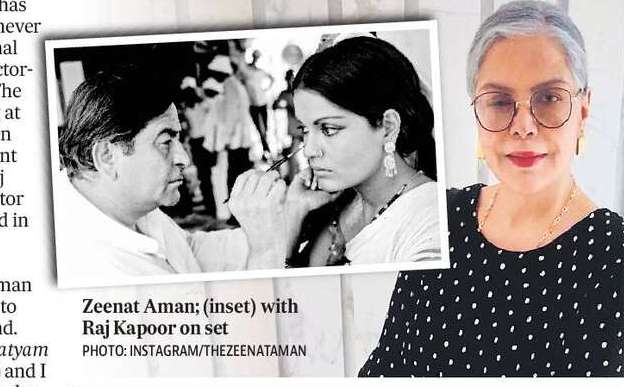
HINDUSTAN TIMES (February 26, 2023)
Actor Zeenat Aman has clarified that she “never had an interpersonal relationship” with late actor-filmmaker Raj Kapoor. The 71-year-old was speaking at an event in Mumbai when she was asked to comment on an incident from a Raj Kapoor party that late actor Dev Anand had described in his autobiography, Romancing With Life.
Recalling the party, Aman said this was her chance to make it all clear at her end. “Raj had signed me for Satyam Shivam Sundaram (1978) and I went there as his about-to-be heroine. I never had an interpersonal relationship (with him), not before that and never after that. It was always a director-actor relation. He was passionate about his work and I was passionate about his work but never did he ask me why I did not wear white. In fact, I have never worn white on his sets or parties (referencing the filmmaker’s fascination with women wearing white). With all due respect, ek kahani banane me, hindsight se kuch interesting banane ke liye kuch jumle daal dete hain,” Aman said.
Aman and Anand starred in the 1971 film Hare Rama Hare Krishna, during which the latter fell in love with his co-star, the actor wrote in the book. In the autobiography, Anand recalls fixing a meeting with Aman to profess his feelings for her. But “a drunken Raj Kapoor... threw his arms around her exuberantly. This suddenly struck me as a little too familiar. And the way she reciprocated his embrace seemed much more than just polite and courteous,” he wrote.
Speaking at the event, Aman added, “Now, I am not sure about the perspective of Dev sahab. Lekin main haq se kehti hoon, bilkul galat tha, main apni kitaab me zarur likhungi. I admire Dev Sahab, but this was not correct.”
Lata Mangeshkar and I went on to create history by recording 712 songs together-Pyarelal
8:23 AM
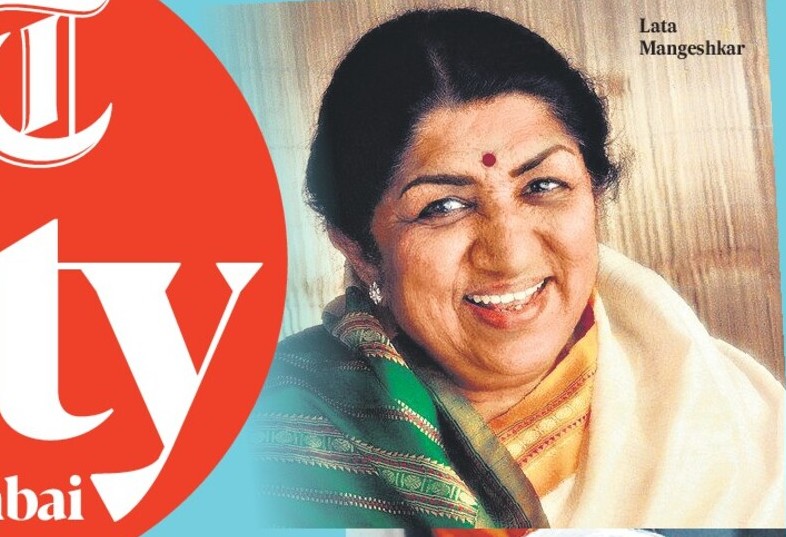
Soumya Vajpayee (HINDUSTAN TIMES; February 6, 2023)
Yesteryear composer duo Laxmikant-Pyarelal and late music legend Lata Mangeshkar are forever bound by the 700-odd songs they’ve worked on together. Today, on the singer’s first death anniversary, Pyarelal Sharma, one half of the duo, misses her “immensely”.
“Lata ji was a part of every important moment of my life. She was like a mother to me. I feel she is still around,” he says, adding, “Woh humare liye Saraswati maa hain. Hum Laxmikant-Pyarelal jo bhi bane, Lata ji ki wajah se bane. We were quite young when we were introduced to her. Laxmikant (Shantaram Kudalkar) ji ko unhone Shankar-Jaikishan (late composer duo) se milwaya aur kaam dilwaya. When she saw I was good at playing the violin, unhone humara ek music group bana diya. She always supported us. She was jovial and fun-loving. We went on to create history by recording 712 songs together.”
Recalling Mangeshkar’s reaction when they reached out to her for their debut project, Parasmani (1963), Sharma says, “When we requested her to sing our first song, she said, ‘Tum itne chhote ho, music director ban gaye?’ She happily recorded the songs and we gave her a cheque of Rs. 101. She’d sing our compositions in her own style, be it Bindiya Chamkegi (Do Raaste; 1969) or Satyam Shivam Sundaram (1978) title track. Woh jo bhi gaati thi, uss gaane ko amar kar deti thi.”
Sharma, 82, goes on to recall another fond memory of the Bharat Ratna awardee: “Jab hum Ek Duuje Ke Liye (1981) ki recording kar rahe the, Lata ji ne mujhse kaha, ‘Pyare, tu itna achha music arrange aur compose karta hai, tu western symphony kyun nahin likhta?’ I was touched by her thoughtfulness. When I finally released a symphony, Om Shivam, she was so happy. Unhone ek Shiv ji ki murti di, jo mere ghar mein sthapit hai.”
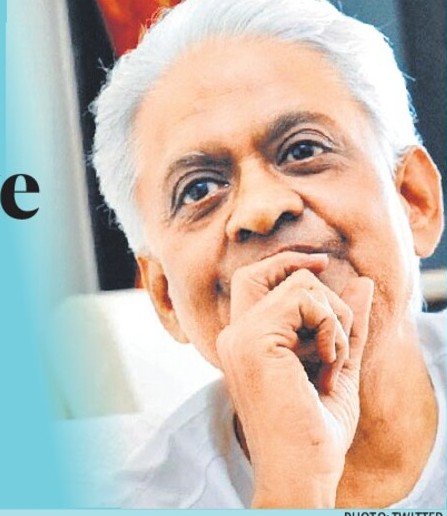
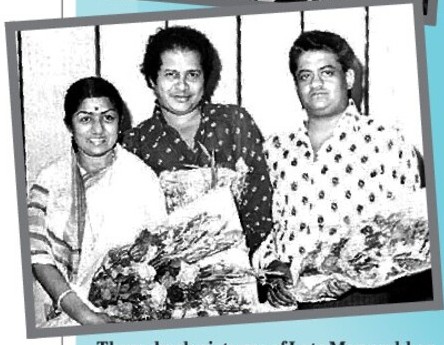
Stardust, the magazine that taught us paparazzi rules, turns 50. Shobhaa De goes down memory lane
8:08 AM
Jane Borges (MID-DAY; March 14, 2021)
Shobhaa De was all of 23, when she took up the reins of Stardust, the monthly film and gossip magazine, which launched in February 1971, literally with a bang. Its inaugural issue cheekily asked, “Is Rajesh Khanna secretly married?” sending the Hindi film industry in a tizzy. Turns out, this was the beginning of the magazine’s tryst with scoops and scandals. “Stardust was a toofan, a hurricane... it was like nothing else in the market. The idea was to shake up the film industry and make readers sit up!” says De, the founding editor of the magazine, which just turned 50. During her 11-year stint with the publication, De went on to become one of the most intrepid editors, daring to push the envelope of film journalism, issue after issue.
Until before Stardust, De says, “there were only tame, goody-goody players on news-stands”. “Film magazines ran sugar coated, PR stories about a star’s pet Pomeranian or a dull photo shoot featuring star couples posing decorously next to plastic flowers,” she remembers. Stardust, she says, smashed all the stereotypes, emerging as a powerful game changer—not just in the realm of movie fanzine journalism, but across the board. “It was witty, bold, irreverent and deliciously wicked. It went where no others wanted to go—scandals, affairs, exposes. What is showbiz without masala? Stardust presented a far more thrilling picture, without glossing over the gory bits. It was catering unashamedly to the voyeuristic interest that fans have in the private lives of their favourite screen idols. Nobody wants a recipe for chutney from a sizzling star. Give us the dirt! Spill the beans—that’s human psychology,” shares De of the reason for the “aggressive approach” adopted by the magazine.
De recalls the time when Raj Kapoor initiated a lawsuit against them. “We had filed a review of Satyam Shivam Sundaram [1978]—his magnum opus—and titled it Satyam Shivam Boredom.” Court cases, of which they had their fair share, didn’t pull the plug on their writing. They confronted them with a “bring it on” attitude. “Stardust did not depend on movie ads for revenue. We could afford to cock a snook at all the players—and thereby retain our independence.” There were also the big shockers, like the cover story in August 1975, which screamed, “Will the Bachchan Marriage Survive Inspite of Zeenat?” “Every scoop had some amount of salaciousness built into it.”
Most readers of Stardust will, however, remember the magazine for its easy-breezy writing style and catchy Hinglish. The colloquial lingo was born organically. “Essentially, it was street speak—what we call Bambaiya or tapori talk. It was a new, unbridled way of expression. At the time, readers said we used Hinglish because our English was weak. But, to play with language and manipulate it to create a fresh vocabulary requires risk, confidence and a certain mastery over words. Mighty dailies started to use Hinglish—political headlines sounded like Stardust cover stories! Our column, Neeta’s Natter was constantly quoted.”
At one point, the magazine was so popular that even film stars, who loved and hated it in equal measure, didn’t miss the opportunity of a feature. “Our approach was not just imaginative, but also innovative. We got top stars to pose for daring shots that had the potential to shatter their carefully constructed ‘wholesome’ image. But, they gamely went along with our out-of-the-box ideas because they realised the publicity value of those pioneering shoots. Even our gossip pages carried exclusive shots of stars partying—these pictures were the forerunners of the paparazzi culture that followed,” says De, who after Stardust, went on to launch Society and subsequently, Celebrity.
Having the “gutsy” Nari Hira as publisher to back their product, says De, helped take Stardust to new heights. “His tabloid style formula totally transformed film journalism. Nothing was sacred. Nobody was spared. We derived our spunk and daring from the boss. He backed all our stories robustly, even when it came to nasty and expensive court cases. He went where rivals feared to enter, and taught his team to swim with the sharks.”
De’s top 5 picks

December 1980
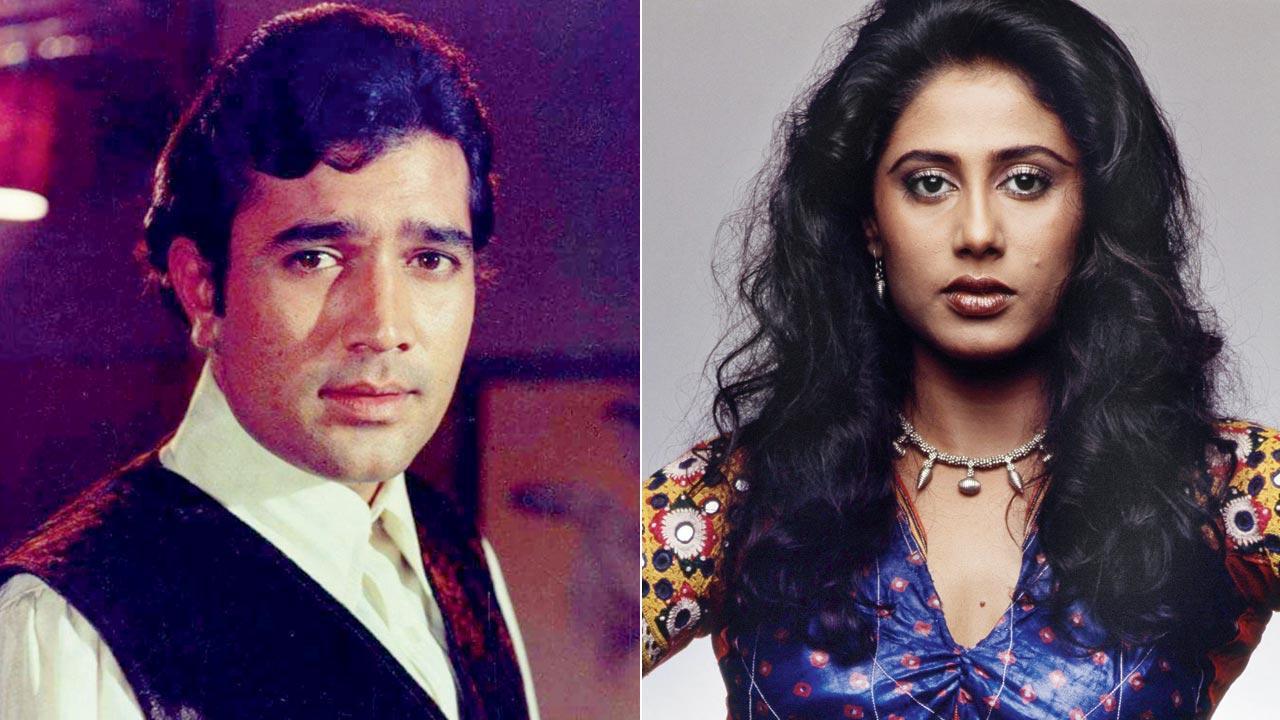
This was the quote we ran on the cover after interviewing Smita Patil’s wonderful, outspoken mother. Patil was a personal favourite of mine—I knew her quite well, and admired her talent, beauty and transparent nature.

November 1972
Here was an unconventional superhero like Vinod Khanna, unafraid to say it like it is. He was a good friend of Stardust, and got featured several times. We gave him the ‘Sexy Sanyasi’ tag when he joined the Rajneesh Ashram in Oregon and walked away from Bollywood.

February 1971
The cover image was notably ghastly! But the issue sold out! We doubled our print run from the next issue. The “scoop” was personally given to Nari Hira by Rajesh Khanna’s then girlfriend Anju Mahendru’s mother. It was Stardust that had dubbed him, “The Phenomenon”. Khanna still retains that title according to me. The madness around him has not been matched by any other star, the Khans included.

January 1972
Stardust had given Dharmendra the ‘Garam Dharam’ tag which he lived up to. The story detailed his many liaisons, and he didn’t have a problem with the reportage.

August 1974
This was declared by Katy Mirza, the lovely Parsi girl from Mumbai who went to London and became a Playboy Bunny. It was a candid story and she spoke freely about body-image at a time when nobody discussed such terms.
RIP Rishi Kapoor: Mulk mourns as Kapoors lose a son
8:00 AM

Avijit Ghosh (THE TIMES OF INDIA; May 1, 2020)
Rishi Kapoor, who stormed into young hearts and stardom with the bubblegum blockbuster Bobby (1973), and who reinvented himself in the new millennium, deftly navigating fluctuating popular trends and fickle public taste, passed away in a Mumbai hospital on Thursday.
The actor, who was batting leukemia, was 67. “He remained jovial and determined to live to the fullest right through two years of treatment across two continents,” his family said in a statement.
Rishi, the second son of Indian cinema’s legendary showman Raj Kapoor, arrived at a time when Rajesh Khanna’s reign of romance was fast on the fade. Amitabh Bachchan and action were the new box-office currency. With his chocolate looks and red lips, he appeared to be on the wrong side of vogue. But Rishi didn’t fight the tide; rather he found ways to survive and thrive.
In a career spanning nearly five decades, he starred in over 150 films, forming a trendy romantic pair with Neetu Singh, who later became his wife. He was also part of many hits with Bachchan.
------------------------
April has been a cruel month. Now the first family of Bollywood has lost its biggest star. Son of a legendary showman, Rishi Kapoor never allowed the illustrious record of his elders to weigh him down. He was a versatile artiste with a nearly 50-year career
Avijit Ghosh (THE TIMES OF INDIA; May 1, 2020)
 In a long, glittering career, Rishi Kapoor acted in romantic thrillers (Khel Khel Mein) and love yarns of different shades (Kabhi Kabhie, Laila Majnu, Sargam, Prem Rog, Tawaif, Saagar, Henna). He danced better (Hum Kisi Se Kum Nahi, Karz) than most contemporaries. A lesser actor would have got lost in masala multi-starrers (Amar Akbar Anthony, Naseeb) but Rishi’s easy charm and comic timing helped him sail through. And yes, his movies were synonymous with chartbusting tracks, generally composed by R D Burman and Laxmikant-Pyarelal.
With passing time, he abandoned the mannerisms that came in the way of his growth as an actor. In the coda of his career, when character actor parts were more etched out, Rishi Kapoor found a second wind. A garrulous Bollywood producer (Luck By Chance), a gay dean (Student Of The Year), a loathsome trafficker (Agneepath), a spirited grandfather (Kapoor & Sons) and an aging Muslim laywer battling for honour (Mulk) -- he invested each part with a sense of the real.
“My second phase as a character artiste is particularly gratifying because I could disprove certain misconceptions that people have about senior actors,” Rishi wrote in Khullam Khulla, the autobiography he co-authored with Meena Iyer.
Few Bollywood autobiographies – barring those by Dev Anand and Naseeruddin Shah -- are so honest. Rishi spoke about fearing his father before coming to admire him, his bouts with alcohol, depression and chauvinism. He wrote how he had objected to Rajesh Khanna -- whom he initially disliked -- being considered for Raj Kapoor’s Satyam Shivam Sundaram, and admitted to a drunken fight with fellow actor Sanjay Khan. He admitted how he had gone to Javed Akhtar’s home to bait him after Imaan-Dharam scripted by Salim-Javed had flopped and expressed regret at not being able to help R D Burman when the down-and-out maestro asked for work late in his career.
Kapoor was born on Sept 4, 1952 in Bombay’s no. 1 film family. “I have a vault filled with priceless memories, and a unique vantage point since birth. I have seen four generations of Kapoors at work -- from my grandfather, my father, uncles and brothers, to Karisma, Kareena and Ranbir (his son),” he said in his autobiography.
He was a natural. In his debut role as a boy besotted by his school teacher in his father’s Mera Naam Joker, Rishi projected the right degree of infatuation with heartbreak. Bobby was made primarily by Raj Kapoor to tide over the losses suffered after Joker flopped. The love story oozing with teen glamour became a monster hit. Songs such as Hum tum ek kamre mein band hon – now revived in these times of social distancing -- were frowned upon by aging India but lapped up by the young and the loveless. Kapoor and his co-star Dimple Kapadia became the vanilla of the season.
The film shaped his image as a romantic star. He was yoked to the template of youthful entertainers, where he lipsynced to peppy songs in pullovers. He was often paired with debutantes (Shoma Anand in Barood, Kajal Kiran in Hum Kisi Se..., Ranjeeta in Laila Majnu).
Always in step with the times, Rishi Kapoor was a regular on Twitter. He tweeted honestly and, sometimes controversially, to his 3.5 million followers. The actor’s last tweet, posted on April 2 was straight from the heart. He wrote, “An appeal to all brothers and sisters from all social status and faiths. Please don’t resort to violence, stone throwing or lynching. Doctors, nurses, medics, policemen etc… are endangering their lives to save you. We have to win this Coronavirus war together. Please. Jai Hind!”
--------------------------
MESSAGE FROM THE FAMILY
“Our dear Rishi Kapoor passed away peacefully at 8:45 am IST in hospital today after a two-year battle with leukemia. The doctors and medical staff at the hospital said he kept them entertained to the last.
“He remained jovial and determined to live to the fullest right through two years of treatment across two continents. Family, friends, food and films remained his focus and everyone who met him during this time was amazed at how he did not let his illness get the better of him.

With his bride and parents at his wedding in 1980
I can’t say I got Zeenat Aman Satyam Shivam Sundaram-Manoj Kumar
7:27 AM

Roshmila Bhattacharya (MUMBAI MIRROR; November 22, 2019)
 I don’t claim to know her well. The only thing I remember from our one meeting at a suburban hotel when I had tagged along with my editor, was of her firing the waiter when he brought the tea because the milk was cold. By then, she had moved out of the spotlight, but Zeenat Aman was still every inch the diva.
The actress, who turned 68 on November 19, will be seen next in Ashutosh Gowariker’s period drama, Panipat, and still remains an enigma. To understand her better, I turned to Manoj Kumar saab because a plaintive Mukesh-Lata Mangeshkar duet from his film, Roti Kapda Aur Makaan, “Main Na Bhoolunga”, still resonates with me.
She played Sheetal, who’s in love with his character Bharat, but marries her rich employer, Shashi Kapoor, for the life of luxury he offers her. “It was a different role for her, with its saris and shades of grey. But right from day one, Zeenat was determined to perform better than what people were expecting from her,” shares the writer-producer-director-actor of the highest grossing Hindi film of 1974.
Interestingly, while he was scripting, Manoj Kumar saab had Sharmila Tagore in mind for the role. His publicist friend Gopal Pandey, whom he had narrated the script to, had narrated some scenes to Sharmila whose work he was handling. So,when he approached her, she told him she wanted to play the deglam Tulsi, the construction worker Bharat is drawn to after Sheetal ditches him. He left her apartment without committing and soon after, left for Delhi with his family. There, while at his farm, he wrote a four-page story about a father and son, which he made as Shor, with Nanda and Jaya Bachchan, in 1972. Roti Kapda Aur Makaan came along two years later, with Zeenat as Sheetal and Moushumi Chatterjee as Tulsi.
He recalls that for the film’s climax, he had taken four days from his artistes. “It eventually took 14 days to wrap, but Zeenat, who was a busy actress then, quietly juggled schedules and dates, giving me the time I needed. She had to hold back her tears and following instructions, impressed with her performance,” he raves.
 During the shooting of the film, he ran into Raj Kapoor at composer Laxmikant’s music room. When asked him, “How’s the girl?” he praised Zeenat, saying she was hard-working and determined to do good work. “Wonderful!” Raj ji exulted. Five years later, she was his Roopa in Satyam Shivam Sundaram. “I can’t say I got her the film,” Manoj Kumar saab shrugs.
However, there is one other film that he can claim to have got Zeenat. Nariman Irani, the cinematographer of Shor and Roti Kapda Aur Makaan, had suffered a financial setback and came to him for help. “I told him to get Salim Khan and Javed Akhtar to write a script for him. He could produce the film with my assistant Chandra Barot as the director. I spoke to Amitabh (Bachchan) and Zeenat who were working in my film and they agreed to act in it,” shares the veteran actor-filmmaker.
The film was Don. After watching a trial show, he suggested they incorporate two songs. “They added one, but even Amitabh agrees 'Khaike Paan Banaraswala' was my suggestion. The film was a blockbuster,” he says.
Zeenat also owes her make-up man to Manoj Kumar saab, who, after watching the first day’s rush print, instructed his make-up man, Krishna Dada, to do her make-up, before reshooting the scenes. “Zeenat liked her look so much she asked me if she could keep Krishna dada. She was shooting four shifts a day and I knew I would lose him. But I let him go, knowing he’d make good money with her and she would gain from his expertise,” he smiles, adding fondly, “Zeenat was a dedicated actress, I wish her all the best.”
R K Studios razed, the iconic gate stays
7:44 AM

Rachana Dubey (BOMBAY TIMES; August 22, 2019)
 It was 71 years ago in the month of August when Raj Kapoor shot Aag (1948) with Nargis, the first film to be produced under his banner R K Films. The movie, shot at the iconic R K Studios in Chembur, gave birth to Raj Kapoor’s company and studio that went on to live for generations, even long after he passed away. In August last year, the filmmaker’s son Rishi Kapoor announced that he and his siblings had decided to sell off the studio, which faced irreparable damage in a fire in 2016.
The studio, which had seen innumerable films and TV shows being shot in its premises, was also home to the Kapoor family’s annual Ganeshotsav in Chembur. Last year, Raj Kapoor’s eldest son, actor Randhir Kapoor, had told us that it was indeed the last of the celebrations in the studio, which had by then, changed hands. When we visited the site of the studio recently, we found that apart from the iconic gate, nothing of the studio really remains. Its canteen (frequented by stars of yore), the shooting floors and recording studios have all been demolished to make way for a plush complex. However, the gate of the studio will be maintained by the new developers as a memory of Mumbai and Hindi cinema’s iconic cinema landmark.
 When we reached out to Randhir Kapoor, he said, “I am sad to see everything has been razed. However, the place will always hold a special place in our hearts because it’s been a part of our lives. It was my father’s legacy. When the studio got terribly damaged in that fire, we had to take a step back and think. Such decisions are not easy to arrive at. It was economically not viable for us to keep the studio, repair it and maintain it because we did not have many takers for the studio floors. The shoots have all moved to the Western suburbs. So, it only made sense to let R K Studios go. The gate, I’m told will stay as is and will continue to remind people of RK Studios. We will be thankful to the developers for that.”
 Actress Padmini Kolhapure, a Raj Kapoor discovery, shot several films at the RK Studio, including her debut Satyam Shivam Sundaram (1978). When we told her about the studio floor being razed, she reminisced the times when she would spend her days working at the studio. “Today, so many memories attached to R K Studios are coming back to me. It’s sad that now whenever I pass Chembur, I won’t find the studio there, but in Raj uncle’s words, ‘The show must go on’. The memories will live on forever. I shot a lot of films there, so much so that I could call the studio my second home. Satyam Shivam Sundaram, Prem Rog (1982), Rahi Badal Gaye (1985), Yeh Ishq Nahi Aasan (1984) are some of my films I vividly remember shooting for at R K Studios. I feel a stronger connection to the place because I was an R K Films’ heroine. We shot 30 per cent of Prem Rog in the studio at Chembur. We had set up massive sets for the songs. I can never forget those days when we filmed Mohabbat hai kya cheez and Yeh galiyan yeh chaubara there. I was virtually living there. Raj uncle would treat us to such amazing food, and their canteen was phenomenal, too. He would often open the theatre for me to watch some of his classics like Awara (1951) and Shree 420 (1955). He loved cinema and he wanted people to acquaint themselves with it. Raj uncle’s cottage (where he would sit and talk to us), his Holi parties, the recording rooms, the canteen — there's no corner of R K Studio that I don’t remember and that I won’t miss. Whenever I travelled to Pune, I made it a point to go past the R K Studios because I would bow before the Lord Shiva idol they have at the entrance. The studio formed a great part of the city’s legacy and I will miss it each time I pass the bend where it once stood.”
 Simi Garewal, who had worked in Raj Kapoor’s Mera Naam Joker (1970), had also made a documentary on the legendary filmmaker's life. She said, “I always thought men go, but their monuments and buildings remain. Now, both have gone. But the memories will remain as long as we live. I don’t mourn the end of R K Studios, the films we made there will remain forever.”
 Filmmaker Imtiaz Ali, who shot a song for his last film, Jab Harry Met Sejal (2017) at the studio, told us, “R K Studios is a hallmark in progressive Indian filmmaking and it’s my privilege to have filmed there. Although it is sad to know that it does not exist physically anymore, it will live on in the ethos of Indian filmmaking forever. I would also like to point out that things change, and filmmaking techniques have changed a lot as well, so from time to time, such hard news is inevitable. I shot a song of Jab Harry Met Sejal there, and I visited the make-up rooms as often as possible in the memory of all the great film personalities like Raj Kapoor and others, who have spent time there.”
Vidya Sinha, face of the working woman in 70s, passes away
7:54 AM

Chhoti Si Baat Heroine Dies Of Lung Ailment
Avijit Ghosh & Bella Jaisinghani | TNN (THE TIMES OF INDIA; August 15, 2019)
In 1970s India, she typified the nice, neighbourhood middle-class girl whom shy guys would wait for wordlessly at the bus stop. Vidya Sinha, who played that girl to perfection in the middle-of-the-road classic Chhoti Si Baat (1976), passed away at Mumbai’s Criticare Hospital on Thursday. She was 71.
"Vidya Sinha died around 11.30 am. She was ailing with lung disease and recently also had heart trouble. She was not responding to treatment,” Dr Deepak Namjoshi, who treated her, said.
Chhoti Si Baat was the bigger hit but Vidya had already caught everyone’s eye earlier in the modestly successful Rajnigandha (1974), which was based on Hindi litterateur Manu Bhandari’s story, Yehi Sach Hai. Both films were directed by Basu Chatterjee, the master of miniature middle-class life.
The characters played by Vidya in these films had larger social echoes. In Rajnigandha, she was a student unable to choose between two lovers. In Chhoti Si Baat, she played a typist wooed by two suitors. Both these women were half-confined, half-free. Through them, Vidya seemed to be representing thousands of middle-class women in urban and small town India. She became their celluloid mirror, her life and pleasures a fulfilment of their fantasy. In times when Bombay heroines were synonymous with shimmery glamour and inviting pouts, Vidya was the divergent other: big, kohl-laced eyes, smart saris and a smile that reminded you of flowers in the morning sunlight. She was the real, attainable middle-class girl for thinking young men.
The hashtag, Vidya Sinha, was the top trend on Thursday evening. And it only underlined that she still retained a fond, if forgotten corner in many hearts even four and a half decades later.
To Vidya’s credit, she tried to break free of the “good girl” image. She even bashed up baddies in Chalu Mera Naam (1977). But it didn’t work. Neither did producer-director B R Chopra’s Karm (1977) where she was cast opposite Rajesh Khanna, then a superstar on a slippery slope.
The following year, Pati, Patni Aur Woh (1978) became a box-office smash, though actor Sanjeev Kumar walked away with the plaudits. Apart from Amol Palekar, the hero of both Rajnigandha and Chhoti Si Baat, she shared screen space with Kumar in other films such as Mukti (1977) and Tumhare Liye (1978). Vidya also acted in Raj N Sippy’s profitable thriller Inkaar (1978), which was inspired by Akira Kurosawa’s High and Low.
No image-conscious heroine would have played the avenging killer in Ramsay’s murder mystery, Saboot, or the female Fagin who exploits child beggars in Raj N Sippy’s Josh (1981), in a desi Oliver Twist kind of film.
“I still remember her final scene where she gets buried amid a barrage of coins, the very coins she would exploit the children for. We did not use visual effects, that scene was actually shot with heavy coins. We took precautions not to hurt her. But Vidya ji was very brave. She endured retakes without complaint,” recalled Sippy.
Another notable film in her resume is Tyaag Patra (1978), based on renowned Hindi writer Jainendra Kumar’s famous novel of the same name. Gulzar’s Kitaab (1977) was certainly more watched.
In a 2015 interview with rediff.com, Vidya had said that she grew up in central Bombay’s Matunga area. She was Miss Bombay in 1968 and started modelling which led to her being cast by Basu Chatterjee, her daughter Jahnavi told TOI.
In the rediff interview, Vidya regretted having said no to Raj Kapoor for the role eventually played by Zeenat Aman in Satyam Shivam Sundaram.
Her first husband, whom she had married before signing her first movie Raja Kaka, passed away in 1996. A second marriage ended in acrimonious divorce. In recent years, she found comfort in television work. What will endure longer is the girl with sparkling eyes of Rajnigandha and Chhoti Si Baat.
Raj Kapoor was at the airport, inconsolable, when I returned with papa’s body-Nitin Mukesh
7:55 AM

Nitin with father Mukesh, Raj Kapoor, Jaikishan, Randhir and Rishi Kapoor and recordist Minoo Kartik at the song recording for the film Mera Naam Joker
Roshmila Bhattacharya (MUMBAI MIRROR; December 14, 2017)
With a cheer, not a tear in your eye, Wish me luck as you wave me goodbye, Give me a smile, I can keep for a while, In my heart while you are away, Till me meet once again, you and I, Wish me luck as you wave me goodbye...
 These were the first lines Nitin Mukesh recorded for Mera Naam Joker at Mumbai’s Famous Studio. He was then about 15, and he was recording for Rishi Kapoor, younger by two years, who played the young Ranbir Raj aka Raju in the 1970 film. Rishi was present on the occasion along with his older brother Randhir and father Raj Kapoor as also was Nitin’s own papa, the legendary singer Mukesh.
“Raj uncle decided on the spur of the moment that he wanted Mukesh’s son to sing for his son. Papa asked me if I could and I assured him I would. Jaikishan saab (of the composer duo Shankar-Jaikishen) rehearsed the popular song during World War II with me for a couple of days before I recorded it live with the other children singing in chorus,” recalls the singer. He chuckles and says that his father was more nervous than he was. Raj Kapoor was emotional, and showered him with blessings. He predicted he’d become as famous as his father. “I’d later joke with Chintu that my voice made him a star while he would attribute his success to papa who sang 'Teetar Ke Do Aage Teetar' for him in the same film.”
The actor-filmmaker was a permanent fixture in Mukesh’s life and when rehearsing or recording with him, Raj Kapoor’s Chevrolet Impala would often land up outside the singer’s one-room-kitchen apartment in Napean Sea Road in the middle of the night and bring gawking neighbours to their doors. Mukesh’s five children, who would be sleeping on the floor, would be hurriedly woken up, and his wife would rush to the kitchen to rustle up dinner for the showman who’d relax with Mukesh over a drink.
“When we moved to a three-BHK close by, he was the only outsider present at the house-warming and after walking through the rooms, he announced that he liked the children’s bedroom best but it needed an air-conditioner. The next day his gift arrived, making us feel like little emperors in our palatial bedroom, because air-conditioners were a luxury those days,” says Nitin.
He says that while most people referred to Mukesh as Raj Kapoor’s voice, the filmmaker himself admitted to Simi Garewal in her documentary that after Jaikishen passed away he felt like he’d lost an arm and after Shailendra’s demise the other, but after Mukesh succumbed to a sudden heart attack in Detroit on August 27, 1976 while on a concert tour, he realised he had lost his soul. “Raj uncle was with us at home till we left for the airport. Little did he know then that this was the last time he’d see his Mukesh Chand alive (Kapoor always addressed him by his full name). He was at the airport, inconsolable, when I returned with papa’s body. He’d been filming the flood sequences for Satyam Shivam Sundaram near Pune when he got the news and despite knowing how difficult it would be to get a busy Shashi Kapoor’s combination dates with Zeenat (Aman), and without a thought for the losses he’d incur, he drove down to be with our family for the next 10 days,” says Nitin Mukesh. Kapoor kept in touch via frequent phone calls and his wife Krishna would drop by to ensure that the singer’s family was doing well.
The times were tough for Mukesh’s family, and Nitin Mukesh would accept show offers for as little as Rs 100 to keep the kitchen fires burning. So, when Swami Chidanand Maharaj, for whose Divine Light Society his father had done a fund-raiser every year for free, offered to organise a show for him for which he was willing to pay him Rs 50,000, he was delighted. The only condition was that Raj Kapoor had to present Nitin Mukesh.
“Raj uncle had returned to shoot Satyam Shivam Sundaram but since the money would make things easier for us, I went to meet him and sounded him out. He agreed immediately and put the RK Studio machinery to work to invite the entire film industry for the show. The Kapoor family was present, along with Amitabh Bachchan, several actors and other big names from the music fraternity. It was a full house and it set the ball rolling for me,” acknowledges the grateful singer.
“Chanchal Sheetal Nirmal Komal” was the last song my father recorded for Satyam Shivan Sundaram before we left for the US. On his return he was to sing “Woh Aurat Hai Tu Mehbooba”, but I ended up crooning it with Lataji and after that I never looked back,” says Nitin Mukesh. As a tribute to his ‘Raj uncle’, who would have turned 93 on December 14, he begins every show with Mukesh’s Mera Naam Joker song, “Jeena Yahan Marna Yahan” and ends the show with his own, “With A Cheer, Not A Tear…”
R K Studios: Raj Kapoor shot all his movies after 1950 in 4-acre space
8:02 AM

Bella Jaisinghani (THE TIMES OF INDIA; September 17, 2017)
Hindi cinema's famous showman Raj Kapoor constructed R K Studios in Chembur in 1950, reportedly with profits earned from his first hit picture, Barsaat in 1949.
This sprawling four-acre campus also served as the headquarters of his film company, RK Films, which had been founded two years earlier in 1948. His first film as independent director was Aag.
Raj Kapoor reportedly shot all his pictures after 1950 here at RK, beginning with the famous dream sequence of Awara to Mera Naam Joker, Bobby, Jis Desh Mein Ganga Behti Hai, Kal Aaj Aur Kal, Satyam Shivam Sundaram and Prem Rog. Shree 420 and Sangam were also filmed in studio.
Over the decades, the fortunes of RK Studios peaked as hundreds of popular movies, not just those under the home banner, were shot here. Studio representative Kishore Darekar said on Saturday, “Manmohan Desai shot all his pictures here. Newer RK productions such as Henna, Ram Teri Ganga Maili and Aa Ab Laut Chalein were filmed here.“
As time passed, private bungalows and outdoor locations became more economically viable and a popular option to shoot rather than creating lavish expensive sets in film studios. The family stopped making films a few years after Raj Kapoor's death. Television shows do continue to rent the space, though.
"Raj Kapoor focussed so much on Zeenat's curves that Satyam Shivam Sundaram became all body and no soul"
7:36 AM

Roshmilla Bhattacharya (MUMBAI MIRROR; December 23, 2014)
The world today remembers him as an ace photographer but the late J P Singhal was actually a painter. And his speciality was portraits of tribal women. He would dress up his models as adivasi girls, click them and use these photographs as a reference for his paintings.
Raj Kapoor happened to see one of these paintings and the girl in the canvas, impatiently waiting for her lover, caught his eye. The filmmaker was planning Satyam Shivam Sundaram at the time, a dream he had lived with for decades, and invited Singhal to his farmhouse in Loni.
"Raj saab wanted me to do a photo session at the farm with Zeenat Aman dressed exactly like the model in my painting," Singhal had said, admitting that he had never imagined being a part of Bollywood and was easily persuaded to make the trip.
Years later, reminiscing about the shoot, the celebrated artist and National Award winning designer confided that he had turned into a starry-eyed fan, struck dumb in the presence of his 'hero'. Raj Kapoor was the actor whose films he had patiently waited in never-ending queues to see during his growing up years. And now, suddenly, he was in close proximity to his idol, hoping to impress him with his photographs.
Singhal had been introduced to Zeenat before they drove up to Loni. He was not dazzled by the glamorous star. "It wouldn't have made any difference had she been another actress. All that mattered to me was getting a word of praise from Raj saab," he confessed.
On the first day, he reeled off several shots of Zeenat dressed in the now-famous mini sari. According to Singhal, RK's eldest son, Randhir, who was also present at the farm, wasn't impressed with Zeenat.
"He told me that evening over a drink that he thought Zeenat was too much of a model - stiff and stylised. She wasn't the right choice for Roopa, the village belle who seduces the dashing engineer Rajeev with her golden voice and sexy body, only for him to disown her after marriage when she unveils her scarred face.
Raj Kapoor who was sitting with them, turned to Singhal for his opinion. The photographer took his time to reply, then choosing his words carefully told RK that Zeenat had the body, and he was confident Raj Kapoor would infuse the soul in her.
Later, he acknowledged that he had been wrong. "Raj saab focussed so much on Zeenat's curves that eventually Satyam Shivam Sundaram became all body and no soul. And all that remained in the audience's mind was the image of Zeenat wearing the skimpy half sari," he admitted years later.
He refused to accept the blame for that provocative attire however, arguing that the adivasi girl in his painting had been wearing few clothes because she couldn't afford any more.
He pointed out that the original costume went through a lot of cuts on its way into Zeenat's wardrobe with Oscar winning costume designer Bhanu Athaiya snipping a few inches off the sari and making the choli far more revealing. And Zeenat became every man's fantasy.
Bollywood buzzvine has it that Zeenat was not Raj Kapoor's first choice for the film. Satyam Shivam Sundaram had reportedly been conceived with Lata Mangeshkar in mind years ago.
Down the years one heard other names too, like Dream Girl Hema Malini and his Bobby Dimple Kapadia. Had any of them played Roopa, it might have been a different film. But with Zeenat in the picture, the camera was easily seduced. Posterity still peeks through the lens's eye for a glimpse of Zeenat Aman in the iconic mini sari. JP Singhal however was disappointed by the blatant display of sex appeal which turned Satyam Shivam Sundaram into three meaningless words. But Raj Kapoor still remained his idol....
Same with Zeenat Aman. She was not the first choice. The director had Hema Malini and Dimple Kapadia in mind; both of them were uncomfortable with the idea of seducing the camera with their body. Zeenat stepped in. In came the film, the title song, Bhor bhaye panghat pe and Rangmahal ke dus darwaze. The door opened. Posterity still steps in once in a while to take a peek.
Why Diwali is not a big phenomenon in Bollywood films, unlike Holi or Dahi Handi
8:16 AM

Seema Sinha (BOMBAY TIMES; October 19, 2014)
 Superstars often trip one
another to get their films to release on Diwali because it is a
profitable period at the box office. But ironically , the festival
per se has very rarely been captured on the big screen - unlike its
counterparts, Holi or Dahi Handi.
Superstars often trip one
another to get their films to release on Diwali because it is a
profitable period at the box office. But ironically , the festival
per se has very rarely been captured on the big screen - unlike its
counterparts, Holi or Dahi Handi. Reasons writer-director, Tigmanshu
Dhulia, “You don't connect emotionally with Diwali and it is also not
very cinematically appealing, unlike Holi, which is more colourful.
Diwali is celebrated at night; people perform puja and play card games.
So, there is not much to show on celluloid although the sound of Diwali
crackers has been used for creating drama in the film's storyline.“
Reasons writer-director, Tigmanshu
Dhulia, “You don't connect emotionally with Diwali and it is also not
very cinematically appealing, unlike Holi, which is more colourful.
Diwali is celebrated at night; people perform puja and play card games.
So, there is not much to show on celluloid although the sound of Diwali
crackers has been used for creating drama in the film's storyline.“ Subhash Ghai thinks the audience is one reason why filmmakers shy
away from showing the festival as an integral part of their stories. He
states, “In today's scenario, the traditional family audience has moved
to television serials and shows. So, when we are generating modern
content for the modern audience, we don't show these festivals except
Dahi Handi songs, which have energy.“
Subhash Ghai thinks the audience is one reason why filmmakers shy
away from showing the festival as an integral part of their stories. He
states, “In today's scenario, the traditional family audience has moved
to television serials and shows. So, when we are generating modern
content for the modern audience, we don't show these festivals except
Dahi Handi songs, which have energy.“Director Karan Malhotra feels the festival of lights does not lend itself well on celluloid. “Diwali is more of an intimate festival among families. People don't go out on streets whereas other festivals like Ganpati, Dahi Handi and Holi are more dramatic and hence, cinematically exciting,“ he opines.

 Of course, his mentor Karan Johar is one
of the few filmmakers to have used the festival as an important part of
his storyline. In Kabhi Khushi
Kabhie Gham, the filmmaker chose the festival as a backdrop for Shah
Rukh Khan's entry as his onscreen parents, Amitabh and Jaya Bachchan
perform the puja in a grand manner. Years later, Hrithik Roshan too is
seen returning home on Diwali - but this time around, KJo gives it a
sombre mood to depict the broken family.
Of course, his mentor Karan Johar is one
of the few filmmakers to have used the festival as an important part of
his storyline. In Kabhi Khushi
Kabhie Gham, the filmmaker chose the festival as a backdrop for Shah
Rukh Khan's entry as his onscreen parents, Amitabh and Jaya Bachchan
perform the puja in a grand manner. Years later, Hrithik Roshan too is
seen returning home on Diwali - but this time around, KJo gives it a
sombre mood to depict the broken family.Besides this film, there are only a handful of movies that have woven in the festival of lights in their narrative. 1965 release Waqt is another film that used it to represent a separation. Balraj Sahni is shown singing the famous Ae Meri Zohra Jabeen while celebrating the start of his new business on Diwali. But just after the song, an earthquake destroys their lives when their three sons get separated. The festival serves as a turning point in the film and the director had used firecrackers to highlight the turmoil in the lives of lead characters. It is on Diwali night that Zeenat Aman's character in Satyam Shivam Sundaram suffers severe burns from a cracker, which leave a permanent scar on her face.
 Not exactly the traditional festive situation, but another scene that
comes to mind is from Zanjeer, in which a frightened young boy (Amitabh
Bachchan's character) hides in a cupboard and witnesses his parents
being killed. The scene is made all the more dramatic by the noise of
crackers exploding all around him.
Not exactly the traditional festive situation, but another scene that
comes to mind is from Zanjeer, in which a frightened young boy (Amitabh
Bachchan's character) hides in a cupboard and witnesses his parents
being killed. The scene is made all the more dramatic by the noise of
crackers exploding all around him.In a heart-rending episode in Shakti Samanta's Anuraag, the entire neighbourhood gets together and stages a Diwali celebration to fulfill a young boy's dying wish.
Censor Board to now clamp down heavily on cleavage display?
8:16 AM

DNA (May 15, 2014)
Cleavages, which have been an integral and almost essential part of Indian cinema since Bindu and Padma Khanna heaved their way into the bosom of fame, may well be things of the past.
According to sources from the Censor Board Of Film Certification (CBFC) the board, so far very liberal with cleavage display, has decided to clamp down heavily on the same.
The first casualty of this newly-discovered disregard for a woman’s modesty in the upper half of her torso is new actress Rupali Krishnarao who plays a prostitute in Ashuu Trikha’s Koyelaanchal. Her cleavage has been blurred by the censor board at several places where the board members found the flesh display too ample.
Considering how much cleavages are part of our Bollywood culture, director Trikha can’t stop grinning over the sheer hypocrisy of this sudden flash of modesty. “The cleavage was blurred as per the censor board’s instruction. I argued with them saying cleavage is an integral part of Bollywood culture. Besides, my heroine plays a prostitute. Years ago in Satyam Shivam Sunderam Zeenat Aman had displayed a lot more than cleavage in a temple sequence.”
 Trikha argues his heroine’s anatomy was not open to kids. “My film is for ‘Adults Only’. And adult audiences are mature enough to handle some cleavage. But I saw no point in arguing beyond a point. I just blurred the blouse.” But the director says he has no complaints against the board. “They have become cautiously advanced as opposed to defensively regressive.”
Meanwhile, a sequence in Ananth Mahadevan’s The Xpose showing a starlet in a transparent white sari has been trimmed by the board. Ironically, the same pose by Zeenat in Satyam Shivam Sunderam was allowed to go scot-free.
Satyam Shivam Sundaram scene in The Xpose chopped by the Censors
3:59 PM

Vickey Lalwani (MUMBAI MIRROR; May 10, 2014)
Raj Kapoor got away with the scene in Satyam Shivam Sundaram but when Ananth Naryan Mahadevan's recreated it, he was met by the scissor-weilding censors.
The Xpose's leading lady Sonali Raut is clad in a wet white saree in a song which recreates Zeenat Aman's iconic turn in the Raj Kapoor classic and the Central Board of Film Certification has asked the filmmaker to clip those scenes which offer a glimpse of the actress's bosom.
Rakesh Upadhyay, the film's creative producer said: "I was told by the Censor Board that the mistakes made in the '70s should not be repeated."
And that was the end of Sonali's cleavage display. Another scene in which former Miss India Zoya Afroz uses expletives against Sonali has also been snipped.
The characters of the two actresses are reportedly inspired by Parveen Babi and Zeenat Aman.
The rivalry between the two exploded in several catfights, including one at a city hotel when they almost came to blows. This incident along with other real-life references have reportedly found their way into the film's script.
Sonali Raut wants wet saree scene in The Xpose deleted or toned down
4:11 PM

Vickey Lalwani (MUMBAI MIRROR; April 22, 2014)
Recently, Margot Robbie admitted that she'd lied to her family about the X-rated scenes she'd shot for in The Wolf of Wall Street and how thinking about their reactions gave her the chills. Closer to home, debutant Sonali Raut is facing a similar predicament.
Her opening scene in the trailer of Himesh Reshammiya's The Xpose is difficult to miss. Mirror broke the story (April 2) about how the scene is a tribute to Raj Kapoor's1978 film Satyam Shivam Sundaram with Sonali aping Zeenat Aman in a wet white saree. On Saturday, the actress had a showdown with the film's director Anant Narayan Mahadevan. She wanted the scene deleted or toned down.
Sonali confirmed her reservations saying, "I've expressed my concerns to Ananth sir. I don't want to say anything more."
Ananth admitted that Sonali wants the scene to be cut but he is yet to take a final call on this. "As of now, I don't intend to tamper with the scene at all," he asserted. "Some of her cousins were shocked by the trailer and that rattled her."
He says she was kept in the loop at every point, shown stills from the original film and told this was her opportunity to recreate the iconic scene. He says, "I see no reason why I should comply to what she is asking for given that the scene was shot aesthetically and she knew exactly what she was doing."
The Mastram effect: Erotica comes of age in Indian Cinema
12:02 PM

As Indian audiences gear up for Mastram, we take a look at how erotica in our films is slowly coming of age
Urmimala Banerjee (MID-DAY; March 2, 2014)
With
sex and sexuality being hush-hush topics in India, any film with some
amount of skin show generates curiosity, which, often transcends into
‘healthy’ (pun intended) good opening collections at the ticket windows.
After all, nothing sells like sex.
People still remember Mandakini’s shower act in Raj Kapoor’s Ram Teri Ganga Maili, Rekha’s bathing sequence in Girish Karnad’s sensuously crafted Utsav and Zeenat Aman’s cleavage show in Satyam Shivam Sundaram. In recent times, films such as Jism 2, Murder and B.A. Pass created waves online as well as in theatres.
The latest film to explore the theme of erotica is Akhilesh Jaiswal’s Mastram. A biopic of legendary Hindi porn writer, Mastram whose books were read by young men across India in the ’80s, the film tries to explore the writer’s conflict with his creative aspirations and society. The idea is novel with the trailer evoking interest among the Internet savvy audience.

Shashi Kapoor and Zeenat Aman in the 1978 film Satyam Shivam Sundaram
When fact meets fiction Out in the open Akhilesh Jaiswal, the director of Mastram says, “Like many young North Indian men, I too grew up reading Mastram’s books. I used to wonder how this guy would be like and what would he be telling people about his profession. It was just a thought that later formed the base for my film. We did a lot of research but could not find any links to the ‘actual’ Mastram. Most of the old bookstalls that sold his stuff had shut shop or the owners had died, so I could not establish any contact.”
Working on a film based on the life of a porn writer would not have appealed to many Bollywood heroes but Jaiswal says that the initial reaction wasn’t that negative either.
“I did not approach any big star but 90 per cent of those I asked were kicked about the script. When Nawaz (Nawazuddin Siddiqui) heard it, he loved it and so did Rajkummar Rao. Unfortunately, they could not be a part of the film due to other commitments.

Mandakini took a shower under the waterfall in a transparent white saree in Raj Kapoor’s Ram Teri Ganga Maili (1985)
Adult topics are slowly finding their way into Indian cinema, be it the theme of sperm donation in Vicky Donor or live-in relationships in Shuddh Desi Romance. Vivek Agnihotri, whose film Hate Story had some steamy sequences featuring Bengali actress Paoli Dam (right) opines, “The media has played a huge role in opening up people’s minds towards bold subjects. And it’s not just about sex. Topics such as gay relationships, premarital sex, abuse, etc are being talked about in open forums. This has made it easier for the middle class to accept such films.” Ajay Bahl, who made the critical and commercial hit B.A. Pass also feels the same, “Indian society is rapidly evolving and people are exposed to foreign content, this has brought about a change in perceptions.”

Beyond titillation With news of a heroine wearing a bikini still making for great PR material, the maturity of the industry when it comes to erotica is highly debatable. The young generation of filmmakers seems to have a common view — sex without content in a film is not going to hold the audiences attention. Bahl states, “In my opinion, only visually erotic content does not guarantee a good opening at the box office. The vibe of a film is very important. Filmmakers now hopefully know that mere titillation will get them nowhere. The idea is to tell a great story and if it falls under ‘erotica’ then so be it. Audiences have been accepting indirect sensual content for a long time in the form of songs and even TVCs.”
The logic seems to hold true. With porn being available at the click of a button, the idea of enduring a trashy film for three hours just for some hot scenes is just fading away. “The world watches porn for gratification and once it’s achieved they shut it off. It’s simply because porn does not have the story or dramatic content to hold their attention. Films are all about drama, it works if the drama works, erotic or not,” says Bahl.
The modern audience wants to see all genres of films. And erotica is catching up, especially after the success of books like CL James’ 50 Shades Of Grey, both in the print and online version. A lot of erotic content is available in e-books and lapped up by both the sexes.
Agnihotri says, “I made a suspense film (Chocolate) and a sports drama, (Dhan Dhana Dhan Goal) and I wanted to test my audience with Hate Story. I don’t come from a camp that makes such films or own a erotic thriller franchise, it was an independent effort.”
Pushing limits While big budget erotic thrillers do get marketed well, smaller films find it tougher. B.A. Pass (right, below), which earned Rs 4.30 crore in the first weekend had to be released by Bahl himself. “It was not easy to sell the film as no corporate wanted to touch it. In fact, we never sold B.A. Pass. I released it myself with help from Bharat Shah’s distribution company. Making an erotic film just for profitability is in the domain of ‘B’ and ‘C’ grade category. I don’t think any good filmmaker approaches the genre in this fashion.”
 Dealing with the Censor Board is another hassle. “I feel
they live in an archaic world. The members are totally out of sync with
what is preferred by the modern adult audience. The board should be
done away with.” However, things seem to be in a transition mode.
Director Ashim Ahluwalia who never expected his film Miss Lovely to get a
release in India was glad when the Board passed it with only four cuts
earlier this year. In 2013, they had asked Ahluwalia for 157 cuts. In
India, the Censor doesn’t allow frontal nudity, hardcore lovemaking
scenes or graphic content, so as a veteran director opines, “What we see
is not really erotica!”
Dealing with the Censor Board is another hassle. “I feel
they live in an archaic world. The members are totally out of sync with
what is preferred by the modern adult audience. The board should be
done away with.” However, things seem to be in a transition mode.
Director Ashim Ahluwalia who never expected his film Miss Lovely to get a
release in India was glad when the Board passed it with only four cuts
earlier this year. In 2013, they had asked Ahluwalia for 157 cuts. In
India, the Censor doesn’t allow frontal nudity, hardcore lovemaking
scenes or graphic content, so as a veteran director opines, “What we see
is not really erotica!”
Actors’ take
While Mallika Sherawat’s act in Murder classified her as ‘hot’, Shilpa Shukla wowed the audience and critics alike with her sexy Machiavellian act in B.A.Pass. Agnihotri explains, “Shooting an intimate scene is not challenging. Actors hardly have any dialogues in such sequences. It’s more about playing with the lighting, camera angles and art direction.” Such films have given a boost to many new starlets and revived flagging fortunes.
Bahl says, “My actors were exceptional performers who were mature enough to realise what the film’s actual message was. Thematically, B.A.Pass was based on the premise that society feeds on its own weak and that is the film we made. I don’t think any good actor in their right mind would want to do a (s)exploitation flick. However, if they find material, which digs deeper on an intellectual and emotional plane and a story, which moves them, then today’s actors are brave enough to go further.”
Bollywood's most erotic films 1. Kamasutra: Exotic sets, softcore lovemaking scenes and raw sensuality made this Mira Nair film a much talked about one.
2. Utsav: This 1984 film was based on the play Mrcchakatika and produced by Shashi Kapoor.
3. Satyam Shivam Sundaram: Zeenat Aman’s skimpy outfits and smooching scenes with Shashi Kapoor created quite a furore.
4. Ram Teri Ganga Maili: Besides the shower act, Mandakini also did a very sensuous bedroom scene with Rajiv Kapoor.
5. Anubhav: Post Utsav, Shekhar Suman again did intimate scenes with co-star Richa Sharma in this film that also had Padmini Kolhapure

Girish Karnad’s 1984 Rekha-starrer Utsav combined love, politics, erotica and comedy
People still remember Mandakini’s shower act in Raj Kapoor’s Ram Teri Ganga Maili, Rekha’s bathing sequence in Girish Karnad’s sensuously crafted Utsav and Zeenat Aman’s cleavage show in Satyam Shivam Sundaram. In recent times, films such as Jism 2, Murder and B.A. Pass created waves online as well as in theatres.
The latest film to explore the theme of erotica is Akhilesh Jaiswal’s Mastram. A biopic of legendary Hindi porn writer, Mastram whose books were read by young men across India in the ’80s, the film tries to explore the writer’s conflict with his creative aspirations and society. The idea is novel with the trailer evoking interest among the Internet savvy audience.
Shashi Kapoor and Zeenat Aman in the 1978 film Satyam Shivam Sundaram
When fact meets fiction Out in the open Akhilesh Jaiswal, the director of Mastram says, “Like many young North Indian men, I too grew up reading Mastram’s books. I used to wonder how this guy would be like and what would he be telling people about his profession. It was just a thought that later formed the base for my film. We did a lot of research but could not find any links to the ‘actual’ Mastram. Most of the old bookstalls that sold his stuff had shut shop or the owners had died, so I could not establish any contact.”
Working on a film based on the life of a porn writer would not have appealed to many Bollywood heroes but Jaiswal says that the initial reaction wasn’t that negative either.
“I did not approach any big star but 90 per cent of those I asked were kicked about the script. When Nawaz (Nawazuddin Siddiqui) heard it, he loved it and so did Rajkummar Rao. Unfortunately, they could not be a part of the film due to other commitments.
Mandakini took a shower under the waterfall in a transparent white saree in Raj Kapoor’s Ram Teri Ganga Maili (1985)
Adult topics are slowly finding their way into Indian cinema, be it the theme of sperm donation in Vicky Donor or live-in relationships in Shuddh Desi Romance. Vivek Agnihotri, whose film Hate Story had some steamy sequences featuring Bengali actress Paoli Dam (right) opines, “The media has played a huge role in opening up people’s minds towards bold subjects. And it’s not just about sex. Topics such as gay relationships, premarital sex, abuse, etc are being talked about in open forums. This has made it easier for the middle class to accept such films.” Ajay Bahl, who made the critical and commercial hit B.A. Pass also feels the same, “Indian society is rapidly evolving and people are exposed to foreign content, this has brought about a change in perceptions.”

Beyond titillation With news of a heroine wearing a bikini still making for great PR material, the maturity of the industry when it comes to erotica is highly debatable. The young generation of filmmakers seems to have a common view — sex without content in a film is not going to hold the audiences attention. Bahl states, “In my opinion, only visually erotic content does not guarantee a good opening at the box office. The vibe of a film is very important. Filmmakers now hopefully know that mere titillation will get them nowhere. The idea is to tell a great story and if it falls under ‘erotica’ then so be it. Audiences have been accepting indirect sensual content for a long time in the form of songs and even TVCs.”
The logic seems to hold true. With porn being available at the click of a button, the idea of enduring a trashy film for three hours just for some hot scenes is just fading away. “The world watches porn for gratification and once it’s achieved they shut it off. It’s simply because porn does not have the story or dramatic content to hold their attention. Films are all about drama, it works if the drama works, erotic or not,” says Bahl.
The modern audience wants to see all genres of films. And erotica is catching up, especially after the success of books like CL James’ 50 Shades Of Grey, both in the print and online version. A lot of erotic content is available in e-books and lapped up by both the sexes.
Agnihotri says, “I made a suspense film (Chocolate) and a sports drama, (Dhan Dhana Dhan Goal) and I wanted to test my audience with Hate Story. I don’t come from a camp that makes such films or own a erotic thriller franchise, it was an independent effort.”
Pushing limits While big budget erotic thrillers do get marketed well, smaller films find it tougher. B.A. Pass (right, below), which earned Rs 4.30 crore in the first weekend had to be released by Bahl himself. “It was not easy to sell the film as no corporate wanted to touch it. In fact, we never sold B.A. Pass. I released it myself with help from Bharat Shah’s distribution company. Making an erotic film just for profitability is in the domain of ‘B’ and ‘C’ grade category. I don’t think any good filmmaker approaches the genre in this fashion.”

Actors’ take
While Mallika Sherawat’s act in Murder classified her as ‘hot’, Shilpa Shukla wowed the audience and critics alike with her sexy Machiavellian act in B.A.Pass. Agnihotri explains, “Shooting an intimate scene is not challenging. Actors hardly have any dialogues in such sequences. It’s more about playing with the lighting, camera angles and art direction.” Such films have given a boost to many new starlets and revived flagging fortunes.
Bahl says, “My actors were exceptional performers who were mature enough to realise what the film’s actual message was. Thematically, B.A.Pass was based on the premise that society feeds on its own weak and that is the film we made. I don’t think any good actor in their right mind would want to do a (s)exploitation flick. However, if they find material, which digs deeper on an intellectual and emotional plane and a story, which moves them, then today’s actors are brave enough to go further.”
Bollywood's most erotic films 1. Kamasutra: Exotic sets, softcore lovemaking scenes and raw sensuality made this Mira Nair film a much talked about one.
2. Utsav: This 1984 film was based on the play Mrcchakatika and produced by Shashi Kapoor.
3. Satyam Shivam Sundaram: Zeenat Aman’s skimpy outfits and smooching scenes with Shashi Kapoor created quite a furore.
4. Ram Teri Ganga Maili: Besides the shower act, Mandakini also did a very sensuous bedroom scene with Rajiv Kapoor.
5. Anubhav: Post Utsav, Shekhar Suman again did intimate scenes with co-star Richa Sharma in this film that also had Padmini Kolhapure
Girish Karnad’s 1984 Rekha-starrer Utsav combined love, politics, erotica and comedy
Subscribe to:
Comments (Atom)