Showing posts with label Satyajit Ray. Show all posts
Showing posts with label Satyajit Ray. Show all posts
There are commonalities in The Odyssey and the Mahabharata-Christopher Nolan
3:34 PM

Anshul Chaturvedi (BOMBAY TIMES; July 15, 2026)
Christopher Nolan is an avid consumer of fine Earl Grey tea. Christopher Nolan was relishing a very clearly non-Earl Grey chai with bun maska in Mumbai. Christopher Nolan’s films are so cerebral that they are interpreted and decoded and deciphered and analysed. Christopher Nolan’s film collections are as often bigger than those of the massiest, most dumbed-down cinema ever made.
There are many truths to Nolan’s persona and cinema that coexist simultaneously, and he is as layered a mind as the stories he tells.
And perhaps, The Odyssey is as layered a tale as he has ever told.
There is something about grand tales that delve into ethics, morality, philosophy and truths that transcend the barriers of both time and culture. It is on that account, perhaps, that our conversation in Mumbai with Nolan did not feel very ‘foreign’. The emphasis he places on the Greek concept of Xenia, of the thought that one should be respectful even to a humble beggar who comes at your door since he may be a god walking the earth in disguise, reminds one of Tulsidas’ ‘Na jaane kis vesh mein Narayan mil jaye’. The focus in his story on how a guest should be treated reminds us that ‘atithi devo bhava’ existed as a sacred thought across the world long before it became a tourism punchline. The stories of characters living on earth whose parents are gods, or at least non-human, reminds us of so many characters in the Mahabharata. The remorse that Nolan’s primary protagonist suffers even after engineering a famous victory reminds us of the name behind the Indian national emblem – how Asoka the Great’s remorse post-Kalinga shaped what he, and the land he ruled, have stood for a very, very long time.
“After years of war, no one could stand between my men and home” – when I hear Odysseus saying this, it made me think of another great Greek story, but one that is tied to India. Alexander The Great regarded Achilles as a role model. He carried a copy of the Iliad with him wherever he travelled. And some 850 years after Troy, Alexander’s troops, on the borders of India, rebelled and refused to go any further, and said, you know, like, nobody can come between us and home now. So, this universalness of the longing of a soldier to return home which cuts across cultures and across time, the diminishing thrill of conquest, these emotional contradictions of them both as brutal hardened warriors, and as sentimental individuals just wanting to finally get back home – as a filmmaker, how do you look at the psychology of such men, given that they are so conflicted in the two extremes?
I think it’s one of the eternal human contradictions. Love and war, essentially, that fuel drama and has fueled literature for thousands and thousands of years. I mean, the Odyssey is 3,000 years old, and I think it taps into very human truths.
I think that in my adaptation, I feel that – without going into spoilers, people haven’t seen it – but I think the character of Circe is given some things to say about that, and about that contradiction, that I think is very relevant to the overall story, because there is that contradiction of the qualities that make a good soldier.
Loyalty is one of them, loyalty and obedience and bravery and so forth, all these sorts of positive qualities – but aimed at this incredibly negative end, which is to inflict harm on somebody, to bring death and destruction, and so forth.
And that contradiction, I think, is one of the most interesting and evocative things that storytelling can deal with.
When I came to adapt the Odyssey, I found that that contradiction underlies everything really in the poem. And so, in different ways, I’ve tried to bring that out in the film, including the feel of the experience of the audience as well, in terms of what the audience’s relationship is with the adventure of the piece, but then also the gravity of the seriousness of war, of death, of destruction, all these things that are happening...
But I think it’s an eternal conflict that fuels drama in a very compelling way.
Is post-violence remorse the sign of an evolved soul, in your view, as opposed to people who relish it and enjoy it?
I mean, I think – even more complicated than that – I think within the same individual, there can be the element of remorse, there can (also) be element of inappropriate enjoyment of violence. Different attitudes towards violence at different times can exist within the same individual. And I think that’s one of the things that we’re dealing with, with the character of Odysseus, for example.
One of the reasons I wanted Matt Damon to play the part is, Matt, I mean, he’s a brilliant actor, that sort of goes without saying, but for me, even more than that, I wanted to retain the complexities and contradictions of the character of Odysseus, which are not the traditional characteristics of the hero of an epic.
And Matt is able to open that to the audience and bring the audience in, so you can retain those contradictions and complexities, but he can make you feel that you’re seeing the world through his eyes and you’re experiencing that with him.
And I think part of that is the idea of feeling grounded ethically in a character’s worldview, and then having that challenge, and especially retroactive, looking back at things you’ve already seen in the story, and maybe look at them in a slightly different way at the end of the film than we did at the beginning of the film. And that’s the kind of storytelling I very much enjoy.
You spoke about two things which intrigued me greatly. You talked about the epic being from a time when people saw divinity in everything — the thunder, the water, everything was from the gods. And you said that so many epics and modern stories come from the desire for us to believe that gods could walk amongst us. And in the story, you depict entities who are mortals on earth, but who are children of gods. These concepts are very familiar in Indian mythology and culture; the Mahabharata has so many stories of that nature. So my question is, in your filmmaking, the challenge or the goal often is to make the characters as ‘human’ and relatable as possible. But when you’re dealing with a god, there is no template. How do you approach the character of a god or a half god? How do you bring tears to his or her eyes?
Well, for me, you know, the film has something of a contradiction in this sense, because I have embraced the fantastical elements of the story, the creatures, for example, the cyclopses in the film, those things… But when it came to the gods and the portrayal of the gods, what I became interested in was something that you find in the poem.
It’s a Greek concept known as Xenia. In the film, we refer to it as Zeus’s law, very specifically, and it’s essentially the golden rule. It’s the idea that we have to treat each other with mutual respect.
And the theological underpinning in that Bronze Age is you may look like a humble beggar, but you might be a god in disguise. And so, I have to treat you the way I would want to be treated. In the modern world, we don’t necessarily have that theological underpinning, but of course, what I came to realize is it’s so essential for the story that modern civilization is founded on exactly the same principle, mutual respect.
But the fact that it’s a strong theological underpinning in the Bronze Age led me to want to portray the gods in the way that those people might have experienced them, through nature, through the evidence of the gods, that the sun rises in the morning, that the wind blows, that the tides come in. That’s all evidence of divinity. That’s evidence of gods.
And people walking amongst them may also be gods in disguise. They may be seeing gods in men. And I wanted to keep to that view of the gods, essentially, rather than portraying them as separate, in their own world, up on Mount Olympus or whatever, talking and so forth, as sometimes has been the case in older films.
I really wanted to stay within that mindset of the characters. I wanted to give it, because I think that idea of Xenia, that idea of Zeus’s law, by the end of the film, you realize how important that is. And I felt like portraying the gods in that way would make that more obvious.
Any Indian epic that would appeal to you tomorrow as a filmmaker, as a story?
I mean, I’m always interested in any great story. And I know that Indian culture is full of incredible great stories. But as far as the specifics of what attracts me to a project, I don’t know. I mean, there are commonalities in the Odyssey with, as you say, and the Mahabharata. But I have certainly enjoyed dealing in a mythological landscape, yes.
What is the finest work that you have seen of Indian cinema, in any space, directing, acting, music? Has anything held you?
I mean, I came very late to Satyajit Ray, Pather Panchali. It’s a masterpiece. It’s as good a film as I’ve ever seen. And I was, I did not realize, I think, how… obviously I’d heard of Ray, but some years ago, right before I came to India the first time, I watched that film for the first time, and it’s as fine a film as I’ve ever seen. He was an absolutely extraordinary filmmaker.
The moral centre that you wrote for Matt Damon’s character, like you explained, you know, that whole transition of hard and soft, conflicted, contradiction-filled – how different is that moral centre different from your own personal moral centre?
(Pauses) I think that’s a very tough question for this kind of interview! (laughs)
I mean, we’re all complicated… we’re all complicated the way that Odysseus is complicated… (but) I do not think the word that is most often applied to Odysseus, I don’t think people would necessarily apply that to me. And that word is wily. And, you know, it’s that idea of the trickster or somebody who’s always got – he’s hiding his motive, and has a sort of ulterior motive.
I don’t think, I don’t think I share that.
But even there, by the end of the story, you didn’t make him feel very proud of that. You made him go back and wonder whether it was the right thing to do.
Well, possibly because that’s how I would feel. This is… (laughs) Now I feel like I’m on the psychoanalyst couch!
But he’s not an apologetically wily character, is he? In your telling of it. He’s like somebody who’s been there and then is not so proud of it.
Yeah, I think so. But I also think that, you see, he’s aware of it, in a way, the whole film. But you still see him enjoying his intelligence and enjoying his way of working around things.
And so it’s that thing of somebody who knows what they should be doing and still perhaps isn’t doing it.
And, you know, we all share that.
(And as we wrap it up there, Nolan has a concluding take with a laugh: ‘That’s some tough questions!’ )
India has stopped making children's films-Amit Rai
2:43 PM

Upala KBR (MID-DAY; July 9, 2026)
Director Amit Rai’s next, Ohh My Dog, was born from his love for dogs. And from a simple question: where are the kids’ films in Indian cinema? “In the last decade, a children’s film has not been made. Satyajit Ray did so much work for the children so that our culture survives. Our kids imbibe values from our works,” said the director.
Ohh My Dog explores the beautiful bond between humans and animals. It comes three years after Rai’s sleeper hit OMG 2 (2023), led by Akshay Kumar, Pankaj Tripathi, and Yami Gautam Dhar. Like he did with the 2023 film, the director prioritized the story over the cast in the Tripathi and Pavan Malhotra-starrer.
“After the success of OMG 2, I was asked to make a film on Shivaji Maharaj, but it didn’t [work out]. I thought it would be better to make a film on my own. I wanted to make a film where the focus is on the content, like OMG 2, which was made without any actor in mind. I wanted to tell a story about how a dog’s love is unconditional.”
Reuniting with Tripathi after OMG 2 was a joy for the director. Rai shared, “Pankaj ji has two dogs. He loved the story so much that he came on board, even though he had only eight days of work to do. A star of his stature has joined Ohh My Dog without looking at the length of his role.”
Satyajit Ray's filmography is capturing hearts anew in Japan, paving the way for Blu-ray release
11:10 PM

Yuka Okuda, a Rabindrasangeet performer, delivers a talk on Ray’s ‘Charulata’.
Priyanka Dasgupta (THE TIMES OF INDIA; March 6, 2026)
All seats look taken in a mediumsized Tokyo theatre on an Aug evening in the Japanese summer. The audience listens rapt to a woman sitting on stage, framed by the movie screen behind her. Clearly, it’s not just another screening, but then, neither can the topic be called usual for this part of the world. For the woman on stage is discussing Rabindrasangeet, and the context is ‘Charulata’, maestro and auteur Satyajit Ray’s 1964 masterpiece, one of the seven films that were shown last year in Japan as part of a retrospective of his works.
The lineup — featuring ‘Jalsaghar’ (1958), ‘Mahanagar’ (1963), ‘Charulata’ (1964), ‘Kapurush’, ‘Mahapurush’ (both 1965), ‘Nayak’ (1966), and ‘Jai Baba Felunath (1979) — earning their first theatrical release in Japan, spans a two-decade arc of some of Ray’s most memorable films. The films were also made available on VOD and home video with Japanese subtitles. The demand has grown to the point that these films are set for a Blu-ray release in March.
To Sandip Ray, filmmaker and Ray’s son, however, none of this is surprising. After all, it was the Japanese film great Akira Kurosawa who’d said, “Not to have seen the cinema of Satyajit Ray means existing in the world without seeing the sun or the moon.”
Sitting in his Lake Temple Road residence in Kolkata, he recalled the role of a Japanese distributor, Toho-Towa Co. Ltd, founded in 1928 by film pioneer Nagamasa Kawakita, and said Kawakita’s wife, Kashiko Kawakita, was a Ray admirer.
“She was very close to our family and a die-hard Satyajit follower right from the start,” he said. When Ray first visited Japan, it was Kashiko who arranged a meeting between Ray and Kurosawa in 1966. “I think till the 80s, they distributed all of Baba’s films in Japan. The films must have done good business. Otherwise, why would she ask about new films every year?” said Sandip Ray.
The seven restored titles began their theatrical run on July 25 at Le Cinema Bunkamura in Tokyo. The retrospective was to run for three weeks, but a further week was added due to the demand. “The films were not only screened in Tokyo, but in cities like Hiroshima, Osaka, Kyoto, etc, covering 15-20 cinemas nationwide,” said Varsha Bansal, who helmed the restorations of the Ray classics produced by her grandfather, R D Bansal.
The screenings were paired with discussions and talks. If film researcher and producer Eri Morinaga spoke after ‘Mahanagar’, Asian cinema researcher Tamaki Matsuoka delivered a talk following a screening of ‘Jalsaghar’. Yuka Okuda, a Rabindrasangeet performer and Bengali language instructor, led a session after a ‘Charulata’ screening. “I offered some reflections on the impact of the Rabindrasangeet in the film... Some in the audience said they wanted to watch the film again. It made us realize all the more that Ray’s cinema is a deeply layered and magnificent creation,” Okuda told TOI.

A Tokyo theatre that took part in the retrospective
Ritwik Ghatak hid the scripts, he wanted his actors to be spontaneous-Madhabi Mukherjee
9:53 AM

Ritwik explains exactly what he wants during the shooting of his final film Jukti, Tokko aar Goppo. Pic courtesy Shamya Dasgupta
In the month we mark legendary filmmaker Ritwik Ghatak’s birth centenary, here’s an excerpt from a new anthology of essays on him. An actor recounts what it was like to work with the auteur whose work went largely ignored during his lifetime, but now places him among some of the greatest in the world
MID-DAY (November 30, 2025)
I didn't pay heed to what Ritwik da used to say then, but I do now. He’d say, ‘What are these films you act in—no one will remember them.’ And I used to argue with him: ‘I can’t be irresponsible like you are.’ He wouldn’t reply, just laugh in that way so typical of him. That only made me angrier. But the man I found so irresponsible, so unconcerned about everything then, I now understand was so right. Isn’t it true that an artist’s main responsibility is towards their art? Ritwik da isn’t around anymore. If he had been, I would have owned up to my mistake.
Sometime before Komal Gandhar was made, Sailen da, from Ritwik da’s production team, came to my home one day. He asked me to go meet Ritwik da at his Bhowanipore home. I did, I went and met Ritwik Kumar Ghatak. He read out the screenplay of Komal Gandhar. It was decided that I would act in the film. Some days later, Ritwik da informed me that the producer had asked for someone else to play the leading role. He asked me to try one of the other roles, but I didn’t agree to that. Maybe that was a wrong decision too.
Ritwik da’s habit was to keep changing his script as he went along with the filming. During the shooting of Subarnarekha, I watched two female actors playing significant roles. But, in the film itself, one of those actors had only one shot. That’s why I wonder—what if I had done that role in Komal Gandhar, and would Ritwik da have kept all of it in the final film?
The Ritwik da behind the camera and the Ritwik da outside the film sets were totally in conflict with each other. Seeing him drink and hurl abuses at everyone, you didn’t get to see the fire that was always burning inside him. I have seen so many directors lose their cool when working with the junior actors. Ritwik da would tell them, ‘Ma, it won’t work if you do it like that’ or ‘Baba, you sit here like this, rest your back’. He was always calm and cool-headed then. He knew how to make people work.
In Subarnarekha, my character was supposed to lip-sync to a song. He used to keep asking me to memorize the song. The tape recorder the song used to play on was a weak machine. But that’s what played during the shooting. Despite using such an anti-cinema technique and method, he managed to get the lip-sync right. I don’t think anyone else could have done it. In one scene in Subarnarekha, the sister watches her brother appearing. At the time of shooting, we realized that the lens required to take the shot the way Ritwik da wanted was not available. He placed a lens from his spectacles in front of the camera lens to get it right. Can you imagine that?
I am eternally grateful that I got a chance to work with both Manik da [Satyajit Ray] and Ritwik da. But the two were so different from one another—if one was restrained, the other was the complete opposite. The actors in Manik da’s films got the script well in advance, but Ritwik da preferred to keep the script hidden away. He wanted the actors to be spontaneous, act without preparation. The two of them had a lot of respect for each other, but when they met, they would argue about everything.
Manik da had been invited to attend the premiere of Subarnarekha. I think it was screened at Basusree. At the end, the two of them came face to face, cups of tea in hand. Ritwik da started, ‘In which film was Madhu better—yours or mine?’ Manik da replied, ‘In mine.’ Ritwik da didn’t agree. And they started arguing. Now I understand that they were just discussing and debating each other’s work. I was irrelevant. Manik da never spoke ill of anyone. And behind his back, Ritwik da would say, ‘Don’t watch films by anyone other than that giraffe. The rest are all buffoons.’
Although I ended up not working with Ritwik da again, our relationship didn’t change. The taxi metre would start from eight annas (half a rupee) in those days. Once, Ritwik da suddenly turned up at my house in a baby taxi. He got off and told me, ‘Madhu, pay him.’ I saw that the fare had come to four hundred rupees! This didn’t happen just once, it was fairly routine.
I went to Bangladesh not long ago. A gentleman came and introduced himself, but I couldn’t place him. Then he said that he had come to my place with Ritwik da—and I remembered. Ritwik da knew that I wouldn’t give him money for his alcohol, so he would try various tricks. Once he told me, ‘Give me twenty rupees, otherwise I won’t be able to get my ration.’ I didn’t flinch. So he said, ‘Okay, fine, they will all remain hungry.’
I thought maybe he wasn’t lying, and I should give him the money, but then I remembered that Lokkhidi (Surama Ghatak) had asked me not to give him any money. I had to go out for a shoot, but I realized that I was feeling uneasy about refusing money to someone like Ritwik da. So I went to Lokkhidi on my way to the shooting location and gave her the money. I told her, ‘Whether you need it or not, keep this. I can’t keep my calm and work if you don’t take it.’
At the same time, I have seen this same Ritwik da put his hand into the pocket of his kurta, pull out a fistful of coins, and give it to a technician who needed the money. Truly, it was so difficult to understand this man. His talent went unrecognized in his lifetime. This pained Ritwik da no end. It is my good fortune that I got a chance to work with him, spend time with him.
*This article first appeared in a special edition of the Bengali daily Aajkal on February 25, 2001.
Excerpted with permission from Unmechanical: Ritwik Ghatak In 50 Fragments, published by Westland Books
I don’t believe that cinema is dead, it’s alive and thriving-Ramesh Sippy
8:59 AM

Eshna Bhattacharya (BOMBAY TIMES; November 15, 2025)
When Ramesh Sippy took the stage at the 31st Kolkata International Film Festival for the Satyajit Ray Memorial Lecture, the packed hall was transported back to the dusty plains of Ramgarh, where Sholay first came alive. Fifty years since its release, the filmmaker’s words still carried the same spark of storytelling that defined one of Indian cinema’s greatest epics.
Sholay: From two lines to timeless legend
Ramesh Sippy recalled, “Sholay started as a two-line idea, maybe four, about an army officer and two mischievous ex-soldiers, later changed to police officers because army permissions would have slowed filming.”
He praised Salim-Javed, saying, “I told Javed sahib only about Gabbar - impulsive, heady, smiling one moment and exploding the next. From his first narration, I knew he’d captured exactly what I wanted. That scene in the ninth reel gave us the immortal line, ‘Kitne aadmi the?’”
On unseen technical challenges, Sippy explained, “The Thakur family massacre sequence took 23 days because weather kept changing; clouds appeared after days of perfect sunlight. The lamp-lighting scene with Amitabh and Jaya took 15–20 nights - we rehearsed in the afternoon and shot at dusk, often capturing just one take per day. There were no post-production fixes; every shot demanded meticulous planning, patience, and teamwork. Even a bike-with-sidecar shot was nailed in the first take after careful preparation.”
On casting, he said, “Dharmendra debated Thakur, Gabbar, and finally Veeru. Hema Malini’s speed and energy made Basanti unforgettable, while even small roles like Asrani’s jailor or Sachin’s priest’s son were built with perspective.”
Concluding on the film’s legacy, he reflected, “Every frame, every contribution - from Salim-Javed to technicians like M S Shinde and Mangesh Desai, to artisans like Aziz Bhai - mattered. That’s why Sholay endures, fifty years later, delighting audiences worldwide.”
Cinema, change, and the art of balance
For Sippy, the core of filmmaking lies in balance - between art and commerce, between dream and discipline. “The combination of art and commerce, to me, is true cinema,” he said. “Markets change, but the fundamentals remain. Filmmakers, producers, financiers -all adapt, but what lasts is sincerity.”
He dismissed the idea that cinema is losing its relevance. “Don’t believe for a moment that cinema is dead,” Sippy said. “It’s alive and thriving. Every genuine hit proves how audiences still come back to fill the halls. Multiplexes may be smaller than single-screen theatres, but they deliver what matters - great sound, beautiful projection, and that same old magic.”
Sippy’s message to young filmmakers was clear: “Follow your dreams, trust your instincts, and give the world good, powerful, entertaining cinema. The audience always knows what’s genuine - and they reward sincerity and passion. That’s the real legacy.”
He also spoke about the role of women in cinema, the rise of new voices, and how technology has transformed storytelling. “Whether you learn in film school or by observation, what matters is the urge to create,” he said. “Any time is a good time for cinema.”
Bengal, and a hope of a future bridge
The filmmaker grew nostalgic as he reflected on Bengal’s influence on his work. “To have someone like Satyajit Ray admire Sholay is an honour I’ll always hold close,” he said.
“Ray’s storytelling taught generations of filmmakers to aim higher.” He acknowledged the imprint of Bengali cinema on his own philosophy, adding, “I learned so much from Bengali cinema and from filmmakers everywhere: the ideal is always to combine art and commerce, making films that connect with audiences on all levels.”
Expressing a desire to return to Kolkata, he said, “Kolkata breathes cinema. I think I would be quite happy to look at some kind of proposal, a project bridging Bombay and Bengal. If we find the right film, the right subject that appeals to both audiences, and in general, to everyone, I’ll be very happy and willing to do it. If the opportunity arises, I’d love to make something that bridges Bombay and Bengal, a story that speaks to everyone.”
------------------------------------------------------
“My father was in films, but my first visit to a set was when I was just seven years old. I walked through those huge wires and all the equipment on set. It was dangerous, I realize now, but at the time, as a kid, I didn’t think about that. I was simply fascinated by the entire atmosphere.” - Ramesh Sippy
------------------------------------------------------
“Don’t think that cinema is dead. It is very much alive, and when a hit comes along, you realize the audience never left - they always come back. Whenever there’s a good film, they will return” - Ramesh Sippy
------------------------------------------------------
“Satyajit Ray was a great admirer of Sholay. He once told me it was one of the most well-crafted films in Indian cinema he had ever seen.” - Goutam Ghose
Restored Do Bigha Zamin to premiere at Venice
8:59 AM

The restored version of Bimal Roy’s film will have its world premiere at the Venice Film Festival in the Venice Classics section. Meanwhile, Bandini, Devdas and Madhumati are also being restored
Niharika Lal (BOMBAY TIMES; July 13, 2025)
Do Bigha Zamin (1953) marked a turning point in Indian cinema. While most films of that era were shot within the confines of a studio, director Bimal Roy broke the mould and took the camera to the streets, paving the way for realism in Indian filmmaking. Now the film, restored by the Film Heritage Foundation (FHF), the Criterion Collection and Janus Films, will be screened at the Venice Film Festival’s Classics section.
Gulzar, who worked with Roy, spoke to us about the film’s legacy. “It’s amazing that Do Bigha Zamin is restored and will be shown in Venice. The most important element is that all of his films were based on literature. Not many people know that Do Bigha Zamin is based on a poem by Rabindranath Tagore, with the same title.”
How was the film restored
Do Bigha Zamin was restored in 4K by the Criterion Collection and Janus Films, in collaboration with Film Heritage Foundation, at L’Immagine Ritrovata and Resillion, and in association with the Bimal Roy family.
The restoration process took over three years. It began in 2022, when the Criterion Collection/Janus Films and Film Heritage Foundation initiated the project. The FHF accessed the original camera negative and sound negative, which had been deposited by the Bimal Roy family at the NFDC–National Film Archive of India (NFAI) for preservation.
However, the sound negative presented several issues, including poor audio quality, interrupted dialogues, and missing sections. The original camera negative was also incomplete. A combined dupe negative - on Dupont/Kodak stock from 1954–55 was found at the British Film Institute (BFI) which was also used for the restoration
The restoration drew from the best surviving elements the 35 mm picture and sound negatives preserved at NFAI and the 35 mm combined dupe negative from the BFI.
Bimal da was the coolest director I have ever seen: Gulzar
I started working with Bimal da, who we used to call Dada, from the film “Kabuliwala” when I was his chief assistant. I have very fond memories of that time. People would say that Bimal-da was like a married print. In those days, the picture and sound negatives were separate and when they were brought together optically to make the release print, it would be called a married print.
Bimal da would shoot two shifts in a day – 7 am to 2 pm and 2 pm to 10 pm and would then sit in the editing room working till late night at Mohan Studios. People would say that he is married to films.
Bimal da was the coolest director I have ever seen. I learnt not only filmmaking from him, but the art of patience and stamina.
I am sharing a poetic portrait that I wrote on Bimal-da.
"The softly flowing river face shrouded in the evening mists
Eyes burning in the mistiness of a tawny visage
The spiral of smoke from the endlessly burning cigarette
The faraway voice heavy with sleep.
Shadowed below unknown thoughts that flew above
A face that seemed etched out of molten wax
The sound of every new dream transforms him
Making it seem he would neither sleep, nor wake, nor speak
A silent flowing river shrouded in evening mists."
(From the book “Caged . . .Memories Have Names”)
'Do Bigha Zamin changed the face of Indian cinema: Shivendra Singh Dungarpur, director of Film Heritage Foundation
Do Bigha Zamin changed the face of Indian cinema that brought filmmakers out of the studio to begin shooting on the streets. I am so happy that we were able to collaborate with The Criterion Collection/Janus Films to restore not only Do Bigha Zamin, but other classics of Bimal Roy like Devdas, Madhumati and Bandini, which are in the process of being restored.”
Do Bigha Zamin, is an unspoken autobiography of Bimal Roy: Rinki Roy Bhattacharya, Aparajita Roy Sinha, Joy Bimal Roy
After watching Vittorio De Sica’s film Bicycle Thieves, our father hoped Indian films would follow its deeply moving humanist vision. Do Bigha Zamin, is an unspoken autobiography of Bimal Roy who was cast off from his home in East Bengal in a similar episode like the hero, peasant, Sambhu Mahato. He never recovered from this cruel separation from his beloved birthplace.
Satyajit Ray on “Do Bigha Zamin”
“With his very first film Udayer Pathe (Humrahi in Hindi), Bimal Roy was able to sweep aside the cobwebs of the old tradition and introduce a realism and subtlety that was wholly suited to the cinema. He was undoubtedly a pioneer. He reached his peak with a film that still reverberates in the minds of those who saw it when it was first made. I refer to Do Bigha Zamin, which remains one of the landmarks of Indian cinema.”
Raj Kapoor on “Do Bigha Zamin”
Perhaps the best compliment came from Raj Kapoor, who upon watching the film, reportedly said, “I wish I had made this film.”
I had given up that dream of Cannes long ago-Simi Garewal
3:50 PM

Niharika Lal (BOMBAY TIMES; May 28, 2025)
Simi Garewal recently made her Cannes red carpet debut, more than five decades after shooting Aranyer Din Ratri. The Satyajit Ray classic was restored in 4K and screened at the Cannes Classics section.
“It’s something I never dared to hope for! I gave up that dream long ago and for this to suddenly happen now it’s more than a dream – it’s a gift from the universe,” she says. In a conversation, the veteran actress talks about the film, the roles for women in cinema and more.
‘FROM A MODERN, WESTERNISED GIRL, I TRANSFORMED INTO A RUSTIC, UNINHIBITED ADIVASI’
Simi played Duli, a tribal woman in the Aranyer Din Ratri (1970) – a role that was far from her real-life image. But Satyajit Ray saw something in her. “Manik da, so gentle yet intense, led me to portray a character so different to who I am. I mean here was I, a modern, westernized girl transformed into a rustic, uninhibited adivasi! It doesn’t get more challenging than that,” she says.
She remembers watching the film again, decades later, and being shocked by how fully she had disappeared into Duli. “For an actor, it’s creative fulfillment to ‘become’ another person. When I watched the film I couldn’t see even a jhalak of Simi anywhere. It was Duli.” She adds, “I loved the film, the comedy, the slice of life. It looked so natural, so organic. But that’s Ray’s forte, capturing reality on celluloid.”
‘IT SEEMS CINEMA CATERS PRIMARILY TO MALE AUDIENCES’
Simi says she has not watched too many recent films. “But I will ask – where are the roles for women in cinema?” she questions, adding, “It’s all male-oriented. The female is simply decorative, and always the hero’s sidekick. And that’s not representative of today’s India, where women are strong, independent and achievers in their own right. So, it seems cinema caters primarily to male audiences. The only roles for women are on OTT, and TV, with its serials, caters to women. A gender divide.”
‘AT THE MOMENT, I’M WRITING MY AUTOBIOGRAPHY’
Simi says that she’s currently working on her autobiography. “At the moment, I’m writing my autobiography. I am writing every single word myself. Nobody else has read it, nor looked over my shoulder while I write. It’s between my keyboard and me. It’s very personal. I haven’t held back. I’m on the last few chapters now, presently on Rendezvous With Simi Garewal. You will read everything about my life in my autobiography – from my childhood in London to my joining films (against great family opposition) Every detail about working with Raj Kapoor, Manik da, my films, my private life, my loves, my marriage – my whole life is written in these pages.”
Simi chose to wear her signature white at Cannes too. Talking about its significance in her life, the actress says, “Why white? I feel good when I’m wearing it. Sometimes I put on another colour, yellow or blue, and I immediately take it off because it disturbs my sensibility. White is a happy colour for me,” says Simi.
Her thoughts on walking the red carpet? “I wish Manik da was here to see this...”
It always feels patriotic to do a film that goes to a prestigious festival-Neeraj Ghaywan
9:07 AM
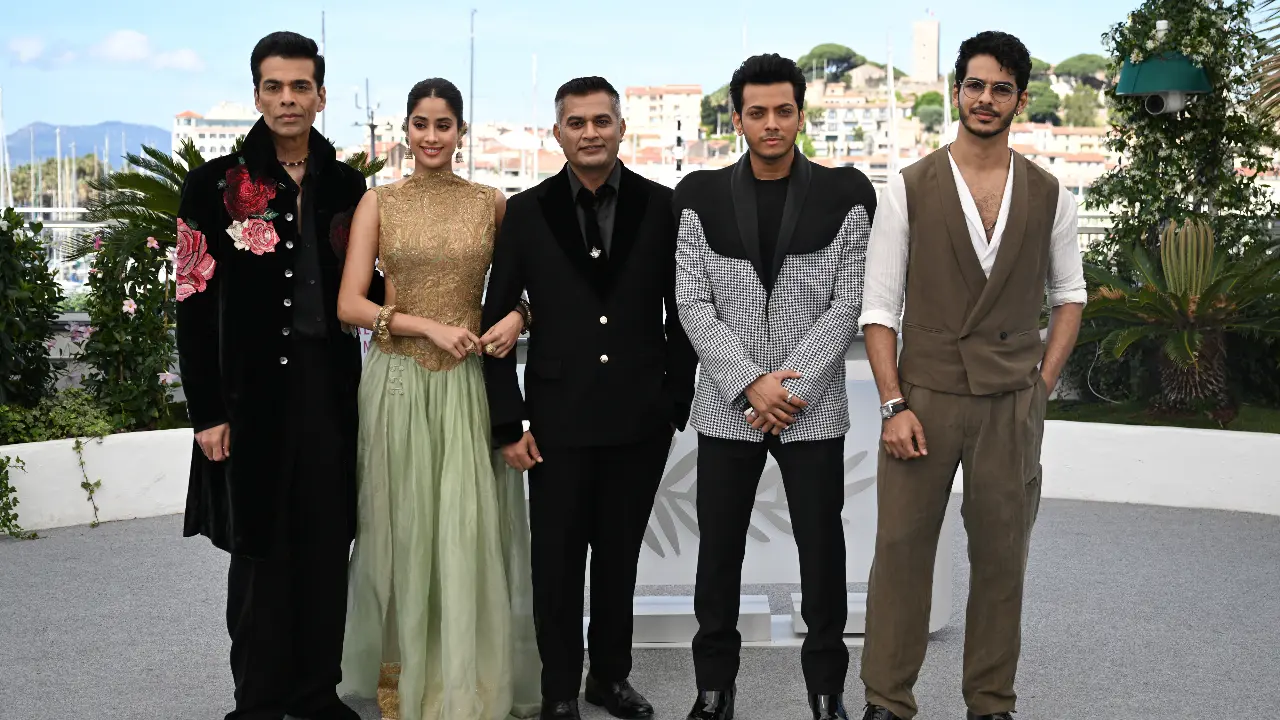
Niharika Lal (BOMBAY TIMES; May 22, 2025)
When Neeraj Ghaywan first attended Cannes, it was in 2015 for his directorial debut Masaan. The film was selected in the Un Certain Regard and won two awards – FIPRESCI Award and the Prix de l’Avenir Prometteu. A decade later, he’s back at the fest with Homebound (2025), another human story, but this time with a little help from some very big names including Martin Scorsese and Karan Johar.
As Ghaywan’s new film made the screening in the Un Certain Regard section this year, the filmmaker was joined by the team at the red carpet, the makers discussed Homebound at the Bharat Pavillion at Cannes.
‘WE SEE URBAN STORIES IN FILMS, AND THEN THERE IS A GAZE THAT IS TOWARDS SMALL-TOWN INDIA’
“The story that I wanted to say was about these two friends,” Neeraj said during a discussion at the India Pavilion at Cannes ahead of Homebound’s screening. He added, “What I also feel is that more than 60 per cent of our economy, our people, live in villages, and in our films, we don’t see villages anymore. We see urban stories in films, and then there is a gaze that is towards small-town India. But where are we talking about the stories from the heartland? That was one of the motivators for Homebound.”
The filmmaker continued, “Whenever we talk about films across the world, say, people of colour, creed, they’re all spoken of in numbers. They are part of the statistics. And when you say that, it’s like you’re trying to persuade your urban guilt – like hiding your apathy by showing false sympathy. I felt, what if we pick one person out of that statistic and see what happens in their life and how they arrive at this point? That will make for some great story, and will truly represent the kindness, empathy – that has been my intent so far.”
I feel this collaboration is quasi-disruptive in a way: Neeraj Ghaywan
Talking about collaborating with Karan, Neeraj said, “I’ve been wanting to work with Karan. (He also directed Geeli Pucchi, a part of the Ajeeb Daastaans anthology in 2021). I feel this collaboration is quasi-disruptive in a way. Independent filmmakers are always trying to figure out how to go about it.
Either we’re doing co-productions or seeking government funding, which comes with a lot of paperwork. But here, if Karan is producing my film, then it’s a different thing altogether – it paves the way for different kinds of possibilities. Our default perception is: go to a co-production, make it happen. But for me, this is a new model.”
NEERAJ AND I WANT TO TELL EMPATHETIC, HUMAN STORIES: KARAN JOHAR
“Neeraj Ghaywan and I come from two different schools of cinematic syntax,” Karan Johar said, “but I think one thing that lies common in both our belief systems is that we want to tell empathetic, sensitive human stories. That is common in both our cinemas. And it has nothing to do with syntax – it has to do with the heart the film offers.”
He explained, “I think when you see Masaan and when you see Homebound, you realize that interpersonal relationships, the handling of the emotional aspects of both the movies, and the spectrum of emotions they cover are the same.”
Karan said that’s what he tries to do in his films too. “My syntax is more theatrical, more opulent, a little more on-the-nose, because that is the kind of filmmaking I love and what I grew up watching. But even when I was eight or nine years old, while I loved the glory of Yash Chopra and the social drama with the opulence of Raj Kapoor, I also loved the empathy of Guru Dutt and the deep-rooted messaging of Bimal Roy. I could enjoy the brilliance of Satyajit Ray and dance to a song from a Raj Kapoor film in the same breath,” he said.
‘We’re beaming with pride that we have this kind of representation’
About Indian cinema finding global resonance, Karan said, “One important thing for me is: how to take our cinema to the world, apart from catering to our domestic audience. Last year, we had Payal Kapadia shine at Cannes with All We Imagine As Light (2024), and now she is on the Cannes jury.
This makes my heart so full. We are all beaming with pride.”
He added, “And the very next year, we have Homebound – this means we really are on the global map. I know these are baby steps. Every year, we have to make sure our stories continue to travel.”
‘Being at Cannes is proof that I’m not a one-film wonder’
“When Neeraj Ghaywan sir told me our film was selected, I was happy but didn’t grasp how big it was. After reading up, I understood its value – and it boosted my confidence as an actor,” says Vishal Jethwa, who made his Cannes debut this year.
“My dream was as simple as standing outside the Yash Raj Films (YRF) gate just to see what it looked like. Today, I’m part of a Karan Johar film directed by someone as brilliant as Neeraj sir. Attending Cannes with Homebound is a massive moment in my life. My debut (Mardaani 2) was successful, but some of my later films didn’t perform well at the box office. This film, however, has taken me to an international platform. It feels like proof that I’m not a one-film wonder – that I’m here to stay and meant for good things.”
Cannes gives our films a wider platform-Sharmila Tagore
2:50 PM

Sharmila Tagore on Cannes Jury in 2009, inset, a still from her film Aranyer Din Ratri
Renuka Vyavahare (BOMBAY TIMES; May 17, 2025)
Sharmila Tagore, who has been to the Cannes Film Festival many times in her illustrious film career, will be at the French Riviera this year for the world premiere of Satyajit Ray’s restored classic Aranyer Din Ratri (1970) featuring her. Accompanying her will be her daughter, Saba. The veteran actress talks about what makes the Cannes Film Festival so special, her cherished experiences as a film enthusiast and her thoughts on one of the festival’s most talked-about aspects beyond cinema — fashion.
You have been to the Cannes Film Festival many times over the years. You featured in Devi, Satyajit Ray’s film that was nominated for the Palme d’Or in 1962 and were also a part of the Cannes jury in 2009. This year, you will attend the world premiere of Ray’s restored classic Aranyer Din Ratri (1970). How special does this moment feel?
Yes, I’ve been to Cannes many times, and I was also on their jury. As a jury member, they take good care of you, and you are made to feel special. I’ve spent a lot of time there watching beautiful films and interesting films from all over the world.
‘Experiencing Aranyer Din Ratri on the big screen at Cannes will be fascinating’
This is world cinema at its finest. My film Aranyer Din Ratri, which was released in 1970, was restored after a long time. Experiencing it on the big screen at Cannes will be fascinating. Recently, the Bengali film Nayak (1966) was also re-released. It was so beautiful to see it on the big screen, instead of seeing it on a small screen or watching a non-restored version. When you see a restored print on a big screen, it’s like seeing it for the first time. That’s the main attraction for me this year at Cannes.
That apart, Cannes visit is special on its own because it’s a big congregation of film people from all over the world. You get to see cutting-edge world cinema. It’s wonderful for cine lovers to go to the city and have their fill of cinema. People who love cinema go to Cannes. There is a bazaar where people buy and sell films. Some people just come for the buzz, ambience and atmosphere. A lot of things happen there. People have yachts, there are yacht parties, and parties galore every night. So, it’s a very buzzing place right now.
This year, the festival has announced a dress code which states – no nudity and no voluminous gowns. Years ago, they had no flats (footwear) rule for women, which has changed now. The new rule says, ‘Guests can wear elegant shoes and sandals with or without a heel’. What are your views on this?
Actresses over the years have been wearing what they want to. I am not aware of any dress code. Yes, I remember the men were expected to wear black. Cannes is a place where people celebrate. It’s a gorgeous seaside destination, so people like dressing up. There’s nothing wrong with it. Everybody celebrates in their own way. I will most certainly wear a sari and flats. I wore a sari when I was part of the jury, and every time I’ve been there. I feel people should dress up the way they want.
What is your opinion of the overall Indian representation at Cannes?
Chetan Anand’s Neecha Nagar in 1946 was the first Indian film to win the Grand Prix du Festival International du Film (the precursor to the Palme d’Or), the festival’s highest honour. All We Imagine As Light, directed by Payal Kapadia, made history last year at the festival by winning the prestigious Grand Prix Award. Indian representation has always been there. My film Devi was nominated in 1962 for Palme d’Or. There is an Indian pavilion as well. A lot of people showcase Indian films there. Our films have been recognized there, and Cannes gives them a wider platform.
Sharmila Tagore’s favourite Cannes looks – from Brigitte Bardot to Meryl Streep
Earlier, there were Brigitte Bardot and Gina Lollobrigida (actresses), who were known for wearing exotic clothes at Cannes. After them, there hasn’t been a striking point. Now everybody dresses well. Last year, I loved Meryl Streep’s white dress. It was simple and elegant.
Simi Garewal guided Samit Bhanja during intimate scene shoot in Aranyer Din Ratri-Purnima Dutta
10:10 AM

BOMBAY TIMES (May 14, 2025)
On Monday evening, Simi Garewal shared on Instagram that she will walk the red carpet at the Festival de Cannes 2025 for the world premiere of the newly restored Aranyer Din Ratri, Satyajit Ray’s 1970 cinematic gem. The actress will present the screening alongside filmmaker Wes Anderson and actress Sharmila Tagore.
The film will screen on Monday, May 19 at the Salle Buñuel, Palais des Festivals. The restoration has been carried out by The Film Foundation’s World Cinema Project at L’Immagine Ritrovata, in collaboration with Film Heritage Foundation, Janus Films, and The Criterion Collection, with support from the Golden Globe Foundation. For Garewal, this return is deeply personal. “The month-long shoot was enveloped in magic,” she recalled in a 2012 Mumbai Mirror interview.
“No electricity, no running water — just moonlit walks, Rabindra Sangeet, and the incredible good fortune of working with one of the world’s finest directors.”
In Aranyer Din Ratri, Garewal played Duli — a feisty young Santhal woman who embodied the conflict between the urban and rural ways of life.
With her sharp gaze and fierce independence, Duli awakens desire but bows to no one. “For a week, Manik da wouldn’t let me shoot. He took me to the baati khaana (the liquor shop) where the Adivasis would gather at night to drink — and let me just observe. I saw women who were exactly like Duli, my character (sic).”
Discovered by Ray after a chance meeting at Raj Kapoor’s house, Garewal vividly remembers receiving his letter offering her a role: “It’s only a screen test for make-up. Not for your acting abilities – because I have no doubt whatsoever about that.” What followed was an intense process of transformation – both in character and craft.
Simi guided Samit during the shoot: Purnima Dutta
Revisiting the experience of shooting the film, Purnima Dutta, producer, said, “Simi became like a family member during those days. Though she was staying in a hotel, most of the time, she used to be at our house. I still remember, when I got busy, she used to lay the dining table and make sure we all ate together – she’s an extremely homely person. I remember Samit (Bhanja, who played Hari) was a newcomer in the industry, and was apprehensive of the intimate scenes he had to play. Manik da told him to get rid of his inhibitions, and Simi, being a seasoned actor, helped Samit overcome his awkwardness with portraying the scenes convincingly.”
People have found The Storyteller a relief from the edgy, violent cinema of today-Ananth Narayan Mahadevan
10:21 AM
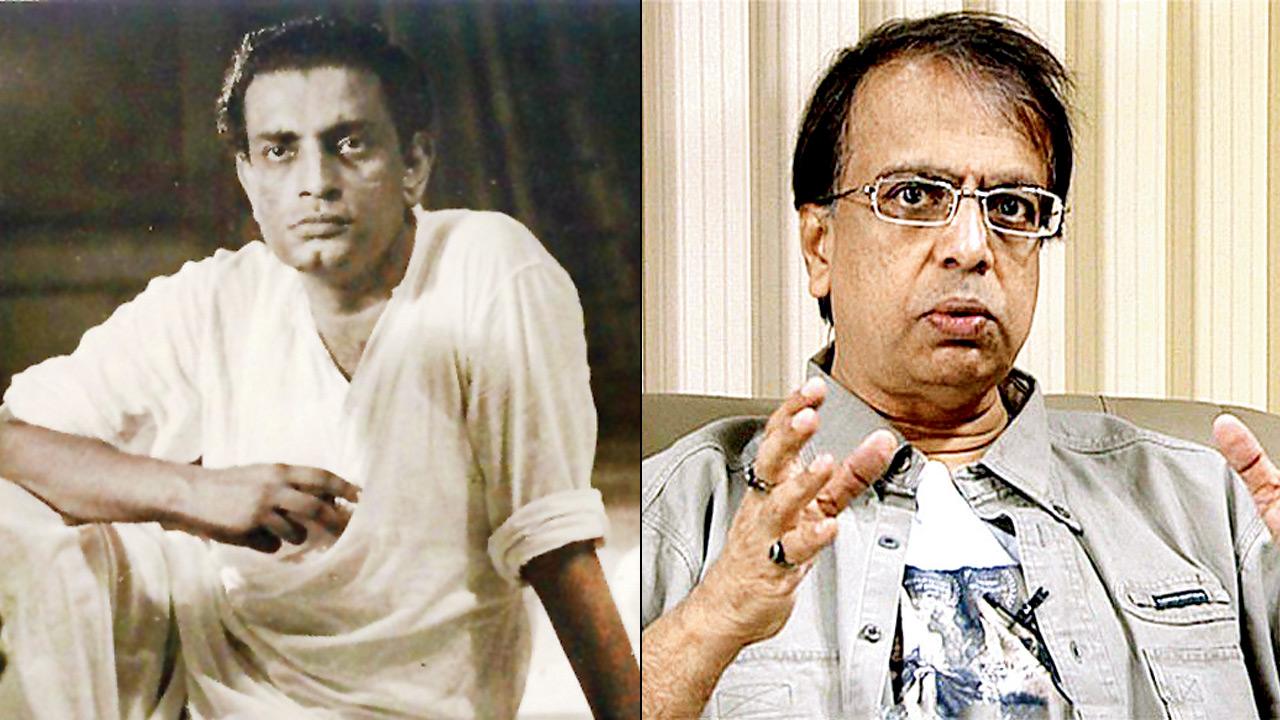
The Storyteller director Ananth Mahadevan to make a second instalment with Paresh Rawal reprising the character of Tarini Khuro, created by Satyajit Ray
Upala KBR (MID-DAY; February 15, 2025)
Ahead of The Storyteller’s première on Disney+ Hotstar on January 29, director Ananth Mahadevan had rued that he would’ve liked to see the Paresh Rawal and Adil Hussain-starrer play out on the big screen (‘One producer didn’t know who Satyajit Ray was’, Jan 24). Today, the director is elated at the warm reception his drama—an adaptation of Satyajit Ray’s short story, Golpo Boliye Tarini Khuro—is receiving. Encouraged by the response, Mahadevan has decided to make a second instalment that will see Rawal reprise the role of Tarini Khuro.
Mahadevan reveals that he has reached out to Ray’s son, Sandeep Ray, who had granted him the adaptation rights of The Storyteller. “A few days ago, I wrote to Sandip Ray, saying that he must have heard about the acclaim that the film is getting. I told him I’d like to make another movie on Tarini Khuro. Satyajit Ray had written lots of stories. People have found The Storyteller a relief from the edgy, violent cinema of today. That positive response made Paresh and me think of extending it. I’ve ordered the last available [book] of Tarini Khuro’s stories,” grins the director, eager to take the character on another adventure.
To Mahadevan, the audience’s love for The Storyteller is a marker of how “sensible content” will always attract eyeballs. It has also shown him that viewers are willing to invest in a story.
The director asserts, “This is the awakening of the audience and recognizing what cinema is. I was found guilty by many of making slow-paced movies. But with the audience waking up to [the power of] storytelling, they have interpreted it differently. I cannot [adopt] a James Bond pace in The Storyteller. The script dictates the pace.”
Satyajit Ray was probably appreciated only when he won awards-Adil Hussain
8:28 AM
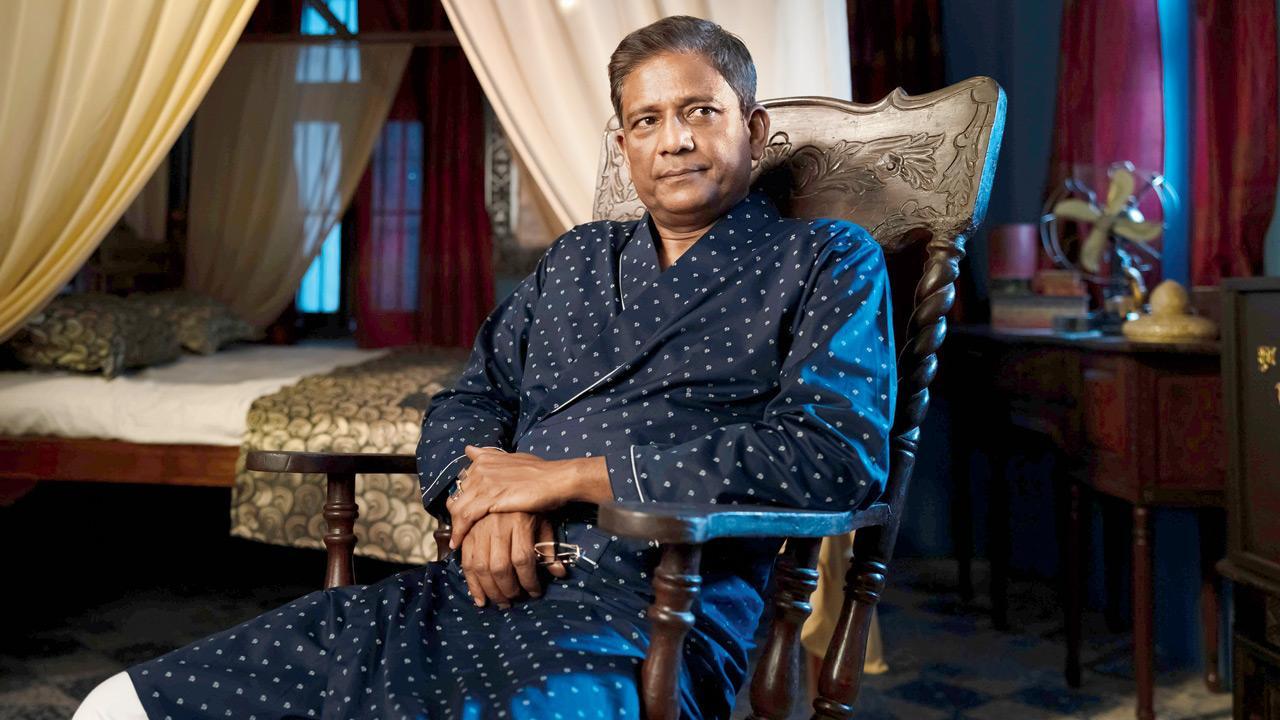
Adil Hussain on working with director Mahadevan in The Storyteller, inspired by Satyajit Ray’s Golpo Boliye Tarini Khuro
Letty Mariam Abraham (MID-DAY; February 4, 2025)
Hailing from a town on the border of Assam and West Bengal, Adil Hussain grew up in a melting pot of culture—films, literature, dance, and music. His father introduced him to Rabindranath Tagore and Satyajit Ray’s works. So, when director Ananth Narayan Mahadevan offered him The Storyteller—inspired by Ray’s short story Golpo Boliye Tarini Khuro—he knew he was going “to be part of something beautiful.”
“I think any actor, especially the ones I admire, would definitely come on board for it. The Storyteller is such a beautiful [story]. It is an actual delight to embody a character written by Satyajit Ray and wonderfully brought [to screen] by Ananth ji,” states the actor, who plays a Gujarati businessman suffering from insomnia.
He credits Mahadevan for his choice of actors—Revathy, Paresh Rawal, and Tannishtha Chatterjee—and the way he tells the story.
“It’s a delight to work with him because he is a sucker for good and untold stories. I trusted him completely, and I was right. Recently, I shot another film with him called The Past Tense—that’s another brilliant and true story,” says the actor. Hussain acknowledges that while Mahadevan has not received his due recognition, this is true of many great filmmakers throughout history.
“Tapan Sinha is the finest filmmaker in India, with films like Ek Doctor Ki Maut [1990] and Safed Haathi [1978], and has made several phenomenal Bengali films. Yet, very few people know of him. Only the rasiks probably know of his legacy. Even Satyajit Ray was probably appreciated only when he won awards. Otherwise, who would have known about him, except for some people in Bengal? So, with Ananth ji, I think it is a difficult path he has taken to tell these stories, and he has to face the consequences—just as I accept the consequences of being part of independent films. I take it with a lot of gratitude and delight,” adds Hussain.
When asked if it is a good time for independent cinema, the actor believes India is in the “initial phase of a good time.” “It can grow into a great banyan tree. It would be wonderful to see that happen in my lifetime. And I hope that actors—those who believe in the craft and the joy of acting rather than the gloss and the glitter—will have more space in the future,” he shares.
One producer didn’t even know who Satyajit Ray was-Ananth Narayan Mahadevan
8:32 AM

As The Storyteller premières online next week, director Ananth Mahadevan recalls his three-year struggle to find producers for the adaptation of Satyajit Ray’s short story
Upala KBR (MID-DAY; January 24, 2025)
One would think Ananth Mahadevan would be happy that his directorial venture, The Storyteller, is set to drop on Disney+ Hotstar on January 28. But the director has mixed feelings about his Paresh Rawal-starrer skipping the theatrical route.
“It was Jio’s decision to release it on the platform and not have a theatrical release. With the response films are getting in the theatres these days, it’s a question of taking a chance. I would’ve liked it to have a limited release,” says Mahadevan.
Also starring Adil Hussain and Revathy, the film is based on Satyajit Ray’s short story, Golpo Boliye Tarini Khuro. It revolves around an elderly man, known for spinning grand tales. Despite having the foundation of one of Ray’s best stories, Mahadevan says making the film was challenging, with some producers not even knowing of the legendary filmmaker-writer.
“It was heartbreaking. Nobody believed in a film on Ray in his centenary year. Producers wanted drama and high-pitched films. One producer didn’t even know who Ray was. I paraded the script in front of six producers over three years till Suchhanda Chatterjee came on board. Any other actor would’ve given up, but Paresh stood behind me steadfast.”
In 2022, The Storyteller premièred at the Busan International Film Festival. It was also screened at the Kerala Film Festival 2022, International Film Festival of India 2022, and the Palm Springs International Film Festival 2023. Encouraged by the positive response at the film galas, Mahadevan was hopeful that it could be India’s official entry to the Oscars in 2024.
Recalling submitting the movie to the Film Federation of India, Mahadevan says, “We tried our best to send it to the 2024 Oscars as I thought it would be a fitting entry. But I was told by a jury member that we missed it by a whisker. That year, a film on the Kerala floods [the Malayalam film, 2018] went for the Oscars because it highlighted an ecological issue. If this is the kind of judgment they have of Oscar entries, then they are sitting on the wrong chairs. The Storyteller was [based] on Ray’s story, it won accolades everywhere. Yet they didn’t send it. It was shattering. It didn’t even feature in the National Awards.”
There’s something about the Bengali culture that just feels very familiar-Vidya Balan
2:30 PM

Onkar Kulkarni (BOMBAY TIMES; October 11, 2024)
Dressed in a red Banarasi sari, Vidya Balan enthusiastically soaked in the Durga Puja festivities at the Chembur Durga Puja Association. The actress, who believes, “Ami mon theke Bengali (I am a Bengali at heart)”, immersed herself into the celebrations – from blowing the conch, playing the dhak to gorging on some irresistible Bengali mishti. She talks to us about her connect with Durga Puja, her Bengaliness and how Satyajit Ray has a role to play in her love for Bengali culture.
‘My first visit to a Durga Pujo pandal was in my early 20s’
While growing up, Vidya was more familiar with Navratri than Durga Pujo. She tells us, “We celebrated Navratri every year in the South Indian way. For us, Navratri meant ‘girl time’. My mom would call her female friends and their girls over for haldi kumkum and we would visit others too. My first visit to a Durga Pujo pandal was only in my early 20s. I’d done a music video, Kabhi Aana Tu Meri Gali, with Euphoria and Pradeep Sarkar (director of Parineeta). Since I lived in Chembur, dada’s then assistant Paula, invited me to this pandal because she was going to be singing here.”
‘Fortunate to explore various facets of Durga Maa through my work’
As she revisits this pandal after 20 years, Vidya gets nostalgic. She says, “The image of Durga Maa instantly called out to me. What Durga Maa stands for resonated with me at a very deep level, even before I could articulate it or understand it. I’ve been fortunate to explore various facets of Durga Maa in some of my most popular films.”
‘Bengalis are known for their beautiful women and their beautiful weaves’
The Kahaani actress loves the khichuri along with begun bhaja (brinjal fry) bhog served during pujo. One of the other highlights is, of course, dressing up in gorgeous saris. “I love wearing saris with the red bindi, and hair left loose, and now I also have my own shakha pola (the traditional Bengali white and red bangles). Bengalis are known for their beautiful women and their beautiful weaves. I wear all kinds of saris, but I love Bengali saris, the Dhakai, Baluchari and even the simple Bengal cotton saris. I remember on one of my early trips to Kolkata, I had gone to Punjabi House at Gariahat and bought my mom a sari for Rs. 135, and she still has it.”
‘I see Navratri and Durga Puja as a celebration of the divine feminine’
Apart from the grand celebrations, the festival is also a tribute to the divine feminine, Maa Durga. Vidya shares, “I see Navratri and Durga Pujo as a celebration of the divine feminine and the power of Shakti. I guess my sister and I have imbibed that from my mother. Growing up, I had examples of a lot of strong women in my life, including my mother, aunts, neighbours and sister, who I’ve always said is my hero. They are all delicate, simple women, but women with a lot of strength. So, when you grow up with such role models, you believe that you can do whatever you want to do in life and that femininity is not an appendage, it is powerful.”
‘The first time I visited Kolkata, it felt like this was also home’
Vidya has had a strong association with Bengal and its culture. In one of her most outstanding performances, Kahaani, she was called Vidya Bagchi, and the final moment in the film culminated in a Dashami scene. She made her acting debut with a Bengali film, Bhalo Theko, and then her Bollywood debut with Parineeta, which was set in Bengal.
She says, “There’s something about the Bengali culture that just feels very familiar. You know, I visited Kolkata for the first time only in 2003, but the moment I went there, it felt like this was also home. I’ve also shot a lot of important films in my career, including Bhalo Theko (2003), Parineeta (2005), Kahaani (2012), Kahaani 2 (2016) and Te3n (2016) in Kolkata.”
‘Satyajit Ray has a role to play in my love for Bengali culture’
“I think Satyajit Ray also has a role to play in my love for Bengali culture. I’ve watched a lot of Bengali films, and I know some songs and rhymes (like aabol-taabol) too. I couldn’t have imagined that my film debut would be in the land of Ray. I didn’t get an opportunity to work with him, but I’ve had a lot of people tell me that I look like one of his favourites, Madhabi Mukherjee (laughs)!”

India makes 2,000 movies every year; its a paradise for me-Giuseppe Tornatore
2:44 PM

Renuka Vyavahare (BOMBAY TIMES; September 29, 2024)
You don’t merely grow up watching the movies but living vicariously through them. Legendary Italian filmmaker Giuseppe Tornatore’s Oscar-winning film ‘Cinema Paradiso’ (1988) exuded this sentiment, working as the most heartening love letter to cinema.
The coming-of-age dramedy as seen through the eyes of a young boy Toto and his heartwarming friendship with an ageing projectionist Alfredo, reflects upon cinema not only shaping but defining our life journey – childhood, friendship, nostalgia, first love, loss and longing. It was thus fitting for Tornatore in his maiden visit to India, an initiative of filmmaker, archivist Shivendra Singh Dungarpur’s ‘Film Heritage Foundation’ to felicitate the movie industry’s unsung heroes - the projectionists. The three-day festival, which culminates today, showcased restored Italian classics. In an exclusive chat, Tornatore, accompanied by Dungarpur, shared his thoughts about India, Indian cinema, the longevity of his iconic movie and more. Excerpts…
You made Cinema Paradiso 36 years ago, and it’s a film that continues to be watched and discussed among movie lovers. What would you attribute its longevity to?
You are too generous. It's a big mystery to me that 40 years after its making, it continues to be so popular and close to the people in every country. I introduced it as the opening film of the festival here. People of every age call me, write to me about this movie even today. Yes, the movie is autobiographical in some parts. But not all autobiographical movies receive this kind of love, affection. It probably worked because the movie theatre is a space where generations of people grow up and see their lives unfold. Probably there was a certain honesty to it that touched people's hearts.
Filmmaker Luca Guadagnino, another Italian great, was in the city last year and he told us that India and Italy are similar in many ways. What do you think?
I agree with him. Yesterday I was walking down the street in the city with the crowd, and I immediately felt some familiarity. I asked myself why I felt this connection with this place, these people .Life in the streets of Mumbai, the pace, vibe here reminded me of the first big town I knew of back home when I was young -- Palermo in Sicily. Until six years ago, Palermo was the same… the sound, chaos, screaming, shops, street food, colours, fruit sellers. It was a very strong experience yesterday and I hope to spend some more time here before I leave.
You have been fascinated with film projectionists since your early years and were one yourself, so would you say it was apt that during your first visit to India, you felicitated the unsung heroes of our cinema here - the projectionists?
I’ll confess a secret to you. Initially, I thought movies were made in the cinema projection room. The concept of screening was not known to me. I started to go to a movie theatre like this (points to Mumbai’s Regal Cinema) when I was six. I didn’t understand how it was possible that the characters that looked so huge on the big screen managed to get there from the small window of the theatre at the back. For a long time, I believed that the shadow of this man (the projectionist) was the maker of the movie. I thought movies were made in the projection room. When I had the opportunity to check out that room, the projectionist seemed like a legend to me. I figured the movies were not made there, but the idea that I had of it before decoding the real situation stayed with me. I met other projectionists and became one when I was nine. That was my world. So, I’m very happy to have felicitated the projectionists here because it felt like I gave an award to all the projectionists that I met when I was young.
Are you familiar with Indian cinema?
I feel what binds Indian and Italian cinema is realism. There’s a lot of fantasy in both, but the soul and origin of this poetic cinematography in both cinemas are realistic. Satyajit Ray was the first big director I knew of when I was young. About a year ago I watched a movie, (Pan Nalin’s) 'Last Film Show', which I believe was inspired by Cinema Paradiso. The film was India’s official Oscar entry, (didn't win a nomination) so it was a big honour for him and for me. I have also watched some clips of commercial Bollywood movies, and I am curious about this world. Shivendra (Dungarpur) has promised me that he will take me to the shoot of these big Bollywood movies someday. I am pleasantly shocked by the number of movies India produces each year. The Indian film industry is one of the largest in the world. A country where around 2,000 movies are produced every year is a paradise for me.
In a constantly evolving digital world, how important is film preservation and restoration?
Tornatore: People connect with each other through movies. Even politically, they are important because art transcends borders. Movies are not restricted by any language anymore. Shivendra and people like him are working to preserve and restore big movies that are part of the history of humanity. Be it the work of Federico Fellini, Akira Kurosawa, Satyajit Ray, John Huston, or Alfred Hitchcock, to name a few. In the future, if people will have the opportunity to see these iconic movies, it’s thanks to Shivendra and all the people who work for this cause. They are important. They give eternal life to movies.
Shivendra: It's an unbelievable feeling to have him here, because to me, his film (Cinema Paradiso) embodies our collective love for cinema. His film represented all that I went through as a child. I was the Toto of his film. I continue to be Toto because my life is about showing films. We show films to people for free. It is probably the most emotional moment for me. That not only he's come here as a director, as an artist, but somebody who's kept cinema alive. And the fact that he started his career as a projectionist. He was a photographer, then he became a projectionist, and he honoured our projectionists. It's the most beautiful thing to have happened to cinema.
The Film Heritage Foundation is doing some great work to restore classics, but looking at the advent of technology and OTT platforms, do you fear that the longevity of theatres will be affected?
Shivendra: From my point of view, we’ve kept cinema alive. Going by the number of people who have come for us (at this festival), it shows that basically, classic films are back. Today, look at the number of classics being re-released in multiplexes. All that has happened because of Film Heritage Foundation’s initiative to bring back classics into theatres. Also, the fact that we are keeping single screens alive is great. Over 1800 people registered for this Italian festival. These films are available online, yet people thronged to the theatres for that experience.
Tornartore: People watch more movies today than they did 50 years ago. Thanks to the technology that gives you the opportunity to watch movies wherever you want and whenever you want. Okay. I don't like my daughter watching movies on her phone. But I would prefer her watching the movie on her phone instead of not watching the movie at all. People need movies. Movies never die. Maybe the traditional movie business is anachronistic, but that will change and they will find a new way to go ahead because today, the financing of a movie is crazy complicated. When the technology of movies change, we can produce movies in a simpler way than the past. But one thing I am sure of. In this world, people will always have the necessity to watch movies. So we have to make movies. Even if we don't want to, we’ll have to make movies. (laughs).
I envy your country, you still have many movie theatres-Giuseppe Tornatore
8:35 AM

Mohua Das (THE TIMES OF INDIA; September 28, 2024)
They say movie magic unfolds on the big screen, but Italian filmmaker Giuseppe Tornatore reminded us that there’s as much wonder behind the rectangular hole of the projection room with his 1988 film ‘Cinema Paradiso’ on the bittersweet nostalgia of old movie houses and the friendship between a boy and a projectionist. So, who better to honour these unsung heroes of cinema than the Oscar-winning director who was once a projectionist himself? On a rainy Friday morning in Mumbai, ahead of awarding two Indian projectionists as part of Film Heritage Foundation’s (FHF) festival, ‘Cinema Italian Style—Celebrating Tornatore and the Masters of Italian Cinema’, the 68-year-old director spoke to TOI about the lasting legacy of Cinema Paradiso, urgent need to preserve the theatres of yore and his unexpected enthusiasm for AI.
Welcome to Mumbai! This is your first time in India, any first impressions?
Yes, this is my first time in India, thanks to Shivendra (Dungarpur, founder of FHF) and the Film Heritage Foundation event. I arrived two days ago and had some time to explore. The city has a familiar atmosphere—some streets and the people remind me of Palermo when I was very young, around five or six. The crowd, the attitude—they’re so polite and open. I’ve taken many pictures. The only thing I don’t love is the sound of the klaxons (Italian for car horns) going pom-pom, pom-pom! (Laughs)
That’s a common complaint from first-time visitors!
It’s a short trip, but I’m very happy to be here. I’ve received invitations to India for years but never had the chance until now. I’m very fascinated by the culture and the people—not just from a tourist’s perspective.
Any Indian filmmakers or films that you admire?
The last Indian movie I watched was one year ago, ‘The Last Film Show’ (Chello Show) by Pan Nalin that was inspired by Cinema Paradiso and represented India at the Academy Awards. I really liked it. For me, though, the most important filmmaker from India is Satyajit Ray. In many of his movies, I felt an original point of view— an authenticity about his world. Some aspects remind me of our Italian Neorealism. I love that kind of cinema. But I’m not familiar with the new Indian movies. I’ve never seen a Bollywood film. I would like to, but in Italy, we don’t have any distributors that bring those movies to us. We hear about them with great curiosity. I’m told many people here know some of my films— that’s a privilege and a great honour.
It’s extraordinary how 36 years after Cinema Paradiso initially struggled at the box office before it went on to become a worldwide hit, continues to be celebrated. Why do you think it still resonates with people?
It’s a mystery. I don’t know why this movie, made little by little, is still so loved after 36 years. Maybe it’s the shared experience of generations going to the cinema—something universal. The story is simple, about the end of a small village cinema. Maybe that touched the emotions of everyone who loves cinema. There’s no other explanation. It’s a normal movie, nothing particularly special, yet people love it. After almost 40 years, I’m still busy with interviews and introducing it at big events—more than when it first came out. (Laughs) It’s very unusual!
Do you discover something new about the film every time you screen it for a new audience?
Yes, that’s why I say it’s a mystery. Some people tell me they watched ‘Cinema Paradiso’ again and cried— even their children love it. Young generations have an immediate, strong emotional connection with the movie. It’s one of those mysteries that only movies can give us.
Cinema Paradiso was inspired by your days as a projectionist and the closing of a beloved theatre in your village. India’s grand single-screen movie houses hang by a thread. Any thoughts on preserving these spaces? Do they still have a place in modern cinema?
First, I have to say I envy your country because you still have many movie theatres. In Italy and much of Europe, theatres aren’t as numerous as they were 20 years ago. It’s crucial to preserve these special spaces. The biggest mistake theatre owners made was they built a cinema and then forgot about it for years, not keeping up with modern comforts and technology. So people prefer their plasma screens and surround sound at home. This is a big issue in Europe, too. Theatres with uncomfortable seats or poor lighting get forgotten. But when people enter a beautiful, well-maintained cinema, they return. In Rome, there aren’t many theatres left, but the few that are well-kept do very well. Take Gian Luca Farinelli who has rebuilt a historic theatre (Modernissimo Cinema) in Bologna. Today, with technology changing so rapidly, you must offer the best quality to keep people coming back.
In Cinema Paradiso, you beautifully portray how these cinema houses were not just about watching a film but about community and a much-needed escape.
Yes, exactly. When I made Cinema Paradiso, Italy was experiencing a crisis with movie theatres. Many were closing every day. I had been living in Rome for many years, but when I would return to my village to visit my family, I noticed that all the cinemas were going. It was a shock, really traumatic for me. As a child, there were seven movie theatres in my village, but by the time I was 25, none were left. I wanted to capture that, to show the world what life in the cinema was like, especially at a time when people were beginning to forget that experience. The emotional instinct behind Cinema Paradiso was a deep nostalgia for that world—the energy of the theatres, with children screaming, people laughing, everyone knowing each other. In a village, you know everyone, and to have 200, 300 people in one room, all watching the same story—it’s a special feeling. That energy has been slowly disappearing, and I wanted to preserve it.
Nostalgia runs deep in your films. What’s that piece of the past that you most long for today?
Many young people don’t know what life in a movie theatre was like. Many of them don’t even go to the cinema. They love movies, of course, but often they watch at home or on their phones. They don’t have that communal experience. It’s important to show them what they’re missing. But this isn’t a new phenomenon. When I shot Cinema Paradiso, there were no cinemas left in the village where we filmed. The young boy who played the lead didn’t know what a movie theatre was. While we were building the set, he and his friends were curious, asking, “What is this?” One Sunday, I organized a free screening of E.T. for the village kids, but nobody came. When I asked the boy why, he said, “We’ve already seen it on television.” So this decline in cinema attendance has been happening for a long time. We need to stop losing this experience from our culture. We need to educate young people to participate in this special way of watching stories, in that silent communication that only happens in a movie theatre, with others.
Any modern storytelling techniques in cinema today that you’d love to try out?
Artificial intelligence! A few months ago, they did an experiment where they described a scene in just three lines—a young girl walking in Tokyo, her attitude, the way she looked around—and the computer, using AI, created the shot without any filming. Incredible.
So, you see promise in AI?
Yes! In the future, I might not need a producer or crew. I could write a story and create the film without a budget or losing time. Making a movie has always been hard and time-consuming. Spending years trying to find people who love the project as much as you isn’t easy. The idea of making a film without those obstacles sounds wonderful!
Some people find it threatening, though.
I know, I know. This technology is both amazing and dangerous. But making movies has always been difficult, so the possibility of making a film without hurdles, it’s exciting. Another thing I love is the experiment with virtual reality, this immersive experience. A few months ago in San Francisco, I tried a VR headset and it was unbelievable — the new way to tell stories through images. So when people ask me if cinema is dying, I tell them, no, we’re not at the end of movies, we’re at the beginning. Entering a world with endless possibilities for evolving the language of cinema. Cinema will never die.
Pather Panchali: Going on 70, and still India’s finest film
8:25 AM

Pather Panchali was Satyajit Ray’s debut film and ode to realism. He made it on a shoestring budget in 1955, without a regular script or even studio lights. Now, once again, Time magazine has named it among the 100 best movies of the past 100 years
Srirupa Ray (THE TIMES OF INDIA; March 31, 2024)
If you could place only one Indian film in the same league as Taxi Driver, Psycho and Godfather II, which would it be? Time Magazine has chosen Pather Panchali again (last time was in 2005). Satyajit Ray’s debut film figures on Time’s ‘100 Best Movies of the Past 10 Decades’ list. That’s just one movie for each year from 1920 to 2019.
Released in 1955, the film evokes a small village with ramshackle huts, ponds blooming with water lilies, thick groves dripping dew and rain, and a train chugging past swaying white fields of kaash flowers. Although it’s based on Bengali author Bibhutibhushan Bandyopadhyay’s 1929 novel of the same name, Ray made a few narrative departures in the screenplay. In fact, he made the film from a storyboard with notes scribbled on the side rather than a proper script.
How Ray, a junior visualiser at British advertising agency D J Keymer & Co in 1950, became a filmmaker and picked Pather Panchali for his debut is a story. While in London, he also designed book covers for Signet Press. One of its commissions was to illustrate a children’s version of Pather Panchali, and Ray had begun the first drafts on his voyage to London.
The story deeply influenced him. At the same time he had been watching path-breaking films from around the world, including French filmmaker Jean Renoir’s ‘The Rules Of The Game’, Akira Kurosawa’s ‘Rashomon’, Soviet filmmaker Alexander Dovzhenko’s ‘Earth’ and, most importantly, Italian neorealist filmmaker Vittorio De Sica’s ‘Bicycle Thieves’. He is said to have watched around 100 films in London and by the time he returned, he was a changed man determined to translate Pather Panchali into film.
Incidentally, Bicycle Thieves is also part of the Time list. Ray literally followed in De Sica’s footsteps, refusing to either use studio lights or hire trained actors for enduring realism.
It took three long years to complete the film, and that was because no producer wanted to finance it. Ray kept his day job as a graphic designer and did the shooting on weekends. A good part of his salary went into the film, but that was obviously not enough. He sold off his prized gramophone records, pawned his insurance policy and even his wife’s jewels for the film’s production.
When Ray exhausted his means, West Bengal govt stepped into the role of ‘production company’. Chief minister Bidhan Chandra Roy agreed to help and the home publicity department loaned him money in installments. Curiously, the loan records say it was for road improvement, as govt officials thought it was a documentary on rural development. They probably took the ‘Pather’ in its title literally. The film went on to win major awards, including National Film Award, Palme d’Or at Cannes in 1956, Best Human Document, Vatican Award, Diploma of Merit from Edinburgh, San Francisco’s Golden Gate for Best Director and Best Picture, and Critic’s Award for Best Film at Stratford, among others.
Pather Panchali was also a milestone for Ray’s contemporary Pandit Ravi Shankar, who scored the film’s music. The soundtrack is part of the list of 50 greatest film soundtracks compiled by The Guardian in 2007.
PATH(ER)-BREAKING FILM
- Pather Panchali means ‘ballad of the road’
- Adapted from Bibhutibhushan Bandyopadhyay’s 1929 novel of the same name
- Inspired by Italian filmmaker Vittorio De Sica’s film Bicycle Thieves
- Made over 3 years
- Released in 1955
- Music by Pandit Ravi Shankar
------------------------------------------------------
THE TIMES OF INDIA (April 1, 2024)
An article, ‘Going on 70, and still India’s finest film’ published in TOI on March 31, stated the following, “Curiously, the loan records say it was for road improvement, as govt officials thought it was a documentary on rural development. They probably took the ‘Pather’ in its title literally”.
Responding to the statement, reader Amit Shanker has written, “This is absolutely incorrect. I know it for a fact, because my real uncle Prakash Swarup Mathur, who was director publicity in the BC Roy govt, was the person responsible for arranging funds for Pather Panchali. And he was the one who went to Cannes, on West Bengal govt’s behalf, to receive the award.”
Shanker adds, “To put the record straight, Ray had exhausted all his resources and the film had been rejected by both critics and financiers, when Ray’s mother approached a friend of BC Roy (then West Bengal CM) to enquire if the government could help with funds. An appointment was promptly granted and the lady was able to convince Roy to say yes to funding the film. Govt didn’t have any provision for funding films and Roy called in Mathur, my uncle, to find a way.
Roy and my uncle were both too highly educated for anyone to say they thought it was a documentary on rural development. They knew exactly what they were doing. Like any other bureaucrat would have done, my uncle too was initially reluctant to oblige but just because the CM insisted, he arranged for the funds from his department and put the expenses under the road improvement head.
Despite all the obstacles, my uncle managed to get Ray about Rs 2 lakh, which was the entire cost of the film. Mym other remembers vividly, Ray coming to their house regularly and showing my uncle and his colleagues the rushes.”

Subscribe to:
Posts (Atom)