Showing posts with label Saregama. Show all posts
Showing posts with label Saregama. Show all posts
Tuning up the band: Music labels bet on movie companies to hit the high notes
2:52 PM

Saregama & Universal’s investments in production houses aimed at a bigger play in entertainment industry: Analysts
Rajesh N Naidu (THE ECONOMIC TIMES; January 9, 2026)
Mumbai: Recent investments by music labels Saregama India and Universal Music in film producers Bhansali Productions and Excel Entertainment, respectively, point more to a larger play in the entertainment sector than consolidation of film production houses, industry experts told ET.
These investments are disparate both in structure, strategy and goals as opposed to the Adar Poonawala-Dharma Productions deal, and they have been triggered largely by the bearish business conditions in the music industry, they added.
"After a few years of bull run of over 20% compounded annual growth rate in revenue from streamers, YouTube and digital sources, labels today are seeing a bear phase as the industry consolidated, streamers merged or shut shop and free streaming is moving towards paid subscription," said a top executive at a leading industry player, on the condition of anonymity.
"Some of these labels seem to grow through reverse consolidation to build acquisition moats and create a robust pipeline. They may end up producing films," said the executive cited immediately above.
Another aspect that has triggered these investments is the fiercely competitive space of buying music rights in the open market.
"These investments ensure consistent availability of new content at a reasonable cost. In the past few years, competition intensity for music rights in the open market has become too high," said Vaibhav Muley, lead analyst, media and entertainment sector, Yes Securities.
Labels pay Rs. 10 crore-Rs. 33 crore per film if they buy music in the open market, shared analysts. A multi-year deal for music with a production house is almost 30-50% cheaper for labels, they pointed out.
Business Case
Also, these investments are effective from the standpoint of return on capital employed (RoCE) ratio-how effectively a company generates profits using its capital. Analysts shared that monetizing music across avenues provides RoCE of 30-40%, while films generate RoCE of 11%. This shows why buying a stake in production houses is a relatively less risky proposition than directly producing films.
Acquiring stake in production houses is also a win-win strategy, pointed out analysts.
"Today, labels have reasonably good cash on books. They are looking for low-cost avenues to buy music. Investment in production houses is one such route. Production houses get a minimum guarantee amount to start a film and labels in turn get music rights and ownership of films in proportion with their stakes," said an analyst, who declined to be named.
Furthermore, consolidation in the music label industry has prompted incumbents to look for adjacent diversifications.
"Labels are chasing growth. Acquiring labels have become expensive after consolidation (three labels shut shop). Then, there is subdued growth in revenue from streamers due to a shift in subscription mode. These deals reflect these realities," said the analyst cited immediately above.
Industry experts say the distinction between these investments and the Adar Poonawala-Dharma Productions deal.
"These investments do not amount to consolidation among production houses. They are different from Adar Poonawala-Dharma Productions, which is about equal partners. Whereas, after the investments, labels will function as 'strategic investors.' Along with owning music, they will own film rights in proportion with their stakes," explained Gaurav Dagaonkar, co-founder and chief executive officer of Hoopr, a leading platform for music licensing.
Analysts expect labels would integrate talent from their talent management division into the films produced by the production houses more effectively, right from the scripting stage, while also improving the monetization of music assets in these entities.
Saregama to invest Rs 325 crore in Bhansali Productions
9:26 AM

Javed Farooqui & Rajesh Naidu (THE ECONOMIC TIMES; December 17, 2025)
Saregama India has entered into a structured, long-term investment agreement with Bhansali Productions that gives it the option to take majority control of Sanjay Leela Bhansali’s film studio by 2030, while immediately securing rights of all future music created by the banner.
Under the deal, the Kolkata-headquartered music record label and content company will invest Rs. 325 crore in Bhansali Productions through compulsory convertible preference shares (CCPS), the companies said. It will subscribe to 9,960 CCPS of face value Rs. 10 each on or before February 14, 2026.
These preference shares will convert into equity in 2028, at which point Saregama’s stake will be between 28% and 49.9% of Bhansali Productions, depending on the conversion formula.
Following the conversion, Saregama will have the option, but not the obligation, to acquire additional shares to take its holding to 51% by 2030, giving it majority control of the studio.
Pricing for the additional shares will be determined through pre-agreed mechanisms linked to Bhansali Productions’ audited financials.
Alongside the equity investment, Saregama has entered into a music rights agreement under which it will acquire the rights to all future music created and produced by Bhansali Productions.
This provides immediate strategic value to Saregama, regardless of whether it ultimately exercises the option to become a majority owner, amid the ongoing chase for intellectual property in the entertainment industry.
The investment is expected to be earnings-per-share accretive for Saregama by FY27 and to improve margins across both its music and video segments.
“Bhansali Productions’ excellence in storytelling and content creation perfectly complements our leadership in music and entertainment,” said Avarna Jain, vice chairperson of Saregama India.
She said the partnership reflects the company’s strategy of aligning with leading creative talent while delivering long-term shareholder value.
For Saregama, the partnership strengthens two priority areas. It bolsters the video segment of its business and further consolidates its leadership in music licensing, with Bhansali Productions providing access to a steady pipeline of premium original music.
Under the partnership framework, Bhansali Productions will retain complete creative control, while Saregama will provide governance oversight and financial discipline. Bhansali Productions will also retain ownership of the intellectual property of all its films going forward.
Sanjay Leela Bhansali, founder of Bhansali Productions, said meaningful cinema requires time, trust and respect for the creative process. “In Saregama, we have found a partner that understands this philosophy. We share a deep respect for art, music and storytelling that is grounded in tradition and resonates across generations,” he said.
Aligned with its evolving content strategy, Saregama will gradually streamline its in-house film production activities over the next one to two years, focusing on strategic partnerships with marquee creators.
The company currently produces films through its in-house arm, Yoodlee Films.
In FY25, 16% of Saregama’s revenue came from video content, spanning films, digital and short-format programming. Its total revenue for the year stood at Rs. 1,171 crore.
For Bhansali Productions, the capital infusion will support a significant expansion of its content slate across formats, while allowing the studio to retain ownership of its film intellectual property.
The company has a pipeline of more than 10 feature films planned over the next three years. Upcoming projects include Love & War, directed by Sanjay Leela Bhansali and starring Ranbir Kapoor, Alia Bhatt and Vicky Kaushal, and Do Deewane Shehar Mein, a romantic drama directed by Ravi Udyawar and featuring Siddhant Chaturvedi and Mrunal Thakur.
“This is a landmark transaction, coming close on the heels of the Adar Poonawalla–Dharma Productions deal,” said Nitin Menon, managing partner at NV Capital, an investment firm focused on the media and entertainment industry. “Legacy creative brands like Bhansali Productions have strong recall value, and this reinforces the belief that high-quality IP continues to attract long-term capital.”
Over the years, associations have developed between leading film production houses and music labels. Recently, Universal Music partnered with Maddock Films to start a new music label, Mad4Music.
“Strategically, this acquisition makes sense. From the perspective of the industry, consolidation is not necessarily unhealthy,” said Tanuj Garg, partner at film production company Ellipsis Entertainment. “The deal, however, could result in increased concentration of capital among a few players,” he added.
“There is a need for more democratic models for mid-sized and independent producers who churn out equally, if not more, compelling content. This is becoming even more important,” Garg said.
ET had reported on December 2 that several Bollywood studios, including Bhansali Productions, were exploring fundraising amid market volatility driven by changing consumer behaviour, rapid OTT adoption and flat theatrical footfalls.
Despite this, M&A activity in the sector has been limited, making this only the third major Bollywood deal in the past five years.
Founded in 2003, Bhansali Productions has produced some of Indian cinema’s most successful films, including Devdas, Bajirao Mastani, Padmaavat and Gangubai Kathiawadi, as well as the Netflix series Heeramandi.
For FY25, the company reported revenue of Rs. 304 crore, Ebitda of Rs. 60 crore and profit after tax of Rs. 45 crore.
Kotak Investment Banking acted as the exclusive financial advisor to Bhansali Productions on the transaction.
Rajiv Rai upset over unauthorized use of Saat Samundar beats in Tu Meri Main Tera promo: "We will go to court"
10:55 AM
Shocked to hear Saat Samundar beats in Tu Meri Main Tera Main Tera Tu Meri promo, Vishwatma filmmaker Rajiv Rai says his legal team is set to instruct Karan Johar and Saregama to drop the song
Upala KBR (MID-DAY; December 4, 2025)
When the announcement promo of Tu Meri Main Tera Main Tera Tu Meri was unveiled in December 2024, Kartik Aaryan and Ananya Panday’s fans cheered their reunion in the rom-com. But the 32-second promo left filmmaker Rajiv Rai upset. Reason? The preview used the opening beats of Saat Samundar, the chartbuster from Rai’s film Vishwatma (1992). The director has instructed his legal team to alert Dharma Productions, which has backed the Christmas release, and music label Saregama about the violation.
Talking to mid-day, Rai expressed his disappointment that the banner as well as the label used the track without his consent. He added that while the rights of some of his songs rest with Saregama, his agreement with the label didn’t have a clause about them being used for other movies.
Rai shared, “Saat Samundar’s beats are not there in the latest teaser of Tu Meri… that was released. I’m not sure if it’s used in the movie. [Regardless] they can’t use the beats like this, especially when nobody asked my permission to use them. It’s a bad trend where [filmmakers] are using [old] songs and claiming that they are taking [the rights] from the music company. What has happened here is that Saregama thinks it owns the music of Vishwatma. The label can use the songs [for TV shows and stage performances], but it cannot take the music from my film and put it in another movie. They must approach me for my permission, pay me for it, and everything needs to be documented legally.”
The filmmaker added that his legal team will approach producer Karan Johar, instructing the makers not to use his music in Sameer Vidwans’s directorial venture. He is hopeful that the matter will be resolved amicably.
“I personally don’t like creating a legal situation as it’s a waste of time, energy, and money.” At the same time, Rai is certain that if the protocol to attain a song’s rights is not duly followed, he will have no option but to seek legal recourse. “If any content of our films is used by another film, we will go to court, before or after the release,” he asserted.
mid-day reached out to Dharma Productions and Saregama. Both did not respond till press time.
---------------------------------------------
‘Tip Tip Barsa Paani’ from ‘Mohra’ (1994) was remixed, initially without the filmmaker’s permission, for ‘Sooryavanshi’ (2021). Looking back on it, Rai shared, “I took them to court. Since Karan Johar had produced it, he asked for a meeting with Rohit [Shetty, director] and me. I was paid a settlement amount, and I then gave them permission to use the song.”
Rajiv Rai granted the rights of ‘Duniya Haseeno Ka Mela’, the hit song from ‘Gupt’ (1997), to Shah Rukh Khan, free of cost. The track was used in Aryan Khan’s debut series, ‘The Ba***ds of Bollywood’. At the time, Rai told mid-day, “It was for Shah Rukh’s son. How could I refuse?”
Top music labels record high revenues in India
2:18 PM

Homegrown and foreign cos log combined revenue growth of 6% at Rs. 3,843 crore in FY24: Tofler data
Javed Farooqui (THE ECONOMIC TIMES; January 17, 2025)
Mumbai: India's six leading music companies, both homegrown and foreign, logged a 6% increase in combined revenues, reaching Rs. 3,843 crore in the last financial year, showed financial data sourced from Tofler. The growth was driven by rising music consumption, primarily fuelled by audio streaming services and social media platforms.
Excluding T-Series (Super Cassettes Industries), others-Sony Music Entertainment India, Universal Music India, Warner Music India, Saregama, and TIPS Industries-achieved steady revenue growth.
T-Series, India's largest music label, experienced a 6.35% decline in revenue to Rs. 1,565 crore in FY24. Meanwhile, Sony Music Entertainment India recorded a modest 4% revenue growth, reaching Rs. 774 crore. Notably, Zee Entertainment, which owns Zee Music Company, does not disclose its music revenues separately.
Universal Music India and Warner Music India, which view India as a future growth market, reported significant revenue gains. Universal Music India's revenue grew by 13% to Rs. 625 crore, while Warner Music India, which entered the Indian market in 2020, saw its revenue soar by 181% to Rs. 160 crore.
According to a FICCI-EY report, film music dominated 64% of total music consumption in 2023, while artist-driven music continued to gain traction, accounting for 27%. Digital revenues made up 87% of total music segment revenue during the year.
Music streaming platforms reached around 185 million listeners in 2023, yet only about 7.5 million users subscribed to paid plans. Platforms like Spotify, Gaana, and JioSaavn are pushing for subscriptions to build sustainable business models.
YouTube remains the leading ad-supported music OTT platform. With 284 million subscribers, T-Series, India's top YouTube channel, is the second most subscribed globally. Zee Music has 113 million subscribers, followed by Sony Music India with 63 million.
The music industry's growth is further bolstered by widespread smartphone use, affordable data, reduction in piracy, a shift to paid streaming models, expanding digital advertising, and the rise of short-format apps. Additionally, the rise of regional music is playing a pivotal role in driving the industry's expansion.
The International Federation of the Phonographic Industry (IFPI) reported last year that India became the 14th largest music market globally in 2023, with industry revenues increasing by 15.3%. It also highlighted that global recorded music revenues grew by 10.2%, reaching $28.6 billion, driven by a rise in paid streaming subscribers.
My label AT Azaad isn’t doing that great, nor is it doing too poorly-Amit Trivedi
9:14 AM
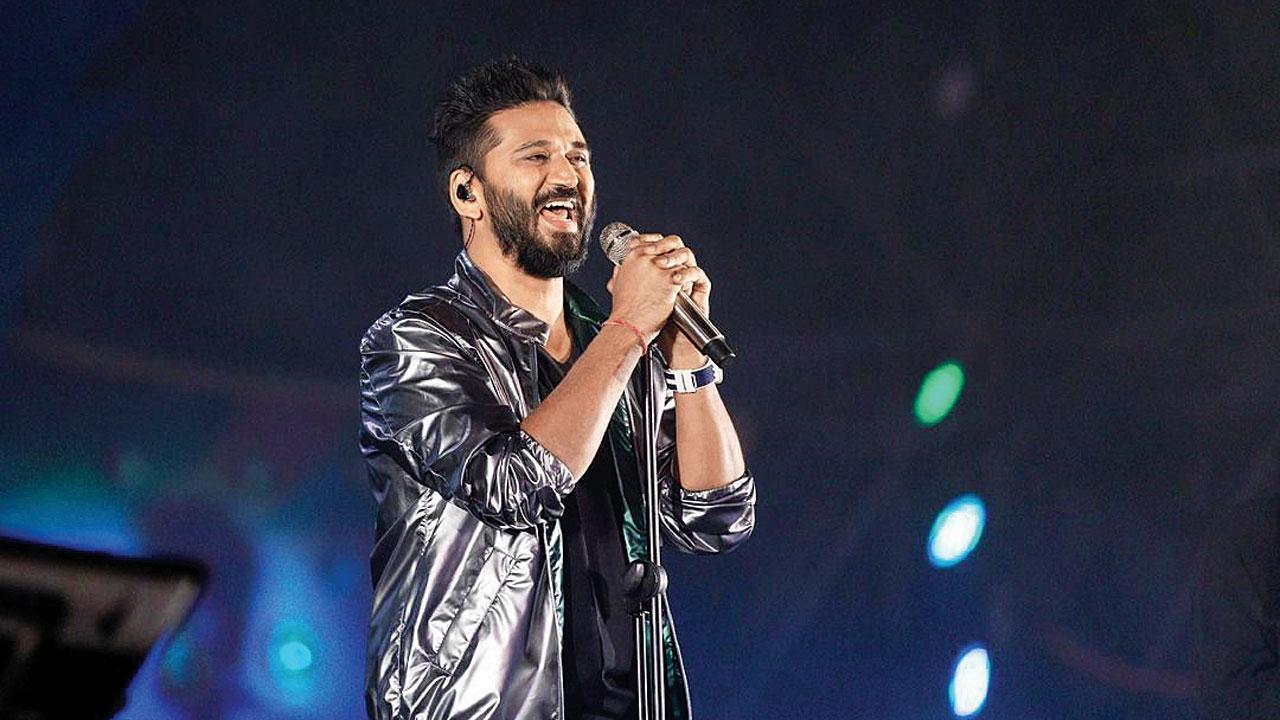
With names like Sunidhi Chauhan, Armaan Malik, and Neeti Mohan associated with the latest album from his independent label, composer Amit Trivedi celebrates playback singers who are grooming themselves to take centre-stage
Sonia Lulla (MID-DAY; November 4, 2024)
Amit Trivedi appears to be having a lot of fun, and here's why this fact isn't to be taken lightly. Sure, Trivedi isn't one to disappoint with his compositions, but there's something magical that follows those phases when his interactions with fans and media are markedly playful. Speaking about his upcoming album, Azaad Collab, Trivedi appears delighted and nervous in equal measure. With a bevy of popular faces putting their might behind the project, he admits to having his hopes pinned on this pop album that presents the "music icons of India" in new light.
Fans of Trivedi will agree that his four-year-old label, AT Azaad, is a goldmine of music that is both innovative and appealing. Evidently then, this latest 14-track offering is being welcomed with open arms. In this interview, he discusses the response to the first song, Jubin Nautiyal and Hansika Pareek's Rangeeni, and crafting an entrepreneurial journey as an artiste. Edited excerpts from the interview:
When you look back at the way your label has evolved, how do you reflect on the journey?
The [reason] behind creating the label wasn’t to be the next T-Series or Saregama. It is an artiste-led label. I should have the upper hand [when it concerns] what I create. I am putting in the work and money. I should have the freedom to make what I want. If I was signed on by a label, I’m not sure if I would have had that liberty. There would have been a lot of restrictions and clauses that may have been in their favour. I wanted to avoid the hassle.
I launched it in April 2020. So, it’s been four and a half years. I’d say, the label isn’t doing that great, nor is it doing too poorly. There is a lot of scope for improvement. I need a song that can really do well. [Some] songs become popular, but those that do [very well] are made rarely. I would say, of the 10 lakh songs that are released in a year, only 10 to 15 do that well. Not every song becomes a [banger]. I was lucky that my first song, Moti Veraana, did that well, and so did the following ones, Lagan Laagi Re and Madhubala. But, for a label to function regularly, we need at least one song per year to do that well. That hasn’t happened in the past two years. I’m hoping that changes with Azaad Collab. I have 14 more songs to go. So, let’s see how it does. It’s up to the audience.
Can you explain the structure of creating music within the label when it comes to bifurcating the singles and albums?
I do a lot of film work. A film’s soundtrack usually has only four to five songs. In a rare case, we may have 10 songs. But to arrive at those five songs, we create a lot of music. If I have created 25 songs, and only five are chosen, what should I do with the rest? They are all great songs; ones that I believe in. Maybe they didn’t work for the filmmaker, but that does not imply that the song is bad. So, many of the songs are those that were made for films. Rangeeni was one such song. It was made for a film, but it [wasn’t used]. But, people are loving it today. Then there are some songs that I pro-actively create, keeping the album’s structure in mind.
Can you take us through the making of Azaad Collab?
It has 22 collaborators, including artistes of all [calibres]. We started off with Jubin Nautiyal and Hansika Pareek. There are songs with Neha Kakkar, Sunidhi Chauhan, Armaan Malik, Neeti Mohan, Nikita Gandhi, Shahid Mallya, and Javed Ali, among others. They are all playing 'front'. They are called playback singers, but now they are playing front. They are starring in their own videos, and in those of this album too. They are all out there, dancing, acting, performing, and grooming themselves well. Look at Armaan, Sunidhi, and Neeti—they are like rock stars, both on and off the stage. They are our country’s musical stars.
Also, Jubina and Hansikar have never been paired before. I don’t think I’ve heard them before together. That’s [a pattern] I’ve tried to retain across the album—create [a pairing] and a video that the audience has not seen before. Javed and Shahid have never been heard together before, and neither have Neeti and Asees Kaur. I’m trying these new combinations.
Every collaborator is special in their own way. Each singer has been amazing, both in the studio and on the set, while we were shooting. The shoot lasted 14 hours, and they were accommodating. I’m genuinely blessed that these artistes have agreed to do this for me. [The album’s genre] is pop, mostly. There is folk, and Sufi music too, but it’s all in the space of pop music. There are no sad, intense, or hard-hitting songs. It’s my first season. If this works, it will encourage me to do the next season in which I can experiment more. This one is smooth, easy, and colourful.
Post the pandemic, a lot of artistes of your kind, like Salim-Sulaiman and Sheykhar Ravjiani, have created their own labels. When you look at everything that’s coming out in the market, what has grabbed your attention?
We are in a democratic situation. Everybody and anybody can showcase their content easily. You simply need to record and upload it on YouTube. At our time, it was very tough. But the drawback is that today, there is no filtration process. There are a lakh singers and composers, and all are making music. Creating a song is like throwing a grain in a room full of grains. They all look the same. Only the audience will decide which one will stand out. Either it grows organically, or you will need to pump in a huge amount of money.
So, I don’t know if this boom is good or bad; it may be good for the artistes. But, to truly thrive, the artiste has to have talent, and must not be dependent on anything.
There’s a discussion on the need for better music in cinema. For instance, we’d love to hear a song like Rangeeni in a movie. Why is it that these fantastic numbers available on independent labels are not making their way to films?
That’s a vision. These days, I can’t talk about film music. I don’t know what’s going on. I only notice that things are not working very well. I have not seen such a downer in the Hindi film industry in my entire life. In the '80s, I heard there was a lull. But that too was not as bad as this is. Till 2019, things were good; we had a lot of work. After the pandemic, things haven’t picked up. Various factors would be at play. We are seeing a different side to cinema; people are not going to theatres, and OTT has also become saturated. So, where are people consuming content? Creators are putting in a lot of money, but their effort and money are going to waste. It’s sad to see that. Maybe it’s a phase; I believe it will come back up.
As someone who enjoys a successful run in the film industry, and also has a thriving label, what recommendation do you have for young artistes who look up to you?
There are exceptionally talented people in the industry today. I’m happy to hear about some of the work that people are doing. But, right now, the pie has been divided among too many people. Earlier, only a handful of people were operating in films. Today, there are 20,000 composers working for films alone. So, there share has been divided. It’s a strange place that we find ourselves in. For a track to work, you must pump in money, or [hope] it can organically grow, like Hanumankind’s song, or Gulabi sari did. It’s pure luck, sometimes.
Singham Again's title track faces legal hurdle from T-Series; Rohit Shetty reworks number
9:55 AM
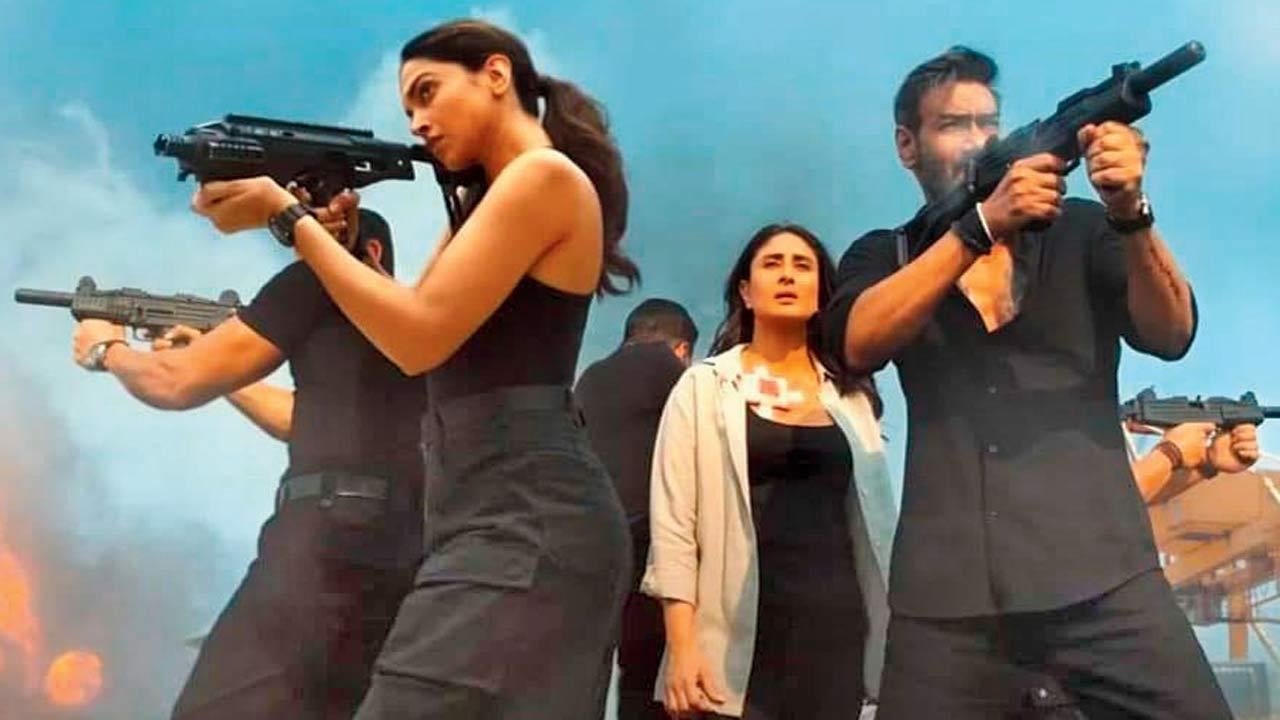
Box-office clash heats up after T-Series, which has produced Bhool Bhulaiyaa 3, issues copyright strike on Singham Again’s title track; Rohit Shetty’s team uploads reworked number
Mohar Basu (MID-DAY; October 31, 2024)
The war between the two Diwali releases, Singham Again and Bhool Bhulaiyaa 3, had been heating up over the past few weeks. It took a bitter turn on Saturday when the makers of Ajay Devgn’s cop actioner released the title track on YouTube and other social media platforms. Soon, T-Series, which has produced Bhool Bhulaiyaa 3, issued a copyright strike as the song infused some elements from the original Singham (2011) theme, the rights of which rest with the music label.
As a result, director Rohit Shetty and his team had to pull down the title track from all platforms, rework the composition and have it uploaded again on Tuesday afternoon.
A source reveals, “The song included a 10-second element from the theme of the original Singham. As is customary, T-Series flagged off the content because using anything above three seconds [without owning the copyright] is non-permissible. Bhushan Kumar’s company issued a copyright claim, and the song had to be pulled down. A simpler way to do this would have been to reach out to Singham Again’s team and sort out the matter. Saregama, which is the cop fare’s music partner, uploaded the track on Tuesday after composer Ravi Basrur removed the contentious bits and stitched it together.”
This dispute is being viewed as a “clash effect” by the internet. Fans and industry observers feel that T-Series’ decision to enforce its copyright claim could be strategically influenced by the upcoming clash between Kartik Aaryan’s horror comedy and the Devgn-starrer.
Another source notes, “Since the Singham Again team had to upload the track again, it lost all the original viewership and likes on YouTube.”
Explained: What the Rs 1000 crore deal means for Karan Johar and Adar Poonawalla
8:47 AM
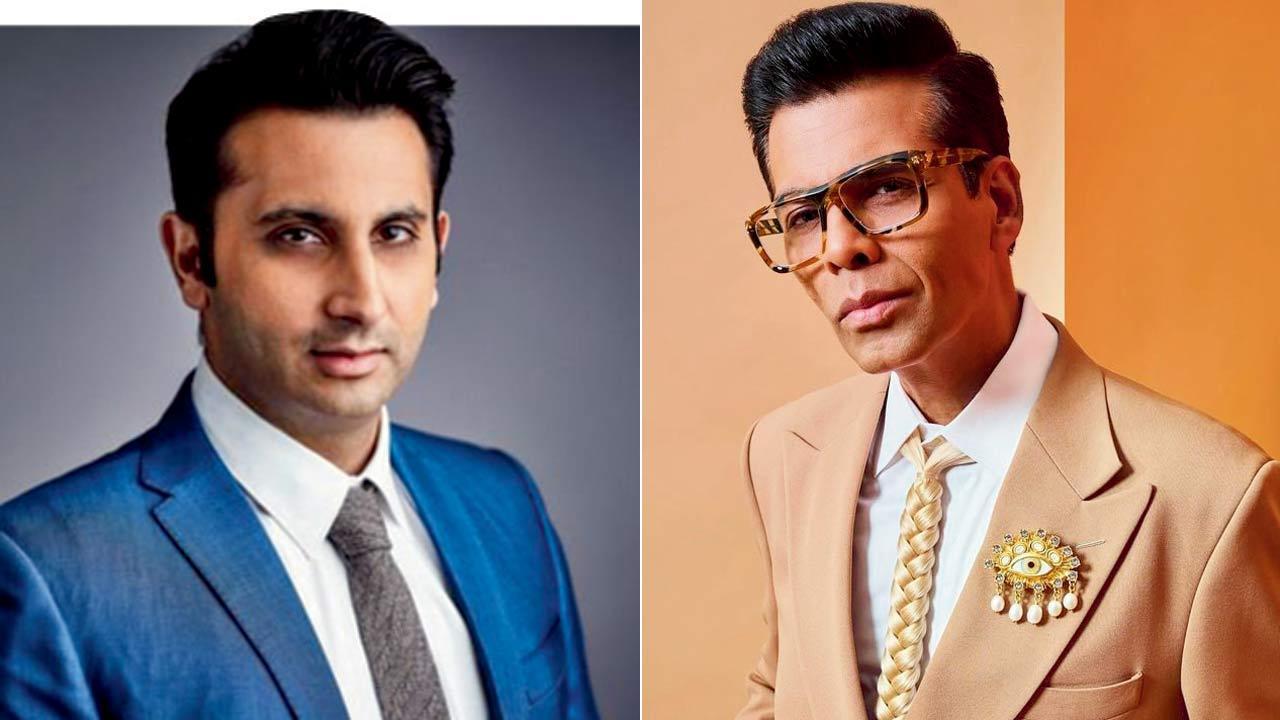
Arijit Barman and Javed Farooqui (THE ECONOMIC TIMES; October 22, 2024)
Billionaire vaccine maker Adar Adar Poonawalla, CEO of the Serum Institute of India, is picking up a 50% stake in Dharma Productions and Dharmatic Entertainment, for Rs 1000 crore, valuing Karan Johar’s film and television production and distribution flagship at Rs 2000 crore, further underpinning the ongoing flurry of consolidation in the entertainment industry.
ET broke the story online on Monday morning, ahead of a formal announcement.
Poonawalla’s is making this investment in his private capacity through Serene Productions. Dharma will retain the residual stake with Johar continuing to remain as the creative spearhead of the company, as Executive Chairman. Apoorva Mehta remains the Chief Executive Officer.
Dharma is owned 90.7% by Karan Johar and 9.24% by his mother, Hiroo.
“I do foresee consolidation in this industry. Internationally, we've seen a lot of consolidation due to new content creation methods and distribution channels,” Poonawalla told ET. “With the evolving landscape of content production and distribution, I see significant potential for such partnerships both internationally and nationally.”
The key factor that led to stitching together this alliance is Johar retaining creative control while partnering with a deep pocket family he is familiar with. The Poonawalla investment will help the production house with enough financial muscle to navigate the fast-changing demands of digitally savvy consumers who are often digital natives. The investment will also boost Dharma’s efforts to double down on content for new platforms and formats while continuing to deliver interesting stories for a global audience.
“This partnership will help us create more verticals within the organization and allow us to take creative chances. This gives us the bandwidth to expand Dharmatic Entertainment and create much more in the digital domain,” added Johar. “It also allows us to capture a lot of value in the value chain which comes with owning IP and catalogue – we have already been doing that and hope to double down on it with this capital.”
Film production is a volatile business with earnings linked to box office successes of films. Major Hindi film production houses, including Dharma, have been cautious in greenlighting new projects due to the unpredictable nature of the box office, which also impacts the value of streaming and satellite rights, ET had reported on October 14.
Johar said, the company’s attempts will be to increase the value and create more content. “We aim to produce a higher volume of films with this partnership compared to what we're currently doing. With shrinking audiences and an overreliance on streaming rights, Johar feels a strategic business shift is already underway. “Mid-budget films are the backbone of the film industry's economics, and we need to explore this segment further, alongside our tentpole productions, to create a more diverse and sustainable portfolio of films,” he said.
CHANGING DYNAMICS
The industry is experiencing major upheavals due to shifting consumer preferences, influenced by exposure to global content and the increasing dominance of on-demand consumption in urban areas. Additionally, the economic model is strained, with star salaries often consuming up to 70% of a film’s budget. Consolidation on the demand side, with the emergence of large broadcasters, streaming platforms, and multiplexes, is also putting pressure on content companies like Dharma. Satellite rights, once a steady revenue stream, have plummeted to historic lows, and the value of streaming deals, which was funding movie costs in many cases, is being corrected, further straining the economics of the film business.
In the theatrical space, multiplexes now dictate a film’s success, contributing an estimated 60–70% of Hindi films' box office revenue, while single-screen theaters continue to struggle. Post-COVID, many viewers prefer to wait 8–10 weeks to watch films on OTT platforms, leading to reduced footfall in cinemas.
Some industry players are already contemplating profit share model or box office linked payouts to offset rising star costs. “It's essential not to overload our above-the-line costs. While we respect actors' talent and craft and want to pay what's fair, all artists must understand the current challenges in the entertainment industry. There's enough potential in big films for everyone to gain,” said Johar.
Dharma has been actively seeking investments for a while and had engaged in talks with several large conglomerates and industrialists like Sanjiv Goenka’s Saregama, a company they already have business ties to become part of a cash-rich conglomerate. Some discussions with Reliance Industries and Jio Cinema also did take place.
Raine Group was the advisor to the deal.
Dharma Productions posted a nearly fourfold surge in revenue to Rs 1,040 crore in FY23, from Rs 276 crore the previous year. Net profit, however, fell 59% to Rs 11 crore due to a 4.5-times rise in expenses at Rs 1,028 crore, according to the company's latest available financial data accessed from Tofler. In FY23, the company earned Rs 656 crore from distribution rights, Rs 140 crore from digital, Rs 83 crore from satellite rights, and Rs 75 crore from music. This compares with earnings of with earnings of Rs 19 crore, Rs 167 crore, Rs 34 crore, and Rs 21 crore from these streams, respectively, in FY22.
HITS & FLOPS
Founded by Johar’s father Yash Johar in 1976, with its first venture starring Amitabh Bachchan in a film called Dostana, Dharma has been led by Johar and his team since his father passed away. Johar directed his first movie at 25, ‘Kuch Kuch Hota Hai’, and has gone on to produce close to 50 Bollywood including hits like 'Kabhi Khushi Kabhie Gham, Yeh Jawaani Hai Deewani, 2 States, Kapoor & Sons and Dear Zindagi’. Seen as a launch pad for several young actors, many from well-known film families like Allia Bhatt, Varun Dhawan, Janhvi Kapoor, Ishaan Khatter and Ananya Pandey among others. In 2018, the company launched Dharmatic Entertainment to diversify and create original content for global streaming platforms and has worked with global OTT platforms like Netflix and Amazon Prime to create and produce shows like “The Fabulous Lives of Bollywood Wives”, “Call Me Bae”. From blockbuster films Johar was also among the first of his peers to migrate to multi-media himself, becoming a chat show host for the popular Koffee with Karan show.
----------------------------------
Dark horse vaccine baron beats biggies for a 50 per cent stake in marquee Bollywood production house
Priyanka Sharma (MID-DAY; October 22, 2024)
Serum Institute of India CEO Adar Poonawalla-led Serene Productions on Monday said it will pick up a 50 per cent stake in Karan Johar’s Dharma Productions and Dharmatic Entertainment for Rs 1,000 crore.
The past few months had witnessed speculation in the entertainment industry that Karan Johar was planning to sell a stake of Dharma Productions. Saregama and Reliance were said to be frontrunners.
With this deal, Poonawalla—the CEO of Serum Institute of India (SII), and Chairman of Poonawalla Fincorp—is foraying into entertainment through his Serene Productions.
The deal, which sees Karan retaining his position as the Executive Chairman and Apoorva Mehta as the CEO, is being viewed as a win-win for both parties. In terms of numbers prima facie, this deal values Dharma— which includes its digital arm, Dharmatic Entertainment—at Rs 2,000 crore. Sources say it is an optimistic valuation.
An insider says, “Karan has got a good valuation. Technically, Dharma’s revenue fell by 50 per cent in the last financial year. In 2022-2023, its revenue was said to be at Rs 1,000 crore. Brahmāstra: Part One—Shiva [2022] was a major contributor to the profit. However, in 2023-24, even though the company witnessed a spike in its digital and music earnings, its total revenue had a 50 per cent drop as it did not have a blockbuster. But Adar has invested in the company, looking at its equity and Karan’s creative might. A part of the Rs 1,000-crore investment will be directed to the original investors—Karan and his mother Hiroo Johar—while the remaining will be allocated towards production.”
For Poonawalla, who has long been friends with Karan, it is a strategic investment as it gives him a significant stake in the media industry. Another source breaks it down, “For Adar Poonawalla, it’s a great diversification after dominating the pharmaceutical and financial sectors. This move will bring corporate culture into the corridors of Dharma. All the heavy lifting that Karan and Apoorva had been doing, in terms of cost management, will now be delegated.”
As is the norm with such deals, the company is expected to undergo restructuring. “Some of Adar’s people will take key positions at Dharma, and there will be a lot of lay-offs,” says another source.
It is understood that the roles will be clearly divided in the 50-50 partnership. Decades after his filmmaker-father Yash Johar founded Dharma in 1976, Karan took the company to new heights with his vision. He not only helmed many blockbusters—from Kuch Kuch Hota Hai (1998) to Student Of The Year (2012)—but also backed many directors, becoming something of Bollywood’s big daddy.
“Now, Karan will spearhead the company’s creative operations and lead it from the front. Adar wants to stay away from the creative aspect. So, everything related to films will be handled by Karan, including the star fees and the budget on which a film is to be mounted. Adar will look at the operational aspects, probably telling him how much money can be spent on the workforce, how much bonus to be given, and so on.”
The equal partnership that Poonawalla’s deal afforded was one of the reasons why Karan inked the deal. In contrast, Saregama, owned by Sanjeev Goenka, and Reliance Industries were reportedly in the bidding war to buy a majority stake in Dharma.
A source reveals, “Saregama was willing to acquire the stake for Rs. 800 crore. Adar outbid both the players. But another crucial reason is that neither of those giants would have gone into a 50-50 partnership. It has been seen historically that Reliance eventually acquires the companies it buys stakes in.” The partnership is being viewed as a huge boost for the Hindi film industry, which has been struggling since theatres reopened after the pandemic-induced shutdown.
When pharma meets films
- Adar Poonawalla is the CEO of Serum Institute of India, the world’s largest vaccine-producing company in terms of volume, which produced Covishield in India. He is also the Chairman of Poonawalla Fincorp.
- The Rs 1,000-crore investment in Dharma Productions marks the pharma tycoon’s foray into the entertainment industry with Serene Productions.
- In the 50-50 partnership, Karan Johar will retain his Executive Chairman position and spearhead the creative operations. Apoorva Mehta will continue as the CEO.
- Part of the investment will be directed to the original investors—Karan and his mother Hiroo Johar—while the remaining will be allocated towards production.
- Saregama and Reliance Industries were said to be in the bidding war to buy a majority stake in Dharma.
Galwan Valley, lockdown, Coronavirus and migrant issues inspire film titles
8:27 AM

Niharika Lal (BOMBAY TIMES; July 6, 2020)
 We had earlier told you that several film titles based on coronavirus have been registered, and now, lockdown and Galwan Valley are the latest words to feature in film titles. A source from a producers’ association tells us, “Maddock Films has registered the title Galwan Valley.”
Apparently, several filmmakers are exploring options for titles related to Ladakh and Indo-China, however, no other title has been registered yet. Ajay Devgn, too, making a film on the same topic.
TITLES RELATED TO THE LOCKDOWN HAVE ALSO BEEN REGISTERED
Filmmakers have showed interest in film titles related to the lockdown, like Corona Lockdown, and India Lockdown, among others. A source from Indian Film and Television Producers Council (IFTPC) says, “We have received a query for the title Lockdown. The title Lockdown L Locha has been registered by Saregama Ltd.”
 A film on the plight of migrant workers during the lockdown, titled Atmanirbhar, is to set go on the floors in August. It will tell the story of 15-year-old Jyoti Kumari, who cycled all the way from Gurgaon to her village in Darbhanga with her debilitated father as a pillion rider. She will also star in the film. Shine Krishna, who is directing the film, tells us that Sanjay Mishra has been roped in to play Jyoti’s father.
CORONA-BASED TITLES A HIT WITH FILMMAKERS
While Aanand L Rai has registered Coronavirus, Kumar Mangat has registered COVID-19. Reports also say that Madhur Bhandarkar’s production house has registered the titles Corona 2020, Corona Lockdown and India Lockdown. Madhur Bhandarkar said, “I always make films on topical issues so I will take up this issue. My production house has registered coronavirus and lockdown related titles.”
Corona Pyaar Hai, Corona 2020, One Weapon Corona, and Corona — The Deadly Virus are some of the corona-related titles which have been registered.
FILM TITLES REGISTERED BASED ON CURRENT EVENTS
- Galwan Valley
- Lockdown
- Lockdown L Locha
- Atmanirbhar
- Coronavirus
- COVID-19
- Corona 2020
- Corona Lockdown
- India Lockdown
- Corona Pyaar Hai
- One Weapon Corona
- Corona – The Deadly Virus
Chitra Singh's big win: ED raids T-series, YRF, Saregama Cos for Rs 2,000 crore royalty evasion
8:15 AM

Dharmendra Jore (MID-DAY; November 4, 2017)
Legendary ghazal singer Jagjit Singh's widow Chitra was extremely content on Friday, when the Enforcement Directorate (ED) hit all the right notes by raiding the Mumbai offices of the country's biggest music labels, for not paying music composers and lyricists royalty for years.
As per the officers' primary assessment, the fraud could be to the tune of Rs 1,500-2,000 crore. This amount was to be paid as royalty to the rightful owners of the copyright.
ED has found in its probe that the music industry captains collected royalty from consumers, but did not pay 50% of its share to music composers and lyricists. The case is being probed under Prevention of Money Laundering Act (PMLA) 2002 and Indian Copyright Act which was amended in 2012.
Taal order
Chitra, who has offered ghazal connoisseurs unforgettable numbers with her late husband, had filed an FIR with ED last December. Following investigations, ED raided the top most music companies - T Series, Yash Raj, Universal, Sony and Saregama, on Friday.
"I wasn't sure as nobody was helping me. It's been a tough fight for a single woman like me. But ED took up my case, thanks to a bunch of nice officers in Mumbai. Now I'm confident that the agency will take my case to its logical end and punish the guilty," Chitra told mid-day on Friday.
Hitting a sour note
"Two top ghazal singers (one of them is a known bhajan singer) did not help me when I decided to fight, which would benefit them as well. These are the people who would frequent my home and say they respected my husband so much," she added.
Chitra said that after seeing the effectiveness of her complaint and the subsequent investigations, the singer duo has approached her lawyers in New Delhi with a plea that their case should also be taken up. "What can I say about these people? I'm cooking the food and now these 'selfish' people are out to eat it. But I took the step without anybody's support only because I wanted fellow workers to be protected against cheating by big players," said Chitra.
"I'm happy that several other people in the
industry I may not know personally will now get justice. All of us were
cheated big time," Chitra said.
A source in ED said, "Hiding facts amounts to criminal offense. All stakeholders were told that the composers and lyricists were paid royalty as per the rule, whereas the money collected for this purpose was parked with (recording) companies or individuals other than the people eligible for getting their dues." Industry sources said some legal issues related to the India Performing Right Society Limited (IPRS) and Phonographic Performance Limited (PPL) too should be blamed for the mess. IPRS is a copyright society that issues licenses for public performances. The society pays royalties to legal heirs of deceased members. PPL has been functioning as the copyright society for sound recordings. It is mandatory for those who play pre-recorded music to take prior license from them. ED has summoned Bhushan Kumar of T Series for interrogation on Saturday, said sources in ED, Mumbai.
The petition
Last year, Chitra Singh had petitioned the Delhi High Court alleging that the IPRS was still issuing licenses for her husband's work, though not competent to do so under the Indian Copyright Act, and the said concerts breached various intellectual property rights held by her as his surviving heir. She alleged that she had not received any royalty for such concerts. The Delhi HC had ruled that the IPRS was incompetent to grant licenses as per Section 33 of the Copyright Act.
Subscribe to:
Posts (Atom)