Showing posts with label Santosh Sivan. Show all posts
Showing posts with label Santosh Sivan. Show all posts
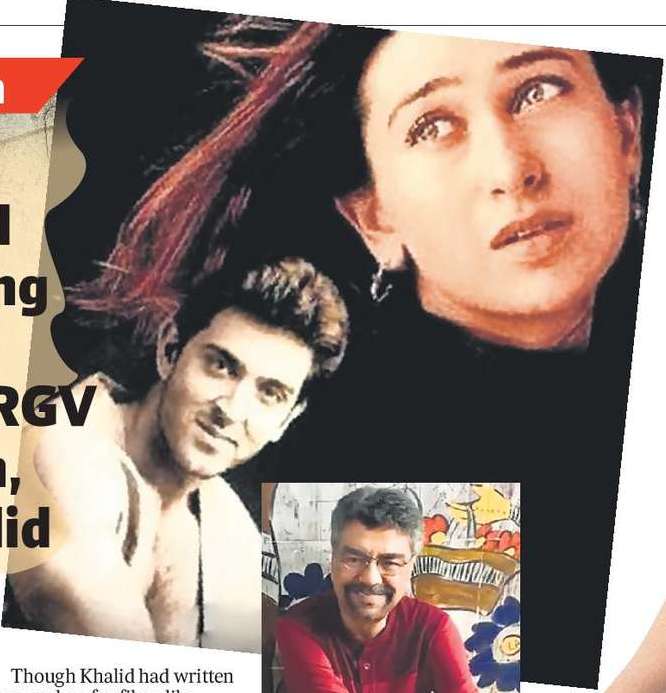
I was pushed into directing Fiza after plans with Ram Gopal Varma fell through-Khalid Mohamed
9:31 AM
S Farah Rizvi (HINDUSTAN TIMES; September 8, 2025)
Fiza, released in 2000, celebrates its 25th anniversary today. On this milestone, the film’s writer-director, Khalid Mohamed, shares, “These 25 years seem like yesterday. Looking back, there’s a sense of self-fulfilment and pride.” He calls actors Karisma Kapoor a “dream to work with” and Hrithik Roshan the “most immersive” actor.
Khalid says he wasn’t meant to helm the film originally but was “pushed into directing” after filmmaker Ram Gopal Varma, the first choice, didn’t work out. It was cinematographer Santosh Sivan who stepped in with a suggestion: “Why don’t you direct it yourself?” Later, Karisma also joined Santosh in encouraging Khalid.
Though Khalid had written screenplays for films like Mammo (1994), Sardari Begum (1996), and Zubeidaa (2001), directing had its own challenges: “Of course, there were some tough days, like when we didn’t have enough resources to show a large room.”
Funding was also major concern until a new producer came on board. “The film had been started with loans derived from friends by co-producer Pradeep Guha and myself,” Khalid explains.
Sharing how the music became a huge asset to the film, he muses, “I lucked out.” Anu Malik “was in his element”, and A R Rahman composed Piya Haji Ali for free. Gulzar’s lyrics for Aaja Mahiya also “worked wonders for the song,” Khalid adds.
Shabana Raza Bajpayee: My goal was to get more scenes
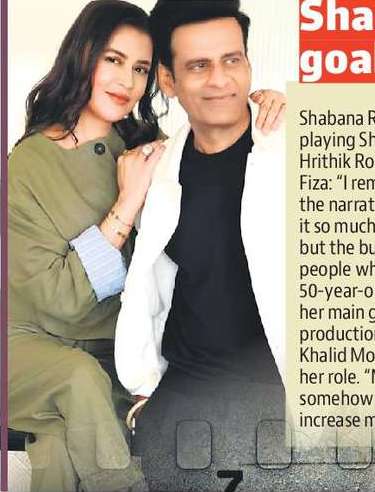
Shabana Raza Bajpayee recalls playing Shehnaz Sulaiman, Hrithik Roshan’s love interest in Fiza: “I remember when I got the narration of the story. I liked it so much, not just its canvas but the bunch of talented people who were involved .”
The 50-year-old actor reveals that her main goal during production was to get director Khalid Mohamed to broaden her role. “My only aim was to somehow persuade Khalid to increase my scenes, as I loved the story so much and, like any other aspiring actor, I wanted to be there in more frames,” Shabana explains, adding, “No one could deter him even a bit from the original plot.”
She also reflects on working with her husband, actor Manoj Bajpayee, who played Murad Khan. “Manoj had a small but memorable role,” she says, adding, “Every character was an anchor to the story in their own way; that’s what makes the film more special.”
Excessive camera movements in 3D film and tilting could cause nausea to the viewer-Mohanlal
8:23 AM
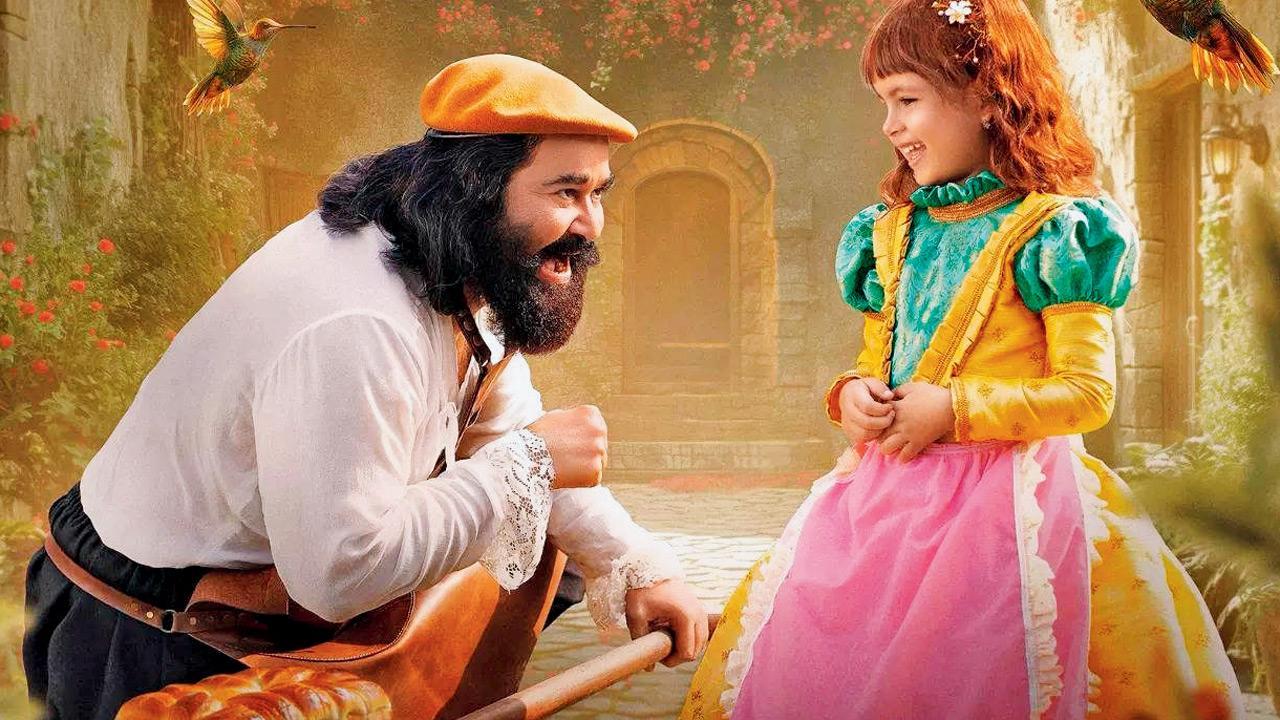
Mohanlal says his directorial debut, a children’s film that is being dubbed as a visual spectacle, was crafted with the intention of adding “moments of wonder” in the lives of those addicted to screens
Mohar Basu (MID-DAY; December 30, 2024)
What inspires one of the country’s biggest superstars to direct a children’s movie? That is where we begin our conversation with Mohanlal, as his new drama, Barroz, hits theatres across the country.
“Children are increasingly drawn to screens, be it to participate in games, watch videos, or scroll through social media content. [This consumption] comes at the cost of the outdoor activities that were once a staple part of people’s childhood. Children would climb trees, play in the fields, tell stories, and explore their creativity in ways that shaped their understanding of the world. Today, those moments of wonder and connection are becoming rare. So, I thought we should do something for children,” he says of his directorial debut that is being widely dubbed as a visual spectacle.
Actors who’ve turned attention to direction will agree that helming even a regular production comes with a host of challenges. The obstacles in Mohanlal’s way were multifold, given that Barroz is a technologically advanced 3D offering that demanded the use of contemporary filmmaking methods. Direction, he says, required him to be uncomfortable with the unknown.
“You need special cameras and [an understanding of] colours, costumes, and makeup. Everything is different from the normal filmmaking process. I have done this [been part of films] for 47 years, and here is something new. We created animated characters and underwater sequences. We have a fully animated underwater song sequence starring the main characters,” he says, asserting that he also had to exercise restraint while employing technology to ensure it did not hamper the storytelling.
“Too many complicated shots could affect the storyline. Excessive camera movements and tilting could cause nausea or disorientation for the viewer. So, I had to think from the perspective of the audience. I have to credit Santosh Sivan for his groundwork. The 3D glasses [he chose] reduce screen brightness [and enhance] colour perception, especially in the shots for which we had to compensate during the shoot. The visual effects too needed to be rendered with the depth, which could be computationally intensive and expensive.”
Mohanlal may have put his prowess as an actor on display for several years, but taking on a new role enabled him to showcase his artistry in a different way. “To direct a film, one must be patient and committed. Your passion and integrity must be [evident]. This is a requirement for every film, but a movie like this one needs you to be stronger because each day is complicated. Post-production is the most difficult part of making it.”
Rubbishing claims that superstars are not given the freedom to experiment, he says he has taken the decision to be part of all kinds of cinema ever since he began his journey. “As an actor, I developed myself inside that aura. You have to approach cinema with passion. There has been a beautiful flow in my life for 47 years. I never stop feeding the excited kid in me.”
We can’t part ways with the actor without asking him about the Drishyam franchise that has been fronted by him since 2015, and whose Hindi remake—led by Ajay Devgn—gained unwavering attention from Bollywood fans.
Would the third edition of the franchise be underway soon? “We are trying [to create it],” he confirms. “But it’s not that easy. To make the sequel, it took us six years. So, when we create another edition, we must be careful. We should not ridicule the appreciation we have received from the audience.”
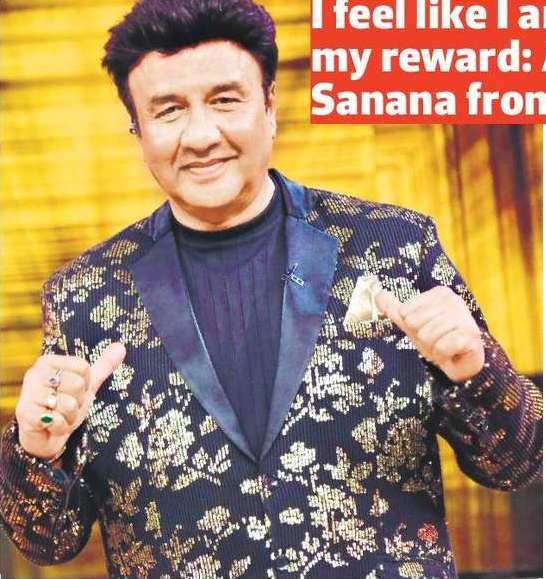
I feel like I am finally getting my reward, says Anu Malik on San Sanana from Asoka trending
8:09 AM
Abigail Banerji (HINDUSTAN TIMES; May 13, 2024)
With over 500K reels and over a million views, San Sanana from Asoka (2001) is the latest viral sensation. Sung by Alka Yagnik and Hema Sardesai, the song has caught the fancy of social media users all over the world, who are going to great lengths to get ready in traditional Indian avatars while staying on beat.
Composer Anu Malik says, “My daughter Anmol showed me the Reels and said, ‘Papa, your song has gone viral’. The project is very close to my heart because having Shah Rukh Khan and Bebo (actor Kareena Kapoor Khan) in the song was like sone pe suhaaga. I must have hummed innumerable tunes to Sivan saab (Santosh Sivan, director), but he was clear that the music has to be very different. I feel like I’m finally getting my reward.”
Of late, Indian music has consistently got people grooving on the ’Gram. What does he feel makes this song apt for a different generation? “The kids of today, who are aged 18-25, appreciate a good song. It has got a breezy tune and goes well with people wearing lovely gowns walking the red carpet or doing their makeup,” he ends.

Yamla Pagla Deewana 2 director Sangeeth Sivan dies at 61; Sunny Deol, Suniel Shetty pay tribute
8:27 AM
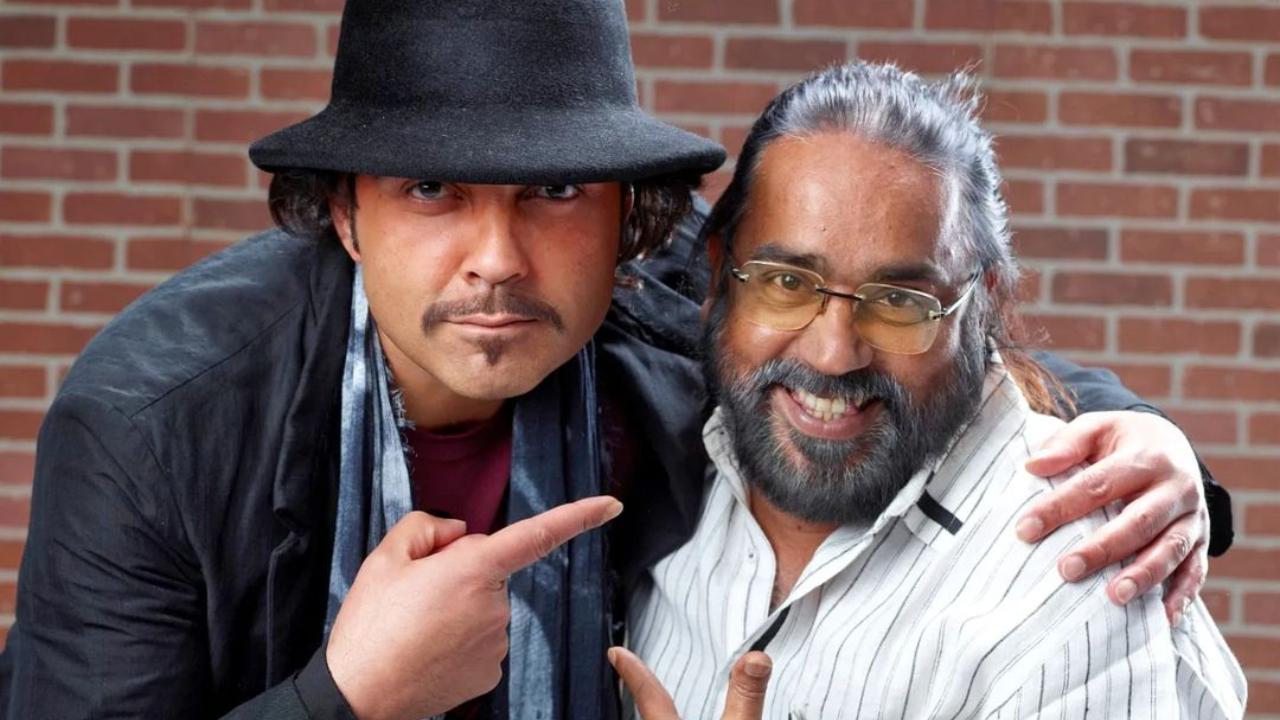
MID-DAY (May 9, 2024)
Renowned Malayalam filmmaker and screenwriter Sangeeth Sivan passed away. He was 61. The legendary director reportedly died after undergoing treatment following his health deteriorated at a Mumbai hospital. Known for directing the 1992 film 'Yoddha', he was the eldest son of filmmaker Sivan who passed away in April 2023.
Sangeeth's brother Santosh Sivan is an acclaimed cinematographer and filmmaker. His youngest brother Sanjeev is also a proven film personality. Sangeeth started his career with Basu Bhattacharya, who roped in the late filmmaker to serve as the executive producer of his son's directorial debut 'Raakh' which featured Aamir Khan and Pankaj Kapur.
Reacting to his demise, actors Sunny Deol, Suniel Shetty, and others paid heartfelt tribute on social media.
Sangeeth marked his directorial debut with the Malayalam film Vyooham - a crime film starring Raghuvaran, Sukumaran, Captain Raju, Babu Antony, Urvashi, Rajan P. Dev and Parvathy Jayaram.
However, it was 'Yoddha' which got him into the spotlight. The fantasy action film featured Mohanlal in the lead. He played the role of Thaiparambil Ashokan, the saviour destined to rescue the Rimpoche of a Nepalese Buddhist monastery from sorcerers practicing black magic. He collaborated with the superstar for films like ‘Gandharvam’ and ‘Nirnayam’.
After securing his hold down south, Sangeeth ventured into Bollywood and made the 1998 film 'Zor' starring Sunny Deol, Sushmita Sen, Milind Gunaji and Om Puri. The film however tanked at the box office.
After a brief gap, he returned to Bollywood and delivered films like 'Kyaa Kool Hai Hum', ' Apna Sapna Money Money', and 'Yamla Pagla Deewana 2' to name a few.
Sangeeth was working on the horror comedy ‘Kapkapiii’ starring Shreyas Talpade and Tusshar Kapoor.
Sharing his experience of working with Tusshar and Sangeeth, Shreyas told IANS: "Reuniting with Tushar and Sangeeth is the best thing because the rapport and comfort that I share with both of them is phenomenal. It's like you are working with two of your brothers. I also feel there's a certain level of maturity that comes to your performance after years of experience. That seems to have happened with both me and Tusshar. Sangeeth has the skill to understand our strengths and utilise them to the fullest.”
The film also stars Sonia Rathee, Siddhi Idnani, Jay Thakkar, Varun Pandey, Dherendra Tiwari, Dinkar Sharma, and Abhishek Kumar.
It’s an honour to direct Raja Shivaji-Riteish Deshmukh
9:07 AM
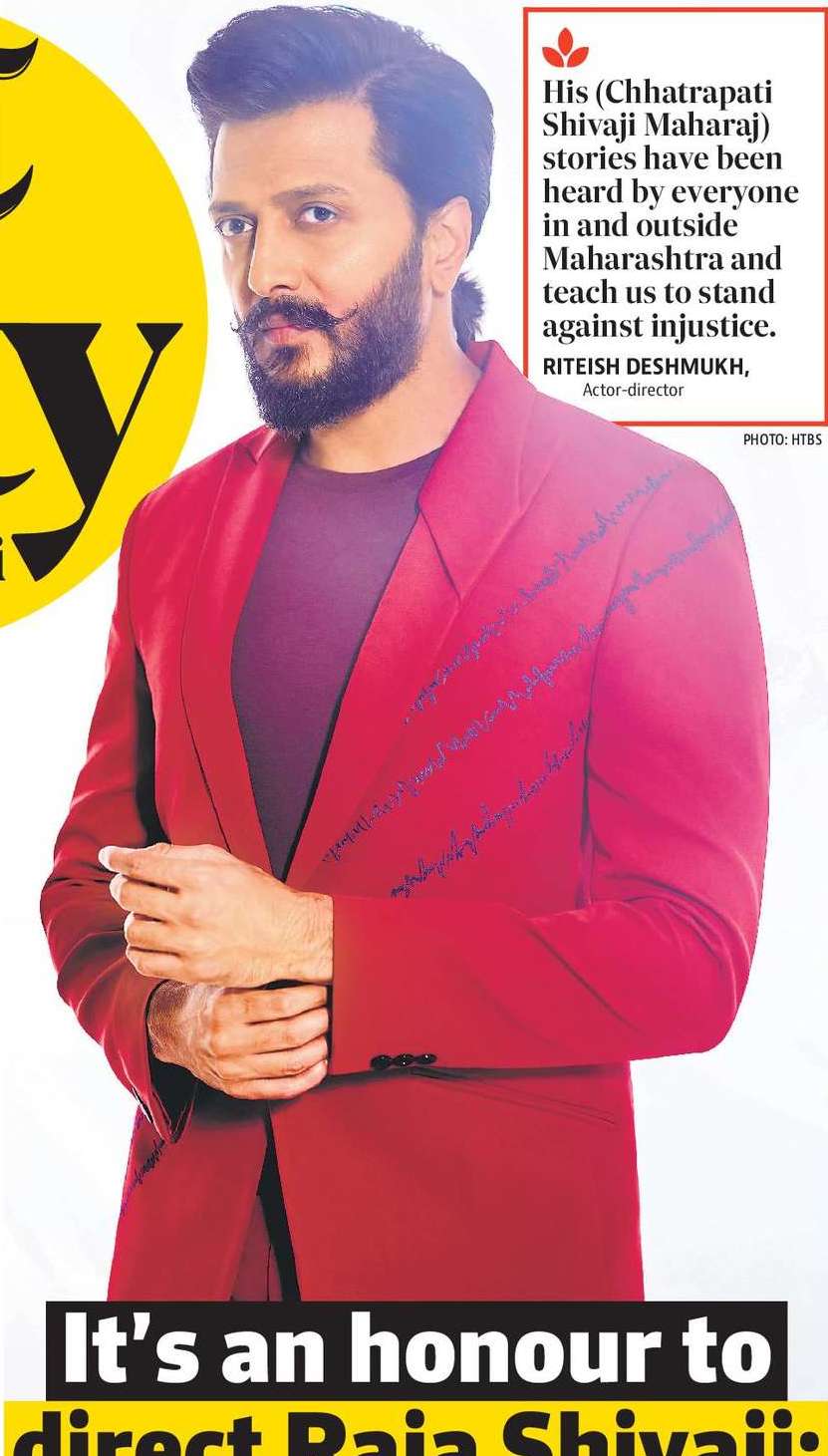
Kavita Awaasthi (HINDUSTAN TIMES; February 19, 2024)
After the success of his directorial debut, Ved (2022), actor Riteish Deshmukh will helm his second film, Raja Shivaji. Thrilled to announce it on Chhatrapati Shivaji Maharaj Jayanti, he says, “Today, as we celebrate Shiv Jayanti, this is the perfect time to announce Raja Shivaji that’s based on the life of Shri Chhatrapati Shivaji Maharaj.”
The film will be produced by his production house, Mumbai Film Company (MFC), in collaboration with Jio Studios. It will be released in Marathi and Hindi. “When you want to make a film on a larger-than-life personality, it warrants a certain scale. We are proud to collaborate with Jyoti Deshpande (CEO, Viacom 18) and Jio Studios, who have the legacy of backing ambitious films,” he says.
The 45-year-old wanted to work on a film on Chhatrapati Shivaji Maharaj for the longest time: “His stories have been heard by everyone in and outside Maharashtra and teach us to stand against injustice.”
The “overwhelming love of audiences for Ved” pushed Riteish to make films he believed in. Crediting his wife, actor Genelia Deshmukh as the driving force, the Housefull (2010) and Lai Bhaari (2014) actor says, “In the last 10 years, our quest has been to make new and fresh content in MFC. For Raja Shivaji, I don’t think I can trust anyone else. Genelia is fantastic with planning and is the most important part of the film as the producer, and, I feel, as a director, I am in safe hands.”
Riteish is looking forward to reuniting with music director duo Ajay-Atul. He says, “When it comes to the sound of Maharashtra and making local [music] sound global, there’s no other than them.”
He is equally excited to have cinematographer Santosh Sivan on board, “When we talk about Raja Shivaji, we want it to be a beautiful looking film and for that there’s no one better than Santosh Sivan sir to weave cinematographic magic on celluloid. It is a huge honour and I am thankful to Genelia for getting him on board.”
Like Shah Rukh Khan, Aamir, Hrithik Roshan, atmosphere on set changes with Vijay Sethupathi’s positive energy-Santosh Sivan
8:22 AM
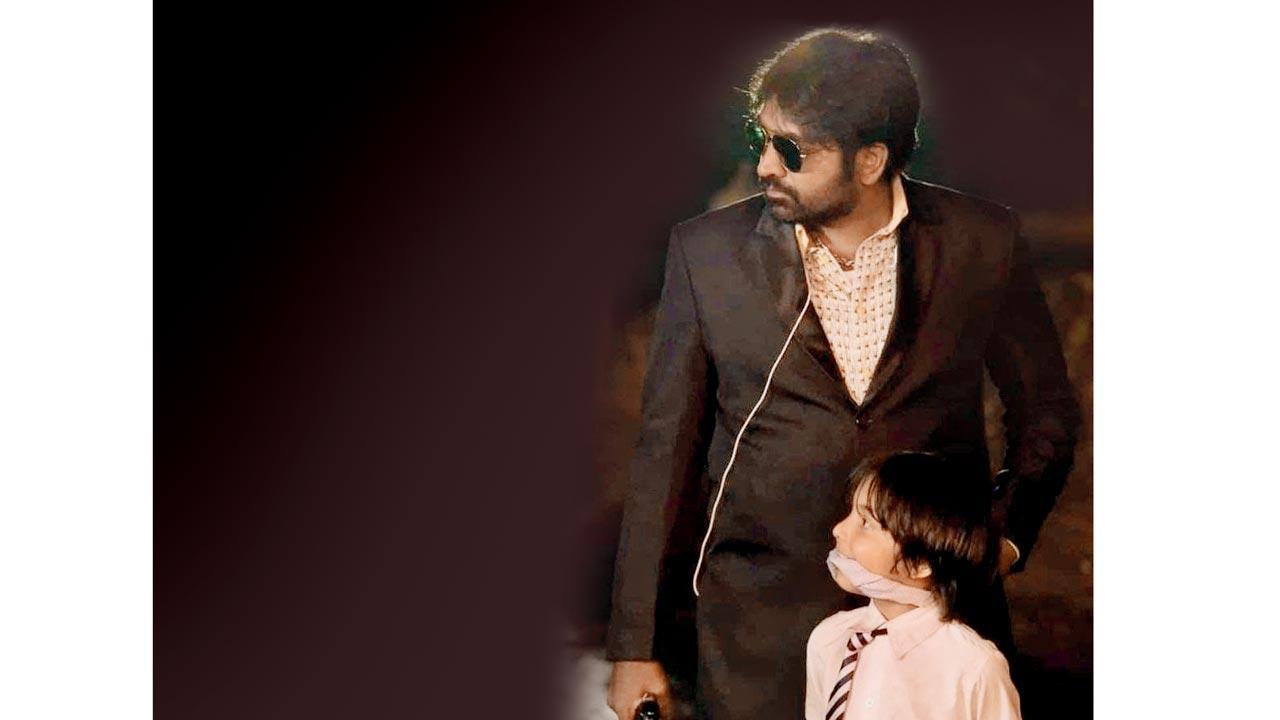
Making his Hindi film debut with director Sivan’s Mumbaikar, Tamil star Vijay Sethupathi says it’s exciting to experiment across movie industries
Upala KBR (MID-DAY; June 3, 2023)
In February, Vijay Sethupathi made his web series debut with Farzi, showcasing his uninhibited style of acting to the section of audience that may have been unfamiliar with his powerful body of work in Tamil cinema. Now, the Hindi film audience will get to see more of him. Santosh Sivan’s crime thriller Mumbaikar, which dropped on Jio Cinema yesterday, marks the actor’s Hindi film debut.
Was it tough to convince Sethupathi to take the leap to Hindi cinema? The director shares, “I have shot with him earlier [as DoP on Chekka Chivantha Vaanam], so we have built a relationship of trust. He is an experimental actor who won’t say no to a [compelling] role. He’ll go all out to do something he hasn’t done before. Like Shah Rukh Khan, Aamir Khan and Hrithik Roshan, the atmosphere on set changes with his positive energy.”
Also starring Vikrant Massey, Ranvir Shorey and Tanya Maniktala, Mumbaikar is a remake of director Lokesh Kanagaraj’s Tamil film Maanagaram (2017), and traces the chain of events that is set off when a kidnapping goes wrong. When reimagining the film, Sivan was certain about two things — that the bustling city of Mumbai would be the perfect setting for it, and that he wanted Sethupathi to play the kidnapper.
“I shot in Mumbai after a long time. Unfortunately, due to the pandemic, I couldn’t shoot in some of the places that I wanted to.”
Vijay’s character hails from south India, and I wanted his accent to reflect that. Vijay takes his time to study and learn his lines. He is among those people who have an affinity for languages.” Sivan is unfazed that the Riya Shibu-backed film, with Naresh Dudani as associate producer, couldn’t have a theatrical run. “We have to do what’s best for the movie,” he says.
Sethupathi is happy to straddle Tamil, Telugu and Hindi films. Stating that it shows how Indian cinema has transcended language barriers, the leading man adds, “It’s an exciting time for Indian actors. We are getting opportunities to work on films across languages. I was curious about the working style and dynamics of the [Hindi film] industry, but was pleasantly surprised with the love I received from the first day on the set.”
Merely observing Vijay Sethupathi and his process can teach you so many things-Vikrant Massey
8:20 AM
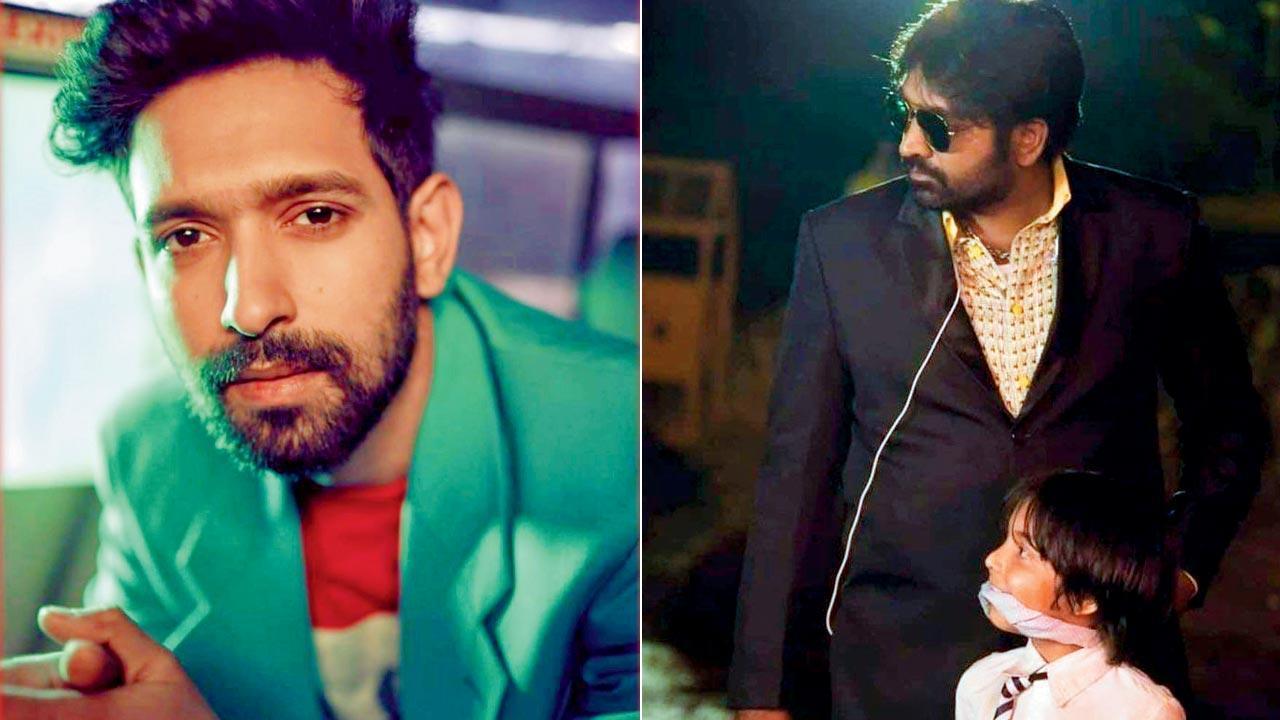
Vikrant Massey on sharing screen space with South star Vijay Sethupathi in for 'Mumbaikar'
Mohar Basu (MID-DAY; July 18, 2021)
Proving his repertoire with his choices, Vikrant Massey shifts gears from Haseen Dillruba’s intense Rishu to the boy-next-door in 14 Phere. “I am aware that people are appreciating the chances I am taking,” says the actor. But his bigger challenge comes with the next, the Bollywood adaptation of the 2017 hit film Maanagaram, titled 'Mumbaikar'. Under the able supervision of Santosh Sivan, the actor will be rubbing shoulders with South star Vijay Sethupathi, who will be making his Bollywood debut with this outing.
“Santosh sir is our driving force on set,” says Massey of the director he deems as the “pioneer of photography and a masterful storyteller”. “His association with Mani Sir [Mani Ratnam] in films like Dil Se is a testament to his genius. He is an institution and every day on the set has been immensely gratifying.”
But the film also offers him the chance to experience the brilliance and gravitas of Sethupathi. “He is an intelligent and intuitive actor. Merely observing him and his process can teach you so many things. I am glad I am privy to his craft from a close space,” he adds.
Mindful of his approach, Massey says that he takes a leaf from Aamir Khan’s playbook. “Like my idol, I always aspire to be fully committed to one story at any given point of time,” says the actor. He believes that it’s only fair that actors remain absolutely committed to the producer’s venture. “The star culture often doesn’t permit it, but it’s upon us actors to show full investment in a project.”
People in the South film industry have a different work culture from ours-Vikrant Massey
8:15 AM

Onkar Kulkarni (BOMBAY TIMES; May 28, 2021)

Talking about it, Vikrant said, “This is the first time I’ve worked with a team that hails from the South. Their work culture is definitely different from ours. I must say, they are very punctual (laughs!). On the first day of the shoot itself, I was late by 20 minutes. The roll time was 6.30 pm and I got a call at 6.25 pm saying they were ready. That was a lesson learnt for me.”
The Chhapaak actor also lauded the planning and the pace at which the film was shot. “They are extremely well-prepared with their pre-production work. They see to it that they don’t waste their time and money. Also, they are quite fast-paced. There are days when you are scheduled to shoot for 12 hours, but you are done in eight hours,” said Vikrant, adding, “I am glad that with this project, I got to experience how they function, especially under a maestro like Santosh sir, whose films I have grown up watching.”
It's only now that writers, producers and directors finally see me as capable of shouldering a film-Vikrant Massey
7:55 AM

Champion of indie movies, Vikrant Massey on breaking into the league of mainstream B-Town heroes with Ginny Weds Sunny
Mohar Basu (MID-DAY; October 8, 2020)
Despite a long day of virtual promotions for Ginny Weds Sunny, Vikrant Massey sounds upbeat when we get on a call with him. The feel-good energy of the Netflix film is presumably rubbing off on him. Known for intense dramas like Chhapaak or the more recent sci-fi Cargo, the actor is now aiming for a shift in his image with the rom-com.
"I am doing this for the first time, and it feels as if I'm starting off all over again. Finally, people are realising I can dance too. Ginny Weds Sunny is the kind of movie that takes your troubles away, even if it's for a few hours. With the advent of streaming platforms, the content consumption landscape has changed. But deep down, romance, heartbreaks, shaadi sequences and naach-gaana are too rooted in our movie-viewing culture to go out of style. Each of us looks for our happy ending in rom-coms," says Massey, who features opposite Yami Gautam in the film.
As he shoulders his first mainstream movie, the actor doesn't deny that the Puneet Khanna-directed venture is a litmus test. "It will be premature to say I have made the shift. I am venturing into uncharted territory with the movie. If it works, there will be more of these, over and above the independent movies that tug at my heartstrings. When I started off as a TV actor, I wanted to be a Hindi film hero. I focussed on giving my best shot, but it's only now that writers, producers and directors finally see me as capable of shouldering a film. I am often told that I broke out with A Death In The Gunj (2017), but the credit for helping me break into the 'leading man' space goes to the producers who have risked taking me in their films as the lead."
It won't be wrong to say that the leading parts are coming his way more frequently now. Even as he has Haseen Dillruba and 14 Phere in the pipeline, Massey was announced as the leading man of Santosh Sivan's remake of the Tamil hit, Maanagaram (2017), last week. For the actor, collaborating with Sivan is a dream come true. "When I got the first call, for a day, I didn't believe it was happening at all. I had a wide smile on my face for a week because Asoka [2001] is one of those films that I watch every time it airs on the television. Shouldering his dream project evokes so much excitement in me. Now, it's my responsibility to deliver; an actor's job today is to be worth his audience's time and money, regardless of the screen size they are watching him on. The budgets of my films have changed and so, the stakes have risen. But I won't change my approach of surrendering completely to my character and director."
I want the new generation to know that there is an actor called Bobby Deol-Bobby Deol
7:45 AM

Renuka Vyavahare (BOMBAY TIMES; October 22, 2019)
Still popular with the ladies, Bobby Deol’s quiet charm and style — long curly hair, glasses and jackets — made him a trendsetter early on in his career. However, somewhere along the way, he disappeared from the scene and is back now, keen to explore his untapped potential as an actor. In a chat with Bombay Times, he tells us about the slip-ups in his career, how he’s coping with the changes in the industry, his upcoming film Housefull 4 and more.
After years of staying away from the limelight, you had to reboot your career a year ago with Race 3, and now, here we are, with another multistarrer, Housefull 4. How is this renewed phase of your career going?
Everybody goes through their own journey. Your life takes a turn at some point or the other. You don’t know if those changes are right or wrong. Eventually, when you realise that you are on the wrong track and if you are sane enough to understand the values that have been imbibed in you by your parents, you get back to your senses. You start getting your focus back. How you cope with the change is what defines you. You learn from your mistakes. If you don’t learn, then you allow the wrong decisions to take you further in the wrong direction. It gets worse. I eventually decided to gear up, change myself and work harder. There’s so much potential in me as an actor. There’s so much more that I can do and offer to the entertainment world. When things don’t go the way you want them to, you start doubting yourself. Are you capable or not? It’s all in your hands. Everyone is capable.
If given a change to undo something, what would be that one thing?
I just wish I was more focused in my life. I wish I knew what competition was and how to face it. I thought everyone has their own space and everyone will get work, but it wasn’t like that. It’s not about being in a rat race; the point is that you need to get work. I have always been a straightforward person. Things like networking and PR, have become a part and parcel of the movie business, which I never indulged in. The world we live in now has become cut-throat. Not that I have become that way, but I do understand that you need to be visible for people to notice that you are interested in working. I am excited that I have changed within the time that I should have. Things are now moving in the right direction. I have become braver. Now, I believe in myself more than I ever did.
Given that you come from a family of movie stars, and huge ones at that, was it ever the case of being too proud to ask for work?
It was never about being too proud to ask for work. Even in those days, if I met a director who I wanted to work with, I would say, let’s work. Now it’s different. You have to be at it. It’s getting more systematic. I never had a PR handling my work, but I have one since the past two years. It’s all about being seen — be it on social media or otherwise. Of course, you also have to also think twice before saying anything on these platforms.
They say it’s a big bad world of movies, and it is especially harder for those who have no industry connection. Do you think that’s changing?
Not just mine, but many kids from the new generation are dying to be a part of the movies, as it’s becoming cleaner and more open. There was a time when people wouldn’t encourage girls to enter films, but that’s changing. People now tutor their kids from childhood, so that they can pursue acting. Also, reality shows are helping children to enter this field. Not everybody can get a chance, but at least some can get noticed.
Govinda once told us that he went wrong by declining films like Gadar Ek Prem Katha, which turned out to be huge hits. He said he couldn’t take up roles that he thought were risky as he didn’t have anyone to fall back on. He said, “Sunny Deol ji is Dharmendra ji’s son. Unkey parivar mein aadha dozen stars hai. Main toh Govinda hoon, aur mujhe apni puri familyko dekhna hain, so it is difficult for me to take risks...”
Every actor decides to do roles, which they think will work, so I don’t believe in that. When you are out there, you are nobody’s son. If the public enjoys your work, you will survive. I don’t agree or disagree with Govinda. He is a great actor. I believe every individual goes through their own journey and makes their own decisions.
Given your father and brother’s image and legacy, do you think the Deol family often gets stereotyped as action stars and are overlooked for other roles?
At the end of the day, the public’s love is your biggest award. Till date, my father hasn’t got a Best Actor award, but if you see his films, every performance is different, and they keep lingering in your mind. The amount of hits he has given in the first 25 years of his career, very few have managed to. He is one of the most successful actors here. As far as stereotyping is concerned, it happens to everyone, like the way it has happened to my father and brother. That’s why I avoided doing action films when I entered the industry. But because of my family name and image, I ended up getting roles that were action oriented. My love stories didn’t do as well.
What made you choose multi-starrers and big-ticket films like Race 3 or a Housefull 4? Does it feel comfortable to be a part of an ensemble cast?
I am glad I have started my career again and I am getting to be a part of these films. They give me an opportunity to do roles that defy my image. It is also a big platform for me because I want to be noticed by the new generation. They haven’t seen much of my work and I need them to know that there is an actor called Bobby Deol. When you take a break for five years, life moves on. New movies come, you have no PR and no one sees you or talks about you. I can now test my capability as an actor and do roles that I otherwise wouldn’t have the guts to do.
Housefull 4 has its own brand of humour. A comedy film is also a tricky genre, it is all about whether the audience gets the humour bang on, or not...
It is tough to play characters in a movie like Housefull 4, because unless the script is not written well, the actors can look silly doing it. I feel the USP of the franchise is Akshay Kumar and Riteish Deshmukh. They have an amazing chemistry. They have done so many films together and have known each other since long. They have a whacky sense of humour on and off the set, and they constantly entertain us.
Your curly hair, dark glasses (which came to be known as Barsaat glasses after your debut film) and leather jackets, made you a trendsetter back then. You’ve always a had a lot of female fans swooning over you, however, you strangely seem unaware of it...
I get embarrassed when I hear this. I didn’t think that my hair or what I wore would become a rage. I just wanted my hair to be long as I loved long hair. I am very chilled out, so I liked the kind of unkempt hair that rock stars and musicians sported. Even in my school days, I would want to keep it long and my teachers would tell me to chop it off. During my debut film Barsaat (1995), I was into sunglasses and I still am. I wanted to wear my personal purple sunglasses for the film, but director Rajkumar Santoshi said, ‘Yeh mat pehennna’. I showed it to our cinematographer Santosh Sivan, and he said, ‘Wear it’. I did it and that’s how that chashma got famous. Also, those days things weren’t easily accessible to everyone, so it was easy to become a trendsetter. Now everything is available to people, which is nice, as they can dress the way they want.
You said this is your second innings in a way. What lies ahead?
I am now open to everything. It’s not easy to get good scripts, so I am still fighting that battle. I love the new brand of movies that Ayushmann Khurrana and Rajkummar Rao are doing. That’s the kind of cinema you want to watch. Even my dad has done such family entertainers with middle-class values, which are funny, but not over the top. But for me to get such films, I need to change my image. The industry still thinks of me as a glamorous guy (from films like Gupt). They always told me I can’t play a poor man’s role. Also, because my films that did well were thrillers in a commercial set-up, which were also glamorous roles, that image of me has stayed. I did try to do films like Vaada Raha, Nanhe Jaisalmer and Kareeb, which were films with a message, but they didn’t work. Now, I am ready to explore roles that I never have.

During Chaiyya Chaiyya shoot, they looped a rope around my waist and tied it to the train-Malaika Arora
8:13 AM

Akash Bhatnagar (BOMBAY TIMES; July 20, 2019)
 Malaika Arora recently stepped into Dance India Dance 7 filling in for friend Kareena Kapoor, the regular judge on the Zee TV show. After watching a performance on her Dil Se song “Chaiyya Chaiyya”, she turned nostalgic, admitting she’d been really nervous during the shoot.
“With Shah Rukh Khan, Mani Ratnam sir (director) and Santosh Sivan (cinematographer) who have achieved so much around, I felt really small,” she reminisces. “But thanks to the love of the team, I did not miss my family.”
Speaking about the challenges she faced dancing on a moving train, she admits she fell several times, swaying right and left due to the wind. “To avoid this, they looped a rope around my waist and tied it to the train. When I removed it, I had deep cuts which were bleeding. But then, everyone took good care of me, someone pressing my feet and someone else feeding me,” she says completing her trip down memory lane by going “Chaiyya Chaiyya” again.
I didn’t even know it was called beatboxing then, I just did what Priyadarshan wanted-Tabu remembers Virasat
8:10 AM

Roshmila Bhattacharya (MUMBAI MIRROR; June 1, 2019)
“One day Priyan (Priyadarshan) called me to say that there was a film he was doing and he wanted me in it. I instantly agreed, no questions asked, and after returning from the shoot of a Telugu film with Nagarjuna in Seychelles, took the first flight out to the location,” reminisces Tabu, sharing that till she reached Pollachi, she had no idea about the film, her role or her co-stars.
Her director greeted her with the news that they’d start shooting the next day, meanwhile he’d organised a show of the original film for her. “That’s when I learnt that we were doing, Virasat, the Hindi remake of Kamal Haasan’s Thevar Magan,” the actress laughs, recalling that while watching the 1992 Tamil drama, she’d wondered which role Priyadarshan had in mind for her, if it was that of Shakti’s girlfriend, Bhanumathi, played by Gautami.
Then, after the interval, Revathy’s character, Panchavarnam, a village girl Shaktivelu is forced to marry after her groom runs away on the wedding day, entered the picture. “And when I saw the scene of her trying to impress and entertain her husband’s girlfriend with a song, I knew this was what Priyan wanted me to play and was thrilled,” she narrates.
The scene of her Gehna singing “Payalay chunmun chunmun” for Pooja Batra’s Anita is memorable even today for its verbal percussion. “I didn’t even know it was called beatboxing then, I just did what Priyan wanted. There were no rehearsals, I was praying we’d get done with it quickly because it was already 2 am and this was the last scene of the day. I was relieved when we canned it in one shot,” Tabu reminisces 22 years later — Virasat opened on May 30, 1997 — with the same charming innocence.
She raves about Kamal Haasan’s writing in the original, Ravi Chandran’s cinematography in Virasat with its canvas of colours still so fresh two decades later, the way Priyadarshan directed the Hindi remake, and Bharathan directed Thevar Magan. “Every character was so well etched and your heart goes out to Pooja’s Anita after she realises she’s lost her love to me by a strange twist of fate,” Tabu points out, raving over Revathy’s potrayal in the original.
Tell her that her innocent Gehna was just as unforgettable and she says she was only following Priyadarshan’s instructions. She adds that even though they had a reference, the setting had changed and the characters adapted to cater to a more pan-India audience. “And Priyan was clear that he didn’t want me to act with an image in my head, actually not even act, but just do what came spontaneously,” she avers.
She adds, “I was very young and if he told me to go stand under a tree, I’d walk towards it obediently, then move left or right, according to his cues. Watching me, a flummoxed Anil commented after a few days that I had a lot of trust and faith in my director,” she laughs.
Virasat was Anil’s first film with Priyadarshan, but Tabu had worked with him earlier in his 1996 Malayalam film Kaalapani . She reveals that she’d been quick to give her nod since Malayalam films were high on content and she believed that since she knew Telugu, Malayalam couldn’t be difficult. “Then, I was given a 12-page dialogue and discovered not a single word was familiar and wailed I couldn’t do it. Priyan compromised and said, we’d start with four pages and he’d give me time to prepare. I imagined I’d get a week at least but he told me to go sit under a tree, I had 30 minutes to get it right,” she recounts. She got it right, going on to do more Malayalam films.
Kaalapani was one of Priyadarshan’s most ambitious films with Tabu as Parvathi whose husband, Govardhan Menon (Mohanlal), a doctor and nationalist, is wrongly accused of bombing a train, and on their wedding day, deported to cellular jail in the Andamans. Parvathi waits for him all her life and Tabu made her presence felt amongst heavyweights like Mohanlal, Prabhu, Vineeth and Amrish Puri, looking ethereal even without makeup. “Priyan upturned a whole bottle of coconut oil on my head the first day and for the rest of the shoot, I happily went around with my hair oiled and in two braids, the large red bindi he’s obessesed with, dotting my forehead,” she giggles, redalling how once the team that included cinematographer Santosh Sivan, goaded her into getting dressed in 20 minutes, telling her that actresses took hours to get ready. “And when I was smiling into the camera encouraged by their 'beautiful' comments, they told me they were referring to the sunset they had wanted to capture when they threw me the dare,” she laughs. Tabu has worked the most with Priyadarshan. “He tells me only he can bear me through five films, and I tell him it’s because he loves me so much.”
Film preservation: When Bollywood industry couldn't say No to Christopher Nolan
9:09 AM

One of world’s finest filmmakers makes a feverish pitch for ‘film’ projection, preservation; Bollywood biggies line up to listen
Mayank Shekhar (MID-DAY; April 1, 2018)
Like with his films, one could go back and forth, and back again, chatting with Christopher Nolan, the master-director, who first made his name with Memento (2000), and upped the ante thereafter with Dark Knight Trilogy (2005-12), The Prestige (2006), Inception (2010), Interstellar (2014), and most recently, Dunkirk (2017). On his maiden visit to India however, Nolan stuck to a set script: speaking primarily on the production, projection, and preservation of celluloid (the medium in which we’ve always caught movies), as against digital (how most movies are currently shot, and watched — even on the big screen).
It was Nolan’s part-time role as a film activist that drew Bollywood’s A-list — Amitabh Bachchan, Shah Rukh Khan onwards — to a close-door meeting at the Yash Raj Studio, where the filmmaker made a strong case for both exhibitors, and studios, to at least allow the “invariably superior, photo-chemical film” as a choice to shoot, and project cinema in.
Nolan doesn’t make much of digital being simply a cheaper medium for cinema, arguing that one “can’t cut corners (with the medium)”, while being okay with spending far more on stars, or locations, anyway. And besides, he said, every call in filmmaking — right from casting, to the stories — is “led by emotion.” Evidently responding to Nolan’s impassioned plea, at least two cinematographers, Sudeep Chatterjee (Padmaavat, Dhoom 3, Chak De India), and the veteran, Santosh Sivan (Dil Se, Asoka, etc), promised to shoot their next film on celluloid, rather than go digital.
From the audience’s perspective however, and in the particular case of India, that is geographically spread out, with several remote corners, what the replacement of print with digital did was make a movie accessible to every theatre simultaneously, rather than a staggered release, that were once the norm — given physical transportation of prints.
Reacting to this observation, Nolan told mid-day, “Theoretically, that could be an advantage. But I don’t see why anybody would care about that. You ( as an audience) don’t have to carry prints. You just turn up (to the theatre). In the same way, no one looks at Amazon as being old-fashioned, because they use mail-service to deliver. It’s just about logistics. I don’t know much about the distribution system in India. But the network in the United States is one of the most magnificent operations ever. We could distribute 15,000 prints across the world, with films releasing at the same time. I don’t think anyone should take pride in getting rid of that, and replacing it with highly compressed digital signals. You shouldn’t care that it’s easier for me to shoot with a smaller, digital camera than a big one, either. What you should care about is whether you get your money’s worth while you’re watching a film — as against how difficult it was for me to make it, or for Warner Bros to move prints around.”
As for films also being at the cusp of what is being touted as a dramatic revolution, what with virtual and augmented reality aiming to provide immersive experience that might be hard for traditional cinemas to replicate, Nolan told mid-day, “With a lot of new technology, there is a moment of confusion over how one can frame them in terms of existing media. At the end of the day, (the new technology) finds its own path. Unlike ten years ago, I don’t get asked about video games anymore.”
Which is in line with how technologies don’t always follow a linear pattern, in terms of disrupting, destroying older ones. Shivendra Singh Dungarpur, film preservationist and founder, Film Heritage Foundation — who’s brought down Nolan for much-needed cinema evangelism — highlighted, for instance, how tickets for special screenings in Mumbai of Nolan’s Dunkirk in the original 70 mm format, and Interstellar, in 35 mm, got sold out in 10 minutes of their announcement online. “They’re also good films,” Nolan interjected.
Of course.
 Emma Thomas (Christopher Nolan's wife), Shivendra Singh Dungarpur (film preservationist), Tacita Dean (visual artist) and Nolan
Hollywood director in conversation with filmmaker Shyam Benegal
If I had Chaiyya Chaiyya to my name, I would have retired by now-Mathangi Maya Arulpragasam aka MIA
7:44 AM

Reza Noorani (BOMBAY TIMES; August 23, 2016)
She was the playful
childlike voice that you heard in O Saya in Slumdog Millionaire.
Mathangi Maya Arulpragasam, better known as MIA, is the first singer of
Asian descent to be nominated
for an Oscar and Grammy award in the same year. The UK-based hip hop
artiste, who spent her formative years in Sri Lanka and India, has
stayed true to the topics close to
her heart, using her music as a political tool to talk about refugees,
immigrants, identity politics and sexual stereotypes. She also harbours
aspirations to star in an Indian film. In a tell-all interview with BT,
the singer opens up about rapping alongside Kanye West while she was
heavily pregnant and why the Hindi films of the 90s hold a special place
in her heart.
Now that you've made a mark in the music world, do you harbour any aspirations to make it big on the silver screen?
Yes, I want to act in films. I would like to come to India and work with a team in Mumbai because right now so much is happening here. I haven't seen a lot of Bollywood films but I like the work of some directors in the South. I loved the Tamil film Pizza. That was something really fresh. I also enjoyed watching the Tamil version of R Madhavan's Saala Khadoos. It had a strong female protagonist.
So, which industry would you like to explore - Tamil or Hindi?
I wouldn't know at this stage. I would like to put a team together that is a mix of both Tamil and Hindi artistes. I want to not necessarily make a film in India, but more like a project connected to the place. I would like to write a script when I go back, assemble a team and make a film. The idea is to be comfortable working in both the environments and make good cinema.
Tell us about the Bollywood theme in your song that features in your latest album.
I know that I might be perceived as a westerner at this point in my life, but I am not. I have lived in India before and am familiar with the cultural and historical aspects of the country. I know that there are a few things you can't do here. But for now I am here because I want to bridge the gap. Rather than trying to show that Westernisation is about girls smoking cigarettes or downing shots of tequila, I wanted to show the old-school Bollywood to the music industry in the West because I like that. For instance, you are a pop star and you want to do a magazine shoot with a 90s supermodel, you will derive your reference from someone like Naomi Campbell. So, I asked myself that if I came to India to make a pop video, what would I refer to? And I thought of the 90s when Bollywood became eye candy around the world.
What made you choose Bollywood as a theme?
I just came back from working in a Syrian refugee camp where I discovered that they all watch Bollywood films. It's such a big part of their lives. So, I wanted to come to Mumbai and examine that as well as the music for myself. We are running away from the poetry and romanticism and moving towards cheap, quickfix movies and music. Even here, everybody is obsessed trying to make the next Batman. But I wanted to present the aesthetics of the Bollywood romance of the 80s and 90s. They are like the Holy Grail for me and a lot of people of my generation.
Which songs did you refer to?
Mani Ratnam's Chaiyya Chaiyya. For me, he is a legend. And that song on the train is the perfect video ever. If I had that to my name, I would retire now. I met cinematographer Santosh Sivan who told me that it took so much planning to shoot that song. And you can tell, it is magic. When you make something with passion, you can see it on the screen.
In the age of Taylor Swift and Miley Cyrus, is it a challenge to get people to listen to your tracks which are politically charged?
Being politically aware is the most fashionable thing in the West now. If you are politically charged, you get Oscars and Grammys; it's completely accepted in music and culture. It's also ironic because it has been commodified and marketed that way so it's deeply saleable. But you know, my career has been like that from day one. I never compromised. It's who I am and I didn't do things for money or commodification of issues. I just represent a whole bunch of issues that are more fashionable. Even with India, I think I was the first to sing a song in a mainstream film here with Slumdog Millionaire. So, I am the icebreaker - I wrote political songs and broke the ice in this generation and now it's in vogue.
You performed with Kanye West, TI and Jay Z at the 2009 Grammies when you were nine months pregnant. Was it nerve-wracking?
It was a bit crazy, but that was a weird time in my life. I was having a baby, my song was number second on the charts and the Sri Lankan war had just ended; all this happened in the same month. It was mind-blowing. And I had to get there and perform with all these things in my head. I was not only the first Asian pop star, but also a Tamil one at that. I've always talked about the Tamil population throughout my entire career, and here was that moment where those people needed a voice and needed representation. At the same time, I didn't want to give up on my duties as a mother. Ultimately, you have to live by example and symbolise that for your own child. It's tough, but you've got to be strong. So I told myself that even if I had to give birth the next day, I would perform. That's how responsibility works. All the artistes were also supportive. There was an ambulance waiting for me backstage when the whole thing happened.
How did Kanye react?
He was worried that I would upstage him (laughs). Obviously, Kanye being Kanye was like, 'Are you sure you want to do this?'
Coldplay was in Mumbai to shoot a video. What attracts international pop stars to this city?
I have always shied away from showing street scenes or slums in my videos. Since I have lived in India, it is not new to me. I'm more interested in the beauty of the place. Chaos is not the 'wow' factor for me. I want to chip through all of that and find the serenity, simplicity and things that are more spiritual that has been buried by 'modernisation'. So, here I am trying to extract that true fabric of beauty and poetry at a time where things are going the other way.
Any plans to collaborate with A R Rahman again?
Rahman is a busy man. Working with him again is always a possibility. He is such a curious person. He is always trying out new styles and sounds. I'm like that too. So, I'm sure one day our paths will cross again.
Now that you've made a mark in the music world, do you harbour any aspirations to make it big on the silver screen?
Yes, I want to act in films. I would like to come to India and work with a team in Mumbai because right now so much is happening here. I haven't seen a lot of Bollywood films but I like the work of some directors in the South. I loved the Tamil film Pizza. That was something really fresh. I also enjoyed watching the Tamil version of R Madhavan's Saala Khadoos. It had a strong female protagonist.
So, which industry would you like to explore - Tamil or Hindi?
I wouldn't know at this stage. I would like to put a team together that is a mix of both Tamil and Hindi artistes. I want to not necessarily make a film in India, but more like a project connected to the place. I would like to write a script when I go back, assemble a team and make a film. The idea is to be comfortable working in both the environments and make good cinema.
Tell us about the Bollywood theme in your song that features in your latest album.
I know that I might be perceived as a westerner at this point in my life, but I am not. I have lived in India before and am familiar with the cultural and historical aspects of the country. I know that there are a few things you can't do here. But for now I am here because I want to bridge the gap. Rather than trying to show that Westernisation is about girls smoking cigarettes or downing shots of tequila, I wanted to show the old-school Bollywood to the music industry in the West because I like that. For instance, you are a pop star and you want to do a magazine shoot with a 90s supermodel, you will derive your reference from someone like Naomi Campbell. So, I asked myself that if I came to India to make a pop video, what would I refer to? And I thought of the 90s when Bollywood became eye candy around the world.
What made you choose Bollywood as a theme?
I just came back from working in a Syrian refugee camp where I discovered that they all watch Bollywood films. It's such a big part of their lives. So, I wanted to come to Mumbai and examine that as well as the music for myself. We are running away from the poetry and romanticism and moving towards cheap, quickfix movies and music. Even here, everybody is obsessed trying to make the next Batman. But I wanted to present the aesthetics of the Bollywood romance of the 80s and 90s. They are like the Holy Grail for me and a lot of people of my generation.
Which songs did you refer to?
Mani Ratnam's Chaiyya Chaiyya. For me, he is a legend. And that song on the train is the perfect video ever. If I had that to my name, I would retire now. I met cinematographer Santosh Sivan who told me that it took so much planning to shoot that song. And you can tell, it is magic. When you make something with passion, you can see it on the screen.
In the age of Taylor Swift and Miley Cyrus, is it a challenge to get people to listen to your tracks which are politically charged?
Being politically aware is the most fashionable thing in the West now. If you are politically charged, you get Oscars and Grammys; it's completely accepted in music and culture. It's also ironic because it has been commodified and marketed that way so it's deeply saleable. But you know, my career has been like that from day one. I never compromised. It's who I am and I didn't do things for money or commodification of issues. I just represent a whole bunch of issues that are more fashionable. Even with India, I think I was the first to sing a song in a mainstream film here with Slumdog Millionaire. So, I am the icebreaker - I wrote political songs and broke the ice in this generation and now it's in vogue.
You performed with Kanye West, TI and Jay Z at the 2009 Grammies when you were nine months pregnant. Was it nerve-wracking?
It was a bit crazy, but that was a weird time in my life. I was having a baby, my song was number second on the charts and the Sri Lankan war had just ended; all this happened in the same month. It was mind-blowing. And I had to get there and perform with all these things in my head. I was not only the first Asian pop star, but also a Tamil one at that. I've always talked about the Tamil population throughout my entire career, and here was that moment where those people needed a voice and needed representation. At the same time, I didn't want to give up on my duties as a mother. Ultimately, you have to live by example and symbolise that for your own child. It's tough, but you've got to be strong. So I told myself that even if I had to give birth the next day, I would perform. That's how responsibility works. All the artistes were also supportive. There was an ambulance waiting for me backstage when the whole thing happened.
How did Kanye react?
He was worried that I would upstage him (laughs). Obviously, Kanye being Kanye was like, 'Are you sure you want to do this?'
Coldplay was in Mumbai to shoot a video. What attracts international pop stars to this city?
I have always shied away from showing street scenes or slums in my videos. Since I have lived in India, it is not new to me. I'm more interested in the beauty of the place. Chaos is not the 'wow' factor for me. I want to chip through all of that and find the serenity, simplicity and things that are more spiritual that has been buried by 'modernisation'. So, here I am trying to extract that true fabric of beauty and poetry at a time where things are going the other way.
Any plans to collaborate with A R Rahman again?
Rahman is a busy man. Working with him again is always a possibility. He is such a curious person. He is always trying out new styles and sounds. I'm like that too. So, I'm sure one day our paths will cross again.

6 years on, Santosh Sivan's Urumi gearing up for a Bahubali style re-release
7:54 AM

Sanyukta Iyer (MUMBAI MIRROR; March 9, 2016)
 Four months ago, Vidya Balan visited filmmaker Kiran Kumar in his
Mumbai office for a photo-shoot and was presented with a seven-minute
freshly cut promo of Ek Yodha Shoorveer, the Hindi-remake of Urumi, a
Malayalam film she had shot for over five years ago. "I told her that I
was going to take the epic action-drama and give it a new 'Baahubali
style' release. She was excited and loved the idea. We are dubbing and
re-releasing the film across India, since all the actors have a huge fan
following up North," Kiran told Mirror.
Four months ago, Vidya Balan visited filmmaker Kiran Kumar in his
Mumbai office for a photo-shoot and was presented with a seven-minute
freshly cut promo of Ek Yodha Shoorveer, the Hindi-remake of Urumi, a
Malayalam film she had shot for over five years ago. "I told her that I
was going to take the epic action-drama and give it a new 'Baahubali
style' release. She was excited and loved the idea. We are dubbing and
re-releasing the film across India, since all the actors have a huge fan
following up North," Kiran told Mirror.  The 2011 original was
directed and co-produced by internationally acclaimed cinematographer
Santosh Sivan and featured Mayalalam star Prithviraj,
filmmaker-choreographer Prabhu Deva, Bollywood actress Genelia D'Souza,
and writer-director Amole Gupte. Tabu also makes a special appearance
while Vidya Balan featured in two songs. Back then, the 36-yearold
National Award-winning actress had revealed that the film was a gift to
her parents who had long wanted to see her in a film that reflected the
South Indian culture.
The 2011 original was
directed and co-produced by internationally acclaimed cinematographer
Santosh Sivan and featured Mayalalam star Prithviraj,
filmmaker-choreographer Prabhu Deva, Bollywood actress Genelia D'Souza,
and writer-director Amole Gupte. Tabu also makes a special appearance
while Vidya Balan featured in two songs. Back then, the 36-yearold
National Award-winning actress had revealed that the film was a gift to
her parents who had long wanted to see her in a film that reflected the
South Indian culture. "Urumi is set in the early 16th century when Portuguese sailors invaded the Indian shores. It is a story about revenge and incorporates the life of Vasco Da Gama and his journey through South India. These concepts have never been explored in the North and the success of Baahubali made us realise that the audiences now is more open to a period saga like this," Kiran explains.
Vidya Balan who is presently in Kolkata filming Sujoy Ghosh's sequel to the 2012-drama Kahaani has offered to promote the film with a video. Her character, Makkom, has changed to a teacher called Bhumi in the Hindi version. "I began working on the remake a year ago and got in touch with all the actors. They have all agreed to come on board and promote it," asserts Kiran.
He insists that bringing the film back after six years is not "weird" because the film's concept is still fresh and relevant. "It is Santosh Sivan's comment on globalisation and resonates with people today as corporate lobbies are displacing indigenous communities across the world. The film is on the same theme but removed by a few centuries and focuses on a new kind of storytelling. You'll get to see Vasco Da Gama as more than just an explorer," he promises.
Aamir Khan's Raakh to be re-released by PVR
8:22 AM

Bharati Dubey (MID-DAY; April 17, 2014)
Aamir Khan-starrer, Raakh, will be re- released in June this year as part of PVR Director’s Rare. Asif Noor, the film’s now Dubai-based producer, tells hitlist, “We had initially planned to release the film in April May, but then decided to push it ahead due to elections.” Asif is also planning a reunion dinner with the film’s cast and crew. He says, “We are working around their availability. Things should be finalised in a couple of days.” It maybe pointed out here there were plans to re-release the film after its prints were digitally restored in 2009.
Directed by Aditya Bhattacharya, the film had Santosh Sivan as its cinematographer while Aamir Khan, Pankaj Kapur and Supriya Pathak acted in it.
The film was a revenge-thriller about a young man who takes on the system after his friend is raped.” Shiladitya Bora of PVR Directors Rare says, “This year marks the 25th anniversary of Raakh and we are excited to bring it show it again on the big screen under our banner. The entire film has been reframed as per Santosh Sivan’s vision. The film has also been re-edited by Sreekar Prasad and Chandan Arora. We are looking forward to a release in select theatres.” Speaking about the rerelease, Santosh Sivan says, “It was my first film and I loved working on it. With Pankaj, Supriya, Aamir and others for company, it was a great experience and I remember being really excited to do something different.”
When this film released in the year 1989, it didn’t do well at the box office. However, Raakh did win critical acclaim. Pankaj Kapur won the National Award in the Best Supporting Actor category for this film.
Farhan Akhtar's need for order is borderline OCD-Saket Chaudhary
7:57 AM

Priya Gupta (BOMBAY TIMES; February 22, 2014)
Saket Chaudhary, 39, is curious, sensitive and structure-oriented. He is little closed and creates a space around him, making it difficult for others to get in. To him, competence matters more than financial success and he needs to be convinced that what he is doing, he is doing well. His parents have only asked one thing from him — to do in life whatever makes him happy and independent and that has emotionally made him secure and freed him from the burden of having to explain to others what makes him happy. It took seven years to make his second film but he sailed through the tough emotional period, thanks to his co-writer Zeenat Lakhani. Over an hour-long conversation ahead of his romantic comedy Shaadi Ke Side Effects, he spoke to Bombay Times about Farhan’s need for order, Vidya’s comfort with chaos and why sessions of whisky with Aziz Mirza were invaluable. Excerpts:
How did you become a filmmaker?
I am a Punjabi, born and brought up in Delhi. My father was into marketing of pharmaceuticals and is now retired. After graduating in Physics, I had more or less decided that I would not do that even though I sat for the JEE and wanted to do something related to writing, be it in journalism or advertising. So then I went to Pune and did a masters in Mass Communication, post which I came to Mumbai when I was 21. I started assisting ad commercial makers for a year and then started writing Movers And Shakers and became the head writer for the show. I then started assisting Aziz Mirza and that is the first time, I started helping out with writing in a feature film. I met Santosh Sivan, who was the cinematographer, who asked me if I wanted to write Asoka and that’s how I wrote my first film and decided that I wanted to be a filmmaker.
Who are the people who have encouraged you in your career?
I wrote my first script for Pyaar Ke Side Effects, but no producer was willing to make it till I met Rahul Bose, who liked the script and took me to meet Rangita Nandy, who then decided to produce it. When I came to Mumbai, my parents supported me financially for the first year, after which I took care of myself. Despite being the seventh assistant to Aziz Mirza, he allowed me to participate in writing and he allowed me to speak in front of himself as also in front of a giant star like Shah Rukh Khan, which gave you confidence. Aziz sahab is this grandfatherly figure, who is extremely accepting and open and he has his durbar, where everyone contributes and gets to share his whisky, that is his pride and joy. His way of working was very fluid, but I learnt how to think on my feet. Then there was Santosh Sivan. I was just 25, but he gave me the confidence to go write a film like Asoka and that was a massive learning curve. He understood the camera and is a genius and one of the most fearless people I know who can do anything. I am neither fearless nor fluid like Aziz sahab or Santosh and may be that is why I liked them so much. I studied at Springdales School in Delhi and I remember telling my teachers in fifth standard that I wanted to be a writer, but they not only didn’t mock at that, which could easily have been the case in Delhi, but they were very encouraging. I would finish my English paper in half hour as I wanted to spend the balance one-and-half hours in writing my essay. And lastly, but most importantly, I never had to worry about my parents’ support. Even in fifth standard when I wrote stories, they would read them out to me and always encourage.
What is Shah Rukh Khan like?
He was a massive star but he was very friendly and did not have an attitude that a star his stature could have had. Santosh Sivan being a South Indian would be on the floor by 9am wanting to start the shoot but Shah Rukh would not show up till 12.30. But once Shah Rukh came on the set, he just switched on and was extremely spontaneous and organic.
What is Farhan Akhtar like?
Farhan is also very invested in the script. For him, your evaluation comes from the script and if that is good, he has full confidence. He is very precise in taking up things in the script. He does not let go of something he is uncomfortable with and even though he will make his point in a polite manner, he will make his point. Either you have to convince him or he will convince you. He likes to concentrate a lot, so the set needs to be in a certain organised manner for him. He likes quietness. Even if I do my best, the fact is that our sets are very noisy, but due to him I learnt how to cut the chaos on the set to give actors their space. He likes order. In fact, his order is borderline OCD. Farhan will not shout but he makes his point well enough.
How about Vidya Balan?
Vidya read the script four times and took two narrations before she said a yes. But once she is sure, she invests herself completely. I remember once the house in which she and Farhan live in the film was ready, she went there a day in advance to make the space her own and in fact, changed some things there that she felt would go with her character. She will keep a constant conversation about the script going with you to take references of your life and use her own life references for acting. The film is about what happens to a couple after they have given birth to a child. So she drew references from her sister Priya as she was a mother. As much as Farhan operates with order, she does not mind working with chaos. Both Farhan and Vidya come from directorial backgrounds (Vidya was an assistant director on TV). I love and respect when actors read the script as that is the only tangible thing you have before the film. You'd believe that everyone does it, but there are a lot of people who don't read scripts and just take a narration. Both Vidya and Farhan read the script thoroughly to the extent that they would come back with notes on it.
What makes you a part of the executive council of the Film Writers Association?
I am extremely passionate about the Film Writers Association and feel that writers should get their due recognition and return. If we need to make better films in this business, then it may be the most clichéd thing that story is the most important thing, but that does not reflect in a way. A storywriter gets paid from 10 lakhs to 80 lakhs if it’s a senior writer compared to a senior director, who could get paid upto 7-8 crores. I am a director and a writer and can safely tell you that as much as come parts of a director’s work may be bigger and larger, but it is not that much larger what a writer creates. Why should a writer be paid just 10% of a what a director is paid as the writer generates employment for everybody else. Tell me which director can go to work if a writer doesn’t write a script? A producer will tell you it is his money driving the film but had there not been a story, he would not make more than his bank interest on that money. A certain recognition and royalty is an aspect in any civilised society today. Why should there be so much resistance to it over here?
How do you safeguard a script?
When I was in the Film Writers Association, I was in the dispute committee and would see how people’s work was stolen and advised them on what to do. I learnt from there. I am fairly precise on the legal process, have lawyers and register my script before I give a narration to anyone.
There was a gap of seven years between your two films. Was that period tough for you?
After Pyaar Ke Side Effects, I wrote another script that was not as good. But I had wasted a year-and -a-half writing it. Then I wrote Shaadi Ke Side Effects which I had resisted to write earlier as I did not want this to be my second film. Getting up and just sitting in front of your computer for that many years is an incredibly difficult process. It’s one of the loneliest things to do. Of course you have to enjoy loneliness to write. But a blank page is damn scary. I lived in a bare minimum manner during this time as I did not know the future. You see your friends acquire things you have not acquired. But it made me reach a conclusion that you have to believe that writing is your calling and that life is not going to pan out for you like it has for other people and therefore you lower the expectation from the things you want from life. My co-writer Zeenat was a personal and professional anchor as we have been in this journey for so many years together. It was even more difficult for her as this was her first film and she had to wait for so many years. But we were a constant support to each other. I could see that my parents were concerned about me, but they never said it. To grow up with the emotional freedom in your head that you can do whatever makes you happy and independent is the best thing your parents can give you. You land up internalising that whatever I am doing has to satisfy me and I don't have to explain that to other people.

Subscribe to:
Posts (Atom)