Showing posts with label Sanjeev K Jha. Show all posts
Showing posts with label Sanjeev K Jha. Show all posts
Fiction is getting a tough fight from real-life stories that are taking over OTT platforms
8:42 AM

Be it a story of a serial killer or a freedom fighter, fiction is getting a tough fight from real-life stories that are taking over OTT platforms
Aastha Atray Banan (MID-DAY; September 1, 2019)
Earlier this year, we all watched Delhi Crime, which is about the 2012 Nirbhaya rape case, and were left overwhelmed. We were also, to a certain degree, amazed that something like this could happen in real life. Or Mindhunter, in which the FBI's behavioural science unit goes to meet serial killers to know what lies beneath a killer's mind. And, we discovered that the cliche is true: fact is stranger than fiction. It's this old adage that the OTT platform ZEE5 is banking on, by focusing on content based on true events. Be it Kaafir, in which a young Pakistani mother, who comes to India, is accused of being a terrorist; Gondya Ala Re (above), the story of the first armed revolution by the youth of the country, led by the Chapekar brothers; Barot House, about a child serial killer; or Rangbaaz, based on gangster Shiv Prakash Shukla: all stories are ones that require intense research.
 For Gondya Ala Re, a show on Damodar Hari Chapekar, Balkrishna Hari Chapekar and Vasudeo Hari Chapekar, director Ankur Kakatkar (left) took almost two years to research. The story of the Pune brothers, who were involved in the assassination of WC Rand, the British plague commissioner of Pune, was a vast one. "I knew them from my school books, but later they vanished from the MPSC syllabus. Then, in 2017, the prime minister mentioned them in the Lok Sabha and my interest piqued again," says Kakatkar, who is also from Pune. He started reading about them, including getting his hands on out-of-print autobiographies and hard-to-access court documents. "It was all jugaad, as it was very hard to get those documents from the court," says the 35-year-old filmmaker, who has also written the show. "Once I started making the show, their fourth generations got in touch, so we talked to them as well. But, eventually I knew more about them than anyone else. They were unsung heroes. Freedom fighters like Bhagat Singh and Veer Savarkar followed their cue. I wanted to make them more than just a paragraph in a history book." The writer traced their journey from 1892 to 1899 in the show, which stars Bhushan Pradhan, Anand Ingale and Sunil Barve.
 But, along with freedom fighters, even the stories of serial killers get told. In Barot House (right), Sanjeev K Jha, the UP writer who wrote last month's Jabariya Jodi, had to enter the mind of a serial killer; that, too, a teenage one. The show is based on different cases of serial killings across India of children, all allegedly by killers, who fell in the 14-18 age group. One took place in Maharashtra, one in Bihar. "For this show, I read a lot of serial killer novels and watched Mindhunter. I decided to go deep into the psyche of a troubled child, and had to question his parenting. So, this became a story about a father and son. When our children do wrong, aren't we the first ones to cover it?" says the 32-year-old writer, who feels that real-life stories are serving something useful to the audience. "I also found out interesting things during my research. Did you know that when serial killers are unsuccessful, they self-harm? We tried to keep it free of too much gore or sexual content, as it's more about psychology."
 In Rangbaaz, in place of a serial killer, is a gangster, who, as writer Siddharth Mishra (left) says, is also a father, son and boyfriend. Rangbaaz is the story of Rajashtan's infamous gangster Shiv Prakash Shukla. "The story is not just about a gangster, but about caste politics and state politics that were in effect then. What made a farmer's son, who was studying to be an IAS officer, become a gangster instead? We had to know his surroundings and his equations with people," says the 38-year-old, who spoke to old-school journalists (active in the '90s) to know more while also travelling and meeting his acquaintances. "We haven't tried to justify anything, but you have to show the human element, and that only comes with research," he says. "You have to maintain a balance."
And, that could be the most important part of telling a true story: to make sure all sides are told. Just like a journalist, who reports both sides of the story, these writers and directors are trying to bring the truth to fore. As Sonam Nair, director of Kaafir (below), says, "With a movie like this, which is about a Pakistani woman who was called a terrorist because she got stuck in India, political implications are big. Everyone is scared to make the movie. That's why all the facts have to be in place. We got information from the real lady, who is played by Dia Mirza, and details from the lawyer defending her. We didn't make a movie about India or Pakistan; it's fair and balanced. It's eventually a human story."

People want to see stories based in their colonies and galis-Sidharth Malhotra
8:07 AM
Chaya Unnikrishnan (DNA; August 7, 2019)
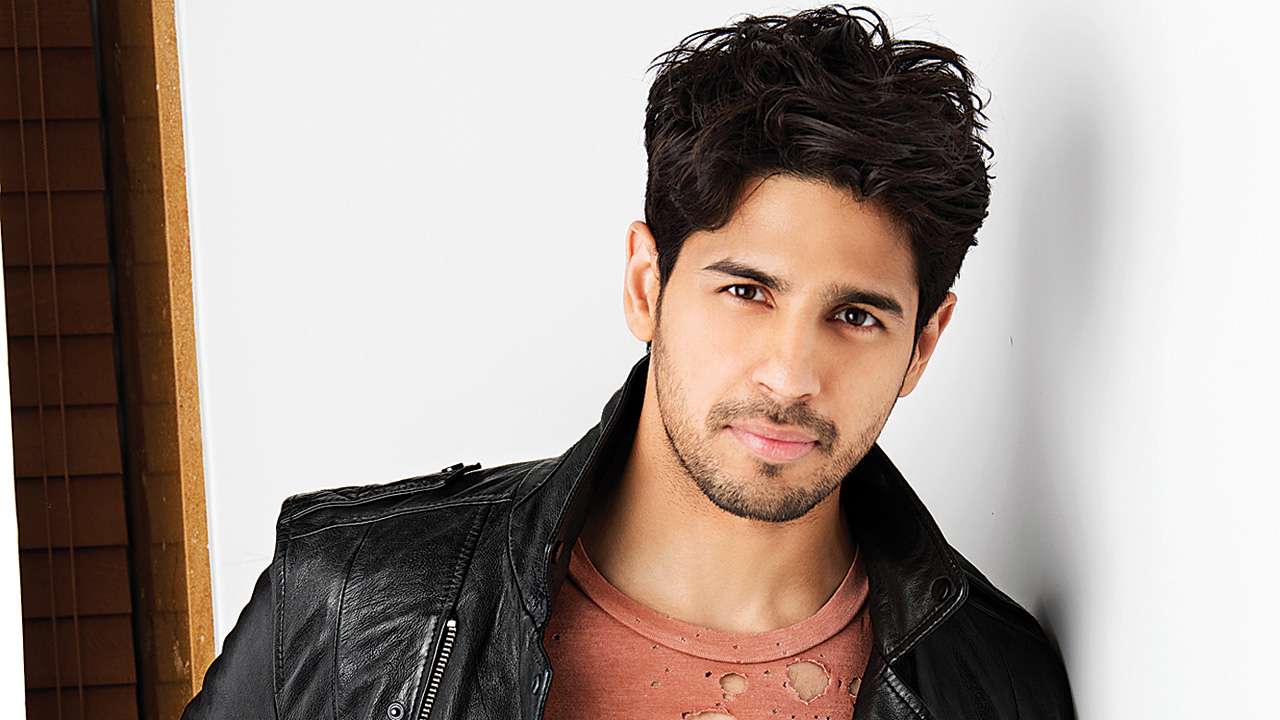
After a lean phase, Sidharth Malhotra is raring to go with three films coming up in the next one year, starting with Jabariya Jodi. The suave actor will be seen playing a character from the Hindi heartland for the first time. With colourful shirts and desi thumkas, the 34-year-old looks like a tapori, and a far cry from the city-bred gentleman we are used to seeing him as. With the release date being shifted several times, there is a possibility of the actor not being present when the film hits the theatres. Nevertheless, the Delhi boy is looking forward to the audiences’ response to the movie as it is his first attempt at essaying a Bihar-based character. Here, he tells us about the prep that went into playing the role, and the reason actors want to play characters from the hinterland.
Lately, every other film is set in the heartland and even actors desire to play upcountry characters to connect with the audience. Do you agree with that?
I think it’s the mood of the nation. If you look historically as well in the ’90s, India was aspiring to go international. I was a student in the ’90s and we all thought chal foreign chalte hain, kuch karte hain... That’s why films of that time mostly had characters either based in a foreign land or had songs that were filmed there. In the last seven-eight years, the mood has changed and gone back to people wanting stories that are relevant to them — from their cities, colonies, galis. That is a shift even India has gone through as a nation. Any culture or art form is the reflection of what the current state of the country is. In that sense, it is a much larger thing. I am happy that writers are coming up with very good content that is based within our cities — some of them are socially relevant, like Jabariya Jodi, but with a different twist, others are inspired by real-life stories, then there are those based on certain issues, including politics. All this gives a chance for the viewers to introspect and yet be entertained. It’s a good phase that we are going through.
As an actor, how has it helped you?
As an actor, it makes it interesting to play something that is relevant to me than to essay characters that are from some other land. In my next three films, I play characters from different cities — one from Mumbai (Marjaavaan), another from up North (Shershaah), and one based in Bihar (Jabariya Jodi). It gives me a variety and the audience won’t feel bored. In my filmography, I’ve tried to play characters from different worlds. None of my characters, posters or trailers look the same. That’s always been my effort, and with this regional flavour, it becomes big and absolutely diverse.
Was that the reason you decided to do Jabariya Jodi?
It has a lot to do with the fact that I hadn’t done a role like this. When I got the narration, I thought it will be interesting to play a character in this world, which I have never done. Also, Indian cinema has never shown this subject — pakadwa vivah that happens in Bihar. So, it was a combination of having a good concept and for me, especially, that of playing a heartland character. Because I hadn’t played such a character before, people started assuming I can’t. This is my version of a desi Patna boy. I have grown up in Delhi where I have seen this leheza and this world.
Were you aware of Pakadva Vivah concept before?
I had heard about it socially. I didn’t know in depth how big an issue this was. It is definitely an eye-opener. As we started working on the script — I was shown articles on real-life cases. Some of the inspiration for my character has come from real life. Sanjeev K Jha, who is the writer, has been inspired by various bahubalis who get these marriages done. Some of them are in jail or in politics! That’s why my character says hamara focus bistar se jyaada kursi pe hai. I would say it is a fictitious story on real-life incidents. It’s an attempt to take a social cause and give a comic take to it, of course, through a love story.
What kind of prep did you have to do for the character?
A lot of prep definitely went into my character Abhay Singh. First of all, if I am playing a boy from Patna, I should sound like that guy. A lot of work went into getting the accent right. We consciously made the characters speak in Hindi as it’s a Hindi film. But it has a heavy accent of that region with some words in Maithili, Bhojpuri and Magadhi. Personally, I prepped for a month-and-a-half — I had a personal tutor. We even worked on the look, like, gave him hair colour, earring, and since he is Shiv ka bhakt, he has tattoos of Shiva. He is smoking chillum, which I had never done before and which we call Shiv ka prasad. Maximum amount of character building went into it and this is my favourite. I thoroughly enjoyed speaking this language and pulling off this character, which is strong yet colourful.
When you and Parineeti Chopra did Hasee Toh Phasee, both of you were relatively new, and now you are reuniting on-screen after five years. Has the equation changed?
As you said, Pari and I worked together early in our career. There is definitely a lot of maturity in both of us in the sense of friendship and comfort, which helps in a love story like Jabariya Jodi. When you want to improvise or try something new, you are not scared of experimenting with a co-actor whom you have worked with before and are friendly with. Our director benefited from us working in the past. He could just give one input and we would try anything. Pari is coming in a new avatar with red hair. She is fitter and a 2.0 version of herself. Not so much into pizza now!
The film has been shifted so many times, what is your frame of mind now?
I am excited. It (the date change) is a distribution call taken by our producers where they felt that the previous weekend would have more releases and lesser space. Because of multiple films coming in and English movies releasing, there was a lot of crowd at the box office. Now, our film will get more space on a much larger scale with more screens. I really believe in this film. It’s a special middle-class mass love story. A new concept, in which I play a new character. But, unfortunately, I might not be there for the release, as I might be shooting for another film.

More than direction, I may produce films-Sidharth Malhotra
7:50 AM

Sidharth Malhotra on future plans, past failures and present link-ups
Himesh Mankad (MUMBAI MIRROR; July 5, 2019)
After urban films like Kapoor & Sons, A Gentleman and Ittefaq, Sidharth Malhotra jumps into the small-town zone with his next, Jabariya Jodi, and talks about the transition. Excerpts from an interview:
How different was the process of prepping for a small-town groom abductor from Patna?
Well, Abhay Singh—that’s my character in Jabariya Jodi—is flamboyant and colourful, so first, it was important to get the look and styling right. We decided to give him an earring, several rings on his fingers and coloured hair. After that, I worked on the accent, which is a blend of Bhojpuri, Maithili and Magahi spoken in Patna. It was a part of a twomonth workshop before the shoot. I also worked on it on my own since I had a certain body language to carry through the film.
Did you know about grooms being abducted in Bihar before reading the script?
I had read about it online and discovered that 100-plus FIRs have been filed so far in groom-kidnapping cases. It’s true that to avoid dowry, men are forced to get married at gun-point. Our writer (Sanjeev K Jha) and director (Prashant Singh) are from the state, so they have taken facts and fictionalised them to make an entertaining love story. It’s an interesting cocktail and I was drawn to this endearing character.
What made you step into this zone?
If you look at my filmography, no two films or looks are alike. It’s the novelty here too that attracted me since it’s something I’ve not done earlier. Some films work, some don’t, but one should not let fear of the new kick in.
So, what’s Sidharth’s brand of cinema?
I grew up in Delhi on commercial cinema so for me it’s all about entertaining people. But there should be something new for me in it and not just recycled stuff. I would say my brand is commercial cinema backed by concept. Basically, a nice mix of something new, keeping the charm of Hindi film heroism alive.
How would you define heroism?
I have grown up watching Shah Rukh Khan and Salman Khan in the ’90 s and a lot of Mr (Amitabh) Bachchan. Heroism is all about personality—it’s the style and flair your character possesses. When a hero romances or does action, it leaves a different impact. For me, heroism is character-defining. We used to copy Shah Rukh Khan moves and lines while growing up, so for me, a hero is someone who is so entertaining that you take a part of him home. As an actor, I can try to give my best to a character and hope people take something back home with them.
Since your debut in 2012, some films have worked, some have not. What’s your take on failure?
You learn from success as well as failure. It makes you stronger. For somebody like me, who came to Mumbai a decade ago, at 21-22, learning happened on film sets. I learnt filmmaking as an assistant director and then I got into acting to learn more.
This is our job, and like everyone else, we have good days and bad days at work. Of course, it comes with added pressure as there’s a lot riding on an actor in terms of budget and performance. But we are here for the long run and despite some films not going my way, I have continued to pick up challenging roles. Coming from outside the industry, with nothing to back me as an actor, I can say I have only grown.
Any plans to direct a film in the future?
 I genuinely love the process of filmmaking and I am often involved in different stages of production. I haven’t really thought of turning director as I am enjoying my space as an actor. More than direction, I may produce films.
Next up: Marjaavaan…
I have entered the mass action hero zone with this film, an intense love story. It’s a much tougher character, even physically I had to put on some weight and gain muscle. It’s not quiet and sombre like my earlier characters. It’s a quintessential love story and the emotion works for me, but the packaging is massy, with a lot of action.
 You’re playing Kargil martyr Captain Vikram Batra in the biopic Shershaah. Tell us about your meeting with Batra’s family?
Shershaah is happening because I met the family around three years ago, and they thought I was apt to play their son on screen. It’s an emotional responsibility to tell the story of somebody who gave his life for the country. It took me a while to set up the film, put the script together and get a director on board. Then I went to Karan Johar. He liked it and took over. I have wanted to make this film for two years. It is a performance-oriented role but also commercial. We have just started shooting in Chandigarh and in his home-town, Palampur, with Kiara (Advani) as my love interest. Soon, I go to Kargil where I will shoot for a major chunk of the film. It releases next year.
There have been link-up rumours with co-stars of your upcoming films, from Tara Sutaria to Kiara Advani…
(Laughs) These are jabariya (forced) rumours, jabariya link-ups, and nothing which is done jabariya is good.
Subscribe to:
Posts (Atom)