Showing posts with label Sanjay Suri. Show all posts
Showing posts with label Sanjay Suri. Show all posts
Someone did imagine Akshaye Khanna as Rehman Dakait-Sanjay Suri
9:44 AM

Priyanka Sharma (MID-DAY; June 30, 2026)
Sure, the love that Sanjay Suri has been receiving for his performance in Imtiaz Ali’s Main Vaapas Aaunga has left him elated. Interestingly, it has also made the actor greedy for opportunities. “I don’t have much time left. I am 55! So, I better do more work,” he laughed.
What stopped him all these years? Over his 26-year career, the actor hasn’t been seen on screen as frequently as he would have liked. There is a reason for that, he stated.
“Throughout my career, the query has been ‘Why do we see less of you?’ My only answer would be that I felt underutilized. I would get a lot of offers [to play] a well-educated, well-to-do, smart, and suave guy. That’s where it ended. There would be nothing more to offer [in the roles]. So, there has been creative short-sightedness in imagining me,” explained Suri.
Hopefully, that will change. The actor believes that directors today prefer casting against type. He said, “Times have changed. For instance, someone did imagine Akshaye Khanna as Rehman Dakait [in Dhurandhar, 2025], right? These directors don’t want run-of-the-mill [casting], which is exciting. So, I’m hoping for diverse opportunities to come my way. The slotting still happens, but a few of the directors as well as OTT entertainment have changed that.”
Imtiaz Ali is leading you to love, not hate-Sanjay Suri
9:47 AM

Sanjay Suri says he joined ‘Main Vaapas Aaunga’ knowing that director Imtiaz Ali would treat the Partition story from the lens of inclusivity, not divisiveness
Priyanka Sharma (MID-DAY; June 26, 2026)
It took only a phrase for Sanjay Suri to give his nod to Imtiaz Ali’s Main Vaapas Aaunga. “Imtiaz used this line, ‘Opening of the heart’. That is what I was hoping someone would make,” recalled Suri, referring to Ali’s Partition drama that views the historic chapter through the lens of inclusivity, not divisiveness.
In the Naseeruddin Shah, Diljit Dosanjh, Sharvari, and Vedang Raina-starrer, Suri plays a Sikh man separated from his family after Partition and spends the rest of his life waiting for them. Ali’s treatment, coupled with the role, was just what the actor was looking for.
“There was a comfort in working with Imtiaz because I knew he is not leading you to hate. He is leading you to love, and to opening of the heart. The film asks what we humans are made of. This othering is so non-inclusive. If we live a life with inclusivity, it can be a joy to live,” reflected Suri.
His fondness for Ali began with the first meeting itself. Suri recalled how they spoke more about life than his role. “I’m from Kashmir and he has a connect with the place. So, we chatted about life and then he said, ‘I am making a film, which is being seen from an old man’s viewpoint.’ Then we started talking about humans seeing grief, loss, and identity.”
I may not have a Rs. 100 cr film to my credit, but I’ve been fortunate to be part of some wonderful films-Sanjay Suri
3:17 PM

Neha Maheshwri (BOMBAY TIMES; June 12, 2026)
Joining the TV show Juhi Mui marks a full-circle moment for Sanjay Suri. Having begun his career on television in 1997 before moving to films, the show’s socially relevant theme and limited commitment made it an appealing proposition.
He says, “I kept myself away from longer commitments. This was a month-long commitment, and we’ve kept the track open so I can return when required. In cinema too, I’ve mostly been part of socially relevant films. When this show was offered to me, I felt it was a good story and socially relevant too.”
Talking about returning to the medium after nearly three decades, he shares, “I hosted the travel show Indian Holiday nearly 30 years ago followed by Yehi Toh Pyar Hai as the lead. Then Pyaar Mein Kabhi Kabhi happened, followed by films and producing, and life took another trajectory. So, this is like my ghar wapsi after 30 years.”
Sanjay believes the distinctions between television, films, and OTT are increasingly becoming irrelevant. He says, “You’ve got to remain platform-agnostic and do the work you want to do, especially at this stage of my career. Earlier too, it wasn’t that I didn’t want to take up a TV show. I simply couldn’t commit to one or two years because I was focusing on films.”
The actor dismisses the belief that film actors turn to television only when opportunities elsewhere become scarce. He says, “That could be someone’s perception. Even back in the day, I sat at home for two years and didn’t do anything. I’ve just had a release with Imtiaz Ali’s Main Vaapas Aaunga, have an upcoming OTT show, and will dabble in short films. If you look at the 27 years I’ve been active since 1999, I may not have a Rs. 100-crore film to my credit, but I’ve been fortunate to be part of some wonderful films that have stood the test of time. My aspirations have never been driven by panic or visibility.”
Over time, Sanjay stopped measuring success by mainstream benchmarks and focused instead on work that aligned with his creative instincts.
He shares, “I was never offered a buffet of films. It was always, ‘Okay, he does this alternate kind of cinema,’ and maybe that forms a perception. I did a commercial film, Tera Jadoo Chal Gayaa, which was Abhishek Bachchan’s second film, but my experience was that everything revolved around one person. In those days, cinema was very hero-driven. Either you’re the lead, or you’re reduced to nothing. I said, ‘Okay, I’ll play on my T20 ground.’ I don’t mind being a brick in the wall, but if you take that brick out, it should make an impact. Even when I turned producer, it wasn’t from the point of view of making money. It was about telling stories. I Am became one of the largest crowdfunded films in the country and went on to win a National Award. That was great gratification for everyone involved.”
At some screenings of My Brother Nikhil, audiences walked out at the interval when they realized Nikhil was gay-Onir
8:09 AM
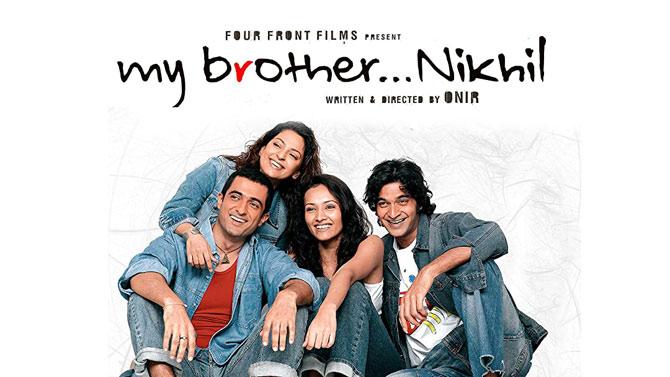
Niharika Lal (BOMBAY TIMES; March 27, 2025)
Onir's debut film My Brother Nikhil completed 20 years recently, Onir says that when he looks back at the film, he sees how the film continues to trigger conversations. In a recent chat, he looked back at the film and said he sees it as not a 20 but 30 years journey.
He says, "If I look back 30 years, since I came into the industry, and 20 years of My Brother Nikhil, I feel an immense sense of gratitude and happiness," he says. “I'm from Thimphu, Bhutan, born and raised in a middle-class family. As a boy in class eight, I had a dream to be a filmmaker. And to make my first film in the world’s largest film industry, to carve out even a tiny space for myself it’s empowering.”
'Teenagers who watched it growing up say they felt seen, represented'
Onir's debut film, My Brother Nikhil, released in 2005, was considered groundbreaking by critics. It told the story of Nikhil Kapoor, a champion swimmer diagnosed with HIV, at a time when cinema largely avoided LGBTQ+ narratives. The film was deeply personal for Onir, inspired by the life of Dominic D’Souza, India’s first known HIV/AIDS patient.
Dominic's story was so powerful that he couldn’t shake it off and started working on the film. “Even now, people message me about the film,” he shares. “Teenagers who watched it growing up say they felt seen, represented. Parents have told me it helped them understand their children better.”
During a recent screening celebrating 20 years of the film, Onir recalls a moment. “A woman stood up and said, ‘When I saw your last film, Pine Cone (2023), I learned something about my son that I had never understood. And when I watch My Brother Nikhil now, I realise that for so many years, I deprived my son of my love. The loss was mine, not just his."
Onir recalls walking the streets of San Francisco with lead actor Sanjay Suri after the first international screening. "People would shout, ‘Nikhil, we love you!’" he recalls.
Yet, in India, reactions were mixed. “At some screenings, audiences walked out at the interval when they realized Nikhil was gay. And despite critical acclaim, the industry did not recognize it. So I've never got any award in India, apart from my National Award in 2011 (For I Am), My brother Nikhil never got that recognition which was a little sad, but at the end of the day, after 20 years later, we are still talking about the firm and I feel that is beautiful. ”
'Making the film was not easy but the film is now archived in universities, cited in research'
The making of My Brother Nikhil was not easy. “Sanjay and his wife, Neha, cried when they read the script. Initially, I thought we’d shoot on a small video camera. But Sanjay said, ‘No, we have to make this into a film.’ They pooled personal savings and, along with friends, formed Four Front Films."
Yet, distribution was a nightmare. “Aisa kyu nahi kiya? They had all kinds of weird suggestions and there were people I remember from big distribution companies saying - are you showing us the rushes? So it was humiliating at times. And it was only when Sanjay showed the film to Karan (Johar) and Karan was really, really kind. It touched him. He suggested Aditya Chopra to watch the film, so for a debut person to get that big release - I felt that good energies got together, and made it possible, but it was not an easy journey. It took us years to recover because it was not easy. The struggle didn’t end with its release."
Onir admits, “But it was rewarding in other ways. The film is now archived in universities, cited in research. It has become part of Indian cinema history.”
In 2005, My Brother Nikhil got a U certificate and a theatrical release. In 2025, I still have to fight for certification
Looking back, Onir sees progress but says, “In 2005, My Brother Nikhil got a U certificate and a theatrical release. In 2025, I still have to fight for certification, and queer films struggle even more for distribution. People talk about progress, but tell me, how many queer-themed films did you see in cinemas last year? Very few. Streaming has opened doors, but even there, truly path-breaking Indian films are rare. The last important one I remember was Kaathal - The Core, with Mammootty playing a gay man.”
I wanted to tell this story to show that we all have the power to be better, to be more loving, understanding, and accepting
The film’s perspective - told through the eyes of Nikhil’s sister was intentional. “In an ironic full-circle moment, my sister co-wrote my biography, I Am Onir, in 2022.”
On set, Onir was quite focused. They shot in 27 days on a tight budget in Goa. Juhi Chawla, playing Nikhil’s sister, was used to a different kind of filmmaking.
He recalls, "After a few days, she came to me and said, ‘It’s my 77th film, your first. But you have to tell me what to do - I am a director’s actor.’ That gave me confidence.”
For Onir, filmmaking is about humanizing experiences. He says that he is branded as a filmmaker who makes issue-based stories, but he doesn't tell stories to highlight an issue, but to show life.
What did he want to say through the film? Onir says, "For me, Dominic’s story stayed with me - the sheer cruelty and unkindness he faced from society. I wanted to tell this story to show that we all have the power to be better, to be more loving, understanding, and accepting. I remember feeling Dominic’s pain and anguish so deeply while making My Brother Nikhil that it became internalized in the film. When my father watched it, he called me and said, ‘But I was never like that to you.’ And I told him, ‘It was never about you.’(laughs).”
He says, "At the heart of the stories I tell is this question - Why do we hesitate to offer a little more love, empathy, and acceptance to others? It costs us nothing, yet it enriches our lives in ways we don’t always realize. I feel that, both then and now, queer people are constantly navigating a world where finding love and support is not always easy due to lingering stigma. When I was making My Brother Nikhil in 2005, I wanted to explore that reality. In many ways, at that time the film also reflected my own longing for a love that endures."
He adds, "I feel that the film also gave me precious people in my life, like Sanjay Suri, Juhi Chawla, my cinematographer, and my sound recordist, with whom I have now worked for 20 years on all my films. It gave me lasting bonds. People talk about bonding in the film fraternity, and I truly feel that I have found so much love in this industry. Of course, there have been hurdles, but I believe I have found more love than challenges. I could be who I am today only because of the support I received even as an outsider in the film industry."
Sanjay Suri was always on Onir's mind for Nikhil. When it came to casting Juhi, Onir says that beyond her talent, she has this warmth and innocence and her smile alone radiates so much love. He says, "I was telling the story of a gay character - one of the first in mainstream Hindi cinema - and the audience was still raw about it. I felt that I needed an actor with a certain presence, someone whose warmth and sincerity could resonate with viewers. Juhi has such a warm, loving smile, and I believed that when the audience her character's love toward her brother, it would help them connect emotionally and be more accepting. For me, it was her innocence, warmth, and that beautiful smile that made her perfect for the role. Of course, I already knew what she could do as an actor."
Onir's favourite moments from the film
One scene that deeply touched me was the moment by the sea, when Juhi's character is at the sea and Sanjay is dying. She tries to be strong, but when Nigel tells her she must keep going, she simply says, ‘I’m tired of being strong.’ I remember that while filming, we were all overwhelmed with emotion and all of us were crying - it was as if the fear of losing someone dear became real for all of us.
---------------------------------------
“A journalist recently asked me, 'Onir, haven't you done enough?' (for queer narratives). I asked him - 'Would you ever ask a straight filmmaker that?"
I was told My Brother Nikhil was commercial suicide-Sanjay Suri
10:55 AM
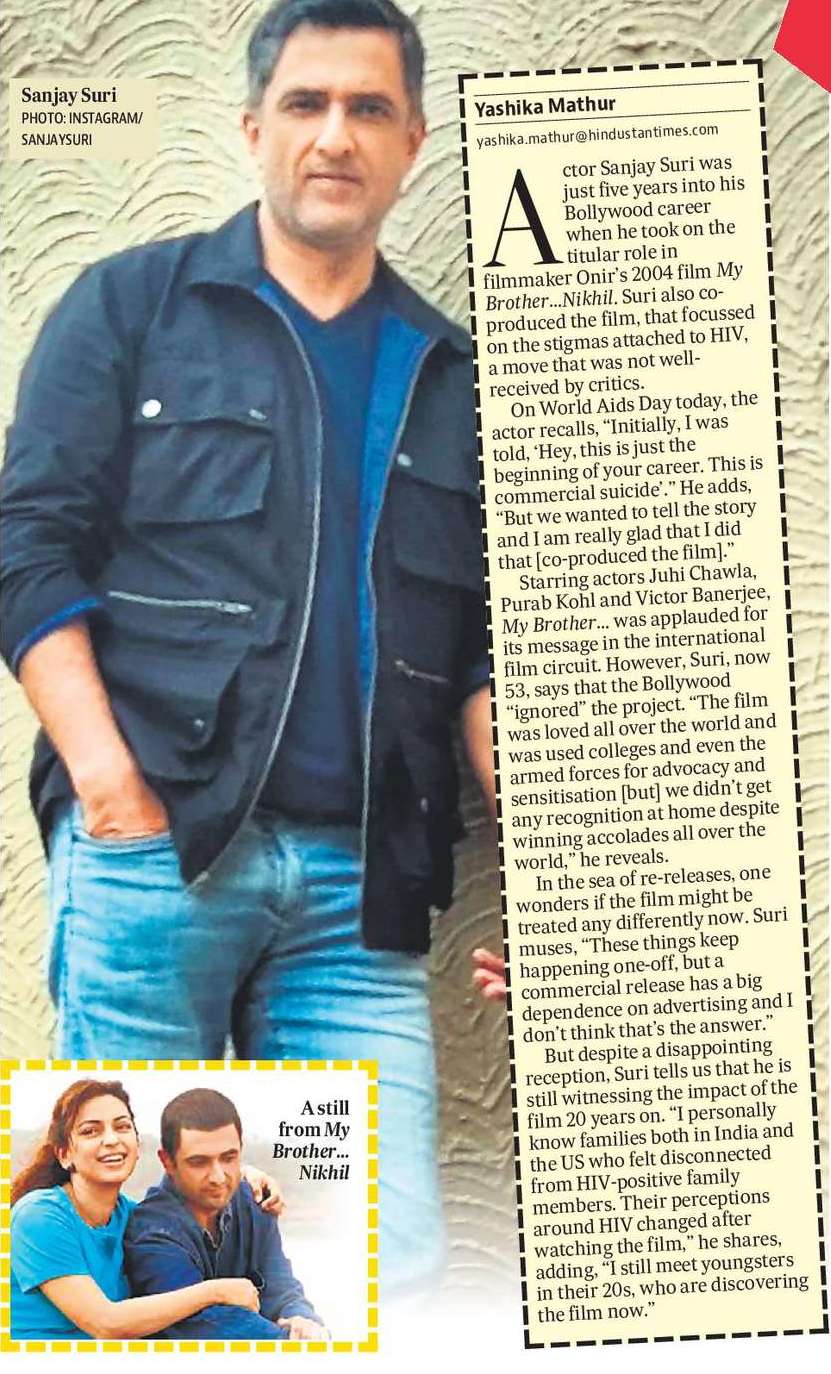
Yashika Mathur (HINDUSTAN TIMES; December 1, 2024)
Actor Sanjay Suri was just five years into his Bollywood career when he took on the titular role in filmmaker Onir’s 2004 film My Brother...Nikhil. Suri also co-produced the film, that focussed on the stigmas attached to HIV, a move that was not well-received by critics.
On World Aids Day today, the actor recalls, “Initially, I was told, ‘Hey, this is just the beginning of your career. This is commercial suicide’.” He adds, “But we wanted to tell the story and I am really glad that I did that [co-produced the film].”
Starring actors Juhi Chawla, Purab Kohl and Victor Banerjee, My Brother... was applauded for its message in the international film circuit. However, Suri, now 53, says that the Bollywood “ignored” the project. “The film was loved all over the world and was used colleges and even the armed forces for advocacy and sensitisation [but] we didn’t get any recognition at home despite winning accolades all over the world,” he reveals.
In the sea of re-releases, one wonders if the film might be treated any differently now. Suri muses, “These things keep happening one-off, but a commercial release has a big dependence on advertising and I don’t think that’s the answer.”
But despite a disappointing reception, Suri tells us that he is still witnessing the impact of the film 20 years on. “I personally know families both in India and the US who felt disconnected from HIV-positive family members. Their perceptions around HIV changed after watching the film,” he shares, adding, “I still meet youngsters in their 20s, who are discovering the film now.”
How many times will I cast Sanjay Suri or Rahul Bose?-Onir
8:01 AM

The sequel will star Kubbra Sait
Having recently announced sequel to National Award-winning film I Am, Onir says OTT platforms have refused to fund the anthology possibly due to its queer theme
Mohar Basu (MID-DAY; July 30, 2021)
Few filmmakers in India allow their personal identity and politics to reflect in their work. Onir has always believed in bringing stories of the queer community to the world, starting with the heartfelt My Brother Nikhil (2005) to the National Award-winning 'I Am' (2011). Last month, the director announced 'We Are', the sequel to the 2010 anthology.
“I had no idea that I would explore a sequel. The only thing I wanted to do was to celebrate the decriminalization of Section 377, and take the discourse forward to understand what needs to be done in terms of civil rights. During the lockdown, Devdutt Pattanaik sent me a concept of a gay love story, which I developed as a short film. Then, I started thinking whether we can whip up an anthology of four queer love stories, each with a fresh theme.”
The anthology will feature The Great Indian Kitchen actor Nimisha Sajayan alongside Sacred Games’ breakout star Kubbra Sait. In working with relatively new actors, Onir is trying to step out of “my comfort zone”. “How many times will I cast Sanjay Suri or Rahul Bose? I need to explore other actors,” he states.
One would assume that a sequel to I Am would be easier to make amid the current OTT revolution. However, the director rues that he is struggling to find investors, possibly because of the anthology’s subject. “As an out and proud filmmaker, with National Awards being conferred on I Am, I expected more interest from OTT platforms. The lack of interest shows that the world is full of closet homophobes. Many platforms have declined to fund the film. If they don’t believe in the theme or empower people from the community, great content will never happen,” says the filmmaker, who is developing the project with Pakistani-Canadian filmmaker Fawzia Mirza. “My belief in the film is such that I will shoot it on my iPhone [should the need arise]. No one can stop me from telling my stories.”
Onir intends to roll the project in September after honouring his commitment as the jury member of the Short Film Festival at Indian Film Festival of Melbourne.
Before every take, Raj Kaushal would say energy instead of action-Sanjay Suri
8:02 AM
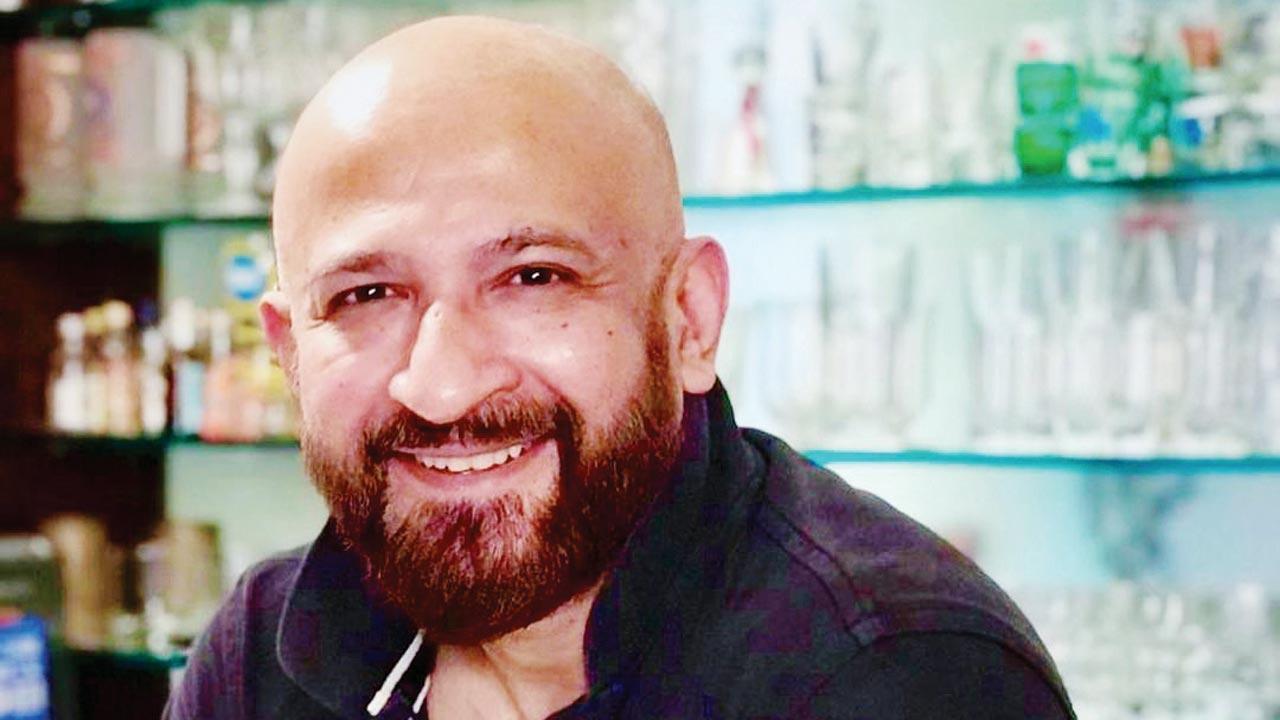
As Raj Kaushal’s sudden demise leaves family, friends shocked, Sanjay Suri and Dino Morea remember coming together for their maiden movie, Pyaar Mein Kabhi Kabhi
MID-DAY (July 1, 2021)
His friends remember him as someone with a ready smile on his face. And his Sundays were dedicated to what he treasured the most — friends and family. Over the weekend, Raj Kaushal’s heart was full as wife Mandira Bedi and he played host to their near and dear ones. Three days later, the film and television industry woke up to the shocking news of the filmmaker’s demise, the incident reminding us of the fragility of life.
Kaushal had forayed into filmmaking with Pyaar Mein Kabhi Kabhi (1999). The campus drama not only ushered in a new sound of music with Musu Musu Hasi and Woh Pehli bBaar, but also launched a string of new faces, including Dino Morea, Sanjay Suri and Rinke Khanna. “I get so many messages about the film’s songs to date. Raj knew how to make it special,” says Morea, remembering how Kaushal was completely in charge of the project. “My most striking memory of the film is Raj’s smiling face. No matter what went on around him, he had a positive energy that rubbed off on everyone. Mandira was a big part of the film’s making. Seeing her distraught today broke my heart. He was young, and has been taken away from us too soon.”
Suri, who had spoken to Kaushal four days ago, is shocked. “When we spoke, he said, ‘Bhai, milte hai aur kuch karte hai.’ I planned to meet him after returning from my shoot [in Uttarakhand],” says Suri, who had gone on to team up with him on Shaadi Ka Laddoo (2004) and My Brother Nikhil (2005).
“Not many know this, but he was one of the best narrators I have ever met. You could give him a boring one-liner, but he would narrate it with such skill that you could visualise it completely. He was always bursting with ideas. He inculcated a lot of confidence in his actors. We were all new, but he gave us complete freedom between ‘action’ and ‘cut’. It was liberating to work with him.”
The actor is grateful to Kaushal for co-producing My Brother...Nikhil when few had faith in the same-sex love story. “Raj played a big part in my career and my life. I called him a yaaron ka yaar. He had magnetic energy to him. In fact, before every take, he would say energy instead of action, and the vibe on the set would be so positive.”
Actor Manish Chaudhari, who recently shot for Kaushal’s web debut Akkad Bakkad, has yet to come to terms with the loss. “We had finished shooting only three weeks ago. He was happy to have wrapped up 10 episodes in less than 30 days of shooting. He was kicked about his first OTT project, and was looking forward to directing the second season. Mandira and he had recently adopted Tara, and he would keep sharing stories about his kids on the set.”
The gay community was emotional and happy about the way they were represented in My Brother Nikhil-Purab Kohli
8:05 AM

Sanjay Suri and Purab Kohli talk about their film My Brother... Nikhil, which focussed on the relationship between a gay couple at a time when homosexuality had no place in mainstream Bollywood films
Onkar Kulkarni (BOMBAY TIMES; June 26, 2021)
At a time when homosexuality was rarely mentioned in Bollywood films and same-sex relationships were not a part of the mainstream narrative, Sanjay Suri and Purab Kohli dared to take on the film My Brother…Nikhil. The 2005-film, which portrayed the story of two gay men, also touched upon the subject of AIDS. The movie directed by Onir always wins a special mention for putting the spotlight on same-sex relationships.
In the ongoing Pride Month, we catch up with the film’s lead actors, Sanjay and Purab, who speak about being a part of the film and the kind of appreciation they received from the audience and gay community. Excerpts:
My Brother…Nikhil was made at a time when homosexuality was not a part of the mainstream narrative in Bollywood. What inspired you to take on a film that dealt with such a sensitive subject, and that too, helmed by a debutant director?
Sanjay: The first time I met Onir was when we were shooting for Daman: A Victim of Marital Violence (2001). He was working on the film as an editor. When Kalpana Lajmi, who was directing the film, had to leave the set for a day due to an emergency, she gave Onir the responsibility of managing the shoot. We all were happy with his job. I asked him to come up with a script, which I could produce. That’s when he showed me the script of My Brother…Nikhil. I was moved by the writing. I thought the story needed to be told, so I offered to co-produce it. As for acting in it, I didn’t think twice because I wanted the message to reach the audience. However, I was warned by many people who felt the film would finish my career. Frankly, such talk encouraged me to explore the subject more.
Purab: Initially, I was skeptical about taking up the project because just before I was offered the film, I had shot for Luke Kenny’s first directorial 13th Floor, in which I played a gay character. So, I took some time to read the script. It was so fine that I gave the nod immediately after reading it. I am glad that I did a film like My Brother…Nikhil. It happened at a time when I was enjoying my career as a VJ, but this movie made me realise that I should focus on acting as a career.
Was there a lot of research and prep involved to get the nuances of your characters and relationship in the film right?
Purab: To begin with, Onir wanted me to play the role of Nikhil, which eventually Sanjay did. For me, Nigel was more of an effeminate character, while Nikhil — a state-level swimmer — was the more masculine one. So, I had to process how I would go about playing this character. I was very young when I played this role, and I often drew references from my mother’s friend, who was gay. While shooting, there were certain activities that Onir introduced me to, which helped me portray Nigel better. For example, to understand the creative side of the character, Onir got me a lot of plain T-shirts and asked me to paint them. In fact, many T-shirts that I sport in the film were painted by me.
Did you concentrate a lot on how the relationship between the two of you would unfold on the screen?
Sanjay: Actually, it all happened very naturally. We didn’t rehearse much. It was so organic that if Onir had added a kissing scene or an intimate scene, I would have been comfortable doing that, too. However, we didn’t keep any such scenes as we didn’t want them to take away the focus from the issues that we wanted to highlight. For the same reason, in the film, we haven’t shown how Nikhil contracts HIV.
Purab: Sanjay and I were like two ingredients that blended well and that made our relationship seem real.
The film received a lot of appreciation from the critics, what kind of reception did it get from the gay community?
Purab: I remember we had hosted a special screening for the members of the gay community, who appreciated the film a lot and were emotional when they saw it. Probably, it was for the first time that they felt that they were being represented in the right manner in our cinema. Personally, I felt proud when my uncle appreciated me for doing this film. It came as a surprise as I wasn’t sure about his thought process and was skeptical about his reaction. More than the theatrical release, we got a lot of attention when the film premiered on TV many years later. In fact, today, it is available on an OTT platform, too, and I am happy that we have the younger generation watching it.
Sanjay: We had also invited HIV positive patients for the screening, as the film also dealt with that subject. After one of the screenings, a lady met me and said, ‘Thank you for making this film as it helped me understand my daughter better, who I lost to AIDS 10 years ago’.
Did the film make you popular with the gay community?
Sanjay: I remember when I was walking the streets of San Francisco with my wife, I had a couple of men screaming, ‘Hey Nikhil, I love you’. At that time, there were no social media, but my website had gone live and there were so many messages I received from gay men. Some of them were surprised and even disappointed that I was straight in real life and married to a woman.

When WhatsApp came in, we never stopped using text messages. Similarly, web and theatres will coexist-Sanjay Suri
8:24 AM

Juhi Chakraborty (HINDUSTAN TIMES; May 10, 2021)
As things started to look up for the entertainment industry at the beginning of this year, Sanjay Suri says, “There was a catch-up feeling in the industry as there was a huge vacuum in between. And once things started opening up, people had to finish the pending work and new work was starting as well. I feel it was already getting busy for many and it was a good sign.”
However, the second wave of Coronavirus put a full stop on shoots yet again. Given the lockdown in many states, the actor feels that just like last year, OTT platforms would probably take prominence this time, too. “With the availability and access to web platforms, loads of content is needed and so there’s room for all under the sky,” he adds.
The 50-year-old, who has been part of multiple OTT projects such as Leila, Mentalhood, Bhram, Ateet and Pareeksha, notes how a change has come about in the realm of entertainment. “I think disruption has happened for sure,” says Suri, adding that even though OTT platforms are rising, theatres will never cease to exist.
“When WhatsApp came in, we never stopped using text messages. Similarly, the web and theatres will coexist. It’s not that one will replace the other. Theatres cater to a much wider audience and by that, I mean different strata of society. It’s more event-based. You know a film is releasing on a particular date, so it is like your date with your film,” the actor explains.
Also, pointing out how certain films are only enjoyed in the cinemas, he says, “It’s just like when we want to watch a big match in the stadium. Some mainstream films released on OTT and did not work. But if they’d have had a theatrical release, they would have worked because of sheer star power and marketing. I’m hoping that soon the excitement of watching films on the big screen will come back to our lives.”
Hopefully, gender roles will cease to exist and people will learn from this phase-Onir
8:15 AM

As told to Saptaparna Biswas (BOMBAY TIMES; April 4, 2020)
I was out for a late run when the Coronavirus lockdown was announced. My first thought was for my parents, and how I was going to keep them calm through these three weeks. Now, my typical day begins with planning the meals for the day with baba and maa. My parents are 90 and 75 years old, respectively, and it is very important for me to keep them actively engaged in these days of lockdown. Like many people of their age, they get anxious after listening to the news, especially about the fatalities in their age group. Due to their increased vulnerability to infection, I have neither stepped out of the house, nor allowed anyone inside since the lockdown. Our house-help has been given leave as well.
The best way to keep them engaged is by doing the two things Bengalis love the most — cooking and eating! The first two days, I prepared the dishes they liked. Soon, baba started taking an interest and cooking with me. Now, all of us cook together. This has helped us keep the negativity at bay. It is also heart-warming to see my parents taking care of each other. Though he can’t stand for long, my dad prepared paayesh (kheer) for maa one day because no sweet was available.
Besides cooking, the most important thing for me right now is to complete a script that I have been working on. I have a self-imposed deadline to finish it before the lockdown gets over. It is a political thriller set in Mumbai, Delhi and Kashmir. I am also re-learning Hindustani classical music and doing yoga.
My biggest takeaway from this period is that I have learnt to value people more. All these days of staying away from the people who I used to meet every day has made me understand that I should have probably given them more time. I wish everyone comes out of this with more love, care and understanding — and hopefully, gender roles will cease to exist and people will learn from this phase. Once the period of social distancing is over, the first person I would want to meet is my friend Sanjay Suri and have a nice coffee with his family and my godchildren.
Why is it odd to consider cuddling a real profession-Sanjay Suri
8:25 AM

Set to play a cuddler in an upcoming short, Sanjay Suri aims to distance from the profession, the taboo associated with it
Mohar Basu (MID-DAY; November 7, 2019)
Diversified tastes of movie-goers have given an impetus to filmmakers to give a go at the unconventional. After offerings based on pre-mature balding, erectile dysfunction and mental health issues, an upcoming short, Call Him Eddy, is set to showcase the life of a professional cuddler, to be played by Sanjay Suri.
Call Him Eddy is being helmed by Sanjeev Vig, who shot to fame with the award-winning Rogan Josh, starring Naseeruddin Shah.
Coming off projects like Inside Edge, Leila and Raazi, Suri alludes that while the concept is alien in India, the act of cuddling should be considered as seamless as buying a cup of coffee. "Why can’t there be a Starbucks for hugs," he asks, before adding, "Cuddlers are people who get paid to give platonic snuggles to clients. We all snuggle with someone or something, be it a spouse, child, parent or even a pillow. Why is it odd to consider it a real profession? We pay for tons of other services that make us feel good, like eating, shopping, spas and even accessing a shrink."
Did Mahatma Gandhi have anything to do with music?
8:02 AM

On his 150th birth anniversary, authors of two new books on the Mahatma discuss how cinema and music of the time, drew inspiration from him
Jane Borges (MID-DAY; September 29, 2019)
 As historian, Lakshmi Subramanian has always been curious about the peculiar—researching odd-ball stories, where previously unrelated facts come together to create a whole. Her new book, Singing Gandhi's India: Music and Sonic Nationalism (Roli Books), is an exercise in that direction. Yet, when she was first approached to write a book on Mahatma Gandhi and music, Subramanian recalls her response as being a "resounding no". "My initial reluctance was partly informed by a sense that Gandhi would have had very little and substantive to say about music per se; and about the complex public history that music threw up in the 20th century. Equally, I was convinced that Gandhi would have unproblematically endorsed the bhajan as it had emerged as a form of marking an exclusive Hindu identity," she shares, in an email interview.
 London-based journalist Sanjay Suri (right)'s tryst with the Mahatma in his new book, A Gandhian Affair: India's Curious Portrayal of Love in Cinema (HarperCollins India), was more organic. "I did not set out to research Gandhi," he admits. The book, he says, grew out of watching hundreds of Hindi films over many years. "Gandhi just kept popping out of them."
Where biographies and academic texts have been forever been engaged with examining Gandhi, the leader, and his role in pre-independent India, close on the heels of his 150th birth anniversary, Subramanian and Suri have explored how he culturally influenced the nation.
A Song For The Community
It was only after Sumbramanian, a professor at the Humanities and Social Sciences faculty of BITS Pilani in Goa, decided to engage with Gandhi's relationship with music that she realised "that not only had he a lot to say about sound and its use in politics, he was curious and inquisitive and inconsistent making his writings a treasure trove for a student of history".
In the book, she writes of how Gandhi was moved, when he first heard 'Vande Mataram' [written by Bankim Chandra Chatterjee] in 1915 in Madras. "You have sung that beautiful national song, on hearing which all of us sprang to our feet. The poet has lavished all the adjectives we could possibly do to describe Mother India," he told the assembly.
Gandhi, she says, saw music as one of the many tools to infuse a feeling of community. "I think Christian singing made a deep impact on Gandhi and the idea of a congregation had definite appeal. This was evident in his experiences in England, and while in South Africa, congregational singing became a form of political communication. The idea was to feel a oneness that went beyond narrow self-interest and work around a moral basis for political action. Prayer, music and spinning were all tools of individual self-regeneration and community building," says Subramanian, who read his collected works in great detail to contextualise her research. Her work also helped quell any misgivings about Gandhi propagating religious music. "At no point did he equate the Hindu religion with music of a particular kind; nor did he espouse the cause of devotional singing in public as an essential feature of the Hindu religion."
Subramanian, however, admits that Gandhi, unlike his contemporary Rabindranath Tagore whose contribution to music nationalism was immense, was not a "rasika". "He did not appreciate the technicalities or even profoundness of the classical traditions in India, but as an inquisitive person responding to debates and public discussions was not unaware of the emerging discourse on music reform and revival. He responded to the emotional dimensions of music and certainly insisted on a trained teacher for his ashram experiments," she says, adding, "He listened to music with great attention and was convinced that it had the power to move millions and to still them into contemplation."

The hero (Dev Anand) of Kala Pani (1958) finally declares satyagraha as his way of securing justice
A Moral Code For Cinema
Suri, on the other hand, discusses how Gandhi's values and virtues were so deeply enmeshed in the Indian psyche that the heroes of Hindi cinema—at least till late into the 1970s—sub-consciously replicated his virtuosity. They did it in two ways, he says. "One, and always, at pivotal points through the scripted story path of the hero. These are the decisive moments when choices have to be made. Those turn out always to be moral choices of a kind—rejection of wealth and a turning away from sex. It's these moral values that turn the plot, and which then give this phase of cinema that feeling of sameness. The hero is always confronted with those temptations, and it is the rejection of both that establishes him as heroic. Those are the very two temptations that Gandhi, the man most sought to overcome," says Suri, who has previously authored, 1984: The Anti-Sikh Violence and After.
He adds, "Secondly, countless invocations to Gandhi himself surface—images of Gandhi show up in one scene or another particularly when the moment of truth comes. These images didn't just happen, in this carefully crafted business of set by set, scene by scene."
According to Suri, Gandhi was far too complex a figure and his experiments in life were both controversial and fascinating. But cinema didn't grapple with any of that. "The Gandhi brought into this cinema is a man identified by a few broad strokes: the one who turned away in his personal life from wealth and sex, the vegetarian who believed in non-violence and who found strength enough through that bare simplicity to take on the greatest power on earth and to dislodge it."
The Hindi film, he feels, that first broke out from this Gandhian narrative was B R Chopra's Ek Hi Raasta (1956). "The hero [Sunil Dutt] is a junior manager killed by a corrupt employee. So she [his wife, played by Meena Kumari] marries his rich boss [Ashok Kumar], and repeats the love song she had sung with the first hero on his bicycle with the second hero in his long American convertible, the kind that ran only in studios. Through a look at the top 10 films of every year from 1948 to 1959, this was the only striking exception to the dominant pattern," says Suri, adding, "We would have to wait for Manmohan Singh to come along for the hero to come into wealth without guilt." While the fascination with Gandhi seemed to have petered out by the late 1980s, Gandhi is once again resurrected in Lage Raho Munna Bhai (2006), where he literally becomes the alter ego of the protagonist, Sanjay Dutt, getting him to propagate the now famous, Gandhigiri.
Did Gandhi ever reciprocate this adulation bestowed to him by cinema? "From what is known, Gandhi seemed to have thought very little of it. But in the invocations to him that followed, in the resurfacing portraits and dialogues, in the binding spell his ideals would have on the hero, Gandhi found a career in Bollywood far from his own world."

Shammi Kapoor, the hero of China Town (1962) is led away from romancing to the path of seeking justice under the watchful eyes of Gandhi. Pic courtesy/A Gandhian Affair by Sanjay Suri, HarperCollins India

The innocent man, played by Raj Kapoor, on the run in Jaagte Raho (1956), finds refuge at last under the blessings of Gandhi
It's been 20 years for me in the movies, with a Rs. 100 crore movie that too-Sanjay Suri
8:04 AM
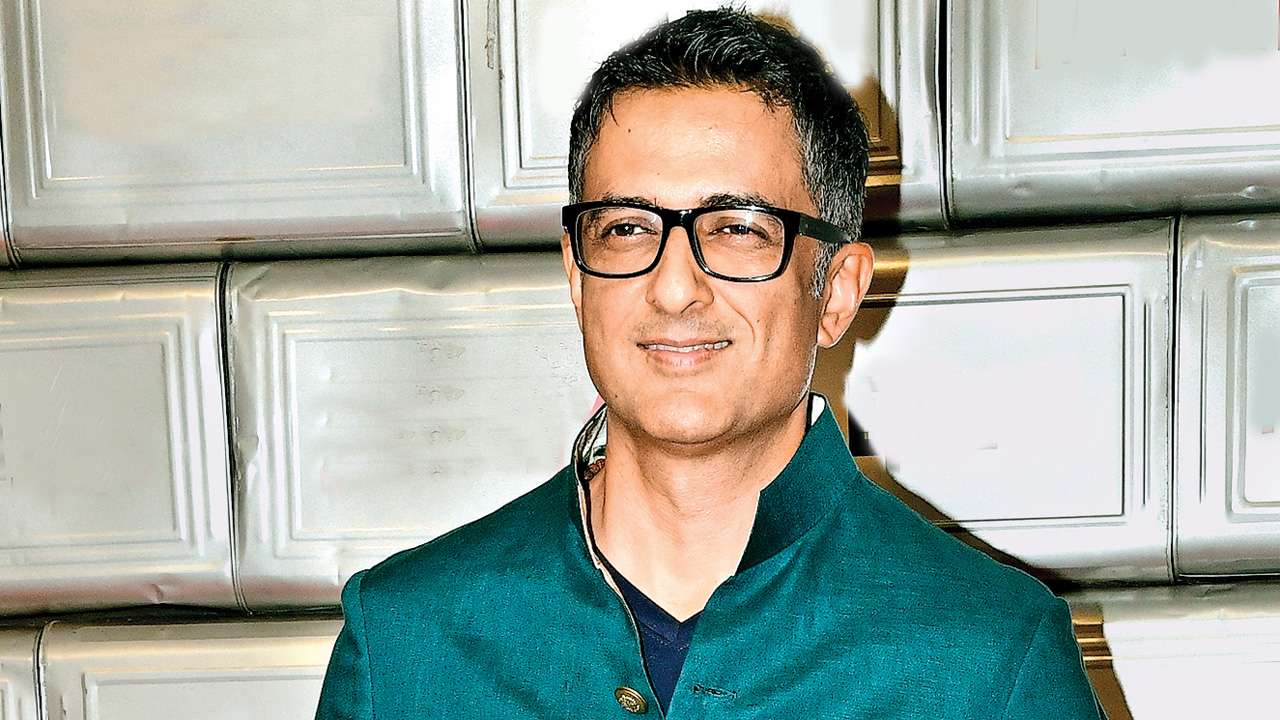
Deepali Singh (DNA; July 29, 2019)
Last year, Sanjay Suri presented the Cannes Palme d’Or winner, Japanese film, Shoplifters, to the Indian audiences. Now, the actor and producer is back with celebrated Chinese director and screenwriter Jia Zhangke’s film Ash Is Purest White, starring Zhao Tao and Liao Fan. Set in contemporary China, it’s a love story with an intriguing plot. Sanjay tells After Hrs that he is excited about bringing world cinema to India. Excerpts…
What’s the thought behind the title, Ash Is Purest White?
Ash is created with fire and purity only comes at a high temperature. It doesn’t remain mediocre anymore. The title is relevant to the film and theme. It’s about the deep love that goes beyond mediocre love. It’s a Chinese film and we are distributing it here. It’s a theme that one can relate to. Characters, sometimes, undergo challenges and emerge victorious. Here, it’s in the context of love, about a woman standing up for a man she loves. It’s about loyalty and patience.
What appealed to you about the movie?
It works at various levels. The characters and the situations they go through. The whole treatment works at a sub-conscious level. It has travelled to festivals and was selected to compete for the prestigious Palme d’Or at the 2018 Cannes Film Festival. The protagonist is in love with a gangster but she stands up for him and sacrifices everything for him. So, it’s not about good or bad. It’s about acceptance. We liked the film and there was an opportunity to release it in India. It’s set in contemporary China and it’s a window to another culture. While a lot of Indian films are being released in China, a festival gem from there is being released here. Last year, we did something similar with the Japanese film Shoplifters.
With world cinema being brought to our doors, do you think the Indian audience wants to see stories that go beyond their culture and country?
I’ll tell you something. It’s not now. When I was growing up, one could watch regional cinema on Doordarshan. In the early ’80s, I have seen Malayalam films, Bengali movies, etc. With the privatisation of channels and dependence on advertising and branding, it just became more populist. Then we were literally starved of even Indian cinema, forget world cinema. So, the audience is always ready. You switch on any radio station now, it’s only Bollywood. There is nothing wrong with that, but what about the diversity? I have made independent films; it’s a challenge to put these films out.
Do you plan to continue bringing films from other cultures to Indian theatres?
Yes, the idea is to have continuity. Next year, it will be an Egyptian film and we hope to bring more. What we are lacking is a destination for these films. Where do we go and watch them? Now, with OTT platforms, one can see them there but the experience is something else in the theatre.
Everyone keeps talking about how these days, content is king…
(Cuts in) But distribution is God (laughs)! Smaller films don’t have budgets. Ticket prices are the same. People have to navigate through traffic and find parking space to go and watch a film in a theatre. It’s a challenge but people are doing it and continue to do it, which is heartening.
On the acting front, you have been more active on the OTT platform rather than movies.
Yes, I did a couple of web shows, with the last one being Leila. I think actors like me, who have done alternate films, are finding it quite comforting to work on OTT platforms. There is a diversity of stories and also characters. In films, it still comes down to box-office decisions. In the digital space, there is still democratisation of numbers. Everyone loves a Narcos and Pablo Escobar but half the people don’t know the actor’s real name. In a way, it’s the characters that work, which is great.
Pyaar Mein Kabhi Kabhi released in 1999. It’s been 20 years for you in the movies…
Without a Rs 100 crore movie! Thirty-eight films, eight as a producer, one National Award. I’m not complaining!
You’re often named among the most underrated actors in the industry. Do you feel you’ve not received your due?
Initially, that was a thought. Once I started producing, I realised that casting is often economics based. You do need talent but economics also comes into play. I’m sure the right opportunities will come my way. I’m quite happy doing what I do. But yes, I would love to do more.
Thanks to the magic of RD Burman’s music, Jhankaar Beats gives you a warm, happy feeling-Sujoy Ghosh
9:03 AM

Roshmila Bhattacharya (MUMBAI MIRROR; June 29, 2019)
Jhankaar Beats started out as a script writing exercise for Sujoy Ghosh. A self-taught writer-director, he decided one day to write a film. The problem was he had no idea what story he wanted to tell. After much brainstorming he decided it would be about people, life and music.
 “As a Bengali I was hooked on music and I am a RD Burman fan. He was a genius composer and I liked him as a singer too. I still remember the craze his 'Mehbooba Mehbooba' had become after Sholay released. It was playing all over, and so was another very different composition, 'Mere Naina Sawan Bhado', from the reincarnation drama, Mehbooba, sung to perfection by Kishore Kumar and Lata Mangeshkar. But his repertoire is too vast, you can’t handle it in one film, maybe a few hundreds. So, I thought, why not speak about the influence of his music on different people at different points in their lives... From a couple waiting to fall in love to another expecting a second baby and a third who are on the verge of divorce,” Sujoy reminisces about his directorial debut which released on June 20, 2003, seven days before Pancham’s sixty-fourth birth anniversary.
Point out to him that 16 years later, the film still brings a smile on people’s faces and he quips, “That’s the only place I feel I have succeeded and it’s thanks to the magic of R D Burman’s music, it gives you a warm, happy feeling. His songs can be played in any situation, from a competition to the church and an evening with the wife, it’s almost like therapy for believers like me.”
The title is an instant hook and Sujoy flashbacks to the age of remixes when music companies would add some ‘jhatak’ instrumentation to original songs to make them popular with the aam janta. “I remember a sentimental Mukesh-Asha Bhosle duet, 'Hum Donon Milke Kagaz Pe Dil Ke' (Tumahri Kasam), to which they had added some jhankaar beats and given it a totally different flavour, one of my favourites. That’s how the title popped up in my mind,” he reveals.
The film’s ensemble cast was also a surprise for everyone but Sujoy. Almost two decades later, he points out that for Deep he needed a nice guy with a pleasant face since he was going to sing all the songs and Sanjay Suri fitted the bill. “As his better half, Shanti, I wanted someone who was a wife, daughter, mother, friend all rolled in one, someone who for us Bengalis is the eponymous boudi (sister-in-law) who has the keys of the house tied on her pallu and whose 'no' is law even for someone like Rahul Bose’s hot-headed Rishi. Juhi Chawla was that person as not only was she apt for the character but was also a star. I have to thank her then manager K S Sanjay who set up a meeting with her and she kindly agreed to do the film if I agreed to cut out one scene,” he recounts. Which one, you prod. “Of a gigantic, fluorescent condom dancing,” he confides with a twinkle, pointing out that while many remember Vidya Balan from Kahaani, it was Juhi who was his first ‘pregnant’ heroine. “I’m obsessed with pregnancy, a woman looks so beautiful when she is on her way to becoming a mother,” he says dreamily.
He found his young Cupid-struck couple, Neel and Nicki, in the tall, lanky, somewhat awkward Shayan Munshi and Rinke Khanna who was recommended by sister Twinkle. And in Rahul Bose he had his perfect Rishi. “Rahul seems like this intense, serious guy, but he has a very Brit sense of humour and cracks jokes when you least expect it. I remember when I took the script to him, he told me that he would not lip sync to the songs. But then he did, that’s Rahul,” Sujoy says fondly.
However, before he could roll with Jhankaar Beats, the initial journey with his first film script was disheartening. For three years he approached every filmmaker and nobody could understand what he was trying to say through a story where “nothing really happens”. Sujoy admits that he was also handicapped by the fact that since this being a first for him, he did not know how to give a narration. Then, just when he was beginning to despair he found a producer with a vision in Pritish Nandy who not only greenlit his slice-of-life script, but also surprised him by suggesting that he direct the film too. “Having now turned producer myself, I know just how difficult it was for him to take this bold step. It takes just one person to see your vision and believe in your dream for a Jhankaar Beats to happen,” Sujoy signs off from London.
There’s been no fight, no fallout between me and Onir-Sanjay Suri
8:02 AM

After 12 years Sanjay Suri and Onir go solo with the actor collaborating with Samir Soni on his next
Avinash Lohana (MUMBAI MIRROR; December 7, 2017)
 After co-producing five films with Onir—My Brother Nikhil (2005), Sorry
Bhai (2008), I AM (2010), Chauranga (2014) and the recently released
Shab (2017)—Sanjay Suri has gone solo with his upcoming production
titled My Birthday Song. Making his directorial debut with this
psychological thriller is Sanjay’s long-time actor-friend Samir Soni.
After co-producing five films with Onir—My Brother Nikhil (2005), Sorry
Bhai (2008), I AM (2010), Chauranga (2014) and the recently released
Shab (2017)—Sanjay Suri has gone solo with his upcoming production
titled My Birthday Song. Making his directorial debut with this
psychological thriller is Sanjay’s long-time actor-friend Samir Soni.“The film is set in Delhi and my character, an ad filmmaker, celebrates his 40th birthday. An incident at the party spirals into something bizarre. I had discussed the script with Samir a few years ago and after he gave me a narration, I agreed to act in it on the condition that he direct it himself. We eventually ended up producing it together,” informs Sanjay.
He is quick to add that his professional partnership with Onir hasn’t fractured. “It’s just that after 12 years we decided to explore creative opportunities separately. It was a conscious decision but there’s been no fight, no fallout,” he asserts.
Sanjay who was last seen in Saket Chaudhary’s comedy-drama Hindi Medium, goes on to insist that Onir and he have enjoyed a beautiful working relationship and continue to be friends. “But we needed to get out of our comfort zone. I see it as a healthy sabbatical,” states the 46-year-old actor-filmmaker, admitting that certain genres that excite him may not interest the 48-year-old Onir. Is there a possibility of them reuniting in the future? “Yes, but we will see how it goes,” Sanjay keeps it short.
Wiki Pedia, Dean to deconstruct the curious case of Mona_Darling
7:51 AM

MUMBAI MIRROR (February 2, 2017)
Actors Anshuman Jha and Sanjay Suri will get together again to solve the curious case of the missing girl Mona Raheja in India’s first social media whodunit-thriller Mona_Darling. The duo was last seen in the award-winning film Chauranga last year.
When asked how and why he decided to cast these two actors in the roles of Wiki Pedia and Dean, director Shashi Sudigala, who has been an associate to Nagesh Kukunoor on Iqbal, said “Wiki is confident yet awkward. I had pitched Wiki to Anshuman in 2011 because I had loved his work in LSD--Love, Sex And Dhoka. It’s amazing that he still looks the same. He is one of the most solid young actors in the country and brings a certain amount of honesty to every character he portrays,” he said.
He added, “I saw Sanjay in Chauranga and felt that there is a lot more to explore in him as an actor. We needed a strong stable personality for the Dean and Sanjay suited the bill. They will both surprise you in Mona.”
Produced by First Ray Films & presented by Vashu Bhagnani, Mona _Darling uploads in Cinemas on February 17, the Valentine’s weekend.

Nora Fatehi, Sanjay Suri in Samir Soni's directorial debut My Birthday Song?
5:19 AM

MUMBAI MIRROR (January 11, 2017)
Nora Fatehi and Sanjay Suri are set to team up for actor Samir Soni's directorial debut, a thriller titled My Birthday Song. A source says, “Nora plays an NRI travel agent and aspiring filmmaker who returns to India to follow her dreams. She happens to attend Sanjay's character's 40th birthday party, when both their lives take a mysterious turn.“
Sanjay Suri to play the male version of Chandramukhi in Ekta Kapoor's Dev DD
7:39 AM

Chaya Unnikrishnan (DNA; January 6, 2017)
Sanjay Suri, best known for his roles in Jhankaar Beats and My Brother Nikhil is all set to step into the shoes of Chandramukhi, metaphorically, in Ekta Kapoor’s web series Dev DD. It is a bolder and feminine version of the classic story written by Sarat Chandra Chattopadhyay and Sanjay gives a masculine twist to the character of Chandramukhi.
“Yes, it is the male version,” laughs Sanjay adding that when he was approached for the role, even he wondered what his character would be playing as the original Chandramukhi is a courtesan. He says, “My character Anurag completely breaks the notion of Chandramukhi, but the essence is retained and the importance remains the same. It’s a complex character, yet very intense. Anurag is not always at the receiving end in the story, which is contemporarised.”
He explains that some natural characteristics that come with being a man will seep into the character and give another layer to it. “How this guy comes into contact with the protagonist Devika is different, his trajectory is different,” he adds.
Unlike in the films where Chandramukhi’s past is unknown, Anurag’s past will be explored. He says, “Everything seems right in his life, he ticks all the boxes, but he is carrying certain baggage. There are some things in his life that he prefers to keep at the back of his mind, but those come to his mind when he meets some people (read Devika). He is a mix of strong and weak and becomes an important part of the protagonist’s life.”
The actor says shooting for web series is more liberating as an artiste. “Though the grammar is pretty much the same for a film and web series, here the narrative becomes edgier. When you are shooting for a film somewhere it becomes restricted because you have the burden of the release — how difficult or easy it will be — and the subjects you can touch upon in the current environment. On the web, it is more democratic, you can explore characters which you would not easily touch upon in a film. Language is not a barrier. Writing is different since the attention span is shorter for this audience and the plot points are changed,” elaborates Sanjay.
The series to be streamed on Alt Balaji is directed by Ken Ghosh.
Lisa Ray-Sanjay Suri in a Kashmir-based love story
8:50 AM

Garima Sharma (BOMBAY TIMES; September 28, 2014)
 Besides her comeback film,
we hear Lisa Ray has also given the nod to a modern love story set in
Kashmir, co-starring Sanjay Suri. Although the film's ongoing recce has
been delayed because of the recent floods in the Valley, it is
scheduled to be shot there in the spring of 2015. When
contacted, Sanjay confirmed the development, adding, “Lisa has
liked the script and other details are being worked out.“
Besides her comeback film,
we hear Lisa Ray has also given the nod to a modern love story set in
Kashmir, co-starring Sanjay Suri. Although the film's ongoing recce has
been delayed because of the recent floods in the Valley, it is
scheduled to be shot there in the spring of 2015. When
contacted, Sanjay confirmed the development, adding, “Lisa has
liked the script and other details are being worked out.“Sanjay Suri demands Rs 1 lac per episode for cameo on TV show?
8:21 AM

Shaheen Parkar (MID-DAY; June 9, 2014)
Actor- producer Sanjay Suri was recently approached for a role in the television show, Tumhari Paakhi.
Sources maintain that he quoted an exorbitant amount as his fee for a cameo per episode. Taken aback, the makers opted for another actor instead. Suri was to shoot for the show in Singapore.
Says a source, “Sanjay demanded a lakh as fee per episode. He was slated to feature in about 20 to 22 episodes, 15 of which were to be shot in Singapore. When the makers approached him, initially he told them to wait. Later on, when contacted, he demanded over a lakh.” The telly producers felt it was too much considering that it was just a cameo. “Finally, Indraneil Sengupta was signed for the role,” says the source.
Sanjay says, “ Money would be discussed if I was open to doing the show. I was approached by my agent, but never said yes to any show so don’t know anything about this bit.”
Producers Sumit and Shashi Mittal who are currently shooting in Singapore remained unavailable for comment. The show features Iqbal Khan and Shraddha Arya in the lead roles.
Subscribe to:
Posts (Atom)