Showing posts with label Sandeep Ssingh. Show all posts
Showing posts with label Sandeep Ssingh. Show all posts
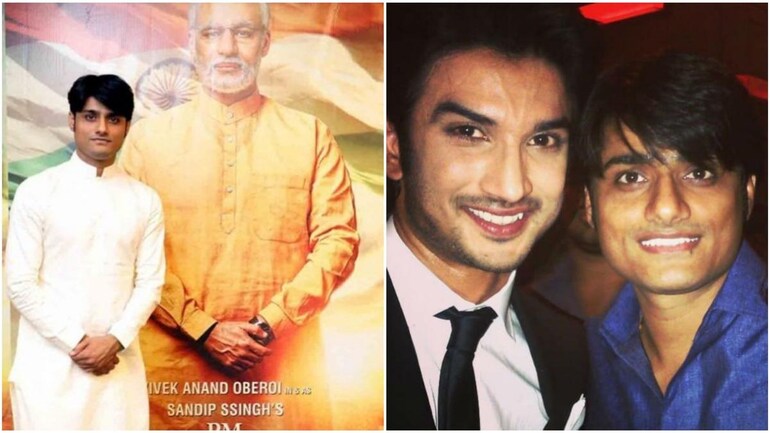
Investigate film producer Sandeep Ssingh’s links with BJP, says Congress leader Sachin Sawant
8:49 AM
Prafulla Marpakwar (THE TIMES OF INDIA; August 29, 2020)
Mumbai: Congress general secretary Sachin Sawant on Friday demanded a probe into film producer Sandeep Ssingh’s connections with the BJP. Singh has claimed he was a good friend of late actor Sushant Singh Rajput and was one of the first persons to reach his flat on hearing news of his death.
“Investigating agencies must probe the link between Sandeep Ssingh and the BJP. Singh is the producer of a biopic on PM Narendra Modi. The BJP never had faith in the Mumbai police and, suddenly, it supported the demand for a CBI probe. Why was the demand pressed in a hurry?” Sawant said. He alleged there appeared to be a plan to protect high-profile people involved in the alleged suicide.
Sawant said then chief minister Devendra Fadnavis had launched the poster of Singh’s biopic. “The CM and home minister should probe the BJP’s nexus with actors, Sandeep Ssingh and the drug cartel,” Sawant said.
The Congress leader said it was surprising the BJP was demanding a high-level probe into the drug angle in the Rajput case. He wondered why the BJP had not asked then chief minister Fadnavis to probe the nexus between the film industry and the drug mafia. “It appears the CBI and ED stepped in to protect Sandeep Ssingh. It has been found that persons associated with Modi are locked in one controversy or another,” Sawant said.
Images: Sushant Singh Rajput’s family performs his final rites, Bollywood bids adieu to the actor
8:46 AM

Rachana Dubey (BOMBAY TIMES; June 16, 2020)

 A day after he died by suicide at his Bandra residence, Sushant Singh Rajput’s mortal remains were cremated on Monday evening. As rains lashed the city, the final rites were performed by the actor’s father and his sisters at Vile Parle’s Pawan Hans crematorium. Owing to the Coronavirus pandemic, only 20 people, whose names were shared with the police, were allowed inside. B-Town celebrities spotted outside the cremation ground include Rajkummar Rao, Shraddha Kapoor, Randeep Hooda, Ranvir Shorey, Vivek Anand Oberoi, Kriti Sanon, casting director-filmmaker Mukesh Chhabra, Varun Sharma, Dinesh Vijan, filmmaker Abhishek Kapoor and his producer wife Pragya, and Pooja Chopra.

 Sushant’s family members, including his father, reached Mumbai from Patna earlier in the day. From the airport, they headed straight to his Bandra residence, where the actor had ended his life by hanging himself from a ceiling fan. A puja was reportedly performed in the apartment, before the family left for the final rites. Meanwhile, filmmaker Sandeep Ssingh, a close friend of Sushant, helped complete the formalities at Juhu’s Cooper Hospital, where his body was kept, and was in the ambulance that drove the mortal remains to the cremation ground.
Actress Rhea Chakraborty, Sushant’s rumoured girlfriend, who had paid a visit to the mortuary in the morning, was the first to arrive for his final rites. His family followed. Later, Sandeep Ssingh told BT, “It was heart-wrenching to see Sushant’s family break down inconsolably on seeing his body. His death makes me wonder why we make plans… he was to meet me for lunch one of these days, and discuss work. What pains me the most is the fact that he had so much bottled up inside; honestly, what led him to end his life in those final moments will continue to haunt me forever. No one knows and no one will ever know.”


I’m the guy whose professional obituaries have been surfacing since 2004, but I am still here, unbreakable-Vivek Oberoi
9:53 PM

Rachana Dubey (BOMBAY TIMES; April 8, 2019)
Vivek Anand Oberoi has been in the news since December last year, ever since it was announced that he would headline the cast of Prime Minister Narendra Modi’s biopic, titled PM Narendra Modi. In January, posters of the film featuring Vivek as PM Modi were launched in over 20 languages. All of these, including the teaser and trailer that were unveiled in the subsequent months, collectively drew more criticism than appreciation for the film. Recently, the movie was even dragged to court and accused of being ‘propaganda material’. Today is a crucial day for the film’s makers, as a petition against it is expected to be heard in the Supreme Court. In the meanwhile, according to a statement given by the producers, its release date has now been moved to April 11 from April 5. Vivek spoke to Bombay Times about his journey which has been anything but a cakewalk...
Bank Chor, Krrish 3 and Great Grand Masti were some of your last films that released between 2016 and 17. With PM Narendra Modi slated for release this week, and with all the controversies surrounding it, are you anxious?
More than anything else, I’m eager for the audience to watch this film. We’ve put in our heart and soul into it and the journey has been incredible. It was almost impossible, but we finished the film with its scale intact, in 38 days. We travelled from the hot landscape of Kutch to the freezing terrain of Harsil (Uttarakhand). This film was more difficult and taxing for me than all the 45 films I’ve done in my 18-year-long career.
It's learnt that you were being considered to play PM Modi for another biopic, much before this film was made. Why didn’t that project happen?
It wasn’t one project. A lot of people thought of making a film on Modi ji, including me. In my case, it started when I attended the swearing-in ceremony in 2014. Everyone believed his story amazing, but Sandeep Ssingh (producer) was the only one to say it with conviction, ‘Main bana raha hoon, aap aaiye’. Omung Kumar was approached to direct, but he wasn’t sure at the outset. I told him that he shouldn’t shy away from what he’s good at, which is making biopics. It will be interesting to see what his take on the subject is because he is politically insulated. For Omung, it was about unravelling the layers of a man’s personality. I am politically astute and I understand it. I was involved with student politics and during my student years, I was also a GS in the university.
What is it that really drives you to give the nod to a project such as this biopic?
I am on two extremes. When I am working on a film, I am committed and I give it my all. Cold and hot weather and a demanding scene don’t deter me, but I only take up a project when I am inspired enough. It’s not for the money or the thrill of adding another film to my CV. Like I took up Lucifer in Malayalam, knowing that it’s a tough language to speak. But my reason for doing it was that I didn’t want to miss a chance to reunite with Mohanlal (they worked in Company, 2002). I was also warned against trying new media (web series). I was told I would end up getting written-off completely, but here I am. I didn’t sink.
Your career started with a bang with Saathiya and Company. You were touted to be one of the most promising actors in the early 2000s. Interesting roles and intense performances also won you accolades. Given this, your career graph has not been as extensive as it could have been. Do you feel you could have given more to the industry and received more from it?
I’m the guy whose professional obituaries have been surfacing since 2004. Due or no due, the fact is that I am still here, unbreakable. I have worked in six languages and won around 20 awards and I still get some great work to do. Instead of being in the rat-race, and running to the finishing line, I am spending time watching my kids grow. Acting gives me joy, but so does playing football in the garden with my son and lighting up my daughter’s dollhouse with her. I am on crazy schedule even now, but I don’t miss a chance to feed my bachchas and break bread with my wife and parents. I believe in maintaining work-life balance. Each day makes me feel like a winner and gives me a sense of fulfillment. I’ve often been asked about not getting my due in the industry. On the contrary, I am blessed with so much that I don’t see life in a unidimensional manner. I have a happy family and I choose the work I do. I am Destiny’s child because there’s nothing that hasn’t happened to shut me down and I'm still going strong. This is my life and I have accepted it with a smile. What else can I do? Crying is not an option, woh sab screen pe theek hai.
Shortly after you attended the PM’s swearing-in ceremony, people made memes of your look at the event with comments about how you even made it there...
(Laughs!) Yes, I remember that. It still makes me smile. In 2004, people said how did I make it to the film industry, in 2014, people asked how did I make it to the PM’s swearing-in ceremony, and in 2019, they are asking how did I get the role. Someday, there will be a biopic on me if people keep asking these questions, which I don’t mind.
But how did you really make it to PM Modi’s swearing-in ceremony?
I don’t like to wear my relationships on my sleeves. I built a beautiful equation with Mr Modi when he was the Chief Minister (CM) of Gujarat. I’ve personally seen him work, and people don’t realise this but after Atal Bihari Vajpayee, he’s the only leader I campaigned for.
So, at some point, you do plan to get into politics?
I don’t know where life will take me, but for now, you will see me as a full-fledged politician for two hours on screen.
Are you in awe of PM Modi?
I am not a bhakt for sure. For me, it was a question of whether Modi ji's story inspires enough. It does. To me, even Dhirubhai Ambani’s story is just as inspirational. I am excited about this film because it tells every chaiwala and chowkidar that you too can become the PM.
It’s often said that getting too close to a subject could hamper your objectivity. In your case, you knew PM Modi very well. Didn’t that become a deterrent at any point?
One approach is to adapt the physicality of the person you’re playing. Omung and Sandeep ensured that I don’t caricature Modi ji. We were clear that the spirit of the man needs to be captured and portrayed. I did that when I played Maya Dolas in Shootout At Lokhandwala (2007). The man had curly hair, but it looked funny when I wore a wig to match his appearance. He also had a thick Marathi accent. Eventually, we decided to go without all of this and just focus on the kind of person Maya was. I studied him in great detail —his criminal history and met the cops who had shot him. The idea was to bring out that high he was riding on in the short span of his life.
Your film has been in the eye of controversies since inception. Even its release date has been moved twice. Did you anticipate that you might have to fight so many battles for this film to see the light of the day?
Yes, one knew that this might happen. Our legal team had warned us, but I could never understand why so many people (referring to political leaders) are scared of this film releasing. And if a film is so powerful, then people in politics should make films instead of campaigning and doing any other work in their constituencies. It’s great for cinema. If that theory was true, every election season would have a flurry of films. I think we’re giving too much importance to this issue. People will watch the film and decide whether it’s good or bad. Making films can never help anyone win elections. If someone thinks it is propaganda, let them prove it.
Biopics in India are often blamed for white-washing their subjects. Your film is being accused of it even before release.
Let them blame us, but we have never given that a thought. I’ve made this film for the mass audience. I’m told that Richard Attenborough was also accused of white-washing Mahatma Gandhi in Gandhi. The film is considered to be iconic. Uske aage hamari film ki kya haisiyat hai?
In a two-hour film, how much of Modi’s life have you really covered? Does your film also touch upon the Gujarat riots, which took place in 2002?
We’ve covered a great spectrum. Omung has done tremendous justice in his effort to bring out as much of Modi ji’s life as possible in a short screen time of about two hours. There’s everything right up to his swearing-in ceremony. It’s his trials and tribulations that make the film inspirational.
Lastly, will we get to see Narendra Modi in the film?
We tried incorporating a portion at the end but it didn’t work. There is enough Modi in me, but not the real Modi ji in the film.

We are worried because a lot is riding on what the SC decides, but we are sure insaaf hoga-Sandeep Ssingh
8:50 AM

Sandeep Ssingh, the producer of the upcoming film on Prime Minister Narendra Modi, talks about why the film is releasing on a Thursday, and how he is hopeful that things will work in their favour
Rachana Dubey (THE TIMES OF INDIA; April 7, 2019)

It's now confirmed that the film is scheduled to release on Thursday (April 11). When BT reached out to producer Sandeep Ssingh, about the decision to opt for a non-Friday release date, he said, “Kalank is a big film. It’s also releasing on a Wednesday, a week after our film. We need at least a week for our film to have a clear run before Kalank takes over. Hence, we all felt that releasing on Thursday is a more financially viable decision than opening on Friday.” Yesterday morning, Vivek Anand Oberoi, who plays the central character in the film, also tweeted: “There are very powerful people who have approached courts through their lawyers. They can obstruct us briefly but they won’t be able to stop us. The release might have been postponed but we are firm in our resolve.”
What can’t be missed here is that the first phase of Lok Sabha polls are also scheduled for April 11. In the meanwhile, Satish Sugriv Gaikwad, who had filed a petition in the Bombay High Court, has now filed a special leave petition in the Supreme Court (SC) against the film with the help of his counsel, Tosif Sheikh, seeking a ban on its exhibition for now.
When we prodded the producer on the hearing scheduled for Monday (April 8), Sandeep said, “We are worried because a lot is riding on what the SC decides, but we are quite sure insaaf hoga hamari film ke saath. We have put in a lot of hard work. We are literally fighting our way to the cinemas. People are trying their best to stop this film from being exhibited in the country. I don’t understand why a film, based on a human story, can make so many people, including some national political parties, run so scared.”
The makers of the film have been reiterating the fact that the biopic, shot across the country, was completed in just 38 days. Then, what took them so long to get CBFC’s clearance? The film was after all due for April 5 but until April 4, it didn’t have a CBFC clearance. They were, reportedly, asked to make three cuts and submit it again for certification.
Without going into too many details, Sandeep said, “We don’t deny what Prasoon Joshi has said. We can shoot a film in 38 days, but everything else takes time. Plus, there are rules and regulations to be followed for a film to be passed by the board. We are following everything and hopefully, we will now release on the date we have finalised.”

PM Narendra Modi’s biopic release unlikely today
10:21 PM

Exhibitors say that they removed the film from their schedules on Wednesday night after being informed that it had not yet received a CBFC certificate
Niharika Lal (BOMBAY TIMES; April 5, 2019)
The biopic on Prime Minister Narendra Modi, starring Vivek Anand Oberoi, was scheduled to release today, but it will not make it to the big screen this week. Exhibitors removed the film from their programming schedule on Wednesday night after being informed that it had not yet received a CBFC certificate.
On Monday, during a hearing of a PIL seeking a stay on the film’s release, Advait Sethna, counsel for the CBFC, told the Bombay High Court that the scheduled examination for the film’s certification was on Wednesday. Some exhibitors tell us that after seeing the film, the CBFC asked for three cuts, after which the makers will have to show the film to the board again.
According to the CBFC guidelines, the committee ideally requires 68 days for film certification, but this film was submitted just two days before its release date. The film’s team did not respond to our queries about why it was submitted to the CBFC so close to the release date. Till the time of going to press, it still wasn’t certain if the film would release today or be pushed to April 12, its original release date.
When BT reached out to producer Sandeep Ssingh, he told us, “Our film is not releasing today. Once we have further clarity on the subject, we will update everyone.”
FILM REMOVED FROM RELEASE LIST
PM Narendra Modi was removed from the Friday release list of theatres on Wednesday night. Some exhibitors told us that the film had not received its CBFC certificate.
Rajender Singh Jyala, Chief Programming Officer at INOX, said, “The film was scheduled to release on April 5, but the distributors told us that they had not received the CBFC certificate till late Wednesday evening. After that, the film was removed from our programming schedule. We were told that the film might release next week.”
Another exhibitor said, “It couldn’t get the CBFC certificate in time because the producers applied for it only after the Bombay HC on Monday dismissed the PIL requesting a stay on the film’s release. We don’t know whether it will release next week or not. Multiple theories are doing the rounds, but one thing is confirmed – the film doesn’t have the CBFC certificate yet. We have allotted all the Modi biopic shows to Kesari instead.”
Manoj Desai, executive director of G7 and Maratha Mandir, said, “We were asked by the distributors to not start with the advance bookings. Since we haven’t received the Censor certificate yet, we are not sure about the release. But we haven’t taken off the publicity hoardings from our theatres.”
IS APRIL 12 THE RELEASE DATE?
Shaaminder Mallik, a Delhi-based distributor, said, “We have confirmed information that the CBFC committee has suggested three cuts, and after the cuts, the film needs to be shown to the committee again, following which, the committee will decide if the film can be given a certificate or not. We got to know that the film will be released next Friday, but it is not official yet.” Carnival Cinemas also confirmed that there is no official announcement of the next release date.
AFTER HC DISPOSED OF PIL SEEKING STAY, PETITIONER APPROACHES SUPREME COURT
On Monday, the Bombay High Court disposed of a PIL asking for a stay on the film’s release. The court directed the Election Commission to take a call on the issue. Pradeep Rajagopal, who represented the Election Commission in the court, said that the release of the film during this period is not a violation of the model code of conduct.
However, on Wednesday, there were several reports that said that the “EC is still conflicted” about the film’s release. When we asked Rajagopal if the EC still had any objections, he said that he had no such information.
On Wednesday, advocate Tosif Shaikh, who was representing the petitioner of the PIL in the Bombay HC, said that they have now filed a Special Leave Petition in the Supreme Court. “Our contention is that the EC is acting in collusion and not taking action. They issued a notice to the people connected to the movie only after we filed a petition in the Bombay High Court. We have approached the Supreme Court to seek a stay on releasing the movie only during the election period,” he told Mumbai Mirror.
Since Bombay, Delhi and Madhya Pradesh high courts have refused to intervene in the matter, the Supreme Court has reportedly agreed to hear a plea challenging the release of the biopic as a violation of the Moral Code of Conduct, for the Lok Sabha polls of 2019. The hearing will be held on April 8.
-----------------------------
 The film is going through the due process of examination and certification according to the requisite guidelines and is yet to be certified as the process is not complete at this point
– Statement from Prasoon Joshi, Chairman, CBFC, at 3 pm on Thursday
Everyone tried to dissuade me from making PM Narendra Modi, but I went ahead-Sandeep Ssingh
7:59 AM

Rachana Dubey (BOMBAY TIMES; April 3, 2019)
Sandeep Ssingh, producer of PM Narendra Modi, the biopic on the ruling Prime Minister, which releases this Friday, talks about the challenges that he’s faced while putting his ambitious project together.
Given that you decided to make a biopic on PM Narendra Modi, did you anticipate trouble at the onset…
No one asked me to become a producer and make this film. I decided to do so, because I loved the subject matter. It’s an inspiring story. We decided to make it around three years ago. Everyone tried to dissuade me, but I went ahead. Their apprehensions boosted my confidence. I wanted to bring out the human side of our Prime Minister and what he went through during his highs and lows. I’m just happy that everyone’s talking about the film.
Filmmakers, who face a ban or opposition for their films, often get support from the rest of the film industry. But there hasn’t been much support for you or your film...
A film like Padmaavat found a lot of support because it had big names attached to it. Vivek Anand Oberoi, who plays the central character, is a talented actor. Omung (Kumar, director) and I are not industry insiders. My production house has not made a very big film for people to bank on its credibility, yet. Till that happens, we won’t have the industry stalwarts marching for us. In all of this, what should not be missed is that every producer faces the same kind of heat and goes through the same sort of struggle. PM Narendra Modi is a big film for Vivek, Omung and me because of its subject. I have to live up to the story that I have decided to narrate.
Many people had questioned your choice of actor for this biopic…
Why not Vivek? I needed a fine actor, who could do justice to the film and the role. I don’t have a saleable star on my side, but hasn’t the scenario in Bollywood changed? In 2018 alone, films like Stree, AndhaDhun and Badhaai Ho emerged bigger than many star-heavy films. Content is driving the business now, not star power.
Biopics in India are always accused of whitewashing their subjects...
I don’t want to think about what people might think. People love to talk and offer their opinion. We must tackle unemployment seriously; people won’t have free time to dole out opinions then. I just want to make my films and let that do all the talking. Most people are slaves of social media and that’s how they decide whether something is good or not.
People follow social media closely to track engagement on a film, and that space has increasingly criticised your film and its time of release...
Why should I be scared of criticism and not take it constructively? This is the best time to bring this film to the theatres. I don’t have a big star like Shah Rukh Khan to target a big weekend two years in advance. Let people think I am on the wrong foot here; it’s their problem. Filmmakers are soft targets. Right now, my film is facing a lot of heat from different corners, but I am determined to release it. For that, I will abide by everything that the law asks me to do.

If they wanted to respect, why haven’t they given the same to Shankar Ehsaan Loy and A R Rahman?-Javed Akhtar
3:26 PM

Producer Sandip Ssingh’s explanation for giving Akhtar credit in Modi biopic poster does not fly with lyricist
Natasha Coutinho (MUMBAI MIRROR; March 25, 2019)
Lyricist Javed Akhtar has slammed the explanation offered by the producer of a Modi biopic, Sandip Ssingh, who said that Akhtar was credited as lyricist in the poster as one of his old songs was included in the movie.
After Akhtar expressed his shock on finding his name credited as lyricist of the movie PM Narendra Modi as he had not written any songs for it, Ssingh tweeted, “We have taken the songs Ishwar Allah from the film 1947:Earth and the song Suno Gaur Se Duniya Walon from the film Dus in our film, thus we have given the due credits to respective lyricists Javed Sahab and Sameer Ji. @TSeries is our Music partner.”
This explanation did not go down well with Akhtar, who questioned the makers’ intentions for putting his name on the poster. Akhtar told Mumbai Mirror on Sunday, “Firstly I don’t know who Sandeep Ssingh is. Secondly, when you take an old song in your film you don’t give credit to the original person on your promotional material because I have not written anything for the film PM Narendra Modi. You can’t behave like I’m a part of your unit, as your songwriter. At the most you give a mention in credit titles along with the name of the original film from which the song was taken. If they wanted to give me respect, why haven’t they given the same to Shankar Ehsaan Loy and A R Rahman? (music directors of the songs Sandeep mentioned).”
Akhtar went on to say he was shocked that no one reached out to him before using his name to promote the film. “If they have bought my song from the music company they should have mentioned the original film (1947:Earth) while using my name on promotional material, along with music by A R Rahman. They would have done it if their intentions were correct, which clearly weren’t. Such an incident has never taken place in the Indian film history. Nowadays every second film has a recreated song but never has the original lyricist been mentioned on posters of the film.”
Akhtar’s wife, actor Shabana Azmi also waded into the battle on Twitter, posting, “It’s quite clear this was done with deliberate intentions to mislead public into believing that @ Javedakhtarjadu has written the songs for Mr PM Narendra Modi when the song Ishwar Allah Tere JahaN meiN is from @IamDeepaMehta film 1947Earth.”
The trailer of the Omung Kumar directed film, featuring Vivek Oberoi in the lead, released on March 20 and the film is scheduled to release on April 5, six days before the first phase of general elections on April 11.
Javed Akhtar and Gulzar tell people to vote without fear or favour, in the upcoming elections
8:31 AM

Poet-lyricists Javed Akhtar and Gulzar speak in one voice, exhorting people to vote without fear or favour, in the upcoming elections
Khalid Mohamed (MUMBAI MIRROR; March 31, 2019)
 Javed Akhtar and Gulzar, two of the most revered poet-lyricists of India, have sounded a clarion call to the nation to push for freedom of expression “at a time of darkness and uncertainty” facing the country on the cusp of the elections next month.
In separate interviews with Mirror, they have exhorted the electorate to vote with a conscience, without fear or favour. Poets and writers, they emphasise, articulate the mood of the people. “Our poems, in effect, serve as slogans,” Akhtar states. “But slogans cannot spark revolutions. I’m not pompous enough to believe that my words amount to anything more than a purposeful incentive.”
Gulzar notes, “One has to say what one must without any dilution. And I will say that the killings of the eminent thinkers Govind Pansare and MM Kalburgi, and of journalist Gauri Lankesh, have been lamentable.”
The current debate on writers versus realpolitik commenced on March 16 in New Delhi, where Akhtar recited an unpublished ghazal at the 53rd edition of the Shankar-Shad mushaira. This year, breaking from tradition, Pakistani poets were not invited to the mushaira, in the wake of tension between the two countries. A couplet from Akhtar’s ghazal asserted, Jo baat kehte darte hain sab, tu woh baat likh/Itni andheri thi na kabhi pehle raat likh (To speak of the thing which everyone fears, of that you must write/The night was never so dark before, you must write) To express his solidarity with Akhtar, Gulzar wrote a ghazal, a part of which said: Tum ne bhi khoon-e-dil mein dubboii hain ungliyan/ Humne qalam ki pehle bhi jhankar suni hai (You too have dipped your fingers in your heart’s blood/ We have heard the clangor of the pen earlier too). Buoyed by the support, Akhtar exults that it was a wonderful gesture from Gulzar. There is no one-upmanship or competition among lyricists, he remarks. Instead, contrary to popular opinion, there is an unspoken unity.
Akhtar recently found himself in a Kafkaesque situation. The credits of an upcoming biopic PM Narendra Modi, scheduled for release on April 5, listed his name prominently as one of the six lyricists. When this was pointed out to the writer with a WhatsApp message, he immediately contradicted the news with a tweet. “Usually writers have to fight for an inclusion on the credit titles. But here I was credited for a film which I haven’t even worked on,” he laughs.
Maintaining his cool about the recent incident during the interview at his Juhu apartment, Akhtar elaborates, “The producer [Sandeep Ssingh] acquired the rights of the song Ishwar Allah written for Deepa Mehta’s 1947: Earth. Now, as everyone knows, whenever earlier songs are re-used, the names of the film, composer and writer are mentioned in the end credits. And that’s it. In any case, it is up to me whether I want to be associated with a biopic, be it of the Prime Minister, Rani of Jhansi or Milkha Singh. If I want to keep a distance from a film of any nature, that’s my prerogative.”
Gulzar concurs that the poster credit was unfair: “Ethically or otherwise, the producer has to acquire the permission of the writer who may or may not agree with the theme of the project. A lyric is not a toothpaste tube which can be bought in a market.”
According to lyricist Sameer, his name was also included in the credits of PM Narendra Modi without his consent for the song Suno Gaur Se Duniyawallon from Dus. He further comments, “As far I know, the mukhada of the original song has been retained but the antaras have been changed. So, it’s a ‘recreation’ of sorts. I have no clue what can be done about this; whatever decision is taken, will have be a collective one.”
 Prasoon Joshi, ad guru and chairman of the government’s Central Board of Film Certification, also features among the songwriters for the biopic. So far Joshi, as well as the film’s director Omung Kumar and leading man Vivek Oberoi, have maintained a pin-drop silence. Vis-à-vis Joshi, neither Akhtar nor Gulzar have any issues, describing him as a colleague and friend whose political views do not necessarily have to align with theirs.
Eminent playwright, script and story writer Javed Siddiqui is angered by “the mud thrown on Javed Akhtar’s face”. On noticing Akhtar’s name in the credit titles of the PM biopic, Siddiqui says he was appalled. When the news was contradicted, there was a sense of relief and regret. It’s sad, he contends, that politics has descended to “such a crude level”.
“Did they think they could get away with this?” Siddiqui asks. On being counter-questioned about why he was ascribing political motives to film’s producer, he bristles, “What do you mean? Do you think any producer would have the guts to indulge in such false propaganda without the tacit consent of the powers-that-be?”
As for other contemporary progressive writers — be it in the realm of poetry or prose — there have been no indications about an official, collective protest so far.
Akhtar states pragmatically, “Once the Progressive Writers’ Movement [formed in 1936] encompassed several Indian languages. There was a galaxy of writers in the pre-and post-Independence era who would meet regularly, almost like a commune, and recite their works. But ultimately one is alone. Five writers can’t write a joint piece of poetry or prose. Undoubtedly, like-minded writers should meet more often, but life is too hectic, too fast-paced nowadays. As long as a group of writers are committed to liberalism and share the same world view, that should suffice for the time being.”
Gulzar underlines the fact that the Progressive Writers’ Movement was immeasurably impactful in advancing the cause of social justice, gender equality and secular values. To date, the influence of the movement and its legendary writers, has persisted. Yet this Millennium’s conditions are bound to be different. There is a heightened fear of authoritarianism. In the event, it’s the writer’s responsibility, once again, to strike a wake-up call.
Siddiqui suggests that writers of liberal views should organise roundtable conferences regularly, and communicate their views to the people through the press and the plethora of social media platforms.
Poets and novelists may not have chosen to come together formally in a movement. But the consensus among Mumbai’s phalanx of writers today is that dissent and truthspeak — even while operating from the entertainment-centric Bollywood — have been advanced successfully through the decades.
Viewing that in a broader perspective, the two poet-lyricists agree that the Indian social structure is essentially moderate. Extremism of the far-Left or of the far-Right in overall governance, is bound be rejected. “I’m not a pessimist,” Akhtar avers. “I am hopeful that there will be a rational outcome [to this election]. A totally Right-wing government is fraught with hazards. As for those who are dedicated to the Leftist ideology, I admire their compassion for the underprivileged and their respect for secularism, but I’m afraid even Communist China has outgrown its economic policy.”
Consistently, Akhtar has been viciously trolled, and has even received death threats. Has he ever feared for his life? To that, his riposte is: “I may have been under threat from the fundamentalists — both Hindu and Muslim. I had to move around with bodyguards on two occasions. Still, I’ll be worried the day that either of the fanatic groups stops criticising me.”
Gulzar reasons that his personal ideological values are reflected in his stories, film scripts and poems, in a voice which syncs with his personality. He says, “I’ve never been an activist, I’ve never raised my fist in the air at a public rally. So where does one share one’s writings with one’s colleagues and peers? To a degree one can, at literary festivals, and this may not necessarily be while speaking from the dais. I’ve shared some of the best inspired and rousing writings in recent years with other poets after the festival’s formal sessions are over.”
Cautioning that tolerance is key today, Gulzar maintains, “One has to express oneself with dignity; let’s not raise the volume to a deafening blast. Unfortunately, unparliamentary language is being used far too frequently during the course of debates today. Why? Obviously because so many politicians become power-drunk and start behaving like zamindars. This form of feudalism must end.”
Even from the solitude of his booklined home-cum-office in Bandra, Gulzar feels that poetry, as a form of protest along the lines of Chile’s Pablo Neruda, can certainly reflect reality. “I may spend hours on end at my desk,” he concedes, “but I’m not locked in an almirah. I’m in touch with the people of today. The Millennials are a transparent and honest generation. They’re direct, and speak one-to-one.”
Akhtar points out that he was nominated to the Rajya Sabha (from 2010 to 2016) by the President. But he wouldn’t join any party to become a Member of Parliament again. “There’s no possibility of going back,” he insists. “I have cherished close friendships with several leaders of every party. Indeed, many of them were of tremendous help in getting the Copyright Bill passed. At this point, any allegations about me trying to canvas for a seat of power, in any capacity, are not only unfounded but foolish.”
To wrap, the writer offers a pertinent thought: Kabhi toh raat ko tum raat keh do/ Yeh kaam itna bhi ab mushkil nahin hai/ Bahut aasan hai pehchan iski/ Agar dukhta nahin, toh dil nahin hai (At least call the night by its name at times/ It is not so difficult/ It is very simple to recognise/And if you don’t feel deeply hurt, my friend, then yours cannot be a heart).
When requested to pen a few impromptu lines, Gulzar writes without a pause: Ghurub hota hua suraj dikhayee de raha hai/ Hazaron bulb roshan karke koi/ Andhere ko chhupana chahta hai/Ki aankhen raat ko pehchan na paaye (During the fading rays of the sunset/Amidst thousands of light bulbs, somebody seeks to hide the approaching darkness/ So that the eyes do not recognise the night).

Check out Zarina Wahab and Barkha Bisht as PM's mother and wife in PM Narendra Modi
8:23 AM

Producer Sandeep Ssingh shares the looks of Zarina Wahab and Barkha Bisht as Narendra Modi's mother and wife respectively, in his biopic
Mohar Basu (MID-DAY; February 16, 2019)
Days after news of Barkha Bisht joining the cast of Omung Kumar's upcoming biopic on Narendra Modi hit headlines, mid-day got its hands on the actor's look in the film, which sees her play the role of the protagonist's wife, Jashodaben. In addition, we've also procured the look of veteran actor Zarina Wahab, who slips into the role of Modi's mother, Heeraben.
Producer Sandip Ssingh tells mid-day, "The two characters are crucial. I am glad that Zarina ji agreed to be part of it since no one could have done a better job."
Terming the opportunity to play Heeranben as an honour, Wahab says, "This is going to be among the most special roles I have played. I hope the audience likes it." Bisht, on her part, adds, "I am grateful for getting a chance to be part of such an amazing film."
Subscribe to:
Posts (Atom)